TAUSUG BELIEFS
AND PRACTICES
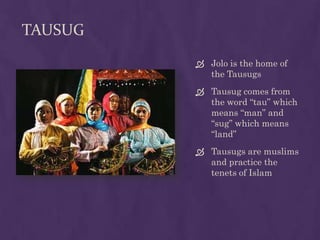
TAUSUG
          Jolo is the home of
           the Tausugs
          Tausug comes from
           the word “tau” which
           means “man” and
           “sug” which means
           “land”
          Tausugs are muslims
           and practice the
           tenets of Islam
 One characteristic of the Tausug is preservation of the family
  reputation and will never commit an act of cowardice that will
  blemish on the family’s name
 “You can never expect a Tausug to run from a good fight”
 They believe that running away is shameful especially when
  other members of the family are involved
PAGGUNTING
      Tausug baptism
      The child clad in best garment is brought to the
       group of Imams standing in circle
      A few strands of hair are dipped in a container of
       the water of butong
      The child’s mouth is smeared with sugar
      Candle is lit at the beginning of the rite and is
       then blown off after
THE BURIAL PRACTICE
       When the warmth is gone, the corpse is sponged
        in cold water
       The bathing is done by religious persons
       The bathing is done in silence
       The water used is fresh and perfumed with betel
        nut flowers, kamanyan or insence, and
        sandalwood
       The corpse is wiped and then perfumed and
        placed in a shroud
 The shroud is made of three pieces of white cloth in accordance
  with the length of the corpse
 It is wrapped in a lying position with hands placed on its chest,
  the right over the left
 The coffin is made of wood and has no lid
 Grave is dug in proportion to the length of the corpse
 It follows a north-south direction and is 6-9 feet deep and it is
  closed with slabs of board about 2-inch thick, 1 foot wide and 3-4
  feet long
 Grave markers for males are rounded and flat for females
 Burial is followed by a seven-day vigil. Depending on a family's
  economic circumstances, commemorative feasts may be held on
  the 7th, 20th, 40th, and 100th day, and on the first, second, and
  third anniversaries of death.
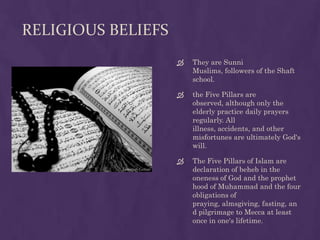
RELIGIOUS BELIEFS
                       They are Sunni
                        Muslims, followers of the Shaft
                        school.

                       the Five Pillars are
                        observed, although only the
                        elderly practice daily prayers
                        regularly. All
                        illness, accidents, and other
                        misfortunes are ultimately God's
                        will.

                       The Five Pillars of Islam are
                        declaration of beheb in the
                        oneness of God and the prophet
                        hood of Muhammad and the four
                        obligations of
                        praying, almsgiving, fasting, an
                        d pilgrimage to Mecca at least
                        once in one's lifetime.
 However, the Tausug retain elements of pre-Islamic belief
  and, additionally, see the world as inhabited by local spirits
  capable of causing good or ill fortune.
 Females do not participate in daily prayer until after they are
  married and males may pray only after they are circumcised.
 Touching an unmarried female (kublit-kublit), however, is in
  theory a finable offense with the actual amount determined by
  the datu according to time of day and part of body. Such rules
  are made to be challenged particularly since the legal censure
  does not carry over into the moral sphere. Thus, a young man
  may be motivated to touch a particular girl for no other reason
  than to see if he can get away with it.
SUPERSTITIOUS BELIEFS
       Aside from Allah or Tuhan, the Tausug are also
        concerned with spirits inhabit nature, especially
        rocks and trees, and who are believed to be the
        cause of human suffering.
       The saytan (evil spirits) and jinn (unseen
        creatures).
       believe in the four composites of the human soul:
        the transcendental soul, the life-soul associated
        with the blood, the breath or life essence, and the
        spirit-soul who travels during dreams and who
        causes the -shadow
HEALING PRACTICES
       The mangugubat (curer) who have direct access to
        the spirit world.
       Traditional medical specialists, who obtain their
        powers through dreams or by the instruction of
        older curers, heal mainly by herbal remedies and
        prayers.

Tausug beliefs and practices

  • 1.
  • 2.
    TAUSUG  Jolo is the home of the Tausugs  Tausug comes from the word “tau” which means “man” and “sug” which means “land”  Tausugs are muslims and practice the tenets of Islam
  • 3.
     One characteristicof the Tausug is preservation of the family reputation and will never commit an act of cowardice that will blemish on the family’s name  “You can never expect a Tausug to run from a good fight”  They believe that running away is shameful especially when other members of the family are involved
  • 4.
    PAGGUNTING  Tausug baptism  The child clad in best garment is brought to the group of Imams standing in circle  A few strands of hair are dipped in a container of the water of butong  The child’s mouth is smeared with sugar  Candle is lit at the beginning of the rite and is then blown off after
  • 5.
    THE BURIAL PRACTICE  When the warmth is gone, the corpse is sponged in cold water  The bathing is done by religious persons  The bathing is done in silence  The water used is fresh and perfumed with betel nut flowers, kamanyan or insence, and sandalwood  The corpse is wiped and then perfumed and placed in a shroud
  • 6.
     The shroudis made of three pieces of white cloth in accordance with the length of the corpse  It is wrapped in a lying position with hands placed on its chest, the right over the left  The coffin is made of wood and has no lid  Grave is dug in proportion to the length of the corpse  It follows a north-south direction and is 6-9 feet deep and it is closed with slabs of board about 2-inch thick, 1 foot wide and 3-4 feet long  Grave markers for males are rounded and flat for females
  • 7.
     Burial isfollowed by a seven-day vigil. Depending on a family's economic circumstances, commemorative feasts may be held on the 7th, 20th, 40th, and 100th day, and on the first, second, and third anniversaries of death.
  • 8.
    RELIGIOUS BELIEFS  They are Sunni Muslims, followers of the Shaft school.  the Five Pillars are observed, although only the elderly practice daily prayers regularly. All illness, accidents, and other misfortunes are ultimately God's will.  The Five Pillars of Islam are declaration of beheb in the oneness of God and the prophet hood of Muhammad and the four obligations of praying, almsgiving, fasting, an d pilgrimage to Mecca at least once in one's lifetime.
  • 9.
     However, theTausug retain elements of pre-Islamic belief and, additionally, see the world as inhabited by local spirits capable of causing good or ill fortune.  Females do not participate in daily prayer until after they are married and males may pray only after they are circumcised.  Touching an unmarried female (kublit-kublit), however, is in theory a finable offense with the actual amount determined by the datu according to time of day and part of body. Such rules are made to be challenged particularly since the legal censure does not carry over into the moral sphere. Thus, a young man may be motivated to touch a particular girl for no other reason than to see if he can get away with it.
  • 10.
    SUPERSTITIOUS BELIEFS  Aside from Allah or Tuhan, the Tausug are also concerned with spirits inhabit nature, especially rocks and trees, and who are believed to be the cause of human suffering.  The saytan (evil spirits) and jinn (unseen creatures).  believe in the four composites of the human soul: the transcendental soul, the life-soul associated with the blood, the breath or life essence, and the spirit-soul who travels during dreams and who causes the -shadow
  • 11.
    HEALING PRACTICES  The mangugubat (curer) who have direct access to the spirit world.  Traditional medical specialists, who obtain their powers through dreams or by the instruction of older curers, heal mainly by herbal remedies and prayers.