Task Definition
Step #1
 What is the Internet?
1. Task Definition
 1.1 Define the problem
 1.2 Identify the information needed (to
solve the problem)
 What’s the task?
 What types of information do I need?
For the best answers,
ask tough questions.
 What is my assignment?
 What do I need to know?
 What am I interested in?
 What am I supposed to learn?
 What is my problem?
 What am I being asked to do?
Asking ESSENTIAL questions
 Questions that probe for deeper meaning
and set the stage for further questioning.
 The inquiry on which research is founded,
sometimes called the central question or
research question.
Fairfield Ward High School. (200&0. Glossary. Retrieved December 13, 2007, from
http://www.fairfield.k12.ct.us/wardehs/cwardehs03/glossary.htm
 major issues
 problems
 concerns
 interests
 themes relevant
 good essential questions are open-ended,
non-judgmental, meaningful and
purposeful
Task Definition Chart
 Task Definition Chart
Identifying Topics
Concept Maps
Brainstorming
Webbing
Graphic Organizers
Journaling
Reading Background Information
text, journals, lecture notes,
communicating with your professor
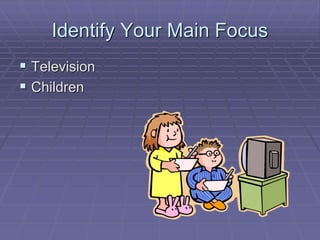
Identify Your Main Focus
 Television
 Children
Exploring Your Topic
 Who?
 What?
 When?
 Where?
 Why?
 How?
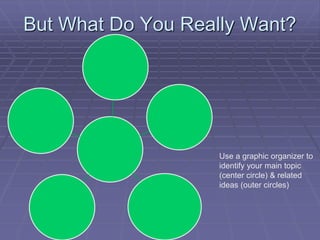
But What Do You Really Want?
Use a graphic organizer to
identify your main topic
(center circle) & related
ideas (outer circles)
The “Final” Topic
 Identifying Keywords

Task definition

  • 1.
  • 2.
     What isthe Internet?
  • 3.
    1. Task Definition 1.1 Define the problem  1.2 Identify the information needed (to solve the problem)  What’s the task?  What types of information do I need?
  • 4.
    For the bestanswers, ask tough questions.  What is my assignment?  What do I need to know?  What am I interested in?  What am I supposed to learn?  What is my problem?  What am I being asked to do?
  • 5.
    Asking ESSENTIAL questions Questions that probe for deeper meaning and set the stage for further questioning.  The inquiry on which research is founded, sometimes called the central question or research question. Fairfield Ward High School. (200&0. Glossary. Retrieved December 13, 2007, from http://www.fairfield.k12.ct.us/wardehs/cwardehs03/glossary.htm
  • 6.
     major issues problems  concerns  interests  themes relevant  good essential questions are open-ended, non-judgmental, meaningful and purposeful
  • 7.
    Task Definition Chart Task Definition Chart
  • 8.
    Identifying Topics Concept Maps Brainstorming Webbing GraphicOrganizers Journaling Reading Background Information text, journals, lecture notes, communicating with your professor
  • 9.
    Identify Your MainFocus  Television  Children
  • 10.
    Exploring Your Topic Who?  What?  When?  Where?  Why?  How?
  • 11.
    But What DoYou Really Want? Use a graphic organizer to identify your main topic (center circle) & related ideas (outer circles)
  • 12.
    The “Final” Topic Identifying Keywords