Talent Management : A Solution to Brain Drain
Talent Management: A Solution to Brain Drain
Dr. Sarla Sharma
Divya Pareek
Abstract
Over the years, India has become a major supplier of skilled and talented young people to the
developed countries the skilled Indians prefer US Green Cards and EU Blue Cards over the not-
so-attractive pay checks and average living conditions of a developing country like India
Talent Management is a strategy which serves as a solution to Brain Drain, that a company
employs to attract, retain and develop employees in order to achieve objectives of the
organization .Most of the organizations are planning ahead to handle an inevitable talent
crisis, to ensure that they have the right people to do the right jobs, when needed. Many
challenges are associated with the changing and competitive nature of work and the
workplace environment are very real for every organization. Rapid changes require a skilled,
knowledgeable and talented workforce with employees who are adaptive, flexible and focused
on the future.
Key Words: Brain Drain, Talented Workforce, Workplace Environment.
Introduction
In a competitive marketplace, talent management is a initial driver for organizational
success. Broadly, talent management is the implementation of integrated strategies or
systems designed to increase workplace productivity by developing better processes for
attracting, developing, retaining and utilizing people with the required skills and aptitude
to meet present and future business requirements. But from where does this talent pool
come from? Quiet obvious, the source is prestigious academic institutes such as IIT’s and

Associate Professor, Kanoria P. G. Mahila Mahavidyalaya, Jaipur

Assistant Professor, Kanoria P.G. Mahila Mahavidyalaya, Jaipur
Professional Panorama: An International Journal of Management & Technology
Talent Management: A Solution to Brain Drain 55
IIM’s, but a major constraint for a student to get admission in these prestigious institutes is
high cut off rates of these universities.
The two most significant issues to ponder are:
 Main concern of the developing countries like, India is “Brain drain”.
 Will Pioneering Organizations with their Talent Management practices be able to
prevent excessive brain drain.
In recent years, the cut-offs for admissions became close to 100% in the best Indian
Universities. While the institutes are in the race of getting the finest students in the
country, the ambitious youth who fail to meet the cut off demands, had to compromise on
their dream of occupying a seat in any of the prominent Indian universities. This leads
them to explore the scope of higher education abroad as they don’t get the best chances,
resources and facilities for education and research in India due to high cut off.
Opportunities Abroad
Most of the students prefer staying back in the host country due to better work prospects
and heavy pay packages. After getting global exposure and getting introduced to the high
quality life and facilities, the students become reluctant to go back to the native land. These
days, most of the developed countries attract the highly skilled and qualified people from
other countries.
Time for a Reality Check
The term Brain drain was emerged in 1960s when the skilled workforce started emigrating
from the poor countries to the rich countries to seek better job opportunities and living
conditions. India has been losing its foremost skilled workforce that consist of doctors,
engineers, scientists and technicians. Over the years, India has become a major supplier of
skilled and talented young people to the developed countries. In a competitive
marketplace, talent management is considered as tool to prevent excessive brain drain, as
at Organizational level the biggest challenge lies in retaining the talented pool. A recent
study shows that 85% of HR executives considered “single greatest challenge in workforce
management is creating or maintaining their companies’ ability to compete for
talent.”Undoubtedly, effective talent management provides one of the most critical points of
strategic leverage today.
Professional Panorama: An International Journal of Management & Technology
Talent Management: A Solution to Brain Drain 56
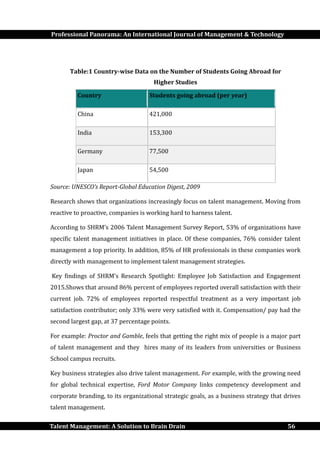
Table:1 Country-wise Data on the Number of Students Going Abroad for
Higher Studies
Country Students going abroad (per year)
China 421,000
India 153,300
Germany 77,500
Japan 54,500
Source: UNESCO’s Report-Global Education Digest, 2009
Research shows that organizations increasingly focus on talent management. Moving from
reactive to proactive, companies is working hard to harness talent.
According to SHRM’s 2006 Talent Management Survey Report, 53% of organizations have
specific talent management initiatives in place. Of these companies, 76% consider talent
management a top priority. In addition, 85% of HR professionals in these companies work
directly with management to implement talent management strategies.
Key findings of SHRM’s Research Spotlight: Employee Job Satisfaction and Engagement
2015.Shows that around 86% percent of employees reported overall satisfaction with their
current job. 72% of employees reported respectful treatment as a very important job
satisfaction contributor; only 33% were very satisfied with it. Compensation/ pay had the
second largest gap, at 37 percentage points.
For example: Proctor and Gamble, feels that getting the right mix of people is a major part
of talent management and they hires many of its leaders from universities or Business
School campus recruits.
Key business strategies also drive talent management. For example, with the growing need
for global technical expertise, Ford Motor Company links competency development and
corporate branding, to its organizational strategic goals, as a business strategy that drives
talent management.
Professional Panorama: An International Journal of Management & Technology
Talent Management: A Solution to Brain Drain 57
Increasingly, firms are linking their brand to employees and corporate behavior. At
JPMorgan Chase, the concept of leadership for all employees is part of its corporate
branding: “One Firm, One Team, Be a Leader.”
Talent Management
Every person has a unique talent that suits a particular job profile. Talent is the vehicle to
move the organization where it wants to be. It is the task of Human Resource (HR)
department of an organization to choose the right candidate for the right job. A wrong fit
results in further hiring, retraining and other wasteful activities. Talent management
implies recognizing a person’s inherent skills, traits, personality and offering the matching
job.
Reasons to have a Plan to Stop Brain Drain
 More opportunities for high potential
 A road map for employee development
 More talent ready sooner
 More support for diverse workforce
 Better moral
 Low labour turnover
 Lower stress
 Job content tied to business plan
 More focus on vision and direction
There are several drivers fueling emphasis on Talent Management. There is a
demonstrated relationship between better talent and better business performance and
greater job satisfaction level (which to an extent prevent brain drain). Increasingly,
organizations seek to quantify the return on their investment in talent.
A research study from Mc Bassi & Company,2013 revealed that high scorers in five
categories of human capital management (leadership practices, employee engagement,
knowledge accountability, workforce organization, and learning capacity) resulted into
higher stock market returns and better safety records—two common business goals that
are top of mind for today’s senior leadership.
Professional Panorama: An International Journal of Management & Technology
Talent Management: A Solution to Brain Drain 58
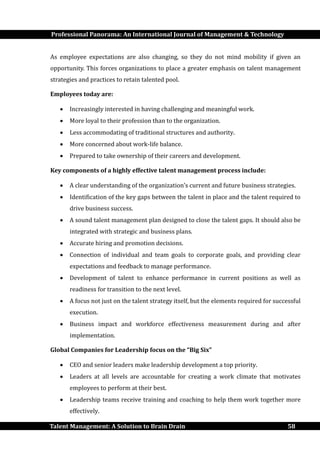
As employee expectations are also changing, so they do not mind mobility if given an
opportunity. This forces organizations to place a greater emphasis on talent management
strategies and practices to retain talented pool.
Employees today are:
 Increasingly interested in having challenging and meaningful work.
 More loyal to their profession than to the organization.
 Less accommodating of traditional structures and authority.
 More concerned about work-life balance.
 Prepared to take ownership of their careers and development.
Key components of a highly effective talent management process include:
 A clear understanding of the organization’s current and future business strategies.
 Identification of the key gaps between the talent in place and the talent required to
drive business success.
 A sound talent management plan designed to close the talent gaps. It should also be
integrated with strategic and business plans.
 Accurate hiring and promotion decisions.
 Connection of individual and team goals to corporate goals, and providing clear
expectations and feedback to manage performance.
 Development of talent to enhance performance in current positions as well as
readiness for transition to the next level.
 A focus not just on the talent strategy itself, but the elements required for successful
execution.
 Business impact and workforce effectiveness measurement during and after
implementation.
Global Companies for Leadership focus on the “Big Six”
 CEO and senior leaders make leadership development a top priority.
 Leaders at all levels are accountable for creating a work climate that motivates
employees to perform at their best.
 Leadership teams receive training and coaching to help them work together more
effectively.
Professional Panorama: An International Journal of Management & Technology
Talent Management: A Solution to Brain Drain 59
 Mid-career managers receive job-shadowing opportunities.
 High-potentials receive objective 360-degree assessments and feedback on their
leadership ability early on.
 Mid-level managers get enough time to take part in leadership development
activities early in their careers
What to do, to Fix up
 External MBA programs
 External coaches for senior executives
 Internal coaches for mid-level managers
 Specific skill building for lower-level managers
 Externally run development programs
 Job rotations
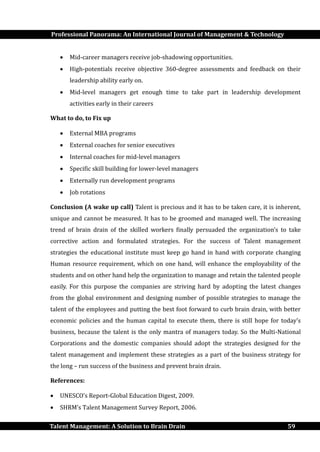
Conclusion (A wake up call) Talent is precious and it has to be taken care, it is inherent,
unique and cannot be measured. It has to be groomed and managed well. The increasing
trend of brain drain of the skilled workers finally persuaded the organization’s to take
corrective action and formulated strategies. For the success of Talent management
strategies the educational institute must keep go hand in hand with corporate changing
Human resource requirement, which on one hand, will enhance the employability of the
students and on other hand help the organization to manage and retain the talented people
easily. For this purpose the companies are striving hard by adopting the latest changes
from the global environment and designing number of possible strategies to manage the
talent of the employees and putting the best foot forward to curb brain drain, with better
economic policies and the human capital to execute them, there is still hope for today’s
business, because the talent is the only mantra of managers today. So the Multi-National
Corporations and the domestic companies should adopt the strategies designed for the
talent management and implement these strategies as a part of the business strategy for
the long – run success of the business and prevent brain drain.
References:
 UNESCO’s Report-Global Education Digest, 2009.
 SHRM’s Talent Management Survey Report, 2006.
Professional Panorama: An International Journal of Management & Technology
Talent Management: A Solution to Brain Drain 60
 SHRM’s Research Spotlight: Employee Job Satisfaction and Engagement 2015.
 Research study from McBassi & Co,2013(www.mcbassi.com)
 www.jpmorganchase.com
 corporate.ford.com

Talent management a solution to brain drain

  • 1.
    Talent Management :A Solution to Brain Drain Talent Management: A Solution to Brain Drain Dr. Sarla Sharma Divya Pareek Abstract Over the years, India has become a major supplier of skilled and talented young people to the developed countries the skilled Indians prefer US Green Cards and EU Blue Cards over the not- so-attractive pay checks and average living conditions of a developing country like India Talent Management is a strategy which serves as a solution to Brain Drain, that a company employs to attract, retain and develop employees in order to achieve objectives of the organization .Most of the organizations are planning ahead to handle an inevitable talent crisis, to ensure that they have the right people to do the right jobs, when needed. Many challenges are associated with the changing and competitive nature of work and the workplace environment are very real for every organization. Rapid changes require a skilled, knowledgeable and talented workforce with employees who are adaptive, flexible and focused on the future. Key Words: Brain Drain, Talented Workforce, Workplace Environment. Introduction In a competitive marketplace, talent management is a initial driver for organizational success. Broadly, talent management is the implementation of integrated strategies or systems designed to increase workplace productivity by developing better processes for attracting, developing, retaining and utilizing people with the required skills and aptitude to meet present and future business requirements. But from where does this talent pool come from? Quiet obvious, the source is prestigious academic institutes such as IIT’s and  Associate Professor, Kanoria P. G. Mahila Mahavidyalaya, Jaipur  Assistant Professor, Kanoria P.G. Mahila Mahavidyalaya, Jaipur
  • 2.
    Professional Panorama: AnInternational Journal of Management & Technology Talent Management: A Solution to Brain Drain 55 IIM’s, but a major constraint for a student to get admission in these prestigious institutes is high cut off rates of these universities. The two most significant issues to ponder are:  Main concern of the developing countries like, India is “Brain drain”.  Will Pioneering Organizations with their Talent Management practices be able to prevent excessive brain drain. In recent years, the cut-offs for admissions became close to 100% in the best Indian Universities. While the institutes are in the race of getting the finest students in the country, the ambitious youth who fail to meet the cut off demands, had to compromise on their dream of occupying a seat in any of the prominent Indian universities. This leads them to explore the scope of higher education abroad as they don’t get the best chances, resources and facilities for education and research in India due to high cut off. Opportunities Abroad Most of the students prefer staying back in the host country due to better work prospects and heavy pay packages. After getting global exposure and getting introduced to the high quality life and facilities, the students become reluctant to go back to the native land. These days, most of the developed countries attract the highly skilled and qualified people from other countries. Time for a Reality Check The term Brain drain was emerged in 1960s when the skilled workforce started emigrating from the poor countries to the rich countries to seek better job opportunities and living conditions. India has been losing its foremost skilled workforce that consist of doctors, engineers, scientists and technicians. Over the years, India has become a major supplier of skilled and talented young people to the developed countries. In a competitive marketplace, talent management is considered as tool to prevent excessive brain drain, as at Organizational level the biggest challenge lies in retaining the talented pool. A recent study shows that 85% of HR executives considered “single greatest challenge in workforce management is creating or maintaining their companies’ ability to compete for talent.”Undoubtedly, effective talent management provides one of the most critical points of strategic leverage today.
  • 3.
    Professional Panorama: AnInternational Journal of Management & Technology Talent Management: A Solution to Brain Drain 56 Table:1 Country-wise Data on the Number of Students Going Abroad for Higher Studies Country Students going abroad (per year) China 421,000 India 153,300 Germany 77,500 Japan 54,500 Source: UNESCO’s Report-Global Education Digest, 2009 Research shows that organizations increasingly focus on talent management. Moving from reactive to proactive, companies is working hard to harness talent. According to SHRM’s 2006 Talent Management Survey Report, 53% of organizations have specific talent management initiatives in place. Of these companies, 76% consider talent management a top priority. In addition, 85% of HR professionals in these companies work directly with management to implement talent management strategies. Key findings of SHRM’s Research Spotlight: Employee Job Satisfaction and Engagement 2015.Shows that around 86% percent of employees reported overall satisfaction with their current job. 72% of employees reported respectful treatment as a very important job satisfaction contributor; only 33% were very satisfied with it. Compensation/ pay had the second largest gap, at 37 percentage points. For example: Proctor and Gamble, feels that getting the right mix of people is a major part of talent management and they hires many of its leaders from universities or Business School campus recruits. Key business strategies also drive talent management. For example, with the growing need for global technical expertise, Ford Motor Company links competency development and corporate branding, to its organizational strategic goals, as a business strategy that drives talent management.
  • 4.
    Professional Panorama: AnInternational Journal of Management & Technology Talent Management: A Solution to Brain Drain 57 Increasingly, firms are linking their brand to employees and corporate behavior. At JPMorgan Chase, the concept of leadership for all employees is part of its corporate branding: “One Firm, One Team, Be a Leader.” Talent Management Every person has a unique talent that suits a particular job profile. Talent is the vehicle to move the organization where it wants to be. It is the task of Human Resource (HR) department of an organization to choose the right candidate for the right job. A wrong fit results in further hiring, retraining and other wasteful activities. Talent management implies recognizing a person’s inherent skills, traits, personality and offering the matching job. Reasons to have a Plan to Stop Brain Drain  More opportunities for high potential  A road map for employee development  More talent ready sooner  More support for diverse workforce  Better moral  Low labour turnover  Lower stress  Job content tied to business plan  More focus on vision and direction There are several drivers fueling emphasis on Talent Management. There is a demonstrated relationship between better talent and better business performance and greater job satisfaction level (which to an extent prevent brain drain). Increasingly, organizations seek to quantify the return on their investment in talent. A research study from Mc Bassi & Company,2013 revealed that high scorers in five categories of human capital management (leadership practices, employee engagement, knowledge accountability, workforce organization, and learning capacity) resulted into higher stock market returns and better safety records—two common business goals that are top of mind for today’s senior leadership.
  • 5.
    Professional Panorama: AnInternational Journal of Management & Technology Talent Management: A Solution to Brain Drain 58 As employee expectations are also changing, so they do not mind mobility if given an opportunity. This forces organizations to place a greater emphasis on talent management strategies and practices to retain talented pool. Employees today are:  Increasingly interested in having challenging and meaningful work.  More loyal to their profession than to the organization.  Less accommodating of traditional structures and authority.  More concerned about work-life balance.  Prepared to take ownership of their careers and development. Key components of a highly effective talent management process include:  A clear understanding of the organization’s current and future business strategies.  Identification of the key gaps between the talent in place and the talent required to drive business success.  A sound talent management plan designed to close the talent gaps. It should also be integrated with strategic and business plans.  Accurate hiring and promotion decisions.  Connection of individual and team goals to corporate goals, and providing clear expectations and feedback to manage performance.  Development of talent to enhance performance in current positions as well as readiness for transition to the next level.  A focus not just on the talent strategy itself, but the elements required for successful execution.  Business impact and workforce effectiveness measurement during and after implementation. Global Companies for Leadership focus on the “Big Six”  CEO and senior leaders make leadership development a top priority.  Leaders at all levels are accountable for creating a work climate that motivates employees to perform at their best.  Leadership teams receive training and coaching to help them work together more effectively.
  • 6.
    Professional Panorama: AnInternational Journal of Management & Technology Talent Management: A Solution to Brain Drain 59  Mid-career managers receive job-shadowing opportunities.  High-potentials receive objective 360-degree assessments and feedback on their leadership ability early on.  Mid-level managers get enough time to take part in leadership development activities early in their careers What to do, to Fix up  External MBA programs  External coaches for senior executives  Internal coaches for mid-level managers  Specific skill building for lower-level managers  Externally run development programs  Job rotations Conclusion (A wake up call) Talent is precious and it has to be taken care, it is inherent, unique and cannot be measured. It has to be groomed and managed well. The increasing trend of brain drain of the skilled workers finally persuaded the organization’s to take corrective action and formulated strategies. For the success of Talent management strategies the educational institute must keep go hand in hand with corporate changing Human resource requirement, which on one hand, will enhance the employability of the students and on other hand help the organization to manage and retain the talented people easily. For this purpose the companies are striving hard by adopting the latest changes from the global environment and designing number of possible strategies to manage the talent of the employees and putting the best foot forward to curb brain drain, with better economic policies and the human capital to execute them, there is still hope for today’s business, because the talent is the only mantra of managers today. So the Multi-National Corporations and the domestic companies should adopt the strategies designed for the talent management and implement these strategies as a part of the business strategy for the long – run success of the business and prevent brain drain. References:  UNESCO’s Report-Global Education Digest, 2009.  SHRM’s Talent Management Survey Report, 2006.
  • 7.
    Professional Panorama: AnInternational Journal of Management & Technology Talent Management: A Solution to Brain Drain 60  SHRM’s Research Spotlight: Employee Job Satisfaction and Engagement 2015.  Research study from McBassi & Co,2013(www.mcbassi.com)  www.jpmorganchase.com  corporate.ford.com