TYPES
OF
MUSCLE
MAHENDRA RAJAK
(TGT P&HE)
1ST RANK (CGPSC SPORTS OFFICER)
1
• Muscles is a contractile tissue which brings about
movement.
• Muscle cell responsible for our movement both visible and
invisible, example walking, talking, bowel movement
,urination, breathing, heartbeats, the dilation and constriction
of the pupils of our eyes and many other.
• When we are still sitting or standing muscle cells keep us
erect.
• Muscles can be regarded as motors of the body.
• Muscles comprises about 40% to 50% (approximate) of
body weight.
• There are approximate 650 muscles in body.
• Alternating contraction and relaxation of cells
MUSCLES
FUNCTION OF MUSCLES
• The core function of muscle is convert chemical
energy (ATP) into mechanical force
• Producing movement:-muscles move the bone of
skeletal by their connective tissue attachment. Enable all
kinds of voluntary movement.
• Maintaining posture and body position:- when not
moving the various part of supportive skeletal are held
in position by isomeric muscles contraction.
• Stabilizing joint:-
• Maintains body temperature:-muscle contraction
generates heat that is involve in maintaining body
temperature.
PROPERTIES OF MUSCLES
1.Excitability –it is the ability to response to a stimulus,
which may be delivered from a motor or a hormone .
2. Contractibility- it is the ability of muscle cells to
forcefully shorten.
3. Extensibility- is the ability to be stretched. Lack of
extensibility is called spasticity.
4.Elasticity –it is the ability to recoil or bounce back to
the muscle’s original length after being stretched.
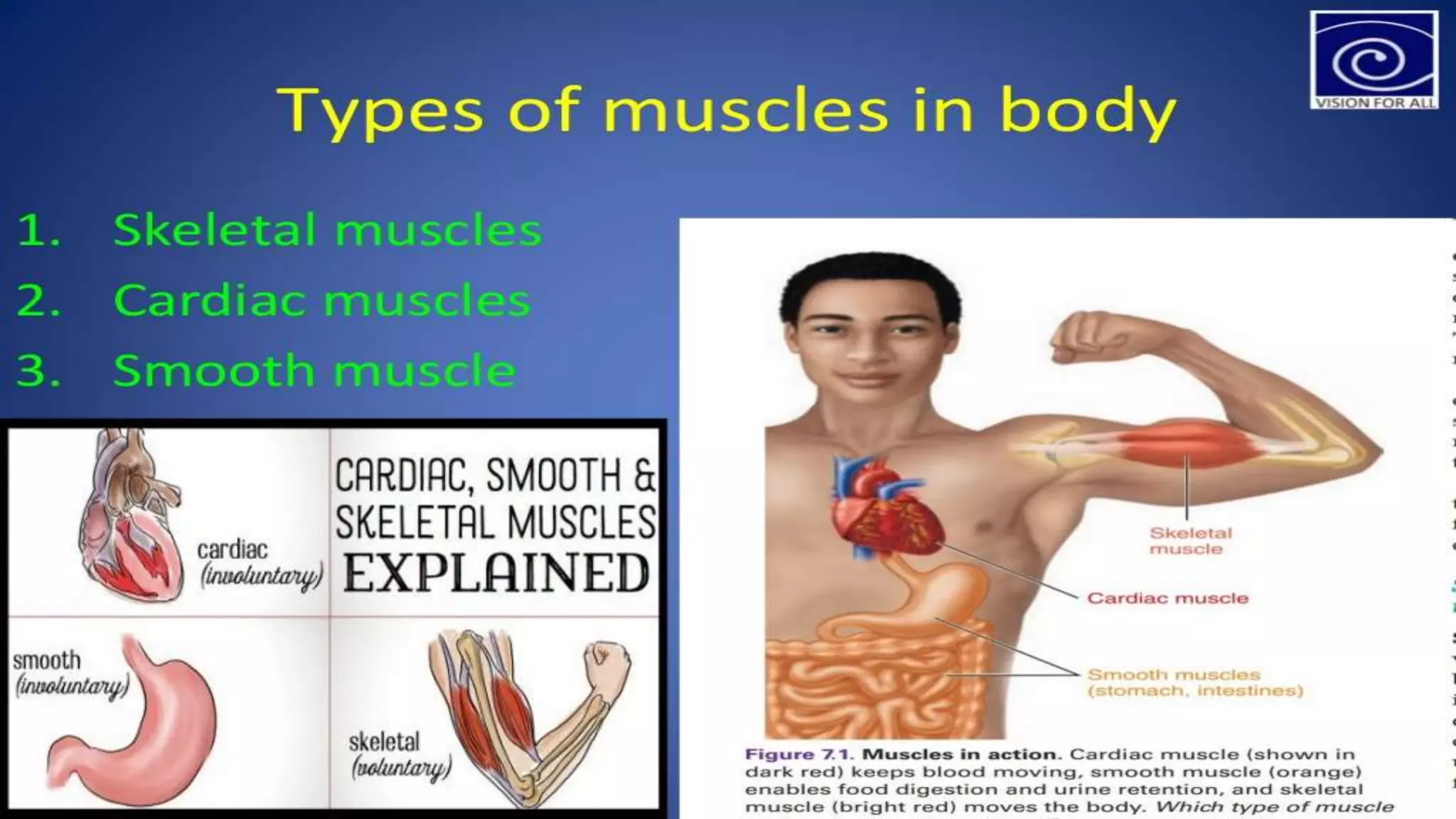
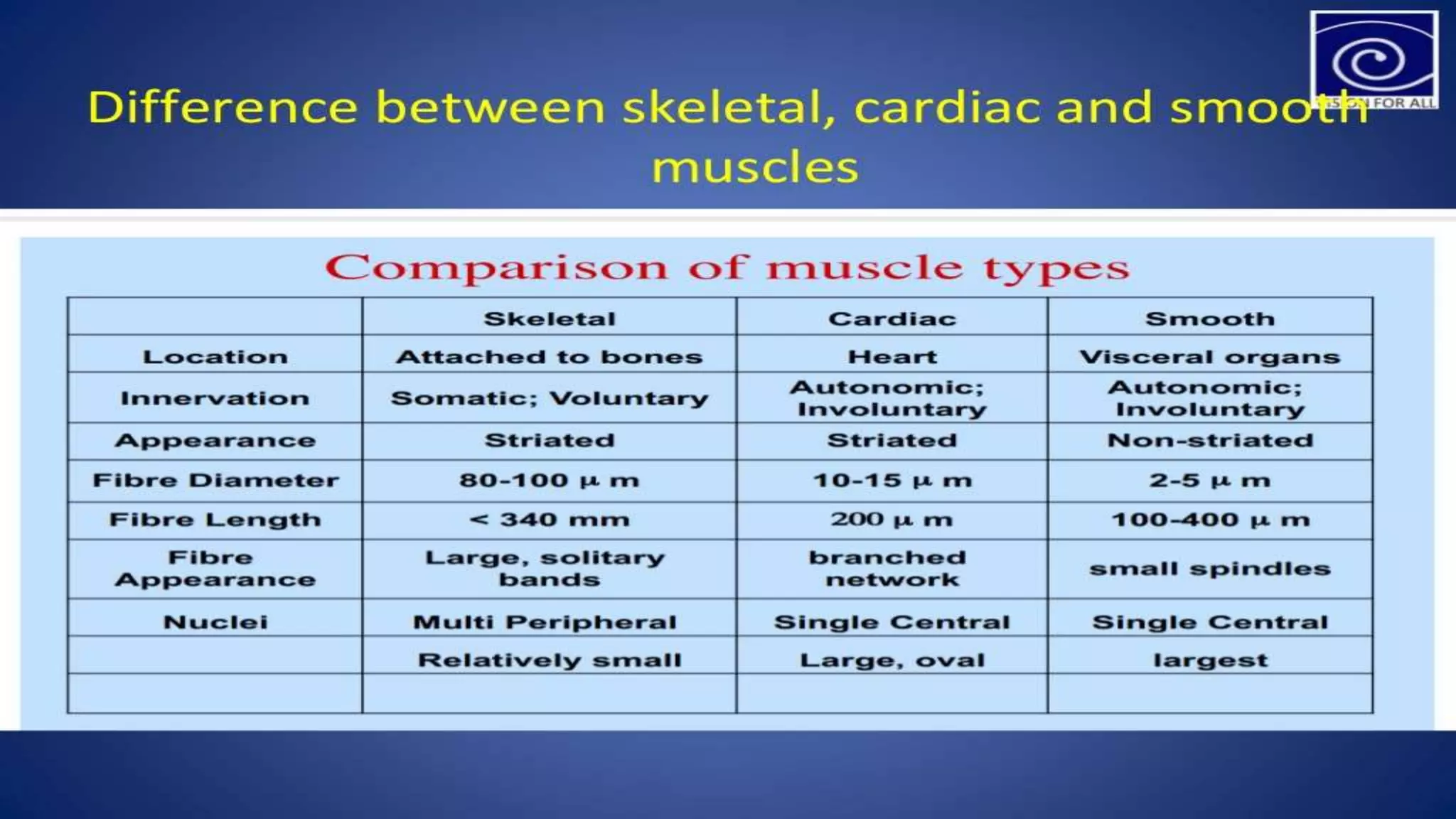
• Muscles have been classified using different criteria ,
namely location , appearance and nature of regulation of
their activities. Base on location , three types of muscles
are identified.
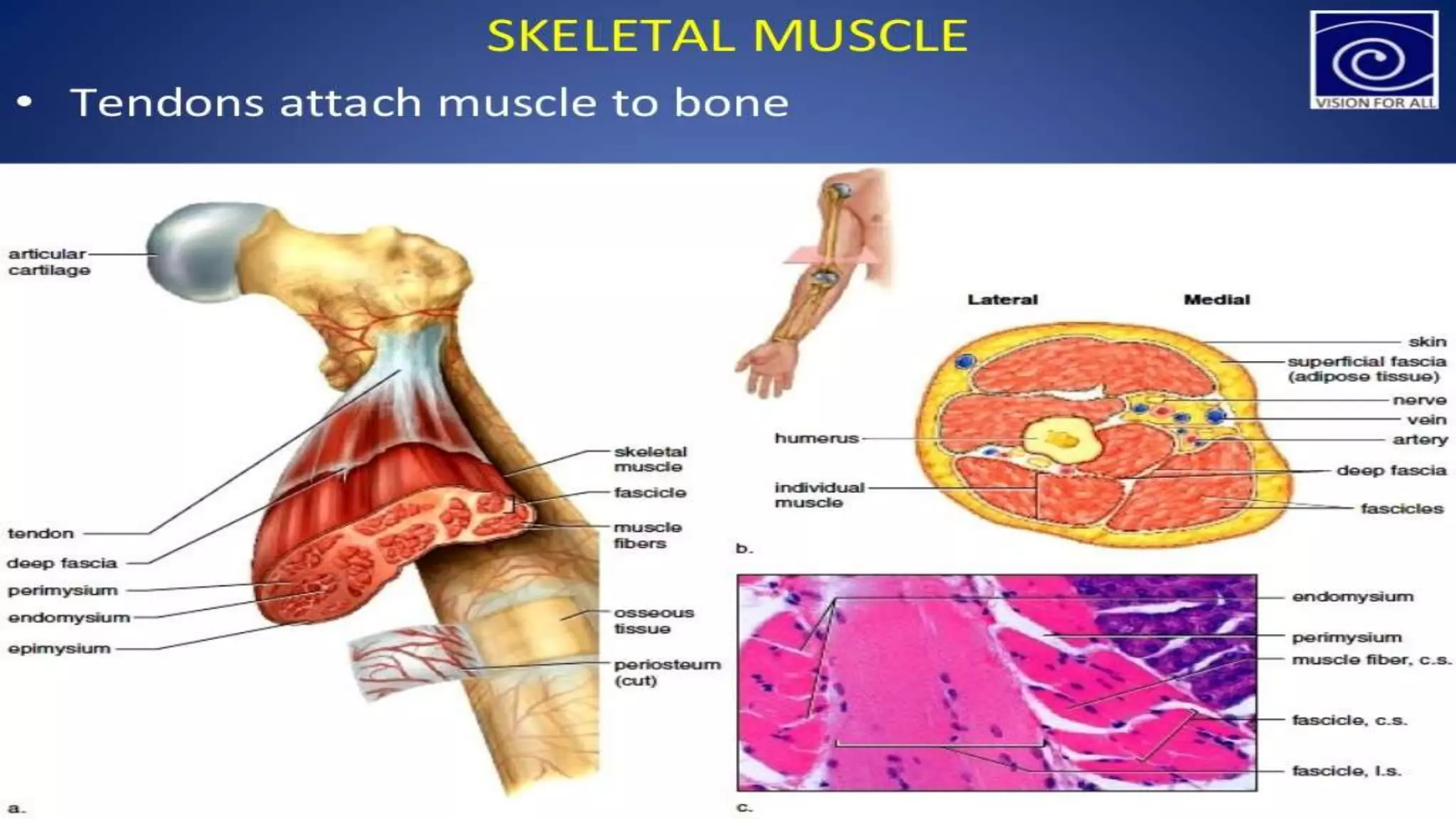
SKELETAL MUSCLE
• Skeletal muscles are also called striped muscles or
voluntary.
• Muscles, they are attached to bone and move the
skeletal.
• They control the movement of the body in relation to
the Environment, e.g. hands, arms, legs,neck, trunk, eyes.
• skeletal muscle are multinucleate.
• Skeletal muscle is voluntary because its contraction is
always stimulated and controlled by the nervous system.
• The Central Nervous System sends a signal to the
muscles via nerves which then convert chemical energy
into movement and the muscles.
IMPORTANT TERM
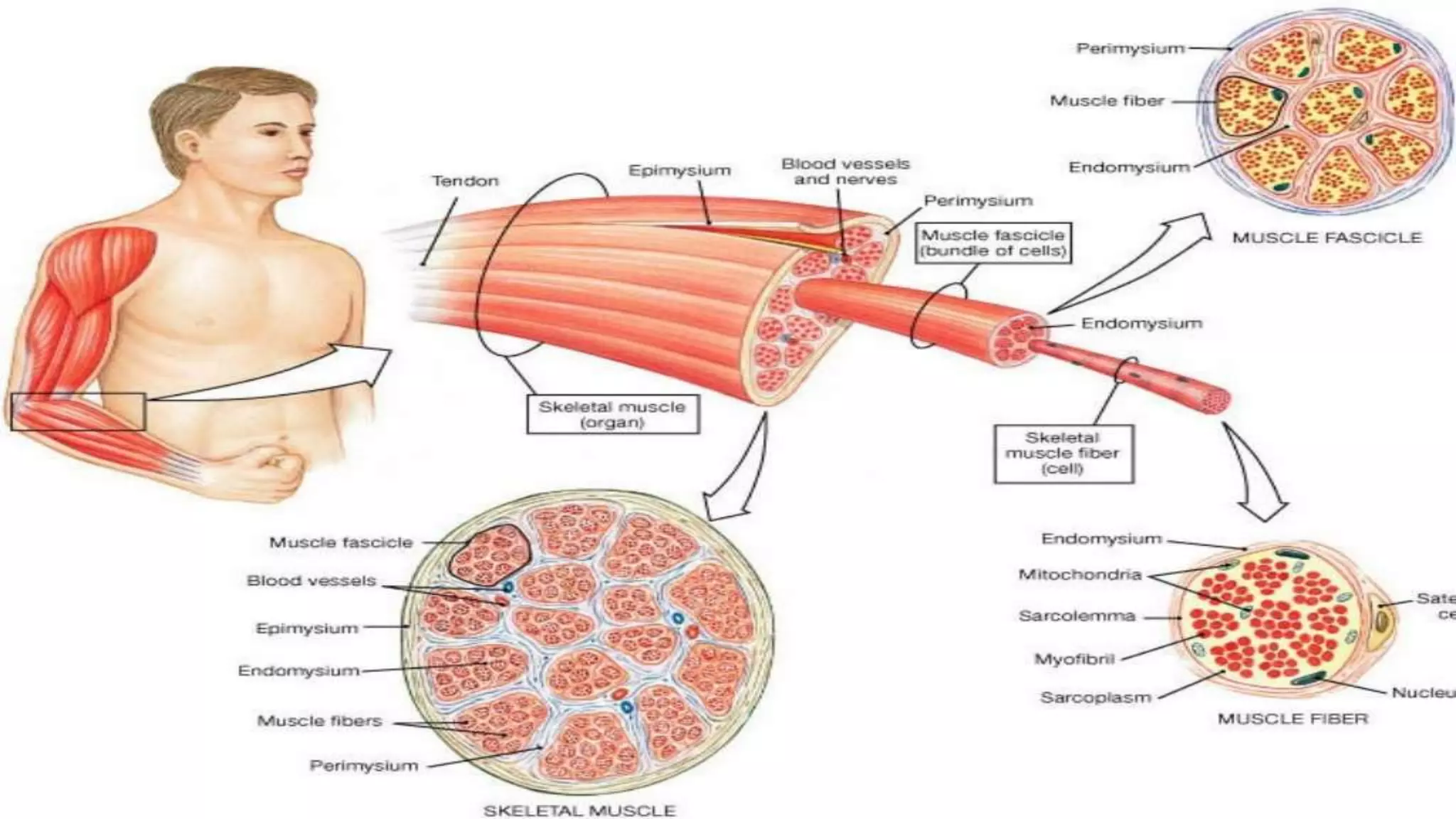
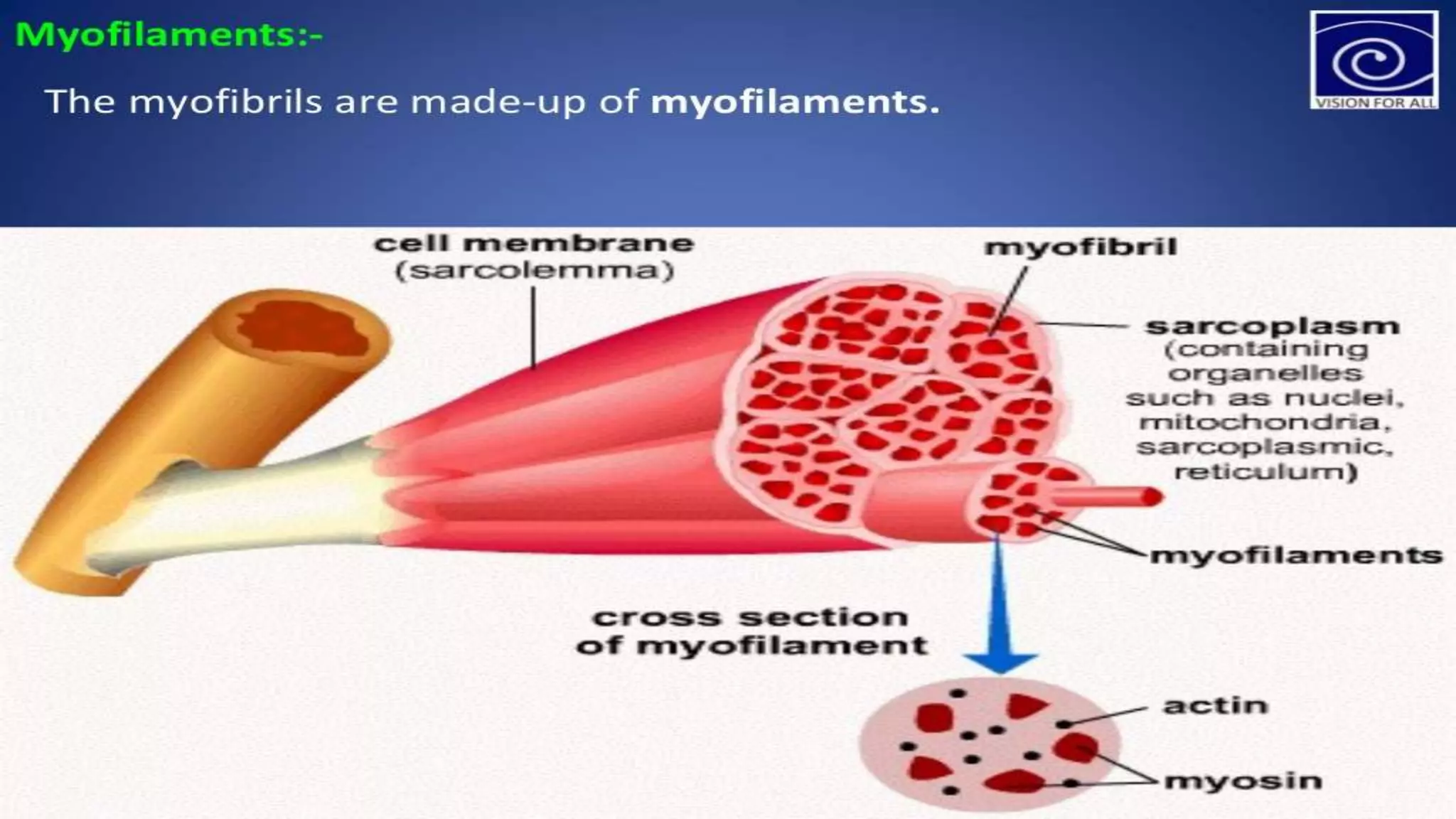
• Myofibril:-complex organelle compose of bundle of myofilaments
• Myofilament:-macromolecular structure of contractile protein
• Sarcomere:-the smallest, single contracting unit of a segment
• Deep fascia:-binds large groups of muscles into functional groups
• Muscle:-hundred of fascicles bound together epimysium
• Fascicle:- thousands of muscle fibers bound into discrete unit by
perimysium
• Muscle fiber:-single muscle cell surrounded by endomysium. Muscle
cell are called muscle fibers.
• Sarcolemma:-plasma or cell membrane of a muscle cell
• Sarcoplasm:- cytoplasm of muscle cell with large amounts of glycogen
and myoglobin
• Myoglobin:-red pigmented oxygen –binding protein
• Connective tissue layer:-Epimysium, Perimysium, Endomysium.
• Contraction depends on two kind of myofilament :- 1. Actin 2. Myosin
Microanatomy of Skeletal Muscle
• Skeletal muscle cells develop when hundreds of individual
embryonic cells called myoblasts fuse. The resulting cells' cell
membrane is called the sarcolemma and the cytoplasm is
called sarcoplasm
• Skeletal muscles are very large. Their diameter is about
100 microns (about 13 times the diameter of a red blood
cell) and they can be as long as 30 to 40 cm (10 to 16 in.
• Skeletal muscles are multinucleate. The nuclei of the
myoblasts that fuse to form the cell remain within the cell.
Some myoblasts do not fuse but remain associated with the
fiber as satellite cells that can divide and differentiate to
repair damaged cells
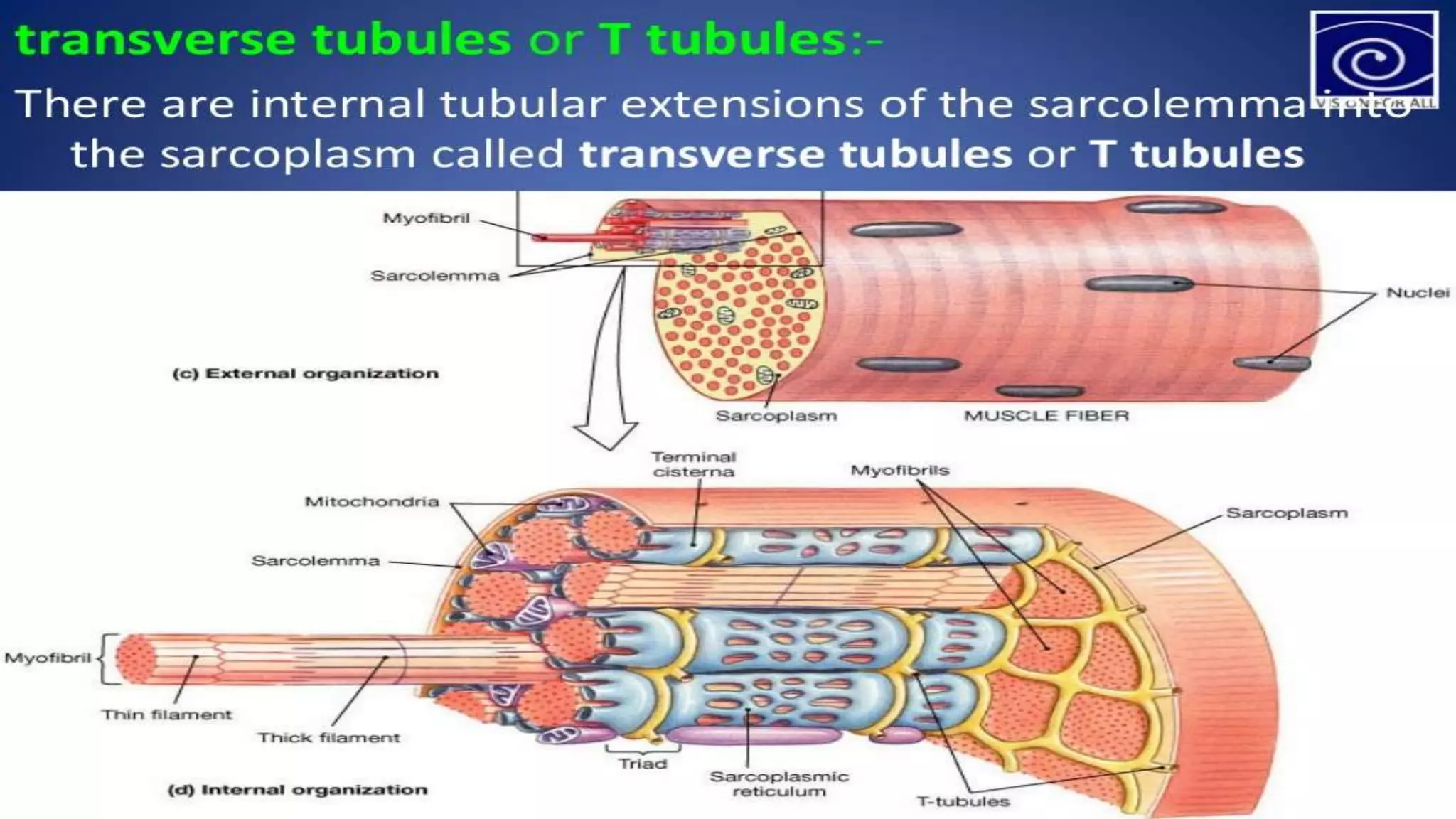
Myofibrils:- • each skeletal muscle cell or fiber there are
cylindrical structures called myofibrils. • Contraction of the
myofibrils result in contraction of the entire cell.
sarcoplasmic reticulum:- • In between the loops of
transverse tubule, there is a network of tubules of smooth
endoplasmic reticulum called the sarcoplasmic reticulum.
terminal cisternae:- • The sarcoplasmic reticulum
surrounds the myofibril like a sleeve. The sarcoplasmic
reticulum on either side of the loops of transverse tubules
fuse to form expanded chambers called terminal
cisternae.
Triad:- • The combination of a transverse tubule flanked
by two terminal cisternae is called a triad.
Mitochondria:- • The energy for muscle contraction is
supplied by the numerous mitochondria that surround the
myofibrils.
Glycogen granules:- • Glycogen granules that also
surround the myofibrils as a ready source of fuel.
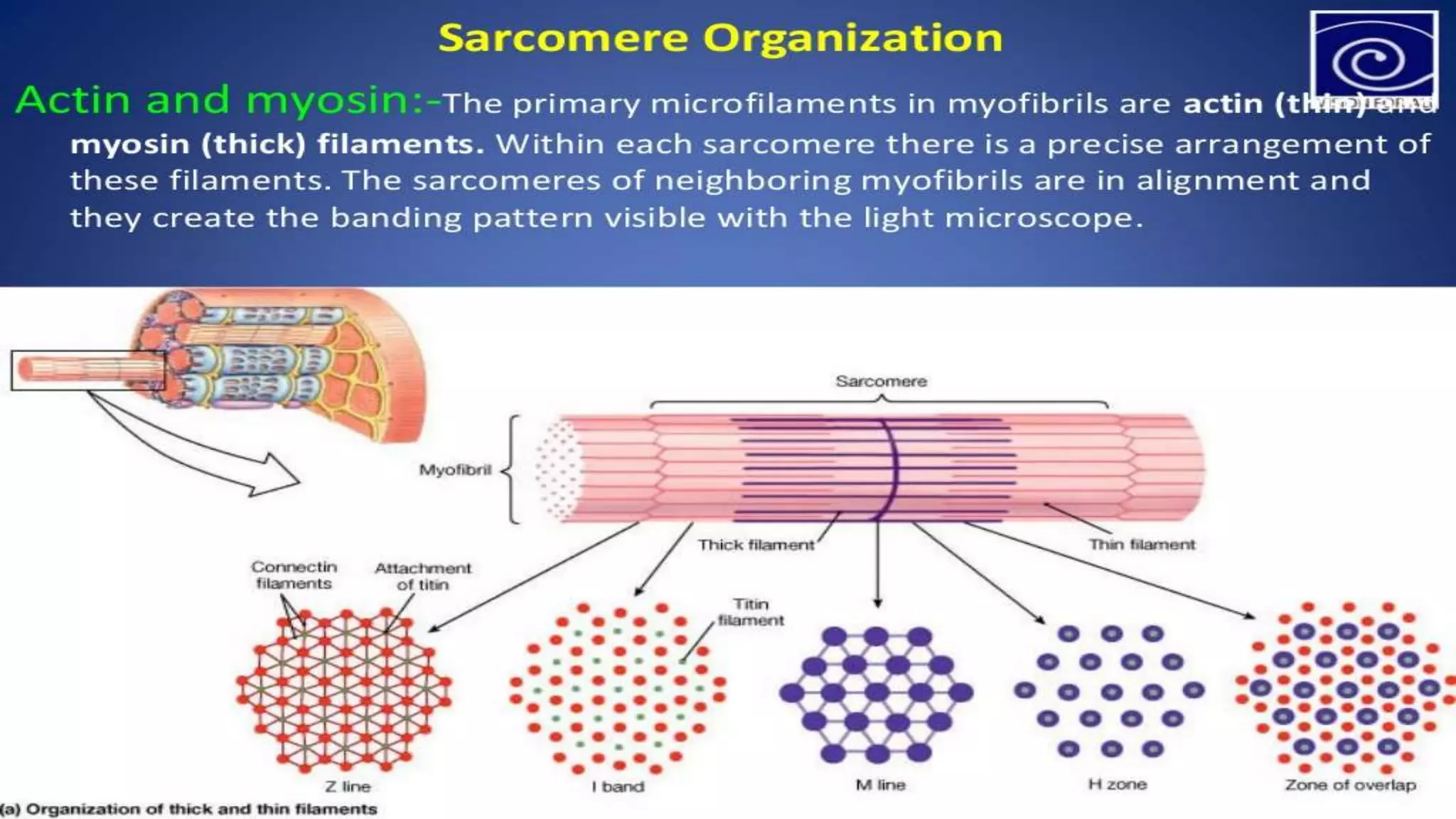
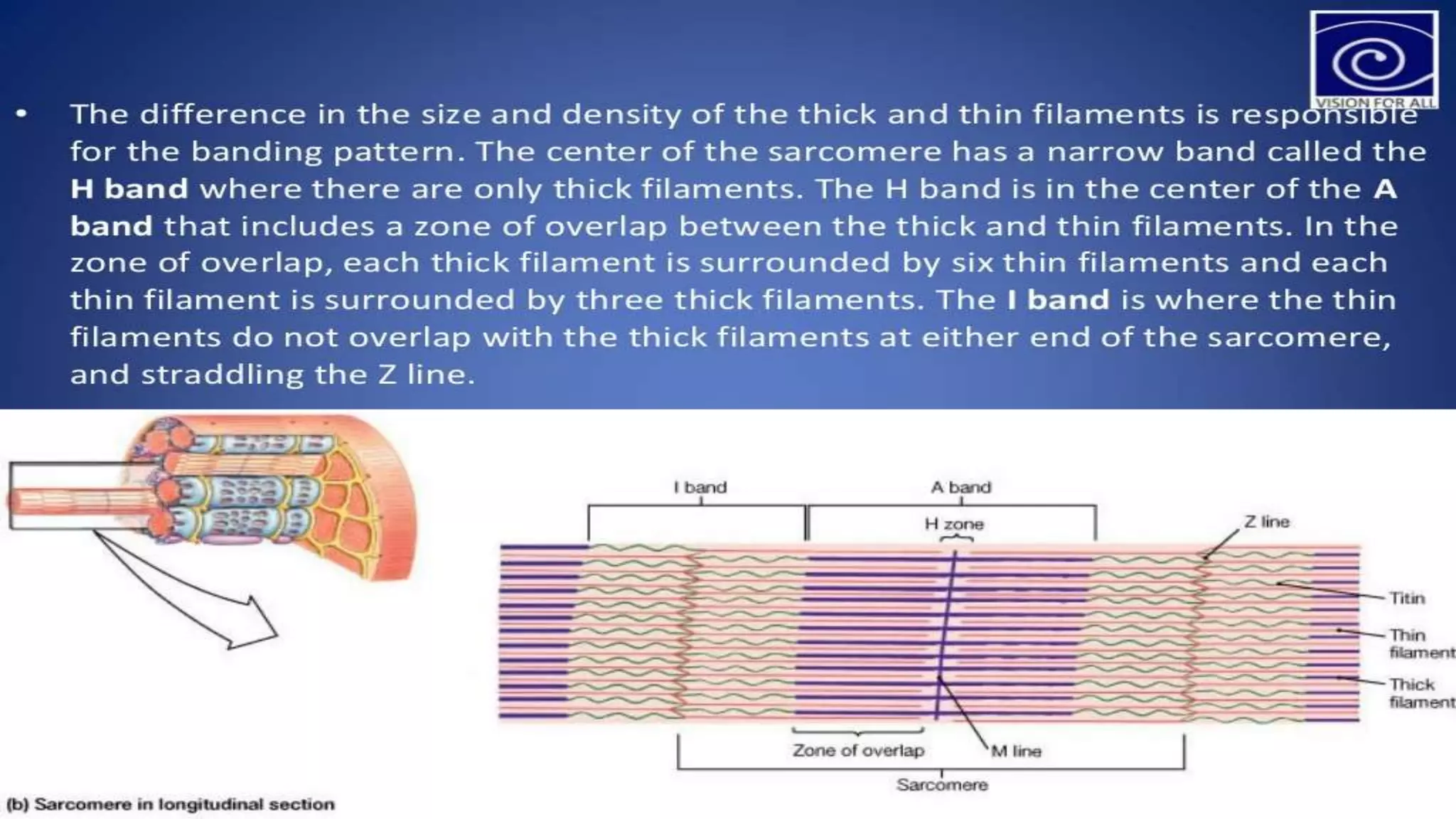
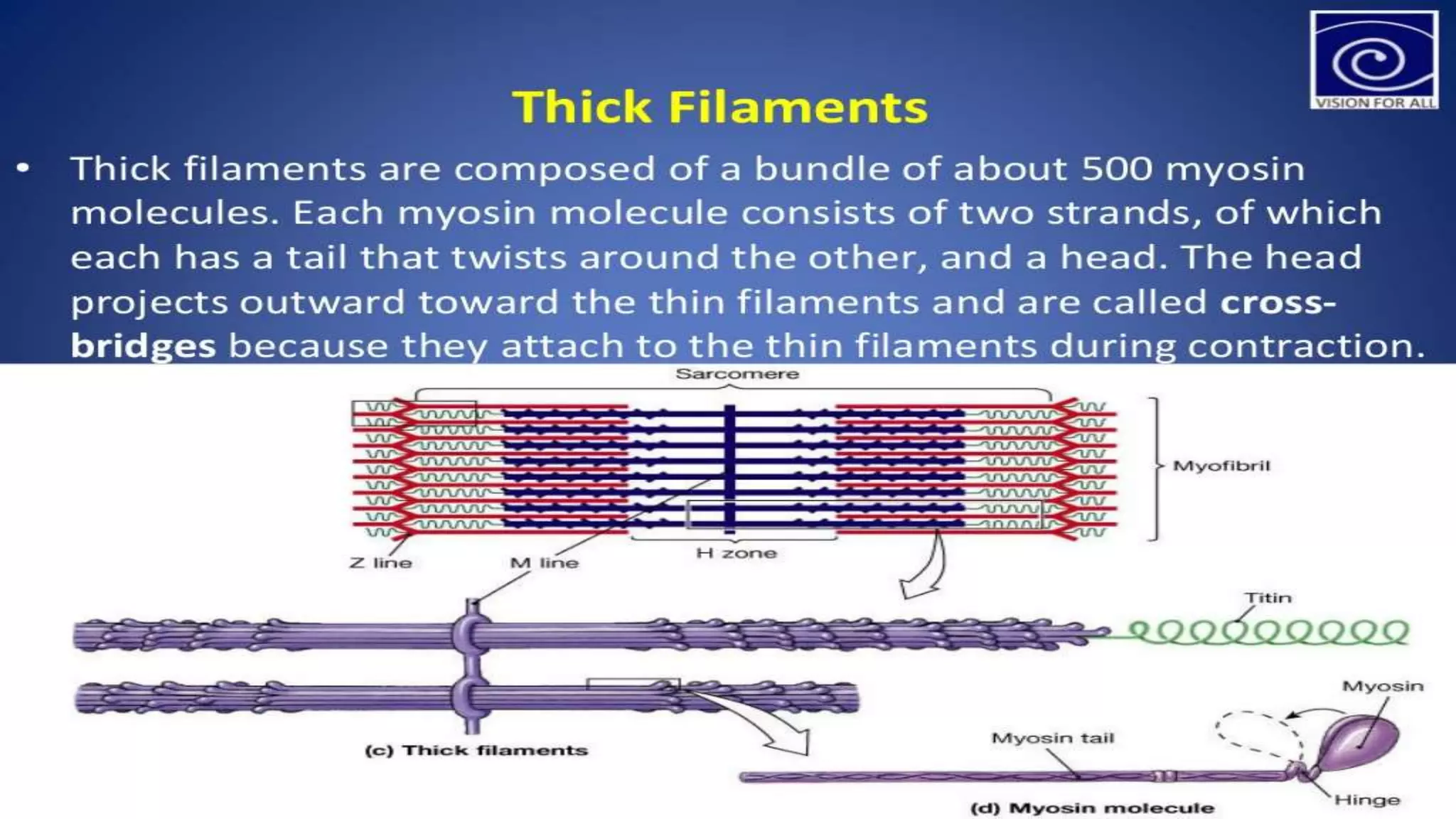
Sarcomeres:- • The myofilaments are organized in
repeating units along the length of the myofibril called
sarcomeres.
Thin Filaments
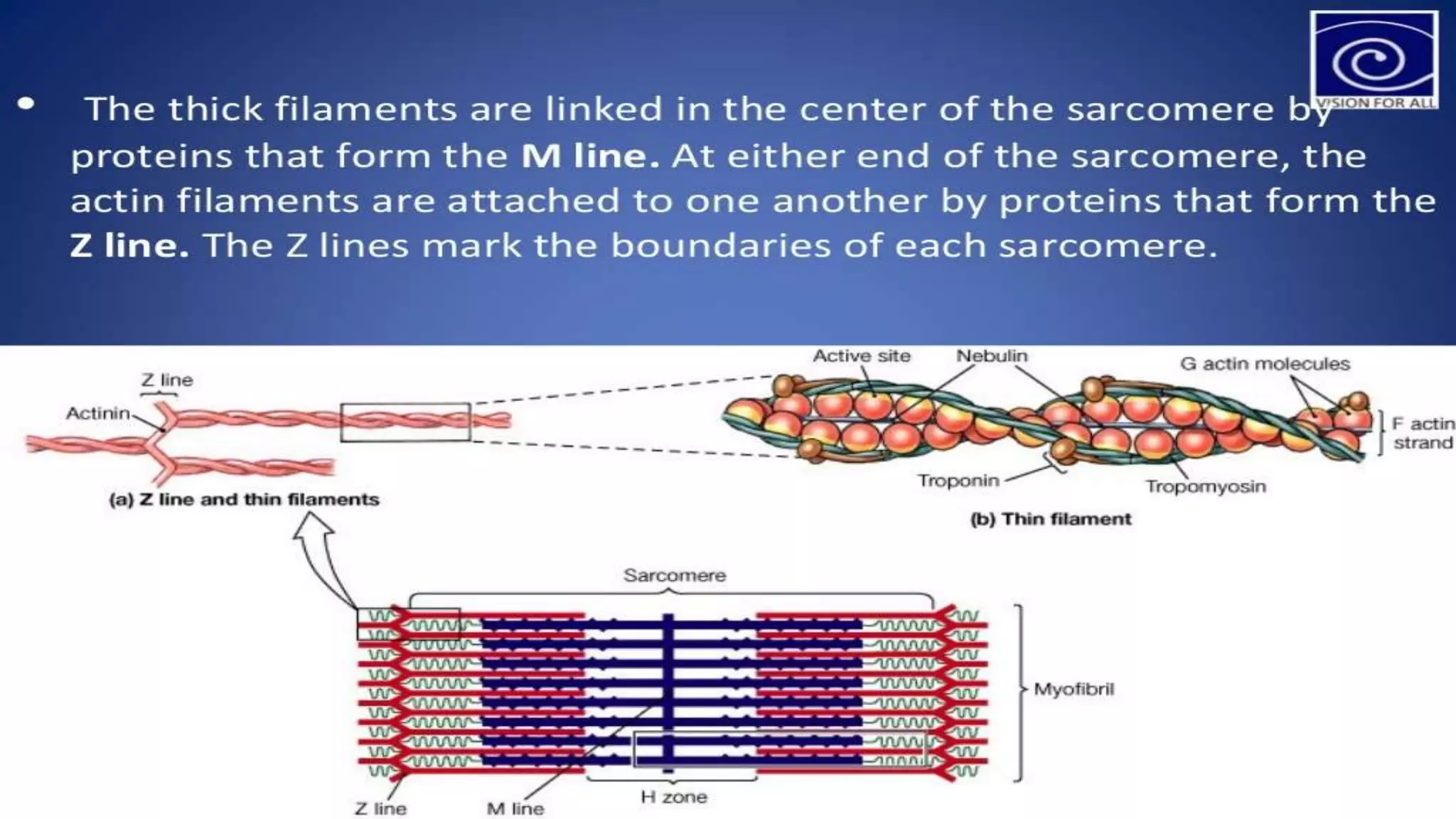
• The thin filament is composed of 300-400 G-actin protein
molecules that form a linear molecule called F-actin. The F-actin
molecules are held together by another protein called nebulin.
• Each G-actin molecule has an active site that binds to a site on
the myosin molecule. This binding is prevented by another protein
called tropomyosin that covers the active site on the actin.
• Tropomyosin is held in position by a protein called troponin.
When calcium ions bind to troponin, the position of tropomyosin
changes to uncover the binding site and permits the binding of
actin to myosin.
• At either end of the sarcomere the actin filaments are attached
to the Z line or disc by a protein called actinin.
Functions of Skeletal Muscles
• Skeletal muscles support the body. Skeletal muscle contraction opposes the force of
gravity and allows us to remain upright. Some skeletal muscles are serving this
purpose even when you think you are relaxed.
• Skeletal muscles make bones and other body parts move. Muscle contraction
accounts not only for the movement of limbs but also for eye movements, facial
expressions, and breathing.
• Skeletal muscles help maintain a constant body temperature.
• Skeletal muscle contraction causes ATP to break down, releasing heat that is
distributed about the body.
• Skeletal muscle contraction assists movement in cardiovascular and lymphatic
vessels. The pressure of skeletal muscle contraction keeps blood moving in
cardiovascular veins and lymph moving in lymphatic vessels.
• Skeletal muscles help protect internal organs and stabilize joints.
• Muscles pad the bones that protect organs, and they have tendons that help hold
bones together at joints.
• support the skeleton and create movement. • maintain joint stability and posture.
• control range of movement.
• protect the skeleton and internal organs from trauma. every skeletal muscle fiber is
supplied with a nerve ending that controls its activity.
CARDIAC MUSCLE
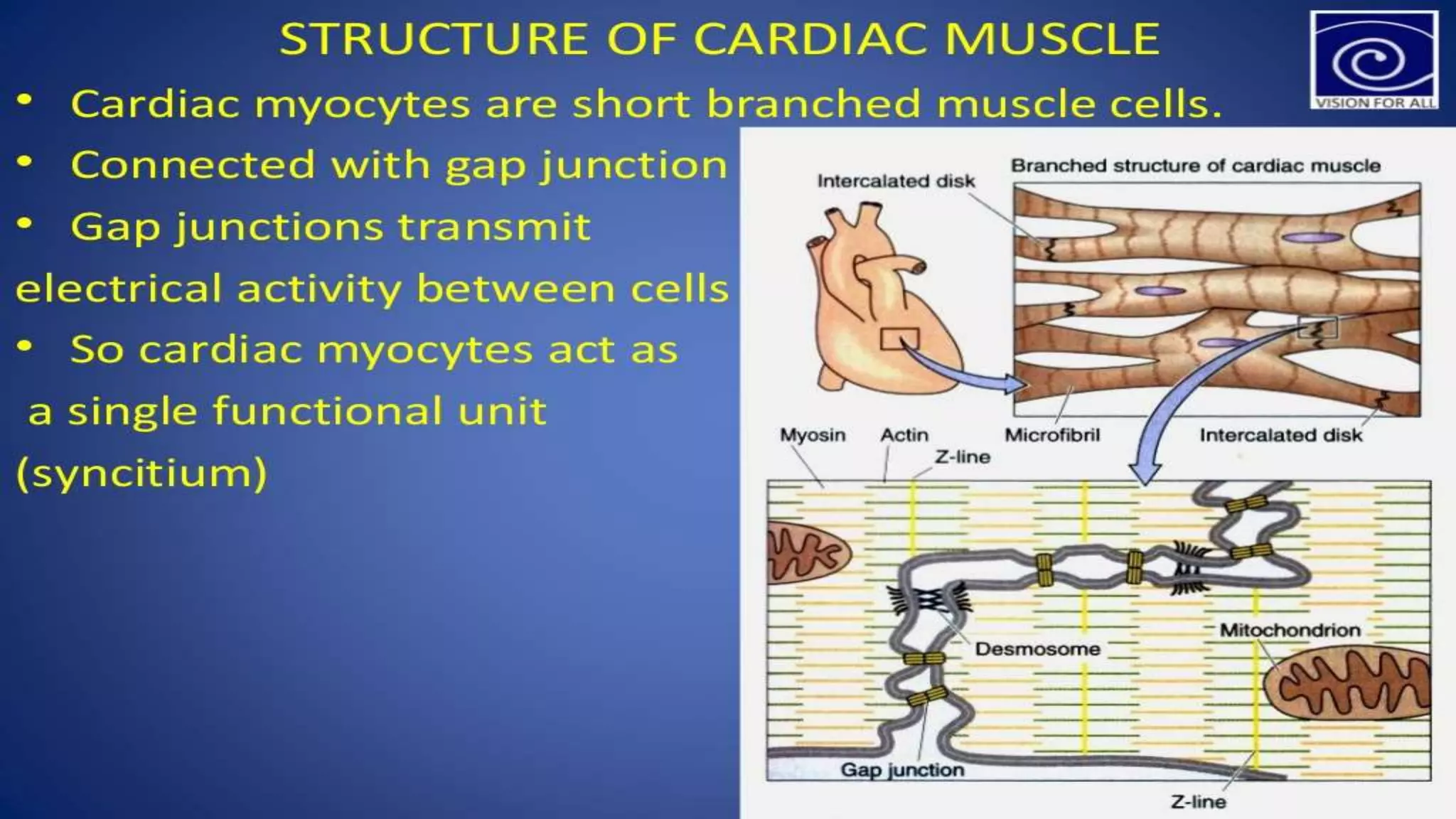
• Cardiac muscles the present in heart. it constitutes bulk of the heart walls. Many
cardiac muscle cells assemble in a branching pattern to form a cardiac muscle.
• Base on appearance cardiac muscle are striated. • They are involuntary in
nature as the nervous system does not control their activities directly.
• Most of us have no conscious control how fast our heart beats.
• Cardiac muscle fibers each have one to two nuclei and are physically and
electrically connected to each other
• Highly coordinated contractions of cardiac muscle pump blood into the vessels of
the circulatory system.
• same banding organization as skeletal muscle. • cardiac muscle fibers are
shorter than skeletal muscle fibers and usually contain only one nucleus
• which is located in the central region of the cell. Cardiac muscle fibers also
possess many mitochondria and myoglobin, as ATP is produced primarily through
aerobic metabolism.
• An intercalated disc allows the cardiac muscle cells to contract in a wave-like
pattern so that the heart can work as a pump.
• autorhythmic because of built in pacemaker.
PROPERTIES OF CARDIAC MUSCLE
1. Rhythmicity:-rhythmicity mean the ability of heart
to beat regularly without external stimulation.it is
myogenic in origin not neurogenic.
2. Conductivity:-The ability to conduct impulse from
one cell to another---facilitated by the presence of
gap junctions that transmit electrical currents.
3. Excitability:-The heart muscle responds to stimuli
which may be mechanical, electrical or chemical.
Cardiac Muscle Contraction
• Thick and thin myofilaments are arranged the same as they are in skeletal
muscle with the same bands, zones, and lines.
• Cardiac muscle contracts and relaxes rapidly, continuously, and rhythmically.
• The branching cardiac muscle fibers form a network and the networks are
located in the walls of the chambers of the heart.
• Cardiac muscle is stimulated by specialized conducting tissues within the heart.
• SR and T tubules are well developed‚ so a large amount of calcium can be
released rapidly through the T tubules.
• contains more mitochondria in each muscle cell than skeletal and smooth
muscles‚ providing more ATP energy for continuous contraction.
• muscle cells are joined by intercalated disks‚ and allow
• muscle groups to form branching networks - both features are necessary for
cardiac muscle to function as a unit sancytium.
• unique arrangement of actin and myosin filaments produces the cross-
striations (an optical illusion the microscope)‚ and rapid contraction with powerful
forces involved.
SMOOTH MUSCLES
• Smooth muscle is also present in the eyes, where it functions to change the
size of the iris and alter the shape of the lens
• Smooth muscle is present in the walls of hollow organs like the urinary bladder,
uterus, stomach, intestines, and in the walls of passageways, such as the arteries
and veins of the circulatory system,and the tracts of the respiratory, urinary, and
reproductive systems.
• in the skin where it causes hair to stand erect in response to cold temperature
or fear.• Smooth muscle non- striated and involuntary. (function are automatically)
• It surrounds and is found in all internal tissues and organs. Smooth muscle
responds to stimuli from the autonomic nervous system.
• It is responsible for pushing food through the digestive system and the physical
control of the bladder and bowel.
• It is also found in the vascular and reproductive systems.• Smooth muscles
contain filaments of actin and myosin . • Lack transverse tubules and S.R. is not
well developed .
• Hormones and stretching affect smooth muscle contractions .Can contract for a
long period of time . • Cells much smaller than skeletal muscle.
Smooth Muscle Contraction
• Smooth muscle contraction resembles skeletal muscle contraction in
that they both involve reactions of actin and myosin, they are
triggered by nerve impulses along the sarcolemma and the release of
calcium ions, and they use energy from ATP molecules.
• Smooth muscle is slower to contract and slower to relax than
skeletal muscle.
• Some smooth muscles respond to neural and chemical stimuli.
Chemical factors cause muscle contraction and relaxation
• without an action potential and inhibit or stimulate the release of
calcium ions into the sarcoplasm.
• The chemical factors include hormones, lack of oxyqen, low pH,
and excess carbon dioxide.
• The direct response of smooth muscle to chemical stimuli allows
activity according to local tissue needs.
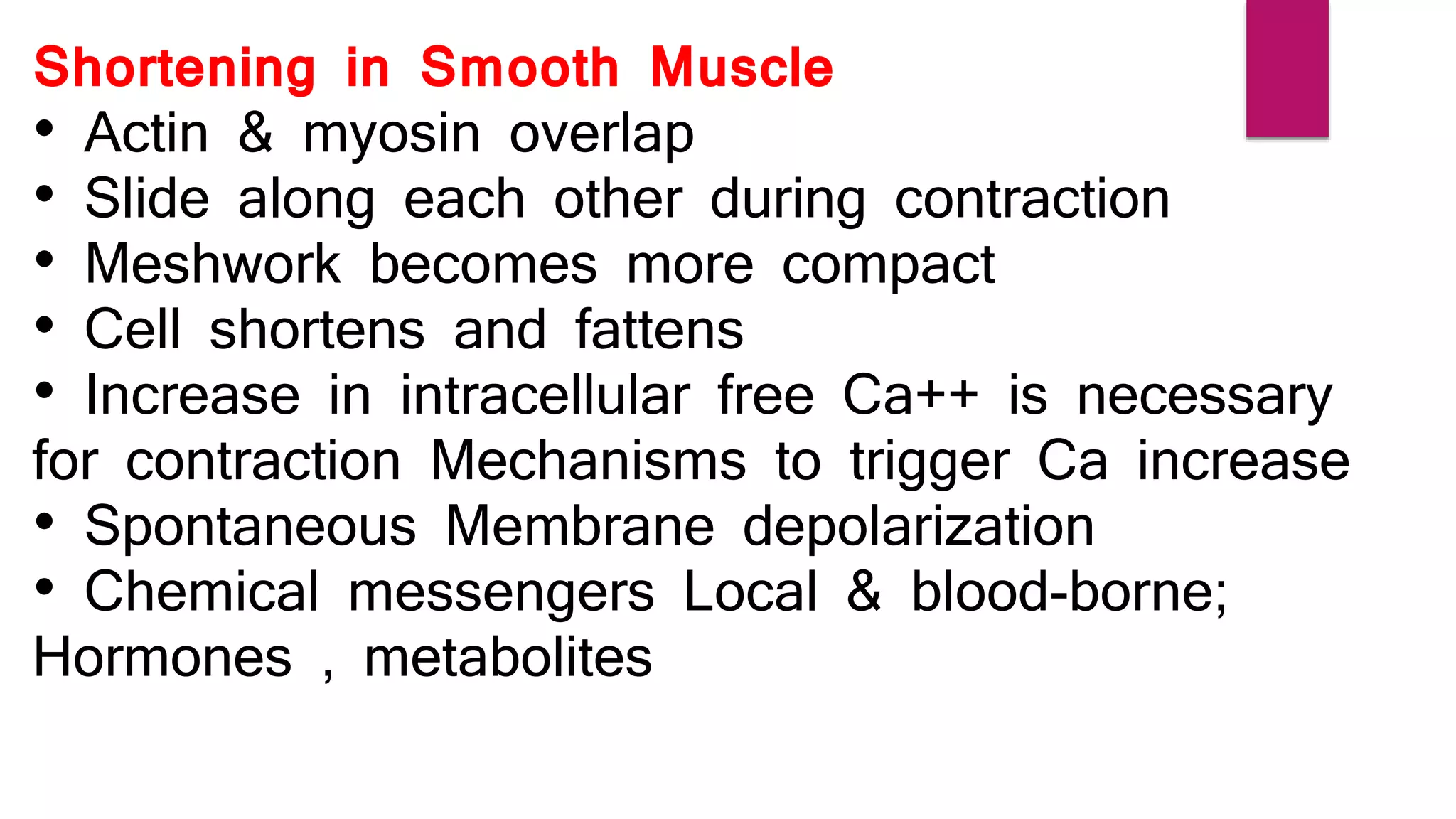
Shortening in Smooth Muscle
• Actin & myosin overlap
• Slide along each other during contraction
• Meshwork becomes more compact
• Cell shortens and fattens
• Increase in intracellular free Ca++ is necessary
for contraction Mechanisms to trigger Ca increase
• Spontaneous Membrane depolarization
• Chemical messengers Local & blood-borne;
Hormones , metabolites
THANK YOU
31

T - Types of Muscle

  • 1.
    TYPES OF MUSCLE MAHENDRA RAJAK (TGT P&HE) 1STRANK (CGPSC SPORTS OFFICER) 1
  • 2.
    • Muscles isa contractile tissue which brings about movement. • Muscle cell responsible for our movement both visible and invisible, example walking, talking, bowel movement ,urination, breathing, heartbeats, the dilation and constriction of the pupils of our eyes and many other. • When we are still sitting or standing muscle cells keep us erect. • Muscles can be regarded as motors of the body. • Muscles comprises about 40% to 50% (approximate) of body weight. • There are approximate 650 muscles in body. • Alternating contraction and relaxation of cells MUSCLES
  • 3.
    FUNCTION OF MUSCLES •The core function of muscle is convert chemical energy (ATP) into mechanical force • Producing movement:-muscles move the bone of skeletal by their connective tissue attachment. Enable all kinds of voluntary movement. • Maintaining posture and body position:- when not moving the various part of supportive skeletal are held in position by isomeric muscles contraction. • Stabilizing joint:- • Maintains body temperature:-muscle contraction generates heat that is involve in maintaining body temperature.
  • 4.
    PROPERTIES OF MUSCLES 1.Excitability–it is the ability to response to a stimulus, which may be delivered from a motor or a hormone . 2. Contractibility- it is the ability of muscle cells to forcefully shorten. 3. Extensibility- is the ability to be stretched. Lack of extensibility is called spasticity. 4.Elasticity –it is the ability to recoil or bounce back to the muscle’s original length after being stretched. • Muscles have been classified using different criteria , namely location , appearance and nature of regulation of their activities. Base on location , three types of muscles are identified.
  • 6.
    SKELETAL MUSCLE • Skeletalmuscles are also called striped muscles or voluntary. • Muscles, they are attached to bone and move the skeletal. • They control the movement of the body in relation to the Environment, e.g. hands, arms, legs,neck, trunk, eyes. • skeletal muscle are multinucleate. • Skeletal muscle is voluntary because its contraction is always stimulated and controlled by the nervous system. • The Central Nervous System sends a signal to the muscles via nerves which then convert chemical energy into movement and the muscles.
  • 8.
    IMPORTANT TERM • Myofibril:-complexorganelle compose of bundle of myofilaments • Myofilament:-macromolecular structure of contractile protein • Sarcomere:-the smallest, single contracting unit of a segment • Deep fascia:-binds large groups of muscles into functional groups • Muscle:-hundred of fascicles bound together epimysium • Fascicle:- thousands of muscle fibers bound into discrete unit by perimysium • Muscle fiber:-single muscle cell surrounded by endomysium. Muscle cell are called muscle fibers. • Sarcolemma:-plasma or cell membrane of a muscle cell • Sarcoplasm:- cytoplasm of muscle cell with large amounts of glycogen and myoglobin • Myoglobin:-red pigmented oxygen –binding protein • Connective tissue layer:-Epimysium, Perimysium, Endomysium. • Contraction depends on two kind of myofilament :- 1. Actin 2. Myosin
  • 12.
    Microanatomy of SkeletalMuscle • Skeletal muscle cells develop when hundreds of individual embryonic cells called myoblasts fuse. The resulting cells' cell membrane is called the sarcolemma and the cytoplasm is called sarcoplasm • Skeletal muscles are very large. Their diameter is about 100 microns (about 13 times the diameter of a red blood cell) and they can be as long as 30 to 40 cm (10 to 16 in. • Skeletal muscles are multinucleate. The nuclei of the myoblasts that fuse to form the cell remain within the cell. Some myoblasts do not fuse but remain associated with the fiber as satellite cells that can divide and differentiate to repair damaged cells
  • 14.
    Myofibrils:- • eachskeletal muscle cell or fiber there are cylindrical structures called myofibrils. • Contraction of the myofibrils result in contraction of the entire cell. sarcoplasmic reticulum:- • In between the loops of transverse tubule, there is a network of tubules of smooth endoplasmic reticulum called the sarcoplasmic reticulum. terminal cisternae:- • The sarcoplasmic reticulum surrounds the myofibril like a sleeve. The sarcoplasmic reticulum on either side of the loops of transverse tubules fuse to form expanded chambers called terminal cisternae.
  • 15.
    Triad:- • Thecombination of a transverse tubule flanked by two terminal cisternae is called a triad. Mitochondria:- • The energy for muscle contraction is supplied by the numerous mitochondria that surround the myofibrils. Glycogen granules:- • Glycogen granules that also surround the myofibrils as a ready source of fuel. Sarcomeres:- • The myofilaments are organized in repeating units along the length of the myofibril called sarcomeres.
  • 20.
    Thin Filaments • Thethin filament is composed of 300-400 G-actin protein molecules that form a linear molecule called F-actin. The F-actin molecules are held together by another protein called nebulin. • Each G-actin molecule has an active site that binds to a site on the myosin molecule. This binding is prevented by another protein called tropomyosin that covers the active site on the actin. • Tropomyosin is held in position by a protein called troponin. When calcium ions bind to troponin, the position of tropomyosin changes to uncover the binding site and permits the binding of actin to myosin. • At either end of the sarcomere the actin filaments are attached to the Z line or disc by a protein called actinin.
  • 22.
    Functions of SkeletalMuscles • Skeletal muscles support the body. Skeletal muscle contraction opposes the force of gravity and allows us to remain upright. Some skeletal muscles are serving this purpose even when you think you are relaxed. • Skeletal muscles make bones and other body parts move. Muscle contraction accounts not only for the movement of limbs but also for eye movements, facial expressions, and breathing. • Skeletal muscles help maintain a constant body temperature. • Skeletal muscle contraction causes ATP to break down, releasing heat that is distributed about the body. • Skeletal muscle contraction assists movement in cardiovascular and lymphatic vessels. The pressure of skeletal muscle contraction keeps blood moving in cardiovascular veins and lymph moving in lymphatic vessels. • Skeletal muscles help protect internal organs and stabilize joints. • Muscles pad the bones that protect organs, and they have tendons that help hold bones together at joints. • support the skeleton and create movement. • maintain joint stability and posture. • control range of movement. • protect the skeleton and internal organs from trauma. every skeletal muscle fiber is supplied with a nerve ending that controls its activity.
  • 23.
    CARDIAC MUSCLE • Cardiacmuscles the present in heart. it constitutes bulk of the heart walls. Many cardiac muscle cells assemble in a branching pattern to form a cardiac muscle. • Base on appearance cardiac muscle are striated. • They are involuntary in nature as the nervous system does not control their activities directly. • Most of us have no conscious control how fast our heart beats. • Cardiac muscle fibers each have one to two nuclei and are physically and electrically connected to each other • Highly coordinated contractions of cardiac muscle pump blood into the vessels of the circulatory system. • same banding organization as skeletal muscle. • cardiac muscle fibers are shorter than skeletal muscle fibers and usually contain only one nucleus • which is located in the central region of the cell. Cardiac muscle fibers also possess many mitochondria and myoglobin, as ATP is produced primarily through aerobic metabolism. • An intercalated disc allows the cardiac muscle cells to contract in a wave-like pattern so that the heart can work as a pump. • autorhythmic because of built in pacemaker.
  • 25.
    PROPERTIES OF CARDIACMUSCLE 1. Rhythmicity:-rhythmicity mean the ability of heart to beat regularly without external stimulation.it is myogenic in origin not neurogenic. 2. Conductivity:-The ability to conduct impulse from one cell to another---facilitated by the presence of gap junctions that transmit electrical currents. 3. Excitability:-The heart muscle responds to stimuli which may be mechanical, electrical or chemical.
  • 26.
    Cardiac Muscle Contraction •Thick and thin myofilaments are arranged the same as they are in skeletal muscle with the same bands, zones, and lines. • Cardiac muscle contracts and relaxes rapidly, continuously, and rhythmically. • The branching cardiac muscle fibers form a network and the networks are located in the walls of the chambers of the heart. • Cardiac muscle is stimulated by specialized conducting tissues within the heart. • SR and T tubules are well developed‚ so a large amount of calcium can be released rapidly through the T tubules. • contains more mitochondria in each muscle cell than skeletal and smooth muscles‚ providing more ATP energy for continuous contraction. • muscle cells are joined by intercalated disks‚ and allow • muscle groups to form branching networks - both features are necessary for cardiac muscle to function as a unit sancytium. • unique arrangement of actin and myosin filaments produces the cross- striations (an optical illusion the microscope)‚ and rapid contraction with powerful forces involved.
  • 27.
    SMOOTH MUSCLES • Smoothmuscle is also present in the eyes, where it functions to change the size of the iris and alter the shape of the lens • Smooth muscle is present in the walls of hollow organs like the urinary bladder, uterus, stomach, intestines, and in the walls of passageways, such as the arteries and veins of the circulatory system,and the tracts of the respiratory, urinary, and reproductive systems. • in the skin where it causes hair to stand erect in response to cold temperature or fear.• Smooth muscle non- striated and involuntary. (function are automatically) • It surrounds and is found in all internal tissues and organs. Smooth muscle responds to stimuli from the autonomic nervous system. • It is responsible for pushing food through the digestive system and the physical control of the bladder and bowel. • It is also found in the vascular and reproductive systems.• Smooth muscles contain filaments of actin and myosin . • Lack transverse tubules and S.R. is not well developed . • Hormones and stretching affect smooth muscle contractions .Can contract for a long period of time . • Cells much smaller than skeletal muscle.
  • 28.
    Smooth Muscle Contraction •Smooth muscle contraction resembles skeletal muscle contraction in that they both involve reactions of actin and myosin, they are triggered by nerve impulses along the sarcolemma and the release of calcium ions, and they use energy from ATP molecules. • Smooth muscle is slower to contract and slower to relax than skeletal muscle. • Some smooth muscles respond to neural and chemical stimuli. Chemical factors cause muscle contraction and relaxation • without an action potential and inhibit or stimulate the release of calcium ions into the sarcoplasm. • The chemical factors include hormones, lack of oxyqen, low pH, and excess carbon dioxide. • The direct response of smooth muscle to chemical stimuli allows activity according to local tissue needs.
  • 29.
    Shortening in SmoothMuscle • Actin & myosin overlap • Slide along each other during contraction • Meshwork becomes more compact • Cell shortens and fattens • Increase in intracellular free Ca++ is necessary for contraction Mechanisms to trigger Ca increase • Spontaneous Membrane depolarization • Chemical messengers Local & blood-borne; Hormones , metabolites
  • 31.