Systems Performance Modeling Adarsh Anand Editor Mangey Ram Editor
1.
Systems Performance ModelingAdarsh Anand Editor
Mangey Ram Editor download
https://ebookbell.com/product/systems-performance-modeling-
adarsh-anand-editor-mangey-ram-editor-50338472
Explore and download more ebooks at ebookbell.com
2.
Here are somerecommended products that we believe you will be
interested in. You can click the link to download.
Systems Performance Modeling Adarsh Anand Mangey Ram
https://ebookbell.com/product/systems-performance-modeling-adarsh-
anand-mangey-ram-232590044
High Performance Computing Systems Performance Modeling Benchmarking
And Simulation 4th International Workshop Pmbs 2013 Denver Co Usa
November 18 2013 Revised Selected Papers 1st Edition Stephen A Jarvis
https://ebookbell.com/product/high-performance-computing-systems-
performance-modeling-benchmarking-and-simulation-4th-international-
workshop-pmbs-2013-denver-co-usa-november-18-2013-revised-selected-
papers-1st-edition-stephen-a-jarvis-4932472
High Performance Computing Systems Performance Modeling Benchmarking
And Simulation 5th International Workshop Pmbs 2014 New Orleans La Usa
November 16 2014 Revised Selected Papers 1st Edition Stephen A Jarvis
https://ebookbell.com/product/high-performance-computing-systems-
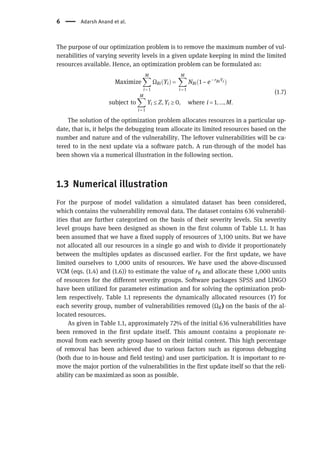
performance-modeling-benchmarking-and-simulation-5th-international-
workshop-pmbs-2014-new-orleans-la-usa-november-16-2014-revised-
selected-papers-1st-edition-stephen-a-jarvis-5140942
High Performance Computing Systems Performance Modeling Benchmarking
And Simulation 8th International Workshop Pmbs 2017 Denver Co Usa
November 13 2017 Proceedings 1st Edition Stephen Jarvis
https://ebookbell.com/product/high-performance-computing-systems-
performance-modeling-benchmarking-and-simulation-8th-international-
workshop-pmbs-2017-denver-co-usa-november-13-2017-proceedings-1st-
edition-stephen-jarvis-6842962
3.
Buildingintegrated Photovoltaic SystemsBipvs Performance And Modeling
Under Outdoor Conditions 1st Edition Andrs Julin Aristizbal Cardona
https://ebookbell.com/product/buildingintegrated-photovoltaic-systems-
bipvs-performance-and-modeling-under-outdoor-conditions-1st-edition-
andrs-julin-aristizbal-cardona-6842768
Performance Modeling Of Operating Systems Using Objectoriented
Simulation A Practical Introduction 1st Edition Jos M Garrido Auth
https://ebookbell.com/product/performance-modeling-of-operating-
systems-using-objectoriented-simulation-a-practical-introduction-1st-
edition-jos-m-garrido-auth-4199634
Workload Modeling For Computer Systems Performance Evaluation Dror G
Feitelson
https://ebookbell.com/product/workload-modeling-for-computer-systems-
performance-evaluation-dror-g-feitelson-51710946
Performance Modeling And Design Of Computer Systems Queueing Theory In
Action Mor Harcholbalter
https://ebookbell.com/product/performance-modeling-and-design-of-
computer-systems-queueing-theory-in-action-mor-harcholbalter-4924082
Performance Modeling And Evaluation Of Pavement Systems And Materials
Selected Papers From The 2009 Geohunan International Conference August
36 2009 Changsha Hunan China American Society Of Civil Engineers
https://ebookbell.com/product/performance-modeling-and-evaluation-of-
pavement-systems-and-materials-selected-papers-from-the-2009-geohunan-
international-conference-august-36-2009-changsha-hunan-china-american-
society-of-civil-engineers-5394510
Acknowledgment
The editors acknowledgeWalter de Gruyter and the editorial team for their ade-
quate and professional support during the preparation of this book. They thank all
authors who have contributed to this editorial work. Reviewers, who have helped
through their comments and suggestions in improving the quality of the chapters,
deserve significant praise for their assistance.
Finally and most importantly, editors dedicate this editorial book to their family
and friends.
Adarsh Anand
University of Delhi, India
Mangey Ram
Graphic Era Deemed to be University, India
https://doi.org/10.1515/9783110619058-202
11.
Preface
Virtually all countriesnow depend on complex computer-based systems. Infrastructure
and utilities rely on the computer-based systems, and almost everything that surrounds
us includes a computer and controlling software. Information and communication
technologies have been at the heart of economic changes for more than a decade, nota-
bly in all areas of businesses. In line with this, this edited issue of System Performance
Modeling includes invited papers that deal with the modeling and analysis of software
systems with the aid of computers. Emphasis is on concepts, theories, and techniques
developed in the infocom discipline. The topics covered are organized as follows:
Chapter 1 discusses software vulnerability patch management, which is one of
the newer areas of research.
Chapter 2 discusses the debugging process for modeling quality and reliability
aspects of the software project management.
In Chapter 3, an analysis pertaining to vehicular cloud computing has been
presented.
Chapter 4 presents a comparative study dealing with the agile methodology in-
culcating increasing failure rate software reliability models.
In today’s time, everyone is talking and dealing with the three Vs, which we
know by the name of big data. Chapter 5 presents a mathematical framework to
model the fault big data analysis based on effort estimation and artificial intelli-
gence for Open Source Software Project.
Every system, be it hardware or software, requires data. The more accurate the
data, the more are the chances that the results will be error-free. Chapter 6 presents
a modeling framework that deals with the meaning of data streams and its impact
on the system performance.
Chapter 7 discusses assessing the reliability of public switched telephone net-
work, which is the most useful telecommunication network in general.
No software is complete unless some articulation is talked about for hard-
ware, as both go hand in hand when talked about a complex system. Chapter 8
contains a description of the utility of Weibull failure laws for reliability measures
of a series–parallel system.
Adarsh Anand
University of Delhi, India
Mangey Ram
Graphic Era Deemed to be University, India
https://doi.org/10.1515/9783110619058-203
13.
About the editors
AdarshAnand did his doctorate in the area of Software Reliability Assessment and Innovation
Diffusion Modeling in Marketing. Presently, he works as an assistant professor in the Department
of Operational Research, University of Delhi (INDIA). He has been conferred with Young Promising
Researcher in the field of Technology Management and Software Reliability by Society for
Reliability Engineering, Quality and Operations Management (SREQOM) in 2012. He is a lifetime
member of the Society for Reliability Engineering, Quality and Operations Management (SREQOM).
He is also on the editorial board of International Journal of System Assurance and Engineering
Management (Springer). He has guest edited several special issues for journals of international re-
pute. He has publications in journals of national and international repute. His research interest
includes software reliability growth modeling, modeling innovation adoption and successive gen-
erations in marketing, and social network analysis. He has worked with CRC Press for two editorial
projects; “System Reliability Management: Solutions and Technologies” and “Recent Advancements
in Software Reliability Assurance.” He has also authored one textbook with CRC group “Market
Assessment with OR Applications.”
Dr. Mangey Ram received the Ph.D. degree major in mathematics and minor in computer science
from G. B. Pant University of Agriculture and Technology, Pantnagar, India. He has been a faculty
member for around 12 years and has taught several core courses in pure and applied mathematics
at undergraduate, postgraduate, and doctorate levels. He is currently a professor at Graphic Era
(Deemed to be University), Dehradun, India. Before joining the Graphic Era, he was a deputy man-
ager (probationary officer) with Syndicate Bank for a short period. He is the editor in chief of
International Journal of Mathematical, Engineering and Management Sciences, and the guest editor
and member of the editorial board of various journals. He is a regular reviewer for international
journals, including IEEE, Elsevier, Springer, Emerald, John Wiley, Taylor & Francis, and many other
publishers. He has published 175 plus research publications in IEEE, Taylor & Francis, Springer,
Elsevier, Emerald, World Scientific, and many other national and international journals of repute
and also presented his works at national and international conferences. His fields of research are
reliability theory and applied mathematics. Dr. Ram is a senior member of the IEEE, life member of
Operational Research Society of India, Society for Reliability Engineering, Quality and Operations
Management in India, Indian Society of Industrial and Applied Mathematics, member of International
Association of Engineers in Hong Kong, and Emerald Literati Network in the UK. He has been a mem-
ber of the organizing committee of a number of international and national conferences, seminars,
and workshops. He has been conferred with the Young Scientist Award by the Uttarakhand State
Council for Science and Technology, Dehradun, in 2009. He has been awarded the Best Faculty
Award in 2011; Research Excellence Award in 2015; and recently, Outstanding Researcher Award in
2018 for his significant contribution in academics and research at Graphic Era Deemed to be
University, Dehradun, India.
https://doi.org/10.1515/9783110619058-204
15.
Contents
Acknowledgment V
Preface VII
Aboutthe editors IX
List of contributing authors XIII
Adarsh Anand, Jasmine Kaur, Anu A. Gokhale, and Mangey Ram
1 Impact of available resources on software patch management 1
Shinji Inoue and Shigeru Yamada
2 Debugging process modeling for quality/reliability assessment of
software system 13
Shivani Gupta and Vandana Gupta
3 Availability analysis of vehicular cloud computing 21
Gabriel Ricardo Pena and Nestor Ruben Barraza
4 Increasing failure rate software reliability models for agile projects:
a comparative study 45
Yoshinobu Tamura and Shigeru Yamada
5 Fault big data analysis based on effort prediction models and AI for
open-source project 67
Mario Diván and María Laura Sánchez-Reynoso
6 Modeling the meaning of data streams and its impact on the system
performance 79
Kuldeep Nagiya and Mangey Ram
7 Performance evaluation of switched telephone exchange network 123
S. C. Malik and S. K. Chauhan
8 On use of Weibull failure laws for reliability measures of a series–parallel
system 141
Index 177
17.
List of contributingauthors
Adarsh Anand
Department of Operational Research
University of Delhi
Delhi, India
adarsh.anand86@gmail.com
Nestor Ruben Barraza
Universidad Nacional de Tres de Febrero
Buenos Aires, Argentina
nbarraza@untref.edu.ar
S. K. Chauhan
Shaheed Rajguru College of Applied Sciences
for Women
University of Delhi
New Delhi, India
statskumar1@gmail.com
Mario Diván
National University of La Pampa
La Pampa, Argentina
mjdivan@eco.unlpam.edu.ar
Anu A. Gokhale
Illinois State University
Normal, Illinois, USA
aagokhale@ilstu.edu
Shivani Gupta
University of Delhi
Delhi, India
shivani222gupta@gmail.com
Vandana Gupta
University of Delhi
Delhi, India
khaitan.vandana@gmail.com
Shinji Inoue
Kansai University
Osaka, Japan
ino@kansai-u.ac.jp
Jasmine Kaur
University of Delhi
Delhi, India
jasminekaur.du.aor@gmail.com
S. C. Malik
Maharshi Dayanand University
Rohtak, India
sc_malik@rediffmail.com
Kuldeep Nagiya
Graphic Era Deemed to be University
Dehradun, Uttarakhand, India
kuldeepnagiya@gmail.com
Gabriel Ricardo Pena
Universidad Nacional de Tres de Febrero
Buenos Aires, Argentina
gpena@untref.edu.ar
Mangey Ram
Department of Mathematics, Computer
Science and Engineering
Graphic Era Deemed to be University
Dehradun, Uttarakhand, India
drmrswami@yahoo.com
María Laura Sánchez Reynoso
National University of La Pampa
La Pampa, Argentina
mlsanchezreynoso@eco.unlpam.edu.ar
Yoshinobu Tamura
Tokyo City University
Tokyo, Japan
tamuray@tcu.ac.jp
Shigeru Yamada
Tottori University
Tottori, Japan
yamada@tottori-u.ac.jp
https://doi.org/10.1515/9783110619058-206
19.
Adarsh Anand, JasmineKaur, Anu A. Gokhale, and Mangey Ram
1 Impact of available resources on software
patch management
Abstract: Software security has been an area of immense research as most of the
things surrounding us are technology based. Much has been talked about vulner-
abilities, their categories and types. Some studies elaborated and extended the
available discovery models but few have considered the correction process in the
same work. In this study, an approach to deal with software vulnerability through
the release of patch/updates has been presented. The methodical work pre-
sented here discusses a mathematical model for optimal allocation of resources
to remove vulnerabilities through an update.
Keywords: severity, software patch, software security, software updates, vulnerability,
vulnerability correction model
1.1 Introduction
Software security is a matter of grave concern, and the need for secure software has
been stressed upon enough. The first half of the year 2019 had already seen 3,800
cases of publicly disclosed software breaches and 4.1 billion records exposed [1]. With
the hacking tools getting more and more advanced, it is a tough fight to keep the sys-
tem safe from the intruders. Even minor loopholes or oversights leave the software
highly vulnerable. Often, the exploited loopholes have a fix available, but due to lack
of comprehension of the situation’s gravity, they are never plugged. Such faults or
glitches in the system architecture, design, code or implementation that compromises
the software’s security are termed as software vulnerabilities. The most common vul-
nerabilities are caused by memory safety violations, input validation error, privilege
confusion bugs, privilege escalation, race conditions, side channel attack, and user in-
terface failure. The most common types of vulnerabilities are SQL injection, command
injection, buffer overflow, uncontrolled format string, integer overflow, cross-site
scripting, and so on. The software vulnerabilities are also categorized on the basis
of the extent of damage their presence or exploitability causes. The Common
Vulnerabilities and Exposures (CVE) database provides a Common Vulnerability
Scoring System (CVSS) score to the reported vulnerabilities known as the severity
Adarsh Anand, Jasmine Kaur, University of Delhi, Delhi, India
Anu A. Gokhale, Illinois State University, USA
Mangey Ram, Graphic Era Deemed to be University Dehradun, Uttarakhand, India
https://doi.org/10.1515/9783110619058-001
20.
index on anascending scale of 1 to 10 [2]. On the basis of severity score, vulner-
abilities are categorized as low, medium, high, and critical. The vulnerability dis-
covery process is modeled through Vulnerability Discovery Models (VDMs), which
help quantify the vulnerabilities discovered and understand their detection behavior
with time. The foremost software VDM was the Anderson’s thermodynamic model [3].
Rescorla [4] presented a linear and exponential trend in the vulnerability detection
process. The Alhazmi-Malaiya model, an S-shaped, logistic VDM defined the three
phases in the vulnerability discovery process as linear, learning, and saturation [5].
An effort-based model was proposed by Alhazmi and Malaiya [6] to model the effort
consumed in terms of resources and budget in finding the vulnerabilities. Arora et al.
[7] had discussed the optimal policy for vulnerability disclosure. Kapur et al. [8] pro-
posed a logistic rate in the vulnerability detection model. The model by Anand and
Bhatt [9] proposed a hump-shaped vulnerability detection rate. Bhatt et al. [10] dis-
cussed a VDM that categorizes the discovered vulnerabilities as leading vulnerabil-
ities and additional vulnerabilities. Vulnerability discovery process over multiple
versions of the software has been modeled by Anand et al. [11].
The software firms tend to test the software for vulnerabilities and release a re-
medial patch, or a bunch of patches simultaneously known as updates, depending
on the number of vulnerabilities to be catered. Software patches are sets of correc-
tive code meant to replace the defective, fault-causing code and thus prevent ex-
ploitability. Beattie et al. [12] presented a mathematical model to determine the best
time to apply a security patch for software vulnerability. The utility of patches in
improving the software was first mathematically discussed in a Software Reliability
Growth Model (SRGM) by Jiang and Sarkar [13], Arora et al. [14] had discussed the
impact of patching on the software quality. Das et al. and Deepika et al. [15, 16] had
explored the role of the tester and the user in software reliability growth via the
patch service. Anand et al. [17] highlighted the importance of providing patching
service in the software and proposed a scheduling policy for the optimal release of
software. Anand et al. [18] considered faults and vulnerabilities simultaneously and
presented optimal patch release policy. Recently, Kaur et al. [19] presented the first
vulnerability correction model (VCM) and discussed the mathematical frame for the
time gap between the correction of leading and dependent vulnerabilities.
Precautions need to be taken during the software development process to mini-
mize the possibility of vulnerabilities. Better coding practices, better organizational
practices, exhaustive testing, and so on, can help reduce the number of vulnerabil-
ities in the software. The presence of vulnerability itself in the software is not the
main concern but rather their exploitability is. It is not possible to ensure vulnera-
bility free software but their number can be minimized so as to avoid damage
through exploitability. After the release of the software the only way to ensure
software security is continuous and exhaustive testing of the software. The devel-
opmental resources in the form of manpower, budget, time, and so on, available
throughout the project are in a limited supply. The available resources are allocated
2 Adarsh Anand et al.
21.
to each phaseof the Software Development Life Cycle (SDLC) and a major portion of
it goes in software testing (both before and after software release). We know that test-
ing the software in-house is cheaper as compared to field testing, thus release of
patches and updates as part of maintenance activities is expensive. During the vul-
nerability removal process, usually preference is given to vulnerabilities with higher
severity as they are likely to cause bigger damage. But the less severe vulnerabilities
cannot be ignored as they too are dangerous and can cause critical damage upon ex-
ploitation. The number of vulnerabilities that can be dealt in an update depends on
many factors such as the number of vulnerabilities in the software, the resources
available to patch them, and the nature/severity of the vulnerability. Hence, an opti-
mal allocation of resources is very essential for the operational phase. A trade-off
needs to be understood to plan an update so that the maximum number of vulner-
abilities can be catered with the proper utilization of the limited resources at hand.
Since the number of vulnerabilities in software is usually large, not all vulnerabilities
can be handled in a single update. For a singular issue or for dealing with a handful
of vulnerabilities, patches are released. But when a large number of vulnerabilities
need to be dealt with, the patches are clubbed together and released to the user as an
update. For a particular version of the software, multiple singular patches or updates
can be released depending on the need of the software.
In literature, the resource allocation problem has been extensively explored in the
context of software reliability growth models [20–30]. A lot has been discussed and
presented in past in the context of SRGMs but there is limited work done when VDM is
talked about from resource allocation point of view. A recent work by Bhatt et al. [31] is
the first to discuss an optimal resource allocation model for the vulnerability discovery
process.
The optimization problem to maximize a quantity (vulnerability correction)
while trying to minimize the use of the other (resource utilization), has been taken
up in the current work. An effort has been made to allocate an optimal amount of
resources for software vulnerability correction process. The allocation of the resour-
ces will lead to increased security, improved reliability, and quality of the software.
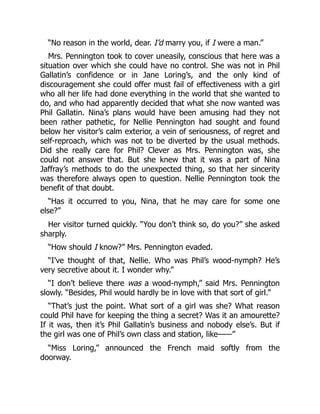
The flow of the model can be understood through Figure 1.1.
Patch 1
0 Patch 2 Patch 3 Patch 4 Nth Patch T
Figure 1.1: Flow of the model.
1 Impact of available resources on software patch management 3
22.
The chapter hasbeen bifurcated as follows: Section 1.2 discusses the notations and
model development, Section 1.3 presents a numerical example to validate the pro-
posed model, and Section 1.4 concludes the chapter and is followed by a list of the
references used.
1.2 Model development
1.2.1 Notations
The notations used in the model development are:
M : Number of severity level groups pertaining to software vulnerability
i : Variable representing the severity level group, i = 1, 2, . . ., M
NRi : Expected number of vulnerabilities of ith severity group
rRi : Vulnerability removal rate
yiðtÞ: Resource utilization at time t for ith severity group and
Yi t
ð Þ =
Ðt
0 yi w
ð Þdw for ith severity group
Y*
i : Optimal value of Yi, i = 1, 2, . . ., M
Z : Total resources available
ΩRiðtÞ : Number of vulnerabilities removed in ð0, t of the ith severity group,
that is, mean value function of the Non Homogeneous Poisson Process
(NHPP)
ΩRiðYiðtÞÞ: Cumulative number of vulnerabilities removed using resources YiðtÞ in
time ð0, t
T : Total time available for the vulnerability removal process
1.2.2 Resource allocation problem
The work in vulnerability modeling extensively deals with either the vulnerability de-
tection process or the vulnerability exploitation process. The vulnerability correction
process has not obtained much attention even though it is a very important aspect of
the vulnerability life cycle. The VCM presented by Kaur et al. [19] describes the vulnera-
bility removal/fixation phenomenon for the detected vulnerabilities. They had further
categorized the removed vulnerabilities as leading and dependent. In this section, we
shall extend upon their work and present another VCM that will then be used to allo-
cate resources for releasing updates. The work of Rescorla [4] along with the proposals
of Alhazmi and Malaiya [6] has been considered to design our present mathematical
structure.
4 Adarsh Anand et al.
23.
Recently, Bhatt etal. [31] had presented a model to dynamically allocate resour-
ces to discover vulnerabilities of varying severity levels. The following differential
equation defines the relation between the effort consumed in detecting vulnerabil-
ities of ith severity level and the number of vulnerabilities discovered:
dΩi t
ð Þ
dt
xi t
ð Þ = ri Ni − Ωi t
ð Þ
ð Þ, i = 1, 2, ..., n, (1:1)
where Ωi t
ð Þdenotes the number of vulnerabilities of ith severity detected till time t;
Ni is the number of vulnerabilities detected of ith severity and ri represents their detec-
tion rate, while xi t
ð Þ represents the resources or effort spent in vulnerability detection.
Solution of the eq. (1.1) gives
Ωi t
ð Þ = Ni 1 − e− ri.Xi t
ð Þ
, i = 1, 2, ..., n, (1:2)
Using the above-mentioned analogy, the effort consumption in the vulnerability re-
moval phenomena can be defined on the lines of effort-based vulnerability detec-
tion phenomena. According to the work of Kaur et al. [19], the VCM is an NHPP and
effort-based VDM is NHPP; hence, the effort-based VCM would also follow NHPP.
The VCM can thus be defined as
dΩRi t
ð Þ
dt
yi t
ð Þ = rRi NRi − ΩRi t
ð Þ
ð Þ, i = 1, 2, ..., M. (1:3)
Solving the differential equation with initial conditions t = 0, Yi t
ð Þ = 0 and ΩRi t
ð Þ = 0,
we obtain the relation as
ΩRi t
ð Þ = NRi 1 − e− rRi.Yi t
ð Þ
, i = 1, 2, ..., M. (1:4)
Using the exponential distribution to define the behavior of the effort function as
described by Bhatt et al. [31], we obtain
dYi t
ð Þ
dt
= gi λi − Yi t
ð Þ
ð Þ, i = 1, 2, ..., M, (1:5)
where gi represents the rate at which the available resources are consumed in the
vulnerability removal of the ith severity level group and λi denotes the total resour-
ces that are available to remove vulnerabilities of a given severity level group. The
solution of the above-mentioned differential equation gives us
Yi t
ð Þ = λi 1 − e− gi.t
, i = 1, 2, ..., M. (1:6)
1 Impact of available resources on software patch management 5
24.
The purpose ofour optimization problem is to remove the maximum number of vul-
nerabilities of varying severity levels in a given update keeping in mind the limited
resources available. Hence, an optimization problem can be formulated as:
Maximize
X
M
i = 1
ΩRiðYiÞ =
X
M
i = 1
NRið1 − e− rRiYi Þ
subject to
X
M
i = 1
Yi ≤ Z, Yi ≥ 0, where i = 1, ..., M.
(1:7)
The solution of the optimization problem allocates resources in a particular up-
date, that is, it helps the debugging team allocate its limited resources based on the
number and nature and of the vulnerability. The leftover vulnerabilities will be ca-
tered to in the next update via a software patch. A run-through of the model has
been shown via a numerical illustration in the following section.
1.3 Numerical illustration
For the purpose of model validation a simulated dataset has been considered,
which contains the vulnerability removal data. The dataset contains 636 vulnerabil-
ities that are further categorized on the basis of their severity levels. Six severity
level groups have been designed as shown in the first column of Table 1.1. It has
been assumed that we have a fixed supply of resources of 3,100 units. But we have
not allocated all our resources in a single go and wish to divide it proportionately
between the multiples updates as discussed earlier. For the first update, we have
limited ourselves to 1,000 units of resources. We have used the above-discussed
VCM (eqs. (1.4) and (1.6)) to estimate the value of rR and allocate these 1,000 units
of resources for the different severity groups. Software packages SPSS and LINGO
have been utilized for parameter estimation and for solving the optimization prob-
lem respectively. Table 1.1 represents the dynamically allocated resources (Y) for
each severity group, number of vulnerabilities removed (ΩR) on the basis of the al-
located resources.
As given in Table 1.1, approximately 72% of the initial 636 vulnerabilities have
been removed in the first update itself. This amount contains a propionate re-
moval from each severity group based on their initial content. This high percentage
of removal has been achieved due to various factors such as rigorous debugging
(both due to in-house and field testing) and user participation. It is important to re-
move the major portion of the vulnerabilities in the first update itself so that the reli-
ability can be maximized as soon as possible.
6 Adarsh Anand et al.
T
XIV
THE JUNIOR MEMBER
heoffices of Kenyon, Hood and Gallatin were in the Mills
Building, and consisted of six rooms, one for each of the
members of the firm, and three for the clerks, stenographers and
library. They were plainly but comfortably furnished, and gave no
token of extraordinary prosperity or the lack of it. In no sense did
they resemble the magnificent suites which were maintained
elsewhere in the building by more precocious firms which had
discovered the efficacy of the game of “bluff,” and which used it in
their business with successful consistency. And yet there was an air
of solidity here which indicated a conservatism more to the liking of
the class of people who found use for the services of Kenyon, Hood
and Gallatin.
John Kenyon, the senior member, belonged to that steadily
decreasing class of lawyers who look upon their profession as a
calling with traditions. He belonged to an older school of
practitioners which still clung to the ethics of a bygone generation.
The business of many big corporations went up in the elevator which
passed before the door of John Kenyon’s private office to a floor
above, where its emissaries could learn how to take the money that
belonged to other people without being jailed, or, having been jailed,
how they could most quickly be freed to obtain the use of their
plunder. But Mr. Kenyon made no effort to divert this tide. He wanted
no part of it in his office. The corporate interests which he
represented were for the most part those which required his services
to resist the depredations planned upstairs.
John Kenyon would have been a great lawyer but for the lack of
one important ingredient of greatness—imagination. His knowledge
28.
of the lawwas extraordinary. His mind was crystal-clear, analytical
but not inventive, judicial but not prophetic. He would have graced
the robes of a Justice of the Supreme Bench; but as a potent force
in modern affairs he was not far from mediocrity. He had begun his
career in the office of Philip Gallatin’s grandfather, had been
associated with Philip Gallatin’s father, but with the passing of the
old firm he had opened offices of his own. The initiative which he
lacked had been supplied by Gordon Hood, a brisk Bostonian of the
omniscient type; and the accession of young Philip Gallatin four
years ago had done still more to supply the ingredients which
modern conditions seemed to require. It had meant much to John
Kenyon to have Phil in the firm, for the perspective of Time had
done little to dim the luster which hung about the name of Gallatin
and the junior member had shown early signs that he, too, was
possessed of much of the genius of his forebears.
Kenyon had watched the development of the boy with mingled
delight and apprehension and, with the memory of the failings of his
ancestors fresh in his mind, had done what he could to avert
impending evil. It was at his advice that young Gallatin had gone to
the Canadian woods, and he had noted with interest and not a little
curiosity his return to his desk two months ago sobered and
invigorated. Phil had plunged into the work which awaited him with
quiet intention, and the way he had taken hold of his problems and
solved them, had filled the senior partner with new hopes for his
future. He loved the boy as he could have loved a son, as he must
love the son of Evelyn Westervelt, and it had taken much to destroy
John Kenyon’s belief in Phil’s ultimate success. But this last failure
had broken that faith. Through the efforts of Gordon Hood the firm
had won the suit for which Phil Gallatin had prepared it, but it was
an empty victory to John Kenyon, who had seen during the
preparation of the case Phil Gallatin’s chance, his palingenesis—the
restitution of all his rights, physical and moral.
Fully aware of John Kenyon’s attitude toward him, for two weeks
Philip Gallatin had remained uptown and, until his dinner at Mrs.
Pennington’s, to which he had gone in response to especial pleading,
29.
had hidden himselfeven from his intimates. He had sent word to
John Kenyon that he was indisposed, but both men knew what his
absence meant. John Kenyon had been the one rock to which Phil
Gallatin had tied, the one man with whom he had been willing to
talk of himself, the one man of all his friends from whom he would
even take a reproach. It was on John Kenyon’s account, more even
than on his own, that Gallatin so keenly suffered for his failure at the
critical moment. The time had indeed come for a reckoning, and
yesterday Gallatin had planned to retire from the firm and save his
senior partner the pains of further responsibility on his account. He
had been weighed in the balance, a generous balance with weights
which favored him, and had been found wanting.
But last night a miracle had happened and the visit of renunciation
which he had even planned for this very morning had been turned
into one of contrition and appeal. And difficult as he found the
interview before him, he entered the office with a light step and a
face aglow with the new resolution which had banished the somber
shadow that for so long had hung about him.
It was early, and the business of the day had just begun. At his
appearance several of the stenographers looked up from their work
and scrutinized him with interest, and the chief clerk rose and
greeted him.
“Good morning, Tooker,” he nodded cheerfully. “Is Mr. Kenyon in
yet?”
“No, sir. It’s hardly his time——”
“Please tell him I’d like to see him if he can spare me a moment.”
Then he entered a door which bore his name and closed it
carefully behind him, opened his desk, glanced at his watch, made
two or three turns up and down the room and then took up the
telephone book, Logan—Lord—Lorimer, Loring. There it was. 7000
Plaza. He hesitated again and then rang up the number.
It was some moments before the butler consented to get Miss
Loring, and when he did she did not recognize his voice.
30.
“Who is it?”she asked.
“Can’t you guess?”
“Oh, Phil! I didn’t know you at all. Where are you?”
“At the office.”
“Already! And I’m not out of bed!”
“Did I wake you? I’m sorry——”
“I’m glad. I didn’t mean to go to sleep, but I did sleep, somehow
——”
“I haven’t been asleep. I couldn’t——”
“Why not?”
“It’s so much pleasanter to be awake.”
“I think so, too, but then I dreamed, Phil.”
“Pleasant dreams?”
“Oh, beautiful ones, full of demigods and things.”
“What things?”
“Enchanted broughams. Oh, how did it happen, Phil?”
“It had to happen.”
“I can’t believe it yet.”
He laughed. “If I were there I’d try to convince you.”
“Yes, I think you could. I’m willing to admit that.”
“Are you sorry?”
“N-o. But I’m so used to being myself. I can’t understand. It’s
strange—that’s all. And I’m glad you called me. I’ve had a terrifying
feeling that you must be somebody else, too.”
“I am somebody else.”
“I mean somebody I don’t know very well.”
31.
“There’s a remedyfor that.”
“What?”
“Doses of demigod. Repeat every hour.”
“Oh——!”
“Don’t you like the prescription?”
“I—I think so.”
“Then why not try it?”
“I—I think I ought to, oughtn’t I?”
“I’m sure of it. In a day or so the symptoms you speak of will
entirely disappear.”
“Are you sure?”
“Positive.”
“I—I think they’re less acute already. You really are you, aren’t
you?”
“If I wasn’t, you wouldn’t be you, don’t you see?”
“Yes, and I’d be frightfully jealous if I had been somebody else.”
She laughed. “Oh, Phil! What a conversation! I hope no one is
listening.”
“I’m sure they’re not. They couldn’t understand anyway.”
“Not unless they’re quite mad—as we are. What are you doing?
Working?”
“Yes, drawing a deed for an acre in Paradise.”
“Don’t be foolish. Who for?”
“Me. And there’s a deed of trust.”
“I’ll sign that.”
“We’ll both sign it. It’s well secured, Jane. Don’t you believe me?”
“Yes, I do,” slowly.
32.
There was apause and then he asked, “When can I see you?”
“Soon.”
“This afternoon?”
“I’ve a luncheon.”
“And then——”
“Tea at the——Oh, Phil, I’ll have to cut that. There’s a dance to-
night, too, the Ledyards’.”
“This is getting serious.”
“What can I do? I’ve been frightfully rude already. Can’t you go?”
“Not sufficiently urged.”
“Then I shan’t either. I don’t want to go. I want—the acre of
Paradise.”
“Where will I meet you, Jane?”
“Here—at four.”
“I’ll be there.”
“Until then, good-by, and, Phil——”
“Yes.”
“Please wear that flannel shirt, disreputable hat and——”
“And the beard?”
“No—not the beard. But I want to be convinced there’s no
mistake.”
“I’d rather convince you without them.”
“Oh, I’ve no doubt you will,” she sighed. “There’s so much I’ve got
to say to you, Phil. I won’t know where to begin——”
“Just where you stopped.”
“But I—I wasn’t saying anything—just then. I couldn’t. There—
there were reasons.”
33.
He laughed gayly.
“I’vestill other reasons.”
“Oh!”
“Convincing ones.”
“Phil, I won’t listen. Good-by!”
“Good-by.”
“Hadn’t we better go for a walk?” she asked.
“No—please——”
“Oh, very well,” with a tone of resignation. “There—you see, I’m
submitting again. At four, then. Good-by.” She cut off and he hung
up the receiver, sitting for a long while motionless, looking out of the
window. He took out his watch and was examining it impatiently
when the chief clerk came in.
“Mr. Kenyon will see you now, Mr. Gallatin,” he said.
John Kenyon paused in the reading of his mail and looked up over
the half-moons in his glasses when Gallatin appeared at the door.
“Come in, Phil,” he said quietly, offering his hand. He sat down at
his desk again and formally indicated the chair nearest it. His
manner was kindly and full of an old-fashioned dignity, indicating
neither indifference nor encouragement, and this seemed to make
Philip Gallatin’s position if anything more difficult and painful.
Instead of sitting, Gallatin turned toward the window and stood
there.
“I’ve come back, Uncle John,” he muttered.
Kenyon glanced up at him, the calm judicial glance of a man who,
having no venal faults himself, tolerates them in others with
difficulty. There was no family relationship between the men, and
Gallatin’s use of the familiar term at this time meant much, and
something in Phil Gallatin’s pose arrested Kenyon’s eye, the jaw that
had worked forward and was now clamped tightly by its throbbing
34.
muscles, the bulkof the squared shoulders and the decision with
which one hand clasped the chair-back.
“I’m glad of that, Phil,” he said. “I was on the point of thinking you
had given me up.”
“I had. I had given you up. I haven’t been down here because I
knew it wasn’t necessary for me to come and because I thought
you’d understand.”
“I understood.”
“I wrote you two or three letters, but I tore them up. I wanted to
sever my connection with the firm. I wanted to save you the pain of
thinking about me any longer. I knew I hadn’t any right here, that I
haven’t had any right here for a long while—two or three years, that
I had been taking my share of fees I had never earned, and that it
was only through your friendship for me that I’ve been encouraged
to stay as long as this. I wanted to save you the pain of talking to
me again——”
“I’ve never denied you my friendship, Phil. I don’t deny it now. I
only thought that you might have——”
Gallatin turned swiftly and raised his hand.
“Don’t, Mr. Kenyon! For God’s sake, don’t reproach me,” he said
ardently. “Reproaches won’t help me—only wound. They’ve already
been ringing in my ears for days—since the last time——” he
paused.
“Never mind.”
Gallatin strode the length of the room, struggling for the control of
his voice, and when he came back it was to stand facing the senior
partner quite composed.
“There isn’t a man in the world who would do as much for one
who merited so little. I’m not going over that. Words can’t mean
much from me to you; but what I would like you to know is that I
don’t want to go out of the firm, and that, if you’ll bear with me, I
35.
want another chanceto prove myself. I’ve never promised anything.
You’ve never asked me to. Thank God, that much of my self-respect
at least is saved out of the ruins. I want to give my word now——”
“Don’t do that,” said Kenyon hurriedly. “It isn’t necessary.”
“Yes, I must. I’ve given it to myself, and I’ll keep it, never fear.
That—was the last—the very last.”
Kenyon twisted his thin body in his chair and looked up at the
junior member keenly, but as he did so his eyes blurred and he saw,
as thirty years ago he had seen the figure of this boy’s father
standing as Phil Gallatin was standing enmeshed in the toils of Fate,
gifted, handsome, lovable—and yet doomed to go, a mental and
physical ruin, before his time. The resemblance of Philip Gallatin to
his father was striking—the same high forehead, heavy brows and
deep-set eyes, the same cleanly cut aquiline nose, and heavy chin.
There were lines, too, in Phil Gallatin’s face, lines which had
appeared in the last two years which made the resemblance even
more assured. And yet to John Kenyon, there seemed to be a
difference. There was something of Evelyn Westervelt in him, too,
the clean straight line of the jawbone and the firmly modeled lips,
thinner than the father’s and more decisive.
“I’m glad of that, Phil,” he said slowly.
“I’m not asking you to believe in me again. Broken faith can’t be
repaired by phrases. I don’t want you to believe in me until I’ve
made good. I want to come in here again on sufferance, as you took
me in six years ago, without a share in the business of the firm that
I don’t make myself or for which I don’t give my services. I want to
begin at the bottom of the ladder again and climb it rung by rung.”
“Oh, I can’t listen to that. Our partnership agreement——”
“That agreement is canceled. I don’t want a partnership
agreement. It’s got to be so. I’ve been thinking hard, Mr. Kenyon.
It’s responsibility I need——”
36.
“You’re talking nonsense,Phil. You did more work in the Marvin
case than either Hood or myself.”
“Perhaps, but I didn’t win it,” he said quickly.
“The firm did.”
“I can’t agree with you. I’ll come in this office on the conditions I
suggest, or I must withdraw. My mind is made up on that. I don’t
want to go, and it won’t be easier for me anywhere else. This is
where I belong, and this is where I want to fight my battle, if I can
do it in my own way without the moral or financial help of any one—
of you, least of all.”
Gallatin paused and walked, his head bent, the length of the
room. John Kenyon followed him with his eyes, then turned to the
window and for a long while remained motionless. Philip Gallatin
returned to the vacant chair and sat leaning forward eagerly.
The senior partner turned at last, his kind homely face alight with
a smile.
“You don’t need my faith, my boy, if you’ve got faith of your own,
but I give it to you gladly. Give me your hand.” He got up and the
two men clasped hands, and Phil Gallatin’s eyes did not flicker or
fade before the searching gaze of the other man. It was a pact,
none the less solemn for the silence with which one of them entered
into it.
“You’re awake, Phil?” he asked.
“Yes, that’s it, Uncle John. Awake,” said Gallatin.
“I’m glad—I’m very glad. And I believe it. I’ve never been able to
get used to the idea of your being really out of here. We need you,
my boy, and I’ve got work for you, of the kind that will put your
mettle to the test. There’s a great opportunity in it, and I’ll gladly
turn it over to you. ‘Sic itur ad astra,’ my boy. Will you take it?”
“Gladly. A corporation case?”
37.
“Sanborn et al.vs. The Sanborn Mining Company. Sit here and I’ll
explain it to you.”
38.
W
XV
DISCOVERED
omen have acode of their own, a system of signals, a lip and
sign language perfectly intelligible among themselves, but
mystifying, as they purpose it to be, to mere man. Overweening
husbands, with a fine air of letting the cat out of the bag, have been
known to whisper that these carefully guarded secrets are no secrets
at all, and that women are merely children of a larger growth,
playing at hide and seek with one another (and with their common
enemy) for the mere love of the game, that there are no mysteries
in their natures to be solved, and that the vaunted woman’s instinct,
like the child’s, is as apt to be wrong as often as it is right. Of
course, no one believes this, and even if one did, man would go his
way and woman hers. Woman would continue to believe in the
accuracy of her intuitions and man would continue to marvel at
them. Woman would continue to play at hide and seek, and man
would continue to enjoy the game.
Call them by what name you please, instinct, intuition, or
guesswork, Mrs. Richard Pennington had succeeded by methods
entirely feminine, in discovering that Phil Gallatin’s Dryad was Jane
Loring, that he was badly in love with her and that Jane was not
indifferent to his attentions. Phil Gallatin had not been difficult to
read, and Mrs. Pennington took a greater pride in the discovery of
Jane’s share in the romance, for she knew when Jane left her house
in company with Phil that her intuition had not erred.
Jane Loring had kissed her on both cheeks and called her
“odious.”
39.
This in itselfwas almost enough, but to complete the chain of
evidence, she learned that Dawson, her head coachman, in the
course of execution of her orders, had gone as far North as 125th
Street before his unfortunate mistake of Miss Loring’s number had
been discovered by the occupants of the brougham.
Mrs. Pennington realized that this last bit of evidence had been
obtained at the expense of a breach of hospitality, for she was not a
woman who made a practice of talking with her servants, but she
was sure that the ends had justified the means and the complete
success of her maneuver more than compensated for her slight loss
of self-respect in its accomplishment.
But while her discovery pleased her, she was not without a sense
of responsibility in the matter. She had been hoping for a year that a
girl of the right kind would come between Phil and the fate he
seemed to be courting, for since his mother’s death he had lived
alone, and seclusion was not good for men of his habits. She had
wanted Phil to meet Jane Loring, and her object in bringing them
together had been expressed in a definite hope that they would
learn to like each other a great deal. But now that she knew what
their relations were, she was slightly oppressed by the thought of
unpleasant possibilities.
It was in the midst of these reflections that Miss Jaffray was
announced, and in a moment she entered the room with a long half-
mannish, half-feline stride and took up her place before the
mantelpiece where she stood, her feet apart, toasting her back at
the open fire. Mrs. Pennington indicated the cigarettes, and Nina
Jaffray took one, rolling it in her fingers and tapping the end of it on
her wrist to shake out the loose dust as a man would do.
“I’m flattered, Nina,” said Nellie Pennington. “To what virtue of
mine am I indebted for the earliness of this visit?”
“I slept badly,” said Nina laconically.
“And I’m the anodyne? Thanks.”
“Oh, no; merely an antidote.”
40.
“For what?”
“Myself. I’vegot the blues.”
“You! Impossible.”
“Oh, yes. It’s quite true. I’m quite wretched.”
“Dressmaker or milliner?”
“Neither. Just bored, I think. You know I’ve been out five years
now. Think of it! And I’m twenty-four. Isn’t that enough to make an
angel weep?”
“It’s too sad to mention,” said Mrs. Pennington. “You used to be
such a nice little thing, too.”
Nina Jaffray raised a hand in protest.
“Don’t, Nellie, it’s no joke, I can tell you. I’m not a nice little thing
any longer, and I know it. I’m a hoydenish, hard-riding, loud-spoken
vixen, and that’s the truth. I wish I was a ‘nice little thing’ as you call
it, like Jane Loring for instance, with illusions and hopes and a
proclivity for virtue. I’m not. I like the talk of men——”
“That’s not unnatural—so do I.”
“I mean the talk of men among men. They interest me, more
what they say than what they are. They’re genuine, somehow. You
can get the worst and the best of them at a sitting. One can’t do
that with women. Most of us are forever purring and pawing and
my-dearing one another when we know that what we want to do is
to spit and claw. I like the easy ways of men—collectively, Nellie, not
individually, and I’ve come and gone among them because it seemed
the most natural thing in the world to do. I’ve made a mistake. I
know it now. When a girl gets to be ‘a good fellow’ she does it at the
expense either of her femininity or her morals. And men make the
distinction without difficulty. I’m ‘a good fellow,’” she said scornfully,
“and I’m decent. Men know it, but they know, too, that I have no
individual appeal. Why only last week at the Breakfast the Sackett
boy clapped me on the back and called me ‘a jolly fine chap.’ I put
41.
him down, Ican tell you. I’d rather he’d called me anything—
anything—even something dreadful—if it had only been feminine.”
She flicked her cigarette into the fire and dropped into a chair.
Mrs. Pennington laughed.
“All this is very unmanly of you, Nina.”
“Oh, I’m not joking. You’re like the others. Just because I’ve
ridden through life with a light hand, you think I’m in no danger of a
cropper. Well, I am. I’ve had too light a hand, and I’m out in the
back-stretch with a winded horse. You didn’t make that mistake,
Nellie. Why couldn’t you have warned me?”
Mrs. Pennington held off the embroidery frame at arm’s length
and examined it with interest.
“You didn’t ask me to, Nina,” she replied quietly.
“No, I didn’t. I never ask advice. When I do, it’s only to do the
other thing. But you might have offered it just the same.”
“I might have, if I knew you wouldn’t have followed it.”
“No,” reflectively. “I think I’d have done what you said. I like you
immensely, you know, Nellie. You’re a good sort—besides being
everything I’m not.”
“Meaning—what?”
“Oh, I don’t know. You’re all woman, for one thing.”
“I have had two children,” smiled the other toward the ceiling. “I
could hardly be anything else.”
“Is that it?” asked the visitor; and then after a pause, “I don’t like
children.”
“Not other people’s. You’d adore your own.”
“I wonder.”
Mrs. Pennington’s pretty shoulders gave an expressive shrug.
42.
“Marry, my dear.Nothing defines one’s sex so accurately. Marry for
love if you can, marry for money if you must, but marry just the
same. You may be unhappy, but you’ll never be bored.”
Nina Jaffray gazed long into the fire.
“I’ve been thinking about it,” she said. “That’s what I came to see
you about.”
“Oh, Nina, I’m delighted!” cried Nellie Pennington genuinely, “and
so flattered. Who, my dear child?”
“I’ve been thinking—seriously.”
“You must have had dozens of offers.”
“Oh, yes, from fortune hunters and gentlemen jockeys, but I’m
not a philanthropic institution. Curiously enough my taste is quite
conventional. I want a New Yorker—a man with a mind—with a
future, perhaps, neither a prig nor a rake—human enough not to be
too good, decent enough not to be burdensome—a man with
weaknesses, if you like, a poor man, perhaps——”
“Nina. Who?”
Miss Jaffray paused.
“I thought I’d marry Phil Gallatin,” she said quietly.
Mrs. Pennington laid her embroidery frame down and looked up
quickly. Nina Jaffray’s long legs were extended toward the blaze, but
her head was lowered and her eyes gazed steadily before her. It was
easily to be seen that she was quite serious—more serious than Mrs.
Pennington liked.
“Phil Gallatin! Oh, Nina, you can’t mean it?”
“I do. There isn’t a man in New York I’d rather marry than Phil.”
“Does he know it?”
“No. But I mean that he shall.”
“Don’t be foolish. You two would end in the ditch in no time.”
43.
Nina straightened andexamined her hostess calmly.
“Do you think so?” she asked at last.
“Yes, I think so——” Nellie Pennington paused, and whatever it
was that she had in mind to say remained unspoken. Instinct had
already warned her that Nina was the kind of girl who is only
encouraged by obstacles, and it was not her duty to impose them.
“Stranger things have happened, Nellie,” she laughed.
“But are you sure Phil will—er—accept you?”
“Oh, no, and I shan’t be discouraged if he refuses,” she went on
oblivious of Nellie Pennington’s humor.
“Then you do mean to speak to him?”
“Of course.” Nina’s eyes showed only grave surprise at the
question. “How should he know it otherwise?”
“Your methods are nothing, if not direct.”
“Phil would never guess unless I told him. For a clever man he’s
singularly stupid about women. I think that’s why I like him. Why
shouldn’t I tell him? What’s the use of beating around the bush? It’s
such a waste of time and energy.”
Mrs. Pennington’s laugh threw discretion to the winds.
“Oh, Nina, you’ll be the death of me yet. There never was such a
passion since the beginning of Time.”
“I didn’t say I loved Phil Gallatin,” corrected Nina promptly. “I said
I’d decided to marry him.”
“And have you any reason to suppose that he shares your—er—
nubile emotions?”
“None whatever. He has always been quite indifferent to me—to
all women. I think the arrangement might be advantageous to him.
He’s quite poor and I’ve got more money than I know what to do
with. He’s not a fool, and I’m—Nellie, I’m not old-looking or ugly, am
I? Why shouldn’t he like me, if he doesn’t like any one else?”
44.
“No reason inthe world, dear. I’d marry you, if I were a man.”
Mrs. Pennington took to cover uneasily, conscious that here was a
situation over which she could have no control. She was not in Phil
Gallatin’s confidence or in Jane Loring’s, and the only kind of
discouragement she could offer must fail of effectiveness with a girl
who all her life had done everything in the world that she wanted to
do, and who had apparently decided that what she now wanted was
Phil Gallatin. Nina’s plans would have been amusing had they not
been rather pathetic, for Nellie Pennington had sought and found
below her visitor’s calm exterior, a vein of seriousness, of regret and
self-reproach, which was not to be diverted by the usual methods.
Did she really care for Phil? Clever as Mrs. Pennington was, she
could not answer that. But she knew that it was a part of Nina
Jaffray’s methods to do the unexpected thing, so that her sincerity
was therefore always open to question. Nellie Pennington took the
benefit of that doubt.
“Has it occurred to you, Nina, that he may care for some one
else?”
Her visitor turned quickly. “You don’t think so, do you?” she asked
sharply.
“How should I know?” Mrs. Pennington evaded.
“I’ve thought of that, Nellie. Who was Phil’s wood-nymph? He’s
very secretive about it. I wonder why.”
“I don’t believe there was a wood-nymph,” said Mrs. Pennington
slowly. “Besides, Phil would hardly be in love with that sort of girl.”
“That’s just the point. What sort of a girl was she? What reason
could Phil have for keeping the thing a secret? Was it an amourette?
If it was, then it’s Phil Gallatin’s business and nobody else’s. But if
the girl was one of Phil’s own class and station, like——”
“Miss Loring,” announced the French maid softly from the
doorway.
45.
Nina Jaffray pausedand an expression of annoyance crossed her
face. She straightened slowly in her chair, then rose and walked
across the room. Mrs. Pennington hoped that she would go, but she
only took another cigarette and lit it carefully.
“You’re too popular, Nellie,” she said, taking a chair by the fire.
Mrs. Pennington raised a protesting hand.
“Don’t say that, Nina. For years I’ve been dreading that adjective.
When a woman finds herself popular with her own sex it means that
she’s either too passée to be dangerous, too staid to be interesting,
or too stupid to be either. Morning, Jane! So glad! Is it chilly out or
are those cheeks your impersonal expression of the joy of living?”
“Both, you lazy creature! How do you do, Nina? This is my dinner
call, Mrs. Pennington. I simply couldn’t wait to be formal.”
“I’m glad, dear.” And then mischievously, “Did you get home
safely?”
“Oh, yes, but it was a pity to take poor Mr. Gallatin so far out of
his way,” she replied carelessly.
“Poor Phil! That’s the fate of these stupid ineligible bachelors—to
act as postilion to the chariot of Venus. Awfully nice boy, but so
uninteresting at times.”
“Is he? I thought him very attractive,” said Jane. “He’s one of the
Gallatins, isn’t he?”
“Yes, dear, the last of them. I was afraid you wouldn’t like him.”
“Oh, yes, I do. Quite a great deal. He’s a friend of yours, isn’t he,
Nina?”
“I’ve known him for ages,” said Miss Jaffray dryly; and then to
Mrs. Pennington, “Why shouldn’t Jane like him, Nellie?”
“Oh, I don’t know,” she finished with a gesture of graceful
retirement. Their game of hide and seek was amusing, but
46.
hazardous in thepresent company, so she quickly turned the
conversation into other channels.
Nina Jaffray and Jane Loring had met in the late autumn at a
house party at the Ledyards’ place in Virginia, and while their
natures were hardly concordant, each had found in the other some
ingredients which made for amiability. Jane’s interest had been
dictated by curiosity rather than approval, for Nina Jaffray was like
no other girl she had ever met before. Whatever her manners, and
these, Jane discovered, could be atrocious, her instincts were good,
and her intentions seemed of the best. To Miss Jaffray, Jane Loring
was ‘a nice little thing’ who had shown a disposition not to interfere
with other people’s plans, a nice little thing, amiable and a trifle
prudish, for whom Nina’s kind of men hadn’t seemed to care. They
had not been, and could never be intimate, but upon a basis of good
fellowship, they existed with mutual toleration and regard.
Nellie Pennington, from her shadowed corner, watched the two
girls with the keenest of interest and curiosity. Nina Jaffray sat with
hands clasped around one upraised knee, her head on one side
listening carelessly to Jane’s enthusiastic account of the Ledyards’
ball, commenting only in monosyllables, but interested in spite of
herself in Jane’s ingenuous point of view, aware in her own heart of
a slight sense of envy that she no longer possessed a susceptibility
to those fresh impressions.
Nina was not pretty this morning, Nellie Pennington thought. Hers
was the effectiveness of midnight which requires a spot-light and
accessories and, unless in the hunting field, midday was unkind to
her; while Jane who had danced late brought with her all the
freshness of early blossoms. But she liked Nina, and that remarkable
confession, however stagy and Nina-esque, had set her thinking
about Jane Loring and Mr. Gallatin. It was a pretty triangle and
promised interesting possibilities.
Jane was still speaking when Nina interrupted, as though through
all that she had heard, one train of thought had persisted.
47.
“What did youmean, Nellie, about Phil Gallatin being ineligible?”
she asked. “And I know you don’t think him stupid. And why
shouldn’t Jane Loring like him? I don’t think I understand?”
Nellie Pennington smiled. She had made a mistake. Hide and seek
as a game depends for its success upon the elimination of the
bystander.
“I am afraid, of course, that Jane would be falling in love with
him,” she said lightly. And then, “That would have been a pity. Don’t
you think so, Nina?”
“There’s hardly a danger of that,” laughed Jane, “seeing that I’ve
just—just been introduced to the man. You needn’t be at all afraid,
Nina.”
“I’m not. Besides he’s awfully gone on a wood-nymph. You saw
him blush when I spoke of it at dinner here—didn’t you, Jane?”
“Yes, I did,” said Jane, now quite rosy herself.
“Phil wouldn’t have blushed you know,” said Nina confidently,
“unless he was terribly rattled. He was rattled. That’s what I can’t
understand. Suppose he did find a girl who was lost in the woods.
What of it? It’s nobody’s business but his own and the girl’s. I’d be
furious if people talked about me the way they’re talking about Phil
and that girl. I was lost once in the Adirondacks. You were, too, in
Canada only last summer, Jane. You told me so down in Virginia and
——”
Jane Loring had struggled hard to control her emotion, and bent
her head forward to conceal her discomposure, but Nina’s eyes
caught the rising color which had flowed to the very tips of her ears.
“Jane!” cried Nina in sharp accents of amazed discovery. “It was
you!”
The game of hide and seek had terminated disastrously for Jane,
and her system of signals, useful to deceive as well as reveal had
betrayed her. It was clearly to be seen that further dissimulation
48.
Welcome to ourwebsite – the perfect destination for book lovers and
knowledge seekers. We believe that every book holds a new world,
offering opportunities for learning, discovery, and personal growth.
That’s why we are dedicated to bringing you a diverse collection of
books, ranging from classic literature and specialized publications to
self-development guides and children's books.
More than just a book-buying platform, we strive to be a bridge
connecting you with timeless cultural and intellectual values. With an
elegant, user-friendly interface and a smart search system, you can
quickly find the books that best suit your interests. Additionally,
our special promotions and home delivery services help you save time
and fully enjoy the joy of reading.
Join us on a journey of knowledge exploration, passion nurturing, and
personal growth every day!
ebookbell.com













![Adarsh Anand, Jasmine Kaur, Anu A. Gokhale, and Mangey Ram
1 Impact of available resources on software
patch management
Abstract: Software security has been an area of immense research as most of the
things surrounding us are technology based. Much has been talked about vulner-
abilities, their categories and types. Some studies elaborated and extended the
available discovery models but few have considered the correction process in the
same work. In this study, an approach to deal with software vulnerability through
the release of patch/updates has been presented. The methodical work pre-
sented here discusses a mathematical model for optimal allocation of resources
to remove vulnerabilities through an update.
Keywords: severity, software patch, software security, software updates, vulnerability,
vulnerability correction model
1.1 Introduction
Software security is a matter of grave concern, and the need for secure software has
been stressed upon enough. The first half of the year 2019 had already seen 3,800
cases of publicly disclosed software breaches and 4.1 billion records exposed [1]. With
the hacking tools getting more and more advanced, it is a tough fight to keep the sys-
tem safe from the intruders. Even minor loopholes or oversights leave the software
highly vulnerable. Often, the exploited loopholes have a fix available, but due to lack
of comprehension of the situation’s gravity, they are never plugged. Such faults or
glitches in the system architecture, design, code or implementation that compromises
the software’s security are termed as software vulnerabilities. The most common vul-
nerabilities are caused by memory safety violations, input validation error, privilege
confusion bugs, privilege escalation, race conditions, side channel attack, and user in-
terface failure. The most common types of vulnerabilities are SQL injection, command
injection, buffer overflow, uncontrolled format string, integer overflow, cross-site
scripting, and so on. The software vulnerabilities are also categorized on the basis
of the extent of damage their presence or exploitability causes. The Common
Vulnerabilities and Exposures (CVE) database provides a Common Vulnerability
Scoring System (CVSS) score to the reported vulnerabilities known as the severity
Adarsh Anand, Jasmine Kaur, University of Delhi, Delhi, India
Anu A. Gokhale, Illinois State University, USA
Mangey Ram, Graphic Era Deemed to be University Dehradun, Uttarakhand, India
https://doi.org/10.1515/9783110619058-001](https://image.slidesharecdn.com/25169236-250521204009-66eaa99c/85/Systems-Performance-Modeling-Adarsh-Anand-Editor-Mangey-Ram-Editor-19-320.jpg)
![index on an ascending scale of 1 to 10 [2]. On the basis of severity score, vulner-
abilities are categorized as low, medium, high, and critical. The vulnerability dis-
covery process is modeled through Vulnerability Discovery Models (VDMs), which
help quantify the vulnerabilities discovered and understand their detection behavior
with time. The foremost software VDM was the Anderson’s thermodynamic model [3].
Rescorla [4] presented a linear and exponential trend in the vulnerability detection
process. The Alhazmi-Malaiya model, an S-shaped, logistic VDM defined the three
phases in the vulnerability discovery process as linear, learning, and saturation [5].
An effort-based model was proposed by Alhazmi and Malaiya [6] to model the effort
consumed in terms of resources and budget in finding the vulnerabilities. Arora et al.
[7] had discussed the optimal policy for vulnerability disclosure. Kapur et al. [8] pro-
posed a logistic rate in the vulnerability detection model. The model by Anand and
Bhatt [9] proposed a hump-shaped vulnerability detection rate. Bhatt et al. [10] dis-
cussed a VDM that categorizes the discovered vulnerabilities as leading vulnerabil-
ities and additional vulnerabilities. Vulnerability discovery process over multiple
versions of the software has been modeled by Anand et al. [11].
The software firms tend to test the software for vulnerabilities and release a re-
medial patch, or a bunch of patches simultaneously known as updates, depending
on the number of vulnerabilities to be catered. Software patches are sets of correc-
tive code meant to replace the defective, fault-causing code and thus prevent ex-
ploitability. Beattie et al. [12] presented a mathematical model to determine the best
time to apply a security patch for software vulnerability. The utility of patches in
improving the software was first mathematically discussed in a Software Reliability
Growth Model (SRGM) by Jiang and Sarkar [13], Arora et al. [14] had discussed the
impact of patching on the software quality. Das et al. and Deepika et al. [15, 16] had
explored the role of the tester and the user in software reliability growth via the
patch service. Anand et al. [17] highlighted the importance of providing patching
service in the software and proposed a scheduling policy for the optimal release of
software. Anand et al. [18] considered faults and vulnerabilities simultaneously and
presented optimal patch release policy. Recently, Kaur et al. [19] presented the first
vulnerability correction model (VCM) and discussed the mathematical frame for the
time gap between the correction of leading and dependent vulnerabilities.
Precautions need to be taken during the software development process to mini-
mize the possibility of vulnerabilities. Better coding practices, better organizational
practices, exhaustive testing, and so on, can help reduce the number of vulnerabil-
ities in the software. The presence of vulnerability itself in the software is not the
main concern but rather their exploitability is. It is not possible to ensure vulnera-
bility free software but their number can be minimized so as to avoid damage
through exploitability. After the release of the software the only way to ensure
software security is continuous and exhaustive testing of the software. The devel-
opmental resources in the form of manpower, budget, time, and so on, available
throughout the project are in a limited supply. The available resources are allocated
2 Adarsh Anand et al.](https://image.slidesharecdn.com/25169236-250521204009-66eaa99c/85/Systems-Performance-Modeling-Adarsh-Anand-Editor-Mangey-Ram-Editor-20-320.jpg)
![to each phase of the Software Development Life Cycle (SDLC) and a major portion of
it goes in software testing (both before and after software release). We know that test-
ing the software in-house is cheaper as compared to field testing, thus release of
patches and updates as part of maintenance activities is expensive. During the vul-
nerability removal process, usually preference is given to vulnerabilities with higher
severity as they are likely to cause bigger damage. But the less severe vulnerabilities
cannot be ignored as they too are dangerous and can cause critical damage upon ex-
ploitation. The number of vulnerabilities that can be dealt in an update depends on
many factors such as the number of vulnerabilities in the software, the resources
available to patch them, and the nature/severity of the vulnerability. Hence, an opti-
mal allocation of resources is very essential for the operational phase. A trade-off
needs to be understood to plan an update so that the maximum number of vulner-
abilities can be catered with the proper utilization of the limited resources at hand.
Since the number of vulnerabilities in software is usually large, not all vulnerabilities
can be handled in a single update. For a singular issue or for dealing with a handful
of vulnerabilities, patches are released. But when a large number of vulnerabilities
need to be dealt with, the patches are clubbed together and released to the user as an
update. For a particular version of the software, multiple singular patches or updates
can be released depending on the need of the software.
In literature, the resource allocation problem has been extensively explored in the
context of software reliability growth models [20–30]. A lot has been discussed and
presented in past in the context of SRGMs but there is limited work done when VDM is
talked about from resource allocation point of view. A recent work by Bhatt et al. [31] is
the first to discuss an optimal resource allocation model for the vulnerability discovery
process.
The optimization problem to maximize a quantity (vulnerability correction)
while trying to minimize the use of the other (resource utilization), has been taken
up in the current work. An effort has been made to allocate an optimal amount of
resources for software vulnerability correction process. The allocation of the resour-
ces will lead to increased security, improved reliability, and quality of the software.
The flow of the model can be understood through Figure 1.1.
Patch 1
0 Patch 2 Patch 3 Patch 4 Nth Patch T
Figure 1.1: Flow of the model.
1 Impact of available resources on software patch management 3](https://image.slidesharecdn.com/25169236-250521204009-66eaa99c/85/Systems-Performance-Modeling-Adarsh-Anand-Editor-Mangey-Ram-Editor-21-320.jpg)
![The chapter has been bifurcated as follows: Section 1.2 discusses the notations and
model development, Section 1.3 presents a numerical example to validate the pro-
posed model, and Section 1.4 concludes the chapter and is followed by a list of the
references used.
1.2 Model development
1.2.1 Notations
The notations used in the model development are:
M : Number of severity level groups pertaining to software vulnerability
i : Variable representing the severity level group, i = 1, 2, . . ., M
NRi : Expected number of vulnerabilities of ith severity group
rRi : Vulnerability removal rate
yiðtÞ: Resource utilization at time t for ith severity group and
Yi t
ð Þ =
Ðt
0 yi w
ð Þdw for ith severity group
Y*
i : Optimal value of Yi, i = 1, 2, . . ., M
Z : Total resources available
ΩRiðtÞ : Number of vulnerabilities removed in ð0, t of the ith severity group,
that is, mean value function of the Non Homogeneous Poisson Process
(NHPP)
ΩRiðYiðtÞÞ: Cumulative number of vulnerabilities removed using resources YiðtÞ in
time ð0, t
T : Total time available for the vulnerability removal process
1.2.2 Resource allocation problem
The work in vulnerability modeling extensively deals with either the vulnerability de-
tection process or the vulnerability exploitation process. The vulnerability correction
process has not obtained much attention even though it is a very important aspect of
the vulnerability life cycle. The VCM presented by Kaur et al. [19] describes the vulnera-
bility removal/fixation phenomenon for the detected vulnerabilities. They had further
categorized the removed vulnerabilities as leading and dependent. In this section, we
shall extend upon their work and present another VCM that will then be used to allo-
cate resources for releasing updates. The work of Rescorla [4] along with the proposals
of Alhazmi and Malaiya [6] has been considered to design our present mathematical
structure.
4 Adarsh Anand et al.](https://image.slidesharecdn.com/25169236-250521204009-66eaa99c/85/Systems-Performance-Modeling-Adarsh-Anand-Editor-Mangey-Ram-Editor-22-320.jpg)
![Recently, Bhatt et al. [31] had presented a model to dynamically allocate resour-
ces to discover vulnerabilities of varying severity levels. The following differential
equation defines the relation between the effort consumed in detecting vulnerabil-
ities of ith severity level and the number of vulnerabilities discovered:
dΩi t
ð Þ
dt
xi t
ð Þ = ri Ni − Ωi t
ð Þ
ð Þ, i = 1, 2, ..., n, (1:1)
where Ωi t
ð Þdenotes the number of vulnerabilities of ith severity detected till time t;
Ni is the number of vulnerabilities detected of ith severity and ri represents their detec-
tion rate, while xi t
ð Þ represents the resources or effort spent in vulnerability detection.
Solution of the eq. (1.1) gives
Ωi t
ð Þ = Ni 1 − e− ri.Xi t
ð Þ
, i = 1, 2, ..., n, (1:2)
Using the above-mentioned analogy, the effort consumption in the vulnerability re-
moval phenomena can be defined on the lines of effort-based vulnerability detec-
tion phenomena. According to the work of Kaur et al. [19], the VCM is an NHPP and
effort-based VDM is NHPP; hence, the effort-based VCM would also follow NHPP.
The VCM can thus be defined as
dΩRi t
ð Þ
dt
yi t
ð Þ = rRi NRi − ΩRi t
ð Þ
ð Þ, i = 1, 2, ..., M. (1:3)
Solving the differential equation with initial conditions t = 0, Yi t
ð Þ = 0 and ΩRi t
ð Þ = 0,
we obtain the relation as
ΩRi t
ð Þ = NRi 1 − e− rRi.Yi t
ð Þ
, i = 1, 2, ..., M. (1:4)
Using the exponential distribution to define the behavior of the effort function as
described by Bhatt et al. [31], we obtain
dYi t
ð Þ
dt
= gi λi − Yi t
ð Þ
ð Þ, i = 1, 2, ..., M, (1:5)
where gi represents the rate at which the available resources are consumed in the
vulnerability removal of the ith severity level group and λi denotes the total resour-
ces that are available to remove vulnerabilities of a given severity level group. The
solution of the above-mentioned differential equation gives us
Yi t
ð Þ = λi 1 − e− gi.t
, i = 1, 2, ..., M. (1:6)
1 Impact of available resources on software patch management 5](https://image.slidesharecdn.com/25169236-250521204009-66eaa99c/85/Systems-Performance-Modeling-Adarsh-Anand-Editor-Mangey-Ram-Editor-23-320.jpg)