



Switzerland's Lively Life Sciences
Ecosystem


Date    03 May 2011
Colophon


Contact                  Jeannette de Lannoy
                         T +31 088 602 10 83
                         Jeannette.delannoy@agentschapnl.nl
                         NL EVD Internationaal
                         Juliana van Stolberglaan 148 | 2595 CL Den Haag
                         P.O. Box 20105 | 2500 EC Den Haag

Author(s)                Jasper Bouwsma
                         T +41 31 381 50 80
                         jasper.bouwsma@vujade.com
                         Vujàdé Ltd.
                         Gutenbergstrasse 9 | CH-3011 Bern | Switzerland
                         P.O. Box 4 | CH-3257 Grossaffoltern | Switzerland

                         Christoph Ditzler
                         T +41 31 387 37 97
                         ditzler@reflecta.ch
                         reflecta ag
                         Schwarztorstrasse 56 | Bern | Switzerland
                         Postfach 530 | CH-3000 Bern 14 | Switzerland


©May 2011
The ministry of Economic Affairs, Agriculture and Innovation, NL EVD International.

NL EVD International supplies this information for free. The content needs to be
available for free for our clients, dutch companies. It is not allowed to multiply or
publish anything out of this edition by photocopy, microfilm or on any other possible
way, without previous notice of the publisher. In spite of all the care that is taken
over this edition, the Ministry of Economic Affairs, Agriculture and Innovation cannot
be held legally liable for possible inaccuracy.


                                                            Page 3 of 88
Executive Summary


During the past years, Switzerland has built a remarkable innovation ecosystem. It
was built on the life science industry- coming out of the pharmaceutical industry,
and the microtechnology industry – coming out of the watch industy. Both these
clusters overlap in the medtech industry. In addition, both clusters have a strong
interest in the nano-technology.

Biotechnology and medtech are among the fastest growing fields in the Swiss
industry today. They are also major contributor to the national R&D performance.
Both fields are the outcome of a strong specialization process, which the Swiss
manufacturing sector was undergoing during the recent past.

A peculiarity of the Swiss R&D-system is the absence of a notable public R&D. Close
to three-quarters of the national R&D expenditure (74.6%) is provided by private
sources. The rest is provided by the academic institutions. Within the university
system the two Swiss Federal Institutes of Technology at Zurich and Lausanne
(ETHZ and EPFL) are dominating basic research. A number of universities in major
Swiss towns, and a renewed system of cantonal/regional Universities of Applied
Sciences is complementing them.

On a national level, Switzerland has started a series of research initiatives based on
national competence centres and national research programmes. There is a close
link between these activities and the activities on the European Research Area (of
which Switzerland is a non-EU full member).

Despite the small area, Switzerland is a heterogeneous country. 3 official languages,
different religious confessions, urban as well as rural areas are forming small, but
distinct environments. The heterogeneity is fostered by a strict federalist political
system, which is dominated by the cantons. In fact, the cantons are the sovereign
element in the Swiss political landscape.

This dominance of the cantons and the strong local orientation of Swiss policy have
prevented a membership in the EU. Instead, the Swiss federal government in
cooperation with the ruling bodies of the EU has opted for a series of bilateral
agreements. As a result, today there is free movement of People between
Switzerland and the EU. The manufacturing, construction, and service sector are full
members of the European Economic Area. The agricultural sector instead remains
highly protected.

For Dutch Business there several possibilities to hook into the Swiss industry:
    a) setting up a joint R&D-project within the European Framework Program,
    b) setting up a research program at a Swiss research unit which typically
         requires the funding of 50% by the private partner while the cost of the
         research unit (the other half) will be supported by the state (provided the
         criteria are met),
    c) setting up a business is Switzerland either as a joint-venture or as a
         subsidiary.

                                                            Page 5 of 88
Authors’ Notes


               1. Life Science Industry: according to the authors, life sciences are a
                  collection of traditional specialties that are currently converging and
                  will merge even more in the near future. However, in this report we
                  will focus on the following three industries separately
                         a. Biotechnology (including pharmaceuticals)
                         b. Microtechnology (including medical technology)
                         c. Nanotechnology

               2. Practical Guide: In this report, the authors have used independent
                  governmental as well as dependent market statistics. In some cases
                  they don’t match completely. Although not academically correct we
                  wanted to provide some useful figures for you, the reader.

               3. Complexity: Switzerland is a heterogeneous country with 3 official
                  languages and a unique historic federal system in which the 26
                  cantons play a more powerful role than the central government in
                  Bern. It takes foreigners probably a decade to build a comprehensive
                  understanding of the intricacies of Swiss policy making.

                  In order to provide you, the reader, with a useful guide, the authors
                  need to distinguish between national and regional initiatives and
                  clusters and we will indicate the prevalent language used in the
                  context discussed.


Page 6 of 88
Index


Colophon 3
Executive Summary 5
Authors’ Notes 6
Figures & Tables 9

1           Introduction: Innovation and High-Tech in Switzerland 11
1.1         Fact & Figures 11
1.2         Swiss Innovation Ecosystem: How Innovation Is Organized In Switzerland 17

2           Life Sciences in Switzerland 27
2.1         Introduction 27
2.2         Biotechnology: 28
2.3         Microtechnology: 39
2.4         Nano-technology: 46
2.5         Opportunities for Dutch Business 54

3           How To Do Business in Switzerland 55
3.1         General 55
3.2         Culture, Cantons 56
3.3         Does & don’ts 57

4           Laws & Regulations 59
4.1         General 59
4.2         Swiss legal system 59
4.3         Tax system 61
4.4         Import & Export Regulations 63
4.5         Bilateral agreements with the EU 64
4.6         Employment regulations 65

5           References 67
5.1         Selected Reports 67
5.2         Useful Contacts 68

6           Annex 71
6.1         Comparison between Switzerland and The Netherlands: Selected Economic Indicators 71
6.2         Number of Companies and Employment in Swiss Biotechnology and Microtechnology Industry
            2008 73
6.3         The Swiss Innovation Ecosystem: Innovation Policy Making 75
6.4         R&D Expenditures of Swiss Organizations 1996-2008 82
6.5         Import & Export Regulations 83
6.6         Bilateral Agreements With The EU 85
6.7         Employment Regulations and Social Security 87


            Page 8 of 88
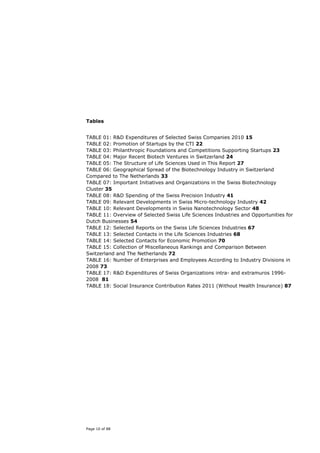
Figures & Tables


Figures


FIGURE 01: Innovation Performance of European Countries 12
FIGURE 02: Relative Innovation Performance of European Countries: Switzerland 12
FIGURE 03: R&D Expenditures by Sector as Percent of GDP, 2008 13
FIGURE 04: Targeted R&D Fields by Support Measures by the Industry in
Switzerland Compared to EU-27 14
FIGURE 05: Distribution of R&D-Intensive Industry Coverage According to Economic
Sector and Country, International Comparison, 2005 16
FIGURE 06: Development of EUR – CHF Exchange Rate 1999 – 2011 17
FIGURE 07: Key Elements of the Swiss Innovation System 17
FIGURE 08: National Centres of Competence in Research (NCCR) (Overview) 19
FIGURE 09: The Universities of Applied Science in Switzerland 21
FIGURE 10: Venture Investments by Sector in Switzerland 2009 24
FIGURE 11: Number of Transactions in Venture Capital by Industry 25
FIGURE 12: Venture Capital Investments by Region and Industry 25
FIGURE 13: A Rough Sketch of the Swiss Industry Clusters based on Biotechnology
and Microtechnology 28
FIGURE 14: Key Activities of Biotechnology Companies in Switzerland 29
FIGURE 15: Size of Biotechnology Companies in Switzerland 30
FIGURE 16: Foundation of Biotechnology Companies in Switzerland 1999-2009 31
FIGURE 17: Sources of New Company Foundations in Biotechnology 31
FIGURE 18: New Products in Pipeline of Swiss Biotechnology Companies 32
FIGURE 19: Swiss Medtech Industry: Manufacturer by Category 40
FIGURE 20: Swiss Medtech Industry: Suppliers by Category 40
FIGURE 21: Map of the Swiss Medical Technology Industry 42
FIGURE 22: Map of the Dutch Medtech Industry 42
FIGURE 23: Distribution of the nano-tera.ch Research Groups 47
FIGURE 24: Population Distribution: Agglomerations, Towns and Villages in
Switzerland 55
FIGURE 25: The 25 Cantons of Switzerland 56
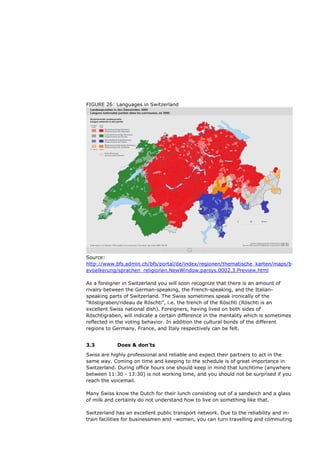
FIGURE 26: Languages in Switzerland 57
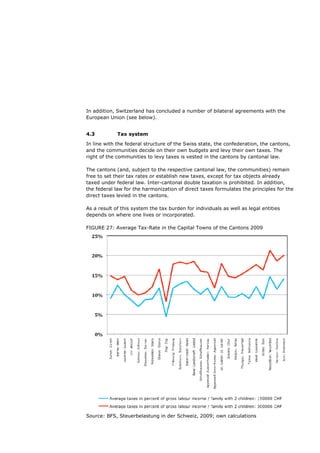
FIGURE 27: Average Tax-Rate in the Capital Towns of the Cantons 2009 58
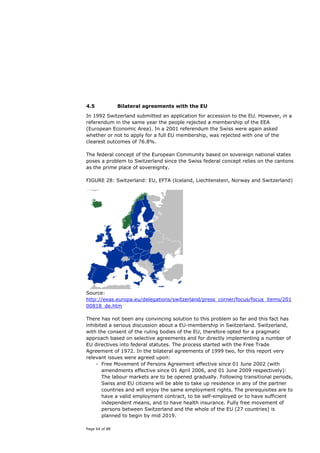
FIGURE 28: Switzerland: EU, EFTA 64
FIGURE 29: The WEF Competitive Landscape 71
FIGURE 30: Graphic Representation of the Swiss Innovation System 75
FIGURE 31: Organization of the ETH-Domain 77
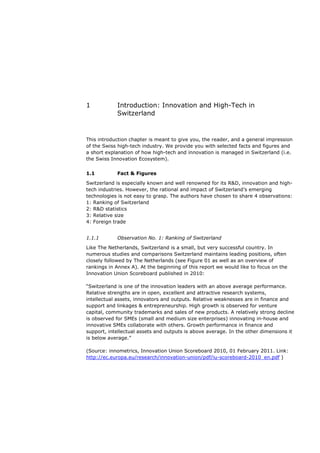
Tables


TABLE 01: R&D Expenditures of Selected Swiss Companies 2010 15
TABLE 02: Promotion of Startups by the CTI 22
TABLE 03: Philanthropic Foundations and Competitions Supporting Startups 23
TABLE 04: Major Recent Biotech Ventures in Switzerland 24
TABLE 05: The Structure of Life Sciences Used in This Report 27
TABLE 06: Geographical Spread of the Biotechnology Industry in Switzerland
Compared to The Netherlands 33
TABLE 07: Important Initiatives and Organizations in the Swiss Biotechnology
Cluster 35
TABLE 08: R&D Spending of the Swiss Precision Industry 41
TABLE 09: Relevant Developments in Swiss Micro-technology Industry 42
TABLE 10: Relevant Developments in Swiss Nanotechnology Sector 48
TABLE 11: Overview of Selected Swiss Life Sciences Industries and Opportunities for
Dutch Businesses 54
TABLE 12: Selected Reports on the Swiss Life Sciences Industries 67
TABLE 13: Selected Contacts in the Life Sciences Industries 68
TABLE 14: Selected Contacts for Economic Promotion 70
TABLE 15: Collection of Miscellaneous Rankings and Comparison Between
Switzerland and The Netherlands 72
TABLE 16: Number of Enterprises and Employees According to Industry Divisions in
2008 73
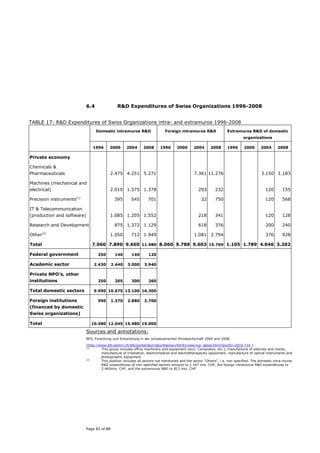
TABLE 17: R&D Expenditures of Swiss Organizations intra- and extramuros 1996-
2008 81
TABLE 18: Social Insurance Contribution Rates 2011 (Without Health Insurance) 87


Page 10 of 88
1           Introduction: Innovation and High-Tech in
            Switzerland


This introduction chapter is meant to give you, the reader, and a general impression
of the Swiss high-tech industry. We provide you with selected facts and figures and
a short explanation of how high-tech and innovation is managed in Switzerland (i.e.
the Swiss Innovation Ecosystem).


1.1         Fact & Figures

Switzerland is especially known and well renowned for its R&D, innovation and high-
tech industries. However, the rational and impact of Switzerland’s emerging
technologies is not easy to grasp. The authors have chosen to share 4 observations:
1: Ranking of Switzerland
2: R&D statistics
3: Relative size
4: Foreign trade


1.1.1       Observation No. 1: Ranking of Switzerland

Like The Netherlands, Switzerland is a small, but very successful country. In
numerous studies and comparisons Switzerland maintains leading positions, often
closely followed by The Netherlands (see Figure 01 as well as an overview of
rankings in Annex A). At the beginning of this report we would like to focus on the
Innovation Union Scoreboard published in 2010:

“Switzerland is one of the innovation leaders with an above average performance.
Relative strengths are in open, excellent and attractive research systems,
intellectual assets, innovators and outputs. Relative weaknesses are in finance and
support and linkages & entrepreneurship. High growth is observed for venture
capital, community trademarks and sales of new products. A relatively strong decline
is observed for SMEs (small and medium size enterprises) innovating in-house and
innovative SMEs collaborate with others. Growth performance in finance and
support, intellectual assets and outputs is above average. In the other dimensions it
is below average.”

(Source: innometrics, Innovation Union Scoreboard 2010, 01 February 2011. Link:
http://ec.europa.eu/research/innovation-union/pdf/iu-scoreboard-2010_en.pdf )
FIGURE 01: Innovation Performance of European Countries


Source: innometrics, Innovation Union Scoreboard 2010, 01 February 2011. Link:
http://ec.europa.eu/research/innovation-union/pdf/iu-scoreboard-2010_en.pdf

The top position of the Swiss innovation performance within Europe is primarily the
effect of high output of the R&D system. Switzerland is especially strong in terms of
scientific publications, patent applications, and license and patent revenues from
abroad. The indicators with regard to innovation are pointing to some weaknesses in
the marketing of the output of the research system.

FIGURE 02: Relative Innovation Performance of European Countries: Switzerland


Source: innometrics, Innovation Union Scoreboard 2010, 01 February 2011. Link:
http://ec.europa.eu/research/innovation-union/pdf/iu-scoreboard-2010_en.pdf


Page 12 of 88
1.1.2        Observation No. 2: R&D Statistics

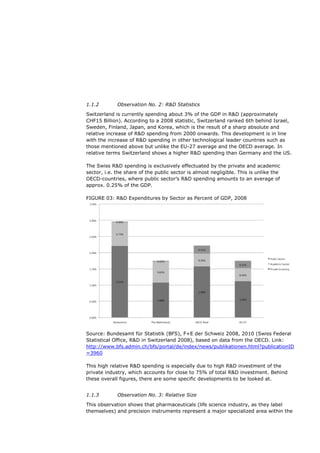
Switzerland is currently spending about 3% of the GDP in R&D (approximately
CHF15 Billion). According to a 2008 statistic, Switzerland ranked 6th behind Israel,
Sweden, Finland, Japan, and Korea, which is the result of a sharp absolute and
relative increase of R&D spending from 2000 onwards. This development is in line
with the increase of R&D spending in other technological leader countries such as
those mentioned above but unlike the EU-27 average and the OECD average. In
relative terms Switzerland shows a higher R&D spending than Germany and the US.

The Swiss R&D spending is exclusively effectuated by the private and academic
sector, i.e. the share of the public sector is almost negligible. This is unlike the
OECD-countries, where public sector’s R&D spending amounts to an average of
approx. 0.25% of the GDP.

FIGURE 03: R&D Expenditures by Sector as Percent of GDP, 2008


Source: Bundesamt für Statistik (BFS), F+E der Schweiz 2008, 2010 (Swiss Federal
Statistical Office, R&D in Switzerland 2008), based on data from the OECD. Link:
http://www.bfs.admin.ch/bfs/portal/de/index/news/publikationen.html?publicationID
=3960

This high relative R&D spending is especially due to high R&D investment of the
private industry, which accounts for close to 75% of total R&D investment. Behind
these overall figures, there are some specific developments to be looked at.


1.1.3        Observation No. 3: Relative Size
This observation shows that pharmaceuticals (life science industry, as they label
themselves) and precision instruments represent a major specialized area within the
Swiss manufacturing industries. We will illustrate this by taking A) an industry
perspective, and B) a company perspective.

A) Industry Perspective:
    - The life science industry is the most important contributor to Switzerland’s
       R&D investments: 44% of the domestic intramuros R&D expenditures are
       spent by the chemicals and the pharmaceutical industry. By taking foreign
       intramuros and extramuros R&D into account, the share of this industry
       amounts to 57%.
    - R&D expenditures of the producers of microtechnology products (i.e. high-
       technology instruments including office machines, medical equipment,
       optical devices, watches) nearly tripled, from CHF697 Million in 2004 to
       CHF2’018 Million in 2008.
    - Other sectors slightly reduced their R&D expenditures (e.g. IT &
       telecommunication), hence showing a relative decline, whilst the machine
       builders reduced their expenditures in absolute terms.

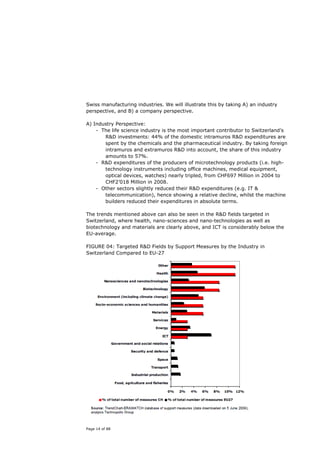
The trends mentioned above can also be seen in the R&D fields targeted in
Switzerland, where health, nano-sciences and nano-technologies as well as
biotechnology and materials are clearly above, and ICT is considerably below the
EU-average.

FIGURE 04: Targeted R&D Fields by Support Measures by the Industry in
Switzerland Compared to EU-27


Page 14 of 88
Source: innometrics, Innovation Union Scoreboard 2010, 01 February 2011. Link:
http://ec.europa.eu/research/innovation-union/pdf/iu-scoreboard-2010_en.pdf

B) Company Perspective:
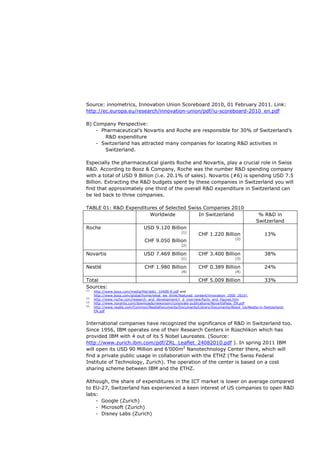
    - Pharmaceutical’s Novartis and Roche are responsible for 30% of Switzerland’s
       R&D expenditure
    - Switzerland has attracted many companies for locating R&D activities in
       Switzerland.

Especially the pharmaceutical giants Roche and Novartis, play a crucial role in Swiss
R&D. According to Booz & Company, Roche was the number R&D spending company
with a total of USD 9 Billion (i.e. 20.1% of sales). Novartis (#6) is spending USD 7.5
Billion. Extracting the R&D budgets spent by these companies in Switzerland you will
find that approximately one third of the overall R&D expenditure in Switzerland can
be led back to three companies.

TABLE 01: R&D Expenditures of Selected Swiss Companies 2010
                       Worldwide           In Switzerland                                      % R&D in
                                                                                              Switzerland
Roche                            USD 9.120 Billion
                                                     (1)
                                                               CHF 1.220 Billion                   13%
                                                                                   (2)
                                 CHF 9.050 Billion
                                                     (2)

Novartis                         USD 7.469 Billion             CHF 3.400 Billion                   38%
                                                     (1)                           (3)

Nestlé                           CHF 1.980 Billion             CHF 0.389 Billion                   24%
                                                     (4)                           (4)

Total                                                          CHF 5.009 Billion                   33%
Sources:
(1)
      http://www.booz.com/media/file/sb61_10408-R.pdf and
      http://www.booz.com/global/home/what_we_think/featured_content/innovation_1000_2010),
(2)
      http://www.roche.com/research_and_development/r_d_overview/facts_and_figures.htm
(3)
      http://www.novartis.com/downloads/newsroom/corporate-publications/NovartisPass_EN.pdf
(4)
      http://www.nestle.com/Common/NestleDocuments/Documents/Library/Documents/About_Us/Nestle-in-Switzerland-
      EN.pdf


International companies have recognized the significance of R&D in Switzerland too.
Since 1956, IBM operates one of their Research Centers in Rüschlikon which has
provided IBM with 4 out of its 5 Nobel Laureates. (Source:
http://www.zurich.ibm.com/pdf/ZRL_Leaflet_24082010.pdf ). In spring 2011 IBM
will open its USD 90 Million and 6’000m2 Nanotechnology Center there, which will
find a private public usage in collaboration with the ETHZ (The Swiss Federal
Institute of Technology, Zurich). The operation of the center is based on a cost
sharing scheme between IBM and the ETHZ.

Although, the share of expenditures in the ICT market is lower on average compared
to EU-27, Switzerland has experienced a keen interest of US companies to open R&D
labs:
    - Google (Zurich)
    - Microsoft (Zurich)
    - Disney Labs (Zurich)
- SAP (St. Gallen)
     - Nokia (Lausanne)


1.1.4           Observation No. 4: Foreign Trade

Switzerland is known for its big share of exports in high technology products. The
share of exports in total national demand (GDP+Imports) of 37% indicates
Switzerland’s high dependency on foreign demand. Exports of Germany for example
contribute 25% of its total demand. This must mainly be attributed to
pharmaceuticals, as (by the statistical definition of the OECD) this is the only Swiss
high-technology industry. In fact, the trade balance of the other high-technology
industries by the definition used by the OECD (computers, electronics, aerospace) is
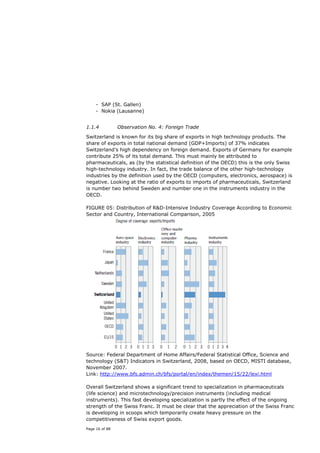
negative. Looking at the ratio of exports to imports of pharmaceuticals, Switzerland
is number two behind Sweden and number one in the instruments industry in the
OECD.

FIGURE 05: Distribution of R&D-Intensive Industry Coverage According to Economic
Sector and Country, International Comparison, 2005


Source: Federal Department of Home Affairs/Federal Statistical Office, Science and
technology (S&T) Indicators in Switzerland, 2008, based on OECD, MISTI database,
November 2007.
Link: http://www.bfs.admin.ch/bfs/portal/en/index/themen/15/22/lexi.html

Overall Switzerland shows a significant trend to specialization in pharmaceuticals
(life science) and microtechnology/precision instruments (including medical
instruments). This fast developing specialization is partly the effect of the ongoing
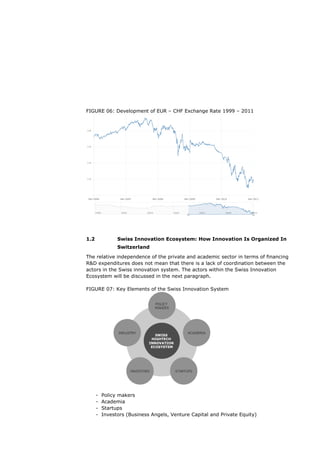
strength of the Swiss Franc. It must be clear that the appreciation of the Swiss Franc
is developing in scoops which temporarily create heavy pressure on the
competitiveness of Swiss export goods.
Page 16 of 88
FIGURE 06: Development of EUR – CHF Exchange Rate 1999 – 2011


1.2             Swiss Innovation Ecosystem: How Innovation Is Organized In
                Switzerland

The relative independence of the private and academic sector in terms of financing
R&D expenditures does not mean that there is a lack of coordination between the
actors in the Swiss innovation system. The actors within the Swiss Innovation
Ecosystem will be discussed in the next paragraph.

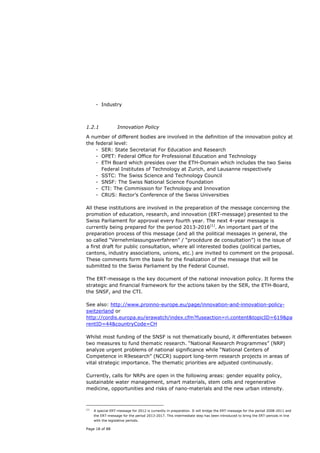
FIGURE 07: Key Elements of the Swiss Innovation System


      -   Policy makers
      -   Academia
      -   Startups
      -   Investors (Business Angels, Venture Capital and Private Equity)
- Industry


1.2.1               Innovation Policy

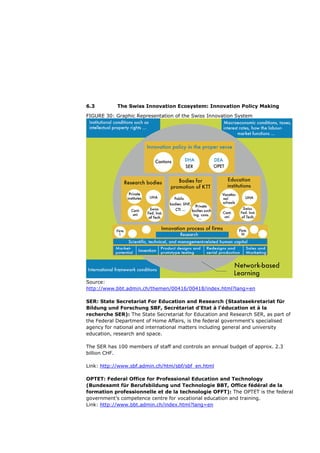
A number of different bodies are involved in the definition of the innovation policy at
the federal level:
    - SER: State Secretariat For Education and Research
    - OPET: Federal Office for Professional Education and Technology
    - ETH Board which presides over the ETH-Domain which includes the two Swiss
      Federal Institutes of Technology at Zurich, and Lausanne respectively
    - SSTC: The Swiss Science and Technology Council
    - SNSF: The Swiss National Science Foundation
    - CTI: The Commission for Technology and Innovation
    - CRUS: Rector’s Conference of the Swiss Universities

All these institutions are involved in the preparation of the message concerning the
promotion of education, research, and innovation (ERT-message) presented to the
Swiss Parliament for approval every fourth year. The next 4-year message is
currently being prepared for the period 2013-2016(1). An important part of the
preparation process of this message (and all the political messages in general, the
so called “Vernehmlassungsverfahren” / “procédure de consultation”) is the issue of
a first draft for public consultation, where all interested bodies (political parties,
cantons, industry associations, unions, etc.) are invited to comment on the proposal.
These comments form the basis for the finalization of the message that will be
submitted to the Swiss Parliament by the Federal Counsel.

The ERT-message is the key document of the national innovation policy. It forms the
strategic and financial framework for the actions taken by the SER, the ETH-Board,
the SNSF, and the CTI.

See also: http://www.proinno-europe.eu/page/innovation-and-innovation-policy-
switzerland or
http://cordis.europa.eu/erawatch/index.cfm?fuseaction=ri.content&topicID=619&pa
rentID=44&countryCode=CH

Whilst most funding of the SNSF is not thematically bound, it differentiates between
two measures to fund thematic research. “National Research Programmes” (NRP)
analyze urgent problems of national significance while “National Centers of
Competence in R9esearch” (NCCR) support long-term research projects in areas of
vital strategic importance. The thematic priorities are adjusted continuously.

Currently, calls for NRPs are open in the following areas: gender equality policy,
sustainable water management, smart materials, stem cells and regenerative
medicine, opportunities and risks of nano-materials and the new urban intensity.


(1)
      A special ERT-message for 2012 is currently in preparation. It will bridge the ERT-message for the period 2008-2011 and
      the ERT-message for the period 2013-2017. This intermediate step has been introduced to bring the ERT-periods in line
      with the legislative periods.

Page 18 of 88
Each NCCR has a maximum duration of twelve years. The Swiss National Science
Foundation provides financing for NCCR for the first stage of up to four years.
Further funding is determined on the basis of a formal application for an extension of
financing and the outcome of an interim evaluation. The program presently includes
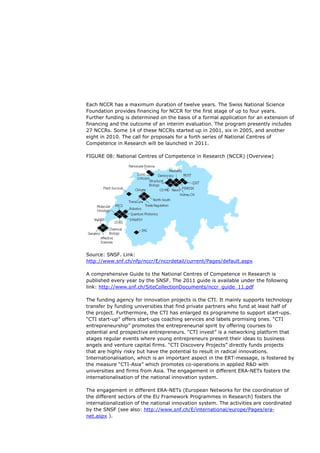
27 NCCRs. Some 14 of these NCCRs started up in 2001, six in 2005, and another
eight in 2010. The call for proposals for a forth series of National Centres of
Competence in Research will be launched in 2011.

FIGURE 08: National Centres of Competence in Research (NCCR) (Overview)


Source: SNSF. Link:
http://www.snf.ch/nfp/nccr/E/nccrdetail/current/Pages/default.aspx

A comprehensive Guide to the National Centres of Competence in Research is
published every year by the SNSF. The 2011 guide is available under the following
link: http://www.snf.ch/SiteCollectionDocuments/nccr_guide_11.pdf

The funding agency for innovation projects is the CTI. It mainly supports technology
transfer by funding universities that find private partners who fund at least half of
the project. Furthermore, the CTI has enlarged its programme to support start-ups.
“CTI start-up” offers start-ups coaching services and labels promising ones. “CTI
entrepreneurship” promotes the entrepreneurial spirit by offering courses to
potential and prospective entrepreneurs. “CTI invest” is a networking platform that
stages regular events where young entrepreneurs present their ideas to business
angels and venture capital firms. “CTI Discovery Projects” directly funds projects
that are highly risky but have the potential to result in radical innovations.
Internationalisation, which is an important aspect in the ERT-message, is fostered by
the measure “CTI-Asia” which promotes co-operations in applied R&D with
universities and firms from Asia. The engagement in different ERA-NETs fosters the
internationalisation of the national innovation system.

The engagement in different ERA-NETs (European Networks for the coordination of
the different sectors of the EU Framework Programmes in Research) fosters the
internationalization of the national innovation system. The activities are coordinated
by the SNSF (see also: http://www.snf.ch/E/international/europe/Pages/era-
net.aspx ).
1.2.2           Academia

Switzerland has a number of high quality public universities and universities of
applied sciences (CH: “Fachhochschule” / “Haute école spécialisée”, NL: “HBO”).
Below you will find a short overview of the different institutes.

A) Universities
Within the group of the universities one must distinguish between A.1) the Swiss
Federal Institutes of Technology at Zurich, and Lausanne respectively, and A.2) the
other public universities and A.3) the Universities of Applied Science:

A.1) Swiss Federal Institutes of Technology at Zurich, and Lausanne respectively
Especially the two Federal Institutes of Technology (Eidgenössische Technische
Hochschule, ETHZ, Zurich and École Polytechnique Fédérale, EPFL, Lausanne) play a
prominent role in the Swiss academic landscape. Both institutes are world-renowned
for its research, and attract foreign researchers as a result. Furthermore, the
universities are a main source for innovative start-ups (see: for example a study by
the transfer office of the ETHZ on “The performance of Spin-off companies at the
Swiss Federal Institute of Technology Zurich”
http://www.vpf.ethz.ch/transfer/ETH_Zurich_spin-offs.pdf).

The two technical universities are the pillars of the so-called ETH-Domain, which also
includes four additional research institutes:
    - PSI: Paul Scherrer Institute
    - EMPA: Swiss Federal Laboratories for Materials Testing and Research
    - EAWAG: Aquatic Research
    - WSL: Swiss Federal Institute for Forest, Snow and Landscape Research
A brief overview over the ETH-Domain is given in
http://www.ethrat.ch/download/Der_ETH-Bereich_in_Kürze_2010_E.pdf .

A.2) Cantonal Universities
In addition to the 2 federal (technical) universities, there are cantonal universities
covering in principle the whole spectrum of scientific research and teaching:
    - Basel
    - Bern
    - Fribourg
    - Geneva
    - Lausanne
    - Lucerne
    - Neuchâtel
    - St. Gall
    - Zurich


Page 20 of 88
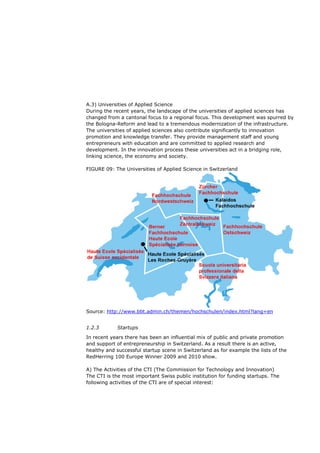
A.3) Universities of Applied Science
During the recent years, the landscape of the universities of applied sciences has
changed from a cantonal focus to a regional focus. This development was spurred by
the Bologna-Reform and lead to a tremendous modernization of the infrastructure.
The universities of applied sciences also contribute significantly to innovation
promotion and knowledge transfer. They provide management staff and young
entrepreneurs with education and are committed to applied research and
development. In the innovation process these universities act in a bridging role,
linking science, the economy and society.

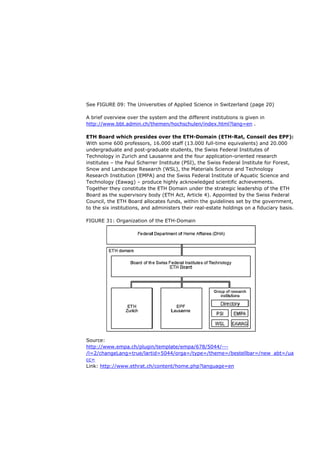
FIGURE 09: The Universities of Applied Science in Switzerland


Source: http://www.bbt.admin.ch/themen/hochschulen/index.html?lang=en


1.2.3       Startups
In recent years there has been an influential mix of public and private promotion
and support of entrepreneurship in Switzerland. As a result there is an active,
healthy and successful startup scene in Switzerland as for example the lists of the
RedHerring 100 Europe Winner 2009 and 2010 show.

A) The Activities of the CTI (The Commission for Technology and Innovation)
The CTI is the most important Swiss public institution for funding startups. The
following activities of the CTI are of special interest:
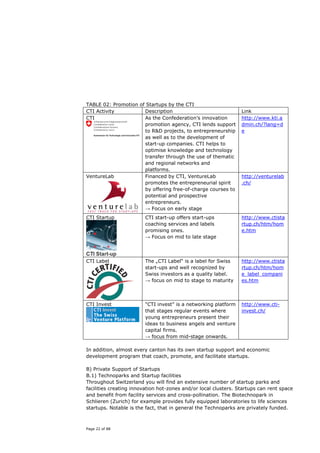
TABLE 02: Promotion of Startups by the CTI
CTI Activity          Description                                Link
CTI                   As the Confederation’s innovation          http://www.kti.a
                      promotion agency, CTI lends support        dmin.ch/?lang=d
                      to R&D projects, to entrepreneurship       e
                      as well as to the development of
                      start-up companies. CTI helps to
                      optimise knowledge and technology
                      transfer through the use of thematic
                      and regional networks and
                      platforms.
VentureLab            Financed by CTI, VentureLab                http://venturelab
                      promotes the entrepreneurial spirit        .ch/
                      by offering free-of-charge courses to
                      potential and prospective
                      entrepreneurs.
                      → Focus on early stage
CTI Startup             CTI start-up offers start-ups            http://www.ctista
                        coaching services and labels             rtup.ch/htm/hom
                        promising ones.                          e.htm
                        → Focus on mid to late stage


CTI Label               The „CTI Label“ is a label for Swiss     http://www.ctista
                        start-ups and well recognized by         rtup.ch/htm/hom
                        Swiss investors as a quality label.      e_label_compani
                        → focus on mid to stage to maturity      es.htm


CTI Invest              “CTI invest” is a networking platform    http://www.cti-
                        that stages regular events where         invest.ch/
                        young entrepreneurs present their
                        ideas to business angels and venture
                        capital firms.
                        → focus from mid-stage onwards.

In addition, almost every canton has its own startup support and economic
development program that coach, promote, and facilitate startups.

B) Private Support of Startups
B.1) Technoparks and Startup facilities
Throughout Switzerland you will find an extensive number of startup parks and
facilities creating innovation hot-zones and/or local clusters. Startups can rent space
and benefit from facility services and cross-pollination. The Biotechnopark in
Schlieren (Zurich) for example provides fully equipped laboratories to life sciences
startups. Notable is the fact, that in general the Technoparks are privately funded.


Page 22 of 88
B.2) Philanthropic Foundations and Competitions
There are a great number of Swiss philanthropic foundations that support innovation
and entrepreneurship. Many startups make use of these possibilities to obtain
coaching and develop their business plan and/or obtain seed funding through
competitions.

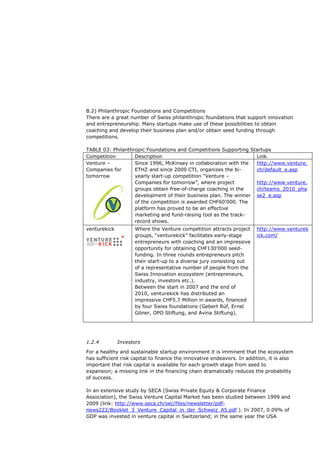
TABLE 03: Philanthropic Foundations and Competitions Supporting Startups
Competition        Description                                    Link
Venture –          Since 1996, McKinsey in collaboration with the http://www.venture.
Companies for      ETHZ and since 2009 CTI, organizes the bi-     ch/default_e.asp
tomorrow           yearly start-up competition “Venture –
                   Companies for tomorrow”, where project         http://www.venture.
                   groups obtain free-of-charge coaching in the   ch/teams_2010_pha
                   development of their business plan. The winner se2_e.asp
                   of the competition is awarded CHF60’000. The
                   platform has proved to be an effective
                   marketing and fund-raising tool as the track-
                   record shows.
venturekick         Where the Venture competition attracts project      http://www.venturek
                    groups, “venturekick” facilitates early-stage       ick.com/
                    entrepreneurs with coaching and an impressive
                    opportunity for obtaining CHF130’000 seed-
                    funding. In three rounds entrepreneurs pitch
                    their start-up to a diverse jury consisting out
                    of a representative number of people from the
                    Swiss Innovation ecosystem (entrepreneurs,
                    industry, investors etc.).
                    Between the start in 2007 and the end of
                    2010, venturekick has distributed an
                    impressive CHF5.7 Million in awards, financed
                    by four Swiss foundations (Gebert Rüf, Ernst
                    Göner, OPO Stiftung, and Avina Stiftung).


1.2.4         Investors
For a healthy and sustainable startup environment it is imminent that the ecosystem
has sufficient risk capital to finance the innovative endeavors. In addition, it is also
important that risk capital is available for each growth stage from seed to
expansion; a missing link in the financing chain dramatically reduces the probability
of success.

In an extensive study by SECA (Swiss Private Equity & Corporate Finance
Association), the Swiss Venture Capital Market has been studied between 1999 and
2009 (link: http://www.seca.ch/sec/files/newsletter/pdf-
news222/Booklet_3_Venture_Capital_in_der_Schweiz_A5.pdf ). In 2007, 0.09% of
GDP was invested in venture capital in Switzerland; in the same year the USA
invested 0.19%. Nevertheless, Switzerland has seen between 80 and 150 VC
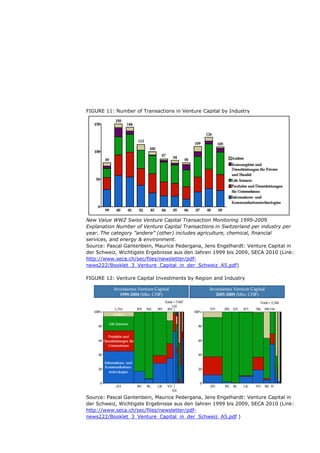
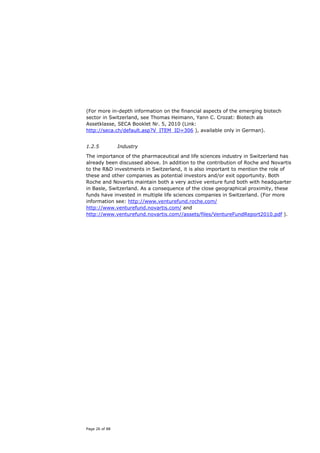
transactions a year. In monetary terms, the life science industry dominates the
venture capital market in Switzerland with over 80% of total capital invested. This
domination can easily be explained based on the capital-intensive nature of the life
sciences companies in comparison with investments in e.g. information and
communication technology startups, which are in general much less capital
intensive. To illustrate, in a presentation on the Swiss Life Sciences Statistics 2009-
2010 by biotechgate.com the five largest therapeutic biotech financing rounds are
listed, accumulating to well over CHF 300Million or 15% of total venture capital
invested in 2009 in Switzerland.

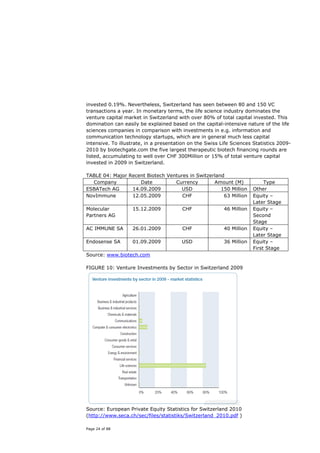
TABLE 04: Major Recent Biotech Ventures in Switzerland
  Company           Date          Currency        Amount (M)                Type
ESBATech AG      14.09.2009         USD              150 Million       Other
NovImmune        12.05.2009          CHF              63 Million       Equity –
                                                                       Later Stage
Molecular          15.12.2009           CHF               46 Million   Equity –
Partners AG                                                            Second
                                                                       Stage
AC IMMUNE SA       26.01.2009           CHF               40 Million   Equity –
                                                                       Later Stage
Endosense SA       01.09.2009           USD               36 Million   Equity –
                                                                       First Stage
Source: www.biotech.com

FIGURE 10: Venture Investments by Sector in Switzerland 2009


Source: European Private Equity Statistics for Switzerland 2010
(http://www.seca.ch/sec/files/statistiks/Switzerland_2010.pdf )

Page 24 of 88
FIGURE 11: Number of Transactions in Venture Capital by Industry


New Value WWZ Swiss Venture Capital Transaction Monitoring 1999-2009
Explanation Number of Venture Capital Transactions in Switzerland per industry per
year. The category ”andere” (other) includes agriculture, chemical, financial
services, and energy & environment.
Source: Pascal Gantenbein, Maurice Pedergana, Jens Engelhardt: Venture Capital in
der Schweiz, Wichtigste Ergebnisse aus den Jahren 1999 bis 2009, SECA 2010 (Link:
http://www.seca.ch/sec/files/newsletter/pdf-
news222/Booklet_3_Venture_Capital_in_der_Schweiz_A5.pdf)

FIGURE 12: Venture Capital Investments by Region and Industry


Source: Pascal Gantenbein, Maurice Pedergana, Jens Engelhardt: Venture Capital in
der Schweiz, Wichtigste Ergebnisse aus den Jahren 1999 bis 2009, SECA 2010 (Link:
http://www.seca.ch/sec/files/newsletter/pdf-
news222/Booklet_3_Venture_Capital_in_der_Schweiz_A5.pdf )
(For more in-depth information on the financial aspects of the emerging biotech
sector in Switzerland, see Thomas Heimann, Yann C. Crozat: Biotech als
Assetklasse, SECA Booklet Nr. 5, 2010 (Link:
http://seca.ch/default.asp?V_ITEM_ID=306 ), available only in German).


1.2.5           Industry
The importance of the pharmaceutical and life sciences industry in Switzerland has
already been discussed above. In addition to the contribution of Roche and Novartis
to the R&D investments in Switzerland, it is also important to mention the role of
these and other companies as potential investors and/or exit opportunity. Both
Roche and Novartis maintain both a very active venture fund both with headquarter
in Basle, Switzerland. As a consequence of the close geographical proximity, these
funds have invested in multiple life sciences companies in Switzerland. (For more
information see: http://www.venturefund.roche.com/
http://www.venturefund.novartis.com/ and
http://www.venturefund.novartis.com//assets/files/VentureFundReport2010.pdf ).


Page 26 of 88
2            Life Sciences in Switzerland


2.1          Introduction
Life sciences consist out of single, as well as the interdisciplinary combination of
disciplines and industries. On the one hand the authors have observed the ongoing
converging of disciplines into life sciences. On the other hand many of the disciplines
are also positioned and reported upon in statistics separately. The authors felt that
for this report to provide a practical usage for the reader we had to structure the life
sciences industry and focus on selected disciplines. The focus of the report on hand
is to cover the fields of bio, medical, and nanotechnology. The authors have
integrated pharmaceuticals into biotechnology due to the practical reason that in
most (Swiss) statistics and reports pharmaceuticals are part of biotechnology.
Furthermore, the authors have included medical technology into microtechnology
due to similar reasons as aforementioned.

Finally, the authors would like to make a quick note on the historic development into
these leading Swiss sectors. Switzerland has a long-standing tradition in the
precision industry, starting out with the watch industry for which Switzerland is well
known. On the other hand the chemical industry around Basel, which started out
with the production of synthetic dyes, led to the pharmaceutical industry. Nano-
technology as a base technology is rapidly affecting a vast number of diverse
industries.

Although not all of the industries mentioned are directly part of life sciences in the
narrow sense of the word, it provides an insight into why Switzerland almost
naturally developed into a life sciences cluster in a broader sense of the word.

TABLE 05: The Structure of Life Sciences Used in This Report.
Chapter 2A                   Chapter 2B                   Chapter 2C
biotechnology                microtechnology              Nano-technology
(incl. pharmaceuticals)      (incl. medical-technology)
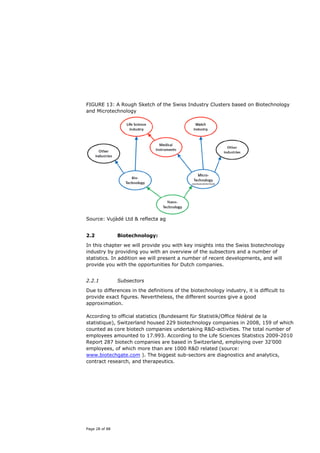
FIGURE 13: A Rough Sketch of the Swiss Industry Clusters based on Biotechnology
and Microtechnology


Source: Vujàdé Ltd & reflecta ag


2.2             Biotechnology:
In this chapter we will provide you with key insights into the Swiss biotechnology
industry by providing you with an overview of the subsectors and a number of
statistics. In addition we will present a number of recent developments, and will
provide you with the opportunities for Dutch companies.


2.2.1           Subsectors
Due to differences in the definitions of the biotechnology industry, it is difficult to
provide exact figures. Nevertheless, the different sources give a good
approximation.

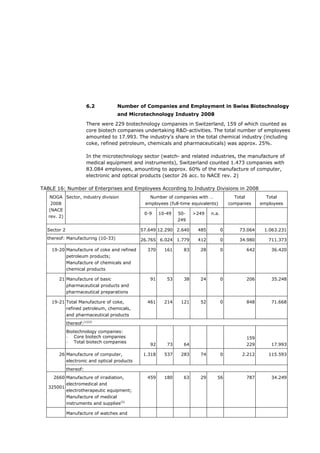
According to official statistics (Bundesamt für Statistik/Office fédéral de la
statistique), Switzerland housed 229 biotechnology companies in 2008, 159 of which
counted as core biotech companies undertaking R&D-activities. The total number of
employees amounted to 17.993. According to the Life Sciences Statistics 2009-2010
Report 287 biotech companies are based in Switzerland, employing over 32’000
employees, of which more than are 1000 R&D related (source:
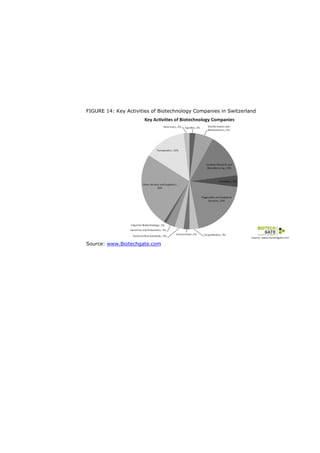
www.biotechgate.com ). The biggest sub-sectors are diagnostics and analytics,
contract research, and therapeutics.


Page 28 of 88
FIGURE 14: Key Activities of Biotechnology Companies in Switzerland


Source: www.Biotechgate.com
2.2.2           Fact & Figures

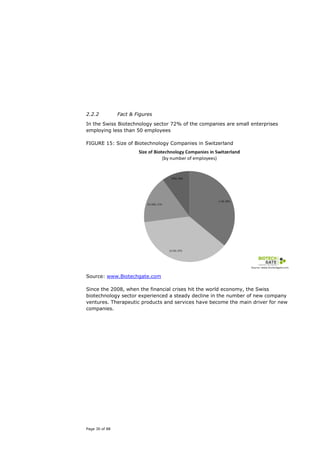
In the Swiss Biotechnology sector 72% of the companies are small enterprises
employing less than 50 employees

FIGURE 15: Size of Biotechnology Companies in Switzerland


Source: www.Biotechgate.com

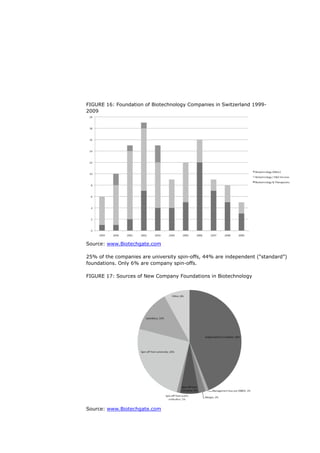
Since the 2008, when the financial crises hit the world economy, the Swiss
biotechnology sector experienced a steady decline in the number of new company
ventures. Therapeutic products and services have become the main driver for new
companies.


Page 30 of 88
FIGURE 16: Foundation of Biotechnology Companies in Switzerland 1999-
2009


Source: www.Biotechgate.com

25% of the companies are university spin-offs, 44% are independent (“standard”)
foundations. Only 6% are company spin-offs.

FIGURE 17: Sources of New Company Foundations in Biotechnology


Source: www.Biotechgate.com
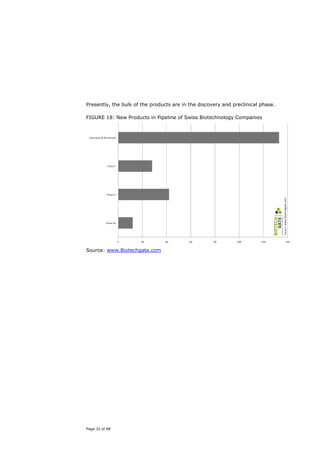
Presently, the bulk of the products are in the discovery and preclinical phase.

FIGURE 18: New Products in Pipeline of Swiss Biotechnology Companies


Source: www.Biotechgate.com


Page 32 of 88
2.2.3       Geographical Spread

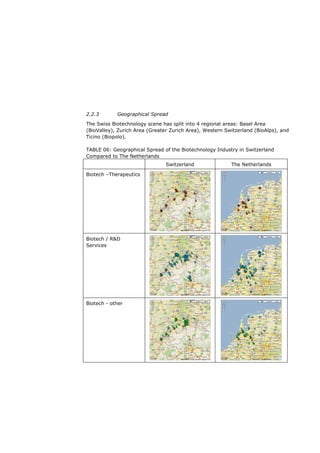
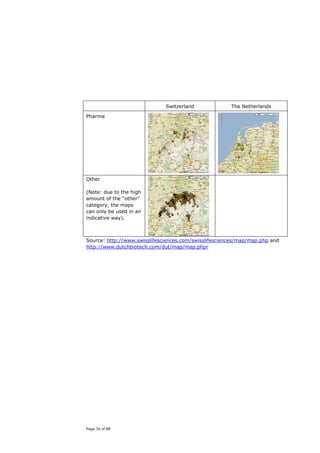
The Swiss Biotechnology scene has split into 4 regional areas: Basel Area
(BioValley), Zurich Area (Greater Zurich Area), Western Switzerland (BioAlps), and
Ticino (Biopolo).

TABLE 06: Geographical Spread of the Biotechnology Industry in Switzerland
Compared to The Netherlands
                                Switzerland               The Netherlands

Biotech –Therapeutics


Biotech / R&D
Services


Biotech - other
Switzerland              The Netherlands

Pharma


Other

(Note: due to the high
amount of the “other”
category, the maps
can only be used in an
indicative way).


Source: http://www.swisslifesciences.com/swisslifesciences/map/map.php and
http://www.dutchbiotech.com/dut/map/map.phpr


Page 34 of 88
2.2.4        Relevant Developments

                     The is a number of initiatives and organizations in the Swiss Biotechnology cluster,
                     which – together with the entrepreneurs themselves – foster the economic
                     development.

TABLE 07: Important Initiatives and Organizations in the Swiss Biotechnology Cluster
  Case                        Description                                                Source
  A. National Research
  Initiatives
                              SystemsX.ch is currently the biggest research              http://www.sy
                              initiative underway in Switzerland with the mandate to     stemsx.ch/
                              promote Systems Biology. It is a consortium with nine
                              universities and three research institutions as
                              partners. SystemsX.ch is funded with a federal budget
                              of CHF 100 Mio for the period of 2008 - 2011. This
                              sum is only available if matched by the same amount
                              by the partners receiving funds. This way the total
                              investment in Systems Biology will be at least CHF
                              200 Mio for 2008 - 2011, supplemented by third-party
                              funds by industry and other funding agencies. The
                              Swiss National Science Foundation (SNSF) supervises
                              and safeguards the quality of the research and the
                              initiative as a whole.
                              The National Centre of Competence in Research              http://www.fr
                              (NCCR) Frontiers in Genetics, a network of 250             ontiers-in-
                              scientists from different universities and institutes of   genetics.org/p
                              Switzerland, is part of a program created in 2001 by       age.php?id=pr
                              the Swiss National Science Foundation.                     ofile_en
                              Frontiers in Genetics aims at understanding the
                              function and regulation of certain genes during
                              development, as well as their role in maintaining
                              health or favouring the emergence of pathology. The
                              NCCR is based on 3 research programs (work
                              packages) and individual contributions. Partnership
                              with industry is encouraged, in order to exploit
                              potential discoveries in the field of medical therapies.
                              The National Center of Competence in Research              http://www.nc
                              (NCCR) in Molecular Oncology is a swiss network            cr-
                              research program in the field of cancer research. The      oncology.ch/
                              program is led by the Swiss Institute for Experimental
                              Cancer Research at the EPFL in Lausanne in close
                              collaboration with several partner institutes. The
                              program is funded by the Swiss National Science
                              Foundation.
Case                        Description                                                 Source

                            The SSCN is a non-profit group of scientists, which         http://www.u
                            was designed to:                                            nige.ch/scienc
                            - Foster interactions among scientists and between          es/biologie/bia
                            scientists and society                                      ni/sscn/
                            - Advance the discovery of basic molecular, cellular
                            and organismic mechanisms of embryonic and adult            http://www.ss
                            stem cell functions in human and all model systems          cn.unige.ch/d
                            - Encourage and support young scientists, minorities        ocuments/flye
                            and women in science                                        r/english.pdf
                            - Provide the public at large with an informed and first
                            hand view of current stem cell research
                            - Discuss important scientific and ethical issues arising
                            from stem cell research
                            The SSCN does not support reproductive cloning.
                            The SVRI is driven by the common goal of                    http://www.s
                            international initiatives promoted at a political,          wissvaccineres
                            corporate and academic level to reduce or eliminate         earchinstitute.
                            suffering and death due to infectious diseases and          ch/
                            cancer. The SVRI will contribute to this goal through
                            exploration, scientific discovery and translation of the
                            discoveries into effective preventive vaccine strategies
                            and therapeutic vaccine interventions for infectious
                            diseases and for cancer.
                            The Friedrich Miescher Institute is devoted to              http://www.f
                            fundamental biomedical research aimed at                    mi.ch
                            understanding the basic molecular mechanisms of
                            health and disease. We communicate and patent our
                            findings to enable their translation into medical
                            application.
                            The institute focuses on the fields of
                            - Epigenetics
                            - Signaling & Cancer
                            - Neurobiology
                            In these fields, it has gained international recognition
                            as a centre of excellence in innovative biomedical
                            research.
B. European Research
Projects
                            Health-TIES is a consortium that gathers four of            http://www.he
                            Europe’s top regions in biosciences, medical                althties.eu/
                            technology and health entrepreneurship: Medical Delta
                            (West of the Netherlands), Oxford and Thames Valley
                            (United Kingdom), Canton of Zurich (Switzerland),
                            Biocat (Catalonia), and the mentoring region of Észak-
                            Alföld in Hungary. The consortium is baked by
                            European Commission.


                 Page 36 of 88
Case                      Description                                               Source

C. Cantonal Initiatives
                          Life Science Zurich is a joint venture initiated by the   http://www.lif
                          University of Zurich and the ETH Zurich to promote        escience-
                          Zurich as an international centre for cutting-edge        zurich.ch/inde
                          research, first class education and economic              x.php?id=16&
                          innovation in the field of the life sciences.             L=1

                          Life Science Zurich establishes cooperation networks
                          that bring together the major stakeholders in
                          academia, industry and the public sector. LSZ
                          supports a strong and modern life science curriculum
                          in primary and secondary education. LSZ aims to offer
                          one of the best doctoral schools worldwide in the field
                          of the life sciences and to prepare young researchers
                          to develop into tomorrow's leaders in life science
                          research, industry and society. In addition LSZ
                          stimulates dialogue between academia, the broad
                          public and the industry and creates an atmosphere of
                          mutual understanding, respect and trust.
                          The BIO-TECHNOPARK® Schlieren-Zurich, in close            http://www.bi
                          collaboration with its network partners, offers           o-
                          professional support for life science companies in the    technopark.ch
                          setting up and expansion of business activities in the    /
                          Greater Zurich area.
                                                                                    Companies at
                                                                                    the Bio-
                                                                                    Technoparks:
                                                                                    http://www.bi
                                                                                    o-
                                                                                    technopark.ch
                                                                                    /index.php?id
                                                                                    =351&L=1

                          For young start-ups, the biotop provides in-house
                          ready-equipped laboratory, office and warehousing
                          space.
                          Available for joint usage: laundry, refrigeration,
                          storage facilities and seminar rooms, as well as
                          diverse laboratory equipment.
                          BioValley Basel aims at:                                  http://www.bi
                          - promoting the north-western part of Switzerland -       ovalley.ch/con
                          particularly the Basel area                               tent.cfm?nav=
                          - as prime location for Life Science companies: as best   1&content=2
                          location to settle down and extend their network
                          - encouraging and supporting Life Science
                          entrepreneurs who wish to set up their businesses in
                          the Basel area
Case              Description                                                 Source
                  - sponsoring communication and networking among
                  representatives from science, economy, politics and
                  the general public regarding Life Sciences
                  - fostering contact among BioValley members from all
                  countries and enhancing mutual support among them
                  The Greater Zurich Area is Switzerland’s economic           http://www.gr
                  engine and a central business location for Europe.          eaterzurichare
                  Nearly half the Swiss population lives in the Greater       a.ch/content/0
                  Zurich Area. The business region in and around the          2/02_002en.a
                  world-famous financial center of Zürich employs a           sp
                  workforce of some 1.5 million multilingual,
                  international workers in a good 150'000 companies.
                  Per capita GDP is around CHF 65'000.
                  In recent years, the Greater Zurich Area has become a
                  fast-growing center for the life sciences. Famous
                  international companies like Amgen, Baxter, Ecolab,
                  Nobel Biocare, Novo Nordisk, Pfizer, Phonak, Synthes,
                  Zimmer and many more, along with numerous
                  startups in biotechnology, medical technology and the
                  pharmaceuticals industry, have chosen to set up a
                  branch or even their international headquarters in the
                  Greater Zurich Area.
                  The aim is to promote Western Switzerland as a world        http://www.bi
                  class centre for the life sciences, and to foster the       oalps.org
                  growth of this specific industrial sector. The role goes
                  well beyond the promotion of excellence in the sector
                  as it exists today. It also accompanies, supports,
                  encourages and stimulates both performance and
                  innovation by creating the conditions which enable the
                  development of companies.
                  Biopolo Ticino is an association representing the value     http://www.bi
                  chain of the life sciences in Ticino. Members represent     opolo.ch/index
                  government and financial agencies, academic                 .php
                  institutions and industry.
                  Its mission is to foster the development of life sciences
                  research and industry in southern Switzerland.


       It must be clear that this list is not exhaustive and that the sector is moving fast.
       However, the authors are confident that this list provides you, the reader, with some
       important anchor points in Swiss Biotechnology industry.


       Page 38 of 88
2.3         Microtechnology:

In this chapter we will provide you with key insights into the Swiss microtechnology
industry by providing you with an overview of the subsectors and a number of
statistics. In addition we will present a number of recent developments, and will
provide you with the opportunities for Dutch businesses.


2.3.1       Subsectors
The Swiss Microtechnology has its roots in the watch industry as the mother-of-all of
industrialized precision products. Like modern watch industry, precision instruments
and Medtech products incorporate small scale mechanical components sensors,
actuators, energy sources, mechanical elements and intelligence. Microtechnology
has been described as standing at the crossroads of mechanical engineering,
electronics, materials science and computer science, microengineering gives a
panoramic view of engineering disciplines (see http://bachelor.epfl.ch/page-5835-
en.html).

The Swiss Medtech industry forms a strong cluster which incorporates not only the
manufacturers and their suppliers, but also the university hospitals and specific
initiatives on a national level: CTI Medtech Initiative, CCMT – Competence Center for
Medical Technology, and the Medical Cluster.

A key institution in the field of the microtechnology is the CSEM (Centre Suisse
d’éléctronique et de microtechnique) at Neuchâtel. It is a private applied research
and development company, having micro- and nanotechnologies, microelectronics,
systems engineering , microrobotics, photonics, information and communication
technologies as its current main fields. 20% of the shares of CSEM are held by EPFL
– Swiss Polytechnic at Lausanne, hence being the largest shareholder.

Since January 2009, the EPFL – Swiss Polytechnic at Lausanne has an Institute for
Micro-engineering with laboratories at Lausanne and Neuchâtel. It is based on three
central pillars: micro- and nanotechnologies, optics, robotics (see:
http://sti.epfl.ch/page-1674-en.html ).
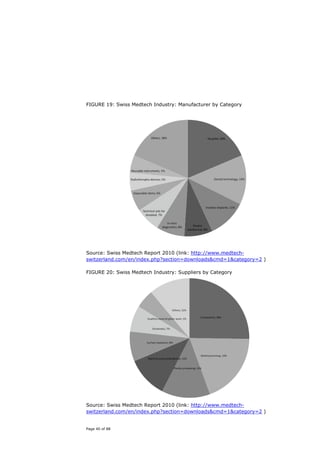
FIGURE 19: Swiss Medtech Industry: Manufacturer by Category


Source: Swiss Medtech Report 2010 (link: http://www.medtech-
switzerland.com/en/index.php?section=downloads&cmd=1&category=2 )

FIGURE 20: Swiss Medtech Industry: Suppliers by Category


Source: Swiss Medtech Report 2010 (link: http://www.medtech-
switzerland.com/en/index.php?section=downloads&cmd=1&category=2 )


Page 40 of 88
2.3.2       Fact & Figures

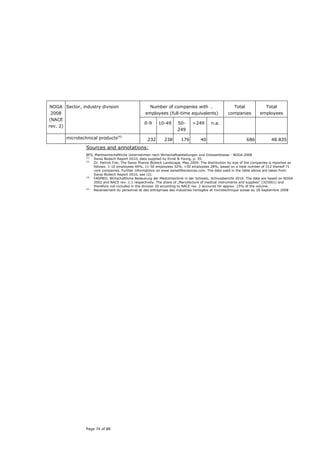
Today, there are approximately 800 companies in Switzerland working in the field of
manufacture of irradiation, electromedical and electrotherapeutic equipment, and
manufacture of medical instruments and supplies. They employ about 35.000
people.

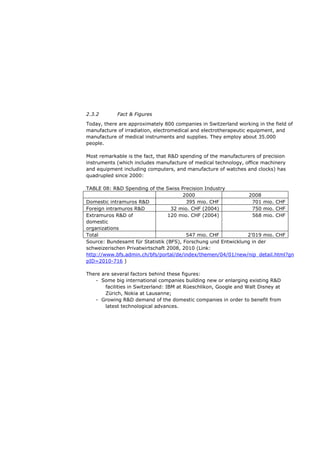
Most remarkable is the fact, that R&D spending of the manufacturers of precision
instruments (which includes manufacture of medical technology, office machinery
and equipment including computers, and manufacture of watches and clocks) has
quadrupled since 2000:

TABLE 08: R&D Spending of the Swiss Precision Industry
                                       2000                     2008
Domestic intramuros R&D                 395 mio. CHF             701 mio. CHF
Foreign intramuros R&D            32 mio. CHF (2004)             750 mio. CHF
Extramuros R&D of                120 mio. CHF (2004)             568 mio. CHF
domestic
organizations
Total                                   547 mio. CHF           2’019 mio. CHF
Source: Bundesamt für Statistik (BFS), Forschung und Entwicklung in der
schweizerischen Privatwirtschaft 2008, 2010 (Link:
http://www.bfs.admin.ch/bfs/portal/de/index/themen/04/01/new/nip_detail.html?gn
pID=2010-716 )

There are several factors behind these figures:
   - Some big international companies building new or enlarging existing R&D
       facilities in Switzerland: IBM at Rüeschlikon, Google and Walt Disney at
       Zürich, Nokia at Lausanne;
   - Growing R&D demand of the domestic companies in order to benefit from
       latest technological advances.
2.3.3           Geographical spread

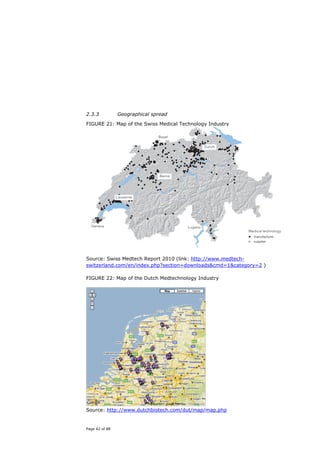
FIGURE 21: Map of the Swiss Medical Technology Industry


Source: Swiss Medtech Report 2010 (link: http://www.medtech-
switzerland.com/en/index.php?section=downloads&cmd=1&category=2 )

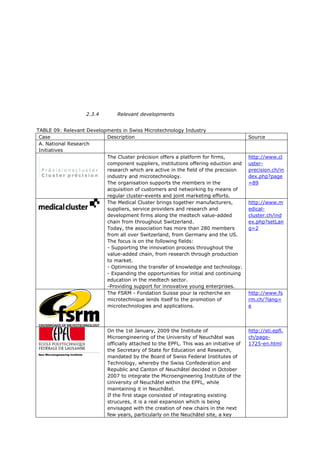
FIGURE 22: Map of the Dutch Medtechnology Industry


Source: http://www.dutchbiotech.com/dut/map/map.php


Page 42 of 88
2.3.4        Relevant developments


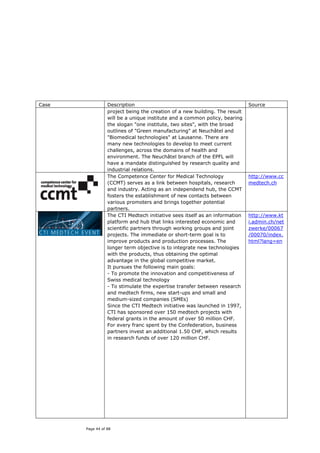
TABLE 09: Relevant Developments in Swiss Microtechnology Industry
 Case                     Description                                                    Source
 A. National Research
 Initiatives
                          The Cluster précision offers a platform for firms,             http://www.cl
                          component suppliers, institutions offering eduction and        uster-
                          research which are active in the field of the precision        precision.ch/in
                          industry and microtechnology.                                  dex.php?page
                          The organisation supports the members in the                   =89
                          acquisition of customers and networking by means of
                          regular cluster-events and joint marketing efforts.
                          The Medical Cluster brings together manufacturers,             http://www.m
                          suppliers, service providers and research and                  edical-
                          development firms along the medtech value-added                cluster.ch/ind
                          chain from throughout Switzerland.                             ex.php?setLan
                          Today, the association has more than 280 members               g=2
                          from all over Switzerland, from Germany and the US.
                          The focus is on the following fields:
                          - Supporting the innovation process throughout the
                          value-added chain, from research through production
                          to market.
                          - Optimising the transfer of knowledge and technology.
                          - Expanding the opportunities for initial and continuing
                          education in the medtech sector.
                          -Providing support for innovative young enterprises.
                          The FSRM - Fondation Suisse pour la recherche en               http://www.fs
                          microtechnique lends itself to the promotion of                rm.ch/?lang=
                          microtechnologies and applications.                            e


                            On the 1st January, 2009 the Institute of                    http://sti.epfl.
                            Microengineering of the University of Neuchâtel was          ch/page-
                            officially attached to the EPFL. This was an initiative of   1725-en.html
                            the Secretary of State for Education and Research,
                            mandated by the Board of Swiss Federal Institutes of
                            Technology, whereby the Swiss Confederation and
                            Republic and Canton of Neuchâtel decided in October
                            2007 to integrate the Microengineering Institute of the
                            University of Neuchâtel within the EPFL, while
                            maintaining it in Neuchâtel.
                            If the first stage consisted of integrating existing
                            strucures, it is a real expansion which is being
                            envisaged with the creation of new chairs in the next
                            few years, particularly on the Neuchâtel site, a key
Case              Description                                                Source
                  project being the creation of a new building. The result
                  will be a unique institute and a common policy, bearing
                  the slogan "one institute, two sites", with the broad
                  outlines of "Green manufacturing" at Neuchâtel and
                  "Biomedical technologies" at Lausanne. There are
                  many new technologies to develop to meet current
                  challenges, across the domains of health and
                  environment. The Neuchâtel branch of the EPFL will
                  have a mandate distinguished by research quality and
                  industrial relations.
                  The Competence Center for Medical Technology               http://www.cc
                  (CCMT) serves as a link between hospitals, research        medtech.ch
                  and industry. Acting as an independend hub, the CCMT
                  fosters the establishment of new contacts between
                  various promoters and brings together potential
                  partners.
                  The CTI Medtech initiative sees itself as an information   http://www.kt
                  platform and hub that links interested economic and        i.admin.ch/net
                  scientific partners through working groups and joint       zwerke/00067
                  projects. The immediate or short-term goal is to           /00070/index.
                  improve products and production processes. The             html?lang=en
                  longer term objective is to integrate new technologies
                  with the products, thus obtaining the optimal
                  advantage in the global competitive market.
                  It pursues the following main goals:
                  - To promote the innovation and competitiveness of
                  Swiss medical technology
                  - To stimulate the expertise transfer between research
                  and medtech firms, new start-ups and small and
                  medium-sized companies (SMEs)
                  Since the CTI Medtech initiative was launched in 1997,
                  CTI has sponsored over 150 medtech projects with
                  federal grants in the amount of over 50 million CHF.
                  For every franc spent by the Confederation, business
                  partners invest an additional 1.50 CHF, which results
                  in research funds of over 120 million CHF.


       Page 44 of 88
Case                   Description                                               Source
B. Cantonal/regional
initiatives
                       Micronarc is a communication platform created by the      http://www.m
                       governments of the seven cantons that constitute          icronarc.ch/in
                       Western Switzerland (Berne, Fribourg, Geneva, Jura,       dex-en.php
                       Neuchâtel, Valais and Vaud). Its mission is to
                       contribute towards:
                       - Developing and promoting the regional scientific,
                       industrial and economic base in the sectors of micro
                       and nanotechnology, as well as its educational
                       structures, R&D facilities, technology transfer, inward
                       investment and its enterprises
                       - Encouraging seamless interaction between all
                       participants
                       - Attracting other creative and innovative forces,
                       generating jobs and ensuring future generations of a
                       qualified workforce
                       - Acting as a permanent source of reliable and
                       accessible information, serving as an instrument for
                       the dissemination and exchange of knowledge, both
                       professional and public.
                       CSEM, Centre Suisse d' Electronique et de                 http://www.cs
                       Microtechnique (Swiss Center for Electronics and          em.ch/site
                       Microtechnology), founded in 1984, is a private applied
                       research and development center specializing in micro
                       and nanotechnology, system engineering
                       microelectronics and communications technologies. It
                       offers its customers and industry partners custom-
                       made innovative solutions based on its knowledge of
                       the market and technological expertise derived from
                       applied research.
2.4             Nano-technology:


2.4.1           Subsectors / Fact & Figures
Nano-technology as a new fundamental science helps to create new or improve
existing products and processes, rather than to create a new industry.

In Switzerland the core of the R&D in nano-technology is the National Research
Programme NRP 64: Opportunities and Risks of Nanomaterials. Its focus is divided
into three major topics:
    - Biomedical research: New nanomaterials can indeed lead to pioneering
        developments in pharmacology, medical testing and medical equipment The
        biomedical module deals with the potential health effects of the use of
        nanomaterials.
    - Environmental research: Nanoparticles can be released into the water, air or
        earth either deliberately – for instance when plant protection products are
        used in farming – or unintentionally in the course of manufacturing, use or
        disposal. The projects of the environmental research module assess the
        effects of nanoparticles on the environment and on ecological systems.
    - Other Fields : This module contains two projects examining the development
        and use of innovative nanomaterials, nanocomposites and novel building
        materials. In addition, they evaluate the potential health hazards and
        environmental risks associated with these materials throughout their life
        cycle.
    - (Link: http://www.nfp64.ch/E/portrait/Pages/mainresearchtopics.aspx )

The program started in December 2010 and it will end in 2016. The total budget
covering all 5 years is 12 Million Swiss Francs. The steering committee is made up of
an international group of specialists.

The program aims at a close cooperation within the EU Research Framework
programmes. In the case of nanotechnology this works within the ERA-NET
EuroNanoMed (see link: http://www.euronanomed.net ).

The research activities are coordinated via the nano-tera.ch network.


Page 46 of 88
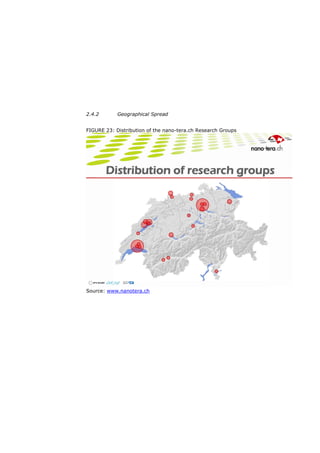
2.4.2       Geographical Spread


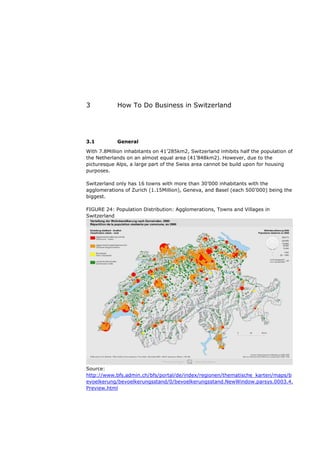
FIGURE 23: Distribution of the nano-tera.ch Research Groups


Source: www.nanotera.ch
2.4.3             Relevant Developments


TABLE 10: Relevat Developments in Swiss Nanotechnology Sector
 Case                     Description                                                    Source
 A. National Research
 Initiatives
                          Swiss National Research Program NRP64 financed by              http://www.
                          the Swiss National Science Foundation. It concentrates         nfp64.ch/E/P
                          on biomedical research, environmental research and             ages/home.a
                          other fields.                                                  spx
                                                                                         http://www.
                                                                                         nfp64.ch/Sit
                                                                                         eCollectionD
                                                                                         ocuments/nf
                                                                                         p64_progra
                                                                                         mmportraet_
                                                                                         e.pdf
                                 MaNEP – Matériaux aux proprieties électroniques         http://www.
                                 exceptionnelles is a long term research programme       manep.ch/in
                                 focusing on new electronic materials which are at the   dex2_en.ht
                                 forefront of our future technological environment. It   ml
                                 gathers a network of 250 scientists from Swiss
                                 universities and industry.
                                 The Swiss Nanoscience Institute (SNI) developed from    http://www.
                                 the National Center of Competence in Research           nanoscience.
                                 (NCCR) “Nanoscale Science” and constitutes a priority   ch/nccr/
                                 program of the University of Basel. It combines basic
                                 science with application-orientated research. In
                                 various projects researchers focus on nanoscale
                                 structures and aim at providing new impact and ideas
                                 to the life sciences, to the sustainable use of
                                 resources, and to information and communication
                                 technologies. The University of Basel as the leading
                                 house coordinates the NCCR network of the involved
                                 universities, federal research institutes, industrial
                                 partners and the Argovia-network, which is financed
                                 by the Swiss Canton of Aargau.
                                 The various research groups focus on the following
                                 seven subject areas:
                                 - Nanobiology
                                 - Quantum Computing and Quantum Coherence
                                 - Atomic and Molecular Nanosystems
                                 - Molecular Electronics
                                 - Functional Materials by Hierarchical Self-Assembly
                                 - Applied Projects in Nanoscience and Nanotechnology
                                 - Nanoethics


                 Page 48 of 88
Case                   Description                                                  Source
                       As a cooperation programme between the Swiss                 http://www.
                       National Science Foundation (SNSF) and the                   nfp62.ch/E/P
                       Innovation Promotion Agency (CTI), the National              ages/home.a
                       Research Programme "Smart Materials" (NRP 62) is             spx
                       committed to the development of new intelligent
                       materials and advancing promising projects to the R&D
                       stage.
                       NRP 62 will operate with CHF 11 million for a research
                       duration of five years

                       Nano-Tera is a Swiss federal program funding 19 four-        http://www.
                       year research projects (RTD), 15 focused projects            nano-tera.ch
                       (NTF) and 9 projects of education and dissemination
                       (ED). The total consolidated budget is over CHF 120
                       million, of which 50% is funded by Nano-Tera and
                       50% participants' own contributions. The Nano-Tera
                       initiative aims to bring Switzerland to the forefront of a
                       new technological revolution, using engineering and
                       information technology to improve the health and
                       security of humans and the environment in the 21st
                       century.
B. European Research
Projects
                       The EuroNanoMed ERA-NET initiative comprises 24              http://www.
                       partners from 18 countries/regions. EuroNanoMed              euronanome
                       aims at fostering the competitiveness of European            d.net
                       nanomedicine players through the support of trans-
                       national collaborative and multidisciplinary Research
                       and Technology Development (RTD) projects with
                       participants from academia, clinical/public health
                       communities, and industry (particularly small and
                       medium-sized enterprises).

C. National Research
Institutions
                       The Micro and Nano Science Platform is a network of          http://www.
                       researchers within ETH Zurich with the goal to               micronano.et
                       promote research and education as well as technology         hz.ch/
                       development and transfer in the field of micro and
                       nano sciences.

                       The Materials Research Center is a platform for all          http://www.
                       materials-related research at ETH Zurich.                    mrc.ethz.ch
Case                           Description                                                  Source
                               Materials research at EPFL encompasses essentially all       http://phd.e
                               classes of solid materials aimed at a wide array of          pfl.ch/page-
                               applications that span from modern microelectronic           19769-
                               devices over hot blades of aircraft turbines to              en.html
                               biomedical devices. Laboratories active in Materials
                               comprise, in addition to the laboratories of EPFL's
                               Institute of Materials also many laboratories within
                               other research Institutes of the EPFL.
                               On the 1st January, 2009 the Institute of                    http://sti.epf
                               Microengineering of the University of Neuchâtel was          l.ch/page-
                               officially attached to the EPFL. This was an initiative of   1725-
                               the Secretary of State for Education and Research,           en.html
                               mandated by the Board of Swiss Federal Institutes of
                               Technology, whereby the Swiss Confederation and
                               Republic and Canton of Neuchâtel decided in October
                               2007 to integrate the Microengineering Institute of the
                               University of Neuchâtel within the EPFL, while
                               maintaining it in Neuchâtel.
                               If the first stage consisted of integrating existing
                               strucures, it is a real expansion which is being
                               envisaged with the creation of new chairs in the next
                               few years, particularly on the Neuchâtel site, a key
                               project being the creation of a new building. The result
                               will be a unique institute and a common policy, bearing
                               the slogan "one institute, two sites", with the broad
                               outlines of "Green manufacturing" at Neuchâtel and
                               "Biomedical technologies" at Lausanne. There are
                               many new technologies to develop to meet current
                               challenges, across the domains of health and
                               environment. The Neuchâtel branch of the EPFL will
                               have a mandate distinguished by research quality and
                               industrial relations.
Competence Centre for          CCMX federates the strengths of four ETH Domain              http://www.
                               institutions (EPFL, ETH Zurich, EMPA, PSI) and of            ccmx.ch
                               CSEM, and involves the active participation of partners
                               from industry, from industrial associations and from
                               Swiss universities. The Centre is headed by a Steering
                               Committee comprising members from EPFL (chair),
                               ETH Zurich, PSI, Empa, CSEM and industry.
                               At the core of the Centre’s activities are ERUs –
                               Education and Research Units – and an Analytical
                               Platform. The ERUs offer programmes of research and
                               education, including technology transfer, in targeted
                               fields of activity identified together with the Swiss
                               industry:
                               - Surface, coatings and particles engineering (SPERU)
                               - Materials for the life sciences (MatLife)
                               - Metallurgy (MERU)

               Page 50 of 88
Case   Description                                                  Source
       The section 125 of EMPA, "Nanoscale Materials                http://www.
       Science", addresses scientific questions and                 empa.ch/plu
       technological problems in surface science and -              gin/template
       technology, magnetism, nanoscience and –technology.          /empa/941/
       Our interest ranges from the study of atomic and             */---/l=2
       molecular nanosystems by means of advanced
       scanning probe microscopy, the fabrication of hard
       coatings, coatings for medical applications, magnetic
       thin films and devices, magnetic shape memory alloys,
       to surface analysis services by TOF-SIMS, XPS and
       scanning Auger.
       The section 125 is organized in five research groups
       and has a strong link to the NCCR on Nanoscale
       Science at the University of Basel, Switzerland, and
       SwissProbe AG. The five research groups profit from
       staff with a background in solid state physics,
       chemistry, mechanical and electrical engineering and
       perform projects ranging from basic science to
       application oriented development including problem
       solving and analytical services for industry. For more
       detailed information follow the group links.
       Section 127 nanotech@surfaces of EMPA understands            http://www.
       itself as a classical research laboratory, with activities   empa.ch/plu
       in fundamental and applied research in the field of          gin/template
       nanostructures on surfaces. The principal aim of the         /empa/848/
       laboratory is the transfer of results from basic research    */---/l=1
       via applied research projects to industry. With our
       actual priorities "Electron Emission from Carbon
       Nanotubes" and "Molecular Electronics" we satisfy this
       target perfectly.
       In the topic "Electron Emission from Carbon
       Nanotubes" we have a number of projects with
       industrial partners around the world running or in
       preparation. These applied research projects are
       mainly focused on the development of prototype
       devices using carbon nanotubes in a key function.
       The second set up priority "Molecular Electronics" is an
       activity in classical basic research and with a long term
       perspective regarding applications with are thinkable in
       10 or more years.
       The Paul Scherrer Institute, PSI, is the largest             http://www.
       research centre for natural and engineering sciences         psi.ch
       within Switzerland, with its research activities
       concentrated on three main subject areas: Structure of
       Matter, Energy and the Environment, and Health. The
       PSI develops, construct and operate complex large-
       scale research facilities. Every year, more than 2000
       scientists from Switzerland and other countries travel
Case                              Description                                                  Source
                                  to PSI in order to perform experiments at our unique
                                  facilities.
                                  PSI has about 1400 staff, with an annual budget of
                                  approximately CHF 300 million, and is primarily
                                  financed by the Swiss Confederation. PSI is part of the
                                  ETH Domain, with the other members being the two
                                  Swiss Federal Institutes of Technology, ETH Zurich and
                                  EPFL Lausanne, as well as the Swiss Federal
                                  Laboratories for Materials Science & Technology,
                                  Empa, the Swiss Federal Institute of Aquatic Science
                                  and Technology, Eawag, and the Swiss Federal
                                  Institute for Forest, Snow and Landscape Research,
                                  WSL. The Institute is located on both sides of the River
                                  Aare, in the Villigen and Würenlingen municipal areas,
                                  in the Canton of Aargau.
                                  PSI operates large scientific research facilities, such as
                                  the SINQ neutron source, the Swiss Light Source (SLS)
                                  and the SµS muon source, which offer out-of-the-
                                  ordinary insights into the processes taking place in the
                                  interior of different substances and materials. These
                                  are the only such facilities within Switzerland, and
                                  some are the only ones in the world.
D. Regional initiatives
                                  The Fribourg Center for Nano-Materials FriMat, hosted        http://frimat
                                  by the Fribourg University, is incorporated as an            .unifr.ch
                                  interdisciplinary research institute into the Faculty of
                                  Sciences of the University.
                                  In partnership with the Adolphe Merkle Institute and
                                  local industries, the new institute FriMat will conduct
                                  materials oriented research and development of new
                                  advanced functional materials. Such materials are
                                  relevant to the sustained economic growth of
                                  Switzerland as a knowledge-based economy.
                                  FriMat stands for interdisciplinary cutting edge
                                  research and a knowledge pool that offers teams of
                                  scientists for problem solutions.
                                  FriMat is represented in the Scientific and Technology
                                  Platforms of Fribourg, e. g. the „Réseau Plasturgie“,
                                  „Réseau Nanotechnology“, etc
                                  The Adolphe Merkle Institute (AMI) is a recently             http://www.
                                  established independent center of competence at the          am-
                                  University of Fribourg, which focuses on research in         institute.ch/
                                  the area of soft nano- and materials science. It is          en
                                  located in the heart of Western Switzerland, in the
                                  bilingual canton of Fribourg. In the landscape of
                                  Switzerland’s research institutions, AMI is in many
                                  aspects unique. Its focus on soft nanomaterials is
                                  unmatched in Switzerland and beyond. AMI prides

                  Page 52 of 88
Case   Description                                                  Source
       itself with an unusual blend of fundamental and
       application-oriented research within a multidisciplinary
       setting.
       The Nano-Cluster Bodensee is a regional initiative           http://www.
       focusing on                                                  ncb.ch/en/in
       - Promotion of the commercialisation of nano- and            dex.html
       microtechnology research results.
       - Enhancement of innovation and competitiveness of
       companies in the area of the "Lake of Constance" and
       maintenance respectively creation of jobs.
       IBM has maintained a research laboratory in                  http://www.
       Switzerland since 1956, located on its own campus in         zurich.ibm.c
       Rüschlikon near Zurich since 1962. As the European           om/nanocent
       branch of IBM Research, the mission of the IBM               er
       Research - Zurich lab — in addition to pursuing
       cutting-edge research for tomorrow’s information
       technology — is to cultivate close relationships with
       academic and industrial partners, be one of the
       premier places to work for world-class researchers, to
       promote women in IT and science, and to help drive
       Europe’s innovation agenda.
       The Nanotechnology Center will be a unique facility for
       exploratory research. It will not be a production or a
       pilot line with fixed processes or wafer sizes. Rather, it
       will be a state-of-the-art exploratory cleanroom
       fabrication facility combined with "noise-free" labs
       shielded against external vibrations, acoustic noise,
       electromagnetic fields and temperature fluctuations.
       Some of the research fields to be pursued at the
       Nanotechnology Center:
       - MEMS/NEMS
       - Spintronics/magnetism
       - Nanowires
       - Carbon-based devices
       - Functional materials
       - Directed self-assembly
       - Electronic packaging
       - Thermal management
       - 3D integration
       - Optical interconnects
       - Photonics
       - Simulation and theory
2.5             Opportunities for Dutch Business


                  In all the fields described above, there is a strong R&D-focus. However, due to the
                  individual characteristics of the three fields, the approach to find a collaboration or
                  directly doing business in Switzerland must be different:

TABLE 11: Overview of Selected Swiss Life Sciences Industries and Opportunities for Dutch Businesses
                       Biotechnology             Microtechnology &        Nano-technology
                                                 medical technology
 Strategic approach    Entrepreneurial driven    Strategic/Business       Research Driven
                                                 driven
 Governance            Biotechnology market      Micro and medical-       Nano-technology is
                       is clustered around 4     technology companies     strongly research
                       areas (see above)         are in general small     driven. Each Canton/
                                                 sized enterprises        University has its own
                                                 scattered all across     specialty.
                                                 Switzerland. They are
                                                 well organized in a
                                                 cluster.
 Opportunities for     Collaboration (research Joint Ventures             Joint Research (CH-EU-
 Dutch Businesses      and/or business)          Supplier and/or          NL)
                       Fundraising (Note:        Manufacturing            Collaboration
                       Swiss presence            relationships
                       advisable)
                       Acquisitions/
                       Investments
 Strategy              Dutch Businesses          Dutch Businesses         Dutch specialist can
                       should explore the        interested in this       collaborate directly
                       different areas based     industry can contact     with suitable partners
                       their specific needs and the cluster               and make use of
                       choose the region with    organizations as a first existing research
                       most synergies and        point of contact and     collaborations (e.g. EU-
                       network effects           identify potential       EP7)
                                                 companies.
 Most likely           Academics                 CEO / Mgt Teams          PhD Candidates
 interested audience   Innovative SME            (Corporate) Investors    Universities
                       Entrepreneurs                                      (Corporate) R&D
                       (Corporate) Investors
 First contacts:       Representatives of the    Industrial cluster       NCCR’s
                       Biotechnology regional    organizations
                       organisations


                  Page 54 of 88
3           How To Do Business in Switzerland


3.1         General
With 7.8Million inhabitants on 41’285km2, Switzerland inhibits half the population of
the Netherlands on an almost equal area (41’848km2). However, due to the
picturesque Alps, a large part of the Swiss area cannot be build upon for housing
purposes.

Switzerland only has 16 towns with more than 30’000 inhabitants with the
agglomerations of Zurich (1.15Million), Geneva, and Basel (each 500’000) being the
biggest.

FIGURE 24: Population Distribution: Agglomerations, Towns and Villages in
Switzerland


Source:
http://www.bfs.admin.ch/bfs/portal/de/index/regionen/thematische_karten/maps/b
evoelkerung/bevoelkerungsstand/0/bevoelkerungsstand.NewWindow.parsys.0003.4.
Preview.html
3.2             Culture, Cantons

Switzerland is a heterogeneous country. People are living in different habitats (cities,
urban areas, and mountain regions), they speak 4 different national languages (of
which German, French, and Italian are the official languages), and they adhere to
different religious confessions. Politically, Switzerland is made up of 26 cantons and
ca. 2.600 local authorities.

FIGURE 25: The 25 Cantons of Switzerland with Their Capital Towns


Source:
http://www.bfs.admin.ch/bfs/portal/de/index/regionen/thematische_karten/maps/ra
umgliederung/institutionelle_gliederungen.NewWindow.parsys.0002.2.Preview.html

The official languages are German, French, and Italian, while German forms with
64% the majority. While the official German language which is taught at school is
the standard written language (according to Duden with some minor Swiss
specialities mentioned in the Duden), the Swiss of the German-speaking part of
Switzerland actually speak a peculiar Southern-German dialect in some cases with
borrowings from the French vocabulary. To make things worse, these dialects differ
widely from canton to canton and even between villages and are spoken with pride.

Being confronted with other mother-tongues in their home country, Swiss People
typically have a basic understanding of a second national language (which is
provided at school). In a business environment English is generally accepted as
common language without hesitation.


Page 56 of 88
FIGURE 26: Languages in Switzerland


Source:
http://www.bfs.admin.ch/bfs/portal/de/index/regionen/thematische_karten/maps/b
evoelkerung/sprachen_religionen.NewWindow.parsys.0002.3.Preview.html

As a foreigner in Switzerland you will soon recognize that there is an amount of
rivalry between the German-speaking, the French-speaking, and the Italian-
speaking parts of Switzerland. The Swiss sometimes speak ironically of the
“Röstigraben/rideau de Röschti”, i.e. the trench of the Röschti (Röschti is an
excellent Swiss national dish). Foreigners, having lived on both sides of
Röschtigraben, will indicate a certain difference in the mentality which is sometimes
reflected in the voting behavior. In addition the cultural bonds of the different
regions to Germany, France, and Italy respectively can be felt.


3.3         Does & don’ts
Swiss are highly professional and reliable and expect their partners to act in the
same way. Coming on time and keeping to the schedule is of great importance in
Switzerland. During office hours one should keep in mind that lunchtime (anywhere
between 11:30 - 13:30) is not working time, and you should not be surprised if you
reach the voicemail.

Many Swiss know the Dutch for their lunch consisting out of a sandwich and a glass
of milk and certainly do not understand how to live on something like that.

Switzerland has an excellent public transport network. Due to the reliability and in-
train facilities for businessmen and –women, you can turn travelling and commuting
time by train into effective working time. The trains are running according to a
regular interval timetable with a high frequency all over Switzerland.

Switzerland has signed a series of bilateral agreements with the EU and agreed to
the free movement of persons as is known within the European Union. As a result
Dutch citizens can work and live in Switzerland under the pre-requisites that one has
to have a valid working contract or be self-employed. As such it is a myth that it is
impossible to live in Switzerland. This is obviously proven by the fact that 21.9% of
the Swiss population is of foreign origin, giving Switzerland one of highest foreigner-
to-total-population ratio in Europe.

As a foreign-resident you are clearly expected to integrate and speak at least one of
the national official languages. As a business partner you will find that the Swiss
adapt themselves to their foreign partner in a very similar way as the Dutch.
Furthermore, due to the academic nature of the life-sciences industry you will find in
general a very cosmopolitan audience with many non-Swiss.


Page 58 of 88
4            Laws & Regulations


4.1          General
All federal levels, i.e. the confederation, the cantons, and the local authorities, have
their own responsibilities and levy their own taxes. It is the status of the cantons
which gives the federal system of Switzerland its peculiarity.

The cantons have a permanent constitutional status and a high degree of
independence. Under the Federal Constitution, all cantons are equal in status. Each
canton has its own constitution, parliament, government, and courts. However,
there are considerable differences between the individual cantons, most particularly
in terms of number of population, physical geography, economic structure, and
political tradition. The character of each canton is largely determined by its
geographical location, its predominant culture including language and confession,
and its dominant industry.

In relation to almost all state activities, certain duties and powers are allocated to
both, the confederation and the cantons, by the Federal Constitution. This system is
based on thre fundamental principles: 1) the cantons are autonomous (sovereign)
unless a federal law is limiting the autonomy; 2) the cantons are competent for any
task that is not explicitly allocated to the confederation by the Federal Constitution
(subsidiarity); 3) the cantons are extensively contributing to the federal decision-
making. Health care, education including universities and the universities of applied
sciences, promotion of trade and industry, environment and spatial planning, as well
as culture are among the policy areas in which the cantons enjoy a large degree of
latitude.

Inter-cantonal co-operation is institutionalized in government and administrative
conferences and is supported by a dense network of inter-cantonal accords.

The local authorities form the third federal level of the state. Their autonomy and
their tasks are defined by the respective cantonal law. They are political entities with
their own legal personality, making their own decisions, and structuring their own
internal organization. Their responsibilities are mainly related to schools, social
services, spatial planning, and public utilities. In order to fulfill their tasks, they
manage their own budget and levy their own taxes.
Link: http://www.ch.ch/private/index.html?lang=en


4.2          Swiss legal system

The legal foundation of the confederation is the Federal Constitution. It contains the
general rule for the functioning of the state. It regulates the basic rights of the
people and the participation of the citizens in the political process. The Federal
Constitution distributes the tasks between the confederation and the cantons. (An
English version is provided by the Swiss federal government:
http://www.admin.ch/ch/e/rs/1/101.en.pdf).

Switzerland has a civil law legal system. Enacted or written law is the primary
source of jurisdiction. Civil law is divided into public and private law. Public law
governs the organization of the state, and the relationship between the state and
private persons/entities. Private law governs the relationship between private
persons/entities. It is divided into the Swiss Civil Code (which governs the status of
individuals, family law, inheritance law, and property law), and the Swiss Code of
Obligations (Swiss contract law and company law). All these laws are published in
the three official languages of Switzerland. The Swiss-American Chamber of
Commerce publishes an inofficial English translation of the most important federal
laws (see link: http://www.amcham.ch/publications).

Each canton publishes its laws and regulations on their website. The links are given
in the appendix.

The Swiss court system has a pyramidal structure. The civil, criminal and
administrative courts of first and second instance form the lower half of the pyramid
in the cantons (typically there are several court districts within a canton which cover
a number of communities). The Federal Supreme Court forms the top. A new single
Federal Code of Civil Procedure was introduced in January 2011 which unifies the
civil procedure in Switzerland especially among the cantons to a large extent and.
The Federal Supreme Court as the court of last instance has the power to decide on
appeals from cantonal courts. In order to avoid any appeals against laws that the
people of Switzerland had previously adopted by way of a referendum, federal laws
are not subject to any judicial review under the Constitution.

There are four federal courts:
   1. The Federal Supreme Court (Bundesgericht / Tribunal fédéral) at Lausanne,
   2. The Federal Criminal Court (Bundesstrafgericht / Tribunal pénal fédéral) at
       Bellinzona,
   3. The Federal Insurance Court (Eidgenössisches Versicherungsgericht /
       Tribunal fédéral des assurances) at Lucerne;
   4. The Federal Administrative Court (Bundesverwaltungsgericht / Tribunal
       administratif fédéral) at Berne and from 2012 onwards at Saint-Gall.

The Swiss court system is known for its efficiency. Cases are normally dealt within a
short period of time in an international comparison. In addition, arbitration plays a
important role in handling business disputes. In particular, the Chambers of
Commerce in Basel, Berne, Geneva, Lausanne, Lugano and Zurich offer international
arbitration under the Swiss Rules. (see: http://www.arbitration-ch.org/arbitration-
in-switzerland/ ).

Switzerland has signed the European Convention of Human Rights. Despite the
Swiss refusal to enter the European Economic Space in 1992, the principle of “euro-
compatibility” is a major concern of the Swiss federal government. It has chosen to
directly implement a number of EU directives into federal statutes, many of them in
the field of consumer law.

Page 60 of 88
In addition, Switzerland has concluded a number of bilateral agreements with the
European Union (see below).


4.3          Tax system

In line with the federal structure of the Swiss state, the confederation, the cantons,
and the communities decide on their own budgets and levy their own taxes. The
right of the communities to levy taxes is vested in the cantons by cantonal law.

The cantons (and, subject to the respective cantonal law, the communities) remain
free to set their tax rates or establish new taxes, except for tax objects already
taxed under federal law. Inter-cantonal double taxation is prohibited. In addition,
the federal law for the harmonization of direct taxes formulates the principles for the
direct taxes levied in the cantons.

As a result of this system the tax burden for individuals as well as legal entities
depends on where one lives or incorporated.

FIGURE 27: Average Tax-Rate in the Capital Towns of the Cantons 2009


Source: BFS, Steuerbelastung in der Schweiz, 2009; own calculations
The Federal Constitution regulates the taxes of the federal government. Direct taxes
are limited to a maximum of 11.5 percent on the income of private individuals, and
to a maximum of 8.5 percent of the net profit of legal entities. The value added tax
on the supply of goods, on services (including goods and services for personal use)
and on imports, amounts to a standard rate of a maximum of 8 percent. A number
of special consumption taxes are levied on tobacco and tobacco products, distilled
spirits, beer, automobiles and their parts, petroleum and other mineral oils, natural
gas and products obtained by refining these resources, as well as on motor fuels. In
addition the confederation levies a stamp duty on securities, on receipts for
insurance premiums and on other commercial deeds except those relating to
property and mortgage transactions, a withholding tax (Verrechnungssteuer / impôt
anticipé) on income from moveable capital assets, on lottery winnings and on
insurance benefits, and customs duties.

According to the federal law for the harmonization of the direct taxes of the cantons
and the communities, the cantons levy the following direct taxes: income and
property tax from private individuals, a profit and capital tax from legal persons, a
withholding tax from specified natural and legal persons and a tax on the value of
properties sold. The law regulates all formal aspects of the calculation and collection
of the taxes, and the tax-related criminal law. It does however not regulate the tax
rates. Hence, they vary from canton to canton and among the communities.

In addition, almost all cantons levy an inheritance and/or gift tax.

Amendments to the Federal Constitution and hence to the regulations concerning
the principles governing the federal taxes must put to the vote of the people and the
cantons (mandatory referendum). This principle also applies to all cantonal
constitutions.

As a result of Swiss federalism, the tax rates between communities and cantons vary
considerably. In addition to the mandatory referendum, the inter-cantonal and inter-
communal competition between the different locations is putting an efficient check
on plans for a tax increase. (In addition, there is a strong negative dependence
between tax rates and prices and rents for housing in the respective
cantons/communities).


Page 62 of 88
4.4          Import & Export Regulations

In addition to the EFTA Convention and the Free Trade Agreement with the
European Union (EU) of 1972, Switzerland currently has a network of 24 Free Trade
Agreements (FTAs) with 33 partners outside the European Union (EU). Switzerland
normally concludes its FTAs together with its partners Norway, Iceland and
Liechtenstein, in the framework of the European Free Trade Association (EFTA).
Nevertheless, Switzerland also has the possibility to enter into FTAs outside the
EFTA framework, as it has been the case of Japan and the Faroe Islands.
(General link:
http://www.seco.admin.ch/themen/00513/00600/00601/index.html?lang=en)

The Mutual Recognition Agreement on technical barriers to trade with the EU aims at
dismantling technical barriers to trade calls for the mutual recognition of conformity
tests for most industrial products. The agreement defines the areas where Swiss
legislation is considered equivalent to EU law. In these areas, a single conformity
test is sufficient for the product to be marketed in both Switzerland and the EU.
Conformity tests carried out in accordance with Swiss law on products covered by
the agreement allow manufacturers to export their products directly to the EU with
the required EC label.

In the fields covered in this report, the Mutual Recognition Agreement between the
EU and Switzerland covers medical devices (chapter 4), good laboratory practice
(GLP) (chapter 14), and medicinal products, good manufacturing practice (GMP),
inspection and batch certification (chapter 15). Recently, the coverage of the
sectoral annex on GMP, inspection and batch certification (chapter 15) has been
enlarged to include also active pharmaceutical ingredients and advanced therapy
medicinal products.

Nonetheless, in accordance with the Swiss law on therapeutic products, companies
that produce medicinal products or trade them must obtain an establishment license
(authorization) from Swissmedic. The license is linked to a list of requirements that
are controlled by Swissmedic through inspections at the firms and laboratories.

Switzerland is a member of all the export control regimes and is actively involved in
promoting targeted checks on the export of goods and technology (know-how)
which could be used in the production of weapons offer mass destruction or the
proliferation of conventional arms.

Whilst Switzerland is following a open approach to industrial products, it is extremely
protective of its agricultural industry. High tariffs and extensive domestic subsidies
encourage domestic production, which currently produces about 60% of the food
consumed in the country.
4.5             Bilateral agreements with the EU

In 1992 Switzerland submitted an application for accession to the EU. However, in a
referendum in the same year the people rejected a membership of the EEA
(European Economic Area). In a 2001 referendum the Swiss were again asked
whether or not to apply for a full EU membership, was rejected with one of the
clearest outcomes of 76.8%.

The federal concept of the European Community based on sovereign national states
poses a problem to Switzerland since the Swiss federal concept relies on the cantons
as the prime place of sovereignty.

FIGURE 28: Switzerland: EU, EFTA (Iceland, Liechtenstein, Norway and Switzerland)


Source:
http://eeas.europa.eu/delegations/switzerland/press_corner/focus/focus_items/201
00818_de.htm

There has not been any convincing solution to this problem so far and this fact has
inhibited a serious discussion about a EU-membership in Switzerland. Switzerland,
with the consent of the ruling bodies of the EU, therefore opted for a pragmatic
approach based on selective agreements and for directly implementing a number of
EU directives into federal statutes. The process started with the Free Trade
Agreement of 1972. In the bilateral agreements of 1999 two, for this report very
relevant issues were agreed upon:
    - Free Movement of Persons Agreement effective since 01 June 2002 (with
       amendments effective since 01 April 2006, and 01 June 2009 respectively):
       The labour markets are to be opened gradually. Following transitional periods,
       Swiss and EU citizens will be able to take up residence in any of the partner
       countries and will enjoy the same employment rights. The prerequisites are to
       have a valid employment contract, to be self-employed or to have sufficient
       independent means, and to have health insurance. Fully free movement of
       persons between Switzerland and the whole of the EU (27 countries) is
       planned to begin by mid 2019.

Page 64 of 88
- Research Agreement effective since 01 June 2002: Swiss researchers as well
        as companies may participate in the EU reseach framework programmes.

Switzerland has also signed the Schengen Treaty.

One of the main current challenges of the bilateral way between Switzerland and the
EU concerns the adjustment of existing agreements to new legal developments. The
EU is increasingly demanding that Switzerland automatically adopts developments in
EU laws that are relevant to the bilateral agreements. In defense of its national
sovereignty, Switzerland has declined any form of automatism while at the same
time signalling its readiness for future negociations on such matters.


4.6           Employment regulations

The employment contract is regulated in the Contractual law (Obligationenrecht /
Code des obligations) in chapter 10. The employment contract between employer
and employee sets down the working relationship in writing. The law does not
foresee any special form for this contract, but there are a few important points of an
employment contract:
    - the trial period may not exceed 3 months,
    - the employment contract contain any ‘immoral’ or illegal tasks,
    - the period of notice must be clearly stated.

An unlimited employment contract (the duration of which is not fixed) may be
terminated by one of the two parties taking account of the period of notice
stipulated in the contract and the date of giving such notice. The notice period is 7
days during the 3-months trial period, then one month. After 1 year, the notice
period becomes 2 months. After 5 years, it becomes 3 months. If requested, the
party giving notice has to give written reasons for his decision.

A temporary employment contract, with a duration defined by both contracting
parties, expires at the end of the period agreed. Generally, this type of contract
cannot be terminated in advance.

The General Labour Agreement (GLA) is a contract between employer(s) or their
representatives and employees’ federations or trade unions and governs
employment relationships. A GLA is relevant if employees and employers belong to
an affiliated federation or trade union or if its applicability has been agreed in some
other way.

If the GLA was declared as generally binding by the competent authority, it is
applied for the relevant branch irrespective of federation or trade union
membership. Only provisions that are more favourable for the employee may be
included in the individual employment contract.

The list of the approved GLAs can be found under
http://www.seco.admin.ch/themen/00385/00420/00430/index.html?lang=de .
A statutory minimum wage does not exist in Switzerland, though some GLA’s
stipulate minimum wages for certain sectors. According to the law, employees are
entitled to specially indexed remuneration for night or weekend work, as well as
work on public holidays.

The Swiss social security system is based on three pillars:
   - The first pillar – old age, survivors’ and invalidity insurance – is a general
     compulsory insurance for everyone. Its aim is to cover basic living costs.
   - The second pillar is the occupational benefit plan. Together with the first pillar,
     it aims to ensure that the insured person maintains his previous standard of
     living in an appropriate way.
   - The third pillar consists of voluntary individual provident measures.


Page 66 of 88
5           References


5.1         Selected Reports


TABLE 12: Selected Reports on the Swiss Life Sciences Industries
Swiss Biotech Report      Swiss Nanotech Report       Swiss Medtech Report
2010                      2010                        2010


http://www.swissbiotech     http://www.sbf.admin.ch    http://www.medtech-
.org/Php5/aa2/UserFiles/    /htm/dokumentation/pub     switzerland.com/en/inde
File/pdf/swissbiotechrepo   likationen/forschung/Swi   x.php?section=download
rt/Swiss_Biotech_Report     ss_Nanotech_Report_20      s&cmd=1&category=2
_2010.pdf                   10.pdf
5.2             Useful Contacts


TABLE 13: Selected Contacts in the Life Sciences Industries
Organization             Link                       Some Comments
Lake Geneva Life         http://www.bioalps.org/    Life science-cluster in Western
Science Cluster                                     Switzerland


biopolo Ticino           http://www.biopolo.ch      Life science-cluster in Southern
                                                    Switzerland


BioValley Basel          http://www.biovalley.ch/ Life science-cluster of the Basel
                                                  Area


life science Zurich      http://www.lifescience-  Life science-cluster of the
                         zurich.ch/index.php?id=1 Zurich Area
                         6&L=1

Swiss Biotech            http://www.swissbiotech.
Organization             org/home


BIO-TECHNOPARK®          http://www.bio-            The biggest Biotechnology-
Schlieren-Zurich         technopark.ch/             Technopark in Switzerland


Swiss Life Sciences      http://www.swisslifescien Directory and information
Database                 ces.com/swisslifesciences platform for Swiss companies in
                         /db/index.php             the field of Life Sciences and
                                                   Biotechnology

Dutch Life Sciences      http://www.dutchbiotech. Directory and information
Database                 com/dut/db/index.php     platform for Dutch companies
                                                  in the field of Life Sciences and
                                                  Biotechnology

Biotechgate – The        http://www.venturevalua Provided by the Venture
Global Biotech           tion.com/vv_web/%C3% Valuation AG, a private


Page 68 of 88
Organization           Link                     Some Comments
Database               BCber-biotechgate.html   database and company
                                                valuation service


micronarc              http://www.micronarc.ch Micro-nanotech Cluster of
                       /                       Western Switzerland


medical cluster        http://www.medical-      Cluster organization of the
                       cluster.ch/              Medtech Industry

Präzisionscluster –    http://www.cluster-      Cluster organization of the
Cluster de précision   precision.ch/            Precision Technology Industry


nano-tera.ch           http://www.nano-tera.ch Broadly based Swiss iniative for
                                               supporting research in
                                               nanotechnology


Nano-Cluster           http://www.ncb.ch/en/in International Nanotech-cluster
Bodensee               dex.html                of the area of the Lake of
                                               Constance
TABLE 14: Selected Contacts for Economic Promotion
Organization          Link                      Some Comments
Swiss National        http://www.osec.ch/inter Swiss Business Network:
Organisation for      net/osec/en/home/import The programme has five main
Economic Promotion    .html                    goals:
                                               - To inform the Swiss and
                                                 European import economy
                                                 about new
                                               - market sources
                                               - To strengthen trade
                                                 institutions and business
                                                 sector associations
                                               - in the trade promotion
                                                 process
                                               - To increase the
                                                 competitiveness of SMEs in
                                                 selected partner
                                               - countries
                                               - To develop the manufacturing
                                                 and exporting skills of SMEs in
                                               - selected partner countries
                                               - To establish qualified trade
                                                 contacts between SMEs from
                                               - emerging markets and
                                                 markets in transition and the
                                                 Swiss and
                                               European import economy
Basel Area Economic   http://www.baselarea.ch/ Organisation for Economic
Promotion             en.html                  Promotion of the Basle Area


Berne Area Economic   http://www.berneinvest.c Organisation for Economic
Promotion             om/3297/3512/3513.asp Promotion of the Berne Area


Zurich Area Economic http://www.greaterzurich Organisation for Economic
Promotion            area.ch/content/01/01_0 Promotion of the Zurich Area
                     01de.asp


Economic Promotion    http://www.ggba-          Organisation for Economic
of Western            switzerland.ch            Promotion of Western
Switzerland                                     Switzerland


Page 70 of 88
6          Annex


6.1        Comparison between Switzerland and The Netherlands: Selected
           Economic Indicators

FIGURE 29: The WEF Competitive Landscape
Competitive Landscape of Switzerland


Competitive Landscape of The Netherlands


Source: WEF, The Global Competitiveness Report 2010-2011
(http://www.weforum.org/issues/global-competitiveness )
TABLE 15: Collection of Miscellaneous Rankings and Comparison Between Switzerland and The
Netherlands
            Source                       Switzerland     The Netherlands                Link
WEF Global Competitiveness                                              http://www3.weforum.org/docs/W
Report 2010-2011                                                        EF_GlobalCompetitivenessReport_
- Overall Index                                #1/139            #8/139 2010-11.pdf
- Basic requirements                           #2/139            #9/139
- Efficiency enhancers                         #4/139            #8/139
- Innovation and                               #2/139            #8/139
sophistication factors
innometrics, Innovation Union                    #1/34             #9/34 http://ec.europa.eu/research/inno
Scoreboard 2010, 01 February                                             vation-union/pdf/iu-scoreboard-
2011                                                                     2010_en.pdf
IMD: Overall Competitiveness                     #4/58           #12/58 https://www.worldcompetitiveness
2010                                                                    .com/OnLine/App/Index.htm
- Economic Performance                         #10/58            #14/58
- Government Efficiency                          #3/58           #17/58
- Business Efficiency                            #7/58          #715/58
Environmental Performance                      #2/163           #47/163 http://epi.yale.edu/Countries
Index 2010
City Mayors 2010                             Zurich #2   Amsterdam #13 http://www.citymayors.com/featur
                                            Geneva #3                  es/quality_survey.html
                                              Bern #9
Country Brand Index 2009                           #11               n.a. http://www.futurebrand.com/think
                                                                          /reports-
                                                                          studies/cbi/2009/overview
Red Herring 100 Europe
Winners
2009                                        14 winners         4 winners http://www.herring100.com/RHE2
                                                                         010/pastwinners/RHE2009/RHE20
                                                                         09html.html
2010                                         3 winners         4 winners http://www.herring100.com/RHE2
                                                                         010/rhe2010winners/rhe2010winn
                                                                         ers.html
Times Higher Education-QS                    ETHZ #20            UvA #49 http://www.timeshighereducation.
World University Rankings                     EPFL #42        Leiden #60 co.uk/Rankings2009-Top200.html
2009:                                      Geneva #72        Utrecht #70
TOP 200 WORLD                               Zürich #92          Delft #83
UNIVERSITIES                                Basle #108     Erasmus #108


                         Page 72 of 88
6.2         Number of Companies and Employment in Swiss Biotechnology
                                    and Microtechnology Industry 2008

                        There were 229 biotechnology companies in Switzerland, 159 of which counted as
                        core biotech companies undertaking R&D-activities. The total number of employees
                        amounted to 17.993. The industry’s share in the total chemical industry (including
                        coke, refined petroleum, chemicals and pharmaceuticals) was approx. 25%.

                        In the microtechnology sector (watch- and related industries, the manufacture of
                        medical equipment and instruments), Switzerland counted 1.473 companies with
                        83.084 employees, amounting to approx. 60% of the manufacture of computer,
                        electronic and optical products (sector 26 acc. to NACE rev. 2)

TABLE 16: Number of Enterprises and Employees According to Industry Divisions in 2008
    NOGA Sector, industry division               Number of companies with …               Total        Total
    2008                                       employees (full-time equivalents)        companies    employees
   (NACE
                                               0-9     10-49   50-    >249   n.a.
   rev. 2)
                                                               249

  Sector 2                                   57.649 12.290 2.640       485          0       73.064    1.063.231
  thereof: Manufacturing (10-33)             26.765 6.024 1.779        412          0       34.980      711.373

    19-20 Manufacture of coke and refined       370      161     83     28          0          642       36.420
          petroleum products;
          Manufacture of chemicals and
          chemical products

       21 Manufacture of basic                   91       53     38     24          0          206       35.248
          pharmaceutical products and
          pharmaceutical preparations

    19-21 Total Manufacture of coke,            461      214    121     52          0          848       71.668
          refined petroleum, chemicals,
          and pharmaceutical products
             thereof:(1)(2)
             Biotechnology companies:
             - Core biotech companies                                                          159
             - Total biotech companies
                                                 92       73     64                            229       17.993

       26 Manufacture of computer,             1.318     537    283     74          0        2.212      115.593
          electronic and optical products
             thereof:
     2660 Manufacture of irradiation,           459      180     63     29      56             787       34.249
          electromedical and
   325001
          electrotherapeutic equipment;
          Manufacture of medical
          instruments and supplies(3)

             Manufacture of watches and
NOGA Sector, industry division                      Number of companies with …                       Total              Total
 2008                                              employees (full-time equivalents)                companies          employees
(NACE
                                                  0-9     10-49       50-      >249       n.a.
rev. 2)
                                                                      249
       microtechnical products(4)                   232       238       176         40                         686            48.835
                Sources and annotations:
                BFS, Marktwirtschaftliche Unternehmen nach Wirtschaftsabteilungen und Grössenklasse - NOGA 2008
                (1)
                    Swiss Biotech Report 2010, data supplied by Ernst & Young, p. 35.
                (2)
                    Dr. Patrick Frei, The Swiss Phama Biotech Landscape, May 2009. The distribution by size of the companies is reported as
                    follows: 1-10 employees 40%, 11-50 employees 32%, >50 employees 28%, based on a total number of 312 thereof 71
                    core companies. Further informations on www.swisslifesciences.com. The data used in the table above are taken from
                    Swiss Biotech Report 2010, see (2).
                (3)
                    FASMED, Wirtschaftliche Bedeutung der Medizintechnik in der Schweiz, Schlussbericht 2010. The data are based on NOGA
                    2002 and NACE rev. 1.1 respectively. The share of „Manufacture of medical instruments and supplies” (325001) and
                    therefore not included in the division 26 according to NACE rev. 2 accounts for approx. 15% of the volume.
                (4)
                    Recensement du personnel et des entreprises des industries horlogère et microtechnique suisse au 28 Septembre 2008


                Page 74 of 88
6.3         The Swiss Innovation Ecosystem: Innovation Policy Making

FIGURE 30: Graphic Representation of the Swiss Innovation System


Source:
http://www.bbt.admin.ch/themen/00416/00418/index.html?lang=en

SER: State Secretariat For Education and Research (Staatssekretariat für
Bildung und Forschung SBF, Secrétariat d'Etat à l'éducation et à la
recherche SER): The State Secretariat for Education and Research SER, as part of
the Federal Department of Home Affairs, is the federal government's specialised
agency for national and international matters including general and university
education, research and space.

The SER has 100 members of staff and controls an annual budget of approx. 2.3
billion CHF.

Link: http://www.sbf.admin.ch/htm/sbf/sbf_en.html

OPTET: Federal Office for Professional Education and Technology
(Bundesamt für Berufsbildung und Technologie BBT, Office fédéral de la
formation professionnelle et de la technologie OFFT): The OPTET is the federal
government’s competence centre for vocational education and training.
Link: http://www.bbt.admin.ch/index.html?lang=en
A major issue is the coordination and harmonzation of the cantonal/regional
Universities of Applied Sciences (UAS).

According to the Federal Constitution, the Confederation and the Cantons are jointly
responsible for ensuring the competitiveness and quality of Switzerland’s higher
education sector, which comprises the federal institutes of technology, the cantonal
universities, the universities of applied sciences, the universities of teacher
education and other tertiary A level institutions. The legal basis for this will be firmly
established once the Higher Education Bill is approved by the Federal Parliament,
which will probably be the case in the first semester of 2011.

The creation of the universities of applied sciences in the 1990s led to a new type of
university that, in a short time, has become firmly established as part of
Switzerland's educational system. These universities offer practical university-level
education and training and are in great demand by both students and employers.
The foundation of these universities increased the status of vocational training, as
they provide already qualified people with the opportunity to continue their studies
at university level.

The universities of applied sciences also contribute significantly to innovation
promotion and knowledge transfer. They provide management staff and young
entrepreneurs with education and are committed to applied research and
development. In the innovation process these universities act in a bridging role,
linking science, the economy and society.

The federal government and the cantons cooperatively steer the system of the
universities of applied sciences. Both federal levels are committed to maintaining the
high quality of teaching and research at these universities and to providing further
development of the system with optimal conditions. The universities of applied
sciences are currently faced with a number of challenges, e.g. the continuation of
the reform process caused by the Bologna Declaration, the positioning of the
universities of applied sciences in Switzerland’s higher education landscape, and, in
an international context, an increasing applied research and development as well as
a closer networking with the traditional universities and the Federal Institutes of
Technology. Furthermore, courses in fields like technology, economics, design,
health, social work and arts will be reorganised to better meet today’s needs.


Page 76 of 88
See FIGURE 09: The Universities of Applied Science in Switzerland (page 20)

A brief overview over the system and the different institutions is given in
http://www.bbt.admin.ch/themen/hochschulen/index.html?lang=en .

ETH Board which presides over the ETH-Domain (ETH-Rat, Conseil des EPF):
With some 600 professors, 16.000 staff (13.000 full-time equivalents) and 20.000
undergraduate and post-graduate students, the Swiss Federal Institutes of
Technology in Zurich and Lausanne and the four application-oriented research
institutes – the Paul Scherrer Institute (PSI), the Swiss Federal Institute for Forest,
Snow and Landscape Research (WSL), the Materials Science and Technology
Research Institution (EMPA) and the Swiss Federal Institute of Aquatic Science and
Technology (Eawag) – produce highly acknowledged scientific achievements.
Together they constitute the ETH Domain under the strategic leadership of the ETH
Board as the supervisory body (ETH Act, Article 4). Appointed by the Swiss Federal
Council, the ETH Board allocates funds, within the guidelines set by the government,
to the six institutions, and administers their real-estate holdings on a fiduciary basis.

FIGURE 31: Organization of the ETH-Domain


Source:
http://www.empa.ch/plugin/template/empa/678/5044/---
/l=2/changeLang=true/lartid=5044/orga=/type=/theme=/bestellbar=/new_abt=/ua
cc=
Link: http://www.ethrat.ch/content/home.php?language=en
CRUS: Rector’s Conference of the Swiss Universities (Rektorenkonferenz
der Schweizer Universitäten, Conférence des Recteurs des Universités
Suisses): In addition to the 2 federal (technical) universities, there are cantonal
universities covering in principle the whole spectrum of scientific research and
teaching:
    - Basel
    - Bern
    - Fribourg
    - Geneva
    - Lausanne
    - Lucerne
    - Neuchâtel
    - St. Gallen
    - Zurich

The CRUS serves as an information and coordination platform among these
universities. A major concern is the international cooperation.

The CRUS is responsible for the realiziation of the Bologna-Declaration in the Swiss
universities.

Link: http://www.crus.ch/homenavigation/home.html?L=2

CSEC: Committees for Science, Education and Culture (Kommissionen für
Wissenschaft, Bildung und Kultur WBK, Commissions de la science, de
l'éducation et de la culture CSEC): The Committee for Science, Education and
Culture of the National Council and the one of the Council of States
(Staatssekretäre, secrétaires d’état) deal with matters and issues concerning
science, science policy, education (vocational training, universities), research and
the promotion of research, research facilities and research institutes, technology
assessment, languages, culture and the fostering of culture, cultural institutions
(museums, institutes, foundations, libraries), cinema, sports, youth issues, women’s
issues, and the protection of animals.

Link:http://www.parlament.ch/e/organemitglieder/kommissionen/legislativkommissi
onen/kommissionen-wbk/pages/default.aspx

SSTC: The Swiss Science and Technology Council (Schweizerischer
Wissenschafts- und Technologierat SWTR, Conseil suisse de la science et de
la technologie CSST): The Swiss Science and Technology Council (SSTC) is the
advisory body to the Federal Council for issues related to science, higher education,
research and technology policy. Acting as the voice of the scientific community, the
SSTC formulates overarching concepts for the benefit of the Federal Council and
proposes implementing measures.

The goal of the SSTC, aligned with its role as an independent consultative body, is to
promote the excellence of all scientific disciplines in Switzerland on an ongoing
basis. It also supports the structures of these disciplines and the institutions which


Page 78 of 88
represent them. The SSTC is appointed by the Federal Council. Its members include
leading figures in science, education and research.

Administratively, the SSTC is attached to the State Secretariat for Education and
Research (SER) in the Federal Department of Home Affairs. It has the status of an
independent extra-parliamentary commission.

Link: http://www.swtr.ch/index.php?lang=en

SNSF: The Swiss National Science Foundation (Schweizerischer
Nationalfonds SNF, Fonds national suisse FNS): The Swiss National Science
Foundation SNSF is Switzerland’s leading provider of scientific research funding. The
SNSF annually supports approx. 7200 researchers, almost 80 percent of whom are
aged 35 years or younger. With its federal mandate, the SNSF supports basic
research in all disciplines, from philosophy and biology to the nano-sciences and
medicine. It also invests in applied research within various scientific fields.

The focus of SNSF’s activities is the scientific endorsement of projects submitted by
researchers. The SNSF supports the best applicants with an annual total amount of
approx. 700 million CHF.

Established in 1952 as a foundation under private law, the SNSF has the autonomy
it needs to promote independent scientific research. The SNSF is committed to
promoting young scientists and works to ensure that scientific research in
Switzerland has the most favourable conditions for developing internationally. It also
encourages dialogue between scientists and representatives in society, politics and
the economy.

The SNSF provides a wide range of funding programmes, most of which are related
to research projects. It also supports innovative ideas in new areas through funding
free or open-ended research.

The SNSF also supports junior researchers through bursaries and fellowships
(individual fellowships and grants). Junior researchers can apply for financial support
through these funding programmes for anything from producing their dissertations
to sponsorships for an assistant professorship.

The SNSF also supports applied research through the National Research Programmes
(NRP) which aim to solve current problems facing Switzerland. The National Centres
of Competence in Research (NCCR) focuse on areas underpinning existing research
structures and reinforcing the position of the country in strategically important areas
such as nano-sciences or climate research.

In addition, the SNSF supports several joint programmes designed to reinforce
international collaboration with key partner countries.

Link: http://www.snf.ch/E/about-us/Pages/default.aspx
CTI: The Commission for Technology and Innovation CTI (Kommission für
Technologie und Innovation KTI, Commission pour la technologie et
l’innovation CTI): The CTI supports:
    - Market-oriented R&D projects;
    - The creation and development of start-up companies;
    - Knowledge and technology transfer.

Support is generally available to R&D projects related to scientific innovations in all
disciplines. Project proposals are submitted using the bottom-up principle and are
mainly selected on the basis of their innovativeness and market potential.

CTI's Venturelab programme offers made-to-measure training modules for up-and-
coming entrepreneurs. These training modules provide knowledge, skills and
methodology needed to establish a new company and successfully transform
promising business ideas into marketable products and services. Young
entrepreneurs can also benefit from professional coaching. New knowledge-focused
and technology-based companies with considerable market potential are eligible.

The CTI supports the transfer of knowledge and technology between higher
education institutions and industry in a targeted and result-oriented manner.
Professionally run R&D and WTT networks offer SMEs services by channelling
technology know-how through higher education institutions and by providing
solutions for business-specific needs. In addition, innovative Swiss businesses and
researchers should have development opportunities through access to international
programmes and networks such as EUREKA, ERANet and EU-FP7, or European
Technology Platforms (ETP).

Link: http://www.kti.admin.ch/index.html?lang=en

Whilst most funding of the SNSF is not thematically bound, it differentiates between
two measures that fund thematic research. “National Research Programmes” (NRP)
analyze urgent problems of national significance while “National Centers of
Competence in Research” (NCCR) support long-term research projects in areas of
vital strategic importance. The thematic priorities are adjusted continuously.
Currently, calls for NRPs are open in the following areas: gender equality policy,
sustainable water management, smart materials, stem cells and regenerative
medicine, opportunities and risks of nano-materials and the new urban intensity are
open. The thematic foci of the prospective NCCRs are in the political process. The
funding agency for innovation projects is the CTI. It mainly supports technology
transfer by funding universities that find private partners who fund at least half of
the project. Furthermore, the CTI has enlarged its programme to support start-ups.
“CTI start-up” offers start-ups coaching services and labels promising ones. “CTI
entrepreneurship” promotes the entrepreneurial spirit by offering courses to
potential and prospective entrepreneurs. “CTI invest” is a networking platform that
stages regular events where young entrepreneurs present their ideas to business
angels and venture capital firms. “CTI Discovery Projects” directly funds projects
that are highly risky but have the potential to result in radical innovations.
Internationalisation, which is an important aspect in the ERT-message, is fostered by
the measure “CTI-Asia” which promotes co-operations in applied R&D with


Page 80 of 88
universities and firms from Asia. The engagement in different ERA-NETs fosters the
internationalisation of the national innovation system.

See also: http://www.proinno-europe.eu/page/innovation-and-innovation-policy-
switzerland or
http://cordis.europa.eu/erawatch/index.cfm?fuseaction=ri.content&topicID=619&pa
rentID=44&countryCode=CH
6.4                R&D Expenditures of Swiss Organizations 1996-2008


TABLE 17: R&D Expenditures of Swiss Organizations intra- and extramuros 1996-2008
                                 Domestic intramuros R&D                   Foreign intramuros R&D                Extramuros R&D of domestic
                                                                                                                           organizations

                               1996      2000      2004       2008      1996      2000       2004      2008      1996       2000      2004       2008

Private economy

Chemicals &
Pharmaceuticals                          2.475 4.251 5.271                                   7.361 11.276                             3.150 1.183

Machines (mechanical and
electrical)                              2.010 1.575 1.378                                      293       232                            120       155

Precision instruments(1)                    395       545        701                             32       750                            120       568

IT & Telecommunication
(production and software)                1.085 1.205 1.552                                      218       341                            120       128

Research and Development                    875 1.372 1.129                                     618       376                            200       240
        (2)
Other                                    1.050        712 1.949                              1.081 2.794                                 376       928

Total                         7.060 7.890 9.660 11.980 8.060 9.788 9.603 15.769 1.105 1.789 4.046 3.202

Federal government                250       140        140       120

Academic sector                2.430       2.440    3.000     3.940

Private NPO’s, other
institutions                      250       205        300       260

Total domestic sectors         9.990 10.675 13.100 16.300

Foreign institutions              590      1.370    2.880     2.700
(financed by domestic
Swiss organizations)

Total                         10.580 12.045 15.980 19.000

                           Sources and annotations:
                           BFS, Forschung und Entwicklung in der schweizerischen Privatwirtschaft 2004 and 2008

                           (http://www.bfs.admin.ch/bfs/portal/de/index/themen/04/01/new/nip_detail.html?gnpID=2010-716 )
                           (1)
                                    This group includes office machinery and equipment (excl. Computers, etc.), manufacture of watches and clocks,
                                    manufacture of irradiation, electromedical and electrotherapeutic equipment, manufacture of optical instruments and
                                    photographic equipment
                           (2)
                                    This position includes all sectors not mentioned and the sector “Others”, i.e. non specified. The domestic intra-muros
                                    R&D expenditures of non-specified sectors amount to 1.167 mio. CHF, the foreign intramuros R&D expenditures to
                                    2.465mio. CHF, and the extramuros R&D to 812 mio. CHF.


                           Page 82 of 88
6.5          Import & Export Regulations

In addition to the EFTA Convention and the Free Trade Agreement with the
European Union (EU) of 1972, Switzerland currently has a network of 24 Free Trade
Agreements (FTAs) with 33 partners outside the European Union (EU). Switzerland
normally concludes its FTAs together with its partners Norway, Iceland and
Liechtenstein, in the framework of the European Free Trade Association (EFTA).
Nevertheless, Switzerland also has the possibility to enter into FTAs outside the
EFTA framework, as it has been the case of Japan and the Faroe Islands.

The Mutual Recognition Agreement on technical barriers to trade with the EU aims at
dismantling technical barriers to trade calls for the mutual recognition of conformity
tests for most industrial products. The agreement defines the areas where Swiss
legislation is considered equivalent to EU law. In these areas, a single conformity
test is sufficient for the product to be marketed in both Switzerland and the EU.
Conformity tests carried out in accordance with Swiss law on products covered by
the agreement allow manufacturers to export their products directly to the EU with
the required EC label.

Of special importance to the biotechnology and life science industries is the fact that
the Mutual Recognition Agreement between the EU and Switzerland is covering
medical devices (chapter 4), good laboratory practice (GLP) (chapter 14), and
medicinal products, good manufacturing practice (GMP), inspection and batch
certification (chapter 15). Recently, the coverage of the sectoral annex on GMP,
inspection and batch certification (chapter 15) has been enlarged to include also
active pharmaceutical ingredients and advanced therapy medicinal products.

Nonetheless, in accordance with the law on therapeutic products, companies that
produce medicinal products or trade them must obtain an establishment license
(authorization) from Swissmedic. The license is linked to a list of requirements that
are controlled by Swissmedic through inspections at the firms and laboratories:

-   Establishment licencies: Firms that manufacture or distribute medicinal or
    transplant products in Switzerland, including for import, wholesale, export and
    commercialisation abroad, require an establishment licence granted by
    Swissmedic. The licences are granted following successful inspections.
-   Notification of clinical trials: Clinical trials with medicines, transplant products
    and certain medical devices must only be carried out in Switzerland once they
    have been approved by the relevant Cantonal Ethics Committee and once
    Swissmedic has issued the relevant notification. During the trial, all adverse drug
    reactions and discrepancies must be reported to the Ethics Committee and/or
    Swissmedic.
-   Special licences: Swissmedic grants special licences, on application, to medical
    professionals for the importation and use of medicinal products that are not
    authorised in Switzerland.
-   Pharmacopoeia: The pharmacopoeia valid in Switzerland consists of the
    European Pharmacopoeia (Ph. Eur.) and the Swiss pharmacopoeia (Ph. Helv.).
    The quality regulations contained therein (general notices, test methods and
    specific monographs) constitute the fundamental basis of a standardised,
    harmonised quality assurance for important medicines. They are legally binding
and thus constitute a significant prerequisite for guaranteeing that all therapeutic
    products are of high quality.
-   Narcotics: Firms and individuals that cultivate, produce, process or market
    narcotics, psychotropic substances and precursor chemicals (including import /
    export) require an operating license from Swissmedic. The licenses are granted
    following successful inspections. Swissmedic must be notified of every delivery of
    narcotics within Switzerland. All narcotics must be entered into a registration
    system. The import and export of narcotics, psychotropic substances and
    precursor chemicals require a separate license granted by Swissmedic.
-   Blood and labile blood products: Blood obtained from the donor system and
    the labile blood products produced from it are classified as medicines in
    accordance with the Therapeutic Products Act. Activities such as collecting blood,
    manufacturing labile blood products or distributing labile blood products require a
    permit granted by Swissmedic. In addition, a Cantonal permit is required if the
    activity concerns the storage of blood products alone. The Swiss blood donor
    system is supervised by the Inspectorates Department and is based on
    inspections, permits, market monitoring and standardization processes.
-   Laboratory (OMCL): The laboratory, which has ISO 17025 certification, is
    responsible for the official batch release of stable blood products and vaccines,
    and provides support to all Swissmedic divisions in terms of laboratory analysis,
    method developments, method assessments and medicines.
-   Transplant products: The Transplant Unit is responsible for the control of
    transplant products. These products from somatic cell therapy, tissue engineering
    and ex vivo gene therapy are, in accordance with the Federal Act on Transplants
    (TxG, SR 810.21), considered as medicines and are thus governed by the
    Therapeutic Products Act. The provisions of the said law regarding establishment
    licencies, clinical trials, operating permits, advertising, vigilance and
    administrative measures therefore apply accordingly. As mandated by the Federal
    Office of Public Health, inspections are moreover carried out at firms and
    institutions that work with cells, tissue and organs.

Link: http://www.swissmedic.ch/bewilligungen/index.html?lang=en)

Switzerland is a member of all the export control regimes and is actively involved in
promoting targeted checks on the export of goods and technology (know-how)
which could be used in the production of weapons offer mass destruction or the
proliferation of conventional arms.

Whilst Switzerland is following a open approach to industrial products, it is extremely
protective of its agricultural industry. High tariffs and extensive domestic subsidies
encourage domestic production, which currently produces about 60% of the food
consumed in the country.

(General link:
http://www.seco.admin.ch/themen/00513/00600/00601/index.html?lang=en)


Page 84 of 88
6.6          Bilateral Agreements With The EU


Free Trade Agreement effective since 01 January 1973: The 1972 Free Trade
Agreement (FTA) between Switzerland and the European Community created a free
trade zone for industrial products originating in the states parties to the agreement.
The agreement also prohibits the setting of limits on the volume of goods that can
be traded (quotas) as well as of tariffs and measures that would have the same
effect. The FTA exclusively relates to industrial products. Agricultural products are
excluded.

Insurance Agreement effective since 01 January 1993: Switzerland and the
European Community concluded a bilateral agreement on the partial opening of
insurance markets in 1989. This agreement guarantees the right of establishment on
the basis of reciprocity.

Customs Facilitation and Security Agreement effective since 01 July 1991,
Amended Agreement effective since 01 July 2009: The Agreement on the
Carriage of Goods of 1990 sets out the controls and formalities applying to goods
traffic between Switzerland and EU countries. The aim is to simplify the customs
procedures for goods traffic as much as possible and to co-ordinate co-operation at
border posts. With the amendment to the Community Customs Code, the EU
introduced security measures for goods traffic to and from (EU) third countries on 1
July 2009.

Bilateral Agreements I (1999)
- Free Movement of Persons Agreement effective since 01 June 2002 (with
   amendments effective since 01 April 2006, and 01 June 2009
   respectively): The labour markets are to be opened gradually. Following
   transitional periods, Swiss and EU citizens will be able to take up residence in any
   of the partner countries and will enjoy the same employment rights. The
   prerequisites are to have a valid employment contract, to be self-employed or to
   have sufficient independent means, and to have health insurance. Fully free
   movement of persons between Switzerland and the whole of the EU (27
   countries) is planned to begin by mid 2019.
- Technical Barriers to Trade Agreement effective since 01 June 2002: This
   agreement simplifies the admission of products. Testing and admission for the
   entire European market is now the responsibility of a single certification
   authority, either in Switzerland or in the EU.
- Public Procurement Markets Agreement effective since 01 June 2002: The
   obligation to invite tenders in the context of procurements and construction in
   accordance with WTO rules is to be extended to the level of municipality and to
   the procurement activities of public and specific private sector companies in
   particular sectors such as rail transportation and energy.
- Agriculture Agreement effective since 01 June 2002: Trade in agricultural
   products has been simplified in certain areas (cheese, processed dairy products),
   partly through the dismantling of tariffs and partly by the mutual recognition of
   the validity of regulations in the areas of veterinary medicine, plant protection
   and biological agriculture.
- Research Agreement effective since 01 June 2002: Swiss researchers as
   well as companies may participate in the EU reseach framework programmes.
-   Civil Aviation Agreement effective since 01 June 2002: The agreement
    gives airlines gradual access to each other's markets.
-   Overland Transport Agreement effective since 01 June 2002: The markets
    for road and rail transport will gradually be opened to competition, and
    Switzerland's transport policy based on road-to-rail transfer is anchored in a
    European framework.

Bilateral Agreements II (2004)
- Schengen/Dublin Agreement effective since 12 December 2008: The
   elimination of the systematic control of individual movements facilitates cross-
   border traffic. At the same time, controls at the Schengen external borders and
   international co-operation between police authorities and justice systems are
   strengthened in efforts to combat crime. The Dublin rules on jurisdiction and the
   Eurodac fingerprint database help to avoid multiple requests for asylum,
   lessening the burden on the national asylum systems.
- Taxation of Savings effective since 01 January 2005: Switzerland collects a
   withholding tax on interest on behalf of the EU states on natural persons whose
   residency for tax purposes is in the EU.
- Processed Agricultural Products Agreement (Amendment to the Free
   Trade Agreement of 1972) effective since 30 March 2005: Tariffs and
   export subsidies are abolished for a large number of food industry products (e.g.
   chocolage, bisquits, pasta).
- MEDIA Agreement effective since 01 August 2010: Swiss filmmakers have
   full and equal access to EU promotional programmes in this area.
- Environment Agreement effective since 01 April 2006: Switzerland
   becomes a member of the European Environment Agency, a most important
   instrument of European co-operation in the environmental field.
- Statistics Agreement effective since 01 January 2007: The collection of
   statistical data is harmonised between the partners, thus ensuring access to a
   wide range of comparable data of considerable importance for political and
   economic decision-making.
- Fight Against Fraud Agreement effective since 08 April 2009 (not yet
   ratified in all EU coutries): Co-operation is extended to combat smuggling and
   other offences in the area of indirect tax (customs duties, value added tax, tax on
   consumption), in the area of subsidies and in public procurement markets.
- Pensions Agreement effective since 31 May 2005: Retired EU officials living
   in Switzerland will no longer be subject to double taxation.
- Education, Vocational Training, Youth Agreement effective since 01
   January 2011: Participation of Switzerland in the EU education programmes.
- Europol Agreement effective since 01 March 2006, Enlargement effective
   since 01 Januar 2008: Improvement of the co-operation between Switzerland
   and the European Police Office (Europol).
- Eurojust Agreement , Message to the Parliament on 04 December 2009:
   Strengthening of cross-border co-operation between national judicial authorities
   in combating serious crime. Judicial co-operation between Switzerland and the EU
   countries and the necessary ground rules for it are to be formally established and
   institutionalized.

(General link: http://www.europa.admin.ch/themen/00500/index.html?lang=en )


Page 86 of 88
6.7          Employment Regulations and Social Security

The employment contract is regulated in the Contractual law (Obligationenrecht /
Code des obligations) in chapter 10. The employment contract between employer
and employee sets down the working relationship in writing. The law does not
foresee any special form for this contract, but there are a few important points of an
employment contract:
-     the trial period may not exceed 3 months,
-     the employment contract contain any ‘immoral’ or illegal tasks,
-     the period of notice must be clearly stated.

An unlimited employment contract (the duration of which is not fixed) may be
terminated by one of the two parties taking account of the period of notice
stipulated in the contract and the date of giving such notice. The notice period is 7
days during the 3-months trial period, then one month. After 1 year, the notice
period becomes 2 months. After 5 years, it becomes 3 months. If requested, the
party giving notice has to give written reasons for his decision.

A temporary employment contract, with a duration defined by both contracting
parties, expires at the end of the period agreed. Generally, this type of contract
cannot be terminated in advance.

The General Labour Agreement (GLA) is a contract between employer(s) or their
representatives and employees’ federations or trade unions and governs
employment relationships. A GLA is relevant if employees and employers belong to
an affiliated federation or trade union or if its applicability has been agreed in some
other way.

If the GLA was declared as generally binding by the competent authority, it is
applied for the relevant branch irrespective of federation or trade union
membership. Only provisions that are more favourable for the employee may be
included in the individual employment contract.

The list of the approved GLAs can be found under
http://www.seco.admin.ch/themen/00385/00420/00430/index.html?lang=de .

A statutory minimum wage does not exist in Switzerland, though some GLA’s
stipulate minimum wages for certain sectors. According to the law, employees are
entitled to specially indexed remuneration for night or weekend work, as well as
work on public holidays.

The Swiss social security system is based on three pillars:
   - The first pillar – old age, survivors’ and invalidity insurance – is a general
       compulsory insurance for everyone. Its aim is to cover basic living costs.
   - The second pillar is the occupational benefit plan. Together with the first pillar,
       it aims to ensure that the insured person maintains his previous standard of
       living in an appropriate way.
   - The third pillar consists of voluntary individual provident measures.
TABLE 18: Social Insurance Contribution Rates 2011 (Without Health Insurance)
   Social insurance       Contributions as percentage of earned income
          sector         Contributions in favour of the Contributions by
                                     employee                  the self-
                                                              employed
                         Employee Employer        Total
Old age insurance           4.20%        4.20%      8.40%      4.200% -
                                                               7.800%(1)
Invalidity insurance        0.70%        0.70%      1.40%      0.754% -
                                                               1.400%(1)
Ergänzungsleistungen        0.25%        0.25%      0.50%      0.269% -
                                                               0.500%(1)
Unemployment                1.10%        1.10%      2.20%                    -
insurance
                                                                           (3)
Accident insurance                 -     0.89%      0.89%
(occupational
accidents)(2)
                                                                           (3)
Accident insurance          1.56%             -     1.56%
(non-occupational
accidents)(2)/(4)
                                                                           (3)
Contribution to the        4.00% -     4.00% -          ca.
compulsory pension         13.00%       14.00%    17.40%
fund(5)                               and more
Family allowances(6)            -(7)   between between                     (6)

                                      0.1% and 0.1% and
                                        4.0%(6)   4.0%(6)

Sources and annotations:
Federal Social Insurance Office (http://www.bsv.admin.ch/dokumentation/zahlen/00093/00422/index.html?lang=en )
(1)
    The contribution rate depends on the level of earned income. The first rate applies to an income level up to and including
    CHF 9,200, the second for an income of at least CHF 54,800 (a "degressive contribution scale" is applied to intermediate
    income levels).
(2)
    Maximum insured income: CHF 126,000 per annum. Unemployment Insurance (UI): A UI contribution of 1.0% is applied
    to salary incomes between CHF 126,000 and CHF 315,000. Occupational Accidents and Non-Occupational Accidents:
    average gross premium rate (2008). Premiums calculated according to the risk. Separate rules apply to part-time
    workers.
(3)
    Self-employed may also contribute to this voluntary insurance scheme.
(4)
    Individuals who are employed for less than 8 hours per week are not insured against non-occupational accidents. For the
    unemployed, the contribution rate is 2.91%.
(5)
    Estimated (based on pension fund statistics, 2005) in % of the insured salary (max. CHF 820,800). Contributions are set
    by the pension funds.
(6)
    Regulations vary across cantons.
(7)
    Valais is the only canton where it is compulsory for employees to pay 0.3% (since 1st January 2002).


A comprehensive description of the Swiss Social Security System is given by the
Federal Social Insurance Office, Overview of Swiss Social Security - as of 1.4.2011
(link: http://www.bsv.admin.ch/themen/ueberblick/00003/index.html?lang=en


Page 88 of 88

Switzerland lively life sciences ecosystem

  • 1.
    Switzerland's Lively LifeSciences Ecosystem Date 03 May 2011
  • 3.
    Colophon Contact Jeannette de Lannoy T +31 088 602 10 83 Jeannette.delannoy@agentschapnl.nl NL EVD Internationaal Juliana van Stolberglaan 148 | 2595 CL Den Haag P.O. Box 20105 | 2500 EC Den Haag Author(s) Jasper Bouwsma T +41 31 381 50 80 jasper.bouwsma@vujade.com Vujàdé Ltd. Gutenbergstrasse 9 | CH-3011 Bern | Switzerland P.O. Box 4 | CH-3257 Grossaffoltern | Switzerland Christoph Ditzler T +41 31 387 37 97 ditzler@reflecta.ch reflecta ag Schwarztorstrasse 56 | Bern | Switzerland Postfach 530 | CH-3000 Bern 14 | Switzerland ©May 2011 The ministry of Economic Affairs, Agriculture and Innovation, NL EVD International. NL EVD International supplies this information for free. The content needs to be available for free for our clients, dutch companies. It is not allowed to multiply or publish anything out of this edition by photocopy, microfilm or on any other possible way, without previous notice of the publisher. In spite of all the care that is taken over this edition, the Ministry of Economic Affairs, Agriculture and Innovation cannot be held legally liable for possible inaccuracy. Page 3 of 88
  • 5.
    Executive Summary During thepast years, Switzerland has built a remarkable innovation ecosystem. It was built on the life science industry- coming out of the pharmaceutical industry, and the microtechnology industry – coming out of the watch industy. Both these clusters overlap in the medtech industry. In addition, both clusters have a strong interest in the nano-technology. Biotechnology and medtech are among the fastest growing fields in the Swiss industry today. They are also major contributor to the national R&D performance. Both fields are the outcome of a strong specialization process, which the Swiss manufacturing sector was undergoing during the recent past. A peculiarity of the Swiss R&D-system is the absence of a notable public R&D. Close to three-quarters of the national R&D expenditure (74.6%) is provided by private sources. The rest is provided by the academic institutions. Within the university system the two Swiss Federal Institutes of Technology at Zurich and Lausanne (ETHZ and EPFL) are dominating basic research. A number of universities in major Swiss towns, and a renewed system of cantonal/regional Universities of Applied Sciences is complementing them. On a national level, Switzerland has started a series of research initiatives based on national competence centres and national research programmes. There is a close link between these activities and the activities on the European Research Area (of which Switzerland is a non-EU full member). Despite the small area, Switzerland is a heterogeneous country. 3 official languages, different religious confessions, urban as well as rural areas are forming small, but distinct environments. The heterogeneity is fostered by a strict federalist political system, which is dominated by the cantons. In fact, the cantons are the sovereign element in the Swiss political landscape. This dominance of the cantons and the strong local orientation of Swiss policy have prevented a membership in the EU. Instead, the Swiss federal government in cooperation with the ruling bodies of the EU has opted for a series of bilateral agreements. As a result, today there is free movement of People between Switzerland and the EU. The manufacturing, construction, and service sector are full members of the European Economic Area. The agricultural sector instead remains highly protected. For Dutch Business there several possibilities to hook into the Swiss industry: a) setting up a joint R&D-project within the European Framework Program, b) setting up a research program at a Swiss research unit which typically requires the funding of 50% by the private partner while the cost of the research unit (the other half) will be supported by the state (provided the criteria are met), c) setting up a business is Switzerland either as a joint-venture or as a subsidiary. Page 5 of 88
  • 6.
    Authors’ Notes 1. Life Science Industry: according to the authors, life sciences are a collection of traditional specialties that are currently converging and will merge even more in the near future. However, in this report we will focus on the following three industries separately a. Biotechnology (including pharmaceuticals) b. Microtechnology (including medical technology) c. Nanotechnology 2. Practical Guide: In this report, the authors have used independent governmental as well as dependent market statistics. In some cases they don’t match completely. Although not academically correct we wanted to provide some useful figures for you, the reader. 3. Complexity: Switzerland is a heterogeneous country with 3 official languages and a unique historic federal system in which the 26 cantons play a more powerful role than the central government in Bern. It takes foreigners probably a decade to build a comprehensive understanding of the intricacies of Swiss policy making. In order to provide you, the reader, with a useful guide, the authors need to distinguish between national and regional initiatives and clusters and we will indicate the prevalent language used in the context discussed. Page 6 of 88
  • 8.
    Index Colophon 3 Executive Summary5 Authors’ Notes 6 Figures & Tables 9 1 Introduction: Innovation and High-Tech in Switzerland 11 1.1 Fact & Figures 11 1.2 Swiss Innovation Ecosystem: How Innovation Is Organized In Switzerland 17 2 Life Sciences in Switzerland 27 2.1 Introduction 27 2.2 Biotechnology: 28 2.3 Microtechnology: 39 2.4 Nano-technology: 46 2.5 Opportunities for Dutch Business 54 3 How To Do Business in Switzerland 55 3.1 General 55 3.2 Culture, Cantons 56 3.3 Does & don’ts 57 4 Laws & Regulations 59 4.1 General 59 4.2 Swiss legal system 59 4.3 Tax system 61 4.4 Import & Export Regulations 63 4.5 Bilateral agreements with the EU 64 4.6 Employment regulations 65 5 References 67 5.1 Selected Reports 67 5.2 Useful Contacts 68 6 Annex 71 6.1 Comparison between Switzerland and The Netherlands: Selected Economic Indicators 71 6.2 Number of Companies and Employment in Swiss Biotechnology and Microtechnology Industry 2008 73 6.3 The Swiss Innovation Ecosystem: Innovation Policy Making 75 6.4 R&D Expenditures of Swiss Organizations 1996-2008 82 6.5 Import & Export Regulations 83 6.6 Bilateral Agreements With The EU 85 6.7 Employment Regulations and Social Security 87 Page 8 of 88
  • 9.
    Figures & Tables Figures FIGURE01: Innovation Performance of European Countries 12 FIGURE 02: Relative Innovation Performance of European Countries: Switzerland 12 FIGURE 03: R&D Expenditures by Sector as Percent of GDP, 2008 13 FIGURE 04: Targeted R&D Fields by Support Measures by the Industry in Switzerland Compared to EU-27 14 FIGURE 05: Distribution of R&D-Intensive Industry Coverage According to Economic Sector and Country, International Comparison, 2005 16 FIGURE 06: Development of EUR – CHF Exchange Rate 1999 – 2011 17 FIGURE 07: Key Elements of the Swiss Innovation System 17 FIGURE 08: National Centres of Competence in Research (NCCR) (Overview) 19 FIGURE 09: The Universities of Applied Science in Switzerland 21 FIGURE 10: Venture Investments by Sector in Switzerland 2009 24 FIGURE 11: Number of Transactions in Venture Capital by Industry 25 FIGURE 12: Venture Capital Investments by Region and Industry 25 FIGURE 13: A Rough Sketch of the Swiss Industry Clusters based on Biotechnology and Microtechnology 28 FIGURE 14: Key Activities of Biotechnology Companies in Switzerland 29 FIGURE 15: Size of Biotechnology Companies in Switzerland 30 FIGURE 16: Foundation of Biotechnology Companies in Switzerland 1999-2009 31 FIGURE 17: Sources of New Company Foundations in Biotechnology 31 FIGURE 18: New Products in Pipeline of Swiss Biotechnology Companies 32 FIGURE 19: Swiss Medtech Industry: Manufacturer by Category 40 FIGURE 20: Swiss Medtech Industry: Suppliers by Category 40 FIGURE 21: Map of the Swiss Medical Technology Industry 42 FIGURE 22: Map of the Dutch Medtech Industry 42 FIGURE 23: Distribution of the nano-tera.ch Research Groups 47 FIGURE 24: Population Distribution: Agglomerations, Towns and Villages in Switzerland 55 FIGURE 25: The 25 Cantons of Switzerland 56 FIGURE 26: Languages in Switzerland 57 FIGURE 27: Average Tax-Rate in the Capital Towns of the Cantons 2009 58 FIGURE 28: Switzerland: EU, EFTA 64 FIGURE 29: The WEF Competitive Landscape 71 FIGURE 30: Graphic Representation of the Swiss Innovation System 75 FIGURE 31: Organization of the ETH-Domain 77
  • 10.
    Tables TABLE 01: R&DExpenditures of Selected Swiss Companies 2010 15 TABLE 02: Promotion of Startups by the CTI 22 TABLE 03: Philanthropic Foundations and Competitions Supporting Startups 23 TABLE 04: Major Recent Biotech Ventures in Switzerland 24 TABLE 05: The Structure of Life Sciences Used in This Report 27 TABLE 06: Geographical Spread of the Biotechnology Industry in Switzerland Compared to The Netherlands 33 TABLE 07: Important Initiatives and Organizations in the Swiss Biotechnology Cluster 35 TABLE 08: R&D Spending of the Swiss Precision Industry 41 TABLE 09: Relevant Developments in Swiss Micro-technology Industry 42 TABLE 10: Relevant Developments in Swiss Nanotechnology Sector 48 TABLE 11: Overview of Selected Swiss Life Sciences Industries and Opportunities for Dutch Businesses 54 TABLE 12: Selected Reports on the Swiss Life Sciences Industries 67 TABLE 13: Selected Contacts in the Life Sciences Industries 68 TABLE 14: Selected Contacts for Economic Promotion 70 TABLE 15: Collection of Miscellaneous Rankings and Comparison Between Switzerland and The Netherlands 72 TABLE 16: Number of Enterprises and Employees According to Industry Divisions in 2008 73 TABLE 17: R&D Expenditures of Swiss Organizations intra- and extramuros 1996- 2008 81 TABLE 18: Social Insurance Contribution Rates 2011 (Without Health Insurance) 87 Page 10 of 88
  • 11.
    1 Introduction: Innovation and High-Tech in Switzerland This introduction chapter is meant to give you, the reader, and a general impression of the Swiss high-tech industry. We provide you with selected facts and figures and a short explanation of how high-tech and innovation is managed in Switzerland (i.e. the Swiss Innovation Ecosystem). 1.1 Fact & Figures Switzerland is especially known and well renowned for its R&D, innovation and high- tech industries. However, the rational and impact of Switzerland’s emerging technologies is not easy to grasp. The authors have chosen to share 4 observations: 1: Ranking of Switzerland 2: R&D statistics 3: Relative size 4: Foreign trade 1.1.1 Observation No. 1: Ranking of Switzerland Like The Netherlands, Switzerland is a small, but very successful country. In numerous studies and comparisons Switzerland maintains leading positions, often closely followed by The Netherlands (see Figure 01 as well as an overview of rankings in Annex A). At the beginning of this report we would like to focus on the Innovation Union Scoreboard published in 2010: “Switzerland is one of the innovation leaders with an above average performance. Relative strengths are in open, excellent and attractive research systems, intellectual assets, innovators and outputs. Relative weaknesses are in finance and support and linkages & entrepreneurship. High growth is observed for venture capital, community trademarks and sales of new products. A relatively strong decline is observed for SMEs (small and medium size enterprises) innovating in-house and innovative SMEs collaborate with others. Growth performance in finance and support, intellectual assets and outputs is above average. In the other dimensions it is below average.” (Source: innometrics, Innovation Union Scoreboard 2010, 01 February 2011. Link: http://ec.europa.eu/research/innovation-union/pdf/iu-scoreboard-2010_en.pdf )
  • 12.
    FIGURE 01: InnovationPerformance of European Countries Source: innometrics, Innovation Union Scoreboard 2010, 01 February 2011. Link: http://ec.europa.eu/research/innovation-union/pdf/iu-scoreboard-2010_en.pdf The top position of the Swiss innovation performance within Europe is primarily the effect of high output of the R&D system. Switzerland is especially strong in terms of scientific publications, patent applications, and license and patent revenues from abroad. The indicators with regard to innovation are pointing to some weaknesses in the marketing of the output of the research system. FIGURE 02: Relative Innovation Performance of European Countries: Switzerland Source: innometrics, Innovation Union Scoreboard 2010, 01 February 2011. Link: http://ec.europa.eu/research/innovation-union/pdf/iu-scoreboard-2010_en.pdf Page 12 of 88
  • 13.
    1.1.2 Observation No. 2: R&D Statistics Switzerland is currently spending about 3% of the GDP in R&D (approximately CHF15 Billion). According to a 2008 statistic, Switzerland ranked 6th behind Israel, Sweden, Finland, Japan, and Korea, which is the result of a sharp absolute and relative increase of R&D spending from 2000 onwards. This development is in line with the increase of R&D spending in other technological leader countries such as those mentioned above but unlike the EU-27 average and the OECD average. In relative terms Switzerland shows a higher R&D spending than Germany and the US. The Swiss R&D spending is exclusively effectuated by the private and academic sector, i.e. the share of the public sector is almost negligible. This is unlike the OECD-countries, where public sector’s R&D spending amounts to an average of approx. 0.25% of the GDP. FIGURE 03: R&D Expenditures by Sector as Percent of GDP, 2008 Source: Bundesamt für Statistik (BFS), F+E der Schweiz 2008, 2010 (Swiss Federal Statistical Office, R&D in Switzerland 2008), based on data from the OECD. Link: http://www.bfs.admin.ch/bfs/portal/de/index/news/publikationen.html?publicationID =3960 This high relative R&D spending is especially due to high R&D investment of the private industry, which accounts for close to 75% of total R&D investment. Behind these overall figures, there are some specific developments to be looked at. 1.1.3 Observation No. 3: Relative Size This observation shows that pharmaceuticals (life science industry, as they label themselves) and precision instruments represent a major specialized area within the
  • 14.
    Swiss manufacturing industries.We will illustrate this by taking A) an industry perspective, and B) a company perspective. A) Industry Perspective: - The life science industry is the most important contributor to Switzerland’s R&D investments: 44% of the domestic intramuros R&D expenditures are spent by the chemicals and the pharmaceutical industry. By taking foreign intramuros and extramuros R&D into account, the share of this industry amounts to 57%. - R&D expenditures of the producers of microtechnology products (i.e. high- technology instruments including office machines, medical equipment, optical devices, watches) nearly tripled, from CHF697 Million in 2004 to CHF2’018 Million in 2008. - Other sectors slightly reduced their R&D expenditures (e.g. IT & telecommunication), hence showing a relative decline, whilst the machine builders reduced their expenditures in absolute terms. The trends mentioned above can also be seen in the R&D fields targeted in Switzerland, where health, nano-sciences and nano-technologies as well as biotechnology and materials are clearly above, and ICT is considerably below the EU-average. FIGURE 04: Targeted R&D Fields by Support Measures by the Industry in Switzerland Compared to EU-27 Page 14 of 88
  • 15.
    Source: innometrics, InnovationUnion Scoreboard 2010, 01 February 2011. Link: http://ec.europa.eu/research/innovation-union/pdf/iu-scoreboard-2010_en.pdf B) Company Perspective: - Pharmaceutical’s Novartis and Roche are responsible for 30% of Switzerland’s R&D expenditure - Switzerland has attracted many companies for locating R&D activities in Switzerland. Especially the pharmaceutical giants Roche and Novartis, play a crucial role in Swiss R&D. According to Booz & Company, Roche was the number R&D spending company with a total of USD 9 Billion (i.e. 20.1% of sales). Novartis (#6) is spending USD 7.5 Billion. Extracting the R&D budgets spent by these companies in Switzerland you will find that approximately one third of the overall R&D expenditure in Switzerland can be led back to three companies. TABLE 01: R&D Expenditures of Selected Swiss Companies 2010 Worldwide In Switzerland % R&D in Switzerland Roche USD 9.120 Billion (1) CHF 1.220 Billion 13% (2) CHF 9.050 Billion (2) Novartis USD 7.469 Billion CHF 3.400 Billion 38% (1) (3) Nestlé CHF 1.980 Billion CHF 0.389 Billion 24% (4) (4) Total CHF 5.009 Billion 33% Sources: (1) http://www.booz.com/media/file/sb61_10408-R.pdf and http://www.booz.com/global/home/what_we_think/featured_content/innovation_1000_2010), (2) http://www.roche.com/research_and_development/r_d_overview/facts_and_figures.htm (3) http://www.novartis.com/downloads/newsroom/corporate-publications/NovartisPass_EN.pdf (4) http://www.nestle.com/Common/NestleDocuments/Documents/Library/Documents/About_Us/Nestle-in-Switzerland- EN.pdf International companies have recognized the significance of R&D in Switzerland too. Since 1956, IBM operates one of their Research Centers in Rüschlikon which has provided IBM with 4 out of its 5 Nobel Laureates. (Source: http://www.zurich.ibm.com/pdf/ZRL_Leaflet_24082010.pdf ). In spring 2011 IBM will open its USD 90 Million and 6’000m2 Nanotechnology Center there, which will find a private public usage in collaboration with the ETHZ (The Swiss Federal Institute of Technology, Zurich). The operation of the center is based on a cost sharing scheme between IBM and the ETHZ. Although, the share of expenditures in the ICT market is lower on average compared to EU-27, Switzerland has experienced a keen interest of US companies to open R&D labs: - Google (Zurich) - Microsoft (Zurich) - Disney Labs (Zurich)
  • 16.
    - SAP (St.Gallen) - Nokia (Lausanne) 1.1.4 Observation No. 4: Foreign Trade Switzerland is known for its big share of exports in high technology products. The share of exports in total national demand (GDP+Imports) of 37% indicates Switzerland’s high dependency on foreign demand. Exports of Germany for example contribute 25% of its total demand. This must mainly be attributed to pharmaceuticals, as (by the statistical definition of the OECD) this is the only Swiss high-technology industry. In fact, the trade balance of the other high-technology industries by the definition used by the OECD (computers, electronics, aerospace) is negative. Looking at the ratio of exports to imports of pharmaceuticals, Switzerland is number two behind Sweden and number one in the instruments industry in the OECD. FIGURE 05: Distribution of R&D-Intensive Industry Coverage According to Economic Sector and Country, International Comparison, 2005 Source: Federal Department of Home Affairs/Federal Statistical Office, Science and technology (S&T) Indicators in Switzerland, 2008, based on OECD, MISTI database, November 2007. Link: http://www.bfs.admin.ch/bfs/portal/en/index/themen/15/22/lexi.html Overall Switzerland shows a significant trend to specialization in pharmaceuticals (life science) and microtechnology/precision instruments (including medical instruments). This fast developing specialization is partly the effect of the ongoing strength of the Swiss Franc. It must be clear that the appreciation of the Swiss Franc is developing in scoops which temporarily create heavy pressure on the competitiveness of Swiss export goods. Page 16 of 88
  • 17.
    FIGURE 06: Developmentof EUR – CHF Exchange Rate 1999 – 2011 1.2 Swiss Innovation Ecosystem: How Innovation Is Organized In Switzerland The relative independence of the private and academic sector in terms of financing R&D expenditures does not mean that there is a lack of coordination between the actors in the Swiss innovation system. The actors within the Swiss Innovation Ecosystem will be discussed in the next paragraph. FIGURE 07: Key Elements of the Swiss Innovation System - Policy makers - Academia - Startups - Investors (Business Angels, Venture Capital and Private Equity)
  • 18.
    - Industry 1.2.1 Innovation Policy A number of different bodies are involved in the definition of the innovation policy at the federal level: - SER: State Secretariat For Education and Research - OPET: Federal Office for Professional Education and Technology - ETH Board which presides over the ETH-Domain which includes the two Swiss Federal Institutes of Technology at Zurich, and Lausanne respectively - SSTC: The Swiss Science and Technology Council - SNSF: The Swiss National Science Foundation - CTI: The Commission for Technology and Innovation - CRUS: Rector’s Conference of the Swiss Universities All these institutions are involved in the preparation of the message concerning the promotion of education, research, and innovation (ERT-message) presented to the Swiss Parliament for approval every fourth year. The next 4-year message is currently being prepared for the period 2013-2016(1). An important part of the preparation process of this message (and all the political messages in general, the so called “Vernehmlassungsverfahren” / “procédure de consultation”) is the issue of a first draft for public consultation, where all interested bodies (political parties, cantons, industry associations, unions, etc.) are invited to comment on the proposal. These comments form the basis for the finalization of the message that will be submitted to the Swiss Parliament by the Federal Counsel. The ERT-message is the key document of the national innovation policy. It forms the strategic and financial framework for the actions taken by the SER, the ETH-Board, the SNSF, and the CTI. See also: http://www.proinno-europe.eu/page/innovation-and-innovation-policy- switzerland or http://cordis.europa.eu/erawatch/index.cfm?fuseaction=ri.content&topicID=619&pa rentID=44&countryCode=CH Whilst most funding of the SNSF is not thematically bound, it differentiates between two measures to fund thematic research. “National Research Programmes” (NRP) analyze urgent problems of national significance while “National Centers of Competence in R9esearch” (NCCR) support long-term research projects in areas of vital strategic importance. The thematic priorities are adjusted continuously. Currently, calls for NRPs are open in the following areas: gender equality policy, sustainable water management, smart materials, stem cells and regenerative medicine, opportunities and risks of nano-materials and the new urban intensity. (1) A special ERT-message for 2012 is currently in preparation. It will bridge the ERT-message for the period 2008-2011 and the ERT-message for the period 2013-2017. This intermediate step has been introduced to bring the ERT-periods in line with the legislative periods. Page 18 of 88
  • 19.
    Each NCCR hasa maximum duration of twelve years. The Swiss National Science Foundation provides financing for NCCR for the first stage of up to four years. Further funding is determined on the basis of a formal application for an extension of financing and the outcome of an interim evaluation. The program presently includes 27 NCCRs. Some 14 of these NCCRs started up in 2001, six in 2005, and another eight in 2010. The call for proposals for a forth series of National Centres of Competence in Research will be launched in 2011. FIGURE 08: National Centres of Competence in Research (NCCR) (Overview) Source: SNSF. Link: http://www.snf.ch/nfp/nccr/E/nccrdetail/current/Pages/default.aspx A comprehensive Guide to the National Centres of Competence in Research is published every year by the SNSF. The 2011 guide is available under the following link: http://www.snf.ch/SiteCollectionDocuments/nccr_guide_11.pdf The funding agency for innovation projects is the CTI. It mainly supports technology transfer by funding universities that find private partners who fund at least half of the project. Furthermore, the CTI has enlarged its programme to support start-ups. “CTI start-up” offers start-ups coaching services and labels promising ones. “CTI entrepreneurship” promotes the entrepreneurial spirit by offering courses to potential and prospective entrepreneurs. “CTI invest” is a networking platform that stages regular events where young entrepreneurs present their ideas to business angels and venture capital firms. “CTI Discovery Projects” directly funds projects that are highly risky but have the potential to result in radical innovations. Internationalisation, which is an important aspect in the ERT-message, is fostered by the measure “CTI-Asia” which promotes co-operations in applied R&D with universities and firms from Asia. The engagement in different ERA-NETs fosters the internationalisation of the national innovation system. The engagement in different ERA-NETs (European Networks for the coordination of the different sectors of the EU Framework Programmes in Research) fosters the internationalization of the national innovation system. The activities are coordinated by the SNSF (see also: http://www.snf.ch/E/international/europe/Pages/era- net.aspx ).
  • 20.
    1.2.2 Academia Switzerland has a number of high quality public universities and universities of applied sciences (CH: “Fachhochschule” / “Haute école spécialisée”, NL: “HBO”). Below you will find a short overview of the different institutes. A) Universities Within the group of the universities one must distinguish between A.1) the Swiss Federal Institutes of Technology at Zurich, and Lausanne respectively, and A.2) the other public universities and A.3) the Universities of Applied Science: A.1) Swiss Federal Institutes of Technology at Zurich, and Lausanne respectively Especially the two Federal Institutes of Technology (Eidgenössische Technische Hochschule, ETHZ, Zurich and École Polytechnique Fédérale, EPFL, Lausanne) play a prominent role in the Swiss academic landscape. Both institutes are world-renowned for its research, and attract foreign researchers as a result. Furthermore, the universities are a main source for innovative start-ups (see: for example a study by the transfer office of the ETHZ on “The performance of Spin-off companies at the Swiss Federal Institute of Technology Zurich” http://www.vpf.ethz.ch/transfer/ETH_Zurich_spin-offs.pdf). The two technical universities are the pillars of the so-called ETH-Domain, which also includes four additional research institutes: - PSI: Paul Scherrer Institute - EMPA: Swiss Federal Laboratories for Materials Testing and Research - EAWAG: Aquatic Research - WSL: Swiss Federal Institute for Forest, Snow and Landscape Research A brief overview over the ETH-Domain is given in http://www.ethrat.ch/download/Der_ETH-Bereich_in_Kürze_2010_E.pdf . A.2) Cantonal Universities In addition to the 2 federal (technical) universities, there are cantonal universities covering in principle the whole spectrum of scientific research and teaching: - Basel - Bern - Fribourg - Geneva - Lausanne - Lucerne - Neuchâtel - St. Gall - Zurich Page 20 of 88
  • 21.
    A.3) Universities ofApplied Science During the recent years, the landscape of the universities of applied sciences has changed from a cantonal focus to a regional focus. This development was spurred by the Bologna-Reform and lead to a tremendous modernization of the infrastructure. The universities of applied sciences also contribute significantly to innovation promotion and knowledge transfer. They provide management staff and young entrepreneurs with education and are committed to applied research and development. In the innovation process these universities act in a bridging role, linking science, the economy and society. FIGURE 09: The Universities of Applied Science in Switzerland Source: http://www.bbt.admin.ch/themen/hochschulen/index.html?lang=en 1.2.3 Startups In recent years there has been an influential mix of public and private promotion and support of entrepreneurship in Switzerland. As a result there is an active, healthy and successful startup scene in Switzerland as for example the lists of the RedHerring 100 Europe Winner 2009 and 2010 show. A) The Activities of the CTI (The Commission for Technology and Innovation) The CTI is the most important Swiss public institution for funding startups. The following activities of the CTI are of special interest:
  • 22.
    TABLE 02: Promotionof Startups by the CTI CTI Activity Description Link CTI As the Confederation’s innovation http://www.kti.a promotion agency, CTI lends support dmin.ch/?lang=d to R&D projects, to entrepreneurship e as well as to the development of start-up companies. CTI helps to optimise knowledge and technology transfer through the use of thematic and regional networks and platforms. VentureLab Financed by CTI, VentureLab http://venturelab promotes the entrepreneurial spirit .ch/ by offering free-of-charge courses to potential and prospective entrepreneurs. → Focus on early stage CTI Startup CTI start-up offers start-ups http://www.ctista coaching services and labels rtup.ch/htm/hom promising ones. e.htm → Focus on mid to late stage CTI Label The „CTI Label“ is a label for Swiss http://www.ctista start-ups and well recognized by rtup.ch/htm/hom Swiss investors as a quality label. e_label_compani → focus on mid to stage to maturity es.htm CTI Invest “CTI invest” is a networking platform http://www.cti- that stages regular events where invest.ch/ young entrepreneurs present their ideas to business angels and venture capital firms. → focus from mid-stage onwards. In addition, almost every canton has its own startup support and economic development program that coach, promote, and facilitate startups. B) Private Support of Startups B.1) Technoparks and Startup facilities Throughout Switzerland you will find an extensive number of startup parks and facilities creating innovation hot-zones and/or local clusters. Startups can rent space and benefit from facility services and cross-pollination. The Biotechnopark in Schlieren (Zurich) for example provides fully equipped laboratories to life sciences startups. Notable is the fact, that in general the Technoparks are privately funded. Page 22 of 88
  • 23.
    B.2) Philanthropic Foundationsand Competitions There are a great number of Swiss philanthropic foundations that support innovation and entrepreneurship. Many startups make use of these possibilities to obtain coaching and develop their business plan and/or obtain seed funding through competitions. TABLE 03: Philanthropic Foundations and Competitions Supporting Startups Competition Description Link Venture – Since 1996, McKinsey in collaboration with the http://www.venture. Companies for ETHZ and since 2009 CTI, organizes the bi- ch/default_e.asp tomorrow yearly start-up competition “Venture – Companies for tomorrow”, where project http://www.venture. groups obtain free-of-charge coaching in the ch/teams_2010_pha development of their business plan. The winner se2_e.asp of the competition is awarded CHF60’000. The platform has proved to be an effective marketing and fund-raising tool as the track- record shows. venturekick Where the Venture competition attracts project http://www.venturek groups, “venturekick” facilitates early-stage ick.com/ entrepreneurs with coaching and an impressive opportunity for obtaining CHF130’000 seed- funding. In three rounds entrepreneurs pitch their start-up to a diverse jury consisting out of a representative number of people from the Swiss Innovation ecosystem (entrepreneurs, industry, investors etc.). Between the start in 2007 and the end of 2010, venturekick has distributed an impressive CHF5.7 Million in awards, financed by four Swiss foundations (Gebert Rüf, Ernst Göner, OPO Stiftung, and Avina Stiftung). 1.2.4 Investors For a healthy and sustainable startup environment it is imminent that the ecosystem has sufficient risk capital to finance the innovative endeavors. In addition, it is also important that risk capital is available for each growth stage from seed to expansion; a missing link in the financing chain dramatically reduces the probability of success. In an extensive study by SECA (Swiss Private Equity & Corporate Finance Association), the Swiss Venture Capital Market has been studied between 1999 and 2009 (link: http://www.seca.ch/sec/files/newsletter/pdf- news222/Booklet_3_Venture_Capital_in_der_Schweiz_A5.pdf ). In 2007, 0.09% of GDP was invested in venture capital in Switzerland; in the same year the USA
  • 24.
    invested 0.19%. Nevertheless,Switzerland has seen between 80 and 150 VC transactions a year. In monetary terms, the life science industry dominates the venture capital market in Switzerland with over 80% of total capital invested. This domination can easily be explained based on the capital-intensive nature of the life sciences companies in comparison with investments in e.g. information and communication technology startups, which are in general much less capital intensive. To illustrate, in a presentation on the Swiss Life Sciences Statistics 2009- 2010 by biotechgate.com the five largest therapeutic biotech financing rounds are listed, accumulating to well over CHF 300Million or 15% of total venture capital invested in 2009 in Switzerland. TABLE 04: Major Recent Biotech Ventures in Switzerland Company Date Currency Amount (M) Type ESBATech AG 14.09.2009 USD 150 Million Other NovImmune 12.05.2009 CHF 63 Million Equity – Later Stage Molecular 15.12.2009 CHF 46 Million Equity – Partners AG Second Stage AC IMMUNE SA 26.01.2009 CHF 40 Million Equity – Later Stage Endosense SA 01.09.2009 USD 36 Million Equity – First Stage Source: www.biotech.com FIGURE 10: Venture Investments by Sector in Switzerland 2009 Source: European Private Equity Statistics for Switzerland 2010 (http://www.seca.ch/sec/files/statistiks/Switzerland_2010.pdf ) Page 24 of 88
  • 25.
    FIGURE 11: Numberof Transactions in Venture Capital by Industry New Value WWZ Swiss Venture Capital Transaction Monitoring 1999-2009 Explanation Number of Venture Capital Transactions in Switzerland per industry per year. The category ”andere” (other) includes agriculture, chemical, financial services, and energy & environment. Source: Pascal Gantenbein, Maurice Pedergana, Jens Engelhardt: Venture Capital in der Schweiz, Wichtigste Ergebnisse aus den Jahren 1999 bis 2009, SECA 2010 (Link: http://www.seca.ch/sec/files/newsletter/pdf- news222/Booklet_3_Venture_Capital_in_der_Schweiz_A5.pdf) FIGURE 12: Venture Capital Investments by Region and Industry Source: Pascal Gantenbein, Maurice Pedergana, Jens Engelhardt: Venture Capital in der Schweiz, Wichtigste Ergebnisse aus den Jahren 1999 bis 2009, SECA 2010 (Link: http://www.seca.ch/sec/files/newsletter/pdf- news222/Booklet_3_Venture_Capital_in_der_Schweiz_A5.pdf )
  • 26.
    (For more in-depthinformation on the financial aspects of the emerging biotech sector in Switzerland, see Thomas Heimann, Yann C. Crozat: Biotech als Assetklasse, SECA Booklet Nr. 5, 2010 (Link: http://seca.ch/default.asp?V_ITEM_ID=306 ), available only in German). 1.2.5 Industry The importance of the pharmaceutical and life sciences industry in Switzerland has already been discussed above. In addition to the contribution of Roche and Novartis to the R&D investments in Switzerland, it is also important to mention the role of these and other companies as potential investors and/or exit opportunity. Both Roche and Novartis maintain both a very active venture fund both with headquarter in Basle, Switzerland. As a consequence of the close geographical proximity, these funds have invested in multiple life sciences companies in Switzerland. (For more information see: http://www.venturefund.roche.com/ http://www.venturefund.novartis.com/ and http://www.venturefund.novartis.com//assets/files/VentureFundReport2010.pdf ). Page 26 of 88
  • 27.
    2 Life Sciences in Switzerland 2.1 Introduction Life sciences consist out of single, as well as the interdisciplinary combination of disciplines and industries. On the one hand the authors have observed the ongoing converging of disciplines into life sciences. On the other hand many of the disciplines are also positioned and reported upon in statistics separately. The authors felt that for this report to provide a practical usage for the reader we had to structure the life sciences industry and focus on selected disciplines. The focus of the report on hand is to cover the fields of bio, medical, and nanotechnology. The authors have integrated pharmaceuticals into biotechnology due to the practical reason that in most (Swiss) statistics and reports pharmaceuticals are part of biotechnology. Furthermore, the authors have included medical technology into microtechnology due to similar reasons as aforementioned. Finally, the authors would like to make a quick note on the historic development into these leading Swiss sectors. Switzerland has a long-standing tradition in the precision industry, starting out with the watch industry for which Switzerland is well known. On the other hand the chemical industry around Basel, which started out with the production of synthetic dyes, led to the pharmaceutical industry. Nano- technology as a base technology is rapidly affecting a vast number of diverse industries. Although not all of the industries mentioned are directly part of life sciences in the narrow sense of the word, it provides an insight into why Switzerland almost naturally developed into a life sciences cluster in a broader sense of the word. TABLE 05: The Structure of Life Sciences Used in This Report. Chapter 2A Chapter 2B Chapter 2C biotechnology microtechnology Nano-technology (incl. pharmaceuticals) (incl. medical-technology)
  • 28.
    FIGURE 13: ARough Sketch of the Swiss Industry Clusters based on Biotechnology and Microtechnology Source: Vujàdé Ltd & reflecta ag 2.2 Biotechnology: In this chapter we will provide you with key insights into the Swiss biotechnology industry by providing you with an overview of the subsectors and a number of statistics. In addition we will present a number of recent developments, and will provide you with the opportunities for Dutch companies. 2.2.1 Subsectors Due to differences in the definitions of the biotechnology industry, it is difficult to provide exact figures. Nevertheless, the different sources give a good approximation. According to official statistics (Bundesamt für Statistik/Office fédéral de la statistique), Switzerland housed 229 biotechnology companies in 2008, 159 of which counted as core biotech companies undertaking R&D-activities. The total number of employees amounted to 17.993. According to the Life Sciences Statistics 2009-2010 Report 287 biotech companies are based in Switzerland, employing over 32’000 employees, of which more than are 1000 R&D related (source: www.biotechgate.com ). The biggest sub-sectors are diagnostics and analytics, contract research, and therapeutics. Page 28 of 88
  • 29.
    FIGURE 14: KeyActivities of Biotechnology Companies in Switzerland Source: www.Biotechgate.com
  • 30.
    2.2.2 Fact & Figures In the Swiss Biotechnology sector 72% of the companies are small enterprises employing less than 50 employees FIGURE 15: Size of Biotechnology Companies in Switzerland Source: www.Biotechgate.com Since the 2008, when the financial crises hit the world economy, the Swiss biotechnology sector experienced a steady decline in the number of new company ventures. Therapeutic products and services have become the main driver for new companies. Page 30 of 88
  • 31.
    FIGURE 16: Foundationof Biotechnology Companies in Switzerland 1999- 2009 Source: www.Biotechgate.com 25% of the companies are university spin-offs, 44% are independent (“standard”) foundations. Only 6% are company spin-offs. FIGURE 17: Sources of New Company Foundations in Biotechnology Source: www.Biotechgate.com
  • 32.
    Presently, the bulkof the products are in the discovery and preclinical phase. FIGURE 18: New Products in Pipeline of Swiss Biotechnology Companies Source: www.Biotechgate.com Page 32 of 88
  • 33.
    2.2.3 Geographical Spread The Swiss Biotechnology scene has split into 4 regional areas: Basel Area (BioValley), Zurich Area (Greater Zurich Area), Western Switzerland (BioAlps), and Ticino (Biopolo). TABLE 06: Geographical Spread of the Biotechnology Industry in Switzerland Compared to The Netherlands Switzerland The Netherlands Biotech –Therapeutics Biotech / R&D Services Biotech - other
  • 34.
    Switzerland The Netherlands Pharma Other (Note: due to the high amount of the “other” category, the maps can only be used in an indicative way). Source: http://www.swisslifesciences.com/swisslifesciences/map/map.php and http://www.dutchbiotech.com/dut/map/map.phpr Page 34 of 88
  • 35.
    2.2.4 Relevant Developments The is a number of initiatives and organizations in the Swiss Biotechnology cluster, which – together with the entrepreneurs themselves – foster the economic development. TABLE 07: Important Initiatives and Organizations in the Swiss Biotechnology Cluster Case Description Source A. National Research Initiatives SystemsX.ch is currently the biggest research http://www.sy initiative underway in Switzerland with the mandate to stemsx.ch/ promote Systems Biology. It is a consortium with nine universities and three research institutions as partners. SystemsX.ch is funded with a federal budget of CHF 100 Mio for the period of 2008 - 2011. This sum is only available if matched by the same amount by the partners receiving funds. This way the total investment in Systems Biology will be at least CHF 200 Mio for 2008 - 2011, supplemented by third-party funds by industry and other funding agencies. The Swiss National Science Foundation (SNSF) supervises and safeguards the quality of the research and the initiative as a whole. The National Centre of Competence in Research http://www.fr (NCCR) Frontiers in Genetics, a network of 250 ontiers-in- scientists from different universities and institutes of genetics.org/p Switzerland, is part of a program created in 2001 by age.php?id=pr the Swiss National Science Foundation. ofile_en Frontiers in Genetics aims at understanding the function and regulation of certain genes during development, as well as their role in maintaining health or favouring the emergence of pathology. The NCCR is based on 3 research programs (work packages) and individual contributions. Partnership with industry is encouraged, in order to exploit potential discoveries in the field of medical therapies. The National Center of Competence in Research http://www.nc (NCCR) in Molecular Oncology is a swiss network cr- research program in the field of cancer research. The oncology.ch/ program is led by the Swiss Institute for Experimental Cancer Research at the EPFL in Lausanne in close collaboration with several partner institutes. The program is funded by the Swiss National Science Foundation.
  • 36.
    Case Description Source The SSCN is a non-profit group of scientists, which http://www.u was designed to: nige.ch/scienc - Foster interactions among scientists and between es/biologie/bia scientists and society ni/sscn/ - Advance the discovery of basic molecular, cellular and organismic mechanisms of embryonic and adult http://www.ss stem cell functions in human and all model systems cn.unige.ch/d - Encourage and support young scientists, minorities ocuments/flye and women in science r/english.pdf - Provide the public at large with an informed and first hand view of current stem cell research - Discuss important scientific and ethical issues arising from stem cell research The SSCN does not support reproductive cloning. The SVRI is driven by the common goal of http://www.s international initiatives promoted at a political, wissvaccineres corporate and academic level to reduce or eliminate earchinstitute. suffering and death due to infectious diseases and ch/ cancer. The SVRI will contribute to this goal through exploration, scientific discovery and translation of the discoveries into effective preventive vaccine strategies and therapeutic vaccine interventions for infectious diseases and for cancer. The Friedrich Miescher Institute is devoted to http://www.f fundamental biomedical research aimed at mi.ch understanding the basic molecular mechanisms of health and disease. We communicate and patent our findings to enable their translation into medical application. The institute focuses on the fields of - Epigenetics - Signaling & Cancer - Neurobiology In these fields, it has gained international recognition as a centre of excellence in innovative biomedical research. B. European Research Projects Health-TIES is a consortium that gathers four of http://www.he Europe’s top regions in biosciences, medical althties.eu/ technology and health entrepreneurship: Medical Delta (West of the Netherlands), Oxford and Thames Valley (United Kingdom), Canton of Zurich (Switzerland), Biocat (Catalonia), and the mentoring region of Észak- Alföld in Hungary. The consortium is baked by European Commission. Page 36 of 88
  • 37.
    Case Description Source C. Cantonal Initiatives Life Science Zurich is a joint venture initiated by the http://www.lif University of Zurich and the ETH Zurich to promote escience- Zurich as an international centre for cutting-edge zurich.ch/inde research, first class education and economic x.php?id=16& innovation in the field of the life sciences. L=1 Life Science Zurich establishes cooperation networks that bring together the major stakeholders in academia, industry and the public sector. LSZ supports a strong and modern life science curriculum in primary and secondary education. LSZ aims to offer one of the best doctoral schools worldwide in the field of the life sciences and to prepare young researchers to develop into tomorrow's leaders in life science research, industry and society. In addition LSZ stimulates dialogue between academia, the broad public and the industry and creates an atmosphere of mutual understanding, respect and trust. The BIO-TECHNOPARK® Schlieren-Zurich, in close http://www.bi collaboration with its network partners, offers o- professional support for life science companies in the technopark.ch setting up and expansion of business activities in the / Greater Zurich area. Companies at the Bio- Technoparks: http://www.bi o- technopark.ch /index.php?id =351&L=1 For young start-ups, the biotop provides in-house ready-equipped laboratory, office and warehousing space. Available for joint usage: laundry, refrigeration, storage facilities and seminar rooms, as well as diverse laboratory equipment. BioValley Basel aims at: http://www.bi - promoting the north-western part of Switzerland - ovalley.ch/con particularly the Basel area tent.cfm?nav= - as prime location for Life Science companies: as best 1&content=2 location to settle down and extend their network - encouraging and supporting Life Science entrepreneurs who wish to set up their businesses in the Basel area
  • 38.
    Case Description Source - sponsoring communication and networking among representatives from science, economy, politics and the general public regarding Life Sciences - fostering contact among BioValley members from all countries and enhancing mutual support among them The Greater Zurich Area is Switzerland’s economic http://www.gr engine and a central business location for Europe. eaterzurichare Nearly half the Swiss population lives in the Greater a.ch/content/0 Zurich Area. The business region in and around the 2/02_002en.a world-famous financial center of Zürich employs a sp workforce of some 1.5 million multilingual, international workers in a good 150'000 companies. Per capita GDP is around CHF 65'000. In recent years, the Greater Zurich Area has become a fast-growing center for the life sciences. Famous international companies like Amgen, Baxter, Ecolab, Nobel Biocare, Novo Nordisk, Pfizer, Phonak, Synthes, Zimmer and many more, along with numerous startups in biotechnology, medical technology and the pharmaceuticals industry, have chosen to set up a branch or even their international headquarters in the Greater Zurich Area. The aim is to promote Western Switzerland as a world http://www.bi class centre for the life sciences, and to foster the oalps.org growth of this specific industrial sector. The role goes well beyond the promotion of excellence in the sector as it exists today. It also accompanies, supports, encourages and stimulates both performance and innovation by creating the conditions which enable the development of companies. Biopolo Ticino is an association representing the value http://www.bi chain of the life sciences in Ticino. Members represent opolo.ch/index government and financial agencies, academic .php institutions and industry. Its mission is to foster the development of life sciences research and industry in southern Switzerland. It must be clear that this list is not exhaustive and that the sector is moving fast. However, the authors are confident that this list provides you, the reader, with some important anchor points in Swiss Biotechnology industry. Page 38 of 88
  • 39.
    2.3 Microtechnology: In this chapter we will provide you with key insights into the Swiss microtechnology industry by providing you with an overview of the subsectors and a number of statistics. In addition we will present a number of recent developments, and will provide you with the opportunities for Dutch businesses. 2.3.1 Subsectors The Swiss Microtechnology has its roots in the watch industry as the mother-of-all of industrialized precision products. Like modern watch industry, precision instruments and Medtech products incorporate small scale mechanical components sensors, actuators, energy sources, mechanical elements and intelligence. Microtechnology has been described as standing at the crossroads of mechanical engineering, electronics, materials science and computer science, microengineering gives a panoramic view of engineering disciplines (see http://bachelor.epfl.ch/page-5835- en.html). The Swiss Medtech industry forms a strong cluster which incorporates not only the manufacturers and their suppliers, but also the university hospitals and specific initiatives on a national level: CTI Medtech Initiative, CCMT – Competence Center for Medical Technology, and the Medical Cluster. A key institution in the field of the microtechnology is the CSEM (Centre Suisse d’éléctronique et de microtechnique) at Neuchâtel. It is a private applied research and development company, having micro- and nanotechnologies, microelectronics, systems engineering , microrobotics, photonics, information and communication technologies as its current main fields. 20% of the shares of CSEM are held by EPFL – Swiss Polytechnic at Lausanne, hence being the largest shareholder. Since January 2009, the EPFL – Swiss Polytechnic at Lausanne has an Institute for Micro-engineering with laboratories at Lausanne and Neuchâtel. It is based on three central pillars: micro- and nanotechnologies, optics, robotics (see: http://sti.epfl.ch/page-1674-en.html ).
  • 40.
    FIGURE 19: SwissMedtech Industry: Manufacturer by Category Source: Swiss Medtech Report 2010 (link: http://www.medtech- switzerland.com/en/index.php?section=downloads&cmd=1&category=2 ) FIGURE 20: Swiss Medtech Industry: Suppliers by Category Source: Swiss Medtech Report 2010 (link: http://www.medtech- switzerland.com/en/index.php?section=downloads&cmd=1&category=2 ) Page 40 of 88
  • 41.
    2.3.2 Fact & Figures Today, there are approximately 800 companies in Switzerland working in the field of manufacture of irradiation, electromedical and electrotherapeutic equipment, and manufacture of medical instruments and supplies. They employ about 35.000 people. Most remarkable is the fact, that R&D spending of the manufacturers of precision instruments (which includes manufacture of medical technology, office machinery and equipment including computers, and manufacture of watches and clocks) has quadrupled since 2000: TABLE 08: R&D Spending of the Swiss Precision Industry 2000 2008 Domestic intramuros R&D 395 mio. CHF 701 mio. CHF Foreign intramuros R&D 32 mio. CHF (2004) 750 mio. CHF Extramuros R&D of 120 mio. CHF (2004) 568 mio. CHF domestic organizations Total 547 mio. CHF 2’019 mio. CHF Source: Bundesamt für Statistik (BFS), Forschung und Entwicklung in der schweizerischen Privatwirtschaft 2008, 2010 (Link: http://www.bfs.admin.ch/bfs/portal/de/index/themen/04/01/new/nip_detail.html?gn pID=2010-716 ) There are several factors behind these figures: - Some big international companies building new or enlarging existing R&D facilities in Switzerland: IBM at Rüeschlikon, Google and Walt Disney at Zürich, Nokia at Lausanne; - Growing R&D demand of the domestic companies in order to benefit from latest technological advances.
  • 42.
    2.3.3 Geographical spread FIGURE 21: Map of the Swiss Medical Technology Industry Source: Swiss Medtech Report 2010 (link: http://www.medtech- switzerland.com/en/index.php?section=downloads&cmd=1&category=2 ) FIGURE 22: Map of the Dutch Medtechnology Industry Source: http://www.dutchbiotech.com/dut/map/map.php Page 42 of 88
  • 43.
    2.3.4 Relevant developments TABLE 09: Relevant Developments in Swiss Microtechnology Industry Case Description Source A. National Research Initiatives The Cluster précision offers a platform for firms, http://www.cl component suppliers, institutions offering eduction and uster- research which are active in the field of the precision precision.ch/in industry and microtechnology. dex.php?page The organisation supports the members in the =89 acquisition of customers and networking by means of regular cluster-events and joint marketing efforts. The Medical Cluster brings together manufacturers, http://www.m suppliers, service providers and research and edical- development firms along the medtech value-added cluster.ch/ind chain from throughout Switzerland. ex.php?setLan Today, the association has more than 280 members g=2 from all over Switzerland, from Germany and the US. The focus is on the following fields: - Supporting the innovation process throughout the value-added chain, from research through production to market. - Optimising the transfer of knowledge and technology. - Expanding the opportunities for initial and continuing education in the medtech sector. -Providing support for innovative young enterprises. The FSRM - Fondation Suisse pour la recherche en http://www.fs microtechnique lends itself to the promotion of rm.ch/?lang= microtechnologies and applications. e On the 1st January, 2009 the Institute of http://sti.epfl. Microengineering of the University of Neuchâtel was ch/page- officially attached to the EPFL. This was an initiative of 1725-en.html the Secretary of State for Education and Research, mandated by the Board of Swiss Federal Institutes of Technology, whereby the Swiss Confederation and Republic and Canton of Neuchâtel decided in October 2007 to integrate the Microengineering Institute of the University of Neuchâtel within the EPFL, while maintaining it in Neuchâtel. If the first stage consisted of integrating existing strucures, it is a real expansion which is being envisaged with the creation of new chairs in the next few years, particularly on the Neuchâtel site, a key
  • 44.
    Case Description Source project being the creation of a new building. The result will be a unique institute and a common policy, bearing the slogan "one institute, two sites", with the broad outlines of "Green manufacturing" at Neuchâtel and "Biomedical technologies" at Lausanne. There are many new technologies to develop to meet current challenges, across the domains of health and environment. The Neuchâtel branch of the EPFL will have a mandate distinguished by research quality and industrial relations. The Competence Center for Medical Technology http://www.cc (CCMT) serves as a link between hospitals, research medtech.ch and industry. Acting as an independend hub, the CCMT fosters the establishment of new contacts between various promoters and brings together potential partners. The CTI Medtech initiative sees itself as an information http://www.kt platform and hub that links interested economic and i.admin.ch/net scientific partners through working groups and joint zwerke/00067 projects. The immediate or short-term goal is to /00070/index. improve products and production processes. The html?lang=en longer term objective is to integrate new technologies with the products, thus obtaining the optimal advantage in the global competitive market. It pursues the following main goals: - To promote the innovation and competitiveness of Swiss medical technology - To stimulate the expertise transfer between research and medtech firms, new start-ups and small and medium-sized companies (SMEs) Since the CTI Medtech initiative was launched in 1997, CTI has sponsored over 150 medtech projects with federal grants in the amount of over 50 million CHF. For every franc spent by the Confederation, business partners invest an additional 1.50 CHF, which results in research funds of over 120 million CHF. Page 44 of 88
  • 45.
    Case Description Source B. Cantonal/regional initiatives Micronarc is a communication platform created by the http://www.m governments of the seven cantons that constitute icronarc.ch/in Western Switzerland (Berne, Fribourg, Geneva, Jura, dex-en.php Neuchâtel, Valais and Vaud). Its mission is to contribute towards: - Developing and promoting the regional scientific, industrial and economic base in the sectors of micro and nanotechnology, as well as its educational structures, R&D facilities, technology transfer, inward investment and its enterprises - Encouraging seamless interaction between all participants - Attracting other creative and innovative forces, generating jobs and ensuring future generations of a qualified workforce - Acting as a permanent source of reliable and accessible information, serving as an instrument for the dissemination and exchange of knowledge, both professional and public. CSEM, Centre Suisse d' Electronique et de http://www.cs Microtechnique (Swiss Center for Electronics and em.ch/site Microtechnology), founded in 1984, is a private applied research and development center specializing in micro and nanotechnology, system engineering microelectronics and communications technologies. It offers its customers and industry partners custom- made innovative solutions based on its knowledge of the market and technological expertise derived from applied research.
  • 46.
    2.4 Nano-technology: 2.4.1 Subsectors / Fact & Figures Nano-technology as a new fundamental science helps to create new or improve existing products and processes, rather than to create a new industry. In Switzerland the core of the R&D in nano-technology is the National Research Programme NRP 64: Opportunities and Risks of Nanomaterials. Its focus is divided into three major topics: - Biomedical research: New nanomaterials can indeed lead to pioneering developments in pharmacology, medical testing and medical equipment The biomedical module deals with the potential health effects of the use of nanomaterials. - Environmental research: Nanoparticles can be released into the water, air or earth either deliberately – for instance when plant protection products are used in farming – or unintentionally in the course of manufacturing, use or disposal. The projects of the environmental research module assess the effects of nanoparticles on the environment and on ecological systems. - Other Fields : This module contains two projects examining the development and use of innovative nanomaterials, nanocomposites and novel building materials. In addition, they evaluate the potential health hazards and environmental risks associated with these materials throughout their life cycle. - (Link: http://www.nfp64.ch/E/portrait/Pages/mainresearchtopics.aspx ) The program started in December 2010 and it will end in 2016. The total budget covering all 5 years is 12 Million Swiss Francs. The steering committee is made up of an international group of specialists. The program aims at a close cooperation within the EU Research Framework programmes. In the case of nanotechnology this works within the ERA-NET EuroNanoMed (see link: http://www.euronanomed.net ). The research activities are coordinated via the nano-tera.ch network. Page 46 of 88
  • 47.
    2.4.2 Geographical Spread FIGURE 23: Distribution of the nano-tera.ch Research Groups Source: www.nanotera.ch
  • 48.
    2.4.3 Relevant Developments TABLE 10: Relevat Developments in Swiss Nanotechnology Sector Case Description Source A. National Research Initiatives Swiss National Research Program NRP64 financed by http://www. the Swiss National Science Foundation. It concentrates nfp64.ch/E/P on biomedical research, environmental research and ages/home.a other fields. spx http://www. nfp64.ch/Sit eCollectionD ocuments/nf p64_progra mmportraet_ e.pdf MaNEP – Matériaux aux proprieties électroniques http://www. exceptionnelles is a long term research programme manep.ch/in focusing on new electronic materials which are at the dex2_en.ht forefront of our future technological environment. It ml gathers a network of 250 scientists from Swiss universities and industry. The Swiss Nanoscience Institute (SNI) developed from http://www. the National Center of Competence in Research nanoscience. (NCCR) “Nanoscale Science” and constitutes a priority ch/nccr/ program of the University of Basel. It combines basic science with application-orientated research. In various projects researchers focus on nanoscale structures and aim at providing new impact and ideas to the life sciences, to the sustainable use of resources, and to information and communication technologies. The University of Basel as the leading house coordinates the NCCR network of the involved universities, federal research institutes, industrial partners and the Argovia-network, which is financed by the Swiss Canton of Aargau. The various research groups focus on the following seven subject areas: - Nanobiology - Quantum Computing and Quantum Coherence - Atomic and Molecular Nanosystems - Molecular Electronics - Functional Materials by Hierarchical Self-Assembly - Applied Projects in Nanoscience and Nanotechnology - Nanoethics Page 48 of 88
  • 49.
    Case Description Source As a cooperation programme between the Swiss http://www. National Science Foundation (SNSF) and the nfp62.ch/E/P Innovation Promotion Agency (CTI), the National ages/home.a Research Programme "Smart Materials" (NRP 62) is spx committed to the development of new intelligent materials and advancing promising projects to the R&D stage. NRP 62 will operate with CHF 11 million for a research duration of five years Nano-Tera is a Swiss federal program funding 19 four- http://www. year research projects (RTD), 15 focused projects nano-tera.ch (NTF) and 9 projects of education and dissemination (ED). The total consolidated budget is over CHF 120 million, of which 50% is funded by Nano-Tera and 50% participants' own contributions. The Nano-Tera initiative aims to bring Switzerland to the forefront of a new technological revolution, using engineering and information technology to improve the health and security of humans and the environment in the 21st century. B. European Research Projects The EuroNanoMed ERA-NET initiative comprises 24 http://www. partners from 18 countries/regions. EuroNanoMed euronanome aims at fostering the competitiveness of European d.net nanomedicine players through the support of trans- national collaborative and multidisciplinary Research and Technology Development (RTD) projects with participants from academia, clinical/public health communities, and industry (particularly small and medium-sized enterprises). C. National Research Institutions The Micro and Nano Science Platform is a network of http://www. researchers within ETH Zurich with the goal to micronano.et promote research and education as well as technology hz.ch/ development and transfer in the field of micro and nano sciences. The Materials Research Center is a platform for all http://www. materials-related research at ETH Zurich. mrc.ethz.ch
  • 50.
    Case Description Source Materials research at EPFL encompasses essentially all http://phd.e classes of solid materials aimed at a wide array of pfl.ch/page- applications that span from modern microelectronic 19769- devices over hot blades of aircraft turbines to en.html biomedical devices. Laboratories active in Materials comprise, in addition to the laboratories of EPFL's Institute of Materials also many laboratories within other research Institutes of the EPFL. On the 1st January, 2009 the Institute of http://sti.epf Microengineering of the University of Neuchâtel was l.ch/page- officially attached to the EPFL. This was an initiative of 1725- the Secretary of State for Education and Research, en.html mandated by the Board of Swiss Federal Institutes of Technology, whereby the Swiss Confederation and Republic and Canton of Neuchâtel decided in October 2007 to integrate the Microengineering Institute of the University of Neuchâtel within the EPFL, while maintaining it in Neuchâtel. If the first stage consisted of integrating existing strucures, it is a real expansion which is being envisaged with the creation of new chairs in the next few years, particularly on the Neuchâtel site, a key project being the creation of a new building. The result will be a unique institute and a common policy, bearing the slogan "one institute, two sites", with the broad outlines of "Green manufacturing" at Neuchâtel and "Biomedical technologies" at Lausanne. There are many new technologies to develop to meet current challenges, across the domains of health and environment. The Neuchâtel branch of the EPFL will have a mandate distinguished by research quality and industrial relations. Competence Centre for CCMX federates the strengths of four ETH Domain http://www. institutions (EPFL, ETH Zurich, EMPA, PSI) and of ccmx.ch CSEM, and involves the active participation of partners from industry, from industrial associations and from Swiss universities. The Centre is headed by a Steering Committee comprising members from EPFL (chair), ETH Zurich, PSI, Empa, CSEM and industry. At the core of the Centre’s activities are ERUs – Education and Research Units – and an Analytical Platform. The ERUs offer programmes of research and education, including technology transfer, in targeted fields of activity identified together with the Swiss industry: - Surface, coatings and particles engineering (SPERU) - Materials for the life sciences (MatLife) - Metallurgy (MERU) Page 50 of 88
  • 51.
    Case Description Source The section 125 of EMPA, "Nanoscale Materials http://www. Science", addresses scientific questions and empa.ch/plu technological problems in surface science and - gin/template technology, magnetism, nanoscience and –technology. /empa/941/ Our interest ranges from the study of atomic and */---/l=2 molecular nanosystems by means of advanced scanning probe microscopy, the fabrication of hard coatings, coatings for medical applications, magnetic thin films and devices, magnetic shape memory alloys, to surface analysis services by TOF-SIMS, XPS and scanning Auger. The section 125 is organized in five research groups and has a strong link to the NCCR on Nanoscale Science at the University of Basel, Switzerland, and SwissProbe AG. The five research groups profit from staff with a background in solid state physics, chemistry, mechanical and electrical engineering and perform projects ranging from basic science to application oriented development including problem solving and analytical services for industry. For more detailed information follow the group links. Section 127 nanotech@surfaces of EMPA understands http://www. itself as a classical research laboratory, with activities empa.ch/plu in fundamental and applied research in the field of gin/template nanostructures on surfaces. The principal aim of the /empa/848/ laboratory is the transfer of results from basic research */---/l=1 via applied research projects to industry. With our actual priorities "Electron Emission from Carbon Nanotubes" and "Molecular Electronics" we satisfy this target perfectly. In the topic "Electron Emission from Carbon Nanotubes" we have a number of projects with industrial partners around the world running or in preparation. These applied research projects are mainly focused on the development of prototype devices using carbon nanotubes in a key function. The second set up priority "Molecular Electronics" is an activity in classical basic research and with a long term perspective regarding applications with are thinkable in 10 or more years. The Paul Scherrer Institute, PSI, is the largest http://www. research centre for natural and engineering sciences psi.ch within Switzerland, with its research activities concentrated on three main subject areas: Structure of Matter, Energy and the Environment, and Health. The PSI develops, construct and operate complex large- scale research facilities. Every year, more than 2000 scientists from Switzerland and other countries travel
  • 52.
    Case Description Source to PSI in order to perform experiments at our unique facilities. PSI has about 1400 staff, with an annual budget of approximately CHF 300 million, and is primarily financed by the Swiss Confederation. PSI is part of the ETH Domain, with the other members being the two Swiss Federal Institutes of Technology, ETH Zurich and EPFL Lausanne, as well as the Swiss Federal Laboratories for Materials Science & Technology, Empa, the Swiss Federal Institute of Aquatic Science and Technology, Eawag, and the Swiss Federal Institute for Forest, Snow and Landscape Research, WSL. The Institute is located on both sides of the River Aare, in the Villigen and Würenlingen municipal areas, in the Canton of Aargau. PSI operates large scientific research facilities, such as the SINQ neutron source, the Swiss Light Source (SLS) and the SµS muon source, which offer out-of-the- ordinary insights into the processes taking place in the interior of different substances and materials. These are the only such facilities within Switzerland, and some are the only ones in the world. D. Regional initiatives The Fribourg Center for Nano-Materials FriMat, hosted http://frimat by the Fribourg University, is incorporated as an .unifr.ch interdisciplinary research institute into the Faculty of Sciences of the University. In partnership with the Adolphe Merkle Institute and local industries, the new institute FriMat will conduct materials oriented research and development of new advanced functional materials. Such materials are relevant to the sustained economic growth of Switzerland as a knowledge-based economy. FriMat stands for interdisciplinary cutting edge research and a knowledge pool that offers teams of scientists for problem solutions. FriMat is represented in the Scientific and Technology Platforms of Fribourg, e. g. the „Réseau Plasturgie“, „Réseau Nanotechnology“, etc The Adolphe Merkle Institute (AMI) is a recently http://www. established independent center of competence at the am- University of Fribourg, which focuses on research in institute.ch/ the area of soft nano- and materials science. It is en located in the heart of Western Switzerland, in the bilingual canton of Fribourg. In the landscape of Switzerland’s research institutions, AMI is in many aspects unique. Its focus on soft nanomaterials is unmatched in Switzerland and beyond. AMI prides Page 52 of 88
  • 53.
    Case Description Source itself with an unusual blend of fundamental and application-oriented research within a multidisciplinary setting. The Nano-Cluster Bodensee is a regional initiative http://www. focusing on ncb.ch/en/in - Promotion of the commercialisation of nano- and dex.html microtechnology research results. - Enhancement of innovation and competitiveness of companies in the area of the "Lake of Constance" and maintenance respectively creation of jobs. IBM has maintained a research laboratory in http://www. Switzerland since 1956, located on its own campus in zurich.ibm.c Rüschlikon near Zurich since 1962. As the European om/nanocent branch of IBM Research, the mission of the IBM er Research - Zurich lab — in addition to pursuing cutting-edge research for tomorrow’s information technology — is to cultivate close relationships with academic and industrial partners, be one of the premier places to work for world-class researchers, to promote women in IT and science, and to help drive Europe’s innovation agenda. The Nanotechnology Center will be a unique facility for exploratory research. It will not be a production or a pilot line with fixed processes or wafer sizes. Rather, it will be a state-of-the-art exploratory cleanroom fabrication facility combined with "noise-free" labs shielded against external vibrations, acoustic noise, electromagnetic fields and temperature fluctuations. Some of the research fields to be pursued at the Nanotechnology Center: - MEMS/NEMS - Spintronics/magnetism - Nanowires - Carbon-based devices - Functional materials - Directed self-assembly - Electronic packaging - Thermal management - 3D integration - Optical interconnects - Photonics - Simulation and theory
  • 54.
    2.5 Opportunities for Dutch Business In all the fields described above, there is a strong R&D-focus. However, due to the individual characteristics of the three fields, the approach to find a collaboration or directly doing business in Switzerland must be different: TABLE 11: Overview of Selected Swiss Life Sciences Industries and Opportunities for Dutch Businesses Biotechnology Microtechnology & Nano-technology medical technology Strategic approach Entrepreneurial driven Strategic/Business Research Driven driven Governance Biotechnology market Micro and medical- Nano-technology is is clustered around 4 technology companies strongly research areas (see above) are in general small driven. Each Canton/ sized enterprises University has its own scattered all across specialty. Switzerland. They are well organized in a cluster. Opportunities for Collaboration (research Joint Ventures Joint Research (CH-EU- Dutch Businesses and/or business) Supplier and/or NL) Fundraising (Note: Manufacturing Collaboration Swiss presence relationships advisable) Acquisitions/ Investments Strategy Dutch Businesses Dutch Businesses Dutch specialist can should explore the interested in this collaborate directly different areas based industry can contact with suitable partners their specific needs and the cluster and make use of choose the region with organizations as a first existing research most synergies and point of contact and collaborations (e.g. EU- network effects identify potential EP7) companies. Most likely Academics CEO / Mgt Teams PhD Candidates interested audience Innovative SME (Corporate) Investors Universities Entrepreneurs (Corporate) R&D (Corporate) Investors First contacts: Representatives of the Industrial cluster NCCR’s Biotechnology regional organizations organisations Page 54 of 88
  • 55.
    3 How To Do Business in Switzerland 3.1 General With 7.8Million inhabitants on 41’285km2, Switzerland inhibits half the population of the Netherlands on an almost equal area (41’848km2). However, due to the picturesque Alps, a large part of the Swiss area cannot be build upon for housing purposes. Switzerland only has 16 towns with more than 30’000 inhabitants with the agglomerations of Zurich (1.15Million), Geneva, and Basel (each 500’000) being the biggest. FIGURE 24: Population Distribution: Agglomerations, Towns and Villages in Switzerland Source: http://www.bfs.admin.ch/bfs/portal/de/index/regionen/thematische_karten/maps/b evoelkerung/bevoelkerungsstand/0/bevoelkerungsstand.NewWindow.parsys.0003.4. Preview.html
  • 56.
    3.2 Culture, Cantons Switzerland is a heterogeneous country. People are living in different habitats (cities, urban areas, and mountain regions), they speak 4 different national languages (of which German, French, and Italian are the official languages), and they adhere to different religious confessions. Politically, Switzerland is made up of 26 cantons and ca. 2.600 local authorities. FIGURE 25: The 25 Cantons of Switzerland with Their Capital Towns Source: http://www.bfs.admin.ch/bfs/portal/de/index/regionen/thematische_karten/maps/ra umgliederung/institutionelle_gliederungen.NewWindow.parsys.0002.2.Preview.html The official languages are German, French, and Italian, while German forms with 64% the majority. While the official German language which is taught at school is the standard written language (according to Duden with some minor Swiss specialities mentioned in the Duden), the Swiss of the German-speaking part of Switzerland actually speak a peculiar Southern-German dialect in some cases with borrowings from the French vocabulary. To make things worse, these dialects differ widely from canton to canton and even between villages and are spoken with pride. Being confronted with other mother-tongues in their home country, Swiss People typically have a basic understanding of a second national language (which is provided at school). In a business environment English is generally accepted as common language without hesitation. Page 56 of 88
  • 57.
    FIGURE 26: Languagesin Switzerland Source: http://www.bfs.admin.ch/bfs/portal/de/index/regionen/thematische_karten/maps/b evoelkerung/sprachen_religionen.NewWindow.parsys.0002.3.Preview.html As a foreigner in Switzerland you will soon recognize that there is an amount of rivalry between the German-speaking, the French-speaking, and the Italian- speaking parts of Switzerland. The Swiss sometimes speak ironically of the “Röstigraben/rideau de Röschti”, i.e. the trench of the Röschti (Röschti is an excellent Swiss national dish). Foreigners, having lived on both sides of Röschtigraben, will indicate a certain difference in the mentality which is sometimes reflected in the voting behavior. In addition the cultural bonds of the different regions to Germany, France, and Italy respectively can be felt. 3.3 Does & don’ts Swiss are highly professional and reliable and expect their partners to act in the same way. Coming on time and keeping to the schedule is of great importance in Switzerland. During office hours one should keep in mind that lunchtime (anywhere between 11:30 - 13:30) is not working time, and you should not be surprised if you reach the voicemail. Many Swiss know the Dutch for their lunch consisting out of a sandwich and a glass of milk and certainly do not understand how to live on something like that. Switzerland has an excellent public transport network. Due to the reliability and in- train facilities for businessmen and –women, you can turn travelling and commuting
  • 58.
    time by traininto effective working time. The trains are running according to a regular interval timetable with a high frequency all over Switzerland. Switzerland has signed a series of bilateral agreements with the EU and agreed to the free movement of persons as is known within the European Union. As a result Dutch citizens can work and live in Switzerland under the pre-requisites that one has to have a valid working contract or be self-employed. As such it is a myth that it is impossible to live in Switzerland. This is obviously proven by the fact that 21.9% of the Swiss population is of foreign origin, giving Switzerland one of highest foreigner- to-total-population ratio in Europe. As a foreign-resident you are clearly expected to integrate and speak at least one of the national official languages. As a business partner you will find that the Swiss adapt themselves to their foreign partner in a very similar way as the Dutch. Furthermore, due to the academic nature of the life-sciences industry you will find in general a very cosmopolitan audience with many non-Swiss. Page 58 of 88
  • 59.
    4 Laws & Regulations 4.1 General All federal levels, i.e. the confederation, the cantons, and the local authorities, have their own responsibilities and levy their own taxes. It is the status of the cantons which gives the federal system of Switzerland its peculiarity. The cantons have a permanent constitutional status and a high degree of independence. Under the Federal Constitution, all cantons are equal in status. Each canton has its own constitution, parliament, government, and courts. However, there are considerable differences between the individual cantons, most particularly in terms of number of population, physical geography, economic structure, and political tradition. The character of each canton is largely determined by its geographical location, its predominant culture including language and confession, and its dominant industry. In relation to almost all state activities, certain duties and powers are allocated to both, the confederation and the cantons, by the Federal Constitution. This system is based on thre fundamental principles: 1) the cantons are autonomous (sovereign) unless a federal law is limiting the autonomy; 2) the cantons are competent for any task that is not explicitly allocated to the confederation by the Federal Constitution (subsidiarity); 3) the cantons are extensively contributing to the federal decision- making. Health care, education including universities and the universities of applied sciences, promotion of trade and industry, environment and spatial planning, as well as culture are among the policy areas in which the cantons enjoy a large degree of latitude. Inter-cantonal co-operation is institutionalized in government and administrative conferences and is supported by a dense network of inter-cantonal accords. The local authorities form the third federal level of the state. Their autonomy and their tasks are defined by the respective cantonal law. They are political entities with their own legal personality, making their own decisions, and structuring their own internal organization. Their responsibilities are mainly related to schools, social services, spatial planning, and public utilities. In order to fulfill their tasks, they manage their own budget and levy their own taxes. Link: http://www.ch.ch/private/index.html?lang=en 4.2 Swiss legal system The legal foundation of the confederation is the Federal Constitution. It contains the general rule for the functioning of the state. It regulates the basic rights of the people and the participation of the citizens in the political process. The Federal Constitution distributes the tasks between the confederation and the cantons. (An
  • 60.
    English version isprovided by the Swiss federal government: http://www.admin.ch/ch/e/rs/1/101.en.pdf). Switzerland has a civil law legal system. Enacted or written law is the primary source of jurisdiction. Civil law is divided into public and private law. Public law governs the organization of the state, and the relationship between the state and private persons/entities. Private law governs the relationship between private persons/entities. It is divided into the Swiss Civil Code (which governs the status of individuals, family law, inheritance law, and property law), and the Swiss Code of Obligations (Swiss contract law and company law). All these laws are published in the three official languages of Switzerland. The Swiss-American Chamber of Commerce publishes an inofficial English translation of the most important federal laws (see link: http://www.amcham.ch/publications). Each canton publishes its laws and regulations on their website. The links are given in the appendix. The Swiss court system has a pyramidal structure. The civil, criminal and administrative courts of first and second instance form the lower half of the pyramid in the cantons (typically there are several court districts within a canton which cover a number of communities). The Federal Supreme Court forms the top. A new single Federal Code of Civil Procedure was introduced in January 2011 which unifies the civil procedure in Switzerland especially among the cantons to a large extent and. The Federal Supreme Court as the court of last instance has the power to decide on appeals from cantonal courts. In order to avoid any appeals against laws that the people of Switzerland had previously adopted by way of a referendum, federal laws are not subject to any judicial review under the Constitution. There are four federal courts: 1. The Federal Supreme Court (Bundesgericht / Tribunal fédéral) at Lausanne, 2. The Federal Criminal Court (Bundesstrafgericht / Tribunal pénal fédéral) at Bellinzona, 3. The Federal Insurance Court (Eidgenössisches Versicherungsgericht / Tribunal fédéral des assurances) at Lucerne; 4. The Federal Administrative Court (Bundesverwaltungsgericht / Tribunal administratif fédéral) at Berne and from 2012 onwards at Saint-Gall. The Swiss court system is known for its efficiency. Cases are normally dealt within a short period of time in an international comparison. In addition, arbitration plays a important role in handling business disputes. In particular, the Chambers of Commerce in Basel, Berne, Geneva, Lausanne, Lugano and Zurich offer international arbitration under the Swiss Rules. (see: http://www.arbitration-ch.org/arbitration- in-switzerland/ ). Switzerland has signed the European Convention of Human Rights. Despite the Swiss refusal to enter the European Economic Space in 1992, the principle of “euro- compatibility” is a major concern of the Swiss federal government. It has chosen to directly implement a number of EU directives into federal statutes, many of them in the field of consumer law. Page 60 of 88
  • 61.
    In addition, Switzerlandhas concluded a number of bilateral agreements with the European Union (see below). 4.3 Tax system In line with the federal structure of the Swiss state, the confederation, the cantons, and the communities decide on their own budgets and levy their own taxes. The right of the communities to levy taxes is vested in the cantons by cantonal law. The cantons (and, subject to the respective cantonal law, the communities) remain free to set their tax rates or establish new taxes, except for tax objects already taxed under federal law. Inter-cantonal double taxation is prohibited. In addition, the federal law for the harmonization of direct taxes formulates the principles for the direct taxes levied in the cantons. As a result of this system the tax burden for individuals as well as legal entities depends on where one lives or incorporated. FIGURE 27: Average Tax-Rate in the Capital Towns of the Cantons 2009 Source: BFS, Steuerbelastung in der Schweiz, 2009; own calculations
  • 62.
    The Federal Constitutionregulates the taxes of the federal government. Direct taxes are limited to a maximum of 11.5 percent on the income of private individuals, and to a maximum of 8.5 percent of the net profit of legal entities. The value added tax on the supply of goods, on services (including goods and services for personal use) and on imports, amounts to a standard rate of a maximum of 8 percent. A number of special consumption taxes are levied on tobacco and tobacco products, distilled spirits, beer, automobiles and their parts, petroleum and other mineral oils, natural gas and products obtained by refining these resources, as well as on motor fuels. In addition the confederation levies a stamp duty on securities, on receipts for insurance premiums and on other commercial deeds except those relating to property and mortgage transactions, a withholding tax (Verrechnungssteuer / impôt anticipé) on income from moveable capital assets, on lottery winnings and on insurance benefits, and customs duties. According to the federal law for the harmonization of the direct taxes of the cantons and the communities, the cantons levy the following direct taxes: income and property tax from private individuals, a profit and capital tax from legal persons, a withholding tax from specified natural and legal persons and a tax on the value of properties sold. The law regulates all formal aspects of the calculation and collection of the taxes, and the tax-related criminal law. It does however not regulate the tax rates. Hence, they vary from canton to canton and among the communities. In addition, almost all cantons levy an inheritance and/or gift tax. Amendments to the Federal Constitution and hence to the regulations concerning the principles governing the federal taxes must put to the vote of the people and the cantons (mandatory referendum). This principle also applies to all cantonal constitutions. As a result of Swiss federalism, the tax rates between communities and cantons vary considerably. In addition to the mandatory referendum, the inter-cantonal and inter- communal competition between the different locations is putting an efficient check on plans for a tax increase. (In addition, there is a strong negative dependence between tax rates and prices and rents for housing in the respective cantons/communities). Page 62 of 88
  • 63.
    4.4 Import & Export Regulations In addition to the EFTA Convention and the Free Trade Agreement with the European Union (EU) of 1972, Switzerland currently has a network of 24 Free Trade Agreements (FTAs) with 33 partners outside the European Union (EU). Switzerland normally concludes its FTAs together with its partners Norway, Iceland and Liechtenstein, in the framework of the European Free Trade Association (EFTA). Nevertheless, Switzerland also has the possibility to enter into FTAs outside the EFTA framework, as it has been the case of Japan and the Faroe Islands. (General link: http://www.seco.admin.ch/themen/00513/00600/00601/index.html?lang=en) The Mutual Recognition Agreement on technical barriers to trade with the EU aims at dismantling technical barriers to trade calls for the mutual recognition of conformity tests for most industrial products. The agreement defines the areas where Swiss legislation is considered equivalent to EU law. In these areas, a single conformity test is sufficient for the product to be marketed in both Switzerland and the EU. Conformity tests carried out in accordance with Swiss law on products covered by the agreement allow manufacturers to export their products directly to the EU with the required EC label. In the fields covered in this report, the Mutual Recognition Agreement between the EU and Switzerland covers medical devices (chapter 4), good laboratory practice (GLP) (chapter 14), and medicinal products, good manufacturing practice (GMP), inspection and batch certification (chapter 15). Recently, the coverage of the sectoral annex on GMP, inspection and batch certification (chapter 15) has been enlarged to include also active pharmaceutical ingredients and advanced therapy medicinal products. Nonetheless, in accordance with the Swiss law on therapeutic products, companies that produce medicinal products or trade them must obtain an establishment license (authorization) from Swissmedic. The license is linked to a list of requirements that are controlled by Swissmedic through inspections at the firms and laboratories. Switzerland is a member of all the export control regimes and is actively involved in promoting targeted checks on the export of goods and technology (know-how) which could be used in the production of weapons offer mass destruction or the proliferation of conventional arms. Whilst Switzerland is following a open approach to industrial products, it is extremely protective of its agricultural industry. High tariffs and extensive domestic subsidies encourage domestic production, which currently produces about 60% of the food consumed in the country.
  • 64.
    4.5 Bilateral agreements with the EU In 1992 Switzerland submitted an application for accession to the EU. However, in a referendum in the same year the people rejected a membership of the EEA (European Economic Area). In a 2001 referendum the Swiss were again asked whether or not to apply for a full EU membership, was rejected with one of the clearest outcomes of 76.8%. The federal concept of the European Community based on sovereign national states poses a problem to Switzerland since the Swiss federal concept relies on the cantons as the prime place of sovereignty. FIGURE 28: Switzerland: EU, EFTA (Iceland, Liechtenstein, Norway and Switzerland) Source: http://eeas.europa.eu/delegations/switzerland/press_corner/focus/focus_items/201 00818_de.htm There has not been any convincing solution to this problem so far and this fact has inhibited a serious discussion about a EU-membership in Switzerland. Switzerland, with the consent of the ruling bodies of the EU, therefore opted for a pragmatic approach based on selective agreements and for directly implementing a number of EU directives into federal statutes. The process started with the Free Trade Agreement of 1972. In the bilateral agreements of 1999 two, for this report very relevant issues were agreed upon: - Free Movement of Persons Agreement effective since 01 June 2002 (with amendments effective since 01 April 2006, and 01 June 2009 respectively): The labour markets are to be opened gradually. Following transitional periods, Swiss and EU citizens will be able to take up residence in any of the partner countries and will enjoy the same employment rights. The prerequisites are to have a valid employment contract, to be self-employed or to have sufficient independent means, and to have health insurance. Fully free movement of persons between Switzerland and the whole of the EU (27 countries) is planned to begin by mid 2019. Page 64 of 88
  • 65.
    - Research Agreementeffective since 01 June 2002: Swiss researchers as well as companies may participate in the EU reseach framework programmes. Switzerland has also signed the Schengen Treaty. One of the main current challenges of the bilateral way between Switzerland and the EU concerns the adjustment of existing agreements to new legal developments. The EU is increasingly demanding that Switzerland automatically adopts developments in EU laws that are relevant to the bilateral agreements. In defense of its national sovereignty, Switzerland has declined any form of automatism while at the same time signalling its readiness for future negociations on such matters. 4.6 Employment regulations The employment contract is regulated in the Contractual law (Obligationenrecht / Code des obligations) in chapter 10. The employment contract between employer and employee sets down the working relationship in writing. The law does not foresee any special form for this contract, but there are a few important points of an employment contract: - the trial period may not exceed 3 months, - the employment contract contain any ‘immoral’ or illegal tasks, - the period of notice must be clearly stated. An unlimited employment contract (the duration of which is not fixed) may be terminated by one of the two parties taking account of the period of notice stipulated in the contract and the date of giving such notice. The notice period is 7 days during the 3-months trial period, then one month. After 1 year, the notice period becomes 2 months. After 5 years, it becomes 3 months. If requested, the party giving notice has to give written reasons for his decision. A temporary employment contract, with a duration defined by both contracting parties, expires at the end of the period agreed. Generally, this type of contract cannot be terminated in advance. The General Labour Agreement (GLA) is a contract between employer(s) or their representatives and employees’ federations or trade unions and governs employment relationships. A GLA is relevant if employees and employers belong to an affiliated federation or trade union or if its applicability has been agreed in some other way. If the GLA was declared as generally binding by the competent authority, it is applied for the relevant branch irrespective of federation or trade union membership. Only provisions that are more favourable for the employee may be included in the individual employment contract. The list of the approved GLAs can be found under http://www.seco.admin.ch/themen/00385/00420/00430/index.html?lang=de . A statutory minimum wage does not exist in Switzerland, though some GLA’s stipulate minimum wages for certain sectors. According to the law, employees are
  • 66.
    entitled to speciallyindexed remuneration for night or weekend work, as well as work on public holidays. The Swiss social security system is based on three pillars: - The first pillar – old age, survivors’ and invalidity insurance – is a general compulsory insurance for everyone. Its aim is to cover basic living costs. - The second pillar is the occupational benefit plan. Together with the first pillar, it aims to ensure that the insured person maintains his previous standard of living in an appropriate way. - The third pillar consists of voluntary individual provident measures. Page 66 of 88
  • 67.
    5 References 5.1 Selected Reports TABLE 12: Selected Reports on the Swiss Life Sciences Industries Swiss Biotech Report Swiss Nanotech Report Swiss Medtech Report 2010 2010 2010 http://www.swissbiotech http://www.sbf.admin.ch http://www.medtech- .org/Php5/aa2/UserFiles/ /htm/dokumentation/pub switzerland.com/en/inde File/pdf/swissbiotechrepo likationen/forschung/Swi x.php?section=download rt/Swiss_Biotech_Report ss_Nanotech_Report_20 s&cmd=1&category=2 _2010.pdf 10.pdf
  • 68.
    5.2 Useful Contacts TABLE 13: Selected Contacts in the Life Sciences Industries Organization Link Some Comments Lake Geneva Life http://www.bioalps.org/ Life science-cluster in Western Science Cluster Switzerland biopolo Ticino http://www.biopolo.ch Life science-cluster in Southern Switzerland BioValley Basel http://www.biovalley.ch/ Life science-cluster of the Basel Area life science Zurich http://www.lifescience- Life science-cluster of the zurich.ch/index.php?id=1 Zurich Area 6&L=1 Swiss Biotech http://www.swissbiotech. Organization org/home BIO-TECHNOPARK® http://www.bio- The biggest Biotechnology- Schlieren-Zurich technopark.ch/ Technopark in Switzerland Swiss Life Sciences http://www.swisslifescien Directory and information Database ces.com/swisslifesciences platform for Swiss companies in /db/index.php the field of Life Sciences and Biotechnology Dutch Life Sciences http://www.dutchbiotech. Directory and information Database com/dut/db/index.php platform for Dutch companies in the field of Life Sciences and Biotechnology Biotechgate – The http://www.venturevalua Provided by the Venture Global Biotech tion.com/vv_web/%C3% Valuation AG, a private Page 68 of 88
  • 69.
    Organization Link Some Comments Database BCber-biotechgate.html database and company valuation service micronarc http://www.micronarc.ch Micro-nanotech Cluster of / Western Switzerland medical cluster http://www.medical- Cluster organization of the cluster.ch/ Medtech Industry Präzisionscluster – http://www.cluster- Cluster organization of the Cluster de précision precision.ch/ Precision Technology Industry nano-tera.ch http://www.nano-tera.ch Broadly based Swiss iniative for supporting research in nanotechnology Nano-Cluster http://www.ncb.ch/en/in International Nanotech-cluster Bodensee dex.html of the area of the Lake of Constance
  • 70.
    TABLE 14: SelectedContacts for Economic Promotion Organization Link Some Comments Swiss National http://www.osec.ch/inter Swiss Business Network: Organisation for net/osec/en/home/import The programme has five main Economic Promotion .html goals: - To inform the Swiss and European import economy about new - market sources - To strengthen trade institutions and business sector associations - in the trade promotion process - To increase the competitiveness of SMEs in selected partner - countries - To develop the manufacturing and exporting skills of SMEs in - selected partner countries - To establish qualified trade contacts between SMEs from - emerging markets and markets in transition and the Swiss and European import economy Basel Area Economic http://www.baselarea.ch/ Organisation for Economic Promotion en.html Promotion of the Basle Area Berne Area Economic http://www.berneinvest.c Organisation for Economic Promotion om/3297/3512/3513.asp Promotion of the Berne Area Zurich Area Economic http://www.greaterzurich Organisation for Economic Promotion area.ch/content/01/01_0 Promotion of the Zurich Area 01de.asp Economic Promotion http://www.ggba- Organisation for Economic of Western switzerland.ch Promotion of Western Switzerland Switzerland Page 70 of 88
  • 71.
    6 Annex 6.1 Comparison between Switzerland and The Netherlands: Selected Economic Indicators FIGURE 29: The WEF Competitive Landscape Competitive Landscape of Switzerland Competitive Landscape of The Netherlands Source: WEF, The Global Competitiveness Report 2010-2011 (http://www.weforum.org/issues/global-competitiveness )
  • 72.
    TABLE 15: Collectionof Miscellaneous Rankings and Comparison Between Switzerland and The Netherlands Source Switzerland The Netherlands Link WEF Global Competitiveness http://www3.weforum.org/docs/W Report 2010-2011 EF_GlobalCompetitivenessReport_ - Overall Index #1/139 #8/139 2010-11.pdf - Basic requirements #2/139 #9/139 - Efficiency enhancers #4/139 #8/139 - Innovation and #2/139 #8/139 sophistication factors innometrics, Innovation Union #1/34 #9/34 http://ec.europa.eu/research/inno Scoreboard 2010, 01 February vation-union/pdf/iu-scoreboard- 2011 2010_en.pdf IMD: Overall Competitiveness #4/58 #12/58 https://www.worldcompetitiveness 2010 .com/OnLine/App/Index.htm - Economic Performance #10/58 #14/58 - Government Efficiency #3/58 #17/58 - Business Efficiency #7/58 #715/58 Environmental Performance #2/163 #47/163 http://epi.yale.edu/Countries Index 2010 City Mayors 2010 Zurich #2 Amsterdam #13 http://www.citymayors.com/featur Geneva #3 es/quality_survey.html Bern #9 Country Brand Index 2009 #11 n.a. http://www.futurebrand.com/think /reports- studies/cbi/2009/overview Red Herring 100 Europe Winners 2009 14 winners 4 winners http://www.herring100.com/RHE2 010/pastwinners/RHE2009/RHE20 09html.html 2010 3 winners 4 winners http://www.herring100.com/RHE2 010/rhe2010winners/rhe2010winn ers.html Times Higher Education-QS ETHZ #20 UvA #49 http://www.timeshighereducation. World University Rankings EPFL #42 Leiden #60 co.uk/Rankings2009-Top200.html 2009: Geneva #72 Utrecht #70 TOP 200 WORLD Zürich #92 Delft #83 UNIVERSITIES Basle #108 Erasmus #108 Page 72 of 88
  • 73.
    6.2 Number of Companies and Employment in Swiss Biotechnology and Microtechnology Industry 2008 There were 229 biotechnology companies in Switzerland, 159 of which counted as core biotech companies undertaking R&D-activities. The total number of employees amounted to 17.993. The industry’s share in the total chemical industry (including coke, refined petroleum, chemicals and pharmaceuticals) was approx. 25%. In the microtechnology sector (watch- and related industries, the manufacture of medical equipment and instruments), Switzerland counted 1.473 companies with 83.084 employees, amounting to approx. 60% of the manufacture of computer, electronic and optical products (sector 26 acc. to NACE rev. 2) TABLE 16: Number of Enterprises and Employees According to Industry Divisions in 2008 NOGA Sector, industry division Number of companies with … Total Total 2008 employees (full-time equivalents) companies employees (NACE 0-9 10-49 50- >249 n.a. rev. 2) 249 Sector 2 57.649 12.290 2.640 485 0 73.064 1.063.231 thereof: Manufacturing (10-33) 26.765 6.024 1.779 412 0 34.980 711.373 19-20 Manufacture of coke and refined 370 161 83 28 0 642 36.420 petroleum products; Manufacture of chemicals and chemical products 21 Manufacture of basic 91 53 38 24 0 206 35.248 pharmaceutical products and pharmaceutical preparations 19-21 Total Manufacture of coke, 461 214 121 52 0 848 71.668 refined petroleum, chemicals, and pharmaceutical products thereof:(1)(2) Biotechnology companies: - Core biotech companies 159 - Total biotech companies 92 73 64 229 17.993 26 Manufacture of computer, 1.318 537 283 74 0 2.212 115.593 electronic and optical products thereof: 2660 Manufacture of irradiation, 459 180 63 29 56 787 34.249 electromedical and 325001 electrotherapeutic equipment; Manufacture of medical instruments and supplies(3) Manufacture of watches and
  • 74.
    NOGA Sector, industrydivision Number of companies with … Total Total 2008 employees (full-time equivalents) companies employees (NACE 0-9 10-49 50- >249 n.a. rev. 2) 249 microtechnical products(4) 232 238 176 40 686 48.835 Sources and annotations: BFS, Marktwirtschaftliche Unternehmen nach Wirtschaftsabteilungen und Grössenklasse - NOGA 2008 (1) Swiss Biotech Report 2010, data supplied by Ernst & Young, p. 35. (2) Dr. Patrick Frei, The Swiss Phama Biotech Landscape, May 2009. The distribution by size of the companies is reported as follows: 1-10 employees 40%, 11-50 employees 32%, >50 employees 28%, based on a total number of 312 thereof 71 core companies. Further informations on www.swisslifesciences.com. The data used in the table above are taken from Swiss Biotech Report 2010, see (2). (3) FASMED, Wirtschaftliche Bedeutung der Medizintechnik in der Schweiz, Schlussbericht 2010. The data are based on NOGA 2002 and NACE rev. 1.1 respectively. The share of „Manufacture of medical instruments and supplies” (325001) and therefore not included in the division 26 according to NACE rev. 2 accounts for approx. 15% of the volume. (4) Recensement du personnel et des entreprises des industries horlogère et microtechnique suisse au 28 Septembre 2008 Page 74 of 88
  • 75.
    6.3 The Swiss Innovation Ecosystem: Innovation Policy Making FIGURE 30: Graphic Representation of the Swiss Innovation System Source: http://www.bbt.admin.ch/themen/00416/00418/index.html?lang=en SER: State Secretariat For Education and Research (Staatssekretariat für Bildung und Forschung SBF, Secrétariat d'Etat à l'éducation et à la recherche SER): The State Secretariat for Education and Research SER, as part of the Federal Department of Home Affairs, is the federal government's specialised agency for national and international matters including general and university education, research and space. The SER has 100 members of staff and controls an annual budget of approx. 2.3 billion CHF. Link: http://www.sbf.admin.ch/htm/sbf/sbf_en.html OPTET: Federal Office for Professional Education and Technology (Bundesamt für Berufsbildung und Technologie BBT, Office fédéral de la formation professionnelle et de la technologie OFFT): The OPTET is the federal government’s competence centre for vocational education and training. Link: http://www.bbt.admin.ch/index.html?lang=en
  • 76.
    A major issueis the coordination and harmonzation of the cantonal/regional Universities of Applied Sciences (UAS). According to the Federal Constitution, the Confederation and the Cantons are jointly responsible for ensuring the competitiveness and quality of Switzerland’s higher education sector, which comprises the federal institutes of technology, the cantonal universities, the universities of applied sciences, the universities of teacher education and other tertiary A level institutions. The legal basis for this will be firmly established once the Higher Education Bill is approved by the Federal Parliament, which will probably be the case in the first semester of 2011. The creation of the universities of applied sciences in the 1990s led to a new type of university that, in a short time, has become firmly established as part of Switzerland's educational system. These universities offer practical university-level education and training and are in great demand by both students and employers. The foundation of these universities increased the status of vocational training, as they provide already qualified people with the opportunity to continue their studies at university level. The universities of applied sciences also contribute significantly to innovation promotion and knowledge transfer. They provide management staff and young entrepreneurs with education and are committed to applied research and development. In the innovation process these universities act in a bridging role, linking science, the economy and society. The federal government and the cantons cooperatively steer the system of the universities of applied sciences. Both federal levels are committed to maintaining the high quality of teaching and research at these universities and to providing further development of the system with optimal conditions. The universities of applied sciences are currently faced with a number of challenges, e.g. the continuation of the reform process caused by the Bologna Declaration, the positioning of the universities of applied sciences in Switzerland’s higher education landscape, and, in an international context, an increasing applied research and development as well as a closer networking with the traditional universities and the Federal Institutes of Technology. Furthermore, courses in fields like technology, economics, design, health, social work and arts will be reorganised to better meet today’s needs. Page 76 of 88
  • 77.
    See FIGURE 09:The Universities of Applied Science in Switzerland (page 20) A brief overview over the system and the different institutions is given in http://www.bbt.admin.ch/themen/hochschulen/index.html?lang=en . ETH Board which presides over the ETH-Domain (ETH-Rat, Conseil des EPF): With some 600 professors, 16.000 staff (13.000 full-time equivalents) and 20.000 undergraduate and post-graduate students, the Swiss Federal Institutes of Technology in Zurich and Lausanne and the four application-oriented research institutes – the Paul Scherrer Institute (PSI), the Swiss Federal Institute for Forest, Snow and Landscape Research (WSL), the Materials Science and Technology Research Institution (EMPA) and the Swiss Federal Institute of Aquatic Science and Technology (Eawag) – produce highly acknowledged scientific achievements. Together they constitute the ETH Domain under the strategic leadership of the ETH Board as the supervisory body (ETH Act, Article 4). Appointed by the Swiss Federal Council, the ETH Board allocates funds, within the guidelines set by the government, to the six institutions, and administers their real-estate holdings on a fiduciary basis. FIGURE 31: Organization of the ETH-Domain Source: http://www.empa.ch/plugin/template/empa/678/5044/--- /l=2/changeLang=true/lartid=5044/orga=/type=/theme=/bestellbar=/new_abt=/ua cc= Link: http://www.ethrat.ch/content/home.php?language=en
  • 78.
    CRUS: Rector’s Conferenceof the Swiss Universities (Rektorenkonferenz der Schweizer Universitäten, Conférence des Recteurs des Universités Suisses): In addition to the 2 federal (technical) universities, there are cantonal universities covering in principle the whole spectrum of scientific research and teaching: - Basel - Bern - Fribourg - Geneva - Lausanne - Lucerne - Neuchâtel - St. Gallen - Zurich The CRUS serves as an information and coordination platform among these universities. A major concern is the international cooperation. The CRUS is responsible for the realiziation of the Bologna-Declaration in the Swiss universities. Link: http://www.crus.ch/homenavigation/home.html?L=2 CSEC: Committees for Science, Education and Culture (Kommissionen für Wissenschaft, Bildung und Kultur WBK, Commissions de la science, de l'éducation et de la culture CSEC): The Committee for Science, Education and Culture of the National Council and the one of the Council of States (Staatssekretäre, secrétaires d’état) deal with matters and issues concerning science, science policy, education (vocational training, universities), research and the promotion of research, research facilities and research institutes, technology assessment, languages, culture and the fostering of culture, cultural institutions (museums, institutes, foundations, libraries), cinema, sports, youth issues, women’s issues, and the protection of animals. Link:http://www.parlament.ch/e/organemitglieder/kommissionen/legislativkommissi onen/kommissionen-wbk/pages/default.aspx SSTC: The Swiss Science and Technology Council (Schweizerischer Wissenschafts- und Technologierat SWTR, Conseil suisse de la science et de la technologie CSST): The Swiss Science and Technology Council (SSTC) is the advisory body to the Federal Council for issues related to science, higher education, research and technology policy. Acting as the voice of the scientific community, the SSTC formulates overarching concepts for the benefit of the Federal Council and proposes implementing measures. The goal of the SSTC, aligned with its role as an independent consultative body, is to promote the excellence of all scientific disciplines in Switzerland on an ongoing basis. It also supports the structures of these disciplines and the institutions which Page 78 of 88
  • 79.
    represent them. TheSSTC is appointed by the Federal Council. Its members include leading figures in science, education and research. Administratively, the SSTC is attached to the State Secretariat for Education and Research (SER) in the Federal Department of Home Affairs. It has the status of an independent extra-parliamentary commission. Link: http://www.swtr.ch/index.php?lang=en SNSF: The Swiss National Science Foundation (Schweizerischer Nationalfonds SNF, Fonds national suisse FNS): The Swiss National Science Foundation SNSF is Switzerland’s leading provider of scientific research funding. The SNSF annually supports approx. 7200 researchers, almost 80 percent of whom are aged 35 years or younger. With its federal mandate, the SNSF supports basic research in all disciplines, from philosophy and biology to the nano-sciences and medicine. It also invests in applied research within various scientific fields. The focus of SNSF’s activities is the scientific endorsement of projects submitted by researchers. The SNSF supports the best applicants with an annual total amount of approx. 700 million CHF. Established in 1952 as a foundation under private law, the SNSF has the autonomy it needs to promote independent scientific research. The SNSF is committed to promoting young scientists and works to ensure that scientific research in Switzerland has the most favourable conditions for developing internationally. It also encourages dialogue between scientists and representatives in society, politics and the economy. The SNSF provides a wide range of funding programmes, most of which are related to research projects. It also supports innovative ideas in new areas through funding free or open-ended research. The SNSF also supports junior researchers through bursaries and fellowships (individual fellowships and grants). Junior researchers can apply for financial support through these funding programmes for anything from producing their dissertations to sponsorships for an assistant professorship. The SNSF also supports applied research through the National Research Programmes (NRP) which aim to solve current problems facing Switzerland. The National Centres of Competence in Research (NCCR) focuse on areas underpinning existing research structures and reinforcing the position of the country in strategically important areas such as nano-sciences or climate research. In addition, the SNSF supports several joint programmes designed to reinforce international collaboration with key partner countries. Link: http://www.snf.ch/E/about-us/Pages/default.aspx
  • 80.
    CTI: The Commissionfor Technology and Innovation CTI (Kommission für Technologie und Innovation KTI, Commission pour la technologie et l’innovation CTI): The CTI supports: - Market-oriented R&D projects; - The creation and development of start-up companies; - Knowledge and technology transfer. Support is generally available to R&D projects related to scientific innovations in all disciplines. Project proposals are submitted using the bottom-up principle and are mainly selected on the basis of their innovativeness and market potential. CTI's Venturelab programme offers made-to-measure training modules for up-and- coming entrepreneurs. These training modules provide knowledge, skills and methodology needed to establish a new company and successfully transform promising business ideas into marketable products and services. Young entrepreneurs can also benefit from professional coaching. New knowledge-focused and technology-based companies with considerable market potential are eligible. The CTI supports the transfer of knowledge and technology between higher education institutions and industry in a targeted and result-oriented manner. Professionally run R&D and WTT networks offer SMEs services by channelling technology know-how through higher education institutions and by providing solutions for business-specific needs. In addition, innovative Swiss businesses and researchers should have development opportunities through access to international programmes and networks such as EUREKA, ERANet and EU-FP7, or European Technology Platforms (ETP). Link: http://www.kti.admin.ch/index.html?lang=en Whilst most funding of the SNSF is not thematically bound, it differentiates between two measures that fund thematic research. “National Research Programmes” (NRP) analyze urgent problems of national significance while “National Centers of Competence in Research” (NCCR) support long-term research projects in areas of vital strategic importance. The thematic priorities are adjusted continuously. Currently, calls for NRPs are open in the following areas: gender equality policy, sustainable water management, smart materials, stem cells and regenerative medicine, opportunities and risks of nano-materials and the new urban intensity are open. The thematic foci of the prospective NCCRs are in the political process. The funding agency for innovation projects is the CTI. It mainly supports technology transfer by funding universities that find private partners who fund at least half of the project. Furthermore, the CTI has enlarged its programme to support start-ups. “CTI start-up” offers start-ups coaching services and labels promising ones. “CTI entrepreneurship” promotes the entrepreneurial spirit by offering courses to potential and prospective entrepreneurs. “CTI invest” is a networking platform that stages regular events where young entrepreneurs present their ideas to business angels and venture capital firms. “CTI Discovery Projects” directly funds projects that are highly risky but have the potential to result in radical innovations. Internationalisation, which is an important aspect in the ERT-message, is fostered by the measure “CTI-Asia” which promotes co-operations in applied R&D with Page 80 of 88
  • 81.
    universities and firmsfrom Asia. The engagement in different ERA-NETs fosters the internationalisation of the national innovation system. See also: http://www.proinno-europe.eu/page/innovation-and-innovation-policy- switzerland or http://cordis.europa.eu/erawatch/index.cfm?fuseaction=ri.content&topicID=619&pa rentID=44&countryCode=CH
  • 82.
    6.4 R&D Expenditures of Swiss Organizations 1996-2008 TABLE 17: R&D Expenditures of Swiss Organizations intra- and extramuros 1996-2008 Domestic intramuros R&D Foreign intramuros R&D Extramuros R&D of domestic organizations 1996 2000 2004 2008 1996 2000 2004 2008 1996 2000 2004 2008 Private economy Chemicals & Pharmaceuticals 2.475 4.251 5.271 7.361 11.276 3.150 1.183 Machines (mechanical and electrical) 2.010 1.575 1.378 293 232 120 155 Precision instruments(1) 395 545 701 32 750 120 568 IT & Telecommunication (production and software) 1.085 1.205 1.552 218 341 120 128 Research and Development 875 1.372 1.129 618 376 200 240 (2) Other 1.050 712 1.949 1.081 2.794 376 928 Total 7.060 7.890 9.660 11.980 8.060 9.788 9.603 15.769 1.105 1.789 4.046 3.202 Federal government 250 140 140 120 Academic sector 2.430 2.440 3.000 3.940 Private NPO’s, other institutions 250 205 300 260 Total domestic sectors 9.990 10.675 13.100 16.300 Foreign institutions 590 1.370 2.880 2.700 (financed by domestic Swiss organizations) Total 10.580 12.045 15.980 19.000 Sources and annotations: BFS, Forschung und Entwicklung in der schweizerischen Privatwirtschaft 2004 and 2008 (http://www.bfs.admin.ch/bfs/portal/de/index/themen/04/01/new/nip_detail.html?gnpID=2010-716 ) (1) This group includes office machinery and equipment (excl. Computers, etc.), manufacture of watches and clocks, manufacture of irradiation, electromedical and electrotherapeutic equipment, manufacture of optical instruments and photographic equipment (2) This position includes all sectors not mentioned and the sector “Others”, i.e. non specified. The domestic intra-muros R&D expenditures of non-specified sectors amount to 1.167 mio. CHF, the foreign intramuros R&D expenditures to 2.465mio. CHF, and the extramuros R&D to 812 mio. CHF. Page 82 of 88
  • 83.
    6.5 Import & Export Regulations In addition to the EFTA Convention and the Free Trade Agreement with the European Union (EU) of 1972, Switzerland currently has a network of 24 Free Trade Agreements (FTAs) with 33 partners outside the European Union (EU). Switzerland normally concludes its FTAs together with its partners Norway, Iceland and Liechtenstein, in the framework of the European Free Trade Association (EFTA). Nevertheless, Switzerland also has the possibility to enter into FTAs outside the EFTA framework, as it has been the case of Japan and the Faroe Islands. The Mutual Recognition Agreement on technical barriers to trade with the EU aims at dismantling technical barriers to trade calls for the mutual recognition of conformity tests for most industrial products. The agreement defines the areas where Swiss legislation is considered equivalent to EU law. In these areas, a single conformity test is sufficient for the product to be marketed in both Switzerland and the EU. Conformity tests carried out in accordance with Swiss law on products covered by the agreement allow manufacturers to export their products directly to the EU with the required EC label. Of special importance to the biotechnology and life science industries is the fact that the Mutual Recognition Agreement between the EU and Switzerland is covering medical devices (chapter 4), good laboratory practice (GLP) (chapter 14), and medicinal products, good manufacturing practice (GMP), inspection and batch certification (chapter 15). Recently, the coverage of the sectoral annex on GMP, inspection and batch certification (chapter 15) has been enlarged to include also active pharmaceutical ingredients and advanced therapy medicinal products. Nonetheless, in accordance with the law on therapeutic products, companies that produce medicinal products or trade them must obtain an establishment license (authorization) from Swissmedic. The license is linked to a list of requirements that are controlled by Swissmedic through inspections at the firms and laboratories: - Establishment licencies: Firms that manufacture or distribute medicinal or transplant products in Switzerland, including for import, wholesale, export and commercialisation abroad, require an establishment licence granted by Swissmedic. The licences are granted following successful inspections. - Notification of clinical trials: Clinical trials with medicines, transplant products and certain medical devices must only be carried out in Switzerland once they have been approved by the relevant Cantonal Ethics Committee and once Swissmedic has issued the relevant notification. During the trial, all adverse drug reactions and discrepancies must be reported to the Ethics Committee and/or Swissmedic. - Special licences: Swissmedic grants special licences, on application, to medical professionals for the importation and use of medicinal products that are not authorised in Switzerland. - Pharmacopoeia: The pharmacopoeia valid in Switzerland consists of the European Pharmacopoeia (Ph. Eur.) and the Swiss pharmacopoeia (Ph. Helv.). The quality regulations contained therein (general notices, test methods and specific monographs) constitute the fundamental basis of a standardised, harmonised quality assurance for important medicines. They are legally binding
  • 84.
    and thus constitutea significant prerequisite for guaranteeing that all therapeutic products are of high quality. - Narcotics: Firms and individuals that cultivate, produce, process or market narcotics, psychotropic substances and precursor chemicals (including import / export) require an operating license from Swissmedic. The licenses are granted following successful inspections. Swissmedic must be notified of every delivery of narcotics within Switzerland. All narcotics must be entered into a registration system. The import and export of narcotics, psychotropic substances and precursor chemicals require a separate license granted by Swissmedic. - Blood and labile blood products: Blood obtained from the donor system and the labile blood products produced from it are classified as medicines in accordance with the Therapeutic Products Act. Activities such as collecting blood, manufacturing labile blood products or distributing labile blood products require a permit granted by Swissmedic. In addition, a Cantonal permit is required if the activity concerns the storage of blood products alone. The Swiss blood donor system is supervised by the Inspectorates Department and is based on inspections, permits, market monitoring and standardization processes. - Laboratory (OMCL): The laboratory, which has ISO 17025 certification, is responsible for the official batch release of stable blood products and vaccines, and provides support to all Swissmedic divisions in terms of laboratory analysis, method developments, method assessments and medicines. - Transplant products: The Transplant Unit is responsible for the control of transplant products. These products from somatic cell therapy, tissue engineering and ex vivo gene therapy are, in accordance with the Federal Act on Transplants (TxG, SR 810.21), considered as medicines and are thus governed by the Therapeutic Products Act. The provisions of the said law regarding establishment licencies, clinical trials, operating permits, advertising, vigilance and administrative measures therefore apply accordingly. As mandated by the Federal Office of Public Health, inspections are moreover carried out at firms and institutions that work with cells, tissue and organs. Link: http://www.swissmedic.ch/bewilligungen/index.html?lang=en) Switzerland is a member of all the export control regimes and is actively involved in promoting targeted checks on the export of goods and technology (know-how) which could be used in the production of weapons offer mass destruction or the proliferation of conventional arms. Whilst Switzerland is following a open approach to industrial products, it is extremely protective of its agricultural industry. High tariffs and extensive domestic subsidies encourage domestic production, which currently produces about 60% of the food consumed in the country. (General link: http://www.seco.admin.ch/themen/00513/00600/00601/index.html?lang=en) Page 84 of 88
  • 85.
    6.6 Bilateral Agreements With The EU Free Trade Agreement effective since 01 January 1973: The 1972 Free Trade Agreement (FTA) between Switzerland and the European Community created a free trade zone for industrial products originating in the states parties to the agreement. The agreement also prohibits the setting of limits on the volume of goods that can be traded (quotas) as well as of tariffs and measures that would have the same effect. The FTA exclusively relates to industrial products. Agricultural products are excluded. Insurance Agreement effective since 01 January 1993: Switzerland and the European Community concluded a bilateral agreement on the partial opening of insurance markets in 1989. This agreement guarantees the right of establishment on the basis of reciprocity. Customs Facilitation and Security Agreement effective since 01 July 1991, Amended Agreement effective since 01 July 2009: The Agreement on the Carriage of Goods of 1990 sets out the controls and formalities applying to goods traffic between Switzerland and EU countries. The aim is to simplify the customs procedures for goods traffic as much as possible and to co-ordinate co-operation at border posts. With the amendment to the Community Customs Code, the EU introduced security measures for goods traffic to and from (EU) third countries on 1 July 2009. Bilateral Agreements I (1999) - Free Movement of Persons Agreement effective since 01 June 2002 (with amendments effective since 01 April 2006, and 01 June 2009 respectively): The labour markets are to be opened gradually. Following transitional periods, Swiss and EU citizens will be able to take up residence in any of the partner countries and will enjoy the same employment rights. The prerequisites are to have a valid employment contract, to be self-employed or to have sufficient independent means, and to have health insurance. Fully free movement of persons between Switzerland and the whole of the EU (27 countries) is planned to begin by mid 2019. - Technical Barriers to Trade Agreement effective since 01 June 2002: This agreement simplifies the admission of products. Testing and admission for the entire European market is now the responsibility of a single certification authority, either in Switzerland or in the EU. - Public Procurement Markets Agreement effective since 01 June 2002: The obligation to invite tenders in the context of procurements and construction in accordance with WTO rules is to be extended to the level of municipality and to the procurement activities of public and specific private sector companies in particular sectors such as rail transportation and energy. - Agriculture Agreement effective since 01 June 2002: Trade in agricultural products has been simplified in certain areas (cheese, processed dairy products), partly through the dismantling of tariffs and partly by the mutual recognition of the validity of regulations in the areas of veterinary medicine, plant protection and biological agriculture. - Research Agreement effective since 01 June 2002: Swiss researchers as well as companies may participate in the EU reseach framework programmes.
  • 86.
    - Civil Aviation Agreement effective since 01 June 2002: The agreement gives airlines gradual access to each other's markets. - Overland Transport Agreement effective since 01 June 2002: The markets for road and rail transport will gradually be opened to competition, and Switzerland's transport policy based on road-to-rail transfer is anchored in a European framework. Bilateral Agreements II (2004) - Schengen/Dublin Agreement effective since 12 December 2008: The elimination of the systematic control of individual movements facilitates cross- border traffic. At the same time, controls at the Schengen external borders and international co-operation between police authorities and justice systems are strengthened in efforts to combat crime. The Dublin rules on jurisdiction and the Eurodac fingerprint database help to avoid multiple requests for asylum, lessening the burden on the national asylum systems. - Taxation of Savings effective since 01 January 2005: Switzerland collects a withholding tax on interest on behalf of the EU states on natural persons whose residency for tax purposes is in the EU. - Processed Agricultural Products Agreement (Amendment to the Free Trade Agreement of 1972) effective since 30 March 2005: Tariffs and export subsidies are abolished for a large number of food industry products (e.g. chocolage, bisquits, pasta). - MEDIA Agreement effective since 01 August 2010: Swiss filmmakers have full and equal access to EU promotional programmes in this area. - Environment Agreement effective since 01 April 2006: Switzerland becomes a member of the European Environment Agency, a most important instrument of European co-operation in the environmental field. - Statistics Agreement effective since 01 January 2007: The collection of statistical data is harmonised between the partners, thus ensuring access to a wide range of comparable data of considerable importance for political and economic decision-making. - Fight Against Fraud Agreement effective since 08 April 2009 (not yet ratified in all EU coutries): Co-operation is extended to combat smuggling and other offences in the area of indirect tax (customs duties, value added tax, tax on consumption), in the area of subsidies and in public procurement markets. - Pensions Agreement effective since 31 May 2005: Retired EU officials living in Switzerland will no longer be subject to double taxation. - Education, Vocational Training, Youth Agreement effective since 01 January 2011: Participation of Switzerland in the EU education programmes. - Europol Agreement effective since 01 March 2006, Enlargement effective since 01 Januar 2008: Improvement of the co-operation between Switzerland and the European Police Office (Europol). - Eurojust Agreement , Message to the Parliament on 04 December 2009: Strengthening of cross-border co-operation between national judicial authorities in combating serious crime. Judicial co-operation between Switzerland and the EU countries and the necessary ground rules for it are to be formally established and institutionalized. (General link: http://www.europa.admin.ch/themen/00500/index.html?lang=en ) Page 86 of 88
  • 87.
    6.7 Employment Regulations and Social Security The employment contract is regulated in the Contractual law (Obligationenrecht / Code des obligations) in chapter 10. The employment contract between employer and employee sets down the working relationship in writing. The law does not foresee any special form for this contract, but there are a few important points of an employment contract: - the trial period may not exceed 3 months, - the employment contract contain any ‘immoral’ or illegal tasks, - the period of notice must be clearly stated. An unlimited employment contract (the duration of which is not fixed) may be terminated by one of the two parties taking account of the period of notice stipulated in the contract and the date of giving such notice. The notice period is 7 days during the 3-months trial period, then one month. After 1 year, the notice period becomes 2 months. After 5 years, it becomes 3 months. If requested, the party giving notice has to give written reasons for his decision. A temporary employment contract, with a duration defined by both contracting parties, expires at the end of the period agreed. Generally, this type of contract cannot be terminated in advance. The General Labour Agreement (GLA) is a contract between employer(s) or their representatives and employees’ federations or trade unions and governs employment relationships. A GLA is relevant if employees and employers belong to an affiliated federation or trade union or if its applicability has been agreed in some other way. If the GLA was declared as generally binding by the competent authority, it is applied for the relevant branch irrespective of federation or trade union membership. Only provisions that are more favourable for the employee may be included in the individual employment contract. The list of the approved GLAs can be found under http://www.seco.admin.ch/themen/00385/00420/00430/index.html?lang=de . A statutory minimum wage does not exist in Switzerland, though some GLA’s stipulate minimum wages for certain sectors. According to the law, employees are entitled to specially indexed remuneration for night or weekend work, as well as work on public holidays. The Swiss social security system is based on three pillars: - The first pillar – old age, survivors’ and invalidity insurance – is a general compulsory insurance for everyone. Its aim is to cover basic living costs. - The second pillar is the occupational benefit plan. Together with the first pillar, it aims to ensure that the insured person maintains his previous standard of living in an appropriate way. - The third pillar consists of voluntary individual provident measures.
  • 88.
    TABLE 18: SocialInsurance Contribution Rates 2011 (Without Health Insurance) Social insurance Contributions as percentage of earned income sector Contributions in favour of the Contributions by employee the self- employed Employee Employer Total Old age insurance 4.20% 4.20% 8.40% 4.200% - 7.800%(1) Invalidity insurance 0.70% 0.70% 1.40% 0.754% - 1.400%(1) Ergänzungsleistungen 0.25% 0.25% 0.50% 0.269% - 0.500%(1) Unemployment 1.10% 1.10% 2.20% - insurance (3) Accident insurance - 0.89% 0.89% (occupational accidents)(2) (3) Accident insurance 1.56% - 1.56% (non-occupational accidents)(2)/(4) (3) Contribution to the 4.00% - 4.00% - ca. compulsory pension 13.00% 14.00% 17.40% fund(5) and more Family allowances(6) -(7) between between (6) 0.1% and 0.1% and 4.0%(6) 4.0%(6) Sources and annotations: Federal Social Insurance Office (http://www.bsv.admin.ch/dokumentation/zahlen/00093/00422/index.html?lang=en ) (1) The contribution rate depends on the level of earned income. The first rate applies to an income level up to and including CHF 9,200, the second for an income of at least CHF 54,800 (a "degressive contribution scale" is applied to intermediate income levels). (2) Maximum insured income: CHF 126,000 per annum. Unemployment Insurance (UI): A UI contribution of 1.0% is applied to salary incomes between CHF 126,000 and CHF 315,000. Occupational Accidents and Non-Occupational Accidents: average gross premium rate (2008). Premiums calculated according to the risk. Separate rules apply to part-time workers. (3) Self-employed may also contribute to this voluntary insurance scheme. (4) Individuals who are employed for less than 8 hours per week are not insured against non-occupational accidents. For the unemployed, the contribution rate is 2.91%. (5) Estimated (based on pension fund statistics, 2005) in % of the insured salary (max. CHF 820,800). Contributions are set by the pension funds. (6) Regulations vary across cantons. (7) Valais is the only canton where it is compulsory for employees to pay 0.3% (since 1st January 2002). A comprehensive description of the Swiss Social Security System is given by the Federal Social Insurance Office, Overview of Swiss Social Security - as of 1.4.2011 (link: http://www.bsv.admin.ch/themen/ueberblick/00003/index.html?lang=en Page 88 of 88