Yasham Specialty Ingredients Pvt. Ltd.
Specialty Chemicals
1
Swati Vaish
Export Department
Yasham Specialty Ingredients Pvt. Ltd.
Specialty Chemicals
2
EXECUTIVE SUMMARY
Specialty chemical industry is a knowledge driven industry. In India it has been growing rapidly at 1.2-
1.3x of GDP growth rate (~12%) over the last five years and currently stands at ~$21.5 Billion. Indian
specialty chemical manufacturers have strong presence in export market also. API and colorants
(including dyes and pigments) are the key export oriented products. India exports specialty chemicals to
nearby Asia-Pacific countries which don't have competitive scale of productions. India also exports to
developed countries of Europe and USA where it leverages its low cost of production and quality talent
pool. Compliance with global regulations and India's manufacturing competitiveness has helped the
export market to grow significantly.
Going ahead innovation and sustainability initiatives are expected to be one of the major factors for
competitiveness. Development of processes/ products which eliminate or reduce the use of hazardous
substances could become the key priority of producers. Consumers would be expected to pay premium
for green chemistry and environmental preservation initiatives and appreciate this globally. This along
with more stringent regulatory constraints may further increase the importance of innovation.
The market is largely driven by the robust expansion of major end-user industries, especially in the Asian
markets, and continuously widening scope of applications. An increased focus on innovations for
developing more efficient and safer specialty chemicals also remains a key driver for the global specialty
chemicals market. However, fluctuating costs of raw materials, strict regulatory issues related with
certain chemicals, and environmental concerns present limitations to market growth.
Traditionally, the market of specialty chemicals has been dominated by the United States and Europe.
But trade liberalization, introduction and spread of innovative processing technologies, and the
breakdown of a number of economic barriers have allowed Asian nations such as India and China in
becoming key players of the global specialty chemicals market over the past decade.
China overtook United States in 2010 to become the world’s largest producer of chemicals. Many
international specialty chemical manufacturers have set out to tap the enormous opportunities
presented by the Asian markets in the past decade. However, the Indian market for specialty chemicals
has tended to be in China’s shadow due to the much larger expanse, similar labor-cost advantage, same
order of capital spending, and similar growth rate advantages offered by the Chinese market. But in the
past few years, Indian specialty chemicals market has also made good progress. Analysts state that in
the coming years, the Indian market will leverage its export potential at a rapid pace and allow the
overall Asian specialty chemicals market in increasing its prominence in the global market.
Yasham Specialty Ingredients Pvt. Ltd.
Specialty Chemicals
3
CONTENTS:
1. Introduction to Specialty Chemicals …………………………………………………………………………………………..5
2. Global Scenario ………………………………………………………………………………………………………………………….6
3. Indian Scenario…………………………………………………………………………………………………………………………..9
4. Import – Export Scenario ………………………………………………………………………………………………………….12
5. API’s …………………………………………………………………………………………………………………………………………14
6. Personal Care Chemicals ………………………………………………………………………………………………………….17
7. Agrochemicals…………………………………………………………………………………………………………………………..22
8. Conclusion ……………………………………………………………………………………………………………………………….26
9. Bibliography …………………………………………………………………………………………………………………………….27
Yasham Specialty Ingredients Pvt. Ltd.
Specialty Chemicals
4
LIST OF FIGURES & TABLES
Figure 1: Global Specialty Chemical Market ($Bn) ……………………………………………………………………………….....5
Figure 2: Global Segmentation in products in 2010 …………………………………………………………………………………6
Figure 3: Global Market segmentation by Region in 2011………………………………………………………………………..7
Figure 4: Projected Global Market by 2016 ($B) ……………………………………………………………………………………..7
Figure 5: Past Growth of Specialty Chemicals in India ($B) ……………………………………………………………………..9
Figure 6: Targeted Growth for Specialty Chemicals in India ($B) …………………………………………………………….9
Figure 7: Projected Market Size of Specialty Chemicals ($B) …………………………………………………………………10
Figure 8: Key Export Destination …………………………………………………………………………………………………………..12
Figure 9: India Export-Import ($B) …………………………………………………………………………………………………………12
Figure 10: Projected Global Market Size of Specialty Chemicals ($B) …………………………………………………….13
Figure 11: Total Pharma Market in FY10: ~$21.8 Bn …………………………………………………………………………….14
Figure 12: Market size of API (including Exports. $ Billion ……………………………………………………………………..15
Figure 13: Personal care Inactive Ingredients Markets ………………………………………………………………………….18
Figure 14: Market share of Inactive Ingredients by Application …………………………………………………………….18
Figure 15: Personal Care Actives Markets ($million) ……………………………………………………………………………..19
Figure 16: Market share of Active Ingredients by Application ……………………………………………………………….19
Figure 17: Average crop protection consumption (Kg/Ha) …………………………………………………………………….22
Figure 18: Market Distribution of Agrochemicals by Product category ………………………………………………….24
Figure 19: Future growth potential of agrochemicals, $Bn ……………………………………………………………………24
Table 1: Deals for API’s ………………………………………………………………………………………………………………………….15
Table 2: Segmentation – Personal care ingredients Industry …………………………………………………………………17
Table 3: List of Applications, trends& implications for personal care ingredients ………………………………….20
Yasham Specialty Ingredients Pvt. Ltd.
Specialty Chemicals
5
INTRODUCTION
Specialty Chemicals:
Specialty chemicals (also called specialties or effect chemicals) are particular chemical products which
provide wide variety of effects on which many other industry sectors rely.
Some of the categories of specialty chemicals are:
Adhesives, Agrichemicals, Cleaning materials, Cosmetic additives, Construction chemicals, Elastomers,
Flavors, Food additives, Fragrances, Industrial gases, Lubricants, Polymers, Surfactants, and Textile
auxiliaries
Other industrial sectors such as automobile, aerospace, food, cosmetics, agriculture, manufacturing,
textile industries are highly dependent on such products. [1]
They are materials used on the basis of their performance or function. Consequently in addition to
"effect" chemicals they are sometimes referred to as "performance" chemicals or "formulation"
chemicals. They can be unique molecules or mixtures of molecules known as formulations. The physical
and chemical characteristics of the single molecules or the formulated mixtures of molecules and the
composition of the mixtures influence the performance end product. In commercial applications the
companies providing these products more often than not provide targeted customer service to
innovative individual technical solutions for their customers. [2]
Market Size:
Figure 1: Global Specialty Market, $B
Yasham Specialty Ingredients Pvt. Ltd.
Specialty Chemicals
6
GLOBAL SCENARIO
The global specialty chemicals market is ~ $740 billion in FY11 representing a compounded annual
growth rate of ~3.7% during 2006-11Global market declined sharply in 2009 due to global economic
crisis; however it also quickly bounced back strongly in 2010 to reach the sales value close to 2008
figure.
As reported at the 2004 annual meeting of the Specialized Organic Chemical Sector Association (SOCSA),
a sector association within the U.K.’s Chemical Industries Association, “Whilst the EU specialty chemicals
sector can be modestly optimistic about growth in the coming 12 months, this optimism is tempered by
the ever-increasing competition from China, whose export growth rate in specialty chemicals is a
startling 21%.”
India is also making a major commitment to specialty chemicals. In a speech at the Conference on
Specialty Chemicals: Competitiveness in the New Millennium, July 2003, New Delhi, Shyam S. Bhartia,
chairman of the chemicals committee of the Federation of Indian Chambers of Commerce and Industry,
stated that “[India] must use this opportunity and take the exports growth in the specialty chemicals
industry to more than 50% per annum from the current level of around 20%. Only then can we double
our share in the global chemical industry to nearly 4%. . . . We have the ability to be a large player in the
global specialty chemicals industry and a dominant player in select segments.”
Market by Application/Target Market:
Figure 2: Global Segmentation by products in 2010
Yasham Specialty Ingredients Pvt. Ltd.
Specialty Chemicals
7
Market by Function:
 Antioxidants
 Biocides
 Catalysts
 Enzymes
 Separation Membranes
 Specialty Coatings
 Specialty Pigments
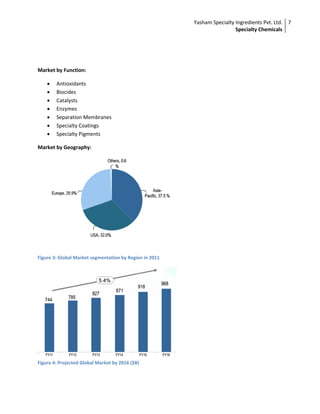
Market by Geography:
Figure 3: Global Market segmentation by Region in 2011
Figure 4: Projected Global Market by 2016 ($B)
Yasham Specialty Ingredients Pvt. Ltd.
Specialty Chemicals
8
The global specialty chemicals market had total revenue of $767.5 billion in 2011, representing a
compound annual growth rate (CAGR) of 2.7% between 2007 and 2011. Fine chemicals sales proved the
most lucrative for the global specialty chemicals market in 2011, with total revenues of $221.5 billion.
The performance of the market is forecast to accelerate, with an anticipated CAGR of 5% for the five-
year period 2011 - 2016, which is expected to drive the market to a value of $980 billion by the end of
2016. [4]
Yasham Specialty Ingredients Pvt. Ltd.
Specialty Chemicals
9
INDIAN MARKET [6]
Figure 5: Past Growth of Specialty Chemicals in India ($B)
Indian chemical industry is rapidly growing industry and is estimated at ~$108 billion (as per CMIE 2010).
Of this the specialty chemicals account for ~20%, i.e. ~$21.5 billion ($17.7 billion of specialty chemicals
and $3.8 billion of agrochemicals, APIs not included here).
Figure 6: Targeted Growth for Specialty Chemicals in India ($B)
Specialty chemicals have observed a high growth rate in the past too. It has grown at ~12% p.a. since
2006 when the market size was ~ $12 billion (Refer Figure 5). The past growth has been mostly due to
growth in end use industries in the past, which has resulted in increased consumption for specialty
chemicals. Going ahead, the growth potential of the specialty chemicals consumption in India is strong
(Refer Figure 6) and it is expected to reach ~$ 45billion by FY17 ($38 billion for specialty chemicals and
$6.5 billion for agrochemicals).
Yasham Specialty Ingredients Pvt. Ltd.
Specialty Chemicals
10
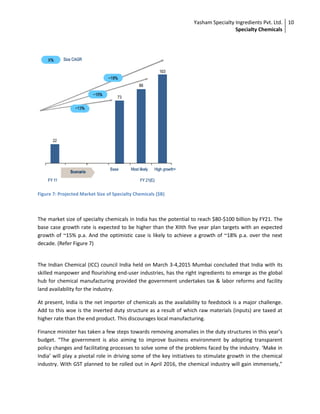
Figure 7: Projected Market Size of Specialty Chemicals ($B)
The market size of specialty chemicals in India has the potential to reach $80-$100 billion by FY21. The
base case growth rate is expected to be higher than the XIIth five year plan targets with an expected
growth of ~15% p.a. And the optimistic case is likely to achieve a growth of ~18% p.a. over the next
decade. (Refer Figure 7)
The Indian Chemical (ICC) council India held on March 3-4,2015 Mumbai concluded that India with its
skilled manpower and flourishing end-user industries, has the right ingredients to emerge as the global
hub for chemical manufacturing provided the government undertakes tax & labor reforms and facility
land availability for the industry.
At present, India is the net importer of chemicals as the availability to feedstock is a major challenge.
Add to this woe is the inverted duty structure as a result of which raw materials (inputs) are taxed at
higher rate than the end product. This discourages local manufacturing.
Finance minister has taken a few steps towards removing anomalies in the duty structures in this year’s
budget. “The government is also aiming to improve business environment by adopting transparent
policy changes and facilitating processes to solve some of the problems faced by the industry. ‘Make in
India’ will play a pivotal role in driving some of the key initiatives to stimulate growth in the chemical
industry. With GST planned to be rolled out in April 2016, the chemical industry will gain immensely,”
Yasham Specialty Ingredients Pvt. Ltd.
Specialty Chemicals
11
said Gopal Sarma, partner, Bain & Company, which is working slowly with the Government of India on
‘Make in India’ campaign.
According to A J V Prasad, joint secretary, Department of Chemicals and Petrochemicals, the
government is committed to its ‘Make in India’ initiative and chemical industry can play a major role in
this campaign by making India a manufacturing hub for chemicals, especially knowledge and specialty
chemicals. He also urged the industry to adopt eco-friendly technologies for sustainable development
and to increase it’s spent on research and development.
Indian chemical manufacturers will have to understand and address issues around raw materials,
infrastructure & environment, product portfolio, duty structures, human resources, etc. to succeed in
this market.
Yasham Specialty Ingredients Pvt. Ltd.
Specialty Chemicals
12
IMPORT-EXPORT SCENARIO [6]
India exports significant proportion of its production of specialty chemicals and API. The key markets for
export of specialty chemicals are (Refer Figure 8)
Figure 8: Key Export Destination
Colorants (dyes and pigments) form the bulk of the export of specialty chemicals. Agrochemicals export
is also on the rise and major destinations for agrochemical exports are US, UK, France, Netherlands,
Spain, Belgium and Asia-pacific countries. API exports from India are into both regulated and semi
regulated markets spanning across the world.
Figure 9: India Export-Import ($B)
Yasham Specialty Ingredients Pvt. Ltd.
Specialty Chemicals
13
India is slowly moving towards higher Exports than Imports. The country’s Exports increased at a CAGR
(FY09-12) of 23%, while import growth is slower at 18%. This is against 25% growth witnessed in exports
in (FY03-08) while imports during this period increased at a sharper rate of 38%.
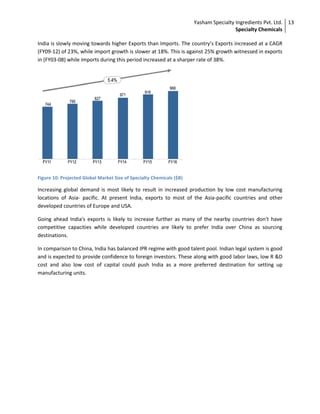
Figure 10: Projected Global Market Size of Specialty Chemicals ($B)
Increasing global demand is most likely to result in increased production by low cost manufacturing
locations of Asia- pacific. At present India, exports to most of the Asia-pacific countries and other
developed countries of Europe and USA.
Going ahead India's exports is likely to increase further as many of the nearby countries don't have
competitive capacities while developed countries are likely to prefer India over China as sourcing
destinations.
In comparison to China, India has balanced IPR regime with good talent pool. Indian legal system is good
and is expected to provide confidence to foreign investors. These along with good labor laws, low R &D
cost and also low cost of capital could push India as a more preferred destination for setting up
manufacturing units.
Yasham Specialty Ingredients Pvt. Ltd.
Specialty Chemicals
14
ACTIVE PHARMACEUTICAL INGREDIENTS (API’s)[6]
Active Pharmaceutical Ingredients (APIs) are integral components of both the quality and the cost of
pharmaceutical goods. Pharmaceutical are one of the key necessities for public and this requires that
API players must account for high quality, sustainability and low prices. Driven by lower costs and high
quality (requires skill set and R&D also) the manufacturing of APIs have gradually moved to
manufacturing competitive countries of Asia-pacific like China and India. Mostly for generic drugs the
cost competitiveness becomes the key and as going ahead by 2014 almost $3Bn worth of drugs are
going off patent this increases the potential for API manufactures in India drastically
Indian players are also increasingly involved in providing API for regulated markets. Players such as
Piramal Healthcare, Divi's Labs, Dishman Pharma, Shasun and Aurobindo etc. supply API for patented
products to large and midsized pharmaceutical players in regulated markets.
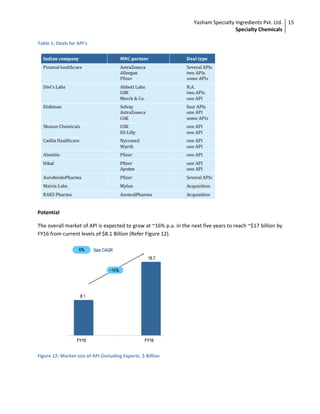
The total turnover of pharmaceutical segment in FY10 was ~$21.8 billion. Details of the overall market
size are given below (Refer Figure11).
Figure 11: Total Pharma Market in FY10: ~$21.8 Bn
The market break up is such that the of the total pharmaceutical segment API exports account for ~24%
of the total turnover resulting in a market size of ~$5.3 Billion. Rest $16.5 Billion is captured by
formulations.
The API exports and the consumption of API for domestic formulations together account for a market
size of almost $8.1 billion in FY10 with the API domestic consumption accounting only for ~35% of the
total production ($2.8 Bn).There has been growth in the export of the API as the market is estimated to
grow from ~60% of total production in 2008-09 (Source: Indian Pharmaceutical Industry, 2009 & ICRA)
to ~65% in 2009-10. This trend is also evident from the rising number of deals by Indian players for
supplying API in recent years. List of some of the deals is given below (Refer Table 1):-
Yasham Specialty Ingredients Pvt. Ltd.
Specialty Chemicals
15
Table 1: Deals for API’s
Potential
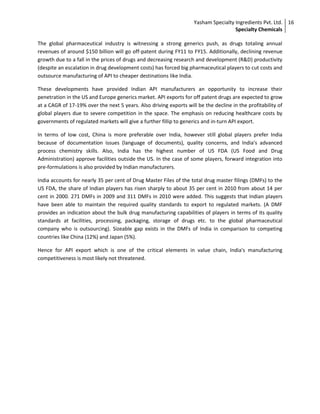
The overall market of API is expected to grow at ~16% p.a. in the next five years to reach ~$17 billion by
FY16 from current levels of $8.1 Billion (Refer Figure 12).
Figure 12: Market size of API (including Exports. $ Billion
Yasham Specialty Ingredients Pvt. Ltd.
Specialty Chemicals
16
The global pharmaceutical industry is witnessing a strong generics push, as drugs totaling annual
revenues of around $150 billion will go off-patent during FY11 to FY15. Additionally, declining revenue
growth due to a fall in the prices of drugs and decreasing research and development (R&D) productivity
(despite an escalation in drug development costs) has forced big pharmaceutical players to cut costs and
outsource manufacturing of API to cheaper destinations like India.
These developments have provided Indian API manufacturers an opportunity to increase their
penetration in the US and Europe generics market. API exports for off patent drugs are expected to grow
at a CAGR of 17-19% over the next 5 years. Also driving exports will be the decline in the profitability of
global players due to severe competition in the space. The emphasis on reducing healthcare costs by
governments of regulated markets will give a further fillip to generics and in-turn API export.
In terms of low cost, China is more preferable over India, however still global players prefer India
because of documentation issues (language of documents), quality concerns, and India's advanced
process chemistry skills. Also, India has the highest number of US FDA (US Food and Drug
Administration) approve facilities outside the US. In the case of some players, forward integration into
pre-formulations is also provided by Indian manufacturers.
India accounts for nearly 35 per cent of Drug Master Files of the total drug master filings (DMFs) to the
US FDA, the share of Indian players has risen sharply to about 35 per cent in 2010 from about 14 per
cent in 2000. 271 DMFs in 2009 and 311 DMFs in 2010 were added. This suggests that Indian players
have been able to maintain the required quality standards to export to regulated markets. (A DMF
provides an indication about the bulk drug manufacturing capabilities of players in terms of its quality
standards at facilities, processing, packaging, storage of drugs etc. to the global pharmaceutical
company who is outsourcing). Sizeable gap exists in the DMFs of India in comparison to competing
countries like China (12%) and Japan (5%).
Hence for API export which is one of the critical elements in value chain, India's manufacturing
competitiveness is most likely not threatened.
Yasham Specialty Ingredients Pvt. Ltd.
Specialty Chemicals
17
PERSONAL CARE CHEMICALS [6]
The market for personal care ingredients is broadly classified into commodity, fine chemical, and
specialty chemical ingredients. Specialty ingredients are further classified as active and inactive
ingredients based on their functionality in consumer products (Refer Figure 13)
Table 2: Segmentation – Personal care ingredients Industry
a. Inactive ingredients
Personal Care inactive ingredients refer to those ingredients that provide physical and process able
properties to a formulation as opposed to active properties. These include ingredients such as
surfactants, preservatives, colorants and polymer ingredients.
b. Active ingredients
Personal Care active ingredients refer to those ingredients that add active property to a product that
result in benefits to the end user as opposed to the formulation. These include ingredients such as Anti-
ageing ingredients, exfoliators, conditioning agents and UV agents.
Personal care ingredients market is valued at ~$450 million in FY11 with Active ingredients accounting
for ~40% of the total market. In 2011, the total Indian personal care inactive ingredient market was
valued at ~$270 million while active ingredients market was valued at ~$180 million.
The market for personal care ingredients in India is becoming increasingly sophisticated. The constant
entry of foreign manufacturers has raised the standards expected of suppliers in this market. Market is
characterized by strong presence of MNCs like Cognis, Dow Corning, BASF, ISP, DSM, Merck etc.
Domestic players like Vivimed Laboratories, SAMI Labs and India Glycols are gaining prominence.
Yasham Specialty Ingredients Pvt. Ltd.
Specialty Chemicals
18
Premium Segments in India are showing good growth potential with increasing awareness and evolving
consumers who are ready to spend more on quality products.
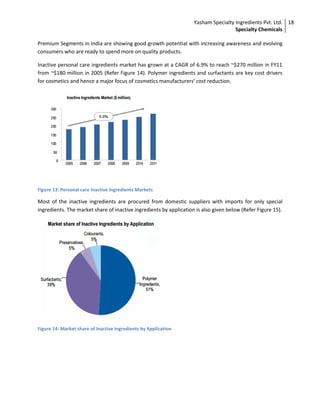
Inactive personal care ingredients market has grown at a CAGR of 6.9% to reach ~$270 million in FY11
from ~$180 million in 2005 (Refer Figure 14). Polymer ingredients and surfactants are key cost drivers
for cosmetics and hence a major focus of cosmetics manufacturers' cost reduction.
Figure 13: Personal care Inactive Ingredients Markets
Most of the inactive ingredients are procured from domestic suppliers with imports for only special
ingredients. The market share of inactive ingredients by application is also given below (Refer Figure 15).
Figure 14: Market share of Inactive Ingredients by Application
Yasham Specialty Ingredients Pvt. Ltd.
Specialty Chemicals
19
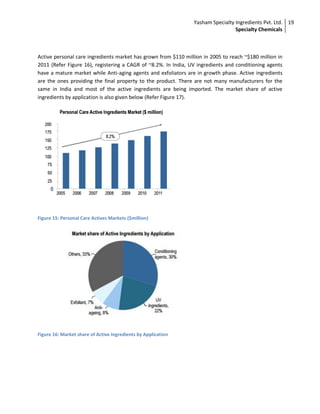
Active personal care ingredients market has grown from $110 million in 2005 to reach ~$180 million in
2011 (Refer Figure 16), registering a CAGR of ~8.2%. In India, UV ingredients and conditioning agents
have a mature market while Anti-aging agents and exfoliators are in growth phase. Active ingredients
are the ones providing the final property to the product. There are not many manufacturers for the
same in India and most of the active ingredients are being imported. The market share of active
ingredients by application is also given below (Refer Figure 17).
Figure 15: Personal Care Actives Markets ($million)
Figure 16: Market share of Active Ingredients by Application
Yasham Specialty Ingredients Pvt. Ltd.
Specialty Chemicals
20
Market trends
High price sensitivity has limited use of high value personal care ingredients. Market is also seeing
advent of large corporations willing to take long term investment decisions in India. Typically different
sets of personal care products and hence the ingredients are used for low and middle class segments as
compared to the premium segments. There are many Indian players coming up to provide local
substitutes for active ingredients.
Regulatory trends
There are multiple and complex regulations under different bodies due to which there is a lack in
implementation of set guidelines and laws. Drugs and Cosmetics Act (1940) has laid down the general
guidelines about imports, manufacturing, sales and distribution of personal care products in India.
Bureau of Indian Standards has also framed standards about personal care products as well as the
ingredients, completely based on the European Union's guidelines but these are also not enforced as
regulations.
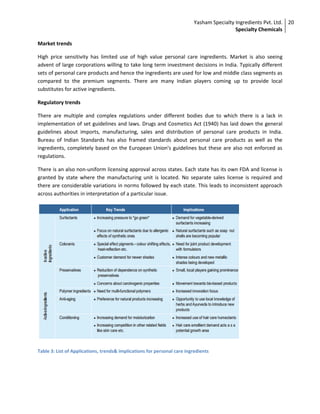
There is an also non-uniform licensing approval across states. Each state has its own FDA and license is
granted by state where the manufacturing unit is located. No separate sales license is required and
there are considerable variations in norms followed by each state. This leads to inconsistent approach
across authorities in interpretation of a particular issue.
Table 3: List of Applications, trends& implications for personal care ingredients
Yasham Specialty Ingredients Pvt. Ltd.
Specialty Chemicals
21
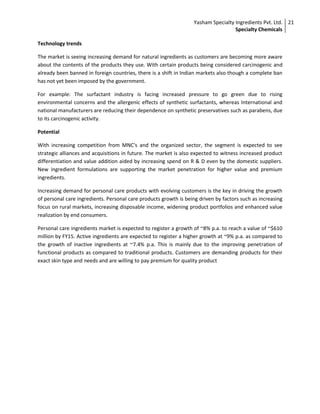
Technology trends
The market is seeing increasing demand for natural ingredients as customers are becoming more aware
about the contents of the products they use. With certain products being considered carcinogenic and
already been banned in foreign countries, there is a shift in Indian markets also though a complete ban
has not yet been imposed by the government.
For example: The surfactant industry is facing increased pressure to go green due to rising
environmental concerns and the allergenic effects of synthetic surfactants, whereas International and
national manufacturers are reducing their dependence on synthetic preservatives such as parabens, due
to its carcinogenic activity.
Potential
With increasing competition from MNC's and the organized sector, the segment is expected to see
strategic alliances and acquisitions in future. The market is also expected to witness increased product
differentiation and value addition aided by increasing spend on R & D even by the domestic suppliers.
New ingredient formulations are supporting the market penetration for higher value and premium
ingredients.
Increasing demand for personal care products with evolving customers is the key in driving the growth
of personal care ingredients. Personal care products growth is being driven by factors such as increasing
focus on rural markets, increasing disposable income, widening product portfolios and enhanced value
realization by end consumers.
Personal care ingredients market is expected to register a growth of ~8% p.a. to reach a value of ~$610
million by FY15. Active ingredients are expected to register a higher growth at ~9% p.a. as compared to
the growth of inactive ingredients at ~7.4% p.a. This is mainly due to the improving penetration of
functional products as compared to traditional products. Customers are demanding products for their
exact skin type and needs and are willing to pay premium for quality product
Yasham Specialty Ingredients Pvt. Ltd.
Specialty Chemicals
22
AGROCHEMICALS [6]
In India a high spent on food and being the largest employer status makes agriculture a significant part
of economy. Agriculture even though accounts for only ~17% of GDP it employs 55-60% of the
workforce. However Indian agriculture is faced with challenges like limited farmland availability and low
crop yields. India's crop yields in major crops like Rice, lentils, corn and soyabean is more than 50%
below China's. And one of the major reasons for this has been the low average crop protection
consumption in India. (Refer Figure 19)
Figure 17: Average crop protection consumption (Kg/Ha)
The primary reason for low usage could be attributed to:-
 Low purchasing power of farmers
 Lack of awareness among farmers regarding benefits of crop protection
 chemicals
 Reach and accessibility of products
 Fragmented land holdings and low levels of irrigation
 Dependence on monsoon
Agrochemicals are used to improve crop performance, yield or control pests, etc. Agrochemicals are
substances manufactured through chemical or biochemical processes containing the active ingredient in
a definite concentration along with other materials which improve its performance and increase safety.
For application, these are diluted with water in recommended doses and applied on seeds, soil,
irrigation water and crops to prevent the damages from pests. There are broadly 5 categories of crop
protection products: Insecticides, fungicides, herbicides, bio pesticides and others (includes
nematocides, rodenticides etc.).
Yasham Specialty Ingredients Pvt. Ltd.
Specialty Chemicals
23
Market Size
Currently, the crop protection chemicals/ agrochemical accounts for ~3.5% of the total chemicals
market in India. The domestic crop protection market is estimated at ~$2 Bn, whereas the exports
market is estimated at ~$1.8Bn making its total market size of $3.8Bn.
The crop protection industry in India is generic in nature with ~80% of the molecules being non-
patented. Hence, strong distribution network and brand image act as competitive factors. Crop
protection chemicals are manufactured as technical grades and converted into formulations for
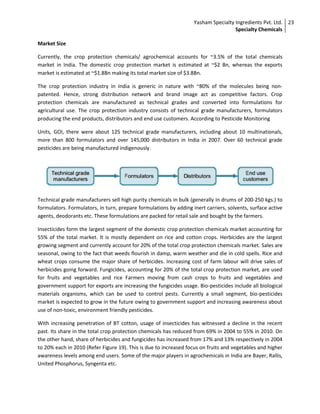
agricultural use. The crop protection industry consists of technical grade manufacturers, formulators
producing the end products, distributors and end use customers. According to Pesticide Monitoring
Units, GOI, there were about 125 technical grade manufacturers, including about 10 multinationals,
more than 800 formulators and over 145,000 distributors in India in 2007. Over 60 technical grade
pesticides are being manufactured indigenously.
Technical grade manufacturers sell high purity chemicals in bulk (generally in drums of 200-250 kgs.) to
formulators. Formulators, in turn, prepare formulations by adding inert carriers, solvents, surface active
agents, deodorants etc. These formulations are packed for retail sale and bought by the farmers.
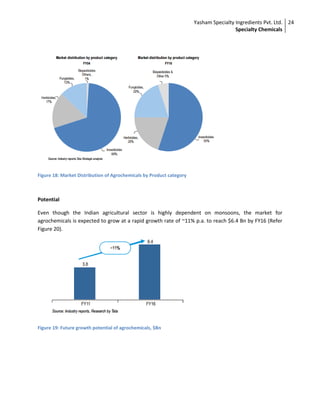
Insecticides form the largest segment of the domestic crop protection chemicals market accounting for
55% of the total market. It is mostly dependent on rice and cotton crops. Herbicides are the largest
growing segment and currently account for 20% of the total crop protection chemicals market. Sales are
seasonal, owing to the fact that weeds flourish in damp, warm weather and die in cold spells. Rice and
wheat crops consume the major share of herbicides. Increasing cost of farm labour will drive sales of
herbicides going forward. Fungicides, accounting for 20% of the total crop protection market, are used
for fruits and vegetables and rice Farmers moving from cash crops to fruits and vegetables and
government support for exports are increasing the fungicides usage. Bio-pesticides include all biological
materials organisms, which can be used to control pests. Currently a small segment, bio-pesticides
market is expected to grow in the future owing to government support and increasing awareness about
use of non-toxic, environment friendly pesticides.
With increasing penetration of BT cotton, usage of insecticides has witnessed a decline in the recent
past. Its share in the total crop protection chemicals has reduced from 69% in 2004 to 55% in 2010. On
the other hand, share of herbicides and fungicides has increased from 17% and 13% respectively in 2004
to 20% each in 2010 (Refer Figure 19). This is due to increased focus on fruits and vegetables and higher
awareness levels among end users. Some of the major players in agrochemicals in India are Bayer, Rallis,
United Phosphorus, Syngenta etc.
Yasham Specialty Ingredients Pvt. Ltd.
Specialty Chemicals
24
Figure 18: Market Distribution of Agrochemicals by Product category
Potential
Even though the Indian agricultural sector is highly dependent on monsoons, the market for
agrochemicals is expected to grow at a rapid growth rate of ~11% p.a. to reach $6.4 Bn by FY16 (Refer
Figure 20).
Figure 19: Future growth potential of agrochemicals, $Bn
Yasham Specialty Ingredients Pvt. Ltd.
Specialty Chemicals
25
Key growth drivers include:
1. Increasing demand for food grains: India has 16% of the world's population and less than 2% of the
total landmass. Increasing population and high emphasis on achieving food grain self-sufficiency is
expected to drive growth.
2. Limited farmland availability: India has ~190 Mn hectares of gross cultivated area and the scope for
bringing new areas under cultivation is severely limited. Available arable land per capita has been
reducing globally and is expected to reduce further. The pressure is therefore to increase yield per
hectare which can be achieved through increased usage of agrochemicals.
3. Low Productivity: India has low crop productivity as compared to other countries. Average
productivity in India stands at 2 MT/ha as compared to 6 MT/ha in USA and world average of 3 MT/ha.
At the same time, India's pesticide consumption is also low at 0.60 kg/ha as compared to the world
average of 3 kg/ha.(Source: India stat, Industry reports) Hence, increased usage of pesticides could help
the farmers to improve crop productivity. By educating farmers and conducting special training
programs regarding the need to use agrochemicals, Indian companies can hope to increase pesticide
consumption.
4. Growth of horticulture and floriculture: Buoyed by high growth experienced by Indian floriculture
industry, Government of India has launched a national horticulture mission to increase production
(Source: National Horticulture Mission) Growing horticulture and floriculture industries will result in
increasing demand for agrochemicals, especially fungicides.
Future prospects of this Industry
Despite challenges, many companies have started to look again and more closely at the Indian –
Specialty Chemical Sector with two good reasons.
1. The growth potential for India’s Economy, over the next decade and beyond is well-known.
GDP is expected to rise between 5-8% per year over the next 5 years.
2. The specialty-chemical sector in India is picking up momentum; its CAGR rose to 13% from 2005-
2010. Certain sub-segments have exceeded that average: crop-protection chemical sales have
doubled since 2005 to about $3.5 Billion, with growth in export sales outpacing domestic sales.
3. A number of domestic and international companies are already seeing health growth and
returns in the India Specialty Chemical sector. International companies account for 5 of the 10
largest players in the India Specialty market.
4. A detailed analysis of 15 Specialty – chemicals sector and an evaluation of the potential for the
Indian consumption and usage intensity to reach China suggest that Indian Specialty chemical
industry could grow over 4-5 times by 2020 to make a market worth of $80Bn to $100Bn per
year.
Yasham Specialty Ingredients Pvt. Ltd.
Specialty Chemicals
26
CONCLUSION
The report suggests or rather forecasts that the specialty chemical market will raise up to $70 Billion
annually by 2020. This provides us a wide opportunity to explore the Indian Specialty Chemical sector.
The “Make in India” initiative by the government of India has opened up opportunities for SME’s to
enter into exports/imports. This shows that this would increase the economic independency of the
country. Increased exports are the need of the hour.
As government is providing the opportunities for SME’s we as traders have ample amount to Tap them
and make them our trustworthy suppliers.
The pharmaceutical sector opens up vast opportunity as many of the API’s patent is expiring in next
coming year.
We as traders should try and develop the un-explored area of chemical sector. We have to be a step
ahead and study the chemical & pharmaceutical market and plan and strategize the in-demand
products.
Yasham Specialty Ingredients Pvt. Ltd.
Specialty Chemicals
27
BIBLIOGRAPHY
1. "what is speciality chemical manufacturing". SOCMA. Retrieved 31 July 2013.
2. Stork, William (2004). "Speciality Chemicals". Chemical & Engineering News supplement 82. pp.
35–39.
3. “Global Specialty Chemicals Market (Applications, Function and Geography) - Size, Share, Global
Trends, Company Profiles, Demand, Insights, Analysis, Research, Report, Opportunities,
Segmentation and Forecast, 2013 – 2020”.Allied Market research.
4. http://www.datamonitor.com/store/Product/specialty_chemicals_global_industry_guide?produ
ctid=ML00004-338
5. http://www.business-standard.com/content/b2b-chemicals/chemical-industry-to-gain-from-
make-in-india-initiative-115030500825_1.html
6. http://www.ficci.com/spdocument/20172/KnowledgePaperSpecialtyChemicals.pdf
7. “India Specialty Chemicals”, Formulating for sustained growth, Specialty Chemical Report,
Emkayglobal.com, July 03, 2014.
8. McKinsey on Chemicals, Spring 4, 2012.
9. http://articles.economictimes.indiatimes.com/2013-10-27/news/43432747_1_speciality-
chemicals-export-market
10. The Global Market of Chemicals in a World of Specialties – an Overview,
http://www.transparencymarketresearch.com/specialty-chemicals-market.html

SWATI VAISH_Specialty Chemical Report_7.04.15

  • 1.
    Yasham Specialty IngredientsPvt. Ltd. Specialty Chemicals 1 Swati Vaish Export Department
  • 2.
    Yasham Specialty IngredientsPvt. Ltd. Specialty Chemicals 2 EXECUTIVE SUMMARY Specialty chemical industry is a knowledge driven industry. In India it has been growing rapidly at 1.2- 1.3x of GDP growth rate (~12%) over the last five years and currently stands at ~$21.5 Billion. Indian specialty chemical manufacturers have strong presence in export market also. API and colorants (including dyes and pigments) are the key export oriented products. India exports specialty chemicals to nearby Asia-Pacific countries which don't have competitive scale of productions. India also exports to developed countries of Europe and USA where it leverages its low cost of production and quality talent pool. Compliance with global regulations and India's manufacturing competitiveness has helped the export market to grow significantly. Going ahead innovation and sustainability initiatives are expected to be one of the major factors for competitiveness. Development of processes/ products which eliminate or reduce the use of hazardous substances could become the key priority of producers. Consumers would be expected to pay premium for green chemistry and environmental preservation initiatives and appreciate this globally. This along with more stringent regulatory constraints may further increase the importance of innovation. The market is largely driven by the robust expansion of major end-user industries, especially in the Asian markets, and continuously widening scope of applications. An increased focus on innovations for developing more efficient and safer specialty chemicals also remains a key driver for the global specialty chemicals market. However, fluctuating costs of raw materials, strict regulatory issues related with certain chemicals, and environmental concerns present limitations to market growth. Traditionally, the market of specialty chemicals has been dominated by the United States and Europe. But trade liberalization, introduction and spread of innovative processing technologies, and the breakdown of a number of economic barriers have allowed Asian nations such as India and China in becoming key players of the global specialty chemicals market over the past decade. China overtook United States in 2010 to become the world’s largest producer of chemicals. Many international specialty chemical manufacturers have set out to tap the enormous opportunities presented by the Asian markets in the past decade. However, the Indian market for specialty chemicals has tended to be in China’s shadow due to the much larger expanse, similar labor-cost advantage, same order of capital spending, and similar growth rate advantages offered by the Chinese market. But in the past few years, Indian specialty chemicals market has also made good progress. Analysts state that in the coming years, the Indian market will leverage its export potential at a rapid pace and allow the overall Asian specialty chemicals market in increasing its prominence in the global market.
  • 3.
    Yasham Specialty IngredientsPvt. Ltd. Specialty Chemicals 3 CONTENTS: 1. Introduction to Specialty Chemicals …………………………………………………………………………………………..5 2. Global Scenario ………………………………………………………………………………………………………………………….6 3. Indian Scenario…………………………………………………………………………………………………………………………..9 4. Import – Export Scenario ………………………………………………………………………………………………………….12 5. API’s …………………………………………………………………………………………………………………………………………14 6. Personal Care Chemicals ………………………………………………………………………………………………………….17 7. Agrochemicals…………………………………………………………………………………………………………………………..22 8. Conclusion ……………………………………………………………………………………………………………………………….26 9. Bibliography …………………………………………………………………………………………………………………………….27
  • 4.
    Yasham Specialty IngredientsPvt. Ltd. Specialty Chemicals 4 LIST OF FIGURES & TABLES Figure 1: Global Specialty Chemical Market ($Bn) ……………………………………………………………………………….....5 Figure 2: Global Segmentation in products in 2010 …………………………………………………………………………………6 Figure 3: Global Market segmentation by Region in 2011………………………………………………………………………..7 Figure 4: Projected Global Market by 2016 ($B) ……………………………………………………………………………………..7 Figure 5: Past Growth of Specialty Chemicals in India ($B) ……………………………………………………………………..9 Figure 6: Targeted Growth for Specialty Chemicals in India ($B) …………………………………………………………….9 Figure 7: Projected Market Size of Specialty Chemicals ($B) …………………………………………………………………10 Figure 8: Key Export Destination …………………………………………………………………………………………………………..12 Figure 9: India Export-Import ($B) …………………………………………………………………………………………………………12 Figure 10: Projected Global Market Size of Specialty Chemicals ($B) …………………………………………………….13 Figure 11: Total Pharma Market in FY10: ~$21.8 Bn …………………………………………………………………………….14 Figure 12: Market size of API (including Exports. $ Billion ……………………………………………………………………..15 Figure 13: Personal care Inactive Ingredients Markets ………………………………………………………………………….18 Figure 14: Market share of Inactive Ingredients by Application …………………………………………………………….18 Figure 15: Personal Care Actives Markets ($million) ……………………………………………………………………………..19 Figure 16: Market share of Active Ingredients by Application ……………………………………………………………….19 Figure 17: Average crop protection consumption (Kg/Ha) …………………………………………………………………….22 Figure 18: Market Distribution of Agrochemicals by Product category ………………………………………………….24 Figure 19: Future growth potential of agrochemicals, $Bn ……………………………………………………………………24 Table 1: Deals for API’s ………………………………………………………………………………………………………………………….15 Table 2: Segmentation – Personal care ingredients Industry …………………………………………………………………17 Table 3: List of Applications, trends& implications for personal care ingredients ………………………………….20
  • 5.
    Yasham Specialty IngredientsPvt. Ltd. Specialty Chemicals 5 INTRODUCTION Specialty Chemicals: Specialty chemicals (also called specialties or effect chemicals) are particular chemical products which provide wide variety of effects on which many other industry sectors rely. Some of the categories of specialty chemicals are: Adhesives, Agrichemicals, Cleaning materials, Cosmetic additives, Construction chemicals, Elastomers, Flavors, Food additives, Fragrances, Industrial gases, Lubricants, Polymers, Surfactants, and Textile auxiliaries Other industrial sectors such as automobile, aerospace, food, cosmetics, agriculture, manufacturing, textile industries are highly dependent on such products. [1] They are materials used on the basis of their performance or function. Consequently in addition to "effect" chemicals they are sometimes referred to as "performance" chemicals or "formulation" chemicals. They can be unique molecules or mixtures of molecules known as formulations. The physical and chemical characteristics of the single molecules or the formulated mixtures of molecules and the composition of the mixtures influence the performance end product. In commercial applications the companies providing these products more often than not provide targeted customer service to innovative individual technical solutions for their customers. [2] Market Size: Figure 1: Global Specialty Market, $B
  • 6.
    Yasham Specialty IngredientsPvt. Ltd. Specialty Chemicals 6 GLOBAL SCENARIO The global specialty chemicals market is ~ $740 billion in FY11 representing a compounded annual growth rate of ~3.7% during 2006-11Global market declined sharply in 2009 due to global economic crisis; however it also quickly bounced back strongly in 2010 to reach the sales value close to 2008 figure. As reported at the 2004 annual meeting of the Specialized Organic Chemical Sector Association (SOCSA), a sector association within the U.K.’s Chemical Industries Association, “Whilst the EU specialty chemicals sector can be modestly optimistic about growth in the coming 12 months, this optimism is tempered by the ever-increasing competition from China, whose export growth rate in specialty chemicals is a startling 21%.” India is also making a major commitment to specialty chemicals. In a speech at the Conference on Specialty Chemicals: Competitiveness in the New Millennium, July 2003, New Delhi, Shyam S. Bhartia, chairman of the chemicals committee of the Federation of Indian Chambers of Commerce and Industry, stated that “[India] must use this opportunity and take the exports growth in the specialty chemicals industry to more than 50% per annum from the current level of around 20%. Only then can we double our share in the global chemical industry to nearly 4%. . . . We have the ability to be a large player in the global specialty chemicals industry and a dominant player in select segments.” Market by Application/Target Market: Figure 2: Global Segmentation by products in 2010
  • 7.
    Yasham Specialty IngredientsPvt. Ltd. Specialty Chemicals 7 Market by Function:  Antioxidants  Biocides  Catalysts  Enzymes  Separation Membranes  Specialty Coatings  Specialty Pigments Market by Geography: Figure 3: Global Market segmentation by Region in 2011 Figure 4: Projected Global Market by 2016 ($B)
  • 8.
    Yasham Specialty IngredientsPvt. Ltd. Specialty Chemicals 8 The global specialty chemicals market had total revenue of $767.5 billion in 2011, representing a compound annual growth rate (CAGR) of 2.7% between 2007 and 2011. Fine chemicals sales proved the most lucrative for the global specialty chemicals market in 2011, with total revenues of $221.5 billion. The performance of the market is forecast to accelerate, with an anticipated CAGR of 5% for the five- year period 2011 - 2016, which is expected to drive the market to a value of $980 billion by the end of 2016. [4]
  • 9.
    Yasham Specialty IngredientsPvt. Ltd. Specialty Chemicals 9 INDIAN MARKET [6] Figure 5: Past Growth of Specialty Chemicals in India ($B) Indian chemical industry is rapidly growing industry and is estimated at ~$108 billion (as per CMIE 2010). Of this the specialty chemicals account for ~20%, i.e. ~$21.5 billion ($17.7 billion of specialty chemicals and $3.8 billion of agrochemicals, APIs not included here). Figure 6: Targeted Growth for Specialty Chemicals in India ($B) Specialty chemicals have observed a high growth rate in the past too. It has grown at ~12% p.a. since 2006 when the market size was ~ $12 billion (Refer Figure 5). The past growth has been mostly due to growth in end use industries in the past, which has resulted in increased consumption for specialty chemicals. Going ahead, the growth potential of the specialty chemicals consumption in India is strong (Refer Figure 6) and it is expected to reach ~$ 45billion by FY17 ($38 billion for specialty chemicals and $6.5 billion for agrochemicals).
  • 10.
    Yasham Specialty IngredientsPvt. Ltd. Specialty Chemicals 10 Figure 7: Projected Market Size of Specialty Chemicals ($B) The market size of specialty chemicals in India has the potential to reach $80-$100 billion by FY21. The base case growth rate is expected to be higher than the XIIth five year plan targets with an expected growth of ~15% p.a. And the optimistic case is likely to achieve a growth of ~18% p.a. over the next decade. (Refer Figure 7) The Indian Chemical (ICC) council India held on March 3-4,2015 Mumbai concluded that India with its skilled manpower and flourishing end-user industries, has the right ingredients to emerge as the global hub for chemical manufacturing provided the government undertakes tax & labor reforms and facility land availability for the industry. At present, India is the net importer of chemicals as the availability to feedstock is a major challenge. Add to this woe is the inverted duty structure as a result of which raw materials (inputs) are taxed at higher rate than the end product. This discourages local manufacturing. Finance minister has taken a few steps towards removing anomalies in the duty structures in this year’s budget. “The government is also aiming to improve business environment by adopting transparent policy changes and facilitating processes to solve some of the problems faced by the industry. ‘Make in India’ will play a pivotal role in driving some of the key initiatives to stimulate growth in the chemical industry. With GST planned to be rolled out in April 2016, the chemical industry will gain immensely,”
  • 11.
    Yasham Specialty IngredientsPvt. Ltd. Specialty Chemicals 11 said Gopal Sarma, partner, Bain & Company, which is working slowly with the Government of India on ‘Make in India’ campaign. According to A J V Prasad, joint secretary, Department of Chemicals and Petrochemicals, the government is committed to its ‘Make in India’ initiative and chemical industry can play a major role in this campaign by making India a manufacturing hub for chemicals, especially knowledge and specialty chemicals. He also urged the industry to adopt eco-friendly technologies for sustainable development and to increase it’s spent on research and development. Indian chemical manufacturers will have to understand and address issues around raw materials, infrastructure & environment, product portfolio, duty structures, human resources, etc. to succeed in this market.
  • 12.
    Yasham Specialty IngredientsPvt. Ltd. Specialty Chemicals 12 IMPORT-EXPORT SCENARIO [6] India exports significant proportion of its production of specialty chemicals and API. The key markets for export of specialty chemicals are (Refer Figure 8) Figure 8: Key Export Destination Colorants (dyes and pigments) form the bulk of the export of specialty chemicals. Agrochemicals export is also on the rise and major destinations for agrochemical exports are US, UK, France, Netherlands, Spain, Belgium and Asia-pacific countries. API exports from India are into both regulated and semi regulated markets spanning across the world. Figure 9: India Export-Import ($B)
  • 13.
    Yasham Specialty IngredientsPvt. Ltd. Specialty Chemicals 13 India is slowly moving towards higher Exports than Imports. The country’s Exports increased at a CAGR (FY09-12) of 23%, while import growth is slower at 18%. This is against 25% growth witnessed in exports in (FY03-08) while imports during this period increased at a sharper rate of 38%. Figure 10: Projected Global Market Size of Specialty Chemicals ($B) Increasing global demand is most likely to result in increased production by low cost manufacturing locations of Asia- pacific. At present India, exports to most of the Asia-pacific countries and other developed countries of Europe and USA. Going ahead India's exports is likely to increase further as many of the nearby countries don't have competitive capacities while developed countries are likely to prefer India over China as sourcing destinations. In comparison to China, India has balanced IPR regime with good talent pool. Indian legal system is good and is expected to provide confidence to foreign investors. These along with good labor laws, low R &D cost and also low cost of capital could push India as a more preferred destination for setting up manufacturing units.
  • 14.
    Yasham Specialty IngredientsPvt. Ltd. Specialty Chemicals 14 ACTIVE PHARMACEUTICAL INGREDIENTS (API’s)[6] Active Pharmaceutical Ingredients (APIs) are integral components of both the quality and the cost of pharmaceutical goods. Pharmaceutical are one of the key necessities for public and this requires that API players must account for high quality, sustainability and low prices. Driven by lower costs and high quality (requires skill set and R&D also) the manufacturing of APIs have gradually moved to manufacturing competitive countries of Asia-pacific like China and India. Mostly for generic drugs the cost competitiveness becomes the key and as going ahead by 2014 almost $3Bn worth of drugs are going off patent this increases the potential for API manufactures in India drastically Indian players are also increasingly involved in providing API for regulated markets. Players such as Piramal Healthcare, Divi's Labs, Dishman Pharma, Shasun and Aurobindo etc. supply API for patented products to large and midsized pharmaceutical players in regulated markets. The total turnover of pharmaceutical segment in FY10 was ~$21.8 billion. Details of the overall market size are given below (Refer Figure11). Figure 11: Total Pharma Market in FY10: ~$21.8 Bn The market break up is such that the of the total pharmaceutical segment API exports account for ~24% of the total turnover resulting in a market size of ~$5.3 Billion. Rest $16.5 Billion is captured by formulations. The API exports and the consumption of API for domestic formulations together account for a market size of almost $8.1 billion in FY10 with the API domestic consumption accounting only for ~35% of the total production ($2.8 Bn).There has been growth in the export of the API as the market is estimated to grow from ~60% of total production in 2008-09 (Source: Indian Pharmaceutical Industry, 2009 & ICRA) to ~65% in 2009-10. This trend is also evident from the rising number of deals by Indian players for supplying API in recent years. List of some of the deals is given below (Refer Table 1):-
  • 15.
    Yasham Specialty IngredientsPvt. Ltd. Specialty Chemicals 15 Table 1: Deals for API’s Potential The overall market of API is expected to grow at ~16% p.a. in the next five years to reach ~$17 billion by FY16 from current levels of $8.1 Billion (Refer Figure 12). Figure 12: Market size of API (including Exports. $ Billion
  • 16.
    Yasham Specialty IngredientsPvt. Ltd. Specialty Chemicals 16 The global pharmaceutical industry is witnessing a strong generics push, as drugs totaling annual revenues of around $150 billion will go off-patent during FY11 to FY15. Additionally, declining revenue growth due to a fall in the prices of drugs and decreasing research and development (R&D) productivity (despite an escalation in drug development costs) has forced big pharmaceutical players to cut costs and outsource manufacturing of API to cheaper destinations like India. These developments have provided Indian API manufacturers an opportunity to increase their penetration in the US and Europe generics market. API exports for off patent drugs are expected to grow at a CAGR of 17-19% over the next 5 years. Also driving exports will be the decline in the profitability of global players due to severe competition in the space. The emphasis on reducing healthcare costs by governments of regulated markets will give a further fillip to generics and in-turn API export. In terms of low cost, China is more preferable over India, however still global players prefer India because of documentation issues (language of documents), quality concerns, and India's advanced process chemistry skills. Also, India has the highest number of US FDA (US Food and Drug Administration) approve facilities outside the US. In the case of some players, forward integration into pre-formulations is also provided by Indian manufacturers. India accounts for nearly 35 per cent of Drug Master Files of the total drug master filings (DMFs) to the US FDA, the share of Indian players has risen sharply to about 35 per cent in 2010 from about 14 per cent in 2000. 271 DMFs in 2009 and 311 DMFs in 2010 were added. This suggests that Indian players have been able to maintain the required quality standards to export to regulated markets. (A DMF provides an indication about the bulk drug manufacturing capabilities of players in terms of its quality standards at facilities, processing, packaging, storage of drugs etc. to the global pharmaceutical company who is outsourcing). Sizeable gap exists in the DMFs of India in comparison to competing countries like China (12%) and Japan (5%). Hence for API export which is one of the critical elements in value chain, India's manufacturing competitiveness is most likely not threatened.
  • 17.
    Yasham Specialty IngredientsPvt. Ltd. Specialty Chemicals 17 PERSONAL CARE CHEMICALS [6] The market for personal care ingredients is broadly classified into commodity, fine chemical, and specialty chemical ingredients. Specialty ingredients are further classified as active and inactive ingredients based on their functionality in consumer products (Refer Figure 13) Table 2: Segmentation – Personal care ingredients Industry a. Inactive ingredients Personal Care inactive ingredients refer to those ingredients that provide physical and process able properties to a formulation as opposed to active properties. These include ingredients such as surfactants, preservatives, colorants and polymer ingredients. b. Active ingredients Personal Care active ingredients refer to those ingredients that add active property to a product that result in benefits to the end user as opposed to the formulation. These include ingredients such as Anti- ageing ingredients, exfoliators, conditioning agents and UV agents. Personal care ingredients market is valued at ~$450 million in FY11 with Active ingredients accounting for ~40% of the total market. In 2011, the total Indian personal care inactive ingredient market was valued at ~$270 million while active ingredients market was valued at ~$180 million. The market for personal care ingredients in India is becoming increasingly sophisticated. The constant entry of foreign manufacturers has raised the standards expected of suppliers in this market. Market is characterized by strong presence of MNCs like Cognis, Dow Corning, BASF, ISP, DSM, Merck etc. Domestic players like Vivimed Laboratories, SAMI Labs and India Glycols are gaining prominence.
  • 18.
    Yasham Specialty IngredientsPvt. Ltd. Specialty Chemicals 18 Premium Segments in India are showing good growth potential with increasing awareness and evolving consumers who are ready to spend more on quality products. Inactive personal care ingredients market has grown at a CAGR of 6.9% to reach ~$270 million in FY11 from ~$180 million in 2005 (Refer Figure 14). Polymer ingredients and surfactants are key cost drivers for cosmetics and hence a major focus of cosmetics manufacturers' cost reduction. Figure 13: Personal care Inactive Ingredients Markets Most of the inactive ingredients are procured from domestic suppliers with imports for only special ingredients. The market share of inactive ingredients by application is also given below (Refer Figure 15). Figure 14: Market share of Inactive Ingredients by Application
  • 19.
    Yasham Specialty IngredientsPvt. Ltd. Specialty Chemicals 19 Active personal care ingredients market has grown from $110 million in 2005 to reach ~$180 million in 2011 (Refer Figure 16), registering a CAGR of ~8.2%. In India, UV ingredients and conditioning agents have a mature market while Anti-aging agents and exfoliators are in growth phase. Active ingredients are the ones providing the final property to the product. There are not many manufacturers for the same in India and most of the active ingredients are being imported. The market share of active ingredients by application is also given below (Refer Figure 17). Figure 15: Personal Care Actives Markets ($million) Figure 16: Market share of Active Ingredients by Application
  • 20.
    Yasham Specialty IngredientsPvt. Ltd. Specialty Chemicals 20 Market trends High price sensitivity has limited use of high value personal care ingredients. Market is also seeing advent of large corporations willing to take long term investment decisions in India. Typically different sets of personal care products and hence the ingredients are used for low and middle class segments as compared to the premium segments. There are many Indian players coming up to provide local substitutes for active ingredients. Regulatory trends There are multiple and complex regulations under different bodies due to which there is a lack in implementation of set guidelines and laws. Drugs and Cosmetics Act (1940) has laid down the general guidelines about imports, manufacturing, sales and distribution of personal care products in India. Bureau of Indian Standards has also framed standards about personal care products as well as the ingredients, completely based on the European Union's guidelines but these are also not enforced as regulations. There is an also non-uniform licensing approval across states. Each state has its own FDA and license is granted by state where the manufacturing unit is located. No separate sales license is required and there are considerable variations in norms followed by each state. This leads to inconsistent approach across authorities in interpretation of a particular issue. Table 3: List of Applications, trends& implications for personal care ingredients
  • 21.
    Yasham Specialty IngredientsPvt. Ltd. Specialty Chemicals 21 Technology trends The market is seeing increasing demand for natural ingredients as customers are becoming more aware about the contents of the products they use. With certain products being considered carcinogenic and already been banned in foreign countries, there is a shift in Indian markets also though a complete ban has not yet been imposed by the government. For example: The surfactant industry is facing increased pressure to go green due to rising environmental concerns and the allergenic effects of synthetic surfactants, whereas International and national manufacturers are reducing their dependence on synthetic preservatives such as parabens, due to its carcinogenic activity. Potential With increasing competition from MNC's and the organized sector, the segment is expected to see strategic alliances and acquisitions in future. The market is also expected to witness increased product differentiation and value addition aided by increasing spend on R & D even by the domestic suppliers. New ingredient formulations are supporting the market penetration for higher value and premium ingredients. Increasing demand for personal care products with evolving customers is the key in driving the growth of personal care ingredients. Personal care products growth is being driven by factors such as increasing focus on rural markets, increasing disposable income, widening product portfolios and enhanced value realization by end consumers. Personal care ingredients market is expected to register a growth of ~8% p.a. to reach a value of ~$610 million by FY15. Active ingredients are expected to register a higher growth at ~9% p.a. as compared to the growth of inactive ingredients at ~7.4% p.a. This is mainly due to the improving penetration of functional products as compared to traditional products. Customers are demanding products for their exact skin type and needs and are willing to pay premium for quality product
  • 22.
    Yasham Specialty IngredientsPvt. Ltd. Specialty Chemicals 22 AGROCHEMICALS [6] In India a high spent on food and being the largest employer status makes agriculture a significant part of economy. Agriculture even though accounts for only ~17% of GDP it employs 55-60% of the workforce. However Indian agriculture is faced with challenges like limited farmland availability and low crop yields. India's crop yields in major crops like Rice, lentils, corn and soyabean is more than 50% below China's. And one of the major reasons for this has been the low average crop protection consumption in India. (Refer Figure 19) Figure 17: Average crop protection consumption (Kg/Ha) The primary reason for low usage could be attributed to:-  Low purchasing power of farmers  Lack of awareness among farmers regarding benefits of crop protection  chemicals  Reach and accessibility of products  Fragmented land holdings and low levels of irrigation  Dependence on monsoon Agrochemicals are used to improve crop performance, yield or control pests, etc. Agrochemicals are substances manufactured through chemical or biochemical processes containing the active ingredient in a definite concentration along with other materials which improve its performance and increase safety. For application, these are diluted with water in recommended doses and applied on seeds, soil, irrigation water and crops to prevent the damages from pests. There are broadly 5 categories of crop protection products: Insecticides, fungicides, herbicides, bio pesticides and others (includes nematocides, rodenticides etc.).
  • 23.
    Yasham Specialty IngredientsPvt. Ltd. Specialty Chemicals 23 Market Size Currently, the crop protection chemicals/ agrochemical accounts for ~3.5% of the total chemicals market in India. The domestic crop protection market is estimated at ~$2 Bn, whereas the exports market is estimated at ~$1.8Bn making its total market size of $3.8Bn. The crop protection industry in India is generic in nature with ~80% of the molecules being non- patented. Hence, strong distribution network and brand image act as competitive factors. Crop protection chemicals are manufactured as technical grades and converted into formulations for agricultural use. The crop protection industry consists of technical grade manufacturers, formulators producing the end products, distributors and end use customers. According to Pesticide Monitoring Units, GOI, there were about 125 technical grade manufacturers, including about 10 multinationals, more than 800 formulators and over 145,000 distributors in India in 2007. Over 60 technical grade pesticides are being manufactured indigenously. Technical grade manufacturers sell high purity chemicals in bulk (generally in drums of 200-250 kgs.) to formulators. Formulators, in turn, prepare formulations by adding inert carriers, solvents, surface active agents, deodorants etc. These formulations are packed for retail sale and bought by the farmers. Insecticides form the largest segment of the domestic crop protection chemicals market accounting for 55% of the total market. It is mostly dependent on rice and cotton crops. Herbicides are the largest growing segment and currently account for 20% of the total crop protection chemicals market. Sales are seasonal, owing to the fact that weeds flourish in damp, warm weather and die in cold spells. Rice and wheat crops consume the major share of herbicides. Increasing cost of farm labour will drive sales of herbicides going forward. Fungicides, accounting for 20% of the total crop protection market, are used for fruits and vegetables and rice Farmers moving from cash crops to fruits and vegetables and government support for exports are increasing the fungicides usage. Bio-pesticides include all biological materials organisms, which can be used to control pests. Currently a small segment, bio-pesticides market is expected to grow in the future owing to government support and increasing awareness about use of non-toxic, environment friendly pesticides. With increasing penetration of BT cotton, usage of insecticides has witnessed a decline in the recent past. Its share in the total crop protection chemicals has reduced from 69% in 2004 to 55% in 2010. On the other hand, share of herbicides and fungicides has increased from 17% and 13% respectively in 2004 to 20% each in 2010 (Refer Figure 19). This is due to increased focus on fruits and vegetables and higher awareness levels among end users. Some of the major players in agrochemicals in India are Bayer, Rallis, United Phosphorus, Syngenta etc.
  • 24.
    Yasham Specialty IngredientsPvt. Ltd. Specialty Chemicals 24 Figure 18: Market Distribution of Agrochemicals by Product category Potential Even though the Indian agricultural sector is highly dependent on monsoons, the market for agrochemicals is expected to grow at a rapid growth rate of ~11% p.a. to reach $6.4 Bn by FY16 (Refer Figure 20). Figure 19: Future growth potential of agrochemicals, $Bn
  • 25.
    Yasham Specialty IngredientsPvt. Ltd. Specialty Chemicals 25 Key growth drivers include: 1. Increasing demand for food grains: India has 16% of the world's population and less than 2% of the total landmass. Increasing population and high emphasis on achieving food grain self-sufficiency is expected to drive growth. 2. Limited farmland availability: India has ~190 Mn hectares of gross cultivated area and the scope for bringing new areas under cultivation is severely limited. Available arable land per capita has been reducing globally and is expected to reduce further. The pressure is therefore to increase yield per hectare which can be achieved through increased usage of agrochemicals. 3. Low Productivity: India has low crop productivity as compared to other countries. Average productivity in India stands at 2 MT/ha as compared to 6 MT/ha in USA and world average of 3 MT/ha. At the same time, India's pesticide consumption is also low at 0.60 kg/ha as compared to the world average of 3 kg/ha.(Source: India stat, Industry reports) Hence, increased usage of pesticides could help the farmers to improve crop productivity. By educating farmers and conducting special training programs regarding the need to use agrochemicals, Indian companies can hope to increase pesticide consumption. 4. Growth of horticulture and floriculture: Buoyed by high growth experienced by Indian floriculture industry, Government of India has launched a national horticulture mission to increase production (Source: National Horticulture Mission) Growing horticulture and floriculture industries will result in increasing demand for agrochemicals, especially fungicides. Future prospects of this Industry Despite challenges, many companies have started to look again and more closely at the Indian – Specialty Chemical Sector with two good reasons. 1. The growth potential for India’s Economy, over the next decade and beyond is well-known. GDP is expected to rise between 5-8% per year over the next 5 years. 2. The specialty-chemical sector in India is picking up momentum; its CAGR rose to 13% from 2005- 2010. Certain sub-segments have exceeded that average: crop-protection chemical sales have doubled since 2005 to about $3.5 Billion, with growth in export sales outpacing domestic sales. 3. A number of domestic and international companies are already seeing health growth and returns in the India Specialty Chemical sector. International companies account for 5 of the 10 largest players in the India Specialty market. 4. A detailed analysis of 15 Specialty – chemicals sector and an evaluation of the potential for the Indian consumption and usage intensity to reach China suggest that Indian Specialty chemical industry could grow over 4-5 times by 2020 to make a market worth of $80Bn to $100Bn per year.
  • 26.
    Yasham Specialty IngredientsPvt. Ltd. Specialty Chemicals 26 CONCLUSION The report suggests or rather forecasts that the specialty chemical market will raise up to $70 Billion annually by 2020. This provides us a wide opportunity to explore the Indian Specialty Chemical sector. The “Make in India” initiative by the government of India has opened up opportunities for SME’s to enter into exports/imports. This shows that this would increase the economic independency of the country. Increased exports are the need of the hour. As government is providing the opportunities for SME’s we as traders have ample amount to Tap them and make them our trustworthy suppliers. The pharmaceutical sector opens up vast opportunity as many of the API’s patent is expiring in next coming year. We as traders should try and develop the un-explored area of chemical sector. We have to be a step ahead and study the chemical & pharmaceutical market and plan and strategize the in-demand products.
  • 27.
    Yasham Specialty IngredientsPvt. Ltd. Specialty Chemicals 27 BIBLIOGRAPHY 1. "what is speciality chemical manufacturing". SOCMA. Retrieved 31 July 2013. 2. Stork, William (2004). "Speciality Chemicals". Chemical & Engineering News supplement 82. pp. 35–39. 3. “Global Specialty Chemicals Market (Applications, Function and Geography) - Size, Share, Global Trends, Company Profiles, Demand, Insights, Analysis, Research, Report, Opportunities, Segmentation and Forecast, 2013 – 2020”.Allied Market research. 4. http://www.datamonitor.com/store/Product/specialty_chemicals_global_industry_guide?produ ctid=ML00004-338 5. http://www.business-standard.com/content/b2b-chemicals/chemical-industry-to-gain-from- make-in-india-initiative-115030500825_1.html 6. http://www.ficci.com/spdocument/20172/KnowledgePaperSpecialtyChemicals.pdf 7. “India Specialty Chemicals”, Formulating for sustained growth, Specialty Chemical Report, Emkayglobal.com, July 03, 2014. 8. McKinsey on Chemicals, Spring 4, 2012. 9. http://articles.economictimes.indiatimes.com/2013-10-27/news/43432747_1_speciality- chemicals-export-market 10. The Global Market of Chemicals in a World of Specialties – an Overview, http://www.transparencymarketresearch.com/specialty-chemicals-market.html