
HOW SUSHI WENT GLOBAL


         Submitted by :
            Group 1
  Elizabeth Eappen(F11076)
   Iris Charu Gomes(F11079)
Neethu Thresa Jacob(F11096)
 Swarupa Rani Sahu(F11116)
   Divyanshi Gupta (F11121)
SUSHI – A JAPANESE CUISINE
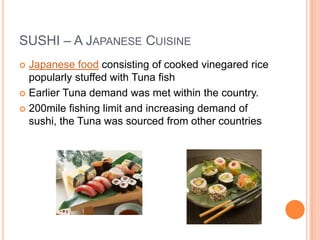
 Japanese food consisting of cooked vinegared rice
  popularly stuffed with Tuna fish
 Earlier Tuna demand was met within the country.

 200mile fishing limit and increasing demand of
  sushi, the Tuna was sourced from other countries
TUNA IN JAPAN
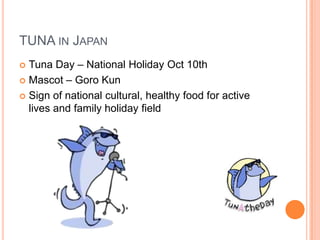
 Tuna Day – National Holiday Oct 10th
 Mascot – Goro Kun

 Sign of national cultural, healthy food for active
  lives and family holiday field
INHIBITION TO ADOPT IN WEST
 North Americans tend to think of cultural influence
  from West to East
 Consumption as raw was not accepted

 Was found to be an uneasy concept to sell
ACCEPTANCE TO TUNA IN WEST
   Introduction of Japanese cooking to North American
    women


 Omitted concept of raw fish
 Sign of Class and educational standing
ACCEPTANCE TO TUNA IN WEST
 Sign of Class and educational standing
 Opening of Sushi Bar in New York’s Harvard Club


 Rejection of red meat and shift to healthy cuisine
 Appeal of high concept aesthetics of Japanese
  Design
TUNA MARKET
 Japan – World’s primary market for fresh Tuna
 Expansion to other markets to meet the Japanese
  demand
 Exclusion of foreign fleets from the prime fishing
  grounds
CULTURAL SPLASH
 Some chains converted from Chinese to employees
 Japanese sushi competence outside Japan

 Spoilage and form of tuna fish---japanese workers
  more skilled than others
 New England docks : domestic or export fish
How Sushi went global

How Sushi went global

  • 1.
    HOW SUSHI WENTGLOBAL Submitted by : Group 1 Elizabeth Eappen(F11076) Iris Charu Gomes(F11079) Neethu Thresa Jacob(F11096) Swarupa Rani Sahu(F11116) Divyanshi Gupta (F11121)
  • 2.
    SUSHI – AJAPANESE CUISINE  Japanese food consisting of cooked vinegared rice popularly stuffed with Tuna fish  Earlier Tuna demand was met within the country.  200mile fishing limit and increasing demand of sushi, the Tuna was sourced from other countries
  • 3.
    TUNA IN JAPAN Tuna Day – National Holiday Oct 10th  Mascot – Goro Kun  Sign of national cultural, healthy food for active lives and family holiday field
  • 4.
    INHIBITION TO ADOPTIN WEST  North Americans tend to think of cultural influence from West to East  Consumption as raw was not accepted  Was found to be an uneasy concept to sell
  • 5.
    ACCEPTANCE TO TUNAIN WEST  Introduction of Japanese cooking to North American women  Omitted concept of raw fish  Sign of Class and educational standing
  • 6.
    ACCEPTANCE TO TUNAIN WEST  Sign of Class and educational standing  Opening of Sushi Bar in New York’s Harvard Club  Rejection of red meat and shift to healthy cuisine  Appeal of high concept aesthetics of Japanese Design
  • 7.
    TUNA MARKET  Japan– World’s primary market for fresh Tuna  Expansion to other markets to meet the Japanese demand  Exclusion of foreign fleets from the prime fishing grounds
  • 8.
    CULTURAL SPLASH  Somechains converted from Chinese to employees  Japanese sushi competence outside Japan  Spoilage and form of tuna fish---japanese workers more skilled than others  New England docks : domestic or export fish