Supervision Managing for Results 10th Edition Newstrom Test Bank
Supervision Managing for Results 10th Edition Newstrom Test Bank
Supervision Managing for Results 10th Edition Newstrom Test Bank
Supervision Managing for Results 10th Edition Newstrom Test Bank
Supervision Managing for Results 10th Edition Newstrom Test Bank
1.
Visit https://testbankdeal.com todownload the full version and
explore more testbank or solutions manual
Supervision Managing for Results 10th Edition
Newstrom Test Bank
_____ Click the link below to download _____
https://testbankdeal.com/product/supervision-managing-for-
results-10th-edition-newstrom-test-bank/
Explore and download more testbank or solutions manual at testbankdeal.com
2.
Here are somerecommended products that we believe you will be
interested in. You can click the link to download.
Communicating for Results 10th Edition Hamilton Test Bank
https://testbankdeal.com/product/communicating-for-results-10th-
edition-hamilton-test-bank/
Supervision Concepts and Skill Building 10th Edition Certo
Test Bank
https://testbankdeal.com/product/supervision-concepts-and-skill-
building-10th-edition-certo-test-bank/
Managing for Quality and Performance Excellence 10th
Edition Evans Test Bank
https://testbankdeal.com/product/managing-for-quality-and-performance-
excellence-10th-edition-evans-test-bank/
Cultural Anthropology 7th Edition Miller Test Bank
https://testbankdeal.com/product/cultural-anthropology-7th-edition-
miller-test-bank/
3.
Auditing an InternationalApproach 5th Edition
Smieliauskas Test Bank
https://testbankdeal.com/product/auditing-an-international-
approach-5th-edition-smieliauskas-test-bank/
International Financial Management 11th Edition Madura
Test Bank
https://testbankdeal.com/product/international-financial-
management-11th-edition-madura-test-bank/
Taxation of Individuals 2018 Edition 9th Edition Spilker
Test Bank
https://testbankdeal.com/product/taxation-of-
individuals-2018-edition-9th-edition-spilker-test-bank/
Understanding Our Universe 2nd Edition Palen Test Bank
https://testbankdeal.com/product/understanding-our-universe-2nd-
edition-palen-test-bank/
Business Statistics 10th Edition Groebner Solutions Manual
https://testbankdeal.com/product/business-statistics-10th-edition-
groebner-solutions-manual/
4.
Data And ComputerCommunications 10th Edition Stallings
Test Bank
https://testbankdeal.com/product/data-and-computer-
communications-10th-edition-stallings-test-bank/
5.
Chapter 07 LeadershipSkills, Styles, and Qualities
7-1
Multiple Choice Questions
1. A leader who has fidelity, strength of character, and credibility has which important
leadership trait?
A. desire
B. integrity
C. self-confidence
D. judgment
2. A leader who can carefully analyze and consider thoughtfully before acting has which
important leadership trait?
A. desire
B. integrity
C. self-confidence
D. judgment
3. A leader who has a high level of personal drive and enthusiasm has which important
leadership trait?
A. desire
B. integrity
C. self-confidence
D. energy
4. The greatest leadership Kris has is that she can easily build bonds with others and inspire
them with a vision. What is her strongest personality trait?
A. self-awareness
B. self-management
C. social-awareness
D. relationship management
6.
Chapter 07 LeadershipSkills, Styles, and Qualities
7-2
5. The greatest leadership Joy has is that she can use empathy to sense other people's
emotions and understand their perspectives. What is her strongest personality trait?
A. self-awareness
B. self-management
C. social-awareness
D. relationship management
6. Which of the following is an effective way for a manager to build trust with employees?
A. ensure that the employees respect the manager
B. place less value on individual employee talents
C. avoid threatening the values of others
D. trust only when employees deserve it
7. The belief by employees that their supervisor will consistently behave with integrity is
called _____.
A. trust
B. Theory X
C. Theory Y
D. Coaching
8. Which of the following is true about Theory X?
A. It is a theory based on employee trust.
B. It is a theory that assumes people like to work.
C. It explains the bulk of traditional management action.
D. It is more applicable today than Theory Y.
9. Which of the following is true about Theory Y?
A. It is a theory that assumes people do not seek responsibility.
B. It is a theory that assumes people do not like to work.
C. It explains the bulk of traditional management action.
D. It is more applicable today than Theory X.
7.
Chapter 07 LeadershipSkills, Styles, and Qualities
7-3
10. Which of the following is an assumption of Theory Y?
A. Work is as natural as play or rest.
B. People dislike work.
C. People avoid responsibility.
D. Job security is most important
11. Mark sets goals independently and makes all decisions for his team. What is his leadership
style?
A. autocratic
B. democratic
C. consultative
D. participative
12. Luisa presents problems to her team and consults experts before making a decision. What
is her leadership style?
A. autocratic
B. democratic
C. directive
D. participative
13. Jesse fully involves his team in the decision making process. What is his leadership style?
A. autocratic
B. democratic
C. consultative
D. participative
14. Which of the following is an example of a participative approach to leadership?
A. management meeting
B. suggestion box
C. list of objectives
D. benefits package
8.
Chapter 07 LeadershipSkills, Styles, and Qualities
7-4
15. Which of the following is a reason participative management sometimes fails?
A. Supervisors enjoy changing old habits.
B. Employees always buy in to this approach.
C. Employees feel intense performance pressure.
D. Supervisors enjoy sharing power.
16. Which of the following is not a factor in determining the best leadership approach?
A. the level of structure
B. the amount of real supervisory power
C. the quality of leader-member relations
D. the plan for contingencies
17. Your authority as a supervisor has not been clearly defined by top management. What
leadership approach will work best for you?
A. authoritative
B. directive
C. participatory
D. contingency
18. Larry has a lot of real power in his supervisory position. What leadership approach will
work best for him?
A. authoritative
B. democratic
C. participatory
D. contingency
19. The range of leader control in an autocratic style to individual freedom in a participative
style is called the _____.
A. continuum of leadership
B. contingency model of leadership
C. democratic style of leadership
D. situational model of leadership
9.
Chapter 07 LeadershipSkills, Styles, and Qualities
7-5
20. The idea that employees vary in competence and motivation to perform and that managers
should adapt their approach based on employee development stages is called the _____.
A. continuum of leadership
B. contingency model of leadership
C. democratic style of leadership
D. situational model of leadership
21. A supervisor who places a high priority on developing the skills of employees to manage
themselves and engage is self-leadership is a _____.
A. superleader
B. substitute for leadership
C. steward
D. caregiver
22. A supervisor who enables a highly skilled employee to facilitate a new hire orientation is
trusting that employee to be a _____.
A. superleader
B. substitute for leadership
C. steward
D. caregiver
23. Supervisory _____ retain their level of accountability for resources and results while
giving up their need for control.
A. superleaders
B. substitutes for leadership
C. stewards
D. caregivers
24. A supervisor who demonstrates a supportive attitude toward employees is a _____.
A. superleader
B. substitute for leadership
C. steward
D. caregiver
10.
Chapter 07 LeadershipSkills, Styles, and Qualities
7-6
25. Robyn often takes time to check in with her employees about how they are feeling and she
listens to their needs. What type of leadership is she demonstrating?
A. superleader
B. substitute for leadership
C. steward
D. caregiver
True / False Questions
26. The emotional intelligence emphasis of knowing one's strengths and limits is called
relationship management.
True False
27. The emotional intelligence emphasis of keeping one's impulses under control is called
social awareness.
True False
28. The emotional intelligence emphasis of using empathy to understand people's perspectives
is called social-awareness.
True False
29. Employees should be wary of managers who have strong judgment skills.
True False
30. Leaders who feel good about their past performance and future capabilities have high
confidence, which is an important leadership trait.
True False
11.
Chapter 07 LeadershipSkills, Styles, and Qualities
7-7
31. An assumption of McGregor's Theory Y is that the expenditure of physical and mental
effort in work is as natural as play or rest.
True False
32. An assumption of McGregor's Theory X is that the external control and the threat of
punishment are not the only or the best means for bringing about effort toward organizational
objectives.
True False
33. An assumption of McGregor's Theory Y is that the average human being has an inherent
dislike of work and will avoid it if possible.
True False
34. An assumption of McGregor's Theory X is that the average human being prefers to be
directed, wishes to avoid responsibility, has relatively little ambition, and wants security
above all.
True False
35. Autocratic or directive leadership is when a leader independently sets goals, makes
decisions, and demands obedience from the people supervised.
True False
36. Participative leadership involves employees in the decision making process.
True False
37. Democratic leadership is when a leader consults a group before making a decision.
True False
12.
Chapter 07 LeadershipSkills, Styles, and Qualities
7-8
38. It is important to have adequate time to discuss an issue when solving a problem though
participative leadership.
True False
39. The participative approach to management can fail if supervisors feel it results in loss of
power for themselves.
True False
40. Older leadership models implied that the need for leadership should be fully balanced
between concerns for people and production.
True False
41. An authoritative leadership style works best in situations where a leader has lots of real
power.
True False
42. A participate leadership style works best where the supervisor's authority is clearly spelled
out by top management.
True False
43. A manager may determine which leadership method to select based on the individuals and
circumstances involved.
True False
44. According to the Hersey-Blanchard model, supervisors should not adapt their leadership
approach to fit the development stage of each employee.
True False
13.
Chapter 07 LeadershipSkills, Styles, and Qualities
7-9
45. A supervisor may be a caregiver by demonstrating a supportive attitude toward
employees.
True False
46. Supervisors should avoid offering apologies whenever possible.
True False
47. Supervisors are leaders as well as followers.
True False
48. Much of a supervisor's role can be substituted by experienced employees, clear policies
and rules, or a cohesive work group.
True False
49. It is important to ensure that the new workforce adheres to traditional styles of dress and
traditional hours.
True False
Short Answer Questions
50. The process of influencing and supporting others to follow you and do willingly the things
that need to be done is called ___________________.
14.
Chapter 07 LeadershipSkills, Styles, and Qualities
7-10
51. List the four types of emotional intelligence.
52. ___________________ is a set of assumptions in which a supervisor acts as if she or he
believes that most people don't like to work and that they wish to avoid responsibility and
prefer job security above all.
53. ___________________ is a set of assumptions in which a supervisor acts as if she or he
believes that most people can set challenging goals, provide their own initiative, and exert
self-control to attain their goals.
54. A ___________________ refers to the total approach a supervisor uses in trying to direct,
activate, or otherwise provide a motivational atmosphere for employees.
15.
Chapter 07 LeadershipSkills, Styles, and Qualities
7-11
55. ___________________ leadership is the act of fully involving employees in decision
making processes so that their ideas are used and they are fully committed to the solution's
success.
56. The belief that the leadership style that will be most effective in a given situation can be
predicted by examining the intensity of three interacting factors is called
___________________.
57. The ___________________ is a range of leadership approaches that progresses from the
extremes of autocratic control by the supervisor to complete freedom for subordinates.
58. A ___________________ is a supervisor who places a high priority on developing the
skills of employees to manage themselves and engage in self-leadership.
16.
Chapter 07 LeadershipSkills, Styles, and Qualities
7-12
59. ___________________ are factors that are already present in the task, organization, or
employees that diminish the need for various kinds of supervisory leadership behaviors.
17.
Chapter 07 LeadershipSkills, Styles, and Qualities Key
7-13
Multiple Choice Questions
1. (p. 172) A leader who has fidelity, strength of character, and credibility has which important
leadership trait?
A. desire
B. integrity
C. self-confidence
D. judgment
Bloom's: Remembering
Difficulty: Easy
Learning Outcome: 7-1 Describe the essential skills of leadership, and explain the four parts of emotional intelligence.
2. (p. 172) A leader who can carefully analyze and consider thoughtfully before acting has which
important leadership trait?
A. desire
B. integrity
C. self-confidence
D. judgment
Bloom's: Remembering
Difficulty: Easy
Learning Outcome: 7-1 Describe the essential skills of leadership, and explain the four parts of emotional intelligence.
3. (p. 172) A leader who has a high level of personal drive and enthusiasm has which important
leadership trait?
A. desire
B. integrity
C. self-confidence
D. energy
Bloom's: Remembering
Difficulty: Easy
Learning Outcome: 7-1 Describe the essential skills of leadership, and explain the four parts of emotional intelligence.
18.
Chapter 07 LeadershipSkills, Styles, and Qualities Key
7-14
4. (p. 173) The greatest leadership Kris has is that she can easily build bonds with others and
inspire them with a vision. What is her strongest personality trait?
A. self-awareness
B. self-management
C. social-awareness
D. relationship management
Bloom's: Applying
Difficulty: Easy
Learning Outcome: 7-1 Describe the essential skills of leadership, and explain the four parts of emotional intelligence.
5. (p. 173) The greatest leadership Joy has is that she can use empathy to sense other people's
emotions and understand their perspectives. What is her strongest personality trait?
A. self-awareness
B. self-management
C. social-awareness
D. relationship management
Bloom's: Applying
Difficulty: Easy
Learning Outcome: 7-1 Describe the essential skills of leadership, and explain the four parts of emotional intelligence.
6. (p. 177) Which of the following is an effective way for a manager to build trust with
employees?
A. ensure that the employees respect the manager
B. place less value on individual employee talents
C. avoid threatening the values of others
D. trust only when employees deserve it
Bloom's: Applying
Difficulty: Easy
Learning Outcome: 7-2 Differentiate between the assumptions of Theory X and those of Theory Y, and explain the importance of trust.
19.
Chapter 07 LeadershipSkills, Styles, and Qualities Key
7-15
7. (p. 177) The belief by employees that their supervisor will consistently behave with integrity
is called _____.
A. trust
B. Theory X
C. Theory Y
D. Coaching
Bloom's: Remembering
Difficulty: Easy
Learning Outcome: 7-2 Differentiate between the assumptions of Theory X and those of Theory Y, and explain the importance of trust.
8. (p. 175) Which of the following is true about Theory X?
A. It is a theory based on employee trust.
B. It is a theory that assumes people like to work.
C. It explains the bulk of traditional management action.
D. It is more applicable today than Theory Y.
Bloom's: Understanding
Difficulty: Easy
Learning Outcome: 7-2 Differentiate between the assumptions of Theory X and those of Theory Y, and explain the importance of trust.
9. (p. 175) Which of the following is true about Theory Y?
A. It is a theory that assumes people do not seek responsibility.
B. It is a theory that assumes people do not like to work.
C. It explains the bulk of traditional management action.
D. It is more applicable today than Theory X.
Bloom's: Understanding
Difficulty: Easy
Learning Outcome: 7-2 Differentiate between the assumptions of Theory X and those of Theory Y, and explain the importance of trust.
20.
Chapter 07 LeadershipSkills, Styles, and Qualities Key
7-16
10. (p. 176) Which of the following is an assumption of Theory Y?
A. Work is as natural as play or rest.
B. People dislike work.
C. People avoid responsibility.
D. Job security is most important
Bloom's: Understanding
Difficulty: Easy
Learning Outcome: 7-2 Differentiate between the assumptions of Theory X and those of Theory Y, and explain the importance of trust.
11. (p. 178) Mark sets goals independently and makes all decisions for his team. What is his
leadership style?
A. autocratic
B. democratic
C. consultative
D. participative
Bloom's: Understanding
Difficulty: Easy
Learning Outcome: 7-3 Recognize the various leadership styles, and explain the benefits and prerequisites of a participative approach and
the reasons for its potential failure.
12. (p. 178) Luisa presents problems to her team and consults experts before making a decision.
What is her leadership style?
A. autocratic
B. democratic
C. directive
D. participative
Bloom's: Understanding
Difficulty: Easy
Learning Outcome: 7-3 Recognize the various leadership styles, and explain the benefits and prerequisites of a participative approach and
the reasons for its potential failure.
21.
Chapter 07 LeadershipSkills, Styles, and Qualities Key
7-17
13. (p. 179) Jesse fully involves his team in the decision making process. What is his leadership
style?
A. autocratic
B. democratic
C. consultative
D. participative
Bloom's: Understanding
Difficulty: Easy
Learning Outcome: 7-3 Recognize the various leadership styles, and explain the benefits and prerequisites of a participative approach and
the reasons for its potential failure.
14. (p. 180) Which of the following is an example of a participative approach to leadership?
A. management meeting
B. suggestion box
C. list of objectives
D. benefits package
Bloom's: Understanding
Difficulty: Easy
Learning Outcome: 7-3 Recognize the various leadership styles, and explain the benefits and prerequisites of a participative approach and
the reasons for its potential failure.
15. (p. 180) Which of the following is a reason participative management sometimes fails?
A. Supervisors enjoy changing old habits.
B. Employees always buy in to this approach.
C. Employees feel intense performance pressure.
D. Supervisors enjoy sharing power.
Bloom's: Understanding
Difficulty: Easy
Learning Outcome: 7-3 Recognize the various leadership styles, and explain the benefits and prerequisites of a participative approach and
the reasons for its potential failure.
22.
Chapter 07 LeadershipSkills, Styles, and Qualities Key
7-18
16. (p. 181) Which of the following is not a factor in determining the best leadership approach?
A. the level of structure
B. the amount of real supervisory power
C. the quality of leader-member relations
D. the plan for contingencies
Bloom's: Understanding
Difficulty: Easy
Learning Outcome: 7-4 Discuss the factors a leader should consider when selecting a leadership style, and explain two models for choosing
a style on a situational basis.
17. (p. 181) Your authority as a supervisor has not been clearly defined by top management.
What leadership approach will work best for you?
A. authoritative
B. directive
C. participatory
D. contingency
Bloom's: Understanding
Difficulty: Easy
Learning Outcome: 7-4 Discuss the factors a leader should consider when selecting a leadership style, and explain two models for choosing
a style on a situational basis.
18. (p. 181) Larry has a lot of real power in his supervisory position. What leadership approach
will work best for him?
A. authoritative
B. democratic
C. participatory
D. contingency
Bloom's: Understanding
Difficulty: Easy
Learning Outcome: 7-4 Discuss the factors a leader should consider when selecting a leadership style, and explain two models for choosing
a style on a situational basis.
23.
Chapter 07 LeadershipSkills, Styles, and Qualities Key
7-19
19. (p. 183) The range of leader control in an autocratic style to individual freedom in a
participative style is called the _____.
A. continuum of leadership
B. contingency model of leadership
C. democratic style of leadership
D. situational model of leadership
Bloom's: Understanding
Difficulty: Easy
Learning Outcome: 7-4 Discuss the factors a leader should consider when selecting a leadership style, and explain two models for choosing
a style on a situational basis.
20. (p. 184) The idea that employees vary in competence and motivation to perform and that
managers should adapt their approach based on employee development stages is called the
_____.
A. continuum of leadership
B. contingency model of leadership
C. democratic style of leadership
D. situational model of leadership
Bloom's: Remembering
Difficulty: Easy
Learning Outcome: 7-4 Discuss the factors a leader should consider when selecting a leadership style, and explain two models for choosing
a style on a situational basis.
21. (p. 184) A supervisor who places a high priority on developing the skills of employees to
manage themselves and engage is self-leadership is a _____.
A. superleader
B. substitute for leadership
C. steward
D. caregiver
Bloom's: Understanding
Difficulty: Easy
Learning Outcome: 7-5 Discuss the leader's responsibility for being an effective follower, actions for helping employees become self-leaders,
and the impact of substitutes for leadership.
24.
Chapter 07 LeadershipSkills, Styles, and Qualities Key
7-20
22. (p. 181) A supervisor who enables a highly skilled employee to facilitate a new hire
orientation is trusting that employee to be a _____.
A. superleader
B. substitute for leadership
C. steward
D. caregiver
Bloom's: Understanding
Difficulty: Easy
Learning Outcome: 7-5 Discuss the leader's responsibility for being an effective follower, actions for helping employees become self-leaders,
and the impact of substitutes for leadership.
23. (p. 186) Supervisory _____ retain their level of accountability for resources and results while
giving up their need for control.
A. superleaders
B. substitutes for leadership
C. stewards
D. caregivers
Bloom's: Understanding
Difficulty: Easy
Learning Outcome: 7-5 Discuss the leader's responsibility for being an effective follower, actions for helping employees become self-leaders,
and the impact of substitutes for leadership.
24. (p. 186) A supervisor who demonstrates a supportive attitude toward employees is a _____.
A. superleader
B. substitute for leadership
C. steward
D. caregiver
Bloom's: Understanding
Difficulty: Easy
Learning Outcome: 7-5 Discuss the leader's responsibility for being an effective follower, actions for helping employees become self-leaders,
and the impact of substitutes for leadership.
being the wifeof Louis, whilst the younger, Margaret Theresa, the
wife of the Emperor Leopold I., was, with Charles II., the offspring of
a second marriage.[27] Both of the daughters had renounced all
future claim to the Spanish Crown, but Louis, knowing that the
young Charles II. of Spain was so sickly as to make his early death
probable, was prepared to assert his wife's claim whenever that
event took place. In the meanwhile he put forward a demand that
the greater part of the Spanish Netherlands should be immediately
handed over to her, because in those countries there was a law,
known as the law of devolution, enacting that the daughter of a first
wife should receive a larger share of her father's property than a son
of the second. Louis chose to construe a right to succeed to property
as though it implied a right to govern. In March, 1667, he made a
secret treaty with Charles II. of England, in which, on condition of
his engaging not to help the Dutch, he was allowed to do as he
pleased in the Spanish Netherlands. In May he began what is known
as the War of Devolution, with Spain. Spain had neither money nor
means to defend her territory in the Netherlands, and the French
armies captured one place after another.
24. The Dutch in the Medway, and the Peace of Breda.
1667.—The advance of Louis into the Spanish Netherlands and the
establishment of the French armies so near their frontier in the place
of the now exhausted forces of Spain greatly alarmed the Dutch.
The mere risk of this danger had, even before the war between
France and Spain began, inclined them to peace with England, and a
conference was opened at Breda to consider the terms. All was
quickly agreed on except the question about the right of England to
Pularoon (see p. 589), and Charles, imagining that this would be
settled in his favour, dismissed his sailors and dismantled his fleet, in
order to save money to spend on his own extravagant pleasures.
The Dutch fleet at once entered the Thames, sailed up the Medway,
burnt three men-of-war, and carried off a fourth. For some days it
blockaded the Thames, so that the Londoners could get no coals.
Men openly said that such things would not have happened if Oliver
had been living. Orders were sent to the English ambassadors at
27.
Breda to giveup Pularoon, and on July 31 the Treaty of Breda was
signed. It was not wholly disastrous. If England lost her last hold on
the spice islands of the East, she gained New York and all the
territory formerly Dutch in the West, which had broken up the
continuity of her colonies in America.
25. Clarendon and the House of Commons. 1667.—The
events of the last months of the war had produced important effects
upon the temper of Parliament. Long before the Dutch appeared in
the Medway, the House of Commons had demanded an inquiry into
the expenditure of the money granted to the Crown, suspecting that
much of the supply distinctly intended for purposes of war had been
diverted to pay for the amusements of the Court. This demand,
which opened a new chapter in the history of the financial struggle
between the House of Commons and the Crown, brought the
Commons into collision with Clarendon. It had been settled by the
Long Parliament that the king was to levy no taxes without a grant
from Parliament. The Cavalier Parliament, Royalist as it was, was
beginning to ask that the king should not spend the proceeds of
taxes without the approbation of Parliament. When once this had
been secured, Parliament would indubitably become supreme.
Against this attempt to obtain the mastery Clarendon struggled. He
was a good lawyer and an excellent man of business, but he was not
a statesman of genius. He wanted each part of the government to
act in harmony with the others; but he could never understand the
meaning of the saying that if two men ride on horseback, one must
ride in front. He wanted the king and Parliament both to ride in
front, both—that is to say—to have their own way in certain
directions. His notion of a king was that of one prudently doing his
best for his people, always ruling according to law, and irresponsible
in everything, even in the expenditure of money. A wasteful, riotous
Charles II. was a phenomenon for the control of which his
constitutional formulas were not prepared.
26. The Fall of Clarendon. 1667.—Though Clarendon was
unable to concur in any diminution of the power of the Crown, his
28.
eyes were widelyopen to the profligacy of Charles's life. Again and
again he had remonstrated with him, and had refused to pass under
the great seal grants in favour of Lady Castlemaine, to whom,
amongst his many mistresses, Charles was at this time most
completely subjugated. As might have been expected, this
abandoned woman irritated her paramour against his upright
Chancellor, telling him that he was no king as long as he was ruled
by Clarendon. As Parliament continued its attacks, Charles, on
August 30, dismissed Clarendon from office. On October 10, the
fallen minister was impeached by the House of Commons, on
charges the greater part of which were ridiculously untrue. He tried
to rouse Charles to support him, reminding him that, after Charles I.
allowed Strafford to die, the king's own head had fallen on the
scaffold. Charles II., an easy-going but clever politician, probably
thought that he could always escape his father's fate by refraining
from imitating his father's stiffness. He gave Clarendon a strong hint
to withdraw, and on November 29 the minister who had done more
than any other man to establish the restored monarchy, fled to
France, never to return alive.
27. Scotland and Ireland. 1660.—At the Restoration, the close
connection established by Cromwell between England and Scotland
was necessarily broken up. Scotland hated English control even
when it came in the guise of a union of Parliaments, and the old
relation of separate states united only by the Crown was at once
resumed. Argyle and his principal followers were executed as
traitors. The main profit of the restoration in Scotland, however, fell
to the nobility. The clergy was discredited by its divisions, and the
noblemen, whose fathers had supported Presbyterianism against
Charles I., now supported Charles II. against Presbyterianism. Once
more, as in the days of James I., the clergy were muzzled by the
restoration of episcopacy and the assertion of the authority of the
Crown. In Ireland the main question was how to satisfy alike the
recent English immigrants who had received lands from Cromwell
and the Irish proprietors who had been deprived of their lands in
favour of the intruders. In 1661, at the king's desire, an Act of
29.
Settlement was passed,making, in elaborate detail, an attempt to
satisfy as many as possible of both parties; but as men of English
descent and Protestant religion filled the Irish House of Commons,
the English settlers contrived to maintain, by constitutional authority,
much of what they had taken with the strong hand. According to the
best evidence now procurable, whereas before 1641 about two-
thirds of Irish lands fit for cultivation had been in the hands of
Catholics, before the end of the reign of Charles II. two-thirds were
in the hands of Protestants.
CHAPTER XXXVIII
CHARLES II. AND THE CABAL. 1667-1674
LEADING DATES
Reign of Charles II., 1660-1685
Treaty of Dover June 1, 1670
Second Dutch War of the Restoration
March 13, 1672
Declaration of Indulgence March 15, 1672
Test Act March 29, 1673
Dismissal of Shaftesbury Nov. 9, 1673
Peace with the Dutch Feb. 19, 1674
1. Milton and Bunyan.—Whilst Clarendon and his allies were
fortifying the legal position of the Church of England, the old
Puritanism which they attempted to crush found a voice in literature.
Milton, who had become blind, in consequence of his intense
devotion to the service of the State, as the secretary of Cromwell, at
last, after long preparation, gave to the world 'Paradise Lost,' in
1667. The poem was Puritan, not only because its main theme was
the maintenance or destruction of the purity of a single human soul,
but because it based that purity on obedience to the commands of
30.
the great Taskmaster;whilst, in the solemn cadence of its blank
verse there is something to remind the reader of the stern world of
duty, in the midst of which the nobler spirits of the Commonwealth
and Protectorate had moved. As Milton was the poet of Puritanism,
John Bunyan was the prose-poet of Dissent. He had himself fought
as a soldier on the side of Parliament in the Civil War, and, having
become an earnest Baptist preacher, he continued to preach after
the Restoration, and, boldly defying the law, was requited with a
long imprisonment. His masterpiece, 'The Pilgrim's Progress,' was
probably not written till 1675, but many of his religious writings
were published before that date. His force of imagination made him
the greatest allegorist the world has seen. His moral aim lay in the
preservation of a few choice souls from the perils and temptations of
a society wholly given up to evil.
John Milton in 1670.
31.
2. Butler andthe Dramatists.—There was, doubtless, much in
the world round Milton and Bunyan to awake indignation. Samuel
Butler was a man of genius, but his 'Hudibras,' which appeared in
1663, shows but poorly by the side of 'Paradise Lost' and 'The
Pilgrim's Progress.' This mock-heroic account of a Puritan knight is
the work of a strong writer, who can find nothing better to do with
the warriors and disputants who had lately controlled England than
to laugh at them. The mass of Restoration poetry was far weaker
than 'Hudibras,' whilst its dramatic writers vied with one another in
the expression of licentious thought either in prose or in the regular
heroic couplets which were, at this time, in vogue. It was, indeed,
impossible to put much human passion into two neat lines which had
to be made to rhyme; but at Court love-making had been
substituted for passion, and the theatres, now re-opened, after they
had been suppressed by the Puritans, were meant for the vicious
Court and not for the people at large.
3. Reason and Science.—The satire of Butler, and the
licentiousness of the dramatists, both sprang from a reaction against
the severe morality of the Puritans; but it would have been a poor
prospect for the generation following that of Puritan repression if the
age had not produced any positive work of its own. Its work was to
be found in the increase of respect for human reason. In the better
minds amongst the clergy of the Restoration, the reasonable
character of the Church of England was more than ever
predominant. A few, such as Wilkins, Bishop of Chester, and
Stillingfleet, Dean of St. Paul's, were even anxious to find some way
of comprehension by which Dissenters might be reconciled to the
Church, whilst others, like Morley and Barrow, attached far more
importance to arguments addressed to the understanding, than to
that uniformity of ceremonial which had been so dear to the mind of
Laud. Still more important was the spread of devotion to natural
science. The Royal Society, founded for its promotion in 1660,
brought together men who thought more about air-pumps than
about the mysteries of theology; and it was mainly the results of
their inquiries which made any renewed triumph of Puritanism
32.
impossible. In 'ThePilgrim's Progress' the outer world was treated as
a mere embarrassment to the pursuit of spiritual perfection. By the
Fellows of the Royal Society it was treated as calling for reverent
investigation, in order that, in the words of Bacon, nature might be
brought into the service of man by his obedience to her laws.
4. Charles II. and Toleration. 1667.—In the long run the rise
of the scientific spirit would conduce to religious toleration, because
scientific men have no reason to desire the suppression of any form
of religious belief. The first step taken after the restoration in the
direction of religious toleration had come from Charles (see p. 581),
who was actuated partly by a sneaking fondness for the Roman
Catholic Church and partly by dislike of being dictated to by
Parliament. He therefore, after Clarendon's fall, gave his confidence
mainly to men who, for various reasons, were inclined to support his
wishes in this respect.
5. Buckingham and Arlington. 1667-1669.—Amongst these
men the principal were the Duke of Buckingham and Lord Arlington.
Buckingham, the son of the favourite of Charles I.—'everything by
turns and nothing long'—was trying his hand at politics by way of
amusement. Arlington, who, like Charles, hardly knew whether he
was Catholic or Protestant, was entrusted, as Secretary of State,
with the direction of foreign affairs. He was a man of considerable
ability, but perfectly unscrupulous in shifting his ground to suit his
personal ambition. Both hated Clarendon as sour and austere, and
both were ready to support the king in any scheme upon which he
might set his heart. The Dissenters confined to prison were
liberated, and a Bill prepared to modify the ceremonies of the
Church, so as to enable the expelled Presbyterians to re-enter the
Church. When, however, Parliament met in February, 1668, it
showed its determination to have nothing to do with either toleration
or comprehension (see p. 598). It offered the king 300,000l., but
only under the implied condition that he would abandon his scheme.
Charles took the money and dropped his scheme. He prorogued
Parliament in May, and did not re-assemble it till October, 1669.
33.
Whilst Parliament wasnot in session Charles sheltered the
Dissenters from persecution, and even thought of dissolving
Parliament. Albemarle (see p. 580), however, cautiously reminded
him that, even if he got a new Parliament in which the Dissenters
and their friends were predominant, it would probably cause him
trouble by wanting to persecute those who had hitherto persecuted
the Dissenters. Accordingly Charles, who hated nothing so much as
trouble, not only allowed the old Parliament to meet again, but even
issued a proclamation enforcing the penal laws against Dissenters.
6. The Triple Alliance. 1668.—In 1668 a triple alliance was
formed between England, the Dutch Republic, and Sweden, to put
an end to the War of Devolution (see p. 593). Its originators were
De Witt, and Sir William Temple, the English ambassador at the
Hague. The allies demanded that Louis should content himself with
certain strong towns on his northern frontier which he had already
conquered from Spain, and should desist from attempting to
conquer more. Louis assented, and the Peace of Aix-la-Chapelle was
signed on these conditions. In England there was already a rising
feeling against the French, and Charles acquired no little popularity
by his supposed firmness. In reality he had betrayed the secrets of
the alliance to Louis, and had only shown his teeth to gain good
terms for himself from the French king.
7. Charles's Negotiations with France. 1669-1670.—Louis
owed the Dutch a deep grudge, and set himself to win Charles to
neutrality, if not to active help, in the war which he now purposed to
make against them. Charles disliked the Dutch as the commercial
rivals of England, and was ready to sell himself to Louis if only the
price offered was high enough. Though Charles never suffered
religion of any kind to be a check on his conduct, his facile nature
yearned after the imposing authority of the Roman Church. In 1669
his brother, James, avowed himself a Catholic, and in the same year
Charles, under the strictest secrecy, declared his own conversion to a
small circle of men whom he could trust. Before the end of the war
he offered Louis support against the Dutch, but asked such
34.
enormous concessions inreturn that Louis refused to agree to them.
Charles, before lowering the terms of his bargain with Louis, drove
another bargain with his Parliament. In the spring of 1670, by
dropping his demand for toleration, he obtained a grant of 300,000l.
a year for eight years. In return he gave the royal assent to a second
Conventicle Act, even more stringent than the first.
Temple Bar, London, built by Sir Christopher Wren in 1670. Taken down in 1878
and since rebuilt at Waltham Cross.
8. The Treaty of Dover. 1670.—Having secured a grant,
Charles prorogued Parliament, which he had deceived by giving it to
understand that he had abandoned the idea of toleration, and
turned to Louis. Louis sent over Charles's youngest sister, Henrietta,
Duchess of Orleans, to conclude an alliance, and on June 1, 1670, a
treaty between England and France was secretly signed at Dover.
Charles agreed to join Louis in his projected war against the Dutch,
by sending an English force of 6,000 men to serve in the French
army, and to assist Louis to seize upon the territories of the Spanish
35.
monarchy in theevent of the death of Charles II. of Spain without
male heirs. Charles was also to acknowledge himself a Catholic
whenever he thought fit to do so. To support Charles against his
subjects in case of their resisting him in the declaration of his
conversion, Louis was to give him 154,000l. and the aid of 6,000
troops to be employed in England in his defence. Moreover, Charles
was to receive 230,000l. a year during the proposed war, and thirty
French ships were to serve under an English admiral. At the end of
the war he was to receive Walcheren, Sluys and Cadsand from the
Dutch Republic, and ultimately, if Louis made good his claims to the
Spanish monarchy, he was to gain from Spain, Ostend, Minorca, and
various territories in South America. Charles II. was no more
scrupulous than his father had been about using the troops of
foreign princes to suppress the opposition of his own subjects, but
he was shrewd enough to know—what Charles I. had never known—
that foreign princes would not lend him troops unless he gave them
something in return. The breach of the Triple Alliance and the
assistance offered by Charles to Louis in the proposed war against
the Dutch were considered in France to be a fair equivalent for the
payments which Louis had bound himself to make. It was another
question whether Charles could be kept to his engagements. To
secure this as much as possible Louis sent him over a new French
mistress, Louise de Keroualle. Charles soon created her Duchess of
Portsmouth, and she fulfilled her duty to her own king by betraying
to him all the secrets of her lover.
9. The Cabal. 1670.—After Clarendon's fall Charles had been his
own chief minister. The ministers whom he consulted from time to
time were known as his Cabal, a word then applied to any body of
secret advisers, without carrying with it the opprobrious meaning
which it now has. At last the wits discovered that the initials of five
ministers who were principally consulted about the time of the
Treaty of Dover, Clifford, Arlington, Buckingham, Ashley, and
Lauderdale, spelt the word cabal, and writers have since talked
about them as forming what has been called the Cabal Ministry,
though no such ministry, in the modern sense of the word, ever
36.
existed. Not onlydid they not form a council meeting for purposes of
government, but, though they agreed together in favouring
toleration, they disagreed on other points. Nor were they usually
consulted by Charles in a body. Sometimes he took the advice of
persons not of their number; sometimes he took the advice of some
of them only, whilst he kept the others entirely in the dark. Thus
Clifford, who was a brave and honest Catholic, and Arlington, who
would support any measure as long as it was his interest to do so,
knew all about the Treaty of Dover, whilst Buckingham, Lauderdale,
and Ashley were in complete ignorance of it. Of Buckingham and
Arlington enough has been already said (see p. 599). Lauderdale,
who had little to do with English affairs, kept himself almost entirely
to the task of building up the king's authority in Scotland, where he
had already got together an army completely at Charles's disposal.
The character of Ashley deserves a longer consideration.
10. Ashley's Policy.—Anthony Ashley Cooper,[28] who had been
created Lord Ashley since the Restoration, had changed sides again
and again during the late troubles. He was a born party-leader, and
had signalised himself as a youth at Exeter College, Oxford, by
leading a successful revolt of the freshmen against the older
undergraduates, who, according to custom, tried to skin the chins of
the freshmen and to force them to drink a nauseous compound
prepared for the occasion. Though in party conflict he was quite
unscrupulous and despised no means which would enable him to
gain his ends, he had the statesmanlike qualities of common sense
and moderation. He had deserted Charles I. when he leant upon the
Catholics (see p. 541), had supported Cromwell in his struggle with
the zealots of the Barebone's Parliament (see p. 566), and had left
him when he rejected the constitutional scheme of the first
Parliament of the Protectorate (see p. 570). In disgust at the
humours of the Rump and the army, he had done everything in his
power to hasten the Restoration, and had soon shown hostility to
Clarendon and to the persecuting laws of the Cavalier Parliament. In
fact, there were two principles to which he was never entirely false,
a love of Parliamentary government and a love of toleration, which
37.
last was based,not as was that of Oliver, upon sympathy with
religious zeal of every kind, but upon dislike of clerical interference.
At present he attached himself to Charles, because he knew of
Charles's alleged wish to establish toleration, and knew nothing of
the conspiracy against Parliament on which Charles had embarked,
or of Charles's secret design to favour the Roman Church under
cover of a general scheme of toleration.
11. Buckingham's Sham Treaty. 1671.—To deceive those who
were in ignorance of the secret treaty of the previous year,
Buckingham was sent to Paris to negotiate a sham treaty in which all
mention of Charles's conversion was omitted, and the whole of the
money offered by Louis represented as given solely for the war.
Charles particularly enjoyed making a fool of Buckingham, who
imagined himself to be exceedingly clever, and he had also the
temporary satisfaction of gaining the hearty support of Ashley as
well as Buckingham, because Ashley was quite ready to accept
Louis' help in a joint enterprise for crushing the commerce of the
Dutch, and had no scruples about abandoning the Triple Alliance.
Charles was the more ready to begin the war because he had lately
succeeded in obtaining from Parliament another 800,000l. on the
false plea that he wanted the money to enable him to hold head at
sea against the French as well as the Dutch. As soon as the money
was obtained he prorogued Parliament.
12. The Stop of the Exchequer. 1672.—Charles prudently
delayed the declaration of his conversion to a more convenient
season, but the opening of the war was fixed for the spring of
1672. In spite of the large sums which he drew from Louis and from
Parliament, his finances were in hopeless confusion, because of the
enormous amount of money which he squandered on his numerous
mistresses and his illegitimate children. It is said that the yearly
income of the Duchess of Portsmouth was 40,000l., and that in one
year she received no less than 136,000l. A caricature published in
Holland aptly represented him as standing between two women,
with empty pockets hanging out. At this time he had in his
38.
exchequer 1,400,000l., lentto him by the goldsmiths who, in those
days, acted as bankers. On January 2, 1672, probably at Clifford's
suggestion, he refused to repay the principal, and arbitrarily
diminished the interest from 12 to 6 per cent.[29] In consequence of
this stop of the exchequer, as it was called, many of the goldsmiths
became bankrupt, but Clifford became a peer and Lord High
Treasurer.
Anthony Ashley-Cooper, first Earl of Shaftesbury, 1621-1683: from the National
Portrait Gallery.
13. The Declaration of Indulgence. 1672.—On March 15,
Charles, though still hesitating to proclaim himself a Catholic, issued
a Declaration of Indulgence. Claiming a dispensing power,[30] he
suspended all penal laws in matters ecclesiastical, affecting either
recusants or non-conformists, thus giving complete religious liberty
to Roman Catholics as well as to Dissenters. To this measure, wise
39.
and statesmanlike initself, but marred by the motives of its author
and by its defiance of the law and of public opinion, Ashley gave his
hearty support. He was rewarded with the Earldom of Shaftesbury.
He had shortly before been made Lord Chancellor: being the last
who held that post without being a lawyer. At that time the decisions
of the Court of Chancery were still given in accordance with the view
taken by the Chancellor of what seemed fair and equitable, and did
not therefore require any elaborate legal knowledge. Even
Shaftesbury's bitterest enemies acknowledged that he was
scrupulously just.
14. The Second Dutch War of the Restoration. 1672.—Both
Charles and Louis had resolved to take the Dutch by surprise. On
March 13, Admiral Holmes, obeying orders, attacked a rich Dutch
merchant fleet sailing up the Channel, before war was declared, but
only succeeded in taking two vessels. In the war now begun the
discipline of the English navy was worse, and that of the Dutch navy
better, than it had been in the former war (see p. 591). On June 7
there was a fierce sea-fight in Southwold Bay, in which the Dutch
had slightly the advantage. Louis, on his part, crossed the Rhine,
and fell upon the Dutch territory. As a land attack had not been
expected, the military preparations were incomplete, and the
fortresses out of repair. One place after another capitulated to the
French. The young William III., Prince of Orange, Charles's nephew,
had been named Captain-General, but his army was too small to
encourage him to risk a battle. Then De Witt took a heroic
resolution. On June 18 he cut the dykes which protected the low-
lying land from the sea which stood at a higher level. In rushed the
waters, Louis found his progress stopped. De Witt had the blame of
the failure to prevent the invasion; William, coming after him, had
the credit of the resistance. The Republic needed a strong hand to
preserve it, and the office of Stadholder was revived and given to
William. Shortly afterwards De Witt, together with his brother, was
brutally murdered at the Hague. William, who detested De Witt for
having so long deprived him of the power which he considered his
due, not only took no steps to hinder the assassination, but actually
40.
protected the murderers.Disgraceful as his conduct was, he had a
temper as heroic as De Witt's. Buckingham came to urge him to
submit to Louis' terms. "Do you not see," said the Englishman, "that
the Republic is lost?" "I know one sure means of never seeing it,"
was William's firm reply—"to die on the last dyke." His confidence
was justified. Louis could not pierce the girdle of waters which
surrounded the Dutch towns, and, returning to Paris, brought the
campaign to an end.
15. 'Delenda est Carthago.' 1673.—On February 4, 1673.—
Charles, having once more spent all his money, again met his
Parliament. Shaftesbury urged the voting of supply for the war with
the Dutch, whom he styled the eternal enemies of England, quoting
the saying of Cato—Delenda est Carthago—as though they were to
be destroyed as being to England what Carthage had been to Rome.
So far as the war was concerned, the House of Commons answered
his appeal by offering 1,260,000l., though they kept back the Bill till
they had brought him to terms.
16. Withdrawal of the Declaration of Indulgence. 1673.—It
was at the withdrawal of the Declaration of Indulgence that the
House was aiming. In vain Charles simulated firmness, declaring
himself to be resolved to stick to his declaration. The Commons
bitterly resented his interference with the law. Forty statutes, it was
said, had been violated by the Declaration, and the house passed a
resolution that 'penal statutes in matters ecclesiastical cannot be
suspended but by act of Parliament.' Both sides were anxious to limit
the question to ecclesiastical statutes: Charles, because the powers
over the Church conferred on the Tudor sovereigns were vague, and
therefore more defensible than those exercised by them in political
matters; the Commons, because they had precedents of
Parliamentary resistance to dispensations granted to recusants,
whereas former kings had usually been allowed without
contradiction to suspend the law in commercial matters. Charles
tried to evade the summons of the Commons, but the Lords having
come on March 7 to the same conclusion as the other House, he
41.
gave way onthe 8th and recalled his Declaration. As no new statute
was passed on the subject, the legal question remained just where it
was before.
17. The Test Act. 1673.—Charles had entered on a struggle with
Parliament and had been defeated. The Royalist Parliament of 1661
was still Royalist so far as the maintenance of the throne was
concerned, but it had entered on a course of opposition which had
brought it into open collision with the king. From first to last the
chief characteristic of this Parliament was its resolution to maintain
the supremacy of the Church, and it was now obvious that the
Church was in more danger from Roman Catholics than from
Dissenters. Though Charles's conversion (see p. 600) was unknown,
it was no secret that the Duke of York, the heir to the throne, was a
Catholic, and, in spite of the veil thrown over the terms of the Treaty
of Dover, the danger of an invasion by French troops in support of
the English Catholics was obvious to all. For the first time since the
Restoration a Bill was brought in to relieve Protestant Dissenters,
and, though this proposal came to nothing, the very fact of its being
made showed that a new state of feeling was growing up. Arlington,
seeing how things stood, and wishing to oust the Catholic Clifford
from the Treasury that he might be his successor, put up a member
of the Commons to propose a Bill which soon became law under the
name of the Test Act. By it, no one was to hold office who refused to
take the test—that is to say, to make a declaration of his disbelief in
the doctrine of Transubstantiation and to receive the Sacrament
according to the rites of the Church of England. It was only after
Charles had given his assent to this Act on March 29 that the
proposed grant of 1,260,000l. was actually made.
18. Results of the Test Act. 1673.—Though most Dissenters
were excluded from office by the latter clause of the Test Act, there
were some who did not feel their opposition to the Church to be so
strong as to preclude them from taking the Sacrament occasionally
according to its rites. Every honest Roman Catholic, on the other
hand, was at once driven from office. The Duke of York surrendered
42.
the Admiralty andClifford the Treasury. The Test Act was not a
persecuting Act in the sense in which the Conventicle Act and the
Five Mile Act were persecuting Acts. It inflicted no direct penalty on
the mere holding of a special belief, or on the attendance on a
special form of worship, but excluded persons holding a certain
religious belief from offices the retention of which, according to the
prevalent conviction, would be dangerous to the State.
19. Continuance of the Dutch War. 1673.—The Treasurer-
ship, taken from Clifford, was given, not to Arlington, but to Sir
Thomas Osborne, whose sentiments, being strongly in favour of
maintaining the predominance of the Church of England, were likely
to commend him to the goodwill of the Houses. In foreign policy he
represented what was fast becoming a general opinion, that, as the
main danger to England came from France, it had been a mistake to
go to war with the Dutch. This belief was driven home by disasters
at sea in the summer of 1673. In May, a combined French and
English fleet, under Prince Rupert, fought without advantage against
the Dutch. In August Rupert was defeated off the Texel, because the
French fleet, which accompanied him, took no part in the action,
Louis not wishing to see the English masters of the sea. On this, the
English nation turned all its hatred against France.
20. The Duke of York's Marriage and Shaftesbury's
Dismissal. 1673.—The alarm inspired by the Catholics was
increased in the course of 1673 by a marriage which took place in
the Royal family. Soon after the Restoration the Duke of York had
married Clarendon's daughter, Anne Hyde, and had by her two
daughters, Mary and Anne, both of whom were brought up as
Protestants, so that, if the Duke outlived his brother, he would, when
he himself died, transmit the crown to a Protestant queen. He was
now, however, a widower, and took as his second wife a Catholic
princess, Mary of Modena. If the new Duchess should bear a son,
the boy, who would inevitably be educated as a Catholic, would be
the future king of England. When Parliament met in October it was
highly indignant, and, as it attacked the king's ministers, it was
43.
prorogued after asession of a few days. Charles revenged himself
by dismissing a minister whom the Commons had not attacked.
Shaftesbury had, earlier in the year, learned the contents of the
secret articles of the Treaty of Dover, and had thereby discovered
that Charles had made a fool of him as completely as he had made a
fool of Buckingham when he sent him to negotiate a sham treaty
(see p. 603). Shaftesbury remained true to his policy of toleration,
but it was now to be toleration for Dissenters alone. Toleration for
Catholics, he now knew, was connected with a scheme for
overthrowing English independence with the aid of French soldiers.
Accordingly, he supported the Test Act, and, as he continued
uncompliant, Charles, on November 9, dismissed him. Shaftesbury at
once threw himself into the most violent opposition. Buckingham
was dismissed not long afterwards, and the so-called Cabal was thus
finally broken up.
44.
21. Peace withthe Dutch. 1674.—The war with the Dutch was
brought to an end by a treaty signed on February 19, 1674. On the
24th Charles prorogued Parliament, and did not summon it again for
more than a year. During the interval, he attempted to win friends all
round, without committing himself to any definite policy. On the one
hand, he remained on friendly terms with Louis, whilst, on the other
hand, he offered the hand of Mary, the eldest child of his brother
James, to her cousin, William of Orange. William's position was far
higher than it had been two years before. He was now at the head
of an alliance in which the Emperor Leopold, the King of Spain, and
the Duke of Lorraine combined with him to restrain the inordinate
ambition of Louis. It is true that his generalship was less
conspicuous than his diplomacy, and that in the whole course of his
life he never succeeded in beating a French army in the field. Yet
even in war his indomitable courage and conspicuous coolness stood
him in good stead, and he knew better than most commanders how
to gather his troops after a defeat and to place them in strong
positions in which the enemy did not dare to attack them. The
history of Europe during the remainder of his life was the history of
a duel between the ambitious and autocratic Louis and the cool-
headed William, the first magistrate of a republic in which his action
was checked by constitutional restraints on every side, and the head
of a coalition of which the members were always prone to take
offence and to pursue their individual interests at the sacrifice of the
common good. To win England to the alliance was, for William, a
most desirable object, but he knew that James might very well have
a son by his second marriage, and, knowing that in that case he
would reap no political advantage from a marriage with Mary, he for
the present refused the offer of her hand.[31]
CHAPTER XXXIX
DANBY'S ADMINISTRATION AND THE THREE SHORT
45.
PARLIAMENTS. 1675-1681
LEADING DATES
Reignof Charles II., 1660-1685
Rejection of the Non-Resistance Bill 1675
Marriage of William and Mary Nov. 15,
1677
The Peace of Nymwegen July 31, 1678
The Popish Plot 1678
Dissolution of the Cavalier Parliament Jan.
24, 1679
The First Short Parliament March 6—May
27, 1679
The Second Short Parliament Oct. 21,
1680—Jan. 18, 1681
The Third Short Parliament March 21—
March 28, 1681
1. Growing Influence of Danby. 1675.—Charles's effort to
govern in his own way having ended in failure, and, in what he
thought to be of more consequence, discomfort to himself, he
discovered that he would lead an easier life if he were on good
terms with his Parliament than if he quarrelled with it. Being now
disposed to throw over whatever troublesome convictions he had
imagined himself to have, he gave his confidence to Osborne (see p.
607), whom he had recently created Earl of Danby. Danby revived
the domestic policy of Clarendon by maintaining, in accordance with
the majority of the Cavalier Parliament, the supremacy of the Church
of England over Catholics and Dissenters, and, equally in accordance
with the majority of that Parliament, opposed Louis abroad.
2. Parliamentary Parties. 1675.—The decision of Charles to
support Danby in carrying out a definite policy completed the
formation of separate Parliamentary parties. These had, indeed,
46.
Ordinary dress ofgentlemen in
1675: from Loggan's Oxonia
Illustrata.
existed in the Long Parliament under various names, and had
reappeared after the Restoration; but in the Cavalier Parliament the
minority in favour of toleration had, at first, been exceedingly small,
and, though it had grown larger in the days of the Cabal, it had been
distracted by distrust of Charles when he appeared as a patron of
toleration. The situation was now clear and the leaders distinctly
known. On the one side was Danby and 'No toleration,' on the other
side was Shaftesbury and 'Toleration for Dissenters only.' Neither
side shrank from base means of acquiring strength. The ministers
who formed the Cabal are said to have been the first who bribed
members of the House of Commons, but it was Danby who reduced
bribery to a system which was afterwards extended by his
successors. Shaftesbury's followers, on the other hand, were quite
ready to enter into the pay of Louis, if he would help them to
overthrow Danby and would strengthen them against the king.
3. The Non-Resistance Bill.
1675.—When Parliament met in April
1675, Danby produced a Bill which
was intended to secure his hold on
the House of Commons, whatever
might be the opinion prevailing in the
country. No one was to be allowed to
hold office or to sit in Parliament
unless he would swear that he
believed resistance to the Crown to
be in all cases illegal, and that he
would never endeavour to alter the
government in Church or State. If the
Bill had passed, the future liberty of
Parliament would have been fettered,
and few, if any, who did not approve
of the existing Church system could
have entered Parliament. The Bill
passed the Lords, but while it was
still under discussion in the Commons Shaftesbury stirred up so
47.
bitter a quarrelbetween the Houses, that Charles prorogued
Parliament before the Bill could be converted into law.
4. Charles a Pensionary of France. 1675-1676.—Parliament,
in its distrust of the king, refused him supplies, upon which Charles
prorogued it for fifteen months. Louis, who feared lest Parliament
should drive Charles into joining the alliance against him, was so
pleased to see its sittings interrupted for so long a time that he
granted to Charles a pension of 100,000l. a year, to make him
independent of his subjects. The result was that whilst Charles
allowed Danby to have his own way in domestic affairs, he refused
to allow him to detach England from the French alliance. It was not,
however, merely his personal interests which drew him to Louis, as
he took a real interest in the prosperity of English trade, and was
unable to get over his jealousy of the Dutch. In November 1676, he
obtained from Louis a treaty by which the French renounced a claim
made by them to seize Dutch goods conveyed in English ships,
hoping by this to gain the goodwill of Parliament at its next meeting.
He could not understand how completely the alarm of his subjects
lest their national religion and independence should be assailed by
the French had made them forgetful of their commercial jealousy of
the Dutch.
5. Two Foreign Policies. 1677.—On February 15, 1677,
Parliament again met. Shaftesbury and his allies attempted to steal a
march on Danby by producing two old statutes of Edward III. which
directed that Parliaments should be held every year, founding on it
an argument that the existing Parliament, not having met for a year,
had legally ceased to exist. The House of Lords sent Shaftesbury and
three other peers to the Tower for their pains, and the Commons
contemptuously rejected a similar argument put forward in their own
House. Danby found himself triumphant. The Commons granted
600,000l. for increasing the navy. Danby then carried a Bill through
the House of Lords for securing the Protestant religion in the event
of a Catholic—James being, of course, intended—coming to the
throne, though the Bill did not pass the Commons, apparently from a
48.
Cup presented, 1676,by King
Charles II. to the Barber
Surgeons' Company.
feeling that its provisions were
insufficient. The eyes of Englishmen
were, however, principally fixed on
the Continent. In the preceding year
the French had gained two great
naval victories, in one of which De
Ruyter had been slain, and in the
spring of 1677 Louis carried one
place after another in the Spanish
Netherlands. Both Houses now asked
Charles to join the alliance against
France, whereupon Charles
indignantly prorogued Parliament.
When he was urged by the Dutch
ambassador to act upon the wishes
of the Houses he threw his
handkerchief into the air, with the
accompanying words: "I care just
that for Parliament."
6. The Marriage of the Prince of Orange. 1677.—Louis paid
to Charles 1,600,000l. for the prorogation which rid France for a time
from the danger of a war with England. Charles, however, shrank
from a renewal of the struggle with his Parliament on its next
meeting, and, though he was resolved not to go to war with France
if he could help it, he was ready to help in bringing about a general
peace which would relieve him from all further invitation to join the
allies. He accordingly welcomed Danby's suggestion that the plan for
a marriage between the Prince of Orange and James's daughter
Mary should be again taken up, especially as he hoped that it would
break down the good understanding which existed between the
Prince and Shaftesbury, and would smooth away the hostility of his
subjects to his brother's right of succession. William, knowing that
the feeling of Englishmen of both parties was in his favour, visited
his uncles, and his marriage with Mary took place on November 15,
1677. The marriage, which was to prove of incalculable importance
49.
in the future,was of great significance even at the time, as it
marked the end of the hostile feeling against the Dutch which, for so
many years, had been the dominant note of English foreign politics.
7. Danby's Position. 1677.—Though Danby had brought Charles
round to support his foreign as well as his domestic policy, his
success was more apparent than real. The fact was that his foreign
and domestic policies were inconsistent with one another. In the
long run it would be found impossible to contend against the French
king and the English Catholics supported by him, without calling in
the aid of those Protestant Dissenters who were most hostile to
Louis. Englishmen attached to the Church were being led by their
growing distrust of France to a tenderer feeling towards Dissenters,
and the spread of this feeling made in favour of Shaftesbury, who
favoured toleration, and not in favour of Danby, who opposed it. For
the present, however, Danby could count on the Parliamentary
majority which agreed with him, and neither he nor the king wished
to risk a dissolution.
8. The Peace of Nymwegen. 1678.—When Parliament met in
February 1678, Charles appeared full of determination. He declared
that, unless Louis agreed to make peace with the Dutch on
reasonable terms, he would go to war with France. The Commons at
once resolved to grant him 1,000,000l., and to support an army of
30,000 men and a fleet of 90 ships. Before this resolution was
embodied in an Act, without which Charles could not touch the
money, the followers of Shaftesbury took alarm. They believed—and,
as is now known, not without reason—that Charles intended to use
the troops to make himself absolute. They not only pressed him to
disband what troops he had, but they entered into communication
with Louis' ambassador, in the hope that he would support them in
forcing Charles to dismiss his troops and to dissolve Parliament,
some of them even accepting from him gifts of money. Charles, on
his part, vacillated, doubting which was the best policy for him to
adopt. At one time he was eager to assist the Dutch, and sent troops
to their succour in the hope that a victorious army might afterwards
50.
Steeple of theChurch of St.
Mary-le-Bow, London; built by Sir
Christopher Wren between 1671
and 1680.
be useful to him in England. At
another time he made overtures to
Louis with the object of securing his
support. In the end, on July 31, Louis
and the Dutch made peace at
Nymwegen without consulting
Charles at all. Louis gained Franche
Comté and a large number of
fortresses on his northern frontier,
which had formerly belonged to
Spain. Though he had failed to
destroy the Dutch Republic, he had
shown himself superior in war to a
great continental coalition, and had
made France the predominant power
in Europe.
9. The Popish Plot. 1678.—The
part played by the king left the
English people gravely dissatisfied
with him. They feared lest he should
seek to overwhelm their liberties by
military force and should bring in
French regiments to support his own
troops. Their suspicions were
heightened by the knowledge that, if
Charles died, his brother, an
uncompromising Roman Catholic,
would succeed him. In August, 1678, a villain appeared to profit by
this prevalent distrust. Titus Oates, a liar from his youth up, who had
tried various religions and had recently professed himself a Catholic,
announced the existence of a great 'Popish plot.' Charles, he said,
was to be murdered, and James set upon the throne as the agent of
the Jesuits. A French army was to land to support him, and
Protestantism was to be absolutely suppressed. It was true that
many Catholics were anxious to see James on the throne and had
51.
expressed contempt atCharles's conduct in refusing to declare
himself one of themselves, but the rest of Oates's story was
absolutely false.
10. Growing Excitement. 1678.—Oates's depositions were
taken before a Middlesex magistrate, Sir Edmond Berry Godfrey. Not
long afterwards Godfrey was found murdered in the fields near
Primrose Hill. All London was wild with excitement. It was widely
believed that 'the Papists' had murdered him to punish him for
listening to Oates. It was also held to be an undoubted truth that
'the Papists' were about to set fire to London, and to murder all
good Protestants. A joiner named College made his fortune by
inventing a pocket flail, tipped with lead, which was called the
Protestant flail, and was to be used by sober citizens to brain 'Popish'
assassins. When Parliament met on October 21 Shaftesbury, who
had been liberated early in the year, unscrupulously encouraged
belief in the supposed plot. Up to that time Catholic peers had kept
their seats in the House of Lords, and a few Catholics had
surreptitiously sat in the Commons. A new Test Act was now passed
by which they were excluded[32] from both Houses, though the Duke
of York was exempted by name from its operation. Five Catholic
peers were thrown into the Tower, and Coleman, the secretary of the
Duchess of York, who had in his custody papers implying that James
had a design for forwarding the interests of his religion, was tried
and executed.
11. Danby's Impeachment and the Dissolution of the
Cavalier Parliament. 1678-1679.—The mark at which
Shaftesbury aimed was the overthrow of Danby. Danby had always,
as far as his own opinion went, been a warm antagonist of France,
but a minister was still, in those days, in reality the servant of the
king, and was bound to carry out his master's orders, even when
they were against his own conviction. Danby had, therefore, at the
time when the Peace of Nymwegen was under discussion, written
letters to Ralph Montague, the English ambassador in France,
bidding him to ask Louis for a considerable payment to Charles, and,
52.
Welcome to ourwebsite – the ideal destination for book lovers and
knowledge seekers. With a mission to inspire endlessly, we offer a
vast collection of books, ranging from classic literary works to
specialized publications, self-development books, and children's
literature. Each book is a new journey of discovery, expanding
knowledge and enriching the soul of the reade
Our website is not just a platform for buying books, but a bridge
connecting readers to the timeless values of culture and wisdom. With
an elegant, user-friendly interface and an intelligent search system,
we are committed to providing a quick and convenient shopping
experience. Additionally, our special promotions and home delivery
services ensure that you save time and fully enjoy the joy of reading.
Let us accompany you on the journey of exploring knowledge and
personal growth!
testbankdeal.com




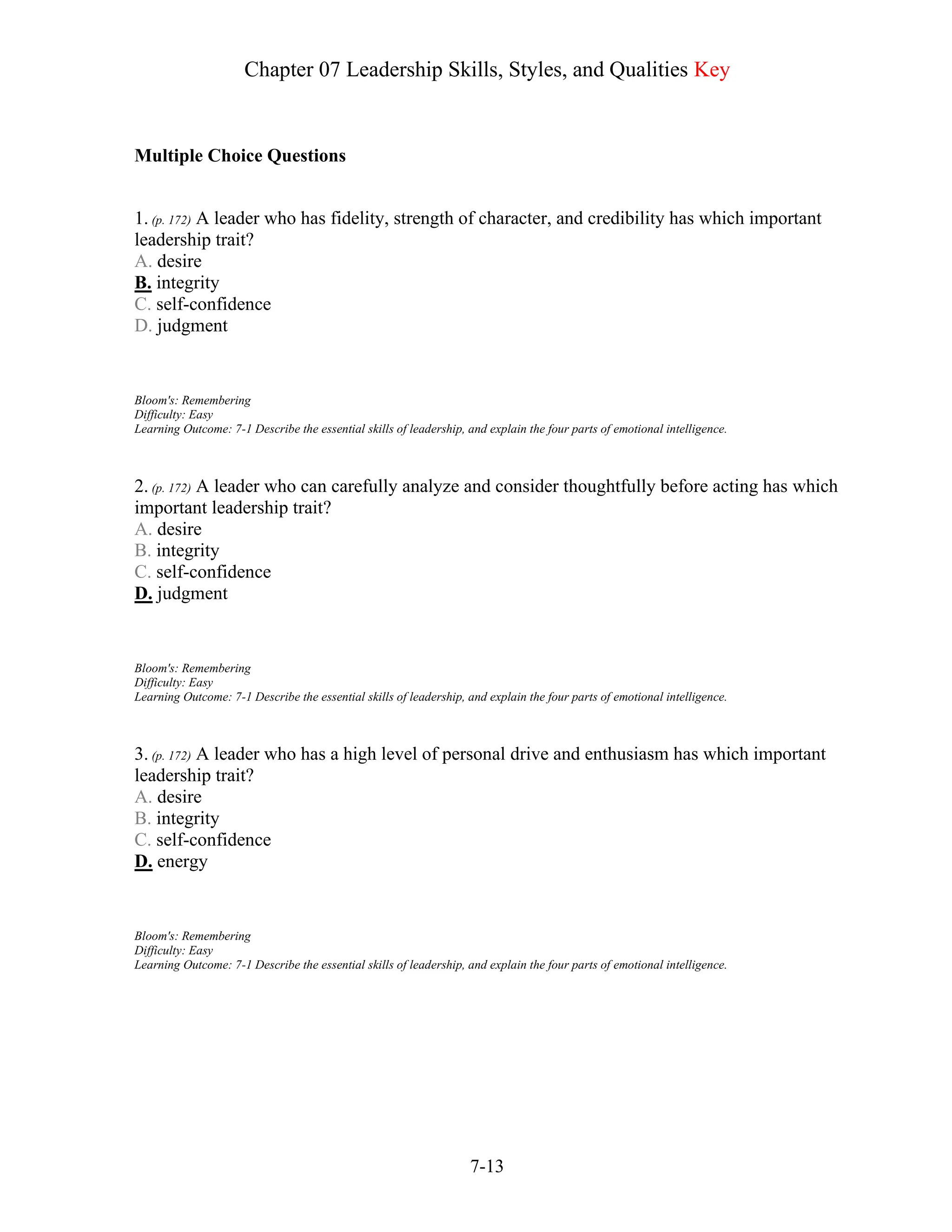
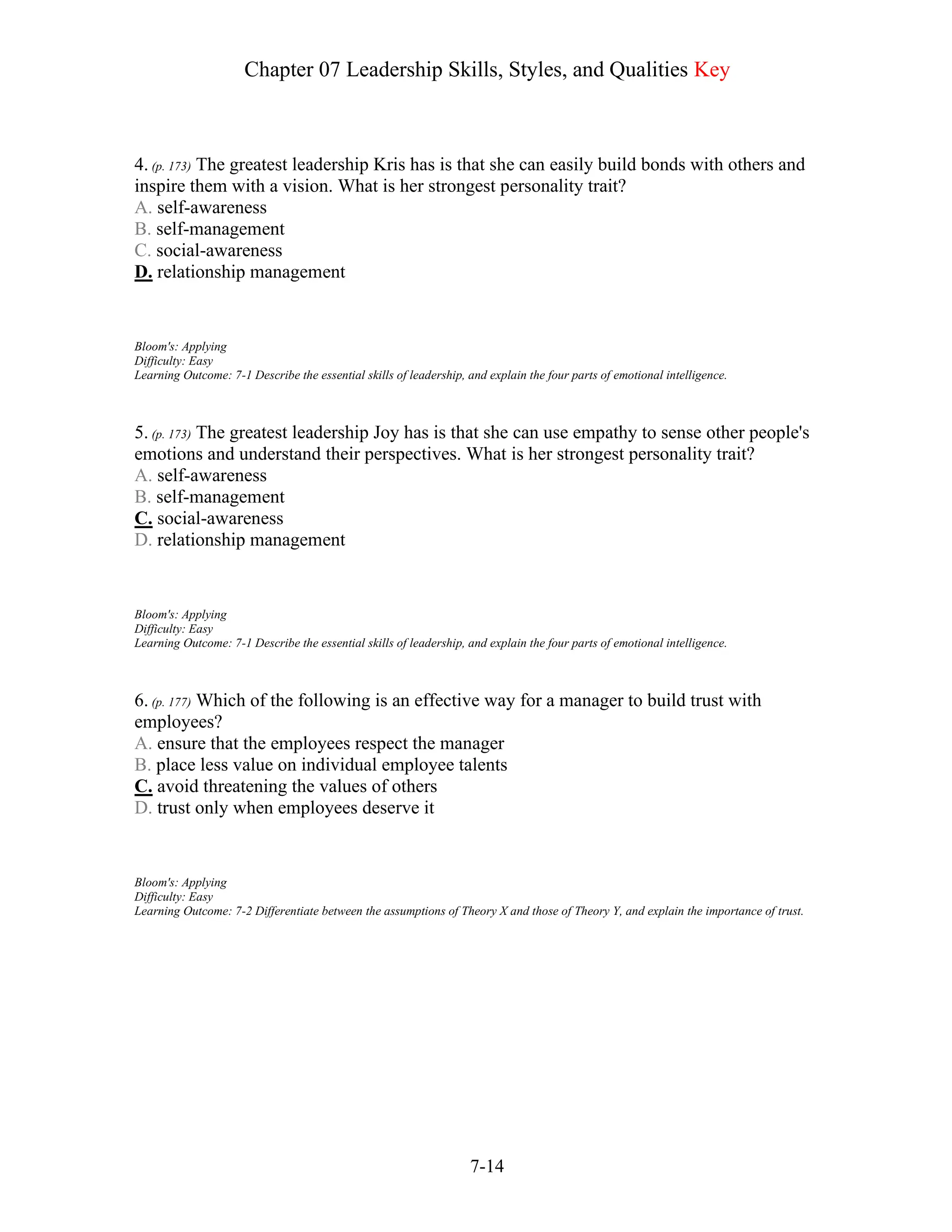
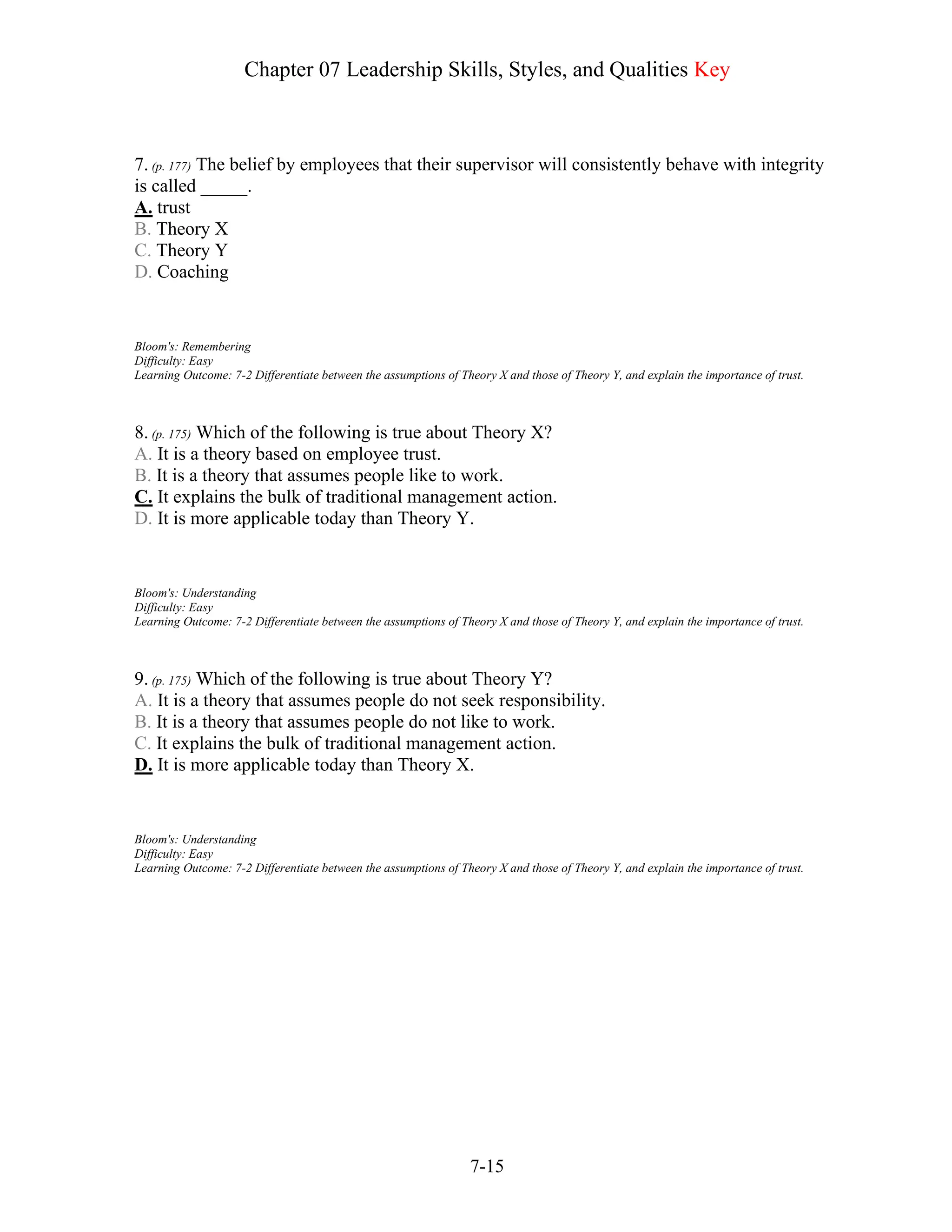
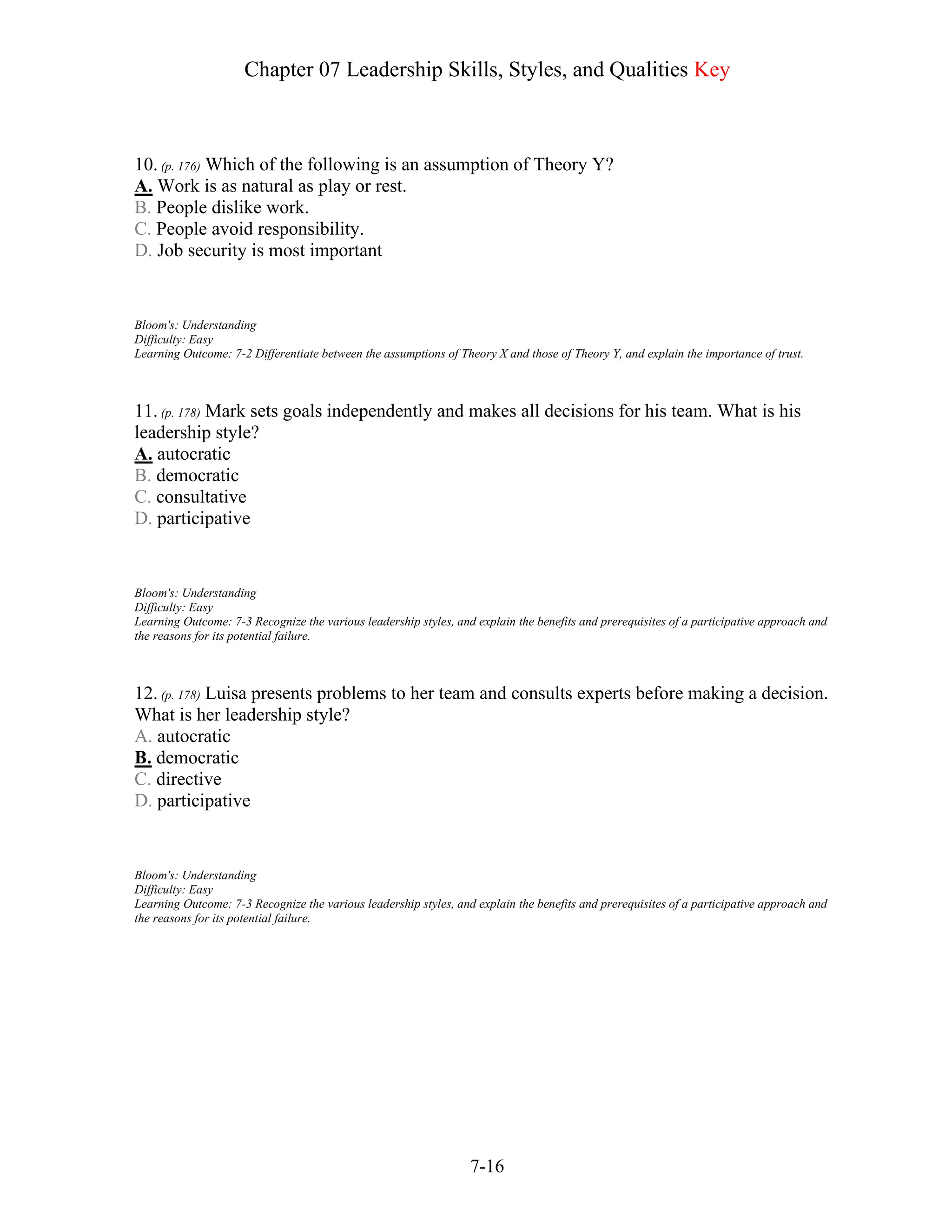
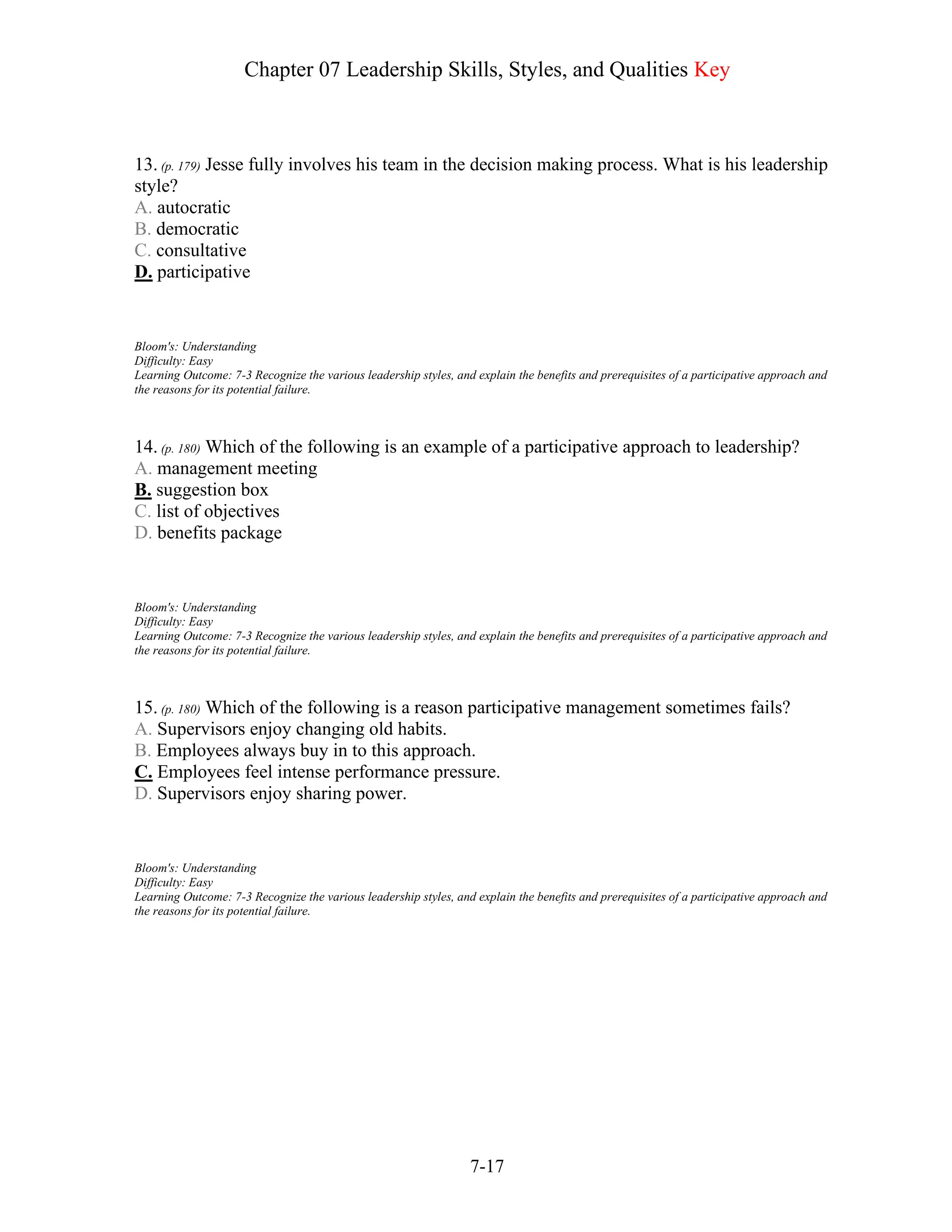
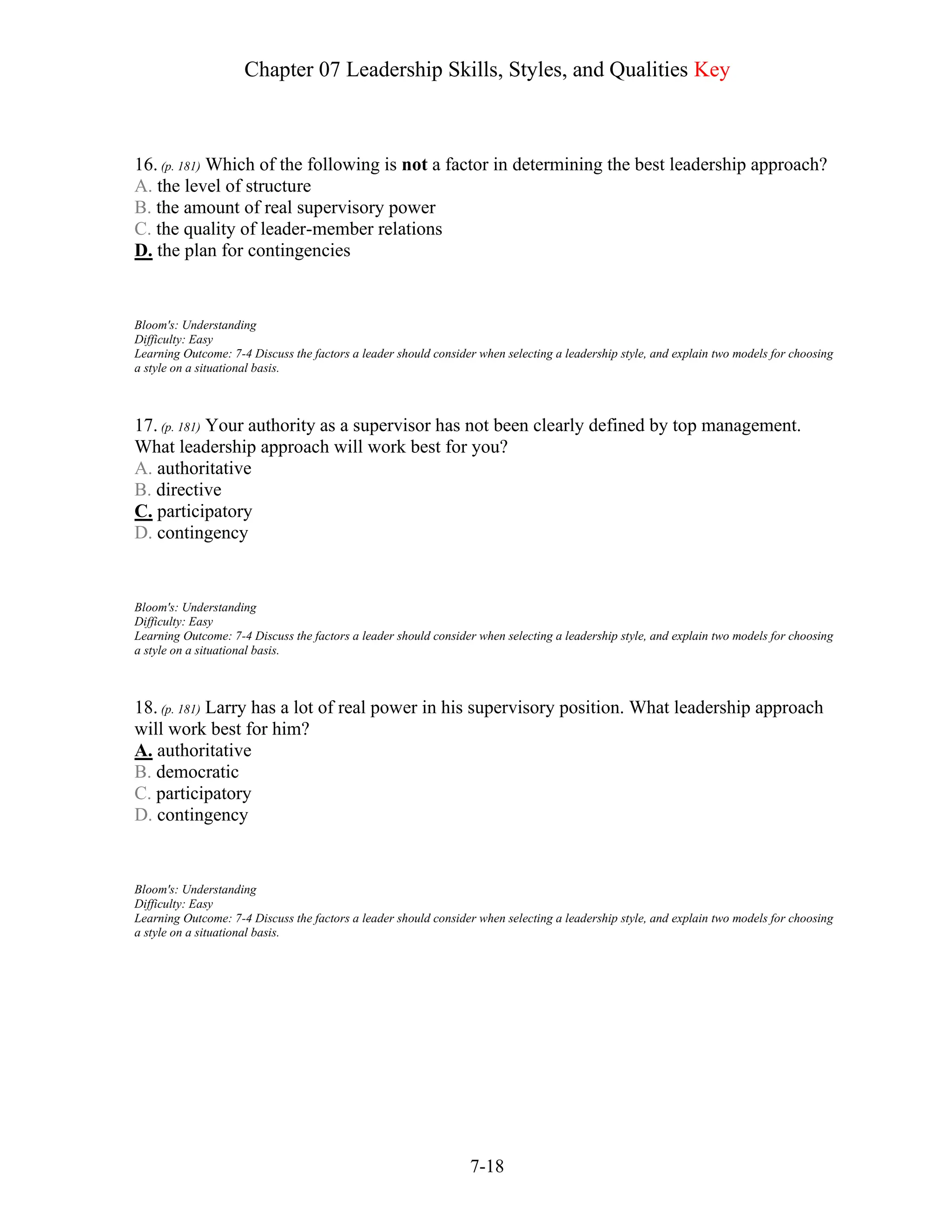
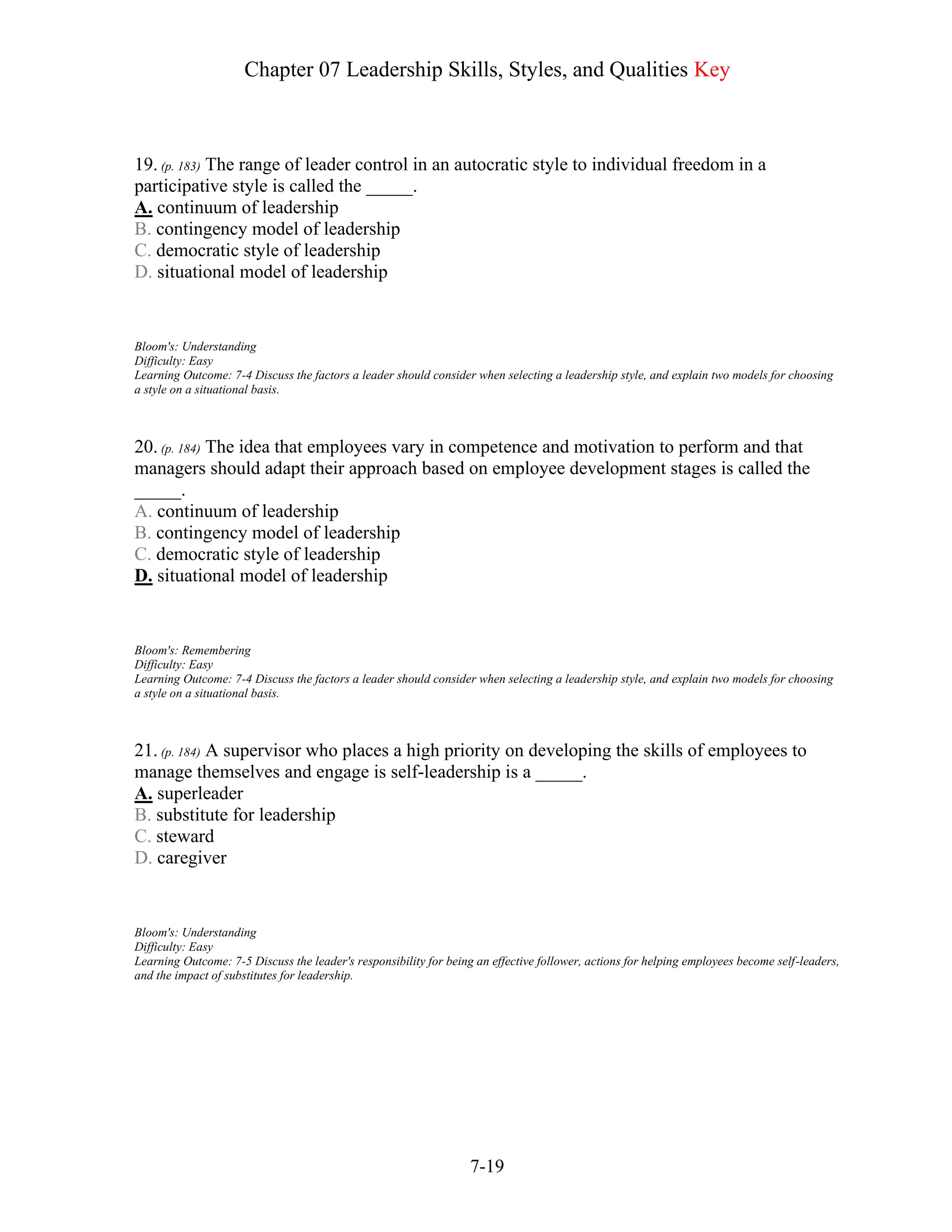
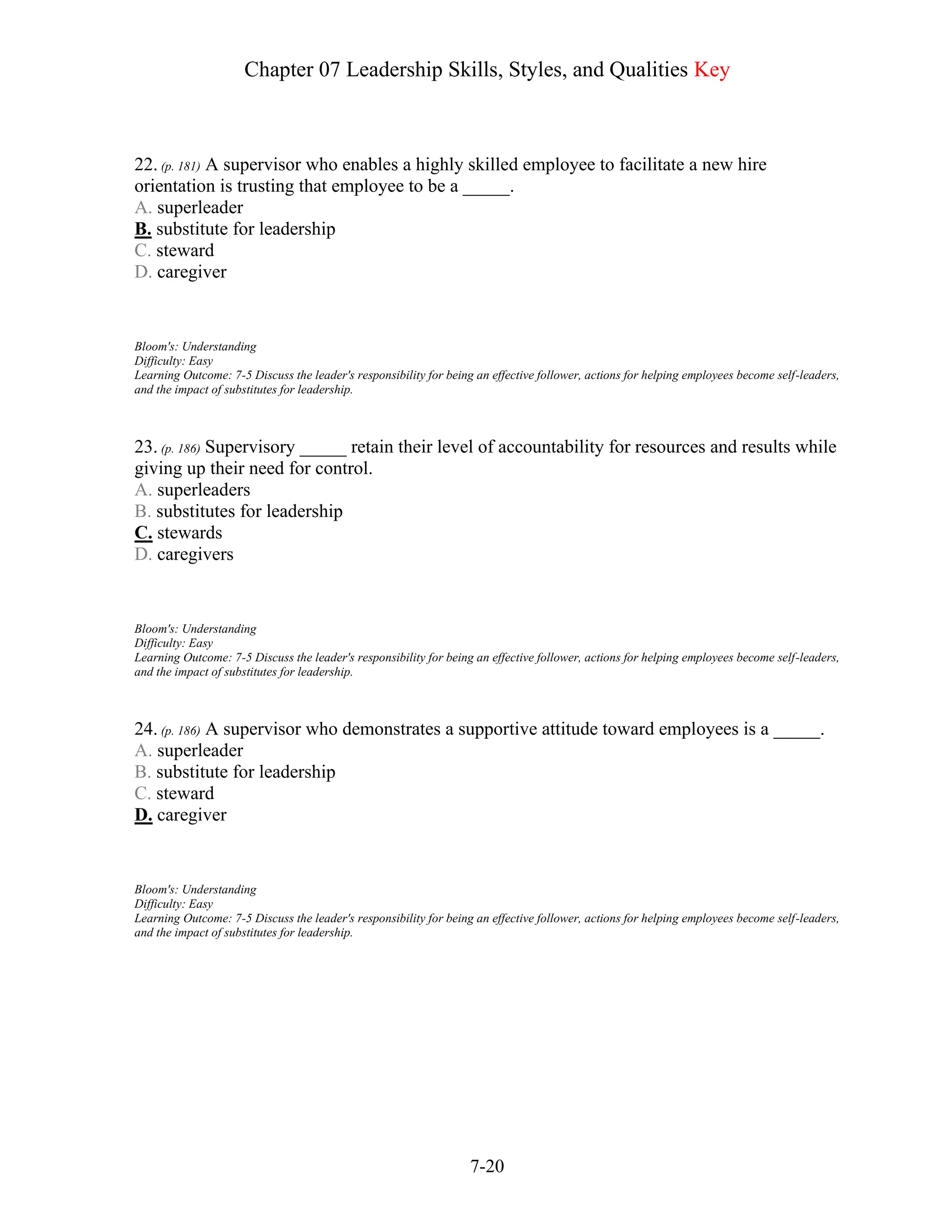

![being the wife of Louis, whilst the younger, Margaret Theresa, the
wife of the Emperor Leopold I., was, with Charles II., the offspring of
a second marriage.[27] Both of the daughters had renounced all
future claim to the Spanish Crown, but Louis, knowing that the
young Charles II. of Spain was so sickly as to make his early death
probable, was prepared to assert his wife's claim whenever that
event took place. In the meanwhile he put forward a demand that
the greater part of the Spanish Netherlands should be immediately
handed over to her, because in those countries there was a law,
known as the law of devolution, enacting that the daughter of a first
wife should receive a larger share of her father's property than a son
of the second. Louis chose to construe a right to succeed to property
as though it implied a right to govern. In March, 1667, he made a
secret treaty with Charles II. of England, in which, on condition of
his engaging not to help the Dutch, he was allowed to do as he
pleased in the Spanish Netherlands. In May he began what is known
as the War of Devolution, with Spain. Spain had neither money nor
means to defend her territory in the Netherlands, and the French
armies captured one place after another.
24. The Dutch in the Medway, and the Peace of Breda.
1667.—The advance of Louis into the Spanish Netherlands and the
establishment of the French armies so near their frontier in the place
of the now exhausted forces of Spain greatly alarmed the Dutch.
The mere risk of this danger had, even before the war between
France and Spain began, inclined them to peace with England, and a
conference was opened at Breda to consider the terms. All was
quickly agreed on except the question about the right of England to
Pularoon (see p. 589), and Charles, imagining that this would be
settled in his favour, dismissed his sailors and dismantled his fleet, in
order to save money to spend on his own extravagant pleasures.
The Dutch fleet at once entered the Thames, sailed up the Medway,
burnt three men-of-war, and carried off a fourth. For some days it
blockaded the Thames, so that the Londoners could get no coals.
Men openly said that such things would not have happened if Oliver
had been living. Orders were sent to the English ambassadors at](https://image.slidesharecdn.com/5496-250310070620-7d2818f6/75/Supervision-Managing-for-Results-10th-Edition-Newstrom-Test-Bank-26-2048.jpg)

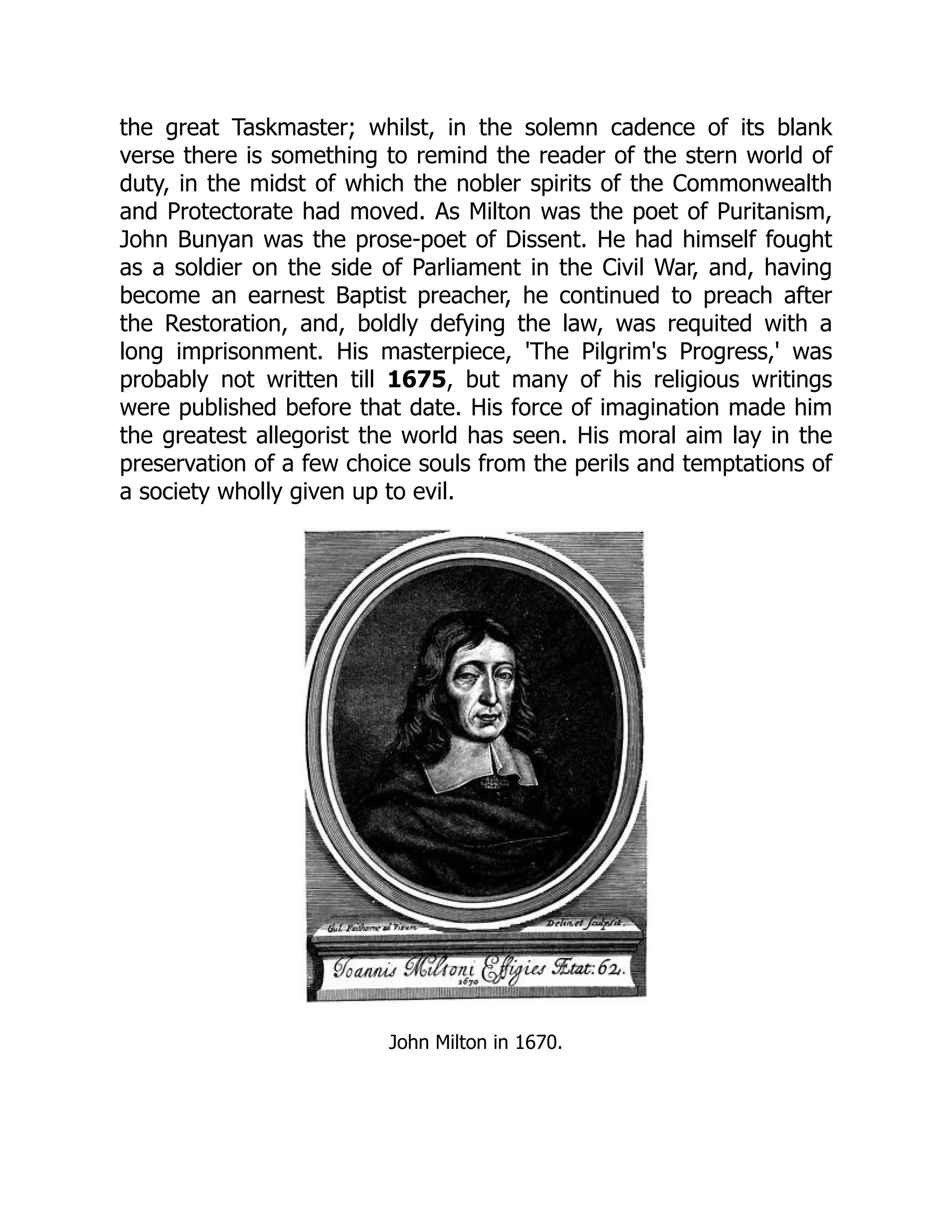

![existed. Not only did they not form a council meeting for purposes of
government, but, though they agreed together in favouring
toleration, they disagreed on other points. Nor were they usually
consulted by Charles in a body. Sometimes he took the advice of
persons not of their number; sometimes he took the advice of some
of them only, whilst he kept the others entirely in the dark. Thus
Clifford, who was a brave and honest Catholic, and Arlington, who
would support any measure as long as it was his interest to do so,
knew all about the Treaty of Dover, whilst Buckingham, Lauderdale,
and Ashley were in complete ignorance of it. Of Buckingham and
Arlington enough has been already said (see p. 599). Lauderdale,
who had little to do with English affairs, kept himself almost entirely
to the task of building up the king's authority in Scotland, where he
had already got together an army completely at Charles's disposal.
The character of Ashley deserves a longer consideration.
10. Ashley's Policy.—Anthony Ashley Cooper,[28] who had been
created Lord Ashley since the Restoration, had changed sides again
and again during the late troubles. He was a born party-leader, and
had signalised himself as a youth at Exeter College, Oxford, by
leading a successful revolt of the freshmen against the older
undergraduates, who, according to custom, tried to skin the chins of
the freshmen and to force them to drink a nauseous compound
prepared for the occasion. Though in party conflict he was quite
unscrupulous and despised no means which would enable him to
gain his ends, he had the statesmanlike qualities of common sense
and moderation. He had deserted Charles I. when he leant upon the
Catholics (see p. 541), had supported Cromwell in his struggle with
the zealots of the Barebone's Parliament (see p. 566), and had left
him when he rejected the constitutional scheme of the first
Parliament of the Protectorate (see p. 570). In disgust at the
humours of the Rump and the army, he had done everything in his
power to hasten the Restoration, and had soon shown hostility to
Clarendon and to the persecuting laws of the Cavalier Parliament. In
fact, there were two principles to which he was never entirely false,
a love of Parliamentary government and a love of toleration, which](https://image.slidesharecdn.com/5496-250310070620-7d2818f6/75/Supervision-Managing-for-Results-10th-Edition-Newstrom-Test-Bank-36-2048.jpg)
![exchequer 1,400,000l., lent to him by the goldsmiths who, in those
days, acted as bankers. On January 2, 1672, probably at Clifford's
suggestion, he refused to repay the principal, and arbitrarily
diminished the interest from 12 to 6 per cent.[29] In consequence of
this stop of the exchequer, as it was called, many of the goldsmiths
became bankrupt, but Clifford became a peer and Lord High
Treasurer.
Anthony Ashley-Cooper, first Earl of Shaftesbury, 1621-1683: from the National
Portrait Gallery.
13. The Declaration of Indulgence. 1672.—On March 15,
Charles, though still hesitating to proclaim himself a Catholic, issued
a Declaration of Indulgence. Claiming a dispensing power,[30] he
suspended all penal laws in matters ecclesiastical, affecting either
recusants or non-conformists, thus giving complete religious liberty
to Roman Catholics as well as to Dissenters. To this measure, wise](https://image.slidesharecdn.com/5496-250310070620-7d2818f6/75/Supervision-Managing-for-Results-10th-Edition-Newstrom-Test-Bank-38-2048.jpg)
![21. Peace with the Dutch. 1674.—The war with the Dutch was
brought to an end by a treaty signed on February 19, 1674. On the
24th Charles prorogued Parliament, and did not summon it again for
more than a year. During the interval, he attempted to win friends all
round, without committing himself to any definite policy. On the one
hand, he remained on friendly terms with Louis, whilst, on the other
hand, he offered the hand of Mary, the eldest child of his brother
James, to her cousin, William of Orange. William's position was far
higher than it had been two years before. He was now at the head
of an alliance in which the Emperor Leopold, the King of Spain, and
the Duke of Lorraine combined with him to restrain the inordinate
ambition of Louis. It is true that his generalship was less
conspicuous than his diplomacy, and that in the whole course of his
life he never succeeded in beating a French army in the field. Yet
even in war his indomitable courage and conspicuous coolness stood
him in good stead, and he knew better than most commanders how
to gather his troops after a defeat and to place them in strong
positions in which the enemy did not dare to attack them. The
history of Europe during the remainder of his life was the history of
a duel between the ambitious and autocratic Louis and the cool-
headed William, the first magistrate of a republic in which his action
was checked by constitutional restraints on every side, and the head
of a coalition of which the members were always prone to take
offence and to pursue their individual interests at the sacrifice of the
common good. To win England to the alliance was, for William, a
most desirable object, but he knew that James might very well have
a son by his second marriage, and, knowing that in that case he
would reap no political advantage from a marriage with Mary, he for
the present refused the offer of her hand.[31]
CHAPTER XXXIX
DANBY'S ADMINISTRATION AND THE THREE SHORT](https://image.slidesharecdn.com/5496-250310070620-7d2818f6/75/Supervision-Managing-for-Results-10th-Edition-Newstrom-Test-Bank-44-2048.jpg)

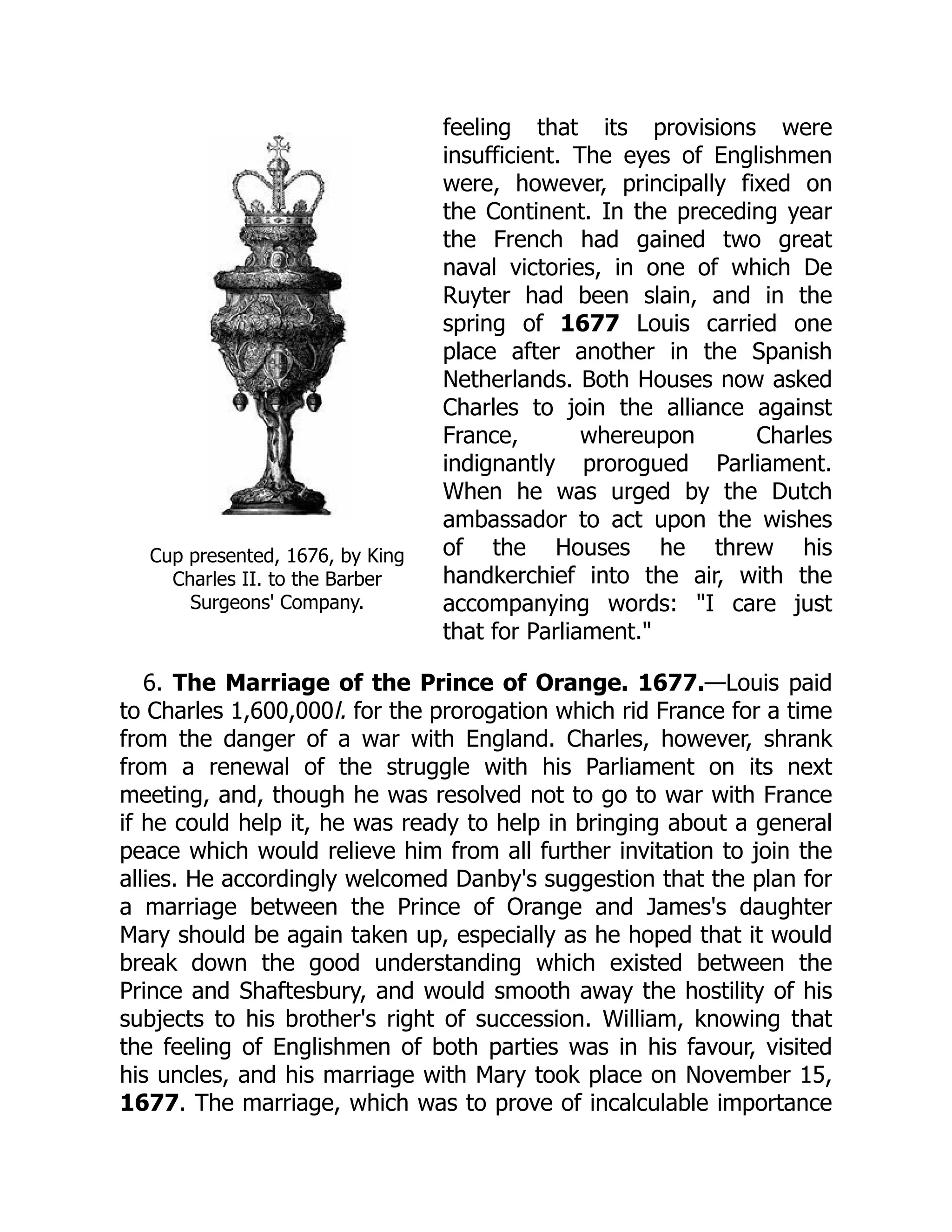
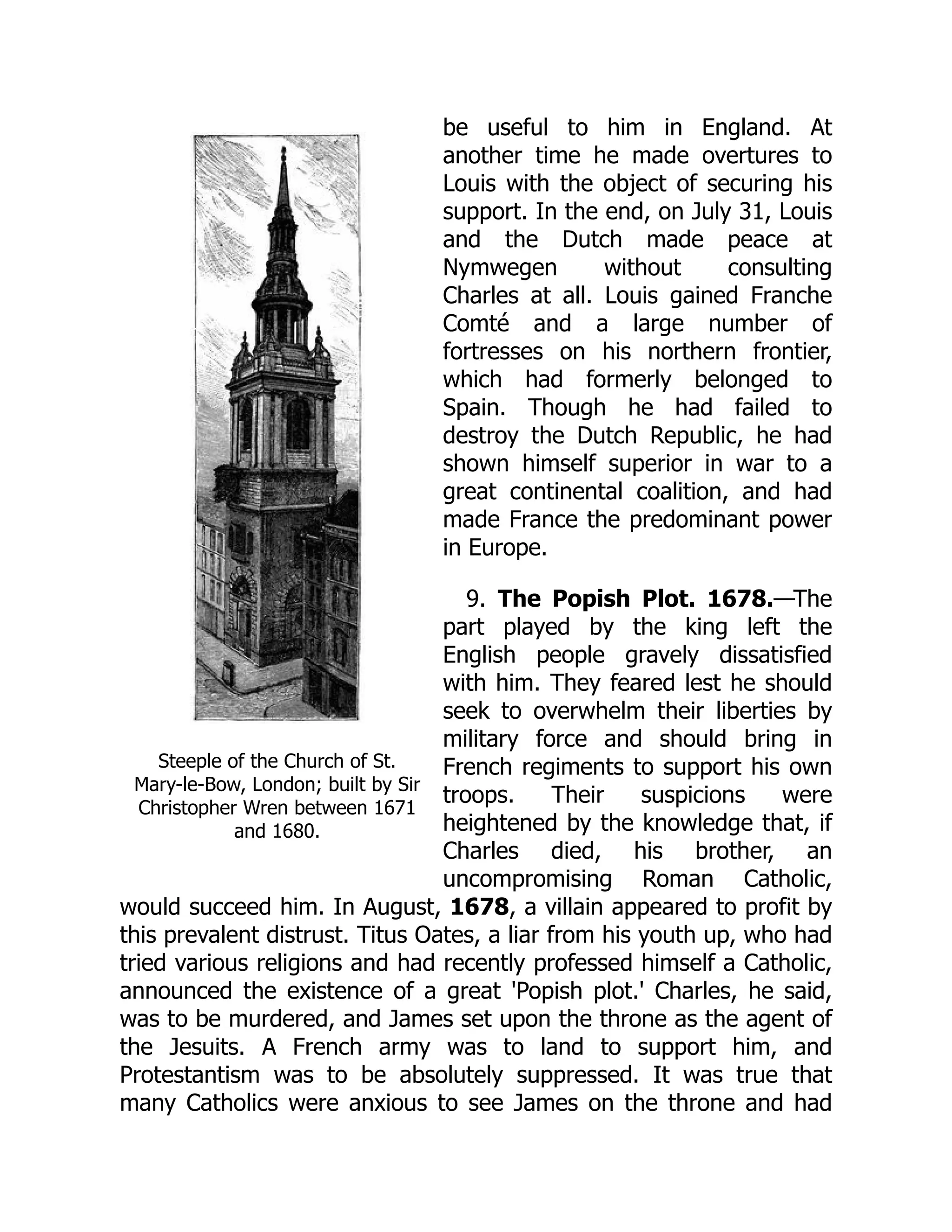
![expressed contempt at Charles's conduct in refusing to declare
himself one of themselves, but the rest of Oates's story was
absolutely false.
10. Growing Excitement. 1678.—Oates's depositions were
taken before a Middlesex magistrate, Sir Edmond Berry Godfrey. Not
long afterwards Godfrey was found murdered in the fields near
Primrose Hill. All London was wild with excitement. It was widely
believed that 'the Papists' had murdered him to punish him for
listening to Oates. It was also held to be an undoubted truth that
'the Papists' were about to set fire to London, and to murder all
good Protestants. A joiner named College made his fortune by
inventing a pocket flail, tipped with lead, which was called the
Protestant flail, and was to be used by sober citizens to brain 'Popish'
assassins. When Parliament met on October 21 Shaftesbury, who
had been liberated early in the year, unscrupulously encouraged
belief in the supposed plot. Up to that time Catholic peers had kept
their seats in the House of Lords, and a few Catholics had
surreptitiously sat in the Commons. A new Test Act was now passed
by which they were excluded[32] from both Houses, though the Duke
of York was exempted by name from its operation. Five Catholic
peers were thrown into the Tower, and Coleman, the secretary of the
Duchess of York, who had in his custody papers implying that James
had a design for forwarding the interests of his religion, was tried
and executed.
11. Danby's Impeachment and the Dissolution of the
Cavalier Parliament. 1678-1679.—The mark at which
Shaftesbury aimed was the overthrow of Danby. Danby had always,
as far as his own opinion went, been a warm antagonist of France,
but a minister was still, in those days, in reality the servant of the
king, and was bound to carry out his master's orders, even when
they were against his own conviction. Danby had, therefore, at the
time when the Peace of Nymwegen was under discussion, written
letters to Ralph Montague, the English ambassador in France,
bidding him to ask Louis for a considerable payment to Charles, and,](https://image.slidesharecdn.com/5496-250310070620-7d2818f6/75/Supervision-Managing-for-Results-10th-Edition-Newstrom-Test-Bank-51-2048.jpg)