SUMMARY of
FINAL ENVIRONMENTAL IMPACT ASSESSMENT REPORT
1.8 MTPA COAL WASHERY GARE PALMA CAPTIVE COAL BLOCK
IV/8
Near Village - Khamaria
Tehsil - Gharghoda
District - Raigarh
(CHHATTISGARH)
BY
JAYASWAL NECO INDUSTRIES LIMITED
Prepared by: Wanpyndapbiang Nongrang
INTRODUCTION
• Project proponent: Jayaswal NECO Industries Limited (JNIL)
• Consultant: EMTRC Consultants Pvt. Ltd.
source: https://www.necoindia.com/index.php
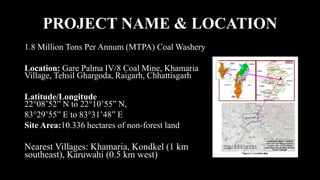
PROJECT NAME & LOCATION
1.8 Million Tons Per Annum (MTPA) Coal Washery
Location: Gare Palma IV/8 Coal Mine, Khamaria
Village, Tehsil Ghargoda, Raigarh, Chhattisgarh
Latitude/Longitude
22°08’52” N to 22°10’55” N,
83°29’55” E to 83°31’48” E
Site Area:10.336 hectares of non-forest land
Nearest Villages: Khamaria, Kondkel (1 km
southeast), Karuwahi (0.5 km west)
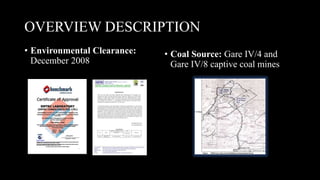
OVERVIEW DESCRIPTION
• Environmental Clearance:
December 2008
• Coal Source: Gare IV/4 and
Gare IV/8 captive coal mines
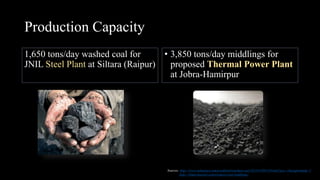
Production Capacity
1,650 tons/day washed coal for
JNIL Steel Plant at Siltara (Raipur)
• 3,850 tons/day middlings for
proposed Thermal Power Plant
at Jobra-Hamirpur
Sources: https://www.indiamart.com/proddetail/washed-coal-2853131982130.html?pos=1&enqformpdp=1
https://ibmd.tatasteel.com/products/coal-middlings/
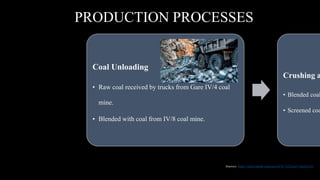
Coal Unloading
• Raw coal received by trucks from Gare IV/4 coal
mine.
• Blended with coal from IV/8 coal mine.
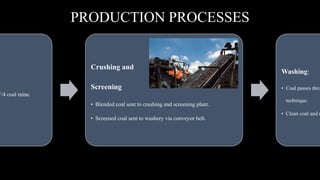
Crushing and Screening:
• Blended coal sent to crushing and screening plant.
• Screened coal sent to washery via conveyor belt.

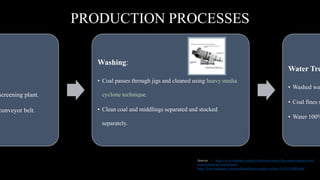
Washing:
• Coal passes through jigs and cleaned using heavy media
cyclone technique.
• Clean coal and middlings separated and stocked
separately.
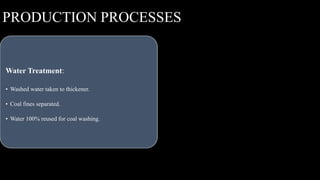
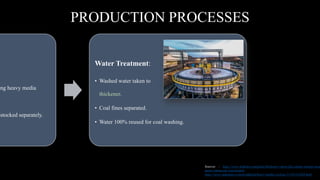
Water Treatment:
• Washed water taken to thickener.
• Coal fines separated.
• Water 100% reused for coal washing.
PRODUCTION PROCESSES
Coal Unloading
• Raw coal received by trucks from Gare IV/4 coal
mine.
• Blended with coal from IV/8 coal mine.
Crushing a
• Blended coal
• Screened coa
PRODUCTION PROCESSES
Sources: https://stock.adobe.com/search?k=%22coal+trucks%22
PRODUCTION PROCESSES
V/4 coal mine.
Crushing and
Screening
• Blended coal sent to crushing and screening plant.
• Screened coal sent to washery via conveyor belt.
Washing:
• Coal passes thro
technique.
• Clean coal and m
screening plant.
conveyor belt.
Washing:
• Coal passes through jigs and cleaned using heavy media
cyclone technique.
• Clean coal and middlings separated and stocked
separately.
Water Tre
• Washed wa
• Coal fines s
• Water 100%
Sources : https://www.linkedin.com/pulse/thickener-where-flocculants-mainly-used-
nuoer-chemicals-iran-branch
https://www.indiamart.com/proddetail/heavy-media-cyclone-21191314388.html
PRODUCTION PROCESSES
ing heavy media
stocked separately.
Water Treatment:
• Washed water taken to
thickener.
• Coal fines separated.
• Water 100% reused for coal washing.
Sources : https://www.linkedin.com/pulse/thickener-where-flocculants-mainly-used
nuoer-chemicals-iran-branch
https://www.indiamart.com/proddetail/heavy-media-cyclone-21191314388.html
PRODUCTION PROCESSES
DESCRIPTION of the ENVIRONMENT
BASELINE DATA
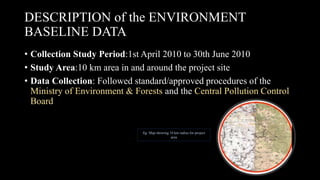
• Collection Study Period:1st April 2010 to 30th June 2010
• Study Area:10 km area in and around the project site
• Data Collection: Followed standard/approved procedures of the
Ministry of Environment & Forests and the Central Pollution Control
Board
fig: Map showing 10 km radius for project
area
Meteorology
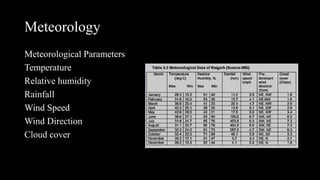
Meteorological Parameters
Temperature
Relative humidity
Rainfall
Wind Speed
Wind Direction
Cloud cover
Meteorology
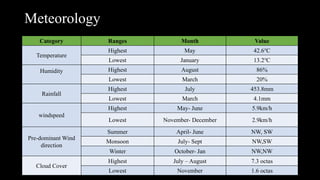
Category Ranges Month Value
Temperature
Highest May 42.6℃
Lowest January 13.2℃
Humidity Highest August 86%
Lowest March 20%
Rainfall
Highest July 453.8mm
Lowest March 4.1mm
windspeed
Highest May- June 5.9km/h
Lowest November- December 2.9km/h
Pre-dominant Wind
direction
Summer April- June NW, SW
Monsoon July- Sept NW,SW
Winter October- Jan NW,NW
Cloud Cover
Highest July – August 7.3 octas
Lowest November 1.6 octas
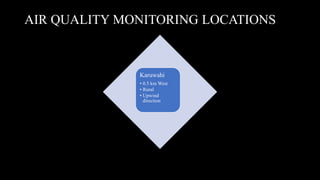
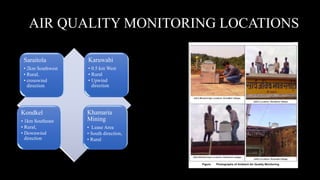
AIR QUALITY MONITORING LOCATIONS
Kondkel
• 1km Southeast
• Rural,
• Downwind
direction
Khamaria
Mining
• Lease Area
• South direction,
• Rural
Saraitola
• 2km Southwest
• Rural,
• crosswind
direction
Karuwahi
• 0.5 km West
• Rural
• Upwind
direction
AIR QUALITY MONITORING LOCATIONS
Kondkel
• 1km Southeast
• Rural,
• Downwind
direction
Khamaria
Mining
• Lease Area
• South direction,
• Rural
Saraitola
• 2km Southwest
• Rural,
• crosswind
direction
Karuwahi
• 0.5 km West
• Rural
• Upwind
direction
AIR QUALITY MONITORING LOCATIONS
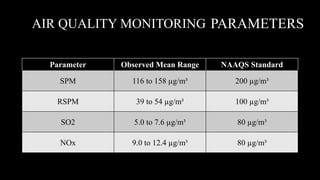
PARAMETERS
Parameter Observed Mean Range NAAQS Standard
SPM 116 to 158 µg/m³ 200 µg/m³
RSPM 39 to 54 µg/m³ 100 µg/m³
SO2 5.0 to 7.6 µg/m³ 80 µg/m³
NOx 9.0 to 12.4 µg/m³ 80 µg/m³
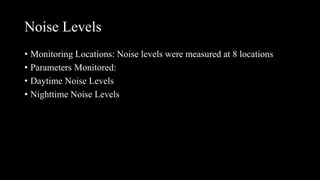
Noise Levels
• Monitoring Locations: Noise levels were measured at 8 locations
• Parameters Monitored:
• Daytime Noise Levels
• Nighttime Noise Levels
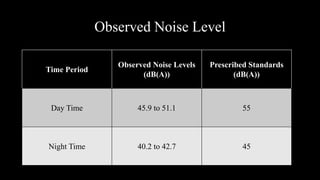
Observed Noise Level
Time Period
Observed Noise Levels
(dB(A))
Prescribed Standards
(dB(A))
Day Time 45.9 to 51.1 55
Night Time 40.2 to 42.7 45
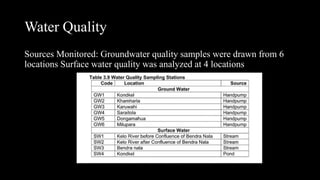
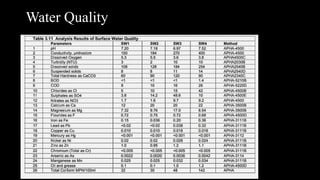
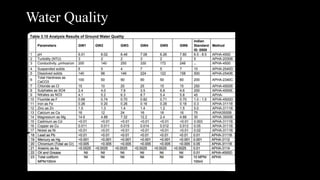
Water Quality
Sources Monitored: Groundwater quality samples were drawn from 6
locations Surface water quality was analyzed at 4 locations
Water Quality
Water Quality
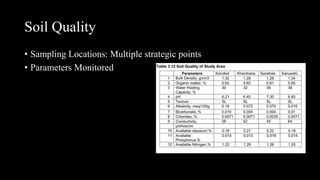
Soil Quality
• Sampling Locations: Multiple strategic points
• Parameters Monitored
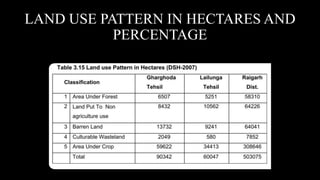
LAND USE PATTERN IN HECTARES AND
PERCENTAGE
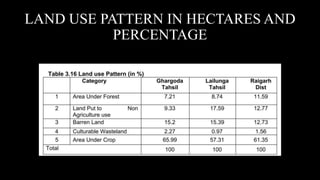
LAND USE PATTERN IN HECTARES AND
PERCENTAGE
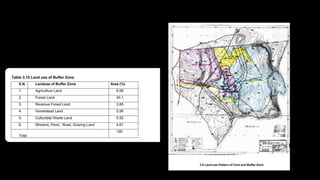
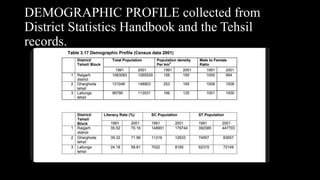
DEMOGRAPHIC PROFILE collected from
District Statistics Handbook and the Tehsil
records.
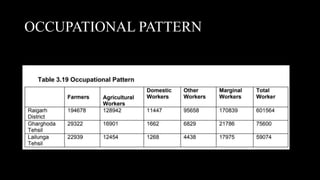
OCCUPATIONAL PATTERN
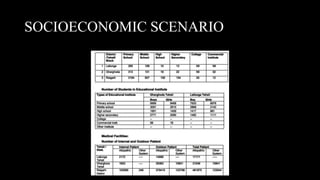
SOCIOECONOMIC SCENARIO
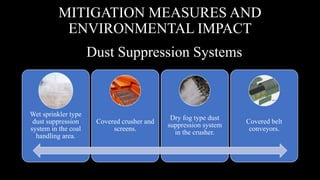
Dust Suppression Systems
Wet sprinkler type
dust suppression
system in the coal
handling area.
Covered crusher and
screens.
Dry fog type dust
suppression system
in the crusher.
Covered belt
conveyors.
MITIGATION MEASURES AND
ENVIRONMENTAL IMPACT
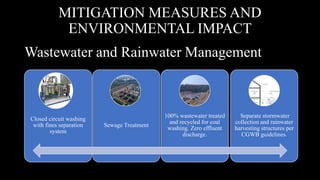
Wastewater and Rainwater Management
Closed circuit washing
with fines separation
system
Sewage Treatment
100% wastewater treated
and recycled for coal
washing. Zero effluent
discharge.
Separate stormwater
collection and rainwater
harvesting structures per
CGWB guidelines.
MITIGATION MEASURES AND
ENVIRONMENTAL IMPACT
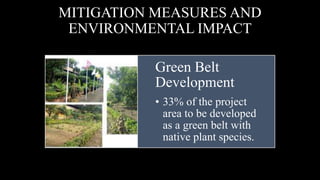
Green Belt
Development
• 33% of the project
area to be developed
as a green belt with
native plant species.
MITIGATION MEASURES AND
ENVIRONMENTAL IMPACT
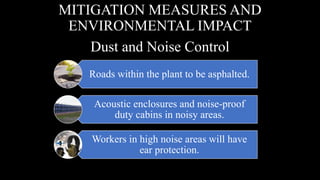
Roads within the plant to be asphalted.
Acoustic enclosures and noise-proof
duty cabins in noisy areas.
Workers in high noise areas will have
ear protection.
MITIGATION MEASURES AND
ENVIRONMENTAL IMPACT
Dust and Noise Control
ENVIRONMENTAL MONITORING
PLAN
Environmental Management Cell (EMC)
• Objective: Evaluate pollution control performance and ensure
compliance with standards.
• Management: Under the Chief Executive Officer of the plant,
managed by qualified engineers.
• Outsourcing: Environmental monitoring will be conducted by
recognized laboratories.
• Responsibilities
1. Regular Monitoring:
a) Fugitive emissions, work environment, and corrective measures.
b) Ambient air quality (upwind/downwind of crusher, plant boundary).
c) Re-circulating water quality, Wastewater treatment plant inlet/outlet.
d) Groundwater quality (near coal storage area, surrounding villages).
e) Water quality (Kelo River, Bendra Nala – upstream/downstream).
f) Noise levels (plant boundary, nearest habitation, work areas).
g) Quantity & quality of middlings and fines for reuse.
2. Greenery
Development and maintenance of greenbelt within the plant boundary.
Environmental Management Cell (EMC)
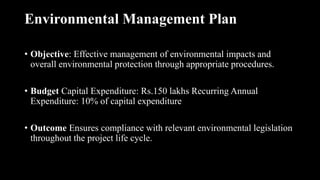
Environmental Management Plan
• Objective: Effective management of environmental impacts and
overall environmental protection through appropriate procedures.
• Budget Capital Expenditure: Rs.150 lakhs Recurring Annual
Expenditure: 10% of capital expenditure
• Outcome Ensures compliance with relevant environmental legislation
throughout the project life cycle.
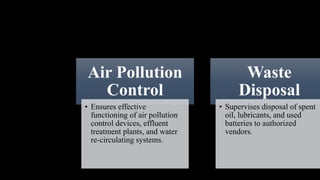
Air Pollution
Control
• Ensures effective
functioning of air pollution
control devices, effluent
treatment plants, and water
re-circulating systems.
Waste
Disposal
• Supervises disposal of spent
oil, lubricants, and used
batteries to authorized
vendors.
ollution
ntrol
ective
of air pollution
ces, effluent
ants, and water
g systems.
Waste
Disposal
• Supervises disposal of spent
oil, lubricants, and used
batteries to authorized
vendors.
Plantation
Efforts
• Oversees plantation efforts
during the construction
phase, following Central
Pollution Control Board
guidelines.
Waste
Disposal
upervises disposal of spent
l, lubricants, and used
tteries to authorized
ndors.
Plantation
Efforts
• Oversees plantation efforts
during the construction
phase, following Central
Pollution Control Board
guidelines.
Resour
Conserva
• Manages schemes
resource conservat
rainwater harvestin
social forestry deve
Plantation
Efforts
rsees plantation efforts
ng the construction
e, following Central
ution Control Board
elines.
Resource
Conservation
• Manages schemes for
resource conservation,
rainwater harvesting, and
social forestry development.
Awarene
Program
• Conducts regular
environmental aware
programs for employ
Resource
onservation
anages schemes for
source conservation,
inwater harvesting, and
cial forestry development.
Awareness
Programs
• Conducts regular
environmental awareness
programs for employees.
Health
Check-u
• Ensures periodic he
check-ups for work
Awareness
Programs
nducts regular
ironmental awareness
grams for employees.
Health
Check-ups
• Ensures periodic health
check-ups for workers.
Cleanlin
and Hygi
• Maintains cleanlines
industrial hygiene in
plant.
Health
Check-ups
sures periodic health
eck-ups for workers.
Cleanliness
and Hygiene
• Maintains cleanliness and
industrial hygiene in the
plant.
Hazar
Review
• Reviews potential h
scenarios during pla
commissioning with
safety department t
safeguards for pollu
abatement, resource
conservation, accid
prevention, and was
minimization.
Cleanliness
and Hygiene
Maintains cleanliness and
ndustrial hygiene in the
lant.
Hazard
Reviews
• Reviews potential hazard
scenarios during plant
commissioning with the
safety department to enforce
safeguards for pollution
abatement, resource
conservation, accident
prevention, and waste
minimization.
THANK YOU

Summary Environmental Impact Assessment Report.pptx

  • 1.
    SUMMARY of FINAL ENVIRONMENTALIMPACT ASSESSMENT REPORT 1.8 MTPA COAL WASHERY GARE PALMA CAPTIVE COAL BLOCK IV/8 Near Village - Khamaria Tehsil - Gharghoda District - Raigarh (CHHATTISGARH) BY JAYASWAL NECO INDUSTRIES LIMITED Prepared by: Wanpyndapbiang Nongrang
  • 2.
    INTRODUCTION • Project proponent:Jayaswal NECO Industries Limited (JNIL) • Consultant: EMTRC Consultants Pvt. Ltd. source: https://www.necoindia.com/index.php
  • 3.
    PROJECT NAME &LOCATION 1.8 Million Tons Per Annum (MTPA) Coal Washery Location: Gare Palma IV/8 Coal Mine, Khamaria Village, Tehsil Ghargoda, Raigarh, Chhattisgarh Latitude/Longitude 22°08’52” N to 22°10’55” N, 83°29’55” E to 83°31’48” E Site Area:10.336 hectares of non-forest land Nearest Villages: Khamaria, Kondkel (1 km southeast), Karuwahi (0.5 km west)
  • 4.
    OVERVIEW DESCRIPTION • EnvironmentalClearance: December 2008 • Coal Source: Gare IV/4 and Gare IV/8 captive coal mines
  • 5.
    Production Capacity 1,650 tons/daywashed coal for JNIL Steel Plant at Siltara (Raipur) • 3,850 tons/day middlings for proposed Thermal Power Plant at Jobra-Hamirpur Sources: https://www.indiamart.com/proddetail/washed-coal-2853131982130.html?pos=1&enqformpdp=1 https://ibmd.tatasteel.com/products/coal-middlings/
  • 6.
    Coal Unloading • Rawcoal received by trucks from Gare IV/4 coal mine. • Blended with coal from IV/8 coal mine. Crushing and Screening: • Blended coal sent to crushing and screening plant. • Screened coal sent to washery via conveyor belt. Washing: • Coal passes through jigs and cleaned using heavy media cyclone technique. • Clean coal and middlings separated and stocked separately. Water Treatment: • Washed water taken to thickener. • Coal fines separated. • Water 100% reused for coal washing. PRODUCTION PROCESSES
  • 7.
    Coal Unloading • Rawcoal received by trucks from Gare IV/4 coal mine. • Blended with coal from IV/8 coal mine. Crushing a • Blended coal • Screened coa PRODUCTION PROCESSES Sources: https://stock.adobe.com/search?k=%22coal+trucks%22
  • 8.
    PRODUCTION PROCESSES V/4 coalmine. Crushing and Screening • Blended coal sent to crushing and screening plant. • Screened coal sent to washery via conveyor belt. Washing: • Coal passes thro technique. • Clean coal and m
  • 9.
    screening plant. conveyor belt. Washing: •Coal passes through jigs and cleaned using heavy media cyclone technique. • Clean coal and middlings separated and stocked separately. Water Tre • Washed wa • Coal fines s • Water 100% Sources : https://www.linkedin.com/pulse/thickener-where-flocculants-mainly-used- nuoer-chemicals-iran-branch https://www.indiamart.com/proddetail/heavy-media-cyclone-21191314388.html PRODUCTION PROCESSES
  • 10.
    ing heavy media stockedseparately. Water Treatment: • Washed water taken to thickener. • Coal fines separated. • Water 100% reused for coal washing. Sources : https://www.linkedin.com/pulse/thickener-where-flocculants-mainly-used nuoer-chemicals-iran-branch https://www.indiamart.com/proddetail/heavy-media-cyclone-21191314388.html PRODUCTION PROCESSES
  • 11.
    DESCRIPTION of theENVIRONMENT BASELINE DATA • Collection Study Period:1st April 2010 to 30th June 2010 • Study Area:10 km area in and around the project site • Data Collection: Followed standard/approved procedures of the Ministry of Environment & Forests and the Central Pollution Control Board fig: Map showing 10 km radius for project area
  • 12.
  • 13.
    Meteorology Category Ranges MonthValue Temperature Highest May 42.6℃ Lowest January 13.2℃ Humidity Highest August 86% Lowest March 20% Rainfall Highest July 453.8mm Lowest March 4.1mm windspeed Highest May- June 5.9km/h Lowest November- December 2.9km/h Pre-dominant Wind direction Summer April- June NW, SW Monsoon July- Sept NW,SW Winter October- Jan NW,NW Cloud Cover Highest July – August 7.3 octas Lowest November 1.6 octas
  • 14.
    AIR QUALITY MONITORINGLOCATIONS Kondkel • 1km Southeast • Rural, • Downwind direction Khamaria Mining • Lease Area • South direction, • Rural Saraitola • 2km Southwest • Rural, • crosswind direction Karuwahi • 0.5 km West • Rural • Upwind direction
  • 15.
    AIR QUALITY MONITORINGLOCATIONS Kondkel • 1km Southeast • Rural, • Downwind direction Khamaria Mining • Lease Area • South direction, • Rural Saraitola • 2km Southwest • Rural, • crosswind direction Karuwahi • 0.5 km West • Rural • Upwind direction
  • 16.
    AIR QUALITY MONITORINGLOCATIONS PARAMETERS Parameter Observed Mean Range NAAQS Standard SPM 116 to 158 µg/m³ 200 µg/m³ RSPM 39 to 54 µg/m³ 100 µg/m³ SO2 5.0 to 7.6 µg/m³ 80 µg/m³ NOx 9.0 to 12.4 µg/m³ 80 µg/m³
  • 17.
    Noise Levels • MonitoringLocations: Noise levels were measured at 8 locations • Parameters Monitored: • Daytime Noise Levels • Nighttime Noise Levels
  • 18.
    Observed Noise Level TimePeriod Observed Noise Levels (dB(A)) Prescribed Standards (dB(A)) Day Time 45.9 to 51.1 55 Night Time 40.2 to 42.7 45
  • 19.
    Water Quality Sources Monitored:Groundwater quality samples were drawn from 6 locations Surface water quality was analyzed at 4 locations
  • 20.
  • 21.
  • 22.
    Soil Quality • SamplingLocations: Multiple strategic points • Parameters Monitored
  • 23.
    LAND USE PATTERNIN HECTARES AND PERCENTAGE
  • 24.
    LAND USE PATTERNIN HECTARES AND PERCENTAGE
  • 26.
    DEMOGRAPHIC PROFILE collectedfrom District Statistics Handbook and the Tehsil records.
  • 27.
  • 28.
  • 29.
    Dust Suppression Systems Wetsprinkler type dust suppression system in the coal handling area. Covered crusher and screens. Dry fog type dust suppression system in the crusher. Covered belt conveyors. MITIGATION MEASURES AND ENVIRONMENTAL IMPACT
  • 30.
    Wastewater and RainwaterManagement Closed circuit washing with fines separation system Sewage Treatment 100% wastewater treated and recycled for coal washing. Zero effluent discharge. Separate stormwater collection and rainwater harvesting structures per CGWB guidelines. MITIGATION MEASURES AND ENVIRONMENTAL IMPACT
  • 31.
    Green Belt Development • 33%of the project area to be developed as a green belt with native plant species. MITIGATION MEASURES AND ENVIRONMENTAL IMPACT
  • 32.
    Roads within theplant to be asphalted. Acoustic enclosures and noise-proof duty cabins in noisy areas. Workers in high noise areas will have ear protection. MITIGATION MEASURES AND ENVIRONMENTAL IMPACT Dust and Noise Control
  • 33.
  • 34.
    Environmental Management Cell(EMC) • Objective: Evaluate pollution control performance and ensure compliance with standards. • Management: Under the Chief Executive Officer of the plant, managed by qualified engineers. • Outsourcing: Environmental monitoring will be conducted by recognized laboratories.
  • 35.
    • Responsibilities 1. RegularMonitoring: a) Fugitive emissions, work environment, and corrective measures. b) Ambient air quality (upwind/downwind of crusher, plant boundary). c) Re-circulating water quality, Wastewater treatment plant inlet/outlet. d) Groundwater quality (near coal storage area, surrounding villages). e) Water quality (Kelo River, Bendra Nala – upstream/downstream). f) Noise levels (plant boundary, nearest habitation, work areas). g) Quantity & quality of middlings and fines for reuse. 2. Greenery Development and maintenance of greenbelt within the plant boundary. Environmental Management Cell (EMC)
  • 36.
    Environmental Management Plan •Objective: Effective management of environmental impacts and overall environmental protection through appropriate procedures. • Budget Capital Expenditure: Rs.150 lakhs Recurring Annual Expenditure: 10% of capital expenditure • Outcome Ensures compliance with relevant environmental legislation throughout the project life cycle.
  • 38.
    Air Pollution Control • Ensureseffective functioning of air pollution control devices, effluent treatment plants, and water re-circulating systems. Waste Disposal • Supervises disposal of spent oil, lubricants, and used batteries to authorized vendors.
  • 39.
    ollution ntrol ective of air pollution ces,effluent ants, and water g systems. Waste Disposal • Supervises disposal of spent oil, lubricants, and used batteries to authorized vendors. Plantation Efforts • Oversees plantation efforts during the construction phase, following Central Pollution Control Board guidelines.
  • 40.
    Waste Disposal upervises disposal ofspent l, lubricants, and used tteries to authorized ndors. Plantation Efforts • Oversees plantation efforts during the construction phase, following Central Pollution Control Board guidelines. Resour Conserva • Manages schemes resource conservat rainwater harvestin social forestry deve
  • 41.
    Plantation Efforts rsees plantation efforts ngthe construction e, following Central ution Control Board elines. Resource Conservation • Manages schemes for resource conservation, rainwater harvesting, and social forestry development. Awarene Program • Conducts regular environmental aware programs for employ
  • 42.
    Resource onservation anages schemes for sourceconservation, inwater harvesting, and cial forestry development. Awareness Programs • Conducts regular environmental awareness programs for employees. Health Check-u • Ensures periodic he check-ups for work
  • 43.
    Awareness Programs nducts regular ironmental awareness gramsfor employees. Health Check-ups • Ensures periodic health check-ups for workers. Cleanlin and Hygi • Maintains cleanlines industrial hygiene in plant.
  • 44.
    Health Check-ups sures periodic health eck-upsfor workers. Cleanliness and Hygiene • Maintains cleanliness and industrial hygiene in the plant. Hazar Review • Reviews potential h scenarios during pla commissioning with safety department t safeguards for pollu abatement, resource conservation, accid prevention, and was minimization.
  • 45.
    Cleanliness and Hygiene Maintains cleanlinessand ndustrial hygiene in the lant. Hazard Reviews • Reviews potential hazard scenarios during plant commissioning with the safety department to enforce safeguards for pollution abatement, resource conservation, accident prevention, and waste minimization.
  • 46.