Running Head: PHYSICAL ACTIVITY PROGRAMS 1
The Effectiveness of Physical Activity Programs in Promoting Weight-Loss in
Obese Adults with Intellectual and Developmental Disabilities
Allison Sullivan
Temple University
Physical Activity Programs 2
The Effectiveness of Physical Activity Programs in Promoting Weight-Loss in Obese Adults
with Intellectual and Developmental Disabilities
Obesity is a national epidemic. According to the Centers for Disease Control and
Prevention (CDC), obesity is “common, serious, and costly”, with over one-third of adult
Americans meeting the body mass index (BMI) criteria for this term (U. S. Department of Health
and Human Services, 2001). Heart disease, stroke, diabetes, and some cancers are obesity-related
conditions that the CDC considers some of the leading causes of preventable deaths. Substantial
evidence exists to support the understanding that sedentary lifestyle is one of the most significant
risk factors for obesity and one that can be successfully modified (U. S. Department of Health
and Human Services, 2001). In light of these findings, numerous public health organizations and
agencies such as the CDC (2001), the U.S. Office of the Surgeon General (2002) and the U. S.
Department of Education, National Institute on Disability and Rehabilitation Research-Research
Projects and Centers Program; Funding Priorities (2006) have sponsored a variety of initiatives
to promote increased physical activity in the population.
As Stewart, et al. noted (2006), “Evidence for the effectiveness of community-level
intervention to increase adult physical activity (PA) was reviewed by the Task Force on
Community Preventive Services. Two “strong” recommendations were individually adapted
health behavior-change programs and creating or improving access to places for PA, particularly
in neighborhoods with the least resources... Individually tailored PA programs and interventions
that include principles of behavior change were also featured in the recent Best Practices
Statement for promoting PA in older adults developed by a coalition of national organizations
led by The American College of Sports Medicine. Many initiatives emphasize the need to
Physical Activity Programs 3
increase PA in underserved populations… primarily because these groups are at higher risk of
poor health and have lower levels of PA than their counterparts”.
A vast amount of research exists on the subject of obesity, sedentary lifestyle, and
appropriate methods for addressing these issues. There is so much research, in fact, that it is
supremely challenging for any researcher investigating this topic to begin the process of
critically appraising the quality of this body of evidence. The results reported in this literature
can be of a contradictory nature. Many studies promote changes in dietary habits, for example,
while other investigations assert that efforts to change the dietary habits of underserved groups,
as well as within the population at large, is challenging and unsuccessful in the long-term due to
limitations with resources and issues of self-determination (Bazzano et al., 2009; Ewing, et al.,
2004; Chapman, et al., 2008; Heller et al., 2004)
A number of different techniques have been researched for the purposes of effecting
weight-loss in the general population. Health education programs, nutrition counseling, gastric
bypass surgery, resistance training programs, group exercise classes such as Zumba, mall
walking programs, and interval training programs have all been identified as methods to promote
weight loss.
One group in particular that faces multiple challenges in addressing the health-related
risks of sedentary lifestyle are adults with intellectual and developmental disabilities. Adults with
these disabilities are more likely to be people with low socioeconomic status and have neither the
means nor the capability to access places for physical activity independently. Many individuals
with these conditions require assistance with everyday life skills (Bazzano et al., 2009;
Chapman, Craven, & Chadwick, 2005; Chapman, Craven, & Chadwick, 2008; Ewing,
McDermott, Thomas-Koger, Whitner, & Pierce, 2004; Heller, Hsieh, & Rimmer, 2004;
Physical Activity Programs 4
Marshall, McConkey, & Moore, 2002; Melville, et al., 2011; Saunders, et al., 2011). A large
percentage of people with developmental or intellectual disabilities live in community
residences, and staffs at these residences often have limited means or understanding regarding
healthy meal preparation. According to Elinder, et al, (2010), “People with intellectual
disabilities are more likely to have poor dietary habits, low physical activity, and weight
disturbances”. A report by Bazzano, et. al. (2009), notes that people with intellectual and
developmental disabilities have more chronic disease conditions than that of the general
population, and are thus more costly to treat over their lifespan that members of the population at
large. Although a significant amount of research exists on obesity and interventions designed to
promote weight loss, very little research has been conducted to date to identify those
interventions that most effectively promote weight loss in this vulnerable group (Bodde, 2012,
Melville, 2011).
As stated by the World Health Organization (WHO), “Physical activity is defined as any
bodily movement produced by skeletal muscles that requires energy expenditure” (2009).
Physical activity as an intervention is used to “promote weight loss and reduce or prevent the
chronic complications of obesity” (Bazzano, et al., 2009). Increased physical activity has been
shown to be an effective method for promoting weight-loss in obese adults (U. S. Department of
Health and Human Services, 2001).
Thus, an evidenced-based practice review was conducted to investigate the effectiveness
of research-based exercise programs in effectively promoting weight loss or slowing weight gain
in adults with intellectual and developmental disabilities. Activity programs that promote weight
loss were chosen as the intervention under investigation because adults with developmental
disabilities are at high risk for obesity and related health problems. Physical activity level and
Physical Activity Programs 5
obesity are risk factors for chronic health conditions such as heart disease, diabetes, and cancer
that can be modified, and interventions which target these risk factors may be one significant
approach toward improving health in this population (U.S. Office of the Surgeon General, 2002).
Methodology
An evidence based practice review was conducted to explore the question, “What are the
effective exercise or activity-based interventions for promoting weight loss or preventing weight
gain in obese or overweight adults with intellectual or developmental disabilities?”
Participants
Participants in the included studies ranged in age from 18 to 71 years old (Bazzano et al.,
2009; Chapman, Craven, & Chadwick, 2005; Chapman, Craven, & Chadwick, 2008; Ewing,
McDermott, Thomas-Koger, Whitner, & Pierce, 2004; Heller, Hsieh, & Rimmer, 2004;
Marshall, McConkey, & Moore, 2002; Melville, et al., 2011; Saunders, et al., 2011). One study
included obese or overweight participants specifically diagnosed with Down syndrome (Heller,
et al., 2004). Two studies included the same participants but reported on findings from different
points in the study period (Chapman, et al., 2005; Chapman, et al., 2008). It should be noted,
however, that although these two studies explicitly stated that the same participants were used in
both studies, in the first study the authors utilized the term “learning disabilities” to describe the
disabling condition of the participants, while in the 2008 study, the same authors used the term
“intellectual disabilities” to describe the disabling condition of those participants.
In addition to the Chapman, et al. study from 2008, two studies included obese or
overweight participants with identified “intellectual disabilities” (Marshall, et al., 2002; Melville,
et al., 2011). One study included obese participants identified with “intellectual or developmental
disabilities” (Saunders, et al., 2011). One study compared results of what the authors described
Physical Activity Programs 6
as “normal learners” to that of “individuals with mental retardation” (Ewing, et al., 2004). One
study included obese or overweight participants with identified “developmental disabilities”.
Interventions
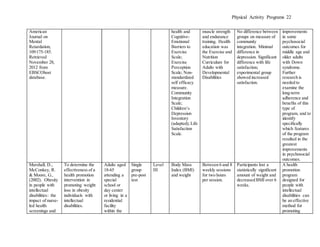
All of the studies included a nutritional education component (Bazzano, et al, 2009;
Chapman, et al. 2005; Chapman, et al., 2008; Ewing, et al., 2004; Heller et. al, 2004; Marshall, et
al., 2002; Melville, et al., 2011; Saunders, et al., 2011). None of the studies measured physical
activity without a dietary intervention component (Bazzano, et al, 2009; Chapman, et al. 2005;
Chapman, et al., 2008; Ewing, et al., 2004; Heller et. al, 2004; Marshall, et al., 2002; Melville, et
al., 2011; Saunders, et al., 2011). Two of the studies provided both nutrition and exercise
information as well as supervised physical activity in a group format (Bazzano, et al., 2009;
Heller et al. 2004). One study provided exercise and nutrition education in a group format with
an optional recommended group walk (Ewing, et al., 2004). One study consisted exclusively of
group education sessions, while “emphasizing the importance of exercise” (Marshall, et al.,
2002). Four studies utilized individualized diets and exercise programs with home visit education
sessions and data collection tasks, but no supervised exercise component (Chapman, et al. 2005;
Chapman, et al., 2008; Melville, et al., 2011; Saunders, et al, 2011).
Outcome Measures
There were a variety of outcomes measures employed to examine the effectiveness of the
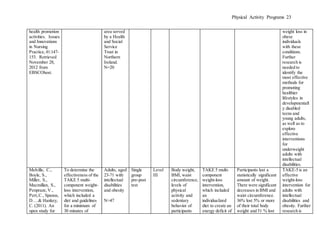
interventions used. Four studies used Body Mass Index (BMI) and weight lost (Bazzano, et al.,
2009; Marshall, et al., 2002; Melville, et al., 2011; Saunders, et al. 2011). The Bazzano, et al.,
2009 study also included self- reported nutrition, physical activity, and life satisfaction measures.
The Melville, et al., 2011 study included measures of physical activity and sedentary behavior in
addition to BMI and weight lost.
Physical Activity Programs 7
The two studies that were a longitudinal comparison of the same subjects used BMI
exclusively (Chapman, et al. 2005; Chapman, et al, 2008). One study used BMI in addition to
pre and post -test measures of knowledge of healthy eating choices (Ewing, et al, 2004). One
study used Likert scales for rating health status and Instrumental and Activities of Daily Living
Scales completed by a guardian, as well as self-report measures including the Cognitive-
Emotional Barriers to Exercise Scale, Exercise Perception Scale, a non-standardized measure of
self-efficacy, Life Satisfaction Scale, and an adapted Children’s Depression Inventory (Heller,
et. al, 2004). This study did not report on BMI or weight loss as an outcome measure of the
study.
Search Strategies
Relevant research articles were identified via computer-assisted search of online
databases. The following search terms and key words were utilized in various combinations:
intellectual disabilities, developmental disabilities, obesity, weight gain, exercise, physical
activity, and intervention. Search terms that were combined to yield significant results included:
(intellectual or developmental) and disabilities, obesity or weight gain, and exercise or physical
activity; and (intellectual or developmental) and disabilities, obesity or weight gain, exercise or
physical activity, and intervention. The electronic databases that were searched included
Academic Search Premier, CINAHL with Full Text, Health Source: Nursing/Academic Edition,
MEDLINE, OT Search, PsycARTICLES, Psychology and Behavioral Sciences Collection, and
PsycINFO. The online search yielded 15 studies, seven of which were included for review. A
citation review was conducted by hand after the articles from the database search were obtained,
and one additional study was located via this hand search.
Physical Activity Programs 8
Inclusion and exclusion criteria for the search
Research articles published after 2002 were included in the review. All studies included
explored aspects of physical activity as an intervention. Due to the very limited number of
published studies in this area, studies with combined interventions were included. Studies that
reported adult subjects with overweight and obese body mass index were included in the review.
Literature had to be published in English to be included. Studies that were exclusively
correlational or descriptive in nature were excluded from review. Studies that were not
completed on subjects with developmental or intellectual disabilities were excluded. Expert
opinion articles with no sample studied were excluded.
Data collection and analysis
All eight of the studies included in this review used quantitative data to describe their
results. Three of the studies compared experimental groups to control groups (Chapman et al.,
2004; Chapman, et al., 2008; and Heller, et al., 2004). One of the studies was a randomized
control trial (Heller, et al., 2004). Two studies followed a nonrandomized comparison group
design (Chapman et al., 2004; Chapman, et al., 2008) One study utilized a case-controlled,
nonrandomized pretest-posttest design (Ewing, et al., 2004). Four studies followed a single
group, pretest- posttest design (Bazzano, et al., 2009; Marshall, et al., 2003; Melville, et al.,
2011; Saunders, et al., 2011). None of the studies incorporated blinding into the study designs.
One study gathered follow-up data after the completion of the intervention (Melville, et al.,
2011).
The eight studies utilized a variety of methods for analyzing data. Three studies used
Analysis of Covariance (ANCOVA) to test the effects of diet and exercise on weight loss
(Chapman et al., 2004; Chapman, et al., 2008; and Heller, et al., 2004). Four studies employed
Physical Activity Programs 9
paired t-tests to analyze pretest-posttest data group means (Bazzano, et al., 2009; Ewing, et.al,
2004; Marshall, et al., 2003; Melville, et al., 2011). Three studies used McNemar’s test for this
reason as well (Ewing, et al., 2004; Heller et al., 2004; Melville, et al., 2011). Three studies
reported Chi-squared test results to describe the distribution of the sample and detect differences
in the group demographic differences (Bazzano, et al., 2009; Ewing, et al., 2004; Heller, et al.,
2004).
One study used the Wilcoxon Signed Rank Test to analyze some measures of physical
activity for which the distribution was skewed (Melville, et al., 2011). One study employed a
Type III sum of squares as adjusted measures because the number of participants in intervention
and control groups was different (Heller, et al., 2004). This same study also reported the
Cronbach’s alpha reliability to describe the Likert scale measures that were used (Heller, et al.,
2004). One study did not utilize inferential statistics to analyze the data (Saunders, et al., 2011).
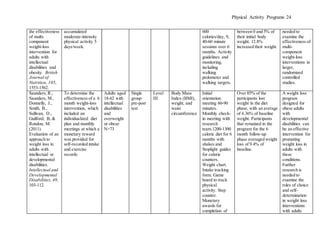
This study reported the average percent of weight loss by living arrangement, diagnosis, and
gender for the sample, but did not utilize a statistical package to analyze the results beyond
stating that these results were comparable to the “recommended 7% weight loss by the of the
Diabetes Prevention Program” (Saunders, et al., 2011).
Results
Overall, the research studies in this review display limited effectiveness in their
interventions’ successes in promoting weight loss in adults with developmental disabilities. In
this review, only one randomized controlled trial has been completed to measure the benefits of
an exercise and nutritional education program with adults with Down syndrome, and this
particular study did not investigate the effectiveness of the program in promoting weight loss,
reporting instead on psychosocial factors such as the life satisfaction and sense of self-efficacy of
Physical Activity Programs 10
its participants (Heller, et al., 2009). Since each of the interventions described in this review are
so different from one another, it is very difficult to draw conclusions with any true confidence
regarding the ultimate ability of an exercise-based intervention to promote sustainable weight
loss in adults with intellectual disabilities.
In fact, the two studies by Chapman, et al. (2005 and 2008, respectively) reported on the
same group of participants at one year and at 6 years using this intervention, and demonstrated
diminishing returns over time. Although the amount of weight lost for the intervention group was
significant after one year in the study, after six years of the intervention, the rate of weight loss
for the intervention group was no different from that of the control group.
All of the studies did demonstrate the ability of participants to lose weight during the
study period. With no follow-up data from seven of these studies, however, it is not possible to
determine whether these results were sustainable or whether the techniques used might be
applicable to the population of adults with developmental disabilities at large. (Bazzano, et al,
2009; Chapman, et al. 2005; Chapman, et al., 2008; Ewing, et al., 2004; Heller et. al, 2004;
Marshall, et al., 2002, 2011; Saunders, et al., 2011). Of this group, five of the studies emphasized
diet supervision and encouraged exercise but the exercise component was not supervised by the
study team (Chapman et al., 2005; Chapman, et al., 2008, Marshall, et al., 2003; Melville, et al.,
2011; Saunders, et al., 2011).
Only two of these studies actually provided supervised exercise instruction as a
component of the intervention (Bazzano, et al., 2009; Heller, et al., 2004). One study had a
supervised walking component, but this was optional for participants (Ewing, et al., 2004).
Bazzano, et al. (2009) did demonstrate significant weight loss in 67% of study subjects and both
the Bazzano, et al. (2009) and Heller, et al. (2004) studies showed significant improvements in
Physical Activity Programs 11
participants’ life satisfaction. While these two studies showed promising results for their
participants, they are very small studies completed over fairly short periods of time with no
follow-up and have limited generalizability for these reasons.
Discussion and Clinical Implications
The results of this evidence- based practice review regarding the effectiveness of activity-
based interventions in promoting weight loss in adults with developmental disabilities indicates
that there is still much to be learned about the usefulness and best methods for this type of
intervention with this population. All eight of these studies show that activity can promote
weight loss in adults with intellectual disabilities. Since seven of the eight studies lacked follow-
up data, however, it is not possible to state with confidence whether programs of this nature
produce lasting benefits. Additionally, since the nature and format of each of these interventions
was so vastly different, it is almost impossible to compare them to one another in any way that
allows the critical appraiser to make any generalizations of substance about their results.
Adults with intellectual disabilities are an under-studied group of individuals in our
population. The amount of research regarding exercise with this group is very limited. Further
research is needed to determine whether or not exercise-based interventions can promote weight
loss or prevent weight gain in adults with these disabling conditions.
Implications for Consumers
Activity based interventions for obese adults with developmental disabilities have not
been shown conclusively to promote sustainable weight loss. A healthcare provider may
implement an activity program to promote weight loss, but outcomes are inconsistent. Due to
the many co-morbid health factors associated with obesity and developmental disability, a
Physical Activity Programs 12
caregiver should seek a physician’s advice before embarking on any efforts to promote weight
loss in the individuals under their care, with regard to both diet and exercise guidelines.
Implications for Practitioners
Exercise-based activity programs may promote weight loss and prevent weight gain in
obese adults with developmental disabilities. There is insufficient evidence at this time to
conclude that any one specific method is the most effective method to promote weight loss. It is
highly likely, however, that some obese individuals with developmental disabilities can and will
lose weight as a result of an exercise-based intervention, but this is not yet reinforced in
evidenced based literature. What is known, however, is that doing nothing almost guarantees
negative health outcomes in this vulnerable population.
Implications for Researchers
A great need exists for more research regarding the effectiveness of activity-based
interventions for promoting weight loss in obese adults with intellectual disabilities. There is
only one longer-term study to date on this subject (Chapman, et al., 2008). Research is also
needed to determine whether education-based classes or exercise-based interventions are the
more effective method for producing sustainable results. Individualized approaches as compared
to group methods are another aspect of study that needs further research. Programs that are
exclusively exercise or diet-focused compared to those that are multifaceted is still another area
in which the research is yet to be completed.
Recommendations for Best Practice
The studies located for this evidence based practice review indicate limited effectiveness
in these interventions’ specific approaches to promoting weight loss in obese adults with
developmental disabilities. Supervised, exercised-based approaches to intervention with this
Physical Activity Programs 13
population for this purpose may be effective in promoting weight loss or preventing further
weight gain in these individuals. Given the complexity of the nature of promoting safe, effective,
client-centered, sustainable, and long-term health outcomes for this population, therapists must
continue to search the literature carefully and reflect methodically and critically when
determining the best intervention strategies to use with each and every client in their care.
Physical Activity Programs 14
References
Bazzano, A., Zeldin, A., Shihady, D., Garro, N., Allevato, N., & Lehrer, D. (2009). The healthy
lifestyle change program. American Journal of Preventive Medicine, 37, S201-S208.
doi:10.1016/j.amepre.2009.08.005. Retrieved November 28, 2012 from American Journal
of Preventive Medicine Online database.
Bodde, A., Dong-Chul, S., Frey, G., Van Puymbroeck, & M., Lohrmann, D. (2012). Correlates
of moderate-to-vigorous physical activity participation in adults with intelllectual
disabilities. Health Promotion Practice, 20 1-8. Doi: 10.1177/1524839912462395.
Retrieved December 2, 2012 from Sage Journals Online database.
Brown, C., Goetz, J., Van Sciver, A., Sullivan, D., & Hamera, E. (2006). A psychiatric
rehabilitation approach to weight loss. Psychiatric Rehabilitation Journal, 29, 267-273.
Retrieved November 28, 2012 from EBSCOhost database.
Chapman, M., Craven, M., & Chadwick, D. (2005). Fighting fit? an evaluation of health
practitioner input to improve healthy living and reduce obesity for adults with learning
disabilities. Journal of Intellectual Disabilities, 9, 131-144.
doi:10/1177/1744629505053926. Retrieved December 2, 2012 from Sage Journals
Online database.
Chapman, M., Craven, M., & Chadwick, D. (2008). Following up fighting fit: the long-term
impact of health practitioner input on obesity and BMI amongst adults with intellectual
disabilities. Journal of Intellectual Disabilities, 12, 309-323. doi:
10.1177/1744629508100557. Retrieved November 28, 2012 from Sage Journals Online
database.
Physical Activity Programs 15
Elinder, L., Bergstrom, H., Hagberg, J., Wihlman, W., & Hagstromer, M. (2010). Promoting a
healthy diet and physical activity in adults with intellectual disabilities living in
community residences: design and evaluation of a cluster-randomized intervention.
BioMed Central Public Health, 10, 761-766. doi: 10.1186/1471-2458-10-761. Retrieved
October 18, 2012 from BioMed Central.
Emerson, E. (2005). Underweight, obesity, and exercise among adults with intellectual
disabilities in supported accommodation in Northern England. Journal of Intellectual
Disability Research, 49, 134-143. doi: 10.1111/j.1365-2788.2004.00617.x. Retrieved
November 28, 2012 from Wiley-Blackwell.
Ewing, G., McDermott, S., Thomas-Koger, M., Whitner, W., & Pierce, K. (2004). Evaluation of
a cardiovascular health program for participants with mental retardation and normal
learners. Health, Education, and Behavior, 31, 77-87. doi: 10.1177/1090198103259162.
Retrieved November 28, 2012 from Sage Journals Online database.
Harris, M., Bloom, S. (1984). A pilot investigation of a behavioral weight control program with
mentally retarded adolescents and adults: effects on weight, fitness, and knowledge of
nutritional and behavioral principles. Rehabilitation Psychology, 29, 177-182. Retrieved
December 2, 2012 from EBSCOhost database.
Heller, T., Hsieh, K., & Rimmer, J. (2004). Attitudinal and psychosocial outcomes of a fitness
and health education program on adults with down syndrome. American Journal on
Mental Retardation, 109, 175-185.
Heller, T., McCubbin, J., & Peterson, J. (2011) Physical activity and nutrition health promotion
interventions: what is working for people with intellectual disabilities? Intellectual and
Developmental Disabilities, 49, 26-36. doi:10.13652/1934-9556-49.1.26.
Physical Activity Programs 16
Hilgenkamp, T., Reis, D., van Wijck, R., Evenhuis, H. Physical activity levels in older adults
with intellectual disabilities are extremely low. (2012). Research in Developmental
Disabilities, 33, 477-483. doi; 10.1016/j.ridd.2011.10.011.
Holm, M. B. (2000). Our mandate for the new millennium: Evidenced-based practice.
American Journal of Occupational Therapy, 54, 575-585.
Kielhofner, G. (2006). Research in occupational therapy: Methods of inquiry for enhancing
practice. Philadelphia, PA: F. A. Davis Company.
Marshall, D., McConkey, R. & Moore, G., (2002). Obesity in people with intellectual
disabilities: the impact of nurse-led health screenings and health promotion activities.
Issues and Innovations in Nursing Practice, 41, 147-153.
Melville, C., Boyle, S., Miller, S., Macmillan, S., Penpraze, V., Pert, C., Spanos, D….& Hankey,
C. (2011). An open study for the effectiveness of multi-component weight-loss
intervention for adults with intellectual disabilities and obesity. British Journal of
Nutrition, 105, 1553-1562.
Stewart, A.L. (2001). Community-based Physical Activity Programs for Adults Aged 50 and
Older. Journal of Aging and Physical Activity, 9, S71-S91.
Stewart AL, Gillis D, Grossman M, Castrillo M, Pruitt L, McLellan B, Sperber N. (2006).
Diffusing a research-based physical activity promotion program for seniors into diverse
communities (CHAMPS III). Preventing Chronic Disease [serial online].
Saunders, R., Saunders, M., Donnelly, J., Smith, B., Sullivan, D., Guilford, B, & Rondon, M.
(2011). Evaluation of an approach to weight loss in adults with intellectual or
developmental disabilities. Intellectual and Developmental Disabilities, 49, 103-112.
Physical Activity Programs 17
Temple, V. & Stanish, H. (2009). Pedometer-measured physical activity of adults with
intellectual disability: predicting weekly step counts. American Journal on Intellectual
and Developmental Disabilities, 114, 15-22. doi: 10.1352/2009.114:15-22. Retrieved
November 28, 2012 from EBSCOhost database.
U. S. Department of Education, National Institute on Disability and Rehabilitation Research
Projects and Centers Program; Funding Priorities. (2006). Federal Register. (Document
06-1975).
U.S. Department of Health and Human Services, Centers for Disease Control and Prevention,
National Center for Chronic Disease Prevention, National Center for Chronic Disease
Prevention and Health Promotion. (1996). Physical activity and health: a report of the
surgeon general. Atlanta, GA: Authors.
U. S. Department of Health and Human Services, Office of Disease Prevention and Health
Promotion. (2001). Healthy people 2010. Washington, DC: Authors.
U. S. Department of Health and Human Services, Office of the Surgeon General. (2002). Closing
the gap: a national blueprint for improving the health of individuals with mental
retardation. Report of the surgeon general’s conference on health disparities and mental
retardation. Rockville, MD: Authors.
World Health Organization. (2009). Global health risks: Mortality and burden of disease
attributable to selected major risks. Geneva, Switzerland: Authors.
Physical Activity Programs 18
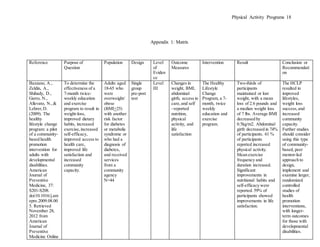
Reference Purpose of
Question
Population Design Level
of
Eviden
ce
Outcome
Measures
Intervention Result Conclusion or
Recommendati
on
Bazzano, A.,
Zeldin, A.,
Shihady, D.,
Garro, N.,
Allevato, N.,&
Lehrer,D.
(2009). The
healthy
lifestyle change
program: a pilot
of a community-
based health
promotion
intervention for
adults with
developmental
disabilities.
American
Journal of
Preventive
Medicine, 37:
S201-S208.
doi:10.1016/j.am
epre.2009.08.00
5. Retrieved
November 28,
2012 from
American
Journal of
Preventive
Medicine Online
To determine the
effectiveness of a
7-month twice-
weekly education
and exercise
program to result in
weight-loss,
improved dietary
habits, increased
exercise,increased
self-efficacy,
improved access to
health care,
improved life
satisfaction and
increased
community
capacity.
Adults aged
18-65 who
were
overweight/
obese
(BMI>25)
with another
risk factor
for diabetes
or metabolic
syndrome or
who had a
diagnosis of
diabetes,
and received
services
from a
community
agency
N=44
Single
group
pre-post
test
Level
III
Changes in
weight, BMI,
abdominal
girth, access to
care,and self
–reported
nutrition,
physical
activity, and
life
satisfaction
The Healthy
Lifestyle
Change
Program, a 7-
month, twice
weekly
education and
exercise
program.
Two-thirds of
participants
maintained or lost
weight, with a mean
loss of 2.6 pounds and
a median weight loss
of 7 lbs. Average BMI
decreased by
0.5kg/m2. Abdominal
girth decreased in 74%
of participants. 61 %
of participants
reported increased
physical activity.
Mean exercise
frequency and
duration increased.
Significant
improvements in
nutritional habits and
self-efficacy were
reported. 59% of
participants showed
improvements in life
satisfaction.
The HCLP
resulted in
improved
lifestyles,
weight loss
success,and
increased
community
capacity.
Further studies
should consider
using this type
of community-
based, peer
mentor-led
approach to
design,
implement and
examine larger,
randomized
controlled
studies of
health
promotion
interventions,
with longer-
term outcomes
for those with
developmental
disabilities.
Appendix 1: Matrix
Physical Activity Programs 19
database.
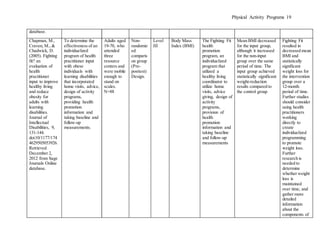
Chapman, M.,
Craven, M., &
Chadwick, D.
(2005). Fighting
fit? an
evaluation of
health
practitioner
input to improve
healthy living
and reduce
obesity for
adults with
learning
disabilities.
Journal of
Intellectual
Disabilities, 9,
131-144.
doi:10/1177/174
4629505053926.
Retrieved
December 2,
2012 from Sage
Journals Online
database.
To determine the
effectiveness of an
individualized
program of health
practitioner input
with obese
individuals with
learning disabilities
that incorporated
home visits, advice,
design of activity
programs,
providing health
promotion
information and
taking baseline and
follow-up
measurements.
Adults aged
19-70, who
attended
three
resource
centers and
were mobile
enough to
stand on
scales.
N=88
Non-
randomiz
ed
comparis
on group
(Pre-
posttest)
Design.
Level
III
Body Mass
Index (BMI)
The Fighting Fit
health
promotion
program, an
individualized
program that
utilized a
healthy living
coordinator to
utilize home
visits, advice
giving, design of
activity
programs,
provision of
health
promotion
information and
taking baseline
and follow-up
measurements
Mean BMI decreased
for the input group,
although it increased
for the non-input
group over the same
period of time. The
input group achieved
statistically significant
weight-reduction
results compared to
the control group
Fighting Fit
resulted in
decreased mean
BMI and
statistically
significant
weight loss for
the intervention
group over a
12-month
period of time.
Further studies
should consider
using health
practitioners
working
directly to
create
individualized
programming
to promote
weight loss.
Further
research is
needed to
determine
whether weight
loss is
maintained
over time, and
gather more
detailed
information
about the
components of
Physical Activity Programs 20
successful
interventions.
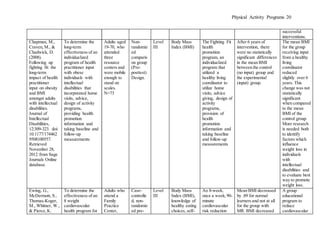
Chapman, M.,
Craven, M., &
Chadwick, D.
(2008).
Following up
fighting fit: the
long-term
impact of health
practitioner
input on obesity
and BMI
amongst adults
with intellectual
disabilities.
Journal of
Intellectual
Disabilities,
12:309-323. doi:
10.1177/174462
9508100557.
Retrieved
November 28,
2012 from Sage
Journals Online
database.
To determine the
long-term
effectiveness of an
individualized
program of health
practitioner input
with obese
individuals with
intellectual
disabilities that
incorporated home
visits, advice,
design of activity
programs,
providing health
promotion
information and
taking baseline and
follow-up
measurements
Adults aged
19-70, who
attended
three
resource
centers and
were mobile
enough to
stand on
scales.
N=73
Non-
randomiz
ed
comparis
on group
(Pre-
posttest)
Design.
Level
III
Body Mass
Index (BMI)
The Fighting Fit
health
promotion
program, an
individualized
program that
utilized a
healthy living
coordinator to
utilize home
visits, advice
giving, design of
activity
programs,
provision of
health
promotion
information and
taking baseline
and follow-up
measurements
After 6 years of
intervention, there
were no statistically
significant differences
in the mean BMI
between the control
(no input) group and
the experimental
(input) group.
The mean BMI
for the group
receiving input
from a healthy
living
coordinator
reduced
slightly over 6
years. This
change was not
statistically
significant
when compared
to the mean
BMI of the
control group.
More research
is needed both
to identify
factors which
influence
weight loss in
individuals
with
intellectual
disabilities and
to evaluate best
way to promote
weight loss.
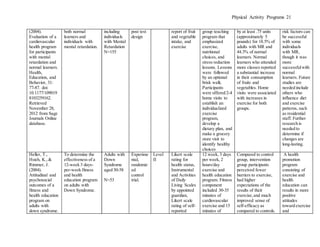
Ewing, G.,
McDermott, S.,
Thomas-Koger,
M., Whitner, W.,
& Pierce,K.
To determine the
effectiveness of an
8 weight
cardiovascular
health program for
Adults who
attend a
Family
Practice
Center,
Case-
controlle
d, non-
randomiz
ed pre-
Level
III
Body Mass
Index (BMI),
knowledge of
healthy eating
choices, self-
An 8-week,
once a week,90-
minute
cardiovascular
risk reduction
Mean BMI decreased
by .89 for normal
learners and not at all
for the group with
MR. BMI decreased
A group
educational
program to
reduce
cardiovascular
Physical Activity Programs 21
(2004).
Evaluation of a
cardiovascular
health program
for participants
with mental
retardation and
normal learners.
Health,
Education, and
Behavior, 31:
77-87. doi:
10.1177/109019
8103259162.
Retrieved
November 28,
2012 from Sage
Journals Online
database.
both normal
learners and
individuals with
mental retardation.
including
individuals
with Mental
Retardation
N=155
post test
design
report of fruit
and vegetable
intake, and
exercise
group teaching
program that
emphasized
exercise,
nutritional
choices, and
stress reduction
lessons. Lessons
were followed
by an optional
brisk walk.
Participants
were offered 2-4
home visits to
establish an
individualized
exercise
program,
develop a
dietary plan, and
make a grocery
store visit to
identify healthy
choices
by at least .75 units
(approximately 5
pounds) for 18.5% of
adults with MR and
44.3% of normal
learners. Normal
learners who attended
more classes reported
a substantial increase
in their consumption
of fruits and
vegetables. Home
visits were associated
with increases in
exercise for both
groups.
risk factors can
be successful
with some
individuals
with MR,
though it was
more
successfulwith
normal
learners. Future
studies are
needed include
others who
influence diet
and exercise
patterns, such
as residential
staff. Further
research is
needed to
determine if
changes are
long-lasting.
Heller, T.,
Hsieh, K.,&
Rimmer, J.
(2004).
Attitudinal and
psychosocial
outcomes of a
fitness and
health education
program on
adults with
down syndrome.
To determine the
effectiveness of a
12-week 3 days-
per-week fitness
and health
education program
on adults with
Down Syndrome.
Adults with
Down
Syndrome
aged 30-58
N=53
Experime
ntal,
randomiz
ed
control
trial.
Level
II
Likert scale
rating for
health status,
Instrumental
and Activities
of Daily
Living Scales
by appointed
guardian,
Likert scale
rating of self-
reported
12 week, 3 days
per week, 2
hours/day
exercise and
health education
program. Fitness
component
included 30-35
minutes of
cardiovascular
exercise and 15
minutes of
Compared to control
group, intervention
group participants
perceived fewer
barriers to exercise,
had higher
expectations of the
results of their
exercise,and much
improved sense of
self-efficacy as
compared to controls.
A health
promotion
program
consisting of
exercise and
health
education can
results in more
positive
attitudes
toward exercise
and
Physical Activity Programs 22
American
Journal on
Mental
Retardation,
109:175-185.
Retrieved
November 28,
2012 from
EBSCOhost
database.
health and
Cognitive-
Emotional
Barriers to
Exercise
Scale;
Exercise
Perception
Scale; Non-
standardized
self efficacy
measure.
Community
Integration
Scale;
Children’s
Depression
Inventory
(adapted); Life
Satisfaction
Scale.
muscle strength
and endurance
training. Health
education was
the Exercise and
Nutrition
Curriculum for
Adults with
Developmental
Disabilities
No difference between
groups on measure of
community
integration. Minimal
difference in
depression. Significant
difference with life
satisfaction;
experimental group
showed increased
satisfaction.
improvements
in some
psychosocial
outcomes for
middle age and
older adults
with Down
syndrome.
Further
research is
needed to
examine the
long-term
adherence and
benefits of this
type of
program, and to
identify
specifically
which features
of the program
resulted in the
greatest
improvements
in psychosocial
outcomes.
Marshall, D.,
McConkey, R.
& Moore, G.,
(2002). Obesity
in people with
intellectual
disabilities: the
impact of nurse-
led health
screenings and
To determine the
effectiveness of a
health promotion
intervention in
promoting weight
loss in obesity
individuals with
intellectual
disabilities.
Adults aged
18-65
attending a
special
school or
day center
or living in a
residential
facility
within the
Single
group
pre-post
test
Level
III
Body Mass
Index (BMI)
and weight
Between 6 and 8
weekly sessions
for two hours
per session.
Participants lost a
statistically significant
amount of weight and
decreased BMI over 6
weeks.
A health
promotion
program
designed for
people with
intellectual
disabilities can
be an effective
method for
promoting
Physical Activity Programs 23
health promotion
activities. Issues
and Innovations
in Nursing
Practice,41:147-
153. Retrieved
November 28,
2012 from
EBSCOhost.
area served
by a Health
and Social
Service
Trust in
Northern
Ireland.
N=20
weight loss in
obese
individuals
with these
conditions.
Further
research is
needed to
identify the
most effective
methods for
promoting
healthier
lifestyles in
developmentall
y disabled
teens and
young adults,
as well as to
explore
effective
interventions
for
underweight
adults with
intellectual
disabilities.
Melville, C.,
Boyle, S.,
Miller, S.,
Macmillan, S.,
Penpraze,V.,
Pert,C., Spanos,
D….& Hankey,
C. (2011). An
open study for
To determine the
effectiveness of the
TAKE 5 multi-
component weight-
loss intervention,
which included a
diet and guidelines
for a minimum of
30 minutes of
Adults, aged
23-71 with
intellectual
disabilities
and obesity
N=47
Single
group
pre-post
test
Level
III
Body weight,
BMI, waist
circumference,
levels of
physical
activity and
sedentary
behavior of
participants
TAKE 5 multi-
component
weight-loss
intervention,
which included
an
individualized
diet to create an
energy deficit of
Participants lost a
statistically significant
amount of weight.
There were significant
decreases in BMI and
waist circumference.
36% lost 5% or more
of their total body
weight and 51 % lost
TAKE-5 is an
effective
weight-loss
intervention for
adults with
intellectual
disabilities and
obesity. Further
research is
Physical Activity Programs 24
the effectiveness
of multi-
component
weight-loss
intervention for
adults with
intellectual
disabilities and
obesity. British
Journal of
Nutrition, 105,
1553-1562.
accumulated
moderate-intensity
physical activity 5
days/week.
600
calories/day, 9,
40-60 minute
sessions over 6
months. Activity
guidelines and
monitoring,
including
walking
pedometer and
walking targets.
between 0 and 5% of
their initial body
weight. 12.8%
increased their weight.
needed to
examine the
effectiveness of
multi-
component
weight-loss
interventions in
larger,
randomized
controlled
studies.
Saunders, R.,
Saunders, M.,
Donnelly, J.,
Smith, B.,
Sullivan, D.,
Guilford, B, &
Rondon, M.
(2011).
Evaluation of an
approach to
weight loss in
adults with
intellectual or
developmental
disabilities.
Intellectual and
Developmental
Disabilities, 49,
103-112.
To determine the
effectiveness of a 6
month weight-loss
intervention, which
included an
individualized diet
plan and monthly
meetings at which a
monetary reward
was provided for
self-recorded intake
and exercise
records
Adults aged
18-62 with
intellectual
disabilities
and
overweight
or obese
N=73
Single
group
pre-post
test
Level
III
Body Mass
Index (BMI),
weight, and
waist
circumference
Initial
orientation
meeting 60-90
minutes.
Monthly check-
in meeting with
research
team.1200-1300
calorie diet for 6
months with
shakes and
Stoplight guides
for calorie
counters.
Weight chart.
Intake tracking
form. Game
board to track
physical
activity. Step
counter.
Monetary
awards for
completion of
Over 85% of the
participants lost
weight in the diet
phase, with an average
of 6.36% of baseline
weight. Participants
that remained in the
program for the 6
month follow-up
phase averaged weight
loss of 9.4% of
baseline.
A weight loss
program
designed for
obese adults
with
developmental
disabilities can
be an effective
intervention for
promoting
weight loss in
adults with
these
conditions.
Further
research is
needed to
examine the
roles of choice
and self-
determination
in weight loss
interventions
with adults
Physical Activity Programs 25
a
Based on Holm (2000).
data sheets. with
developmental
disabilities and
examine the
effectiveness of
weight-loss
interventions in
larger,
randomized
controlled
trials.

SULLIVAN TU DOT EBP review 2012

  • 1.
    Running Head: PHYSICALACTIVITY PROGRAMS 1 The Effectiveness of Physical Activity Programs in Promoting Weight-Loss in Obese Adults with Intellectual and Developmental Disabilities Allison Sullivan Temple University
  • 2.
    Physical Activity Programs2 The Effectiveness of Physical Activity Programs in Promoting Weight-Loss in Obese Adults with Intellectual and Developmental Disabilities Obesity is a national epidemic. According to the Centers for Disease Control and Prevention (CDC), obesity is “common, serious, and costly”, with over one-third of adult Americans meeting the body mass index (BMI) criteria for this term (U. S. Department of Health and Human Services, 2001). Heart disease, stroke, diabetes, and some cancers are obesity-related conditions that the CDC considers some of the leading causes of preventable deaths. Substantial evidence exists to support the understanding that sedentary lifestyle is one of the most significant risk factors for obesity and one that can be successfully modified (U. S. Department of Health and Human Services, 2001). In light of these findings, numerous public health organizations and agencies such as the CDC (2001), the U.S. Office of the Surgeon General (2002) and the U. S. Department of Education, National Institute on Disability and Rehabilitation Research-Research Projects and Centers Program; Funding Priorities (2006) have sponsored a variety of initiatives to promote increased physical activity in the population. As Stewart, et al. noted (2006), “Evidence for the effectiveness of community-level intervention to increase adult physical activity (PA) was reviewed by the Task Force on Community Preventive Services. Two “strong” recommendations were individually adapted health behavior-change programs and creating or improving access to places for PA, particularly in neighborhoods with the least resources... Individually tailored PA programs and interventions that include principles of behavior change were also featured in the recent Best Practices Statement for promoting PA in older adults developed by a coalition of national organizations led by The American College of Sports Medicine. Many initiatives emphasize the need to
  • 3.
    Physical Activity Programs3 increase PA in underserved populations… primarily because these groups are at higher risk of poor health and have lower levels of PA than their counterparts”. A vast amount of research exists on the subject of obesity, sedentary lifestyle, and appropriate methods for addressing these issues. There is so much research, in fact, that it is supremely challenging for any researcher investigating this topic to begin the process of critically appraising the quality of this body of evidence. The results reported in this literature can be of a contradictory nature. Many studies promote changes in dietary habits, for example, while other investigations assert that efforts to change the dietary habits of underserved groups, as well as within the population at large, is challenging and unsuccessful in the long-term due to limitations with resources and issues of self-determination (Bazzano et al., 2009; Ewing, et al., 2004; Chapman, et al., 2008; Heller et al., 2004) A number of different techniques have been researched for the purposes of effecting weight-loss in the general population. Health education programs, nutrition counseling, gastric bypass surgery, resistance training programs, group exercise classes such as Zumba, mall walking programs, and interval training programs have all been identified as methods to promote weight loss. One group in particular that faces multiple challenges in addressing the health-related risks of sedentary lifestyle are adults with intellectual and developmental disabilities. Adults with these disabilities are more likely to be people with low socioeconomic status and have neither the means nor the capability to access places for physical activity independently. Many individuals with these conditions require assistance with everyday life skills (Bazzano et al., 2009; Chapman, Craven, & Chadwick, 2005; Chapman, Craven, & Chadwick, 2008; Ewing, McDermott, Thomas-Koger, Whitner, & Pierce, 2004; Heller, Hsieh, & Rimmer, 2004;
  • 4.
    Physical Activity Programs4 Marshall, McConkey, & Moore, 2002; Melville, et al., 2011; Saunders, et al., 2011). A large percentage of people with developmental or intellectual disabilities live in community residences, and staffs at these residences often have limited means or understanding regarding healthy meal preparation. According to Elinder, et al, (2010), “People with intellectual disabilities are more likely to have poor dietary habits, low physical activity, and weight disturbances”. A report by Bazzano, et. al. (2009), notes that people with intellectual and developmental disabilities have more chronic disease conditions than that of the general population, and are thus more costly to treat over their lifespan that members of the population at large. Although a significant amount of research exists on obesity and interventions designed to promote weight loss, very little research has been conducted to date to identify those interventions that most effectively promote weight loss in this vulnerable group (Bodde, 2012, Melville, 2011). As stated by the World Health Organization (WHO), “Physical activity is defined as any bodily movement produced by skeletal muscles that requires energy expenditure” (2009). Physical activity as an intervention is used to “promote weight loss and reduce or prevent the chronic complications of obesity” (Bazzano, et al., 2009). Increased physical activity has been shown to be an effective method for promoting weight-loss in obese adults (U. S. Department of Health and Human Services, 2001). Thus, an evidenced-based practice review was conducted to investigate the effectiveness of research-based exercise programs in effectively promoting weight loss or slowing weight gain in adults with intellectual and developmental disabilities. Activity programs that promote weight loss were chosen as the intervention under investigation because adults with developmental disabilities are at high risk for obesity and related health problems. Physical activity level and
  • 5.
    Physical Activity Programs5 obesity are risk factors for chronic health conditions such as heart disease, diabetes, and cancer that can be modified, and interventions which target these risk factors may be one significant approach toward improving health in this population (U.S. Office of the Surgeon General, 2002). Methodology An evidence based practice review was conducted to explore the question, “What are the effective exercise or activity-based interventions for promoting weight loss or preventing weight gain in obese or overweight adults with intellectual or developmental disabilities?” Participants Participants in the included studies ranged in age from 18 to 71 years old (Bazzano et al., 2009; Chapman, Craven, & Chadwick, 2005; Chapman, Craven, & Chadwick, 2008; Ewing, McDermott, Thomas-Koger, Whitner, & Pierce, 2004; Heller, Hsieh, & Rimmer, 2004; Marshall, McConkey, & Moore, 2002; Melville, et al., 2011; Saunders, et al., 2011). One study included obese or overweight participants specifically diagnosed with Down syndrome (Heller, et al., 2004). Two studies included the same participants but reported on findings from different points in the study period (Chapman, et al., 2005; Chapman, et al., 2008). It should be noted, however, that although these two studies explicitly stated that the same participants were used in both studies, in the first study the authors utilized the term “learning disabilities” to describe the disabling condition of the participants, while in the 2008 study, the same authors used the term “intellectual disabilities” to describe the disabling condition of those participants. In addition to the Chapman, et al. study from 2008, two studies included obese or overweight participants with identified “intellectual disabilities” (Marshall, et al., 2002; Melville, et al., 2011). One study included obese participants identified with “intellectual or developmental disabilities” (Saunders, et al., 2011). One study compared results of what the authors described
  • 6.
    Physical Activity Programs6 as “normal learners” to that of “individuals with mental retardation” (Ewing, et al., 2004). One study included obese or overweight participants with identified “developmental disabilities”. Interventions All of the studies included a nutritional education component (Bazzano, et al, 2009; Chapman, et al. 2005; Chapman, et al., 2008; Ewing, et al., 2004; Heller et. al, 2004; Marshall, et al., 2002; Melville, et al., 2011; Saunders, et al., 2011). None of the studies measured physical activity without a dietary intervention component (Bazzano, et al, 2009; Chapman, et al. 2005; Chapman, et al., 2008; Ewing, et al., 2004; Heller et. al, 2004; Marshall, et al., 2002; Melville, et al., 2011; Saunders, et al., 2011). Two of the studies provided both nutrition and exercise information as well as supervised physical activity in a group format (Bazzano, et al., 2009; Heller et al. 2004). One study provided exercise and nutrition education in a group format with an optional recommended group walk (Ewing, et al., 2004). One study consisted exclusively of group education sessions, while “emphasizing the importance of exercise” (Marshall, et al., 2002). Four studies utilized individualized diets and exercise programs with home visit education sessions and data collection tasks, but no supervised exercise component (Chapman, et al. 2005; Chapman, et al., 2008; Melville, et al., 2011; Saunders, et al, 2011). Outcome Measures There were a variety of outcomes measures employed to examine the effectiveness of the interventions used. Four studies used Body Mass Index (BMI) and weight lost (Bazzano, et al., 2009; Marshall, et al., 2002; Melville, et al., 2011; Saunders, et al. 2011). The Bazzano, et al., 2009 study also included self- reported nutrition, physical activity, and life satisfaction measures. The Melville, et al., 2011 study included measures of physical activity and sedentary behavior in addition to BMI and weight lost.
  • 7.
    Physical Activity Programs7 The two studies that were a longitudinal comparison of the same subjects used BMI exclusively (Chapman, et al. 2005; Chapman, et al, 2008). One study used BMI in addition to pre and post -test measures of knowledge of healthy eating choices (Ewing, et al, 2004). One study used Likert scales for rating health status and Instrumental and Activities of Daily Living Scales completed by a guardian, as well as self-report measures including the Cognitive- Emotional Barriers to Exercise Scale, Exercise Perception Scale, a non-standardized measure of self-efficacy, Life Satisfaction Scale, and an adapted Children’s Depression Inventory (Heller, et. al, 2004). This study did not report on BMI or weight loss as an outcome measure of the study. Search Strategies Relevant research articles were identified via computer-assisted search of online databases. The following search terms and key words were utilized in various combinations: intellectual disabilities, developmental disabilities, obesity, weight gain, exercise, physical activity, and intervention. Search terms that were combined to yield significant results included: (intellectual or developmental) and disabilities, obesity or weight gain, and exercise or physical activity; and (intellectual or developmental) and disabilities, obesity or weight gain, exercise or physical activity, and intervention. The electronic databases that were searched included Academic Search Premier, CINAHL with Full Text, Health Source: Nursing/Academic Edition, MEDLINE, OT Search, PsycARTICLES, Psychology and Behavioral Sciences Collection, and PsycINFO. The online search yielded 15 studies, seven of which were included for review. A citation review was conducted by hand after the articles from the database search were obtained, and one additional study was located via this hand search.
  • 8.
    Physical Activity Programs8 Inclusion and exclusion criteria for the search Research articles published after 2002 were included in the review. All studies included explored aspects of physical activity as an intervention. Due to the very limited number of published studies in this area, studies with combined interventions were included. Studies that reported adult subjects with overweight and obese body mass index were included in the review. Literature had to be published in English to be included. Studies that were exclusively correlational or descriptive in nature were excluded from review. Studies that were not completed on subjects with developmental or intellectual disabilities were excluded. Expert opinion articles with no sample studied were excluded. Data collection and analysis All eight of the studies included in this review used quantitative data to describe their results. Three of the studies compared experimental groups to control groups (Chapman et al., 2004; Chapman, et al., 2008; and Heller, et al., 2004). One of the studies was a randomized control trial (Heller, et al., 2004). Two studies followed a nonrandomized comparison group design (Chapman et al., 2004; Chapman, et al., 2008) One study utilized a case-controlled, nonrandomized pretest-posttest design (Ewing, et al., 2004). Four studies followed a single group, pretest- posttest design (Bazzano, et al., 2009; Marshall, et al., 2003; Melville, et al., 2011; Saunders, et al., 2011). None of the studies incorporated blinding into the study designs. One study gathered follow-up data after the completion of the intervention (Melville, et al., 2011). The eight studies utilized a variety of methods for analyzing data. Three studies used Analysis of Covariance (ANCOVA) to test the effects of diet and exercise on weight loss (Chapman et al., 2004; Chapman, et al., 2008; and Heller, et al., 2004). Four studies employed
  • 9.
    Physical Activity Programs9 paired t-tests to analyze pretest-posttest data group means (Bazzano, et al., 2009; Ewing, et.al, 2004; Marshall, et al., 2003; Melville, et al., 2011). Three studies used McNemar’s test for this reason as well (Ewing, et al., 2004; Heller et al., 2004; Melville, et al., 2011). Three studies reported Chi-squared test results to describe the distribution of the sample and detect differences in the group demographic differences (Bazzano, et al., 2009; Ewing, et al., 2004; Heller, et al., 2004). One study used the Wilcoxon Signed Rank Test to analyze some measures of physical activity for which the distribution was skewed (Melville, et al., 2011). One study employed a Type III sum of squares as adjusted measures because the number of participants in intervention and control groups was different (Heller, et al., 2004). This same study also reported the Cronbach’s alpha reliability to describe the Likert scale measures that were used (Heller, et al., 2004). One study did not utilize inferential statistics to analyze the data (Saunders, et al., 2011). This study reported the average percent of weight loss by living arrangement, diagnosis, and gender for the sample, but did not utilize a statistical package to analyze the results beyond stating that these results were comparable to the “recommended 7% weight loss by the of the Diabetes Prevention Program” (Saunders, et al., 2011). Results Overall, the research studies in this review display limited effectiveness in their interventions’ successes in promoting weight loss in adults with developmental disabilities. In this review, only one randomized controlled trial has been completed to measure the benefits of an exercise and nutritional education program with adults with Down syndrome, and this particular study did not investigate the effectiveness of the program in promoting weight loss, reporting instead on psychosocial factors such as the life satisfaction and sense of self-efficacy of
  • 10.
    Physical Activity Programs10 its participants (Heller, et al., 2009). Since each of the interventions described in this review are so different from one another, it is very difficult to draw conclusions with any true confidence regarding the ultimate ability of an exercise-based intervention to promote sustainable weight loss in adults with intellectual disabilities. In fact, the two studies by Chapman, et al. (2005 and 2008, respectively) reported on the same group of participants at one year and at 6 years using this intervention, and demonstrated diminishing returns over time. Although the amount of weight lost for the intervention group was significant after one year in the study, after six years of the intervention, the rate of weight loss for the intervention group was no different from that of the control group. All of the studies did demonstrate the ability of participants to lose weight during the study period. With no follow-up data from seven of these studies, however, it is not possible to determine whether these results were sustainable or whether the techniques used might be applicable to the population of adults with developmental disabilities at large. (Bazzano, et al, 2009; Chapman, et al. 2005; Chapman, et al., 2008; Ewing, et al., 2004; Heller et. al, 2004; Marshall, et al., 2002, 2011; Saunders, et al., 2011). Of this group, five of the studies emphasized diet supervision and encouraged exercise but the exercise component was not supervised by the study team (Chapman et al., 2005; Chapman, et al., 2008, Marshall, et al., 2003; Melville, et al., 2011; Saunders, et al., 2011). Only two of these studies actually provided supervised exercise instruction as a component of the intervention (Bazzano, et al., 2009; Heller, et al., 2004). One study had a supervised walking component, but this was optional for participants (Ewing, et al., 2004). Bazzano, et al. (2009) did demonstrate significant weight loss in 67% of study subjects and both the Bazzano, et al. (2009) and Heller, et al. (2004) studies showed significant improvements in
  • 11.
    Physical Activity Programs11 participants’ life satisfaction. While these two studies showed promising results for their participants, they are very small studies completed over fairly short periods of time with no follow-up and have limited generalizability for these reasons. Discussion and Clinical Implications The results of this evidence- based practice review regarding the effectiveness of activity- based interventions in promoting weight loss in adults with developmental disabilities indicates that there is still much to be learned about the usefulness and best methods for this type of intervention with this population. All eight of these studies show that activity can promote weight loss in adults with intellectual disabilities. Since seven of the eight studies lacked follow- up data, however, it is not possible to state with confidence whether programs of this nature produce lasting benefits. Additionally, since the nature and format of each of these interventions was so vastly different, it is almost impossible to compare them to one another in any way that allows the critical appraiser to make any generalizations of substance about their results. Adults with intellectual disabilities are an under-studied group of individuals in our population. The amount of research regarding exercise with this group is very limited. Further research is needed to determine whether or not exercise-based interventions can promote weight loss or prevent weight gain in adults with these disabling conditions. Implications for Consumers Activity based interventions for obese adults with developmental disabilities have not been shown conclusively to promote sustainable weight loss. A healthcare provider may implement an activity program to promote weight loss, but outcomes are inconsistent. Due to the many co-morbid health factors associated with obesity and developmental disability, a
  • 12.
    Physical Activity Programs12 caregiver should seek a physician’s advice before embarking on any efforts to promote weight loss in the individuals under their care, with regard to both diet and exercise guidelines. Implications for Practitioners Exercise-based activity programs may promote weight loss and prevent weight gain in obese adults with developmental disabilities. There is insufficient evidence at this time to conclude that any one specific method is the most effective method to promote weight loss. It is highly likely, however, that some obese individuals with developmental disabilities can and will lose weight as a result of an exercise-based intervention, but this is not yet reinforced in evidenced based literature. What is known, however, is that doing nothing almost guarantees negative health outcomes in this vulnerable population. Implications for Researchers A great need exists for more research regarding the effectiveness of activity-based interventions for promoting weight loss in obese adults with intellectual disabilities. There is only one longer-term study to date on this subject (Chapman, et al., 2008). Research is also needed to determine whether education-based classes or exercise-based interventions are the more effective method for producing sustainable results. Individualized approaches as compared to group methods are another aspect of study that needs further research. Programs that are exclusively exercise or diet-focused compared to those that are multifaceted is still another area in which the research is yet to be completed. Recommendations for Best Practice The studies located for this evidence based practice review indicate limited effectiveness in these interventions’ specific approaches to promoting weight loss in obese adults with developmental disabilities. Supervised, exercised-based approaches to intervention with this
  • 13.
    Physical Activity Programs13 population for this purpose may be effective in promoting weight loss or preventing further weight gain in these individuals. Given the complexity of the nature of promoting safe, effective, client-centered, sustainable, and long-term health outcomes for this population, therapists must continue to search the literature carefully and reflect methodically and critically when determining the best intervention strategies to use with each and every client in their care.
  • 14.
    Physical Activity Programs14 References Bazzano, A., Zeldin, A., Shihady, D., Garro, N., Allevato, N., & Lehrer, D. (2009). The healthy lifestyle change program. American Journal of Preventive Medicine, 37, S201-S208. doi:10.1016/j.amepre.2009.08.005. Retrieved November 28, 2012 from American Journal of Preventive Medicine Online database. Bodde, A., Dong-Chul, S., Frey, G., Van Puymbroeck, & M., Lohrmann, D. (2012). Correlates of moderate-to-vigorous physical activity participation in adults with intelllectual disabilities. Health Promotion Practice, 20 1-8. Doi: 10.1177/1524839912462395. Retrieved December 2, 2012 from Sage Journals Online database. Brown, C., Goetz, J., Van Sciver, A., Sullivan, D., & Hamera, E. (2006). A psychiatric rehabilitation approach to weight loss. Psychiatric Rehabilitation Journal, 29, 267-273. Retrieved November 28, 2012 from EBSCOhost database. Chapman, M., Craven, M., & Chadwick, D. (2005). Fighting fit? an evaluation of health practitioner input to improve healthy living and reduce obesity for adults with learning disabilities. Journal of Intellectual Disabilities, 9, 131-144. doi:10/1177/1744629505053926. Retrieved December 2, 2012 from Sage Journals Online database. Chapman, M., Craven, M., & Chadwick, D. (2008). Following up fighting fit: the long-term impact of health practitioner input on obesity and BMI amongst adults with intellectual disabilities. Journal of Intellectual Disabilities, 12, 309-323. doi: 10.1177/1744629508100557. Retrieved November 28, 2012 from Sage Journals Online database.
  • 15.
    Physical Activity Programs15 Elinder, L., Bergstrom, H., Hagberg, J., Wihlman, W., & Hagstromer, M. (2010). Promoting a healthy diet and physical activity in adults with intellectual disabilities living in community residences: design and evaluation of a cluster-randomized intervention. BioMed Central Public Health, 10, 761-766. doi: 10.1186/1471-2458-10-761. Retrieved October 18, 2012 from BioMed Central. Emerson, E. (2005). Underweight, obesity, and exercise among adults with intellectual disabilities in supported accommodation in Northern England. Journal of Intellectual Disability Research, 49, 134-143. doi: 10.1111/j.1365-2788.2004.00617.x. Retrieved November 28, 2012 from Wiley-Blackwell. Ewing, G., McDermott, S., Thomas-Koger, M., Whitner, W., & Pierce, K. (2004). Evaluation of a cardiovascular health program for participants with mental retardation and normal learners. Health, Education, and Behavior, 31, 77-87. doi: 10.1177/1090198103259162. Retrieved November 28, 2012 from Sage Journals Online database. Harris, M., Bloom, S. (1984). A pilot investigation of a behavioral weight control program with mentally retarded adolescents and adults: effects on weight, fitness, and knowledge of nutritional and behavioral principles. Rehabilitation Psychology, 29, 177-182. Retrieved December 2, 2012 from EBSCOhost database. Heller, T., Hsieh, K., & Rimmer, J. (2004). Attitudinal and psychosocial outcomes of a fitness and health education program on adults with down syndrome. American Journal on Mental Retardation, 109, 175-185. Heller, T., McCubbin, J., & Peterson, J. (2011) Physical activity and nutrition health promotion interventions: what is working for people with intellectual disabilities? Intellectual and Developmental Disabilities, 49, 26-36. doi:10.13652/1934-9556-49.1.26.
  • 16.
    Physical Activity Programs16 Hilgenkamp, T., Reis, D., van Wijck, R., Evenhuis, H. Physical activity levels in older adults with intellectual disabilities are extremely low. (2012). Research in Developmental Disabilities, 33, 477-483. doi; 10.1016/j.ridd.2011.10.011. Holm, M. B. (2000). Our mandate for the new millennium: Evidenced-based practice. American Journal of Occupational Therapy, 54, 575-585. Kielhofner, G. (2006). Research in occupational therapy: Methods of inquiry for enhancing practice. Philadelphia, PA: F. A. Davis Company. Marshall, D., McConkey, R. & Moore, G., (2002). Obesity in people with intellectual disabilities: the impact of nurse-led health screenings and health promotion activities. Issues and Innovations in Nursing Practice, 41, 147-153. Melville, C., Boyle, S., Miller, S., Macmillan, S., Penpraze, V., Pert, C., Spanos, D….& Hankey, C. (2011). An open study for the effectiveness of multi-component weight-loss intervention for adults with intellectual disabilities and obesity. British Journal of Nutrition, 105, 1553-1562. Stewart, A.L. (2001). Community-based Physical Activity Programs for Adults Aged 50 and Older. Journal of Aging and Physical Activity, 9, S71-S91. Stewart AL, Gillis D, Grossman M, Castrillo M, Pruitt L, McLellan B, Sperber N. (2006). Diffusing a research-based physical activity promotion program for seniors into diverse communities (CHAMPS III). Preventing Chronic Disease [serial online]. Saunders, R., Saunders, M., Donnelly, J., Smith, B., Sullivan, D., Guilford, B, & Rondon, M. (2011). Evaluation of an approach to weight loss in adults with intellectual or developmental disabilities. Intellectual and Developmental Disabilities, 49, 103-112.
  • 17.
    Physical Activity Programs17 Temple, V. & Stanish, H. (2009). Pedometer-measured physical activity of adults with intellectual disability: predicting weekly step counts. American Journal on Intellectual and Developmental Disabilities, 114, 15-22. doi: 10.1352/2009.114:15-22. Retrieved November 28, 2012 from EBSCOhost database. U. S. Department of Education, National Institute on Disability and Rehabilitation Research Projects and Centers Program; Funding Priorities. (2006). Federal Register. (Document 06-1975). U.S. Department of Health and Human Services, Centers for Disease Control and Prevention, National Center for Chronic Disease Prevention, National Center for Chronic Disease Prevention and Health Promotion. (1996). Physical activity and health: a report of the surgeon general. Atlanta, GA: Authors. U. S. Department of Health and Human Services, Office of Disease Prevention and Health Promotion. (2001). Healthy people 2010. Washington, DC: Authors. U. S. Department of Health and Human Services, Office of the Surgeon General. (2002). Closing the gap: a national blueprint for improving the health of individuals with mental retardation. Report of the surgeon general’s conference on health disparities and mental retardation. Rockville, MD: Authors. World Health Organization. (2009). Global health risks: Mortality and burden of disease attributable to selected major risks. Geneva, Switzerland: Authors.
  • 18.
    Physical Activity Programs18 Reference Purpose of Question Population Design Level of Eviden ce Outcome Measures Intervention Result Conclusion or Recommendati on Bazzano, A., Zeldin, A., Shihady, D., Garro, N., Allevato, N.,& Lehrer,D. (2009). The healthy lifestyle change program: a pilot of a community- based health promotion intervention for adults with developmental disabilities. American Journal of Preventive Medicine, 37: S201-S208. doi:10.1016/j.am epre.2009.08.00 5. Retrieved November 28, 2012 from American Journal of Preventive Medicine Online To determine the effectiveness of a 7-month twice- weekly education and exercise program to result in weight-loss, improved dietary habits, increased exercise,increased self-efficacy, improved access to health care, improved life satisfaction and increased community capacity. Adults aged 18-65 who were overweight/ obese (BMI>25) with another risk factor for diabetes or metabolic syndrome or who had a diagnosis of diabetes, and received services from a community agency N=44 Single group pre-post test Level III Changes in weight, BMI, abdominal girth, access to care,and self –reported nutrition, physical activity, and life satisfaction The Healthy Lifestyle Change Program, a 7- month, twice weekly education and exercise program. Two-thirds of participants maintained or lost weight, with a mean loss of 2.6 pounds and a median weight loss of 7 lbs. Average BMI decreased by 0.5kg/m2. Abdominal girth decreased in 74% of participants. 61 % of participants reported increased physical activity. Mean exercise frequency and duration increased. Significant improvements in nutritional habits and self-efficacy were reported. 59% of participants showed improvements in life satisfaction. The HCLP resulted in improved lifestyles, weight loss success,and increased community capacity. Further studies should consider using this type of community- based, peer mentor-led approach to design, implement and examine larger, randomized controlled studies of health promotion interventions, with longer- term outcomes for those with developmental disabilities. Appendix 1: Matrix
  • 19.
    Physical Activity Programs19 database. Chapman, M., Craven, M., & Chadwick, D. (2005). Fighting fit? an evaluation of health practitioner input to improve healthy living and reduce obesity for adults with learning disabilities. Journal of Intellectual Disabilities, 9, 131-144. doi:10/1177/174 4629505053926. Retrieved December 2, 2012 from Sage Journals Online database. To determine the effectiveness of an individualized program of health practitioner input with obese individuals with learning disabilities that incorporated home visits, advice, design of activity programs, providing health promotion information and taking baseline and follow-up measurements. Adults aged 19-70, who attended three resource centers and were mobile enough to stand on scales. N=88 Non- randomiz ed comparis on group (Pre- posttest) Design. Level III Body Mass Index (BMI) The Fighting Fit health promotion program, an individualized program that utilized a healthy living coordinator to utilize home visits, advice giving, design of activity programs, provision of health promotion information and taking baseline and follow-up measurements Mean BMI decreased for the input group, although it increased for the non-input group over the same period of time. The input group achieved statistically significant weight-reduction results compared to the control group Fighting Fit resulted in decreased mean BMI and statistically significant weight loss for the intervention group over a 12-month period of time. Further studies should consider using health practitioners working directly to create individualized programming to promote weight loss. Further research is needed to determine whether weight loss is maintained over time, and gather more detailed information about the components of
  • 20.
    Physical Activity Programs20 successful interventions. Chapman, M., Craven, M., & Chadwick, D. (2008). Following up fighting fit: the long-term impact of health practitioner input on obesity and BMI amongst adults with intellectual disabilities. Journal of Intellectual Disabilities, 12:309-323. doi: 10.1177/174462 9508100557. Retrieved November 28, 2012 from Sage Journals Online database. To determine the long-term effectiveness of an individualized program of health practitioner input with obese individuals with intellectual disabilities that incorporated home visits, advice, design of activity programs, providing health promotion information and taking baseline and follow-up measurements Adults aged 19-70, who attended three resource centers and were mobile enough to stand on scales. N=73 Non- randomiz ed comparis on group (Pre- posttest) Design. Level III Body Mass Index (BMI) The Fighting Fit health promotion program, an individualized program that utilized a healthy living coordinator to utilize home visits, advice giving, design of activity programs, provision of health promotion information and taking baseline and follow-up measurements After 6 years of intervention, there were no statistically significant differences in the mean BMI between the control (no input) group and the experimental (input) group. The mean BMI for the group receiving input from a healthy living coordinator reduced slightly over 6 years. This change was not statistically significant when compared to the mean BMI of the control group. More research is needed both to identify factors which influence weight loss in individuals with intellectual disabilities and to evaluate best way to promote weight loss. Ewing, G., McDermott, S., Thomas-Koger, M., Whitner, W., & Pierce,K. To determine the effectiveness of an 8 weight cardiovascular health program for Adults who attend a Family Practice Center, Case- controlle d, non- randomiz ed pre- Level III Body Mass Index (BMI), knowledge of healthy eating choices, self- An 8-week, once a week,90- minute cardiovascular risk reduction Mean BMI decreased by .89 for normal learners and not at all for the group with MR. BMI decreased A group educational program to reduce cardiovascular
  • 21.
    Physical Activity Programs21 (2004). Evaluation of a cardiovascular health program for participants with mental retardation and normal learners. Health, Education, and Behavior, 31: 77-87. doi: 10.1177/109019 8103259162. Retrieved November 28, 2012 from Sage Journals Online database. both normal learners and individuals with mental retardation. including individuals with Mental Retardation N=155 post test design report of fruit and vegetable intake, and exercise group teaching program that emphasized exercise, nutritional choices, and stress reduction lessons. Lessons were followed by an optional brisk walk. Participants were offered 2-4 home visits to establish an individualized exercise program, develop a dietary plan, and make a grocery store visit to identify healthy choices by at least .75 units (approximately 5 pounds) for 18.5% of adults with MR and 44.3% of normal learners. Normal learners who attended more classes reported a substantial increase in their consumption of fruits and vegetables. Home visits were associated with increases in exercise for both groups. risk factors can be successful with some individuals with MR, though it was more successfulwith normal learners. Future studies are needed include others who influence diet and exercise patterns, such as residential staff. Further research is needed to determine if changes are long-lasting. Heller, T., Hsieh, K.,& Rimmer, J. (2004). Attitudinal and psychosocial outcomes of a fitness and health education program on adults with down syndrome. To determine the effectiveness of a 12-week 3 days- per-week fitness and health education program on adults with Down Syndrome. Adults with Down Syndrome aged 30-58 N=53 Experime ntal, randomiz ed control trial. Level II Likert scale rating for health status, Instrumental and Activities of Daily Living Scales by appointed guardian, Likert scale rating of self- reported 12 week, 3 days per week, 2 hours/day exercise and health education program. Fitness component included 30-35 minutes of cardiovascular exercise and 15 minutes of Compared to control group, intervention group participants perceived fewer barriers to exercise, had higher expectations of the results of their exercise,and much improved sense of self-efficacy as compared to controls. A health promotion program consisting of exercise and health education can results in more positive attitudes toward exercise and
  • 22.
    Physical Activity Programs22 American Journal on Mental Retardation, 109:175-185. Retrieved November 28, 2012 from EBSCOhost database. health and Cognitive- Emotional Barriers to Exercise Scale; Exercise Perception Scale; Non- standardized self efficacy measure. Community Integration Scale; Children’s Depression Inventory (adapted); Life Satisfaction Scale. muscle strength and endurance training. Health education was the Exercise and Nutrition Curriculum for Adults with Developmental Disabilities No difference between groups on measure of community integration. Minimal difference in depression. Significant difference with life satisfaction; experimental group showed increased satisfaction. improvements in some psychosocial outcomes for middle age and older adults with Down syndrome. Further research is needed to examine the long-term adherence and benefits of this type of program, and to identify specifically which features of the program resulted in the greatest improvements in psychosocial outcomes. Marshall, D., McConkey, R. & Moore, G., (2002). Obesity in people with intellectual disabilities: the impact of nurse- led health screenings and To determine the effectiveness of a health promotion intervention in promoting weight loss in obesity individuals with intellectual disabilities. Adults aged 18-65 attending a special school or day center or living in a residential facility within the Single group pre-post test Level III Body Mass Index (BMI) and weight Between 6 and 8 weekly sessions for two hours per session. Participants lost a statistically significant amount of weight and decreased BMI over 6 weeks. A health promotion program designed for people with intellectual disabilities can be an effective method for promoting
  • 23.
    Physical Activity Programs23 health promotion activities. Issues and Innovations in Nursing Practice,41:147- 153. Retrieved November 28, 2012 from EBSCOhost. area served by a Health and Social Service Trust in Northern Ireland. N=20 weight loss in obese individuals with these conditions. Further research is needed to identify the most effective methods for promoting healthier lifestyles in developmentall y disabled teens and young adults, as well as to explore effective interventions for underweight adults with intellectual disabilities. Melville, C., Boyle, S., Miller, S., Macmillan, S., Penpraze,V., Pert,C., Spanos, D….& Hankey, C. (2011). An open study for To determine the effectiveness of the TAKE 5 multi- component weight- loss intervention, which included a diet and guidelines for a minimum of 30 minutes of Adults, aged 23-71 with intellectual disabilities and obesity N=47 Single group pre-post test Level III Body weight, BMI, waist circumference, levels of physical activity and sedentary behavior of participants TAKE 5 multi- component weight-loss intervention, which included an individualized diet to create an energy deficit of Participants lost a statistically significant amount of weight. There were significant decreases in BMI and waist circumference. 36% lost 5% or more of their total body weight and 51 % lost TAKE-5 is an effective weight-loss intervention for adults with intellectual disabilities and obesity. Further research is
  • 24.
    Physical Activity Programs24 the effectiveness of multi- component weight-loss intervention for adults with intellectual disabilities and obesity. British Journal of Nutrition, 105, 1553-1562. accumulated moderate-intensity physical activity 5 days/week. 600 calories/day, 9, 40-60 minute sessions over 6 months. Activity guidelines and monitoring, including walking pedometer and walking targets. between 0 and 5% of their initial body weight. 12.8% increased their weight. needed to examine the effectiveness of multi- component weight-loss interventions in larger, randomized controlled studies. Saunders, R., Saunders, M., Donnelly, J., Smith, B., Sullivan, D., Guilford, B, & Rondon, M. (2011). Evaluation of an approach to weight loss in adults with intellectual or developmental disabilities. Intellectual and Developmental Disabilities, 49, 103-112. To determine the effectiveness of a 6 month weight-loss intervention, which included an individualized diet plan and monthly meetings at which a monetary reward was provided for self-recorded intake and exercise records Adults aged 18-62 with intellectual disabilities and overweight or obese N=73 Single group pre-post test Level III Body Mass Index (BMI), weight, and waist circumference Initial orientation meeting 60-90 minutes. Monthly check- in meeting with research team.1200-1300 calorie diet for 6 months with shakes and Stoplight guides for calorie counters. Weight chart. Intake tracking form. Game board to track physical activity. Step counter. Monetary awards for completion of Over 85% of the participants lost weight in the diet phase, with an average of 6.36% of baseline weight. Participants that remained in the program for the 6 month follow-up phase averaged weight loss of 9.4% of baseline. A weight loss program designed for obese adults with developmental disabilities can be an effective intervention for promoting weight loss in adults with these conditions. Further research is needed to examine the roles of choice and self- determination in weight loss interventions with adults
  • 25.
    Physical Activity Programs25 a Based on Holm (2000). data sheets. with developmental disabilities and examine the effectiveness of weight-loss interventions in larger, randomized controlled trials.