Curriculum can bebroadly defined as the totality of learners
experiences that occur in the educational process. The curriculum
2023 -24 provides opportunities to learners to achieve excellence
in various areas of learning as envisioned in the National Education
Policy-2020.
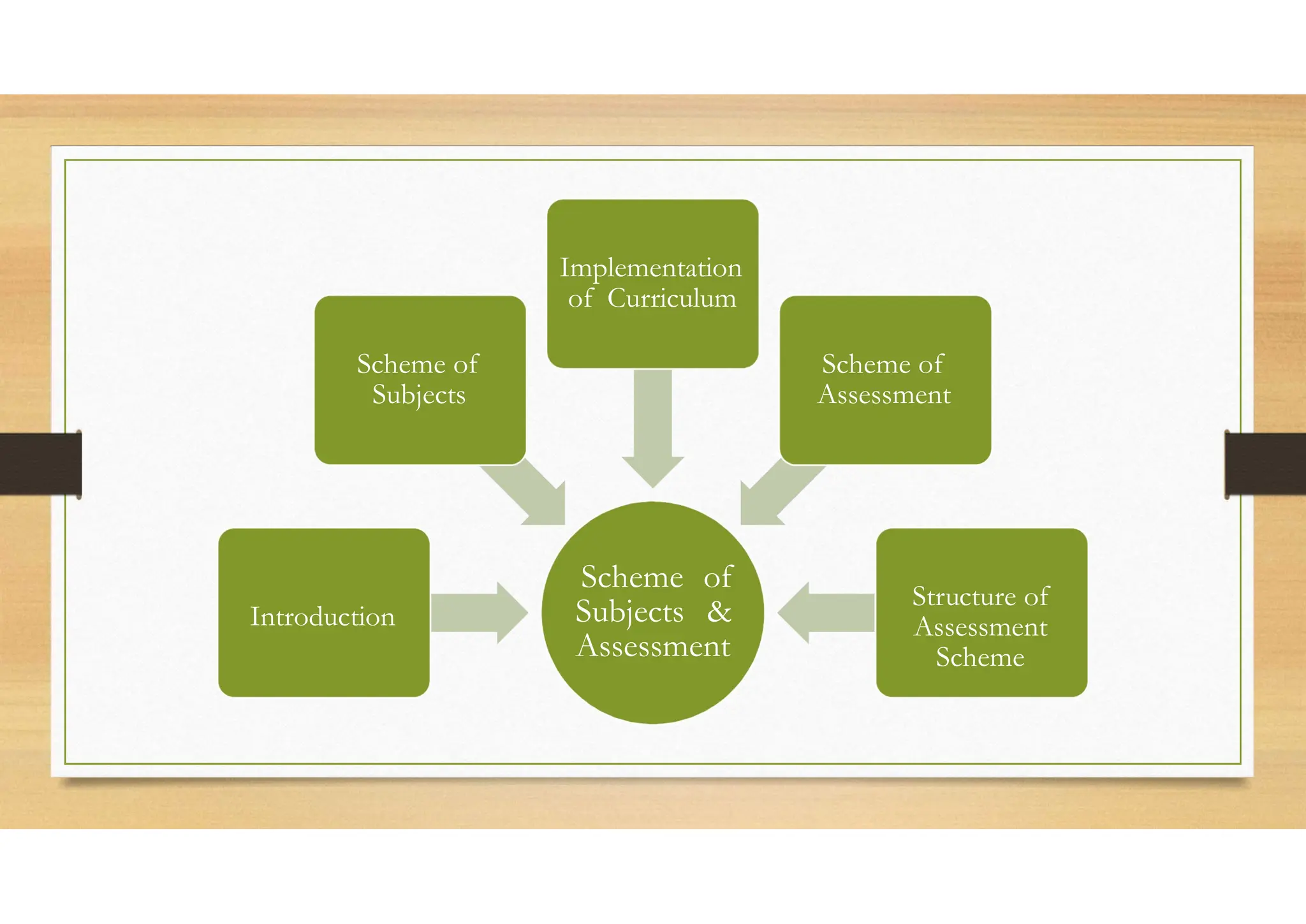
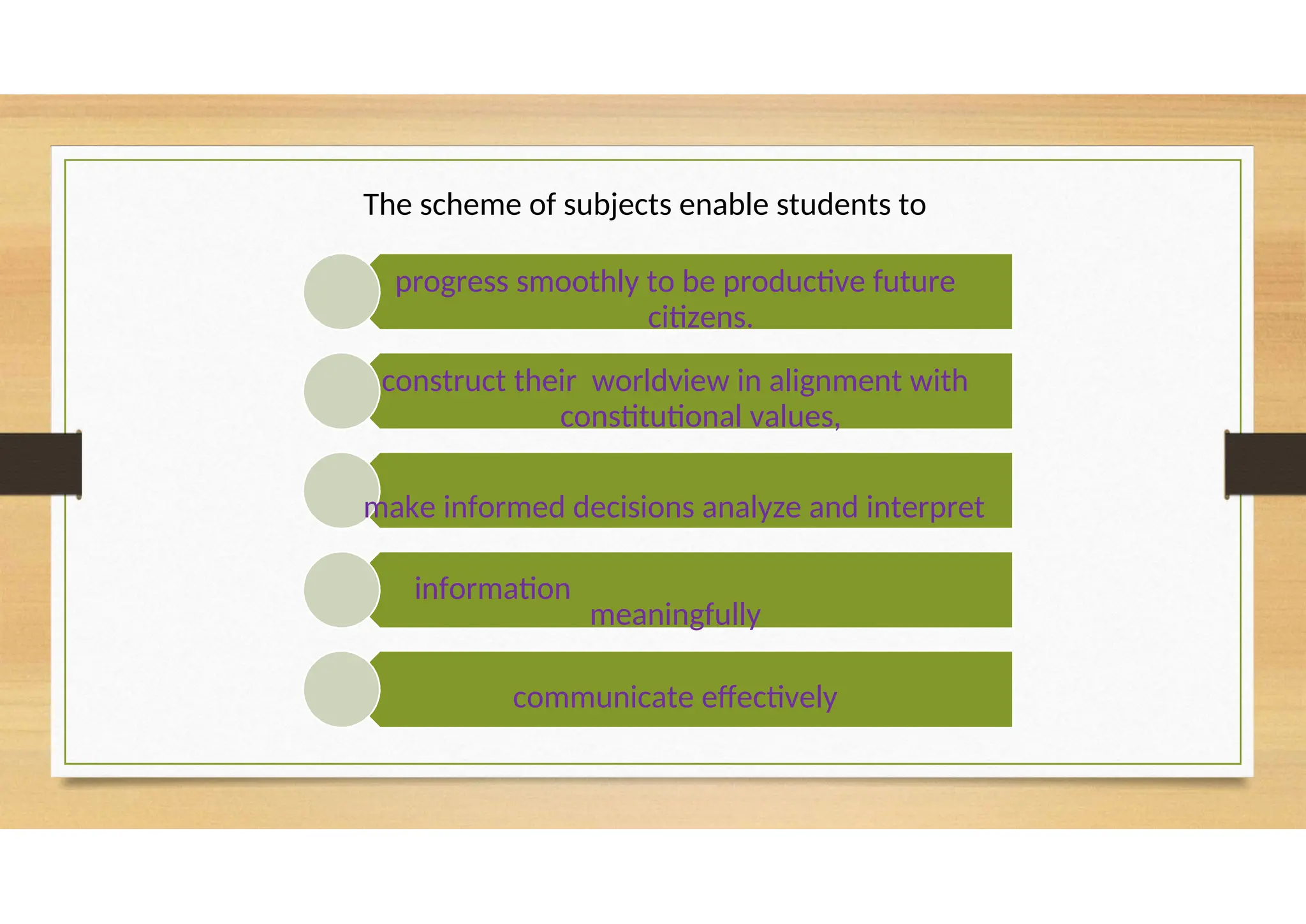
The scheme ofsubjects enable students to
progress smoothly to be productive future
citizens.
construct their worldview in alignment with
constitutional values,
make informed decisions analyze and interpret
information
meaningfully
communicate effectively
7.
CBSE hopes thatschools will try to align the curriculum in a way children
feel more connected to it and employ their learning in real-life contexts.
To achieve this aim, it is essential that children acquire adequate
knowledge and skills in other core areas like Health and Physical
Education, Life Skills, Values Education, Art Education, Financial Literacy,
Digital Literacy, and Work Education.
8.
CBSE envisions theall-round development of students
in consonance with the holistic approach to
education. Hence, done away with artificial boundaries
between the co-curricular and the curricular domains.
11.
The curriculum islearner-centered enabling the learners to acquire various
skills; building self-concept, a sense of enterprise, aesthetic sensibilities, and
sportsmanship.
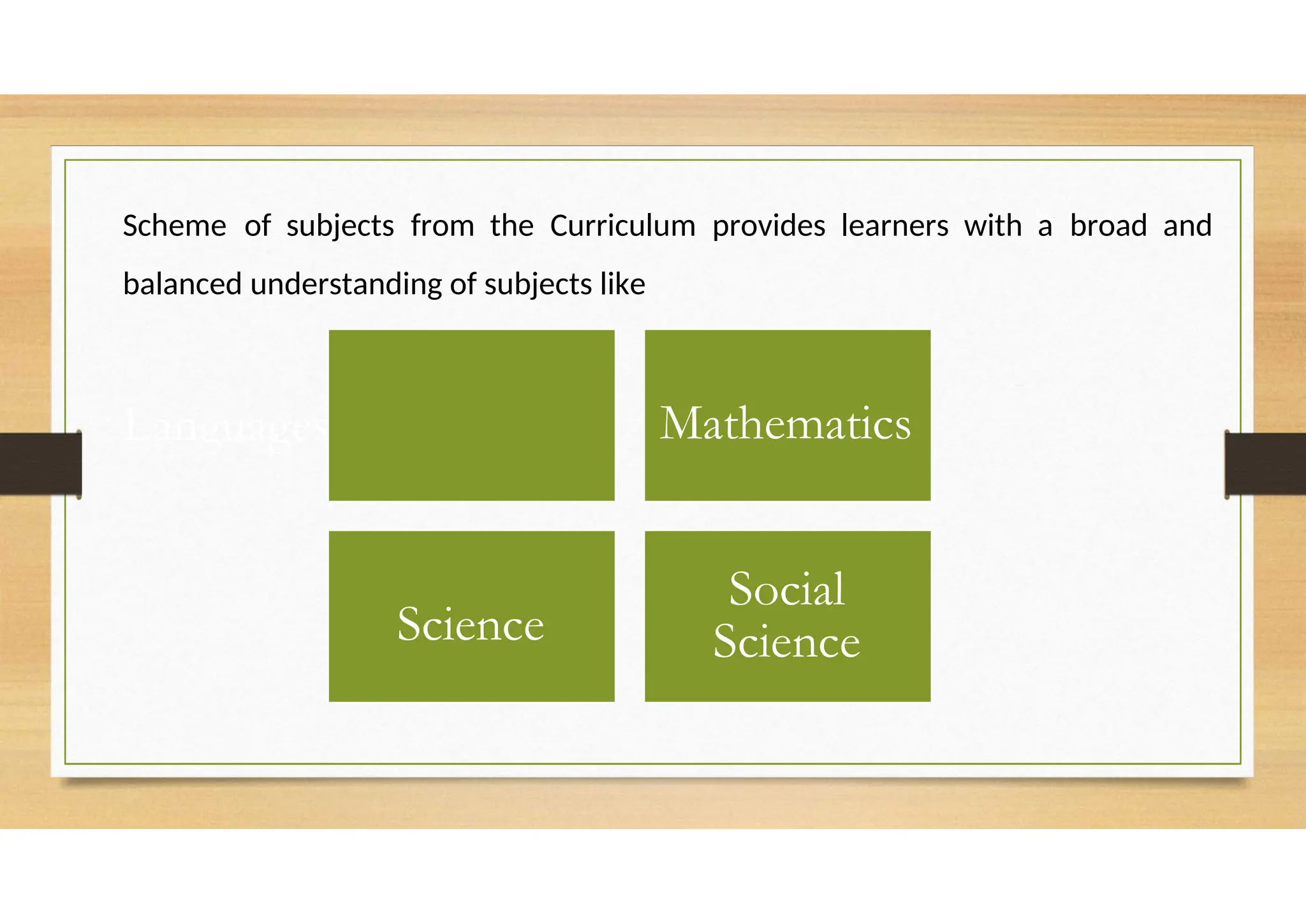
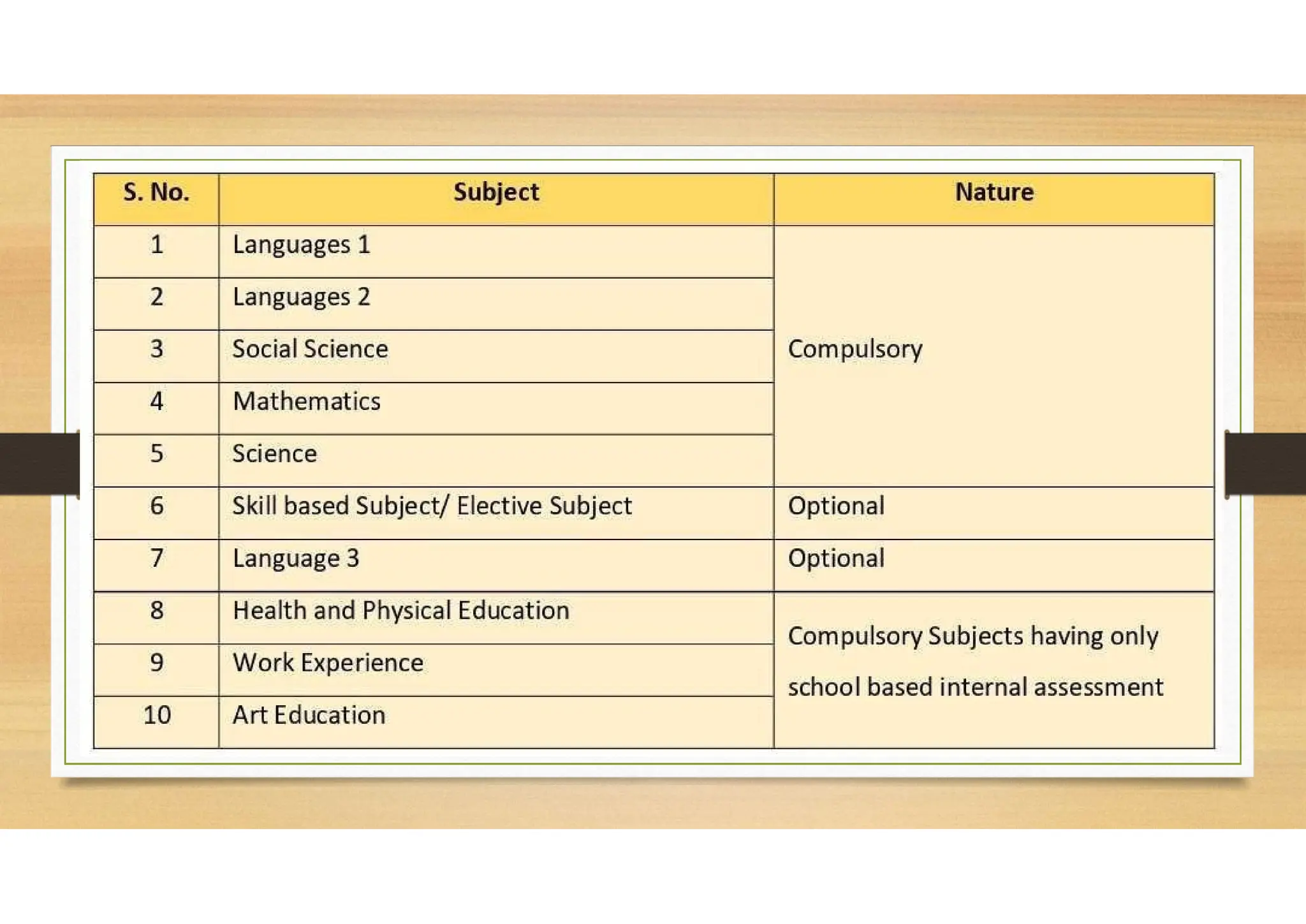
Hence, to foster core competencies in learners, the curriculum incorporates
major learning areas or scheme of subjects as under:
12.
Languages:
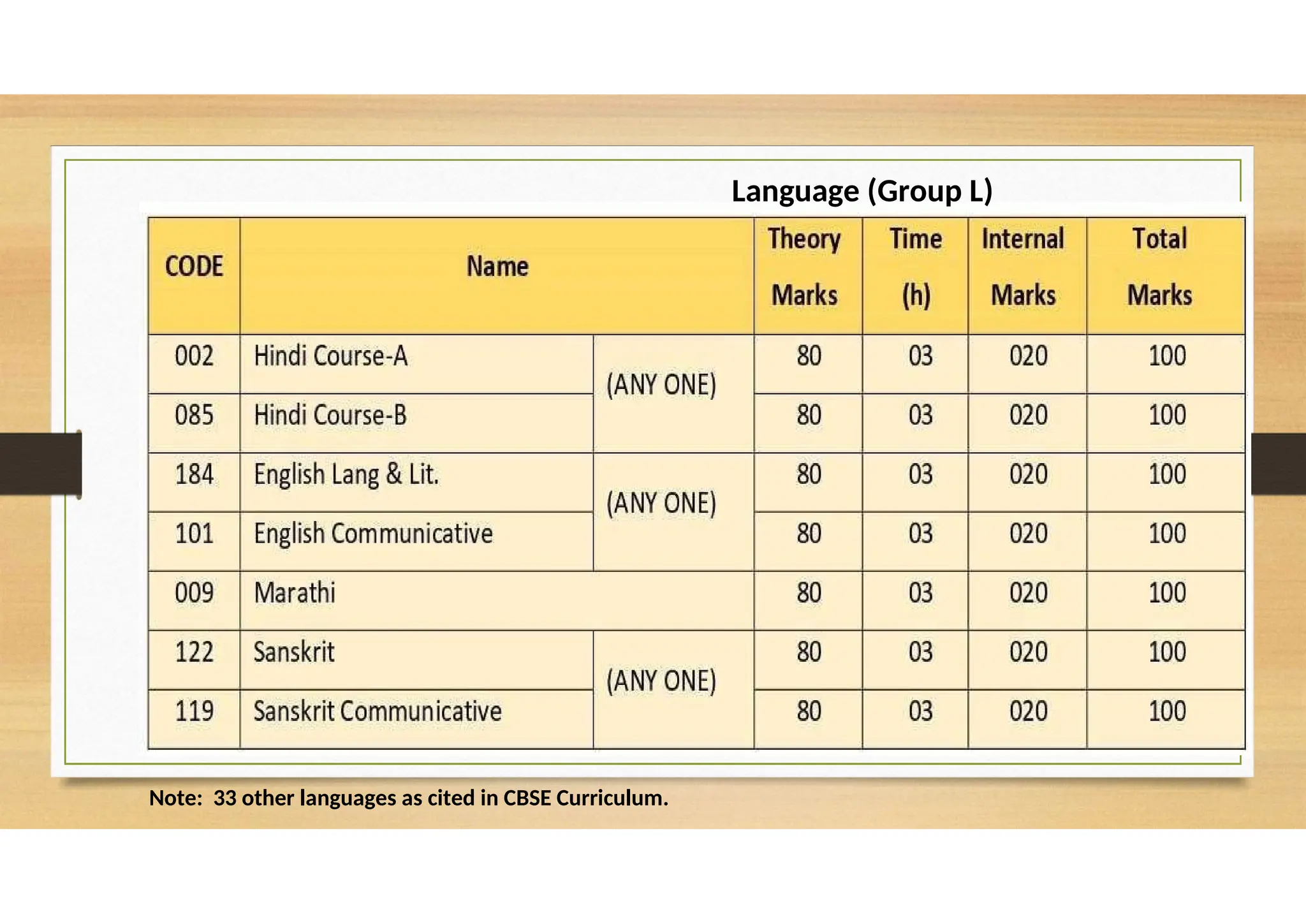
Languages include Hindi,English and 38 other languages. The curricula in languages
focus on listening, speaking, reading and writing skills and, hence, develop effective
proficiencies in all these areas.
Learners use language to comprehend, acquire and communicate ideas in an
effective manner.
CBSE also encourage schools to provide a multilingual and multicultural
experiences to promote national integration
13.
Social Science:
Social Science(Geography, History, Economics and Political Science) making
the learners understand how people behave, interact and influence the
world within their cultural, geographical and historical milieus and gain
in- depth knowledge, attitude, skills and values necessary to bring
about transformation for a better world.
It aims to develop the ability to analyse complex social, political, historical,
economic and environmental issues, think critically, assess different
solutions, etc.
14.
Science:
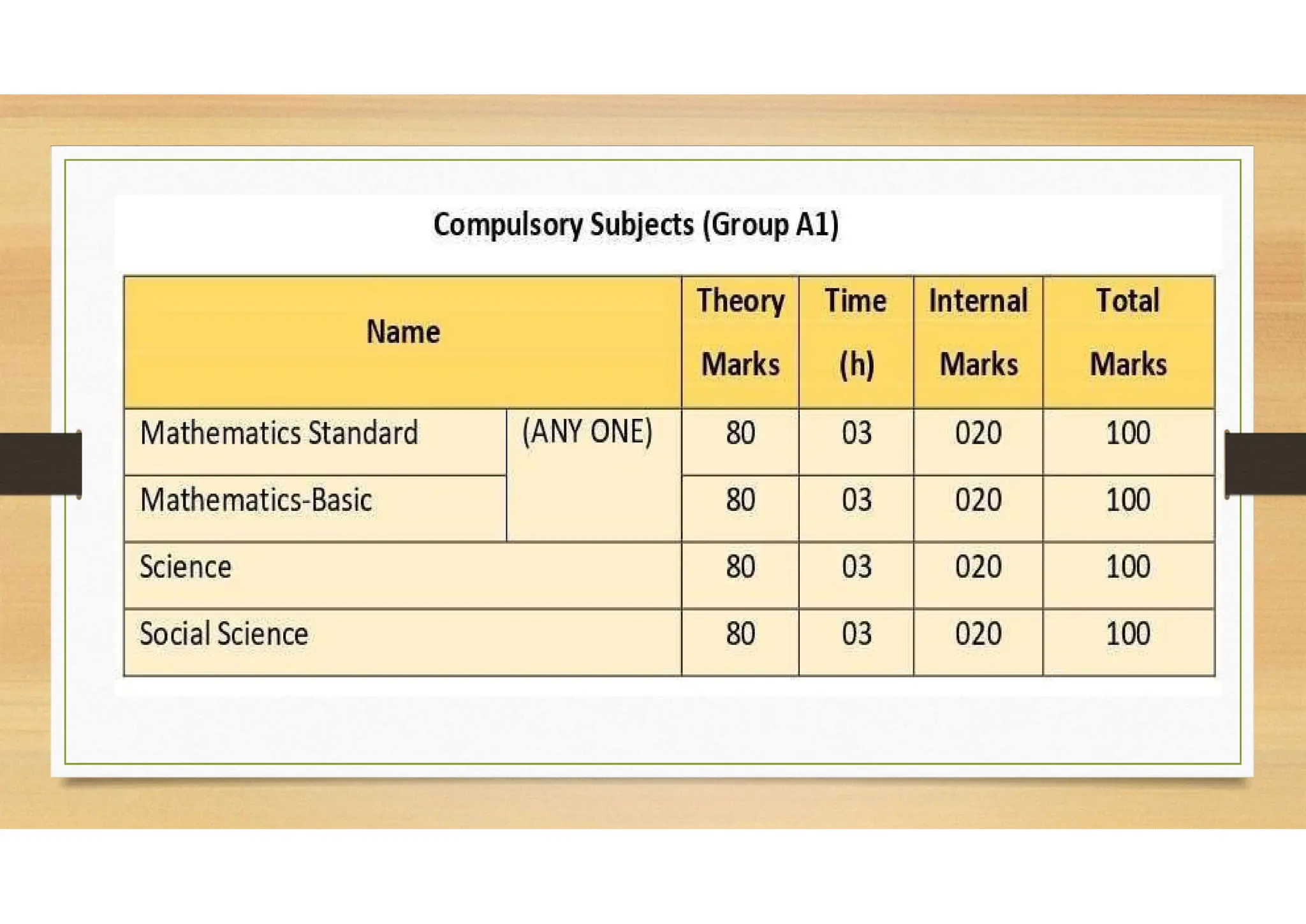
Science: (Biology, Chemistryand Physics) seeks to explain the rules that
govern the natural phenomenon through scientific methods.
The focus is on knowledge and skills to develop a scientific temper and to use
and apply scientific knowledge for improving the quality of life.
The Curriculum promotes the ability to engage with science related
issues, and with the ideas of science, as a reflective citizen by being able to
explain phenomena scientifically, evaluate and design scientific enquiry, and
interpret data and evidence scientifically.
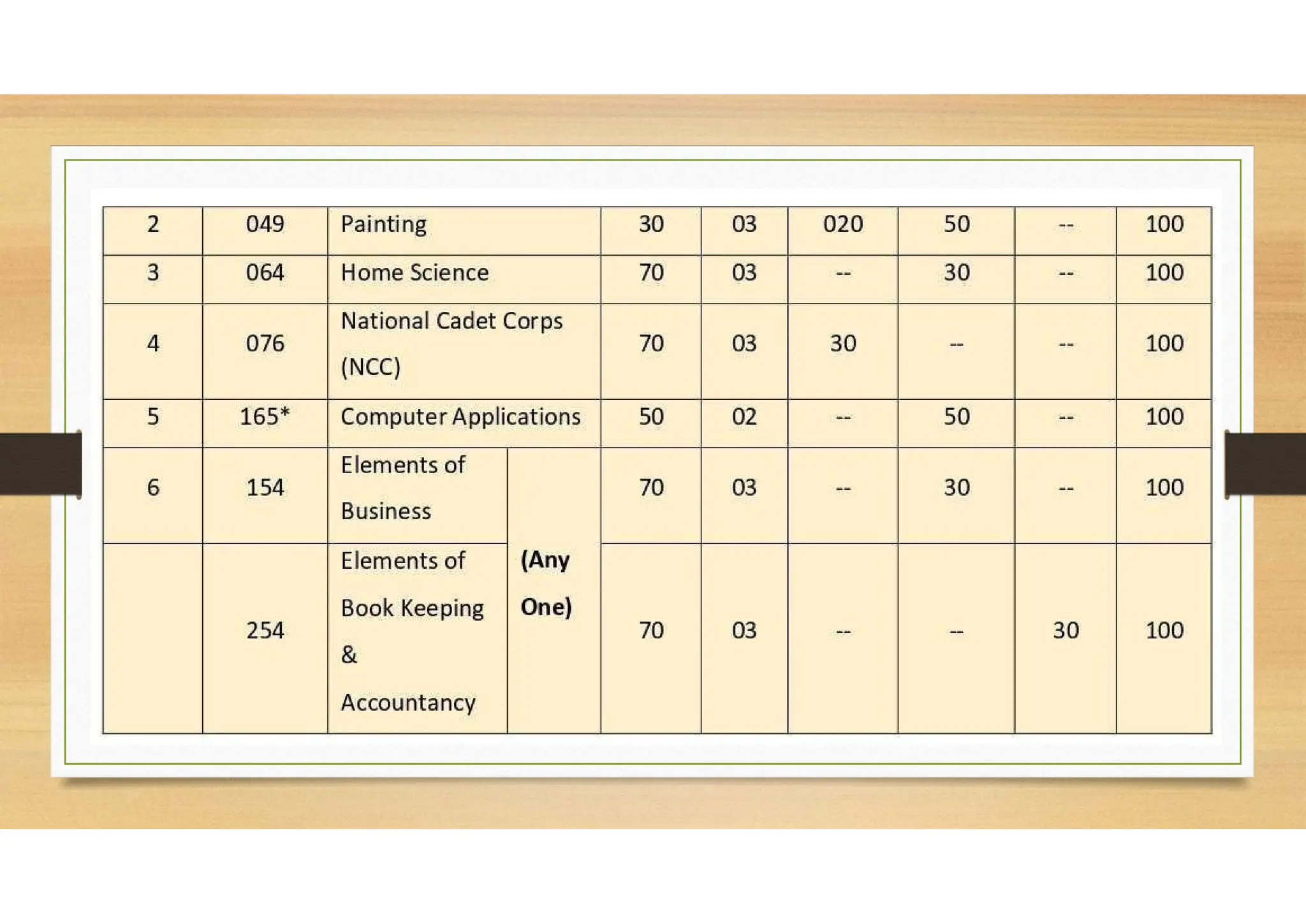
15.
Mathematics
Mathematics is theabstract science of number, quantity, and space, either
as abstract concepts, or as applied to other disciplines such as
sciences, technology and engineering.
Mathematics includes acquiring the concepts related to number sense,
operation sense, computation, measurement, geometry, probability and
statistics, the skill to calculate and organize, the ability to apply
this Knowledge and acquired skills in their daily life and the skills to
think mathematically.
16.
It also includesunderstanding of the principles of reasoning and problem
solving.
Children learn to rationalize and reason about pre-defined arrangements,
norms and relationships in order to comprehend, decode, validate
and develop relevant patterns Mathematics is offered at two different
levels i.e. Mathematics (Basic) & Mathematics Standard to suit needs
of different learners.
17.
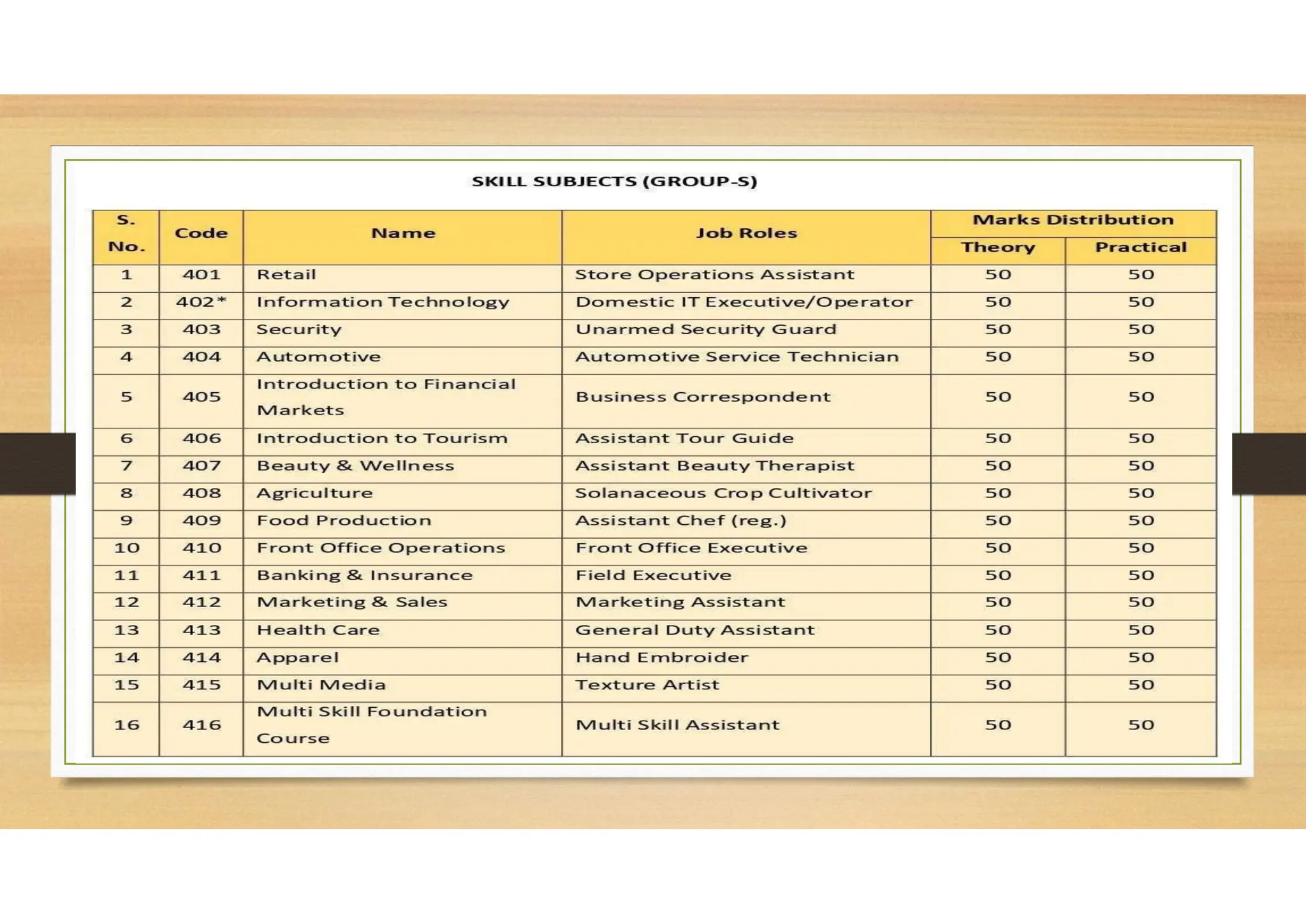
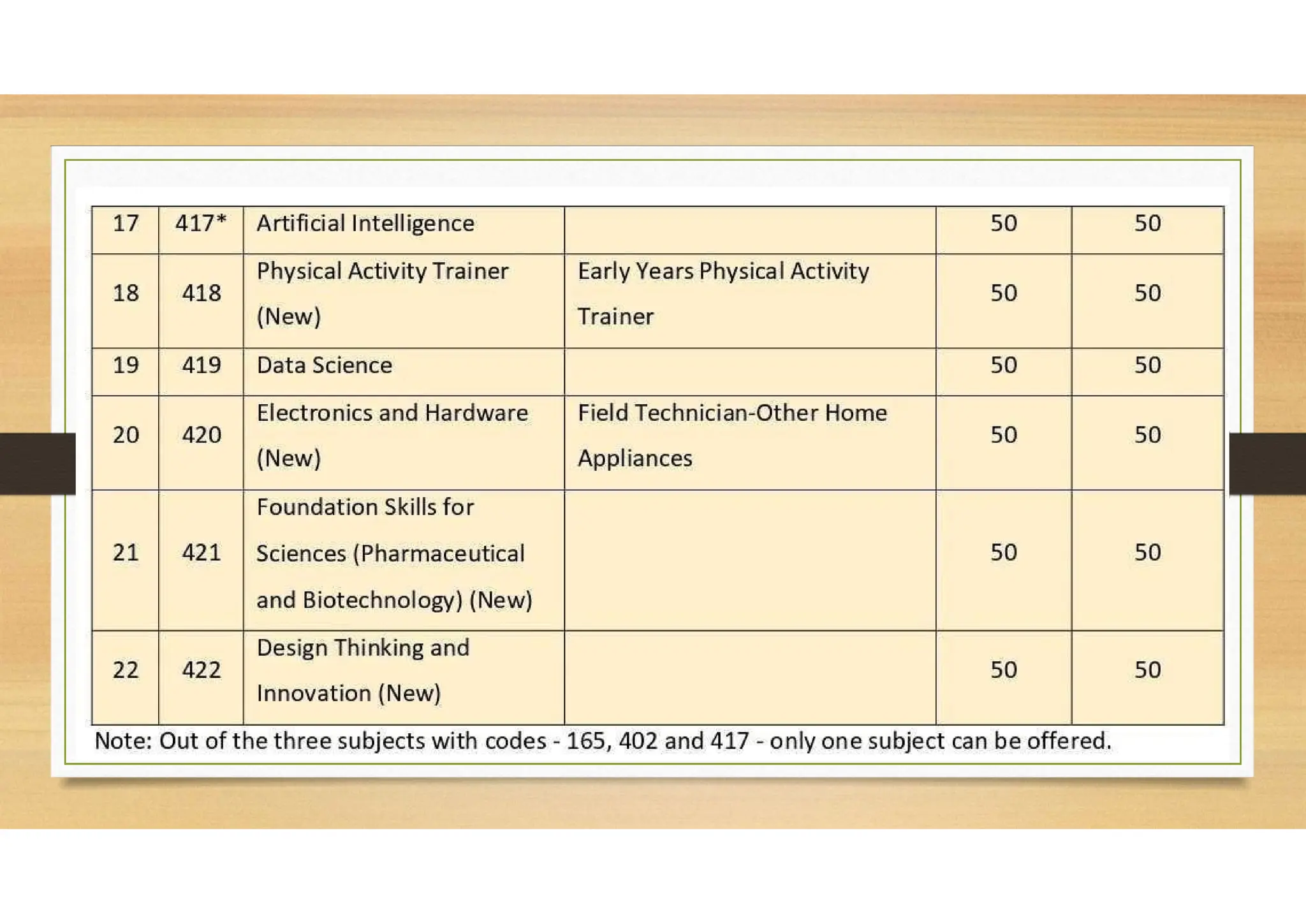
Skill Electives:
CBSE offersvariety of competency-based subjects under NSQF
like Retail, Information Technology, Marketing & Sales, Banking,
Finance, AI etc. Choosing any one Skill subjects at secondary level
can help the child to pursue what truly interests or pleases him or
her.
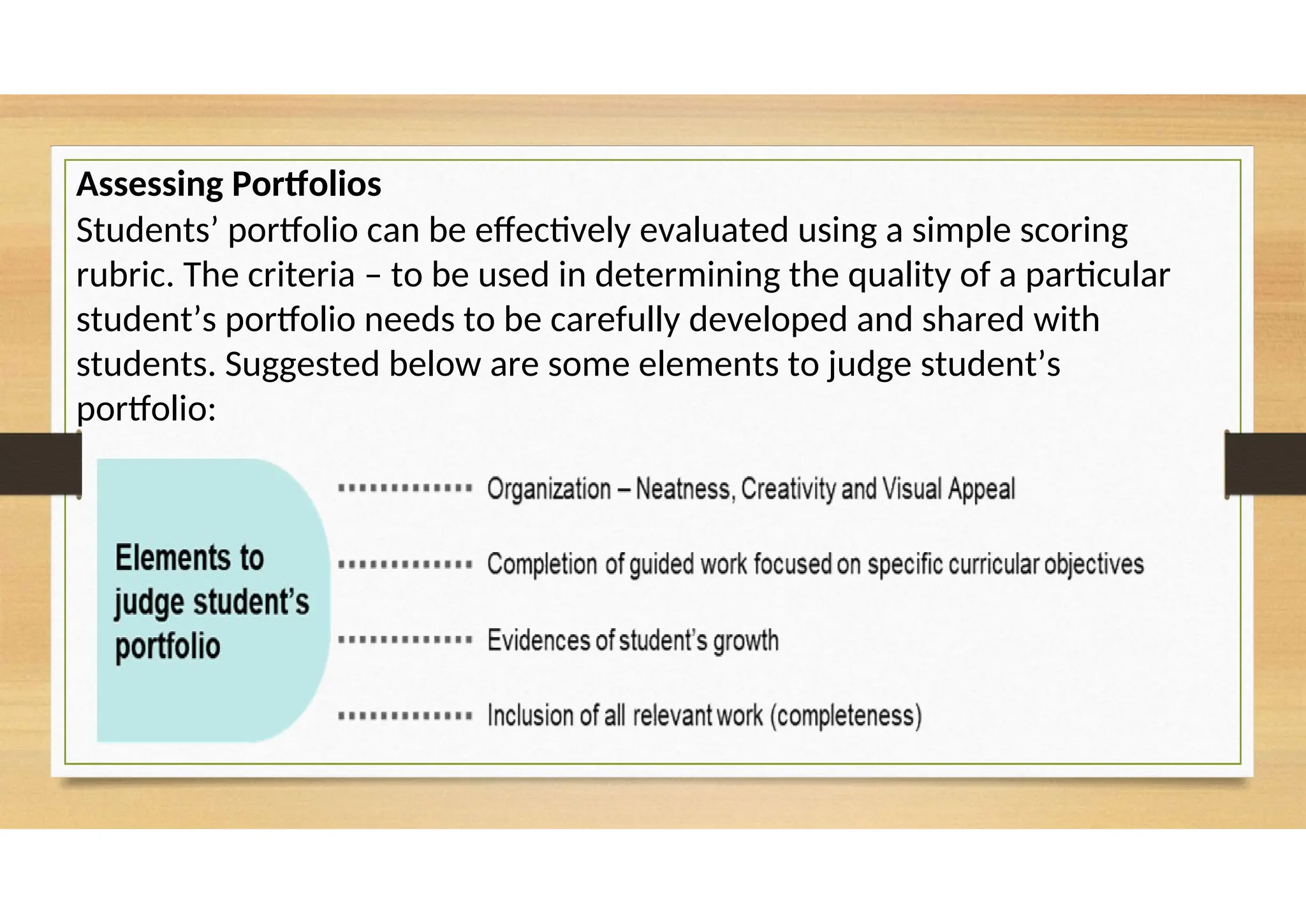
The curriculum and the study material for the Skill Electives is
available on the CBSE academic website under the tab ‘Skill
Education’
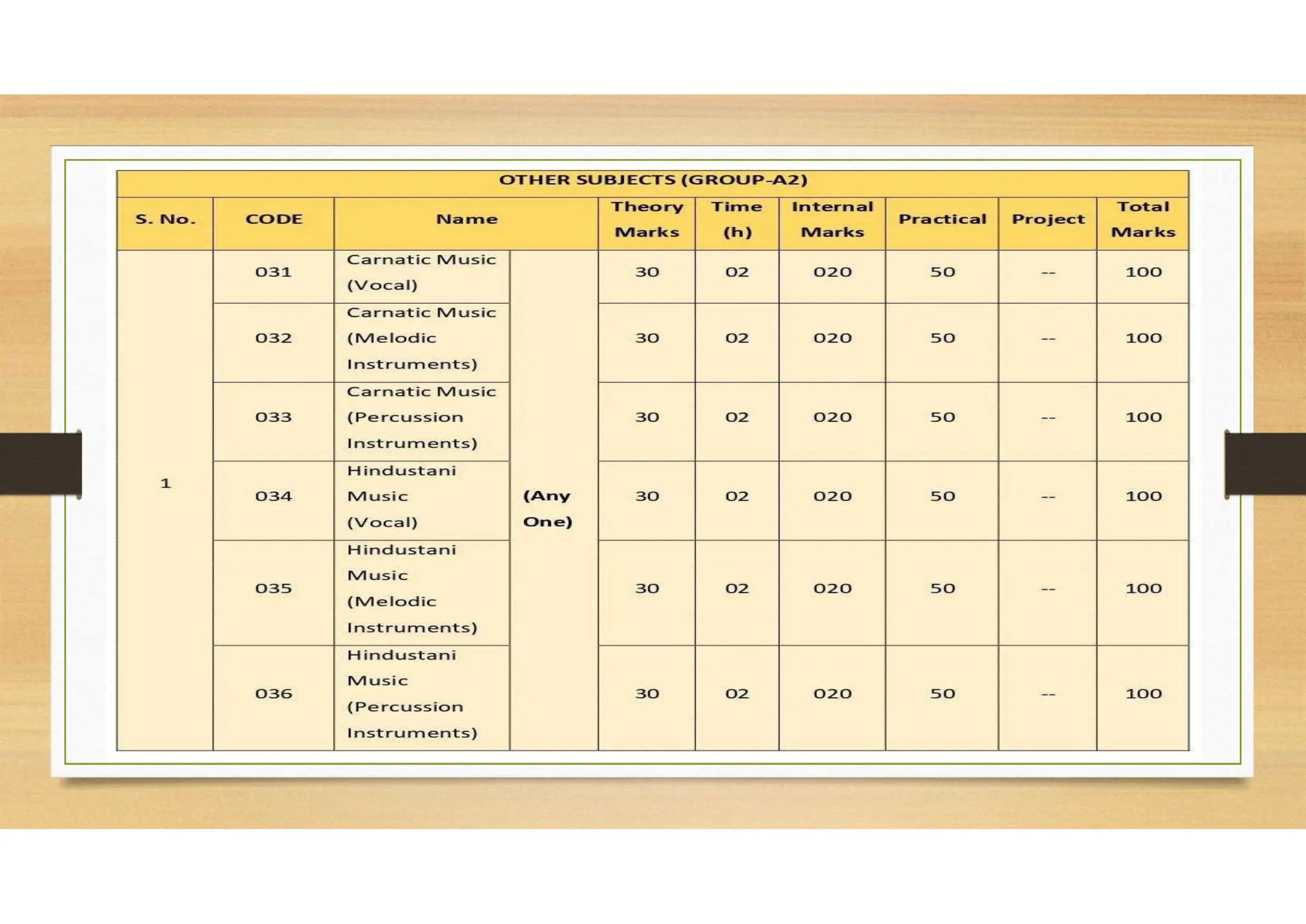
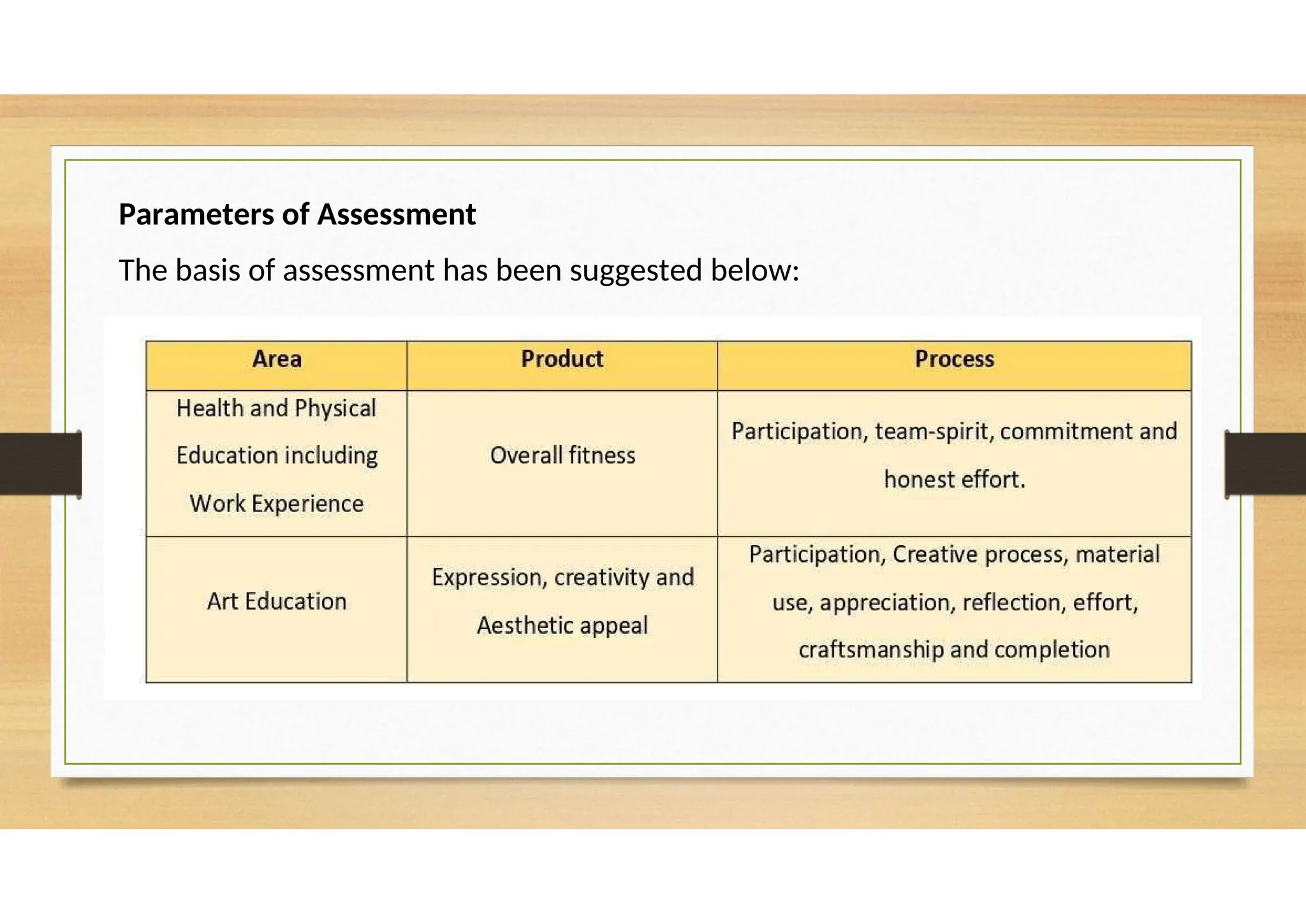
18.
Art Education:
It entailsinstruction in various art forms (visual as well as
performing) with an aim to help children develop an interest in arts
by promoting imagination, creativity, valuing arts and cultural heritage.
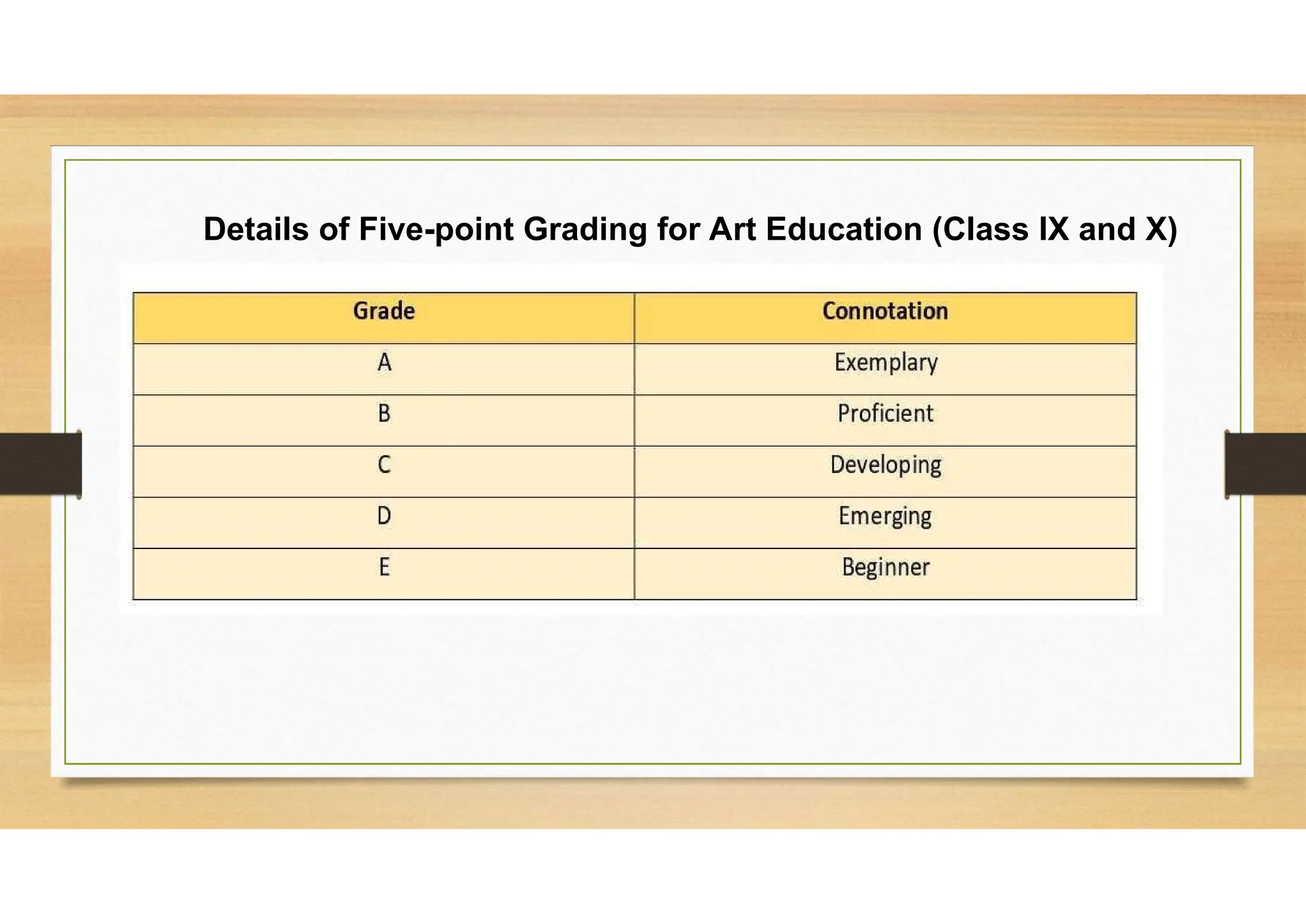
In addition, Arts should be integrated with other subjects to promote
creative thinking and expression
19.
Health and PhysicalEducation:
It focuses on holistic development of learners. It focuses on the importance of
physical fitness, health, wellbeing and the factors that contribute to them.
Focus of this area is on helping children develop a positive attitude and
commitment to lifelong, healthy active living and the capacity to live satisfying,
productive lives with the help of health management, indigenous sports, Yoga,
NCC, self-defence, fitness and life style choices.3
20.
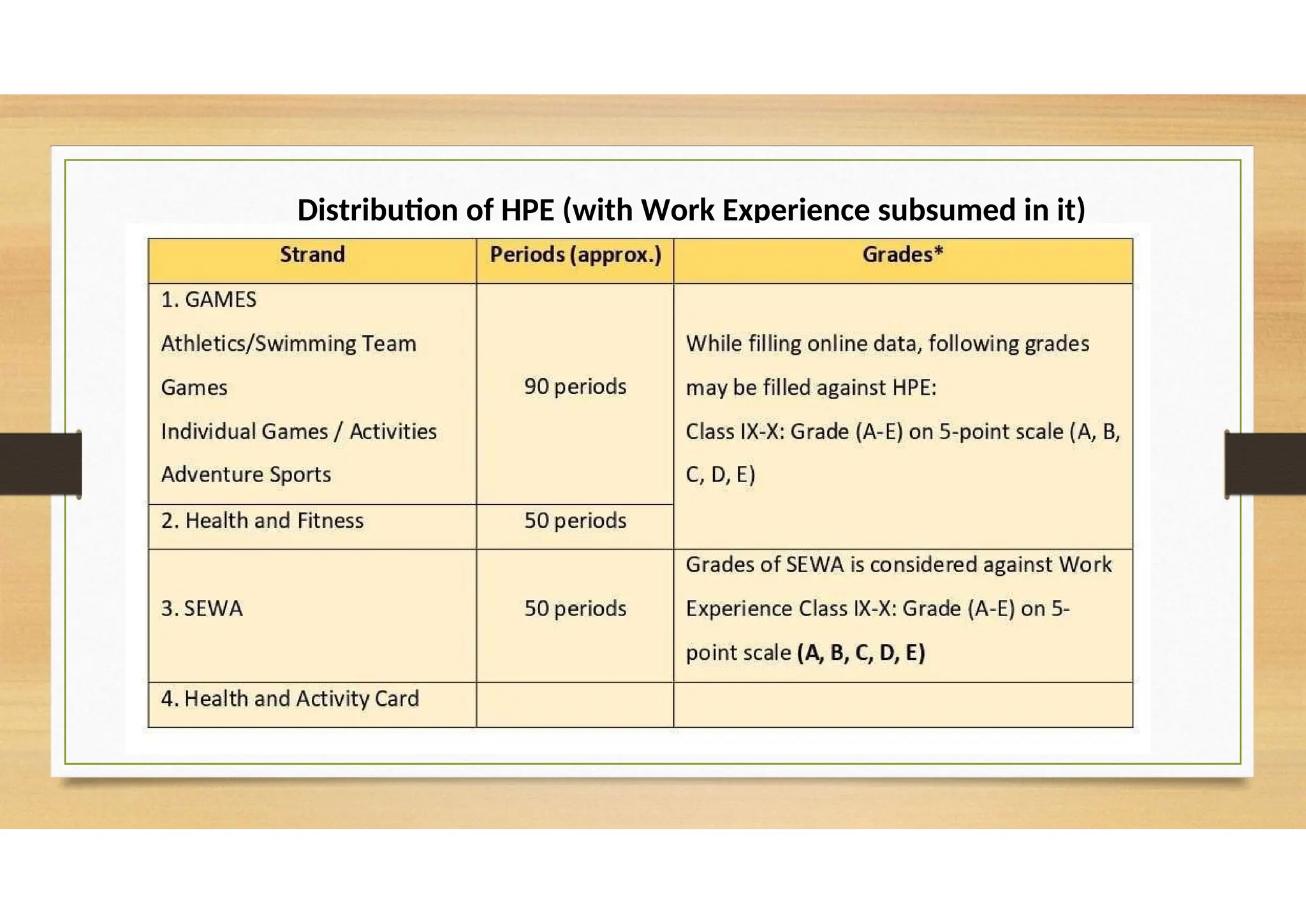
Work Experience:
The WorkExperience has been subsumed in the Health and
Physical Education; however, it is an integral part of the curriculum
and is given as much as focus as Health and Physical Education.
21.
Integrating All Areasof Learning:
All these eight areas are to be integrated with each other in terms of
knowledge, skills (life and livelihood), comprehension, values and attitudes.
Children should get opportunities to think laterally, critically, identify
opportunities, challenge their potential and be open to new ideas.
22.
Children should beengaged in practices that promote physical, cognitive,
emotional and social development and wellbeing, connect different areas of
knowledge, application and values with their own lives and the world around
them.
The holistic nature of human learning and knowledge should be brought
forth while transacting the curriculum to make them good citizens
24.
School Curriculum Committee:
CBSEmandates to setup a School Curriculum Committee comprising teachers
from each area.
It would define activities for pedagogical practices, evolve a plan of
assessment and mechanism of feedback and reflection and ensure its
implementation.
It would also ensure that the textbooks/ reference materials are age appropriate,
incorporate inclusive principles, gender sensitive, have valid content and do
not contain any material which may hurt the sentiments of any community.
25.
It will sendthe list of books to the principal to take action as per para 2.4.7 (b)
of the Affiliation Byelaws, 2018.
The committee would also ensure that the reference materials
reflect conformity with the underlying principles of the Constitution of India
and are compliant with NEP-2020.
26.
Pedagogical Leadership:
School Head/Principalis the pedagogical leader of their school. All
Principals have a crucial role to play in the evolution of the teaching
learning ecosystem as the Head and pedagogical leader of their
schools.
27.
Role of thePedagogical Leader:
1.Guide and Support the teaching and learning processes in the school by focusing
on classroom specific requirements for transacting the curriculum, so that both
teachers and students perform at their optimal best.
2.Direct the entire focus of all school activities towards the students’ learning and
acquiring of necessary competencies. Every activity taken up by the school,
therefore, should be mappedfor the educational competencies, and for life skills,
values, etc., being acquired by the students.
28.
3.Prepare Annual PedagogicalPlan of the school by designing and developing
annual plan for the school by giving equal importance to all areas
4.Promote innovative pedagogy, with special focus on integrating art, sports
and ICT (Information and Communication Technology) with education, and use
of active and experiential learning methods in the classrooms.
5.Ensure joyful learning at all levels through use of such innovative pedagogy.
29.
6.Develop school specificresources for teaching and learning, in the form of
lesson plans, e- content, use of mathematics and science kits developed by
NCERT, etc.
7.Ensure proper in-house training of teachers in the school to enable them to
unleash their own unique capabilities and creativity in their classrooms.
30.
8.To be upto date with all new ideas and tools, etc. being used in education at the
global leveland constantly innovate the pedagogy of the school.
9.To make efforts to learn from the best practices of other schools, by arranging for
discussionswith Principals of such schools, or through observation visits of teachers to
other schools.
31.
CBSE has notlaid down the structure or format of the annual
pedagogical plan. Schools have the autonomy to prepare its own unique
and innovative annual plan.
This plan must be an implementable one with realistic timelines that
should include administrative inputs and detailed pedagogical aspects.
32.
Pedagogical Practices byTeachers:
The pedagogical practices should be learner centric.
Teachers are expected to ensure healthy atmosphere for students where they
feel free to ask questions.
They would promote active learning among students with a focus
on reflections, connecting with the world around them, creating and
constructing knowledge.
33.
The role ofa teacher should be that of a facilitator who would
encourage collaborative learning and development of multiple skills.
Teachers should follow inclusive principles and not label children as
‘slow learners’ or ‘bright students’, or ‘problem children’.
They should instead attend to the individual difference
of students by diagnosing and modifying their
pedagogic planning.
34.
Competency Based Learning:
Challengesof 21st Century necessitates education to be competency based.
It enables continuous watch on achievement of learning objectives and
plan interventions.
Competency based learningunderscores the student’s
demonstration of desired learning outcomes as central to the learning
process.
Therefore, the focus is on measuring learning through attainment of prescribed
learning outcomes.
35.
Experiential and activelearning are the preferred pedagogies for Competency based
Learning. They promote critical thinking, creativity and effective study skills among
students.
The schools are expected to have well-defined Learning objectives for every grade that are
observable and measurable, and empower learners to focus on mastery of valuable skills
and knowledge.
Teachers are expected to provide meaningful and joyful learning experiences through
innovative pedagogies.
Schools are expected to track the attainment of Learning Outcomes by each learner and
ensure that no child is left behind.
CBSE has also come out with suggestive mapping of learning outcomes with NCERT
curriculum.
Classroom and SchoolEnvironment:
School environment should be conducive to holistic
development of the students of varying backgrounds.
As part of their policy schools should adopt the guidelines issued by CBSE on
making the school a No-Anger Zone or Anger Free Zone.
The time table in the school should take care of proper rest and the children
learn subjects with relaxation.
38.
School must alsoensure that Children avoid the intake of junk food and should ban
it around school premises.
Intake of the healthy foods should be encouraged with activities described
in circular issued by CBSE. The Board has also developed school health manuals.
Teachers need to encourage group activities,
presentations and reflection to develop the skills of critical thinking
and communication.
39.
To promote peerlearning, flexible seating arrangements may be made
available during the classroom transactions. The seating should also take
care of the needs of the students with disabilities as well.
Learning should focus on individual differences and promote
collaborative learning.
The classroom activities must be connected to the immediate
environment of children.
40.
Creating Cross CurricularLinkages:
Creating cross-curricular linkages are vital to learning as they help to
connect
prior knowledge with new information.
For example, Mathematical data handling and interpretation can be effectively
applied in geography and science.
Children can write better-framed answers in history, geography and science
when they have learnt how to write explanations/ short descriptions in a
language.
41.
The school shouldmaintain connection with the parents and the progress
of children should be communicated to the parents, and, if
needed remedial measures be taken up for improving the learning
outcomes.
42.
Special Emphasis onIntegration of Arts in Education:
When Art is integrated with education, it helps the child apply art-based enquiry,
investigation and exploration, critical thinking and creativity for a deeper
understanding of the concepts/topics.
Art Integrated learning is a strong contender for experiential learning, as it
enables the student to derive meaning and understanding, directly from the
learning experience.
43.
It not onlymakes the teaching and learning process joyful, it also has a positive
impact on the development of certain life skills, such as communication, reflection,
enquiry, etc.
It leads to higher confidence, self-esteem, appreciation for aesthetics and
creativity, etc.
It broadens the mind of the student, and enables him/her to see the multi-
disciplinary links between subjects, topics, and real life.
44.
Art Integrated Pedagogy:
Whilepreparing its annual pedagogical schools must plan out in detail the Art
Education to be imparted at various levels, and how that Art can be integrated
with classroom learning of various subjects.
The focus must be on mutually reinforcing Art as a subject and Art as a tool for
learning, with efforts towards seamless integration.
Team teaching (combination of subject teachers and Art teachers) would also
strengthen the integration.
45.
The teacher cando this jointly with the Art teacher. The subject teacher
can collaborate with the Art teacher to align the pedagogy.
Teacher can teacher the topic/concept/idea ensuring active learning
and ensuring that both the subject and Art are integrated well and there is
learning in both areas.
The teacher prepares a rubric to assess the student in both the areas – that is,
the topic taught and the Art used.
46.
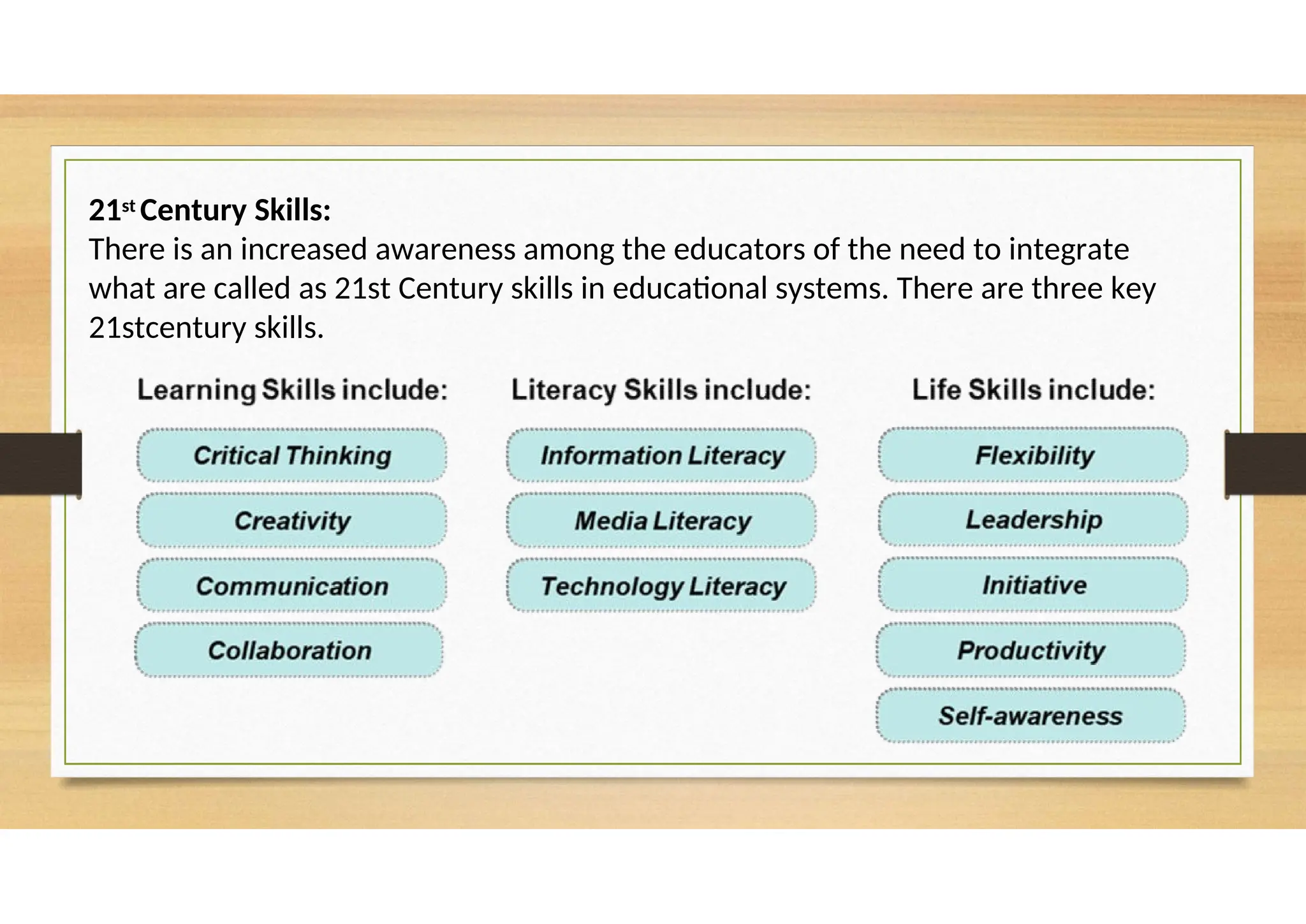
21st Century Skills:
Thereis an increased awareness among the educators of the need to integrate
what are called as 21st Century skills in educational systems. There are three key
21stcentury skills.
47.
Inclusive Education:
Inclusive approachin education is a prerequisite for ensuring full participation
of all students with equal opportunity in all areas without any discrimination.
Inclusive attitude in all staff and faculty members
is crucial for successful inclusive education.
Therefore, all the members of teaching and non- teaching staff and
students without disabilities should be sensitized.
48.
Schools must organizethese sensitization programmes with the support
of experts from respective field of disabilities.
Special Educators must possess the qualification as prescribed
Rehabilitation Council of India (CBSE Circular No. 31/2015).
by the
CBSE has published a handbook on Inclusive Education which is available at
its website.
49.
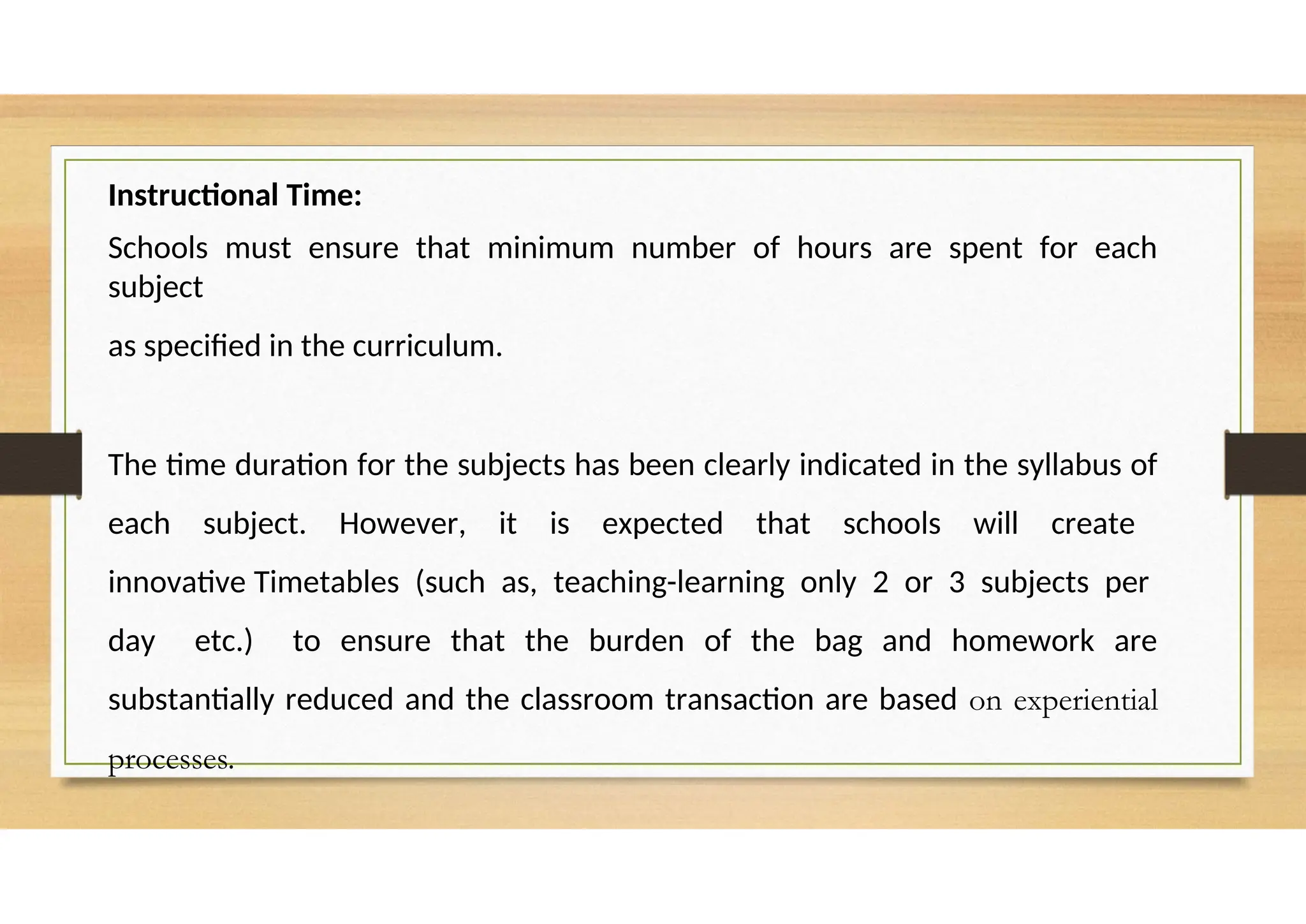
Instructional Time:
Schools mustensure that minimum number of hours are spent for each
subject
as specified in the curriculum.
The time duration for the subjects has been clearly indicated in the syllabus of
each subject. However, it is expected that schools will create
innovative Timetables (such as, teaching-learning only 2 or 3 subjects per
day etc.) to ensure that the burden of the bag and homework are
substantially reduced and the classroom transaction are based on experiential
processes.
50.
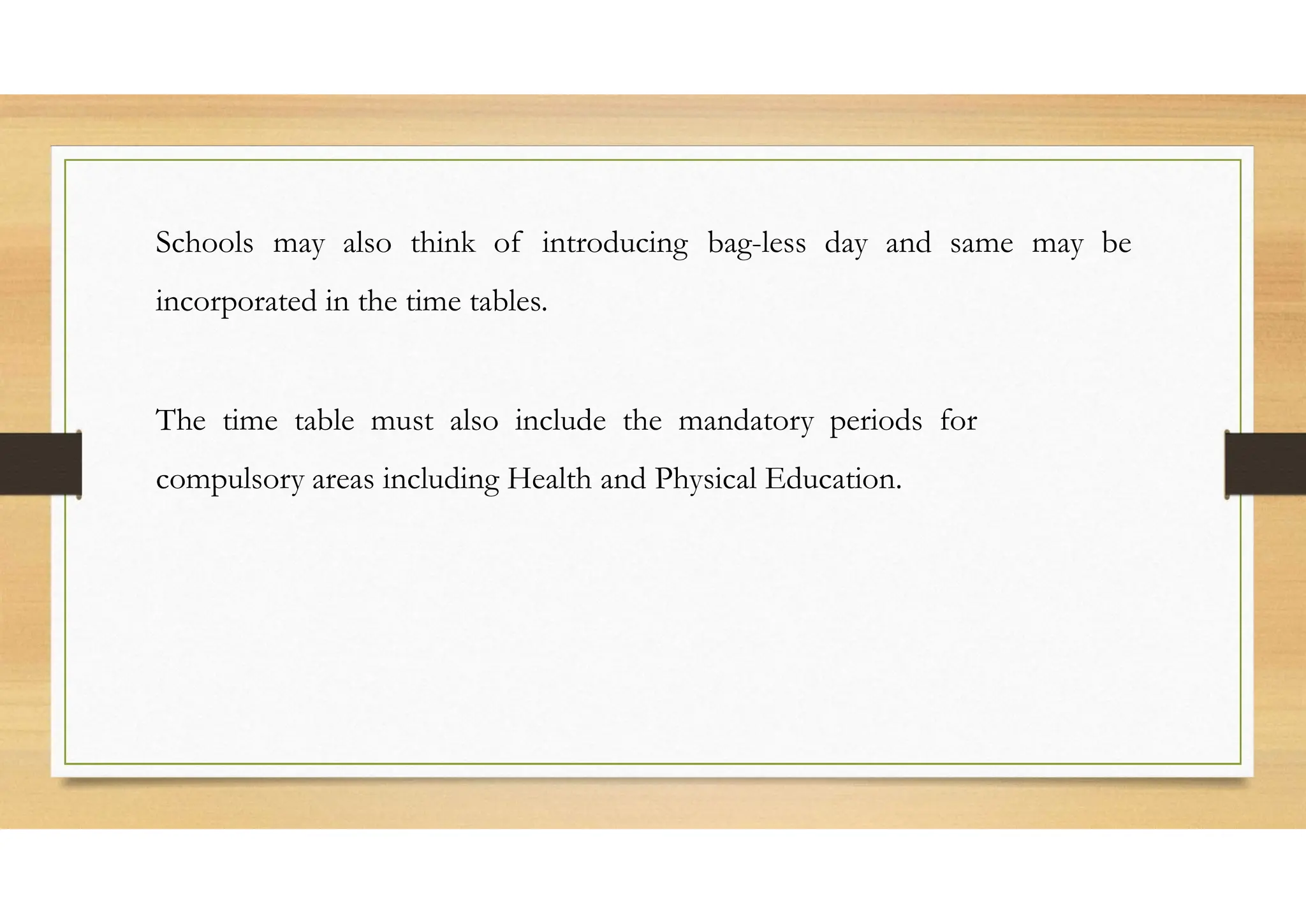
Schools may alsothink of introducing bag-less day and same may be
incorporated in the time tables.
The time table must also include the mandatory periods for
compulsory areas including Health and Physical Education.
53.
Mathematics- Basic andMathematics – Standard:
The Board Examination in Mathematics is held at two levels in Class X
(Mathematics- Basic and Mathematics – Standard).
However, it is not be applicable to the internal assessment done at
the school level in class X. Syllabus for both levels is common.
54.
It may benoted that the students who are opting Mathematics - Basic
will have the option of taking Applied Mathematics (241) as an Elective at
Class XI/Sr. Secondary though they may not be permitted to take
Mathematics (041) at Sr. Secondary level.
However, a student who has opted Mathematics - standard can offer any
one of the two available Mathematics (41 or 241) at Sr. Secondary level.
55.
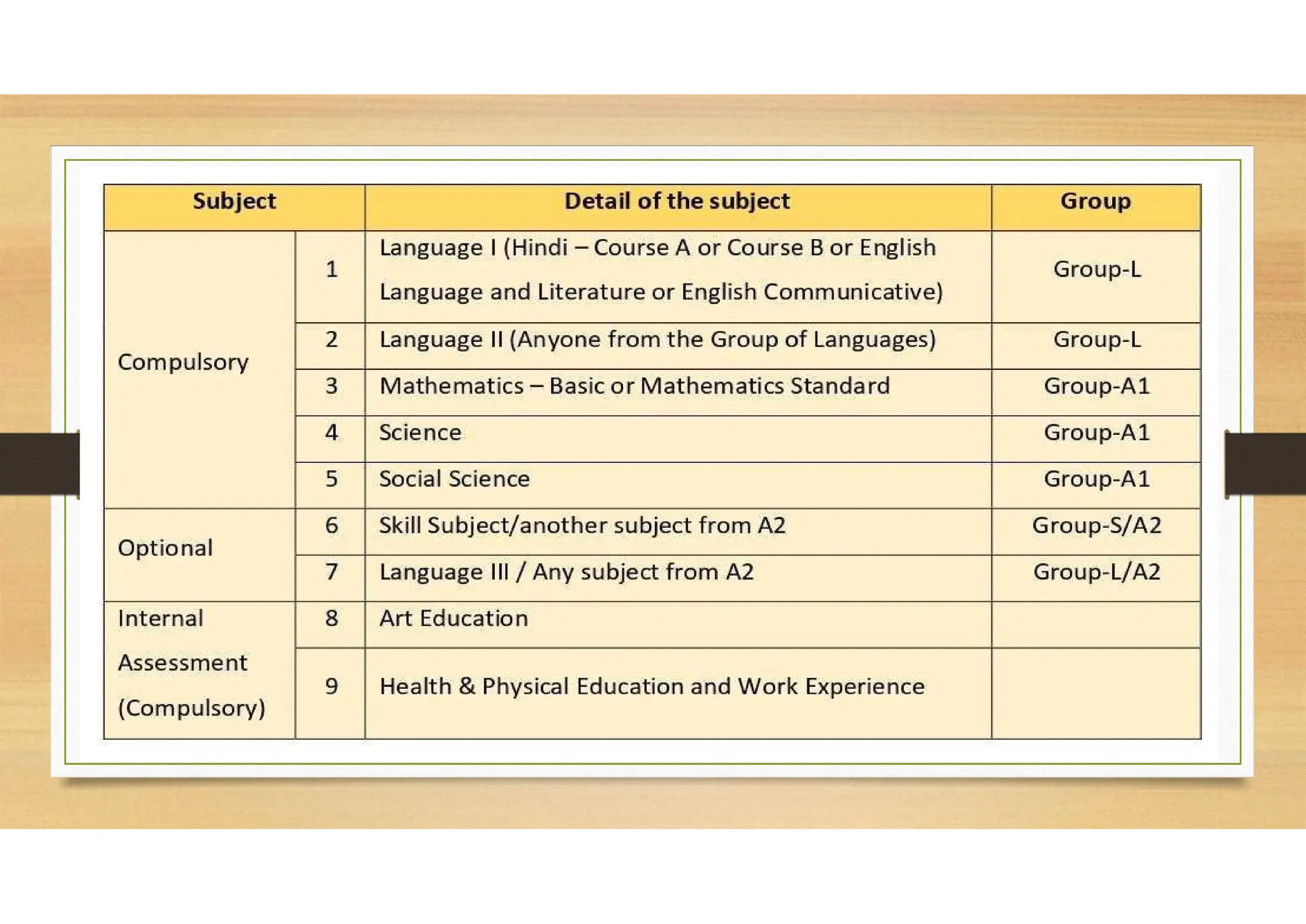
If one failsin any one of the A 1 Subjects:
If a student fails in any one of the three compulsory subjects- G
A1 (i.e., Science, Mathematics and Social Science) and passes in
the Skill subject (offered as sixth optional subject), the subject
will be replaced by the Skill subject and the result of Class X Board
examination will be computed accordingly.
56.
If one failsin any one of the Group L Subjects:
If a student fails in any language subject, out of first five subjects,
the same will be replaced by the language taken as sixth subject
(in case of no skills subjects offered) or as seventh subject
(optional), provided that he or she has passed this language and
after replacement either Hindi or English remains as a passed
language in the first five subjects.
57.
Clearing of ThirdLanguage:
It is expected that all the students should have studied three languages up
to class VIII. Those students who could not clear the third language in class
VIII and have been promoted to class IX, shall be examined by the
concerned schools at the end of Class IX in the same syllabus and textbooks
as
prescribed for class VIII.
Those who are still unable to clear the third language at the end of class IX
may be given another opportunity in class X.
58.
No student shallbe eligible toappear in the Secondary School
Examination of the Board at the end of class X unless she/he has
passed in the third language.
However, CWSN are exempted from the study of third language.
59.
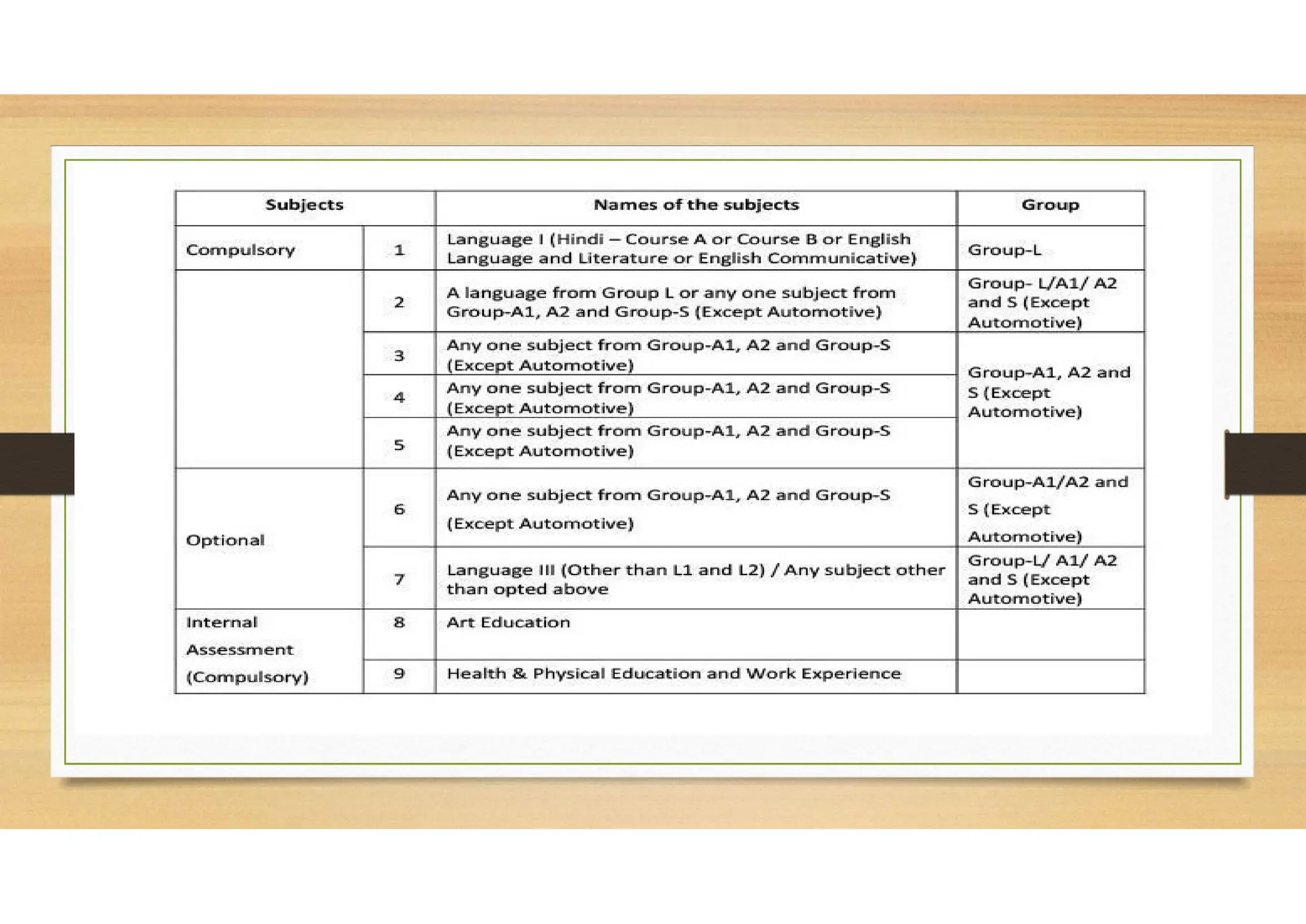
Languages in ClassIX – X:
Hindi or English must be one of the two languages to be studied in class IX and X.
Hindi and English can also be offered simultaneously.
In Hindi, two courses have been provided forclass IX and X students may either
opt for Hindi A (Code 002) or Hindi B (Code 085).
60.
Similarly English canalso be offered at two levels English Language &
Literature (184) and Communication English (101).
However, a language cannot be offered simultaneously at the two
levels such as Hindi Course A and Hindi Course B or English Language
and Literature and English Communicative etc.
61.
6th & 7thSubjects:
Students offering additional sixth or skill subject may also offer an additional
language III/ any subject as seventh subject.
Out of the three subjects - Computer Application (Code 165), Information
Technology (Code 402) and Artificial Intelligence (code 417) - only one can
be offered. A combination of any of these subjects is not permitted.
62.
Text Books forregional Languages:
For Regional Languages, the Board prescribes the textbooks being followed
in classes IX and X in the respective State Boards where the language is
taught.
Schools are also advised to bring to the notice of CBSE the changes, if any,
brought out at the commencement of the session by the respective State
Boards, in the textbooks of the language of their State.
Schoolsare directed to strictly follow the textbooks prescribed by CBSE in its
curriculum. Changes, if any, can be adopted only after CBSE notifies it.
63.
Exemptions/Concessions:
Board is extendingseveral exemptions/concessions to candidates with
disabilities as defined in the “THE RIGHTS OF PERSONS WITH DISABILITIES ACT
2016”.
Exemptions/Concessions extended to Persons with Benchmark Disabilities for
Class X & XII Examinations conducted bythe Board and the Standard
Operating Procedure for availing these concessions are availableon: https://
www.cbse.gov.in/cbsenew/Examination_Circular/2019/5_CIRCULAR.pdf
64.
Scheme of Studiesfor Children with Special Needs (CWSN):
Candidates with disabilities as defined in The Rights of Persons with
Disabilities Act 2016 have the option of studying one compulsory
language instead two.
66.
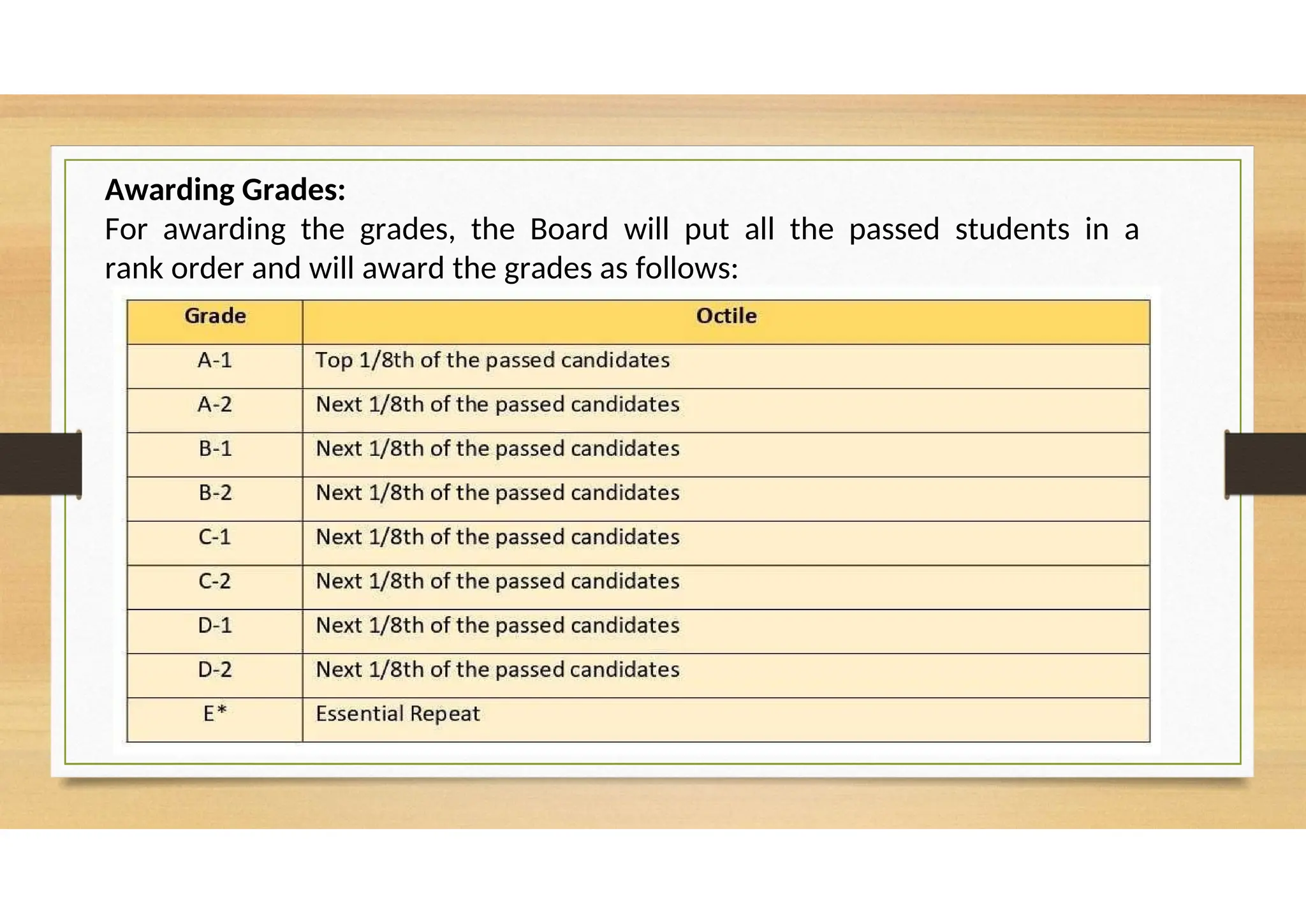
Awarding Grades:
For awardingthe grades, the Board will put all the passed students in a
rank order and will award the grades as follows:
67.
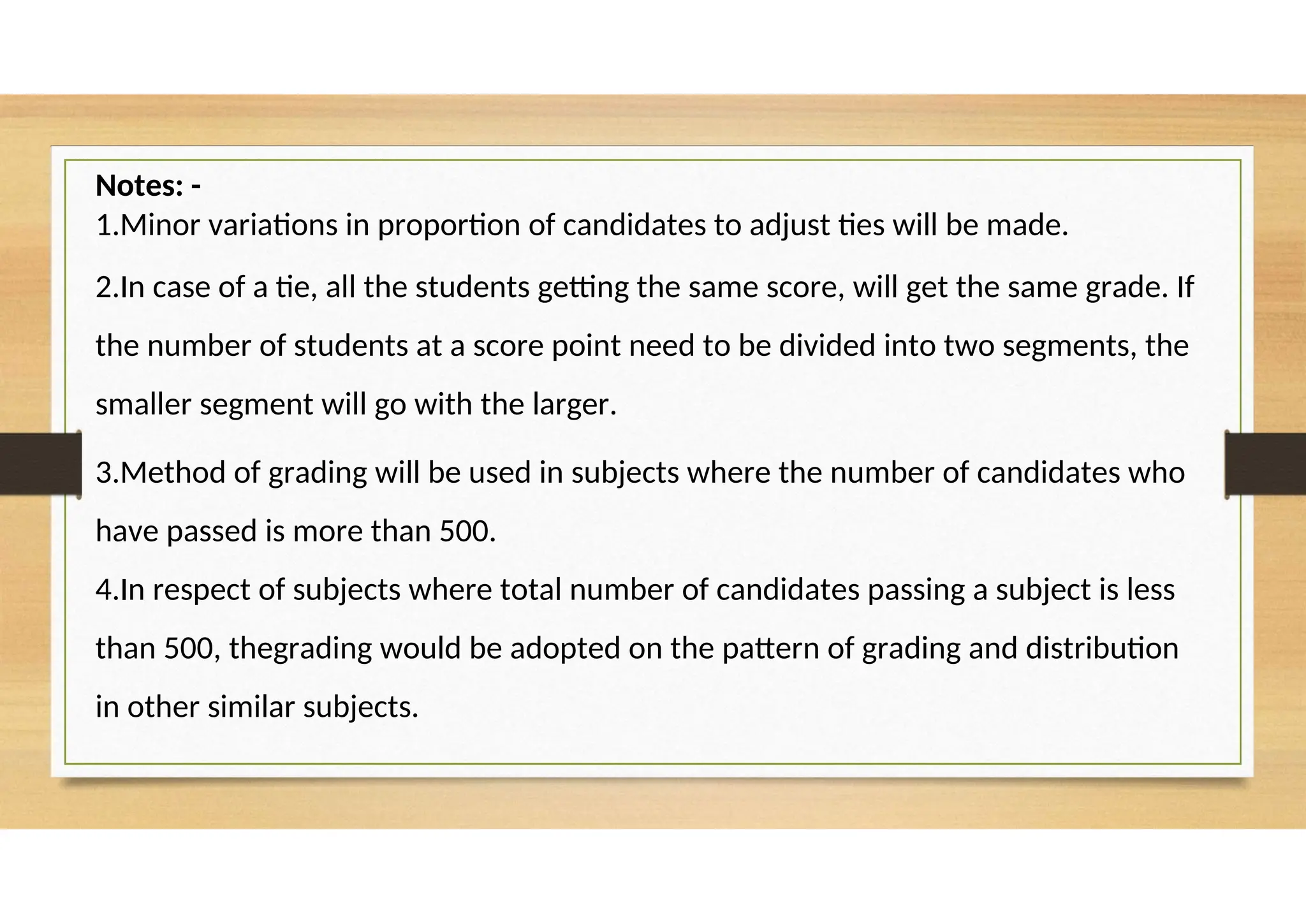
Notes: -
1.Minor variationsin proportion of candidates to adjust ties will be made.
2.In case of a tie, all the students getting the same score, will get the same grade. If
the number of students at a score point need to be divided into two segments, the
smaller segment will go with the larger.
3.Method of grading will be used in subjects where the number of candidates who
have passed is more than 500.
4.In respect of subjects where total number of candidates passing a subject is less
than 500, thegrading would be adopted on the pattern of grading and distribution
in other similar subjects.
68.
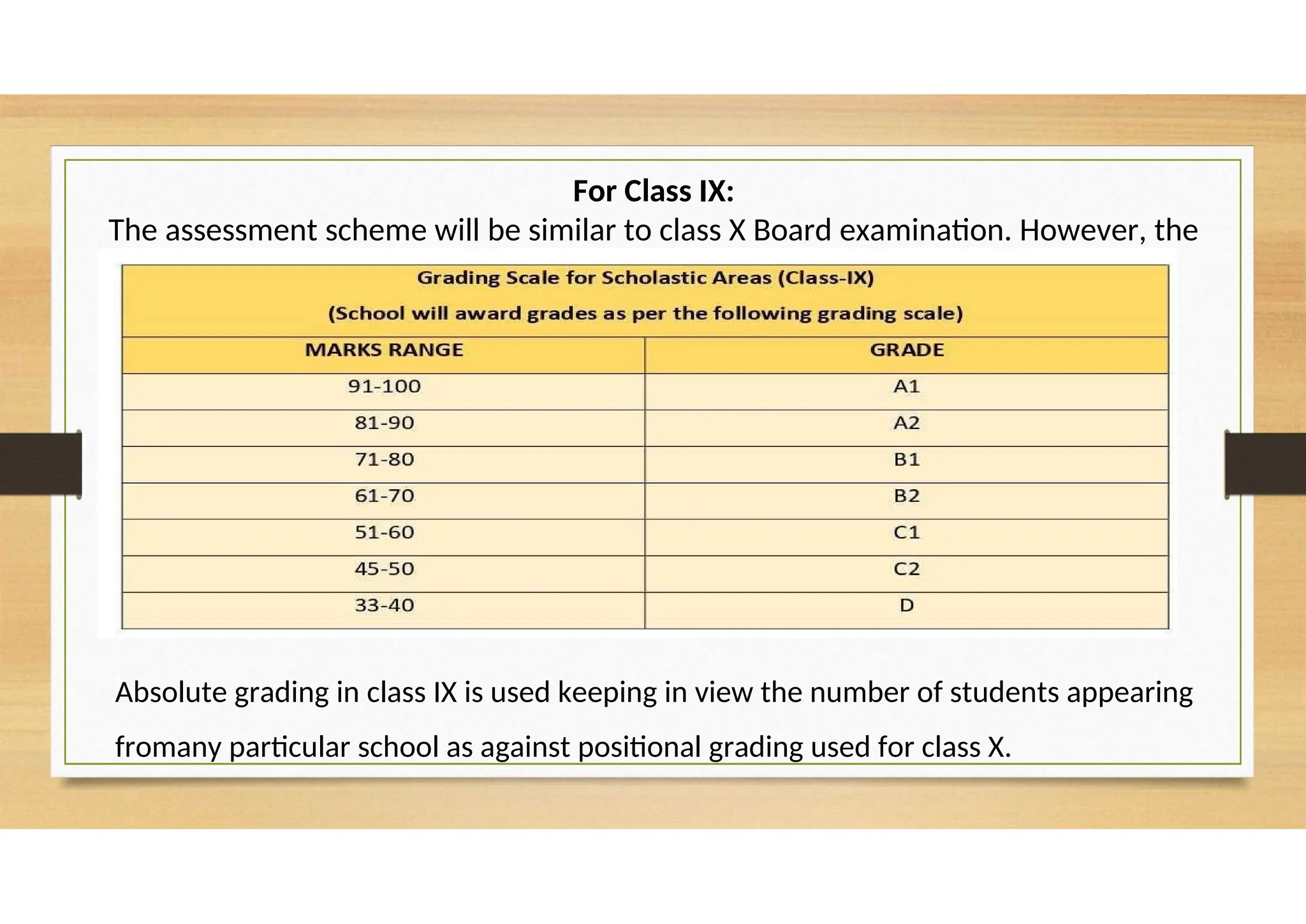
For Class IX:
Theassessment scheme will be similar to class X Board examination. However, the
grading in class IX will be as follows:
Absolute grading in class IX is used keeping in view the number of students appearing
fromany particular school as against positional grading used for class X.
70.
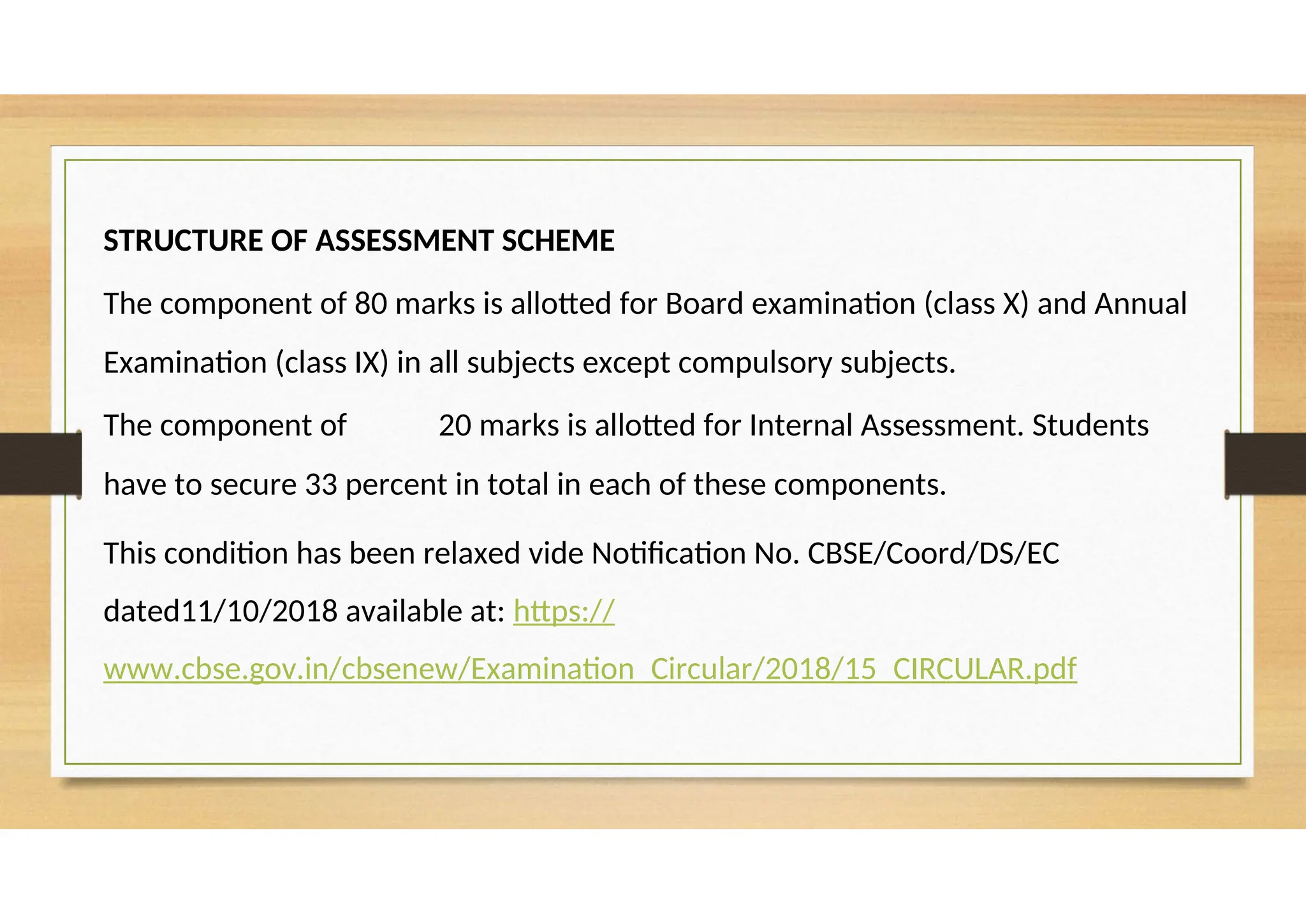
STRUCTURE OF ASSESSMENTSCHEME
The component of 80 marks is allotted for Board examination (class X) and Annual
Examination (class IX) in all subjects except compulsory subjects.
The component of 20 marks is allotted for Internal Assessment. Students
have to secure 33 percent in total in each of these components.
This condition has been relaxed vide Notification No. CBSE/Coord/DS/EC
dated11/10/2018 available at: https://
www.cbse.gov.in/cbsenew/Examination_Circular/2018/15_CIRCULAR.pdf
71.
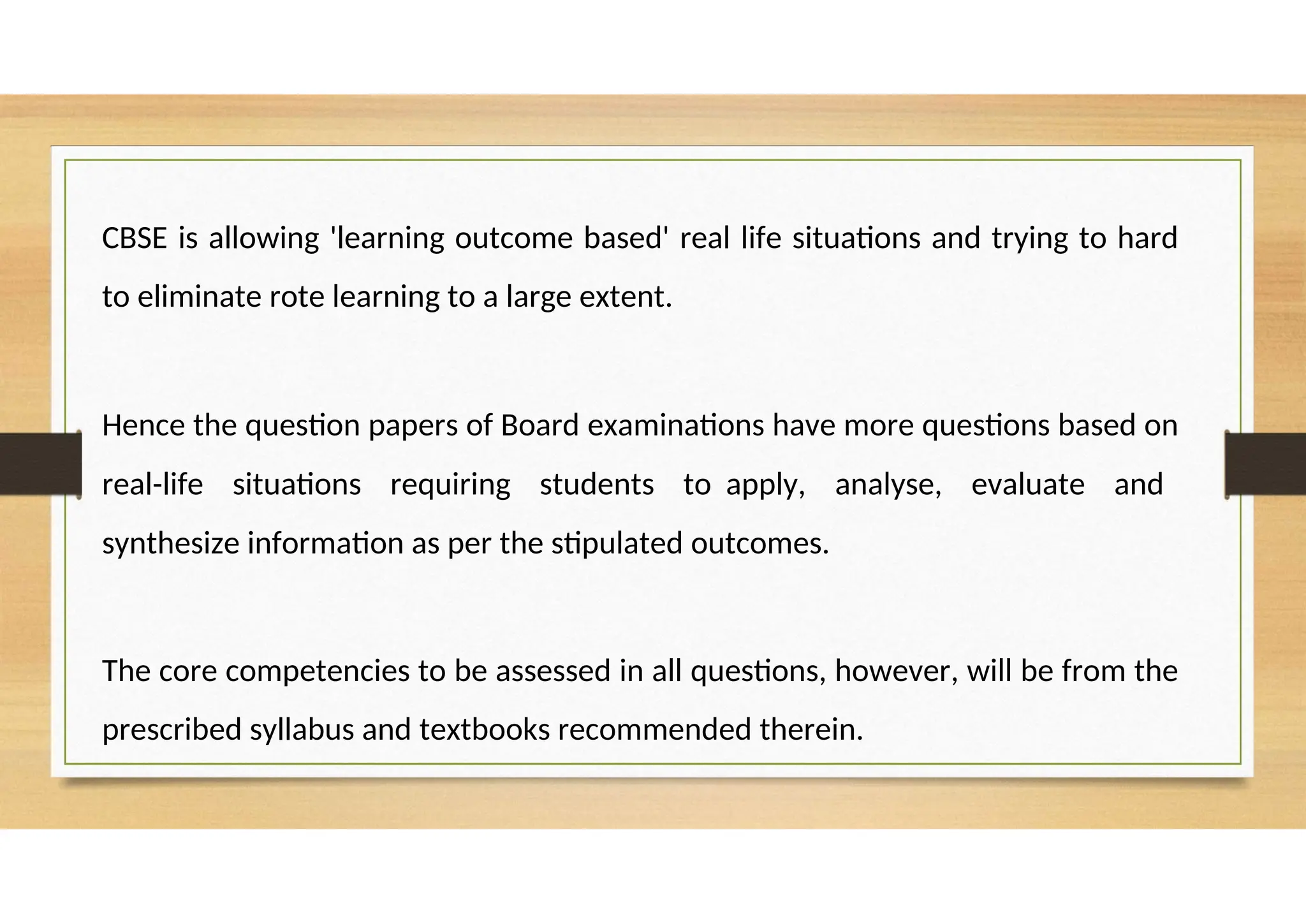
CBSE is allowing'learning outcome based' real life situations and trying to hard
to eliminate rote learning to a large extent.
Hence the question papers of Board examinations have more questions based on
real-life situations requiring students to apply, analyse, evaluate and
synthesize information as per the stipulated outcomes.
The core competencies to be assessed in all questions, however, will be from the
prescribed syllabus and textbooks recommended therein.
72.
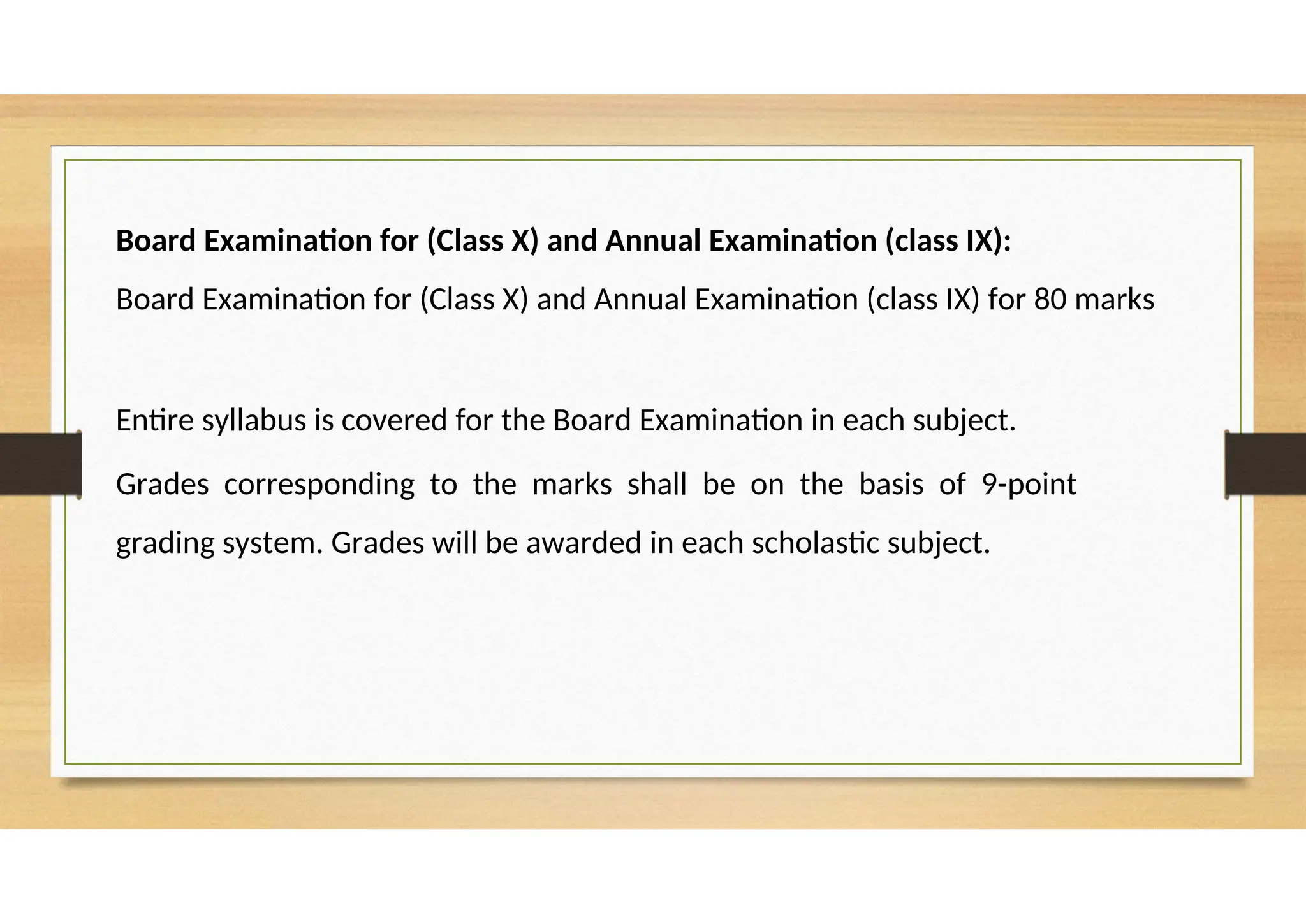
Board Examination for(Class X) and Annual Examination (class IX):
Board Examination for (Class X) and Annual Examination (class IX) for 80 marks
Entire syllabus is covered for the Board Examination in each subject.
Grades corresponding to the marks shall be on the basis of 9-point
grading system. Grades will be awarded in each scholastic subject.
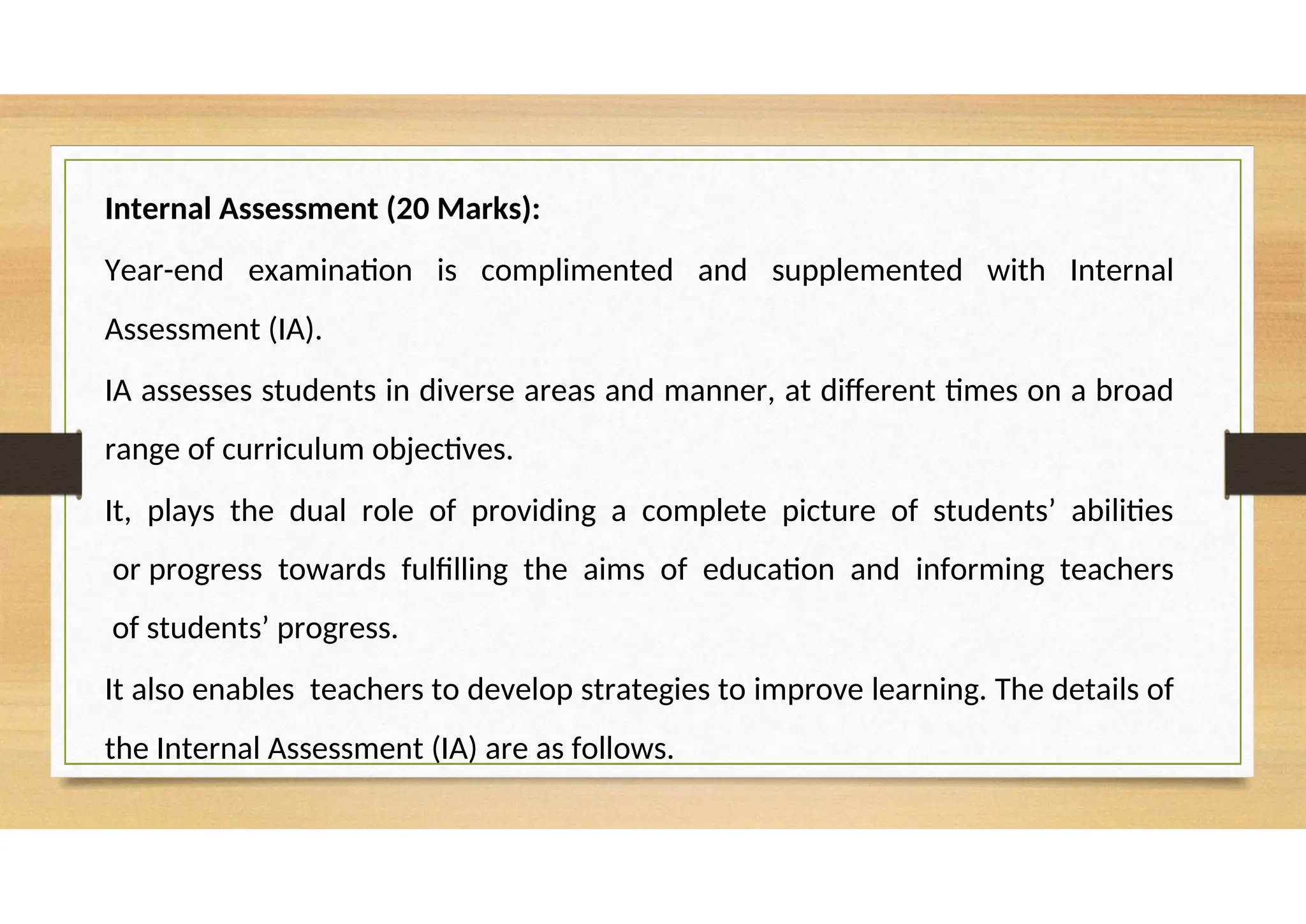
Internal Assessment (20Marks):
Year-end examination is complimented and supplemented with Internal
Assessment (IA).
IA assesses students in diverse areas and manner, at different times on a broad
range of curriculum objectives.
It, plays the dual role of providing a complete picture of students’ abilities
or progress towards fulfilling the aims of education and informing teachers
of students’ progress.
It also enables teachers to develop strategies to improve learning. The details of
the Internal Assessment (IA) are as follows.
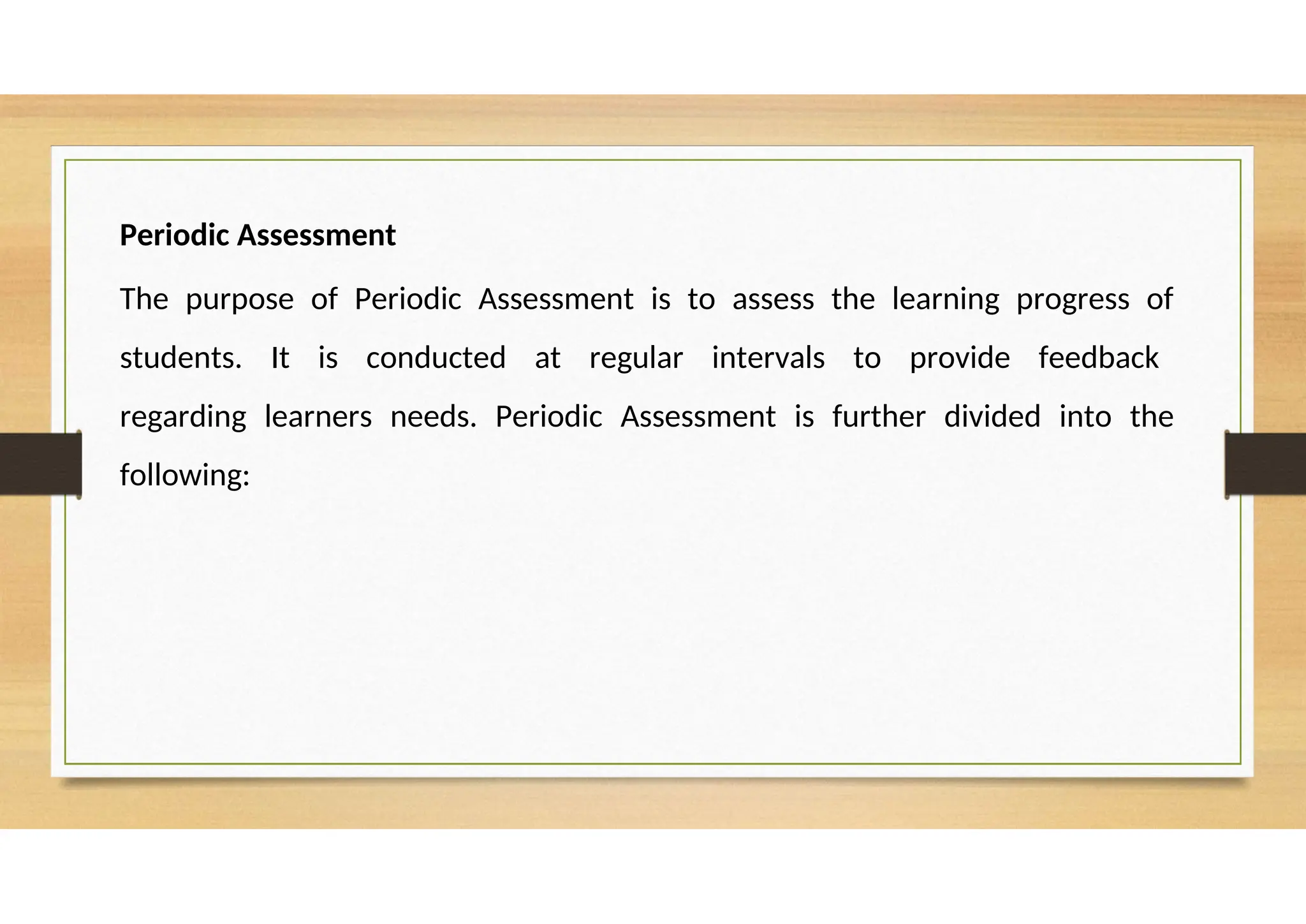
80.
Periodic Assessment
The purposeof Periodic Assessment is to assess the learning progress of
students. It is conducted at regular intervals to provide feedback
regarding learners needs. Periodic Assessment is further divided into the
following:
81.
Periodic Tests (05marks):
These would be restricted to 3 in each subject in a year and the average of
best 2 would to be taken for final submission of marks.
They also prepare students for final summative exams in a more
confident manner.
82.
Multiple Assessment (05marks):
Multiple assessment strategies are advised over the course of the
curriculum transaction. Subject teachers would determine the type and
frequency.
Schools are given autonomy to use alternate modes of assessment as per
the demand of the subject, such as quizzes, project-work, Self and peer
assessment, collaborative projects, experiments, classroom demonstrations, etc.
83.
Portfolio (05 marks):
Aportfolio is a collection of chosen work by a student representing a selection of
performances. It is a tool for assessing a variety of skills not usually testable in a
single setting of the traditional pen & paper tests.
Portfolio helps
students
gain an
awareness
of their
clear
own
learning.
understanding
Peer
and
self-
Assessment is a great support that facilitates a
evaluation of personal goals. The active role that
students plays in
assessment not only motivates them but also help to develop metacognitive
skills which enable them to make adjustments.
84.
The portfolio maytake the form of a journal or notebook that would
include students’ artifacts selected along with their reflections.
Learner here is an active participant involved in constructing his or her journey
through the portfolio building process of selecting, organizing and reflecting.
It is suggested that the portfolios would include classwork and
homework assignments that would help evaluate learner's progress.
85.
The attention shouldbe to promote techniques such as
annotation, identification of key words / topics/ themes,
summarization and organization of ideas and content, photos,
presentations, assignments, art integrated learning, etc. Developing
them should not be a burden on students- both in terms of cost and
time.
86.
Assessing Portfolios
Students’ portfoliocan be effectively evaluated using a simple scoring
rubric. The criteria – to be used in determining the quality of a particular
student’s portfolio needs to be carefully developed and shared with
students. Suggested below are some elements to judge student’s
portfolio:
87.
Subject Enrichment Activities(05 marks):
Subject enrichment activities provide in-depth learning that motivates students
to dig deeper into the discipline. These enrichment activities need to challenge
students and permit them to apply knowledge to the next level.
Some suggestions for conducting these activities are as follows:
Languages provide ample space to develop relevant listening and speaking skills.
Teachers need to use excerpts from relevant suitable literature to develop
vocabulary and heighten students’ awareness and sensitivity.
88.
The specified activitiesin practical work in Science and Mathematics need to
be conducted in congruence to the objectives of the subject. The focus must
shift from confirmatory nature of lab experiments to explorations that focus
on development of science processes.
Social science being the subject relevant to social context, activities and
projects in this area should be related to, society, socio-economic
and environmental problems, political theory and art and culture. I may
also include development of Life Skills.
89.
Art Education:
Art Educationcomprises curricular activities for
the development of the wholesome personality of the
children, aesthetic sensibilities and respect for
social values and cultural heritage. It encourages learners to develop
creative expression, sharpens keen observation and develops a sense of
organization and
order.
Students may select one form each from Visual Arts (drawing, painting, murals,
collages, crafts, sculpture, etc.) and Performing Arts
(dance, music, drama,
puppetry and Folk Art forms etc.). Children’s
participation in activities/competitions form the basis of assessing the
90.
Health and PhysicalEducation (HPE) (Sports/Self-Defence/Yoga/NCC etc.):
HPE emphasises on health, hygiene & sanitation, and work experience. Health
and Physical Activities, preferably sports must be given one regular period per
day. Students should be provided opportunities to get professionally trained in
the area of their interest.
Indigenous sports, yoga and NCC must be encouraged in the schools.
Similarly, Self-defence may be actively taught to
students, especially girl students, as it instils confidence and
empowers them.
91.
The Physical Educationteacher will maintain the record of all the Health
and Physical Education activities/competitions that each of the children
participate in.
The Comprehensive School Health Manuals (four volumes) brought out by CBSE
could be be taken up as part of the curriculum in school.
Qualified doctors should examine children annually along with a follow-
up session during the year toaddress the health aspect of HPE.
92.
School should alsobring any noticeable disability in a student to the notice of
the school counsellor and parents.
Cases of special needs of students with medical history must be
carefully noted and handled accordingly. Detailed information on the
Comprehensive Physical and Health Education Curriculum is available in
the curriculum document.
93.
Assessment of ArtEducation and Health and Physical Education
Assessment of Art Education and Health and
Physical Education may be continuously done by
collecting information, reflecting on and using
that
information to review children’s progress and to
plan future learning experiences. The documented data, after
interpretation, should be reflected in
the Report Card of the children in the form of grades.
94.
These activities willbe graded on a 5- point grading scale (A to E) for classes IX-X
and will have no descriptive indicators.
The concerned teacher would make an objective assessment of the level of
performance/ participation.
Work Experience is subsumed in the Physical and Health Education. No up scaling
of grades will be done.
Overall approach ofassessment should be on competency based.
However, assessment should not contribute to any additional burden for the child,
should not overtly burden the teacher and care must be taken not to label the child.
The stipulated learning outcomes may not be achieved in a linear fashion for
all students. Children take their time and have their own ups and downs
during their journey towards achieving these learning objectives.
99.
Teachers, thus, needto be very patient provide adequate space to each child.
Teachers should analyse evidence from multiple sources taken over a period
of time to assess the extent to which children have demonstrated understanding
and acquisition of skills.
There should be no ranking of students as each child is unique.
100.
Schools may administerstandardized tests to assess academic skills, cognitive
abilities, or social-emotional development. If a student performs significantly
below their peers on these assessments, it may indicate a developmental
delay.
The framework also encourages teachers to work closely with parents and
caregivers to support children's learning and development.