Structured Query
Language
What is
Structured
Query
Language
Structured Query Language is a standard Database
language which is used to create, maintain and retrieve the
relational database.
What is Relational Database?
Relational database means the data is stored as well as
retrieved in the form of relations (tables).
History Of
SQL
 the original version of SQL called SEQUEL
(structured English query language) was designed by
an IBM research center in 1974 and 1975. SQL was first
introduced as a commercial database system in 1979 by
Oracle Corporation.
 SQL became a standard of the American National
Standards Institute (ANSI) in 1986, and of the
International Organization for Standardization (ISO) in
1987
Why SQL?
 SQL is very simple and easy to learn
 Allows users to access data in the relational database
management systems.
 Allows users to describe the data.
 Allows users to define the data in a database and
manipulate that data.
 Allows to embed within other languages using SQL
modules, libraries & pre-compilers.
 Allows users to create and drop databases and tables.
 Allows users to set permissions on tables and views.
Several Parts
Of SQL
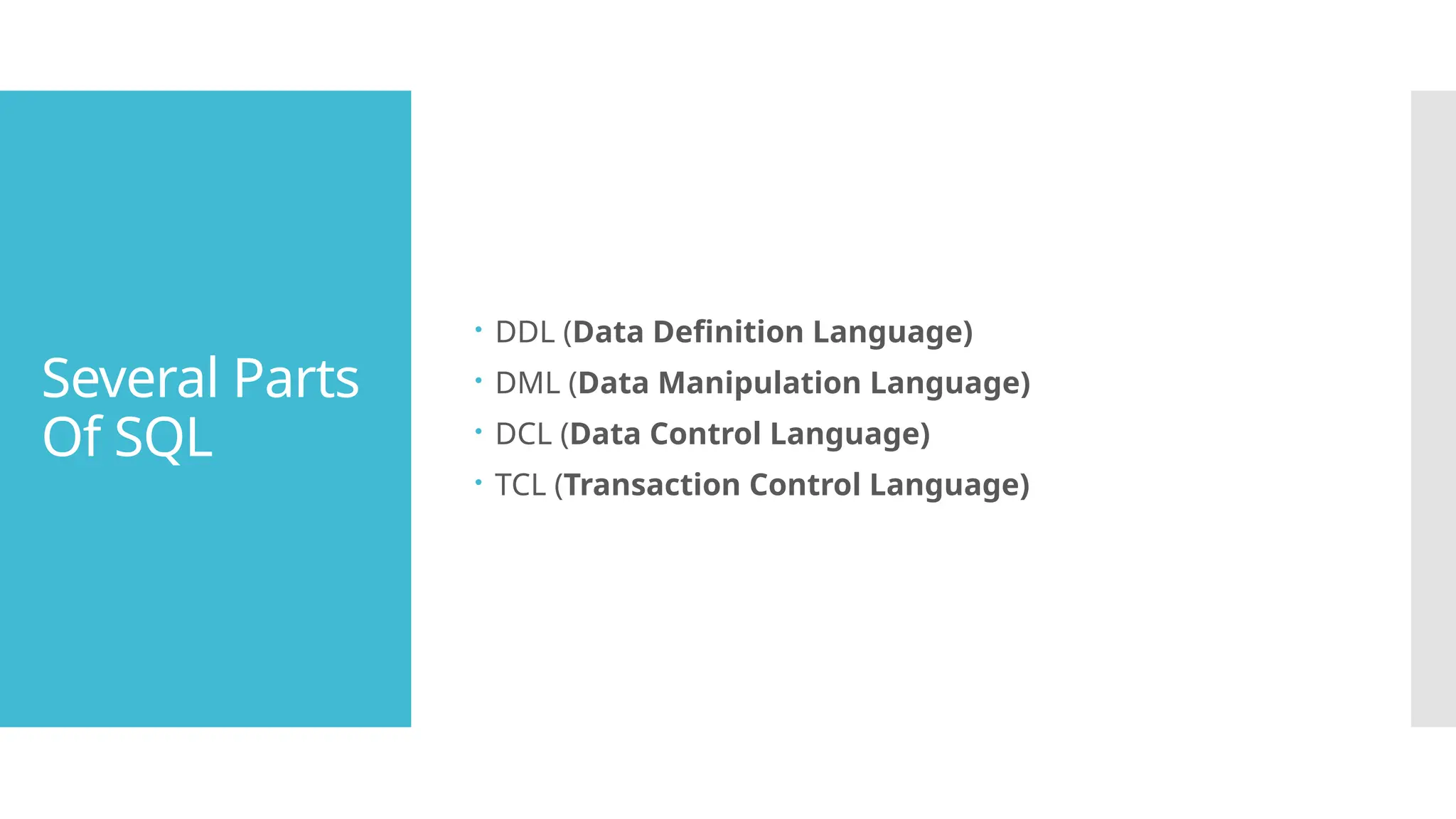
 DDL (Data Definition Language)
 DML (Data Manipulation Language)
 DCL (Data Control Language)
 TCL (Transaction Control Language)
DDL: Data
Definition
Language
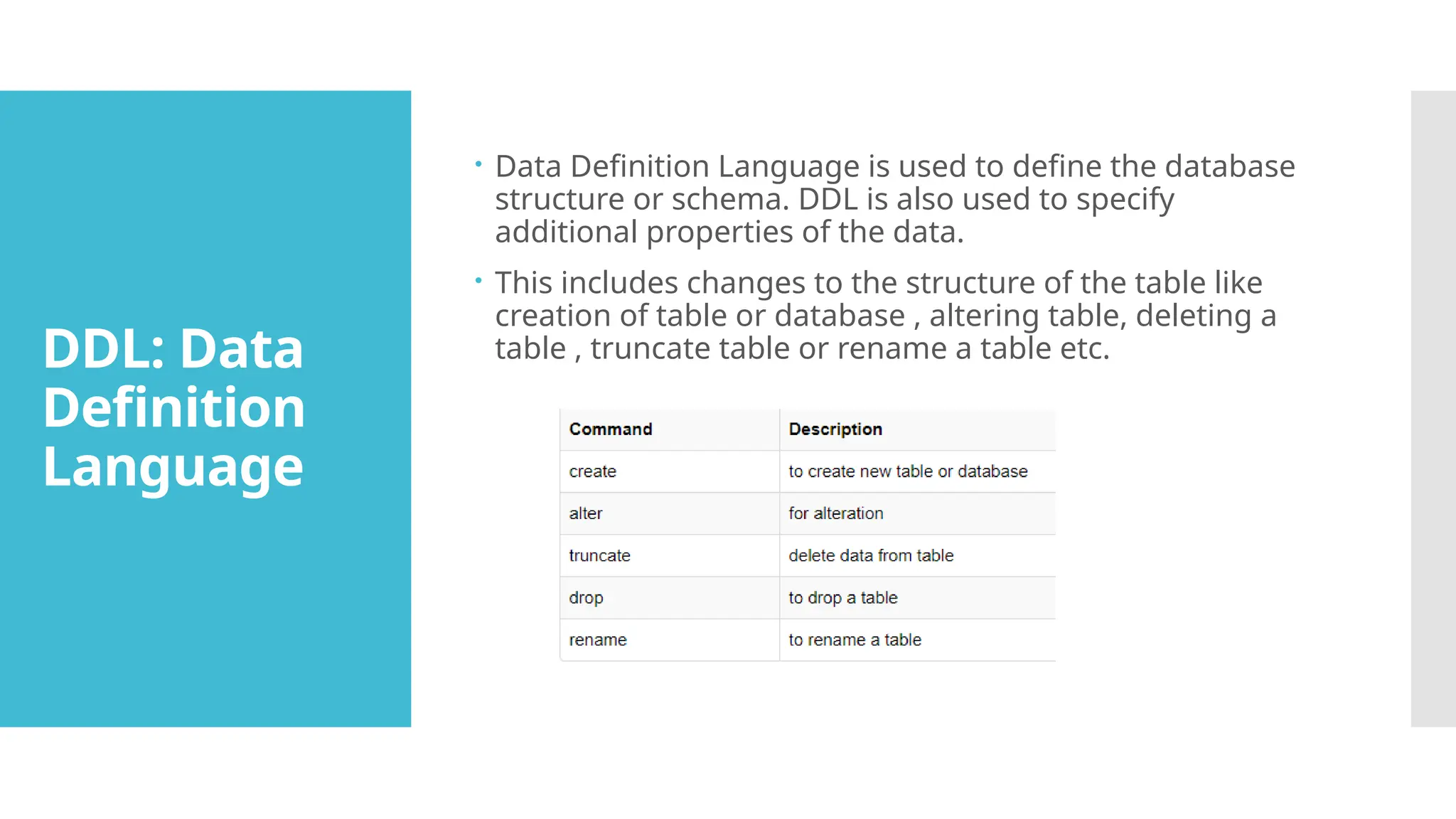
 Data Definition Language is used to define the database
structure or schema. DDL is also used to specify
additional properties of the data.
 This includes changes to the structure of the table like
creation of table or database , altering table, deleting a
table , truncate table or rename a table etc.
DML: Data
Manipulatio
n Language
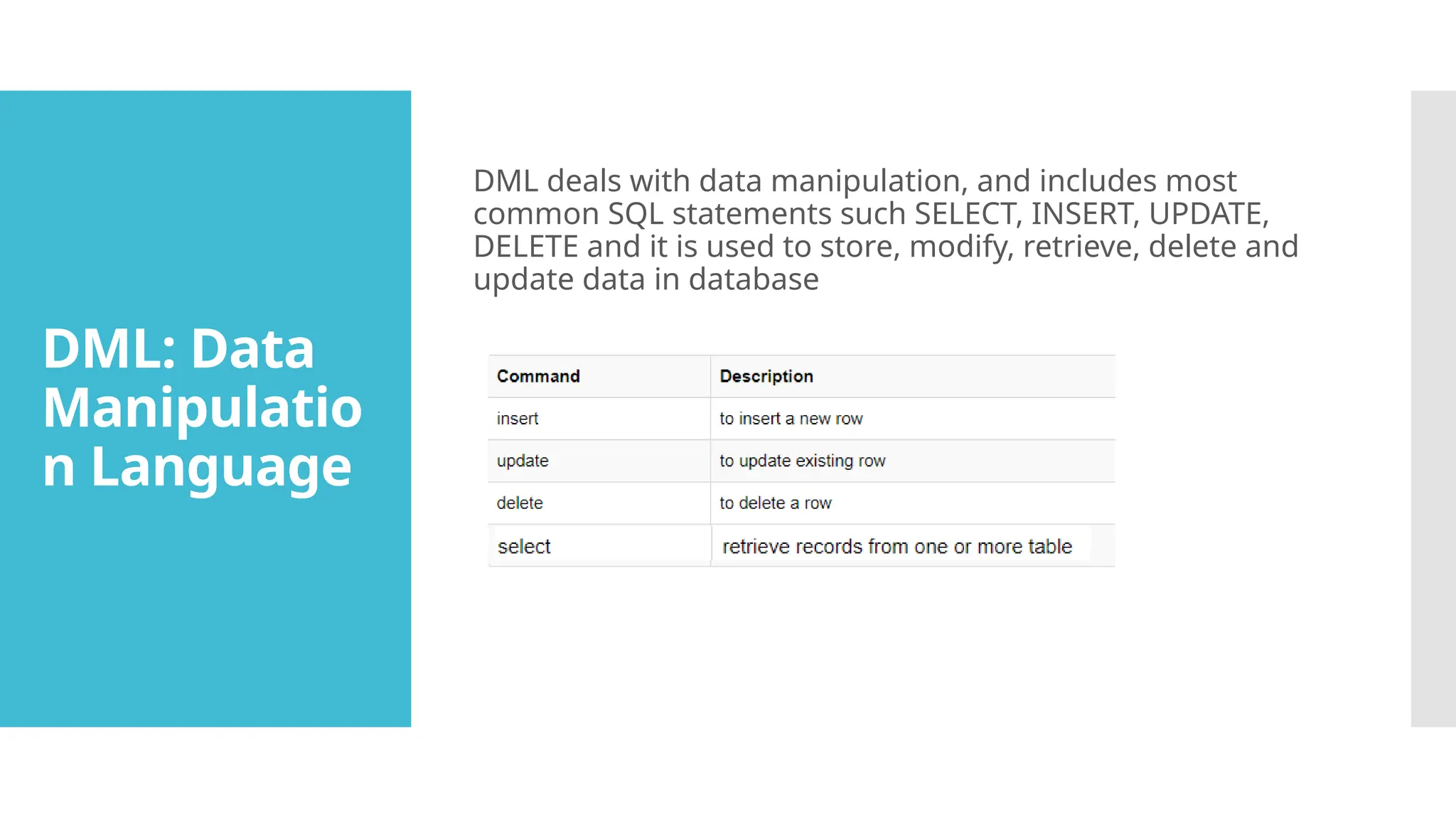
DML deals with data manipulation, and includes most
common SQL statements such SELECT, INSERT, UPDATE,
DELETE and it is used to store, modify, retrieve, delete and
update data in database
DCL: Data
Control
Language
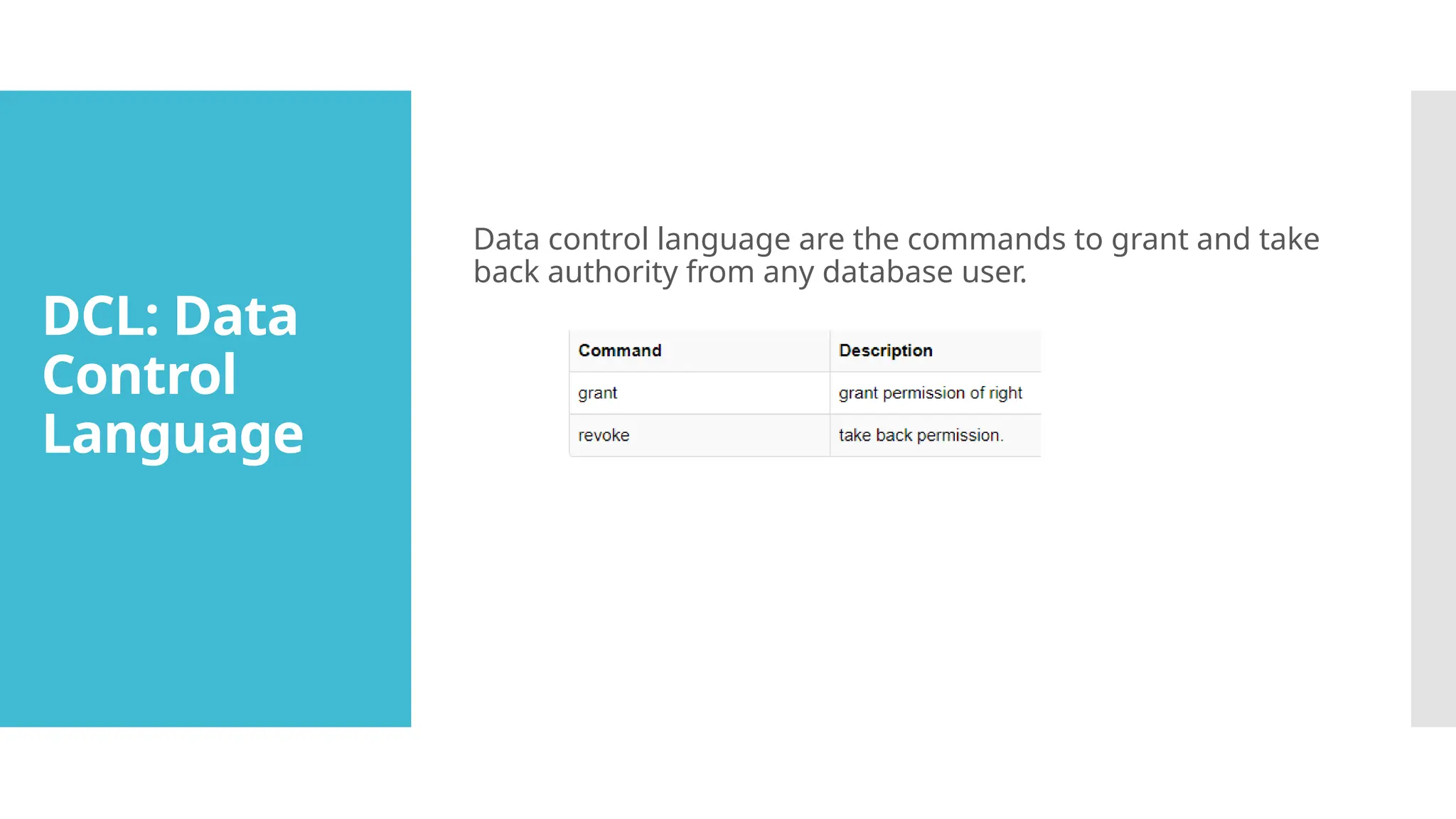
Data control language are the commands to grant and take
back authority from any database user.
TCL:
Transaction
Control
Language
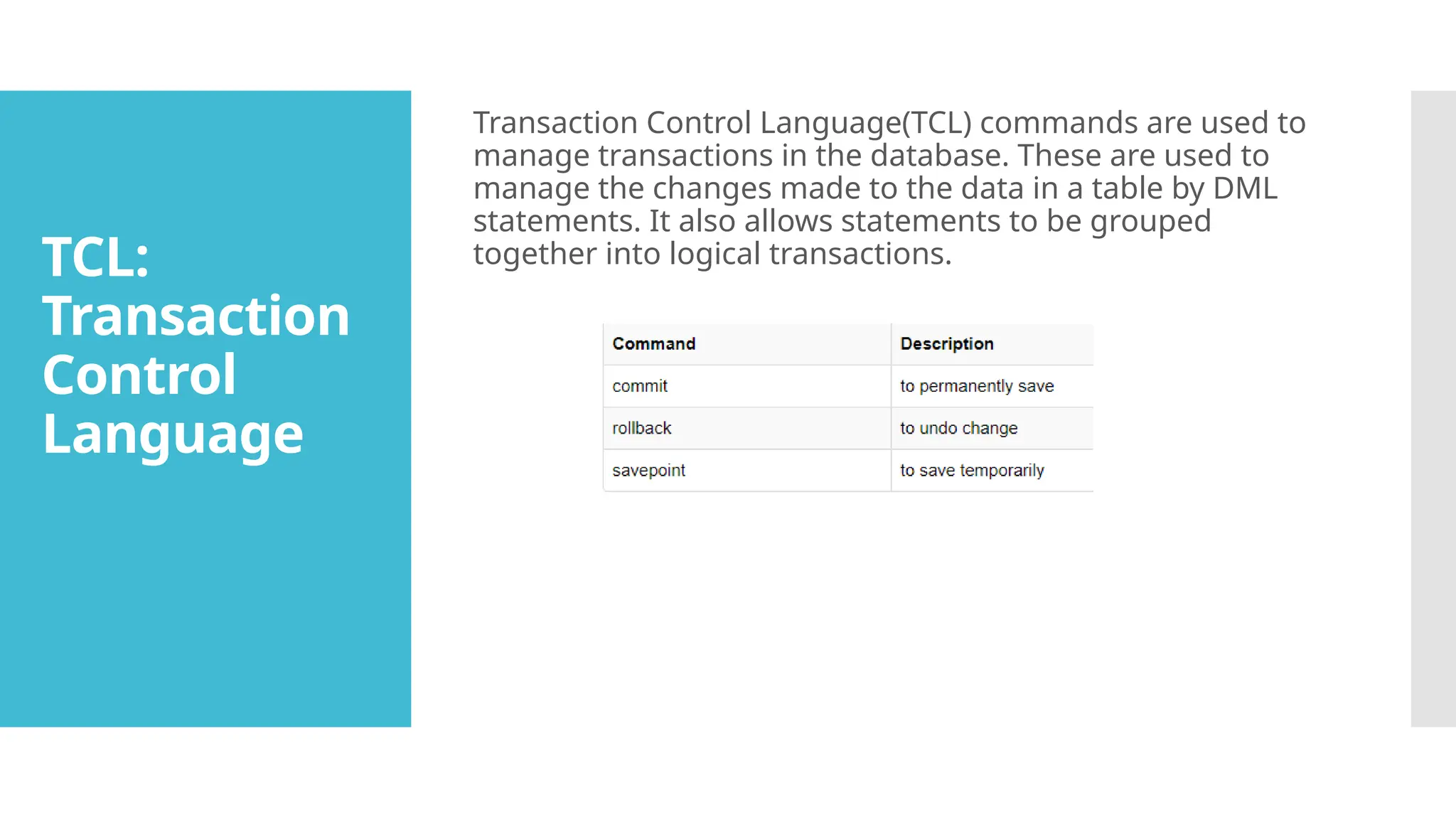
Transaction Control Language(TCL) commands are used to
manage transactions in the database. These are used to
manage the changes made to the data in a table by DML
statements. It also allows statements to be grouped
together into logical transactions.
Roles of SQL
 SQL retrieves data from the database.
 It can be used along with programming language to
access data from database. It is a database
programming language.
 It can be used to monitor and control data access by
various users. It is a database administration language.
 It can be used as an Internet data access language.

structures query langauge basic for learners

  • 1.
  • 2.
    What is Structured Query Language Structured QueryLanguage is a standard Database language which is used to create, maintain and retrieve the relational database. What is Relational Database? Relational database means the data is stored as well as retrieved in the form of relations (tables).
  • 3.
    History Of SQL  theoriginal version of SQL called SEQUEL (structured English query language) was designed by an IBM research center in 1974 and 1975. SQL was first introduced as a commercial database system in 1979 by Oracle Corporation.  SQL became a standard of the American National Standards Institute (ANSI) in 1986, and of the International Organization for Standardization (ISO) in 1987
  • 4.
    Why SQL?  SQLis very simple and easy to learn  Allows users to access data in the relational database management systems.  Allows users to describe the data.  Allows users to define the data in a database and manipulate that data.  Allows to embed within other languages using SQL modules, libraries & pre-compilers.  Allows users to create and drop databases and tables.  Allows users to set permissions on tables and views.
  • 5.
    Several Parts Of SQL DDL (Data Definition Language)  DML (Data Manipulation Language)  DCL (Data Control Language)  TCL (Transaction Control Language)
  • 6.
    DDL: Data Definition Language  DataDefinition Language is used to define the database structure or schema. DDL is also used to specify additional properties of the data.  This includes changes to the structure of the table like creation of table or database , altering table, deleting a table , truncate table or rename a table etc.
  • 7.
    DML: Data Manipulatio n Language DMLdeals with data manipulation, and includes most common SQL statements such SELECT, INSERT, UPDATE, DELETE and it is used to store, modify, retrieve, delete and update data in database
  • 8.
    DCL: Data Control Language Data controllanguage are the commands to grant and take back authority from any database user.
  • 9.
    TCL: Transaction Control Language Transaction Control Language(TCL)commands are used to manage transactions in the database. These are used to manage the changes made to the data in a table by DML statements. It also allows statements to be grouped together into logical transactions.
  • 10.
    Roles of SQL SQL retrieves data from the database.  It can be used along with programming language to access data from database. It is a database programming language.  It can be used to monitor and control data access by various users. It is a database administration language.  It can be used as an Internet data access language.