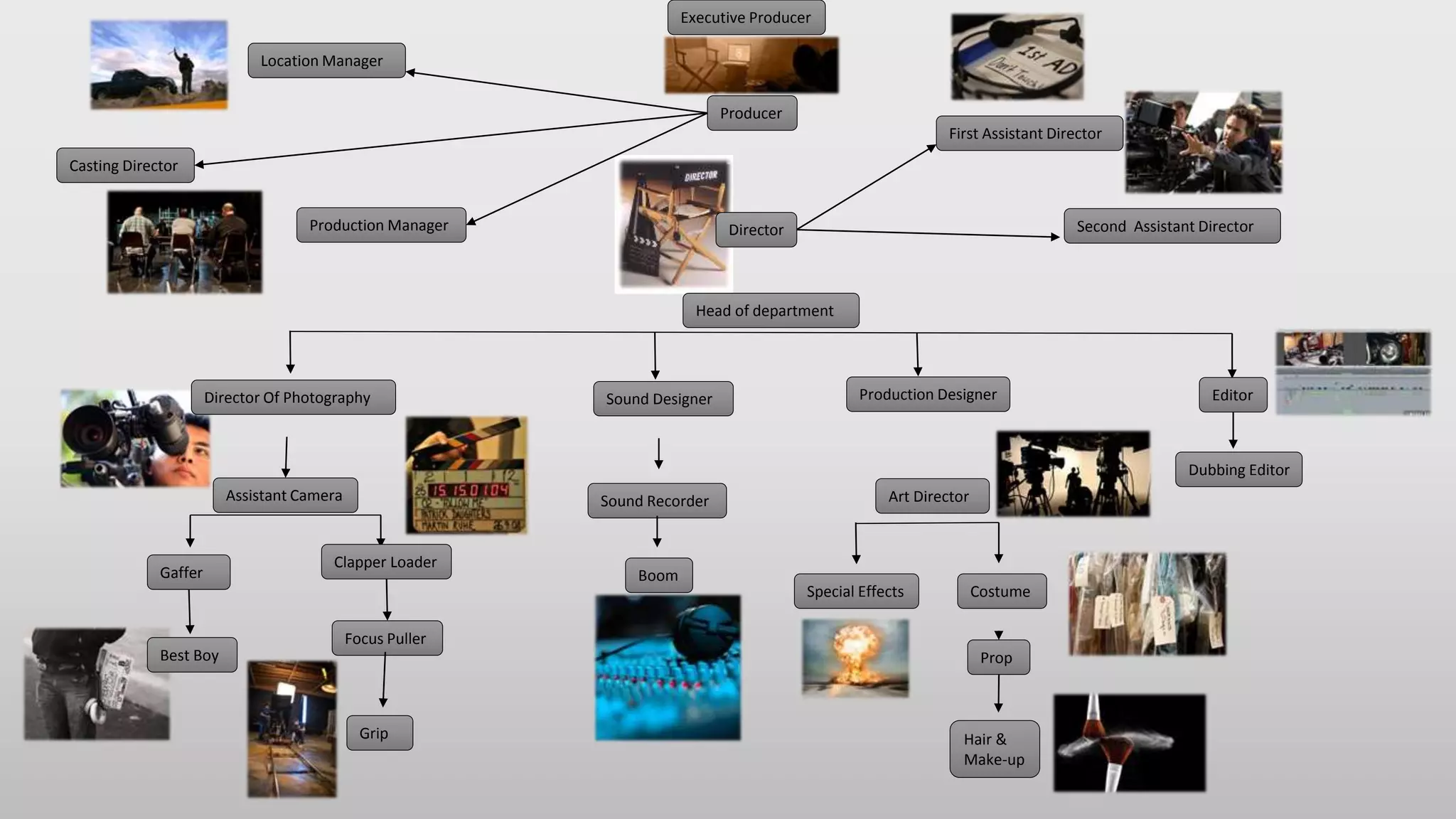
Structure Of A 
Typical Film 
Crew
Executive Producer 
Producer 
Director 
Head of department 
Location Manager 
Casting Director 
Production Manager 
First Assistant Director 
Second Assistant Director 
Director Of Photography 
Assistant Camera 
Gaffer 
Best Boy 
Clapper Loader 
Focus Puller 
Grip 
Sound Designer 
Sound Recorder 
Boom 
Production Designer 
Art Director 
Special Effects Costume 
Prop 
Hair & 
Make-up 
Editor 
Dubbing Editor
Location Manager Executive Producer 
Producer 
Director 
Casting Director 
Production Manager 
First Assistant Director 
1st AD takes responsibility for some important practicalities so that the 
Director is free to concentrate on the creative process. They break down 
the script into a storyboard, working with the Director to determine the 
shoot order, and how long each scene will take to film 
Second Assistant Director 
Director Of Photography 
Assistant Camera 
Gaffer 
Best Boy 
Clapper Loader 
Focus Puller 
Grip 
Sound Designer 
Sound Recorder 
Boom 
Production Designer 
Art Director 
2nd AD prepares and draws up the 'call sheet‘. They oversee the cast, 
ensuring that the actors are in the right place at the right time. 
Special Effects 
Editor 
Works closely with the Director to craft the finished film. 
Dubbing Editor 
Mixes recorded dialogue, sound effects and music to create the 
final version of a soundtrack for a film, television program, or 
television advertisement. 
Costume 
Costume designer is in charge of designing, creating, acquiring and 
hiring all costumes for Actors and extras. The costume maker, fits 
and alters all costumes that cannot be bought or hired. 
Prop 
Hair & Make-up 
The Executive Producer oversees the work of the 
producer. They will ensure the film is completed on 
time, within budget, and to agreed artistic and 
technical standards. 
Film producers prepare and then supervise 
the making of a film. 
The Director directs the making of a film and 
control the artistic and dramatic aspects. 
The DoP creates the visual identity of the film, 
working with the Director, camera crew and 
lighting department to achieve this. 
The gaffer is responsible 
for all the practical 
aspects of lighting sets 
and locations 
The sound designer creates. They also 
manage the sound post production process. 
Controls the boom pole, maneuvering it as 
close to the action as possible to record 
the sound. They also fit radio microphones 
to actors. 
Manages all visual aspects of a film. They work with the 
Director and Producer and direct the team responsible 
for producing the visual elements e.g. sets and costumes. 
Fulfills the Production designers creative vision for sets 
and locations. They project manage the work of the art 
department. H&M artist creates make-up and hairstyles to meet production 
requirements, working to the H&M Designer’s brief. The designer is 
responsible for the overall design, continuity and care . 
Finds ideal locations for a film shoot, and 
negotiates fees, terms and permissions. 
Selects actors for all roles in a film. They arrange and 
conduct auditions with artists as well as negotiating 
fees and contracts for the actors who get the part. 
Manage the production budget, making sure the 
production runs smoothly for the Producer and Line 
Producer. They schedule shoots and negotiate hire of 
crews and equipment. 
The grip is responsible for building 
and maintaining all the equipment 
that supports cameras, as well as 
moving and setting up the 
equipment. 
The best boy is simply a 
assistant for the gaffer 
and grip. 
The Focus pullers main 
responsibility is to maintain 
image sharpness on whatever 
is being filmed. 
Loads the raw film stock into camera 
magazines and operating the 
clapperboard (at the start of each take. 
Special effects artists create mechanical, optical and 
computer generated illusions for films. 
Prop master oversees the sourcing and making of props, making sure 
that props fit with the film style and design.
• http://mentalfloss.com/article/50626/11-strange-movie-job-titles% 
E2%80%94explained 
• http://en.wikipedia.org/wiki/Film_crew

Structure of a typical film crew

  • 1.
    Structure Of A Typical Film Crew
  • 2.
    Executive Producer Producer Director Head of department Location Manager Casting Director Production Manager First Assistant Director Second Assistant Director Director Of Photography Assistant Camera Gaffer Best Boy Clapper Loader Focus Puller Grip Sound Designer Sound Recorder Boom Production Designer Art Director Special Effects Costume Prop Hair & Make-up Editor Dubbing Editor
  • 3.
    Location Manager ExecutiveProducer Producer Director Casting Director Production Manager First Assistant Director 1st AD takes responsibility for some important practicalities so that the Director is free to concentrate on the creative process. They break down the script into a storyboard, working with the Director to determine the shoot order, and how long each scene will take to film Second Assistant Director Director Of Photography Assistant Camera Gaffer Best Boy Clapper Loader Focus Puller Grip Sound Designer Sound Recorder Boom Production Designer Art Director 2nd AD prepares and draws up the 'call sheet‘. They oversee the cast, ensuring that the actors are in the right place at the right time. Special Effects Editor Works closely with the Director to craft the finished film. Dubbing Editor Mixes recorded dialogue, sound effects and music to create the final version of a soundtrack for a film, television program, or television advertisement. Costume Costume designer is in charge of designing, creating, acquiring and hiring all costumes for Actors and extras. The costume maker, fits and alters all costumes that cannot be bought or hired. Prop Hair & Make-up The Executive Producer oversees the work of the producer. They will ensure the film is completed on time, within budget, and to agreed artistic and technical standards. Film producers prepare and then supervise the making of a film. The Director directs the making of a film and control the artistic and dramatic aspects. The DoP creates the visual identity of the film, working with the Director, camera crew and lighting department to achieve this. The gaffer is responsible for all the practical aspects of lighting sets and locations The sound designer creates. They also manage the sound post production process. Controls the boom pole, maneuvering it as close to the action as possible to record the sound. They also fit radio microphones to actors. Manages all visual aspects of a film. They work with the Director and Producer and direct the team responsible for producing the visual elements e.g. sets and costumes. Fulfills the Production designers creative vision for sets and locations. They project manage the work of the art department. H&M artist creates make-up and hairstyles to meet production requirements, working to the H&M Designer’s brief. The designer is responsible for the overall design, continuity and care . Finds ideal locations for a film shoot, and negotiates fees, terms and permissions. Selects actors for all roles in a film. They arrange and conduct auditions with artists as well as negotiating fees and contracts for the actors who get the part. Manage the production budget, making sure the production runs smoothly for the Producer and Line Producer. They schedule shoots and negotiate hire of crews and equipment. The grip is responsible for building and maintaining all the equipment that supports cameras, as well as moving and setting up the equipment. The best boy is simply a assistant for the gaffer and grip. The Focus pullers main responsibility is to maintain image sharpness on whatever is being filmed. Loads the raw film stock into camera magazines and operating the clapperboard (at the start of each take. Special effects artists create mechanical, optical and computer generated illusions for films. Prop master oversees the sourcing and making of props, making sure that props fit with the film style and design.
  • 4.