The role of a Lab Information Management
System in ensuring perfect data accuracy
Data accuracy is critical to Research and Development. Accurate and
reliable data is essential for making sound decisions, drawing accurate
conclusions, and driving innovation. The laboratory information
management system is a central repository for all R&D data,
connecting different teams and tools to streamline workflows and
improve collaboration.
By streamlining data collection, implementing quality control measures,
safeguarding data integrity, and automating workflows, LIMS can help
researchers achieve the utmost precision and excellence. This blog
explores how this system can boost data accuracy throughout the
Research and Development lifecycle.
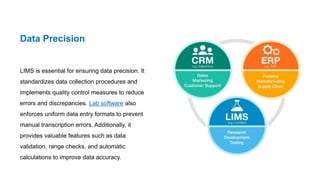
Data Precision
LIMS is essential for ensuring data precision. It
standardizes data collection procedures and
implements quality control measures to reduce
errors and discrepancies. Lab software also
enforces uniform data entry formats to prevent
manual transcription errors. Additionally, it
provides valuable features such as data
validation, range checks, and automatic
calculations to improve data accuracy.
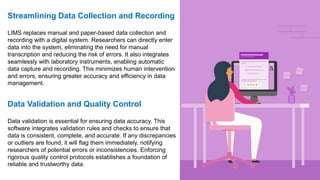
Streamlining Data Collection and Recording
LIMS replaces manual and paper-based data collection and
recording with a digital system. Researchers can directly enter
data into the system, eliminating the need for manual
transcription and reducing the risk of errors. It also integrates
seamlessly with laboratory instruments, enabling automatic
data capture and recording. This minimizes human intervention
and errors, ensuring greater accuracy and efficiency in data
management.
Data Validation and Quality Control
Data validation is essential for ensuring data accuracy. This
software integrates validation rules and checks to ensure that
data is consistent, complete, and accurate. If any discrepancies
or outliers are found, it will flag them immediately, notifying
researchers of potential errors or inconsistencies. Enforcing
rigorous quality control protocols establishes a foundation of
reliable and trustworthy data.
Enhancing Data Integrity and Traceability
Data integrity and traceability are essential in research and
development. The lab software uses robust security measures,
such as user access controls and audit trails, to protect data
integrity and prevent unauthorized changes. Every action taken in
the system is carefully recorded, creating a comprehensive audit
trail that tracks all data changes, additions, and deletions. This
detailed tracking enhances transparency and accountability
throughout the research process.
Automating Workflows for Improved
Accuracy
Lab software can improve workflow efficiency by automating
routine tasks and processes. This can help mitigate the risk of
human errors by simplifying procedures and expediting tasks. For
example, it can automate sample tracking and data analysis,
which can help reduce the chances of errors and save time. This
can free up researchers to focus on more critical tasks, such as
interpreting results and developing new products.
Integrating Instruments and Devices for
Seamless Data Capture
Integrating laboratory instruments and devices with laboratory
information management systems streamlines data capture and
monitoring. Agents can directly transmit data to the laboratory
information management system, eliminating the need for manual
data entry and the risk of transcription errors. This seamless
integration ensures accurate and immediate data capture, which
can improve the efficiency and reliability of data analysis.
Overcoming Data Entry Errors and Human Bias
Manual data entry is prone to errors that can compromise data
accuracy. LIMS addresses this by providing structured templates,
dropdown menus, and data validation checks. These features guide
researchers during the data entry process, reducing the likelihood of
typos. Additionally, it helps to mitigate human bias by standardizing
data collection methods, ensuring consistency and objectivity in the
research process.
Real-Time Monitoring and Analysis
This software allows researchers to monitor experiments in
real-time, track data trends, and conduct real-time analysis.
This instant access to data enables researchers to make timely
decisions, identify anomalies, and take corrective actions
promptly. Facilitating real-time monitoring, improves the
accuracy and reliability of research outcomes, leading to more
robust findings and insights.
Regulatory Compliance
Regulatory compliance is essential in research and
development. LIMS helps researchers meet these
requirements by providing robust data management features.
These features include traceability, data integrity, and audit
trails, all essential for demonstrating compliance with
regulatory standards. By helping researchers navigate complex
regulatory landscapes, it also effectively mitigates compliance
risks and ensures that research activities are aligned with
established regulations.
Conclusion
In summary, LIMS is a powerful tool that can help researchers achieve data accuracy, optimize
workflows, ensure regulatory compliance, and attain unparalleled levels of precision in their research
and development pursuits. Embrace the power of lab software to unlock the full potential of data
accuracy, leading your research and development efforts to a world of precision and perfection.

Streamlining Data Accuracy for Precision in R&D.pptx

  • 2.
    The role ofa Lab Information Management System in ensuring perfect data accuracy Data accuracy is critical to Research and Development. Accurate and reliable data is essential for making sound decisions, drawing accurate conclusions, and driving innovation. The laboratory information management system is a central repository for all R&D data, connecting different teams and tools to streamline workflows and improve collaboration. By streamlining data collection, implementing quality control measures, safeguarding data integrity, and automating workflows, LIMS can help researchers achieve the utmost precision and excellence. This blog explores how this system can boost data accuracy throughout the Research and Development lifecycle.
  • 3.
    Data Precision LIMS isessential for ensuring data precision. It standardizes data collection procedures and implements quality control measures to reduce errors and discrepancies. Lab software also enforces uniform data entry formats to prevent manual transcription errors. Additionally, it provides valuable features such as data validation, range checks, and automatic calculations to improve data accuracy.
  • 5.
    Streamlining Data Collectionand Recording LIMS replaces manual and paper-based data collection and recording with a digital system. Researchers can directly enter data into the system, eliminating the need for manual transcription and reducing the risk of errors. It also integrates seamlessly with laboratory instruments, enabling automatic data capture and recording. This minimizes human intervention and errors, ensuring greater accuracy and efficiency in data management. Data Validation and Quality Control Data validation is essential for ensuring data accuracy. This software integrates validation rules and checks to ensure that data is consistent, complete, and accurate. If any discrepancies or outliers are found, it will flag them immediately, notifying researchers of potential errors or inconsistencies. Enforcing rigorous quality control protocols establishes a foundation of reliable and trustworthy data.
  • 6.
    Enhancing Data Integrityand Traceability Data integrity and traceability are essential in research and development. The lab software uses robust security measures, such as user access controls and audit trails, to protect data integrity and prevent unauthorized changes. Every action taken in the system is carefully recorded, creating a comprehensive audit trail that tracks all data changes, additions, and deletions. This detailed tracking enhances transparency and accountability throughout the research process. Automating Workflows for Improved Accuracy Lab software can improve workflow efficiency by automating routine tasks and processes. This can help mitigate the risk of human errors by simplifying procedures and expediting tasks. For example, it can automate sample tracking and data analysis, which can help reduce the chances of errors and save time. This can free up researchers to focus on more critical tasks, such as interpreting results and developing new products.
  • 7.
    Integrating Instruments andDevices for Seamless Data Capture Integrating laboratory instruments and devices with laboratory information management systems streamlines data capture and monitoring. Agents can directly transmit data to the laboratory information management system, eliminating the need for manual data entry and the risk of transcription errors. This seamless integration ensures accurate and immediate data capture, which can improve the efficiency and reliability of data analysis. Overcoming Data Entry Errors and Human Bias Manual data entry is prone to errors that can compromise data accuracy. LIMS addresses this by providing structured templates, dropdown menus, and data validation checks. These features guide researchers during the data entry process, reducing the likelihood of typos. Additionally, it helps to mitigate human bias by standardizing data collection methods, ensuring consistency and objectivity in the research process.
  • 8.
    Real-Time Monitoring andAnalysis This software allows researchers to monitor experiments in real-time, track data trends, and conduct real-time analysis. This instant access to data enables researchers to make timely decisions, identify anomalies, and take corrective actions promptly. Facilitating real-time monitoring, improves the accuracy and reliability of research outcomes, leading to more robust findings and insights. Regulatory Compliance Regulatory compliance is essential in research and development. LIMS helps researchers meet these requirements by providing robust data management features. These features include traceability, data integrity, and audit trails, all essential for demonstrating compliance with regulatory standards. By helping researchers navigate complex regulatory landscapes, it also effectively mitigates compliance risks and ensures that research activities are aligned with established regulations.
  • 9.
    Conclusion In summary, LIMSis a powerful tool that can help researchers achieve data accuracy, optimize workflows, ensure regulatory compliance, and attain unparalleled levels of precision in their research and development pursuits. Embrace the power of lab software to unlock the full potential of data accuracy, leading your research and development efforts to a world of precision and perfection.