PLANNING
FOR
HIGH IMPACT
Designing
Strategic Programs
& Communications
Workbook
David P. Stewart
2
OVERVIEW
Big Picture
 What are our dreams?
 What’s most important?
 Who might support or undermine our dreams?
Brushstrokes
 What is our mission and vision?
 Who is our audience?
 What are our current goals?
White Spaces
 Whose voices have been unheard in our past planning sessions?
 How can we develop an outward, inward, and upward focus?
Overcoming Obstacles
 What barriers will challenge our current plans?
 How can we avoid emotional decisions?
 How can we avoid us/them scenarios?
Self Exam
 What bad habits have we developed?
 Do the attitudes of our leaders reflect our mission and vision?
 What training opportunities should we take advantage of as a team? Individually?
Connecting with the Audience
 Is what we are offering valuable to our audience?
 Are we using native languages?
 Are we known for our hospitality and generosity?
Framing
 Who are our spokespersons?
 Does our logo clearly communicate with our audience?
 What are our communication outlets?
Media
 How do we promote our mission?
 How do we engage our audience to promote participation and accomplish our vision?
 How do we evaluate our messages?
Crowdsoursing/Fundraising
 Who are our financial supporters?
 Where do potential supporters get their info?
 Is our message credible with potential supporters?
PLANNINGFORHIGHIMPACT
©DavidP.Stewart
3
THE
BIG PICTURE
4
Organizations
must develop stories
before tactics.
What dreams push us forward?
How is our issue attached to universal values, beliefs, and
interests?
5
6
If money was no object, what ought to be? Make an exhaustive list!
DREAM BIG DREAMS
7
What attitudes exist (in the general population) which
support our efforts?
What attitudes exist (in the general population) which
undermine our efforts?
Are those in power ignoring the issues, and if so why?
8
BRUSHSTROKES
9
Do we have a clearly defined and compelling mission?
What are our vision statements?
Who is most affected by our mission and vision? Who benefits
from our success – initially and secondarily?
10
What are our goals?
How are our goals relevant, specific, measureable, and aligned
with our mission and vision?
11
What strategic plans are in place to accomplish these goals?
What is going on and why?
12
13
14
OVERCOMING
OBSTACLES
15
Whatarethebarriers?Howcanweovercomethem?Whathappensifwefail?
16
What negatives do we need to address in our environment?
What meaningful changes do we need to initiate?
How can we avoid emotional decisions?
17
How committed are we to change?
Who will perceive these changes as loss? Who needs to be
“converted”?
How do we avoid creating “us/them”? “win/lose”?
How do we deal with grief, anger, self-defense?
18
How do we avoid “the blame game”?
When negotiating how do we avoid manipulation?
Can we afford to avoid giving in to threats?
19
How can we help supporters of our mission and vision to not
oppose change? How can we ask them to not vote no? How can
we make peace and create a new future? How can we increase
understanding?
How can we focus on the goal of the change?
20
How can we make change feel like added value to our
organization?
21
Monsters Under the Bed
22
What bad habits do we need to break?
How do we avoid “talk without action”?
How do we avoid confusing activity with purposeful action
toward the goal?
23
What tangible outcomes that we should expect from the changes
we are proposing to make?
What small victories are easily attainable?
How do we celebrate these victories on a regular basis?
How can we celebrate the victories of groups with a mission
similar to ours?
24
Is leadership on the same page? Have we agreed on our target
audience?
Are leadership attitudes and actions transformational?
What are we willing to do to improve our leadership environ-
ment?
Do we have a leadership covenant?
25
How will leadership help other coalesce around these changes?
Does everyone know what is expected of them?
Are the right people in the right places?
How will we use our new DNA to evaluate staff and programs?
26
Define action items.
What training events can we attend? Is there a book on leader-
ship that we can read and discuss as a group?
27
How can we make meetings more about learning than voting?
Do we need to add to our leadership? Volunteers? Staff?
Interns?
28
After completing these exercises,
do we need to establish new or additional goals?
Outline steps to accomplish each goal according to mission
and vision. BE VERY SPECIFIC! Assign action items.
29
After completing these exercises,
do we need to establish new or additional goals?
Outline steps to accomplish each goal according to mission
and vision. BE VERY SPECIFIC! Assign action items.
30
After completing these exercises,
do we need to establish new or additional goals?
Outline steps to accomplish each goal according to mission
and vision. BE VERY SPECIFIC! Assign action items.
31
After completing these exercises,
do we need to establish new or additional goals?
Outline steps to accomplish each goal according to mission
and vision. BE VERY SPECIFIC! Assign action items.
32
After completing these exercises,
do we need to establish new or additional goals?
Outline steps to accomplish each goal according to mission
and vision. BE VERY SPECIFIC! Assign action items.
33
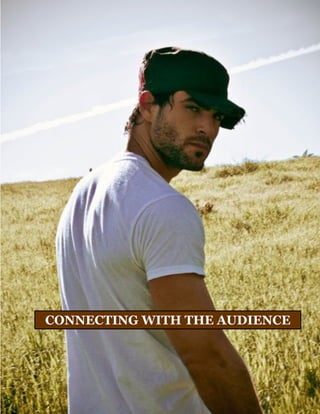
CONNECTING WITH THE AUDIENCE
34
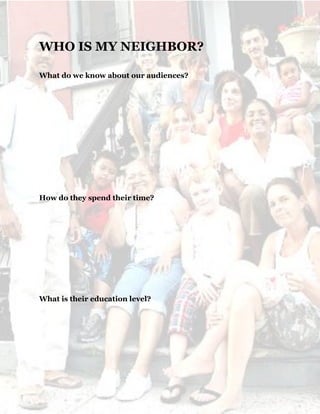
WHO IS MY NEIGHBOR?
What do we know about our audiences?
How do they spend their time?
What is their education level?
35
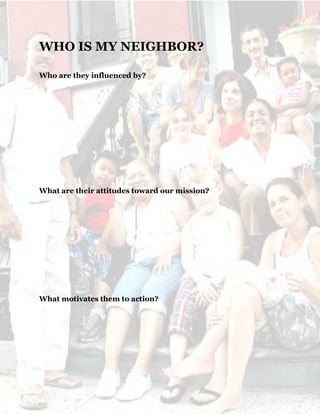
WHO IS MY NEIGHBOR?
Who are they influenced by?
What are their attitudes toward our mission?
What motivates them to action?
36
What is our
message?
What are our most
compelling
statements?
Is our message
communicated
with importance
and urgency?
37
Is our message
memorable?
Is our message
communicated in
a sensitive
manner?
Does our message
show our
commitment to
community,
compassion, and
consistency?
38
VALUE CREATION &
PARTNERSHIPS
Who are our potential partners?
How do we prioritize potential partners?
39
What other groups can we rely on for help to influence primary
and secondary groups to take action? How can we include them
in our efforts?
Do we have extra funding sources?
40
What does our message communicate to those who might not
naturally connect with us?
How can we “win them to us” and then “win them to our goals”?
What do we do when our message contrasts with their history
and traditions?
41
How do we intentionally set up shared experiences?
What low-threat involvement can we create?
What native language must we adopt to communicate effectively
without compromising our mission?
How do we craft an environment in which people can easily
connect with us? How do we fit in the neighborhood?
42
How do we increase our hospitality?
How can we increase our generosity?
43
How can we communicate using art/graphics/images?
When do we need to be confrontational?
44
FRAMING
45
Who are the spokespersons/gatekeepers of our message?
Have we attached a face (or faces) to the issue?
Do we need a new logo?
Does the color scheme of our print and electronic media
communicate warmth?
46
What are our outlets? How do we choose media outlets?
How can we maximize the use of free media outlets?
47
What is our wish list?
What is our budget?
48
After completing these exercises,
do we need to establish new or additional goals?
Outline steps to accomplish each goal according to mission
and vision. BE VERY SPECIFIC! Assign action items.
49
After completing these exercises,
do we need to establish new or additional goals?
Outline steps to accomplish each goal according to mission
and vision. BE VERY SPECIFIC! Assign action items.
50
After completing these exercises,
do we need to establish new or additional goals?
Outline steps to accomplish each goal according to mission
and vision. BE VERY SPECIFIC! Assign action items.
51
After completing these exercises,
do we need to establish new or additional goals?
Outline steps to accomplish each goal according to mission
and vision. BE VERY SPECIFIC! Assign action items.
52
MEDIA
53
Are our print and electronic communications creative and
interactive?
What do we do to ensure our message is not lost due to media
overload?
Does our message communicate importance and urgency?
How can we encourage media outlets to cover an event?
What elected officials should we invite to give speeches that
complement our message?
54
How can we get our director and message on talk radio and tele-
vision? Can we get free PSAs?
How do we best distribute flyers, brochures, and posters? What
parades, conferences, races, and fairs can we promote or staff
with volunteers? Can we provide professional posters for metro
trains and stops in the major cities where our message will
reach multitudes of tourists who may not receive our other
materials?
What can we give away that promotes our message?
55
Do we have a timeline?
Assign action items.
How will we evaluate our progress? Two weeks? A month? Two
months?
56
SOCIAL MEDIA
Is there a central web presence?
Is there a tagline and hashtag for this initiative?
Goals: (e.g. build buzz/awareness, promote program/event,
create a community for a specific audience)
Metrics for success: (e.g. buzz/conversation, brand awareness,
traffic to website, subscribers/followers/fans, audience
insights)
57
Content Types: (e.g. event updates, news items, interviews, blog
posts, photos, trivia, questions)
Cross-Promotion strategy: (i.e. social media tie-ins to
companion SM channels, e-mail marketing, print materials,
website, etc.)
Tracking tools: (e.g. bit.ly links, Google Analytics, Facebook
Insights, YouTube Insights)
58
Facebook
Do we create a fan page, group, and/or event listing?
What related Facebook properties currently exist?
Who will administer our Facebook presence? (add specific
names)
Process for sharing administration (i.e. posting schedule, who
answers questions, etc.)
Posting frequency?
Monitoring/responding frequency?
59
What content types will be shared? (e.g. event updates, news
items, blog posts, photos, trivia, questions)
What content will be solicited? (e.g. answers to questions,
photos/video)
Contests? (e.g. retweet for a prize)
Will we use Facebook ads? If so, for what and to what end?
60
Twitter
Do we create a Twitter account?
What related Twitter properties currently exist?
Who will have access to the Twitter account(s)?
Process for sharing administration (i.e. posting schedule, who
answers questions, etc.)
Tweeting frequency?
Monitoring/responding frequency?
61
What content types will be shared? (e.g. event updates, news
items, blog posts, photos, trivia, questions)
What content will be solicited? (e.g. answers to questions,
photos/video)
How will we grow our follower base?
Contests? (e.g. retweet for a prize)
62
Blogs
Do we create a blog?
What related blogs currently exist?
Who will have posting access to the blog?
Process for sharing administration (i.e. posting schedule, who
answers questions, etc.)
Blogging frequency?
What is our editorial calendar?
63
What categories and tags will we include?
Comment monitoring/response frequency?
What content types will we post? (e.g. interviews, multimedia,
trivia, updates)
What content will be solicited? (e.g. answers to questions,
photos/video)
64
YouTube
Do we have video content for YouTube?
What related video content/YouTube channels currently exist?
Who will have posting access to YouTube?
Posting frequency?
Comment monitoring/response frequency ?
What topics will our videos cover? (e.g. walking tours,
interviews, event recaps)
65
Will we solicit video content to upload ourselves or add to a
playlist?
Will we create playlists? If so, what will we create?
Will we favorite external videos or add to playlist(s)?
66
PROTECTIONS
Do we have emergency response
templates that can be easily adapted?
Are there any outside professionals we should include to avoid
group think?
How could a media consulting group help us?
67
CROWDSOURCING
FUNDRAISING
68
Identify crowdsourcing audiences – current supporters and
future supporters.
Where do these audiences get their daily information?
What messages and images do these audiences regularly
consume?
What makes new information credible to our audiences?
69
How do we maximize our efforts to communicate with these
audiences?
What motivates our audiences to act?
Who will motivate action?
70
IDEAS
 “Opt Out” business donations
 “Me and You” Campaign – friendraiser
 “Infinite Impact” Campaign - $200,000+ (10% programs and
scholarships, 90%capital/savings) A multi-year endeavor to position
the organization as a driving force in areas critical to the future of the
people being served.
 Grants
 Corporate Donations
 “Do Something Day” (MLK Day)
 “Thirty Days of Thanksgiving” – 30 two minute videos
 End of Year Appeal
 Mom’s for Moms
 Seeds
71
MUSTS
Do Not Lose Focus!
 “Wanting to” and actually doing it are not the same.
 Do everything with excellence! High impact!
 Excel in communication. Avoid insider language.
 There are no “thems”.
 Don’t focus on limitations. Look for silver linings.
 Speak truthfully – Big promises are almost never kept.
 Anticipate needs.
 Increase invitations and entry points.
 Speak to heart and mind.
 SMILE! Get to know people. Don’t just shake hands.
 Be prepared to answer all questions – ministry of interruption.
 Don’t ask for information unless you have a purpose for it and clearly
communicate that purpose.
 New contacts: immediate automatic response, written response within
36 hours, three contacts in first week, 5 – 10 contacts in first month,
review participation.
 Allow some supporters to remain anonymous .
 Make sure the budget reflects the “new heart”.
 Read Mission/Vision/Goals to open each meeting.
 Delegate tasks/Mentoring.
 Measure results.
 Ensure accountability.
 Celebrate all successes.
 Review effectiveness of programs, not worthiness of persons.
 Review sections of this workbook each week.
 Work to bring continual progress!
72
NOTES
73
NOTES
74
NOTES
75
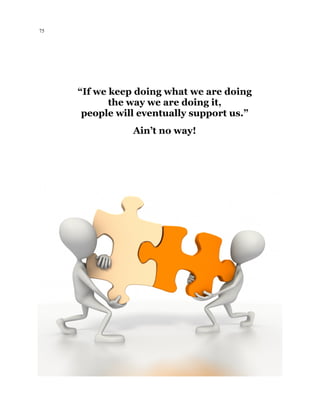
“If we keep doing what we are doing
the way we are doing it,
people will eventually support us.”
Ain’t no way!

Strategic Planning and Communications Workbook

  • 1.
    PLANNING FOR HIGH IMPACT Designing Strategic Programs &Communications Workbook David P. Stewart
  • 2.
    2 OVERVIEW Big Picture  Whatare our dreams?  What’s most important?  Who might support or undermine our dreams? Brushstrokes  What is our mission and vision?  Who is our audience?  What are our current goals? White Spaces  Whose voices have been unheard in our past planning sessions?  How can we develop an outward, inward, and upward focus? Overcoming Obstacles  What barriers will challenge our current plans?  How can we avoid emotional decisions?  How can we avoid us/them scenarios? Self Exam  What bad habits have we developed?  Do the attitudes of our leaders reflect our mission and vision?  What training opportunities should we take advantage of as a team? Individually? Connecting with the Audience  Is what we are offering valuable to our audience?  Are we using native languages?  Are we known for our hospitality and generosity? Framing  Who are our spokespersons?  Does our logo clearly communicate with our audience?  What are our communication outlets? Media  How do we promote our mission?  How do we engage our audience to promote participation and accomplish our vision?  How do we evaluate our messages? Crowdsoursing/Fundraising  Who are our financial supporters?  Where do potential supporters get their info?  Is our message credible with potential supporters? PLANNINGFORHIGHIMPACT ©DavidP.Stewart
  • 3.
  • 4.
    4 Organizations must develop stories beforetactics. What dreams push us forward? How is our issue attached to universal values, beliefs, and interests?
  • 5.
  • 6.
    6 If money wasno object, what ought to be? Make an exhaustive list! DREAM BIG DREAMS
  • 7.
    7 What attitudes exist(in the general population) which support our efforts? What attitudes exist (in the general population) which undermine our efforts? Are those in power ignoring the issues, and if so why?
  • 8.
  • 9.
    9 Do we havea clearly defined and compelling mission? What are our vision statements? Who is most affected by our mission and vision? Who benefits from our success – initially and secondarily?
  • 10.
    10 What are ourgoals? How are our goals relevant, specific, measureable, and aligned with our mission and vision?
  • 11.
    11 What strategic plansare in place to accomplish these goals? What is going on and why?
  • 12.
  • 13.
  • 14.
  • 15.
  • 16.
    16 What negatives dowe need to address in our environment? What meaningful changes do we need to initiate? How can we avoid emotional decisions?
  • 17.
    17 How committed arewe to change? Who will perceive these changes as loss? Who needs to be “converted”? How do we avoid creating “us/them”? “win/lose”? How do we deal with grief, anger, self-defense?
  • 18.
    18 How do weavoid “the blame game”? When negotiating how do we avoid manipulation? Can we afford to avoid giving in to threats?
  • 19.
    19 How can wehelp supporters of our mission and vision to not oppose change? How can we ask them to not vote no? How can we make peace and create a new future? How can we increase understanding? How can we focus on the goal of the change?
  • 20.
    20 How can wemake change feel like added value to our organization?
  • 21.
  • 22.
    22 What bad habitsdo we need to break? How do we avoid “talk without action”? How do we avoid confusing activity with purposeful action toward the goal?
  • 23.
    23 What tangible outcomesthat we should expect from the changes we are proposing to make? What small victories are easily attainable? How do we celebrate these victories on a regular basis? How can we celebrate the victories of groups with a mission similar to ours?
  • 24.
    24 Is leadership onthe same page? Have we agreed on our target audience? Are leadership attitudes and actions transformational? What are we willing to do to improve our leadership environ- ment? Do we have a leadership covenant?
  • 25.
    25 How will leadershiphelp other coalesce around these changes? Does everyone know what is expected of them? Are the right people in the right places? How will we use our new DNA to evaluate staff and programs?
  • 26.
    26 Define action items. Whattraining events can we attend? Is there a book on leader- ship that we can read and discuss as a group?
  • 27.
    27 How can wemake meetings more about learning than voting? Do we need to add to our leadership? Volunteers? Staff? Interns?
  • 28.
    28 After completing theseexercises, do we need to establish new or additional goals? Outline steps to accomplish each goal according to mission and vision. BE VERY SPECIFIC! Assign action items.
  • 29.
    29 After completing theseexercises, do we need to establish new or additional goals? Outline steps to accomplish each goal according to mission and vision. BE VERY SPECIFIC! Assign action items.
  • 30.
    30 After completing theseexercises, do we need to establish new or additional goals? Outline steps to accomplish each goal according to mission and vision. BE VERY SPECIFIC! Assign action items.
  • 31.
    31 After completing theseexercises, do we need to establish new or additional goals? Outline steps to accomplish each goal according to mission and vision. BE VERY SPECIFIC! Assign action items.
  • 32.
    32 After completing theseexercises, do we need to establish new or additional goals? Outline steps to accomplish each goal according to mission and vision. BE VERY SPECIFIC! Assign action items.
  • 33.
  • 34.
    34 WHO IS MYNEIGHBOR? What do we know about our audiences? How do they spend their time? What is their education level?
  • 35.
    35 WHO IS MYNEIGHBOR? Who are they influenced by? What are their attitudes toward our mission? What motivates them to action?
  • 36.
    36 What is our message? Whatare our most compelling statements? Is our message communicated with importance and urgency?
  • 37.
    37 Is our message memorable? Isour message communicated in a sensitive manner? Does our message show our commitment to community, compassion, and consistency?
  • 38.
    38 VALUE CREATION & PARTNERSHIPS Whoare our potential partners? How do we prioritize potential partners?
  • 39.
    39 What other groupscan we rely on for help to influence primary and secondary groups to take action? How can we include them in our efforts? Do we have extra funding sources?
  • 40.
    40 What does ourmessage communicate to those who might not naturally connect with us? How can we “win them to us” and then “win them to our goals”? What do we do when our message contrasts with their history and traditions?
  • 41.
    41 How do weintentionally set up shared experiences? What low-threat involvement can we create? What native language must we adopt to communicate effectively without compromising our mission? How do we craft an environment in which people can easily connect with us? How do we fit in the neighborhood?
  • 42.
    42 How do weincrease our hospitality? How can we increase our generosity?
  • 43.
    43 How can wecommunicate using art/graphics/images? When do we need to be confrontational?
  • 44.
  • 45.
    45 Who are thespokespersons/gatekeepers of our message? Have we attached a face (or faces) to the issue? Do we need a new logo? Does the color scheme of our print and electronic media communicate warmth?
  • 46.
    46 What are ouroutlets? How do we choose media outlets? How can we maximize the use of free media outlets?
  • 47.
    47 What is ourwish list? What is our budget?
  • 48.
    48 After completing theseexercises, do we need to establish new or additional goals? Outline steps to accomplish each goal according to mission and vision. BE VERY SPECIFIC! Assign action items.
  • 49.
    49 After completing theseexercises, do we need to establish new or additional goals? Outline steps to accomplish each goal according to mission and vision. BE VERY SPECIFIC! Assign action items.
  • 50.
    50 After completing theseexercises, do we need to establish new or additional goals? Outline steps to accomplish each goal according to mission and vision. BE VERY SPECIFIC! Assign action items.
  • 51.
    51 After completing theseexercises, do we need to establish new or additional goals? Outline steps to accomplish each goal according to mission and vision. BE VERY SPECIFIC! Assign action items.
  • 52.
  • 53.
    53 Are our printand electronic communications creative and interactive? What do we do to ensure our message is not lost due to media overload? Does our message communicate importance and urgency? How can we encourage media outlets to cover an event? What elected officials should we invite to give speeches that complement our message?
  • 54.
    54 How can weget our director and message on talk radio and tele- vision? Can we get free PSAs? How do we best distribute flyers, brochures, and posters? What parades, conferences, races, and fairs can we promote or staff with volunteers? Can we provide professional posters for metro trains and stops in the major cities where our message will reach multitudes of tourists who may not receive our other materials? What can we give away that promotes our message?
  • 55.
    55 Do we havea timeline? Assign action items. How will we evaluate our progress? Two weeks? A month? Two months?
  • 56.
    56 SOCIAL MEDIA Is therea central web presence? Is there a tagline and hashtag for this initiative? Goals: (e.g. build buzz/awareness, promote program/event, create a community for a specific audience) Metrics for success: (e.g. buzz/conversation, brand awareness, traffic to website, subscribers/followers/fans, audience insights)
  • 57.
    57 Content Types: (e.g.event updates, news items, interviews, blog posts, photos, trivia, questions) Cross-Promotion strategy: (i.e. social media tie-ins to companion SM channels, e-mail marketing, print materials, website, etc.) Tracking tools: (e.g. bit.ly links, Google Analytics, Facebook Insights, YouTube Insights)
  • 58.
    58 Facebook Do we createa fan page, group, and/or event listing? What related Facebook properties currently exist? Who will administer our Facebook presence? (add specific names) Process for sharing administration (i.e. posting schedule, who answers questions, etc.) Posting frequency? Monitoring/responding frequency?
  • 59.
    59 What content typeswill be shared? (e.g. event updates, news items, blog posts, photos, trivia, questions) What content will be solicited? (e.g. answers to questions, photos/video) Contests? (e.g. retweet for a prize) Will we use Facebook ads? If so, for what and to what end?
  • 60.
    60 Twitter Do we createa Twitter account? What related Twitter properties currently exist? Who will have access to the Twitter account(s)? Process for sharing administration (i.e. posting schedule, who answers questions, etc.) Tweeting frequency? Monitoring/responding frequency?
  • 61.
    61 What content typeswill be shared? (e.g. event updates, news items, blog posts, photos, trivia, questions) What content will be solicited? (e.g. answers to questions, photos/video) How will we grow our follower base? Contests? (e.g. retweet for a prize)
  • 62.
    62 Blogs Do we createa blog? What related blogs currently exist? Who will have posting access to the blog? Process for sharing administration (i.e. posting schedule, who answers questions, etc.) Blogging frequency? What is our editorial calendar?
  • 63.
    63 What categories andtags will we include? Comment monitoring/response frequency? What content types will we post? (e.g. interviews, multimedia, trivia, updates) What content will be solicited? (e.g. answers to questions, photos/video)
  • 64.
    64 YouTube Do we havevideo content for YouTube? What related video content/YouTube channels currently exist? Who will have posting access to YouTube? Posting frequency? Comment monitoring/response frequency ? What topics will our videos cover? (e.g. walking tours, interviews, event recaps)
  • 65.
    65 Will we solicitvideo content to upload ourselves or add to a playlist? Will we create playlists? If so, what will we create? Will we favorite external videos or add to playlist(s)?
  • 66.
    66 PROTECTIONS Do we haveemergency response templates that can be easily adapted? Are there any outside professionals we should include to avoid group think? How could a media consulting group help us?
  • 67.
  • 68.
    68 Identify crowdsourcing audiences– current supporters and future supporters. Where do these audiences get their daily information? What messages and images do these audiences regularly consume? What makes new information credible to our audiences?
  • 69.
    69 How do wemaximize our efforts to communicate with these audiences? What motivates our audiences to act? Who will motivate action?
  • 70.
    70 IDEAS  “Opt Out”business donations  “Me and You” Campaign – friendraiser  “Infinite Impact” Campaign - $200,000+ (10% programs and scholarships, 90%capital/savings) A multi-year endeavor to position the organization as a driving force in areas critical to the future of the people being served.  Grants  Corporate Donations  “Do Something Day” (MLK Day)  “Thirty Days of Thanksgiving” – 30 two minute videos  End of Year Appeal  Mom’s for Moms  Seeds
  • 71.
    71 MUSTS Do Not LoseFocus!  “Wanting to” and actually doing it are not the same.  Do everything with excellence! High impact!  Excel in communication. Avoid insider language.  There are no “thems”.  Don’t focus on limitations. Look for silver linings.  Speak truthfully – Big promises are almost never kept.  Anticipate needs.  Increase invitations and entry points.  Speak to heart and mind.  SMILE! Get to know people. Don’t just shake hands.  Be prepared to answer all questions – ministry of interruption.  Don’t ask for information unless you have a purpose for it and clearly communicate that purpose.  New contacts: immediate automatic response, written response within 36 hours, three contacts in first week, 5 – 10 contacts in first month, review participation.  Allow some supporters to remain anonymous .  Make sure the budget reflects the “new heart”.  Read Mission/Vision/Goals to open each meeting.  Delegate tasks/Mentoring.  Measure results.  Ensure accountability.  Celebrate all successes.  Review effectiveness of programs, not worthiness of persons.  Review sections of this workbook each week.  Work to bring continual progress!
  • 72.
  • 73.
  • 74.
  • 75.
    75 “If we keepdoing what we are doing the way we are doing it, people will eventually support us.” Ain’t no way!