STRATEGIC MANAGEMENT
SECOND SEMESTER
MASTER OF COMMERCE (M.COM.)
University of Mysore
Prepared By
Dr. Harish D.
What is Strategy?
 The term “strategy” is derived from the Greek word Strategos.
 Which means Generalship, or the art of the generals.
 The word strategy means the art of the general to fighting in a war.
 The word strategy has entered in the field of management from the military services,
 where it refers to applying the forces against an enemy to win a war.
 The art of planning and directing overall military operations and movements in a war
 It includes the determination and evaluation of alternative paths to an already established
Mission or objective and, eventually, choice of the alternative to be adopted
In the military context, the strategy is a plan of action to win a war. Here military
identifies the quality and quantity of resources to be mobilized and used at the most
appropriate time in a suitable and convenient manner to win a war.
In business parlance, there is no definite meaning of strategy, and used for many
things like mobilizing and deploying resources systematically and attaining organizational
goals or the pattern of common thread related to the organization’s activities derived from
the policies, objectives, and goals. It is associated with pursuing those activities which
move an organization from its current position to its desired future state. It also relates to
resources necessary for implementing a plan or following a course of action.
Igor Ansoff
He was a Russian American applied
mathematician and business manager. He
was as Father of Strategic Management
Definition :
According to Alfrred D.
Chandler “Strategy is the
determination of the basic long-term
goals and objectives of an enterprise
and the adoption of the course of
action and allocation of resources
necessary for carrying out these
goals.
Michael Porter defines strategy as creating a unique and
valued position involving a different activity from rivals or
performing similar activities in different ways.
Mintzberg has identified the 5 P’s
of strategy. A strategy could be
a plan,
a pattern,
a position,
a ploy,
a perspective.
Mintzberg
Strategy is a mediating force
between the organization and its
environment: consistent patterns in
streams of organizational decisions
to deal with the environment.
Meaning of Strategic Management
Strategies are a specific Programme of action for
achieving the objectives of the organization by employing
the organization's resources efficiently and economically.
Characteristics of Strategic Management
 It is a guidelines to handle specific problems or crises
 It is finding out of a judicious combinations of human resources
and physical resources to be used for achieving the objectives of the
organizations
 The formulation of strategies involves taking into consideration
external environment such as opportunities and challenges and
internal environment such as organization's resources and
capabilities
 Strategies depend on external and internal environmental factors
which are not static but changing
Strategies also dynamic and not static i.e., have to be adjusted
to the changing circumstances
 Strategies are formulated by the top management and not
delegated to the lower level of management
It is not the plan for any single function, it is the integration of
all major functions of the firm.
 Strategic Management is not a reaction to short term changes,
it is response to long term perspectives
 Strategic management is a qualitive nature and reflects a
realistic imagination of how the future looks
 Strategic management is a not a normative statement, it is a
road map which describes in general term, the steps the firms
should undertake to get there
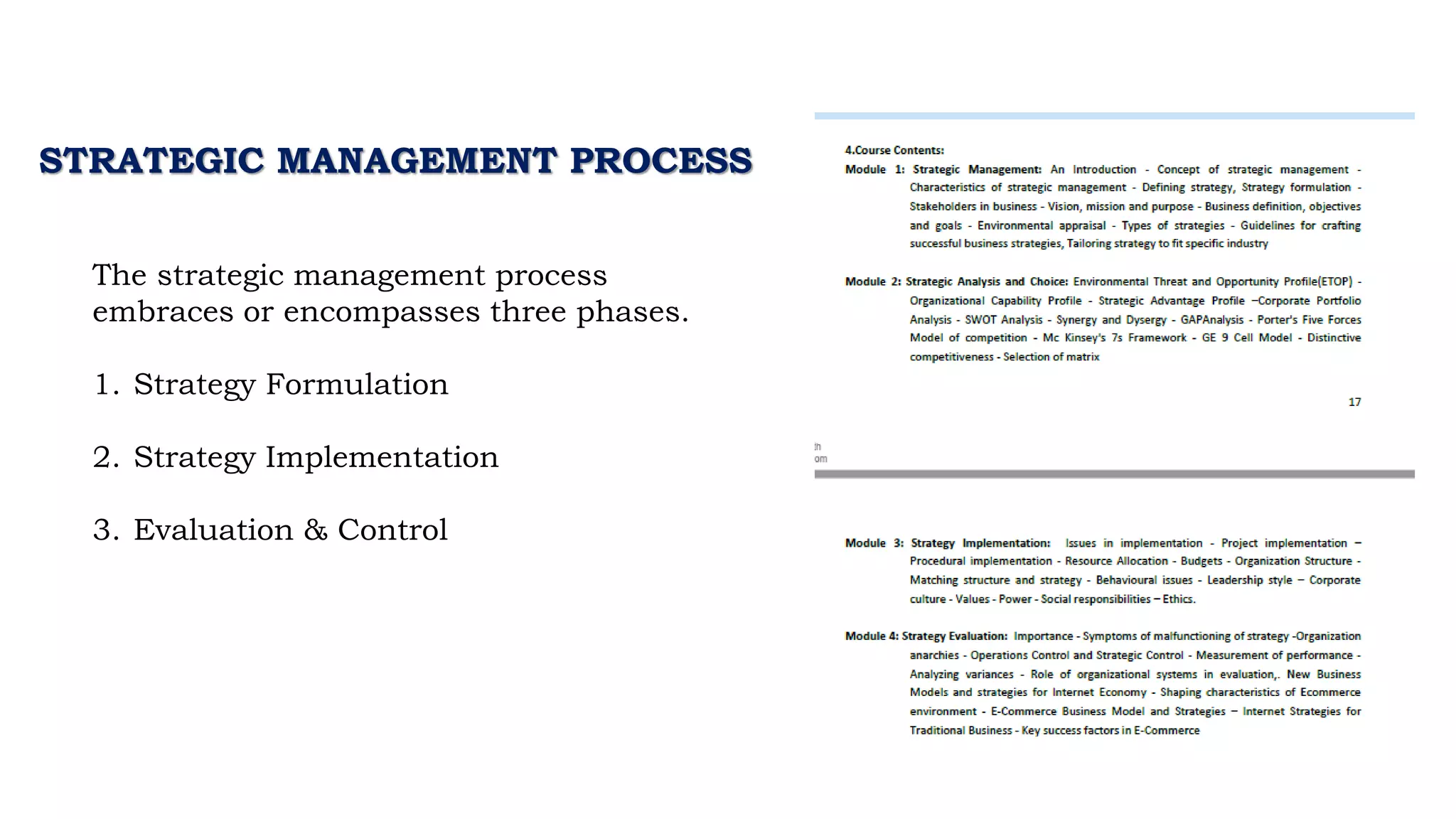
The strategic management process
embraces or encompasses three phases.
1. Strategy Formulation
2. Strategy Implementation
3. Evaluation & Control
STRATEGIC MANAGEMENT PROCESS
 Strategy formulation is the process of determining appropriate courses of action
for achieving organisational objectives and thereby accomplishing organisational
purpose.
 Strategies are formulated at different levels based on the level of operations and
management. These levels are – Corporate level, Business level, and Functional
level. The different levels of the strategy involve different strategic alternatives for
different objectives of the organization.
STRATEGY FORMULATION
 It involves four steps
A. Determination of Vision, Mission, Goals, Objectives, and goals
B. Analysis of Strengths & Weaknesses of the firm and environmental
opportunities & threats (SWOT)
C. Generalisation of alternative strategies
D. Choosing the most appropriate strategies
VISION
 A vision of an organization is the expectation that the organization wants to
fulfil.
Features
 It encompasses a state or position which an organization wants to achieve in the
future
 It showcases a futuristic picture of an organization.
 It acts as a guide for an organization. An organization which has a formally written
vision is able to concentrate better on its functional abilities.
 It involves movement from the current position to the future position.
 A vision is a long-term concept as it remains the same for several years, for
example, 15 years.
 The aim of the vision statement is to provide an answer to the question –
‘What an organization wants to become?’
The vision statement of an organization should be achievable and measurable. It
should be ambitious but not over-ambitious. It should be such that it is attained
within the limits of available resources. It should be proposed keeping in mind
the current environment as well as possible changes in the future environment.
The vision of an organization is represented in the form of a vision
statement.
Strategic Management

Strategic Management

  • 1.
    STRATEGIC MANAGEMENT SECOND SEMESTER MASTEROF COMMERCE (M.COM.) University of Mysore Prepared By Dr. Harish D.
  • 2.
    What is Strategy? The term “strategy” is derived from the Greek word Strategos.  Which means Generalship, or the art of the generals.  The word strategy means the art of the general to fighting in a war.  The word strategy has entered in the field of management from the military services,  where it refers to applying the forces against an enemy to win a war.  The art of planning and directing overall military operations and movements in a war  It includes the determination and evaluation of alternative paths to an already established Mission or objective and, eventually, choice of the alternative to be adopted
  • 3.
    In the militarycontext, the strategy is a plan of action to win a war. Here military identifies the quality and quantity of resources to be mobilized and used at the most appropriate time in a suitable and convenient manner to win a war. In business parlance, there is no definite meaning of strategy, and used for many things like mobilizing and deploying resources systematically and attaining organizational goals or the pattern of common thread related to the organization’s activities derived from the policies, objectives, and goals. It is associated with pursuing those activities which move an organization from its current position to its desired future state. It also relates to resources necessary for implementing a plan or following a course of action.
  • 4.
    Igor Ansoff He wasa Russian American applied mathematician and business manager. He was as Father of Strategic Management
  • 5.
    Definition : According toAlfrred D. Chandler “Strategy is the determination of the basic long-term goals and objectives of an enterprise and the adoption of the course of action and allocation of resources necessary for carrying out these goals.
  • 6.
    Michael Porter definesstrategy as creating a unique and valued position involving a different activity from rivals or performing similar activities in different ways.
  • 7.
    Mintzberg has identifiedthe 5 P’s of strategy. A strategy could be a plan, a pattern, a position, a ploy, a perspective. Mintzberg Strategy is a mediating force between the organization and its environment: consistent patterns in streams of organizational decisions to deal with the environment.
  • 8.
    Meaning of StrategicManagement Strategies are a specific Programme of action for achieving the objectives of the organization by employing the organization's resources efficiently and economically.
  • 9.
    Characteristics of StrategicManagement  It is a guidelines to handle specific problems or crises  It is finding out of a judicious combinations of human resources and physical resources to be used for achieving the objectives of the organizations  The formulation of strategies involves taking into consideration external environment such as opportunities and challenges and internal environment such as organization's resources and capabilities
  • 10.
     Strategies dependon external and internal environmental factors which are not static but changing Strategies also dynamic and not static i.e., have to be adjusted to the changing circumstances  Strategies are formulated by the top management and not delegated to the lower level of management It is not the plan for any single function, it is the integration of all major functions of the firm.
  • 11.
     Strategic Managementis not a reaction to short term changes, it is response to long term perspectives  Strategic management is a qualitive nature and reflects a realistic imagination of how the future looks  Strategic management is a not a normative statement, it is a road map which describes in general term, the steps the firms should undertake to get there
  • 12.
    The strategic managementprocess embraces or encompasses three phases. 1. Strategy Formulation 2. Strategy Implementation 3. Evaluation & Control STRATEGIC MANAGEMENT PROCESS
  • 13.
     Strategy formulationis the process of determining appropriate courses of action for achieving organisational objectives and thereby accomplishing organisational purpose.  Strategies are formulated at different levels based on the level of operations and management. These levels are – Corporate level, Business level, and Functional level. The different levels of the strategy involve different strategic alternatives for different objectives of the organization. STRATEGY FORMULATION
  • 14.
     It involvesfour steps A. Determination of Vision, Mission, Goals, Objectives, and goals B. Analysis of Strengths & Weaknesses of the firm and environmental opportunities & threats (SWOT) C. Generalisation of alternative strategies D. Choosing the most appropriate strategies
  • 15.
    VISION  A visionof an organization is the expectation that the organization wants to fulfil. Features  It encompasses a state or position which an organization wants to achieve in the future  It showcases a futuristic picture of an organization.  It acts as a guide for an organization. An organization which has a formally written vision is able to concentrate better on its functional abilities.
  • 16.
     It involvesmovement from the current position to the future position.  A vision is a long-term concept as it remains the same for several years, for example, 15 years.  The aim of the vision statement is to provide an answer to the question – ‘What an organization wants to become?’ The vision statement of an organization should be achievable and measurable. It should be ambitious but not over-ambitious. It should be such that it is attained within the limits of available resources. It should be proposed keeping in mind the current environment as well as possible changes in the future environment. The vision of an organization is represented in the form of a vision statement.