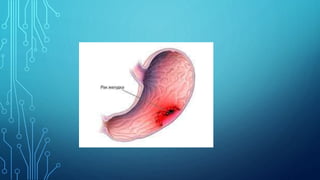
STOMACH CANCER
In the structure of oncological
morbidity, stomach cancer ranks third
after lung and skin cancer. The largest
number of patients with stomach
cancer are people aged 50 to 60 years
old, up to 25% of the total number of
cases fall at the age from 40 to 50
years old, men get sick 2 times more
often than women.
Etiology
Diet and lifestyle are of
particular importance for the
development of stomach cancer.
Exogenous risk factors for developing
stomach cancer include a diet with an
excess of table salt, in the form of salted
fish, meat, vegetables. Seafood, which
causes osmotic damage to the epithelium
and contributes to the colonization of the
gastric mucosa with Helicobacter pylori
bacteria. The risk of developing stomach
cancer increases with the predominance
of carbohydrates in food, with a lack of
vitamins and microelements.
Endogenous factors contributing to the
development of stomach cancer include:
duodenogastric reflux, malabsorption, genetic
and immunological factors, which, provided
that the protective mucous barrier in the
stomach is preserved, do not have any
carcinogenic properties.
Currently, the role of hereditary susceptibility
to carcinogenic effects in the development of
stomach cancer has been proven.
Precancerous diseases include:
1. Chronic gastritis
2. Adenomatous polyps of the stomach
3. Chronic stomach ulcer
4. Resected stomach for benign diseases
5. Menetrie's disease
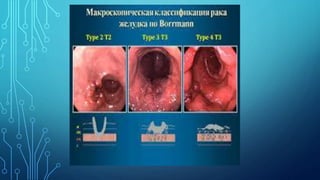
Anatomical types of cancer:
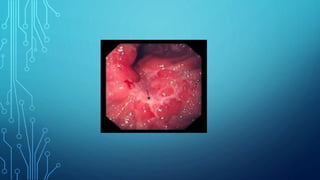
1.Polypoid and mushroom
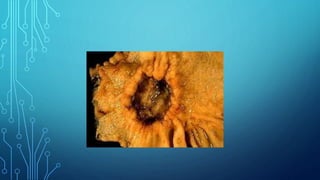
2. Cup-shaped and saucer-shaped cancer
3. Ulcerative infiltrative
4. Diffuse cancer
Histological options:
1. Adenocarcinoma
2. Signet cell carcinoma
3. Undifferentiated cancer
4. Glandular squamous cell carcinoma
5. Squamous cell carcinoma
6. Unclassified cance
Metastatic pathways:
1. Lymphagenous
2. Hematogenous
3. Implant
Stages of stomach cancer:
T1 - tumor delimited by the gastric
mucosa and submucosa
T2 - the tumor infiltrates the stomach
wall to the subserous membrane
T3 - the tumor grows into the serous
membrane without invasion of
neighboring organs
T 4 - the tumor grows to neighboring
organs
Complications:
Stomach cancer, even in the operable
stage, can cause a number of severe
complications. There are 2 groups of
gastric cancer complications. The first of
them is the complications of the disease,
the second is the complications of the
operation, the postoperative period and
methods of treatment.
Depending on the prevailing etiological and
pathogenetic mechanisms, the following
subgroups of complications were identified:
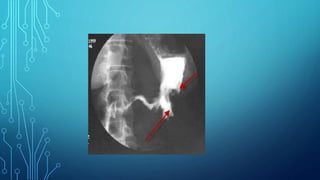
1) Due to the stenosing effect of the primary
tumor
2) Caused by the decay and ulceration of the
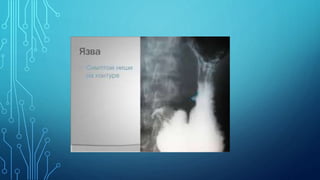
primary tumor
3) Predominantly toxic in origin
4) Infectious
5) Thromboembolic
6) Mixed group
Clinic
All complaints can be divided into
2 groups:
1. Changes in general condition
2. Gastric complaints
By the nature of the course of the
disease, there are three main clinical
variants of stomach cancer.
1. Latent
2. Painless
3.With pain syndrome
In the latent form, gastric cancer is
asymptomatic, the first signs of the
disease appear in the form of a
palpable tumor, a defect in filling
the stomach during an X-ray
examination, massive bleeding,
distant metastases or symptoms
caused by tumor invasion into
nearby organs.
Painless forms of stomach cancer
are observed most often, and pain
syndrome is added in the terminal
period of the disease.
Small Signs Syndrome includes the
following symptoms:
1) Unmotivated general weakness,
decreased ability to work, rapid
fatigability
2) Anorexia - unmotivated persistent loss
of appetite up to the aversion to food.
3) Phenomena of "gastric discomort" - a
feeling of fullness in the stomach, a
feeling of pressure, heaviness and pain in
the epigastrium.
4) Unreasonable weight loss
5) Mental depression, apathy, some
alienation, loss of interest in the
environment.
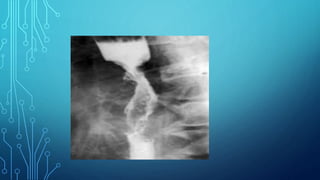
With tumors of the cardiac part of the
stomach, dysphagia, pain behind the

sternum, reminiscent of pain with angina
pectoris, and excessive salivation may
join the listed symptoms.
Patients complain of pain in the
epigastric region, which can radiate to
the lower back and be associated with
food intake. Pain in stomach cancer
occurs soon after eating and is localized
in the epigastric region. It can last for a
long time, the pain resembles the pain of
gastritis with secretory insufficiency. The
pain does not subside after eating.
Diagnostics
1. Complaints
2. Anamnesis
3. Palpation
4. Study of gastric contents
5. Blood test
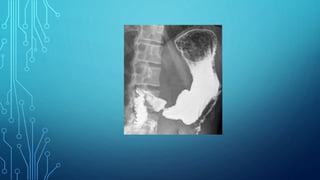
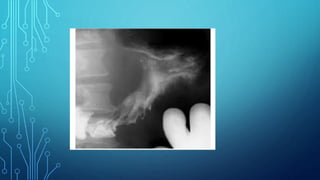
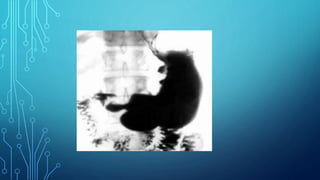
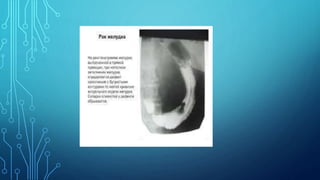
6. Fluoroscopy of the stomach: the main
symptoms are filling defect, the presence of
aperestaltic zones. Apithetic relief of the
mucous membrane, local thickening or
breakage of the folds of the mucous membrane.
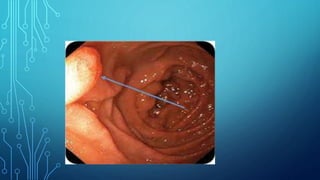
7. Gastroesophagoduodenoscopy
8. Biopsy
Treatment
The choice of method and scope of treatment
for gastric cancer is determined by:
1) Prevalence - tumor stage
2) The presence of distant metastases
3) Localization and size of the tumor
4) Morphological characteristics of the
neoplasm
5) The age and general condition of patients
6) The presence of concomitant pathology
Methods of treatment for patients with
stomach cancer are: surgery, radiation
therapy, chemotherapy, combined
treatment.
The main method is surgical. The goal is
to remove the part of the stomach
affected by the tumor within healthy
tissues, taking into account its intramural
distribution in a single block with
regional lymph nodes.
Indications for surgery: localization,
prevalence, the presence of
metastases in regional lymph nodes,
the nature of the anatomical tumor
growth, tumor invasion into
adjacent organs.
Contraindications: advanced age,
severe exhaustion or obesity, the
presence of severe concomitant
diseases - diabetes mellitus, cardiac
disorders, renal and hepatic failure.
Basic radical operations:
distal subtotal gastrectomy,
gastrectomy, proximal
subtotal gastric resection.
stomach cancer.pptx
stomach cancer.pptx
stomach cancer.pptx
stomach cancer.pptx
stomach cancer.pptx
stomach cancer.pptx
stomach cancer.pptx
stomach cancer.pptx
stomach cancer.pptx
stomach cancer.pptx
stomach cancer.pptx
stomach cancer.pptx
stomach cancer.pptx
stomach cancer.pptx

stomach cancer.pptx

  • 1.
  • 2.
    In the structureof oncological morbidity, stomach cancer ranks third after lung and skin cancer. The largest number of patients with stomach cancer are people aged 50 to 60 years old, up to 25% of the total number of cases fall at the age from 40 to 50 years old, men get sick 2 times more often than women.
  • 3.
    Etiology Diet and lifestyleare of particular importance for the development of stomach cancer.
  • 4.
    Exogenous risk factorsfor developing stomach cancer include a diet with an excess of table salt, in the form of salted fish, meat, vegetables. Seafood, which causes osmotic damage to the epithelium and contributes to the colonization of the gastric mucosa with Helicobacter pylori bacteria. The risk of developing stomach cancer increases with the predominance of carbohydrates in food, with a lack of vitamins and microelements.
  • 5.
    Endogenous factors contributingto the development of stomach cancer include: duodenogastric reflux, malabsorption, genetic and immunological factors, which, provided that the protective mucous barrier in the stomach is preserved, do not have any carcinogenic properties.
  • 6.
    Currently, the roleof hereditary susceptibility to carcinogenic effects in the development of stomach cancer has been proven.
  • 7.
    Precancerous diseases include: 1.Chronic gastritis 2. Adenomatous polyps of the stomach 3. Chronic stomach ulcer 4. Resected stomach for benign diseases 5. Menetrie's disease
  • 8.
    Anatomical types ofcancer: 1.Polypoid and mushroom 2. Cup-shaped and saucer-shaped cancer 3. Ulcerative infiltrative 4. Diffuse cancer
  • 9.
    Histological options: 1. Adenocarcinoma 2.Signet cell carcinoma 3. Undifferentiated cancer 4. Glandular squamous cell carcinoma 5. Squamous cell carcinoma 6. Unclassified cance
  • 10.
  • 11.
    Stages of stomachcancer: T1 - tumor delimited by the gastric mucosa and submucosa T2 - the tumor infiltrates the stomach wall to the subserous membrane T3 - the tumor grows into the serous membrane without invasion of neighboring organs T 4 - the tumor grows to neighboring organs
  • 12.
    Complications: Stomach cancer, evenin the operable stage, can cause a number of severe complications. There are 2 groups of gastric cancer complications. The first of them is the complications of the disease, the second is the complications of the operation, the postoperative period and methods of treatment.
  • 13.
    Depending on theprevailing etiological and pathogenetic mechanisms, the following subgroups of complications were identified: 1) Due to the stenosing effect of the primary tumor 2) Caused by the decay and ulceration of the primary tumor 3) Predominantly toxic in origin 4) Infectious 5) Thromboembolic 6) Mixed group
  • 14.
    Clinic All complaints canbe divided into 2 groups: 1. Changes in general condition 2. Gastric complaints
  • 15.
    By the natureof the course of the disease, there are three main clinical variants of stomach cancer. 1. Latent 2. Painless 3.With pain syndrome
  • 16.
    In the latentform, gastric cancer is asymptomatic, the first signs of the disease appear in the form of a palpable tumor, a defect in filling the stomach during an X-ray examination, massive bleeding, distant metastases or symptoms caused by tumor invasion into nearby organs.
  • 17.
    Painless forms ofstomach cancer are observed most often, and pain syndrome is added in the terminal period of the disease.
  • 18.
    Small Signs Syndromeincludes the following symptoms: 1) Unmotivated general weakness, decreased ability to work, rapid fatigability 2) Anorexia - unmotivated persistent loss of appetite up to the aversion to food. 3) Phenomena of "gastric discomort" - a feeling of fullness in the stomach, a feeling of pressure, heaviness and pain in the epigastrium. 4) Unreasonable weight loss 5) Mental depression, apathy, some alienation, loss of interest in the environment.
  • 19.
    With tumors ofthe cardiac part of the stomach, dysphagia, pain behind the sternum, reminiscent of pain with angina pectoris, and excessive salivation may join the listed symptoms.
  • 20.
    Patients complain ofpain in the epigastric region, which can radiate to the lower back and be associated with food intake. Pain in stomach cancer occurs soon after eating and is localized in the epigastric region. It can last for a long time, the pain resembles the pain of gastritis with secretory insufficiency. The pain does not subside after eating.
  • 21.
    Diagnostics 1. Complaints 2. Anamnesis 3.Palpation 4. Study of gastric contents 5. Blood test 6. Fluoroscopy of the stomach: the main symptoms are filling defect, the presence of aperestaltic zones. Apithetic relief of the mucous membrane, local thickening or breakage of the folds of the mucous membrane. 7. Gastroesophagoduodenoscopy 8. Biopsy
  • 22.
    Treatment The choice ofmethod and scope of treatment for gastric cancer is determined by: 1) Prevalence - tumor stage 2) The presence of distant metastases 3) Localization and size of the tumor 4) Morphological characteristics of the neoplasm 5) The age and general condition of patients 6) The presence of concomitant pathology
  • 23.
    Methods of treatmentfor patients with stomach cancer are: surgery, radiation therapy, chemotherapy, combined treatment. The main method is surgical. The goal is to remove the part of the stomach affected by the tumor within healthy tissues, taking into account its intramural distribution in a single block with regional lymph nodes.
  • 24.
    Indications for surgery:localization, prevalence, the presence of metastases in regional lymph nodes, the nature of the anatomical tumor growth, tumor invasion into adjacent organs.
  • 25.
    Contraindications: advanced age, severeexhaustion or obesity, the presence of severe concomitant diseases - diabetes mellitus, cardiac disorders, renal and hepatic failure.
  • 26.
    Basic radical operations: distalsubtotal gastrectomy, gastrectomy, proximal subtotal gastric resection.