

Cleaning to Maintain a Healthy Home
Steps to a Healthy Home Series
2
Cleaning
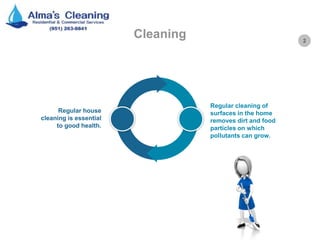
Regular cleaning of
surfaces in the home
removes dirt and food
particles on which
pollutants can grow.
Regular house
cleaning is essential
to good health.
3Household Pollutants to Control
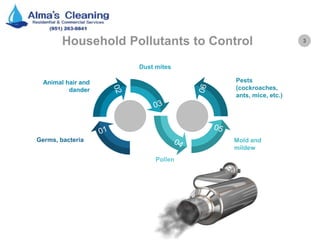
Dust mites
Pollen
Germs, bacteria
Animal hair and
dander
Mold and
mildew
Pests
(cockroaches,
ants, mice, etc.)
4
Reasons to Clean
01 02 03 04 05 06
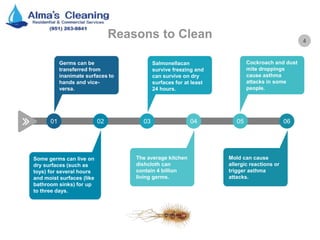
Germs can be
transferred from
inanimate surfaces to
hands and vice-
versa.
Salmonellacan
survive freezing and
can survive on dry
surfaces for at least
24 hours.
Cockroach and dust
mite droppings
cause asthma
attacks in some
people.
Mold can cause
allergic reactions or
trigger asthma
attacks.
The average kitchen
dishcloth can
contain 4 billion
living germs.
Some germs can live on
dry surfaces (such as
toys) for several hours
and moist surfaces (like
bathroom sinks) for up
to three days.
5
Cleaning for a Healthier Home
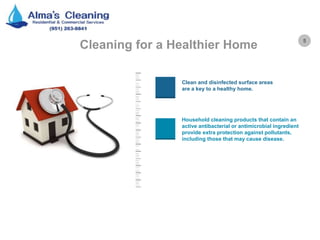
Clean and disinfected surface areas
are a key to a healthy home.
Household cleaning products that contain an
active antibacterial or antimicrobial ingredient
provide extra protection against pollutants,
including those that may cause disease.
6
Cleaning Products
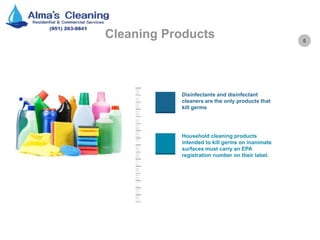
Disinfectants and disinfectant
cleaners are the only products that
kill germs
Household cleaning products
intended to kill germs on inanimate
surfaces must carry an EPA
registration number on their label.
7
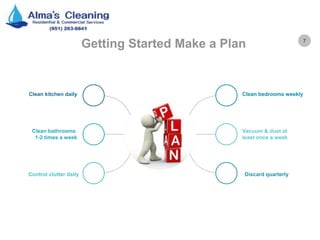
Getting Started Make a Plan
Clean bedrooms weeklyClean kitchen daily
Vacuum & dust at
least once a week
Clean bathrooms
1-2 times a week
Discard quarterlyControl clutter daily
8Cleaning Plan
Break your
cleaning into
small tasks.
Spread it out over
several days
instead of doing it
all at once.
Involve all family
members in the
cleaning.
Clean one room
at a time.
9
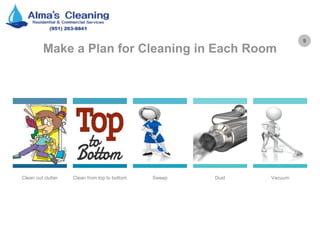
Make a Plan for Cleaning in Each Room
Clean out clutter Clean from top to bottom Sweep Dust Vacuum
10
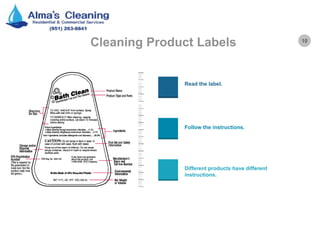
Cleaning Product Labels
Read the label.
Follow the instructions.
Different products have different
instructions.
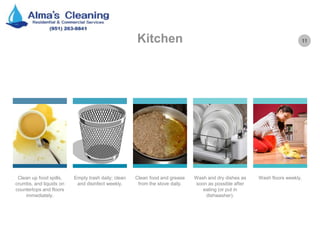
11Kitchen
Clean up food spills,
crumbs, and liquids on
countertops and floors
immediately.
Empty trash daily; clean
and disinfect weekly.
Clean food and grease
from the stove daily.
Wash and dry dishes as
soon as possible after
eating (or put in
dishwasher).
Wash floors weekly.
12
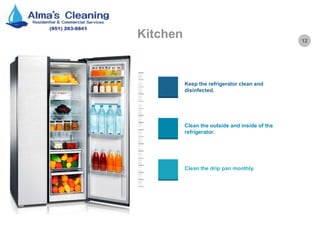
Kitchen
Keep the refrigerator clean and
disinfected.
Clean the outside and inside of the
refrigerator.
Clean the drip pan monthly.
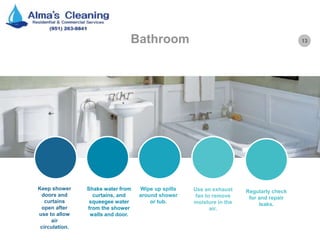
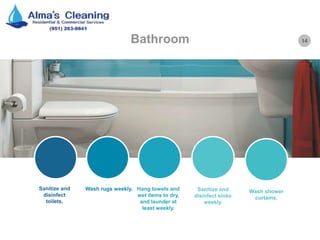
13Bathroom
Keep shower
doors and
curtains
open after
use to allow
air
circulation.
Shake water from
curtains, and
squeegee water
from the shower
walls and door.
Wipe up spills
around shower
or tub.
Use an exhaust
fan to remove
moisture in the
air.
Regularly check
for and repair
leaks.
14Bathroom
Sanitize and
disinfect
toilets.
Wash rugs weekly. Hang towels and
wet items to dry,
and launder at
least weekly.
Sanitize and
disinfect sinks
weekly.
Wash shower
curtains.
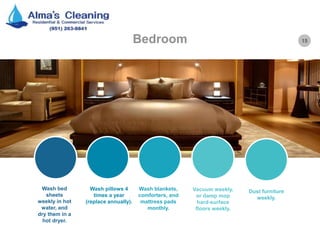
15Bedroom
Wash bed
sheets
weekly in hot
water, and
dry them in a
hot dryer.
Wash pillows 4
times a year
(replace annually).
Wash blankets,
comforters, and
mattress pads
monthly.
Vacuum weekly,
or damp mop
hard-surface
floors weekly.
Dust furniture
weekly.
16
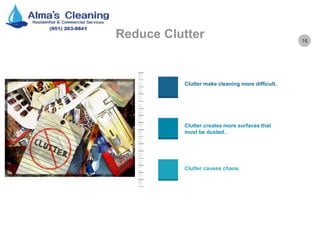
Reduce Clutter
Clutter make cleaning more difficult.
Clutter creates more surfaces that
must be dusted.
Clutter causes chaos.
17
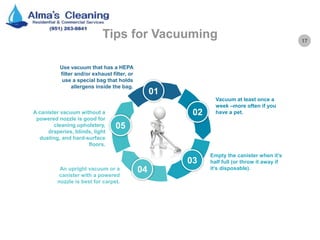
Tips for Vacuuming
01
02
03
04
05
Vacuum at least once a
week –more often if you
have a pet.
Empty the canister when it’s
half full (or throw it away if
it’s disposable).
A canister vacuum without a
powered nozzle is good for
cleaning upholstery,
draperies, blinds, light
dusting, and hard-surface
floors.
An upright vacuum or a
canister with a powered
nozzle is best for carpet.
Use vacuum that has a HEPA
filter and/or exhaust filter, or
use a special bag that holds
allergens inside the bag.
18
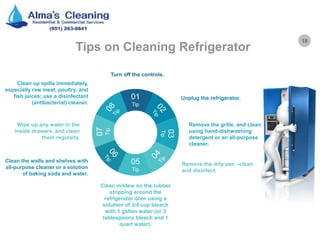
Tips on Cleaning Refrigerator
01
Tip
05
Tip
03
Tip
07
Tip
Turn off the controls.
Clean mildew on the rubber
stripping around the
refrigerator door using a
solution of 3/4 cup bleach
with 1 gallon water (or 3
tablespoons bleach and 1
quart water).
Unplug the refrigerator.
Clean up spills immediately,
especially raw meat, poultry, and
fish juices; use a disinfectant
(antibacterial) cleaner.
Remove the drip pan –clean
and disinfect.
Clean the walls and shelves with
all-purpose cleaner or a solution
of baking soda and water.
Remove the grille, and clean
using hand-dishwashing
detergent or an all-purpose
cleaner.
Wipe up any water in the
inside drawers, and clean
them regularly.
19
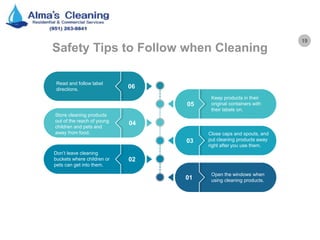
Safety Tips to Follow when Cleaning
Open the windows when
using cleaning products.01
Don’t leave cleaning
buckets where children or
pets can get into them.
02
Close caps and spouts, and
put cleaning products away
right after you use them.
03
Store cleaning products
out of the reach of young
children and pets and
away from food.
04
Keep products in their
original containers with
their labels on.
05
Read and follow label
directions. 06
20
Cleaning for Health
Resources Cleaning for Health
American Lung Association
http://www.lung.org/healthy-
air/home/resources/cleaning-supplies.html
New Cleaning Product Trends
Green Household Cleaning
http://www.prnewswire.com/news-releases/report-
growth-opportunities-remain-for-green-household-
cleaning-products-market-300075221.html
21
Alma’s Cleaning Services
Corona, CA
alma@almacleans.com
951-263-8841
If you are interested in hearing
more about our maid and
residential service or would like a
quote for office and janitorial
cleaning, please contact us.

Steps To Healthy House Cleaning Services

  • 1.
    Cleaning to Maintaina Healthy Home Steps to a Healthy Home Series
  • 2.
    2 Cleaning Regular cleaning of surfacesin the home removes dirt and food particles on which pollutants can grow. Regular house cleaning is essential to good health.
  • 3.
    3Household Pollutants toControl Dust mites Pollen Germs, bacteria Animal hair and dander Mold and mildew Pests (cockroaches, ants, mice, etc.)
  • 4.
    4 Reasons to Clean 0102 03 04 05 06 Germs can be transferred from inanimate surfaces to hands and vice- versa. Salmonellacan survive freezing and can survive on dry surfaces for at least 24 hours. Cockroach and dust mite droppings cause asthma attacks in some people. Mold can cause allergic reactions or trigger asthma attacks. The average kitchen dishcloth can contain 4 billion living germs. Some germs can live on dry surfaces (such as toys) for several hours and moist surfaces (like bathroom sinks) for up to three days.
  • 5.
    5 Cleaning for aHealthier Home Clean and disinfected surface areas are a key to a healthy home. Household cleaning products that contain an active antibacterial or antimicrobial ingredient provide extra protection against pollutants, including those that may cause disease.
  • 6.
    6 Cleaning Products Disinfectants anddisinfectant cleaners are the only products that kill germs Household cleaning products intended to kill germs on inanimate surfaces must carry an EPA registration number on their label.
  • 7.
    7 Getting Started Makea Plan Clean bedrooms weeklyClean kitchen daily Vacuum & dust at least once a week Clean bathrooms 1-2 times a week Discard quarterlyControl clutter daily
  • 8.
    8Cleaning Plan Break your cleaninginto small tasks. Spread it out over several days instead of doing it all at once. Involve all family members in the cleaning. Clean one room at a time.
  • 9.
    9 Make a Planfor Cleaning in Each Room Clean out clutter Clean from top to bottom Sweep Dust Vacuum
  • 10.
    10 Cleaning Product Labels Readthe label. Follow the instructions. Different products have different instructions.
  • 11.
    11Kitchen Clean up foodspills, crumbs, and liquids on countertops and floors immediately. Empty trash daily; clean and disinfect weekly. Clean food and grease from the stove daily. Wash and dry dishes as soon as possible after eating (or put in dishwasher). Wash floors weekly.
  • 12.
    12 Kitchen Keep the refrigeratorclean and disinfected. Clean the outside and inside of the refrigerator. Clean the drip pan monthly.
  • 13.
    13Bathroom Keep shower doors and curtains openafter use to allow air circulation. Shake water from curtains, and squeegee water from the shower walls and door. Wipe up spills around shower or tub. Use an exhaust fan to remove moisture in the air. Regularly check for and repair leaks.
  • 14.
    14Bathroom Sanitize and disinfect toilets. Wash rugsweekly. Hang towels and wet items to dry, and launder at least weekly. Sanitize and disinfect sinks weekly. Wash shower curtains.
  • 15.
    15Bedroom Wash bed sheets weekly inhot water, and dry them in a hot dryer. Wash pillows 4 times a year (replace annually). Wash blankets, comforters, and mattress pads monthly. Vacuum weekly, or damp mop hard-surface floors weekly. Dust furniture weekly.
  • 16.
    16 Reduce Clutter Clutter makecleaning more difficult. Clutter creates more surfaces that must be dusted. Clutter causes chaos.
  • 17.
    17 Tips for Vacuuming 01 02 03 04 05 Vacuumat least once a week –more often if you have a pet. Empty the canister when it’s half full (or throw it away if it’s disposable). A canister vacuum without a powered nozzle is good for cleaning upholstery, draperies, blinds, light dusting, and hard-surface floors. An upright vacuum or a canister with a powered nozzle is best for carpet. Use vacuum that has a HEPA filter and/or exhaust filter, or use a special bag that holds allergens inside the bag.
  • 18.
    18 Tips on CleaningRefrigerator 01 Tip 05 Tip 03 Tip 07 Tip Turn off the controls. Clean mildew on the rubber stripping around the refrigerator door using a solution of 3/4 cup bleach with 1 gallon water (or 3 tablespoons bleach and 1 quart water). Unplug the refrigerator. Clean up spills immediately, especially raw meat, poultry, and fish juices; use a disinfectant (antibacterial) cleaner. Remove the drip pan –clean and disinfect. Clean the walls and shelves with all-purpose cleaner or a solution of baking soda and water. Remove the grille, and clean using hand-dishwashing detergent or an all-purpose cleaner. Wipe up any water in the inside drawers, and clean them regularly.
  • 19.
    19 Safety Tips toFollow when Cleaning Open the windows when using cleaning products.01 Don’t leave cleaning buckets where children or pets can get into them. 02 Close caps and spouts, and put cleaning products away right after you use them. 03 Store cleaning products out of the reach of young children and pets and away from food. 04 Keep products in their original containers with their labels on. 05 Read and follow label directions. 06
  • 20.
    20 Cleaning for Health ResourcesCleaning for Health American Lung Association http://www.lung.org/healthy- air/home/resources/cleaning-supplies.html New Cleaning Product Trends Green Household Cleaning http://www.prnewswire.com/news-releases/report- growth-opportunities-remain-for-green-household- cleaning-products-market-300075221.html
  • 21.
    21 Alma’s Cleaning Services Corona,CA alma@almacleans.com 951-263-8841 If you are interested in hearing more about our maid and residential service or would like a quote for office and janitorial cleaning, please contact us.

Editor's Notes

  • #3 Regular housecleaning is essential to good health. Regular cleaning of surfaces in the home removes dirt and food particles on which pollutants can grow.
  • #4 This slide shows a listing of some of the common pollutants found in households. They can be greatly reduced by regular cleaning.
  • #5 Germs can enter our bodies through the mouth, nose, eyes, and breaks in the skin without our even knowing we've been infected. Americans spend about $5 billion each year on their colds, about $3 billion on doctors’ visits, and $2 billion on treatments. An estimated 60 million days of school and 50 million days of work are lost annually because of the common cold. Some 5.5 million visits to doctors’ offices each year are due to skin infections. Since most people spend at least half of their lives inside their homes, it only makes sense that we work to make that air as healthy as possible.
  • #6 Break your cleaning into small tasks. Spread it out over several days instead of doing it all at once. Household cleaning products that contain an active antibacterial or antimicrobial ingredient provide extra protection against pollutants, including those that may cause disease. The words antibacterial and antimicrobial are often used interchangeably. Strictly speaking, however, antimicrobial means activity against a wide variety of microorganisms, while antibacterial refers to activity against bacteria. Together with good cleaning habits and practices, these products play an important role in helping to prevent germs from spreading.
  • #7 Depending on their active ingredients and specific formulation, these products may kill a wide variety of microorganisms that can live on household surfaces, such as foodborne bacteria like Salmonella; the cold virus; and fungus that causes athlete’s foot. Household cleaning products designed to kill germs on surfaces have been available for more than 100 years. They are regulated by the U.S. Environmental Protection Agency (EPA).
  • #12 Cockroaches are attracted to food and moisture – including crumbs, cooking grease, and plain water. It is important to remove or tightly cover all food and water, especially at night when cockroaches are more active. Cockroaches are often found around the refrigerator because of food spills and dampness. These spills and moisture also grow mold and mildew.
  • #13 To clean your refrigerator, follow these Tips: Turn off the controls. Unplug the refrigerator. Remove the grille, and clean using a hand-dishwashing detergent or an all-purpose cleaner. Remove the drip pan; then clean and disinfect it. Clean mildew on the rubber stripping around the refrigerator door using a solution of ¾ cup bleach with 1 gallon water (or 3 tablespoon bleach and 1 quart water). Clean the walls and shelves with an all-purpose cleaner or a solution of baking soda and water. Wipe up any water in the inside drawers, and clean them regularly. Clean up spills immediately, especially raw meat, poultry, and fish juices. Use a disinfectant (antibacterial) cleaner.
  • #16 Dust mites in the bedroom are a trigger for people with allergies and asthma. Every home has dust mites. You can’t see them. They feed on invisible skin flakes in pillows, bedding, upholstery, and carpeting. You can control them by keeping bedding clean and by controlling dust. If someone in the family has allergies or asthma, use special dust mite-proof covers to keep dust mites from going through pillows and mattresses. They’re sometimes called “allergen-impermeable” covers. Wipe the covers with a damp cloth every week. If you don’t use covers, wash pillows at least 4 times a year, and replace them every year. If a family member has allergies or asthma, it is better if you don’t use carpet in their bedroom. Use linoleum, vinyl, tile, or wood flooring and washable area rugs. Wash the rugs once a week. If you have carpet in the bedroom, vacuum at least once a week. If you have pets in the bedroom, vacuum more frequently. If you have hard-surface floors, wet mop weekly. Dust furniture weekly, using a dusting product or a special cloth that attracts dust (a dry cloth spreads dust around). Wipe blinds weekly with a clean, damp cloth. Wash curtains monthly. If you have drapes, vacuum them weekly. Keep closet doors closed.
  • #20 Open windows when using cleaning products, especially if the asthmatic person is home while you are cleaning. Ask that person to go into another room when you are cleaning. Don’t leave cleaning buckets where children or pets can get into them. Young children can drown in very small amounts of liquid. Large buckets are especially dangerous. Keep products in their original containers with their labels on. It’s important to know what the product is if a child accidentally swallows it. Never re-use an empty bottle or box for a different product. Read and follow label directions. Call the toll-free (1-800) number on the product’s label if you have questions.