Download to read offline
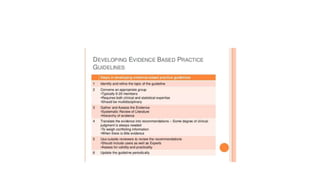



The document outlines the steps to develop clinical practice guidelines. The first step is to identify knowledge gaps and define the clinical problem, scope, and target audience. Topics should be high priority and feasible. The need for guidelines can also be evaluated by surveying stakeholders. The purposes of guidelines are to describe evidence-based practice for common musculoskeletal disorders and identify appropriate interventions and outcomes. However, guidelines also have pros and cons when applying to patients. While they can reduce events compared to no guidelines, they are not widely used in practice due to issues with compliance and applicability.


