Image Steganography
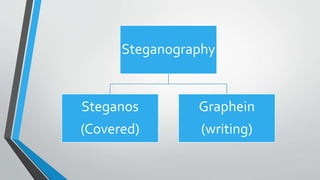
Steganography 
Steganos 
(Covered) 
Graphein 
(writing)
Steganography vs Cryptography 
• Cryptography is the science of encrypting data in such a way that one 
cannot understand the encrypted message, whereas in steganography the 
mere existence of data is concealed, such that even its presence cannot be 
noticed
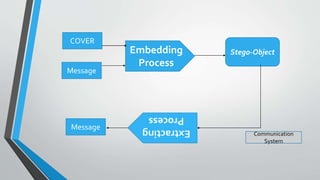
COVER 
Message 
Embedding 
Process 
Stego-Object 
Message 
Communication 
System
Input data used 
• Cover of grayscale type (1000X674) 
• Message of grayscale type (256x256) 
• Why grayscale?
Cover Image 
Message Image 
Stego-Image
Embedding Algorithms
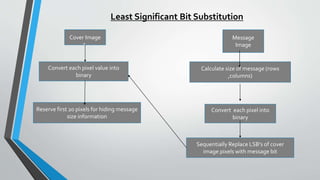
Least Significant Bit Substitution 
Cover Image Message 
Image 
Calculate size of message (rows 
,columns) 
Convert each pixel value into 
binary 
Reserve first 20 pixels for hiding message 
size information 
Convert each pixel into 
binary 
Sequentially Replace LSB’s of cover 
image pixels with message bit
Cover Image 
Message Image 
Stego-Image
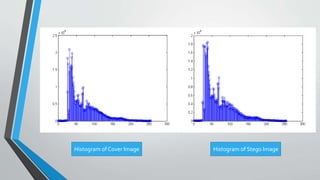
Histogram of Cover Image Histogram of Stego Image
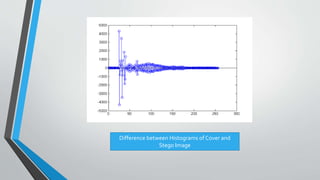
Difference between Histograms of Cover and 
Stego Image
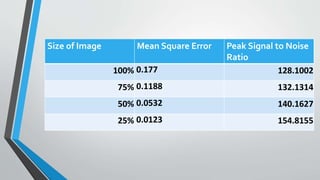
Size of Image Mean Square Error Peak Signal to Noise 
Ratio 
100% 0.177 128.1002 
75% 0.1188 132.1314 
50% 0.0532 140.1627 
25% 0.0123 154.8155
LSB with Randomization 
 Instead to sequentially replacing the LSB’s of pixels of cover image with 
message bits ,the replacement is done on the basis of stego-key. 
 Stego-key is a stream of pseudo random numbers which lie between 0 and 
size of cover image
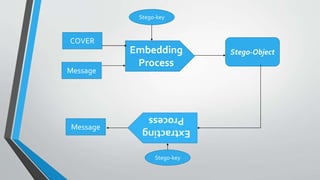
COVER 
Message 
Embedding 
Process 
Stego-Object 
Message 
Stego-key 
Stego-key
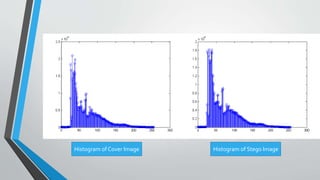
Histogram of Cover Image Histogram of Stego Image
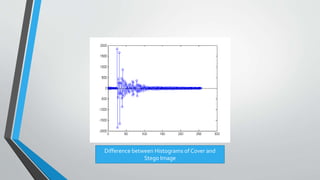
Difference between Histograms of Cover and 
Stego Image
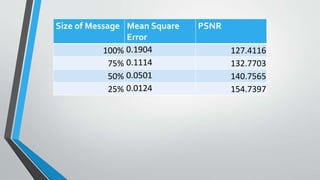
Size of Message Mean Square 
Error 
PSNR 
100% 0.1904 127.4116 
75% 0.1114 132.7703 
50% 0.0501 140.7565 
25% 0.0124 154.7397
Extraction 
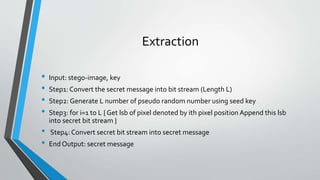
• Input: stego-image, key 
• Step1: Convert the secret message into bit stream (Length L) 
• Step2: Generate L number of pseudo random number using seed key 
• Step3: for i=1 to L { Get lsb of pixel denoted by ith pixel position Append this lsb 
into secret bit stream } 
• Step4: Convert secret bit stream into secret message 
• End Output: secret message
History… 
• Shaving the head 
• Wood tablet covered with wax 
• Microdots 
• Invisible ink 
• Vexierbild 
• Acrostic 
• Paper mask
• Book : Hypnerotomachia Poliphili 
• “ Poliam Frater Franciscus Columna peramavit”
Wisdom from cryptography… 
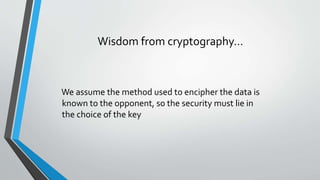
We assume the method used to encipher the data is 
known to the opponent, so the security must lie in 
the choice of the key
Example of public key steganography 
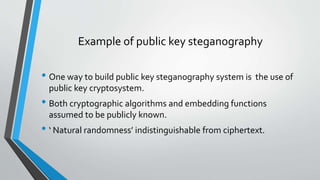
• One way to build public key steganography system is the use of 
public key cryptosystem. 
• Both cryptographic algorithms and embedding functions 
assumed to be publicly known. 
• ‘ Natural randomness’ indistinguishable from ciphertext.
Attackers.. 
• Active attacker is not able to change the cover and its semantics 
entirely, but only make minor changes so that the original and 
modified cover-objects stay perceptually or semantically similar. 
• Malicious attacker forges messages or starts steganography 
protocols under the name of one communication partner.
Active attackers… 
• Steganographic system is extremely sensitive to cover modification. 
• A system is called robust if the embedded information cannot be 
altered without making drastic changes to stego-object. 
• Trade-off between security and robustness. 
• Two approaches to make steganography robust: 
i. Making embedding process robust 
ii. Reverse the modifications that have been applied.
Active attackers… 
• Robust algorithms have to place the information in perceptually most 
significant parts of the signal, since information encoded in noise 
component can be removed without great effort. 
• It is known that embedding rules operating in some transform domain of 
cover signal can be much more robust to modification than embedding 
algorithms operating in time domain. 
• Information is hidden in plain sight, so obviously, in fact, that it is impossible 
to modify without gross modifications to the transmitted object.
LSB matching 
• In LSB replacement , the cover pixels with even values either 
remain unchanged or are increased by 1, while inverse is true for 
odd-valued pixels. 
• LSB replacement can be easily detected. 
• In LSB matching, 1 is either randomly added to or subtracted 
from cover pixel value. It is much harder to detect.
Mielikainen’s improved LSB matching 
• Embedding is performed using a pair of pixels as a unit, where 
the LSB of the first pixel carries one bit of information, and a 
function of two pixel values carries another bit of information. 
• The modified method allows hiding the same payload as LSB 
matching but with fewer changes to the cover image.
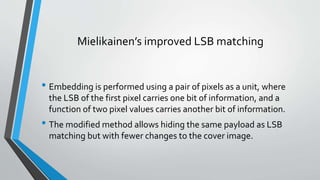
Cover…
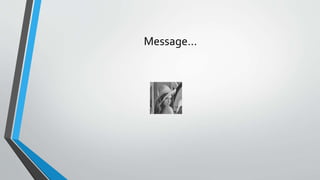
Message…
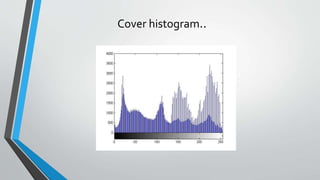
Cover histogram..
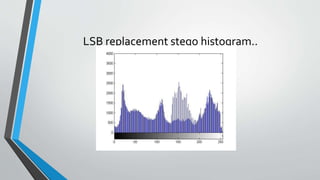
LSB replacement stego histogram..
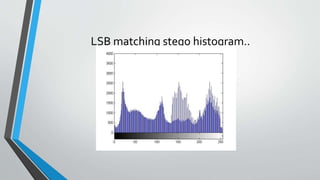
LSB matching stego histogram..
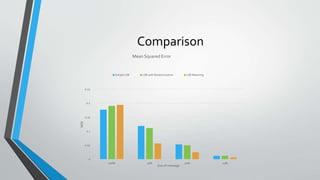
Comparison 
0.25 
0.2 
0.15 
0.1 
0.05 
0 
Mean Squared Error 
Simple LSB LSB with Randomization LSB Matching 
100% 75% 50% 25% 
MSE 
Size of message
Thankyou

Steganography

  • 1.
  • 2.
  • 3.
    Steganography vs Cryptography • Cryptography is the science of encrypting data in such a way that one cannot understand the encrypted message, whereas in steganography the mere existence of data is concealed, such that even its presence cannot be noticed
  • 4.
    COVER Message Embedding Process Stego-Object Message Communication System
  • 5.
    Input data used • Cover of grayscale type (1000X674) • Message of grayscale type (256x256) • Why grayscale?
  • 6.
    Cover Image MessageImage Stego-Image
  • 7.
  • 8.
    Least Significant BitSubstitution Cover Image Message Image Calculate size of message (rows ,columns) Convert each pixel value into binary Reserve first 20 pixels for hiding message size information Convert each pixel into binary Sequentially Replace LSB’s of cover image pixels with message bit
  • 9.
    Cover Image MessageImage Stego-Image
  • 10.
    Histogram of CoverImage Histogram of Stego Image
  • 11.
    Difference between Histogramsof Cover and Stego Image
  • 12.
    Size of ImageMean Square Error Peak Signal to Noise Ratio 100% 0.177 128.1002 75% 0.1188 132.1314 50% 0.0532 140.1627 25% 0.0123 154.8155
  • 13.
    LSB with Randomization  Instead to sequentially replacing the LSB’s of pixels of cover image with message bits ,the replacement is done on the basis of stego-key.  Stego-key is a stream of pseudo random numbers which lie between 0 and size of cover image
  • 14.
    COVER Message Embedding Process Stego-Object Message Stego-key Stego-key
  • 15.
    Histogram of CoverImage Histogram of Stego Image
  • 16.
    Difference between Histogramsof Cover and Stego Image
  • 17.
    Size of MessageMean Square Error PSNR 100% 0.1904 127.4116 75% 0.1114 132.7703 50% 0.0501 140.7565 25% 0.0124 154.7397
  • 18.
    Extraction • Input:stego-image, key • Step1: Convert the secret message into bit stream (Length L) • Step2: Generate L number of pseudo random number using seed key • Step3: for i=1 to L { Get lsb of pixel denoted by ith pixel position Append this lsb into secret bit stream } • Step4: Convert secret bit stream into secret message • End Output: secret message
  • 19.
    History… • Shavingthe head • Wood tablet covered with wax • Microdots • Invisible ink • Vexierbild • Acrostic • Paper mask
  • 21.
    • Book :Hypnerotomachia Poliphili • “ Poliam Frater Franciscus Columna peramavit”
  • 22.
    Wisdom from cryptography… We assume the method used to encipher the data is known to the opponent, so the security must lie in the choice of the key
  • 23.
    Example of publickey steganography • One way to build public key steganography system is the use of public key cryptosystem. • Both cryptographic algorithms and embedding functions assumed to be publicly known. • ‘ Natural randomness’ indistinguishable from ciphertext.
  • 24.
    Attackers.. • Activeattacker is not able to change the cover and its semantics entirely, but only make minor changes so that the original and modified cover-objects stay perceptually or semantically similar. • Malicious attacker forges messages or starts steganography protocols under the name of one communication partner.
  • 25.
    Active attackers… •Steganographic system is extremely sensitive to cover modification. • A system is called robust if the embedded information cannot be altered without making drastic changes to stego-object. • Trade-off between security and robustness. • Two approaches to make steganography robust: i. Making embedding process robust ii. Reverse the modifications that have been applied.
  • 26.
    Active attackers… •Robust algorithms have to place the information in perceptually most significant parts of the signal, since information encoded in noise component can be removed without great effort. • It is known that embedding rules operating in some transform domain of cover signal can be much more robust to modification than embedding algorithms operating in time domain. • Information is hidden in plain sight, so obviously, in fact, that it is impossible to modify without gross modifications to the transmitted object.
  • 27.
    LSB matching •In LSB replacement , the cover pixels with even values either remain unchanged or are increased by 1, while inverse is true for odd-valued pixels. • LSB replacement can be easily detected. • In LSB matching, 1 is either randomly added to or subtracted from cover pixel value. It is much harder to detect.
  • 28.
    Mielikainen’s improved LSBmatching • Embedding is performed using a pair of pixels as a unit, where the LSB of the first pixel carries one bit of information, and a function of two pixel values carries another bit of information. • The modified method allows hiding the same payload as LSB matching but with fewer changes to the cover image.
  • 29.
  • 30.
  • 31.
  • 32.
  • 33.
    LSB matching stegohistogram..
  • 34.
    Comparison 0.25 0.2 0.15 0.1 0.05 0 Mean Squared Error Simple LSB LSB with Randomization LSB Matching 100% 75% 50% 25% MSE Size of message
  • 35.