STATIONARY
TREATMENT
Kidney Failure: Choosing a Treatment That's Right for You
Introduction
• Your kidneys filter wastes from your blood and regulate other
functions of your body. When your kidneys fail, you need treatment
to replace the work your kidneys normally perform.
• Developing kidney failure means you have some decisions to make
about your treatment. You may choose to forgo treatment. If you
choose to receive treatment, your choices include hemodialysis,
which requires a machine used to filter your blood outside your
body; peritoneal dialysis, which uses the lining of your belly to filter
your blood inside the body; and kidney transplantation, in which a
new kidney is placed in your body. Each treatment has advantages
and disadvantages. Your choice of treatment will have a big impact
on your day-to-day lifestyle, such as being able to keep a job if you
are working. You are the only one who can decide what means most
to you. Reading this information is a good way to learn about your
options so you can make an informed choice. And, if you find that
your choice is not a good fit for your life, you can change treatments.
With the help of your health care team, family, and friends, you can
lead a full, active life.
When Your Kidneys Fail
• Healthy kidneys clean your blood by removing excess fluid,
minerals, and wastes. They also make hormones that keep
your bones strong and your blood healthy. When your kidneys
fail, harmful wastes build up in your body, your blood pressure
may rise, and your body may retain excess fluid and not make
enough red blood cells. When this happens, you need
treatment to replace the work of your failed kidneys.
Treatment Choice:
Hemodialysis
Purpose
• Hemodialysis cleans and filters your blood using a machine to
temporarily rid your body of harmful wastes, extra salt, and
extra water. Hemodialysis helps control blood pressure and
helps your body keep the proper balance of important
chemicals such as potassium, sodium, calcium, and
bicarbonate.
• Dialysis can replace part of the function of your kidneys. Diet,
medications, and fluid limits are often needed as well. Your
diet, fluids, and the number of medications you need will
depend on which treatment you choose.
How Hemodialysis Works
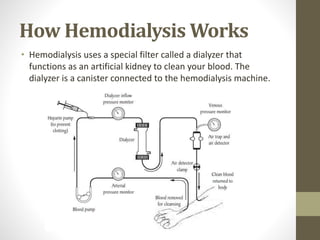
• Hemodialysis uses a special filter called a dialyzer that
functions as an artificial kidney to clean your blood. The
dialyzer is a canister connected to the hemodialysis machine.
Hemodialysis.
• During treatment, your blood travels through tubes into the
dialyzer, which filters out wastes, extra salt, and extra water.
Then the cleaned blood flows through another set of tubes
back into your body. The hemodialysis machine monitors
blood flow and removes wastes from the dialyzer.
• Hemodialysis is usually done three times a week. Each
treatment lasts from 3 to 5 or more hours. During treatment,
you can read, write, sleep, talk, or watch TV.
Possible Complications
• Vascular access problems are the most common reason for
hospitalization among people on hemodialysis. Common problems
include infection, blockage from clotting, and poor blood flow. These
problems can keep your treatments from working. You may need to
undergo repeated surgeries in order to get a properly functioning
access.
• Other problems can be caused by rapid changes in your body's
water and chemical balance during treatment. Muscle cramps and
hypotension-a sudden drop in blood pressure-are two common side
effects. Hypotension can make you feel weak, dizzy, or sick to your
stomach.
• You'll probably need a few months to adjust to hemodialysis. Side
effects can often be treated quickly and easily, so you should always
report them to your doctor and dialysis staff. You can avoid many
side effects if you follow a proper diet, limit your liquid intake, and
take your medicines as directed.
Diet for Hemodialysis
Hemodialysis and a proper diet help reduce the wastes that build up in your
blood. A dietitian is available at all dialysis centers to help you plan meals
according to your doctor's orders. When choosing foods, remember to
• eat balanced amounts of high-protein foods such as meat, chicken, and fish.
• control the amount of potassium you eat. Potassium is a mineral found in salt
substitutes; some fruits, such as bananas and oranges; vegetables; chocolate;
and nuts. Too much potassium can be dangerous to your heart.
• limit how much you drink. When your kidneys aren't working, water builds up
quickly in your body. Too much liquid makes your tissues swell and can lead to
high blood pressure, heart trouble, and cramps and low blood pressure during
dialysis.
• avoid salt. Salty foods make you thirsty and make your body hold water.
• limit foods such as milk, cheese, nuts, dried beans, and dark colas. These foods
contain large amounts of the mineral phosphorus. Too much phosphorus in
your blood causes calcium to be pulled from your bones, which makes them
weak and brittle and can cause arthritis. To prevent bone problems, your
doctor may give you special medicines, which you must take with meals every
day as directed.

Stationary treatment

  • 1.
    STATIONARY TREATMENT Kidney Failure: Choosinga Treatment That's Right for You
  • 2.
    Introduction • Your kidneysfilter wastes from your blood and regulate other functions of your body. When your kidneys fail, you need treatment to replace the work your kidneys normally perform. • Developing kidney failure means you have some decisions to make about your treatment. You may choose to forgo treatment. If you choose to receive treatment, your choices include hemodialysis, which requires a machine used to filter your blood outside your body; peritoneal dialysis, which uses the lining of your belly to filter your blood inside the body; and kidney transplantation, in which a new kidney is placed in your body. Each treatment has advantages and disadvantages. Your choice of treatment will have a big impact on your day-to-day lifestyle, such as being able to keep a job if you are working. You are the only one who can decide what means most to you. Reading this information is a good way to learn about your options so you can make an informed choice. And, if you find that your choice is not a good fit for your life, you can change treatments. With the help of your health care team, family, and friends, you can lead a full, active life.
  • 3.
    When Your KidneysFail • Healthy kidneys clean your blood by removing excess fluid, minerals, and wastes. They also make hormones that keep your bones strong and your blood healthy. When your kidneys fail, harmful wastes build up in your body, your blood pressure may rise, and your body may retain excess fluid and not make enough red blood cells. When this happens, you need treatment to replace the work of your failed kidneys.
  • 4.
  • 5.
    Purpose • Hemodialysis cleansand filters your blood using a machine to temporarily rid your body of harmful wastes, extra salt, and extra water. Hemodialysis helps control blood pressure and helps your body keep the proper balance of important chemicals such as potassium, sodium, calcium, and bicarbonate. • Dialysis can replace part of the function of your kidneys. Diet, medications, and fluid limits are often needed as well. Your diet, fluids, and the number of medications you need will depend on which treatment you choose.
  • 6.
    How Hemodialysis Works •Hemodialysis uses a special filter called a dialyzer that functions as an artificial kidney to clean your blood. The dialyzer is a canister connected to the hemodialysis machine.
  • 7.
    Hemodialysis. • During treatment,your blood travels through tubes into the dialyzer, which filters out wastes, extra salt, and extra water. Then the cleaned blood flows through another set of tubes back into your body. The hemodialysis machine monitors blood flow and removes wastes from the dialyzer. • Hemodialysis is usually done three times a week. Each treatment lasts from 3 to 5 or more hours. During treatment, you can read, write, sleep, talk, or watch TV.
  • 8.
    Possible Complications • Vascularaccess problems are the most common reason for hospitalization among people on hemodialysis. Common problems include infection, blockage from clotting, and poor blood flow. These problems can keep your treatments from working. You may need to undergo repeated surgeries in order to get a properly functioning access. • Other problems can be caused by rapid changes in your body's water and chemical balance during treatment. Muscle cramps and hypotension-a sudden drop in blood pressure-are two common side effects. Hypotension can make you feel weak, dizzy, or sick to your stomach. • You'll probably need a few months to adjust to hemodialysis. Side effects can often be treated quickly and easily, so you should always report them to your doctor and dialysis staff. You can avoid many side effects if you follow a proper diet, limit your liquid intake, and take your medicines as directed.
  • 9.
    Diet for Hemodialysis Hemodialysisand a proper diet help reduce the wastes that build up in your blood. A dietitian is available at all dialysis centers to help you plan meals according to your doctor's orders. When choosing foods, remember to • eat balanced amounts of high-protein foods such as meat, chicken, and fish. • control the amount of potassium you eat. Potassium is a mineral found in salt substitutes; some fruits, such as bananas and oranges; vegetables; chocolate; and nuts. Too much potassium can be dangerous to your heart. • limit how much you drink. When your kidneys aren't working, water builds up quickly in your body. Too much liquid makes your tissues swell and can lead to high blood pressure, heart trouble, and cramps and low blood pressure during dialysis. • avoid salt. Salty foods make you thirsty and make your body hold water. • limit foods such as milk, cheese, nuts, dried beans, and dark colas. These foods contain large amounts of the mineral phosphorus. Too much phosphorus in your blood causes calcium to be pulled from your bones, which makes them weak and brittle and can cause arthritis. To prevent bone problems, your doctor may give you special medicines, which you must take with meals every day as directed.