Starbucks
A comprehensive overview of Starbucks' business strategies and market presence.
Introduction
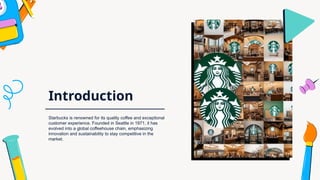
Starbucks is renowned for its quality coffee and exceptional
customer experience. Founded in Seattle in 1971, it has
evolved into a global coffeehouse chain, emphasizing
innovation and sustainability to stay competitive in the
market.
PESTLE Analysis
01
Political factors
affecting trade
and taxation
Starbucks navigates various political landscapes
globally, influenced by trade regulations, taxes, and
government stability. These factors impact sourcing and
pricing decisions, which are crucial for maintaining
profitability in varying markets.
Economic impacts on
consumer spending
Economic conditions, including inflation and consumer confidence, significantly influence
Starbucks' sales. Variations in disposable income affect consumer spending habits on
premium coffee products, making economic analysis crucial for strategic planning.
Social trends influencing
coffee habits
As consumer preferences evolve, trends such as health consciousness and sustainability shape coffee
habits. Increasingly, customers are seeking ethically sourced products, environmentally friendly practices,
and options that align with their lifestyle choices. Businesses like Starbucks must adapt to these trends by
offering organic, plant-based, and lower-calorie options to attract health-aware consumers.
SWOT Analysis
02
Strengths of Starbucks'
brand recognition
Starbucks enjoys a strong global brand presence, known for high-quality coffee and customer
experience. Its consistent branding, premium product positioning, and innovative marketing strategies
have fostered significant customer loyalty. The Starbucks name is synonymous with coffee culture,
making it a go-to choice for consumers worldwide.
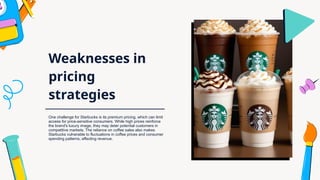
Weaknesses in
pricing
strategies
One challenge for Starbucks is its premium pricing, which can limit
access for price-sensitive consumers. While high prices reinforce
the brand's luxury image, they may deter potential customers in
competitive markets. The reliance on coffee sales also makes
Starbucks vulnerable to fluctuations in coffee prices and consumer
spending patterns, affecting revenue.
Opportunities in
emerging markets
Emerging markets present significant growth opportunities for Starbucks as consumer demand for
coffee rises. By establishing new store locations and adapting to local preferences, such as
incorporating local flavors, Starbucks can expand its customer base. Additionally, increasing
urbanization and a growing middle class in these regions offer potential for long-term profitability.
Conclusions
Starbucks' ability to navigate market dynamics through strategic PESTLE and SWOT analyses is
crucial. By addressing social trends, reinforcing brand strengths, and leveraging opportunities while
mitigating weaknesses, Starbucks can sustain its competitive edge in an evolving marketplace.
CREDITS: This presentation template was created by Slidesgo, and
includes icons by Flaticon, and infographics & images by Freepik
Do you have any questions?
Thank you!

Starbucks powerpoint persentation in ppt

  • 1.
    Starbucks A comprehensive overviewof Starbucks' business strategies and market presence.
  • 2.
    Introduction Starbucks is renownedfor its quality coffee and exceptional customer experience. Founded in Seattle in 1971, it has evolved into a global coffeehouse chain, emphasizing innovation and sustainability to stay competitive in the market.
  • 3.
  • 4.
    Political factors affecting trade andtaxation Starbucks navigates various political landscapes globally, influenced by trade regulations, taxes, and government stability. These factors impact sourcing and pricing decisions, which are crucial for maintaining profitability in varying markets.
  • 5.
    Economic impacts on consumerspending Economic conditions, including inflation and consumer confidence, significantly influence Starbucks' sales. Variations in disposable income affect consumer spending habits on premium coffee products, making economic analysis crucial for strategic planning.
  • 6.
    Social trends influencing coffeehabits As consumer preferences evolve, trends such as health consciousness and sustainability shape coffee habits. Increasingly, customers are seeking ethically sourced products, environmentally friendly practices, and options that align with their lifestyle choices. Businesses like Starbucks must adapt to these trends by offering organic, plant-based, and lower-calorie options to attract health-aware consumers.
  • 7.
  • 8.
    Strengths of Starbucks' brandrecognition Starbucks enjoys a strong global brand presence, known for high-quality coffee and customer experience. Its consistent branding, premium product positioning, and innovative marketing strategies have fostered significant customer loyalty. The Starbucks name is synonymous with coffee culture, making it a go-to choice for consumers worldwide.
  • 9.
    Weaknesses in pricing strategies One challengefor Starbucks is its premium pricing, which can limit access for price-sensitive consumers. While high prices reinforce the brand's luxury image, they may deter potential customers in competitive markets. The reliance on coffee sales also makes Starbucks vulnerable to fluctuations in coffee prices and consumer spending patterns, affecting revenue.
  • 10.
    Opportunities in emerging markets Emergingmarkets present significant growth opportunities for Starbucks as consumer demand for coffee rises. By establishing new store locations and adapting to local preferences, such as incorporating local flavors, Starbucks can expand its customer base. Additionally, increasing urbanization and a growing middle class in these regions offer potential for long-term profitability.
  • 11.
    Conclusions Starbucks' ability tonavigate market dynamics through strategic PESTLE and SWOT analyses is crucial. By addressing social trends, reinforcing brand strengths, and leveraging opportunities while mitigating weaknesses, Starbucks can sustain its competitive edge in an evolving marketplace.
  • 12.
    CREDITS: This presentationtemplate was created by Slidesgo, and includes icons by Flaticon, and infographics & images by Freepik Do you have any questions? Thank you!