STAR MODEL
TO DIAGNOSE
ORGANIZATIO
NS
Analyze organizational
problems with the Star
Model framework
PRESENTATI
ON
OVERVIEW
Overview of the Star Model
We will provide an overview of the Star Model and its importance in organizational
performance management.
Strategy
The strategy element of the Star Model involves defining the organization's objectives,
goals, and mission statement.
Structure
The structure element of the Star Model involves designing the organization's hierarchy,
roles, and responsibilities.
Processes, Rewards, and People
The processes, rewards, and people elements of the Star Model involve designing and
aligning processes, rewards, and people to support the organization's strategy and
structure.
Benefits of the Star Model
Using the Star Model can help diagnose organizational performance issues and improve
overall effectiveness and efficiency.
THE STAR
MODEL
OVERVIEW
Strategy
The first element in the Star Model framework is Strategy, which involves
defining the organization's goals and objectives and identifying the
resources needed to achieve them.
Structure
The second element in the Star Model framework is Structure, which
involves examining the organization's hierarchy, roles, and responsibilities
to ensure that they align with the organization's goals and objectives.
Processes
The third element in the Star Model framework is Processes, which involves
analyzing the organization's business processes and identifying areas for
improvement to increase efficiency and effectiveness.
Rewards
The fourth element in the Star Model framework is Rewards, which involves
designing compensation and recognition programs that motivate employees
to achieve the organization's goals and objectives.
WHAT IS THE
STAR MODEL?
Framework Development
The Star Model was developed by Jay Galbraith in the
1960s to diagnose organizational issues and design
effective solutions.
Five Elements
The Star Model consists of five key elements: Strategy,
Structure, Processes, Rewards, and People, which are
interconnected and influence each other.
THE IMPORTANCE
OF THE STAR
MODEL
The Star Model
The Star Model is a comprehensive framework for
analyzing organizational issues and designing effective
solutions. It takes a holistic approach and analyzes each
element of the organization, including strategy, structure,
processes, rewards, and people.
Holistic approach
The Star Model takes a holistic approach to analyzing
organizational issues by considering all the key elements
of an organization, including its people, processes,
structure, and strategy.
THE FIVE
ELEMENTS OF
THE STAR
MODEL
Strategy
Strategy is one of the five elements in the Star Model and refers to an
organization's long-term plan for achieving its goals. It defines how an
organization will compete in the market and achieve its objectives.
Structure
Structure is the organizational design of an organization and defines the
roles, responsibilities, and relationships between employees. It affects an
organization's culture, decision-making process, and ability to achieve its
goals.
Processes
Processes refer to the business processes and procedures that an
organization uses to achieve its objectives. They affect the efficiency,
quality, and cost-effectiveness of an organization's operations.
Rewards
Rewards refer to the incentives and benefits that an organization offers to
its employees to motivate them and align their behavior with the
organization's goals. They affect employee morale, turnover, and
performance.
STRATEGY
Strategy is the overall direction
and goals of the organization. It is
important to have a clear and
well-defined strategy in order to
achieve success.
STRUCTURE
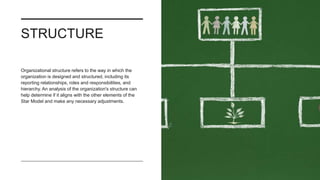
Organizational structure refers to the way in which the
organization is designed and structured, including its
reporting relationships, roles and responsibilities, and
hierarchy. An analysis of the organization's structure can
help determine if it aligns with the other elements of the
Star Model and make any necessary adjustments.
PROCESSES
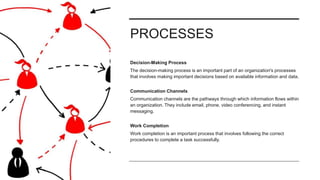
Decision-Making Process
The decision-making process is an important part of an organization's processes
that involves making important decisions based on available information and data.
Communication Channels
Communication channels are the pathways through which information flows within
an organization. They include email, phone, video conferencing, and instant
messaging.
Work Completion
Work completion is an important process that involves following the correct
procedures to complete a task successfully.
REWARDS
Rewards refer to the incentives
and recognition given to
employees, which can include
compensation, benefits, and
recognition programs.
PEOPLE
The employees and their
capabilities are critical to any
organization. Their skills,
knowledge, and abilities
determine if they align with the
other elements of the Star Model
and make any necessary
adjustments.
BENEFITS
OF THE
STAR
MODEL
The Star Model can help
organizations achieve their goals
and improve their performance by
providing a framework for
improved decision making,
increased clarity, and improved
organizational alignment.
IMPROVED
DECISION
MAKING
The Star Model is a framework
that helps organizations make
more informed and effective
decisions. By analyzing each
element of the Star Model,
organizations can identify areas
of improvement and design
effective solutions to achieve their
goals.
INCREASED
CLARITY
The Star Model is a comprehensive framework that helps
organizations to gain a better understanding of their
strengths and weaknesses, and to design effective
solutions for organizational issues. This model provides a
clear and concise way to analyze organizational structures
and processes.
IMPROVED
ORGANIZATIONAL
ALIGNMENT
The Star Model is a powerful tool that helps organizations
to align all of their elements with each other, ensuring that
they are working together towards the same goals and
objectives. By analyzing each element of the Star Model,
organizations can identify areas of misalignment and make
any necessary adjustments.
CONCLUSI
ON
The Star Model is a framework
used to diagnose organizational
issues and design effective
solutions by analyzing each of the
model's elements and how they
interact with each other. It helps
organizations improve their
performance and achieve their
goals.

Star model for diagnosing organisationsal problems

  • 1.
    STAR MODEL TO DIAGNOSE ORGANIZATIO NS Analyzeorganizational problems with the Star Model framework
  • 2.
    PRESENTATI ON OVERVIEW Overview of theStar Model We will provide an overview of the Star Model and its importance in organizational performance management. Strategy The strategy element of the Star Model involves defining the organization's objectives, goals, and mission statement. Structure The structure element of the Star Model involves designing the organization's hierarchy, roles, and responsibilities. Processes, Rewards, and People The processes, rewards, and people elements of the Star Model involve designing and aligning processes, rewards, and people to support the organization's strategy and structure. Benefits of the Star Model Using the Star Model can help diagnose organizational performance issues and improve overall effectiveness and efficiency.
  • 3.
    THE STAR MODEL OVERVIEW Strategy The firstelement in the Star Model framework is Strategy, which involves defining the organization's goals and objectives and identifying the resources needed to achieve them. Structure The second element in the Star Model framework is Structure, which involves examining the organization's hierarchy, roles, and responsibilities to ensure that they align with the organization's goals and objectives. Processes The third element in the Star Model framework is Processes, which involves analyzing the organization's business processes and identifying areas for improvement to increase efficiency and effectiveness. Rewards The fourth element in the Star Model framework is Rewards, which involves designing compensation and recognition programs that motivate employees to achieve the organization's goals and objectives.
  • 4.
    WHAT IS THE STARMODEL? Framework Development The Star Model was developed by Jay Galbraith in the 1960s to diagnose organizational issues and design effective solutions. Five Elements The Star Model consists of five key elements: Strategy, Structure, Processes, Rewards, and People, which are interconnected and influence each other.
  • 5.
    THE IMPORTANCE OF THESTAR MODEL The Star Model The Star Model is a comprehensive framework for analyzing organizational issues and designing effective solutions. It takes a holistic approach and analyzes each element of the organization, including strategy, structure, processes, rewards, and people. Holistic approach The Star Model takes a holistic approach to analyzing organizational issues by considering all the key elements of an organization, including its people, processes, structure, and strategy.
  • 6.
    THE FIVE ELEMENTS OF THESTAR MODEL Strategy Strategy is one of the five elements in the Star Model and refers to an organization's long-term plan for achieving its goals. It defines how an organization will compete in the market and achieve its objectives. Structure Structure is the organizational design of an organization and defines the roles, responsibilities, and relationships between employees. It affects an organization's culture, decision-making process, and ability to achieve its goals. Processes Processes refer to the business processes and procedures that an organization uses to achieve its objectives. They affect the efficiency, quality, and cost-effectiveness of an organization's operations. Rewards Rewards refer to the incentives and benefits that an organization offers to its employees to motivate them and align their behavior with the organization's goals. They affect employee morale, turnover, and performance.
  • 7.
    STRATEGY Strategy is theoverall direction and goals of the organization. It is important to have a clear and well-defined strategy in order to achieve success.
  • 8.
    STRUCTURE Organizational structure refersto the way in which the organization is designed and structured, including its reporting relationships, roles and responsibilities, and hierarchy. An analysis of the organization's structure can help determine if it aligns with the other elements of the Star Model and make any necessary adjustments.
  • 9.
    PROCESSES Decision-Making Process The decision-makingprocess is an important part of an organization's processes that involves making important decisions based on available information and data. Communication Channels Communication channels are the pathways through which information flows within an organization. They include email, phone, video conferencing, and instant messaging. Work Completion Work completion is an important process that involves following the correct procedures to complete a task successfully.
  • 10.
    REWARDS Rewards refer tothe incentives and recognition given to employees, which can include compensation, benefits, and recognition programs.
  • 11.
    PEOPLE The employees andtheir capabilities are critical to any organization. Their skills, knowledge, and abilities determine if they align with the other elements of the Star Model and make any necessary adjustments.
  • 12.
    BENEFITS OF THE STAR MODEL The StarModel can help organizations achieve their goals and improve their performance by providing a framework for improved decision making, increased clarity, and improved organizational alignment.
  • 13.
    IMPROVED DECISION MAKING The Star Modelis a framework that helps organizations make more informed and effective decisions. By analyzing each element of the Star Model, organizations can identify areas of improvement and design effective solutions to achieve their goals.
  • 14.
    INCREASED CLARITY The Star Modelis a comprehensive framework that helps organizations to gain a better understanding of their strengths and weaknesses, and to design effective solutions for organizational issues. This model provides a clear and concise way to analyze organizational structures and processes.
  • 15.
    IMPROVED ORGANIZATIONAL ALIGNMENT The Star Modelis a powerful tool that helps organizations to align all of their elements with each other, ensuring that they are working together towards the same goals and objectives. By analyzing each element of the Star Model, organizations can identify areas of misalignment and make any necessary adjustments.
  • 16.
    CONCLUSI ON The Star Modelis a framework used to diagnose organizational issues and design effective solutions by analyzing each of the model's elements and how they interact with each other. It helps organizations improve their performance and achieve their goals.

Editor's Notes

  • #2 In this presentation, we will examine the Star Model, a powerful framework used to diagnose organizational issues and design effective solutions. We will explore the five elements of the Star Model and their impact on organizational performance.
  • #3 We will start by providing an overview of the Star Model and why it is important. Then we will delve into the five elements of the Star Model, including Strategy, Structure, Processes, Rewards, and People. Finally, we will discuss the benefits of using the Star Model to diagnose and improve organizational performance.
  • #4 The Star Model is a framework used to diagnose organizational issues and design effective solutions. It consists of five elements: Strategy, Structure, Processes, Rewards, and People. By analyzing each element and how they interact with each other, organizations can pinpoint areas of improvement and design effective solutions.
  • #5 The Star Model is a framework developed by Jay Galbraith in the 1960s. It is used to diagnose organizational issues and design effective solutions. The Star Model consists of five elements: Strategy, Structure, Processes, Rewards, and People.
  • #6 The Star Model is important because it provides a comprehensive framework for analyzing organizational issues and designing effective solutions. By taking a holistic approach and analyzing each element of the Star Model, organizations can improve their performance and achieve their goals.
  • #7 The Star Model consists of five elements: Strategy, Structure, Processes, Rewards, and People. Each element is interconnected and affects the other elements. By analyzing each element and how they interact with each other, organizations can pinpoint areas of improvement and design effective solutions.
  • #8 Strategy refers to the overall direction and goals of the organization. It is important to have a clear and well-defined strategy in order to achieve success. By analyzing the organization's strategy, we can determine if it aligns with the other elements of the Star Model and make any necessary adjustments.
  • #9 Structure refers to the way in which the organization is organized. This includes the reporting relationships, roles and responsibilities, and the hierarchy of the organization. By analyzing the organization's structure, we can determine if it aligns with the other elements of the Star Model and make any necessary adjustments.
  • #10 Processes refer to the systems and procedures used within the organization. This includes the decision-making process, communication channels, and how work is completed. By analyzing the organization's processes, we can determine if they align with the other elements of the Star Model and make any necessary adjustments.
  • #11 Rewards refer to the incentives and recognition given to employees. This includes compensation, benefits, and recognition programs. By analyzing the organization's rewards system, we can determine if it aligns with the other elements of the Star Model and make any necessary adjustments.
  • #12 People refer to the employees and their capabilities. This includes their skills, knowledge, and abilities. By analyzing the organization's people, we can determine if they align with the other elements of the Star Model and make any necessary adjustments.
  • #13 There are several benefits to using the Star Model to diagnose and improve organizational performance. These include improved decision making, increased clarity, and improved organizational alignment. By using the Star Model, organizations can achieve their goals and improve their performance.
  • #14 By using the Star Model, organizations can make more informed and effective decisions. By analyzing each element of the Star Model and how they interact with each other, organizations can identify areas of improvement and design effective solutions.
  • #15 The Star Model provides a comprehensive framework for analyzing organizational issues and designing effective solutions. By using the Star Model, organizations can gain a better understanding of their strengths and weaknesses, as well as the areas that require improvement.
  • #16 The Star Model helps to ensure that all elements of the organization are aligned with each other. By analyzing each element of the Star Model and how they interact with each other, organizations can identify areas of misalignment and make any necessary adjustments.
  • #17 The Star Model is a powerful framework used to diagnose organizational issues and design effective solutions. By analyzing each element of the Star Model and how they interact with each other, organizations can improve their performance and achieve their goals.