STANDING
ASANS
By SHIPRA RAI, M.P.ED Previous
(AH-doh MOO-kah shvah-NAHS-
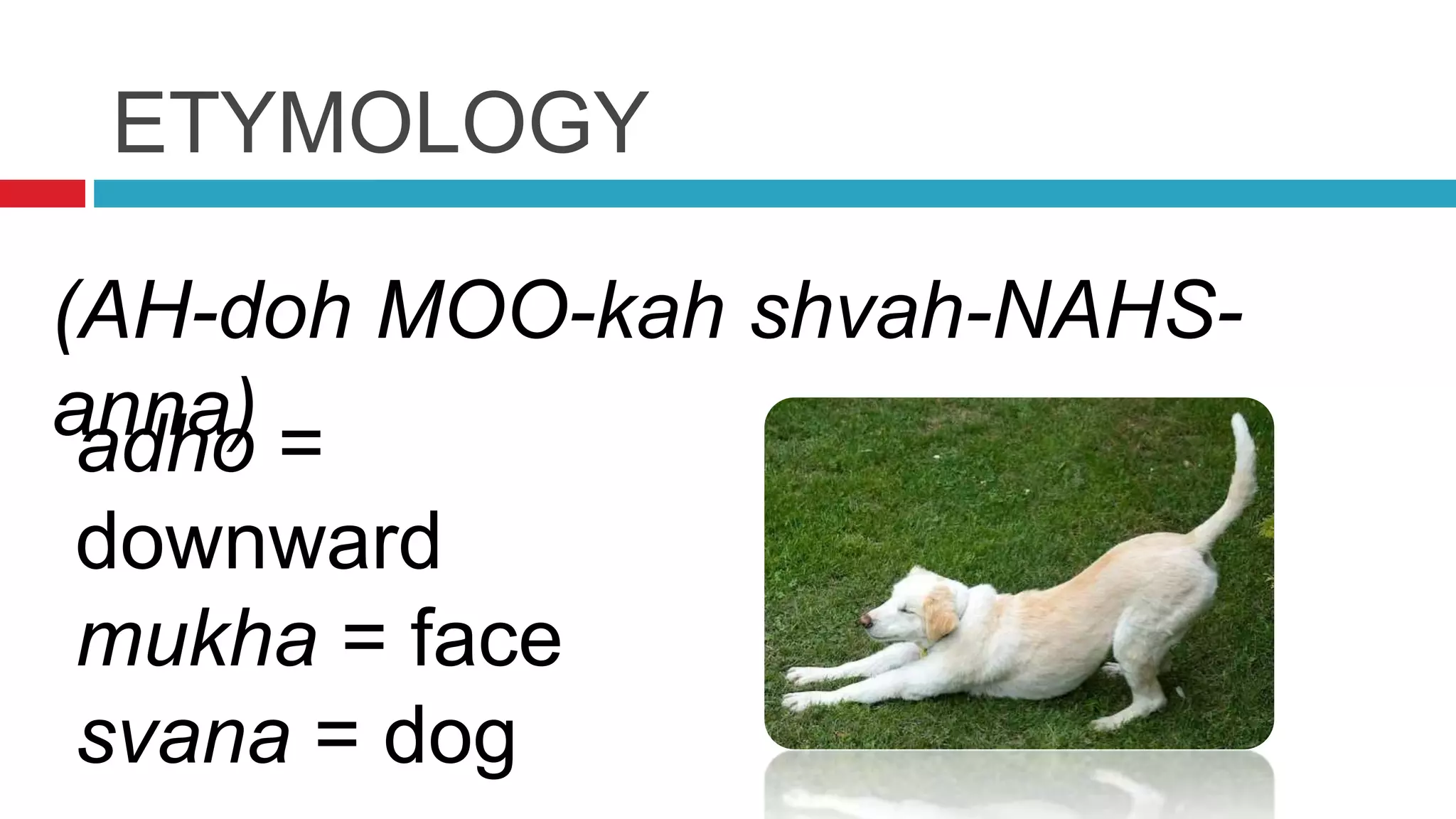
Downward-Facing Dog
ETYMOLOGY
(AH-doh MOO-kah shvah-NAHS-
anna)adho =
downward
mukha = face
svana = dog
PROCEDURE
 Come onto the floor on your
hands and knees. Set your
knees directly below your hips
and your hands slightly
forward of your shoulders.
Spread your palms, index
fingers parallel or slightly
turned out, and turn your toes
under.
PROCEDURE
 Exhale and lift your knees away
from the floor. At first keep the knees
slightly bent and the heels lifted
away from the floor. Lengthen your
tailbone away from the back of your
pelvis and press it lightly toward the
pubis. Against this resistance, lift the
sitting bones toward the ceiling, and
from your inner ankles draw the
inner legs up into the groins.
PROCEDURE
 Then with an exhalation, push
your top thighs back and stretch
your heels onto or down toward
the floor. Straighten your knees
but be sure not to lock them. Firm
the outer thighs and roll the upper
thighs inward slightly. Narrow the
front of the pelvis.
PROCEDURE
 Firm the outer arms and press the
bases of the index fingers actively
into the floor. From these two points
lift along your inner arms from the
wrists to the tops of the shoulders.
Firm your shoulder blades against
your back, then widen them and
draw them toward the tailbone.
Keep the head between the upper
arms; don’t let it hang.
PROCEDURE
 Adho Mukha Svanasana is one
of the poses in the traditional
Sun Salutation sequence. It’s
also an excellent yoga asana all
on its own. Stay in this pose
anywhere from 1 to 3 minutes.
Then bend your knees to the
floor with an exhalation and rest
in Child’s Pose.
BENEFITS
 Calms the brain and helps relieve stress and
mild depression
 Energizes the body
 Stretches the shoulders, hamstrings, calves,
arches, and hands
 Strengthens the arms and legs
 Helps relieve the symptoms of menopause.
BENEFITS
 Relieves menstrual discomfort when done with
head supported
 Helps prevent osteoporosis
 Improves digestion
 Relieves headache, insomnia, back pain, and
fatigue
 Therapeutic for high blood pressure, asthma, flat
feet, sciatica, sinusitis
CONTRADICATIONS &
CAUTIONS
 Recent or chronic injury to the back,
hips, arms or shoulders.
 Carpal tunnel syndrome
 Diarrhea
 Pregnancy: Do not do this pose late-
term.
 High blood pressure or headache:
Support your head on a bolster or block,
ears level between the arms.
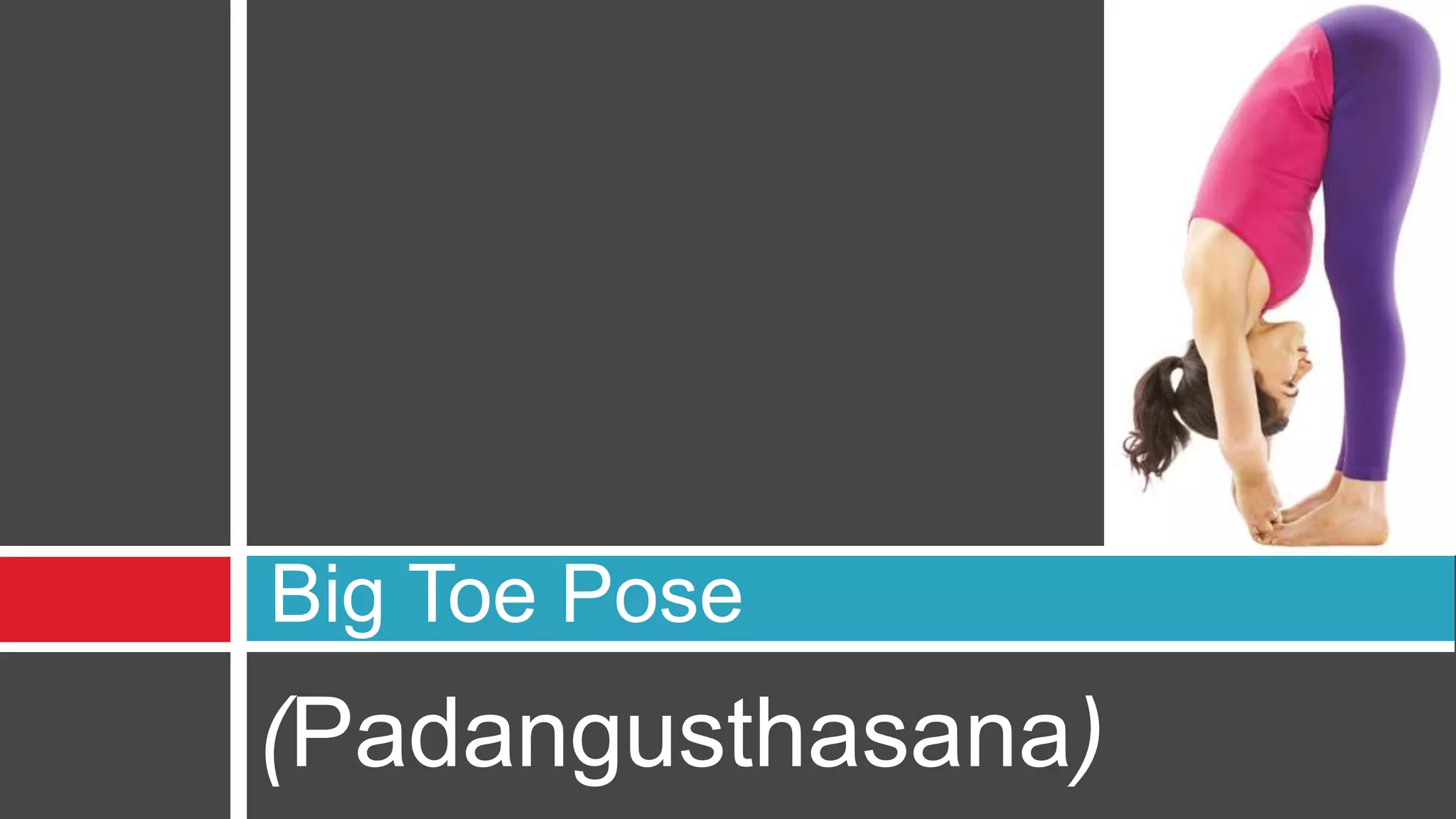
(Padangusthasana)
Big Toe Pose
ETYMOLOGY
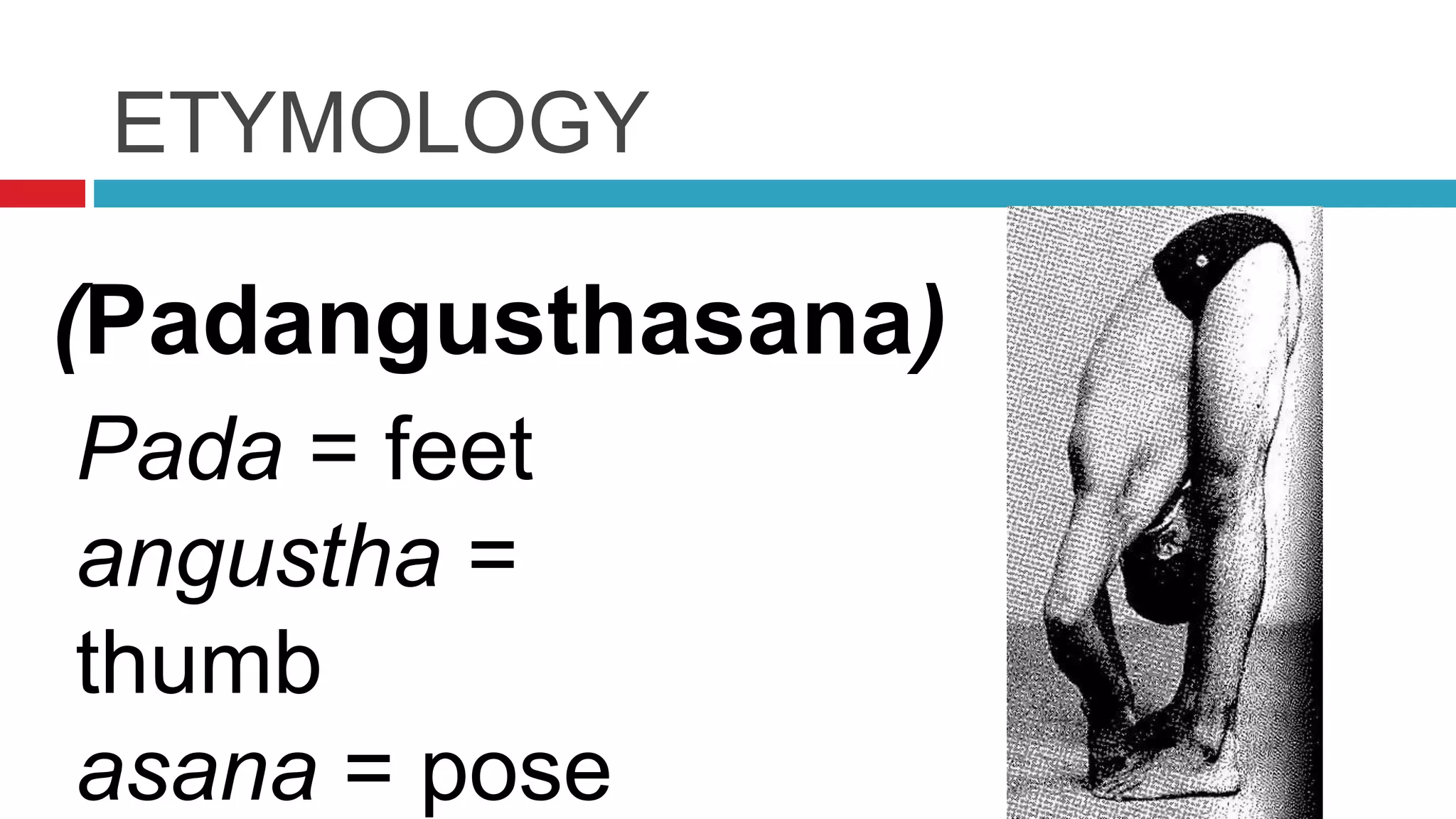
(Padangusthasana)
Pada = feet
angustha =
thumb
asana = pose
PROCEDURE
 Stand upright with your inner
feet parallel and about six
inches apart. Contract your
front thigh muscles to lift your
kneecaps. Keeping your legs
completely straight, exhale and
bend forward from your hip
joints, moving your torso and
head as one unit.
PROCEDURE
 Slide the index and middle fingers of each
hand between the big toes and the
second toes. Then curl those fingers
under and grip the big toes firmly,
wrapping the thumbs around the other
two fingers to secure the wrap. Press
your toes down against your fingers. (If
you can’t reach your toes without overly
rounding your back, pass a strap under
the ball of each foot and hold the straps.)
PROCEDURE
 With an inhalation, lift your torso as if you
were going to stand up again,
straightening your elbows. Lengthen your
front torso, and on the next exhale, lift
your sitting bones. Depending on your
flexibility, your lower back will hollow to a
greater or lesser degree. As you do this,
release your hamstrings and hollow your
lower belly (below your navel) as well,
lightly lifting it toward the back of your
pelvis.
PROCEDURE
Lift the top of your
sternum as high as you
can, but take care not to
lift your head so far that
you compress the back of
your neck. Keep your
forehead relaxed.
PROCEDURE
 For the next few inhalations, lift
your torso strongly as you
continue to actively contract your
front thighs; on each successive
exhalation, strongly lift your sitting
bones as you consciously relax
your hamstrings. As you do this,
deepen the hollow in your lower
back.
PROCEDURE
Finally exhale, bend your
elbows out to the sides,
pull up on your toes,
lengthen the front and
sides of your torso, and
gently lower into the
forward bend.
PROCEDURE
 If you have very long hamstrings,
you can draw your forehead
toward your shins. But if your
hamstrings are short, it’s better to
focus on keeping the front torso
long. Hunching into a forward
bend isn’t safe for your lower back
and does nothing to lengthen your
hamstrings.
PROCEDURE
 Hold the final position for one
minute. Then release your
toes, bring your hands to your
hips, and re-lengthen your
front torso. With an inhale,
swing your torso and head as
a single unit back to upright.
BENEFITS
 Calms the brain and helps relieve stress, anxiety
and mild
 Stimulates the liver and kidneys
 Stretches the hamstrings and calves
 Strengthens the thighs
 Improves digestion
 Helps relieve the symptoms of menopause
 Helps relieve headache and insomnia
CONTRADICATIONS &
CAUTIONS
People who are suffering from other problems like knee
injury or knee pain, joint-pain, or any injury or pain
related to legs are not allowed to practice this asana.
In case if you face any headache related issues, then
you should not practice this yoga asana. People who
are suffering from any kind of back injury or back pain
are not supposed to practice this asana. Apart from
this, if you have any problems, then you must consult
your doctor or a qualified yoga teacher for further
guidance. Always remember, do not try to stretch your
body beyond its capacity. Do as much as you can.
Shipra
Rai
M.P.ed Previous

STANDING ASANAS Shipra Rai

  • 1.
  • 2.
  • 3.
    ETYMOLOGY (AH-doh MOO-kah shvah-NAHS- anna)adho= downward mukha = face svana = dog
  • 4.
    PROCEDURE  Come ontothe floor on your hands and knees. Set your knees directly below your hips and your hands slightly forward of your shoulders. Spread your palms, index fingers parallel or slightly turned out, and turn your toes under.
  • 5.
    PROCEDURE  Exhale andlift your knees away from the floor. At first keep the knees slightly bent and the heels lifted away from the floor. Lengthen your tailbone away from the back of your pelvis and press it lightly toward the pubis. Against this resistance, lift the sitting bones toward the ceiling, and from your inner ankles draw the inner legs up into the groins.
  • 6.
    PROCEDURE  Then withan exhalation, push your top thighs back and stretch your heels onto or down toward the floor. Straighten your knees but be sure not to lock them. Firm the outer thighs and roll the upper thighs inward slightly. Narrow the front of the pelvis.
  • 7.
    PROCEDURE  Firm theouter arms and press the bases of the index fingers actively into the floor. From these two points lift along your inner arms from the wrists to the tops of the shoulders. Firm your shoulder blades against your back, then widen them and draw them toward the tailbone. Keep the head between the upper arms; don’t let it hang.
  • 8.
    PROCEDURE  Adho MukhaSvanasana is one of the poses in the traditional Sun Salutation sequence. It’s also an excellent yoga asana all on its own. Stay in this pose anywhere from 1 to 3 minutes. Then bend your knees to the floor with an exhalation and rest in Child’s Pose.
  • 9.
    BENEFITS  Calms thebrain and helps relieve stress and mild depression  Energizes the body  Stretches the shoulders, hamstrings, calves, arches, and hands  Strengthens the arms and legs  Helps relieve the symptoms of menopause.
  • 10.
    BENEFITS  Relieves menstrualdiscomfort when done with head supported  Helps prevent osteoporosis  Improves digestion  Relieves headache, insomnia, back pain, and fatigue  Therapeutic for high blood pressure, asthma, flat feet, sciatica, sinusitis
  • 11.
    CONTRADICATIONS & CAUTIONS  Recentor chronic injury to the back, hips, arms or shoulders.  Carpal tunnel syndrome  Diarrhea  Pregnancy: Do not do this pose late- term.  High blood pressure or headache: Support your head on a bolster or block, ears level between the arms.
  • 12.
  • 13.
  • 14.
    PROCEDURE  Stand uprightwith your inner feet parallel and about six inches apart. Contract your front thigh muscles to lift your kneecaps. Keeping your legs completely straight, exhale and bend forward from your hip joints, moving your torso and head as one unit.
  • 15.
    PROCEDURE  Slide theindex and middle fingers of each hand between the big toes and the second toes. Then curl those fingers under and grip the big toes firmly, wrapping the thumbs around the other two fingers to secure the wrap. Press your toes down against your fingers. (If you can’t reach your toes without overly rounding your back, pass a strap under the ball of each foot and hold the straps.)
  • 16.
    PROCEDURE  With aninhalation, lift your torso as if you were going to stand up again, straightening your elbows. Lengthen your front torso, and on the next exhale, lift your sitting bones. Depending on your flexibility, your lower back will hollow to a greater or lesser degree. As you do this, release your hamstrings and hollow your lower belly (below your navel) as well, lightly lifting it toward the back of your pelvis.
  • 17.
    PROCEDURE Lift the topof your sternum as high as you can, but take care not to lift your head so far that you compress the back of your neck. Keep your forehead relaxed.
  • 18.
    PROCEDURE  For thenext few inhalations, lift your torso strongly as you continue to actively contract your front thighs; on each successive exhalation, strongly lift your sitting bones as you consciously relax your hamstrings. As you do this, deepen the hollow in your lower back.
  • 19.
    PROCEDURE Finally exhale, bendyour elbows out to the sides, pull up on your toes, lengthen the front and sides of your torso, and gently lower into the forward bend.
  • 20.
    PROCEDURE  If youhave very long hamstrings, you can draw your forehead toward your shins. But if your hamstrings are short, it’s better to focus on keeping the front torso long. Hunching into a forward bend isn’t safe for your lower back and does nothing to lengthen your hamstrings.
  • 21.
    PROCEDURE  Hold thefinal position for one minute. Then release your toes, bring your hands to your hips, and re-lengthen your front torso. With an inhale, swing your torso and head as a single unit back to upright.
  • 22.
    BENEFITS  Calms thebrain and helps relieve stress, anxiety and mild  Stimulates the liver and kidneys  Stretches the hamstrings and calves  Strengthens the thighs  Improves digestion  Helps relieve the symptoms of menopause  Helps relieve headache and insomnia
  • 23.
    CONTRADICATIONS & CAUTIONS People whoare suffering from other problems like knee injury or knee pain, joint-pain, or any injury or pain related to legs are not allowed to practice this asana. In case if you face any headache related issues, then you should not practice this yoga asana. People who are suffering from any kind of back injury or back pain are not supposed to practice this asana. Apart from this, if you have any problems, then you must consult your doctor or a qualified yoga teacher for further guidance. Always remember, do not try to stretch your body beyond its capacity. Do as much as you can.
  • 24.