STAGES OF HUMAN
DEVELOPMENT
What is development?
Sigmund Freud’s Psychosexual
Theory
• Erogenous zones or
Pleasure areas
• 5 distinct Stages
• Fixation – attachment to a
particular object or activity
and may affect
development
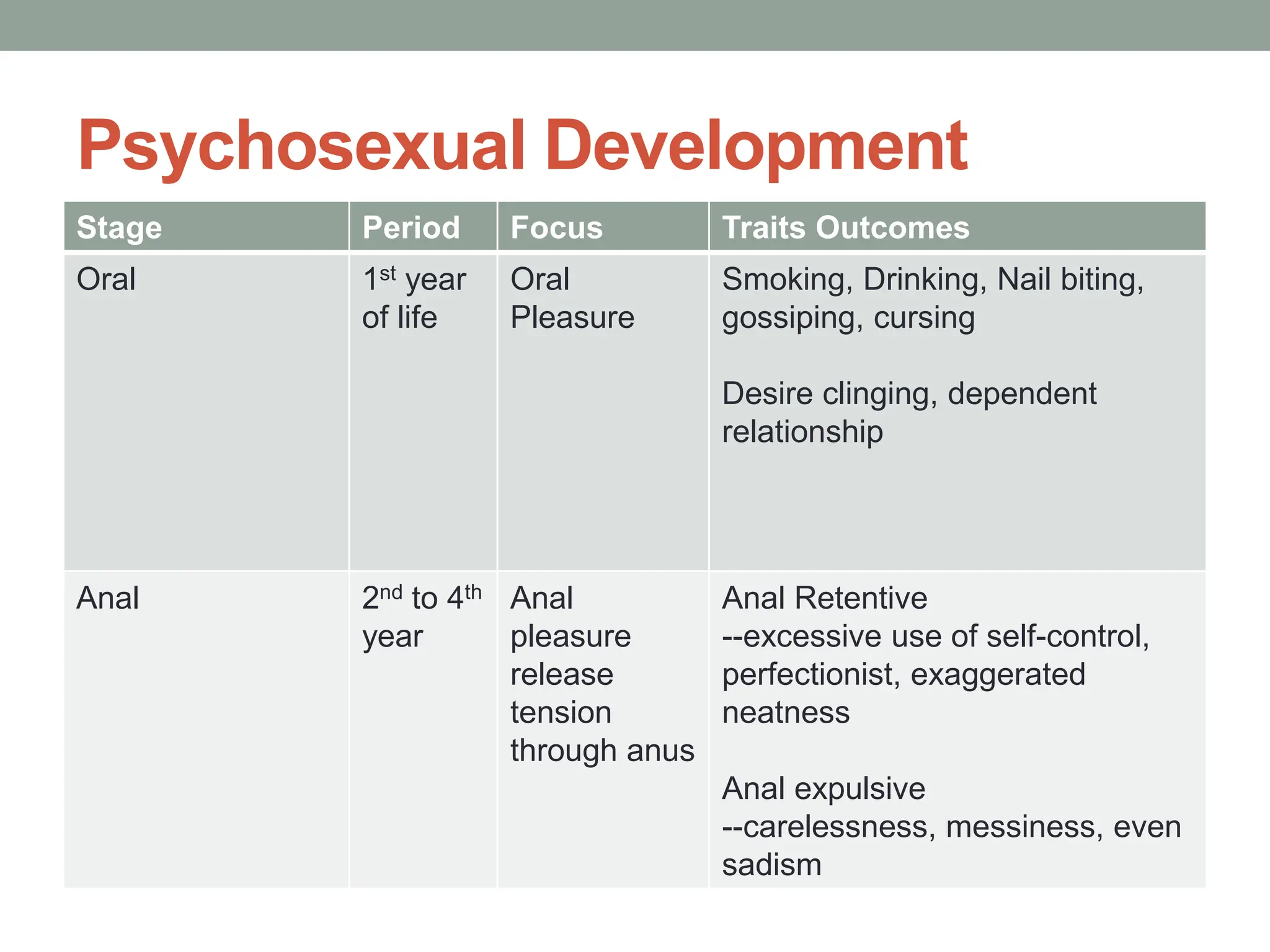
Psychosexual Development
Stage Period Focus Traits Outcomes
Oral 1st year
of life
Oral
Pleasure
Smoking, Drinking, Nail biting,
gossiping, cursing
Desire clinging, dependent
relationship
Anal 2nd to 4th
year
Anal
pleasure
release
tension
through anus
Anal Retentive
--excessive use of self-control,
perfectionist, exaggerated
neatness
Anal expulsive
--carelessness, messiness, even
sadism
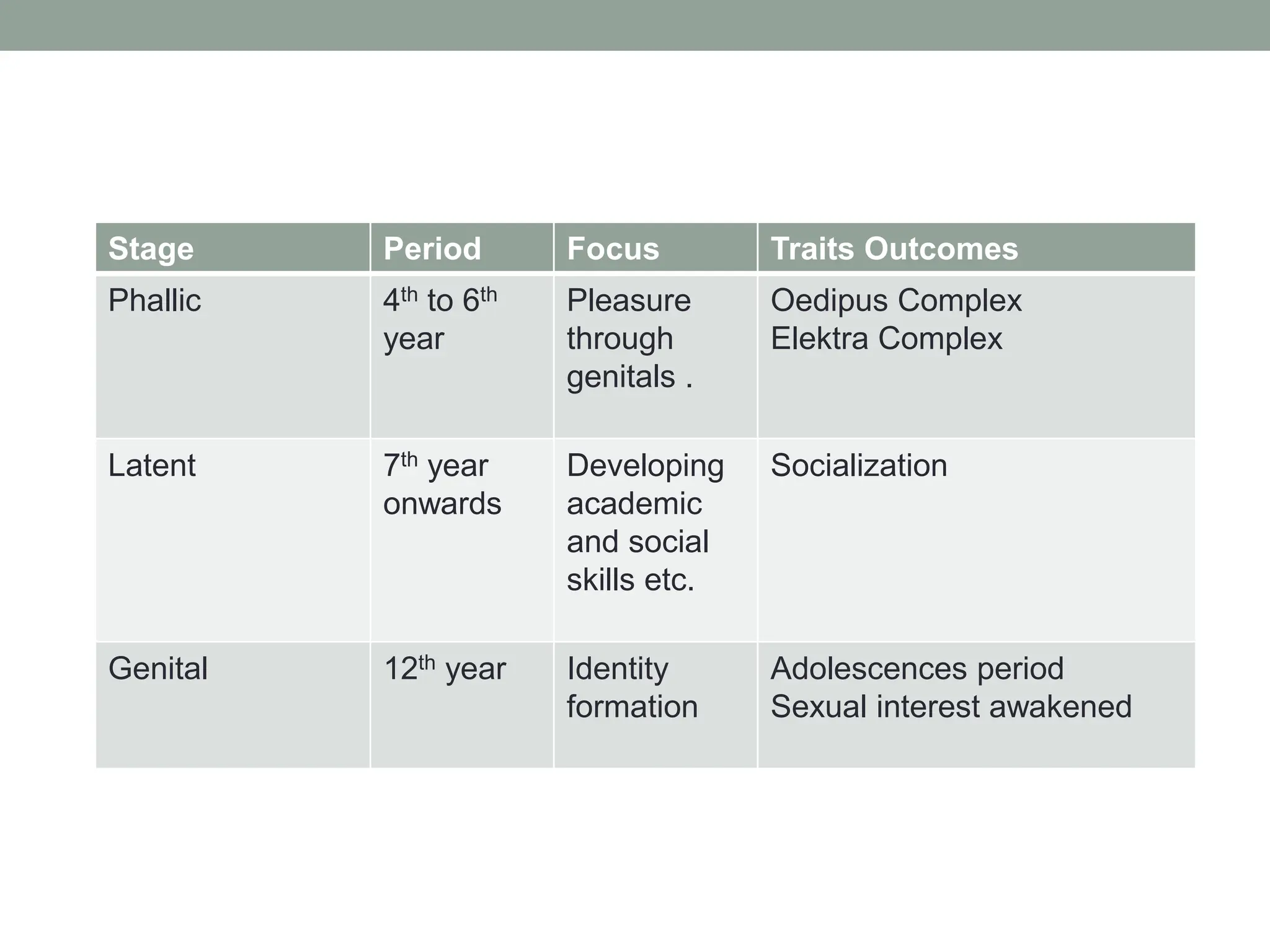
Stage Period Focus Traits Outcomes
Phallic 4th to 6th
year
Pleasure
through
genitals .
Oedipus Complex
Elektra Complex
Latent 7th year
onwards
Developing
academic
and social
skills etc.
Socialization
Genital 12th year Identity
formation
Adolescences period
Sexual interest awakened
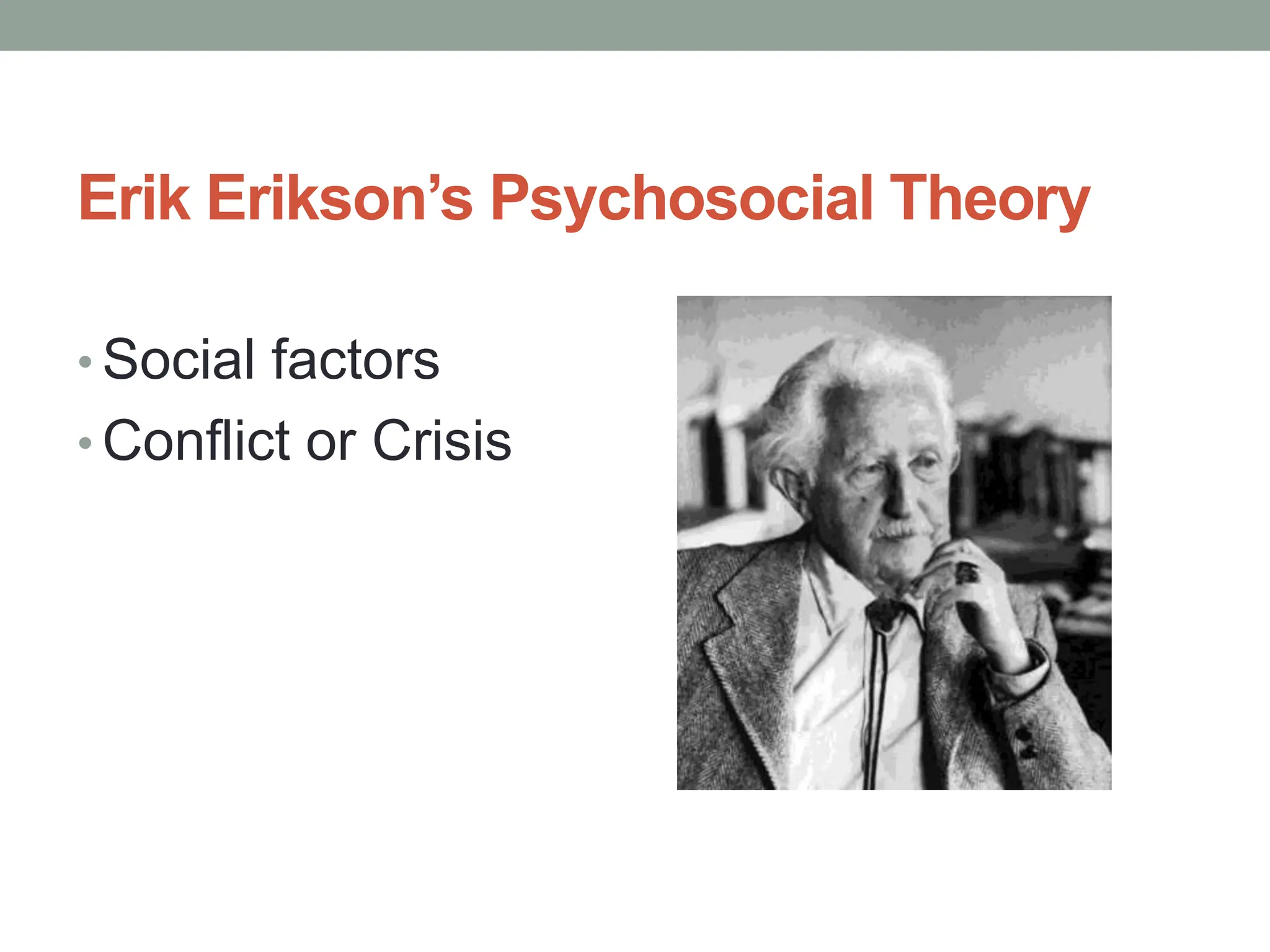
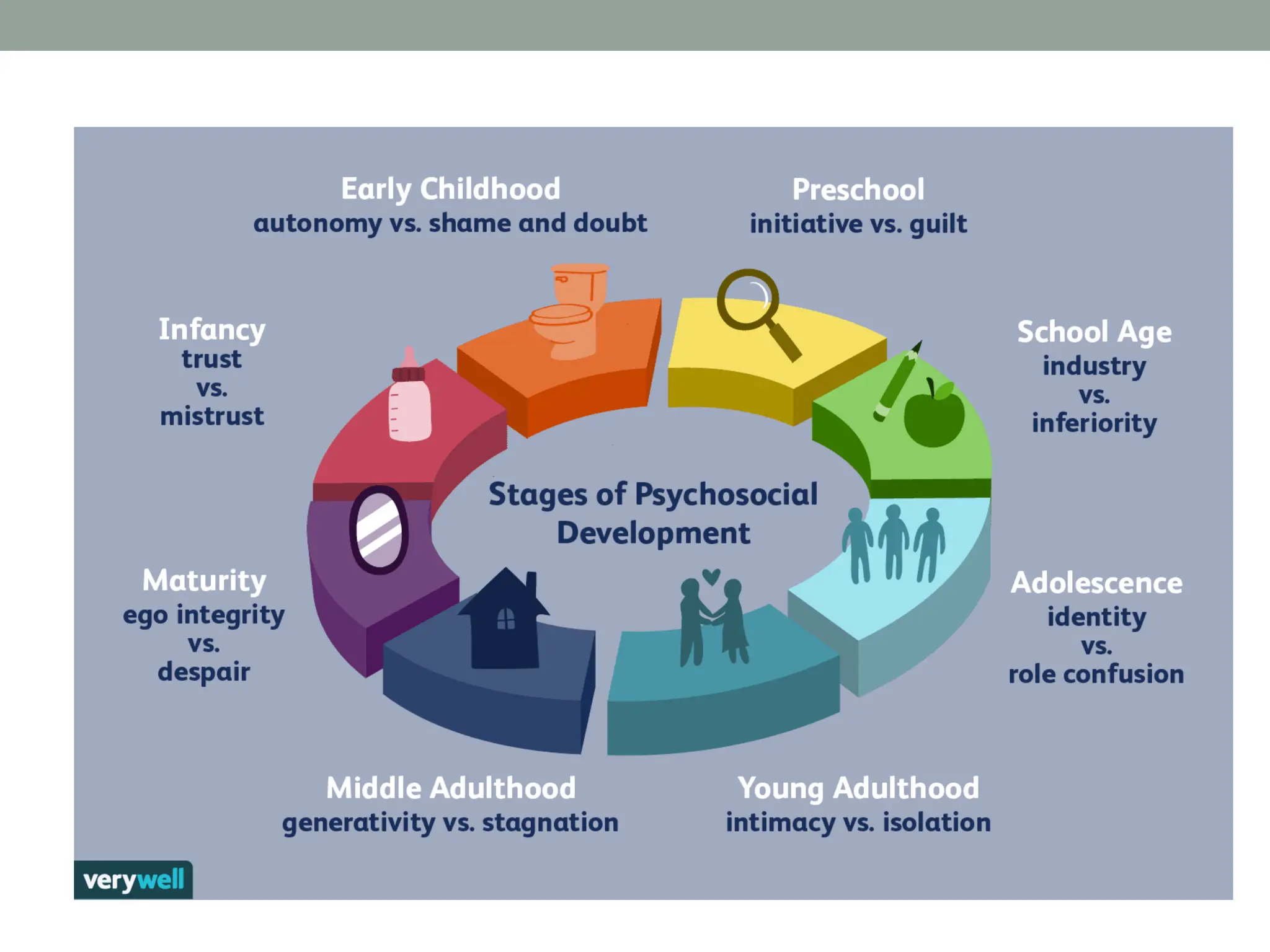
Erik Erikson’s Psychosocial Theory
• Social factors
• Conflict or Crisis
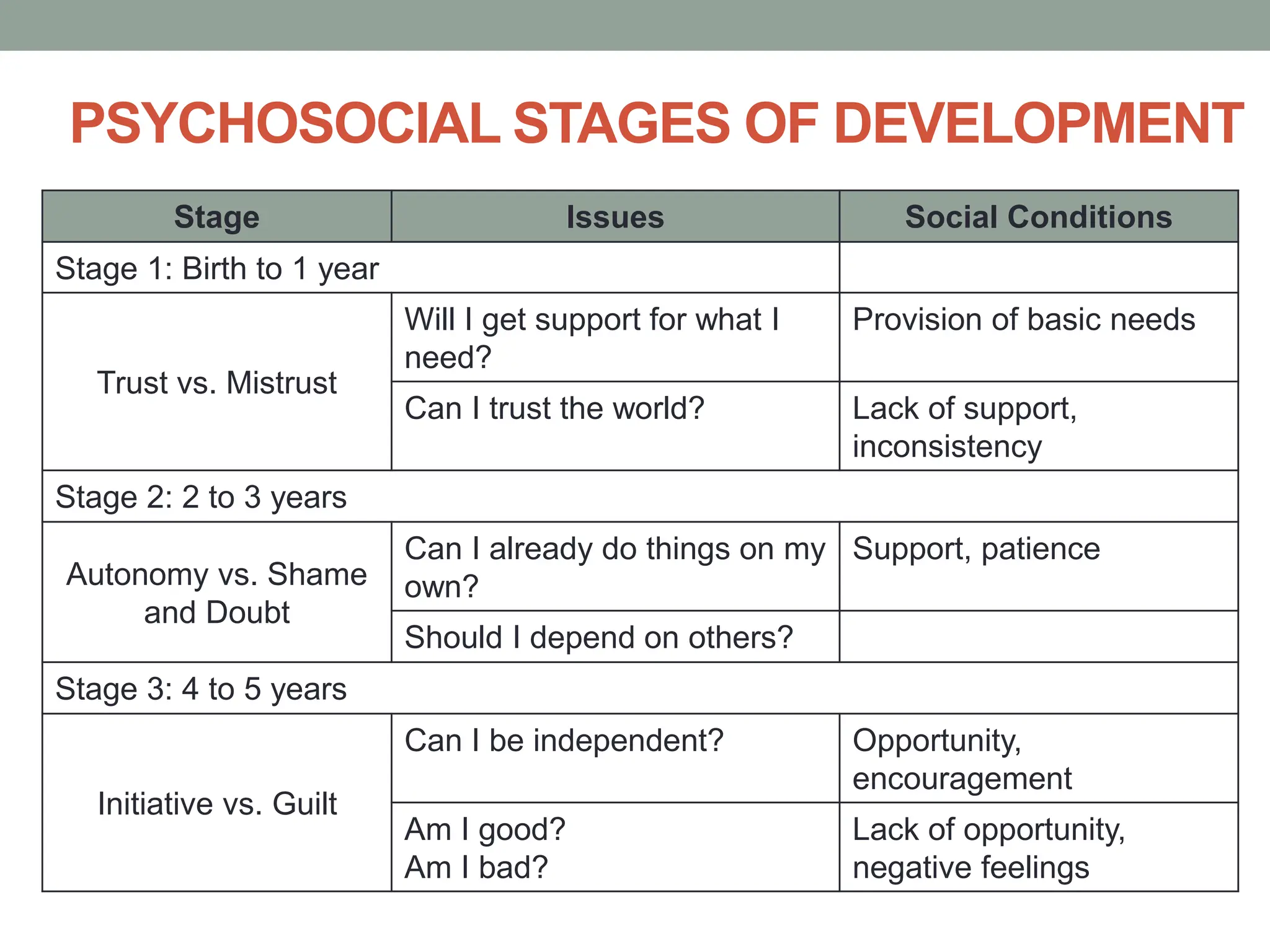
PSYCHOSOCIAL STAGES OF DEVELOPMENT
Stage Issues Social Conditions
Stage 1: Birth to 1 year
Trust vs. Mistrust
Will I get support for what I
need?
Provision of basic needs
Can I trust the world? Lack of support,
inconsistency
Stage 2: 2 to 3 years
Autonomy vs. Shame
and Doubt
Can I already do things on my
own?
Support, patience
Should I depend on others?
Stage 3: 4 to 5 years
Initiative vs. Guilt
Can I be independent? Opportunity,
encouragement
Am I good?
Am I bad?
Lack of opportunity,
negative feelings
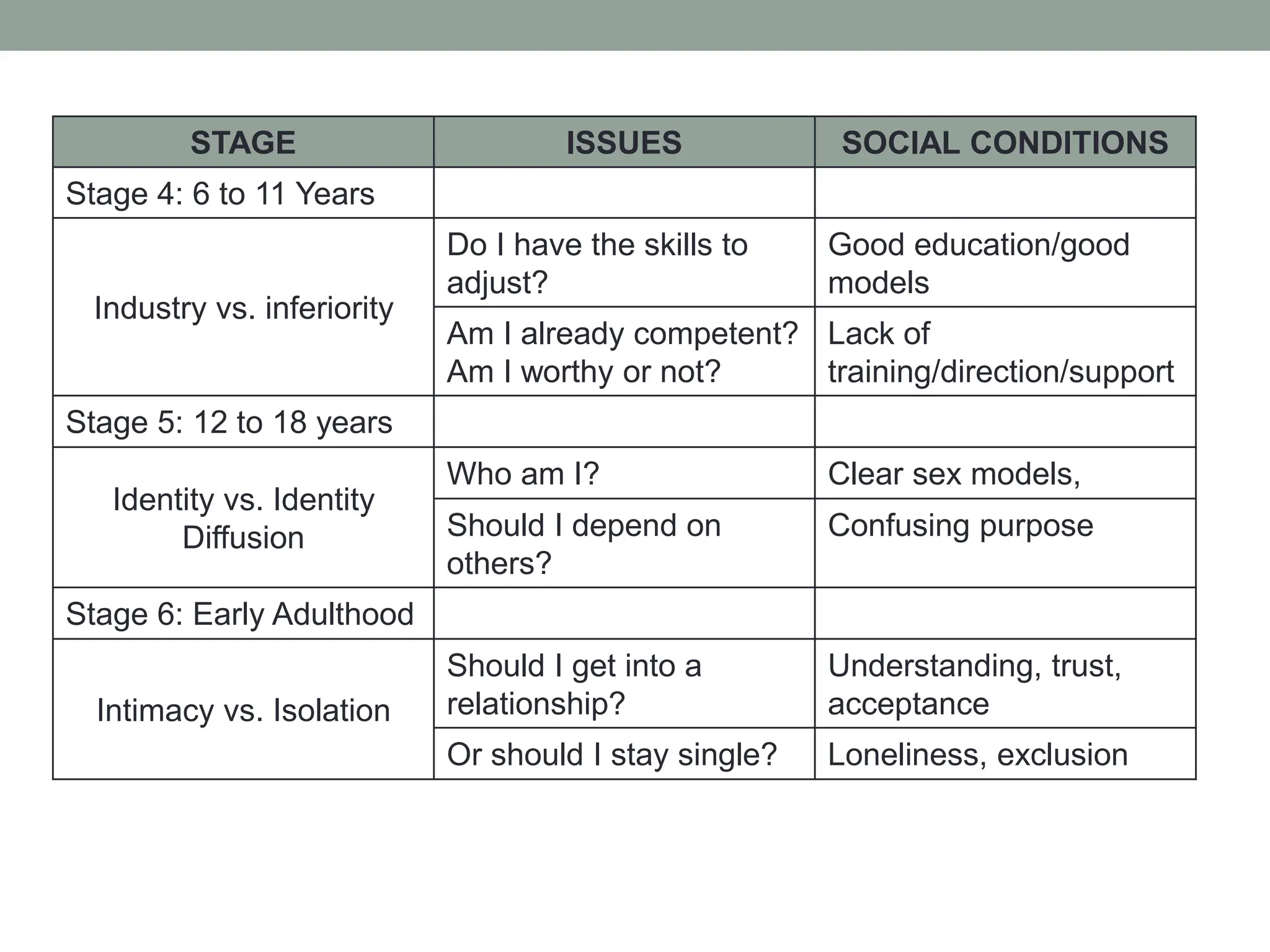
STAGE ISSUES SOCIAL CONDITIONS
Stage 4: 6 to 11 Years
Industry vs. inferiority
Do I have the skills to
adjust?
Good education/good
models
Am I already competent?
Am I worthy or not?
Lack of
training/direction/support
Stage 5: 12 to 18 years
Identity vs. Identity
Diffusion
Who am I? Clear sex models,
Should I depend on
others?
Confusing purpose
Stage 6: Early Adulthood
Intimacy vs. Isolation
Should I get into a
relationship?
Understanding, trust,
acceptance
Or should I stay single? Loneliness, exclusion
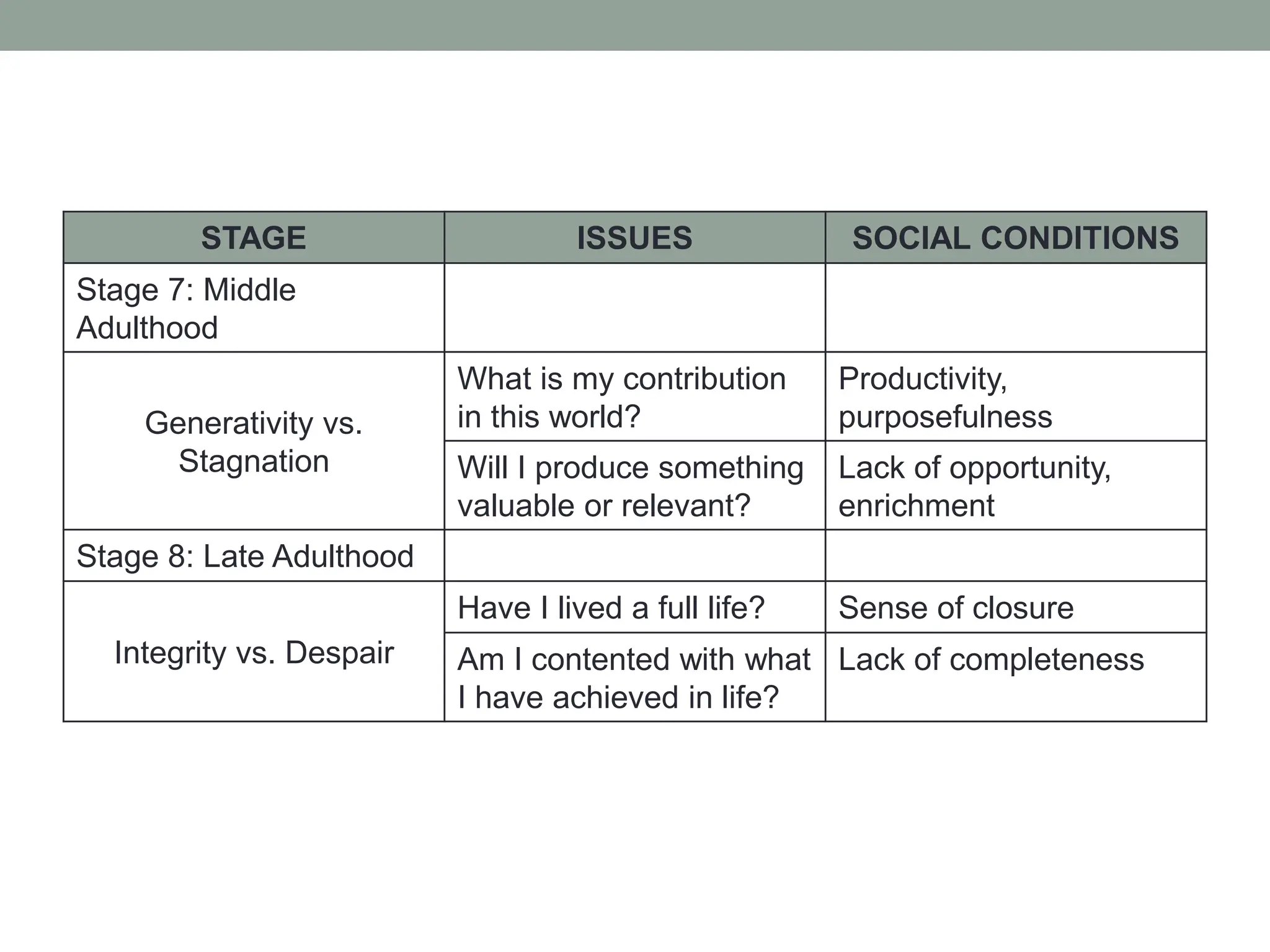
STAGE ISSUES SOCIAL CONDITIONS
Stage 7: Middle
Adulthood
Generativity vs.
Stagnation
What is my contribution
in this world?
Productivity,
purposefulness
Will I produce something
valuable or relevant?
Lack of opportunity,
enrichment
Stage 8: Late Adulthood
Integrity vs. Despair
Have I lived a full life? Sense of closure
Am I contented with what
I have achieved in life?
Lack of completeness
Jean Piaget’s Cognitive Development
• Education as a key element in developing
one’s cognitive skills.
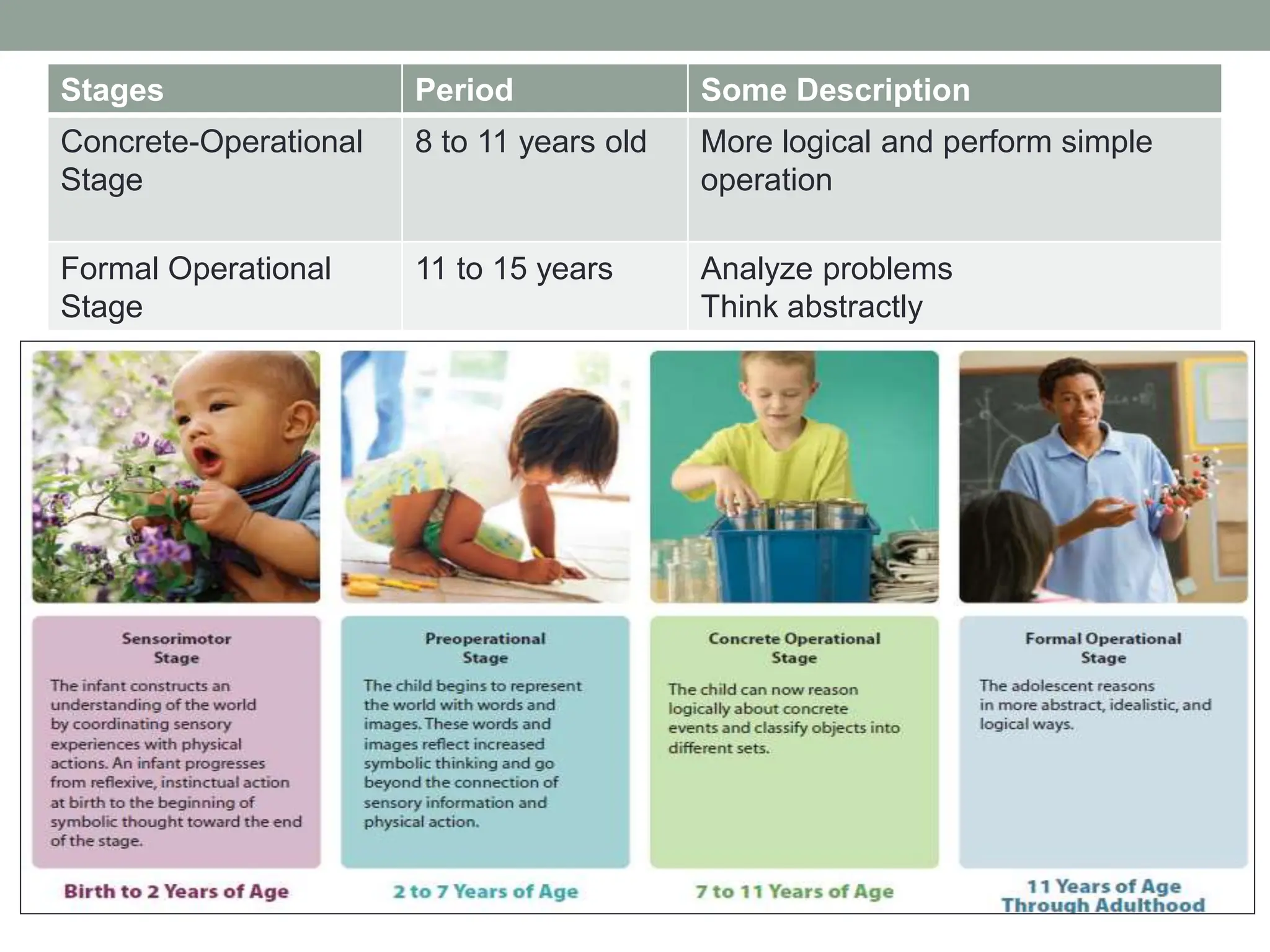
STAGES OF COGNITIVE DEVELOPMENT
Stages Period Some Description
Sensori-Motor Stage From birth
to 2 years
Learns through sensory experiences
Object Permanence
Pre-Operational
Stage
From 2 to 7
years
Symbolic thought
Conservation
Stages Period Some Description
Concrete-Operational
Stage
8 to 11 years old More logical and perform simple
operation
Formal Operational
Stage
11 to 15 years Analyze problems
Think abstractly
Lawrence Kohlberg’s Moral Development
• Right and wrong
• Sense of morality
• Morality – ability to distinguish right from wrong
and to behave accordingly.
STAGES OF MORAL REASONING
LEVEL STAGES ORIENTATION
Pre-conventional Level Stage 1:
Punishment/Obedience
The child obeys to avoid
punishment
Stage 2: Mutual Benefits Based on what is
rewarded
Conventional Level Stage 3: Social Approval Based o what others
approves or disapproved
Stage 4: Law and Order Rules should be followed
Post-conventional Level Stage 5: Social Contract Based on law
Acts based o what will
be good for the majority.
Stage 6: universal
Principles
Based on universal
principles.
Looks into one’s
conscience, justice and
seek equality at all cost.
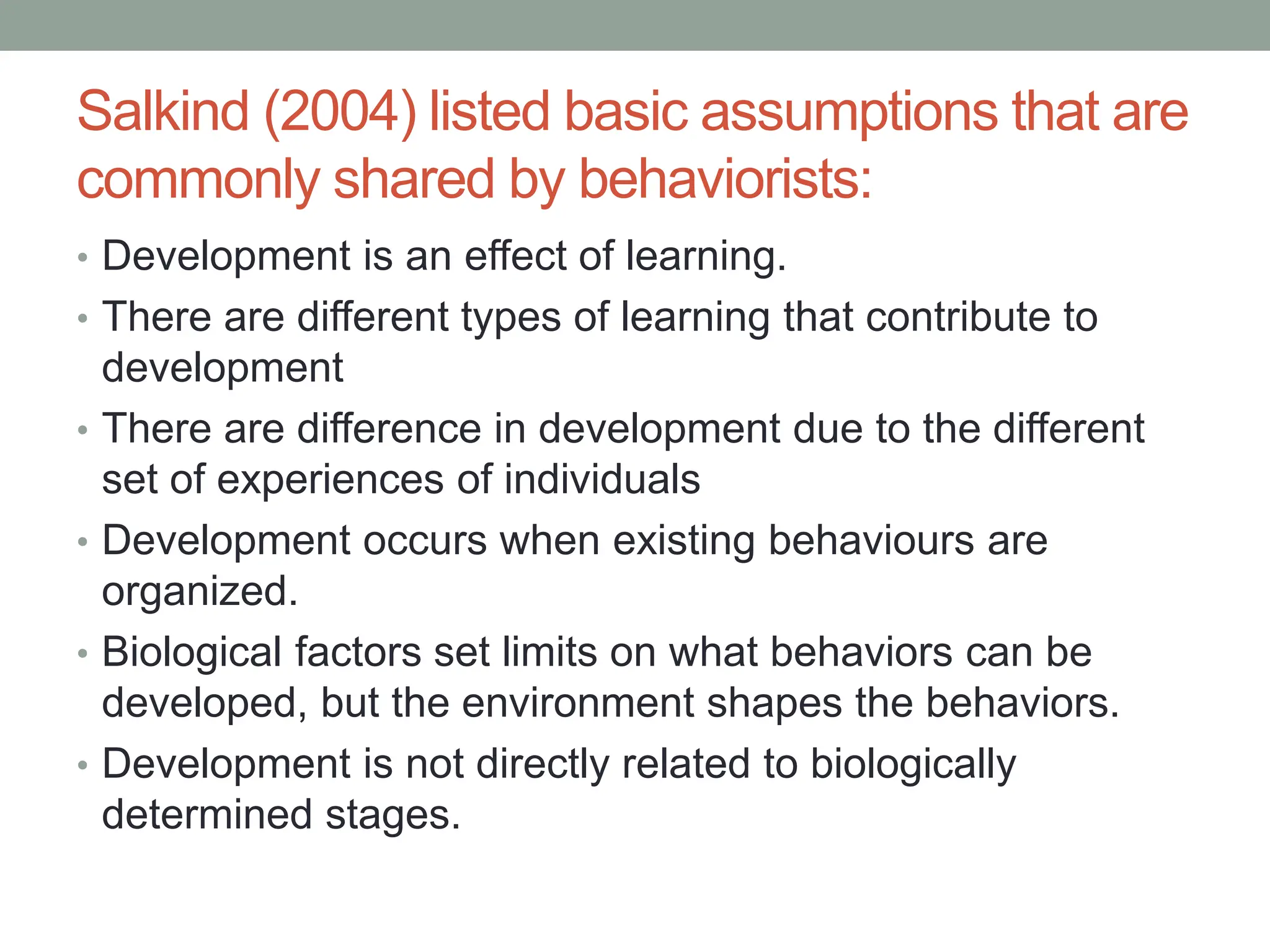
Salkind (2004) listed basic assumptions that are
commonly shared by behaviorists:
• Development is an effect of learning.
• There are different types of learning that contribute to
development
• There are difference in development due to the different
set of experiences of individuals
• Development occurs when existing behaviours are
organized.
• Biological factors set limits on what behaviors can be
developed, but the environment shapes the behaviors.
• Development is not directly related to biologically
determined stages.
The Period of Adolescence:
A General Perspective

Stages-of-human-development personal dev

  • 1.
  • 2.
  • 3.
    Sigmund Freud’s Psychosexual Theory •Erogenous zones or Pleasure areas • 5 distinct Stages • Fixation – attachment to a particular object or activity and may affect development
  • 4.
    Psychosexual Development Stage PeriodFocus Traits Outcomes Oral 1st year of life Oral Pleasure Smoking, Drinking, Nail biting, gossiping, cursing Desire clinging, dependent relationship Anal 2nd to 4th year Anal pleasure release tension through anus Anal Retentive --excessive use of self-control, perfectionist, exaggerated neatness Anal expulsive --carelessness, messiness, even sadism
  • 5.
    Stage Period FocusTraits Outcomes Phallic 4th to 6th year Pleasure through genitals . Oedipus Complex Elektra Complex Latent 7th year onwards Developing academic and social skills etc. Socialization Genital 12th year Identity formation Adolescences period Sexual interest awakened
  • 6.
    Erik Erikson’s PsychosocialTheory • Social factors • Conflict or Crisis
  • 7.
    PSYCHOSOCIAL STAGES OFDEVELOPMENT Stage Issues Social Conditions Stage 1: Birth to 1 year Trust vs. Mistrust Will I get support for what I need? Provision of basic needs Can I trust the world? Lack of support, inconsistency Stage 2: 2 to 3 years Autonomy vs. Shame and Doubt Can I already do things on my own? Support, patience Should I depend on others? Stage 3: 4 to 5 years Initiative vs. Guilt Can I be independent? Opportunity, encouragement Am I good? Am I bad? Lack of opportunity, negative feelings
  • 8.
    STAGE ISSUES SOCIALCONDITIONS Stage 4: 6 to 11 Years Industry vs. inferiority Do I have the skills to adjust? Good education/good models Am I already competent? Am I worthy or not? Lack of training/direction/support Stage 5: 12 to 18 years Identity vs. Identity Diffusion Who am I? Clear sex models, Should I depend on others? Confusing purpose Stage 6: Early Adulthood Intimacy vs. Isolation Should I get into a relationship? Understanding, trust, acceptance Or should I stay single? Loneliness, exclusion
  • 9.
    STAGE ISSUES SOCIALCONDITIONS Stage 7: Middle Adulthood Generativity vs. Stagnation What is my contribution in this world? Productivity, purposefulness Will I produce something valuable or relevant? Lack of opportunity, enrichment Stage 8: Late Adulthood Integrity vs. Despair Have I lived a full life? Sense of closure Am I contented with what I have achieved in life? Lack of completeness
  • 11.
    Jean Piaget’s CognitiveDevelopment • Education as a key element in developing one’s cognitive skills.
  • 12.
    STAGES OF COGNITIVEDEVELOPMENT Stages Period Some Description Sensori-Motor Stage From birth to 2 years Learns through sensory experiences Object Permanence Pre-Operational Stage From 2 to 7 years Symbolic thought Conservation
  • 13.
    Stages Period SomeDescription Concrete-Operational Stage 8 to 11 years old More logical and perform simple operation Formal Operational Stage 11 to 15 years Analyze problems Think abstractly
  • 14.
    Lawrence Kohlberg’s MoralDevelopment • Right and wrong • Sense of morality • Morality – ability to distinguish right from wrong and to behave accordingly.
  • 15.
    STAGES OF MORALREASONING LEVEL STAGES ORIENTATION Pre-conventional Level Stage 1: Punishment/Obedience The child obeys to avoid punishment Stage 2: Mutual Benefits Based on what is rewarded Conventional Level Stage 3: Social Approval Based o what others approves or disapproved Stage 4: Law and Order Rules should be followed Post-conventional Level Stage 5: Social Contract Based on law Acts based o what will be good for the majority. Stage 6: universal Principles Based on universal principles. Looks into one’s conscience, justice and seek equality at all cost.
  • 16.
    Salkind (2004) listedbasic assumptions that are commonly shared by behaviorists: • Development is an effect of learning. • There are different types of learning that contribute to development • There are difference in development due to the different set of experiences of individuals • Development occurs when existing behaviours are organized. • Biological factors set limits on what behaviors can be developed, but the environment shapes the behaviors. • Development is not directly related to biologically determined stages.
  • 17.
    The Period ofAdolescence: A General Perspective