STAFFING
WHAT IS
STAFFING
taffing is defined as the
process of hiring and
developing the required
human resources to fill in
various positions in the
organization. It also signifies
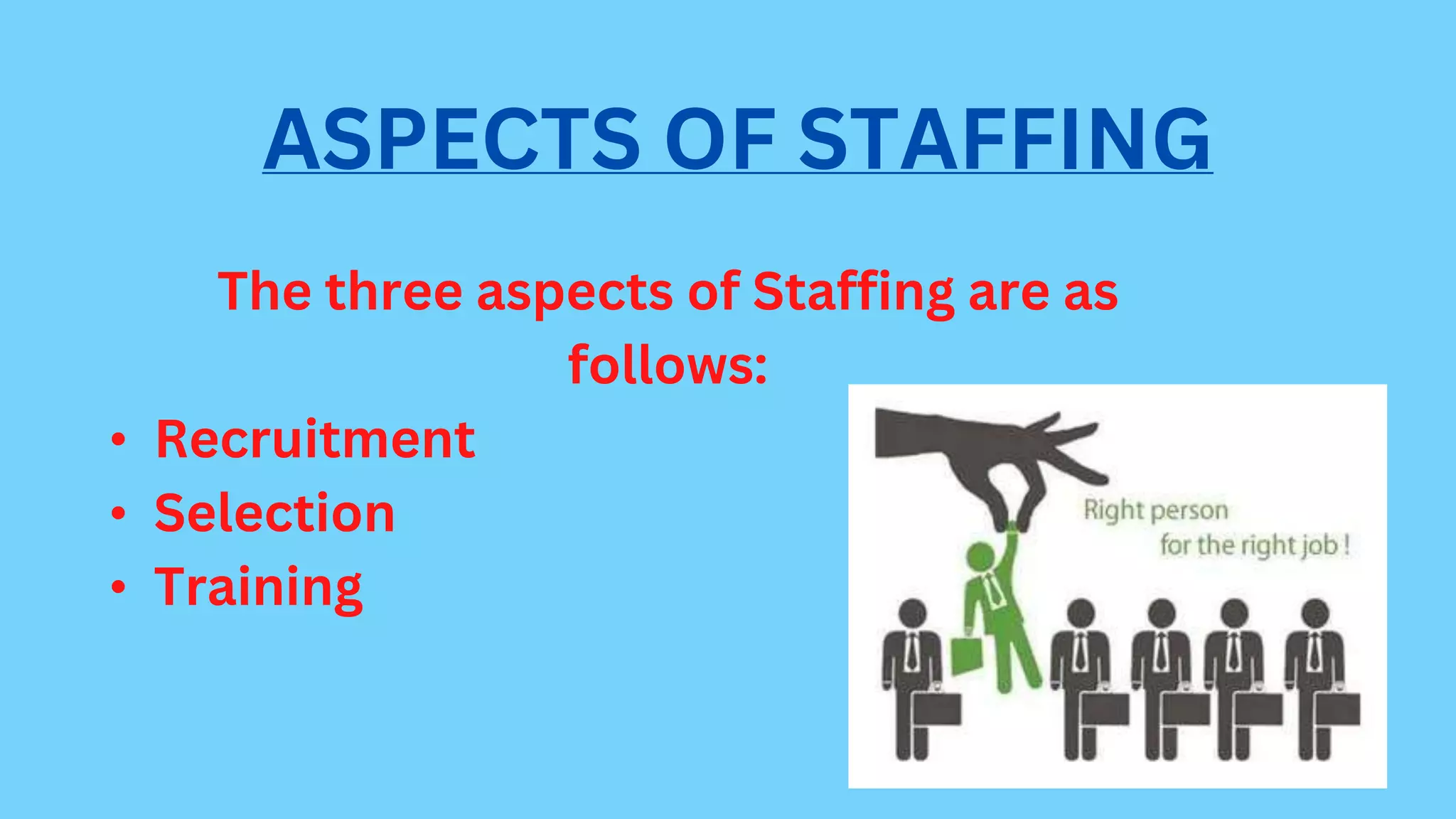
placing the right person at
the right job
S
PROCESS OF
STAFFING
Estimating manpower
requirements.
1
Recruitment
2
Selection
3
Placement and Orientation
4
5
6
7
Training and Development
Performance Appraisal
Compensation
NEED &
IMPORTANCE
1. Obtaining Competent Personnel
2. High Performance
3. Continuous growth
4. Optimum utilization of human
resources
5. Improves job satisfaction
ASPECTS OF STAFFING
• Recruitment
• Selection
• Training
The three aspects of Staffing are as
follows:
• Recruitment
It has Been as the procress of searching for propespective
employees and stimulating them to apply for jobs & in an
organization.
Sources of Recruitment-
• Internal sources
• External Sources
Internal Sources Internal Sources of recruitment are
those sources in which the talent acquisition is done
from within the organization. No new members or
employees are recruited here.
Internal Sources
Types of internal sources
• Tranfers
• Promotion
Merits of Internal Sources
● Boosts employee morale:
● Reliable method:
● Tool of Training:
● Creates balance:
● Inexpensive:
Limitations of Internal Sources
● No fresh blood in the organization:
● Employee lethargy:
● Not suitable for new organizations:
● No competitive spirit:
● Lower productivity:
External Sources When the Internal Sources fail to cater
the needs, the organization starts the recruitment
through external sources
External Sources
• Direct Recruitment:
• Casual Callers:
• Advertisement:
• Employment Exchange:
• Placement Agencies and Management Consultants:
• Campus Recruitment: Advertising on Television:
• Web Publishing:
• Labour Contractors:
External Sources are-
Merits of External Sources
● Qualified Personnel
● Wider Choice
● Fresh Talent
● Competitive Spirit
Limitations of External Sources
● Dissatisfaction among existing staff
● Lengthy process
● Costly process
Selection
This is the process of choosing the best out of all. A
series of employment tests and interviews are
conducted in order to choose the person who would
be the best fit for the job.
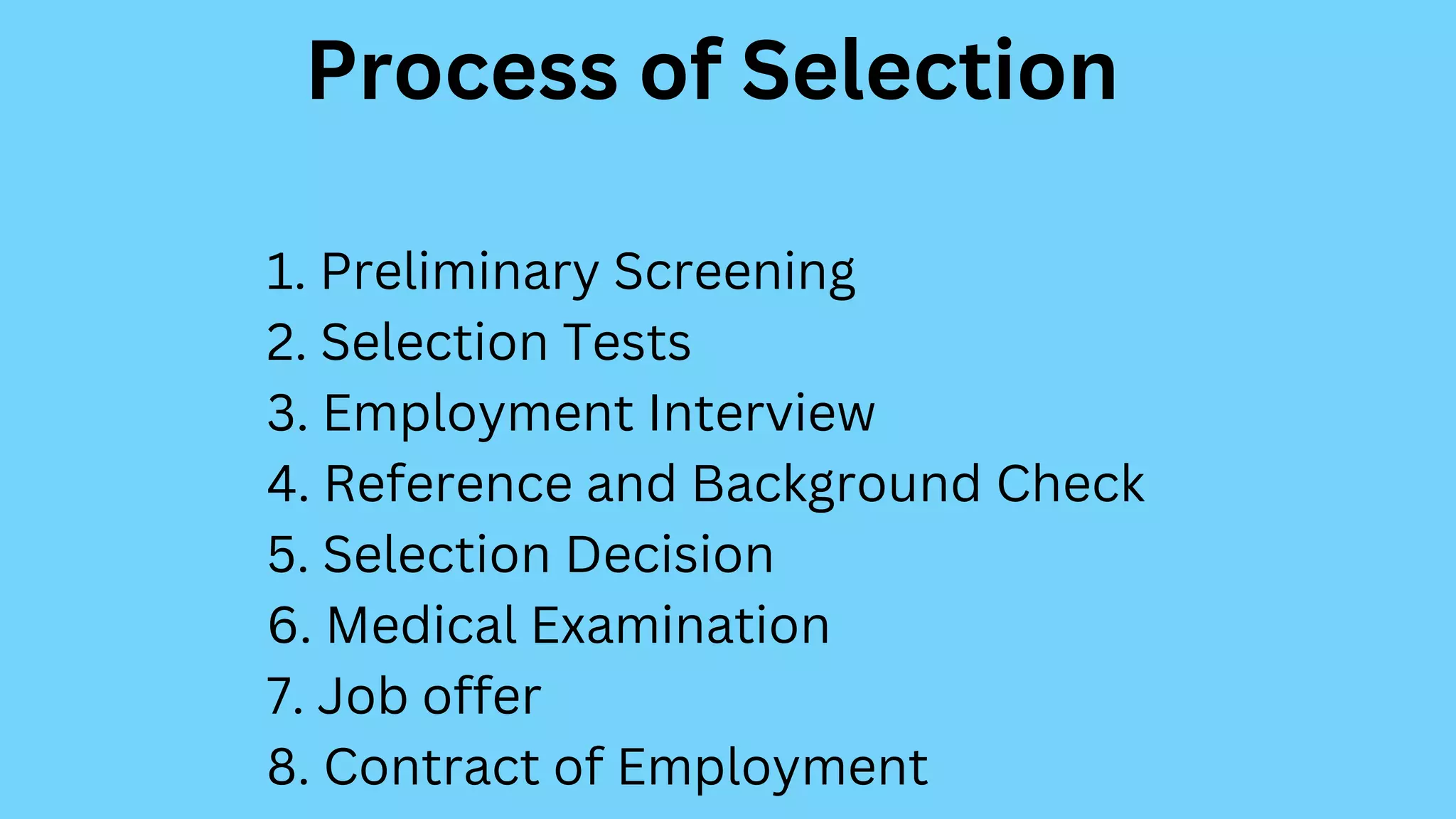
Process of Selection
1. Preliminary Screening
2. Selection Tests
3. Employment Interview
4. Reference and Background Check
5. Selection Decision
6. Medical Examination
7. Job offer
8. Contract of Employment
Training is the process of improving an employee's skills and
competence required to perform a specific job.
Training
TRAINING METHODS
A. On the Job Methods
B. Off the Job Methods
A. On the Job Methods
On-the-job training refers to the training where
the subordinates learn by doing in the workplace,
under the supervision of superiors.
It includes:
● Apprenticeship Programmes
● Coaching
● Internship Training
● Job Rotation
B. Off the Job Methods
On-the-job training refers to the training where the
subordinates learn by doing at a place away from the
workplace.
It includes:
● Classroom Lectures/ Conference
● Films
● Case study
● Computer Modelling
● Vestibule Training
● Programmed Instructions
THANK
YOU!

Staffing.pptx

  • 1.
  • 2.
  • 3.
    taffing is definedas the process of hiring and developing the required human resources to fill in various positions in the organization. It also signifies placing the right person at the right job S
  • 4.
    PROCESS OF STAFFING Estimating manpower requirements. 1 Recruitment 2 Selection 3 Placementand Orientation 4 5 6 7 Training and Development Performance Appraisal Compensation
  • 5.
    NEED & IMPORTANCE 1. ObtainingCompetent Personnel 2. High Performance 3. Continuous growth 4. Optimum utilization of human resources 5. Improves job satisfaction
  • 6.
    ASPECTS OF STAFFING •Recruitment • Selection • Training The three aspects of Staffing are as follows:
  • 7.
    • Recruitment It hasBeen as the procress of searching for propespective employees and stimulating them to apply for jobs & in an organization. Sources of Recruitment- • Internal sources • External Sources
  • 8.
    Internal Sources InternalSources of recruitment are those sources in which the talent acquisition is done from within the organization. No new members or employees are recruited here. Internal Sources Types of internal sources • Tranfers • Promotion
  • 9.
    Merits of InternalSources ● Boosts employee morale: ● Reliable method: ● Tool of Training: ● Creates balance: ● Inexpensive: Limitations of Internal Sources ● No fresh blood in the organization: ● Employee lethargy: ● Not suitable for new organizations: ● No competitive spirit: ● Lower productivity:
  • 10.
    External Sources Whenthe Internal Sources fail to cater the needs, the organization starts the recruitment through external sources External Sources • Direct Recruitment: • Casual Callers: • Advertisement: • Employment Exchange: • Placement Agencies and Management Consultants: • Campus Recruitment: Advertising on Television: • Web Publishing: • Labour Contractors: External Sources are-
  • 11.
    Merits of ExternalSources ● Qualified Personnel ● Wider Choice ● Fresh Talent ● Competitive Spirit Limitations of External Sources ● Dissatisfaction among existing staff ● Lengthy process ● Costly process
  • 12.
    Selection This is theprocess of choosing the best out of all. A series of employment tests and interviews are conducted in order to choose the person who would be the best fit for the job.
  • 13.
    Process of Selection 1.Preliminary Screening 2. Selection Tests 3. Employment Interview 4. Reference and Background Check 5. Selection Decision 6. Medical Examination 7. Job offer 8. Contract of Employment
  • 14.
    Training is theprocess of improving an employee's skills and competence required to perform a specific job. Training TRAINING METHODS A. On the Job Methods B. Off the Job Methods
  • 15.
    A. On theJob Methods On-the-job training refers to the training where the subordinates learn by doing in the workplace, under the supervision of superiors. It includes: ● Apprenticeship Programmes ● Coaching ● Internship Training ● Job Rotation
  • 16.
    B. Off theJob Methods On-the-job training refers to the training where the subordinates learn by doing at a place away from the workplace. It includes: ● Classroom Lectures/ Conference ● Films ● Case study ● Computer Modelling ● Vestibule Training ● Programmed Instructions
  • 17.