1
‫‌گری‬
‫ه‬‫ریخت‬ ‫و‬ ‫انجماد‬
2
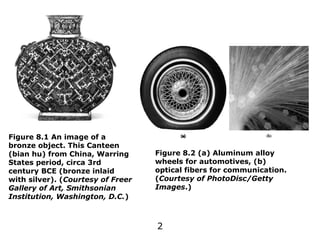
Figure 8.1 An image of a
bronze object. This Canteen
(bian hu) from China, Warring
States period, circa 3rd
century BCE (bronze inlaid
with silver). (Courtesy of Freer
Gallery of Art, Smithsonian
Institution, Washington, D.C.)
Figure 8.2 (a) Aluminum alloy
wheels for automotives, (b)
optical fibers for communication.
(Courtesy of PhotoDisc/Getty
Images.)
3
4
5
6
7
8
9
10
11
12
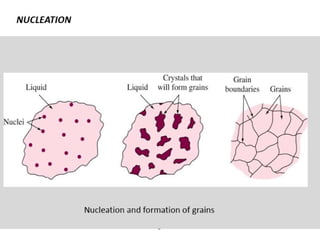
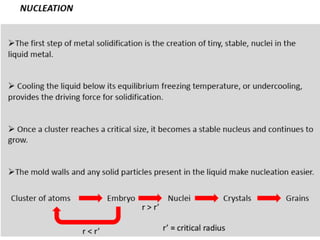
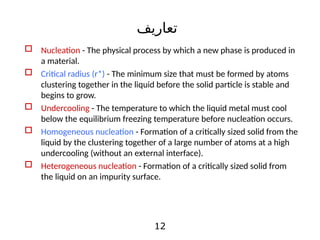
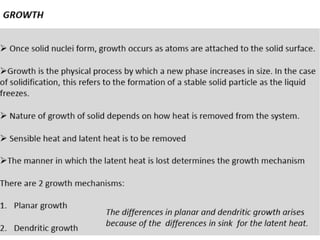
 Nucleation - The physical process by which a new phase is produced in
a material.
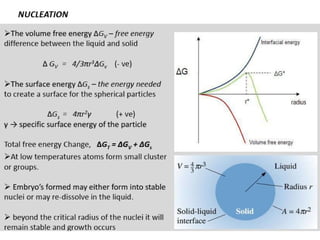
 Critical radius (r*) - The minimum size that must be formed by atoms
clustering together in the liquid before the solid particle is stable and
begins to grow.
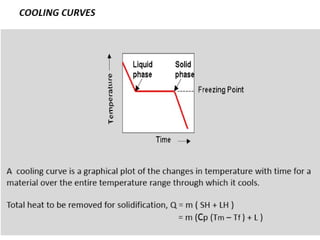
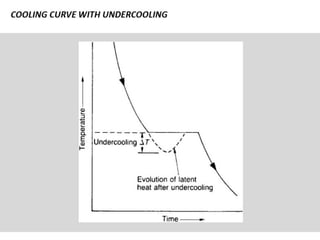
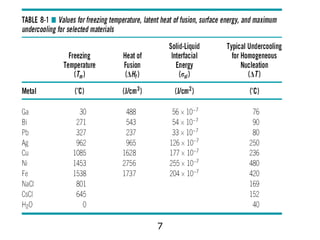
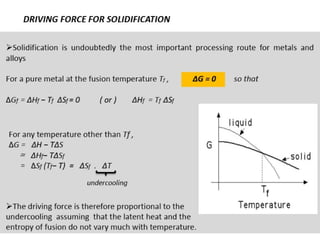
 Undercooling - The temperature to which the liquid metal must cool
below the equilibrium freezing temperature before nucleation occurs.
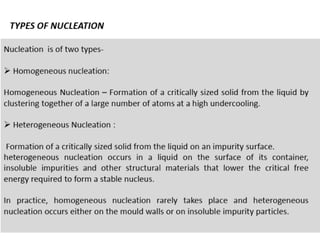
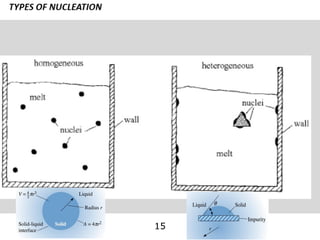
 Homogeneous nucleation - Formation of a critically sized solid from the
liquid by the clustering together of a large number of atoms at a high
undercooling (without an external interface).
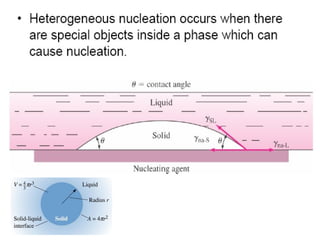
 Heterogeneous nucleation - Formation of a critically sized solid from
the liquid on an impurity surface.
‫تعاریف‬
13
15
16
17
18
19
20
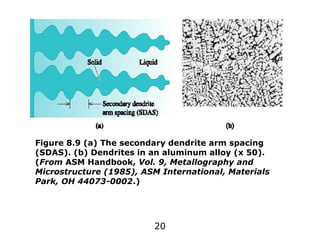
Figure 8.9 (a) The secondary dendrite arm spacing
(SDAS). (b) Dendrites in an aluminum alloy (x 50).
(From ASM Handbook, Vol. 9, Metallography and
Microstructure (1985), ASM International, Materials
Park, OH 44073-0002.)
21
©2003 Brooks/Cole, a division of Thomson Learning, Inc. Thomson Learning™ is a trademark used herein under license.
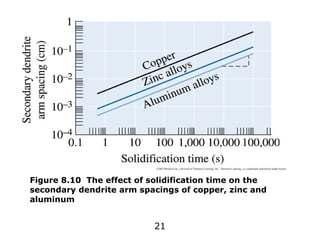
Figure 8.10 The effect of solidification time on the
secondary dendrite arm spacings of copper, zinc and
aluminum
22
©2003
Brooks/Cole,
a
division
of
Thomson
Learning,
Inc.
Thomson
Learning
™
is
a
trademark
used
herein
under
license.
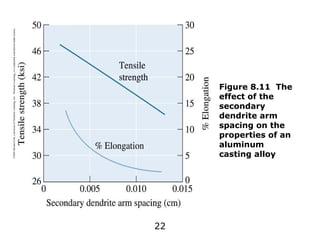
Figure 8.11 The
effect of the
secondary
dendrite arm
spacing on the
properties of an
aluminum
casting alloy
23
©2003
Brooks/Cole,
a
division
of
Thomson
Learning,
Inc.
Thomson
Learning
™
is
a
trademark
used
herein
under
license.
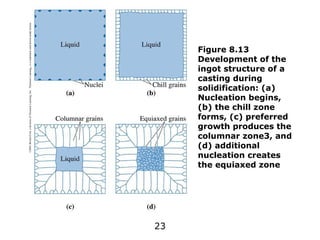
Figure 8.13
Development of the
ingot structure of a
casting during
solidification: (a)
Nucleation begins,
(b) the chill zone
forms, (c) preferred
growth produces the
columnar zone3, and
(d) additional
nucleation creates
the equiaxed zone
24
©2003 Brooks/Cole, a division of Thomson Learning, Inc. Thomson Learning™ is a trademark used herein under license.
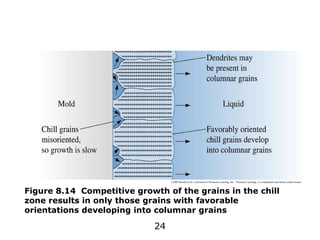
Figure 8.14 Competitive growth of the grains in the chill
zone results in only those grains with favorable
orientations developing into columnar grains
25
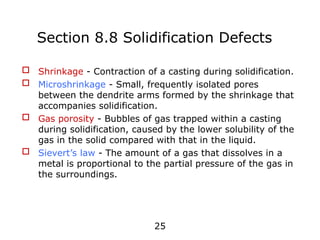
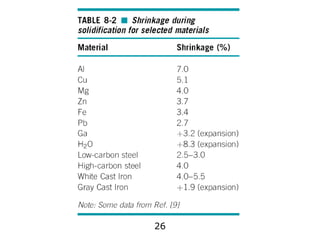
 Shrinkage - Contraction of a casting during solidification.
 Microshrinkage - Small, frequently isolated pores
between the dendrite arms formed by the shrinkage that
accompanies solidification.
 Gas porosity - Bubbles of gas trapped within a casting
during solidification, caused by the lower solubility of the
gas in the solid compared with that in the liquid.
 Sievert’s law - The amount of a gas that dissolves in a
metal is proportional to the partial pressure of the gas in
the surroundings.
Section 8.8 Solidification Defects
26
27
©2003 Brooks/Cole, a division of Thomson Learning, Inc. Thomson Learning™ is a trademark used herein under license.
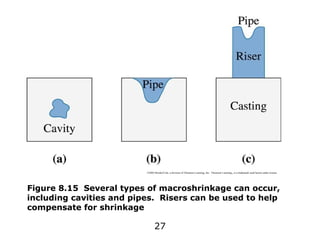
Figure 8.15 Several types of macroshrinkage can occur,
including cavities and pipes. Risers can be used to help
compensate for shrinkage
28
©2003 Brooks/Cole, a division of Thomson Learning, Inc. Thomson Learning™ is a trademark used herein under
license.
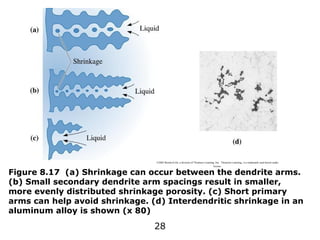
Figure 8.17 (a) Shrinkage can occur between the dendrite arms.
(b) Small secondary dendrite arm spacings result in smaller,
more evenly distributed shrinkage porosity. (c) Short primary
arms can help avoid shrinkage. (d) Interdendritic shrinkage in an
aluminum alloy is shown (x 80)
29
©2003 Brooks/Cole, a division of Thomson Learning, Inc. Thomson Learning™ is a trademark used
herein under license.
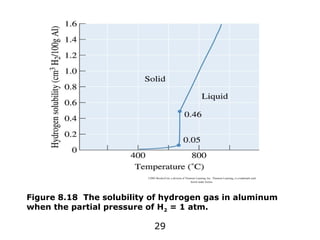
Figure 8.18 The solubility of hydrogen gas in aluminum
when the partial pressure of H2 = 1 atm.
30
 Sand casting - A casting process using sand molds.
 Investment casting - A casting process that is used for
making complex shapes such as turbine blades, also
known as the lost wax process.
 Lost foam process - A process in which a polymer foam is
used as a pattern to produce a casting.
 Permanent mold casting - A casting process in which a
mold can be used many times.
 Pressure die casting - A casting process in which molten
metal/alloys is forced into a die under pressure.
Casting Processes for Manufacturing
Components
31
©2003
Brooks/Cole,
a
division
of
Thomson
Learning,
Inc.
Thomson
Learning
™
is
a
trademark
used
herein
under
license.
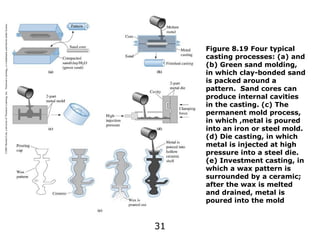
Figure 8.19 Four typical
casting processes: (a) and
(b) Green sand molding,
in which clay-bonded sand
is packed around a
pattern. Sand cores can
produce internal cavities
in the casting. (c) The
permanent mold process,
in which ,metal is poured
into an iron or steel mold.
(d) Die casting, in which
metal is injected at high
pressure into a steel die.
(e) Investment casting, in
which a wax pattern is
surrounded by a ceramic;
after the wax is melted
and drained, metal is
poured into the mold
32
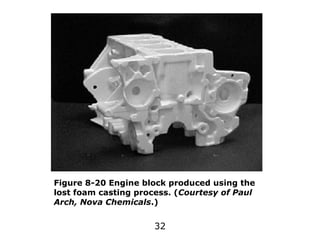
Figure 8-20 Engine block produced using the
lost foam casting process. (Courtesy of Paul
Arch, Nova Chemicals.)
33
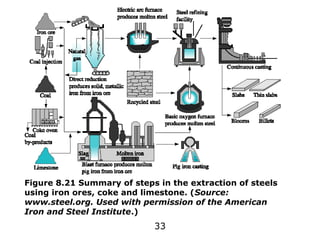
Figure 8.21 Summary of steps in the extraction of steels
using iron ores, coke and limestone. (Source:
www.steel.org. Used with permission of the American
Iron and Steel Institute.)
34
©2003
Brooks/Cole,
a
division
of
Thomson
Learning,
Inc.
Thomson
Learning
™
is
a
trademark
used
herein
under
license.
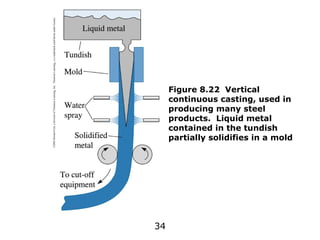
Figure 8.22 Vertical
continuous casting, used in
producing many steel
products. Liquid metal
contained in the tundish
partially solidifies in a mold
35
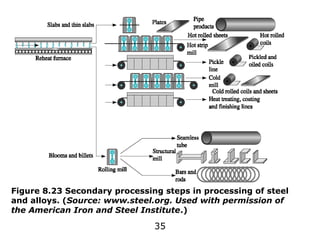
Figure 8.23 Secondary processing steps in processing of steel
and alloys. (Source: www.steel.org. Used with permission of
the American Iron and Steel Institute.)
36
 Directional solidification (DS) - A solidification technique
in which cooling in a given direction leads to preferential
growth of grains in the opposite direction, leading to an
anisotropic-oriented microstructure.
 Bridgman processes - A process to grow semiconductor
and other single crystals.
 Epitaxial growth - Growth of a material via epitaxy.
 Homoepitaxy - Growth of a highly oriented material onto
a crystal of the same material.
 Heteroepitaxy - Growth of a highly oriented material onto
a different substrate material.
Directional Solidification (DS),
Single Crystal Growth, and Epitaxial
Growth
37
©2003 Brooks/Cole, a division of Thomson Learning, Inc. Thomson Learning™ is a trademark used herein under license.
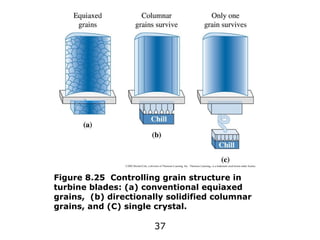
Figure 8.25 Controlling grain structure in
turbine blades: (a) conventional equiaxed
grains, (b) directionally solidified columnar
grains, and (C) single crystal.
38
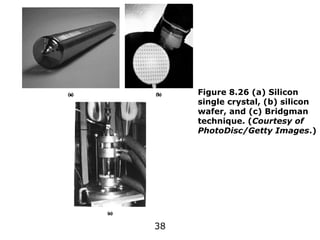
Figure 8.26 (a) Silicon
single crystal, (b) silicon
wafer, and (c) Bridgman
technique. (Courtesy of
PhotoDisc/Getty Images.)
39
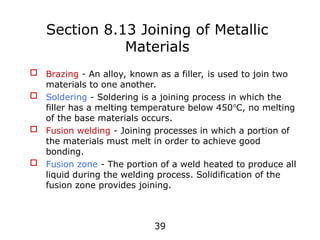
 Brazing - An alloy, known as a filler, is used to join two
materials to one another.
 Soldering - Soldering is a joining process in which the
filler has a melting temperature below 450o
C, no melting
of the base materials occurs.
 Fusion welding - Joining processes in which a portion of
the materials must melt in order to achieve good
bonding.
 Fusion zone - The portion of a weld heated to produce all
liquid during the welding process. Solidification of the
fusion zone provides joining.
Section 8.13 Joining of Metallic
Materials
40
©2003
Brooks/Cole,
a
division
of
Thomson
Learning,
Inc.
Thomson
Learning
™
is
a
trademark
used
herein
under
license.
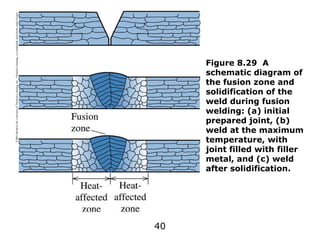
Figure 8.29 A
schematic diagram of
the fusion zone and
solidification of the
weld during fusion
welding: (a) initial
prepared joint, (b)
weld at the maximum
temperature, with
joint filled with filler
metal, and (c) weld
after solidification.
41
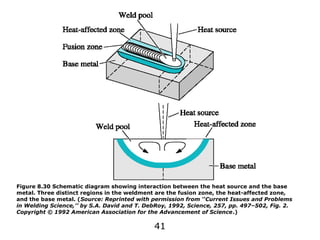
Figure 8.30 Schematic diagram showing interaction between the heat source and the base
metal. Three distinct regions in the weldment are the fusion zone, the heat-affected zone,
and the base metal. (Source: Reprinted with permission from ‘‘Current Issues and Problems
in Welding Science,’’ by S.A. David and T. DebRoy, 1992, Science, 257, pp. 497–502, Fig. 2.
Copyright © 1992 American Association for the Advancement of Science.)

انجماد و ریختگری فلزات درس روش تولید از کتاب کلپکچیان

  • 1.
  • 2.
    2 Figure 8.1 Animage of a bronze object. This Canteen (bian hu) from China, Warring States period, circa 3rd century BCE (bronze inlaid with silver). (Courtesy of Freer Gallery of Art, Smithsonian Institution, Washington, D.C.) Figure 8.2 (a) Aluminum alloy wheels for automotives, (b) optical fibers for communication. (Courtesy of PhotoDisc/Getty Images.)
  • 3.
  • 4.
  • 5.
  • 6.
  • 7.
  • 8.
  • 9.
  • 10.
  • 11.
  • 12.
    12  Nucleation -The physical process by which a new phase is produced in a material.  Critical radius (r*) - The minimum size that must be formed by atoms clustering together in the liquid before the solid particle is stable and begins to grow.  Undercooling - The temperature to which the liquid metal must cool below the equilibrium freezing temperature before nucleation occurs.  Homogeneous nucleation - Formation of a critically sized solid from the liquid by the clustering together of a large number of atoms at a high undercooling (without an external interface).  Heterogeneous nucleation - Formation of a critically sized solid from the liquid on an impurity surface. ‫تعاریف‬
  • 13.
  • 15.
  • 16.
  • 17.
  • 18.
  • 19.
  • 20.
    20 Figure 8.9 (a)The secondary dendrite arm spacing (SDAS). (b) Dendrites in an aluminum alloy (x 50). (From ASM Handbook, Vol. 9, Metallography and Microstructure (1985), ASM International, Materials Park, OH 44073-0002.)
  • 21.
    21 ©2003 Brooks/Cole, adivision of Thomson Learning, Inc. Thomson Learning™ is a trademark used herein under license. Figure 8.10 The effect of solidification time on the secondary dendrite arm spacings of copper, zinc and aluminum
  • 22.
  • 23.
    23 ©2003 Brooks/Cole, a division of Thomson Learning, Inc. Thomson Learning ™ is a trademark used herein under license. Figure 8.13 Development ofthe ingot structure of a casting during solidification: (a) Nucleation begins, (b) the chill zone forms, (c) preferred growth produces the columnar zone3, and (d) additional nucleation creates the equiaxed zone
  • 24.
    24 ©2003 Brooks/Cole, adivision of Thomson Learning, Inc. Thomson Learning™ is a trademark used herein under license. Figure 8.14 Competitive growth of the grains in the chill zone results in only those grains with favorable orientations developing into columnar grains
  • 25.
    25  Shrinkage -Contraction of a casting during solidification.  Microshrinkage - Small, frequently isolated pores between the dendrite arms formed by the shrinkage that accompanies solidification.  Gas porosity - Bubbles of gas trapped within a casting during solidification, caused by the lower solubility of the gas in the solid compared with that in the liquid.  Sievert’s law - The amount of a gas that dissolves in a metal is proportional to the partial pressure of the gas in the surroundings. Section 8.8 Solidification Defects
  • 26.
  • 27.
    27 ©2003 Brooks/Cole, adivision of Thomson Learning, Inc. Thomson Learning™ is a trademark used herein under license. Figure 8.15 Several types of macroshrinkage can occur, including cavities and pipes. Risers can be used to help compensate for shrinkage
  • 28.
    28 ©2003 Brooks/Cole, adivision of Thomson Learning, Inc. Thomson Learning™ is a trademark used herein under license. Figure 8.17 (a) Shrinkage can occur between the dendrite arms. (b) Small secondary dendrite arm spacings result in smaller, more evenly distributed shrinkage porosity. (c) Short primary arms can help avoid shrinkage. (d) Interdendritic shrinkage in an aluminum alloy is shown (x 80)
  • 29.
    29 ©2003 Brooks/Cole, adivision of Thomson Learning, Inc. Thomson Learning™ is a trademark used herein under license. Figure 8.18 The solubility of hydrogen gas in aluminum when the partial pressure of H2 = 1 atm.
  • 30.
    30  Sand casting- A casting process using sand molds.  Investment casting - A casting process that is used for making complex shapes such as turbine blades, also known as the lost wax process.  Lost foam process - A process in which a polymer foam is used as a pattern to produce a casting.  Permanent mold casting - A casting process in which a mold can be used many times.  Pressure die casting - A casting process in which molten metal/alloys is forced into a die under pressure. Casting Processes for Manufacturing Components
  • 31.
    31 ©2003 Brooks/Cole, a division of Thomson Learning, Inc. Thomson Learning ™ is a trademark used herein under license. Figure 8.19 Fourtypical casting processes: (a) and (b) Green sand molding, in which clay-bonded sand is packed around a pattern. Sand cores can produce internal cavities in the casting. (c) The permanent mold process, in which ,metal is poured into an iron or steel mold. (d) Die casting, in which metal is injected at high pressure into a steel die. (e) Investment casting, in which a wax pattern is surrounded by a ceramic; after the wax is melted and drained, metal is poured into the mold
  • 32.
    32 Figure 8-20 Engineblock produced using the lost foam casting process. (Courtesy of Paul Arch, Nova Chemicals.)
  • 33.
    33 Figure 8.21 Summaryof steps in the extraction of steels using iron ores, coke and limestone. (Source: www.steel.org. Used with permission of the American Iron and Steel Institute.)
  • 34.
    34 ©2003 Brooks/Cole, a division of Thomson Learning, Inc. Thomson Learning ™ is a trademark used herein under license. Figure 8.22 Vertical continuouscasting, used in producing many steel products. Liquid metal contained in the tundish partially solidifies in a mold
  • 35.
    35 Figure 8.23 Secondaryprocessing steps in processing of steel and alloys. (Source: www.steel.org. Used with permission of the American Iron and Steel Institute.)
  • 36.
    36  Directional solidification(DS) - A solidification technique in which cooling in a given direction leads to preferential growth of grains in the opposite direction, leading to an anisotropic-oriented microstructure.  Bridgman processes - A process to grow semiconductor and other single crystals.  Epitaxial growth - Growth of a material via epitaxy.  Homoepitaxy - Growth of a highly oriented material onto a crystal of the same material.  Heteroepitaxy - Growth of a highly oriented material onto a different substrate material. Directional Solidification (DS), Single Crystal Growth, and Epitaxial Growth
  • 37.
    37 ©2003 Brooks/Cole, adivision of Thomson Learning, Inc. Thomson Learning™ is a trademark used herein under license. Figure 8.25 Controlling grain structure in turbine blades: (a) conventional equiaxed grains, (b) directionally solidified columnar grains, and (C) single crystal.
  • 38.
    38 Figure 8.26 (a)Silicon single crystal, (b) silicon wafer, and (c) Bridgman technique. (Courtesy of PhotoDisc/Getty Images.)
  • 39.
    39  Brazing -An alloy, known as a filler, is used to join two materials to one another.  Soldering - Soldering is a joining process in which the filler has a melting temperature below 450o C, no melting of the base materials occurs.  Fusion welding - Joining processes in which a portion of the materials must melt in order to achieve good bonding.  Fusion zone - The portion of a weld heated to produce all liquid during the welding process. Solidification of the fusion zone provides joining. Section 8.13 Joining of Metallic Materials
  • 40.
    40 ©2003 Brooks/Cole, a division of Thomson Learning, Inc. Thomson Learning ™ is a trademark used herein under license. Figure 8.29 A schematicdiagram of the fusion zone and solidification of the weld during fusion welding: (a) initial prepared joint, (b) weld at the maximum temperature, with joint filled with filler metal, and (c) weld after solidification.
  • 41.
    41 Figure 8.30 Schematicdiagram showing interaction between the heat source and the base metal. Three distinct regions in the weldment are the fusion zone, the heat-affected zone, and the base metal. (Source: Reprinted with permission from ‘‘Current Issues and Problems in Welding Science,’’ by S.A. David and T. DebRoy, 1992, Science, 257, pp. 497–502, Fig. 2. Copyright © 1992 American Association for the Advancement of Science.)