SQL Server
Features:
Empowering
Database
Management
SQL Server, a robust and versatile relational database management
system (RDBMS), offers a comprehensive set of features designed to cater
to the needs of businesses of all sizes. From ensuring high-level security to
enabling seamless data migration and analysis, SQL Server empowers
organizations with the tools they need to manage their data effectively and
efficiently. This presentation explores some of the key features that make
SQL Server a powerful and reliable platform for database management.
by Ishaan Kumar
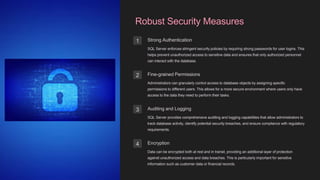
Robust Security Measures
1 Strong Authentication
SQL Server enforces stringent security policies by requiring strong passwords for user logins. This
helps prevent unauthorized access to sensitive data and ensures that only authorized personnel
can interact with the database.
2 Fine-grained Permissions
Administrators can granularly control access to database objects by assigning specific
permissions to different users. This allows for a more secure environment where users only have
access to the data they need to perform their tasks.
3 Auditing and Logging
SQL Server provides comprehensive auditing and logging capabilities that allow administrators to
track database activity, identify potential security breaches, and ensure compliance with regulatory
requirements.
4 Encryption
Data can be encrypted both at rest and in transit, providing an additional layer of protection
against unauthorized access and data breaches. This is particularly important for sensitive
information such as customer data or financial records.
Ensuring High Availability
Database Mirroring
This feature creates a secondary
copy of the primary database on a
separate server. In case of a
primary server failure, the
secondary server automatically
takes over, ensuring minimal
downtime and data integrity.
Failover Clustering
A group of servers is configured to
work together as a single unit. If
one server fails, another server
seamlessly takes over, eliminating
single points of failure and
maintaining high availability.
Database Snapshots
Snapshots capture a point-in-time
copy of the database, allowing for
quick recovery in case of data loss
or corruption. This feature helps
ensure data consistency and
minimizes downtime during
restoration.
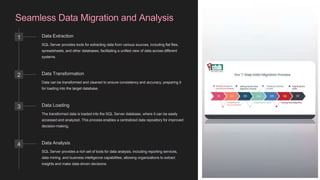
Seamless Data Migration and Analysis
1 Data Extraction
SQL Server provides tools for extracting data from various sources, including flat files,
spreadsheets, and other databases, facilitating a unified view of data across different
systems.
2 Data Transformation
Data can be transformed and cleaned to ensure consistency and accuracy, preparing it
for loading into the target database.
3 Data Loading
The transformed data is loaded into the SQL Server database, where it can be easily
accessed and analyzed. This process enables a centralized data repository for improved
decision-making.
4 Data Analysis
SQL Server provides a rich set of tools for data analysis, including reporting services,
data mining, and business intelligence capabilities, allowing organizations to extract
insights and make data-driven decisions.
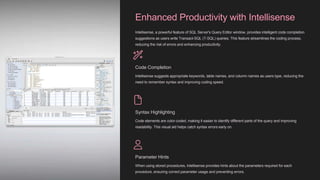
Enhanced Productivity with Intellisense
Intellisense, a powerful feature of SQL Server's Query Editor window, provides intelligent code completion
suggestions as users write Transact-SQL (T-SQL) queries. This feature streamlines the coding process,
reducing the risk of errors and enhancing productivity.
Code Completion
Intellisense suggests appropriate keywords, table names, and column names as users type, reducing the
need to remember syntax and improving coding speed.
Syntax Highlighting
Code elements are color-coded, making it easier to identify different parts of the query and improving
readability. This visual aid helps catch syntax errors early on.
Parameter Hints
When using stored procedures, Intellisense provides hints about the parameters required for each
procedure, ensuring correct parameter usage and preventing errors.
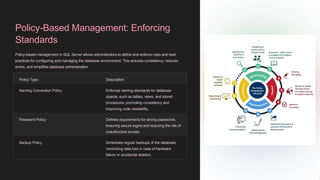
Policy-Based Management: Enforcing
Standards
Policy-based management in SQL Server allows administrators to define and enforce rules and best
practices for configuring and managing the database environment. This ensures consistency, reduces
errors, and simplifies database administration.
Policy Type Description
Naming Convention Policy Enforces naming standards for database
objects, such as tables, views, and stored
procedures, promoting consistency and
improving code readability.
Password Policy Defines requirements for strong passwords,
ensuring secure logins and reducing the risk of
unauthorized access.
Backup Policy Schedules regular backups of the database,
minimizing data loss in case of hardware
failure or accidental deletion.
Resource Governor: Optimizing Performance
Resource Governor is a powerful feature in SQL Server that allows administrators to manage the
workload and allocate resources efficiently. This ensures optimal performance for critical applications and
prevents resource contention.
Resource Pools
Administrators define resource pools, which represent different levels of resource
allocation. Each resource pool is assigned a specific amount of CPU time, memory, and
other resources.
Workload Groups
Different workloads, such as reporting, transactional processing, and batch jobs, are
classified into workload groups. Each workload group is then mapped to a specific
resource pool, ensuring that the appropriate resources are allocated based on the
workload's requirements.
Resource Allocation
When a query is executed, Resource Governor determines the workload group it belongs
to and allocates resources from the corresponding resource pool. This ensures that each
workload receives the appropriate amount of resources, optimizing overall performance.
Conclusion: Empowering
Data Management
SQL Server's comprehensive features provide a powerful and
reliable platform for data management. From robust security
measures to high availability options, SQL Server empowers
organizations to manage their data effectively and efficiently. These
features ensure data integrity, optimize performance, and enable
data-driven decision-making, contributing to the success of
businesses across all industries.

SQL-Server-Features-Empowering-Database-Management1.pptx

  • 1.
    SQL Server Features: Empowering Database Management SQL Server,a robust and versatile relational database management system (RDBMS), offers a comprehensive set of features designed to cater to the needs of businesses of all sizes. From ensuring high-level security to enabling seamless data migration and analysis, SQL Server empowers organizations with the tools they need to manage their data effectively and efficiently. This presentation explores some of the key features that make SQL Server a powerful and reliable platform for database management. by Ishaan Kumar
  • 2.
    Robust Security Measures 1Strong Authentication SQL Server enforces stringent security policies by requiring strong passwords for user logins. This helps prevent unauthorized access to sensitive data and ensures that only authorized personnel can interact with the database. 2 Fine-grained Permissions Administrators can granularly control access to database objects by assigning specific permissions to different users. This allows for a more secure environment where users only have access to the data they need to perform their tasks. 3 Auditing and Logging SQL Server provides comprehensive auditing and logging capabilities that allow administrators to track database activity, identify potential security breaches, and ensure compliance with regulatory requirements. 4 Encryption Data can be encrypted both at rest and in transit, providing an additional layer of protection against unauthorized access and data breaches. This is particularly important for sensitive information such as customer data or financial records.
  • 3.
    Ensuring High Availability DatabaseMirroring This feature creates a secondary copy of the primary database on a separate server. In case of a primary server failure, the secondary server automatically takes over, ensuring minimal downtime and data integrity. Failover Clustering A group of servers is configured to work together as a single unit. If one server fails, another server seamlessly takes over, eliminating single points of failure and maintaining high availability. Database Snapshots Snapshots capture a point-in-time copy of the database, allowing for quick recovery in case of data loss or corruption. This feature helps ensure data consistency and minimizes downtime during restoration.
  • 4.
    Seamless Data Migrationand Analysis 1 Data Extraction SQL Server provides tools for extracting data from various sources, including flat files, spreadsheets, and other databases, facilitating a unified view of data across different systems. 2 Data Transformation Data can be transformed and cleaned to ensure consistency and accuracy, preparing it for loading into the target database. 3 Data Loading The transformed data is loaded into the SQL Server database, where it can be easily accessed and analyzed. This process enables a centralized data repository for improved decision-making. 4 Data Analysis SQL Server provides a rich set of tools for data analysis, including reporting services, data mining, and business intelligence capabilities, allowing organizations to extract insights and make data-driven decisions.
  • 5.
    Enhanced Productivity withIntellisense Intellisense, a powerful feature of SQL Server's Query Editor window, provides intelligent code completion suggestions as users write Transact-SQL (T-SQL) queries. This feature streamlines the coding process, reducing the risk of errors and enhancing productivity. Code Completion Intellisense suggests appropriate keywords, table names, and column names as users type, reducing the need to remember syntax and improving coding speed. Syntax Highlighting Code elements are color-coded, making it easier to identify different parts of the query and improving readability. This visual aid helps catch syntax errors early on. Parameter Hints When using stored procedures, Intellisense provides hints about the parameters required for each procedure, ensuring correct parameter usage and preventing errors.
  • 6.
    Policy-Based Management: Enforcing Standards Policy-basedmanagement in SQL Server allows administrators to define and enforce rules and best practices for configuring and managing the database environment. This ensures consistency, reduces errors, and simplifies database administration. Policy Type Description Naming Convention Policy Enforces naming standards for database objects, such as tables, views, and stored procedures, promoting consistency and improving code readability. Password Policy Defines requirements for strong passwords, ensuring secure logins and reducing the risk of unauthorized access. Backup Policy Schedules regular backups of the database, minimizing data loss in case of hardware failure or accidental deletion.
  • 7.
    Resource Governor: OptimizingPerformance Resource Governor is a powerful feature in SQL Server that allows administrators to manage the workload and allocate resources efficiently. This ensures optimal performance for critical applications and prevents resource contention. Resource Pools Administrators define resource pools, which represent different levels of resource allocation. Each resource pool is assigned a specific amount of CPU time, memory, and other resources. Workload Groups Different workloads, such as reporting, transactional processing, and batch jobs, are classified into workload groups. Each workload group is then mapped to a specific resource pool, ensuring that the appropriate resources are allocated based on the workload's requirements. Resource Allocation When a query is executed, Resource Governor determines the workload group it belongs to and allocates resources from the corresponding resource pool. This ensures that each workload receives the appropriate amount of resources, optimizing overall performance.
  • 8.
    Conclusion: Empowering Data Management SQLServer's comprehensive features provide a powerful and reliable platform for data management. From robust security measures to high availability options, SQL Server empowers organizations to manage their data effectively and efficiently. These features ensure data integrity, optimize performance, and enable data-driven decision-making, contributing to the success of businesses across all industries.