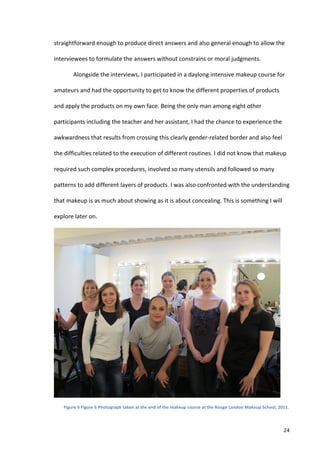
MSC	
  IN	
  DIGITAL	
  ANTHROPOLOGY	
  DISSERTATION	


              MAKING	
  UP	
  ART,	
  VIDEOS	
  AND	
  FAME	
  	
  
              The	
  Creation	
  of	
  Social	
  Order	
  in	
  the	
  Informal	
  Realm	
  of	
  YouTube	
  Beauty	
  Gurus	


                                                      JULIANO	
  SPYER	


Dissertation	
  submitted	
  in	
  partial	
  fulfilment	
  of	
  the	
  requirements	
  for	
  the	
  degree	
  of	
  MSc	
  in	
  
Digital	
  Anthropology	
  (UCL)	
  of	
  the	
  University	
  of	
  London	
  in	
  2011.	
  

                                                    WORD	
  COUNT:	
  18,000	
  

                                       UNIVERSITY	
  COLLEGE	
  OF	
  LONDON	
  

                                      DEPARTMENT	
  OF	
  ANTHROPOLOGY	


                                                                                                                              1	


              Abstract	
  

              This	
  research	
  focused	
  in	
  an	
  informal	
  group	
  called	
  “YouTube	
  beauty	
  gurus”.	
  They	
  
invest	
  time	
  and	
  resources	
  attracting	
  attention	
  to	
  (and	
  thus	
  gaining	
  publicity	
  from)	
  videos	
  
they	
  produce	
  mainly	
  about	
  how	
  to	
  perform	
  makeup	
  routines.	
  I	
  used	
  the	
  ethnographic	
  
material	
  the	
  research	
  generated	
  to	
  analyse	
  the	
  production	
  of	
  social	
  order	
  in	
  a	
  virtual	
  
space	
  where	
  everyone	
  has	
  the	
  same	
  infrastructure	
  to	
  act.	
  I	
  drew	
  from	
  Munn’s	
  (1986)	
  
theory	
  of	
  value	
  to	
  analyse	
  a	
  digital	
  artefact	
  called	
  “Tag”	
  used	
  for	
  bridging	
  together	
  
smaller	
  networks	
  of	
  users	
  through	
  the	
  spatiotemporal	
  expansion	
  of	
  those	
  who	
  trade	
  it.	
  
Gell’s	
  (1998)	
  theory	
  of	
  art	
  provided	
  the	
  larger	
  framing	
  to	
  examine	
  video	
  makeup	
  tutorials,	
  
a	
  sophisticated	
  construct	
  that	
  entraps	
  its	
  audience	
  by	
  creating	
  the	
  impression	
  of	
  affinity	
  
of	
  the	
  guru	
  with	
  her	
  viewers.	
  The	
  final	
  chapter	
  applied	
  Munn’s	
  phenomenological	
  
approach	
  to	
  map	
  debates	
  around	
  performance,	
  professionalization,	
  friendship	
  and	
  
beauty,	
  which	
  are	
  central	
  to	
  this	
  group’s.	
  In	
  all	
  cases,	
  the	
  research	
  confirmed	
  that	
  
conceptualizing	
  action	
  as	
  the	
  origin	
  of	
  value	
  creation	
  represented	
  a	
  rich	
  alternative	
  to	
  
examine	
  how	
  this	
  group	
  engineers	
  its	
  social	
  organization.	
  Also,	
  this	
  work	
  discusses	
  
methodological	
  possibilities	
  to	
  conduct	
  ethnographic	
  research	
  on	
  YouTube.	
  

              Key	
  words:	
  YouTube,	
  makeup,	
  fame,	
  theory	
  of	
  value,	
  agency	


                                                                                                                          2	
  
List	
  of	
  Contents	
  
Title	
  page	
  .......................................................................................................................	
  1	
  
Abstract	
  .........................................................................................................................	
  2	
  
List	
  of	
  contents	
  ..............................................................................................................	
  3	
  
Acknowledgements	
  
                ........................................................................................................	
  4	
  
Introduction	
  ...................................................................................................................	
  6	
  
   Structure	
  of	
  the	
  Dissertation	
  ..................................................................................................	
  9	
  

Chapter	
  1:	
  Introducing	
  YouTube	
  and	
  Beauty	
  Gurus	
  ......................................................	
  11	
  
   YouTube’s	
  Beauty	
  Gurus	
  
                               .......................................................................................................	
  14	
  

Chapter	
  2:	
  History	
  of	
  the	
  Project,	
  Method	
  and	
  Ethics	
  ...................................................	
  22	
  
   Preparation	
  for	
  the	
  Research	
  ................................................................................................	
  23	
  
   Methods	
  for	
  Gathering	
  Data	
  .................................................................................................	
  25	
  
   Definition	
  of	
  Informants	
  .......................................................................................................	
  28	
  
   Ethical	
  Choices	
  ......................................................................................................................	
  29	
  

Chapter	
  3:	
  Value	
  Production	
  and	
  Spatiotemporal	
  Expansion	
  through	
  Tag	
  videos	
  .........	
  30	
  
   General	
  Aspects	
  of	
  Comparison	
  between	
  Kula	
  and	
  YouTube	
  ................................................	
  30	
  
   Tag	
  Videos	
  as	
  Virtual	
  Objects	
  of	
  Exchange	
  ............................................................................	
  32	
  
   Value	
  Production	
  and	
  Intersubjective	
  Spatiotemporal	
  Expansion	
  .........................................	
  34	
  
   Conclusion	
  ............................................................................................................................	
  35	
  

Chapter	
  4:	
  YouTube	
  Makeup	
  Tutorials	
  as	
  Traps	
  ............................................................	
  37	
  
   Agency,	
  Trap	
  and	
  ‘Distributed’	
  Mind	
  ....................................................................................	
  38	
  
   The	
  Artificiality	
  of	
  Makeup	
  Tutorials	
  .....................................................................................	
  38	
  
   ‘Context	
  Collapse’	
  and	
  the	
  Trap	
  of	
  Context	
  Recreation	
  .........................................................	
  40	
  
   ‘Privately	
  Public’	
  and	
  the	
  Trap	
  of	
  Controlling	
  the	
  Release	
  of	
  Information	
  .............................	
  42	
  
   ‘Videos	
  of	
  Affinity’	
  and	
  the	
  Simulation	
  of	
  Closeness	
  .............................................................	
  43	
  
   Conclusion	
  ............................................................................................................................	
  45	
  

Chapter	
  5:	
  Fake	
  or	
  Real:	
  the	
  Production	
  of	
  Value	
  among	
  Gurus	
  ....................................	
  46	
  
   The	
  Dialectical	
  Creation	
  of	
  Self-­‐Other	
  ...................................................................................	
  46	
  
   Authenticity	
  vs.	
  Performance	
  ...............................................................................................	
  48	
  
   Amateur	
  vs.	
  Professional	
  ......................................................................................................	
  49	
  
   Friends	
  vs.	
  Fans	
  ....................................................................................................................	
  50	
  
   Interior	
  Beauty	
  vs.	
  Exterior	
  Beauty	
  .......................................................................................	
  53	
  
   Haters	
  and	
  the	
  Subversion	
  of	
  Positive	
  Value	
  .........................................................................	
  55	
  
   Conclusion	
  ............................................................................................................................	
  56	
  

Conclusion	
  ...................................................................................................................	
  58	
  
Bibliography	
  
            .................................................................................................................	
  63	


                                                                                                                                                 3	
  
Acknoledgements	
  

            I	
  must	
  thank	
  first	
  the	
  academic	
  team	
  of	
  our	
  programme:	
  Danny	
  Miller,	
  Lane	
  De	
  

Nicola	
  and	
  Stefana	
  Broadbent,	
  for	
  the	
  intellectual	
  insights	
  provided	
  through	
  the	
  year	
  as	
  

much	
  as	
  for	
  the	
  availability	
  to	
  help	
  and	
  to	
  give	
  meaningful	
  academic	
  guidance.	
  I	
  especially	
  

thank	
  Danny,	
  who	
  supervised	
  the	
  development	
  of	
  this	
  dissertation,	
  for	
  offering	
  rich	
  

feedback	
  to	
  improve	
  the	
  work.	
  Christopher	
  Tilley	
  and	
  Ludovic	
  Coupaye	
  from	
  the	
  Material	
  

Culture	
  programme	
  also	
  offered	
  valuable	
  attention	
  and	
  guidance.	


            I	
  am	
  grateful	
  to	
  the	
  office	
  staff	
  of	
  our	
  department,	
  more	
  directly	
  to	
  Diana	
  Goforth	
  

and	
  James	
  Emmanuel,	
  for	
  the	
  professionalism	
  and	
  interest	
  they	
  demonstrated	
  

throughout	
  the	
  year.	
  I	
  must	
  also	
  acknowledge	
  a	
  small	
  but	
  helpful	
  grant	
  from	
  UCL,	
  which	
  

allowed	
  me	
  to	
  buy	
  two	
  books	
  and	
  pay	
  for	
  a	
  basic	
  makeup	
  course.	
  

            My	
  colleagues	
  at	
  the	
  postgraduate	
  level	
  at	
  the	
  Anthropology	
  Department	
  were	
  a	
  

constant	
  source	
  of	
  support	
  and	
  intellectual	
  motivation.	
  I	
  would	
  like	
  to	
  mention	
  the	
  names	
  

of	
  Andrew	
  Merril,	
  Cosimo	
  Lupo,	
  Hannah	
  Rose	
  Van	
  Wely,	
  Hussah	
  Al	
  Tamimi,	
  Jennifer	
  

Robinson,	
  Jewel	
  Thomas,	
  João	
  Matta,	
  Laurence	
  Byrne,	
  Lida	
  Papamathaiaki,	
  Luiz	
  Vieira,	
  

Matilda	
  Marshall,	
  Mika	
  Pasanen,	
  Nick	
  Gadsby,	
  Peter	
  Westman	
  and	
  Susanna	
  Inzoli.	
  I	
  am	
  

also	
  in	
  debt	
  with	
  researchers	
  Jane	
  Cameron	
  from	
  the	
  London	
  College	
  of	
  Fashion	
  and	
  

Sarah	
  Winkler	
  Reid	
  from	
  Brunel	
  University	
  for	
  the	
  opportunity	
  of	
  discussing	
  and	
  receiving	
  

feedback	
  about	
  the	
  research.	


            During	
  the	
  initial	
  stage	
  of	
  my	
  fieldwork,	
  I	
  interviewed	
  six	
  women	
  about	
  their	
  

experiences	
  with	
  cosmetics.	
  This	
  material	
  was	
  not	
  directly	
  used	
  on	
  this	
  dissertation,	
  but	
  it	
  

was	
  nonetheless	
  a	
  very	
  helpful	
  introduction	
  to	
  the	
  subject.	
  They	
  are	
  Alex	
  Guado,	
  Chloe	
  

Cook,	
  Dafne	
  Louzioti,	
  Helen	
  Saunders,	
  Kathleen	
  Sattore	
  and	
  Phoebe	
  Frangoul.	
  (Thanks	
  

also	
  to	
  Jude	
  Saunders	
  for	
  putting	
  me	
  in	
  contact	
  with	
  Helen).	
  I	
  was	
  also	
  fortunate	
  to	
  have	


                                                                                                                                     4	
  
received	
  a	
  practical	
  training	
  in	
  basic	
  makeup	
  from	
  Astra	
  Wren,	
  an	
  excellent	
  teacher	
  and	
  

makeup	
  artist	
  from	
  the	
  Rouge	
  London	
  Makeup	
  School.	


            I	
  own	
  the	
  YouTube	
  “gurus”	
  that	
  guided	
  me	
  through	
  their	
  world	
  for	
  a	
  significant	
  

portion	
  of	
  the	
  enthusiasm	
  that	
  fuelled	
  this	
  project.	
  

            This	
  dissertation	
  is	
  dedicated	
  to	
  José	
  Carlos	
  Sebe	
  Bom	
  Meihy.	
  His	
  loves	
  of	
  

knowledge	
  and	
  of	
  writing	
  and	
  his	
  belief	
  in	
  the	
  importance	
  of	
  addressing	
  public	
  themes	
  

are	
  a	
  source	
  of	
  inspiration.	
  And	
  also	
  to	
  my	
  wife	
  Thais,	
  who	
  teaches	
  me	
  about	
  the	
  

important	
  things	
  of	
  life	
  and	
  said	
  I	
  should	
  study	
  anthropology.	


                                                                                                                                 5	
  
Introduction	
  

                                   The	
  process	
  of	
  producing	
  this	
  dissertation	
  began	
  with	
  a	
  period	
  immersion	
  in	
  the	
  

daily	
  lives	
  of	
  a	
  group	
  of	
  people	
  that	
  gather	
  spontaneously	
  on	
  YouTube	
  to	
  discuss	
  makeup.	
  

They	
  call	
  themselves	
  “gurus”	
  and	
  their	
  routines	
  centre	
  on	
  attracting	
  attention	
  to	
  (and	
  

thus	
  gaining	
  publicity	
  from)	
  videos	
  they	
  produce	
  using	
  portable	
  cameras	
  and	
  normal	
  

computers.	
  For	
  this	
  reason,	
  part	
  of	
  the	
  contribution	
  this	
  work	
  intends	
  to	
  offer	
  relates	
  to	
  

the	
  use	
  of	
  experimental	
  methodological	
  approaches	
  to	
  conduct	
  ethnographic	
  research	
  on	
  

YouTube.	
  Since	
  teenagers	
  compose	
  a	
  significant	
  portion	
  of	
  the	
  group,	
  the	
  choices	
  I	
  made	
  

also	
  respond	
  to	
  the	
  ethical	
  challenge	
  of	
  researching	
  subjects	
  who	
  are	
  underage.	
  

                                   These	
  gurus	
  invest	
  substantial	
  quantities	
  of	
  time	
  and	
  resources	
  to	
  crafting	
  videos	
  

with	
  the	
  objective	
  of	
  gaining	
  recognition.	
  Some	
  have	
  risen	
  from	
  their	
  channels	
  to	
  achieve	
  

the	
  status	
  of	
  celebrities	
  in	
  different	
  media	
  outlets,	
  arrived	
  at	
  distinguished	
  career	
  

opportunities	
  or	
  launched	
  lines	
  of	
  cosmetic	
  products	
  with	
  their	
  names.	
  Many	
  are	
  not	
  

quite	
  as	
  notorious	
  but	
  have	
  built	
  an	
  audience	
  with	
  tens	
  of	
  thousands	
  subscribers	
  who	
  

regularly	
  watch	
  their	
  videos.	
  At	
  the	
  same	
  time,	
  it	
  was	
  clear	
  from	
  the	
  early	
  stages	
  of	
  my	
  

fieldwork	
  that	
  acquiring	
  visibility	
  inside	
  this	
  group	
  did	
  not	
  result	
  from	
  the	
  simple	
  

knowledge	
  one	
  had	
  about	
  makeup;	
  fame	
  resulted	
  from	
  an	
  intense	
  process	
  of	
  engaging	
  in	
  

conversations	
  and	
  building	
  relationships.	
  

                                   I	
  chose	
  Munn’s	
  (1986)	
  theory	
  of	
  value	
  as	
  the	
  broad	
  conceptual	
  framework	
  to	
  

analyze	
  the	
  ethnography	
  of	
  these	
  “beauty	
  gurus”.	
  Originally	
  developed	
  from	
  a	
  research	
  

conducted	
  on	
  the	
  distant	
  island	
  of	
  Gawa	
  in	
  Papua	
  New	
  Guinea,	
  it	
  offers	
  a	
  model	
  to	
  study	
  

an	
  informal	
  realm1	
  similar	
  to	
  the	
  one	
  I	
  found	
  on	
  YouTube,	
  where	
  users	
  have	
  the	
  same	


      1
      	
  Winkler	
  Reid	
  (2010:	
  13)	
  conceptualizes	
  the	
  notion	
  of	
  “informal	
  realm”	
  in	
  the	
  contexts	
  of	
  schools,	
  
     where	
  it	
  represents	
  “a	
  network	
  of	
  pupil	
  action	
  creating	
  and	
  sustaining	
  intersubjective	
  relations,	
  and	
  
     producing	
  value	
  outside	
  that	
  recognized	
  by	
  formal	
  schooling	
  [but	
  also]	
  shaped	
  by	
  it.”	
  Similarly	
  to	
  what	
  I	


                                                                                                                                                                                                                                                   6	
  
power	
  and	
  limitations	
  to	
  upload	
  videos	
  and	
  interact	
  with	
  others.	
  Although	
  companies	
  are	
  

gradually	
  becoming	
  aware	
  of	
  this	
  “tribe”,	
  material	
  reward	
  does	
  not	
  represent	
  the	
  main	
  

incentive	
  for	
  its	
  existence.	
  In	
  this	
  setting,	
  users	
  build	
  relationships	
  through	
  actions	
  such	
  as	
  

watching,	
  evaluating,	
  commenting,	
  subscribing	
  and	
  uploading	
  videos.	
  Social	
  order	
  results	
  

from	
  the	
  evaluation	
  of	
  these	
  actions	
  and	
  provides	
  individuals	
  and	
  groups	
  with	
  different	
  

levels	
  of	
  status	
  (Winkler	
  Reid,	
  2010:	
  10-­‐11).	
  

                                  I	
  also	
  draw	
  from	
  Gell’s	
  (1998)	
  anthropological	
  theory	
  of	
  art	
  to	
  examine	
  the	
  

“technology	
  of	
  enchantment”	
  used	
  to	
  produce	
  these	
  videos.	
  (One	
  could	
  call	
  it	
  “the	
  art	
  of	
  

self-­‐representing	
  the	
  act	
  of	
  self-­‐decoration”.)	
  I	
  chose	
  Gell’s	
  more	
  general	
  framework	
  and	
  

not	
  those	
  offered	
  by	
  anthropological	
  studies	
  of	
  self-­‐decoration	
  (see,	
  for	
  example,	
  

Strathern,	
  1979;	
  O’Hanlon,	
  1989;	
  Gell,	
  1993;	
  and	
  Ewart	
  and	
  O’Hanlon,	
  2007)	
  because	
  his	
  

work	
  was	
  conceived	
  as	
  a	
  corpus	
  of	
  theory	
  disembodied	
  from	
  indigenous	
  ethnography	
  to	
  

be	
  applied	
  to	
  different	
  manifestations	
  of	
  art.	
  By	
  understanding	
  the	
  art	
  object	
  as	
  an	
  actor	
  

that	
  mediates	
  social	
  relations,	
  it	
  is	
  possible	
  to	
  consider	
  that	
  these	
  objects	
  “mediate	
  a	
  

technology	
  to	
  achieve	
  certain	
  ends,	
  notably	
  to	
  enmesh	
  patients	
  in	
  relation	
  and	
  

intentionalities	
  sought	
  or	
  prescribed	
  by	
  agents”	
  (Thomas,	
  2001:	
  5).	


                                  (As	
  makeup	
  enthusiasts,	
  many	
  beauty	
  gurus	
  see	
  the	
  use	
  of	
  cosmetics	
  as	
  an	
  

unrecognized	
  form	
  of	
  art	
  that,	
  as	
  such,	
  has	
  agency	
  and	
  creates	
  different	
  opportunities	
  for	
  

empowerment.	
  Michelle	
  Phan’s	
  video	
  entitled	
  Catch	
  My	
  Heart	
  (2011)	
  could	
  be	
  a	
  starting	
  

point	
  for	
  a	
  discussion	
  about	
  makeup	
  and	
  agency	
  just	
  by	
  considering	
  that	
  it	
  is	
  a	
  video	
  

about	
  makeup,	
  directed	
  and	
  enacted	
  by	
  the	
  same	
  person,	
  exploring	
  new	
  grounds	
  

regarding	
  the	
  narrative	
  of	
  makeup	
  tutorials	
  and	
  has	
  attracted	
  over	
  1.4	
  million	
  views	
  in	


     observed	
  among	
  beauty	
  gurus,	
  “the	
  most	
  successful	
  pupils	
  in	
  the	
  informal	
  realm	
  are	
  those	
  who	
  are	
  
     best	
  able	
  to	
  negotiate	
  their	
  investiment	
  in	
  order	
  to	
  create	
  the	
  most	
  value	
  .	
  .	
  .	
  through	
  their	
  acts	
  and	
  
     practices.”	


                                                                                                                                                                                                                                                                                                                                                                                                                                                                                                                                                                                                                                                                                                    7	
  
less	
  than	
  two	
  weeks.	
  Phan’s	
  welcome	
  message	
  for	
  her	
  YouTube	
  channel	
  says:	
  “I	
  was	
  born	
  

an	
  artist,	
  a	
  self-­‐taught	
  painter	
  for	
  10	
  years	
  and	
  went	
  through	
  an	
  additional	
  3	
  years	
  at	
  

Ringling	
  College	
  of	
  Art	
  and	
  Design.	
  Makeup	
  is	
  another	
  medium	
  to	
  me.”	
  One	
  of	
  my	
  

informants,	
  a	
  guru	
  of	
  17	
  years	
  old	
  and	
  one	
  thousand	
  subscribers,	
  echoes	
  this	
  idea	
  in	
  her	
  

channel:	
  “.	
  .	
  .	
  when	
  I	
  was	
  introduced	
  to	
  makeup	
  I	
  looked	
  at	
  it	
  as	
  an	
  art	
  and	
  it	
  helped	
  me	
  

gain	
  confidence	
  in	
  myself.”)	
  

             As	
  a	
  telescope	
  uses	
  different	
  formats	
  of	
  lenses	
  and	
  mirrors	
  to	
  process	
  luminous	
  

information,	
  I	
  sought	
  conceptual	
  tools	
  that	
  could	
  attach	
  to	
  the	
  more	
  robust	
  framing	
  of	
  

Munn	
  and	
  Gell	
  and	
  allow	
  the	
  examination	
  of	
  social	
  relations	
  mediated	
  by	
  digital	
  

networks.	
  I	
  initially	
  drew	
  from	
  Miller’s	
  (2001)	
  application	
  of	
  the	
  notion	
  of	
  “art	
  as	
  a	
  trap”	
  

to	
  examine	
  websites	
  in	
  Trinidad,	
  demonstrating	
  the	
  possibilities	
  of	
  applying	
  this	
  framing	
  

to	
  virtual	
  artifacts.	
  I	
  also	
  looked	
  for	
  analytic	
  tools	
  developed	
  for	
  previous	
  research	
  

conducted	
  on	
  YouTube.	
  

             Those	
  less	
  familiar	
  with	
  YouTube	
  are	
  usually	
  indifferent	
  to	
  the	
  ways	
  people	
  

appropriate	
  it	
  as	
  a	
  device	
  for	
  decentralized	
  group	
  communication.	
  Conversations	
  evolve	
  

from	
  a	
  distinct	
  set	
  of	
  conditions.	
  For	
  instance:	
  exchanges	
  are	
  not	
  synchronous	
  and	
  may	
  

be	
  directed	
  to	
  an	
  unpredictable	
  range	
  of	
  spectators.	
  If	
  the	
  experience	
  of	
  virtuality	
  throws	
  

humanity	
  “off-­‐balance”,	
  as	
  Boellstorff	
  (2008)	
  suggests,	
  it	
  also	
  changes	
  the	
  way	
  people	
  

perceive	
  the	
  world.	
  In	
  this	
  context,	
  notions	
  such	
  as	
  “privacy”	
  seem	
  insufficient	
  to	
  describe	
  

a	
  type	
  of	
  shared	
  content	
  that	
  displays	
  intimacy	
  but	
  limits	
  information	
  about	
  identity.	
  I	
  

draw	
  on	
  studies	
  conducted	
  on	
  YouTube	
  by	
  Lange	
  (2007	
  and	
  2009)	
  and	
  Wesch	
  (2008)	
  to	
  

bridge	
  the	
  wider	
  analytic	
  framing	
  with	
  the	
  specificity	
  of	
  the	
  topic.	
  

             In	
  order	
  to	
  address	
  categories	
  of	
  socially-­‐interconnected	
  users	
  like	
  YouTube	
  gurus,	
  

one	
  is	
  tempted	
  to	
  use	
  the	
  term	
  “community”,	
  which	
  is	
  largely	
  adopted	
  for	
  that	
  purpose	


                                                                                                                                                    8	
  
by	
  journalists	
  and	
  also	
  by	
  academics.	
  I	
  have	
  also	
  applied	
  it,	
  for	
  convenience	
  and	
  lack	
  of	
  

better	
  alternatives,	
  as	
  a	
  synonym	
  for	
  “large	
  and	
  informal	
  social	
  group”.	
  I	
  do	
  so	
  being	
  

aware	
  of	
  Postill’s	
  (2008)	
  discussion	
  of	
  this	
  topic,	
  which	
  considers	
  the	
  term	
  problematic	
  

due	
  to	
  its	
  vagueness	
  and	
  emotionally	
  charged	
  character.	
  As	
  he	
  summarized,	
  “community	
  

merits	
  attention	
  as	
  a	
  polymorphous	
  folk	
  notion	
  widely	
  used	
  both	
  online	
  and	
  offline,	
  but	
  

as	
  an	
  analytical	
  concept	
  with	
  an	
  identifiable	
  empirical	
  referent	
  it	
  is	
  of	
  little	
  use.”	


             I	
  should	
  also	
  clarify	
  that	
  I	
  use	
  “she”	
  and	
  “her”	
  in	
  all	
  cases	
  except	
  when	
  the	
  person	
  

referred	
  is	
  masculine.	


             Structure	
  of	
  the	
  dissertation	


             This	
  first	
  chapter	
  introduces	
  the	
  general	
  ground	
  where	
  the	
  research	
  takes	
  place.	
  I	
  

explain	
  the	
  service	
  YouTube	
  offers	
  to	
  Internet	
  users,	
  give	
  a	
  general	
  idea	
  of	
  how	
  it	
  works	
  

and	
  present	
  “makeup	
  gurus”,	
  which	
  are	
  the	
  subject	
  of	
  this	
  dissertation.	
  The	
  following	
  

chapter,	
  which	
  focus	
  on	
  research	
  methodology,	
  exposes	
  different	
  aspects	
  that	
  I	
  found	
  

relevant	
  about	
  the	
  process	
  of	
  engaging	
  ethnographically	
  with	
  YouTube	
  and	
  with	
  this	
  

particular	
  group	
  of	
  users.	
  It	
  gives	
  the	
  reader	
  the	
  roadmap	
  I	
  followed	
  which	
  includes	
  

indications	
  of	
  dead-­‐ends,	
  but	
  also	
  of	
  promising	
  paths	
  that	
  other	
  researchers	
  might	
  want	
  

to	
  experiment	
  with.	
  It	
  is	
  there	
  I	
  describe	
  a	
  technique	
  also	
  used	
  by	
  Tarlo	
  (2010)	
  to	
  

indirectly	
  participate	
  in	
  conversations	
  through	
  various	
  channels	
  of	
  interaction	
  used	
  by	
  the	
  

subjects	
  of	
  the	
  research.	
  

             In	
  chapter	
  3	
  I	
  apply	
  Munn’s	
  (1986)	
  model	
  for	
  explaining	
  value	
  creation	
  through	
  

acts	
  of	
  exchange	
  to	
  conceptualize	
  the	
  emergence	
  of	
  a	
  particular	
  category	
  of	
  videos	
  that	
  

circulate	
  mostly	
  inside	
  the	
  beauty	
  community	
  of	
  YouTube,	
  called	
  “Tags”.	
  Chapter	
  4	
  draws	
  

from	
  Gell’s	
  (1998)	
  theory	
  of	
  art	
  to	
  discuss	
  the	
  video	
  tutorials	
  created	
  by	
  gurus	
  as	
  virtual	


                                                                                                                                            9	
  
artifacts	
  forged	
  through	
  techniques	
  to	
  captivate	
  the	
  minds	
  of	
  viewers,	
  particularly	
  by	
  

making	
  them	
  appear	
  to	
  be	
  produced	
  spontaneously	
  as	
  the	
  result	
  of	
  an	
  amateur	
  and	
  

personal	
  labour	
  of	
  love.	
  I	
  develop	
  this	
  argument	
  using	
  the	
  notions	
  of	
  “context	
  collapse”	
  

(Wesch,	
  2008),	
  “privately	
  public”	
  (Lange,	
  2007)	
  and	
  “video	
  of	
  affinity”	
  (Lange,	
  2009).	


            The	
  last	
  chapter	
  draws	
  mostly	
  from	
  Munn’s	
  (1986)	
  phenomenological	
  approach	
  to	
  

attempt	
  to	
  map	
  key	
  aspects	
  that	
  derive	
  from	
  the	
  polarity	
  between	
  the	
  notions	
  of	
  “fake”	
  

and	
  “real”.	
  This	
  chapter	
  also	
  focuses	
  more	
  on	
  ethnographic	
  material,	
  as	
  I	
  reflect	
  of	
  the	
  

central	
  polarity	
  of	
  debates	
  around	
  the	
  topics	
  of	
  performance,	
  professionalization,	
  

friendship	
  and	
  physical	
  beauty.	
  

            This	
  dissertation	
  contributes	
  to	
  the	
  emerging	
  field	
  of	
  digital	
  anthropology	
  as	
  it	
  

explores	
  the	
  possibilities	
  of	
  applying	
  Munn’s	
  theory	
  of	
  value	
  to	
  study	
  the	
  creation	
  of	
  

social	
  organization	
  and	
  hierarchy	
  in	
  decentralized	
  environments	
  on	
  the	
  Internet.	
  It	
  also	
  

proposes	
  an	
  alternative	
  theoretical	
  path	
  to	
  the	
  study	
  of	
  self-­‐decoration	
  through	
  digital	
  

technology,	
  as	
  most	
  of	
  the	
  production	
  on	
  the	
  topic	
  remains	
  focused	
  on	
  tribal	
  or	
  formally	
  

tribal	
  groups.	
  My	
  work	
  is	
  also	
  intended	
  to	
  bring	
  a	
  contribution	
  to	
  the	
  anthropology	
  of	
  

YouTube	
  as	
  it	
  deploys	
  an	
  analytic	
  toolkit	
  of	
  combined	
  notions	
  to	
  examine	
  the	
  agency	
  of	
  a	
  

particular	
  type	
  of	
  video	
  and	
  how	
  it	
  mediates	
  relations	
  to	
  produce	
  particular	
  effects.	


                                                                                                                                  10	
  
Introducing	
  YouTube	
  and	
  Beauty	
  Gurus	
  

                                   In	
  this	
  section	
  of	
  the	
  dissertation,	
  I	
  will	
  briefly	
  introduce	
  the	
  website	
  YouTube,	
  

explain	
  the	
  service	
  it	
  offers	
  to	
  Internet	
  users	
  and	
  give	
  a	
  general	
  idea	
  of	
  how	
  it	
  works.	
  By	
  

presenting	
  the	
  various	
  ways	
  users	
  participate	
  in	
  YouTube,	
  I	
  will	
  arrive	
  at	
  the	
  informal	
  

community	
  of	
  “gurus”	
  and,	
  particularly,	
  the	
  subcategory	
  of	
  “makeup	
  gurus”,	
  with	
  whom	
  I	
  

conducted	
  fieldwork.	
  In	
  the	
  following	
  sub-­‐section,	
  I	
  will	
  address	
  the	
  types	
  of	
  contents	
  

they	
  produce,	
  the	
  various	
  motivations	
  for	
  participating	
  in	
  the	
  community,	
  and	
  how	
  these	
  

gurus	
  measure	
  success.	
  This	
  introduction	
  is	
  necessary	
  to	
  the	
  understanding	
  of	
  the	
  

ethnography	
  presented	
  and	
  discussed	
  in	
  the	
  dissertation.	
  

                                   YouTube	
  is	
  a	
  social	
  networking	
  site2	
  based	
  on	
  the	
  distribution	
  of	
  audio-­‐visual	
  

content	
  published	
  by	
  its	
  participants.	
  It	
  is	
  available	
  in	
  34	
  languages	
  and	
  it	
  is	
  the	
  third	
  most	
  

visited	
  site	
  on	
  the	
  Internet	
  after	
  Google	
  and	
  Facebook3.	
  Participation	
  is	
  free	
  but	
  users	
  

must	
  register	
  to	
  be	
  able	
  to	
  upload	
  content	
  and	
  perform	
  other	
  actions	
  like	
  rating	
  or	
  

commenting	
  on	
  videos;	
  unregistered	
  users	
  may	
  only	
  watch	
  the	
  videos.	
  There	
  are	
  various	
  

ways	
  of	
  accessing	
  a	
  given	
  content.	
  Users	
  can:	
  search	
  the	
  website’s	
  database;	
  select	
  one	
  of	
  

the	
  options	
  suggested	
  by	
  the	
  content	
  editors;	
  or	
  receive	
  (from	
  an	
  acquaintance)	
  a	
  direct	
  

link	
  to	
  open	
  a	
  video.	
  Once	
  content	
  is	
  made	
  available,	
  any	
  Internet	
  user	
  can	
  watch	
  it	
  at	
  any	
  

time.	


      2
       	
  YouTube	
  is	
  normally	
  described	
  as	
  a	
  “video-­‐sharing	
  site”,	
  which	
  stresses	
  the	
  audio-­‐visual	
  sharing	
  
      aspect	
  that	
  makes	
  it	
  different	
  from	
  other	
  social	
  networking	
  sites	
  and	
  also	
  represents	
  the	
  element	
  that	
  
      makes	
  the	
  site	
  valuable	
  to	
  the	
  majority	
  of	
  users	
  who	
  only	
  access	
  it	
  to	
  watch	
  –	
  and	
  not	
  to	
  upload	
  –	
  
      content.	
  As	
  noted	
  by	
  Lange	
  (2007),	
  this	
  definition	
  eludes	
  the	
  social	
  motivation	
  behind	
  the	
  website’s	
  
      success.	
  The	
  service	
  it	
  provides	
  matches	
  the	
  description	
  of	
  social	
  networking	
  site	
  offered	
  by	
  boyd	
  and	
  
      Ellison	
  (2008):	
  “We	
  define	
  social	
  network	
  sites	
  as	
  web-­‐based	
  services	
  that	
  allow	
  individuals	
  to	
  (1)	
  
      construct	
  a	
  public	
  or	
  semi-­‐public	
  profile	
  within	
  a	
  bounded	
  system,	
  (2)	
  articulate	
  a	
  list	
  of	
  other	
  users	
  
      with	
  whom	
  they	
  share	
  a	
  connection,	
  and	
  (3)	
  view	
  and	
  traverse	
  their	
  list	
  of	
  connections	
  and	
  those	
  made	
  
      by	
  others	
  within	
  the	
  system.”	
  
      3
       	
  Data	
  collected	
  by	
  Alexa	
  (http://www.alexa.com/)	
  in	
  September	
  of	
  2011.	


                                                                                                                                                                                                                                                  11	
  
Founded	
  in	
  February	
  2005,	
  YouTube	
  radically	
  simplified	
  the	
  process	
  of	
  sharing	
  

audio-­‐visual	
  documents	
  (Wesch,	
  2008).	
  The	
  problem	
  users	
  faced	
  before	
  the	
  arrival	
  of	
  this	
  

kind	
  of	
  web	
  publishing	
  was	
  that	
  video	
  files	
  were	
  typically	
  very	
  large,	
  and	
  the	
  ability	
  to	
  

share	
  videos	
  was	
  limited	
  to	
  those	
  who	
  had	
  access	
  to	
  broadband	
  connections.	
  Due	
  to	
  its	
  

success,	
  Google	
  bought	
  the	
  company	
  in	
  2006.	
  In	
  2008,	
  users	
  were	
  uploading	
  200,000	
  new	
  

videos	
  to	
  YouTube	
  per	
  day4	
  (Wesch,	
  2008).	
  	
  The	
  same	
  study	
  showed	
  that	
  88%	
  of	
  this	
  

content	
  was	
  new	
  or	
  original	
  and	
  was	
  made	
  for	
  audiences	
  of	
  100	
  or	
  less.	
  Most	
  of	
  these	
  

“amateur”	
  uploads	
  consisted	
  either	
  of	
  users	
  displaying	
  a	
  certain	
  expertise	
  (i.e.	
  playing	
  the	
  

piano),	
  or	
  personal	
  recordings	
  of	
  everyday	
  life.	
  Out	
  of	
  the	
  total	
  daily	
  amount,	
  10,000	
  

videos	
  were	
  directed	
  to	
  the	
  YouTube	
  community	
  itself,	
  adding	
  to	
  on-­‐going	
  debates	
  of	
  

users	
  on	
  topics	
  of	
  common	
  interest	
  (Wesch,	
  2008).	


                                   Users	
  interested	
  in	
  publishing	
  content	
  on	
  YouTube	
  must	
  first	
  create	
  their	
  own	
  

channels,	
  but	
  there	
  is	
  no	
  limit	
  to	
  the	
  number	
  of	
  channels	
  a	
  user	
  can	
  have.	
  Participants	
  are	
  

not	
  obliged	
  to	
  use	
  their	
  real	
  names;	
  only	
  a	
  valid	
  email	
  address	
  is	
  required,	
  as	
  is	
  the	
  norm	
  

among	
  similar	
  websites	
  like	
  Facebook,	
  Wikipedia	
  and	
  Twitter.	
  The	
  channel	
  they	
  create	
  

will	
  then	
  be	
  the	
  repository	
  of	
  the	
  user’s	
  uploaded	
  content	
  and	
  it	
  is	
  through	
  this	
  channel	
  

that	
  the	
  subscription	
  system	
  works.	
  If	
  a	
  registered	
  user	
  likes	
  a	
  given	
  channel,	
  she	
  can	
  

subscribe	
  to	
  it	
  and	
  be	
  notified	
  when	
  new	
  content	
  is	
  published.	
  Not	
  all	
  users	
  are	
  

interested	
  in	
  measuring	
  the	
  attention	
  their	
  videos	
  generate,	
  but	
  those	
  who	
  are	
  do	
  so	
  by	
  

comparing	
  numbers	
  of	
  views	
  a	
  video	
  has,	
  and	
  subscribers	
  a	
  channel	
  has.	
  The	
  most	
  

successful	
  accumulate	
  a	
  greater	
  number	
  of	
  views,	
  a	
  measure	
  of	
  the	
  attention	
  they	
  

gathered	
  up	
  the	
  present	
  and/or	
  a	
  greater	
  number	
  of	
  subscribers,	
  which	
  represent	
  the	
  

channel’s	
  potential,	
  given	
  that	
  it	
  shows	
  how	
  many	
  people	
  want	
  to	
  watch	
  the	
  channel’s	


      4
       	
  At	
  that	
  rate,	
  in	
  a	
  period	
  of	
  six	
  months	
  the	
  website	
  gathered	
  more	
  content	
  than	
  all	
  the	
  material	
  
      broadcasted	
  by	
  the	
  three	
  major	
  TV	
  networks	
  of	
  the	
  United	
  States	
  combined	
  (Wesch,	
  2008).	


                                                                                                                                                                                                                                                  12	
  
future	
  videos.	
  This	
  success	
  might	
  be	
  converted	
  in	
  to	
  money	
  or	
  material	
  benefits,	
  either	
  by	
  

becoming	
  a	
  YouTube	
  partner	
  and	
  receiving	
  part	
  of	
  the	
  channel’s	
  advertising	
  revenue,	
  or	
  

by	
  making	
  deals	
  with	
  other	
  companies	
  to	
  promote	
  their	
  products	
  or	
  services.	
  

             The	
  different	
  motivations	
  users	
  have	
  for	
  sharing	
  their	
  content	
  on	
  YouTube	
  will	
  be	
  

discussed	
  at	
  a	
  different	
  part	
  of	
  this	
  dissertation.	
  For	
  the	
  moment,	
  it	
  is	
  enough	
  to	
  mention	
  

that	
  there	
  are	
  many	
  levels	
  of	
  involvement	
  with	
  the	
  website	
  and	
  its	
  community	
  as	
  well	
  

many	
  different	
  types	
  of	
  content	
  published.	
  This	
  varies	
  according	
  to	
  variables	
  such	
  as	
  

experience	
  in	
  using	
  virtual	
  social	
  environments	
  and	
  access	
  to	
  and	
  knowledge	
  of	
  video-­‐

processing	
  software	
  and	
  equipment.	
  

             YouTube	
  organises	
  categories	
  of	
  information	
  based	
  on	
  types	
  of	
  content	
  and	
  types	
  

of	
  accounts.	
  The	
  category	
  of	
  content	
  –	
  similar	
  to	
  that	
  of	
  types	
  of	
  magazines	
  –	
  is	
  defined	
  at	
  

the	
  moment	
  the	
  video	
  is	
  published.	
  Before	
  uploading	
  the	
  document,	
  the	
  author	
  has	
  the	
  

option	
  to	
  choose	
  from	
  the	
  following	
  possibilities	
  in	
  order	
  to	
  best	
  describe	
  their	
  content:	
  

Autos	
  &	
  Vehicles;	
  Comedy;	
  Education;	
  Entertainment;	
  Film	
  &	
  Animation;	
  Gaming;	
  Howto	
  

&	
  Style;	
  Music;	
  News	
  &	
  Politics;	
  Nonprofits	
  &	
  Activism;	
  People	
  &	
  Blogs;	
  Pets	
  &	
  Animals;	
  

Science	
  &	
  Technology;	
  Sports;	
  and	
  Travel	
  &	
  Events.	


             The	
  easiest	
  way	
  one	
  arrives	
  at	
  these	
  categorist	
  is	
  by	
  accessing	
  the	
  homepage	
  of	
  

YouTube	
  and	
  clicking	
  on	
  the	
  option	
  “browse”,	
  located	
  at	
  the	
  top	
  of	
  the	
  page,	
  to	
  the	
  right	
  

of	
  the	
  search	
  button.	
  

             Type	
  of	
  account	
  is	
  a	
  category	
  chosen	
  at	
  the	
  time	
  the	
  user	
  creates	
  or	
  edits	
  the	
  

information	
  on	
  her	
  channel.	
  The	
  options	
  provided	
  follow	
  a	
  different	
  rationale	
  to	
  that	
  of	
  

traditional	
  media	
  outlets	
  and	
  represent	
  major	
  topics	
  of	
  interest	
  mapped	
  by	
  the	
  website’s	
  

team.	
  Those	
  topics	
  are:	
  Comedians	
  (humour	
  content);	
  Directors	
  (fictional	
  content);	
  Gurus	
  

(instructional	
  content);	
  Musicians	
  (musical	
  content);	
  Non-­‐Profit	
  (social	
  responsibility-­‐like	


                                                                                                                                       13	
  
content);	
  Partners	
  (institutional	
  content);	
  Reporters	
  (editorial	
  content);	
  and	
  Sponsors	
  

(advertising	
  content).	


              These	
  categories	
  are	
  not	
  easily	
  accessible,	
  but	
  allow	
  registered	
  users	
  to	
  access	
  

channel	
  rankings.	
  The	
  list	
  of	
  account	
  types	
  can	
  be	
  found	
  at	
  this	
  address:	
  

http://www.youtube.com/channels,	
  on	
  the	
  left	
  hand-­‐side	
  menu	
  which	
  integrates	
  content	
  

types	
  and	
  account	
  types.	
  By	
  choosing	
  an	
  account	
  type,	
  the	
  website	
  will	
  offer	
  two	
  options	
  

of	
  rankings:	
  by	
  number	
  of	
  views	
  or	
  by	
  number	
  of	
  subscriptions.	
  These	
  alternatives	
  can	
  be	
  

changed	
  according	
  to	
  parameters	
  of	
  location	
  and	
  time	
  span	
  –	
  i.e.	
  a	
  certain	
  guru	
  might	
  be	
  

the	
  7th	
  most	
  subscribed	
  this	
  month	
  in	
  Brazil	
  or	
  a	
  certain	
  comedian	
  maybe	
  the	
  31st	
  most	
  

viewed	
  this	
  week	
  worldwide.	


              A	
  person	
  that	
  chooses	
  to	
  describe	
  herself	
  as	
  “gurus”	
  tells	
  us	
  that	
  specific	
  the	
  

content	
  of	
  her	
  channel	
  will	
  primarily	
  display	
  videos	
  with	
  instructions	
  on	
  how	
  to	
  perform	
  

certain	
  tasks.	
  There	
  are	
  many	
  subcategories	
  that	
  exist	
  within	
  the	
  broader	
  category	
  of	
  

gurus.	
  For	
  example,	
  there	
  are	
  channels	
  dedicated	
  to	
  teaching	
  fitness	
  routines,	
  

showcasing	
  the	
  effects	
  of	
  different	
  types	
  of	
  weapons,	
  showing	
  the	
  positions	
  of	
  the	
  Kama	
  

Sutra,	
  giving	
  lessons	
  on	
  how	
  to	
  programme	
  in	
  various	
  computer	
  languages,	
  discussing	
  

topics	
  related	
  to	
  academic	
  centres	
  of	
  interest	
  (linguistics,	
  astronomy,	
  etc.),	
  giving	
  lessons	
  

to	
  students	
  of	
  various	
  levels	
  and	
  basically	
  anything	
  that	
  can	
  be	
  imagined	
  to	
  mobilise	
  the	
  

attention	
  of	
  groups	
  of	
  people.	


              YouTube’s	
  Beauty	
  Gurus	
  

              The	
  group	
  studied	
  for	
  this	
  dissertation	
  identify	
  themselves	
  as	
  “beauty	
  gurus”	
  or	
  

“makeup	
  gurus”	
  for	
  the	
  obvious	
  reason	
  that	
  the	
  types	
  of	
  instructions	
  they	
  create	
  

surround	
  the	
  themes	
  of	
  cosmetics,	
  beauty	
  and	
  fashion	
  in	
  general.	
  The	
  usage	
  statistics	
  of	


                                                                                                                                  14	
  
YouTube	
  shows	
  the	
  importance	
  they	
  have	
  in	
  attracting	
  and	
  mobilising	
  attention.	
  

According	
  to	
  YouTube’s	
  ranking	
  of	
  gurus	
  in	
  May	
  2011,	
  half	
  of	
  the	
  top	
  24	
  channels	
  

produced	
  beauty	
  related	
  content	
  and	
  none	
  of	
  the	
  other	
  gurus	
  (non-­‐beauty	
  gurus)	
  belong	
  

to	
  a	
  single	
  category.	
  Michelle	
  Phan,	
  a	
  24	
  year-­‐old	
  Vietnamese-­‐American,	
  is	
  the	
  most	
  

popular	
  beauty	
  guru	
  active	
  today	
  (Von	
  Pfetten,	
  2010).	
  She	
  has	
  nearly	
  1.5	
  million	
  users	
  

subscribing	
  to	
  her	
  content	
  and	
  in	
  2010	
  became	
  the	
  most	
  subscribed	
  woman	
  on	
  YouTube.	
  

In	
  order	
  to	
  evaluate	
  the	
  relevance	
  of	
  these	
  numbers,	
  it	
  might	
  be	
  useful	
  to	
  mention	
  that	
  

the	
  BBC’s	
  YouTube	
  channel	
  has	
  close	
  to	
  268,000	
  subscribers.	
  Newcastle’s	
  Lauren	
  Luke,	
  

the	
  most	
  famous	
  beauty	
  guru	
  from	
  the	
  United	
  Kingdom,	
  has	
  465,000	
  subscribers.	
  

             Based	
  on	
  my	
  broader	
  observation	
  of	
  English	
  speaking	
  participants,	
  most	
  gurus	
  are	
  

either	
  teenagers	
  or	
  in	
  their	
  20s,	
  don’t	
  have	
  regular	
  jobs	
  and	
  record	
  their	
  videos	
  after	
  

arriving	
  home	
  from	
  school	
  or	
  university.	
  (These	
  characteristics	
  seem	
  to	
  differ	
  from	
  

country	
  to	
  country.	
  In	
  the	
  few	
  cases	
  of	
  Brazilian	
  beauty	
  gurus	
  I	
  observed,	
  a	
  number	
  of	
  

them	
  related	
  their	
  activities	
  on	
  YouTube	
  to	
  earning	
  money	
  by	
  selling	
  the	
  products	
  they	
  

use	
  to	
  create	
  “looks”.)	
  There	
  are	
  also	
  some	
  gurus	
  who	
  are	
  makeup	
  artists	
  that	
  adopted	
  

the	
  “amateurish”	
  aesthetic	
  of	
  beauty	
  gurus	
  as	
  a	
  strategy	
  to	
  gain	
  popularity	
  and	
  

consequently	
  open	
  up	
  new	
  career	
  opportunities.	
  These	
  gurus	
  tend	
  to	
  make	
  videos	
  only	
  

about	
  makeup,	
  whereas	
  the	
  others	
  mingle	
  instructions	
  and	
  personal	
  accounts	
  of	
  their	
  

lives	
  and	
  view	
  cosmetics	
  as	
  means	
  for	
  women	
  to	
  gain	
  self-­‐esteem	
  by	
  improving	
  their	
  

appearances.	


             I	
  call	
  them	
  an	
  “informal	
  group”	
  because	
  it	
  is	
  a	
  group	
  without	
  controlled	
  

boundaries.	
  Nobody	
  owns	
  it	
  (apart	
  from	
  YouTube)	
  or	
  limits	
  who	
  gets	
  in	
  or	
  out.	
  All	
  one	
  

needs	
  to	
  do	
  to	
  become	
  a	
  guru	
  is	
  to	
  sign	
  up	
  for	
  a	
  YouTube	
  account	
  and	
  post	
  videos	
  related	
  

to	
  the	
  subject.	
  In	
  this	
  sense,	
  being	
  a	
  beauty	
  guru	
  has	
  more	
  to	
  do	
  with	
  being	
  seen	
  as	
  such,	


                                                                                                                                        15	
  
being	
  identified	
  as	
  one	
  by	
  other	
  members	
  of	
  the	
  “sorority”5,	
  and	
  one’s	
  acceptance	
  

implies	
  the	
  adoption	
  of	
  a	
  certain	
  aesthetic	
  for	
  producing	
  videos.	
  As	
  one	
  browses	
  through	
  

the	
  production	
  of	
  different	
  gurus,	
  it	
  is	
  noticeable	
  how	
  the	
  videos	
  are	
  aesthetically	
  

homogeneous,	
  independent	
  of	
  linguistic	
  or	
  geographical	
  differences.	
  Makeup	
  gurus	
  

primarily	
  produce	
  videos	
  using	
  a	
  format	
  of	
  video-­‐narrative	
  called	
  “tutorial”.	
  An	
  “online	
  

tutorial”	
  or	
  an	
  “internet	
  video-­‐tutorial”	
  is	
  a	
  step-­‐by-­‐step	
  instruction	
  on	
  different	
  topics.	
  

                                                                                                                                                                                                                                                         As	
  I	
  observed	
  during	
  the	
  fieldwork	
  

                                                                                                                                                                                                                                                         for	
  this	
  project,	
  beauty	
  gurus	
  

                                                                                                                                                                                                                                                         worldwide	
  share	
  a	
  set	
  of	
  body	
  

                                                                                                                                                                                                                                                         communication	
  techniques	
  to	
  

                                                                                                                                                                                                                                                         create	
  makeup	
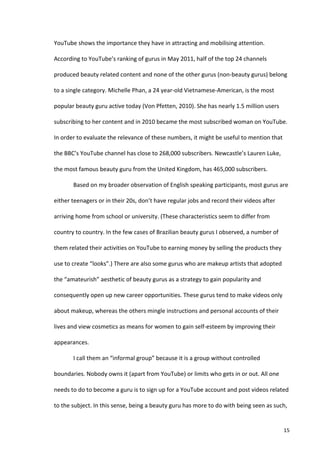
  tutorials.	
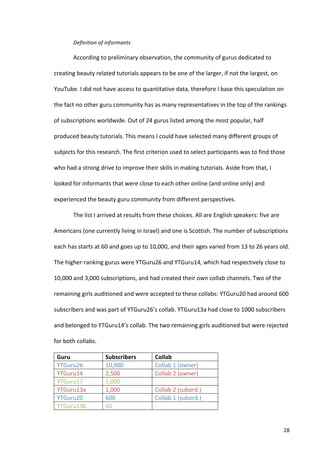
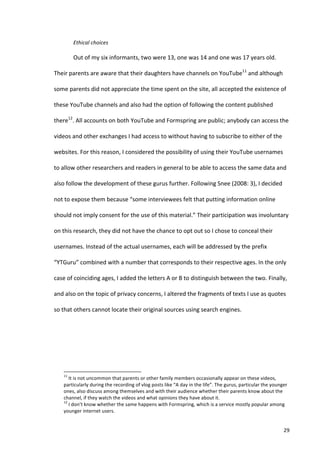
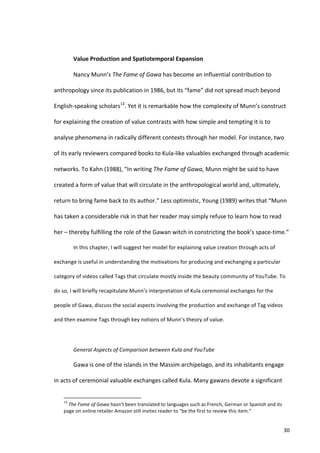
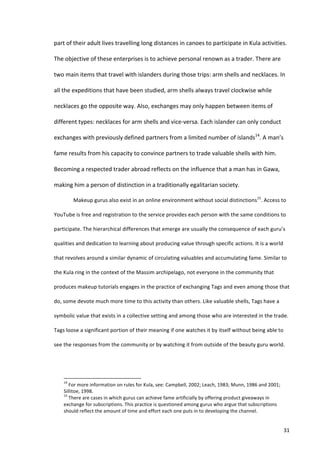
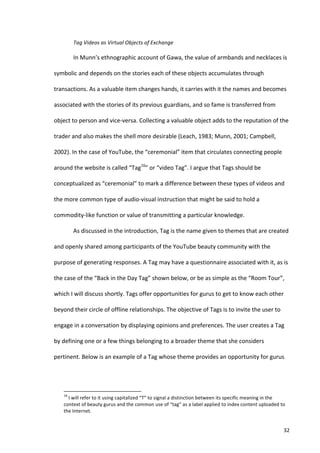
  Below	
  I	
  

                                                                                                                                                                                                                                                         present	
  images	
  that	
  display	
  some	
  

                                                                                                                                                                                                                                                         of	
  the	
  most	
  recurrent	
  types	
  of	
  
     Figure	
  1	
  I	
  n ever	
  saw	
  a	
  video	
  from	
  a	
  guru	
  that	
  was	
  not	
  recorded	
  
     in	
  their	
  rooms	
  or	
  at	
  another	
  personal	
  environment	
  (i.e.	
  the	
  
                                                                                                                                                                                                                                                         body-­‐action6.	
  
     bathroom	
  or	
  the	
  dresser	
  room).	


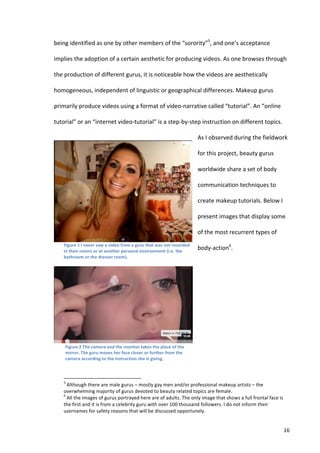
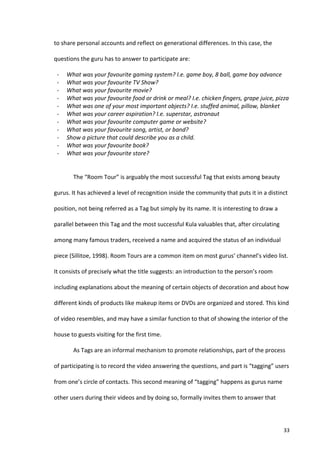
            Figure	
  2	
  The	
  camera	
  and	
  the	
  monitor	
  takes	
  the	
  place	
  of	
  the	
                                                                                                                                                                  	
  
            mirror.	
  The	
  guru	
  moves	
  her	
  face	
  closer	
  or	
  further	
  from	
  the	
  
            camera	
  according	
  to	
  the	
  instruction	
  she	
  is	
  giving.	


     5
      	
  Although	
  there	
  are	
  male	
  gurus	
  –	
  mostly	
  gay	
  men	
  and/or	
  professional	
  makeup	
  artists	
  –	
  the	
  
     overwhelming	
  majority	
  of	
  gurus	
  devoted	
  to	
  beauty	
  related	
  topics	
  are	
  female.	
  	
  
     6
      	
  All	
  the	
  images	
  of	
  gurus	
  portrayed	
  here	
  are	
  of	
  adults.	
  The	
  only	
  image	
  that	
  shows	
  a	
  full	
  frontal	
  face	
  is	
  
     the	
  first	
  and	
  it	
  is	
  from	
  a	
  celebrity	
  guru	
  with	
  over	
  100	
  thousand	
  followers.	
  I	
  do	
  not	
  inform	
  their	
  
     usernames	
  for	
  safety	
  reasons	
  that	
  will	
  be	
  discussed	
  opportunely.	


                                                                                                                                                                                                                                                                                                      16	


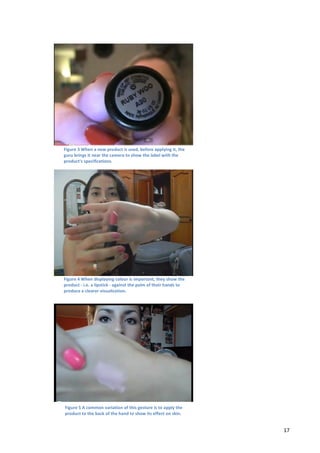
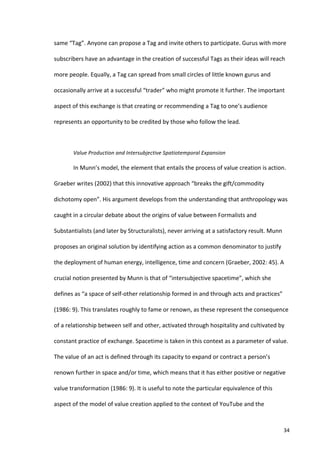
Figure	
  3	
  When	
  a	
  new	
  product	
  is	
  used,	
  before	
  applying	
  it,	
  the	
  
guru	
  brings	
  it	
  near	
  the	
  camera	
  to	
  show	
  the	
  label	
  with	
  the	
                  	
  
product's	
  specifications.	


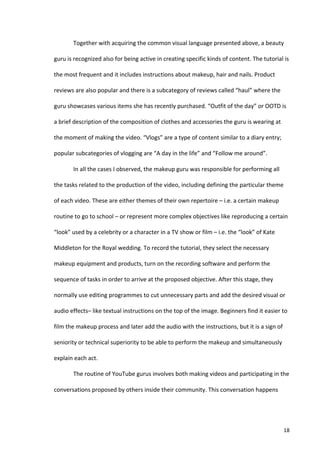
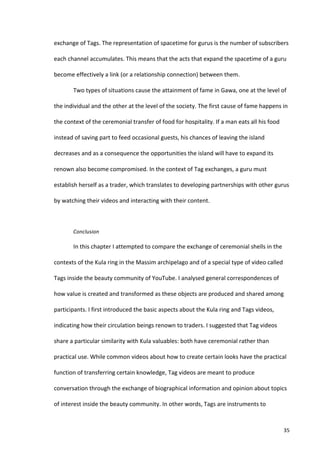
Figure	
  4	
  When	
  displaying	
  colour	
  is	
  important,	
  they	
  show	
  the	
                      	
  
product	
  -­‐	
  i.e.	
  a	
  lipstick	
  -­‐	
  against	
  the	
  palm	
  of	
  their	
  h ands	
  to	
  
produce	
  a	
  clearer	
  visualization.	


   Figure	
  5	
  A	
  common	
  variation	
  of	
  this	
  gesture	
  is	
  to	
  apply	
  the	
  
   product	
  to	
  the	
  back	
  of	
  the	
  hand	
  to	
  show	
  its	
  effect	
  on	
  skin.	


                                                                                                                   17	
  
Together	
  with	
  acquiring	
  the	
  common	
  visual	
  language	
  presented	
  above,	
  a	
  beauty	
  

guru	
  is	
  recognized	
  also	
  for	
  being	
  active	
  in	
  creating	
  specific	
  kinds	
  of	
  content.	
  The	
  tutorial	
  is	
  

the	
  most	
  frequent	
  and	
  it	
  includes	
  instructions	
  about	
  makeup,	
  hair	
  and	
  nails.	
  Product	
  

reviews	
  are	
  also	
  popular	
  and	
  there	
  is	
  a	
  subcategory	
  of	
  reviews	
  called	
  “haul”	
  where	
  the	
  

guru	
  showcases	
  various	
  items	
  she	
  has	
  recently	
  purchased.	
  “Outfit	
  of	
  the	
  day”	
  or	
  OOTD	
  is	
  

a	
  brief	
  description	
  of	
  the	
  composition	
  of	
  clothes	
  and	
  accessories	
  the	
  guru	
  is	
  wearing	
  at	
  

the	
  moment	
  of	
  making	
  the	
  video.	
  “Vlogs”	
  are	
  a	
  type	
  of	
  content	
  similar	
  to	
  a	
  diary	
  entry;	
  

popular	
  subcategories	
  of	
  vlogging	
  are	
  “A	
  day	
  in	
  the	
  life”	
  and	
  “Follow	
  me	
  around”.	


             In	
  all	
  the	
  cases	
  I	
  observed,	
  the	
  makeup	
  guru	
  was	
  responsible	
  for	
  performing	
  all	
  

the	
  tasks	
  related	
  to	
  the	
  production	
  of	
  the	
  video,	
  including	
  defining	
  the	
  particular	
  theme	
  

of	
  each	
  video.	
  These	
  are	
  either	
  themes	
  of	
  their	
  own	
  repertoire	
  –	
  i.e.	
  a	
  certain	
  makeup	
  

routine	
  to	
  go	
  to	
  school	
  –	
  or	
  represent	
  more	
  complex	
  objectives	
  like	
  reproducing	
  a	
  certain	
  

“look”	
  used	
  by	
  a	
  celebrity	
  or	
  a	
  character	
  in	
  a	
  TV	
  show	
  or	
  film	
  –	
  i.e.	
  the	
  “look”	
  of	
  Kate	
  

Middleton	
  for	
  the	
  Royal	
  wedding.	
  To	
  record	
  the	
  tutorial,	
  they	
  select	
  the	
  necessary	
  

makeup	
  equipment	
  and	
  products,	
  turn	
  on	
  the	
  recording	
  software	
  and	
  perform	
  the	
  

sequence	
  of	
  tasks	
  in	
  order	
  to	
  arrive	
  at	
  the	
  proposed	
  objective.	
  After	
  this	
  stage,	
  they	
  

normally	
  use	
  editing	
  programmes	
  to	
  cut	
  unnecessary	
  parts	
  and	
  add	
  the	
  desired	
  visual	
  or	
  

audio	
  effects–	
  like	
  textual	
  instructions	
  on	
  the	
  top	
  of	
  the	
  image.	
  Beginners	
  find	
  it	
  easier	
  to	
  

film	
  the	
  makeup	
  process	
  and	
  later	
  add	
  the	
  audio	
  with	
  the	
  instructions,	
  but	
  it	
  is	
  a	
  sign	
  of	
  

seniority	
  or	
  technical	
  superiority	
  to	
  be	
  able	
  to	
  perform	
  the	
  makeup	
  and	
  simultaneously	
  

explain	
  each	
  act.	


             The	
  routine	
  of	
  YouTube	
  gurus	
  involves	
  both	
  making	
  videos	
  and	
  participating	
  in	
  the	
  

conversations	
  proposed	
  by	
  others	
  inside	
  their	
  community.	
  This	
  conversation	
  happens	


                                                                                                                                                18	
  
through	
  YouTube	
  by	
  means	
  of	
  videos	
  and	
  text	
  comments,	
  but	
  also	
  exceeds	
  this	
  domain	
  to	
  

include	
  several	
  other	
  online	
  destinations	
  like	
  Twitter	
  and	
  Facebook.	


             Part	
  of	
  these	
  conversations	
  represent	
  attempts	
  to	
  build	
  relationships	
  which	
  are	
  

helpful	
  to	
  promote	
  one’s	
  channel	
  and	
  give	
  it	
  visibility.	
  The	
  easiest	
  way	
  a	
  user	
  can	
  increase	
  

the	
  number	
  of	
  subscribers	
  is	
  by	
  proposing	
  an	
  exchange:	
  she	
  subscribes	
  to	
  the	
  channel	
  of	
  

another	
  guru	
  and	
  leaves	
  a	
  message	
  asking	
  the	
  other	
  for	
  to	
  do	
  the	
  same.	
  This	
  practice	
  is	
  

especially	
  common	
  among	
  those	
  who	
  are	
  just	
  beginning	
  to	
  build	
  an	
  audience,	
  but	
  it	
  is	
  

criticised	
  by	
  more	
  experienced	
  users.	
  There	
  are	
  other	
  practices	
  that	
  equally	
  offer	
  the	
  

possibility	
  of	
  developing	
  an	
  audience,	
  and	
  are	
  more	
  widely	
  accepted,	
  namely	
  the	
  creation	
  

of,	
  or	
  participation	
  in,	
  “collabs”,	
  or	
  the	
  engagement	
  in	
  a	
  practice	
  called	
  “tags”.	
  I	
  will	
  

discuss	
  these	
  in	
  greater	
  detail	
  in	
  the	
  following	
  sections	
  of	
  this	
  dissertation,	
  but	
  will	
  

introduce	
  them	
  briefly	
  here.	


             “Collab”	
  is	
  the	
  casual	
  name	
  given	
  to	
  “collaborative	
  channels”,	
  which	
  are	
  channels	
  

produced	
  collectively	
  and	
  that	
  ultimately	
  serve	
  the	
  purpose	
  of	
  promoting	
  the	
  work	
  of	
  

their	
  participants.	
  A	
  collab	
  is	
  usually	
  started	
  by	
  a	
  higher	
  ranking	
  guru	
  because	
  she	
  needs	
  

to	
  have	
  a	
  sufficient	
  reputation	
  in	
  order	
  to	
  promote	
  this	
  new	
  channel	
  and	
  attract	
  others	
  to	
  

participate	
  in	
  it.	
  There	
  is	
  a	
  selection	
  process	
  conducted	
  to	
  choose	
  the	
  other	
  participants	
  

and	
  this	
  happens	
  through	
  auditioning.	
  Those	
  interested	
  submit	
  video-­‐responses	
  to	
  the	
  

original	
  video	
  posted	
  announcing	
  the	
  new	
  collab.	
  Usually	
  a	
  collab	
  has	
  seven	
  participants	
  

and	
  each	
  becomes	
  responsible	
  for	
  posting	
  a	
  new	
  video	
  on	
  a	
  certain	
  day	
  of	
  the	
  week.	
  

Every	
  week	
  one	
  of	
  the	
  participants	
  comes	
  up	
  with	
  a	
  theme	
  that	
  all	
  the	
  others	
  will	
  use	
  to	
  

produce	
  their	
  videos;	
  this	
  gives	
  consistency	
  to	
  the	
  content	
  of	
  the	
  channel.	
  	
  Higher	
  ranking	
  

gurus	
  display	
  their	
  influence	
  by	
  creating	
  collabs	
  while	
  lower	
  ranking	
  users	
  gain	
  visibility	


                                                                                                                                      19	
  
and	
  experience	
  by	
  having	
  to	
  produce	
  more	
  videos	
  and	
  also	
  by	
  promoting	
  their	
  individual	
  

channels	
  to	
  the	
  audience	
  of	
  the	
  collab.	
  

                                   If	
  collabs	
  produce	
  visibility	
  through	
  structured	
  social	
  organization,	
  “tags”	
  generate	
  

visibility	
  through	
  the	
  engagement	
  in	
  a	
  collective	
  but	
  informal	
  activity.	
  The	
  term	
  tag	
  refers	
  

to	
  two	
  ideas:	
  a	
  theme	
  for	
  a	
  video	
  and	
  the	
  naming	
  (“tagging”)	
  of	
  other	
  users.	
  The	
  themes	
  

are	
  usually	
  about	
  one’s	
  personality	
  and	
  only	
  indirectly	
  about	
  makeup7;	
  for	
  instance,	
  in	
  the	
  

theme	
  “My	
  perfect	
  imperfections”	
  the	
  users	
  are	
  challenged	
  to	
  make	
  a	
  video	
  talking	
  about	
  

three	
  things	
  that	
  they	
  like	
  and	
  three	
  that	
  they	
  dislike	
  about	
  themselves8.	
  At	
  the	
  end	
  of	
  

the	
  video,	
  they	
  may	
  “tag”	
  other	
  gurus	
  from	
  their	
  social	
  circle,	
  which	
  means	
  that	
  they	
  are	
  

publically	
  inviting	
  them	
  to	
  produce	
  a	
  video	
  with	
  the	
  same	
  theme.	
  The	
  advantage	
  of	
  

engaging	
  in	
  this	
  kind	
  of	
  activity	
  is	
  that	
  by	
  producing	
  videos	
  using	
  the	
  same	
  or	
  similar	
  

titles,	
  gurus	
  expand	
  the	
  possibilities	
  of	
  these	
  videos	
  being	
  watched	
  by	
  a	
  wider	
  audience	
  

since	
  YouTube	
  binds	
  similar	
  content	
  together.	
  A	
  person	
  that	
  watches	
  a	
  video	
  called	
  “My	
  

perfect	
  imperfections”	
  will	
  automatically	
  see	
  other	
  videos	
  about	
  that	
  same	
  theme,	
  

displayed	
  for	
  them	
  to	
  select.	


                                   Many	
  gurus	
  expect	
  to	
  gain	
  recognition	
  and	
  one	
  of	
  the	
  ways	
  this	
  happens	
  is	
  by	
  

being	
  approached	
  by	
  cosmetic	
  companies.	
  It	
  is	
  a	
  sign	
  of	
  maturity	
  for	
  a	
  guru	
  to	
  be	
  chosen	
  

to	
  review	
  products	
  and	
  many	
  include	
  contact	
  information	
  for	
  commercial	
  inquires	
  on	
  

their	
  channel.	
  The	
  highest	
  ranking	
  gurus	
  with	
  hundreds	
  of	
  thousands	
  of	
  subscribers	
  sign	
  

deals	
  with	
  makeup	
  companies	
  and	
  can	
  become	
  “online	
  ambassadors”	
  of	
  a	
  certain	
  brand	
  

or	
  eventually	
  launch	
  their	
  own	
  makeup	
  products.	
  This	
  contact	
  with	
  the	
  commercial	
  world	


      7
       	
  I	
  haven’t	
  verified	
  if	
  tags	
  (and	
  also	
  collabs)	
  exist	
  in	
  other	
  communities	
  on	
  YouTube.	
  These	
  activities	
  
      may	
  result	
  from	
  the	
  high	
  number	
  of	
  beauty	
  gurus	
  and	
  from	
  the	
  fact	
  makeup	
  is	
  a	
  collective	
  activity	
  
      among	
  groups	
  of	
  women	
  interested	
  in	
  that	
  practice.	
  	
  
      8
       	
  Since	
  beauty	
  gurus	
  normally	
  talk	
  about	
  beauty	
  related	
  issues,	
  videos	
  produced	
  following	
  this	
  theme	
  
      refer	
  to	
  part	
  of	
  their	
  bodies	
  that	
  they	
  find	
  more	
  or	
  less	
  attractive,	
  which	
  then	
  links	
  to	
  the	
  use	
  of	
  
      cosmetics	
  or	
  other	
  means	
  as	
  an	
  attempt	
  to	
  improve	
  their	
  looks.	


                                                                                                                                                                                                                                                  20	
  
is	
  sometimes	
  accompanied	
  by	
  tension	
  as	
  the	
  guru	
  becomes	
  vulnerable	
  to	
  criticism	
  by	
  

competitors	
  for	
  giving	
  up	
  editorial	
  independence	
  and	
  producing	
  disguised	
  advertising.	


                                                                                                                      21	
  
Methodology	
  

             My	
  original	
  project	
  was	
  to	
  study	
  informal	
  learning	
  online.	
  I	
  wanted	
  to	
  observe	
  and	
  

attempt	
  to	
  understand	
  the	
  process	
  in	
  which	
  Internet	
  users	
  gain	
  certain	
  skills	
  through	
  the	
  

development	
  of	
  social	
  relations	
  in	
  informal	
  settings.	
  I	
  chose	
  to	
  conduct	
  this	
  research	
  on	
  

YouTube	
  beauty	
  gurus	
  mainly	
  because	
  they	
  represent	
  an	
  informal	
  group	
  that	
  gathers	
  

spontaneously	
  through	
  the	
  Web	
  and	
  share	
  the	
  purpose	
  of	
  exchanging	
  knowledge	
  and	
  

experiences	
  related	
  to	
  fashion,	
  beauty	
  and	
  particularly	
  about	
  cosmetics	
  and	
  makeup	
  with	
  

each	
  other.	
  At	
  the	
  early	
  stage	
  of	
  the	
  project,	
  while	
  I	
  was	
  still	
  considering	
  how	
  to	
  approach	
  

this	
  community	
  and	
  conduct	
  the	
  research,	
  I	
  received	
  two	
  recommendations	
  from	
  my	
  

supervisor,	
  one	
  of	
  which	
  I	
  could	
  not	
  adopt.	


             Firstly,	
  I	
  was	
  asked	
  to	
  research	
  not	
  gurus	
  but	
  the	
  audience	
  of	
  gurus.	
  Instead	
  of	
  

looking	
  at	
  the	
  guru’s	
  individual	
  histories	
  to	
  explain	
  the	
  popularity	
  they	
  have,	
  I	
  should	
  

study	
  those	
  who	
  choose	
  to	
  watch	
  videos	
  of	
  gurus	
  and	
  see	
  the	
  motivations	
  behind	
  that	
  

interest.	
  I	
  attempted	
  to	
  follow	
  this	
  path,	
  but	
  had	
  to	
  reconsider	
  because	
  after	
  a	
  month	
  of	
  

looking	
  for	
  people	
  who	
  matched	
  this	
  profile,	
  I	
  was	
  only	
  able	
  to	
  locate	
  and	
  interview	
  one	
  

person.	


             I	
  faced	
  the	
  following	
  difficulties:	
  1)	
  considering	
  as	
  an	
  “audience”	
  those	
  who	
  do	
  not	
  

participate	
  in	
  the	
  conversation,	
  I	
  could	
  not	
  look	
  for	
  them	
  through	
  YouTube	
  since	
  their	
  

presence	
  watching	
  the	
  videos	
  does	
  not	
  leave	
  traces.	
  I	
  tried	
  to	
  find	
  these	
  people	
  through	
  

recommendations	
  of	
  friends	
  but	
  this	
  strategy	
  is	
  not	
  efficient	
  for	
  a	
  research	
  project	
  that	
  

has	
  to	
  start	
  and	
  end	
  in	
  four	
  months.	
  2)	
  What	
  is	
  the	
  definition	
  of	
  “audience”	
  in	
  the	
  context	
  

of	
  the	
  Internet?	
  Prior	
  to	
  the	
  Internet,	
  the	
  audience	
  were	
  those	
  who	
  mostly	
  consumed	
  

media	
  content:	
  readers	
  of	
  newspapers	
  and	
  magazines,	
  for	
  instance.	
  After	
  the	
  Internet,	
  

being	
  the	
  audience	
  became	
  a	
  choice	
  for	
  those	
  who	
  were	
  online.	
  From	
  this	
  perspective,	


                                                                                                                                      22	
  
when	
  does	
  a	
  person	
  move	
  from	
  the	
  position	
  of	
  being	
  in	
  an	
  audience	
  to	
  that	
  of	
  active	
  

participant	
  in	
  the	
  public	
  sphere?	
  Are	
  users	
  that	
  don’t	
  publish	
  videos	
  but	
  comment	
  on	
  

them	
  an	
  audience?	
  YouTube	
  users	
  with	
  less	
  visibility	
  might	
  influence	
  more	
  people	
  while	
  

others	
  with	
  a	
  greater	
  number	
  of	
  views	
  might	
  be	
  communicating	
  only	
  within	
  a	
  circle	
  of	
  

friends.	
  I	
  resolved	
  this	
  problem	
  by	
  choosing	
  to	
  observe	
  a	
  group	
  of	
  gurus	
  that	
  had	
  average	
  

audiences,	
  as	
  I	
  will	
  explain	
  later	
  at	
  this	
  section.	
  In	
  the	
  end,	
  it	
  was	
  important	
  to	
  accept	
  that	
  

being	
  a	
  guru	
  is	
  a	
  social	
  experience	
  and	
  that	
  it	
  is	
  part	
  of	
  being	
  a	
  guru	
  to	
  be	
  both	
  audience	
  

and	
  producer.	
  

             The	
  suggestion	
  I	
  could	
  incorporate	
  was	
  to	
  go	
  in	
  to	
  the	
  field	
  without	
  a	
  specific	
  set	
  

of	
  questions;	
  instead,	
  I	
  should	
  immerse	
  myself	
  in	
  the	
  world	
  of	
  these	
  gurus	
  to	
  find	
  out,	
  

among	
  other	
  things:	
  what	
  it	
  is	
  that	
  makes	
  somebody	
  want	
  to	
  become	
  part	
  of	
  this	
  group?	
  

What	
  do	
  they	
  talk	
  about	
  besides	
  makeup?	
  Do	
  they	
  have	
  specific	
  forms	
  of	
  organization?	
  

How	
  does	
  one	
  moves	
  inside	
  this	
  group?	
  I	
  should	
  allow	
  my	
  curiosity	
  to	
  look	
  for	
  interesting	
  

things	
  happening	
  and,	
  at	
  the	
  end	
  of	
  this	
  process,	
  produce	
  a	
  theory	
  explaining	
  what	
  is	
  like	
  

to	
  be	
  a	
  guru.	
  That	
  is	
  how	
  I	
  conducted	
  this	
  work.	


             Preparation	
  for	
  the	
  research	
  

             Prior	
  to	
  conducting	
  participant	
  observation,	
  first	
  with	
  gurus	
  in	
  general	
  and	
  later	
  

with	
  the	
  specific	
  network	
  of	
  actors	
  that	
  resulted	
  in	
  the	
  ethnography	
  used	
  for	
  this	
  

dissertation,	
  I	
  learned	
  about	
  cosmetics	
  and	
  its	
  use	
  in	
  Britain	
  by	
  conducting	
  six	
  interviews	
  

with	
  women	
  who	
  are	
  active	
  users	
  or	
  even	
  enthusiasts	
  of	
  makeup.	
  The	
  questions	
  I	
  asked	
  

in	
  these	
  interviews	
  were:	
  1)	
  at	
  what	
  moment	
  in	
  life	
  they	
  first	
  acquired	
  an	
  interest	
  in	
  

cosmetics?	
  How	
  did	
  it	
  start	
  and	
  with	
  whose	
  support?	
  And	
  2)	
  what	
  do	
  you	
  normally	
  keep	
  

in	
  your	
  box	
  of	
  cosmetic	
  accessories	
  and	
  why?	
  I	
  considered	
  these	
  questions	


                                                                                                                                              23	
  
straightforward	
  enough	
  to	
  produce	
  direct	
  answers	
  and	
  also	
  general	
  enough	
  to	
  allow	
  the	
  

interviewees	
  to	
  formulate	
  the	
  answers	
  without	
  constrains	
  or	
  moral	
  judgments.	


             Alongside	
  the	
  interviews,	
  I	
  participated	
  in	
  a	
  daylong	
  intensive	
  makeup	
  course	
  for	
  

amateurs	
  and	
  had	
  the	
  opportunity	
  to	
  get	
  to	
  know	
  the	
  different	
  properties	
  of	
  products	
  

and	
  apply	
  the	
  products	
  on	
  my	
  own	
  face.	
  Being	
  the	
  only	
  man	
  among	
  eight	
  other	
  

participants	
  including	
  the	
  teacher	
  and	
  her	
  assistant,	
  I	
  had	
  the	
  chance	
  to	
  experience	
  the	
  

awkwardness	
  that	
  results	
  from	
  crossing	
  this	
  clearly	
  gender-­‐related	
  border	
  and	
  also	
  feel	
  

the	
  difficulties	
  related	
  to	
  the	
  execution	
  of	
  different	
  routines.	
  I	
  did	
  not	
  know	
  that	
  makeup	
  

required	
  such	
  complex	
  procedures,	
  involved	
  so	
  many	
  utensils	
  and	
  followed	
  so	
  many	
  

patterns	
  to	
  add	
  different	
  layers	
  of	
  products.	
  I	
  was	
  also	
  confronted	
  with	
  the	
  understanding	
  

that	
  makeup	
  is	
  as	
  much	
  about	
  showing	
  as	
  it	
  is	
  about	
  concealing.	
  This	
  is	
  something	
  I	
  will	
  

explore	
  later	
  on.	


      Figure	
  6	
  Figure	
  6	
  Photograph	
  taken	
  at	
  the	
  end	
  of	
  the	
  makeup	
  course	
  at	
  the	
  Rouge	
  London	
  Makeup	
  School,	
  2011.	


                                                                                                                                                                      24	
  
Methods	
  for	
  gathering	
  data	
  

             I	
  spent	
  over	
  a	
  month	
  “living”	
  among	
  beauty	
  gurus	
  before	
  choosing	
  my	
  informants	
  

and	
  then	
  I	
  dedicated	
  myself	
  to	
  observing	
  these	
  informants	
  full	
  time	
  during	
  two	
  weeks.	
  All	
  

the	
  data	
  gathered	
  for	
  this	
  research	
  was	
  collected	
  online	
  and	
  through	
  this	
  process	
  of	
  

immersion	
  in,	
  and	
  observation	
  of,	
  their	
  past	
  and	
  present	
  activities.	
  Observation	
  here	
  

means	
  watching	
  their	
  videos	
  and	
  following	
  their	
  online	
  public	
  communication	
  through	
  

comment	
  exchange	
  and	
  also	
  through	
  the	
  dialogues	
  developed	
  through	
  the	
  website	
  

Formspring,	
  a	
  service	
  through	
  which	
  many	
  gurus	
  receive	
  and	
  respond	
  to	
  questions	
  

posted	
  either	
  openly	
  or	
  anonymously.	
  Formspring’s	
  value	
  derives	
  from	
  the	
  fact	
  other	
  

popular	
  social	
  websites	
  like	
  YouTube	
  and	
  Facebook	
  do	
  not	
  allow	
  this	
  feature	
  of	
  

anonymously	
  publishing	
  questions.	
  Since	
  gurus	
  are	
  interested	
  in	
  being	
  known	
  and	
  

expanding	
  they	
  range	
  of	
  relationships,	
  Formspring	
  gives	
  the	
  possibility	
  of	
  receiving	
  from	
  

friends	
  and	
  fans	
  the	
  kind	
  of	
  personal	
  questions	
  they	
  would	
  not	
  dare	
  to	
  ask	
  openly.	
  

Formspring	
  is	
  widely	
  adopted,	
  especially	
  among	
  younger	
  beauty	
  gurus;	
  all	
  but	
  one	
  of	
  the	
  

six	
  actors	
  selected	
  had	
  an	
  account	
  with	
  this	
  service.	
  

             Aside	
  from	
  one	
  public	
  exchange	
  of	
  online	
  comments	
  with	
  one	
  of	
  the	
  adult	
  

informants,	
  I	
  did	
  not	
  attempt	
  to	
  communicate	
  with	
  the	
  actors.	
  I	
  decided	
  not	
  to	
  talk	
  

directly	
  to	
  them	
  because	
  four	
  out	
  of	
  six	
  of	
  my	
  informants	
  were	
  less	
  than	
  18	
  years	
  of	
  age	
  

and	
  I	
  didn’t	
  want	
  to	
  conduct	
  interviews	
  with	
  some	
  of	
  them	
  and	
  not	
  others.	
  This	
  solution	
  

proved	
  useful	
  for	
  two	
  reasons:	
  it	
  offered	
  an	
  opportunity	
  of	
  conducting	
  research	
  in	
  a	
  safe	
  

manner	
  with	
  actors	
  that	
  are	
  minors,	
  and	
  it	
  also	
  created	
  an	
  environment	
  that	
  allowed	
  

actors	
  to	
  speak	
  and	
  share	
  opinions	
  that	
  seemed	
  more	
  welcoming	
  than,	
  for	
  instance,	
  that	
  

of	
  an	
  academic	
  interview.	
  Tarlo	
  (2010:	
  146)	
  arrived	
  at	
  the	
  same	
  conclusions	
  while	
  

conducting	
  research	
  on	
  Muslims	
  and	
  fashion	
  in	
  Britain.	
  She	
  wrote:	
  “What	
  makes	
  Internet	


                                                                                                                                     25	
  
discussion	
  forums	
  and	
  threads	
  so	
  interesting	
  from	
  the	
  ethnographic	
  point	
  of	
  view	
  is	
  that	
  

they	
  represent	
  unmediated	
  conversations	
  between	
  people	
  who	
  voice	
  their	
  opinions	
  far	
  

more	
  freely	
  than	
  they	
  would	
  if	
  interviewed	
  by	
  a	
  researcher.”	
  The	
  richness	
  of	
  the	
  data	
  that	
  

emerges	
  from	
  this	
  online	
  research	
  practice	
  –	
  that	
  presupposes	
  an	
  active	
  form	
  of	
  being	
  

present	
  –	
  might	
  justify	
  the	
  act	
  of	
  naming	
  it	
  “observant	
  participation”,	
  to	
  indicate	
  it	
  has	
  

evolved	
  from	
  the	
  anthropological	
  tradition	
  of	
  research.	
  

                                   A	
  possible	
  criticism	
  this	
  approach	
  may	
  generate	
  results	
  from	
  the	
  fact	
  the	
  

researcher	
  does	
  not	
  meet	
  the	
  subject	
  in	
  “real	
  life”,	
  which	
  raises	
  questions	
  of	
  authenticity.	
  

How	
  do	
  we	
  know	
  if	
  the	
  subject	
  is	
  who	
  she	
  says	
  she	
  is?	
  This	
  is	
  a	
  complex	
  issue	
  that	
  invites	
  

further	
  debate	
  and	
  should	
  be	
  considered	
  in	
  light	
  of	
  the	
  particularity	
  of	
  each	
  case.	
  For	
  

instance,	
  on	
  the	
  YouTube	
  beauty	
  guru	
  community,	
  users	
  follow	
  an	
  unwritten	
  rule	
  that	
  

says	
  one	
  should	
  avoid	
  mentioning	
  places	
  or	
  other	
  information	
  that	
  could	
  lead	
  to	
  the	
  

physical	
  localization	
  of	
  the	
  informant9.	
  They	
  also	
  prefer	
  not	
  to	
  use	
  surnames.	
  In	
  the	
  same	
  

way	
  this	
  situation	
  might	
  make	
  it	
  easier	
  for	
  a	
  person	
  to	
  lie	
  about	
  herself,	
  it	
  also	
  makes	
  it	
  

safer	
  for	
  her	
  to	
  discuss	
  topics	
  and	
  share	
  opinions	
  that	
  she	
  might	
  not	
  feel	
  comfortable	
  

doing	
  under	
  different	
  conditions.	
  Regarding	
  this	
  matter,	
  I	
  agree	
  with	
  Boellstorff	
  (2008:	
  4,	
  

60-­‐86),	
  who	
  conducted	
  a	
  three-­‐year	
  research	
  about	
  Second	
  Life	
  entirely	
  inside	
  the	
  virtual	
  

world.	
  He	
  argues	
  that	
  the	
  users	
  that	
  choose	
  to	
  establish	
  relations	
  through	
  these	
  mediums	
  

agree	
  to	
  do	
  so	
  knowing	
  that	
  most	
  likely	
  they	
  will	
  never	
  meet	
  face	
  to	
  face	
  the	
  people	
  they	
  

met	
  online.	
  The	
  anthropologist	
  should	
  not	
  question	
  if	
  these	
  relationships	
  exist	
  but	
  study	
  

them	
  “in	
  their	
  own	
  terms”.	
  That	
  is	
  why	
  he	
  considers	
  it	
  crucial	
  to	
  develop	
  research	
  

methods	
  that	
  keep	
  up	
  with	
  the	
  “realities	
  of	
  technical	
  change”.	


      9
       	
  Lange	
  (2007)	
  discusses	
  the	
  practice	
  of	
  making	
  videos	
  that	
  are	
  promoted	
  beyond	
  one’s	
  social	
  circles	
  
      but	
  where	
  the	
  author	
  conceals	
  her	
  identity.	
  She	
  labels	
  these	
  videos	
  as	
  “privately	
  public”.	


                                                                                                                                                                                                                                                  26	
  
The	
  YouTube	
  project	
  conducted	
  as	
  part	
  of	
  the	
  Digital	
  Ethnography	
  program	
  

(Wesch,	
  2008)	
  used	
  a	
  method	
  that	
  also	
  occurs	
  exclusively	
  online	
  but	
  incorporates	
  the	
  

social	
  experience	
  of	
  inhabiting	
  the	
  world	
  of	
  the	
  actors	
  being	
  researched.	
  Each	
  participant	
  

of	
  the	
  team	
  of	
  researchers	
  created	
  individual	
  channels	
  on	
  YouTube,	
  and	
  the	
  group	
  

produced	
  a	
  video	
  which	
  was	
  posted	
  on	
  the	
  website	
  explaining	
  the	
  project	
  and	
  inviting	
  the	
  

YouTube	
  community	
  to	
  engage	
  in	
  conversations	
  related	
  to	
  the	
  different	
  topics	
  of	
  the	
  

study.	
  Choosing	
  this	
  path	
  made	
  the	
  interaction	
  with	
  the	
  community	
  more	
  transparent	
  

and	
  honest,	
  which	
  motivated	
  some	
  users	
  to	
  participate	
  and	
  reflect	
  on	
  their	
  experiences,	
  

not	
  exactly	
  as	
  if	
  they	
  were	
  being	
  interviewed	
  but	
  as	
  if	
  they	
  were	
  having	
  a	
  conversation	
  

about	
  the	
  subject.	
  The	
  video	
  that	
  resulted	
  did	
  not	
  belong	
  to	
  the	
  researchers,	
  but	
  existed	
  

alongside	
  other	
  videos	
  as	
  part	
  of	
  each	
  participant’s	
  channels.	
  In	
  other	
  words,	
  the	
  

reflections	
  remained	
  in	
  the	
  community	
  together	
  with	
  the	
  videos	
  the	
  researchers	
  made	
  as	
  

part	
  of	
  the	
  dynamics	
  of	
  embodying	
  the	
  activities	
  of	
  the	
  natives	
  and	
  experiencing	
  the	
  

world	
  from	
  that	
  perspective.	
  Even	
  the	
  result	
  of	
  the	
  project	
  was	
  not	
  a	
  book	
  or	
  an	
  

academic	
  paper,	
  but	
  a	
  lecture	
  using	
  audio-­‐visual	
  documents	
  collected	
  during	
  the	
  research	
  

and	
  published	
  on	
  YouTube.	
  By	
  making	
  this	
  choice,	
  the	
  team	
  gave	
  back	
  to	
  the	
  original	
  

community	
  the	
  result	
  of	
  the	
  research	
  while	
  offering	
  those	
  interested	
  on	
  learning	
  about	
  

the	
  study	
  to	
  do	
  so	
  by	
  accessing	
  the	
  same	
  channel	
  of	
  communication	
  studied	
  and	
  having	
  

the	
  opportunity	
  to	
  move	
  further	
  from	
  there	
  to	
  explore	
  the	
  website.	
  I	
  attempted	
  to	
  do	
  

something	
  similar	
  creating	
  a	
  YouTube	
  channel10	
  to	
  introduce	
  myself	
  and	
  the	
  research	
  to	
  

the	
  beauty	
  guru	
  community,	
  while	
  establishing	
  conversations	
  with	
  different	
  actors.	
  I	
  

abandoned	
  this	
  alternative	
  because	
  of	
  the	
  time	
  constraints	
  of	
  the	
  research	
  and	
  also	
  

because	
  it	
  would	
  limit	
  the	
  contact	
  to	
  adult	
  gurus.	


     10
               	
  http://www.youtube.com/youtubanthropologist	


                                                                                                                                                                                                                                                  27	
  
Definition	
  of	
  informants	
  

             According	
  to	
  preliminary	
  observation,	
  the	
  community	
  of	
  gurus	
  dedicated	
  to	
  

creating	
  beauty	
  related	
  tutorials	
  appears	
  to	
  be	
  one	
  of	
  the	
  larger,	
  if	
  not	
  the	
  largest,	
  on	
  

YouTube.	
  I	
  did	
  not	
  have	
  access	
  to	
  quantitative	
  data,	
  therefore	
  I	
  base	
  this	
  speculation	
  on	
  

the	
  fact	
  no	
  other	
  guru	
  community	
  has	
  as	
  many	
  representatives	
  in	
  the	
  top	
  of	
  the	
  rankings	
  

of	
  subscriptions	
  worldwide.	
  Out	
  of	
  24	
  gurus	
  listed	
  among	
  the	
  most	
  popular,	
  half	
  

produced	
  beauty	
  tutorials.	
  This	
  means	
  I	
  could	
  have	
  selected	
  many	
  different	
  groups	
  of	
  

subjects	
  for	
  this	
  research.	
  The	
  first	
  criterion	
  used	
  to	
  select	
  participants	
  was	
  to	
  find	
  those	
  

who	
  had	
  a	
  strong	
  drive	
  to	
  improve	
  their	
  skills	
  in	
  making	
  tutorials.	
  Aside	
  from	
  that,	
  I	
  

looked	
  for	
  informants	
  that	
  were	
  close	
  to	
  each	
  other	
  online	
  (and	
  online	
  only)	
  and	
  

experienced	
  the	
  beauty	
  guru	
  community	
  from	
  different	
  perspectives.	
  

             The	
  list	
  I	
  arrived	
  at	
  results	
  from	
  these	
  choices.	
  All	
  are	
  English	
  speakers:	
  five	
  are	
  

Americans	
  (one	
  currently	
  living	
  in	
  Israel)	
  and	
  one	
  is	
  Scottish.	
  The	
  number	
  of	
  subscriptions	
  

each	
  has	
  starts	
  at	
  60	
  and	
  goes	
  up	
  to	
  10,000,	
  and	
  their	
  ages	
  varied	
  from	
  13	
  to	
  26	
  years	
  old.	
  

The	
  higher-­‐ranking	
  gurus	
  were	
  YTGuru26	
  and	
  YTGuru14,	
  which	
  had	
  respectively	
  close	
  to	
  

10,000	
  and	
  3,000	
  subscriptions,	
  and	
  had	
  created	
  their	
  own	
  collab	
  channels.	
  Two	
  of	
  the	
  

remaining	
  girls	
  auditioned	
  and	
  were	
  accepted	
  to	
  these	
  collabs:	
  YTGuru20	
  had	
  around	
  600	
  

subscribers	
  and	
  was	
  part	
  of	
  YTGuru26’s	
  collab.	
  YTGuru13a	
  had	
  close	
  to	
  1000	
  subscribers	
  

and	
  belonged	
  to	
  YTGuru14’s	
  collab.	
  The	
  two	
  remaining	
  girls	
  auditioned	
  but	
  were	
  rejected	
  

for	
  both	
  collabs.	
  

 Guru	
                          Subscribers	
                  Collab	
  
 YTGuru26	
                      10,000	
                       Collab	
  1	
  (owner)	
  
 YTGuru14	
                      2,500	
                        Collab	
  2	
  (owner)	
  
 YTGuru17	
                      1,000	
                        -­‐	
  
 YTGuru13a	
                     1,000	
                        Collab	
  2	
  (subord.)	
  
 YTGuru20	
                      600	
                          Collab	
  1	
  (subord.)	
  
 YTGuru13b	
                     60	
                           -­‐	


                                                                                                                                           28	
  
Ethical	
  choices	
  

                                   Out	
  of	
  my	
  six	
  informants,	
  two	
  were	
  13,	
  one	
  was	
  14	
  and	
  one	
  was	
  17	
  years	
  old.	
  

Their	
  parents	
  are	
  aware	
  that	
  their	
  daughters	
  have	
  channels	
  on	
  YouTube11	
  and	
  although	
  

some	
  parents	
  did	
  not	
  appreciate	
  the	
  time	
  spent	
  on	
  the	
  site,	
  all	
  accepted	
  the	
  existence	
  of	
  

these	
  YouTube	
  channels	
  and	
  also	
  had	
  the	
  option	
  of	
  following	
  the	
  content	
  published	
  

there12.	
  All	
  accounts	
  on	
  both	
  YouTube	
  and	
  Formspring	
  are	
  public;	
  anybody	
  can	
  access	
  the	
  

videos	
  and	
  other	
  exchanges	
  I	
  had	
  access	
  to	
  without	
  having	
  to	
  subscribe	
  to	
  either	
  of	
  the	
  

websites.	
  For	
  this	
  reason,	
  I	
  considered	
  the	
  possibility	
  of	
  using	
  their	
  YouTube	
  usernames	
  

to	
  allow	
  other	
  researchers	
  and	
  readers	
  in	
  general	
  to	
  be	
  able	
  to	
  access	
  the	
  same	
  data	
  and	
  

also	
  follow	
  the	
  development	
  of	
  these	
  gurus	
  further.	
  Following	
  Snee	
  (2008:	
  3),	
  I	
  decided	
  

not	
  to	
  expose	
  them	
  because	
  “some	
  interviewees	
  felt	
  that	
  putting	
  information	
  online	
  

should	
  not	
  imply	
  consent	
  for	
  the	
  use	
  of	
  this	
  material.”	
  Their	
  participation	
  was	
  involuntary	
  

on	
  this	
  research,	
  they	
  did	
  not	
  have	
  the	
  chance	
  to	
  opt	
  out	
  so	
  I	
  chose	
  to	
  conceal	
  their	
  

usernames.	
  Instead	
  of	
  the	
  actual	
  usernames,	
  each	
  will	
  be	
  addressed	
  by	
  the	
  prefix	
  

“YTGuru”	
  combined	
  with	
  a	
  number	
  that	
  corresponds	
  to	
  their	
  respective	
  ages.	
  In	
  the	
  only	
  

case	
  of	
  coinciding	
  ages,	
  I	
  added	
  the	
  letters	
  A	
  or	
  B	
  to	
  distinguish	
  between	
  the	
  two.	
  Finally,	
  

and	
  also	
  on	
  the	
  topic	
  of	
  privacy	
  concerns,	
  I	
  altered	
  the	
  fragments	
  of	
  texts	
  I	
  use	
  as	
  quotes	
  

so	
  that	
  others	
  cannot	
  locate	
  their	
  original	
  sources	
  using	
  search	
  engines.	


      11
        	
  It	
  is	
  not	
  uncommon	
  that	
  parents	
  or	
  other	
  family	
  members	
  occasionally	
  appear	
  on	
  these	
  videos,	
  
      particularly	
  during	
  the	
  recording	
  of	
  vlog	
  posts	
  like	
  “A	
  day	
  in	
  the	
  life”.	
  The	
  gurus,	
  particular	
  the	
  younger	
  
      ones,	
  also	
  discuss	
  among	
  themselves	
  and	
  with	
  their	
  audience	
  whether	
  their	
  parents	
  know	
  about	
  the	
  
      channel,	
  if	
  they	
  watch	
  the	
  videos	
  and	
  what	
  opinions	
  they	
  have	
  about	
  it.	
  
      12
        	
  I	
  don’t	
  know	
  whether	
  the	
  same	
  happens	
  with	
  Formspring,	
  which	
  is	
  a	
  service	
  mostly	
  popular	
  among	
  
      younger	
  internet	
  users.	


                                                                                                                                                                                                                                                  29	


                                   Value	
  Production	
  and	
  Spatiotemporal	
  Expansion	
  

                                   Nancy	
  Munn’s	
  The	
  Fame	
  of	
  Gawa	
  has	
  become	
  an	
  influential	
  contribution	
  to	
  

anthropology	
  since	
  its	
  publication	
  in	
  1986,	
  but	
  its	
  “fame”	
  did	
  not	
  spread	
  much	
  beyond	
  

English-­‐speaking	
  scholars13.	
  Yet	
  it	
  is	
  remarkable	
  how	
  the	
  complexity	
  of	
  Munn’s	
  construct	
  

for	
  explaining	
  the	
  creation	
  of	
  value	
  contrasts	
  with	
  how	
  simple	
  and	
  tempting	
  it	
  is	
  to	
  

analyse	
  phenomena	
  in	
  radically	
  different	
  contexts	
  through	
  her	
  model.	
  For	
  instance,	
  two	
  

of	
  its	
  early	
  reviewers	
  compared	
  books	
  to	
  Kula-­‐like	
  valuables	
  exchanged	
  through	
  academic	
  

networks.	
  To	
  Kahn	
  (1988),	
  “In	
  writing	
  The	
  Fame	
  of	
  Gawa,	
  Munn	
  might	
  be	
  said	
  to	
  have	
  

created	
  a	
  form	
  of	
  value	
  that	
  will	
  circulate	
  in	
  the	
  anthropological	
  world	
  and,	
  ultimately,	
  

return	
  to	
  bring	
  fame	
  back	
  to	
  its	
  author.”	
  Less	
  optimistic,	
  Young	
  (1989)	
  writes	
  that	
  “Munn	
  

has	
  taken	
  a	
  considerable	
  risk	
  in	
  that	
  her	
  reader	
  may	
  simply	
  refuse	
  to	
  learn	
  how	
  to	
  read	
  

her	
  –	
  thereby	
  fulfilling	
  the	
  role	
  of	
  the	
  Gawan	
  witch	
  in	
  constricting	
  the	
  book’s	
  space-­‐time.”	


                                   In	
  this	
  chapter,	
  I	
  will	
  suggest	
  her	
  model	
  for	
  explaining	
  value	
  creation	
  through	
  acts	
  of	
  

exchange	
  is	
  useful	
  in	
  understanding	
  the	
  motivations	
  for	
  producing	
  and	
  exchanging	
  a	
  particular	
  

category	
  of	
  videos	
  called	
  Tags	
  that	
  circulate	
  mostly	
  inside	
  the	
  beauty	
  community	
  of	
  YouTube.	
  To	
  

do	
  so,	
  I	
  will	
  briefly	
  recapitulate	
  Munn’s	
  interpretation	
  of	
  Kula	
  ceremonial	
  exchanges	
  for	
  the	
  

people	
  of	
  Gawa,	
  discuss	
  the	
  social	
  aspects	
  involving	
  the	
  production	
  and	
  exchange	
  of	
  Tag	
  videos	
  

and	
  then	
  examine	
  Tags	
  through	
  key	
  notions	
  of	
  Munn’s	
  theory	
  of	
  value.	


                                   General	
  Aspects	
  of	
  Comparison	
  between	
  Kula	
  and	
  YouTube	


                                   Gawa	
  is	
  one	
  of	
  the	
  islands	
  in	
  the	
  Massim	
  archipelago,	
  and	
  its	
  inhabitants	
  engage	
  

in	
  acts	
  of	
  ceremonial	
  valuable	
  exchanges	
  called	
  Kula.	
  Many	
  gawans	
  devote	
  a	
  significant	


      13
       	
  The	
  Fame	
  of	
  Gawa	
  hasn’t	
  been	
  translated	
  to	
  languages	
  such	
  as	
  French,	
  German	
  or	
  Spanish	
  and	
  its	
  
      page	
  on	
  online	
  retailer	
  Amazon	
  still	
  invites	
  reader	
  to	
  “be	
  the	
  first	
  to	
  review	
  this	
  item.”	


                                                                                                                                                                                                                                                  30	
  
part	
  of	
  their	
  adult	
  lives	
  travelling	
  long	
  distances	
  in	
  canoes	
  to	
  participate	
  in	
  Kula	
  activities.	
  

The	
  objective	
  of	
  these	
  enterprises	
  is	
  to	
  achieve	
  personal	
  renown	
  as	
  a	
  trader.	
  There	
  are	
  

two	
  main	
  items	
  that	
  travel	
  with	
  islanders	
  during	
  those	
  trips:	
  arm	
  shells	
  and	
  necklaces.	
  In	
  

all	
  the	
  expeditions	
  that	
  have	
  been	
  studied,	
  arm	
  shells	
  always	
  travel	
  clockwise	
  while	
  

necklaces	
  go	
  the	
  opposite	
  way.	
  Also,	
  exchanges	
  may	
  only	
  happen	
  between	
  items	
  of	
  

different	
  types:	
  necklaces	
  for	
  arm	
  shells	
  and	
  vice-­‐versa.	
  Each	
  islander	
  can	
  only	
  conduct	
  

exchanges	
  with	
  previously	
  defined	
  partners	
  from	
  a	
  limited	
  number	
  of	
  islands14.	
  A	
  man’s	
  

fame	
  results	
  from	
  his	
  capacity	
  to	
  convince	
  partners	
  to	
  trade	
  valuable	
  shells	
  with	
  him.	
  

Becoming	
  a	
  respected	
  trader	
  abroad	
  reflects	
  on	
  the	
  influence	
  that	
  a	
  man	
  has	
  in	
  Gawa,	
  

making	
  him	
  a	
  person	
  of	
  distinction	
  in	
  a	
  traditionally	
  egalitarian	
  society.	


                                   Makeup	
  gurus	
  also	
  exist	
  in	
  an	
  online	
  environment	
  without	
  social	
  distinctions15.	
  Access	
  to	
  

YouTube	
  is	
  free	
  and	
  registration	
  to	
  the	
  service	
  provides	
  each	
  person	
  with	
  the	
  same	
  conditions	
  to	
  

participate.	
  The	
  hierarchical	
  differences	
  that	
  emerge	
  are	
  usually	
  the	
  consequence	
  of	
  each	
  guru’s	
  

qualities	
  and	
  dedication	
  to	
  learning	
  about	
  producing	
  value	
  through	
  specific	
  actions.	
  It	
  is	
  a	
  world	
  

that	
  revolves	
  around	
  a	
  similar	
  dynamic	
  of	
  circulating	
  valuables	
  and	
  accumulating	
  fame.	
  Similar	
  to	
  

the	
  Kula	
  ring	
  in	
  the	
  context	
  of	
  the	
  Massim	
  archipelago,	
  not	
  everyone	
  in	
  the	
  community	
  that	
  

produces	
  makeup	
  tutorials	
  engages	
  in	
  the	
  practice	
  of	
  exchanging	
  Tags	
  and	
  even	
  among	
  those	
  that	
  

do,	
  some	
  devote	
  much	
  more	
  time	
  to	
  this	
  activity	
  than	
  others.	
  Like	
  valuable	
  shells,	
  Tags	
  have	
  a	
  

symbolic	
  value	
  that	
  exists	
  in	
  a	
  collective	
  setting	
  and	
  among	
  those	
  who	
  are	
  interested	
  in	
  the	
  trade.	
  

Tags	
  loose	
  a	
  significant	
  portion	
  of	
  their	
  meaning	
  if	
  one	
  watches	
  it	
  by	
  itself	
  without	
  being	
  able	
  to	
  

see	
  the	
  responses	
  from	
  the	
  community	
  or	
  by	
  watching	
  it	
  from	
  outside	
  of	
  the	
  beauty	
  guru	
  world.	


      14
        	
  For	
  more	
  information	
  on	
  rules	
  for	
  Kula,	
  see:	
  Campbell,	
  2002;	
  Leach,	
  1983;	
  Munn,	
  1986	
  and	
  2001;	
  
      Sillitoe,	
  1998.	
  
      15
        	
  There	
  are	
  cases	
  in	
  which	
  gurus	
  can	
  achieve	
  fame	
  artificially	
  by	
  offering	
  product	
  giveaways	
  in	
  
      exchange	
  for	
  subscriptions.	
  This	
  practice	
  is	
  questioned	
  among	
  gurus	
  who	
  argue	
  that	
  subscriptions	
  
      should	
  reflect	
  the	
  amount	
  of	
  time	
  and	
  effort	
  each	
  one	
  puts	
  in	
  to	
  developing	
  the	
  channel.	


                                                                                                                                                                                                                                                  31	
  
Tag	
  Videos	
  as	
  Virtual	
  Objects	
  of	
  Exchange	
  

                                   In	
  Munn’s	
  ethnographic	
  account	
  of	
  Gawa,	
  the	
  value	
  of	
  armbands	
  and	
  necklaces	
  is	
  

symbolic	
  and	
  depends	
  on	
  the	
  stories	
  each	
  of	
  these	
  objects	
  accumulates	
  through	
  

transactions.	
  As	
  a	
  valuable	
  item	
  changes	
  hands,	
  it	
  carries	
  with	
  it	
  the	
  names	
  and	
  becomes	
  

associated	
  with	
  the	
  stories	
  of	
  its	
  previous	
  guardians,	
  and	
  so	
  fame	
  is	
  transferred	
  from	
  

object	
  to	
  person	
  and	
  vice-­‐versa.	
  Collecting	
  a	
  valuable	
  object	
  adds	
  to	
  the	
  reputation	
  of	
  the	
  

trader	
  and	
  also	
  makes	
  the	
  shell	
  more	
  desirable	
  (Leach,	
  1983;	
  Munn,	
  2001;	
  Campbell,	
  

2002).	
  In	
  the	
  case	
  of	
  YouTube,	
  the	
  “ceremonial”	
  item	
  that	
  circulates	
  connecting	
  people	
  

around	
  the	
  website	
  is	
  called	
  “Tag16”	
  or	
  “video	
  Tag”.	
  I	
  argue	
  that	
  Tags	
  should	
  be	
  

conceptualized	
  as	
  “ceremonial”	
  to	
  mark	
  a	
  difference	
  between	
  these	
  types	
  of	
  videos	
  and	
  

the	
  more	
  common	
  type	
  of	
  audio-­‐visual	
  instruction	
  that	
  might	
  be	
  said	
  to	
  hold	
  a	
  

commodity-­‐like	
  function	
  or	
  value	
  of	
  transmitting	
  a	
  particular	
  knowledge.	
  

                                   As	
  discussed	
  in	
  the	
  introduction,	
  Tag	
  is	
  the	
  name	
  given	
  to	
  themes	
  that	
  are	
  created	
  

and	
  openly	
  shared	
  among	
  participants	
  of	
  the	
  YouTube	
  beauty	
  community	
  with	
  the	
  

purpose	
  of	
  generating	
  responses.	
  A	
  Tag	
  may	
  have	
  a	
  questionnaire	
  associated	
  with	
  it,	
  as	
  is	
  

the	
  case	
  of	
  the	
  “Back	
  in	
  the	
  Day	
  Tag”	
  shown	
  below,	
  or	
  be	
  as	
  simple	
  as	
  the	
  “Room	
  Tour”,	
  

which	
  I	
  will	
  discuss	
  shortly.	
  Tags	
  offer	
  opportunities	
  for	
  gurus	
  to	
  get	
  to	
  know	
  each	
  other	
  

beyond	
  their	
  circle	
  of	
  offline	
  relationships.	
  The	
  objective	
  of	
  Tags	
  is	
  to	
  invite	
  the	
  user	
  to	
  

engage	
  in	
  a	
  conversation	
  by	
  displaying	
  opinions	
  and	
  preferences.	
  The	
  user	
  creates	
  a	
  Tag	
  

by	
  defining	
  one	
  or	
  a	
  few	
  things	
  belonging	
  to	
  a	
  broader	
  theme	
  that	
  she	
  considers	
  

pertinent.	
  Below	
  is	
  an	
  example	
  of	
  a	
  Tag	
  whose	
  theme	
  provides	
  an	
  opportunity	
  for	
  gurus	


      16
        	
  I	
  will	
  refer	
  to	
  it	
  using	
  capitalized	
  “T”	
  to	
  signal	
  a	
  distinction	
  between	
  its	
  specific	
  meaning	
  in	
  the	
  
      context	
  of	
  beauty	
  gurus	
  and	
  the	
  common	
  use	
  of	
  “tag”	
  as	
  a	
  label	
  applied	
  to	
  index	
  content	
  uploaded	
  to	
  
      the	
  Internet.	


                                                                                                                                                                                                                                                  32	
  
to	
  share	
  personal	
  accounts	
  and	
  reflect	
  on	
  generational	
  differences.	
  In	
  this	
  case,	
  the	
  

questions	
  the	
  guru	
  has	
  to	
  answer	
  to	
  participate	
  are:	
  

 -­‐          What	
  was	
  your	
  favourite	
  gaming	
  system?	
  I.e.	
  game	
  boy,	
  8	
  ball,	
  game	
  boy	
  advance	
  
 -­‐          What	
  was	
  your	
  favourite	
  TV	
  Show?	
  
 -­‐          What	
  was	
  your	
  favourite	
  movie?	
  
 -­‐          What	
  was	
  your	
  favourite	
  food	
  or	
  drink	
  or	
  meal?	
  I.e.	
  chicken	
  fingers,	
  grape	
  juice,	
  pizza	
  
 -­‐          What	
  was	
  one	
  of	
  your	
  most	
  important	
  objects?	
  I.e.	
  stuffed	
  animal,	
  pillow,	
  blanket	
  
 -­‐          What	
  was	
  your	
  career	
  aspiration?	
  I.e.	
  superstar,	
  astronaut	
  
 -­‐          What	
  was	
  your	
  favourite	
  computer	
  game	
  or	
  website?	
  
 -­‐          What	
  was	
  your	
  favourite	
  song,	
  artist,	
  or	
  band?	
  
 -­‐          Show	
  a	
  picture	
  that	
  could	
  describe	
  you	
  as	
  a	
  child.	
  
 -­‐          What	
  was	
  your	
  favourite	
  book?	
  
 -­‐          What	
  was	
  your	
  favourite	
  store?	


                 The	
  “Room	
  Tour”	
  is	
  arguably	
  the	
  most	
  successful	
  Tag	
  that	
  exists	
  among	
  beauty	
  

gurus.	
  It	
  has	
  achieved	
  a	
  level	
  of	
  recognition	
  inside	
  the	
  community	
  that	
  puts	
  it	
  in	
  a	
  distinct	
  

position,	
  not	
  being	
  referred	
  as	
  a	
  Tag	
  but	
  simply	
  by	
  its	
  name.	
  It	
  is	
  interesting	
  to	
  draw	
  a	
  

parallel	
  between	
  this	
  Tag	
  and	
  the	
  most	
  successful	
  Kula	
  valuables	
  that,	
  after	
  circulating	
  

among	
  many	
  famous	
  traders,	
  received	
  a	
  name	
  and	
  acquired	
  the	
  status	
  of	
  an	
  individual	
  

piece	
  (Sillitoe,	
  1998).	
  Room	
  Tours	
  are	
  a	
  common	
  item	
  on	
  most	
  gurus’	
  channel’s	
  video	
  list.	
  

It	
  consists	
  of	
  precisely	
  what	
  the	
  title	
  suggests:	
  an	
  introduction	
  to	
  the	
  person’s	
  room	
  

including	
  explanations	
  about	
  the	
  meaning	
  of	
  certain	
  objects	
  of	
  decoration	
  and	
  about	
  how	
  

different	
  kinds	
  of	
  products	
  like	
  makeup	
  items	
  or	
  DVDs	
  are	
  organized	
  and	
  stored.	
  This	
  kind	
  

of	
  video	
  resembles,	
  and	
  may	
  have	
  a	
  similar	
  function	
  to	
  that	
  of	
  showing	
  the	
  interior	
  of	
  the	
  

house	
  to	
  guests	
  visiting	
  for	
  the	
  first	
  time.	
  

                 As	
  Tags	
  are	
  an	
  informal	
  mechanism	
  to	
  promote	
  relationships,	
  part	
  of	
  the	
  process	
  

of	
  participating	
  is	
  to	
  record	
  the	
  video	
  answering	
  the	
  questions,	
  and	
  part	
  is	
  “tagging”	
  users	
  

from	
  one’s	
  circle	
  of	
  contacts.	
  This	
  second	
  meaning	
  of	
  “tagging”	
  happens	
  as	
  gurus	
  name	
  

other	
  users	
  during	
  their	
  videos	
  and	
  by	
  doing	
  so,	
  formally	
  invites	
  them	
  to	
  answer	
  that	


                                                                                                                                          33	
  
same	
  “Tag”.	
  Anyone	
  can	
  propose	
  a	
  Tag	
  and	
  invite	
  others	
  to	
  participate.	
  Gurus	
  with	
  more	
  

subscribers	
  have	
  an	
  advantage	
  in	
  the	
  creation	
  of	
  successful	
  Tags	
  as	
  their	
  ideas	
  will	
  reach	
  

more	
  people.	
  Equally,	
  a	
  Tag	
  can	
  spread	
  from	
  small	
  circles	
  of	
  little	
  known	
  gurus	
  and	
  

occasionally	
  arrive	
  at	
  a	
  successful	
  “trader”	
  who	
  might	
  promote	
  it	
  further.	
  The	
  important	
  

aspect	
  of	
  this	
  exchange	
  is	
  that	
  creating	
  or	
  recommending	
  a	
  Tag	
  to	
  one’s	
  audience	
  

represents	
  an	
  opportunity	
  to	
  be	
  credited	
  by	
  those	
  who	
  follow	
  the	
  lead.	


            Value	
  Production	
  and	
  Intersubjective	
  Spatiotemporal	
  Expansion	
  

            In	
  Munn’s	
  model,	
  the	
  element	
  that	
  entails	
  the	
  process	
  of	
  value	
  creation	
  is	
  action.	
  

Graeber	
  writes	
  (2002)	
  that	
  this	
  innovative	
  approach	
  “breaks	
  the	
  gift/commodity	
  

dichotomy	
  open”.	
  His	
  argument	
  develops	
  from	
  the	
  understanding	
  that	
  anthropology	
  was	
  

caught	
  in	
  a	
  circular	
  debate	
  about	
  the	
  origins	
  of	
  value	
  between	
  Formalists	
  and	
  

Substantialists	
  (and	
  later	
  by	
  Structuralists),	
  never	
  arriving	
  at	
  a	
  satisfactory	
  result.	
  Munn	
  

proposes	
  an	
  original	
  solution	
  by	
  identifying	
  action	
  as	
  a	
  common	
  denominator	
  to	
  justify	
  

the	
  deployment	
  of	
  human	
  energy,	
  intelligence,	
  time	
  and	
  concern	
  (Graeber,	
  2002:	
  45).	
  A	
  

crucial	
  notion	
  presented	
  by	
  Munn	
  is	
  that	
  of	
  “intersubjective	
  spacetime”,	
  which	
  she	
  

defines	
  as	
  “a	
  space	
  of	
  self-­‐other	
  relationship	
  formed	
  in	
  and	
  through	
  acts	
  and	
  practices”	
  

(1986:	
  9).	
  This	
  translates	
  roughly	
  to	
  fame	
  or	
  renown,	
  as	
  these	
  represent	
  the	
  consequence	
  

of	
  a	
  relationship	
  between	
  self	
  and	
  other,	
  activated	
  through	
  hospitality	
  and	
  cultivated	
  by	
  

constant	
  practice	
  of	
  exchange.	
  Spacetime	
  is	
  taken	
  in	
  this	
  context	
  as	
  a	
  parameter	
  of	
  value.	
  

The	
  value	
  of	
  an	
  act	
  is	
  defined	
  through	
  its	
  capacity	
  to	
  expand	
  or	
  contract	
  a	
  person’s	
  

renown	
  further	
  in	
  space	
  and/or	
  time,	
  which	
  means	
  that	
  it	
  has	
  either	
  positive	
  or	
  negative	
  

value	
  transformation	
  (1986:	
  9).	
  It	
  is	
  useful	
  to	
  note	
  the	
  particular	
  equivalence	
  of	
  this	
  

aspect	
  of	
  the	
  model	
  of	
  value	
  creation	
  applied	
  to	
  the	
  context	
  of	
  YouTube	
  and	
  the	


                                                                                                                                 34	
  
exchange	
  of	
  Tags.	
  The	
  representation	
  of	
  spacetime	
  for	
  gurus	
  is	
  the	
  number	
  of	
  subscribers	
  

each	
  channel	
  accumulates.	
  This	
  means	
  that	
  the	
  acts	
  that	
  expand	
  the	
  spacetime	
  of	
  a	
  guru	
  

become	
  effectively	
  a	
  link	
  (or	
  a	
  relationship	
  connection)	
  between	
  them.	
  

             Two	
  types	
  of	
  situations	
  cause	
  the	
  attainment	
  of	
  fame	
  in	
  Gawa,	
  one	
  at	
  the	
  level	
  of	
  

the	
  individual	
  and	
  the	
  other	
  at	
  the	
  level	
  of	
  the	
  society.	
  The	
  first	
  cause	
  of	
  fame	
  happens	
  in	
  

the	
  context	
  of	
  the	
  ceremonial	
  transfer	
  of	
  food	
  for	
  hospitality.	
  If	
  a	
  man	
  eats	
  all	
  his	
  food	
  

instead	
  of	
  saving	
  part	
  to	
  feed	
  occasional	
  guests,	
  his	
  chances	
  of	
  leaving	
  the	
  island	
  

decreases	
  and	
  as	
  a	
  consequence	
  the	
  opportunities	
  the	
  island	
  will	
  have	
  to	
  expand	
  its	
  

renown	
  also	
  become	
  compromised.	
  In	
  the	
  context	
  of	
  Tag	
  exchanges,	
  a	
  guru	
  must	
  

establish	
  herself	
  as	
  a	
  trader,	
  which	
  translates	
  to	
  developing	
  partnerships	
  with	
  other	
  gurus	
  

by	
  watching	
  their	
  videos	
  and	
  interacting	
  with	
  their	
  content.	


             Conclusion	
  

             In	
  this	
  chapter	
  I	
  attempted	
  to	
  compare	
  the	
  exchange	
  of	
  ceremonial	
  shells	
  in	
  the	
  

contexts	
  of	
  the	
  Kula	
  ring	
  in	
  the	
  Massim	
  archipelago	
  and	
  of	
  a	
  special	
  type	
  of	
  video	
  called	
  

Tags	
  inside	
  the	
  beauty	
  community	
  of	
  YouTube.	
  I	
  analysed	
  general	
  correspondences	
  of	
  

how	
  value	
  is	
  created	
  and	
  transformed	
  as	
  these	
  objects	
  are	
  produced	
  and	
  shared	
  among	
  

participants.	
  I	
  first	
  introduced	
  the	
  basic	
  aspects	
  about	
  the	
  Kula	
  ring	
  and	
  Tags	
  videos,	
  

indicating	
  how	
  their	
  circulation	
  beings	
  renown	
  to	
  traders.	
  I	
  suggested	
  that	
  Tag	
  videos	
  

share	
  a	
  particular	
  similarity	
  with	
  Kula	
  valuables:	
  both	
  have	
  ceremonial	
  rather	
  than	
  

practical	
  use.	
  While	
  common	
  videos	
  about	
  how	
  to	
  create	
  certain	
  looks	
  have	
  the	
  practical	
  

function	
  of	
  transferring	
  certain	
  knowledge,	
  Tag	
  videos	
  are	
  meant	
  to	
  produce	
  

conversation	
  through	
  the	
  exchange	
  of	
  biographical	
  information	
  and	
  opinion	
  about	
  topics	
  

of	
  interest	
  inside	
  the	
  beauty	
  community.	
  In	
  other	
  words,	
  Tags	
  are	
  instruments	
  to	


                                                                                                                                         35	
  
promote	
  relationships	
  that	
  are	
  materialized	
  through	
  subscriptions	
  to	
  channels.	
  An	
  

interesting	
  Tag	
  theme	
  is	
  more	
  likely	
  to	
  spread	
  among	
  beauty	
  gurus	
  and	
  interesting	
  

answers	
  to	
  the	
  questions	
  of	
  particular	
  Tags	
  also	
  cause	
  the	
  name	
  of	
  the	
  guru	
  travel	
  

beyond	
  her	
  direct	
  circle	
  of	
  contacts.	


              In	
  order	
  to	
  support	
  this	
  analysis,	
  I	
  drew	
  on	
  Munn	
  (1986)	
  and	
  on	
  Graeber’s	
  (2001)	
  

discussion	
  of	
  Munn’s	
  theory	
  of	
  value	
  to	
  present	
  key	
  notions	
  such	
  as	
  action,	
  

intersubjective	
  spacetime	
  and	
  value	
  transformation.	
  I	
  suggested	
  that	
  Munn’s	
  model	
  can	
  

be	
  successfully	
  applied	
  to	
  explain	
  the	
  motivation	
  YouTube	
  beauty	
  gurus	
  have	
  for	
  

spending	
  time	
  and	
  resources	
  creating	
  videos	
  that	
  do	
  not	
  display	
  their	
  knowledge	
  about	
  

makeup.	
  By	
  participating	
  on	
  activities	
  of	
  Tag	
  production	
  and	
  exchange,	
  gurus	
  have	
  the	
  

opportunity	
  to	
  differentiate	
  themselves	
  among	
  the	
  many	
  other	
  participants	
  of	
  the	
  

community.	
  This	
  differentiation	
  occurs	
  as	
  the	
  guru	
  offers	
  to	
  the	
  community	
  a	
  kind	
  of	
  

valuable	
  that	
  goes	
  beyond	
  the	
  craft	
  and	
  allows	
  participants	
  to	
  discuss	
  why	
  they	
  exist	
  as	
  a	
  

community,	
  why	
  they	
  are	
  interested	
  in	
  beauty	
  products	
  and	
  are	
  engaged	
  in	
  producing	
  

video	
  tutorials.	
  I	
  also	
  point	
  out	
  the	
  particular	
  correspondence	
  between	
  Munn’s	
  Gawa	
  and	
  

the	
  YouTube	
  beauty	
  community	
  regarding	
  how	
  action	
  based	
  on	
  ritual	
  exchange	
  results	
  in	
  

the	
  formation	
  of	
  intersubjective	
  relationships.	
  If	
  the	
  Kula	
  trader	
  seeks	
  fame	
  by	
  

transacting	
  valuable	
  shells,	
  this	
  fame	
  is	
  translated	
  to	
  the	
  number	
  of	
  people	
  from	
  his	
  inter-­‐

island	
  world	
  that	
  know	
  his	
  name	
  and	
  his	
  stories.	
  Likewise,	
  participating	
  in	
  the	
  ceremonial	
  

exchange	
  of	
  video	
  Tags	
  increases	
  the	
  possibility	
  that	
  the	
  content	
  of	
  her	
  channel	
  will	
  have	
  

more	
  subscribers.	


                                                                                                                                 36	
  
YouTube	
  Makeup	
  Tutorials	
  as	
  Traps	
  

             In	
  this	
  chapter,	
  I	
  will	
  draw	
  from	
  Gell’s	
  anthropological	
  theory	
  of	
  art	
  to	
  discuss	
  

makeup	
  video	
  tutorials	
  as	
  products	
  of	
  what	
  he	
  called	
  “technology	
  of	
  enchantment”	
  

(1999),	
  a	
  process	
  of	
  barely	
  comprehensible	
  virtuosity	
  that	
  impresses	
  the	
  mind	
  of	
  the	
  

observer	
  through	
  complex	
  and	
  convoluted	
  patterns	
  (Thomas,	
  2001;	
  Miller,	
  2001).	
  Gell	
  

develops	
  his	
  theory	
  from	
  the	
  notion	
  of	
  action	
  as	
  the	
  original	
  form	
  of	
  value	
  creation	
  (1998:	
  

221-­‐30).	
  He	
  posits	
  that	
  these	
  especially	
  crafted	
  objects	
  can	
  carry	
  the	
  intention	
  of	
  their	
  

creators	
  to	
  become	
  extensions	
  of	
  the	
  artists’	
  bodies	
  that	
  travel	
  in	
  spacetime.	
  Their	
  

agency	
  appears	
  in	
  the	
  power	
  they	
  have	
  to	
  attract	
  and	
  trap	
  the	
  minds	
  of	
  others.	
  I	
  will	
  

explore	
  this	
  framing	
  to	
  discuss	
  makeup	
  video	
  tutorials	
  on	
  YouTube	
  as	
  virtual	
  artefacts	
  

forged	
  through	
  key	
  techniques	
  that	
  captivate	
  the	
  minds	
  of	
  particular	
  viewers.	
  

             In	
  Coming	
  of	
  Age	
  in	
  Second	
  Life	
  (2008)	
  Boellstorff	
  argues	
  that	
  “our	
  humanity	
  is	
  

thrown	
  off	
  balance	
  
	
  through	
  transformed	
  possibilities	
  for	
  place-­‐making,	
  subjectivity,	
  

and	
  community”	
  that	
  arrive	
  from	
  the	
  effect	
  of	
  virtuality	
  brought	
  about	
  by	
  the	
  Internet.	
  I	
  

would	
  like	
  to	
  further	
  this	
  idea	
  by	
  arguing	
  that	
  the	
  Internet	
  as	
  a	
  platform	
  for	
  decentralized	
  

group	
  communication	
  destabilizes	
  how	
  reality	
  is	
  understood,	
  allowing	
  for	
  the	
  creation	
  of	
  

value	
  through	
  new	
  kinds	
  of	
  artefacts.	
  I	
  will	
  argue,	
  following	
  this	
  path,	
  that	
  the	
  mastering	
  

of	
  skills	
  to	
  create	
  different	
  ‘looks’	
  through	
  cosmetics	
  is	
  only	
  part	
  of	
  the	
  set	
  of	
  abilities	
  that	
  

makes	
  a	
  successful	
  beauty	
  guru.	
  I	
  will	
  draw	
  from	
  frameworks	
  developed	
  by	
  Wesch	
  (2008)	
  

and	
  Lange	
  (2007	
  and	
  2009)	
  to	
  discuss	
  video	
  tutorials	
  as	
  traps	
  evolving	
  from	
  the	
  

rearrangement	
  of	
  notions	
  such	
  as	
  social	
  context,	
  public	
  space	
  and	
  amateur	
  production.	
  

The	
  understanding	
  of	
  these	
  notions	
  is	
  equally	
  important	
  to	
  achieving	
  social	
  distinction	
  as	
  

a	
  beauty	
  guru,	
  but,	
  as	
  with	
  other	
  traps,	
  those	
  are	
  not	
  exposed	
  publicly	
  and	
  must	
  be	
  

learned	
  through	
  practice.	


                                                                                                                                        37	
  
Agency,	
  Trap	
  and	
  ‘Distributed’	
  Mind	
  

            The	
  idea	
  of	
  art	
  as	
  a	
  trap	
  (Gell,	
  1996;	
  Gell,	
  1998)	
  has	
  already	
  been	
  applied	
  to	
  the	
  

context	
  of	
  virtual	
  environments.	
  Miller	
  (2001)	
  conducted	
  a	
  study	
  through	
  the	
  observation	
  

of	
  three	
  distinct	
  types	
  of	
  websites	
  in	
  Trinidad	
  and	
  discusses	
  the	
  apparent	
  paradox	
  of	
  

websites	
  created	
  with	
  limited	
  resources	
  by	
  teenagers	
  being	
  more	
  successful	
  in	
  attracting	
  

viewers	
  than	
  those	
  of	
  companies	
  produced	
  with	
  the	
  help	
  of	
  paid	
  professionals.	
  Using	
  

Gell’s	
  model	
  introduced	
  in	
  the	
  previous	
  paragraphs,	
  Miller	
  analyses	
  who	
  were	
  the	
  

intended	
  “preys	
  ”	
  targeted	
  in	
  each	
  of	
  these	
  cases,	
  concluding	
  that	
  as	
  the	
  different	
  sites	
  

were	
  directed	
  toward	
  specific	
  recipients,	
  being	
  unattractive	
  made	
  sense	
  as	
  a	
  particular	
  

strategy	
  as	
  much	
  as	
  being	
  exuberant	
  worked	
  for	
  another	
  purpose.	


            Miller	
  (2001)	
  complements	
  the	
  framing	
  of	
  this	
  study	
  following	
  Gell	
  by	
  drawing	
  on	
  

Strathern’s	
  notion	
  of	
  the	
  ‘distributed’	
  person	
  (Gell,	
  1998:	
  222).	
  The	
  similar	
  concept	
  of	
  a	
  

‘distributed’	
  mind	
  is	
  useful	
  to	
  demonstrate	
  the	
  social	
  unity	
  of	
  the	
  different	
  groups	
  he	
  

analysed.	
  He	
  explains	
  that	
  their	
  websites	
  “are	
  not	
  mere	
  idiosyncratic	
  or	
  individual	
  

extensions,	
  since	
  even	
  after	
  a	
  very	
  short	
  time	
  they	
  take	
  on	
  genred	
  and	
  conventional	
  

forms	
  as	
  a	
  collective	
  oeuvre	
  of	
  artworks	
  that	
  enable	
  us	
  to	
  recognize	
  and	
  respond	
  to	
  what	
  

is	
  presented,	
  and	
  contain	
  the	
  individual	
  or	
  company	
  into	
  the	
  techniques	
  and	
  strategies	
  of	
  

the	
  web.”	
  (2001:	
  22)	
  Similarly,	
  I	
  will	
  argue	
  that	
  YouTube	
  beauty	
  gurus	
  produce	
  videos	
  

that	
  are	
  destined	
  to	
  act	
  inside	
  a	
  definite	
  communication	
  setting	
  and,	
  thus,	
  must	
  not	
  be	
  

analysed	
  individually.	


            The	
  Artificiality	
  of	
  Makeup	
  Tutorials	
  

            Beauty	
  gurus	
  record	
  their	
  videos	
  from	
  their	
  rooms.	
  The	
  equipment	
  and	
  the	
  

products	
  are	
  placed	
  on	
  the	
  table	
  near	
  the	
  camera.	
  They	
  normally	
  wear	
  casual	
  clothes	
  and	


                                                                                                                                              38	
  
behind	
  the	
  guru,	
  the	
  audience	
  often	
  see	
  part	
  of	
  the	
  bed,	
  dresses	
  and	
  also	
  objects	
  for	
  

decoration.	
  At	
  the	
  start	
  of	
  these	
  videos	
  the	
  gurus	
  greet	
  viewers,	
  say	
  their	
  YouTube	
  names	
  

and	
  explain	
  what	
  that	
  video	
  will	
  be	
  about.	
  The	
  recording	
  develops	
  in	
  a	
  conversational	
  

mode	
  and	
  she	
  thanks	
  her	
  subscribers	
  for	
  watching,	
  both	
  at	
  the	
  beginning	
  and	
  the	
  end	
  of	
  

the	
  video.	
  It	
  is	
  not	
  uncommon	
  to	
  hear	
  expressions	
  like	
  “I	
  love	
  you	
  guys”,	
  “this	
  means	
  the	
  

world	
  to	
  me”	
  and	
  “I	
  will	
  be	
  here	
  if	
  you	
  need	
  me”	
  during	
  recordings	
  or	
  for	
  them	
  to	
  exhibit	
  

or	
  mention	
  elements	
  of	
  their	
  symbolic	
  world17.	
  The	
  piece	
  that	
  gets	
  uploaded	
  normally	
  

lasts	
  between	
  five	
  and	
  ten	
  minutes	
  and	
  brings	
  a	
  continuous	
  flow	
  of	
  information,	
  

occasionally	
  interrupted	
  by	
  the	
  rough	
  extraction	
  of	
  unwanted	
  portions	
  of	
  the	
  recording.	


                                   Playing	
  these	
  videos	
  may	
  cause	
  the	
  partial	
  impression	
  that	
  these	
  are	
  girls	
  who	
  

love	
  makeup	
  and	
  decided	
  to	
  share	
  their	
  passion	
  with	
  others	
  by	
  turning	
  on	
  their	
  webcam	
  

and	
  performing	
  their	
  favourite	
  routines.	
  One	
  may	
  also	
  think	
  that	
  the	
  popularity	
  they	
  

acquire	
  is	
  only	
  the	
  unexpected	
  but	
  deserved	
  result	
  of	
  offering	
  something	
  valuable	
  to	
  the	
  

world.	
  In	
  the	
  following	
  paragraphs	
  I	
  will	
  argue	
  instead	
  that	
  the	
  videos	
  of	
  YouTube	
  beauty	
  

gurus	
  can	
  also	
  be	
  understood	
  as	
  products	
  of	
  a	
  makeup	
  routine	
  that	
  intends	
  to	
  artificially	
  

engineer	
  the	
  appearance	
  of	
  something	
  genuine	
  and	
  spontaneous.	
  I	
  will	
  initially	
  defend	
  

this	
  argument	
  using	
  Wesch’s	
  (2008)	
  notion	
  of	
  “context	
  collapse”,	
  which	
  was	
  coined	
  to	
  

explain	
  the	
  effect	
  people	
  normally	
  have	
  when	
  recording	
  their	
  first	
  video-­‐blogs18	
  (or	
  

“vlogs”).	


      17
        	
  To	
  English	
  speaking	
  teenage	
  gurus	
  from	
  the	
  United	
  States	
  this	
  world	
  usually	
  includes	
  things	
  like	
  
      iPods,	
  apps	
  downloaded	
  from	
  iTunes,	
  Converse	
  All	
  Stars	
  tennis	
  shoes,	
  teenage	
  celebrities	
  Justin	
  Biener	
  
      and	
  Selena	
  Gomez,	
  episodes	
  from	
  the	
  TV	
  series	
  Pretty	
  Little	
  Liars	
  and	
  playing	
  The	
  Sims3	
  online.	
  
      18
        	
  Video	
  blogging,	
  normally	
  shortened	
  to	
  vlogging,	
  is	
  a	
  form	
  of	
  blogging	
  for	
  which	
  the	
  medium	
  is	
  video	
  
      (Garfield	
  and	
  Tames,	
  2006).	


                                                                                                                                                                                                                                                  39	
  
“Context	
  Collapse”	
  and	
  the	
  Trap	
  of	
  Context	
  Recreation	
  

                                   Making	
  a	
  vlog	
  often	
  consists	
  in	
  recording,	
  processing	
  and	
  uploading	
  audio-­‐visual	
  

content	
  in	
  which	
  the	
  person	
  speaks	
  for	
  a	
  few	
  minutes	
  about	
  one	
  or	
  more	
  subjects,	
  but	
  it	
  

is	
  not	
  a	
  simple	
  craft	
  to	
  master.	
  Wesch	
  (2008)	
  points	
  to	
  a	
  particular	
  difficulty	
  for	
  

beginners,	
  which	
  he	
  calls	
  “audience	
  dilemma”.	
  Being	
  alone	
  and	
  looking	
  at	
  the	
  camera,	
  

the	
  person	
  attempts	
  to	
  anticipate	
  the	
  context	
  she	
  will	
  be	
  speaking	
  too,	
  but	
  this	
  context	
  in	
  

uncertain	
  and	
  can	
  be	
  composed	
  of	
  the	
  imaginary	
  presence	
  of	
  any	
  one	
  of	
  the	
  half	
  a	
  billion	
  

Internet	
  users	
  that	
  watch	
  videos	
  on	
  YouTube	
  every	
  month19.	
  This	
  wide	
  spectrum	
  of	
  

audiences	
  includes	
  herself	
  in	
  the	
  present	
  and	
  in	
  the	
  future,	
  people	
  from	
  different	
  social	
  

circles	
  she	
  inhabits	
  including	
  work	
  or	
  school	
  colleagues,	
  family	
  members	
  and	
  friends.	
  It	
  

also	
  includes	
  potential	
  stalkers	
  and	
  an	
  undefined	
  range	
  of	
  people	
  that	
  may	
  arrive	
  at	
  the	
  

video	
  and	
  choose	
  to	
  respond	
  to	
  it	
  either	
  by	
  posting	
  a	
  comment	
  or	
  even	
  remixing	
  its	
  

content.	
  It	
  is	
  this	
  experience	
  of	
  trying	
  to	
  measure	
  or	
  identify	
  a	
  known	
  context	
  that	
  has	
  

not	
  yet	
  been	
  mapped	
  and	
  understood	
  that	
  produces	
  what	
  Wesch	
  (2008)	
  called	
  “context	
  

collapse”.	
  The	
  result	
  of	
  this	
  experience	
  is	
  a	
  commonly	
  frustrating	
  process	
  of	
  self-­‐

consciousness	
  and	
  attempts	
  of	
  anticipating	
  scenarios	
  that	
  leads	
  to	
  many	
  unsuccessful	
  

recordings.	


                                   Wesch	
  (2008)	
  explains	
  that	
  to	
  overcome	
  “context	
  collapse”,	
  the	
  person	
  creates	
  a	
  

new	
  mask	
  to	
  use	
  for	
  similar	
  situations,	
  which	
  may	
  include	
  defining	
  a	
  way	
  of	
  speaking	
  and	
  

body	
  posture,	
  and	
  also	
  defining	
  the	
  particular	
  appearance	
  of	
  places	
  where	
  the	
  recordings	
  

are	
  made.	
  This	
  event	
  is	
  critical	
  and	
  I	
  will	
  use	
  ethnographic	
  material	
  to	
  illustrate	
  how	
  it	
  

happens.	


      19
                	
  "YouTube	
  Attracts	
  490	
  Million	
  Unique	
  Visitors	
  Per	
  Month."	
  PR	
  Newswire.	
  12	
  Feb.	
  2011.	


                                                                                                                                                                                                                                                  40	
  
The	
  transition	
  from	
  the	
  position	
  of	
  audience	
  to	
  producer	
  of	
  content	
  –	
  during	
  

which	
  the	
  guru	
  composes	
  her	
  virtual	
  context	
  –	
  happens	
  gradually.	
  Many	
  say	
  that	
  their	
  

participation	
  on	
  YouTube	
  evolved	
  over	
  time	
  and	
  included	
  experiences	
  with	
  more	
  than	
  

one	
  channel.	
  YTGuru17	
  mentioned	
  she	
  “debuted”	
  on	
  YouTube	
  at	
  12	
  or	
  13	
  years	
  old	
  trying	
  

to	
  make	
  comic	
  videos	
  imitating	
  a	
  popular	
  user	
  at	
  the	
  time.	
  Later	
  she	
  created	
  another	
  

channel	
  to	
  publish	
  music	
  videos20	
  and	
  it	
  was	
  only	
  after	
  these	
  previous	
  steps	
  that	
  she	
  

became	
  interested	
  in	
  makeup	
  and	
  created	
  a	
  new	
  channel	
  to	
  upload	
  that	
  type	
  of	
  content.	
  

This	
  next	
  case	
  reveals	
  elements	
  of	
  gurus’	
  acts.	
  YTGuru20	
  made	
  a	
  video	
  paying	
  tribute	
  to	
  

her	
  “favourite	
  youtubers”	
  through	
  which	
  it	
  is	
  possible	
  to	
  observe	
  key	
  aspects	
  of	
  

performances	
  she	
  internalized	
  and	
  that	
  are	
  recurrent	
  among	
  beauty	
  gurus:	
  the	
  

spontaneous	
  flow	
  of	
  speech	
  (iJustine21),	
  the	
  use	
  of	
  humour	
  and	
  self-­‐mocking	
  as	
  a	
  

preventive	
  strategy	
  against	
  haters’	
  attacks,	
  (communitychannel)	
  and	
  the	
  release	
  of	
  

personal	
  information	
  to	
  satisfy	
  fans	
  (onisionspeaks).	
  

                                   These	
  cases	
  expose	
  a	
  process	
  of	
  learning	
  related	
  to	
  becoming	
  a	
  knowledgeable	
  

YouTube	
  beauty	
  guru.	
  Lave	
  and	
  Wenger	
  (1991)	
  conceptualized	
  a	
  process	
  of	
  informally	
  

acquiring	
  knowledge	
  in	
  a	
  situated	
  context.	
  Their	
  notion	
  of	
  legitimate	
  peripheral	
  

participation,	
  originally	
  developed	
  from	
  the	
  study	
  of	
  apprenticeship,	
  describes	
  learning	
  as	
  

part	
  of	
  participating	
  in	
  a	
  number	
  of	
  practices	
  as	
  part	
  of	
  a	
  broader	
  social	
  setting.	
  The	
  actor	
  

starts	
  her	
  practice	
  from	
  the	
  periphery	
  of	
  the	
  group	
  and	
  evolves	
  gradually	
  to	
  mastering	
  

activities	
  she	
  is	
  exposed	
  to.	
  In	
  the	
  beauty	
  community,	
  though,	
  gurus	
  manipulate	
  the	


      20
        	
  These	
  clips	
  represent	
  a	
  genre	
  common	
  among	
  younger	
  English	
  speaking	
  teens	
  that	
  consists	
  of	
  
      collectively	
  producing	
  a	
  music	
  clip	
  for	
  a	
  popular	
  song	
  
      21
        	
  I	
  reveal	
  the	
  real	
  usernames	
  she	
  lists	
  because	
  it	
  will	
  give	
  the	
  reader	
  of	
  this	
  dissertation	
  a	
  notion	
  of	
  the	
  
      elements	
  YTGuru20	
  refers	
  to.	
  The	
  users	
  that	
  I	
  mention	
  are	
  adults	
  and	
  internet	
  celebrities	
  (with	
  not	
  less	
  
      than	
  100,000	
  subscribers	
  on	
  YouTube	
  alone)	
  and	
  by	
  consequence	
  publicly	
  known	
  personalities.	
  The	
  
      search	
  for	
  their	
  names	
  does	
  not	
  produce	
  unequivocal	
  connections	
  with	
  YTGuru20	
  so	
  the	
  display	
  of	
  
      these	
  references,	
  while	
  being	
  one	
  of	
  the	
  few	
  opportunities	
  to	
  offering	
  an	
  example	
  of	
  the	
  topic	
  
      discussed,	
  does	
  not	
  represent	
  a	
  threat	
  to	
  the	
  actor’s	
  anonymity.	


                                                                                                                                                                                                                                                  41	
  
display	
  of	
  this	
  evolution	
  by	
  making	
  private	
  or	
  erasing	
  the	
  videos	
  that	
  do	
  not	
  correspond	
  

to	
  their	
  actual	
  position	
  of	
  development.	
  In	
  other	
  words,	
  it	
  is	
  a	
  common	
  practice	
  among	
  

gurus,	
  during	
  the	
  course	
  of	
  their	
  learning	
  and	
  growth	
  inside	
  the	
  community,	
  to	
  eliminate	
  

from	
  the	
  public	
  view	
  the	
  material	
  that	
  displays	
  earlier	
  and	
  less	
  sophisticated	
  versions	
  of	
  

themselves	
  on	
  video.	


            “Privately	
  Public”	
  and	
  the	
  Trap	
  of	
  Controlling	
  the	
  Release	
  of	
  Information	
  

            Videos	
  produced	
  by	
  gurus	
  do	
  not	
  mention	
  information	
  that	
  may	
  lead	
  to	
  their	
  

localization	
  or	
  identification,	
  but	
  that	
  is	
  an	
  unspoken	
  rule	
  that	
  one	
  learns	
  by	
  experiencing	
  

and	
  participating	
  in	
  the	
  community.	
  I	
  will	
  argue	
  that	
  this	
  topic	
  is	
  avoided	
  to	
  maintain	
  the	
  

impression	
  of	
  complicity	
  that	
  is	
  present	
  in	
  the	
  offline	
  environment	
  where	
  women	
  talk	
  and	
  

exchange	
  makeup	
  tips.	
  I	
  will	
  use	
  the	
  notion	
  of	
  “privately	
  public”	
  created	
  by	
  Lange	
  (2007)	
  

to	
  analyse	
  virtual	
  contexts	
  like	
  these	
  created	
  through	
  YouTube	
  videos	
  that	
  carry	
  

characteristics	
  of	
  both	
  public	
  and	
  private	
  space.	
  I	
  will	
  elaborate	
  on	
  this	
  analysis	
  based	
  on	
  

my	
  observation	
  of	
  “Room	
  Tours”,	
  a	
  very	
  popular	
  type	
  of	
  video	
  Tag	
  I	
  described	
  in	
  detail	
  

earlier.	
  

            Watching	
  some	
  Room	
  Tours	
  caused	
  in	
  me	
  a	
  feeling	
  of	
  awkwardness	
  that,	
  

borrowing	
  from	
  Wesch	
  (2008)	
  may	
  have	
  resulted	
  from	
  projected	
  “context	
  collapse”.	
  A	
  

Room	
  Tour	
  exposes	
  (what	
  we	
  might	
  have	
  called	
  before)	
  one’s	
  privacy	
  by	
  displaying	
  the	
  

interior	
  of	
  a	
  person’s	
  bedroom	
  to	
  a	
  potentially	
  large	
  number	
  of	
  anonymous	
  viewers.	
  

Lange’s	
  research	
  (2007)	
  suggests,	
  though,	
  that	
  this	
  kind	
  of	
  exposure	
  is	
  calculated	
  as	
  the	
  

producer	
  chooses	
  to	
  attract	
  attention	
  by	
  offering	
  content	
  of	
  relevance	
  (something	
  others	
  

would	
  be	
  interested	
  in	
  watching)	
  while	
  withholding	
  identity	
  (i.e.	
  surname	
  and	
  

information	
  that	
  could	
  lead	
  to	
  physical	
  localization).	
  She	
  calls	
  this	
  virtual	
  space	
  “privately	


                                                                                                                                   42	
  
public”22	
  as	
  it	
  is	
  directed	
  towards	
  a	
  larger	
  audience	
  than	
  that	
  of	
  friends	
  and	
  family,	
  while	
  

providing	
  lower	
  risks	
  of	
  social	
  embarrassment,	
  loss	
  of	
  credibility	
  or	
  exposure	
  to	
  stalkers23.	
  

While	
  those	
  are	
  reasonable	
  concerns,	
  my	
  interest	
  lies	
  in	
  the	
  performative	
  act	
  of	
  exposing	
  

intimacy	
  while	
  intentionally	
  hiding	
  identity	
  related	
  data,	
  because	
  it	
  is	
  this	
  practice	
  that	
  is	
  

collectively	
  deployed	
  by	
  gurus.	


                                   “Videos	
  of	
  affinity”	
  and	
  the	
  Simulation	
  of	
  Closeness	
  

                                   The	
  notion	
  of	
  “video	
  of	
  affinity”	
  (Lange,	
  2009)	
  was	
  created	
  to	
  help	
  analyse	
  types	
  

of	
  hybrid	
  content	
  that	
  did	
  not	
  fit	
  the	
  definition	
  of	
  amateur	
  or	
  professional	
  productions.	
  

As	
  Lange	
  explains,	
  “many	
  so-­‐called	
  amateur	
  video	
  creators	
  can	
  use	
  characteristics	
  found	
  

in	
  videos	
  of	
  affinity	
  to	
  gain	
  support	
  and	
  viewership	
  for	
  work	
  that	
  they	
  will	
  happily	
  

commercialize.”	
  This	
  is	
  the	
  case	
  of	
  most	
  –	
  if	
  not	
  all	
  –	
  the	
  gurus	
  I	
  followed	
  during	
  

fieldwork.	
  It	
  is	
  considered	
  normal	
  to	
  include	
  near	
  the	
  channel’s	
  description	
  an	
  email	
  

contact	
  “for	
  business	
  enquires”.	
  After	
  YTGuru13a	
  reached	
  one	
  thousand	
  subscribers,	
  she	
  

received	
  her	
  first	
  package	
  of	
  free	
  products	
  sent	
  from	
  a	
  company	
  in	
  return	
  for	
  a	
  review,	
  

and	
  this	
  occasion	
  was	
  performatively	
  celebrated	
  on	
  the	
  review	
  she	
  uploaded.	
  I	
  suspect	
  

that	
  this	
  type	
  of	
  contact	
  with	
  the	
  professional	
  world	
  has	
  a	
  symbolic	
  meaning	
  and	
  can	
  be	
  

displayed	
  as	
  a	
  sign	
  of	
  prestige.	
  Following	
  these	
  previous	
  considerations,	
  I	
  will	
  use	
  Lange’s	
  

notion	
  of	
  “video	
  of	
  affinity”	
  to	
  analyse	
  portions	
  of	
  ethnographic	
  material	
  and,	
  and	
  I	
  will	


      22
        	
  Together	
  with	
  this	
  notion,	
  she	
  also	
  offers	
  that	
  of	
  “publicly	
  private”	
  to	
  describe	
  the	
  opposite	
  situation	
  
      where	
  personal	
  content	
  is	
  uploaded	
  openly	
  to	
  facilitate	
  access	
  inside	
  a	
  trusted	
  circle	
  of	
  people.	
  In	
  this	
  
      case,	
  the	
  user	
  also	
  calculates	
  that	
  the	
  low	
  technical	
  quality	
  of	
  the	
  production	
  associated	
  with	
  the	
  lack	
  
      of	
  relevance	
  will	
  limit	
  the	
  video’s	
  circulation.	
  
      23
        	
  Security	
  is	
  the	
  main	
  justification	
  gurus	
  give	
  to	
  hiding	
  identity	
  and	
  localization,	
  but	
  many	
  consider	
  
      YouTube	
  as	
  a	
  separate	
  part	
  of	
  their	
  lives	
  and	
  for	
  that	
  reason	
  some	
  reported	
  embarrassment	
  when,	
  for	
  
      instance,	
  some	
  actual	
  friends	
  found	
  out	
  about	
  their	
  channel	
  dedicated	
  to	
  makeup	
  and	
  beauty.	
  Lange	
  
      (2007)	
  adds	
  that	
  some	
  users	
  avoid	
  saying	
  their	
  identities	
  to	
  avoid	
  losing	
  credibility	
  with	
  employers	
  or	
  
      clients.	


                                                                                                                                                                                                                                                  43	
  
also	
  argue	
  that	
  the	
  strategy	
  of	
  simulating	
  closeness	
  contributes	
  to	
  the	
  amount	
  of	
  

attention	
  makeup	
  tutorials	
  and	
  their	
  creators	
  receive.	
  

            “Affinity”	
  as	
  an	
  element	
  of	
  communication	
  was	
  initially	
  used	
  to	
  describe	
  

exchanges	
  through	
  instant	
  messaging	
  services	
  that	
  lacked	
  a	
  practical	
  function.	
  Nardi	
  

(2006	
  in	
  Lange,	
  2009)	
  researched	
  users	
  that	
  sent	
  messages	
  to	
  acquaintances	
  without	
  the	
  

intention	
  of	
  initiating	
  a	
  conversation	
  and	
  without	
  anything	
  important	
  to	
  say.	
  Developing	
  

from	
  this	
  study,	
  she	
  explained	
  that	
  the	
  experience	
  of	
  affinity	
  “is	
  achieved	
  through	
  

activities	
  of	
  social	
  bonding	
  in	
  which	
  people	
  come	
  to	
  feel	
  connected	
  with	
  one	
  another,	
  

readying	
  them	
  for	
  further	
  communication.”	
  This	
  notion	
  is	
  useful	
  because	
  it	
  helps	
  explain	
  

the	
  popularity	
  of	
  broadcast	
  ephemera	
  that	
  is	
  commonly	
  criticized	
  for	
  its	
  low	
  quality	
  or	
  

relevance,	
  while	
  critics	
  fail	
  to	
  see	
  the	
  “social,	
  cultural	
  and	
  material	
  circumstances	
  that	
  

influence	
  how	
  individuals	
  use	
  video	
  to	
  communicate.”	
  (Lange,	
  2009:	
  84)	
  

            Two	
  elements	
  of	
  makeup	
  gurus	
  can	
  be	
  presented	
  to	
  demonstrate	
  that	
  such	
  videos	
  

trap	
  their	
  audiences	
  by	
  portraying	
  an	
  image	
  of	
  amateur	
  production.	
  One	
  is	
  the	
  

appropriation	
  of	
  the	
  room	
  as	
  scenery	
  that	
  inculcates	
  values	
  such	
  as	
  intimacy	
  and	
  

closeness.	
  This	
  choice	
  of	
  an	
  “informal”	
  setting	
  is	
  maintained	
  even	
  by	
  gurus	
  that	
  evolve	
  to	
  

become	
  celebrities	
  outside	
  the	
  Internet,	
  as	
  is	
  the	
  case	
  of	
  Lauren	
  Luke.	
  The	
  idea	
  of	
  the	
  

practicality	
  of	
  making	
  the	
  video	
  may	
  cover	
  the	
  intention	
  of	
  giving	
  viewers	
  “a	
  feeling	
  of	
  

being	
  connected	
  not	
  to	
  a	
  video	
  but	
  to	
  a	
  person	
  who	
  shares	
  mutual	
  beliefs	
  of	
  interests.”	
  

(Lange,	
  2009:	
  83)	
  In	
  addition	
  to	
  being	
  virtually	
  present	
  in	
  the	
  guru’s	
  room,	
  the	
  audience	
  is	
  

constantly	
  and	
  also	
  enthusiastically	
  reminded	
  of	
  their	
  importance	
  and	
  of	
  their	
  singularity	
  

in	
  the	
  life	
  of	
  that	
  guru.	
  Even	
  those	
  having	
  hundreds	
  of	
  thousands	
  of	
  subscriptions	
  recur	
  to	
  

this	
  type	
  of	
  paternalistic	
  act	
  by	
  saying	
  that	
  they	
  will	
  always	
  be	
  available	
  to	
  anybody	
  who	


                                                                                                                                    44	
  
needs	
  attention.	
  These	
  acts,	
  Lange	
  adds,	
  “can	
  exhibit	
  varying	
  degrees	
  of	
  sincerity,	
  

personalization	
  and	
  realistic	
  expectations	
  of	
  interactivity.”	
  (2009:	
  83)	


              Conclusion	
  

              Based	
  on	
  the	
  arguments	
  presented,	
  I	
  suggested	
  that	
  an	
  essential	
  aspect	
  of	
  the	
  

trap	
  beauty	
  video	
  tutorials	
  use	
  to	
  attract	
  their	
  viewership	
  is	
  to	
  create	
  the	
  impression	
  that	
  

the	
  conversation	
  is	
  happening	
  not	
  as	
  it	
  is	
  –	
  asynchronous	
  and	
  directed	
  to	
  anyone	
  

watching	
  –	
  but	
  as	
  if	
  it	
  was	
  a	
  synchronous	
  conversation	
  among	
  friends	
  or	
  at	
  least	
  people	
  

with	
  certain	
  familiarity	
  with	
  each	
  other.	
  The	
  perception	
  of	
  the	
  audience	
  is	
  that	
  she	
  just	
  

turned	
  on	
  the	
  camera	
  and	
  from	
  the	
  beginning	
  acted	
  with	
  the	
  same	
  spontaneity.	


              I	
  drew	
  from	
  Gell’s	
  notion	
  that	
  described	
  artefacts	
  as	
  having	
  agency	
  and	
  this	
  

agency	
  being	
  the	
  capacity	
  of	
  attracting	
  a	
  certain	
  type	
  of	
  viewer.	
  I	
  used	
  Wesch’s	
  concept	
  

of	
  “context	
  collapse”	
  and	
  Lange’s	
  concepts	
  of	
  “privately	
  public”	
  and	
  “video	
  of	
  affinity”	
  to	
  

analyse	
  the	
  practice	
  and	
  techniques	
  used	
  to	
  create	
  tutorials.	
  I	
  showed	
  how	
  these	
  lenses	
  

exposed	
  the	
  intentional	
  manipulation	
  of	
  what	
  is	
  displayed.	
  For	
  instance,	
  many	
  gurus	
  

erase	
  or	
  make	
  private	
  older	
  videos	
  where	
  they	
  appear	
  less	
  confortable	
  and	
  secure	
  than	
  

they	
  do	
  in	
  the	
  latest	
  productions.	
  Similarly	
  they	
  expose	
  intimacy,	
  control	
  identity	
  and	
  

perform	
  “affinity”	
  to	
  create	
  the	
  impression	
  of	
  closeness.	


                                                                                                                                 45	
  
Fake	
  or	
  Real:	
  the	
  Production	
  of	
  Value	
  among	
  Gurus	
  

            In	
  this	
  final	
  chapter,	
  I	
  will	
  draw	
  from	
  another	
  portion	
  of	
  Munn’s	
  (1986)	
  work	
  to	
  

analyse	
  the	
  process	
  through	
  which	
  meaning	
  is	
  created	
  among	
  beauty	
  gurus	
  on	
  YouTube.	
  

Initially,	
  I	
  will	
  present	
  the	
  framework	
  used	
  to	
  identify	
  the	
  polarities	
  from	
  which	
  Gawans	
  

draw	
  ideas	
  and	
  concepts	
  about	
  themselves	
  and	
  the	
  world.	
  A	
  key	
  element	
  here	
  is	
  Munn’s	
  

phenomenological	
  approach	
  that	
  understands	
  social	
  reality	
  as	
  resulting	
  from	
  a	
  self-­‐other	
  

relation.	
  I	
  will	
  also	
  draw	
  from	
  Winkler	
  Reid	
  (2010)	
  to	
  adjust	
  this	
  conceptual	
  lens	
  to	
  

function	
  in	
  an	
  environment	
  less	
  culturally	
  homogenous	
  than	
  that	
  of	
  Gawa.	
  

            The	
  text	
  that	
  follows	
  attempts	
  to	
  organize	
  the	
  material	
  collected	
  during	
  fieldwork	
  

in	
  order	
  to	
  present	
  the	
  “web	
  of	
  meanings”	
  surrounding	
  the	
  world	
  of	
  YouTube	
  beauty	
  

gurus	
  (as	
  I	
  experienced	
  it	
  in	
  2011	
  following	
  mostly	
  the	
  interaction	
  of	
  English	
  speaking	
  

participants).	
  By	
  doing	
  that	
  I	
  am	
  subscribing	
  to	
  Munn’s	
  position	
  (1986:	
  6)	
  that	
  

“theoretical	
  arguments	
  dealing	
  with	
  sociocultural	
  phenomena	
  must	
  be	
  based	
  on	
  culture-­‐

specific	
  meanings.”	
  This	
  translates	
  to	
  the	
  choice	
  to	
  focus	
  on	
  the	
  description	
  and	
  analysis	
  

of	
  a	
  portion	
  of	
  the	
  symbolic	
  reality	
  of	
  this	
  group	
  rather	
  than	
  discussing	
  previously	
  defined	
  

elements	
  like	
  speech	
  acts	
  or	
  dyadic	
  relations.	
  

            This	
  is	
  the	
  chapter	
  that	
  includes	
  more	
  ethnographic	
  material.	
  The	
  different	
  cases	
  

that	
  will	
  be	
  exposed	
  and	
  analysed	
  exist	
  as	
  a	
  whole	
  connected	
  by	
  the	
  conceptual	
  frame	
  

applied,	
  but	
  are	
  also	
  separate	
  pieces	
  that	
  will	
  occasionally	
  echo	
  arguments	
  from	
  other	
  

parts	
  of	
  the	
  dissertation.	


            The	
  Dialectical	
  Creation	
  of	
  Self-­‐Other	
  

            The	
  symbolic	
  world	
  of	
  Gawa,	
  according	
  to	
  Munn	
  (1986),	
  results	
  from	
  the	
  

dialectical	
  tension	
  of	
  two	
  founding	
  values:	
  on	
  one	
  hand,	
  the	
  island	
  conceives	
  its	
  wellness,	


                                                                                                                                      46	
  
its	
  internal	
  viability,	
  based	
  on	
  how	
  the	
  island	
  is	
  viewed	
  from	
  the	
  perspective	
  of	
  the	
  inter-­‐

island	
  world;	
  on	
  the	
  other	
  hand,	
  Gawan	
  society	
  understands	
  that	
  its	
  lack	
  of	
  social	
  

hierarchy	
  is	
  fundamental.	
  This	
  polarity	
  simultaneously	
  attracts	
  Gawans	
  to	
  the	
  outside	
  

world	
  (where	
  they	
  seek	
  distinction	
  through	
  fame,	
  which	
  will	
  reflect	
  on	
  the	
  perception	
  

others	
  have	
  of	
  Gawa)	
  while	
  it	
  also	
  justifies	
  the	
  negation	
  of	
  the	
  cases	
  of	
  individual	
  fame	
  in	
  

the	
  intra-­‐island	
  world	
  (where	
  one	
  must	
  not	
  maintain	
  a	
  position	
  of	
  hierarchical	
  

distinction).	
  The	
  dialectical	
  construct	
  suggested	
  by	
  Munn	
  is	
  based	
  on	
  conflicting	
  values;	
  

but	
  instead	
  of	
  producing	
  a	
  destructive	
  outcome,	
  this	
  tension	
  is	
  culturally	
  active	
  in	
  its	
  

process	
  of	
  expanding	
  the	
  symbolic	
  world	
  through	
  its	
  self-­‐expansion.	
  In	
  other	
  words,	
  the	
  

conflict	
  provides	
  a	
  framework	
  from	
  which	
  Gawans	
  are	
  able	
  to	
  think	
  about	
  themselves	
  in	
  

the	
  world	
  and,	
  by	
  doing	
  so,	
  generate	
  themselves	
  and	
  their	
  world.	


             It	
  is	
  central	
  to	
  Munn’s	
  argument	
  the	
  notion	
  that	
  sociocultural	
  phenomena	
  don’t	
  

happen	
  in	
  space,	
  rather	
  space	
  is	
  created	
  through	
  the	
  dialectical	
  symbolic	
  process	
  of	
  

generating	
  and	
  resolving	
  cultural	
  dilemmas	
  (1986:	
  22).	
  The	
  individual	
  is	
  not	
  subordinated	
  

to	
  society	
  and	
  society	
  is	
  not	
  conceived	
  and	
  developed	
  through	
  external	
  forces.	
  Individuals	
  

change	
  themselves	
  while	
  attempting	
  to	
  transform	
  their	
  world;	
  and	
  by	
  doing	
  so,	
  

individuals	
  become	
  subjected	
  to	
  new	
  challenges.	
  Society	
  does	
  not	
  so	
  much	
  exist	
  in	
  the	
  

world	
  but	
  exists	
  with	
  the	
  world	
  as	
  a	
  dynamic	
  part	
  of	
  the	
  creation	
  of	
  the	
  world.	


             Prior	
  to	
  starting	
  the	
  analysis,	
  it	
  is	
  necessary	
  to	
  make	
  an	
  adjustment	
  in	
  the	
  analytic	
  

tool-­‐kit	
  to	
  make	
  it	
  work	
  in	
  a	
  setting	
  that	
  is	
  more	
  culturally	
  dynamic	
  than	
  Gawa.	
  I	
  will	
  draw	
  

from	
  Winkler	
  Reid	
  (2010:	
  40-­‐41),	
  whose	
  study	
  also	
  focused	
  on	
  a	
  contemporary	
  Western	
  

setting,	
  to	
  suggest	
  that	
  Munn	
  does	
  not	
  pay	
  enough	
  attention	
  “to	
  the	
  contemporary	
  

relations	
  of	
  spacetime	
  
	
  and	
  possibilities	
  of	
  historical	
  transformations	
  in	
  value-­‐

production	
  
”	
  Winkler	
  Reid’s	
  solution	
  was	
  to	
  recognize	
  that	
  the	
  sub-­‐groups	
  she	
  studies	


                                                                                                                                         47	
  
were	
  involved	
  in	
  different	
  modes	
  of	
  value	
  production	
  and	
  often	
  didn’t	
  agree	
  on	
  what	
  

constituted	
  positive	
  value.	
  

             A	
  central	
  polarity	
  in	
  the	
  world	
  of	
  makeup	
  gurus	
  is	
  formed	
  around	
  what	
  is	
  “fake”	
  

and	
  what	
  is	
  “real”.	
  Makeup	
  doesn’t	
  have	
  the	
  specific	
  purpose	
  of	
  concealing;	
  it	
  also	
  

magnifies	
  qualities	
  that	
  exist	
  by	
  giving	
  them	
  visual	
  distinction.	
  On	
  the	
  other	
  hand,	
  

makeup	
  may	
  be	
  responsible	
  for	
  disguising	
  “natural”	
  features	
  and	
  adding	
  artificial	
  ones.	
  It	
  

is	
  from	
  this	
  original	
  tension	
  that	
  several	
  conflicting	
  aspects	
  of	
  the	
  lives	
  of	
  gurus	
  play	
  out	
  in	
  

their	
  virtual	
  arena	
  of	
  debate.	
  Finally,	
  I	
  will	
  discuss	
  “haters”,	
  a	
  social	
  phenomenon	
  

spreading	
  on	
  YouTube	
  that	
  is	
  the	
  negative	
  manifestation	
  of	
  fame.	
  I	
  will	
  argue	
  that	
  haters	
  

on	
  YouTube	
  represent,	
  particularly	
  in	
  the	
  beauty	
  guru	
  world,	
  the	
  same	
  destructive	
  power	
  

witches	
  have	
  on	
  Gawa.	
  Motivated	
  by	
  jealousy,	
  both	
  witches	
  and	
  haters	
  have	
  the	
  function	
  

of	
  radically	
  subverting	
  one’s	
  spacetime.	


             Authenticity	
  vs.	
  performance	
  

             Personal	
  history	
  is	
  a	
  strong	
  enhancer	
  of	
  one’s	
  fame	
  on	
  YouTube	
  guru	
  world.	
  

YTGuru14	
  was	
  frequently	
  asked	
  if	
  her	
  father	
  had	
  indeed	
  died	
  and	
  what	
  was	
  the	
  cause	
  of	
  

his	
  death.	
  This	
  information	
  was	
  always	
  in	
  the	
  mind	
  of	
  her	
  fans	
  so	
  if	
  a	
  woman’s	
  voice	
  

appeared	
  on	
  one	
  of	
  her	
  videos	
  saying	
  the	
  word	
  “husband”,	
  YTGuru14	
  was	
  questioned	
  

and	
  had	
  to	
  explain	
  this	
  was	
  her	
  neighbour	
  speaking.	
  Later	
  when	
  a	
  men’s	
  voice	
  was	
  heard,	
  

she	
  had	
  to	
  explain	
  it	
  was	
  her	
  stepdad	
  and	
  then	
  disclosed	
  to	
  the	
  eventually	
  convinced	
  but	
  

still	
  curious	
  fans	
  that	
  her	
  father	
  had	
  died	
  of	
  cancer.	


             Some	
  gurus	
  constantly	
  include	
  videos	
  about	
  their	
  lives	
  outside	
  of	
  YouTube,	
  

possibly	
  for	
  a	
  number	
  of	
  reasons	
  but	
  also	
  to	
  show	
  “how”	
  real	
  they	
  are.	
  In	
  the	
  summer	
  of	
  

2010,	
  YTGuru26	
  went	
  with	
  her	
  mother	
  and	
  6	
  year-­‐old	
  son	
  to	
  Disneyland.	
  On	
  returning	


                                                                                                                                       48	
  
from	
  this	
  trip,	
  she	
  uploaded	
  a	
  music	
  clip-­‐like	
  video	
  that	
  showed	
  in	
  detail	
  the	
  apartment	
  

and	
  the	
  condominium	
  they	
  had	
  stayed	
  in.	
  In	
  a	
  different	
  piece,	
  she	
  shows	
  five	
  of	
  the	
  six	
  

tattoos	
  she	
  has	
  and	
  recounted	
  the	
  history	
  behind	
  each	
  of	
  them:	
  how	
  old	
  she	
  was,	
  what	
  

was	
  happening	
  in	
  her	
  life,	
  what	
  made	
  her	
  decide	
  to	
  get	
  the	
  tattoo	
  and	
  why	
  she	
  chose	
  

that	
  specific	
  image.	
  She	
  explains	
  that	
  many	
  people	
  had	
  asked	
  her	
  to	
  make	
  that	
  video	
  and	
  

before	
  ending	
  she	
  discusses	
  her	
  decision	
  of	
  having	
  the	
  tattoos	
  done	
  in	
  places	
  on	
  her	
  body	
  

that	
  could	
  be	
  covered,	
  to	
  avoid	
  discrimination	
  when	
  applying	
  for	
  jobs.	


             YTGuru26’s	
  son	
  participates	
  in	
  some	
  of	
  her	
  videos,	
  sometimes	
  as	
  a	
  “guest	
  

commentator”,	
  at	
  other	
  times	
  as	
  cameramen	
  (in	
  the	
  cases	
  she	
  needed	
  to	
  film	
  outside	
  of	
  

their	
  house).	
  Other	
  recent	
  guests	
  on	
  her	
  videos	
  were	
  her	
  boyfriend	
  and	
  her	
  mother.	
  Both	
  

were	
  brought	
  to	
  participate	
  on	
  Tags,	
  the	
  “Boyfriend	
  Tag”	
  and	
  the	
  “Mom	
  tag”.	
  Another	
  

example	
  of	
  these	
  is	
  the	
  “Best	
  Friend	
  Tag”.	
  The	
  main	
  purpose	
  of	
  these	
  activities	
  is	
  to	
  offer	
  

more	
  and	
  more	
  evidence	
  of	
  the	
  gurus	
  “real”	
  life	
  and	
  ‘proof’	
  of	
  her	
  personality.	


             Amateur	
  vs.	
  professional	
  

             As	
  an	
  experienced	
  guru,	
  YTGuru26	
  often	
  makes	
  videos	
  giving	
  advice	
  about	
  how	
  to	
  

become	
  a	
  renowned	
  guru.	
  The	
  most	
  important	
  thing,	
  according	
  to	
  her,	
  is	
  to	
  know	
  the	
  

reason	
  one	
  has	
  for	
  becoming	
  a	
  guru.	
  If	
  all	
  people	
  want	
  is	
  to	
  get	
  free	
  products	
  and	
  make	
  

money	
  through	
  partnerships,	
  they	
  are	
  “greedy”	
  and	
  “money	
  hungry”	
  and	
  should	
  give	
  up.	
  

According	
  to	
  her,	
  one	
  must	
  have	
  passion	
  for	
  makeup,	
  beauty	
  and	
  fashion	
  and	
  making	
  

videos	
  about	
  makeup	
  should	
  be	
  a	
  result	
  of	
  that.	
  Making	
  money	
  must	
  not	
  be	
  expected,	
  

she	
  says,	
  as	
  she	
  tells	
  she	
  never	
  considered	
  making	
  a	
  living	
  from	
  her	
  passion.	
  The	
  material	
  

reward	
  will	
  come,	
  though,	
  if	
  one	
  has	
  both	
  patience	
  and	
  disposition	
  to	
  work.	


                                                                                                                                      49	
  
YTGuru17	
  occasionally	
  discusses	
  how	
  money	
  affects	
  the	
  world	
  of	
  gurus.	
  In	
  one	
  of	
  

her	
  videos,	
  she	
  complains	
  about	
  the	
  use	
  of	
  contests	
  to	
  give	
  out	
  products	
  as	
  a	
  way	
  of	
  

artificially	
  building	
  an	
  audience.	
  At	
  the	
  time	
  she	
  had	
  700	
  subscribers	
  and	
  said	
  it	
  took	
  her	
  a	
  

year	
  and	
  a	
  half	
  of	
  intense	
  work	
  to	
  arrive	
  at	
  that	
  figure.	
  She	
  then	
  pointed	
  to	
  a	
  case	
  where	
  

an	
  audience	
  of	
  400	
  subscribers	
  was	
  formed	
  after	
  three	
  weeks.	
  The	
  success	
  was	
  credited	
  

to	
  another	
  guru	
  with	
  a	
  large	
  following	
  who	
  proposed	
  a	
  contest,	
  one	
  of	
  the	
  conditions	
  of	
  

entry	
  being	
  to	
  subscribe	
  to	
  that	
  guru’s	
  channel.	
  This	
  was	
  unfair,	
  she	
  concluded.	
  

             The	
  community	
  does	
  not	
  regard	
  all	
  movements	
  toward	
  professionalism	
  as	
  

problematic,	
  however.	
  Some	
  are	
  seen	
  differently	
  or	
  communicated	
  in	
  a	
  way	
  as	
  to	
  

transform	
  the	
  negative	
  into	
  positive	
  expectation.	
  One	
  example	
  is	
  that	
  of	
  YTGuru14.	
  Early	
  

in	
  2011	
  she	
  produced	
  and	
  published	
  a	
  video	
  where	
  she	
  celebrates	
  with	
  her	
  mother	
  the	
  

arrival	
  of	
  a	
  message	
  from	
  YouTube	
  informing	
  her	
  that	
  she	
  had	
  been	
  accepted	
  as	
  partner.	
  

Partnership	
  is	
  a	
  symbol	
  of	
  prestige	
  because	
  it	
  implies	
  an	
  understanding	
  that	
  the	
  user	
  

attracts	
  a	
  significant	
  number	
  of	
  viewers	
  to	
  the	
  website	
  so	
  she	
  should	
  be	
  rewarded	
  with	
  

receiving	
  a	
  portion	
  of	
  what	
  YouTube	
  makes	
  in	
  advertisement	
  from	
  that	
  user’s	
  channels.	


             Friends	
  vs.	
  fans	
  

             Beyond	
  the	
  technical	
  aspect	
  of	
  relationships	
  on	
  YouTube	
  related	
  to	
  who	
  

subscribes	
  and	
  who	
  is	
  subscribed,	
  the	
  words	
  “friend”	
  and	
  “fan”	
  have	
  several	
  connotations	
  

and	
  may	
  even	
  be	
  interchangeable	
  in	
  some	
  cases.	
  A	
  user	
  may	
  also	
  use	
  the	
  word	
  “friend”	
  

to	
  describe	
  a	
  general	
  positive	
  feeling	
  for	
  her	
  followership.	


             YTGuru26	
  talks	
  in	
  one	
  of	
  her	
  videos	
  about	
  the	
  importance	
  of	
  YouTube	
  in	
  her	
  life	
  

saying	
  she	
  feels	
  better	
  when,	
  after	
  a	
  bad	
  day,	
  she	
  gets	
  home	
  and	
  reads	
  the	
  positive	
  

comments	
  posted	
  on	
  her	
  channel.	
  To	
  her,	
  and	
  also	
  to	
  YTGuru17,	
  much	
  of	
  the	
  reason	
  for	


                                                                                                                                         50	
  
becoming	
  a	
  guru	
  is	
  attributed	
  to	
  the	
  people	
  one	
  gets	
  to	
  know	
  and	
  becomes	
  friends	
  with,	
  

as	
  seen	
  in	
  the	
  following	
  exchange	
  through	
  Formspring	
  between	
  YTGuru17	
  and	
  an	
  

anonymous	
  guest:	
  

      -­‐    How	
  do	
  you	
  have	
  so	
  many	
  subscribers?	
  

      -­‐    I	
  actually	
  don’t	
  consider	
  it	
  so	
  much,	
  but	
  I	
  put	
  a	
  lot	
  of	
  effort	
  into	
  my	
  videos,	
  and	
  I	
  

             value	
  each	
  of	
  my	
  subscribers	
  as	
  people	
  and	
  not	
  just	
  a	
  number,	
  i	
  also	
  love	
  making	
  

             friends...	
  I	
  have	
  fun	
  with	
  it.	
  

             Relations	
  exclusively	
  mediated	
  by	
  computer	
  communication	
  may	
  develop	
  into	
  

what	
  is	
  traditionally	
  defined	
  as	
  friendship	
  and	
  include	
  long	
  term	
  stable	
  virtual	
  presence.	
  

YTGuru14	
  and	
  YTGuru13a	
  have	
  achieved	
  this	
  status.	
  They	
  met	
  online	
  when	
  they	
  were	
  

around	
  10	
  years	
  old	
  and	
  in	
  four	
  years	
  all	
  of	
  the	
  contact	
  they	
  had	
  was	
  mediated	
  by	
  a	
  

screen.	
  Broadband	
  internet	
  and	
  video-­‐conferencing	
  technology	
  offered	
  the	
  infrastructure	
  

for	
  continuous	
  communication	
  that	
  in	
  the	
  recent	
  past	
  the	
  telephone	
  offered	
  especially	
  

for	
  young	
  women	
  (Winker	
  Reid,	
  personal	
  communication).	
  Different	
  services	
  that	
  include	
  

channels	
  for	
  group	
  communication	
  like	
  Tinychat.com	
  are	
  used	
  to	
  throwing	
  parties	
  where	
  

both	
  virtual	
  friends	
  and	
  fans	
  mingled	
  with	
  actual	
  friends.	


             Compared	
  to	
  other	
  gurus	
  of	
  their	
  age	
  group,	
  YTGuru13a	
  and	
  YTGuru14	
  are	
  both	
  

well-­‐known	
  and	
  frequently	
  talk	
  about	
  their	
  audience	
  as	
  “fans”.	
  Message	
  exchanges	
  like	
  

the	
  following	
  frequently	
  occur	
  between	
  them	
  and	
  their	
  followers:	


      -­‐    I	
  keep	
  refreshing	
  your	
  youtubee!	
  if	
  you	
  can’t	
  tell,	
  I’m	
  like	
  a	
  hard-­‐core	
  fan.	
  I’ve	
  

             watched	
  every	
  single	
  one	
  of	
  your	
  vids	
  :)	


      -­‐    Awh,	
  thanks!	
  That	
  means	
  so	
  much	
  <3	
  

             There	
  are	
  different	
  modes	
  of	
  communication	
  that	
  mark	
  statuses	
  between	
  gurus.	
  

Higher	
  ranking	
  gurus	
  make	
  themselves	
  available	
  to	
  chat	
  with	
  their	
  followership	
  but	
  they	


                                                                                                                                                       51	
  
display	
  this	
  connection	
  publically	
  less	
  frequently.	
  A	
  “public	
  display	
  of	
  connection”	
  signs	
  to	
  

the	
  others	
  as	
  a	
  manifestation	
  of	
  preference.	
  This	
  is	
  also	
  a	
  recurrent	
  centre	
  of	
  tensions	
  

among	
  gurus	
  as	
  some	
  struggle	
  to	
  demonstrate	
  their	
  affinity	
  with	
  higher	
  ranking	
  users	
  

while	
  these	
  higher	
  ranking	
  gurus	
  are	
  selective	
  about	
  acknowledging	
  these	
  actions.	


            I	
  followed	
  a	
  case	
  of	
  internal	
  dispute	
  that	
  aimed	
  to	
  clarify	
  the	
  nature	
  of	
  a	
  

relationship.	
  The	
  users	
  involved	
  were	
  YTGuru17,	
  YTGuru14	
  and	
  YTGuru13a,	
  and	
  this	
  

situation	
  must	
  be	
  contemplated	
  bearing	
  in	
  mind	
  that	
  YTGuru17	
  is	
  the	
  oldest	
  but	
  has	
  the	
  

same	
  number	
  of	
  subscribers	
  as	
  YTGuru13a	
  –	
  around	
  1,000	
  at	
  the	
  time.	
  YTGuru14	
  was	
  the	
  

highest	
  ranking	
  from	
  the	
  three	
  having	
  2,500	
  subscribers	
  and	
  was	
  only	
  openly	
  friends	
  with	
  

YTGuru13a.	
  

            Out	
  of	
  all	
  the	
  videos	
  I	
  watched	
  from	
  these	
  gurus,	
  only	
  YTGuru17	
  talked	
  about	
  the	
  

other	
  two	
  publically.	
  She	
  constantly	
  made	
  the	
  point	
  of	
  including	
  YTGuru14	
  and	
  

YTGuru13a	
  among	
  her	
  “best	
  friends”	
  and	
  often	
  expressed	
  “loving	
  them	
  to	
  death”.	
  Here	
  

she	
  is	
  replying	
  to	
  a	
  Formspring	
  anonymous	
  participant	
  requesting	
  names	
  of	
  gurus	
  to	
  

“check	
  out”.	
  The	
  content	
  on	
  brackets	
  is	
  mine.	
  

     -­‐    YTGuru14,	
  YTGuru13a,	
  [others]	
  LOL	
  repeating	
  answers...	
  i	
  don’t	
  watch	
  makeup	
  

            gurus	
  much	
  anymore	
  (no	
  time)	
  i	
  basically	
  watch	
  my	
  friends'	
  videos	
  and	
  some	
  

            bigger	
  gurus	
  

            As	
  time	
  passed,	
  the	
  lack	
  of	
  reciprocation	
  made	
  YTGuru17	
  be	
  more	
  specific	
  about	
  

how	
  she	
  was	
  using	
  the	
  word	
  “friend”,	
  as	
  in	
  this	
  Formspring	
  dialog	
  where	
  an	
  anonymous	
  

person	
  asked	
  her	
  who	
  her	
  best	
  friends	
  on	
  YouTube	
  were.	
  Here	
  is	
  the	
  answer:	


     -­‐    This	
  question	
  is	
  complex	
  because	
  I	
  don’t	
  want	
  to	
  leave	
  anyone	
  out	
  and	
  i	
  don’t	
  

            want	
  to	
  say	
  that	
  someone	
  is	
  my	
  best	
  friend	
  unless	
  I	
  know	
  its	
  mutual...	
  and	
  i	
  can’t	
  

            guess	
  that	
  someone	
  would	
  think	
  of	
  me	
  as	
  a	
  friend	
  unless	
  they	
  say	
  so	
  ...	
  but	


                                                                                                                                          52	
  
anyways,	
  some	
  of	
  the	
  girls	
  that	
  i	
  love	
  are:	
  YTGuru13a,	
  YTGuru14,	
  [goes	
  on	
  listing	
  

             others]	
  

             The	
  debate	
  goes	
  further	
  as	
  another	
  anonymous	
  participant	
  asks	
  YTGuru17	
  if	
  she	
  

doesn’t	
  think	
  some	
  of	
  the	
  people	
  she	
  calls	
  “friends”	
  on	
  YouTube	
  are	
  “kind	
  of	
  fake”	
  and	
  

also	
  have	
  more	
  subscribers	
  than	
  they	
  deserve	
  for	
  the	
  quality	
  of	
  video	
  they	
  make.	
  Her	
  

answer	
  is:	
  

     -­‐     The	
  people	
  I	
  am	
  actually	
  friends	
  with	
  are	
  not	
  fake.	
  These	
  people	
  include:	
  [another	
  

             name],	
  [another	
  name]	
  and	
  YTGuru13a...	
  Also,	
  I	
  have	
  acquaintances.	
  I	
  guess	
  you	
  

             could	
  call	
  it	
  that,	
  people	
  that	
  I	
  have	
  no	
  problem	
  talking	
  to	
  on	
  YouTube,	
  that	
  I	
  do	
  

             think	
  are	
  fake,	
  but	
  chances	
  are	
  if	
  I	
  have	
  referred	
  to	
  them	
  as	
  my	
  friend	
  they	
  aren’t...	


             I	
  used	
  these	
  cases	
  to	
  show	
  the	
  central	
  topic	
  of	
  debate	
  related	
  to	
  authenticity	
  

unfolding	
  into	
  this	
  specific	
  domain.	
  The	
  meaning	
  of	
  the	
  terms	
  “friend”	
  and	
  “friendship”	
  

varies	
  if	
  the	
  relationship	
  is	
  private	
  or	
  public	
  and	
  acknowledging	
  a	
  friendship	
  often	
  seems	
  

to	
  represent	
  a	
  political	
  display	
  of	
  support	
  and	
  mutual	
  respect.	


             Interior	
  beauty	
  vs.	
  exterior	
  beauty	
  

             In	
  no	
  other	
  topic	
  previously	
  discussed	
  does	
  the	
  universe	
  of	
  Gawa	
  appear	
  to	
  be	
  so	
  

well	
  connected	
  with	
  that	
  of	
  YouTube	
  beauty	
  gurus.	
  If	
  for	
  Gawan	
  men,	
  not	
  eating	
  more	
  

than	
  the	
  necessary	
  is	
  an	
  act	
  displayed	
  through	
  a	
  healthy	
  body,	
  for	
  gurus	
  this	
  act	
  is	
  

signified	
  in	
  attractiveness	
  and	
  social	
  acceptance.	
  Authenticity	
  in	
  this	
  case	
  can	
  be	
  

acknowledging	
  that	
  low	
  weight	
  is	
  the	
  consequence	
  of	
  sacrifice,	
  which	
  is	
  the	
  opposite	
  of	
  

what	
  a	
  person	
  really	
  wants	
  to	
  do.	
  Conversely,	
  authentic	
  beauty	
  is	
  also	
  attributed	
  to	
  

personal	
  values	
  that	
  are	
  morally	
  more	
  important	
  than	
  “physical-­‐correctness”	
  and	
  can	
  

become	
  physical	
  beauty	
  through	
  makeup.	
  Makeup	
  is	
  what	
  produces	
  value-­‐


                                                                                                                                              53	
  
transformation	
  similar	
  to	
  a	
  Gawan	
  spell,	
  enabling	
  what	
  is	
  inside	
  emerge	
  from	
  the	
  body.	
  

Many	
  beauty	
  gurus	
  talk	
  about	
  makeup	
  and	
  cosmetics	
  in	
  general	
  as	
  tools	
  to	
  extracting	
  the	
  

inter-­‐beauty	
  of	
  women	
  and	
  consequently	
  making	
  them	
  more	
  at	
  ease	
  with	
  not	
  having	
  all	
  

the	
  physical	
  attributes	
  associated	
  with	
  exterior	
  beauty.	


             This	
  polarity	
  between	
  pleasure	
  and	
  sacrifice	
  surfaces	
  in	
  a	
  Tag	
  created	
  by	
  

YTGuru26,	
  where	
  gurus	
  were	
  invited	
  to	
  tell	
  the	
  things	
  they	
  would	
  change	
  in	
  their	
  ideal	
  

world.	
  Everything	
  she	
  lists	
  as	
  “imperfect”	
  is	
  a	
  side	
  effect	
  of	
  complying	
  with	
  standards	
  of	
  

beauty.	
  To	
  begin,	
  she	
  says	
  in	
  her	
  ideal	
  world,	
  weight	
  would	
  be	
  controlled	
  the	
  same	
  way	
  a	
  

thermostat	
  controls	
  temperature.	
  Pimples,	
  she	
  says,	
  would	
  last	
  only	
  a	
  week.	
  The	
  sun	
  

wouldn’t	
  harm	
  the	
  skin	
  and	
  nail	
  polisher	
  wouldn’t	
  have	
  such	
  a	
  strong	
  smell.	
  

             One	
  of	
  the	
  Tags	
  that	
  most	
  clearly	
  opens	
  the	
  debate	
  about	
  inter-­‐beauty	
  versus	
  

external	
  beauty	
  is	
  called	
  “My	
  perfect	
  imperfections”	
  and	
  it	
  challenges	
  the	
  guru	
  to	
  talk	
  

about	
  three	
  things	
  she	
  likes	
  about	
  her	
  body	
  and	
  three	
  things	
  she	
  doesn’t	
  like.	


             At	
  the	
  beginning	
  of	
  her	
  video-­‐response,	
  YTGuru26	
  explained	
  she	
  did	
  not	
  like	
  the	
  

theme	
  at	
  first	
  but	
  decided	
  to	
  make	
  a	
  video	
  as	
  that	
  Tag	
  became	
  popular	
  and	
  everyone	
  was	
  

responding	
  to	
  it.	
  In	
  her	
  introductory	
  speech	
  she	
  says	
  both	
  she	
  doesn’t	
  care	
  about	
  

discussing	
  her	
  “imperfections”	
  (as	
  she	
  has	
  the	
  love	
  of	
  her	
  family	
  and	
  friends	
  and	
  doesn’t	
  

need	
  the	
  approval	
  of	
  others)	
  and	
  that	
  she	
  managed	
  to	
  accept	
  almost	
  everything	
  about	
  

her	
  body	
  that	
  she	
  didn’t	
  like.	
  These	
  things	
  included	
  having	
  a	
  “big	
  nose”,	
  a	
  “big	
  butt”,	
  and	
  

not	
  having	
  white	
  teeth.	
  She	
  added	
  having	
  accepted	
  the	
  fact	
  she	
  will	
  never	
  go	
  back	
  to	
  the	
  

weight	
  she	
  had	
  before	
  getting	
  pregnant.	
  The	
  only	
  part	
  of	
  her	
  body	
  she	
  feels	
  she	
  will	
  never	
  

learn	
  to	
  accept	
  is	
  her	
  hair,	
  because,	
  she	
  explained,	
  it	
  is	
  neither	
  straight	
  nor	
  curly,	
  it	
  is	
  not	
  

defined,	
  so	
  it	
  has	
  to	
  be	
  artificially	
  straightened.	
  Before	
  ending	
  the	
  recording,	
  she	
  criticises	


                                                                                                                                            54	
  
other	
  gurus	
  who	
  talk	
  about	
  being	
  unhappy	
  with	
  “small	
  boobs”	
  and	
  adds	
  she	
  has	
  better	
  

things	
  to	
  spend	
  her	
  money	
  than	
  on	
  plastic	
  surgery.	
  

             The	
  tension	
  between	
  inner	
  and	
  outer	
  beauty	
  is	
  recurrently	
  discussed	
  by	
  

YTGuru17.	
  On	
  a	
  video	
  published	
  in	
  2011,	
  she	
  narrated	
  how	
  bullying	
  affected	
  her	
  life	
  and	
  

how	
  her	
  lack	
  of	
  self-­‐love	
  made	
  her	
  eat.	
  Lack	
  of	
  self-­‐esteem	
  becomes	
  the	
  signifier	
  of	
  

contraction	
  of	
  spacetime,	
  as	
  she	
  gains	
  weight	
  proportionally	
  to	
  distancing	
  herself	
  from	
  

others	
  and	
  having	
  no	
  social	
  life.	


             Haters	
  and	
  the	
  Subversion	
  of	
  Positive	
  Value	
  

             “Haters”,	
  like	
  fans,	
  follow	
  people	
  that	
  acquire	
  social	
  visibility,	
  but	
  instead	
  of	
  

showing	
  admiration,	
  their	
  intention	
  is	
  to	
  find	
  flaws	
  and	
  contradictions	
  with	
  the	
  purpose	
  

of	
  exposing	
  that	
  guru	
  as	
  a	
  fraud.	


             In	
  her	
  video	
  giving	
  advice	
  to	
  new	
  gurus,	
  YTGuru26	
  encourages	
  users	
  to	
  be	
  

themselves,	
  because	
  if	
  you	
  hide	
  or	
  pretend	
  to	
  be	
  someone	
  else,	
  the	
  “haters	
  will	
  find	
  out”.	
  

This	
  subversive	
  capacity	
  of	
  bringing	
  the	
  desired	
  authenticity	
  to	
  the	
  guru	
  environment	
  

does	
  not	
  convince	
  her	
  to	
  defend	
  this	
  category	
  of	
  attitude.	
  In	
  the	
  same	
  video	
  she	
  

describes	
  haters	
  as	
  people	
  that	
  are	
  either	
  jealous	
  of	
  other’s	
  talents	
  or	
  accomplishments	
  

or	
  have	
  psychological	
  problems	
  and	
  release	
  their	
  anger	
  on	
  others.	
  The	
  problem,	
  she	
  

concludes,	
  doesn’t	
  have	
  a	
  solution	
  as	
  haters	
  will	
  always	
  exist	
  and	
  one	
  has	
  to	
  develop	
  

thick	
  skin	
  to	
  survive	
  their	
  attacks.	
  

             Here	
  is	
  an	
  example	
  of	
  the	
  content	
  of	
  a	
  message	
  from	
  a	
  hater	
  published	
  on	
  

YTGuru17’s	
  Formspring	
  page:	
  

      -­‐    You	
  need	
  to	
  stop	
  kidding	
  yourself.	
  Your	
  videos	
  suck!	
  You	
  will	
  NEVER	
  be	
  big	
  on	
  

             YouTube.	
  You	
  are	
  just	
  a	
  wanna-­‐be.	
  Stop	
  trying.	


                                                                                                                                   55	
  
As	
  I	
  read	
  this	
  anonymous	
  attack,	
  I	
  speculated	
  about	
  the	
  possibility	
  of	
  this	
  person	
  

being	
  also	
  a	
  guru	
  who	
  participates	
  on	
  the	
  same	
  online	
  social	
  circles	
  as	
  YTGuru17.	
  Here	
  is	
  

the	
  answer	
  YTGuru17	
  left	
  to	
  the	
  author	
  of	
  the	
  message:	
  

     -­‐    I	
  make	
  videos	
  because	
  I	
  enjoy	
  doing	
  it.	
  While	
  being	
  more	
  popular	
  on	
  YouTube	
  

            would	
  be	
  a	
  plus,	
  it	
  is	
  not	
  “make	
  or	
  break”	
  for	
  me.	
  If	
  my	
  videos	
  suck,	
  you	
  don’t	
  have	
  

            to	
  watch	
  them.	
  At	
  least	
  I	
  don’t	
  spend	
  my	
  spare	
  time	
  crushing	
  people's	
  hopes...	
  

            Haters,	
  like	
  Gawan	
  witches,	
  usually	
  don’t	
  have	
  names.	
  A	
  hater	
  is	
  more	
  an	
  entity	
  or	
  

a	
  category	
  of	
  behaviour	
  than	
  a	
  person.	
  I	
  never	
  witnessed	
  a	
  guru	
  accusing	
  another	
  of	
  

being	
  a	
  hater	
  –	
  mostly	
  because	
  haters	
  do	
  not	
  normally	
  reveal	
  their	
  identities.	
  They	
  either	
  

post	
  anonymously	
  through	
  sites	
  like	
  Formspring	
  or	
  have	
  different	
  usernames	
  to	
  manifest	
  

their	
  criticism.	
  From	
  my	
  observations	
  among	
  makeup	
  gurus,	
  haters	
  represent	
  the	
  

complementary	
  part	
  of	
  hierarchical	
  relations.	
  They	
  are	
  accused	
  of	
  spending	
  time	
  to	
  

destroy	
  other’s	
  positive	
  investments	
  but	
  also	
  are	
  respected	
  for	
  their	
  capacity	
  to	
  expose	
  

fraud	
  and	
  keep	
  gurus	
  from	
  manipulating	
  their	
  followership.	


            Conclusion	


            In	
  this	
  chapter,	
  I	
  suggested	
  the	
  YouTube	
  beauty	
  guru	
  community	
  shapes	
  itself	
  

through	
  relationships	
  generated	
  by	
  debating	
  variations	
  of	
  the	
  polarity	
  “real”	
  vs.	
  “fake”.	
  

Gurus	
  construct	
  their	
  selves	
  as	
  gurus	
  by	
  engaging	
  in	
  practices	
  and	
  debates	
  inside	
  the	
  

community.	
  The	
  perception	
  each	
  of	
  them	
  has	
  results	
  from	
  the	
  feedback	
  they	
  constantly	
  

receive.	
  This	
  information	
  comes	
  in	
  terms	
  of	
  the	
  number	
  of	
  views	
  each	
  video	
  has,	
  the	
  

number	
  of	
  comments	
  it	
  receives,	
  the	
  number	
  of	
  video-­‐responses	
  it	
  generates	
  and,	
  more	
  

importantly,	
  the	
  number	
  of	
  subscribers	
  a	
  given	
  piece	
  traps	
  to	
  the	
  channel.	


                                                                                                                                              56	
  
Drawing	
  from	
  phenomenology,	
  Munn	
  argues	
  that	
  Gawans	
  construct	
  their	
  

individual	
  and	
  collective	
  meanings	
  based	
  on	
  the	
  tension	
  between	
  the	
  importance	
  of	
  fame	
  

and	
  the	
  importance	
  of	
  social	
  equality.	
  It	
  is	
  through	
  this	
  tension	
  that	
  Gawans	
  organise	
  

their	
  world	
  and	
  conceptualise	
  solutions	
  to	
  the	
  problems	
  they	
  face.	
  The	
  community	
  of	
  

YouTube	
  participants	
  in	
  general	
  represent	
  a	
  valid	
  environment	
  in	
  which	
  to	
  apply	
  this	
  

framework	
  because	
  the	
  actions	
  that	
  initiate	
  intersubjective	
  relationships	
  are	
  materialized	
  

in	
  statistics,	
  links,	
  comments	
  and	
  other	
  forms	
  of	
  interaction.	


              Makeup,	
  in	
  the	
  context	
  of	
  gurus,	
  offers	
  a	
  powerful	
  metaphor	
  for	
  debates	
  

surrounding	
  the	
  topic	
  of	
  authenticity.	
  I	
  suggested	
  this	
  core	
  theme	
  allows	
  gurus	
  to	
  share	
  

their	
  views,	
  history	
  and	
  feelings	
  on	
  issues	
  that	
  reflect	
  this	
  original	
  concern	
  and	
  form	
  

bonds	
  with	
  other	
  gurus	
  who	
  share	
  similar	
  world-­‐views.	
  I	
  presented	
  four	
  centres	
  of	
  debate	
  

that	
  represent	
  spin-­‐offs	
  from	
  discussions	
  about	
  authenticity:	
  authenticity	
  vs.	
  

performance	
  online;	
  amateurism	
  vs.	
  professionalism;	
  friendship	
  vs.	
  relationships	
  of	
  

different	
  status;	
  and	
  finally	
  interior	
  vs.	
  exterior	
  beauty.	
  The	
  presentation	
  of	
  each	
  topic	
  

attempted	
  to	
  portray	
  the	
  symbolic	
  contradictory	
  (or	
  dialectical)	
  nature	
  of	
  the	
  debates	
  

and	
  not	
  a	
  perspective	
  that	
  one	
  side	
  was	
  better	
  than	
  the	
  other.	


                                                                                                                            57	
  
Conclusion	
  

             I	
  arrived	
  in	
  the	
  world	
  of	
  YouTube	
  beauty	
  gurus	
  without	
  a	
  specific	
  set	
  of	
  questions.	
  

I	
  was	
  surprised	
  that,	
  although	
  I	
  have	
  been	
  employed	
  by	
  Internet	
  companies	
  for	
  almost	
  15	
  

years,	
  I	
  had	
  never	
  heard	
  that	
  such	
  a	
  large	
  and	
  active	
  group	
  existed.	
  Some	
  of	
  its	
  most	
  

important	
  participants	
  have	
  risen	
  to	
  fame	
  beyond	
  the	
  borders	
  of	
  the	
  Internet,	
  but	
  the	
  

social	
  environment	
  where	
  these	
  people	
  came	
  from	
  remains	
  under	
  the	
  radar	
  of	
  society.	
  

Like	
  the	
  private	
  spaces	
  where	
  people	
  put	
  on	
  their	
  makeup,	
  this	
  portion	
  of	
  YouTube	
  seems	
  

to	
  be	
  known	
  only	
  by	
  those	
  interested	
  in	
  cosmetics.	
  I	
  was	
  intrigued	
  by	
  the	
  number	
  of	
  

women	
  from	
  many	
  parts	
  of	
  the	
  world	
  that	
  engaged	
  actively	
  and	
  for	
  long	
  periods	
  of	
  time	
  

in	
  creating	
  a	
  channel	
  with	
  makeup	
  tutorials.	
  I	
  was	
  particularly	
  enchanted	
  with	
  the	
  

performances	
  of	
  children	
  as	
  young	
  as	
  11,	
  able	
  to	
  captivate	
  an	
  audience	
  by	
  displaying	
  their	
  

skills	
  and	
  knowledge	
  of	
  the	
  subject.	


             The	
  notion	
  of	
  “informal	
  realm”,	
  used	
  by	
  Winkler	
  Reid	
  (2010),	
  and	
  based	
  on	
  

Munn’s	
  (1986)	
  theory	
  of	
  value	
  offered	
  the	
  main	
  analytic	
  framework	
  for	
  this	
  dissertation.	
  

Gurus	
  exist	
  in	
  a	
  decentralized	
  environment	
  where	
  all	
  arrive	
  with	
  the	
  same	
  tools	
  and	
  

limitations.	
  Action	
  is	
  at	
  the	
  centre	
  of	
  this	
  process	
  of	
  creating	
  meaning	
  among	
  gurus.	
  It	
  is	
  

through	
  action	
  that	
  they	
  engage	
  in	
  conversations,	
  such	
  as	
  through	
  video	
  Tags;	
  this	
  

“ceremonial”	
  form	
  of	
  video	
  that	
  serves	
  to	
  bridge	
  previously	
  disconnected	
  clusters	
  of	
  

gurus	
  by	
  proposing	
  dialogs	
  around	
  topics	
  of	
  common	
  interest.	
  Before	
  being	
  ready	
  to	
  

propose	
  a	
  theme	
  for	
  a	
  Tag,	
  the	
  new	
  guru	
  must	
  establish	
  partnerships	
  through	
  

cooperation	
  with	
  others	
  in	
  similar	
  situations.	
  Like	
  Kula	
  shells,	
  the	
  participation	
  in	
  the	
  

exchange	
  of	
  videos	
  is	
  a	
  social	
  act	
  that	
  demands	
  the	
  acquisition	
  of	
  particular	
  sets	
  of	
  

knowledge	
  about	
  video	
  production,	
  YouTube	
  and	
  how	
  to	
  form	
  relationships	
  there.	
  

Munn’s	
  model	
  is	
  relevant	
  for	
  this	
  context	
  because	
  it	
  places	
  the	
  participants	
  of	
  the	
  group	


                                                                                                                                    58	
  
not	
  as	
  mechanical	
  pieces	
  that	
  reproduce	
  social	
  patterns,	
  but	
  as	
  active	
  producers	
  of	
  their	
  

own	
  symbolic	
  world.	


            The	
  three	
  chapters	
  that	
  focus	
  on	
  the	
  analysis	
  of	
  ethnographic	
  data	
  bring	
  loosely	
  

connected	
  aspects	
  of	
  similar	
  themes.	
  They	
  represent	
  a	
  progression	
  of	
  attempts	
  to	
  

examine	
  aspects	
  of	
  the	
  ethnographic	
  material	
  using	
  different	
  configurations	
  of	
  concepts.	
  

What	
  unified	
  these	
  three	
  experiments	
  is	
  the	
  interest	
  in	
  understanding	
  what	
  creates	
  and	
  

transforms	
  the	
  motivations	
  for	
  people	
  to	
  spontaneously	
  form	
  social	
  ties	
  by	
  talking	
  about	
  

makeup,	
  using	
  mainly	
  video	
  as	
  platform	
  for	
  interaction.	
  These	
  have	
  been	
  preliminary	
  

attempts	
  that	
  resulted	
  in	
  more	
  uncertainties	
  and	
  questions	
  about	
  anthropology	
  and	
  the	
  

conduction	
  of	
  anthropological	
  research	
  than	
  conclusive	
  answers.	
  Conversely,	
  in	
  all	
  three	
  

cases	
  Munn’s	
  and	
  the	
  auxiliary	
  framings	
  proved	
  relevant	
  to	
  examine	
  the	
  social	
  

organization	
  of	
  an	
  informal	
  realm	
  like	
  YouTube	
  is	
  for	
  beauty	
  gurus.	
  The	
  research	
  also	
  

points	
  to	
  methodological	
  alternatives	
  to	
  conduct	
  ethnographic	
  research	
  on	
  digital	
  

settings.	
  

            Traditional	
  anthropological	
  research	
  is	
  normally	
  conducted	
  through	
  long	
  periods	
  

of	
  direct	
  engagement	
  with	
  the	
  culture	
  one	
  intends	
  to	
  study.	
  What	
  should	
  be	
  done,	
  then,	
  

if	
  the	
  people	
  in	
  question	
  have	
  chosen	
  to	
  function	
  using	
  the	
  computer	
  as	
  a	
  platform	
  for	
  

interaction?	
  Should	
  the	
  researcher	
  examine	
  the	
  “real”	
  person	
  behind	
  the	
  monitor	
  or	
  look	
  

at	
  the	
  world	
  in	
  question	
  from	
  the	
  same	
  perspective	
  as	
  those	
  who	
  choose	
  to	
  live	
  in	
  it?	
  My	
  

choice	
  for	
  this	
  research,	
  for	
  various	
  reasons,	
  was	
  to	
  experience	
  life	
  as	
  a	
  “YouTuber”.	
  It	
  

gave	
  me	
  a	
  privileged	
  perspective	
  to	
  follow	
  the	
  evolution	
  of	
  six	
  women,	
  at	
  different	
  stages	
  

of	
  their	
  lives,	
  investing	
  time	
  and	
  energy	
  to	
  become	
  renown	
  beauty	
  gurus.	
  I	
  experimented	
  

an	
  alternative	
  of	
  conducting	
  research	
  within	
  the	
  virtual	
  places	
  where	
  actors	
  meet;	
  Tarlo	


                                                                                                                                     59	
  
(2010)	
  used	
  this	
  solution	
  as	
  an	
  important	
  resource	
  of	
  material	
  that	
  would	
  be	
  much	
  more	
  

difficult	
  to	
  find	
  offline	
  but	
  that	
  exists	
  in	
  abundance	
  online.	


             The	
  remaining	
  part	
  of	
  the	
  dissertation	
  has	
  looked	
  at	
  particular	
  aspects	
  of	
  the	
  life	
  

of	
  gurus	
  and	
  the	
  processes	
  through	
  which	
  they	
  gained	
  social	
  distinction.	
  The	
  first,	
  in	
  

chapter	
  3,	
  explored	
  the	
  possibilities	
  of	
  conceptualizing	
  a	
  specific	
  kind	
  of	
  video	
  called	
  Tag	
  

as	
  a	
  ceremonial	
  device	
  used	
  to	
  create	
  and	
  expand	
  intersubjective	
  spacetime.	
  These	
  

virtual	
  objects	
  bear	
  a	
  fundamental	
  resemblance	
  to	
  Kula	
  shells;	
  they	
  don’t	
  have	
  a	
  

“practical”	
  use	
  except	
  that	
  of	
  acquiring	
  fame	
  through	
  participation.	
  Also,	
  both	
  “Tags”	
  and	
  

shells	
  develop	
  during	
  their	
  journeys,	
  are	
  formed	
  and	
  receive	
  social	
  validation	
  through	
  

exchange	
  and	
  occasionally,	
  as	
  they	
  embed	
  the	
  history	
  of	
  their	
  previous	
  traders,	
  become	
  

unique	
  entities	
  like	
  in	
  the	
  case	
  of	
  the	
  “Room	
  Tour”.	


             Chapter	
  4	
  presented	
  a	
  framework	
  with	
  multiple	
  layers	
  of	
  concepts	
  that	
  intended	
  

to	
  analyse	
  video	
  tutorials	
  as	
  traps.	
  I	
  suggested	
  that	
  an	
  essential	
  aspect	
  of	
  the	
  trap	
  these	
  

videos	
  use	
  to	
  attract	
  their	
  viewership	
  is	
  to	
  create	
  the	
  impression	
  that	
  the	
  conversation	
  is	
  

happening	
  not	
  as	
  it	
  is	
  –	
  asynchronous	
  and	
  directed	
  to	
  anyone	
  watching	
  –	
  but	
  as	
  if	
  it	
  was	
  a	
  

synchronous	
  conversation	
  among	
  friends.	
  The	
  perception	
  of	
  the	
  audience	
  is	
  that	
  the	
  guru	
  

turned	
  on	
  the	
  camera	
  without	
  rehearsing	
  and	
  shared	
  tips,	
  motivated	
  by	
  passion.	
  The	
  

reality	
  is	
  different:	
  gurus	
  evolve	
  their	
  knowledge	
  about	
  video	
  production	
  while	
  erasing	
  

the	
  traces	
  of	
  their	
  evolution.	
  One	
  of	
  the	
  key	
  elements	
  used	
  in	
  the	
  crafting	
  of	
  popular	
  

videos	
  is	
  the	
  capacity	
  to	
  recreate	
  the	
  context	
  of	
  an	
  offline	
  conversation	
  while	
  speaking	
  to	
  

a	
  camera	
  and	
  to	
  an	
  unknown	
  audience.	
  The	
  deconstruction	
  of	
  videos	
  to	
  explore	
  their	
  

invisible	
  constitution	
  was	
  primarily	
  possible	
  thanks	
  to	
  Gell’s	
  concept	
  of	
  the	
  artefact	
  that	
  

possesses	
  agency,	
  but	
  the	
  analysis	
  would	
  not	
  have	
  been	
  effective	
  without	
  the	
  addition	
  of	


                                                                                                                                       60	
  
notions	
  developed	
  from	
  Lange	
  (2007	
  and	
  2009)	
  and	
  Wesch	
  (2008)	
  through	
  previous	
  

studies	
  conducted	
  on	
  YouTube.	
  

            In	
  chapter	
  5,	
  I	
  suggested	
  the	
  YouTube	
  beauty	
  guru	
  community	
  shapes	
  itself	
  

through	
  relationships	
  generated	
  by	
  debating	
  variations	
  of	
  the	
  polarity	
  “real”	
  vs.	
  “fake”.	
  

The	
  framing	
  I	
  used	
  to	
  analyse	
  the	
  ethnography	
  also	
  came	
  from	
  Munn’s	
  (1986)	
  study	
  of	
  

the	
  Gawans.	
  There	
  she	
  suggested	
  that	
  the	
  web	
  of	
  meanings	
  that	
  composed	
  the	
  symbolic	
  

world	
  of	
  these	
  islanders	
  was	
  constantly	
  being	
  developed	
  out	
  of	
  an	
  original	
  tension	
  or	
  

polarity	
  between	
  the	
  collective	
  desire	
  for	
  social	
  equality	
  and	
  the	
  individual	
  aspiration	
  of	
  

social	
  distinction.	
  Similarly,	
  gurus	
  invent	
  themselves	
  as	
  participants	
  of	
  this	
  collectivity	
  by	
  

engaging	
  in	
  practices	
  and	
  debates	
  inside	
  the	
  community.	
  Makeup,	
  in	
  this	
  context,	
  is	
  a	
  

subject	
  of	
  interest	
  because	
  it	
  offers	
  a	
  powerful	
  metaphor	
  for	
  debates	
  surrounding	
  the	
  

topic	
  of	
  authenticity.	
  I	
  suggested	
  that	
  this	
  core	
  theme	
  enables	
  gurus	
  to	
  share	
  their	
  views,	
  

history	
  and	
  feeling	
  on	
  issues	
  that	
  reflect	
  this	
  original	
  concern	
  and	
  form	
  bonds	
  with	
  other	
  

gurus	
  who	
  hold	
  similar	
  world-­‐views.	


            I	
  consider	
  these	
  valid	
  starting	
  points	
  for	
  engaging	
  further	
  with	
  this	
  community	
  or	
  

eventually	
  others	
  on	
  YouTube.	
  

            For	
  those	
  interested	
  in	
  engaging	
  with	
  the	
  YouTube	
  beauty	
  group,	
  I	
  recommend	
  

looking	
  at	
  two	
  aspects	
  to	
  expand	
  the	
  scope	
  of	
  investigation.	
  Firstly,	
  it	
  would	
  be	
  

interesting	
  to	
  look	
  more	
  precisely	
  at	
  the	
  cases	
  of	
  young	
  teenagers	
  starting	
  their	
  careers	
  

as	
  beauty	
  gurus.	
  Makeup	
  seems	
  to	
  be	
  one	
  of	
  the	
  subjects	
  that	
  best	
  represents	
  the	
  

transition	
  to	
  adult	
  life	
  for	
  women,	
  and	
  its	
  manipulation	
  in	
  social	
  settings	
  is	
  related	
  to	
  the	
  

process	
  of	
  forming	
  one’s	
  identity.	
  Many	
  of	
  these	
  girls	
  are	
  expanding	
  their	
  

experimentations	
  with	
  identity	
  to	
  include	
  engagement	
  with	
  the	
  production	
  of	
  video	
  

tutorials.	
  Secondly,	
  on	
  the	
  other	
  side	
  of	
  this	
  world	
  there	
  is	
  an	
  almost	
  invisible	
  subject.	
  As	


                                                                                                                                    61	
  
far	
  as	
  I	
  could	
  perceive	
  from	
  my	
  brief	
  investigation,	
  these	
  are	
  adult	
  women	
  that	
  for	
  

different	
  reasons	
  avoided	
  learning	
  about	
  makeup	
  while	
  growing	
  up	
  and	
  now	
  seem	
  to	
  feel	
  

excluded	
  or	
  recriminated	
  in	
  some	
  circles	
  for	
  not	
  knowing	
  how	
  to	
  use	
  cosmetics.	
  To	
  these	
  

women,	
  YouTube	
  tutorials	
  represent	
  an	
  opportunity	
  to	
  achieve	
  a	
  minimal	
  level	
  of	
  

proficiency	
  in	
  the	
  use	
  of	
  makeup	
  without	
  having	
  to	
  submit	
  themselves	
  to	
  the	
  criticism	
  or	
  

humiliation	
  of	
  asking	
  for	
  help	
  from	
  their	
  peers.	
  Focusing	
  more	
  attention	
  on	
  these	
  two	
  

groups	
  might	
  provide	
  valuable	
  resources	
  to	
  several	
  fields	
  of	
  enquiry,	
  especially	
  identity	
  

and	
  gender	
  studies.	


                                                                                                                             62	
  
Works	
  Cited	


Boellstorff,	
  Tom.	
  Coming	
  of	
  Age	
  in	
  Second	
  Life:	
  an	
  Anthropologist	
  Explores	
  the	
  Virtually	
  Human.	
  
        Princeton:	
  Princeton	
  UP,	
  2008.	
  Print.	


Boyd,	
  Danah	
  M.,	
  and	
  Nicole	
  B.	
  Ellison.	
  "Social	
  Network	
  Sites:	
  Definition,	
  History,	
  and	
  Scholarship."	
  
          Journal	
  of	
  Computer-­‐Mediated	
  Communication	
  13.1	
  (2008):	
  210-­‐30.	
  Print.	


Campbell,	
  Shirley	
  F.	
  The	
  Art	
  of	
  Kula.	
  Oxford:	
  Berg,	
  2002.	
  Print.	


Catch	
  My	
  Heart.	
  Dir.	
  Michelle	
  Phan.	
  YouTube	
  -­‐	
  Broadcast	
  Yourself.	
  25	
  Aug.	
  2011.	
  Web.	
  05	
  Sept.	
  
          2011.	
  <http://www.youtube.com/watch?v=jzi4nDZldNk>.	


Ewart,	
  Elizabeth,	
  and	
  Michael	
  O'Hanlon,	
  eds.	
  Body	
  Arts	
  and	
  Modernity.	
  Wantage:	
  Sean	
  Kingston,	
  
           2007.	
  Print.	


Garfield,	
  Steve,	
  and	
  David	
  Tames.	
  "Media	
  Revolution:	
  Podcasting	
  Part	
  2."	
  NewEnglandFilm.com.	
  1	
  
        Feb.	
  2006.	
  Web.	
  14	
  Sept.	
  2011.	
  
        <http://newenglandfilm.com/news/archives/2006/02/podcasting.htm>.	


Gell,	
  Alfred.	
  Art	
  and	
  Agency:	
  an	
  Anthropological	
  Theory.	
  Oxford:	
  Clarendon,	
  1998.	
  Print.	


Gell,	
  Alfred.	
  "The	
  Technology	
  of	
  Enchantment	
  and	
  the	
  Enchantment	
  of	
  Technology."	
  The	
  Art	
  of	
  
            Anthropology:	
  Essays	
  and	
  Diagrams.	
  Ed.	
  Eric	
  Hirsch.	
  London:	
  Athlone,	
  1999.	
  159-­‐86.	
  Print.	


Gell,	
  Alfred.	
  "Vogel's	
  Net:	
  Traps	
  as	
  Artworks	
  and	
  Artworks	
  as	
  Traps."	
  Journal	
  of	
  Material	
  Culture	
  
            1.1	
  (1996):	
  15-­‐38.	
  Print.	


Gell,	
  Alfred.	
  Wrapping	
  in	
  Images:	
  Tattooing	
  in	
  Polynesia.	
  Oxford:	
  Clarendon,	
  1993.	
  Print.	


Graeber,	
  David.	
  Toward	
  an	
  Anthropological	
  theory	
  of	
  value:	
  the	
  False	
  Coin	
  of	
  Our	
  Own	
  Dreams.	
  
       New	
  York:	
  Palgrave,	
  2001.	
  Print.	


Kahn,	
  Miriam.	
  ":	
  The	
  Fame	
  of	
  Gawa:	
  A	
  Symbolic	
  Study	
  of	
  Value	
  Transformation	
  in	
  a	
  Massim	
  
          (Papua	
  New	
  Guinea)	
  Society	
  .	
  Nancy	
  D.	
  Munn."	
  American	
  Anthropologist	
  90.2	
  (1988):	
  
          470-­‐71.	
  Print.	


Lange,	
  Patricia	
  G.	
  "Publicly	
  Private	
  and	
  Privately	
  Public:	
  Social	
  Networking	
  on	
  YouTube."	
  Journal	
  of	
  
           Computer-­‐Mediated	
  Communication	
  13.1	
  (2007).	
  Indiana	
  University	
  School	
  of	
  Library	
  &	
  
           Information	
  Science	
  and	
  School	
  of	
  Informatics.	
  Web.	
  7	
  Sept.	
  2011.	
  
           <http://jcmc.indiana.edu/vol13/issue1/lange.html>.	
  Article	
  18.	


Lange,	
  Patricia	
  G.	
  "Videos	
  of	
  Affinity	
  on	
  YouTube."	
  The	
  YouTube	
  Reader.	
  Ed.	
  Pelle	
  Snickars	
  and	
  
           Patrick	
  Vonderau.	
  Stockholm:	
  National	
  Library	
  of	
  Sweden,	
  2009.	
  70-­‐88.	
  Print.	


Lave,	
  Jean,	
  and	
  Etienne	
  Wenger.	
  Situated	
  Learning:	
  Legitimate	
  Peripheral	
  Participation.	
  
           Cambridge	
  [England:	
  Cambridge	
  UP,	
  1991.	
  Print.	


Leach,	
  Jerry	
  W.,	
  and	
  Edmund	
  Ronald.	
  Leach.	
  Introduction.	
  The	
  Kula:	
  New	
  Perspectives	
  on	
  Massim	
  
           Exchange.	
  Cambridge	
  [Cambridgeshire:	
  Cambridge	
  UP,	
  1983.	
  1-­‐28.	
  Print.	


Miller,	
  Daniel.	
  "The	
  Fame	
  of	
  Trinis:	
  Websites	
  as	
  Traps."	
  Ed.	
  Christopher	
  Pinney	
  and	
  Nicholas	
  
            Thomas.	
  Beyond	
  Aesthetics.	
  Oxford:	
  Berg,	
  2001.	
  137-­‐56.	
  Print.	


                                                                                                                                           63	
  
Munn,	
  Nancy	
  D.	
  "Kula	
  Ring,	
  Anthropology	
  of."	
  International	
  Encyclopedia	
  of	
  the	
  Social	
  &	
  
          Behavioral	
  Sciences.	
  Ed.	
  Neil	
  J.	
  Smelser	
  and	
  Paul	
  B.	
  Baltes.	
  Amsterdam:	
  Elsevier,	
  2001.	
  
          8176-­‐179.	
  Print.	


Munn,	
  Nancy	
  D.	
  The	
  Fame	
  of	
  Gawa:	
  a	
  Symbolic	
  Study	
  of	
  Value	
  Transformation	
  in	
  a	
  Massim	
  
          (Papua	
  New	
  Guinea)	
  Society.	
  Durham:	
  Duke	
  UP,	
  1992.	
  Print.	


O'Hanlon,	
  Michael.	
  Reading	
  the	
  Skin:	
  Adornment,	
  Display,	
  and	
  Society	
  among	
  the	
  Wahgi.	
  London:	
  
       Trustees	
  of	
  the	
  British	
  Museum	
  by	
  British	
  Museum	
  Publications,	
  1989.	
  Print.	


Postill,	
  J.	
  "Localizing	
  the	
  Internet	
  beyond	
  Communities	
  and	
  Networks."	
  New	
  Media	
  &	
  Society	
  10.3	
  
             (2008):	
  413-­‐31.	
  Print.	


Sillitoe,	
  Paul.	
  "The	
  Exchange	
  Cycles	
  in	
  the	
  Massim	
  Archipelago."	
  An	
  Introduction	
  to	
  the	
  
             Anthropology	
  of	
  Melanesia:	
  Culture	
  and	
  Tradition.	
  Cambridge:	
  Cambridge	
  UP,	
  1998.	
  69-­‐
             83.	
  Print.	


Snee,	
  Helen.	
  "Web	
  2.)	
  as	
  a	
  Social	
  Science	
  Research	
  Tool."	
  Social	
  Sciences.	
  British	
  Library,	
  Nov.	
  
          2008.	
  Web.	
  6	
  Sept.	
  2011.	
  
          <http://www.bl.uk/reshelp/bldept/socsci/socint/web2/web2.pdf>.	


Strathern,	
  Marilyn.	
  "The	
  Self	
  in	
  Self-­‐Decoration."	
  Oceania	
  49.4	
  (Jun.,	
  1979):	
  241-­‐57.	
  Print.	


Tarlo,	
  Emma.	
  Visibly	
  Muslim:	
  Fashion,	
  Politics,	
  Faith.	
  Oxford:	
  Berg,	
  2010.	
  Print.	


Thomas,	
  Nicholas.	
  Introduction.	
  Beyond	
  Aesthetics.	
  Ed.	
  Christopher	
  Pinney	
  and	
  Nicholas	
  Thomas.	
  
      Oxford:	
  Berg,	
  2001.	
  1-­‐12.	
  Print.	


Von	
  Pfetten,	
  Verena.	
  "Michelle	
  Phan	
  -­‐	
  1	
  Million	
  YouTube	
  Subscribers	
  |	
  Styleite."	
  Styleite	
  |	
  News	
  &	
  
          Opinion	
  |	
  Fashion:	
  Runway,	
  Retail,	
  Beauty,	
  Media,	
  Ranking.	
  4	
  Nov.	
  2010.	
  Web.	
  29	
  Aug.	
  
          2011.	
  <http://www.styleite.com/media/michelle-­‐phan-­‐youtube-­‐subscribers/>.	


Wesch,	
  Michael.	
  "An	
  Anthropological	
  Introduction	
  to	
  YouTube	
  -­‐	
  YouTube."	
  YouTube	
  -­‐	
  Broadcast	
  
          Yourself.	
  Library	
  of	
  Congress,	
  USA,	
  26	
  June	
  2008.	
  Web.	
  07	
  Sept.	
  2011.	
  
          <http://youtu.be/TPAO-­‐lZ4_hU>.	


Winkler	
  Reid,	
  Sarah.	
  "Valuing	
  the	
  Informal	
  Realm:	
  Peer	
  Relations	
  and	
  the	
  Negotiation	
  of	
  
         Difference	
  in	
  a	
  North	
  London	
  Comprehensive	
  School."	
  Thesis.	
  Brunel	
  University,	
  2010.	
  
         Print.	


Young,	
  Michael	
  W.	
  Oceania	
  59.4	
  (June,	
  1989):	
  317-­‐19.	
  Print.	


                                                                                                                                         64	
  

Making up Art, Videos and Fame: The Creation of Social Order in the Informal Realm of YouTube Beauty Gurus

  • 1.
    MSC  IN  DIGITAL  ANTHROPOLOGY  DISSERTATION       MAKING  UP  ART,  VIDEOS  AND  FAME     The  Creation  of  Social  Order  in  the  Informal  Realm  of  YouTube  Beauty  Gurus     JULIANO  SPYER     Dissertation  submitted  in  partial  fulfilment  of  the  requirements  for  the  degree  of  MSc  in   Digital  Anthropology  (UCL)  of  the  University  of  London  in  2011.   WORD  COUNT:  18,000   UNIVERSITY  COLLEGE  OF  LONDON   DEPARTMENT  OF  ANTHROPOLOGY           1  
  • 2.
          Abstract   This  research  focused  in  an  informal  group  called  “YouTube  beauty  gurus”.  They   invest  time  and  resources  attracting  attention  to  (and  thus  gaining  publicity  from)  videos   they  produce  mainly  about  how  to  perform  makeup  routines.  I  used  the  ethnographic   material  the  research  generated  to  analyse  the  production  of  social  order  in  a  virtual   space  where  everyone  has  the  same  infrastructure  to  act.  I  drew  from  Munn’s  (1986)   theory  of  value  to  analyse  a  digital  artefact  called  “Tag”  used  for  bridging  together   smaller  networks  of  users  through  the  spatiotemporal  expansion  of  those  who  trade  it.   Gell’s  (1998)  theory  of  art  provided  the  larger  framing  to  examine  video  makeup  tutorials,   a  sophisticated  construct  that  entraps  its  audience  by  creating  the  impression  of  affinity   of  the  guru  with  her  viewers.  The  final  chapter  applied  Munn’s  phenomenological   approach  to  map  debates  around  performance,  professionalization,  friendship  and   beauty,  which  are  central  to  this  group’s.  In  all  cases,  the  research  confirmed  that   conceptualizing  action  as  the  origin  of  value  creation  represented  a  rich  alternative  to   examine  how  this  group  engineers  its  social  organization.  Also,  this  work  discusses   methodological  possibilities  to  conduct  ethnographic  research  on  YouTube.   Key  words:  YouTube,  makeup,  fame,  theory  of  value,  agency         2  
  • 3.
    List  of  Contents   Title  page  .......................................................................................................................  1   Abstract  .........................................................................................................................  2   List  of  contents  ..............................................................................................................  3   Acknowledgements   ........................................................................................................  4   Introduction  ...................................................................................................................  6   Structure  of  the  Dissertation  ..................................................................................................  9   Chapter  1:  Introducing  YouTube  and  Beauty  Gurus  ......................................................  11   YouTube’s  Beauty  Gurus   .......................................................................................................  14   Chapter  2:  History  of  the  Project,  Method  and  Ethics  ...................................................  22   Preparation  for  the  Research  ................................................................................................  23   Methods  for  Gathering  Data  .................................................................................................  25   Definition  of  Informants  .......................................................................................................  28   Ethical  Choices  ......................................................................................................................  29   Chapter  3:  Value  Production  and  Spatiotemporal  Expansion  through  Tag  videos  .........  30   General  Aspects  of  Comparison  between  Kula  and  YouTube  ................................................  30   Tag  Videos  as  Virtual  Objects  of  Exchange  ............................................................................  32   Value  Production  and  Intersubjective  Spatiotemporal  Expansion  .........................................  34   Conclusion  ............................................................................................................................  35   Chapter  4:  YouTube  Makeup  Tutorials  as  Traps  ............................................................  37   Agency,  Trap  and  ‘Distributed’  Mind  ....................................................................................  38   The  Artificiality  of  Makeup  Tutorials  .....................................................................................  38   ‘Context  Collapse’  and  the  Trap  of  Context  Recreation  .........................................................  40   ‘Privately  Public’  and  the  Trap  of  Controlling  the  Release  of  Information  .............................  42   ‘Videos  of  Affinity’  and  the  Simulation  of  Closeness  .............................................................  43   Conclusion  ............................................................................................................................  45   Chapter  5:  Fake  or  Real:  the  Production  of  Value  among  Gurus  ....................................  46   The  Dialectical  Creation  of  Self-­‐Other  ...................................................................................  46   Authenticity  vs.  Performance  ...............................................................................................  48   Amateur  vs.  Professional  ......................................................................................................  49   Friends  vs.  Fans  ....................................................................................................................  50   Interior  Beauty  vs.  Exterior  Beauty  .......................................................................................  53   Haters  and  the  Subversion  of  Positive  Value  .........................................................................  55   Conclusion  ............................................................................................................................  56   Conclusion  ...................................................................................................................  58   Bibliography   .................................................................................................................  63         3  
  • 4.
    Acknoledgements   I  must  thank  first  the  academic  team  of  our  programme:  Danny  Miller,  Lane  De   Nicola  and  Stefana  Broadbent,  for  the  intellectual  insights  provided  through  the  year  as   much  as  for  the  availability  to  help  and  to  give  meaningful  academic  guidance.  I  especially   thank  Danny,  who  supervised  the  development  of  this  dissertation,  for  offering  rich   feedback  to  improve  the  work.  Christopher  Tilley  and  Ludovic  Coupaye  from  the  Material   Culture  programme  also  offered  valuable  attention  and  guidance.     I  am  grateful  to  the  office  staff  of  our  department,  more  directly  to  Diana  Goforth   and  James  Emmanuel,  for  the  professionalism  and  interest  they  demonstrated   throughout  the  year.  I  must  also  acknowledge  a  small  but  helpful  grant  from  UCL,  which   allowed  me  to  buy  two  books  and  pay  for  a  basic  makeup  course.   My  colleagues  at  the  postgraduate  level  at  the  Anthropology  Department  were  a   constant  source  of  support  and  intellectual  motivation.  I  would  like  to  mention  the  names   of  Andrew  Merril,  Cosimo  Lupo,  Hannah  Rose  Van  Wely,  Hussah  Al  Tamimi,  Jennifer   Robinson,  Jewel  Thomas,  João  Matta,  Laurence  Byrne,  Lida  Papamathaiaki,  Luiz  Vieira,   Matilda  Marshall,  Mika  Pasanen,  Nick  Gadsby,  Peter  Westman  and  Susanna  Inzoli.  I  am   also  in  debt  with  researchers  Jane  Cameron  from  the  London  College  of  Fashion  and   Sarah  Winkler  Reid  from  Brunel  University  for  the  opportunity  of  discussing  and  receiving   feedback  about  the  research.     During  the  initial  stage  of  my  fieldwork,  I  interviewed  six  women  about  their   experiences  with  cosmetics.  This  material  was  not  directly  used  on  this  dissertation,  but  it   was  nonetheless  a  very  helpful  introduction  to  the  subject.  They  are  Alex  Guado,  Chloe   Cook,  Dafne  Louzioti,  Helen  Saunders,  Kathleen  Sattore  and  Phoebe  Frangoul.  (Thanks   also  to  Jude  Saunders  for  putting  me  in  contact  with  Helen).  I  was  also  fortunate  to  have     4  
  • 5.
    received  a  practical  training  in  basic  makeup  from  Astra  Wren,  an  excellent  teacher  and   makeup  artist  from  the  Rouge  London  Makeup  School.     I  own  the  YouTube  “gurus”  that  guided  me  through  their  world  for  a  significant   portion  of  the  enthusiasm  that  fuelled  this  project.   This  dissertation  is  dedicated  to  JosĂ©  Carlos  Sebe  Bom  Meihy.  His  loves  of   knowledge  and  of  writing  and  his  belief  in  the  importance  of  addressing  public  themes   are  a  source  of  inspiration.  And  also  to  my  wife  Thais,  who  teaches  me  about  the   important  things  of  life  and  said  I  should  study  anthropology.         5  
  • 6.
    Introduction   The  process  of  producing  this  dissertation  began  with  a  period  immersion  in  the   daily  lives  of  a  group  of  people  that  gather  spontaneously  on  YouTube  to  discuss  makeup.   They  call  themselves  “gurus”  and  their  routines  centre  on  attracting  attention  to  (and   thus  gaining  publicity  from)  videos  they  produce  using  portable  cameras  and  normal   computers.  For  this  reason,  part  of  the  contribution  this  work  intends  to  offer  relates  to   the  use  of  experimental  methodological  approaches  to  conduct  ethnographic  research  on   YouTube.  Since  teenagers  compose  a  significant  portion  of  the  group,  the  choices  I  made   also  respond  to  the  ethical  challenge  of  researching  subjects  who  are  underage.   These  gurus  invest  substantial  quantities  of  time  and  resources  to  crafting  videos   with  the  objective  of  gaining  recognition.  Some  have  risen  from  their  channels  to  achieve   the  status  of  celebrities  in  different  media  outlets,  arrived  at  distinguished  career   opportunities  or  launched  lines  of  cosmetic  products  with  their  names.  Many  are  not   quite  as  notorious  but  have  built  an  audience  with  tens  of  thousands  subscribers  who   regularly  watch  their  videos.  At  the  same  time,  it  was  clear  from  the  early  stages  of  my   fieldwork  that  acquiring  visibility  inside  this  group  did  not  result  from  the  simple   knowledge  one  had  about  makeup;  fame  resulted  from  an  intense  process  of  engaging  in   conversations  and  building  relationships.   I  chose  Munn’s  (1986)  theory  of  value  as  the  broad  conceptual  framework  to   analyze  the  ethnography  of  these  “beauty  gurus”.  Originally  developed  from  a  research   conducted  on  the  distant  island  of  Gawa  in  Papua  New  Guinea,  it  offers  a  model  to  study   an  informal  realm1  similar  to  the  one  I  found  on  YouTube,  where  users  have  the  same                                                                                                                           1  Winkler  Reid  (2010:  13)  conceptualizes  the  notion  of  “informal  realm”  in  the  contexts  of  schools,   where  it  represents  “a  network  of  pupil  action  creating  and  sustaining  intersubjective  relations,  and   producing  value  outside  that  recognized  by  formal  schooling  [but  also]  shaped  by  it.”  Similarly  to  what  I     6  
  • 7.
    power  and  limitations  to  upload  videos  and  interact  with  others.  Although  companies  are   gradually  becoming  aware  of  this  “tribe”,  material  reward  does  not  represent  the  main   incentive  for  its  existence.  In  this  setting,  users  build  relationships  through  actions  such  as   watching,  evaluating,  commenting,  subscribing  and  uploading  videos.  Social  order  results   from  the  evaluation  of  these  actions  and  provides  individuals  and  groups  with  different   levels  of  status  (Winkler  Reid,  2010:  10-­‐11).   I  also  draw  from  Gell’s  (1998)  anthropological  theory  of  art  to  examine  the   “technology  of  enchantment”  used  to  produce  these  videos.  (One  could  call  it  “the  art  of   self-­‐representing  the  act  of  self-­‐decoration”.)  I  chose  Gell’s  more  general  framework  and   not  those  offered  by  anthropological  studies  of  self-­‐decoration  (see,  for  example,   Strathern,  1979;  O’Hanlon,  1989;  Gell,  1993;  and  Ewart  and  O’Hanlon,  2007)  because  his   work  was  conceived  as  a  corpus  of  theory  disembodied  from  indigenous  ethnography  to   be  applied  to  different  manifestations  of  art.  By  understanding  the  art  object  as  an  actor   that  mediates  social  relations,  it  is  possible  to  consider  that  these  objects  “mediate  a   technology  to  achieve  certain  ends,  notably  to  enmesh  patients  in  relation  and   intentionalities  sought  or  prescribed  by  agents”  (Thomas,  2001:  5).     (As  makeup  enthusiasts,  many  beauty  gurus  see  the  use  of  cosmetics  as  an   unrecognized  form  of  art  that,  as  such,  has  agency  and  creates  different  opportunities  for   empowerment.  Michelle  Phan’s  video  entitled  Catch  My  Heart  (2011)  could  be  a  starting   point  for  a  discussion  about  makeup  and  agency  just  by  considering  that  it  is  a  video   about  makeup,  directed  and  enacted  by  the  same  person,  exploring  new  grounds   regarding  the  narrative  of  makeup  tutorials  and  has  attracted  over  1.4  million  views  in                                                                                                                                                                                                                                                                                                                                                           observed  among  beauty  gurus,  “the  most  successful  pupils  in  the  informal  realm  are  those  who  are   best  able  to  negotiate  their  investiment  in  order  to  create  the  most  value  .  .  .  through  their  acts  and   practices.”       7  
  • 8.
    less  than  two  weeks.  Phan’s  welcome  message  for  her  YouTube  channel  says:  “I  was  born   an  artist,  a  self-­‐taught  painter  for  10  years  and  went  through  an  additional  3  years  at   Ringling  College  of  Art  and  Design.  Makeup  is  another  medium  to  me.”  One  of  my   informants,  a  guru  of  17  years  old  and  one  thousand  subscribers,  echoes  this  idea  in  her   channel:  “.  .  .  when  I  was  introduced  to  makeup  I  looked  at  it  as  an  art  and  it  helped  me   gain  confidence  in  myself.”)   As  a  telescope  uses  different  formats  of  lenses  and  mirrors  to  process  luminous   information,  I  sought  conceptual  tools  that  could  attach  to  the  more  robust  framing  of   Munn  and  Gell  and  allow  the  examination  of  social  relations  mediated  by  digital   networks.  I  initially  drew  from  Miller’s  (2001)  application  of  the  notion  of  “art  as  a  trap”   to  examine  websites  in  Trinidad,  demonstrating  the  possibilities  of  applying  this  framing   to  virtual  artifacts.  I  also  looked  for  analytic  tools  developed  for  previous  research   conducted  on  YouTube.   Those  less  familiar  with  YouTube  are  usually  indifferent  to  the  ways  people   appropriate  it  as  a  device  for  decentralized  group  communication.  Conversations  evolve   from  a  distinct  set  of  conditions.  For  instance:  exchanges  are  not  synchronous  and  may   be  directed  to  an  unpredictable  range  of  spectators.  If  the  experience  of  virtuality  throws   humanity  “off-­‐balance”,  as  Boellstorff  (2008)  suggests,  it  also  changes  the  way  people   perceive  the  world.  In  this  context,  notions  such  as  “privacy”  seem  insufficient  to  describe   a  type  of  shared  content  that  displays  intimacy  but  limits  information  about  identity.  I   draw  on  studies  conducted  on  YouTube  by  Lange  (2007  and  2009)  and  Wesch  (2008)  to   bridge  the  wider  analytic  framing  with  the  specificity  of  the  topic.   In  order  to  address  categories  of  socially-­‐interconnected  users  like  YouTube  gurus,   one  is  tempted  to  use  the  term  “community”,  which  is  largely  adopted  for  that  purpose     8  
  • 9.
    by  journalists  and  also  by  academics.  I  have  also  applied  it,  for  convenience  and  lack  of   better  alternatives,  as  a  synonym  for  “large  and  informal  social  group”.  I  do  so  being   aware  of  Postill’s  (2008)  discussion  of  this  topic,  which  considers  the  term  problematic   due  to  its  vagueness  and  emotionally  charged  character.  As  he  summarized,  “community   merits  attention  as  a  polymorphous  folk  notion  widely  used  both  online  and  offline,  but   as  an  analytical  concept  with  an  identifiable  empirical  referent  it  is  of  little  use.”     I  should  also  clarify  that  I  use  “she”  and  “her”  in  all  cases  except  when  the  person   referred  is  masculine.     Structure  of  the  dissertation     This  first  chapter  introduces  the  general  ground  where  the  research  takes  place.  I   explain  the  service  YouTube  offers  to  Internet  users,  give  a  general  idea  of  how  it  works   and  present  “makeup  gurus”,  which  are  the  subject  of  this  dissertation.  The  following   chapter,  which  focus  on  research  methodology,  exposes  different  aspects  that  I  found   relevant  about  the  process  of  engaging  ethnographically  with  YouTube  and  with  this   particular  group  of  users.  It  gives  the  reader  the  roadmap  I  followed  which  includes   indications  of  dead-­‐ends,  but  also  of  promising  paths  that  other  researchers  might  want   to  experiment  with.  It  is  there  I  describe  a  technique  also  used  by  Tarlo  (2010)  to   indirectly  participate  in  conversations  through  various  channels  of  interaction  used  by  the   subjects  of  the  research.   In  chapter  3  I  apply  Munn’s  (1986)  model  for  explaining  value  creation  through   acts  of  exchange  to  conceptualize  the  emergence  of  a  particular  category  of  videos  that   circulate  mostly  inside  the  beauty  community  of  YouTube,  called  “Tags”.  Chapter  4  draws   from  Gell’s  (1998)  theory  of  art  to  discuss  the  video  tutorials  created  by  gurus  as  virtual     9  
  • 10.
    artifacts  forged  through  techniques  to  captivate  the  minds  of  viewers,  particularly  by   making  them  appear  to  be  produced  spontaneously  as  the  result  of  an  amateur  and   personal  labour  of  love.  I  develop  this  argument  using  the  notions  of  “context  collapse”   (Wesch,  2008),  “privately  public”  (Lange,  2007)  and  “video  of  affinity”  (Lange,  2009).     The  last  chapter  draws  mostly  from  Munn’s  (1986)  phenomenological  approach  to   attempt  to  map  key  aspects  that  derive  from  the  polarity  between  the  notions  of  “fake”   and  “real”.  This  chapter  also  focuses  more  on  ethnographic  material,  as  I  reflect  of  the   central  polarity  of  debates  around  the  topics  of  performance,  professionalization,   friendship  and  physical  beauty.   This  dissertation  contributes  to  the  emerging  field  of  digital  anthropology  as  it   explores  the  possibilities  of  applying  Munn’s  theory  of  value  to  study  the  creation  of   social  organization  and  hierarchy  in  decentralized  environments  on  the  Internet.  It  also   proposes  an  alternative  theoretical  path  to  the  study  of  self-­‐decoration  through  digital   technology,  as  most  of  the  production  on  the  topic  remains  focused  on  tribal  or  formally   tribal  groups.  My  work  is  also  intended  to  bring  a  contribution  to  the  anthropology  of   YouTube  as  it  deploys  an  analytic  toolkit  of  combined  notions  to  examine  the  agency  of  a   particular  type  of  video  and  how  it  mediates  relations  to  produce  particular  effects.           10  
  • 11.
    Introducing  YouTube  and  Beauty  Gurus   In  this  section  of  the  dissertation,  I  will  briefly  introduce  the  website  YouTube,   explain  the  service  it  offers  to  Internet  users  and  give  a  general  idea  of  how  it  works.  By   presenting  the  various  ways  users  participate  in  YouTube,  I  will  arrive  at  the  informal   community  of  “gurus”  and,  particularly,  the  subcategory  of  “makeup  gurus”,  with  whom  I   conducted  fieldwork.  In  the  following  sub-­‐section,  I  will  address  the  types  of  contents   they  produce,  the  various  motivations  for  participating  in  the  community,  and  how  these   gurus  measure  success.  This  introduction  is  necessary  to  the  understanding  of  the   ethnography  presented  and  discussed  in  the  dissertation.   YouTube  is  a  social  networking  site2  based  on  the  distribution  of  audio-­‐visual   content  published  by  its  participants.  It  is  available  in  34  languages  and  it  is  the  third  most   visited  site  on  the  Internet  after  Google  and  Facebook3.  Participation  is  free  but  users   must  register  to  be  able  to  upload  content  and  perform  other  actions  like  rating  or   commenting  on  videos;  unregistered  users  may  only  watch  the  videos.  There  are  various   ways  of  accessing  a  given  content.  Users  can:  search  the  website’s  database;  select  one  of   the  options  suggested  by  the  content  editors;  or  receive  (from  an  acquaintance)  a  direct   link  to  open  a  video.  Once  content  is  made  available,  any  Internet  user  can  watch  it  at  any   time.                                                                                                                           2  YouTube  is  normally  described  as  a  “video-­‐sharing  site”,  which  stresses  the  audio-­‐visual  sharing   aspect  that  makes  it  different  from  other  social  networking  sites  and  also  represents  the  element  that   makes  the  site  valuable  to  the  majority  of  users  who  only  access  it  to  watch  –  and  not  to  upload  –   content.  As  noted  by  Lange  (2007),  this  definition  eludes  the  social  motivation  behind  the  website’s   success.  The  service  it  provides  matches  the  description  of  social  networking  site  offered  by  boyd  and   Ellison  (2008):  “We  define  social  network  sites  as  web-­‐based  services  that  allow  individuals  to  (1)   construct  a  public  or  semi-­‐public  profile  within  a  bounded  system,  (2)  articulate  a  list  of  other  users   with  whom  they  share  a  connection,  and  (3)  view  and  traverse  their  list  of  connections  and  those  made   by  others  within  the  system.”   3  Data  collected  by  Alexa  (http://www.alexa.com/)  in  September  of  2011.     11  
  • 12.
    Founded  in  February  2005,  YouTube  radically  simplified  the  process  of  sharing   audio-­‐visual  documents  (Wesch,  2008).  The  problem  users  faced  before  the  arrival  of  this   kind  of  web  publishing  was  that  video  files  were  typically  very  large,  and  the  ability  to   share  videos  was  limited  to  those  who  had  access  to  broadband  connections.  Due  to  its   success,  Google  bought  the  company  in  2006.  In  2008,  users  were  uploading  200,000  new   videos  to  YouTube  per  day4  (Wesch,  2008).    The  same  study  showed  that  88%  of  this   content  was  new  or  original  and  was  made  for  audiences  of  100  or  less.  Most  of  these   “amateur”  uploads  consisted  either  of  users  displaying  a  certain  expertise  (i.e.  playing  the   piano),  or  personal  recordings  of  everyday  life.  Out  of  the  total  daily  amount,  10,000   videos  were  directed  to  the  YouTube  community  itself,  adding  to  on-­‐going  debates  of   users  on  topics  of  common  interest  (Wesch,  2008).     Users  interested  in  publishing  content  on  YouTube  must  first  create  their  own   channels,  but  there  is  no  limit  to  the  number  of  channels  a  user  can  have.  Participants  are   not  obliged  to  use  their  real  names;  only  a  valid  email  address  is  required,  as  is  the  norm   among  similar  websites  like  Facebook,  Wikipedia  and  Twitter.  The  channel  they  create   will  then  be  the  repository  of  the  user’s  uploaded  content  and  it  is  through  this  channel   that  the  subscription  system  works.  If  a  registered  user  likes  a  given  channel,  she  can   subscribe  to  it  and  be  notified  when  new  content  is  published.  Not  all  users  are   interested  in  measuring  the  attention  their  videos  generate,  but  those  who  are  do  so  by   comparing  numbers  of  views  a  video  has,  and  subscribers  a  channel  has.  The  most   successful  accumulate  a  greater  number  of  views,  a  measure  of  the  attention  they   gathered  up  the  present  and/or  a  greater  number  of  subscribers,  which  represent  the   channel’s  potential,  given  that  it  shows  how  many  people  want  to  watch  the  channel’s                                                                                                                           4  At  that  rate,  in  a  period  of  six  months  the  website  gathered  more  content  than  all  the  material   broadcasted  by  the  three  major  TV  networks  of  the  United  States  combined  (Wesch,  2008).       12  
  • 13.
    future  videos.  This  success  might  be  converted  in  to  money  or  material  benefits,  either  by   becoming  a  YouTube  partner  and  receiving  part  of  the  channel’s  advertising  revenue,  or   by  making  deals  with  other  companies  to  promote  their  products  or  services.   The  different  motivations  users  have  for  sharing  their  content  on  YouTube  will  be   discussed  at  a  different  part  of  this  dissertation.  For  the  moment,  it  is  enough  to  mention   that  there  are  many  levels  of  involvement  with  the  website  and  its  community  as  well   many  different  types  of  content  published.  This  varies  according  to  variables  such  as   experience  in  using  virtual  social  environments  and  access  to  and  knowledge  of  video-­‐ processing  software  and  equipment.   YouTube  organises  categories  of  information  based  on  types  of  content  and  types   of  accounts.  The  category  of  content  –  similar  to  that  of  types  of  magazines  –  is  defined  at   the  moment  the  video  is  published.  Before  uploading  the  document,  the  author  has  the   option  to  choose  from  the  following  possibilities  in  order  to  best  describe  their  content:   Autos  &  Vehicles;  Comedy;  Education;  Entertainment;  Film  &  Animation;  Gaming;  Howto   &  Style;  Music;  News  &  Politics;  Nonprofits  &  Activism;  People  &  Blogs;  Pets  &  Animals;   Science  &  Technology;  Sports;  and  Travel  &  Events.     The  easiest  way  one  arrives  at  these  categorist  is  by  accessing  the  homepage  of   YouTube  and  clicking  on  the  option  “browse”,  located  at  the  top  of  the  page,  to  the  right   of  the  search  button.   Type  of  account  is  a  category  chosen  at  the  time  the  user  creates  or  edits  the   information  on  her  channel.  The  options  provided  follow  a  different  rationale  to  that  of   traditional  media  outlets  and  represent  major  topics  of  interest  mapped  by  the  website’s   team.  Those  topics  are:  Comedians  (humour  content);  Directors  (fictional  content);  Gurus   (instructional  content);  Musicians  (musical  content);  Non-­‐Profit  (social  responsibility-­‐like     13  
  • 14.
    content);  Partners  (institutional  content);  Reporters  (editorial  content);  and  Sponsors   (advertising  content).     These  categories  are  not  easily  accessible,  but  allow  registered  users  to  access   channel  rankings.  The  list  of  account  types  can  be  found  at  this  address:   http://www.youtube.com/channels,  on  the  left  hand-­‐side  menu  which  integrates  content   types  and  account  types.  By  choosing  an  account  type,  the  website  will  offer  two  options   of  rankings:  by  number  of  views  or  by  number  of  subscriptions.  These  alternatives  can  be   changed  according  to  parameters  of  location  and  time  span  –  i.e.  a  certain  guru  might  be   the  7th  most  subscribed  this  month  in  Brazil  or  a  certain  comedian  maybe  the  31st  most   viewed  this  week  worldwide.     A  person  that  chooses  to  describe  herself  as  “gurus”  tells  us  that  specific  the   content  of  her  channel  will  primarily  display  videos  with  instructions  on  how  to  perform   certain  tasks.  There  are  many  subcategories  that  exist  within  the  broader  category  of   gurus.  For  example,  there  are  channels  dedicated  to  teaching  fitness  routines,   showcasing  the  effects  of  different  types  of  weapons,  showing  the  positions  of  the  Kama   Sutra,  giving  lessons  on  how  to  programme  in  various  computer  languages,  discussing   topics  related  to  academic  centres  of  interest  (linguistics,  astronomy,  etc.),  giving  lessons   to  students  of  various  levels  and  basically  anything  that  can  be  imagined  to  mobilise  the   attention  of  groups  of  people.       YouTube’s  Beauty  Gurus   The  group  studied  for  this  dissertation  identify  themselves  as  “beauty  gurus”  or   “makeup  gurus”  for  the  obvious  reason  that  the  types  of  instructions  they  create   surround  the  themes  of  cosmetics,  beauty  and  fashion  in  general.  The  usage  statistics  of     14  
  • 15.
    YouTube  shows  the  importance  they  have  in  attracting  and  mobilising  attention.   According  to  YouTube’s  ranking  of  gurus  in  May  2011,  half  of  the  top  24  channels   produced  beauty  related  content  and  none  of  the  other  gurus  (non-­‐beauty  gurus)  belong   to  a  single  category.  Michelle  Phan,  a  24  year-­‐old  Vietnamese-­‐American,  is  the  most   popular  beauty  guru  active  today  (Von  Pfetten,  2010).  She  has  nearly  1.5  million  users   subscribing  to  her  content  and  in  2010  became  the  most  subscribed  woman  on  YouTube.   In  order  to  evaluate  the  relevance  of  these  numbers,  it  might  be  useful  to  mention  that   the  BBC’s  YouTube  channel  has  close  to  268,000  subscribers.  Newcastle’s  Lauren  Luke,   the  most  famous  beauty  guru  from  the  United  Kingdom,  has  465,000  subscribers.   Based  on  my  broader  observation  of  English  speaking  participants,  most  gurus  are   either  teenagers  or  in  their  20s,  don’t  have  regular  jobs  and  record  their  videos  after   arriving  home  from  school  or  university.  (These  characteristics  seem  to  differ  from   country  to  country.  In  the  few  cases  of  Brazilian  beauty  gurus  I  observed,  a  number  of   them  related  their  activities  on  YouTube  to  earning  money  by  selling  the  products  they   use  to  create  “looks”.)  There  are  also  some  gurus  who  are  makeup  artists  that  adopted   the  “amateurish”  aesthetic  of  beauty  gurus  as  a  strategy  to  gain  popularity  and   consequently  open  up  new  career  opportunities.  These  gurus  tend  to  make  videos  only   about  makeup,  whereas  the  others  mingle  instructions  and  personal  accounts  of  their   lives  and  view  cosmetics  as  means  for  women  to  gain  self-­‐esteem  by  improving  their   appearances.     I  call  them  an  “informal  group”  because  it  is  a  group  without  controlled   boundaries.  Nobody  owns  it  (apart  from  YouTube)  or  limits  who  gets  in  or  out.  All  one   needs  to  do  to  become  a  guru  is  to  sign  up  for  a  YouTube  account  and  post  videos  related   to  the  subject.  In  this  sense,  being  a  beauty  guru  has  more  to  do  with  being  seen  as  such,     15  
  • 16.
    being  identified  as  one  by  other  members  of  the  “sorority”5,  and  one’s  acceptance   implies  the  adoption  of  a  certain  aesthetic  for  producing  videos.  As  one  browses  through   the  production  of  different  gurus,  it  is  noticeable  how  the  videos  are  aesthetically   homogeneous,  independent  of  linguistic  or  geographical  differences.  Makeup  gurus   primarily  produce  videos  using  a  format  of  video-­‐narrative  called  “tutorial”.  An  “online   tutorial”  or  an  “internet  video-­‐tutorial”  is  a  step-­‐by-­‐step  instruction  on  different  topics.   As  I  observed  during  the  fieldwork   for  this  project,  beauty  gurus   worldwide  share  a  set  of  body   communication  techniques  to   create  makeup  tutorials.  Below  I   present  images  that  display  some   of  the  most  recurrent  types  of   Figure  1  I  n ever  saw  a  video  from  a  guru  that  was  not  recorded   in  their  rooms  or  at  another  personal  environment  (i.e.  the   body-­‐action6.   bathroom  or  the  dresser  room).             Figure  2  The  camera  and  the  monitor  takes  the  place  of  the     mirror.  The  guru  moves  her  face  closer  or  further  from  the   camera  according  to  the  instruction  she  is  giving.                                                                                                                           5  Although  there  are  male  gurus  –  mostly  gay  men  and/or  professional  makeup  artists  –  the   overwhelming  majority  of  gurus  devoted  to  beauty  related  topics  are  female.     6  All  the  images  of  gurus  portrayed  here  are  of  adults.  The  only  image  that  shows  a  full  frontal  face  is   the  first  and  it  is  from  a  celebrity  guru  with  over  100  thousand  followers.  I  do  not  inform  their   usernames  for  safety  reasons  that  will  be  discussed  opportunely.       16  
  • 17.
                  Figure  3  When  a  new  product  is  used,  before  applying  it,  the   guru  brings  it  near  the  camera  to  show  the  label  with  the     product's  specifications.                 Figure  4  When  displaying  colour  is  important,  they  show  the     product  -­‐  i.e.  a  lipstick  -­‐  against  the  palm  of  their  h ands  to   produce  a  clearer  visualization.                 Figure  5  A  common  variation  of  this  gesture  is  to  apply  the   product  to  the  back  of  the  hand  to  show  its  effect  on  skin.     17  
  • 18.
    Together  with  acquiring  the  common  visual  language  presented  above,  a  beauty   guru  is  recognized  also  for  being  active  in  creating  specific  kinds  of  content.  The  tutorial  is   the  most  frequent  and  it  includes  instructions  about  makeup,  hair  and  nails.  Product   reviews  are  also  popular  and  there  is  a  subcategory  of  reviews  called  “haul”  where  the   guru  showcases  various  items  she  has  recently  purchased.  “Outfit  of  the  day”  or  OOTD  is   a  brief  description  of  the  composition  of  clothes  and  accessories  the  guru  is  wearing  at   the  moment  of  making  the  video.  “Vlogs”  are  a  type  of  content  similar  to  a  diary  entry;   popular  subcategories  of  vlogging  are  “A  day  in  the  life”  and  “Follow  me  around”.     In  all  the  cases  I  observed,  the  makeup  guru  was  responsible  for  performing  all   the  tasks  related  to  the  production  of  the  video,  including  defining  the  particular  theme   of  each  video.  These  are  either  themes  of  their  own  repertoire  –  i.e.  a  certain  makeup   routine  to  go  to  school  –  or  represent  more  complex  objectives  like  reproducing  a  certain   “look”  used  by  a  celebrity  or  a  character  in  a  TV  show  or  film  –  i.e.  the  “look”  of  Kate   Middleton  for  the  Royal  wedding.  To  record  the  tutorial,  they  select  the  necessary   makeup  equipment  and  products,  turn  on  the  recording  software  and  perform  the   sequence  of  tasks  in  order  to  arrive  at  the  proposed  objective.  After  this  stage,  they   normally  use  editing  programmes  to  cut  unnecessary  parts  and  add  the  desired  visual  or   audio  effects–  like  textual  instructions  on  the  top  of  the  image.  Beginners  find  it  easier  to   film  the  makeup  process  and  later  add  the  audio  with  the  instructions,  but  it  is  a  sign  of   seniority  or  technical  superiority  to  be  able  to  perform  the  makeup  and  simultaneously   explain  each  act.     The  routine  of  YouTube  gurus  involves  both  making  videos  and  participating  in  the   conversations  proposed  by  others  inside  their  community.  This  conversation  happens     18  
  • 19.
    through  YouTube  by  means  of  videos  and  text  comments,  but  also  exceeds  this  domain  to   include  several  other  online  destinations  like  Twitter  and  Facebook.     Part  of  these  conversations  represent  attempts  to  build  relationships  which  are   helpful  to  promote  one’s  channel  and  give  it  visibility.  The  easiest  way  a  user  can  increase   the  number  of  subscribers  is  by  proposing  an  exchange:  she  subscribes  to  the  channel  of   another  guru  and  leaves  a  message  asking  the  other  for  to  do  the  same.  This  practice  is   especially  common  among  those  who  are  just  beginning  to  build  an  audience,  but  it  is   criticised  by  more  experienced  users.  There  are  other  practices  that  equally  offer  the   possibility  of  developing  an  audience,  and  are  more  widely  accepted,  namely  the  creation   of,  or  participation  in,  “collabs”,  or  the  engagement  in  a  practice  called  “tags”.  I  will   discuss  these  in  greater  detail  in  the  following  sections  of  this  dissertation,  but  will   introduce  them  briefly  here.     “Collab”  is  the  casual  name  given  to  “collaborative  channels”,  which  are  channels   produced  collectively  and  that  ultimately  serve  the  purpose  of  promoting  the  work  of   their  participants.  A  collab  is  usually  started  by  a  higher  ranking  guru  because  she  needs   to  have  a  sufficient  reputation  in  order  to  promote  this  new  channel  and  attract  others  to   participate  in  it.  There  is  a  selection  process  conducted  to  choose  the  other  participants   and  this  happens  through  auditioning.  Those  interested  submit  video-­‐responses  to  the   original  video  posted  announcing  the  new  collab.  Usually  a  collab  has  seven  participants   and  each  becomes  responsible  for  posting  a  new  video  on  a  certain  day  of  the  week.   Every  week  one  of  the  participants  comes  up  with  a  theme  that  all  the  others  will  use  to   produce  their  videos;  this  gives  consistency  to  the  content  of  the  channel.    Higher  ranking   gurus  display  their  influence  by  creating  collabs  while  lower  ranking  users  gain  visibility     19  
  • 20.
    and  experience  by  having  to  produce  more  videos  and  also  by  promoting  their  individual   channels  to  the  audience  of  the  collab.   If  collabs  produce  visibility  through  structured  social  organization,  “tags”  generate   visibility  through  the  engagement  in  a  collective  but  informal  activity.  The  term  tag  refers   to  two  ideas:  a  theme  for  a  video  and  the  naming  (“tagging”)  of  other  users.  The  themes   are  usually  about  one’s  personality  and  only  indirectly  about  makeup7;  for  instance,  in  the   theme  “My  perfect  imperfections”  the  users  are  challenged  to  make  a  video  talking  about   three  things  that  they  like  and  three  that  they  dislike  about  themselves8.  At  the  end  of   the  video,  they  may  “tag”  other  gurus  from  their  social  circle,  which  means  that  they  are   publically  inviting  them  to  produce  a  video  with  the  same  theme.  The  advantage  of   engaging  in  this  kind  of  activity  is  that  by  producing  videos  using  the  same  or  similar   titles,  gurus  expand  the  possibilities  of  these  videos  being  watched  by  a  wider  audience   since  YouTube  binds  similar  content  together.  A  person  that  watches  a  video  called  “My   perfect  imperfections”  will  automatically  see  other  videos  about  that  same  theme,   displayed  for  them  to  select.     Many  gurus  expect  to  gain  recognition  and  one  of  the  ways  this  happens  is  by   being  approached  by  cosmetic  companies.  It  is  a  sign  of  maturity  for  a  guru  to  be  chosen   to  review  products  and  many  include  contact  information  for  commercial  inquires  on   their  channel.  The  highest  ranking  gurus  with  hundreds  of  thousands  of  subscribers  sign   deals  with  makeup  companies  and  can  become  “online  ambassadors”  of  a  certain  brand   or  eventually  launch  their  own  makeup  products.  This  contact  with  the  commercial  world                                                                                                                           7  I  haven’t  verified  if  tags  (and  also  collabs)  exist  in  other  communities  on  YouTube.  These  activities   may  result  from  the  high  number  of  beauty  gurus  and  from  the  fact  makeup  is  a  collective  activity   among  groups  of  women  interested  in  that  practice.     8  Since  beauty  gurus  normally  talk  about  beauty  related  issues,  videos  produced  following  this  theme   refer  to  part  of  their  bodies  that  they  find  more  or  less  attractive,  which  then  links  to  the  use  of   cosmetics  or  other  means  as  an  attempt  to  improve  their  looks.     20  
  • 21.
    is  sometimes  accompanied  by  tension  as  the  guru  becomes  vulnerable  to  criticism  by   competitors  for  giving  up  editorial  independence  and  producing  disguised  advertising.           21  
  • 22.
    Methodology   My  original  project  was  to  study  informal  learning  online.  I  wanted  to  observe  and   attempt  to  understand  the  process  in  which  Internet  users  gain  certain  skills  through  the   development  of  social  relations  in  informal  settings.  I  chose  to  conduct  this  research  on   YouTube  beauty  gurus  mainly  because  they  represent  an  informal  group  that  gathers   spontaneously  through  the  Web  and  share  the  purpose  of  exchanging  knowledge  and   experiences  related  to  fashion,  beauty  and  particularly  about  cosmetics  and  makeup  with   each  other.  At  the  early  stage  of  the  project,  while  I  was  still  considering  how  to  approach   this  community  and  conduct  the  research,  I  received  two  recommendations  from  my   supervisor,  one  of  which  I  could  not  adopt.     Firstly,  I  was  asked  to  research  not  gurus  but  the  audience  of  gurus.  Instead  of   looking  at  the  guru’s  individual  histories  to  explain  the  popularity  they  have,  I  should   study  those  who  choose  to  watch  videos  of  gurus  and  see  the  motivations  behind  that   interest.  I  attempted  to  follow  this  path,  but  had  to  reconsider  because  after  a  month  of   looking  for  people  who  matched  this  profile,  I  was  only  able  to  locate  and  interview  one   person.     I  faced  the  following  difficulties:  1)  considering  as  an  “audience”  those  who  do  not   participate  in  the  conversation,  I  could  not  look  for  them  through  YouTube  since  their   presence  watching  the  videos  does  not  leave  traces.  I  tried  to  find  these  people  through   recommendations  of  friends  but  this  strategy  is  not  efficient  for  a  research  project  that   has  to  start  and  end  in  four  months.  2)  What  is  the  definition  of  “audience”  in  the  context   of  the  Internet?  Prior  to  the  Internet,  the  audience  were  those  who  mostly  consumed   media  content:  readers  of  newspapers  and  magazines,  for  instance.  After  the  Internet,   being  the  audience  became  a  choice  for  those  who  were  online.  From  this  perspective,     22  
  • 23.
    when  does  a  person  move  from  the  position  of  being  in  an  audience  to  that  of  active   participant  in  the  public  sphere?  Are  users  that  don’t  publish  videos  but  comment  on   them  an  audience?  YouTube  users  with  less  visibility  might  influence  more  people  while   others  with  a  greater  number  of  views  might  be  communicating  only  within  a  circle  of   friends.  I  resolved  this  problem  by  choosing  to  observe  a  group  of  gurus  that  had  average   audiences,  as  I  will  explain  later  at  this  section.  In  the  end,  it  was  important  to  accept  that   being  a  guru  is  a  social  experience  and  that  it  is  part  of  being  a  guru  to  be  both  audience   and  producer.   The  suggestion  I  could  incorporate  was  to  go  in  to  the  field  without  a  specific  set   of  questions;  instead,  I  should  immerse  myself  in  the  world  of  these  gurus  to  find  out,   among  other  things:  what  it  is  that  makes  somebody  want  to  become  part  of  this  group?   What  do  they  talk  about  besides  makeup?  Do  they  have  specific  forms  of  organization?   How  does  one  moves  inside  this  group?  I  should  allow  my  curiosity  to  look  for  interesting   things  happening  and,  at  the  end  of  this  process,  produce  a  theory  explaining  what  is  like   to  be  a  guru.  That  is  how  I  conducted  this  work.     Preparation  for  the  research   Prior  to  conducting  participant  observation,  first  with  gurus  in  general  and  later   with  the  specific  network  of  actors  that  resulted  in  the  ethnography  used  for  this   dissertation,  I  learned  about  cosmetics  and  its  use  in  Britain  by  conducting  six  interviews   with  women  who  are  active  users  or  even  enthusiasts  of  makeup.  The  questions  I  asked   in  these  interviews  were:  1)  at  what  moment  in  life  they  first  acquired  an  interest  in   cosmetics?  How  did  it  start  and  with  whose  support?  And  2)  what  do  you  normally  keep   in  your  box  of  cosmetic  accessories  and  why?  I  considered  these  questions     23  
  • 24.
    straightforward  enough  to  produce  direct  answers  and  also  general  enough  to  allow  the   interviewees  to  formulate  the  answers  without  constrains  or  moral  judgments.     Alongside  the  interviews,  I  participated  in  a  daylong  intensive  makeup  course  for   amateurs  and  had  the  opportunity  to  get  to  know  the  different  properties  of  products   and  apply  the  products  on  my  own  face.  Being  the  only  man  among  eight  other   participants  including  the  teacher  and  her  assistant,  I  had  the  chance  to  experience  the   awkwardness  that  results  from  crossing  this  clearly  gender-­‐related  border  and  also  feel   the  difficulties  related  to  the  execution  of  different  routines.  I  did  not  know  that  makeup   required  such  complex  procedures,  involved  so  many  utensils  and  followed  so  many   patterns  to  add  different  layers  of  products.  I  was  also  confronted  with  the  understanding   that  makeup  is  as  much  about  showing  as  it  is  about  concealing.  This  is  something  I  will   explore  later  on.       Figure  6  Figure  6  Photograph  taken  at  the  end  of  the  makeup  course  at  the  Rouge  London  Makeup  School,  2011.     24  
  • 25.
    Methods  for  gathering  data   I  spent  over  a  month  “living”  among  beauty  gurus  before  choosing  my  informants   and  then  I  dedicated  myself  to  observing  these  informants  full  time  during  two  weeks.  All   the  data  gathered  for  this  research  was  collected  online  and  through  this  process  of   immersion  in,  and  observation  of,  their  past  and  present  activities.  Observation  here   means  watching  their  videos  and  following  their  online  public  communication  through   comment  exchange  and  also  through  the  dialogues  developed  through  the  website   Formspring,  a  service  through  which  many  gurus  receive  and  respond  to  questions   posted  either  openly  or  anonymously.  Formspring’s  value  derives  from  the  fact  other   popular  social  websites  like  YouTube  and  Facebook  do  not  allow  this  feature  of   anonymously  publishing  questions.  Since  gurus  are  interested  in  being  known  and   expanding  they  range  of  relationships,  Formspring  gives  the  possibility  of  receiving  from   friends  and  fans  the  kind  of  personal  questions  they  would  not  dare  to  ask  openly.   Formspring  is  widely  adopted,  especially  among  younger  beauty  gurus;  all  but  one  of  the   six  actors  selected  had  an  account  with  this  service.   Aside  from  one  public  exchange  of  online  comments  with  one  of  the  adult   informants,  I  did  not  attempt  to  communicate  with  the  actors.  I  decided  not  to  talk   directly  to  them  because  four  out  of  six  of  my  informants  were  less  than  18  years  of  age   and  I  didn’t  want  to  conduct  interviews  with  some  of  them  and  not  others.  This  solution   proved  useful  for  two  reasons:  it  offered  an  opportunity  of  conducting  research  in  a  safe   manner  with  actors  that  are  minors,  and  it  also  created  an  environment  that  allowed   actors  to  speak  and  share  opinions  that  seemed  more  welcoming  than,  for  instance,  that   of  an  academic  interview.  Tarlo  (2010:  146)  arrived  at  the  same  conclusions  while   conducting  research  on  Muslims  and  fashion  in  Britain.  She  wrote:  “What  makes  Internet     25  
  • 26.
    discussion  forums  and  threads  so  interesting  from  the  ethnographic  point  of  view  is  that   they  represent  unmediated  conversations  between  people  who  voice  their  opinions  far   more  freely  than  they  would  if  interviewed  by  a  researcher.”  The  richness  of  the  data  that   emerges  from  this  online  research  practice  –  that  presupposes  an  active  form  of  being   present  –  might  justify  the  act  of  naming  it  “observant  participation”,  to  indicate  it  has   evolved  from  the  anthropological  tradition  of  research.   A  possible  criticism  this  approach  may  generate  results  from  the  fact  the   researcher  does  not  meet  the  subject  in  “real  life”,  which  raises  questions  of  authenticity.   How  do  we  know  if  the  subject  is  who  she  says  she  is?  This  is  a  complex  issue  that  invites   further  debate  and  should  be  considered  in  light  of  the  particularity  of  each  case.  For   instance,  on  the  YouTube  beauty  guru  community,  users  follow  an  unwritten  rule  that   says  one  should  avoid  mentioning  places  or  other  information  that  could  lead  to  the   physical  localization  of  the  informant9.  They  also  prefer  not  to  use  surnames.  In  the  same   way  this  situation  might  make  it  easier  for  a  person  to  lie  about  herself,  it  also  makes  it   safer  for  her  to  discuss  topics  and  share  opinions  that  she  might  not  feel  comfortable   doing  under  different  conditions.  Regarding  this  matter,  I  agree  with  Boellstorff  (2008:  4,   60-­‐86),  who  conducted  a  three-­‐year  research  about  Second  Life  entirely  inside  the  virtual   world.  He  argues  that  the  users  that  choose  to  establish  relations  through  these  mediums   agree  to  do  so  knowing  that  most  likely  they  will  never  meet  face  to  face  the  people  they   met  online.  The  anthropologist  should  not  question  if  these  relationships  exist  but  study   them  “in  their  own  terms”.  That  is  why  he  considers  it  crucial  to  develop  research   methods  that  keep  up  with  the  “realities  of  technical  change”.                                                                                                                           9  Lange  (2007)  discusses  the  practice  of  making  videos  that  are  promoted  beyond  one’s  social  circles   but  where  the  author  conceals  her  identity.  She  labels  these  videos  as  “privately  public”.     26  
  • 27.
    The  YouTube  project  conducted  as  part  of  the  Digital  Ethnography  program   (Wesch,  2008)  used  a  method  that  also  occurs  exclusively  online  but  incorporates  the   social  experience  of  inhabiting  the  world  of  the  actors  being  researched.  Each  participant   of  the  team  of  researchers  created  individual  channels  on  YouTube,  and  the  group   produced  a  video  which  was  posted  on  the  website  explaining  the  project  and  inviting  the   YouTube  community  to  engage  in  conversations  related  to  the  different  topics  of  the   study.  Choosing  this  path  made  the  interaction  with  the  community  more  transparent   and  honest,  which  motivated  some  users  to  participate  and  reflect  on  their  experiences,   not  exactly  as  if  they  were  being  interviewed  but  as  if  they  were  having  a  conversation   about  the  subject.  The  video  that  resulted  did  not  belong  to  the  researchers,  but  existed   alongside  other  videos  as  part  of  each  participant’s  channels.  In  other  words,  the   reflections  remained  in  the  community  together  with  the  videos  the  researchers  made  as   part  of  the  dynamics  of  embodying  the  activities  of  the  natives  and  experiencing  the   world  from  that  perspective.  Even  the  result  of  the  project  was  not  a  book  or  an   academic  paper,  but  a  lecture  using  audio-­‐visual  documents  collected  during  the  research   and  published  on  YouTube.  By  making  this  choice,  the  team  gave  back  to  the  original   community  the  result  of  the  research  while  offering  those  interested  on  learning  about   the  study  to  do  so  by  accessing  the  same  channel  of  communication  studied  and  having   the  opportunity  to  move  further  from  there  to  explore  the  website.  I  attempted  to  do   something  similar  creating  a  YouTube  channel10  to  introduce  myself  and  the  research  to   the  beauty  guru  community,  while  establishing  conversations  with  different  actors.  I   abandoned  this  alternative  because  of  the  time  constraints  of  the  research  and  also   because  it  would  limit  the  contact  to  adult  gurus.                                                                                                                           10  http://www.youtube.com/youtubanthropologist     27  
  • 28.
    Definition  of  informants   According  to  preliminary  observation,  the  community  of  gurus  dedicated  to   creating  beauty  related  tutorials  appears  to  be  one  of  the  larger,  if  not  the  largest,  on   YouTube.  I  did  not  have  access  to  quantitative  data,  therefore  I  base  this  speculation  on   the  fact  no  other  guru  community  has  as  many  representatives  in  the  top  of  the  rankings   of  subscriptions  worldwide.  Out  of  24  gurus  listed  among  the  most  popular,  half   produced  beauty  tutorials.  This  means  I  could  have  selected  many  different  groups  of   subjects  for  this  research.  The  first  criterion  used  to  select  participants  was  to  find  those   who  had  a  strong  drive  to  improve  their  skills  in  making  tutorials.  Aside  from  that,  I   looked  for  informants  that  were  close  to  each  other  online  (and  online  only)  and   experienced  the  beauty  guru  community  from  different  perspectives.   The  list  I  arrived  at  results  from  these  choices.  All  are  English  speakers:  five  are   Americans  (one  currently  living  in  Israel)  and  one  is  Scottish.  The  number  of  subscriptions   each  has  starts  at  60  and  goes  up  to  10,000,  and  their  ages  varied  from  13  to  26  years  old.   The  higher-­‐ranking  gurus  were  YTGuru26  and  YTGuru14,  which  had  respectively  close  to   10,000  and  3,000  subscriptions,  and  had  created  their  own  collab  channels.  Two  of  the   remaining  girls  auditioned  and  were  accepted  to  these  collabs:  YTGuru20  had  around  600   subscribers  and  was  part  of  YTGuru26’s  collab.  YTGuru13a  had  close  to  1000  subscribers   and  belonged  to  YTGuru14’s  collab.  The  two  remaining  girls  auditioned  but  were  rejected   for  both  collabs.   Guru   Subscribers   Collab   YTGuru26   10,000   Collab  1  (owner)   YTGuru14   2,500   Collab  2  (owner)   YTGuru17   1,000   -­‐   YTGuru13a   1,000   Collab  2  (subord.)   YTGuru20   600   Collab  1  (subord.)   YTGuru13b   60   -­‐     28  
  • 29.
    Ethical  choices   Out  of  my  six  informants,  two  were  13,  one  was  14  and  one  was  17  years  old.   Their  parents  are  aware  that  their  daughters  have  channels  on  YouTube11  and  although   some  parents  did  not  appreciate  the  time  spent  on  the  site,  all  accepted  the  existence  of   these  YouTube  channels  and  also  had  the  option  of  following  the  content  published   there12.  All  accounts  on  both  YouTube  and  Formspring  are  public;  anybody  can  access  the   videos  and  other  exchanges  I  had  access  to  without  having  to  subscribe  to  either  of  the   websites.  For  this  reason,  I  considered  the  possibility  of  using  their  YouTube  usernames   to  allow  other  researchers  and  readers  in  general  to  be  able  to  access  the  same  data  and   also  follow  the  development  of  these  gurus  further.  Following  Snee  (2008:  3),  I  decided   not  to  expose  them  because  “some  interviewees  felt  that  putting  information  online   should  not  imply  consent  for  the  use  of  this  material.”  Their  participation  was  involuntary   on  this  research,  they  did  not  have  the  chance  to  opt  out  so  I  chose  to  conceal  their   usernames.  Instead  of  the  actual  usernames,  each  will  be  addressed  by  the  prefix   “YTGuru”  combined  with  a  number  that  corresponds  to  their  respective  ages.  In  the  only   case  of  coinciding  ages,  I  added  the  letters  A  or  B  to  distinguish  between  the  two.  Finally,   and  also  on  the  topic  of  privacy  concerns,  I  altered  the  fragments  of  texts  I  use  as  quotes   so  that  others  cannot  locate  their  original  sources  using  search  engines.                                                                                                                             11  It  is  not  uncommon  that  parents  or  other  family  members  occasionally  appear  on  these  videos,   particularly  during  the  recording  of  vlog  posts  like  “A  day  in  the  life”.  The  gurus,  particular  the  younger   ones,  also  discuss  among  themselves  and  with  their  audience  whether  their  parents  know  about  the   channel,  if  they  watch  the  videos  and  what  opinions  they  have  about  it.   12  I  don’t  know  whether  the  same  happens  with  Formspring,  which  is  a  service  mostly  popular  among   younger  internet  users.     29  
  • 30.
      Value  Production  and  Spatiotemporal  Expansion   Nancy  Munn’s  The  Fame  of  Gawa  has  become  an  influential  contribution  to   anthropology  since  its  publication  in  1986,  but  its  “fame”  did  not  spread  much  beyond   English-­‐speaking  scholars13.  Yet  it  is  remarkable  how  the  complexity  of  Munn’s  construct   for  explaining  the  creation  of  value  contrasts  with  how  simple  and  tempting  it  is  to   analyse  phenomena  in  radically  different  contexts  through  her  model.  For  instance,  two   of  its  early  reviewers  compared  books  to  Kula-­‐like  valuables  exchanged  through  academic   networks.  To  Kahn  (1988),  “In  writing  The  Fame  of  Gawa,  Munn  might  be  said  to  have   created  a  form  of  value  that  will  circulate  in  the  anthropological  world  and,  ultimately,   return  to  bring  fame  back  to  its  author.”  Less  optimistic,  Young  (1989)  writes  that  “Munn   has  taken  a  considerable  risk  in  that  her  reader  may  simply  refuse  to  learn  how  to  read   her  –  thereby  fulfilling  the  role  of  the  Gawan  witch  in  constricting  the  book’s  space-­‐time.”     In  this  chapter,  I  will  suggest  her  model  for  explaining  value  creation  through  acts  of   exchange  is  useful  in  understanding  the  motivations  for  producing  and  exchanging  a  particular   category  of  videos  called  Tags  that  circulate  mostly  inside  the  beauty  community  of  YouTube.  To   do  so,  I  will  briefly  recapitulate  Munn’s  interpretation  of  Kula  ceremonial  exchanges  for  the   people  of  Gawa,  discuss  the  social  aspects  involving  the  production  and  exchange  of  Tag  videos   and  then  examine  Tags  through  key  notions  of  Munn’s  theory  of  value.       General  Aspects  of  Comparison  between  Kula  and  YouTube     Gawa  is  one  of  the  islands  in  the  Massim  archipelago,  and  its  inhabitants  engage   in  acts  of  ceremonial  valuable  exchanges  called  Kula.  Many  gawans  devote  a  significant                                                                                                                           13  The  Fame  of  Gawa  hasn’t  been  translated  to  languages  such  as  French,  German  or  Spanish  and  its   page  on  online  retailer  Amazon  still  invites  reader  to  “be  the  first  to  review  this  item.”     30  
  • 31.
    part  of  their  adult  lives  travelling  long  distances  in  canoes  to  participate  in  Kula  activities.   The  objective  of  these  enterprises  is  to  achieve  personal  renown  as  a  trader.  There  are   two  main  items  that  travel  with  islanders  during  those  trips:  arm  shells  and  necklaces.  In   all  the  expeditions  that  have  been  studied,  arm  shells  always  travel  clockwise  while   necklaces  go  the  opposite  way.  Also,  exchanges  may  only  happen  between  items  of   different  types:  necklaces  for  arm  shells  and  vice-­‐versa.  Each  islander  can  only  conduct   exchanges  with  previously  defined  partners  from  a  limited  number  of  islands14.  A  man’s   fame  results  from  his  capacity  to  convince  partners  to  trade  valuable  shells  with  him.   Becoming  a  respected  trader  abroad  reflects  on  the  influence  that  a  man  has  in  Gawa,   making  him  a  person  of  distinction  in  a  traditionally  egalitarian  society.     Makeup  gurus  also  exist  in  an  online  environment  without  social  distinctions15.  Access  to   YouTube  is  free  and  registration  to  the  service  provides  each  person  with  the  same  conditions  to   participate.  The  hierarchical  differences  that  emerge  are  usually  the  consequence  of  each  guru’s   qualities  and  dedication  to  learning  about  producing  value  through  specific  actions.  It  is  a  world   that  revolves  around  a  similar  dynamic  of  circulating  valuables  and  accumulating  fame.  Similar  to   the  Kula  ring  in  the  context  of  the  Massim  archipelago,  not  everyone  in  the  community  that   produces  makeup  tutorials  engages  in  the  practice  of  exchanging  Tags  and  even  among  those  that   do,  some  devote  much  more  time  to  this  activity  than  others.  Like  valuable  shells,  Tags  have  a   symbolic  value  that  exists  in  a  collective  setting  and  among  those  who  are  interested  in  the  trade.   Tags  loose  a  significant  portion  of  their  meaning  if  one  watches  it  by  itself  without  being  able  to   see  the  responses  from  the  community  or  by  watching  it  from  outside  of  the  beauty  guru  world.                                                                                                                             14  For  more  information  on  rules  for  Kula,  see:  Campbell,  2002;  Leach,  1983;  Munn,  1986  and  2001;   Sillitoe,  1998.   15  There  are  cases  in  which  gurus  can  achieve  fame  artificially  by  offering  product  giveaways  in   exchange  for  subscriptions.  This  practice  is  questioned  among  gurus  who  argue  that  subscriptions   should  reflect  the  amount  of  time  and  effort  each  one  puts  in  to  developing  the  channel.       31  
  • 32.
    Tag  Videos  as  Virtual  Objects  of  Exchange   In  Munn’s  ethnographic  account  of  Gawa,  the  value  of  armbands  and  necklaces  is   symbolic  and  depends  on  the  stories  each  of  these  objects  accumulates  through   transactions.  As  a  valuable  item  changes  hands,  it  carries  with  it  the  names  and  becomes   associated  with  the  stories  of  its  previous  guardians,  and  so  fame  is  transferred  from   object  to  person  and  vice-­‐versa.  Collecting  a  valuable  object  adds  to  the  reputation  of  the   trader  and  also  makes  the  shell  more  desirable  (Leach,  1983;  Munn,  2001;  Campbell,   2002).  In  the  case  of  YouTube,  the  “ceremonial”  item  that  circulates  connecting  people   around  the  website  is  called  “Tag16”  or  “video  Tag”.  I  argue  that  Tags  should  be   conceptualized  as  “ceremonial”  to  mark  a  difference  between  these  types  of  videos  and   the  more  common  type  of  audio-­‐visual  instruction  that  might  be  said  to  hold  a   commodity-­‐like  function  or  value  of  transmitting  a  particular  knowledge.   As  discussed  in  the  introduction,  Tag  is  the  name  given  to  themes  that  are  created   and  openly  shared  among  participants  of  the  YouTube  beauty  community  with  the   purpose  of  generating  responses.  A  Tag  may  have  a  questionnaire  associated  with  it,  as  is   the  case  of  the  “Back  in  the  Day  Tag”  shown  below,  or  be  as  simple  as  the  “Room  Tour”,   which  I  will  discuss  shortly.  Tags  offer  opportunities  for  gurus  to  get  to  know  each  other   beyond  their  circle  of  offline  relationships.  The  objective  of  Tags  is  to  invite  the  user  to   engage  in  a  conversation  by  displaying  opinions  and  preferences.  The  user  creates  a  Tag   by  defining  one  or  a  few  things  belonging  to  a  broader  theme  that  she  considers   pertinent.  Below  is  an  example  of  a  Tag  whose  theme  provides  an  opportunity  for  gurus                                                                                                                           16  I  will  refer  to  it  using  capitalized  “T”  to  signal  a  distinction  between  its  specific  meaning  in  the   context  of  beauty  gurus  and  the  common  use  of  “tag”  as  a  label  applied  to  index  content  uploaded  to   the  Internet.     32  
  • 33.
    to  share  personal  accounts  and  reflect  on  generational  differences.  In  this  case,  the   questions  the  guru  has  to  answer  to  participate  are:   -­‐ What  was  your  favourite  gaming  system?  I.e.  game  boy,  8  ball,  game  boy  advance   -­‐ What  was  your  favourite  TV  Show?   -­‐ What  was  your  favourite  movie?   -­‐ What  was  your  favourite  food  or  drink  or  meal?  I.e.  chicken  fingers,  grape  juice,  pizza   -­‐ What  was  one  of  your  most  important  objects?  I.e.  stuffed  animal,  pillow,  blanket   -­‐ What  was  your  career  aspiration?  I.e.  superstar,  astronaut   -­‐ What  was  your  favourite  computer  game  or  website?   -­‐ What  was  your  favourite  song,  artist,  or  band?   -­‐ Show  a  picture  that  could  describe  you  as  a  child.   -­‐ What  was  your  favourite  book?   -­‐ What  was  your  favourite  store?     The  “Room  Tour”  is  arguably  the  most  successful  Tag  that  exists  among  beauty   gurus.  It  has  achieved  a  level  of  recognition  inside  the  community  that  puts  it  in  a  distinct   position,  not  being  referred  as  a  Tag  but  simply  by  its  name.  It  is  interesting  to  draw  a   parallel  between  this  Tag  and  the  most  successful  Kula  valuables  that,  after  circulating   among  many  famous  traders,  received  a  name  and  acquired  the  status  of  an  individual   piece  (Sillitoe,  1998).  Room  Tours  are  a  common  item  on  most  gurus’  channel’s  video  list.   It  consists  of  precisely  what  the  title  suggests:  an  introduction  to  the  person’s  room   including  explanations  about  the  meaning  of  certain  objects  of  decoration  and  about  how   different  kinds  of  products  like  makeup  items  or  DVDs  are  organized  and  stored.  This  kind   of  video  resembles,  and  may  have  a  similar  function  to  that  of  showing  the  interior  of  the   house  to  guests  visiting  for  the  first  time.   As  Tags  are  an  informal  mechanism  to  promote  relationships,  part  of  the  process   of  participating  is  to  record  the  video  answering  the  questions,  and  part  is  “tagging”  users   from  one’s  circle  of  contacts.  This  second  meaning  of  “tagging”  happens  as  gurus  name   other  users  during  their  videos  and  by  doing  so,  formally  invites  them  to  answer  that     33  
  • 34.
    same  “Tag”.  Anyone  can  propose  a  Tag  and  invite  others  to  participate.  Gurus  with  more   subscribers  have  an  advantage  in  the  creation  of  successful  Tags  as  their  ideas  will  reach   more  people.  Equally,  a  Tag  can  spread  from  small  circles  of  little  known  gurus  and   occasionally  arrive  at  a  successful  “trader”  who  might  promote  it  further.  The  important   aspect  of  this  exchange  is  that  creating  or  recommending  a  Tag  to  one’s  audience   represents  an  opportunity  to  be  credited  by  those  who  follow  the  lead.         Value  Production  and  Intersubjective  Spatiotemporal  Expansion   In  Munn’s  model,  the  element  that  entails  the  process  of  value  creation  is  action.   Graeber  writes  (2002)  that  this  innovative  approach  “breaks  the  gift/commodity   dichotomy  open”.  His  argument  develops  from  the  understanding  that  anthropology  was   caught  in  a  circular  debate  about  the  origins  of  value  between  Formalists  and   Substantialists  (and  later  by  Structuralists),  never  arriving  at  a  satisfactory  result.  Munn   proposes  an  original  solution  by  identifying  action  as  a  common  denominator  to  justify   the  deployment  of  human  energy,  intelligence,  time  and  concern  (Graeber,  2002:  45).  A   crucial  notion  presented  by  Munn  is  that  of  “intersubjective  spacetime”,  which  she   defines  as  “a  space  of  self-­‐other  relationship  formed  in  and  through  acts  and  practices”   (1986:  9).  This  translates  roughly  to  fame  or  renown,  as  these  represent  the  consequence   of  a  relationship  between  self  and  other,  activated  through  hospitality  and  cultivated  by   constant  practice  of  exchange.  Spacetime  is  taken  in  this  context  as  a  parameter  of  value.   The  value  of  an  act  is  defined  through  its  capacity  to  expand  or  contract  a  person’s   renown  further  in  space  and/or  time,  which  means  that  it  has  either  positive  or  negative   value  transformation  (1986:  9).  It  is  useful  to  note  the  particular  equivalence  of  this   aspect  of  the  model  of  value  creation  applied  to  the  context  of  YouTube  and  the     34  
  • 35.
    exchange  of  Tags.  The  representation  of  spacetime  for  gurus  is  the  number  of  subscribers   each  channel  accumulates.  This  means  that  the  acts  that  expand  the  spacetime  of  a  guru   become  effectively  a  link  (or  a  relationship  connection)  between  them.   Two  types  of  situations  cause  the  attainment  of  fame  in  Gawa,  one  at  the  level  of   the  individual  and  the  other  at  the  level  of  the  society.  The  first  cause  of  fame  happens  in   the  context  of  the  ceremonial  transfer  of  food  for  hospitality.  If  a  man  eats  all  his  food   instead  of  saving  part  to  feed  occasional  guests,  his  chances  of  leaving  the  island   decreases  and  as  a  consequence  the  opportunities  the  island  will  have  to  expand  its   renown  also  become  compromised.  In  the  context  of  Tag  exchanges,  a  guru  must   establish  herself  as  a  trader,  which  translates  to  developing  partnerships  with  other  gurus   by  watching  their  videos  and  interacting  with  their  content.     Conclusion   In  this  chapter  I  attempted  to  compare  the  exchange  of  ceremonial  shells  in  the   contexts  of  the  Kula  ring  in  the  Massim  archipelago  and  of  a  special  type  of  video  called   Tags  inside  the  beauty  community  of  YouTube.  I  analysed  general  correspondences  of   how  value  is  created  and  transformed  as  these  objects  are  produced  and  shared  among   participants.  I  first  introduced  the  basic  aspects  about  the  Kula  ring  and  Tags  videos,   indicating  how  their  circulation  beings  renown  to  traders.  I  suggested  that  Tag  videos   share  a  particular  similarity  with  Kula  valuables:  both  have  ceremonial  rather  than   practical  use.  While  common  videos  about  how  to  create  certain  looks  have  the  practical   function  of  transferring  certain  knowledge,  Tag  videos  are  meant  to  produce   conversation  through  the  exchange  of  biographical  information  and  opinion  about  topics   of  interest  inside  the  beauty  community.  In  other  words,  Tags  are  instruments  to     35  
  • 36.
    promote  relationships  that  are  materialized  through  subscriptions  to  channels.  An   interesting  Tag  theme  is  more  likely  to  spread  among  beauty  gurus  and  interesting   answers  to  the  questions  of  particular  Tags  also  cause  the  name  of  the  guru  travel   beyond  her  direct  circle  of  contacts.     In  order  to  support  this  analysis,  I  drew  on  Munn  (1986)  and  on  Graeber’s  (2001)   discussion  of  Munn’s  theory  of  value  to  present  key  notions  such  as  action,   intersubjective  spacetime  and  value  transformation.  I  suggested  that  Munn’s  model  can   be  successfully  applied  to  explain  the  motivation  YouTube  beauty  gurus  have  for   spending  time  and  resources  creating  videos  that  do  not  display  their  knowledge  about   makeup.  By  participating  on  activities  of  Tag  production  and  exchange,  gurus  have  the   opportunity  to  differentiate  themselves  among  the  many  other  participants  of  the   community.  This  differentiation  occurs  as  the  guru  offers  to  the  community  a  kind  of   valuable  that  goes  beyond  the  craft  and  allows  participants  to  discuss  why  they  exist  as  a   community,  why  they  are  interested  in  beauty  products  and  are  engaged  in  producing   video  tutorials.  I  also  point  out  the  particular  correspondence  between  Munn’s  Gawa  and   the  YouTube  beauty  community  regarding  how  action  based  on  ritual  exchange  results  in   the  formation  of  intersubjective  relationships.  If  the  Kula  trader  seeks  fame  by   transacting  valuable  shells,  this  fame  is  translated  to  the  number  of  people  from  his  inter-­‐ island  world  that  know  his  name  and  his  stories.  Likewise,  participating  in  the  ceremonial   exchange  of  video  Tags  increases  the  possibility  that  the  content  of  her  channel  will  have   more  subscribers.           36  
  • 37.
    YouTube  Makeup  Tutorials  as  Traps   In  this  chapter,  I  will  draw  from  Gell’s  anthropological  theory  of  art  to  discuss   makeup  video  tutorials  as  products  of  what  he  called  “technology  of  enchantment”   (1999),  a  process  of  barely  comprehensible  virtuosity  that  impresses  the  mind  of  the   observer  through  complex  and  convoluted  patterns  (Thomas,  2001;  Miller,  2001).  Gell   develops  his  theory  from  the  notion  of  action  as  the  original  form  of  value  creation  (1998:   221-­‐30).  He  posits  that  these  especially  crafted  objects  can  carry  the  intention  of  their   creators  to  become  extensions  of  the  artists’  bodies  that  travel  in  spacetime.  Their   agency  appears  in  the  power  they  have  to  attract  and  trap  the  minds  of  others.  I  will   explore  this  framing  to  discuss  makeup  video  tutorials  on  YouTube  as  virtual  artefacts   forged  through  key  techniques  that  captivate  the  minds  of  particular  viewers.   In  Coming  of  Age  in  Second  Life  (2008)  Boellstorff  argues  that  “our  humanity  is   thrown  off  balance  
  through  transformed  possibilities  for  place-­‐making,  subjectivity,   and  community”  that  arrive  from  the  effect  of  virtuality  brought  about  by  the  Internet.  I   would  like  to  further  this  idea  by  arguing  that  the  Internet  as  a  platform  for  decentralized   group  communication  destabilizes  how  reality  is  understood,  allowing  for  the  creation  of   value  through  new  kinds  of  artefacts.  I  will  argue,  following  this  path,  that  the  mastering   of  skills  to  create  different  ‘looks’  through  cosmetics  is  only  part  of  the  set  of  abilities  that   makes  a  successful  beauty  guru.  I  will  draw  from  frameworks  developed  by  Wesch  (2008)   and  Lange  (2007  and  2009)  to  discuss  video  tutorials  as  traps  evolving  from  the   rearrangement  of  notions  such  as  social  context,  public  space  and  amateur  production.   The  understanding  of  these  notions  is  equally  important  to  achieving  social  distinction  as   a  beauty  guru,  but,  as  with  other  traps,  those  are  not  exposed  publicly  and  must  be   learned  through  practice.     37  
  • 38.
    Agency,  Trap  and  ‘Distributed’  Mind   The  idea  of  art  as  a  trap  (Gell,  1996;  Gell,  1998)  has  already  been  applied  to  the   context  of  virtual  environments.  Miller  (2001)  conducted  a  study  through  the  observation   of  three  distinct  types  of  websites  in  Trinidad  and  discusses  the  apparent  paradox  of   websites  created  with  limited  resources  by  teenagers  being  more  successful  in  attracting   viewers  than  those  of  companies  produced  with  the  help  of  paid  professionals.  Using   Gell’s  model  introduced  in  the  previous  paragraphs,  Miller  analyses  who  were  the   intended  “preys  ”  targeted  in  each  of  these  cases,  concluding  that  as  the  different  sites   were  directed  toward  specific  recipients,  being  unattractive  made  sense  as  a  particular   strategy  as  much  as  being  exuberant  worked  for  another  purpose.     Miller  (2001)  complements  the  framing  of  this  study  following  Gell  by  drawing  on   Strathern’s  notion  of  the  ‘distributed’  person  (Gell,  1998:  222).  The  similar  concept  of  a   ‘distributed’  mind  is  useful  to  demonstrate  the  social  unity  of  the  different  groups  he   analysed.  He  explains  that  their  websites  “are  not  mere  idiosyncratic  or  individual   extensions,  since  even  after  a  very  short  time  they  take  on  genred  and  conventional   forms  as  a  collective  oeuvre  of  artworks  that  enable  us  to  recognize  and  respond  to  what   is  presented,  and  contain  the  individual  or  company  into  the  techniques  and  strategies  of   the  web.”  (2001:  22)  Similarly,  I  will  argue  that  YouTube  beauty  gurus  produce  videos   that  are  destined  to  act  inside  a  definite  communication  setting  and,  thus,  must  not  be   analysed  individually.       The  Artificiality  of  Makeup  Tutorials   Beauty  gurus  record  their  videos  from  their  rooms.  The  equipment  and  the   products  are  placed  on  the  table  near  the  camera.  They  normally  wear  casual  clothes  and     38  
  • 39.
    behind  the  guru,  the  audience  often  see  part  of  the  bed,  dresses  and  also  objects  for   decoration.  At  the  start  of  these  videos  the  gurus  greet  viewers,  say  their  YouTube  names   and  explain  what  that  video  will  be  about.  The  recording  develops  in  a  conversational   mode  and  she  thanks  her  subscribers  for  watching,  both  at  the  beginning  and  the  end  of   the  video.  It  is  not  uncommon  to  hear  expressions  like  “I  love  you  guys”,  “this  means  the   world  to  me”  and  “I  will  be  here  if  you  need  me”  during  recordings  or  for  them  to  exhibit   or  mention  elements  of  their  symbolic  world17.  The  piece  that  gets  uploaded  normally   lasts  between  five  and  ten  minutes  and  brings  a  continuous  flow  of  information,   occasionally  interrupted  by  the  rough  extraction  of  unwanted  portions  of  the  recording.     Playing  these  videos  may  cause  the  partial  impression  that  these  are  girls  who   love  makeup  and  decided  to  share  their  passion  with  others  by  turning  on  their  webcam   and  performing  their  favourite  routines.  One  may  also  think  that  the  popularity  they   acquire  is  only  the  unexpected  but  deserved  result  of  offering  something  valuable  to  the   world.  In  the  following  paragraphs  I  will  argue  instead  that  the  videos  of  YouTube  beauty   gurus  can  also  be  understood  as  products  of  a  makeup  routine  that  intends  to  artificially   engineer  the  appearance  of  something  genuine  and  spontaneous.  I  will  initially  defend   this  argument  using  Wesch’s  (2008)  notion  of  “context  collapse”,  which  was  coined  to   explain  the  effect  people  normally  have  when  recording  their  first  video-­‐blogs18  (or   “vlogs”).                                                                                                                                 17  To  English  speaking  teenage  gurus  from  the  United  States  this  world  usually  includes  things  like   iPods,  apps  downloaded  from  iTunes,  Converse  All  Stars  tennis  shoes,  teenage  celebrities  Justin  Biener   and  Selena  Gomez,  episodes  from  the  TV  series  Pretty  Little  Liars  and  playing  The  Sims3  online.   18  Video  blogging,  normally  shortened  to  vlogging,  is  a  form  of  blogging  for  which  the  medium  is  video   (Garfield  and  Tames,  2006).       39  
  • 40.
    “Context  Collapse”  and  the  Trap  of  Context  Recreation   Making  a  vlog  often  consists  in  recording,  processing  and  uploading  audio-­‐visual   content  in  which  the  person  speaks  for  a  few  minutes  about  one  or  more  subjects,  but  it   is  not  a  simple  craft  to  master.  Wesch  (2008)  points  to  a  particular  difficulty  for   beginners,  which  he  calls  “audience  dilemma”.  Being  alone  and  looking  at  the  camera,   the  person  attempts  to  anticipate  the  context  she  will  be  speaking  too,  but  this  context  in   uncertain  and  can  be  composed  of  the  imaginary  presence  of  any  one  of  the  half  a  billion   Internet  users  that  watch  videos  on  YouTube  every  month19.  This  wide  spectrum  of   audiences  includes  herself  in  the  present  and  in  the  future,  people  from  different  social   circles  she  inhabits  including  work  or  school  colleagues,  family  members  and  friends.  It   also  includes  potential  stalkers  and  an  undefined  range  of  people  that  may  arrive  at  the   video  and  choose  to  respond  to  it  either  by  posting  a  comment  or  even  remixing  its   content.  It  is  this  experience  of  trying  to  measure  or  identify  a  known  context  that  has   not  yet  been  mapped  and  understood  that  produces  what  Wesch  (2008)  called  “context   collapse”.  The  result  of  this  experience  is  a  commonly  frustrating  process  of  self-­‐ consciousness  and  attempts  of  anticipating  scenarios  that  leads  to  many  unsuccessful   recordings.       Wesch  (2008)  explains  that  to  overcome  “context  collapse”,  the  person  creates  a   new  mask  to  use  for  similar  situations,  which  may  include  defining  a  way  of  speaking  and   body  posture,  and  also  defining  the  particular  appearance  of  places  where  the  recordings   are  made.  This  event  is  critical  and  I  will  use  ethnographic  material  to  illustrate  how  it   happens.                                                                                                                           19  "YouTube  Attracts  490  Million  Unique  Visitors  Per  Month."  PR  Newswire.  12  Feb.  2011.     40  
  • 41.
    The  transition  from  the  position  of  audience  to  producer  of  content  –  during   which  the  guru  composes  her  virtual  context  –  happens  gradually.  Many  say  that  their   participation  on  YouTube  evolved  over  time  and  included  experiences  with  more  than   one  channel.  YTGuru17  mentioned  she  “debuted”  on  YouTube  at  12  or  13  years  old  trying   to  make  comic  videos  imitating  a  popular  user  at  the  time.  Later  she  created  another   channel  to  publish  music  videos20  and  it  was  only  after  these  previous  steps  that  she   became  interested  in  makeup  and  created  a  new  channel  to  upload  that  type  of  content.   This  next  case  reveals  elements  of  gurus’  acts.  YTGuru20  made  a  video  paying  tribute  to   her  “favourite  youtubers”  through  which  it  is  possible  to  observe  key  aspects  of   performances  she  internalized  and  that  are  recurrent  among  beauty  gurus:  the   spontaneous  flow  of  speech  (iJustine21),  the  use  of  humour  and  self-­‐mocking  as  a   preventive  strategy  against  haters’  attacks,  (communitychannel)  and  the  release  of   personal  information  to  satisfy  fans  (onisionspeaks).   These  cases  expose  a  process  of  learning  related  to  becoming  a  knowledgeable   YouTube  beauty  guru.  Lave  and  Wenger  (1991)  conceptualized  a  process  of  informally   acquiring  knowledge  in  a  situated  context.  Their  notion  of  legitimate  peripheral   participation,  originally  developed  from  the  study  of  apprenticeship,  describes  learning  as   part  of  participating  in  a  number  of  practices  as  part  of  a  broader  social  setting.  The  actor   starts  her  practice  from  the  periphery  of  the  group  and  evolves  gradually  to  mastering   activities  she  is  exposed  to.  In  the  beauty  community,  though,  gurus  manipulate  the                                                                                                                           20  These  clips  represent  a  genre  common  among  younger  English  speaking  teens  that  consists  of   collectively  producing  a  music  clip  for  a  popular  song   21  I  reveal  the  real  usernames  she  lists  because  it  will  give  the  reader  of  this  dissertation  a  notion  of  the   elements  YTGuru20  refers  to.  The  users  that  I  mention  are  adults  and  internet  celebrities  (with  not  less   than  100,000  subscribers  on  YouTube  alone)  and  by  consequence  publicly  known  personalities.  The   search  for  their  names  does  not  produce  unequivocal  connections  with  YTGuru20  so  the  display  of   these  references,  while  being  one  of  the  few  opportunities  to  offering  an  example  of  the  topic   discussed,  does  not  represent  a  threat  to  the  actor’s  anonymity.     41  
  • 42.
    display  of  this  evolution  by  making  private  or  erasing  the  videos  that  do  not  correspond   to  their  actual  position  of  development.  In  other  words,  it  is  a  common  practice  among   gurus,  during  the  course  of  their  learning  and  growth  inside  the  community,  to  eliminate   from  the  public  view  the  material  that  displays  earlier  and  less  sophisticated  versions  of   themselves  on  video.     “Privately  Public”  and  the  Trap  of  Controlling  the  Release  of  Information   Videos  produced  by  gurus  do  not  mention  information  that  may  lead  to  their   localization  or  identification,  but  that  is  an  unspoken  rule  that  one  learns  by  experiencing   and  participating  in  the  community.  I  will  argue  that  this  topic  is  avoided  to  maintain  the   impression  of  complicity  that  is  present  in  the  offline  environment  where  women  talk  and   exchange  makeup  tips.  I  will  use  the  notion  of  “privately  public”  created  by  Lange  (2007)   to  analyse  virtual  contexts  like  these  created  through  YouTube  videos  that  carry   characteristics  of  both  public  and  private  space.  I  will  elaborate  on  this  analysis  based  on   my  observation  of  “Room  Tours”,  a  very  popular  type  of  video  Tag  I  described  in  detail   earlier.   Watching  some  Room  Tours  caused  in  me  a  feeling  of  awkwardness  that,   borrowing  from  Wesch  (2008)  may  have  resulted  from  projected  “context  collapse”.  A   Room  Tour  exposes  (what  we  might  have  called  before)  one’s  privacy  by  displaying  the   interior  of  a  person’s  bedroom  to  a  potentially  large  number  of  anonymous  viewers.   Lange’s  research  (2007)  suggests,  though,  that  this  kind  of  exposure  is  calculated  as  the   producer  chooses  to  attract  attention  by  offering  content  of  relevance  (something  others   would  be  interested  in  watching)  while  withholding  identity  (i.e.  surname  and   information  that  could  lead  to  physical  localization).  She  calls  this  virtual  space  “privately     42  
  • 43.
    public”22  as  it  is  directed  towards  a  larger  audience  than  that  of  friends  and  family,  while   providing  lower  risks  of  social  embarrassment,  loss  of  credibility  or  exposure  to  stalkers23.   While  those  are  reasonable  concerns,  my  interest  lies  in  the  performative  act  of  exposing   intimacy  while  intentionally  hiding  identity  related  data,  because  it  is  this  practice  that  is   collectively  deployed  by  gurus.     “Videos  of  affinity”  and  the  Simulation  of  Closeness   The  notion  of  “video  of  affinity”  (Lange,  2009)  was  created  to  help  analyse  types   of  hybrid  content  that  did  not  fit  the  definition  of  amateur  or  professional  productions.   As  Lange  explains,  “many  so-­‐called  amateur  video  creators  can  use  characteristics  found   in  videos  of  affinity  to  gain  support  and  viewership  for  work  that  they  will  happily   commercialize.”  This  is  the  case  of  most  –  if  not  all  –  the  gurus  I  followed  during   fieldwork.  It  is  considered  normal  to  include  near  the  channel’s  description  an  email   contact  “for  business  enquires”.  After  YTGuru13a  reached  one  thousand  subscribers,  she   received  her  first  package  of  free  products  sent  from  a  company  in  return  for  a  review,   and  this  occasion  was  performatively  celebrated  on  the  review  she  uploaded.  I  suspect   that  this  type  of  contact  with  the  professional  world  has  a  symbolic  meaning  and  can  be   displayed  as  a  sign  of  prestige.  Following  these  previous  considerations,  I  will  use  Lange’s   notion  of  “video  of  affinity”  to  analyse  portions  of  ethnographic  material  and,  and  I  will                                                                                                                           22  Together  with  this  notion,  she  also  offers  that  of  “publicly  private”  to  describe  the  opposite  situation   where  personal  content  is  uploaded  openly  to  facilitate  access  inside  a  trusted  circle  of  people.  In  this   case,  the  user  also  calculates  that  the  low  technical  quality  of  the  production  associated  with  the  lack   of  relevance  will  limit  the  video’s  circulation.   23  Security  is  the  main  justification  gurus  give  to  hiding  identity  and  localization,  but  many  consider   YouTube  as  a  separate  part  of  their  lives  and  for  that  reason  some  reported  embarrassment  when,  for   instance,  some  actual  friends  found  out  about  their  channel  dedicated  to  makeup  and  beauty.  Lange   (2007)  adds  that  some  users  avoid  saying  their  identities  to  avoid  losing  credibility  with  employers  or   clients.       43  
  • 44.
    also  argue  that  the  strategy  of  simulating  closeness  contributes  to  the  amount  of   attention  makeup  tutorials  and  their  creators  receive.   “Affinity”  as  an  element  of  communication  was  initially  used  to  describe   exchanges  through  instant  messaging  services  that  lacked  a  practical  function.  Nardi   (2006  in  Lange,  2009)  researched  users  that  sent  messages  to  acquaintances  without  the   intention  of  initiating  a  conversation  and  without  anything  important  to  say.  Developing   from  this  study,  she  explained  that  the  experience  of  affinity  “is  achieved  through   activities  of  social  bonding  in  which  people  come  to  feel  connected  with  one  another,   readying  them  for  further  communication.”  This  notion  is  useful  because  it  helps  explain   the  popularity  of  broadcast  ephemera  that  is  commonly  criticized  for  its  low  quality  or   relevance,  while  critics  fail  to  see  the  “social,  cultural  and  material  circumstances  that   influence  how  individuals  use  video  to  communicate.”  (Lange,  2009:  84)   Two  elements  of  makeup  gurus  can  be  presented  to  demonstrate  that  such  videos   trap  their  audiences  by  portraying  an  image  of  amateur  production.  One  is  the   appropriation  of  the  room  as  scenery  that  inculcates  values  such  as  intimacy  and   closeness.  This  choice  of  an  “informal”  setting  is  maintained  even  by  gurus  that  evolve  to   become  celebrities  outside  the  Internet,  as  is  the  case  of  Lauren  Luke.  The  idea  of  the   practicality  of  making  the  video  may  cover  the  intention  of  giving  viewers  “a  feeling  of   being  connected  not  to  a  video  but  to  a  person  who  shares  mutual  beliefs  of  interests.”   (Lange,  2009:  83)  In  addition  to  being  virtually  present  in  the  guru’s  room,  the  audience  is   constantly  and  also  enthusiastically  reminded  of  their  importance  and  of  their  singularity   in  the  life  of  that  guru.  Even  those  having  hundreds  of  thousands  of  subscriptions  recur  to   this  type  of  paternalistic  act  by  saying  that  they  will  always  be  available  to  anybody  who     44  
  • 45.
    needs  attention.  These  acts,  Lange  adds,  “can  exhibit  varying  degrees  of  sincerity,   personalization  and  realistic  expectations  of  interactivity.”  (2009:  83)     Conclusion   Based  on  the  arguments  presented,  I  suggested  that  an  essential  aspect  of  the   trap  beauty  video  tutorials  use  to  attract  their  viewership  is  to  create  the  impression  that   the  conversation  is  happening  not  as  it  is  –  asynchronous  and  directed  to  anyone   watching  –  but  as  if  it  was  a  synchronous  conversation  among  friends  or  at  least  people   with  certain  familiarity  with  each  other.  The  perception  of  the  audience  is  that  she  just   turned  on  the  camera  and  from  the  beginning  acted  with  the  same  spontaneity.     I  drew  from  Gell’s  notion  that  described  artefacts  as  having  agency  and  this   agency  being  the  capacity  of  attracting  a  certain  type  of  viewer.  I  used  Wesch’s  concept   of  “context  collapse”  and  Lange’s  concepts  of  “privately  public”  and  “video  of  affinity”  to   analyse  the  practice  and  techniques  used  to  create  tutorials.  I  showed  how  these  lenses   exposed  the  intentional  manipulation  of  what  is  displayed.  For  instance,  many  gurus   erase  or  make  private  older  videos  where  they  appear  less  confortable  and  secure  than   they  do  in  the  latest  productions.  Similarly  they  expose  intimacy,  control  identity  and   perform  “affinity”  to  create  the  impression  of  closeness.           45  
  • 46.
    Fake  or  Real:  the  Production  of  Value  among  Gurus   In  this  final  chapter,  I  will  draw  from  another  portion  of  Munn’s  (1986)  work  to   analyse  the  process  through  which  meaning  is  created  among  beauty  gurus  on  YouTube.   Initially,  I  will  present  the  framework  used  to  identify  the  polarities  from  which  Gawans   draw  ideas  and  concepts  about  themselves  and  the  world.  A  key  element  here  is  Munn’s   phenomenological  approach  that  understands  social  reality  as  resulting  from  a  self-­‐other   relation.  I  will  also  draw  from  Winkler  Reid  (2010)  to  adjust  this  conceptual  lens  to   function  in  an  environment  less  culturally  homogenous  than  that  of  Gawa.   The  text  that  follows  attempts  to  organize  the  material  collected  during  fieldwork   in  order  to  present  the  “web  of  meanings”  surrounding  the  world  of  YouTube  beauty   gurus  (as  I  experienced  it  in  2011  following  mostly  the  interaction  of  English  speaking   participants).  By  doing  that  I  am  subscribing  to  Munn’s  position  (1986:  6)  that   “theoretical  arguments  dealing  with  sociocultural  phenomena  must  be  based  on  culture-­‐ specific  meanings.”  This  translates  to  the  choice  to  focus  on  the  description  and  analysis   of  a  portion  of  the  symbolic  reality  of  this  group  rather  than  discussing  previously  defined   elements  like  speech  acts  or  dyadic  relations.   This  is  the  chapter  that  includes  more  ethnographic  material.  The  different  cases   that  will  be  exposed  and  analysed  exist  as  a  whole  connected  by  the  conceptual  frame   applied,  but  are  also  separate  pieces  that  will  occasionally  echo  arguments  from  other   parts  of  the  dissertation.     The  Dialectical  Creation  of  Self-­‐Other   The  symbolic  world  of  Gawa,  according  to  Munn  (1986),  results  from  the   dialectical  tension  of  two  founding  values:  on  one  hand,  the  island  conceives  its  wellness,     46  
  • 47.
    its  internal  viability,  based  on  how  the  island  is  viewed  from  the  perspective  of  the  inter-­‐ island  world;  on  the  other  hand,  Gawan  society  understands  that  its  lack  of  social   hierarchy  is  fundamental.  This  polarity  simultaneously  attracts  Gawans  to  the  outside   world  (where  they  seek  distinction  through  fame,  which  will  reflect  on  the  perception   others  have  of  Gawa)  while  it  also  justifies  the  negation  of  the  cases  of  individual  fame  in   the  intra-­‐island  world  (where  one  must  not  maintain  a  position  of  hierarchical   distinction).  The  dialectical  construct  suggested  by  Munn  is  based  on  conflicting  values;   but  instead  of  producing  a  destructive  outcome,  this  tension  is  culturally  active  in  its   process  of  expanding  the  symbolic  world  through  its  self-­‐expansion.  In  other  words,  the   conflict  provides  a  framework  from  which  Gawans  are  able  to  think  about  themselves  in   the  world  and,  by  doing  so,  generate  themselves  and  their  world.     It  is  central  to  Munn’s  argument  the  notion  that  sociocultural  phenomena  don’t   happen  in  space,  rather  space  is  created  through  the  dialectical  symbolic  process  of   generating  and  resolving  cultural  dilemmas  (1986:  22).  The  individual  is  not  subordinated   to  society  and  society  is  not  conceived  and  developed  through  external  forces.  Individuals   change  themselves  while  attempting  to  transform  their  world;  and  by  doing  so,   individuals  become  subjected  to  new  challenges.  Society  does  not  so  much  exist  in  the   world  but  exists  with  the  world  as  a  dynamic  part  of  the  creation  of  the  world.     Prior  to  starting  the  analysis,  it  is  necessary  to  make  an  adjustment  in  the  analytic   tool-­‐kit  to  make  it  work  in  a  setting  that  is  more  culturally  dynamic  than  Gawa.  I  will  draw   from  Winkler  Reid  (2010:  40-­‐41),  whose  study  also  focused  on  a  contemporary  Western   setting,  to  suggest  that  Munn  does  not  pay  enough  attention  “to  the  contemporary   relations  of  spacetime  
  and  possibilities  of  historical  transformations  in  value-­‐ production  
”  Winkler  Reid’s  solution  was  to  recognize  that  the  sub-­‐groups  she  studies     47  
  • 48.
    were  involved  in  different  modes  of  value  production  and  often  didn’t  agree  on  what   constituted  positive  value.   A  central  polarity  in  the  world  of  makeup  gurus  is  formed  around  what  is  “fake”   and  what  is  “real”.  Makeup  doesn’t  have  the  specific  purpose  of  concealing;  it  also   magnifies  qualities  that  exist  by  giving  them  visual  distinction.  On  the  other  hand,   makeup  may  be  responsible  for  disguising  “natural”  features  and  adding  artificial  ones.  It   is  from  this  original  tension  that  several  conflicting  aspects  of  the  lives  of  gurus  play  out  in   their  virtual  arena  of  debate.  Finally,  I  will  discuss  “haters”,  a  social  phenomenon   spreading  on  YouTube  that  is  the  negative  manifestation  of  fame.  I  will  argue  that  haters   on  YouTube  represent,  particularly  in  the  beauty  guru  world,  the  same  destructive  power   witches  have  on  Gawa.  Motivated  by  jealousy,  both  witches  and  haters  have  the  function   of  radically  subverting  one’s  spacetime.       Authenticity  vs.  performance   Personal  history  is  a  strong  enhancer  of  one’s  fame  on  YouTube  guru  world.   YTGuru14  was  frequently  asked  if  her  father  had  indeed  died  and  what  was  the  cause  of   his  death.  This  information  was  always  in  the  mind  of  her  fans  so  if  a  woman’s  voice   appeared  on  one  of  her  videos  saying  the  word  “husband”,  YTGuru14  was  questioned   and  had  to  explain  this  was  her  neighbour  speaking.  Later  when  a  men’s  voice  was  heard,   she  had  to  explain  it  was  her  stepdad  and  then  disclosed  to  the  eventually  convinced  but   still  curious  fans  that  her  father  had  died  of  cancer.     Some  gurus  constantly  include  videos  about  their  lives  outside  of  YouTube,   possibly  for  a  number  of  reasons  but  also  to  show  “how”  real  they  are.  In  the  summer  of   2010,  YTGuru26  went  with  her  mother  and  6  year-­‐old  son  to  Disneyland.  On  returning     48  
  • 49.
    from  this  trip,  she  uploaded  a  music  clip-­‐like  video  that  showed  in  detail  the  apartment   and  the  condominium  they  had  stayed  in.  In  a  different  piece,  she  shows  five  of  the  six   tattoos  she  has  and  recounted  the  history  behind  each  of  them:  how  old  she  was,  what   was  happening  in  her  life,  what  made  her  decide  to  get  the  tattoo  and  why  she  chose   that  specific  image.  She  explains  that  many  people  had  asked  her  to  make  that  video  and   before  ending  she  discusses  her  decision  of  having  the  tattoos  done  in  places  on  her  body   that  could  be  covered,  to  avoid  discrimination  when  applying  for  jobs.     YTGuru26’s  son  participates  in  some  of  her  videos,  sometimes  as  a  “guest   commentator”,  at  other  times  as  cameramen  (in  the  cases  she  needed  to  film  outside  of   their  house).  Other  recent  guests  on  her  videos  were  her  boyfriend  and  her  mother.  Both   were  brought  to  participate  on  Tags,  the  “Boyfriend  Tag”  and  the  “Mom  tag”.  Another   example  of  these  is  the  “Best  Friend  Tag”.  The  main  purpose  of  these  activities  is  to  offer   more  and  more  evidence  of  the  gurus  “real”  life  and  ‘proof’  of  her  personality.       Amateur  vs.  professional   As  an  experienced  guru,  YTGuru26  often  makes  videos  giving  advice  about  how  to   become  a  renowned  guru.  The  most  important  thing,  according  to  her,  is  to  know  the   reason  one  has  for  becoming  a  guru.  If  all  people  want  is  to  get  free  products  and  make   money  through  partnerships,  they  are  “greedy”  and  “money  hungry”  and  should  give  up.   According  to  her,  one  must  have  passion  for  makeup,  beauty  and  fashion  and  making   videos  about  makeup  should  be  a  result  of  that.  Making  money  must  not  be  expected,   she  says,  as  she  tells  she  never  considered  making  a  living  from  her  passion.  The  material   reward  will  come,  though,  if  one  has  both  patience  and  disposition  to  work.       49  
  • 50.
    YTGuru17  occasionally  discusses  how  money  affects  the  world  of  gurus.  In  one  of   her  videos,  she  complains  about  the  use  of  contests  to  give  out  products  as  a  way  of   artificially  building  an  audience.  At  the  time  she  had  700  subscribers  and  said  it  took  her  a   year  and  a  half  of  intense  work  to  arrive  at  that  figure.  She  then  pointed  to  a  case  where   an  audience  of  400  subscribers  was  formed  after  three  weeks.  The  success  was  credited   to  another  guru  with  a  large  following  who  proposed  a  contest,  one  of  the  conditions  of   entry  being  to  subscribe  to  that  guru’s  channel.  This  was  unfair,  she  concluded.   The  community  does  not  regard  all  movements  toward  professionalism  as   problematic,  however.  Some  are  seen  differently  or  communicated  in  a  way  as  to   transform  the  negative  into  positive  expectation.  One  example  is  that  of  YTGuru14.  Early   in  2011  she  produced  and  published  a  video  where  she  celebrates  with  her  mother  the   arrival  of  a  message  from  YouTube  informing  her  that  she  had  been  accepted  as  partner.   Partnership  is  a  symbol  of  prestige  because  it  implies  an  understanding  that  the  user   attracts  a  significant  number  of  viewers  to  the  website  so  she  should  be  rewarded  with   receiving  a  portion  of  what  YouTube  makes  in  advertisement  from  that  user’s  channels.     Friends  vs.  fans   Beyond  the  technical  aspect  of  relationships  on  YouTube  related  to  who   subscribes  and  who  is  subscribed,  the  words  “friend”  and  “fan”  have  several  connotations   and  may  even  be  interchangeable  in  some  cases.  A  user  may  also  use  the  word  “friend”   to  describe  a  general  positive  feeling  for  her  followership.     YTGuru26  talks  in  one  of  her  videos  about  the  importance  of  YouTube  in  her  life   saying  she  feels  better  when,  after  a  bad  day,  she  gets  home  and  reads  the  positive   comments  posted  on  her  channel.  To  her,  and  also  to  YTGuru17,  much  of  the  reason  for     50  
  • 51.
    becoming  a  guru  is  attributed  to  the  people  one  gets  to  know  and  becomes  friends  with,   as  seen  in  the  following  exchange  through  Formspring  between  YTGuru17  and  an   anonymous  guest:   -­‐ How  do  you  have  so  many  subscribers?   -­‐ I  actually  don’t  consider  it  so  much,  but  I  put  a  lot  of  effort  into  my  videos,  and  I   value  each  of  my  subscribers  as  people  and  not  just  a  number,  i  also  love  making   friends...  I  have  fun  with  it.   Relations  exclusively  mediated  by  computer  communication  may  develop  into   what  is  traditionally  defined  as  friendship  and  include  long  term  stable  virtual  presence.   YTGuru14  and  YTGuru13a  have  achieved  this  status.  They  met  online  when  they  were   around  10  years  old  and  in  four  years  all  of  the  contact  they  had  was  mediated  by  a   screen.  Broadband  internet  and  video-­‐conferencing  technology  offered  the  infrastructure   for  continuous  communication  that  in  the  recent  past  the  telephone  offered  especially   for  young  women  (Winker  Reid,  personal  communication).  Different  services  that  include   channels  for  group  communication  like  Tinychat.com  are  used  to  throwing  parties  where   both  virtual  friends  and  fans  mingled  with  actual  friends.     Compared  to  other  gurus  of  their  age  group,  YTGuru13a  and  YTGuru14  are  both   well-­‐known  and  frequently  talk  about  their  audience  as  “fans”.  Message  exchanges  like   the  following  frequently  occur  between  them  and  their  followers:     -­‐ I  keep  refreshing  your  youtubee!  if  you  can’t  tell,  I’m  like  a  hard-­‐core  fan.  I’ve   watched  every  single  one  of  your  vids  :)       -­‐ Awh,  thanks!  That  means  so  much  <3   There  are  different  modes  of  communication  that  mark  statuses  between  gurus.   Higher  ranking  gurus  make  themselves  available  to  chat  with  their  followership  but  they     51  
  • 52.
    display  this  connection  publically  less  frequently.  A  “public  display  of  connection”  signs  to   the  others  as  a  manifestation  of  preference.  This  is  also  a  recurrent  centre  of  tensions   among  gurus  as  some  struggle  to  demonstrate  their  affinity  with  higher  ranking  users   while  these  higher  ranking  gurus  are  selective  about  acknowledging  these  actions.     I  followed  a  case  of  internal  dispute  that  aimed  to  clarify  the  nature  of  a   relationship.  The  users  involved  were  YTGuru17,  YTGuru14  and  YTGuru13a,  and  this   situation  must  be  contemplated  bearing  in  mind  that  YTGuru17  is  the  oldest  but  has  the   same  number  of  subscribers  as  YTGuru13a  –  around  1,000  at  the  time.  YTGuru14  was  the   highest  ranking  from  the  three  having  2,500  subscribers  and  was  only  openly  friends  with   YTGuru13a.   Out  of  all  the  videos  I  watched  from  these  gurus,  only  YTGuru17  talked  about  the   other  two  publically.  She  constantly  made  the  point  of  including  YTGuru14  and   YTGuru13a  among  her  “best  friends”  and  often  expressed  “loving  them  to  death”.  Here   she  is  replying  to  a  Formspring  anonymous  participant  requesting  names  of  gurus  to   “check  out”.  The  content  on  brackets  is  mine.   -­‐ YTGuru14,  YTGuru13a,  [others]  LOL  repeating  answers...  i  don’t  watch  makeup   gurus  much  anymore  (no  time)  i  basically  watch  my  friends'  videos  and  some   bigger  gurus   As  time  passed,  the  lack  of  reciprocation  made  YTGuru17  be  more  specific  about   how  she  was  using  the  word  “friend”,  as  in  this  Formspring  dialog  where  an  anonymous   person  asked  her  who  her  best  friends  on  YouTube  were.  Here  is  the  answer:       -­‐ This  question  is  complex  because  I  don’t  want  to  leave  anyone  out  and  i  don’t   want  to  say  that  someone  is  my  best  friend  unless  I  know  its  mutual...  and  i  can’t   guess  that  someone  would  think  of  me  as  a  friend  unless  they  say  so  ...  but     52  
  • 53.
    anyways,  some  of  the  girls  that  i  love  are:  YTGuru13a,  YTGuru14,  [goes  on  listing   others]   The  debate  goes  further  as  another  anonymous  participant  asks  YTGuru17  if  she   doesn’t  think  some  of  the  people  she  calls  “friends”  on  YouTube  are  “kind  of  fake”  and   also  have  more  subscribers  than  they  deserve  for  the  quality  of  video  they  make.  Her   answer  is:   -­‐ The  people  I  am  actually  friends  with  are  not  fake.  These  people  include:  [another   name],  [another  name]  and  YTGuru13a...  Also,  I  have  acquaintances.  I  guess  you   could  call  it  that,  people  that  I  have  no  problem  talking  to  on  YouTube,  that  I  do   think  are  fake,  but  chances  are  if  I  have  referred  to  them  as  my  friend  they  aren’t...     I  used  these  cases  to  show  the  central  topic  of  debate  related  to  authenticity   unfolding  into  this  specific  domain.  The  meaning  of  the  terms  “friend”  and  “friendship”   varies  if  the  relationship  is  private  or  public  and  acknowledging  a  friendship  often  seems   to  represent  a  political  display  of  support  and  mutual  respect.       Interior  beauty  vs.  exterior  beauty   In  no  other  topic  previously  discussed  does  the  universe  of  Gawa  appear  to  be  so   well  connected  with  that  of  YouTube  beauty  gurus.  If  for  Gawan  men,  not  eating  more   than  the  necessary  is  an  act  displayed  through  a  healthy  body,  for  gurus  this  act  is   signified  in  attractiveness  and  social  acceptance.  Authenticity  in  this  case  can  be   acknowledging  that  low  weight  is  the  consequence  of  sacrifice,  which  is  the  opposite  of   what  a  person  really  wants  to  do.  Conversely,  authentic  beauty  is  also  attributed  to   personal  values  that  are  morally  more  important  than  “physical-­‐correctness”  and  can   become  physical  beauty  through  makeup.  Makeup  is  what  produces  value-­‐   53  
  • 54.
    transformation  similar  to  a  Gawan  spell,  enabling  what  is  inside  emerge  from  the  body.   Many  beauty  gurus  talk  about  makeup  and  cosmetics  in  general  as  tools  to  extracting  the   inter-­‐beauty  of  women  and  consequently  making  them  more  at  ease  with  not  having  all   the  physical  attributes  associated  with  exterior  beauty.       This  polarity  between  pleasure  and  sacrifice  surfaces  in  a  Tag  created  by   YTGuru26,  where  gurus  were  invited  to  tell  the  things  they  would  change  in  their  ideal   world.  Everything  she  lists  as  “imperfect”  is  a  side  effect  of  complying  with  standards  of   beauty.  To  begin,  she  says  in  her  ideal  world,  weight  would  be  controlled  the  same  way  a   thermostat  controls  temperature.  Pimples,  she  says,  would  last  only  a  week.  The  sun   wouldn’t  harm  the  skin  and  nail  polisher  wouldn’t  have  such  a  strong  smell.   One  of  the  Tags  that  most  clearly  opens  the  debate  about  inter-­‐beauty  versus   external  beauty  is  called  “My  perfect  imperfections”  and  it  challenges  the  guru  to  talk   about  three  things  she  likes  about  her  body  and  three  things  she  doesn’t  like.     At  the  beginning  of  her  video-­‐response,  YTGuru26  explained  she  did  not  like  the   theme  at  first  but  decided  to  make  a  video  as  that  Tag  became  popular  and  everyone  was   responding  to  it.  In  her  introductory  speech  she  says  both  she  doesn’t  care  about   discussing  her  “imperfections”  (as  she  has  the  love  of  her  family  and  friends  and  doesn’t   need  the  approval  of  others)  and  that  she  managed  to  accept  almost  everything  about   her  body  that  she  didn’t  like.  These  things  included  having  a  “big  nose”,  a  “big  butt”,  and   not  having  white  teeth.  She  added  having  accepted  the  fact  she  will  never  go  back  to  the   weight  she  had  before  getting  pregnant.  The  only  part  of  her  body  she  feels  she  will  never   learn  to  accept  is  her  hair,  because,  she  explained,  it  is  neither  straight  nor  curly,  it  is  not   defined,  so  it  has  to  be  artificially  straightened.  Before  ending  the  recording,  she  criticises     54  
  • 55.
    other  gurus  who  talk  about  being  unhappy  with  “small  boobs”  and  adds  she  has  better   things  to  spend  her  money  than  on  plastic  surgery.   The  tension  between  inner  and  outer  beauty  is  recurrently  discussed  by   YTGuru17.  On  a  video  published  in  2011,  she  narrated  how  bullying  affected  her  life  and   how  her  lack  of  self-­‐love  made  her  eat.  Lack  of  self-­‐esteem  becomes  the  signifier  of   contraction  of  spacetime,  as  she  gains  weight  proportionally  to  distancing  herself  from   others  and  having  no  social  life.       Haters  and  the  Subversion  of  Positive  Value   “Haters”,  like  fans,  follow  people  that  acquire  social  visibility,  but  instead  of   showing  admiration,  their  intention  is  to  find  flaws  and  contradictions  with  the  purpose   of  exposing  that  guru  as  a  fraud.     In  her  video  giving  advice  to  new  gurus,  YTGuru26  encourages  users  to  be   themselves,  because  if  you  hide  or  pretend  to  be  someone  else,  the  “haters  will  find  out”.   This  subversive  capacity  of  bringing  the  desired  authenticity  to  the  guru  environment   does  not  convince  her  to  defend  this  category  of  attitude.  In  the  same  video  she   describes  haters  as  people  that  are  either  jealous  of  other’s  talents  or  accomplishments   or  have  psychological  problems  and  release  their  anger  on  others.  The  problem,  she   concludes,  doesn’t  have  a  solution  as  haters  will  always  exist  and  one  has  to  develop   thick  skin  to  survive  their  attacks.   Here  is  an  example  of  the  content  of  a  message  from  a  hater  published  on   YTGuru17’s  Formspring  page:   -­‐ You  need  to  stop  kidding  yourself.  Your  videos  suck!  You  will  NEVER  be  big  on   YouTube.  You  are  just  a  wanna-­‐be.  Stop  trying.     55  
  • 56.
    As  I  read  this  anonymous  attack,  I  speculated  about  the  possibility  of  this  person   being  also  a  guru  who  participates  on  the  same  online  social  circles  as  YTGuru17.  Here  is   the  answer  YTGuru17  left  to  the  author  of  the  message:   -­‐ I  make  videos  because  I  enjoy  doing  it.  While  being  more  popular  on  YouTube   would  be  a  plus,  it  is  not  “make  or  break”  for  me.  If  my  videos  suck,  you  don’t  have   to  watch  them.  At  least  I  don’t  spend  my  spare  time  crushing  people's  hopes...   Haters,  like  Gawan  witches,  usually  don’t  have  names.  A  hater  is  more  an  entity  or   a  category  of  behaviour  than  a  person.  I  never  witnessed  a  guru  accusing  another  of   being  a  hater  –  mostly  because  haters  do  not  normally  reveal  their  identities.  They  either   post  anonymously  through  sites  like  Formspring  or  have  different  usernames  to  manifest   their  criticism.  From  my  observations  among  makeup  gurus,  haters  represent  the   complementary  part  of  hierarchical  relations.  They  are  accused  of  spending  time  to   destroy  other’s  positive  investments  but  also  are  respected  for  their  capacity  to  expose   fraud  and  keep  gurus  from  manipulating  their  followership.       Conclusion     In  this  chapter,  I  suggested  the  YouTube  beauty  guru  community  shapes  itself   through  relationships  generated  by  debating  variations  of  the  polarity  “real”  vs.  “fake”.   Gurus  construct  their  selves  as  gurus  by  engaging  in  practices  and  debates  inside  the   community.  The  perception  each  of  them  has  results  from  the  feedback  they  constantly   receive.  This  information  comes  in  terms  of  the  number  of  views  each  video  has,  the   number  of  comments  it  receives,  the  number  of  video-­‐responses  it  generates  and,  more   importantly,  the  number  of  subscribers  a  given  piece  traps  to  the  channel.       56  
  • 57.
    Drawing  from  phenomenology,  Munn  argues  that  Gawans  construct  their   individual  and  collective  meanings  based  on  the  tension  between  the  importance  of  fame   and  the  importance  of  social  equality.  It  is  through  this  tension  that  Gawans  organise   their  world  and  conceptualise  solutions  to  the  problems  they  face.  The  community  of   YouTube  participants  in  general  represent  a  valid  environment  in  which  to  apply  this   framework  because  the  actions  that  initiate  intersubjective  relationships  are  materialized   in  statistics,  links,  comments  and  other  forms  of  interaction.     Makeup,  in  the  context  of  gurus,  offers  a  powerful  metaphor  for  debates   surrounding  the  topic  of  authenticity.  I  suggested  this  core  theme  allows  gurus  to  share   their  views,  history  and  feelings  on  issues  that  reflect  this  original  concern  and  form   bonds  with  other  gurus  who  share  similar  world-­‐views.  I  presented  four  centres  of  debate   that  represent  spin-­‐offs  from  discussions  about  authenticity:  authenticity  vs.   performance  online;  amateurism  vs.  professionalism;  friendship  vs.  relationships  of   different  status;  and  finally  interior  vs.  exterior  beauty.  The  presentation  of  each  topic   attempted  to  portray  the  symbolic  contradictory  (or  dialectical)  nature  of  the  debates   and  not  a  perspective  that  one  side  was  better  than  the  other.             57  
  • 58.
    Conclusion   I  arrived  in  the  world  of  YouTube  beauty  gurus  without  a  specific  set  of  questions.   I  was  surprised  that,  although  I  have  been  employed  by  Internet  companies  for  almost  15   years,  I  had  never  heard  that  such  a  large  and  active  group  existed.  Some  of  its  most   important  participants  have  risen  to  fame  beyond  the  borders  of  the  Internet,  but  the   social  environment  where  these  people  came  from  remains  under  the  radar  of  society.   Like  the  private  spaces  where  people  put  on  their  makeup,  this  portion  of  YouTube  seems   to  be  known  only  by  those  interested  in  cosmetics.  I  was  intrigued  by  the  number  of   women  from  many  parts  of  the  world  that  engaged  actively  and  for  long  periods  of  time   in  creating  a  channel  with  makeup  tutorials.  I  was  particularly  enchanted  with  the   performances  of  children  as  young  as  11,  able  to  captivate  an  audience  by  displaying  their   skills  and  knowledge  of  the  subject.     The  notion  of  “informal  realm”,  used  by  Winkler  Reid  (2010),  and  based  on   Munn’s  (1986)  theory  of  value  offered  the  main  analytic  framework  for  this  dissertation.   Gurus  exist  in  a  decentralized  environment  where  all  arrive  with  the  same  tools  and   limitations.  Action  is  at  the  centre  of  this  process  of  creating  meaning  among  gurus.  It  is   through  action  that  they  engage  in  conversations,  such  as  through  video  Tags;  this   “ceremonial”  form  of  video  that  serves  to  bridge  previously  disconnected  clusters  of   gurus  by  proposing  dialogs  around  topics  of  common  interest.  Before  being  ready  to   propose  a  theme  for  a  Tag,  the  new  guru  must  establish  partnerships  through   cooperation  with  others  in  similar  situations.  Like  Kula  shells,  the  participation  in  the   exchange  of  videos  is  a  social  act  that  demands  the  acquisition  of  particular  sets  of   knowledge  about  video  production,  YouTube  and  how  to  form  relationships  there.   Munn’s  model  is  relevant  for  this  context  because  it  places  the  participants  of  the  group     58  
  • 59.
    not  as  mechanical  pieces  that  reproduce  social  patterns,  but  as  active  producers  of  their   own  symbolic  world.     The  three  chapters  that  focus  on  the  analysis  of  ethnographic  data  bring  loosely   connected  aspects  of  similar  themes.  They  represent  a  progression  of  attempts  to   examine  aspects  of  the  ethnographic  material  using  different  configurations  of  concepts.   What  unified  these  three  experiments  is  the  interest  in  understanding  what  creates  and   transforms  the  motivations  for  people  to  spontaneously  form  social  ties  by  talking  about   makeup,  using  mainly  video  as  platform  for  interaction.  These  have  been  preliminary   attempts  that  resulted  in  more  uncertainties  and  questions  about  anthropology  and  the   conduction  of  anthropological  research  than  conclusive  answers.  Conversely,  in  all  three   cases  Munn’s  and  the  auxiliary  framings  proved  relevant  to  examine  the  social   organization  of  an  informal  realm  like  YouTube  is  for  beauty  gurus.  The  research  also   points  to  methodological  alternatives  to  conduct  ethnographic  research  on  digital   settings.   Traditional  anthropological  research  is  normally  conducted  through  long  periods   of  direct  engagement  with  the  culture  one  intends  to  study.  What  should  be  done,  then,   if  the  people  in  question  have  chosen  to  function  using  the  computer  as  a  platform  for   interaction?  Should  the  researcher  examine  the  “real”  person  behind  the  monitor  or  look   at  the  world  in  question  from  the  same  perspective  as  those  who  choose  to  live  in  it?  My   choice  for  this  research,  for  various  reasons,  was  to  experience  life  as  a  “YouTuber”.  It   gave  me  a  privileged  perspective  to  follow  the  evolution  of  six  women,  at  different  stages   of  their  lives,  investing  time  and  energy  to  become  renown  beauty  gurus.  I  experimented   an  alternative  of  conducting  research  within  the  virtual  places  where  actors  meet;  Tarlo     59  
  • 60.
    (2010)  used  this  solution  as  an  important  resource  of  material  that  would  be  much  more   difficult  to  find  offline  but  that  exists  in  abundance  online.     The  remaining  part  of  the  dissertation  has  looked  at  particular  aspects  of  the  life   of  gurus  and  the  processes  through  which  they  gained  social  distinction.  The  first,  in   chapter  3,  explored  the  possibilities  of  conceptualizing  a  specific  kind  of  video  called  Tag   as  a  ceremonial  device  used  to  create  and  expand  intersubjective  spacetime.  These   virtual  objects  bear  a  fundamental  resemblance  to  Kula  shells;  they  don’t  have  a   “practical”  use  except  that  of  acquiring  fame  through  participation.  Also,  both  “Tags”  and   shells  develop  during  their  journeys,  are  formed  and  receive  social  validation  through   exchange  and  occasionally,  as  they  embed  the  history  of  their  previous  traders,  become   unique  entities  like  in  the  case  of  the  “Room  Tour”.       Chapter  4  presented  a  framework  with  multiple  layers  of  concepts  that  intended   to  analyse  video  tutorials  as  traps.  I  suggested  that  an  essential  aspect  of  the  trap  these   videos  use  to  attract  their  viewership  is  to  create  the  impression  that  the  conversation  is   happening  not  as  it  is  –  asynchronous  and  directed  to  anyone  watching  –  but  as  if  it  was  a   synchronous  conversation  among  friends.  The  perception  of  the  audience  is  that  the  guru   turned  on  the  camera  without  rehearsing  and  shared  tips,  motivated  by  passion.  The   reality  is  different:  gurus  evolve  their  knowledge  about  video  production  while  erasing   the  traces  of  their  evolution.  One  of  the  key  elements  used  in  the  crafting  of  popular   videos  is  the  capacity  to  recreate  the  context  of  an  offline  conversation  while  speaking  to   a  camera  and  to  an  unknown  audience.  The  deconstruction  of  videos  to  explore  their   invisible  constitution  was  primarily  possible  thanks  to  Gell’s  concept  of  the  artefact  that   possesses  agency,  but  the  analysis  would  not  have  been  effective  without  the  addition  of     60  
  • 61.
    notions  developed  from  Lange  (2007  and  2009)  and  Wesch  (2008)  through  previous   studies  conducted  on  YouTube.   In  chapter  5,  I  suggested  the  YouTube  beauty  guru  community  shapes  itself   through  relationships  generated  by  debating  variations  of  the  polarity  “real”  vs.  “fake”.   The  framing  I  used  to  analyse  the  ethnography  also  came  from  Munn’s  (1986)  study  of   the  Gawans.  There  she  suggested  that  the  web  of  meanings  that  composed  the  symbolic   world  of  these  islanders  was  constantly  being  developed  out  of  an  original  tension  or   polarity  between  the  collective  desire  for  social  equality  and  the  individual  aspiration  of   social  distinction.  Similarly,  gurus  invent  themselves  as  participants  of  this  collectivity  by   engaging  in  practices  and  debates  inside  the  community.  Makeup,  in  this  context,  is  a   subject  of  interest  because  it  offers  a  powerful  metaphor  for  debates  surrounding  the   topic  of  authenticity.  I  suggested  that  this  core  theme  enables  gurus  to  share  their  views,   history  and  feeling  on  issues  that  reflect  this  original  concern  and  form  bonds  with  other   gurus  who  hold  similar  world-­‐views.     I  consider  these  valid  starting  points  for  engaging  further  with  this  community  or   eventually  others  on  YouTube.   For  those  interested  in  engaging  with  the  YouTube  beauty  group,  I  recommend   looking  at  two  aspects  to  expand  the  scope  of  investigation.  Firstly,  it  would  be   interesting  to  look  more  precisely  at  the  cases  of  young  teenagers  starting  their  careers   as  beauty  gurus.  Makeup  seems  to  be  one  of  the  subjects  that  best  represents  the   transition  to  adult  life  for  women,  and  its  manipulation  in  social  settings  is  related  to  the   process  of  forming  one’s  identity.  Many  of  these  girls  are  expanding  their   experimentations  with  identity  to  include  engagement  with  the  production  of  video   tutorials.  Secondly,  on  the  other  side  of  this  world  there  is  an  almost  invisible  subject.  As     61  
  • 62.
    far  as  I  could  perceive  from  my  brief  investigation,  these  are  adult  women  that  for   different  reasons  avoided  learning  about  makeup  while  growing  up  and  now  seem  to  feel   excluded  or  recriminated  in  some  circles  for  not  knowing  how  to  use  cosmetics.  To  these   women,  YouTube  tutorials  represent  an  opportunity  to  achieve  a  minimal  level  of   proficiency  in  the  use  of  makeup  without  having  to  submit  themselves  to  the  criticism  or   humiliation  of  asking  for  help  from  their  peers.  Focusing  more  attention  on  these  two   groups  might  provide  valuable  resources  to  several  fields  of  enquiry,  especially  identity   and  gender  studies.           62  
  • 63.
    Works  Cited     Boellstorff,  Tom.  Coming  of  Age  in  Second  Life:  an  Anthropologist  Explores  the  Virtually  Human.   Princeton:  Princeton  UP,  2008.  Print.     Boyd,  Danah  M.,  and  Nicole  B.  Ellison.  "Social  Network  Sites:  Definition,  History,  and  Scholarship."   Journal  of  Computer-­‐Mediated  Communication  13.1  (2008):  210-­‐30.  Print.     Campbell,  Shirley  F.  The  Art  of  Kula.  Oxford:  Berg,  2002.  Print.     Catch  My  Heart.  Dir.  Michelle  Phan.  YouTube  -­‐  Broadcast  Yourself.  25  Aug.  2011.  Web.  05  Sept.   2011.  <http://www.youtube.com/watch?v=jzi4nDZldNk>.     Ewart,  Elizabeth,  and  Michael  O'Hanlon,  eds.  Body  Arts  and  Modernity.  Wantage:  Sean  Kingston,   2007.  Print.     Garfield,  Steve,  and  David  Tames.  "Media  Revolution:  Podcasting  Part  2."  NewEnglandFilm.com.  1   Feb.  2006.  Web.  14  Sept.  2011.   <http://newenglandfilm.com/news/archives/2006/02/podcasting.htm>.     Gell,  Alfred.  Art  and  Agency:  an  Anthropological  Theory.  Oxford:  Clarendon,  1998.  Print.     Gell,  Alfred.  "The  Technology  of  Enchantment  and  the  Enchantment  of  Technology."  The  Art  of   Anthropology:  Essays  and  Diagrams.  Ed.  Eric  Hirsch.  London:  Athlone,  1999.  159-­‐86.  Print.     Gell,  Alfred.  "Vogel's  Net:  Traps  as  Artworks  and  Artworks  as  Traps."  Journal  of  Material  Culture   1.1  (1996):  15-­‐38.  Print.     Gell,  Alfred.  Wrapping  in  Images:  Tattooing  in  Polynesia.  Oxford:  Clarendon,  1993.  Print.     Graeber,  David.  Toward  an  Anthropological  theory  of  value:  the  False  Coin  of  Our  Own  Dreams.   New  York:  Palgrave,  2001.  Print.     Kahn,  Miriam.  ":  The  Fame  of  Gawa:  A  Symbolic  Study  of  Value  Transformation  in  a  Massim   (Papua  New  Guinea)  Society  .  Nancy  D.  Munn."  American  Anthropologist  90.2  (1988):   470-­‐71.  Print.     Lange,  Patricia  G.  "Publicly  Private  and  Privately  Public:  Social  Networking  on  YouTube."  Journal  of   Computer-­‐Mediated  Communication  13.1  (2007).  Indiana  University  School  of  Library  &   Information  Science  and  School  of  Informatics.  Web.  7  Sept.  2011.   <http://jcmc.indiana.edu/vol13/issue1/lange.html>.  Article  18.     Lange,  Patricia  G.  "Videos  of  Affinity  on  YouTube."  The  YouTube  Reader.  Ed.  Pelle  Snickars  and   Patrick  Vonderau.  Stockholm:  National  Library  of  Sweden,  2009.  70-­‐88.  Print.     Lave,  Jean,  and  Etienne  Wenger.  Situated  Learning:  Legitimate  Peripheral  Participation.   Cambridge  [England:  Cambridge  UP,  1991.  Print.     Leach,  Jerry  W.,  and  Edmund  Ronald.  Leach.  Introduction.  The  Kula:  New  Perspectives  on  Massim   Exchange.  Cambridge  [Cambridgeshire:  Cambridge  UP,  1983.  1-­‐28.  Print.     Miller,  Daniel.  "The  Fame  of  Trinis:  Websites  as  Traps."  Ed.  Christopher  Pinney  and  Nicholas   Thomas.  Beyond  Aesthetics.  Oxford:  Berg,  2001.  137-­‐56.  Print.       63  
  • 64.
    Munn,  Nancy  D.  "Kula  Ring,  Anthropology  of."  International  Encyclopedia  of  the  Social  &   Behavioral  Sciences.  Ed.  Neil  J.  Smelser  and  Paul  B.  Baltes.  Amsterdam:  Elsevier,  2001.   8176-­‐179.  Print.     Munn,  Nancy  D.  The  Fame  of  Gawa:  a  Symbolic  Study  of  Value  Transformation  in  a  Massim   (Papua  New  Guinea)  Society.  Durham:  Duke  UP,  1992.  Print.     O'Hanlon,  Michael.  Reading  the  Skin:  Adornment,  Display,  and  Society  among  the  Wahgi.  London:   Trustees  of  the  British  Museum  by  British  Museum  Publications,  1989.  Print.     Postill,  J.  "Localizing  the  Internet  beyond  Communities  and  Networks."  New  Media  &  Society  10.3   (2008):  413-­‐31.  Print.     Sillitoe,  Paul.  "The  Exchange  Cycles  in  the  Massim  Archipelago."  An  Introduction  to  the   Anthropology  of  Melanesia:  Culture  and  Tradition.  Cambridge:  Cambridge  UP,  1998.  69-­‐ 83.  Print.     Snee,  Helen.  "Web  2.)  as  a  Social  Science  Research  Tool."  Social  Sciences.  British  Library,  Nov.   2008.  Web.  6  Sept.  2011.   <http://www.bl.uk/reshelp/bldept/socsci/socint/web2/web2.pdf>.     Strathern,  Marilyn.  "The  Self  in  Self-­‐Decoration."  Oceania  49.4  (Jun.,  1979):  241-­‐57.  Print.     Tarlo,  Emma.  Visibly  Muslim:  Fashion,  Politics,  Faith.  Oxford:  Berg,  2010.  Print.     Thomas,  Nicholas.  Introduction.  Beyond  Aesthetics.  Ed.  Christopher  Pinney  and  Nicholas  Thomas.   Oxford:  Berg,  2001.  1-­‐12.  Print.     Von  Pfetten,  Verena.  "Michelle  Phan  -­‐  1  Million  YouTube  Subscribers  |  Styleite."  Styleite  |  News  &   Opinion  |  Fashion:  Runway,  Retail,  Beauty,  Media,  Ranking.  4  Nov.  2010.  Web.  29  Aug.   2011.  <http://www.styleite.com/media/michelle-­‐phan-­‐youtube-­‐subscribers/>.     Wesch,  Michael.  "An  Anthropological  Introduction  to  YouTube  -­‐  YouTube."  YouTube  -­‐  Broadcast   Yourself.  Library  of  Congress,  USA,  26  June  2008.  Web.  07  Sept.  2011.   <http://youtu.be/TPAO-­‐lZ4_hU>.     Winkler  Reid,  Sarah.  "Valuing  the  Informal  Realm:  Peer  Relations  and  the  Negotiation  of   Difference  in  a  North  London  Comprehensive  School."  Thesis.  Brunel  University,  2010.   Print.     Young,  Michael  W.  Oceania  59.4  (June,  1989):  317-­‐19.  Print.         64 Â