Spring In Practice
Mr. Saroop Lakkaraju
Introduction
Dependency Injection container
Data Persistence ,ORM and Transactions
Building web applications with Spring Web MVC
Basic web forms
Enhancing Spring MVC applications with Web Flow
Authenticating users
Authorizing user requests
Communicating with users and customers
Creating a rich text comment engine
Integration testing
Building a configuration management database
Building an article delivery engine
Enterprise integration
Creating a Spring based “site-up” frame work
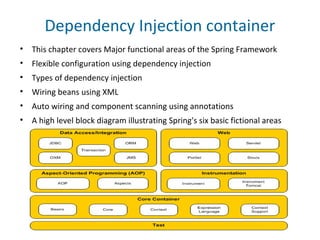
Dependency Injection container
• This chapter covers Major functional areas of the Spring Framework
• Flexible configuration using dependency injection
• Types of dependency injection
• Wiring beans using XML
• Auto wiring and component scanning using annotations
• A high level block diagram illustrating Spring's six basic fictional areas
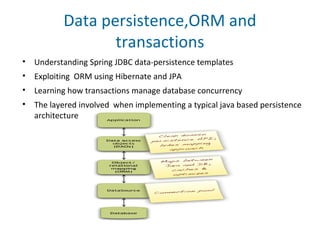
Data persistence,ORM and
transactions
• Understanding Spring JDBC data-persistence templates
• Exploiting ORM using Hibernate and JPA
• Learning how transactions manage database concurrency
• The layered involved when implementing a typical java based persistence
architecture
Building web application with Spring
MVC
• Creating your first Spring Web MVC application
• Serving and processing forms
• Configuring Spring Web MVC
• Spring Mobile technology preview
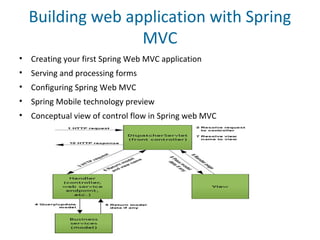
• Conceptual view of control flow in Spring web MVC
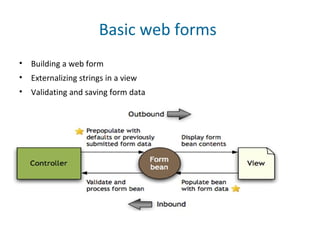
Basic web forms
• Building a web form
• Externalizing strings in a view
• Validating and saving form data
Enhancing Spring MVC applications
with web flow
• An introduction to Spring Web Flow
• Building a Spring soccer demo application
• Using action classes
• Working with form data-binding and validation
• Understanding flow and state inheritance
• Securing web flows
Authenticating Users
• Implementing user authentication with Spring Security
• Customizing a login page via Hibernate
• Using password hashing ,salting,and auto authentication
Authorizing user requests
• Implementing authorization using spring security
• Using authentication levels,roles and permissions
• Establishing access control list
Communicating with users and
customers
• Creating customer feedback forms with email response
• Scheduling asynchronous background email tasks
• Enabling secure mailing list subscriptions
• Publishing RSS news feeds
Creating a rich-text comment engine
• Enabling user comments
• Supporting article delivery
• Including rich-text editing
Integration testing
• Maven configuration for Spring Integration testing
• Writing transactional happy-path tests
• Creating exception and performance tests
Building a configuration management
database
• Creating a configuration database using Spring Data Neo4j
• Enabling REST web services using JSON and XML
• Invoking web services using the Maven deployment plug-in
• Accessing Git Hub using Spring Social and OAuth 2 authorization
• Using Spring security to encrypt Git Hub access tokens
Building an article delivery engine
• Building an article repository
• Enabling web upload and article display
• Using a MongoDB data base
Enterprise integration
• Shared database integration using Spring Data JPA
• Integrating web services with Spring Data REST
• Messaging via Spring Integration with RabbitMQ and Java Mail
Creating a Spring-based “site-up”
framework
• Creating a circuit-breaker template
• Managing the circuit breaker through JMX
• Enabling Interceptors and supporting AOP configuration
• Establishing a custom name space
• Supporting annotation configuration

Spring In Practice

  • 1.
    Spring In Practice Mr.Saroop Lakkaraju
  • 2.
    Introduction Dependency Injection container DataPersistence ,ORM and Transactions Building web applications with Spring Web MVC Basic web forms Enhancing Spring MVC applications with Web Flow Authenticating users Authorizing user requests Communicating with users and customers Creating a rich text comment engine Integration testing Building a configuration management database Building an article delivery engine Enterprise integration Creating a Spring based “site-up” frame work
  • 3.
    Dependency Injection container •This chapter covers Major functional areas of the Spring Framework • Flexible configuration using dependency injection • Types of dependency injection • Wiring beans using XML • Auto wiring and component scanning using annotations • A high level block diagram illustrating Spring's six basic fictional areas
  • 4.
    Data persistence,ORM and transactions •Understanding Spring JDBC data-persistence templates • Exploiting ORM using Hibernate and JPA • Learning how transactions manage database concurrency • The layered involved when implementing a typical java based persistence architecture
  • 5.
    Building web applicationwith Spring MVC • Creating your first Spring Web MVC application • Serving and processing forms • Configuring Spring Web MVC • Spring Mobile technology preview • Conceptual view of control flow in Spring web MVC
  • 6.
    Basic web forms •Building a web form • Externalizing strings in a view • Validating and saving form data
  • 7.
    Enhancing Spring MVCapplications with web flow • An introduction to Spring Web Flow • Building a Spring soccer demo application • Using action classes • Working with form data-binding and validation • Understanding flow and state inheritance • Securing web flows
  • 8.
    Authenticating Users • Implementinguser authentication with Spring Security • Customizing a login page via Hibernate • Using password hashing ,salting,and auto authentication
  • 9.
    Authorizing user requests •Implementing authorization using spring security • Using authentication levels,roles and permissions • Establishing access control list
  • 10.
    Communicating with usersand customers • Creating customer feedback forms with email response • Scheduling asynchronous background email tasks • Enabling secure mailing list subscriptions • Publishing RSS news feeds
  • 11.
    Creating a rich-textcomment engine • Enabling user comments • Supporting article delivery • Including rich-text editing
  • 12.
    Integration testing • Mavenconfiguration for Spring Integration testing • Writing transactional happy-path tests • Creating exception and performance tests
  • 13.
    Building a configurationmanagement database • Creating a configuration database using Spring Data Neo4j • Enabling REST web services using JSON and XML • Invoking web services using the Maven deployment plug-in • Accessing Git Hub using Spring Social and OAuth 2 authorization • Using Spring security to encrypt Git Hub access tokens
  • 14.
    Building an articledelivery engine • Building an article repository • Enabling web upload and article display • Using a MongoDB data base
  • 15.
    Enterprise integration • Shareddatabase integration using Spring Data JPA • Integrating web services with Spring Data REST • Messaging via Spring Integration with RabbitMQ and Java Mail
  • 16.
    Creating a Spring-based“site-up” framework • Creating a circuit-breaker template • Managing the circuit breaker through JMX • Enabling Interceptors and supporting AOP configuration • Establishing a custom name space • Supporting annotation configuration