COMMONEDITING
MISTAKESIN
DISSERTATIONS&HOW
TOAVOIDTHEM
Quick Assignment Hub
INTRODUCTION
Editing is a crucial step in the dissertation process that significantly impacts
the clarity, quality, and professionalism of your final submission. Many
students underestimate how important thorough editing is, often focusing
only on spelling or grammar. However, common mistakes such as
inconsistent formatting, unclear arguments, and citation errors can
undermine even the best research. This presentation highlights the most
frequent editing errors found in dissertations and offers practical strategies
to avoid them, helping you produce a polished, credible academic work.
01.
02.
OVERLOOKING
STRUCTURAL ISSUES
One of the most common editing mistakes is neglecting
the overall structure of the dissertation. This includes poor
organization of chapters, unclear transitions between
sections, and a lack of logical flow. A well-structured
dissertation guides the reader through your arguments
smoothly and makes your research easier to understand.
To avoid this mistake, review your outline carefully and
ensure each chapter and section has a clear purpose that
supports your thesis.
Studio Shodwe
IGNORING CLARITY AND
CONCISENESS
Academic writing should be clear and concise. Many
dissertations suffer from overly complex sentences, jargon-
heavy language, or repetitive explanations. Such writing can
confuse readers and dilute your key points. During editing,
focus on simplifying your language without sacrificing
accuracy. Remove redundant phrases and break down long
sentences to improve readability and maintain the reader’s
interest.
03.
04.
INCONSISTENT
FORMATTING AND STYLE
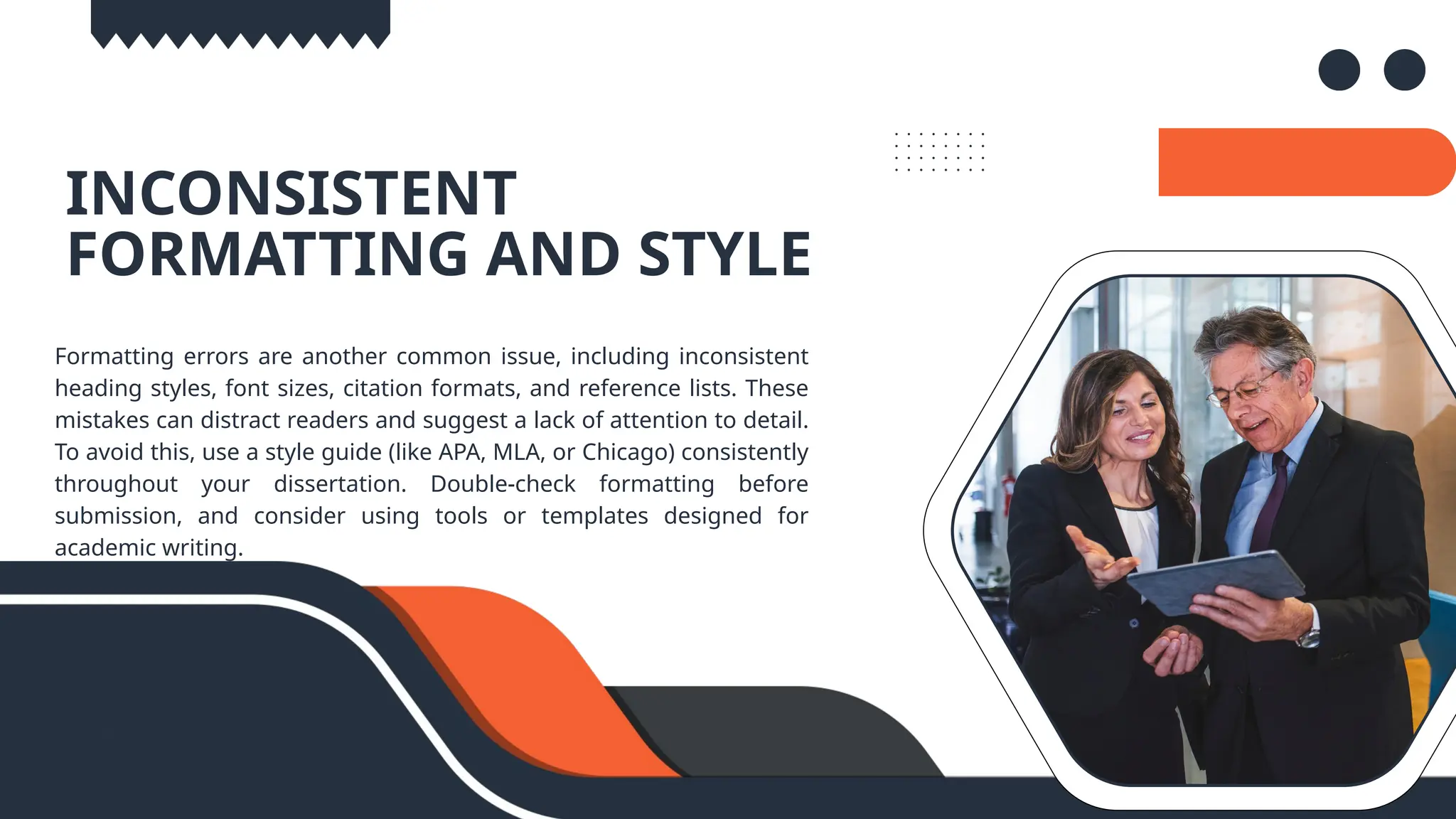
Formatting errors are another common issue, including inconsistent
heading styles, font sizes, citation formats, and reference lists. These
mistakes can distract readers and suggest a lack of attention to detail.
To avoid this, use a style guide (like APA, MLA, or Chicago) consistently
throughout your dissertation. Double-check formatting before
submission, and consider using tools or templates designed for
academic writing.
05.
CITATION AND
REFERENCING
ERRORS
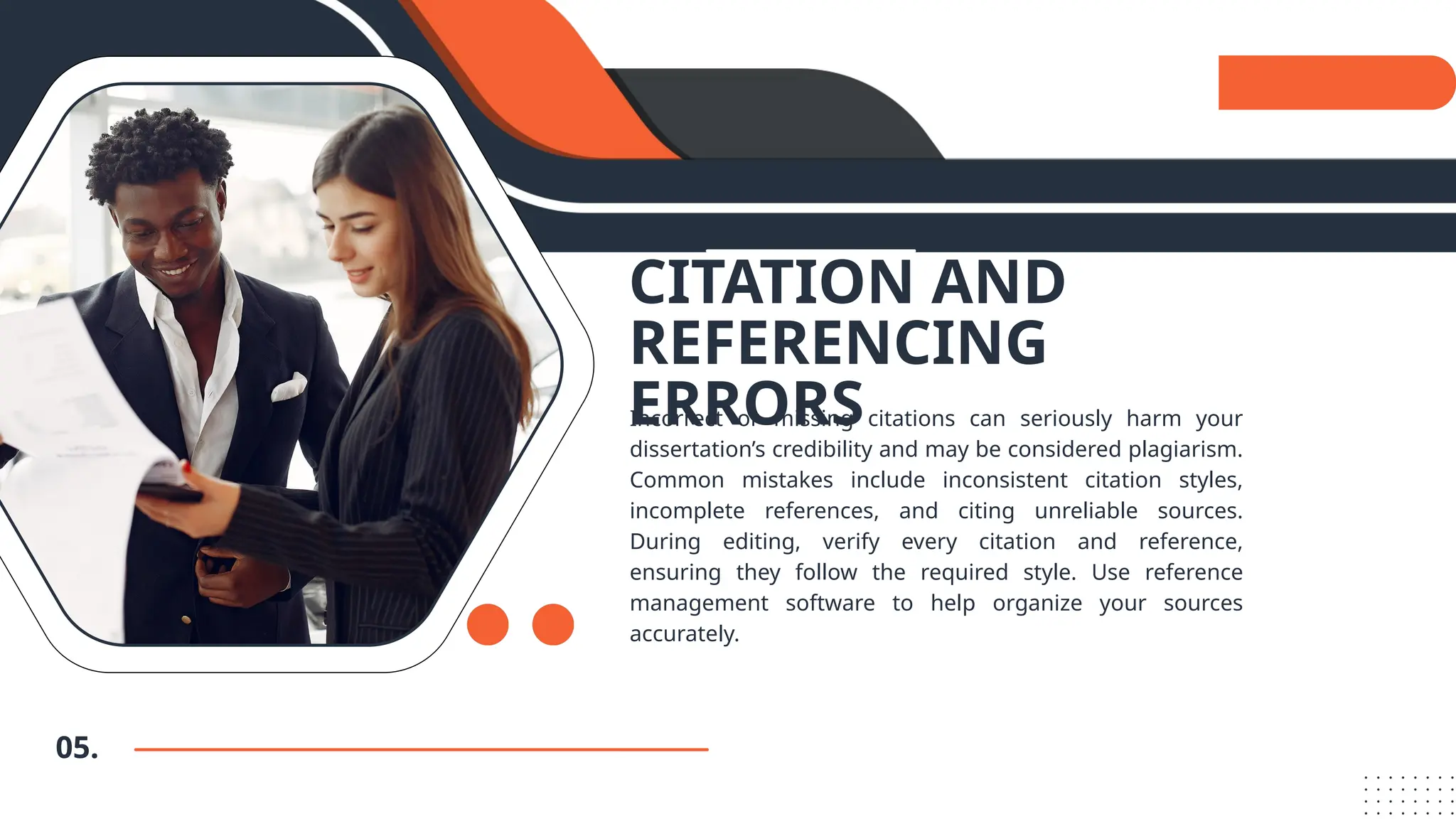
Incorrect or missing citations can seriously harm your
dissertation’s credibility and may be considered plagiarism.
Common mistakes include inconsistent citation styles,
incomplete references, and citing unreliable sources.
During editing, verify every citation and reference,
ensuring they follow the required style. Use reference
management software to help organize your sources
accurately.
06..
NEGLECTING PROOFREADING
FOR GRAMMAR AND
SPELLING
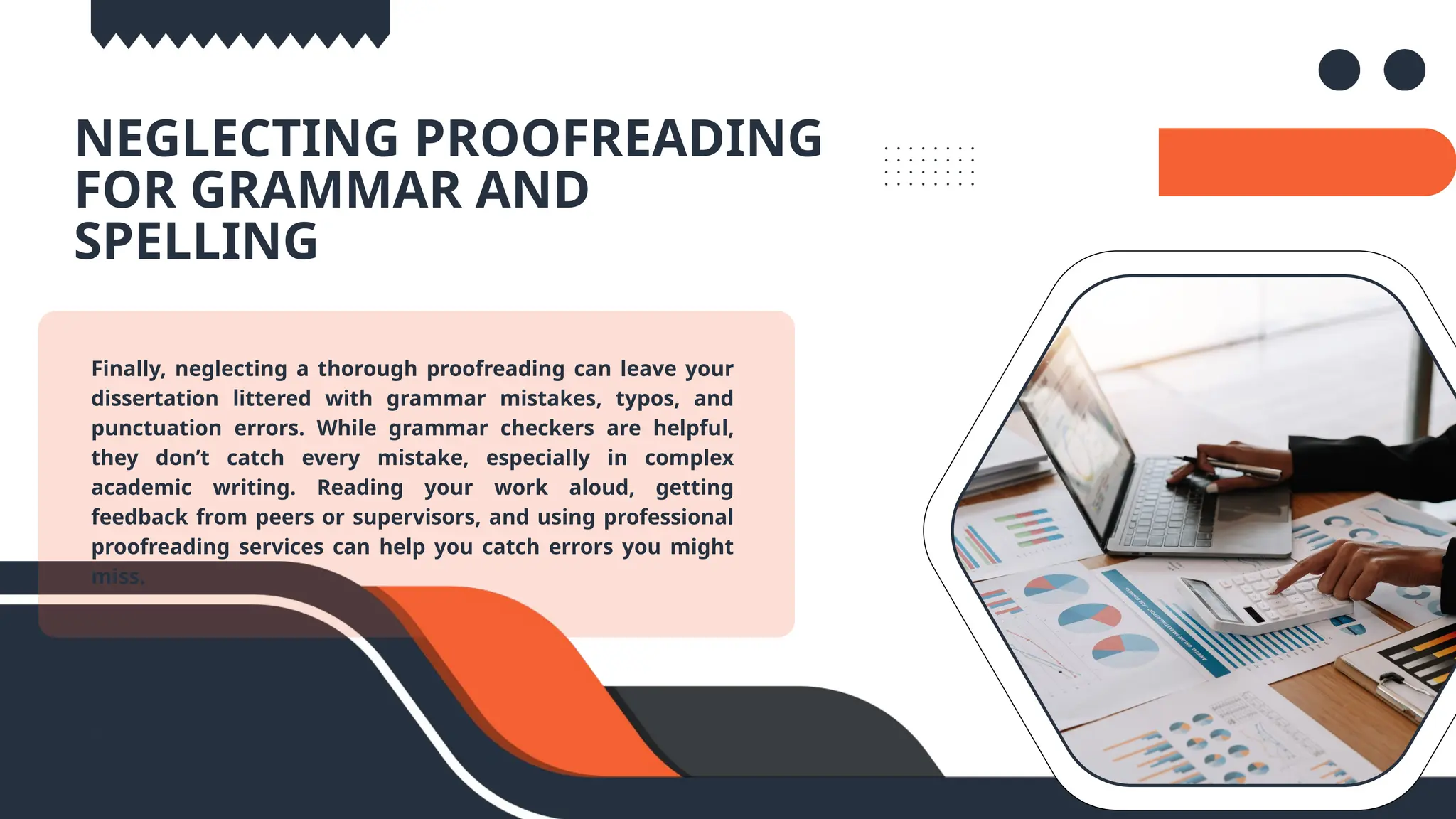
Finally, neglecting a thorough proofreading can leave your
dissertation littered with grammar mistakes, typos, and
punctuation errors. While grammar checkers are helpful,
they don’t catch every mistake, especially in complex
academic writing. Reading your work aloud, getting
feedback from peers or supervisors, and using professional
proofreading services can help you catch errors you might
miss.
07.
CONCLUSION
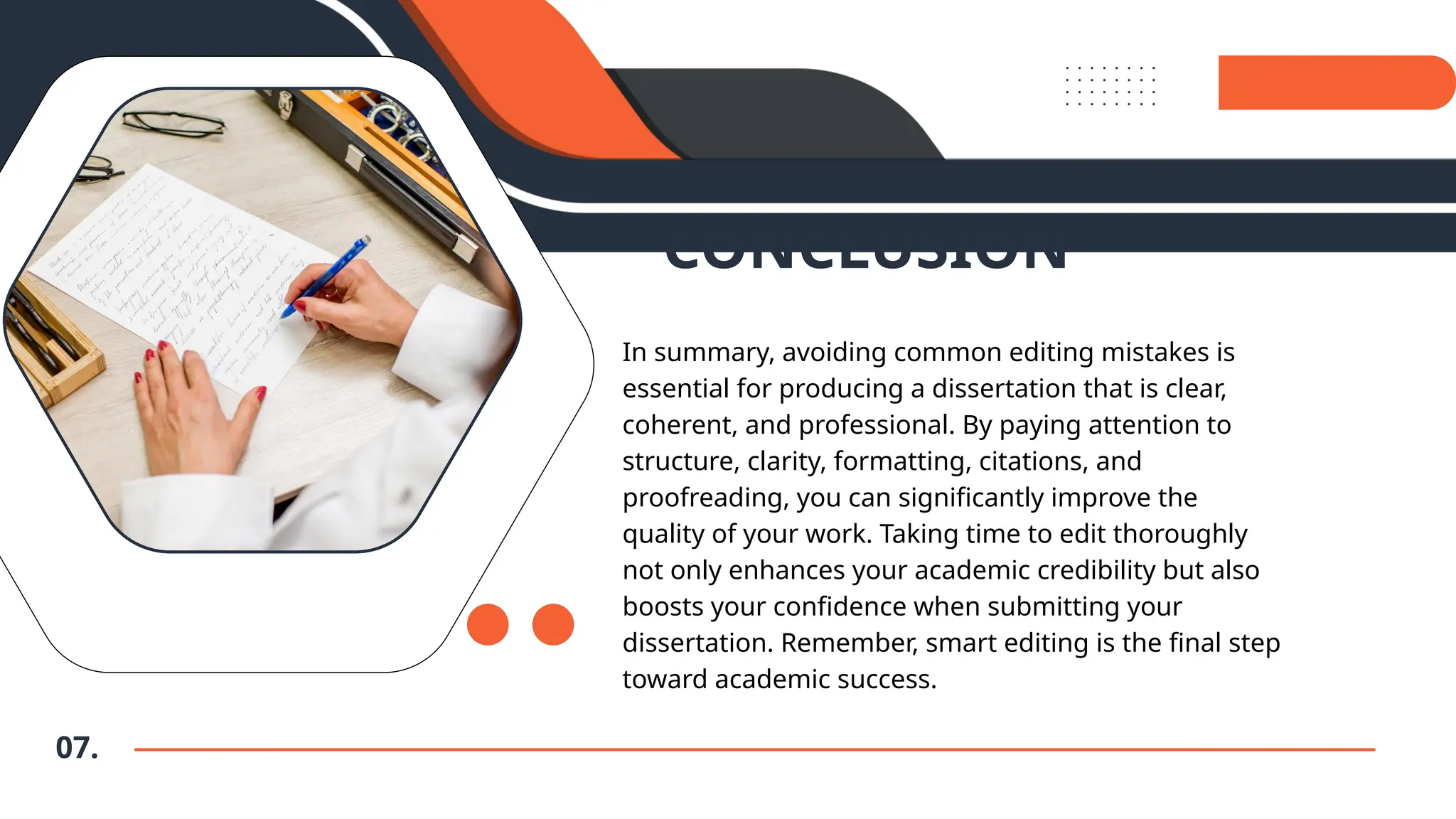
In summary, avoiding common editing mistakes is
essential for producing a dissertation that is clear,
coherent, and professional. By paying attention to
structure, clarity, formatting, citations, and
proofreading, you can significantly improve the
quality of your work. Taking time to edit thoroughly
not only enhances your academic credibility but also
boosts your confidence when submitting your
dissertation. Remember, smart editing is the final step
toward academic success.
09.
THANK
YOU
+44 7380328080
www.quickassignmenthub.com
help@quickassignmenthub.com

Spotlight on Editing: Avoiding Common Dissertation Pitfalls

  • 1.
  • 2.
    INTRODUCTION Editing is acrucial step in the dissertation process that significantly impacts the clarity, quality, and professionalism of your final submission. Many students underestimate how important thorough editing is, often focusing only on spelling or grammar. However, common mistakes such as inconsistent formatting, unclear arguments, and citation errors can undermine even the best research. This presentation highlights the most frequent editing errors found in dissertations and offers practical strategies to avoid them, helping you produce a polished, credible academic work. 01.
  • 3.
    02. OVERLOOKING STRUCTURAL ISSUES One ofthe most common editing mistakes is neglecting the overall structure of the dissertation. This includes poor organization of chapters, unclear transitions between sections, and a lack of logical flow. A well-structured dissertation guides the reader through your arguments smoothly and makes your research easier to understand. To avoid this mistake, review your outline carefully and ensure each chapter and section has a clear purpose that supports your thesis. Studio Shodwe
  • 4.
    IGNORING CLARITY AND CONCISENESS Academicwriting should be clear and concise. Many dissertations suffer from overly complex sentences, jargon- heavy language, or repetitive explanations. Such writing can confuse readers and dilute your key points. During editing, focus on simplifying your language without sacrificing accuracy. Remove redundant phrases and break down long sentences to improve readability and maintain the reader’s interest. 03.
  • 5.
    04. INCONSISTENT FORMATTING AND STYLE Formattingerrors are another common issue, including inconsistent heading styles, font sizes, citation formats, and reference lists. These mistakes can distract readers and suggest a lack of attention to detail. To avoid this, use a style guide (like APA, MLA, or Chicago) consistently throughout your dissertation. Double-check formatting before submission, and consider using tools or templates designed for academic writing.
  • 6.
    05. CITATION AND REFERENCING ERRORS Incorrect ormissing citations can seriously harm your dissertation’s credibility and may be considered plagiarism. Common mistakes include inconsistent citation styles, incomplete references, and citing unreliable sources. During editing, verify every citation and reference, ensuring they follow the required style. Use reference management software to help organize your sources accurately.
  • 7.
    06.. NEGLECTING PROOFREADING FOR GRAMMARAND SPELLING Finally, neglecting a thorough proofreading can leave your dissertation littered with grammar mistakes, typos, and punctuation errors. While grammar checkers are helpful, they don’t catch every mistake, especially in complex academic writing. Reading your work aloud, getting feedback from peers or supervisors, and using professional proofreading services can help you catch errors you might miss.
  • 8.
    07. CONCLUSION In summary, avoidingcommon editing mistakes is essential for producing a dissertation that is clear, coherent, and professional. By paying attention to structure, clarity, formatting, citations, and proofreading, you can significantly improve the quality of your work. Taking time to edit thoroughly not only enhances your academic credibility but also boosts your confidence when submitting your dissertation. Remember, smart editing is the final step toward academic success.
  • 9.