THE SPORTS
EDUCATION MODEL
Presented by: Jonathan Rice, Austin Caster,
Jordan Musbach, Tom Kowalski, Cory O’Neil
Key components
 Physical Education/Sports Education
 Intramural Sports
 Interscholastic Athletics
Seven Characteristics of Sport
Education
 Sports education involves seasons rather than
units
 Students quickly become members of teams
 The schedule for competition is formal
 There is a major accumulating event
 The sport is recognized and the stats are
recorded
 Entertainment is included to provide
excitement, meaning and social interaction.
 Students become involved.
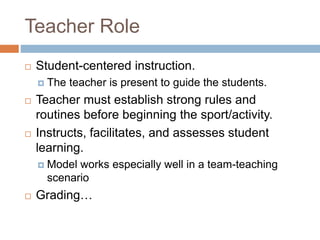
Teacher Role
 Student-centered instruction.
 The teacher is present to guide the students.
 Teacher must establish strong rules and
routines before beginning the sport/activity.
 Instructs, facilitates, and assesses student
learning.
 Model works especially well in a team-teaching
scenario
 Grading…
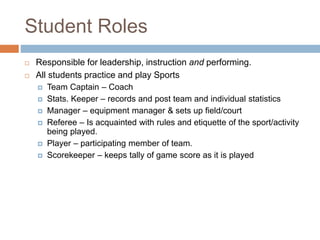
Student Roles
 Responsible for leadership, instruction and performing.
 All students practice and play Sports
 Team Captain – Coach
 Stats. Keeper – records and post team and individual statistics
 Manager – equipment manager & sets up field/court
 Referee – Is acquainted with rules and etiquette of the sport/activity
being played.
 Player – participating member of team.
 Scorekeeper – keeps tally of game score as it is played
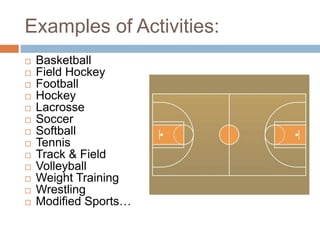
Examples of Activities:
 Basketball
 Field Hockey
 Football
 Hockey
 Lacrosse
 Soccer
 Softball
 Tennis
 Track & Field
 Volleyball
 Weight Training
 Wrestling
 Modified Sports…
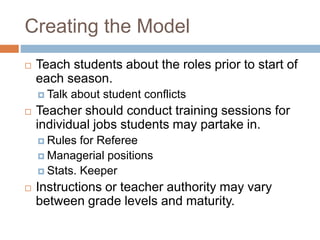
Creating the Model
 Teach students about the roles prior to start of
each season.
 Talk about student conflicts
 Teacher should conduct training sessions for
individual jobs students may partake in.
 Rules for Referee
 Managerial positions
 Stats. Keeper
 Instructions or teacher authority may vary
between grade levels and maturity.
Creating the Model
 Make necessary modifications to rules and
competition format
 Equality – all team members get to play the
same amount of time.
 Balanced teams: gender, ability, behavior, etc.
Pros.
 Positive sport
experience
 Learns values of
sports
 Deferred Goals
 Teamwork
 Loyalty
 Commitment
 Perseverance
 Dedication
 Concern for
others
 Socializing
 Leadership Skills
 Participation
 Confidence to
play in the sport
 Knowledge and
Enthusiasm to
further pursue the
sport
 Fun
Cons.
 Student’s biases
 Requires maturity
and responsibility
 Conflicting Schedules
 Different levels of
seriousness.
Sport Education Sample
“Season”
 Day 1
 Teacher begins by discussing the rules, etiquette,
strategies and roles of the sport.
 Handouts covering the rules, etiquette, strategies and
roles are distributed.
 Captains are announced
 The rest of the team rosters are announced.
 Usually determined by the teacher prior to class.
 The class breaks up into teams and determine
roles.
Sport Education Sample
“Season”
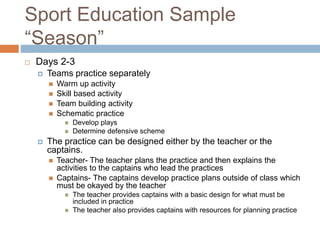
 Days 2-3
 Teams practice separately
 Warm up activity
 Skill based activity
 Team building activity
 Schematic practice
 Develop plays
 Determine defensive scheme
 The practice can be designed either by the teacher or the
captains.
 Teacher- The teacher plans the practice and then explains the
activities to the captains who lead the practices
 Captains- The captains develop practice plans outside of class which
must be okayed by the teacher
 The teacher provides captains with a basic design for what must be
included in practice
 The teacher also provides captains with resources for planning practice
Sport Education Sample
“Season”
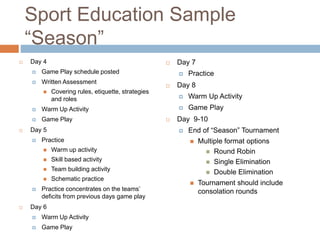
 Day 4
 Game Play schedule posted
 Written Assessment
 Covering rules, etiquette, strategies
and roles
 Warm Up Activity
 Game Play
 Day 5
 Practice
 Warm up activity
 Skill based activity
 Team building activity
 Schematic practice
 Practice concentrates on the teams’
deficits from previous days game play
 Day 6
 Warm Up Activity
 Game Play
 Day 7
 Practice
 Day 8
 Warm Up Activity
 Game Play
 Day 9-10
 End of “Season” Tournament
 Multiple format options
 Round Robin
 Single Elimination
 Double Elimination
 Tournament should include
consolation rounds
Assessment
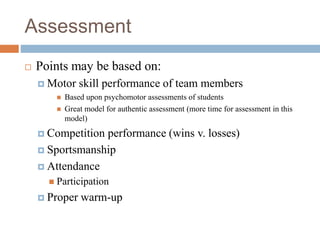
 Points may be based on:
 Motor skill performance of team members
 Based upon psychomotor assessments of students
 Great model for authentic assessment (more time for assessment in this
model)
 Competition performance (wins v. losses)
 Sportsmanship
 Attendance
 Participation
 Proper warm-up
Works Cited
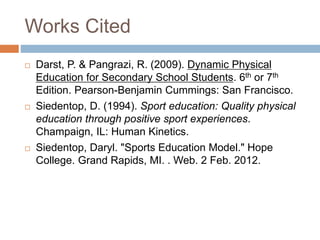
 Darst, P. & Pangrazi, R. (2009). Dynamic Physical
Education for Secondary School Students. 6th or 7th
Edition. Pearson-Benjamin Cummings: San Francisco.
 Siedentop, D. (1994). Sport education: Quality physical
education through positive sport experiences.
Champaign, IL: Human Kinetics.
 Siedentop, Daryl. "Sports Education Model." Hope
College. Grand Rapids, MI. . Web. 2 Feb. 2012.

SportEducationmodelStudentWork.ppt

  • 1.
    THE SPORTS EDUCATION MODEL Presentedby: Jonathan Rice, Austin Caster, Jordan Musbach, Tom Kowalski, Cory O’Neil
  • 2.
    Key components  PhysicalEducation/Sports Education  Intramural Sports  Interscholastic Athletics
  • 3.
    Seven Characteristics ofSport Education  Sports education involves seasons rather than units  Students quickly become members of teams  The schedule for competition is formal  There is a major accumulating event  The sport is recognized and the stats are recorded  Entertainment is included to provide excitement, meaning and social interaction.  Students become involved.
  • 4.
    Teacher Role  Student-centeredinstruction.  The teacher is present to guide the students.  Teacher must establish strong rules and routines before beginning the sport/activity.  Instructs, facilitates, and assesses student learning.  Model works especially well in a team-teaching scenario  Grading…
  • 5.
    Student Roles  Responsiblefor leadership, instruction and performing.  All students practice and play Sports  Team Captain – Coach  Stats. Keeper – records and post team and individual statistics  Manager – equipment manager & sets up field/court  Referee – Is acquainted with rules and etiquette of the sport/activity being played.  Player – participating member of team.  Scorekeeper – keeps tally of game score as it is played
  • 6.
    Examples of Activities: Basketball  Field Hockey  Football  Hockey  Lacrosse  Soccer  Softball  Tennis  Track & Field  Volleyball  Weight Training  Wrestling  Modified Sports…
  • 7.
    Creating the Model Teach students about the roles prior to start of each season.  Talk about student conflicts  Teacher should conduct training sessions for individual jobs students may partake in.  Rules for Referee  Managerial positions  Stats. Keeper  Instructions or teacher authority may vary between grade levels and maturity.
  • 8.
    Creating the Model Make necessary modifications to rules and competition format  Equality – all team members get to play the same amount of time.  Balanced teams: gender, ability, behavior, etc.
  • 9.
    Pros.  Positive sport experience Learns values of sports  Deferred Goals  Teamwork  Loyalty  Commitment  Perseverance  Dedication  Concern for others  Socializing  Leadership Skills  Participation  Confidence to play in the sport  Knowledge and Enthusiasm to further pursue the sport  Fun
  • 10.
    Cons.  Student’s biases Requires maturity and responsibility  Conflicting Schedules  Different levels of seriousness.
  • 11.
    Sport Education Sample “Season” Day 1  Teacher begins by discussing the rules, etiquette, strategies and roles of the sport.  Handouts covering the rules, etiquette, strategies and roles are distributed.  Captains are announced  The rest of the team rosters are announced.  Usually determined by the teacher prior to class.  The class breaks up into teams and determine roles.
  • 12.
    Sport Education Sample “Season” Days 2-3  Teams practice separately  Warm up activity  Skill based activity  Team building activity  Schematic practice  Develop plays  Determine defensive scheme  The practice can be designed either by the teacher or the captains.  Teacher- The teacher plans the practice and then explains the activities to the captains who lead the practices  Captains- The captains develop practice plans outside of class which must be okayed by the teacher  The teacher provides captains with a basic design for what must be included in practice  The teacher also provides captains with resources for planning practice
  • 13.
    Sport Education Sample “Season” Day 4  Game Play schedule posted  Written Assessment  Covering rules, etiquette, strategies and roles  Warm Up Activity  Game Play  Day 5  Practice  Warm up activity  Skill based activity  Team building activity  Schematic practice  Practice concentrates on the teams’ deficits from previous days game play  Day 6  Warm Up Activity  Game Play  Day 7  Practice  Day 8  Warm Up Activity  Game Play  Day 9-10  End of “Season” Tournament  Multiple format options  Round Robin  Single Elimination  Double Elimination  Tournament should include consolation rounds
  • 14.
    Assessment  Points maybe based on:  Motor skill performance of team members  Based upon psychomotor assessments of students  Great model for authentic assessment (more time for assessment in this model)  Competition performance (wins v. losses)  Sportsmanship  Attendance  Participation  Proper warm-up
  • 15.
    Works Cited  Darst,P. & Pangrazi, R. (2009). Dynamic Physical Education for Secondary School Students. 6th or 7th Edition. Pearson-Benjamin Cummings: San Francisco.  Siedentop, D. (1994). Sport education: Quality physical education through positive sport experiences. Champaign, IL: Human Kinetics.  Siedentop, Daryl. "Sports Education Model." Hope College. Grand Rapids, MI. . Web. 2 Feb. 2012.