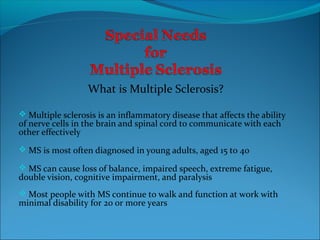
What is Multiple Sclerosis?

 Multiple sclerosis is an inflammatory disease that affects the ability
of nerve cells in the brain and spinal cord to communicate with each
other effectively
 MS is most often diagnosed in young adults, aged 15 to 40

 MS can cause loss of balance, impaired speech, extreme fatigue,
double vision, cognitive impairment, and paralysis
 Most people with MS continue to walk and function at work with
minimal disability for 20 or more years
 
                                                                  :
                                                                   

 MS strikes 133 out of every 100,000 people in Canada

 Canadians have one of the highest rates of multiple sclerosis
in the world
 MS is the most common neurological disease affecting young
adults in Canada
 Every day, three more people in Canada are diagnosed with
MS


To Find Out Impact on Employment

 Are your symptoms interfering with your ability to
fulfill your job duties and affecting your work
performance? If so, how?
 Are there things you can do to manage your
symptoms without giving up your job?
 Can your doctor or another health professional,
such as an occupational therapist, help you manage
symptoms?
 Is it time to disclose to your employer that you have
MS and need workplace accommodation to enable you
to do your job?
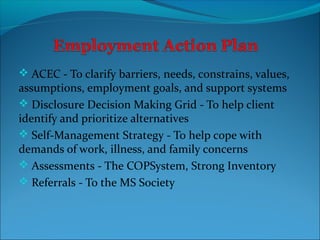
 ACEC - To clarify barriers, needs, constrains, values,
assumptions, employment goals, and support systems
 Disclosure Decision Making Grid - To help client
identify and prioritize alternatives
 Self-Management Strategy - To help cope with
demands of work, illness, and family concerns
 Assessments - The COPSystem, Strong Inventory
 Referrals - To the MS Society
Advantages of staying employed

 Financial security

 Keeping options open

 Provides stability

 Maintenance is easier than finding a new job
 Loss of benefits

 Inadequate coverage

 Long waiting period
                             Disclosing the diagnosis
Before you disclose any information about your MS or
symptoms to your employer or colleagues:
 Know your rights concerning disclosure
 Consider the possible consequences of making your
diagnosis public
 Learn about job accommodation – workplace changes
that make it easier for you to do your job
 Know your rights concerning accommodation
 Seek emotional support and technical advice from
people and organizations like the MS Society of Canada
 You have visible symptoms and feel some
explanation would be useful
 You have invisible symptoms that interfere with
your ability to do your job
 You want your supervisor and co-workers to know
what you are experiencing
 You anticipate that your condition may affect your
ability to do your job
 You anticipate that your condition may affect your
safety or the safety of others in the workplace
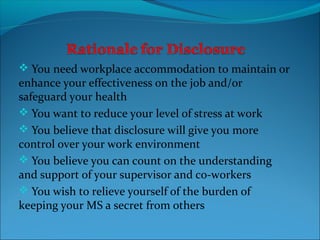
 You need workplace accommodation to maintain or
enhance your effectiveness on the job and/or
safeguard your health
 You want to reduce your level of stress at work
 You believe that disclosure will give you more
control over your work environment
 You believe you can count on the understanding
and support of your supervisor and co-workers
 You wish to relieve yourself of the burden of
keeping your MS a secret from others
 When MS affects your job performance, you have a
right to ask for accommodation
Accommodation is any change in your work
environment that gives you an equal opportunity to do
your job
Small accommodations can make a big difference to
your effectiveness on the job
More than half of all job accommodations cost less
than $500
 Modification of work schedule

 Modification of workstation

 Changes in workplace policies and procedures

 Transfer to another position in the organization

 Training for another position in the organization
 Medical personnel
     - family doctor
     - other health professions

 MS Society of Canada through their local chapter


     NEWLY DIAGNOSED:
   Information session called MS 101
 PERSONS WITH MS & THEIR FAMILIES:

 Short term counselling and referral
 Support and self-help groups
 Recreation and social programs (weekly schedule)
 Financial assistance (must meet criteria)
 MS Toronto Newsletter (monthly)
 Access to ASK MS Program
Multiple Sclerosis Society of Canada
          www.mssociety.ca

                AODA
              www.aoda.ca

                JOIN
              www.join.org

         Employment Equity Act
http://laws-lois.justice.gc.ca/eng/acts/E-
            5.401/index.html

Special Needs Ppp Final

  • 1.
    What is MultipleSclerosis?  Multiple sclerosis is an inflammatory disease that affects the ability of nerve cells in the brain and spinal cord to communicate with each other effectively  MS is most often diagnosed in young adults, aged 15 to 40  MS can cause loss of balance, impaired speech, extreme fatigue, double vision, cognitive impairment, and paralysis  Most people with MS continue to walk and function at work with minimal disability for 20 or more years
  • 2.
      :    MS strikes 133 out of every 100,000 people in Canada  Canadians have one of the highest rates of multiple sclerosis in the world  MS is the most common neurological disease affecting young adults in Canada  Every day, three more people in Canada are diagnosed with MS      
  • 3.
    To Find OutImpact on Employment  Are your symptoms interfering with your ability to fulfill your job duties and affecting your work performance? If so, how?  Are there things you can do to manage your symptoms without giving up your job?  Can your doctor or another health professional, such as an occupational therapist, help you manage symptoms?  Is it time to disclose to your employer that you have MS and need workplace accommodation to enable you to do your job?
  • 4.
     ACEC -To clarify barriers, needs, constrains, values, assumptions, employment goals, and support systems  Disclosure Decision Making Grid - To help client identify and prioritize alternatives  Self-Management Strategy - To help cope with demands of work, illness, and family concerns  Assessments - The COPSystem, Strong Inventory  Referrals - To the MS Society
  • 5.
    Advantages of staying employed  Financial security Keeping options open  Provides stability  Maintenance is easier than finding a new job
  • 6.
     Loss ofbenefits  Inadequate coverage  Long waiting period
  • 7.
                                 Disclosing the diagnosis Before you discloseany information about your MS or symptoms to your employer or colleagues:  Know your rights concerning disclosure  Consider the possible consequences of making your diagnosis public  Learn about job accommodation – workplace changes that make it easier for you to do your job  Know your rights concerning accommodation  Seek emotional support and technical advice from people and organizations like the MS Society of Canada
  • 8.
     You havevisible symptoms and feel some explanation would be useful  You have invisible symptoms that interfere with your ability to do your job  You want your supervisor and co-workers to know what you are experiencing  You anticipate that your condition may affect your ability to do your job  You anticipate that your condition may affect your safety or the safety of others in the workplace
  • 9.
     You needworkplace accommodation to maintain or enhance your effectiveness on the job and/or safeguard your health  You want to reduce your level of stress at work  You believe that disclosure will give you more control over your work environment  You believe you can count on the understanding and support of your supervisor and co-workers  You wish to relieve yourself of the burden of keeping your MS a secret from others
  • 11.
     When MSaffects your job performance, you have a right to ask for accommodation Accommodation is any change in your work environment that gives you an equal opportunity to do your job Small accommodations can make a big difference to your effectiveness on the job More than half of all job accommodations cost less than $500
  • 12.
     Modification ofwork schedule  Modification of workstation  Changes in workplace policies and procedures  Transfer to another position in the organization  Training for another position in the organization
  • 13.
     Medical personnel - family doctor - other health professions  MS Society of Canada through their local chapter NEWLY DIAGNOSED:  Information session called MS 101
  • 14.
     PERSONS WITHMS & THEIR FAMILIES:  Short term counselling and referral  Support and self-help groups  Recreation and social programs (weekly schedule)  Financial assistance (must meet criteria)  MS Toronto Newsletter (monthly)  Access to ASK MS Program
  • 15.
    Multiple Sclerosis Society of Canada www.mssociety.ca AODA www.aoda.ca JOIN www.join.org Employment Equity Act http://laws-lois.justice.gc.ca/eng/acts/E- 5.401/index.html