SOIL …………………………. AND YOU
AIMS
• To define the term soil and understand its process of
formation.
• To mention the components of soil.
• To explain the soil profile.
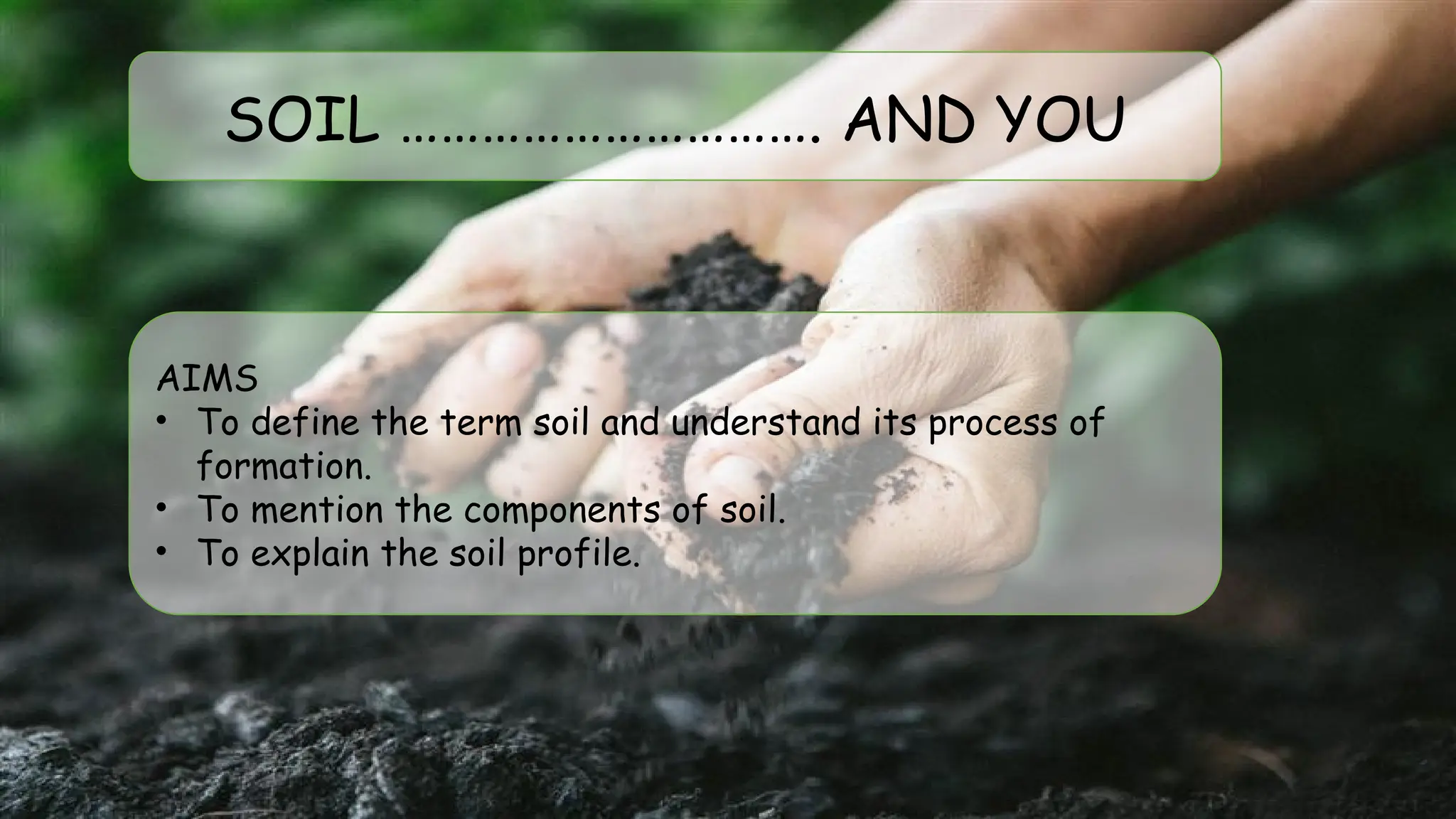
What does the term soil mean?
It is a mixture of organic and in organic materials
at the surface of the earth that can support plant
growth.
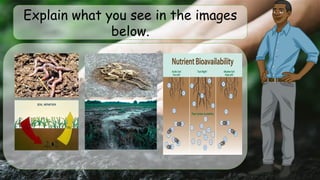
Explain what you see in the images
below.
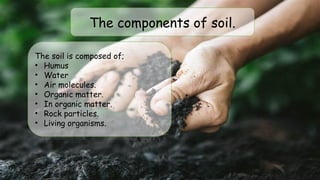
The soil is composed of;
• Humus
• Water
• Air molecules.
• Organic matter.
• In organic matter.
• Rock particles.
• Living organisms.
The components of soil.
Yes, we can now define soil and mention
what it comprises. But can we describe
how the soil actually forms?
Soil is formed after a rock experiences weathering.
It maybe be physical weathering such as exfoliation or chemical
weathering inform of oxidation.
These processes gradually break down a rock into fine particles.
This does not happen in a day though.
Elijah!!!!!!!!!!
Is the soil sub-divided
into different layers?
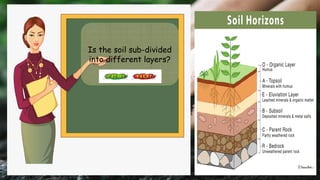
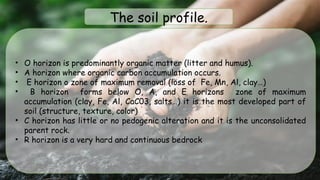
• O horizon is predominantly organic matter (litter and humus).
• A horizon where organic carbon accumulation occurs.
• E horizon o zone of maximum removal (loss of Fe, Mn, Al, clay…)
• B horizon forms below O, A, and E horizons zone of maximum
accumulation (clay, Fe, Al, CaC03, salts…) it is the most developed part of
soil (structure, texture, color)
• C horizon has little or no pedogenic alteration and it is the unconsolidated
parent rock.
• R horizon is a very hard and continuous bedrock
The soil profile.

soil and you.pptx definition, components and soil layers

  • 1.
    SOIL …………………………. ANDYOU AIMS • To define the term soil and understand its process of formation. • To mention the components of soil. • To explain the soil profile.
  • 2.
    What does theterm soil mean? It is a mixture of organic and in organic materials at the surface of the earth that can support plant growth.
  • 3.
    Explain what yousee in the images below.
  • 4.
    The soil iscomposed of; • Humus • Water • Air molecules. • Organic matter. • In organic matter. • Rock particles. • Living organisms. The components of soil.
  • 5.
    Yes, we cannow define soil and mention what it comprises. But can we describe how the soil actually forms? Soil is formed after a rock experiences weathering. It maybe be physical weathering such as exfoliation or chemical weathering inform of oxidation. These processes gradually break down a rock into fine particles. This does not happen in a day though. Elijah!!!!!!!!!!
  • 6.
    Is the soilsub-divided into different layers?
  • 7.
    • O horizonis predominantly organic matter (litter and humus). • A horizon where organic carbon accumulation occurs. • E horizon o zone of maximum removal (loss of Fe, Mn, Al, clay…) • B horizon forms below O, A, and E horizons zone of maximum accumulation (clay, Fe, Al, CaC03, salts…) it is the most developed part of soil (structure, texture, color) • C horizon has little or no pedogenic alteration and it is the unconsolidated parent rock. • R horizon is a very hard and continuous bedrock The soil profile.