SOFTWARE TESTING
MODELS
GRAPLABS - SOFTWARE TESTING & DIGITAL MARKETING TRAINING
INSTITUTE
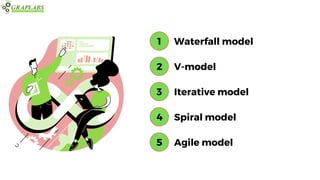
Waterfall model
1
V-model
2
Iterative model
3
Spiral model
4
Agile model
5
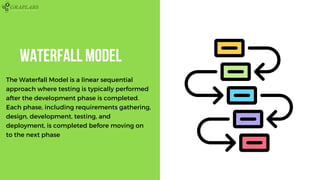
The Waterfall Model is a linear sequential
approach where testing is typically performed
after the development phase is completed.
Each phase, including requirements gathering,
design, development, testing, and
deployment, is completed before moving on
to the next phase
Waterfall model
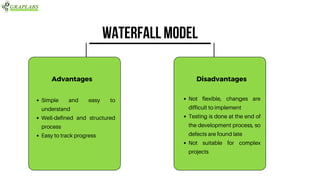
Advantages
Simple and easy to
understand
Well-defined and structured
process
Easy to track progress
Disadvantages
Not flexible, changes are
difficult to implement
Testing is done at the end of
the development process, so
defects are found late
Not suitable for complex
projects
Waterfall model
V-model
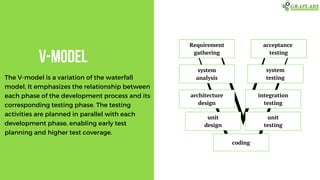
The V-model is a variation of the waterfall
model, It emphasizes the relationship between
each phase of the development process and its
corresponding testing phase. The testing
activities are planned in parallel with each
development phase, enabling early test
planning and higher test coverage.
system
analysis
architecture
design
unit
design
coding
unit
testing
integration
testing
system
testing
Requirement
gathering
acceptance
testing
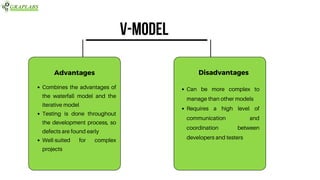
Advantages
Combines the advantages of
the waterfall model and the
iterative model
Testing is done throughout
the development process, so
defects are found early
Well-suited for complex
projects
Disadvantages
Can be more complex to
manage than other models
Requires a high level of
communication and
coordination between
developers and testers
V-model
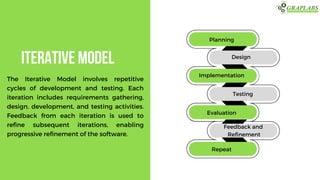
The Iterative Model involves repetitive
cycles of development and testing. Each
iteration includes requirements gathering,
design, development, and testing activities.
Feedback from each iteration is used to
refine subsequent iterations, enabling
progressive refinement of the software.
Iterative model
Planning
Design
Implementation
Testing
Evaluation
Feedback and
Refinement
Repeat
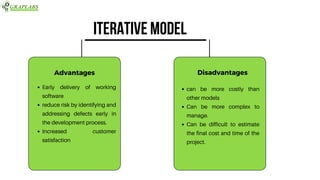
Advantages
Early delivery of working
software
reduce risk by identifying and
addressing defects early in
the development process.
Increased customer
satisfaction
Disadvantages
can be more costly than
other models
Can be more complex to
manage.
Can be difficult to estimate
the final cost and time of the
project.
Iterative model
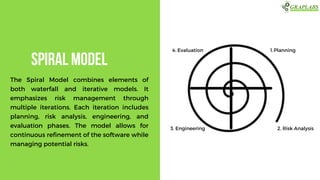
The Spiral Model combines elements of
both waterfall and iterative models. It
emphasizes risk management through
multiple iterations. Each iteration includes
planning, risk analysis, engineering, and
evaluation phases. The model allows for
continuous refinement of the software while
managing potential risks.
Spiral model
Planning
1.
2. Risk Analysis
3. Engineering
4. Evaluation
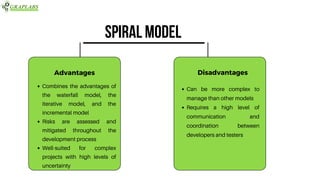
Advantages
Combines the advantages of
the waterfall model, the
iterative model, and the
incremental model
Risks are assessed and
mitigated throughout the
development process
Well-suited for complex
projects with high levels of
uncertainty
Disadvantages
Can be more complex to
manage than other models
Requires a high level of
communication and
coordination between
developers and testers
Spiral model
Agile testing models, such as Scrum or
Kanban, are iterative and incremental
development approaches. Testing is an
integral part of each iteration or sprint, and
testing activities are conducted concurrently
with development. Agile models emphasize
frequent communication, collaboration, and
adaptive planning.
Agile model
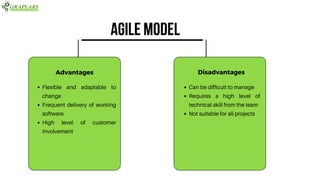
Advantages
Flexible and adaptable to
change
Frequent delivery of working
software
High level of customer
involvement
Disadvantages
Can be difficult to manage
Requires a high level of
technical skill from the team
Not suitable for all projects
Agile model
tt
FOR MORE INFORMATION
82888-86448
info@graplabs.com
www.graplabs.com

Software Testing Models - Graplabs.pdf

  • 1.
    SOFTWARE TESTING MODELS GRAPLABS -SOFTWARE TESTING & DIGITAL MARKETING TRAINING INSTITUTE
  • 2.
  • 3.
    The Waterfall Modelis a linear sequential approach where testing is typically performed after the development phase is completed. Each phase, including requirements gathering, design, development, testing, and deployment, is completed before moving on to the next phase Waterfall model
  • 4.
    Advantages Simple and easyto understand Well-defined and structured process Easy to track progress Disadvantages Not flexible, changes are difficult to implement Testing is done at the end of the development process, so defects are found late Not suitable for complex projects Waterfall model
  • 5.
    V-model The V-model isa variation of the waterfall model, It emphasizes the relationship between each phase of the development process and its corresponding testing phase. The testing activities are planned in parallel with each development phase, enabling early test planning and higher test coverage. system analysis architecture design unit design coding unit testing integration testing system testing Requirement gathering acceptance testing
  • 6.
    Advantages Combines the advantagesof the waterfall model and the iterative model Testing is done throughout the development process, so defects are found early Well-suited for complex projects Disadvantages Can be more complex to manage than other models Requires a high level of communication and coordination between developers and testers V-model
  • 7.
    The Iterative Modelinvolves repetitive cycles of development and testing. Each iteration includes requirements gathering, design, development, and testing activities. Feedback from each iteration is used to refine subsequent iterations, enabling progressive refinement of the software. Iterative model Planning Design Implementation Testing Evaluation Feedback and Refinement Repeat
  • 8.
    Advantages Early delivery ofworking software reduce risk by identifying and addressing defects early in the development process. Increased customer satisfaction Disadvantages can be more costly than other models Can be more complex to manage. Can be difficult to estimate the final cost and time of the project. Iterative model
  • 9.
    The Spiral Modelcombines elements of both waterfall and iterative models. It emphasizes risk management through multiple iterations. Each iteration includes planning, risk analysis, engineering, and evaluation phases. The model allows for continuous refinement of the software while managing potential risks. Spiral model Planning 1. 2. Risk Analysis 3. Engineering 4. Evaluation
  • 10.
    Advantages Combines the advantagesof the waterfall model, the iterative model, and the incremental model Risks are assessed and mitigated throughout the development process Well-suited for complex projects with high levels of uncertainty Disadvantages Can be more complex to manage than other models Requires a high level of communication and coordination between developers and testers Spiral model
  • 11.
    Agile testing models,such as Scrum or Kanban, are iterative and incremental development approaches. Testing is an integral part of each iteration or sprint, and testing activities are conducted concurrently with development. Agile models emphasize frequent communication, collaboration, and adaptive planning. Agile model
  • 12.
    Advantages Flexible and adaptableto change Frequent delivery of working software High level of customer involvement Disadvantages Can be difficult to manage Requires a high level of technical skill from the team Not suitable for all projects Agile model
  • 13.