Software Life Cycle
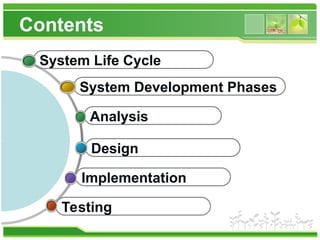
Contents
System Development Phases
Analysis
Design
Implementation
Testing
System Life Cycle
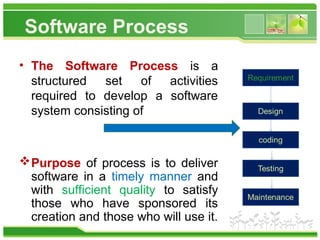
Software Process
• The Software Process is a
structured set of activities
required to develop a software
system consisting of
Purpose of process is to deliver
software in a timely manner and
with sufficient quality to satisfy
those who have sponsored its
creation and those who will use it.
Software Development Model
Also called software process model.
A Process Model describes the sequence of
phases for the entire lifetime of a Software
Development.
Therefore it is sometimes also called Software
Development Life Cycle.
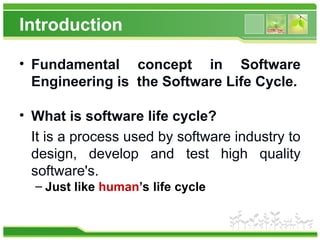
Introduction
• Fundamental concept in Software
Engineering is the Software Life Cycle.
• What is software life cycle?
It is a process used by software industry to
design, develop and test high quality
software's.
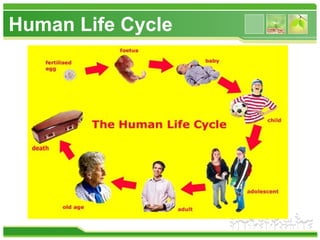
– Just like human’s life cycle
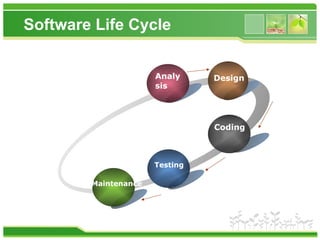
Software Life Cycle
Maintenance
Analy
sis
Design
Coding
Testing
Human Life Cycle
Software Products
• Software, when made for a specific requirement is
called software product.
• Types
– Generic - developed to be sold to a range of
different customers
• Examples – PC software such as editing, graphics
programs, project management tools; CAD software
– Custom- developed for a customer according to
their specification
• Examples – embedded control systems, air traffic
control software, traffic monitoring systems.
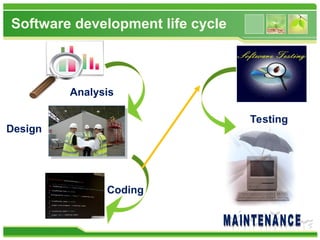
Software development life cycle
Analysis
Design
Coding
Testing
Analysis
• The process of identifying requirements,
current problems, timelines and Resources
costs
Analysis
• Define the user
• Define the needs
• Define the requirements
• Define the methods
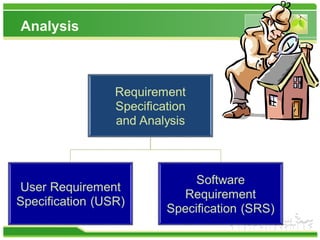
Analysis
Analysis
• User
Requirements
1. Easy to use.
2. Quality Product.
3. More Safe &
Secure product.
• Software
Requirements
1. Developing Software
2. Advance Tools &
Technique
Design
• The business of
finding a way to
meet the functional
requirements within
the specified
constraints using
the available
technology
Design
1. With described in detail, including screen
layouts, process diagrams and other
documentation.
2. The output of SRS is the input of design
phase.
• Two types of design -
 High Level Design (HLD)
Low Level Design (LLD)
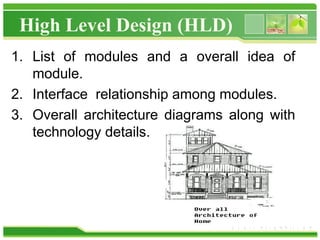
High Level Design (HLD)
1. List of modules and a overall idea of
module.
2. Interface relationship among modules.
3. Overall architecture diagrams along with
technology details.
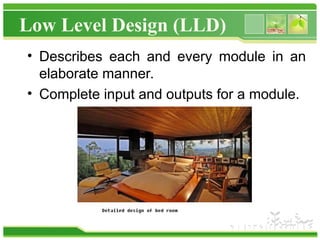
Low Level Design (LLD)
• Describes each and every module in an
elaborate manner.
• Complete input and outputs for a module.
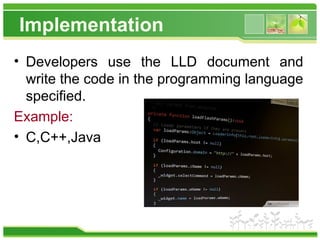
Implementation
• Developers use the LLD document and
write the code in the programming language
specified.
Example:
• C,C++,Java
Testing
• The testing process involves development
of a test plan, executing the plan and
documenting the test results.
Testing
–Black box testing (黑盒测试)
–White box testing (白盒测试)
Maintenance
• After the software is released and the
client starts using the software,
maintenance phase is started.
• Three things happen –
Bug fixing,
Upgrade,
Enhancement
Maintenance
• Bug fixing
Bugs arrived due to some untested scenarios.
• Upgrade
Upgrading the application to the newer
versions of the software.
• Enhancement
Adding some new features into the existing
software.
Software Engineering : Computer introduction for beginners

  • 1.
  • 2.
  • 3.
    Software Process • TheSoftware Process is a structured set of activities required to develop a software system consisting of Purpose of process is to deliver software in a timely manner and with sufficient quality to satisfy those who have sponsored its creation and those who will use it.
  • 4.
    Software Development Model Alsocalled software process model. A Process Model describes the sequence of phases for the entire lifetime of a Software Development. Therefore it is sometimes also called Software Development Life Cycle.
  • 5.
    Introduction • Fundamental conceptin Software Engineering is the Software Life Cycle. • What is software life cycle? It is a process used by software industry to design, develop and test high quality software's. – Just like human’s life cycle
  • 6.
  • 7.
  • 8.
    Software Products • Software,when made for a specific requirement is called software product. • Types – Generic - developed to be sold to a range of different customers • Examples – PC software such as editing, graphics programs, project management tools; CAD software – Custom- developed for a customer according to their specification • Examples – embedded control systems, air traffic control software, traffic monitoring systems.
  • 9.
    Software development lifecycle Analysis Design Coding Testing
  • 10.
    Analysis • The processof identifying requirements, current problems, timelines and Resources costs
  • 11.
    Analysis • Define theuser • Define the needs • Define the requirements • Define the methods
  • 12.
  • 13.
    Analysis • User Requirements 1. Easyto use. 2. Quality Product. 3. More Safe & Secure product. • Software Requirements 1. Developing Software 2. Advance Tools & Technique
  • 14.
    Design • The businessof finding a way to meet the functional requirements within the specified constraints using the available technology
  • 15.
    Design 1. With describedin detail, including screen layouts, process diagrams and other documentation. 2. The output of SRS is the input of design phase. • Two types of design -  High Level Design (HLD) Low Level Design (LLD)
  • 16.
    High Level Design(HLD) 1. List of modules and a overall idea of module. 2. Interface relationship among modules. 3. Overall architecture diagrams along with technology details.
  • 17.
    Low Level Design(LLD) • Describes each and every module in an elaborate manner. • Complete input and outputs for a module.
  • 18.
    Implementation • Developers usethe LLD document and write the code in the programming language specified. Example: • C,C++,Java
  • 19.
    Testing • The testingprocess involves development of a test plan, executing the plan and documenting the test results.
  • 20.
    Testing –Black box testing(黑盒测试) –White box testing (白盒测试)
  • 21.
    Maintenance • After thesoftware is released and the client starts using the software, maintenance phase is started. • Three things happen – Bug fixing, Upgrade, Enhancement
  • 22.
    Maintenance • Bug fixing Bugsarrived due to some untested scenarios. • Upgrade Upgrading the application to the newer versions of the software. • Enhancement Adding some new features into the existing software.