Software and HardwareOverview
This presentation delves into the fundamental elements of software and hardware, detailing their definitions,
varieties, interactions, and current trends. A solid understanding of these components is vital for anyone fascinated
by technology and computing.
2.
Definitions and Importanceof Software and
Hardware
1 Software Defined
Software is a set of
instructions that tells a
computer how to perform
tasks. It can be categorized
into system software,
application software, and
middleware, each serving
distinct purposes.
2 Hardware Defined
Hardware refers to the
physical components of a
computer system, including
the CPU, memory, storage
devices, and input/output
devices.
3 Interdependence
Software and hardware are
interdependent; software
cannot function without
hardware, and hardware
requires software to operate
effectively.
3.
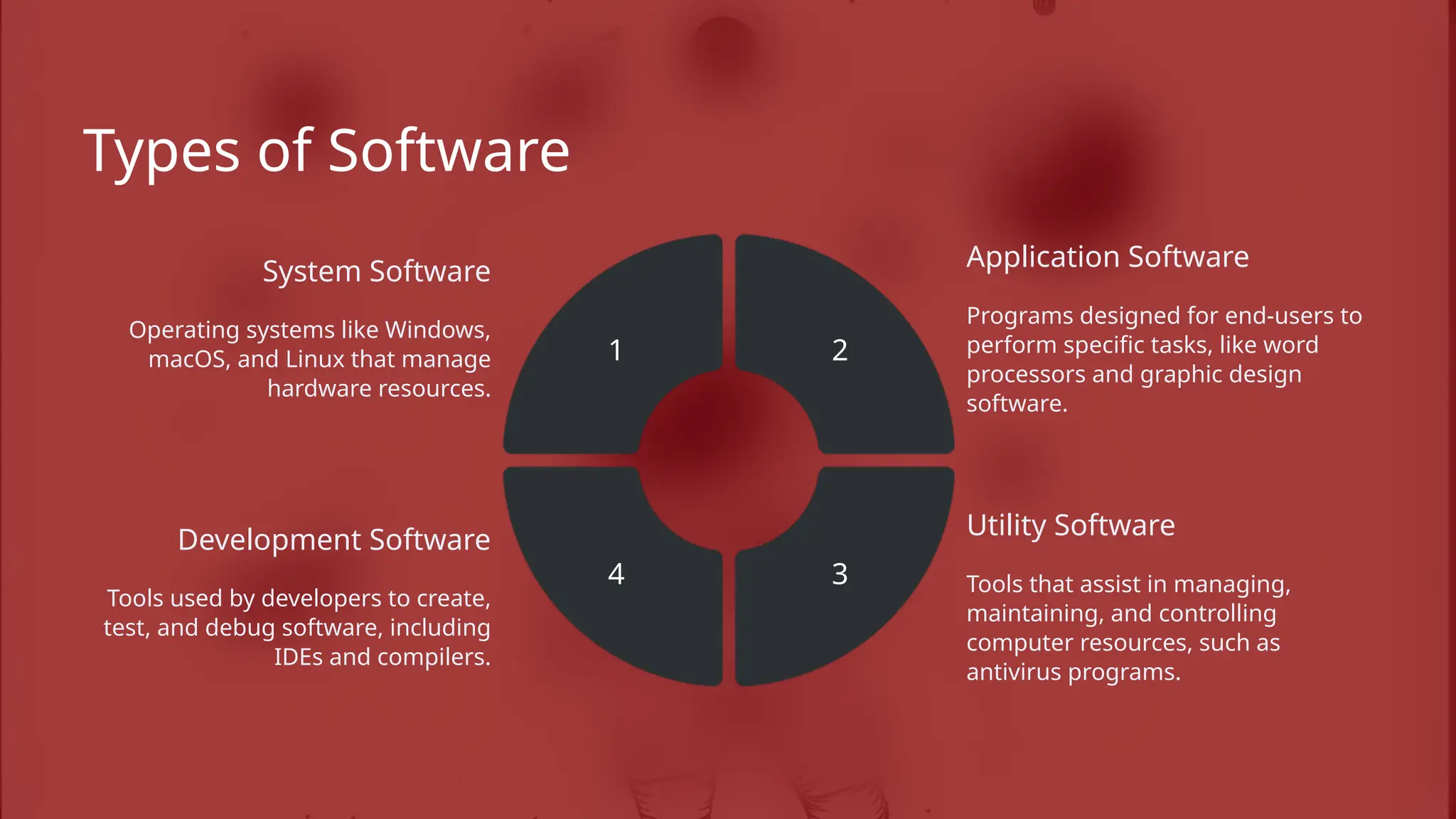
Types of Software
SystemSoftware
Operating systems like Windows,
macOS, and Linux that manage
hardware resources.
Development Software
Tools used by developers to create,
test, and debug software, including
IDEs and compilers.
1
4
2
Application Software
3
Programs designed for end-users to
perform specific tasks, like word
processors and graphic design
software.
Utility Software
Tools that assist in managing,
maintaining, and controlling
computer resources, such as
antivirus programs.
4.
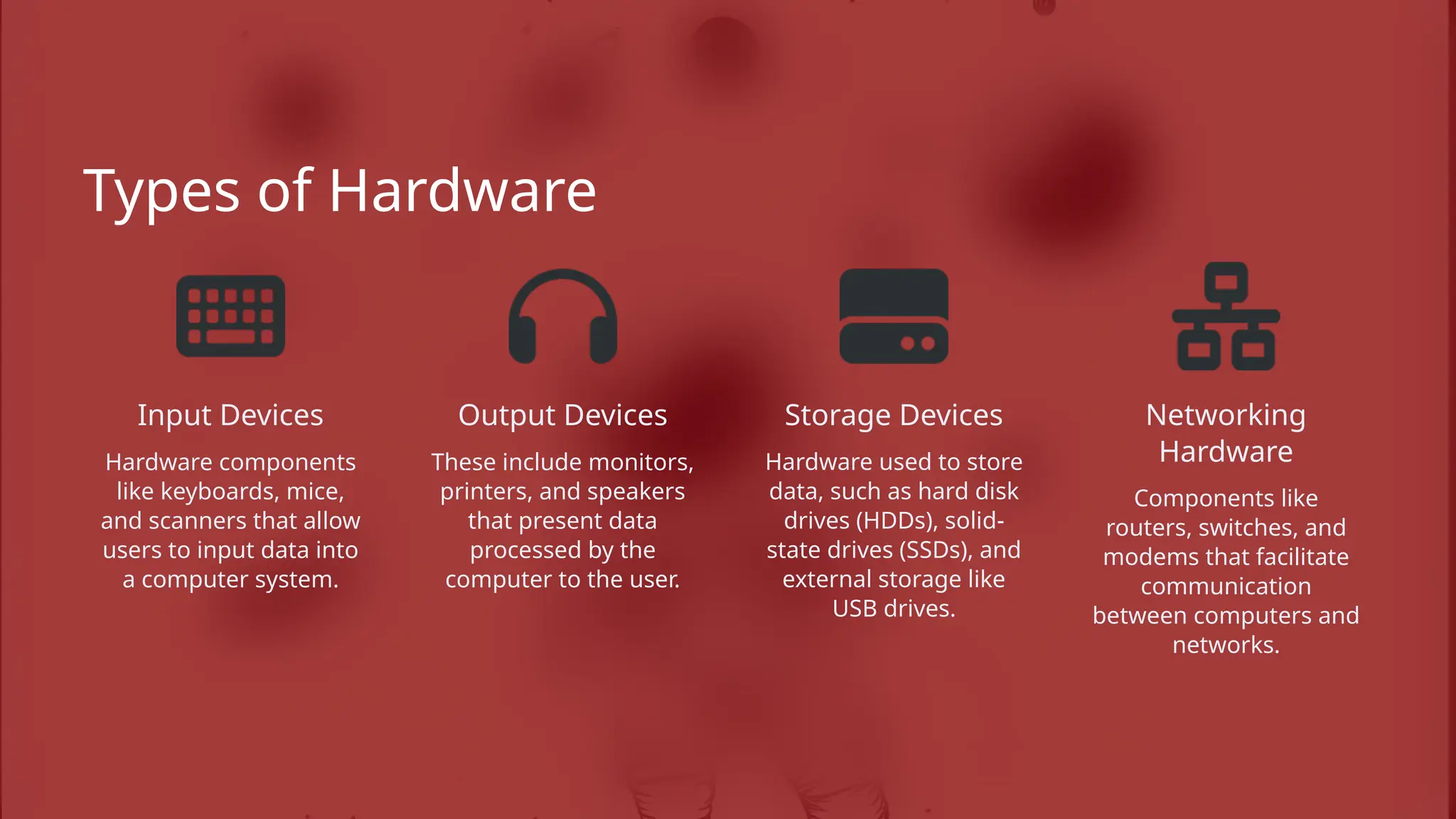
Types of Hardware
InputDevices
Hardware components
like keyboards, mice,
and scanners that allow
users to input data into
a computer system.
Output Devices
These include monitors,
printers, and speakers
that present data
processed by the
computer to the user.
Storage Devices
Hardware used to store
data, such as hard disk
drives (HDDs), solid-
state drives (SSDs), and
external storage like
USB drives.
Networking
Hardware
Components like
routers, switches, and
modems that facilitate
communication
between computers and
networks.
5.
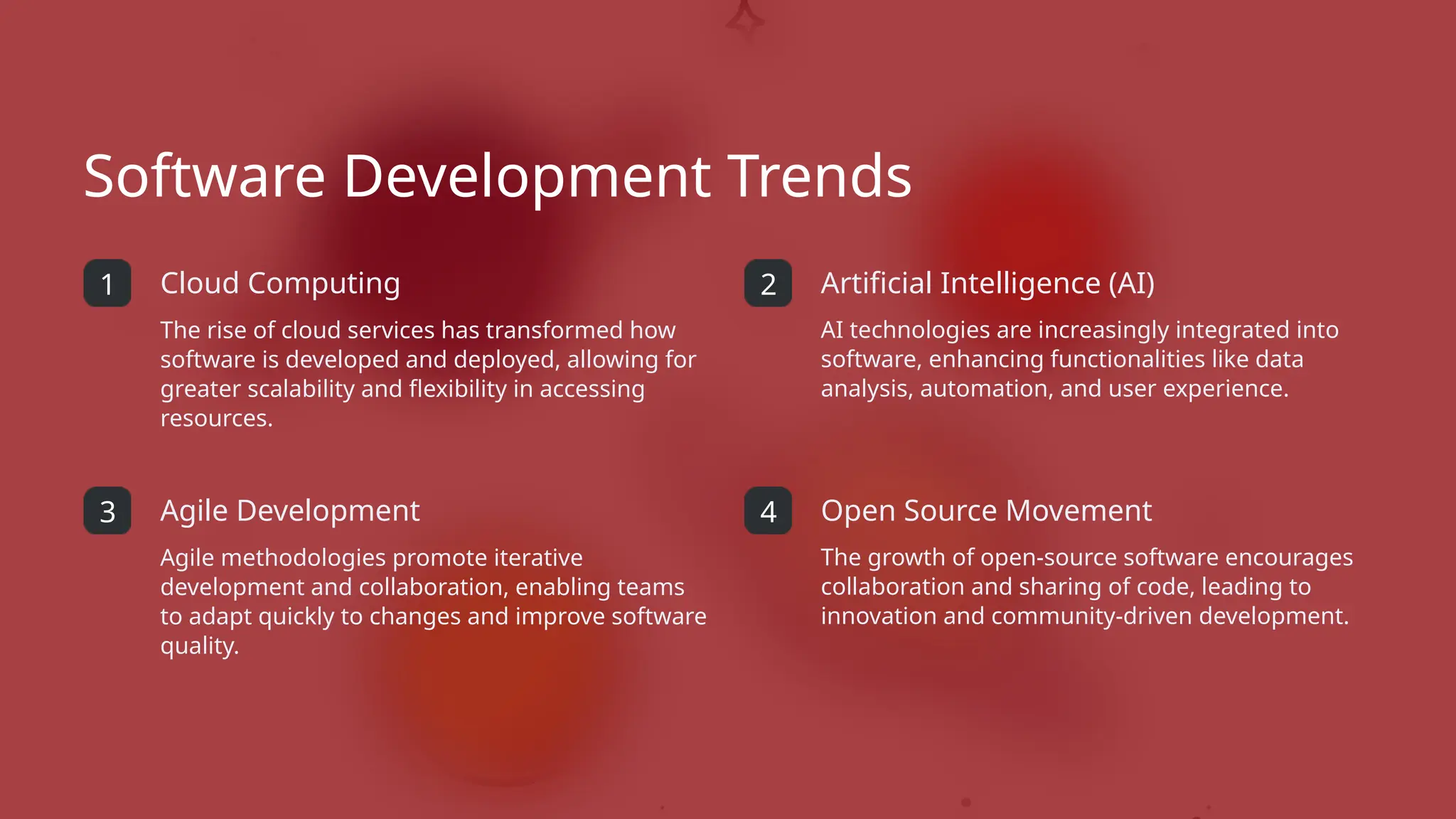
Software Development Trends
1Cloud Computing
The rise of cloud services has transformed how
software is developed and deployed, allowing for
greater scalability and flexibility in accessing
resources.
3 Agile Development
Agile methodologies promote iterative
development and collaboration, enabling teams
to adapt quickly to changes and improve software
quality.
2 Artificial Intelligence (AI)
AI technologies are increasingly integrated into
software, enhancing functionalities like data
analysis, automation, and user experience.
4 Open Source Movement
The growth of open-source software encourages
collaboration and sharing of code, leading to
innovation and community-driven development.
6.
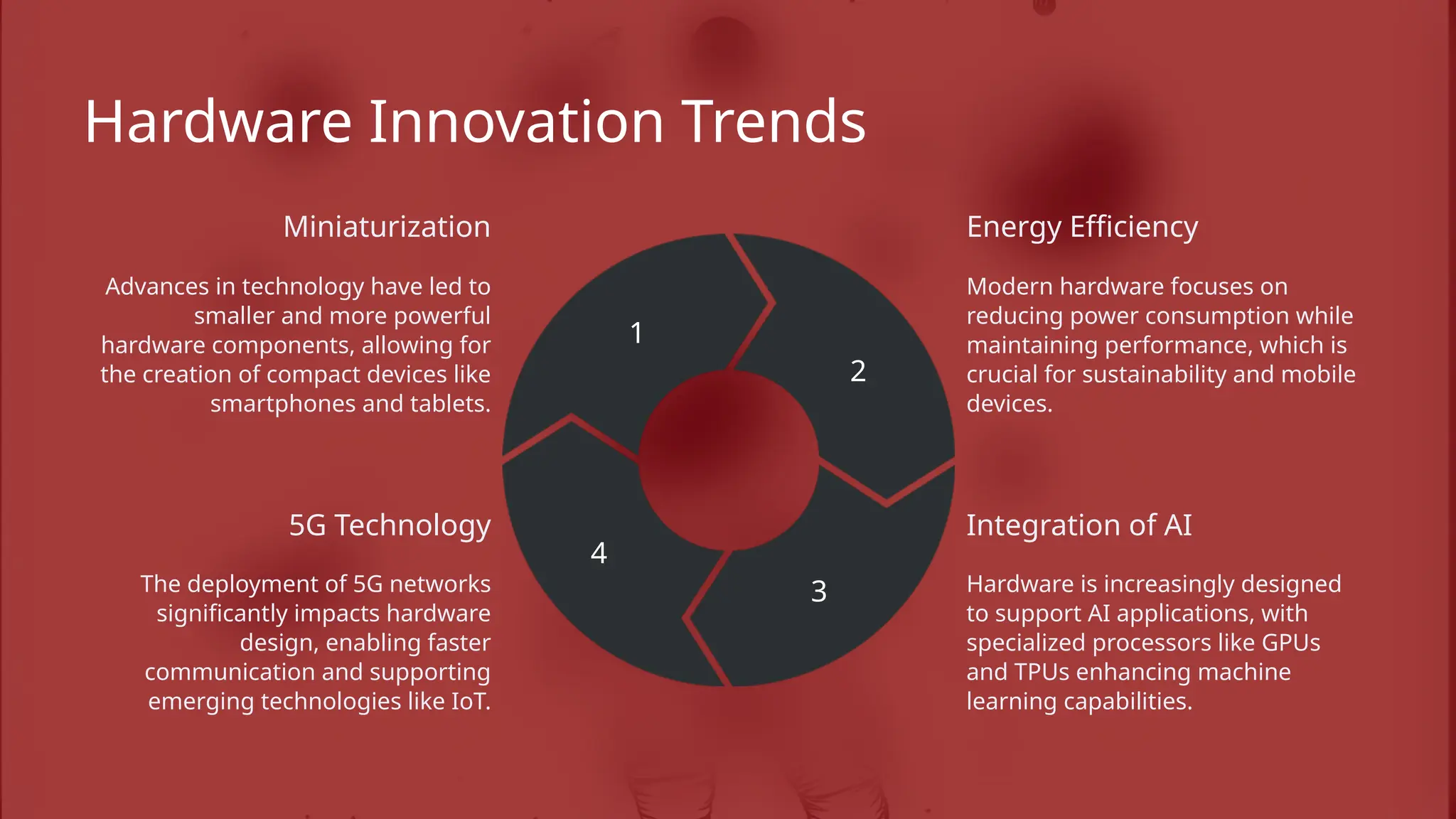
Hardware Innovation Trends
Miniaturization
Advancesin technology have led to
smaller and more powerful
hardware components, allowing for
the creation of compact devices like
smartphones and tablets.
5G Technology
The deployment of 5G networks
significantly impacts hardware
design, enabling faster
communication and supporting
emerging technologies like IoT.
1
4
2
Energy Efficiency
3
Modern hardware focuses on
reducing power consumption while
maintaining performance, which is
crucial for sustainability and mobile
devices.
Integration of AI
Hardware is increasingly designed
to support AI applications, with
specialized processors like GPUs
and TPUs enhancing machine
learning capabilities.
7.
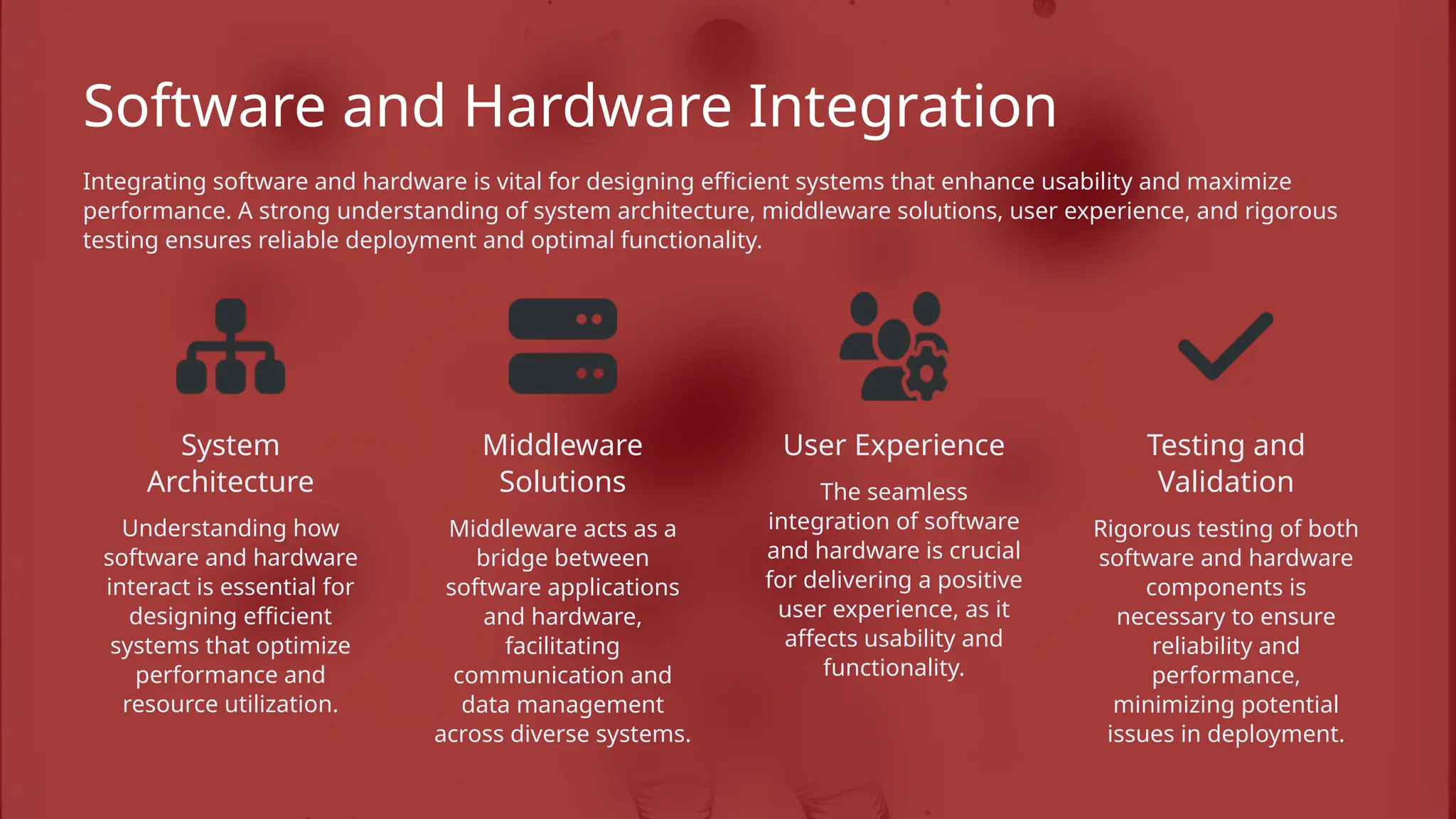
Software and HardwareIntegration
Integrating software and hardware is vital for designing efficient systems that enhance usability and maximize
performance. A strong understanding of system architecture, middleware solutions, user experience, and rigorous
testing ensures reliable deployment and optimal functionality.
System
Architecture
Understanding how
software and hardware
interact is essential for
designing efficient
systems that optimize
performance and
resource utilization.
Middleware
Solutions
Middleware acts as a
bridge between
software applications
and hardware,
facilitating
communication and
data management
across diverse systems.
User Experience
The seamless
integration of software
and hardware is crucial
for delivering a positive
user experience, as it
affects usability and
functionality.
Testing and
Validation
Rigorous testing of both
software and hardware
components is
necessary to ensure
reliability and
performance,
minimizing potential
issues in deployment.
8.
Future Directions
Emerging Technologies
Theconvergence of software and hardware in fields
like virtual reality (VR), augmented reality (AR), and
quantum computing promises to redefine user
experiences and capabilities.
Smart Devices
The Internet of Things (IoT) is leading to the
proliferation of smart devices, where software and
hardware work together to enhance everyday life
through connectivity and automation.
Cybersecurity
As software and hardware become more
interconnected, ensuring security against threats is
crucial, necessitating advanced security measures and
protocols.
Sustainability Initiatives
Future developments will focus on creating more
sustainable software and hardware solutions,
addressing environmental concerns and promoting
responsible consumption.


![IT REPORT [Autosaved]_020005.pptx](https://cdn.slidesharecdn.com/ss_thumbnails/itreportautosaved020005-221112072853-78b938d1-thumbnail.jpg?width=640&height=640&fit=bounds)


