NEO
IDEAS AND INNOVATION


TEchNOlOgy ThAT cONNEcTS ThE phySIcAl
wOrlD AND ThE INfOrmATION wOrlD
TEchNOlOgy ThAT cONNEcTS
ThE phySIcAl wOrlD AND ThE
INfOrmATION wOrlD
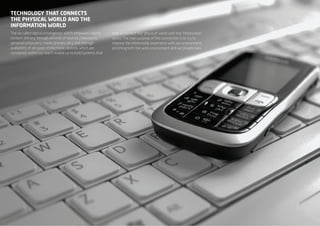
The so-called digital convergence, which empowers digital      help to connect the “physical” world with the “information”
content delivery through all kinds of devices (televisions,    world. The main purpose of this connection is to try to
personal computers, mobile phones, etc.), and the high         improve the relationship experience with our environment,
availability of all types of electronic devices, which are     enriching both the work environment and our private lives.
constantly within our reach, enable us to build systems that


  NEO | TECNOLOGíA SEMÁNTICA - RESUMEN EJECUTIVO
SEmANTIc TEchNOlOgy
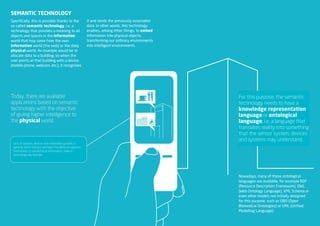
Specifically, this is possible thanks to the                it and sends the previously associated
so-called semantic technology, i.e. a                       data. In other words, this technology
technology that provides a meaning to all                   enables, among other things, to embed
objects and spaces in the information                       information into physical objects,
world that may come from the own                            transforming our ordinary environments
information world (the web) or the daily                    into intelligent environments.
physical world. An example would be to
allocate data to a building, so when the
user points at that building with a device
(mobile phone, webcam, etc.), it recognises


Today, there are available                                                                           For this purpose, the semantic
applications based on semantic                                                                       technology needs to have a
technology with the objective                                                                        knowledge representation
of giving higher intelligence to                                                                     language or ontological
the physical world.                                                                                  language, i.e. a language that
                                                                                                     translates reality into something
                                                                                                     that the sensor system, devices
                                                                                                     and systems may understand.
 Sets of sensors, devices and embedded systems in
 general, which interact and have the ability to organise
 themselves to handle/issue information, make it
 technologically feasible.


                                                                                                     Nowadays, many of these ontological
                                                                                                     languages are available, for example RDF
                                                                                                     (Resource Description Framework), OWL
                                                                                                     (Web Ontology Language), XML Schema or
                                                                                                     even other models not initially designed
                                                                                                     for this purpose, such as OBO (Open
                                                                                                     Biomedical Ontologies) or UML (Unified
                                                                                                     Modelling Language).
                                                                                                        NEO | TECNOLOGíA SEMÁNTICA - RESUMEN EJECUTIVO
INDrA AND ThE SOfIA
              prOjEcT
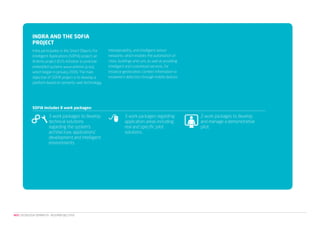
              Indra participates in the Smart Objects For    interoperability, and intelligent sensor
              Intelligent Applications (SOFIA) project, an   networks, which enables the automation of
              Artemis project (EU’s initiative to promote    cities, buildings and cars, as well as providing
              embedded systems www.artemis-ju.eu),           intelligent and customised services, for
              which began in January 2009. The main          instance geolocation, context information or
              objective of SOFIA project is to develop a     movement detection through mobile devices.
              platform based on semantic web technology,


              SOfIA includes 8 work packages:

                          3 work packages to develop                    3 work packages regarding               2 work packages to develop
                          technical solutions                           application areas including             and manage a demonstrative
                          regarding the system’s                        real and specific pilot                 pilot.
                          architecture, applications’                   solutions.
                          development and intelligent
                          environments.


NEO | TECNOLOGíA SEMÁNTICA - RESUMEN EJECUTIVO
SEmANTIc TEchNOlOgy ApplIcATIONS
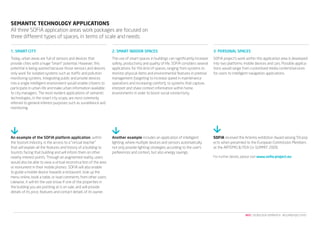
All three SOFIA application areas work packages are focused on
three different types of spaces, in terms of scale and needs:

1. Smart City                                                      2. Smart iNdOOr SpaCES                                              3. pErSONal SpaCES
Today, urban areas are full of sensors and devices that            The use of smart spaces in buildings can significantly increase     SOFIA project’s work within this application area is developed
provide cities with a huge “smart” potential. However, this        safety, productivity and quality of life. SOFIA considers several   into two platforms: mobile devices and cars. Possible applica-
potential is being wasted because those sensors and devices        applications for this kind of spaces, ranging from systems to       tions would range from customised media content/services
only work for isolated systems such as traffic and pollution       monitor physical items and environmental features in premise        for users to intelligent navigation applications.
monitoring systems. Integrating public and private devices         management (targeting to increase speed in maintenance
into a single intelligent environment would enable citizens to     operations and increasing comfort), to systems that capture,
participate in urban life and make urban information available     interpret and share context information within home
to city managers. The most evident applications of semantic        environments in order to boost social connectivity.
technologies, in the smart city scope, are most commonly
referred to general interest purposes such as surveillance and
monitoring.


an example of the SOFia platform application, within               another example includes an application of intelligent              SOfIA received the Artemis exhibition Award among 59 proj-
the tourism industry, is the access to a “virtual teacher”         lighting, where multiple devices and sensors automatically          ects when presented to the European Commission Members
that will explain all the features and history of a building to    not only provide lighting strategies according to the user’s        at the ARTEMIS & ITEA Co-SUMMIT 2009.
tourists facing that building and will inform them on other        preferences and context, but also energy savings.
nearby interest points. Through an augmented reality, users                                                                            For further details, please visit www.sofia-project.eu
would also be able to view a virtual reconstruction of the area
or monument in their mobile phones. SOFIA will also enable
to guide a mobile device towards a restaurant, look up the
menu online, book a table, or read comments from other users.
Likewise, it will let the user know if one of the properties in
the building you are pointing at is on sale, and will provide
details of its price, features and contact details of its owner.


                                                                                                                                                             NEO | TECNOLOGíA SEMÁNTICA - RESUMEN EJECUTIVO

SOFIA project INDRA NEO Publication

  • 1.
    NEO IDEAS AND INNOVATION TEchNOlOgyThAT cONNEcTS ThE phySIcAl wOrlD AND ThE INfOrmATION wOrlD
  • 2.
    TEchNOlOgy ThAT cONNEcTS ThEphySIcAl wOrlD AND ThE INfOrmATION wOrlD The so-called digital convergence, which empowers digital help to connect the “physical” world with the “information” content delivery through all kinds of devices (televisions, world. The main purpose of this connection is to try to personal computers, mobile phones, etc.), and the high improve the relationship experience with our environment, availability of all types of electronic devices, which are enriching both the work environment and our private lives. constantly within our reach, enable us to build systems that NEO | TECNOLOGíA SEMÁNTICA - RESUMEN EJECUTIVO
  • 3.
    SEmANTIc TEchNOlOgy Specifically, thisis possible thanks to the it and sends the previously associated so-called semantic technology, i.e. a data. In other words, this technology technology that provides a meaning to all enables, among other things, to embed objects and spaces in the information information into physical objects, world that may come from the own transforming our ordinary environments information world (the web) or the daily into intelligent environments. physical world. An example would be to allocate data to a building, so when the user points at that building with a device (mobile phone, webcam, etc.), it recognises Today, there are available For this purpose, the semantic applications based on semantic technology needs to have a technology with the objective knowledge representation of giving higher intelligence to language or ontological the physical world. language, i.e. a language that translates reality into something that the sensor system, devices and systems may understand. Sets of sensors, devices and embedded systems in general, which interact and have the ability to organise themselves to handle/issue information, make it technologically feasible. Nowadays, many of these ontological languages are available, for example RDF (Resource Description Framework), OWL (Web Ontology Language), XML Schema or even other models not initially designed for this purpose, such as OBO (Open Biomedical Ontologies) or UML (Unified Modelling Language). NEO | TECNOLOGíA SEMÁNTICA - RESUMEN EJECUTIVO
  • 4.
    INDrA AND ThESOfIA prOjEcT Indra participates in the Smart Objects For interoperability, and intelligent sensor Intelligent Applications (SOFIA) project, an networks, which enables the automation of Artemis project (EU’s initiative to promote cities, buildings and cars, as well as providing embedded systems www.artemis-ju.eu), intelligent and customised services, for which began in January 2009. The main instance geolocation, context information or objective of SOFIA project is to develop a movement detection through mobile devices. platform based on semantic web technology, SOfIA includes 8 work packages: 3 work packages to develop 3 work packages regarding 2 work packages to develop technical solutions application areas including and manage a demonstrative regarding the system’s real and specific pilot pilot. architecture, applications’ solutions. development and intelligent environments. NEO | TECNOLOGíA SEMÁNTICA - RESUMEN EJECUTIVO
  • 5.
    SEmANTIc TEchNOlOgy ApplIcATIONS Allthree SOFIA application areas work packages are focused on three different types of spaces, in terms of scale and needs: 1. Smart City 2. Smart iNdOOr SpaCES 3. pErSONal SpaCES Today, urban areas are full of sensors and devices that The use of smart spaces in buildings can significantly increase SOFIA project’s work within this application area is developed provide cities with a huge “smart” potential. However, this safety, productivity and quality of life. SOFIA considers several into two platforms: mobile devices and cars. Possible applica- potential is being wasted because those sensors and devices applications for this kind of spaces, ranging from systems to tions would range from customised media content/services only work for isolated systems such as traffic and pollution monitor physical items and environmental features in premise for users to intelligent navigation applications. monitoring systems. Integrating public and private devices management (targeting to increase speed in maintenance into a single intelligent environment would enable citizens to operations and increasing comfort), to systems that capture, participate in urban life and make urban information available interpret and share context information within home to city managers. The most evident applications of semantic environments in order to boost social connectivity. technologies, in the smart city scope, are most commonly referred to general interest purposes such as surveillance and monitoring. an example of the SOFia platform application, within another example includes an application of intelligent SOfIA received the Artemis exhibition Award among 59 proj- the tourism industry, is the access to a “virtual teacher” lighting, where multiple devices and sensors automatically ects when presented to the European Commission Members that will explain all the features and history of a building to not only provide lighting strategies according to the user’s at the ARTEMIS & ITEA Co-SUMMIT 2009. tourists facing that building and will inform them on other preferences and context, but also energy savings. nearby interest points. Through an augmented reality, users For further details, please visit www.sofia-project.eu would also be able to view a virtual reconstruction of the area or monument in their mobile phones. SOFIA will also enable to guide a mobile device towards a restaurant, look up the menu online, book a table, or read comments from other users. Likewise, it will let the user know if one of the properties in the building you are pointing at is on sale, and will provide details of its price, features and contact details of its owner. NEO | TECNOLOGíA SEMÁNTICA - RESUMEN EJECUTIVO