In The Name Of
Allah, The Most
Merciful, The Most
Gracious
Back to School
Welcome
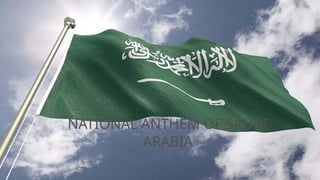
NATIONAL ANTHEM OF SAUDI
ARABIA
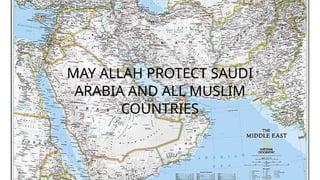
MAY ALLAH PROTECT SAUDI
ARABIA AND ALL MUSLIM
COUNTRIES
Classroom
Rules Respect!
Raise your
hand to
speak!
Don't make
noise!
What do you
know about
our earth or
solar system?
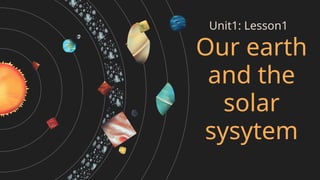
Our earth
and the
solar
sysytem
Unit1: Lesson1
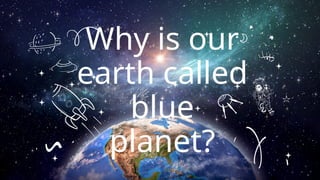
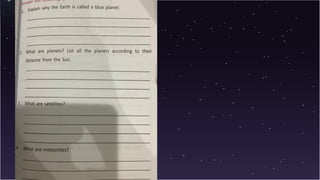
Why is our
earth called
blue
planet?
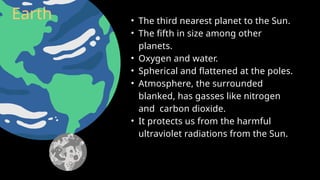
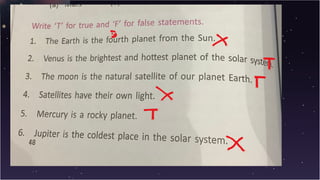
Earth • The third nearest planet to the Sun.
• The fifth in size among other
planets.
• Oxygen and water.
• Spherical and flattened at the poles.
• Atmosphere, the surrounded
blanked, has gasses like nitrogen
and carbon dioxide.
• It protects us from the harmful
ultraviolet radiations from the Sun.
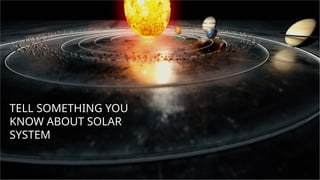
TELL SOMETHING YOU
KNOW ABOUT SOLAR
SYSTEM
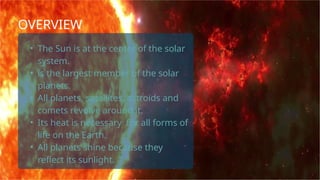
• The Sun is at the center of the solar
system.
• is the largest member of the solar
planets.
• All planets, satellites, astroids and
comets revolve around it.
• Its heat is necessary for all forms of
life on the Earth.
• All planets shine because they
reflect its sunlight.
OVERVIEW
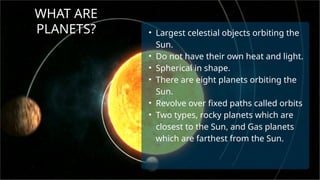
WHAT ARE
PLANETS? • Largest celestial objects orbiting the
Sun.
• Do not have their own heat and light.
• Spherical in shape.
• There are eight planets orbiting the
Sun.
• Revolve over fixed paths called orbits
• Two types, rocky planets which are
closest to the Sun, and Gas planets
which are farthest from the Sun.
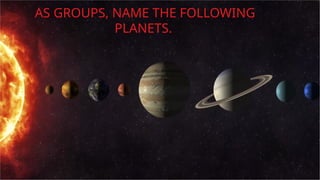
AS GROUPS, NAME THE FOLLOWING
PLANETS.
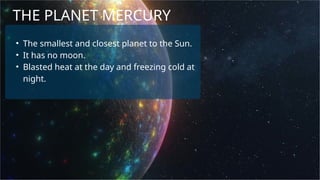
THE PLANET MERCURY
• The smallest and closest planet to the Sun.
• It has no moon.
• Blasted heat at the day and freezing cold at
night.
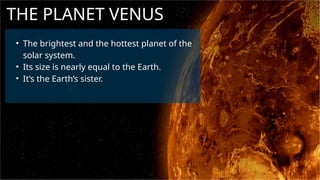
THE PLANET VENUS
• The brightest and the hottest planet of the
solar system.
• Its size is nearly equal to the Earth.
• It’s the Earth’s sister.
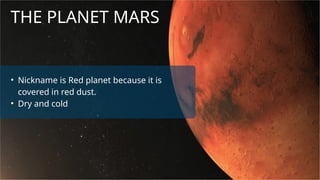
THE PLANET MARS
• Nickname is Red planet because it is
covered in red dust.
• Dry and cold
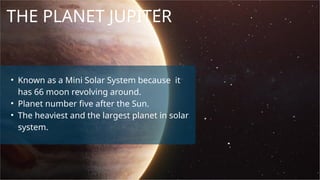
THE PLANET JUPITER
• Known as a Mini Solar System because it
has 66 moon revolving around.
• Planet number five after the Sun.
• The heaviest and the largest planet in solar
system.
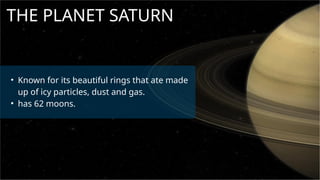
THE PLANET SATURN
• Known for its beautiful rings that ate made
up of icy particles, dust and gas.
• has 62 moons.
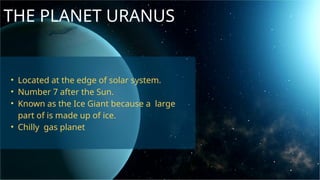
THE PLANET URANUS
• Located at the edge of solar system.
• Number 7 after the Sun.
• Known as the Ice Giant because a large
part of is made up of ice.
• Chilly gas planet
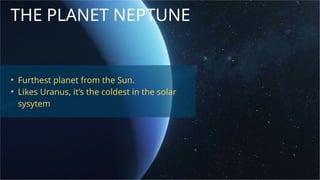
THE PLANET NEPTUNE
• Furthest planet from the Sun.
• Likes Uranus, it’s the coldest in the solar
sysytem
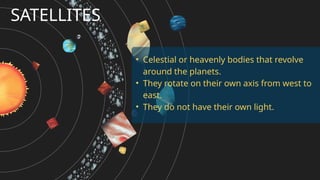
SATELLITES
• Celestial or heavenly bodies that revolve
around the planets.
• They rotate on their own axis from west to
east.
• They do not have their own light.
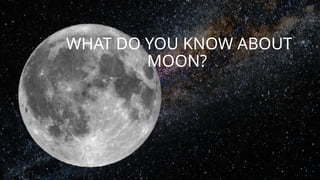
WHAT DO YOU KNOW ABOUT
MOON?
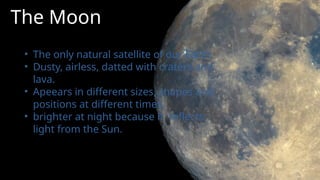
The Moon
• The only natural satellite of our Earth.
• Dusty, airless, datted with craters and
lava.
• Apeears in different sizes, shapes and
positions at different times.
• brighter at night because it reflects
light from the Sun.
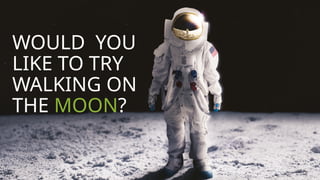
WOULD YOU
LIKE TO TRY
WALKING ON
THE MOON?
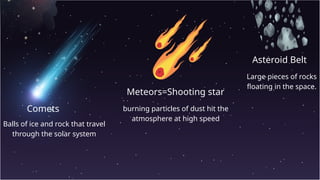
Asteroid Belt
Large pieces of rocks
floating in the space.
Meteors=Shooting star
burning particles of dust hit the
atmosphere at high speed
Comets
Balls of ice and rock that travel
through the solar system
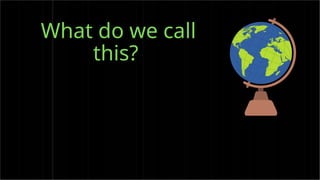
What do we call
this?
LATITUDE
AND
LONGITUDE
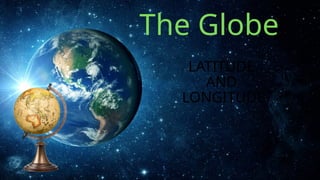
The Globe
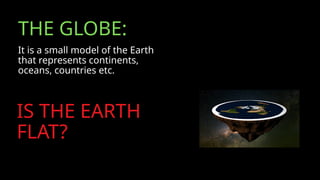
THE GLOBE:
It is a small model of the Earth
that represents continents,
oceans, countries etc.
IS THE EARTH
FLAT?
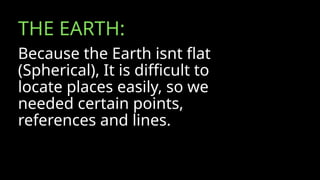
THE EARTH:
Because the Earth isnt flat
(Spherical), It is difficult to
locate places easily, so we
needed certain points,
references and lines.
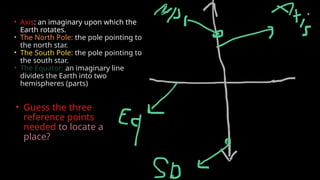
• Axis: an imaginary upon which the
Earth rotates.
• The North Pole: the pole pointing to
the north star.
• The South Pole: the pole pointing to
the south star.
• The Equator: an imaginary line
divides the Earth into two
hemispheres (parts)
• Guess the three
reference points
needed to locate a
place?
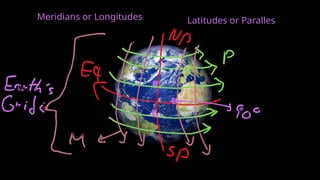
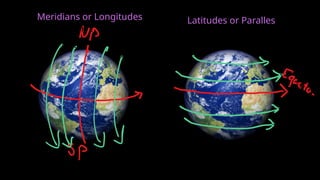
Latitudes or Paralles
Meridians or Longitudes
Latitudes or Paralles
Meridians or Longitudes
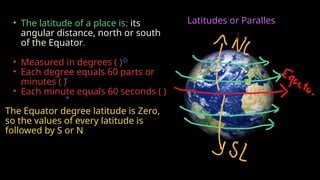
Latitudes or Paralles
• The latitude of a place is: its
angular distance, north or south
of the Equator.
• Measured in degrees ( )
• Each degree equals 60 parts or
minutes ( )
• Each minute equals 60 seconds ( )
The Equator degree latitude is Zero,
so the values of every latitude is
followed by S or N
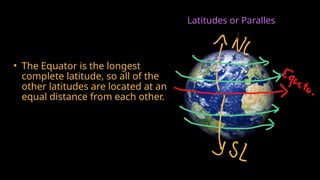
Latitudes or Paralles
• The Equator is the longest
complete latitude, so all of the
other latitudes are located at an
equal distance from each other.
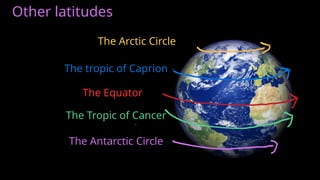
Other latitudes
The Arctic Circle
The tropic of Caprion
The Equator
The Tropic of Cancer
The Antarctic Circle
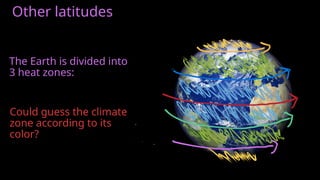
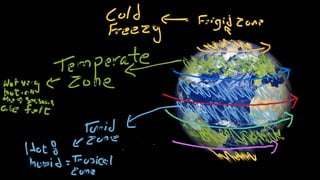
Other latitudes
The Earth is divided into
3 heat zones:
Could guess the climate
zone according to its
color?
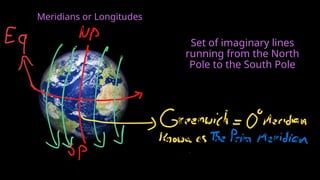
Set of imaginary lines
running from the North
Pole to the South Pole
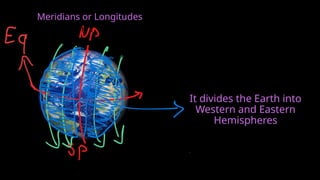
Meridians or Longitudes
It divides the Earth into
Western and Eastern
Hemispheres
Meridians or Longitudes
Latitudes or Paralles
Meridians or Longitudes
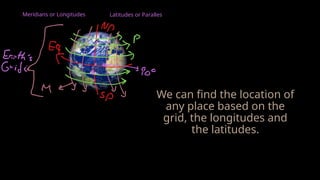
We can find the location of
any place based on the
grid, the longitudes and
the latitudes.
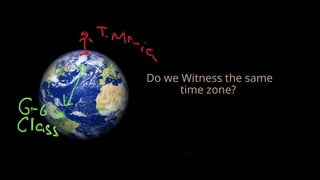
Do we Witness the same
time zone?
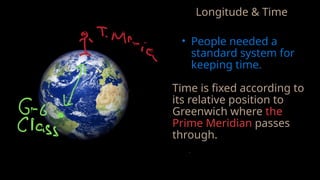
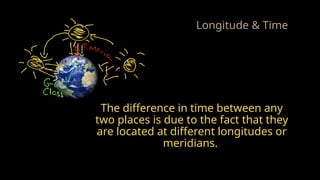
Longitude & Time
• People needed a
standard system for
keeping time.
Time is fixed according to
its relative position to
Greenwich where the
Prime Meridian passes
through.
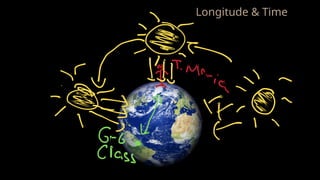
Longitude & Time
Longitude & Time
The difference in time between any
two places is due to the fact that they
are located at different longitudes or
meridians.
7
4
3
6
5
1
9
2
8
10
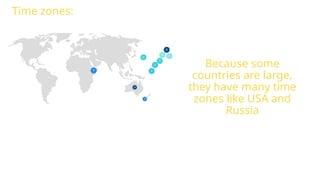
Time zones:
Because some
countries are large,
they have many time
zones like USA and
Russia
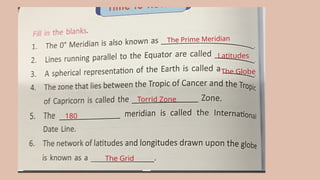
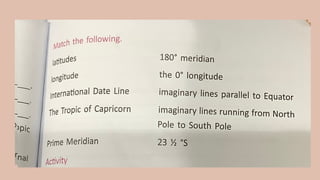
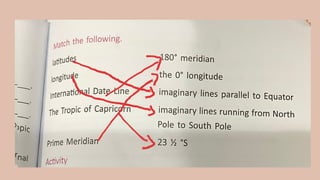
The Prime Meridian
Latitudes
The Globe
Torrid Zone
180
The Grid
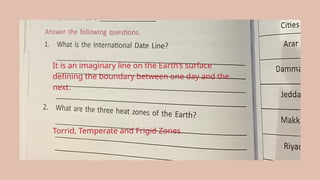
It is an imaginary line on the Earth’s surface
defining the boundary between one day and the
next.
Torrid, Temperate and Frigid Zones.
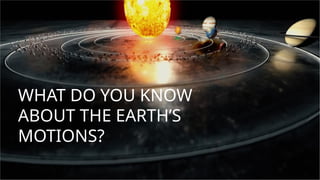
WHAT DO YOU KNOW
ABOUT THE EARTH’S
MOTIONS?
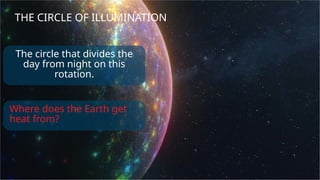
The circle that divides the
day from night on this
rotation.
THE CIRCLE OF ILLUMINATION
Where does the Earth get
heat from?
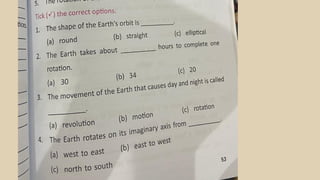
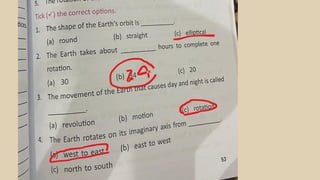
ROTATION IS CALLED:
The daily motion of the Earth
which is also known as the Earth
Day
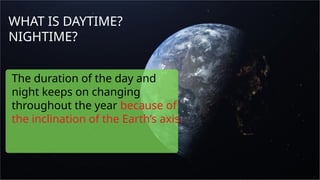
WHAT IS DAYTIME?
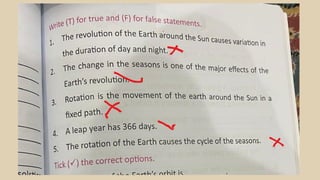
NIGHTIME?
The duration of the day and
night keeps on changing
throughout the year because of
the inclination of the Earth’s axis.
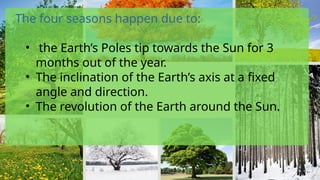
The four seasons happen due to:
• the Earth’s Poles tip towards the Sun for 3
months out of the year.
• The inclination of the Earth’s axis at a fixed
angle and direction.
• The revolution of the Earth around the Sun.
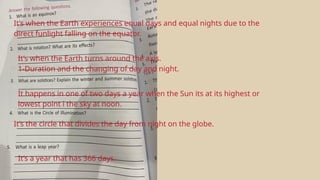
It’s when the Earth experiences equal days and equal nights due to the
direct funlight falling on the equator.
It’s when the Earth turns around the axis.
1-Duration and the changing of day and night.
It happens in one of two days a year when the Sun its at its highest or
lowest point i the sky at noon.
It’s the circle that divides the day from night on the globe.
It’s a year that has 366 days.
Social Studies First Semester for grade 6

Social Studies First Semester for grade 6

  • 1.
    In The NameOf Allah, The Most Merciful, The Most Gracious
  • 2.
  • 3.
    NATIONAL ANTHEM OFSAUDI ARABIA
  • 5.
    MAY ALLAH PROTECTSAUDI ARABIA AND ALL MUSLIM COUNTRIES
  • 6.
    Classroom Rules Respect! Raise your handto speak! Don't make noise!
  • 7.
    What do you knowabout our earth or solar system?
  • 8.
  • 9.
    Why is our earthcalled blue planet?
  • 10.
    Earth • Thethird nearest planet to the Sun. • The fifth in size among other planets. • Oxygen and water. • Spherical and flattened at the poles. • Atmosphere, the surrounded blanked, has gasses like nitrogen and carbon dioxide. • It protects us from the harmful ultraviolet radiations from the Sun.
  • 11.
    TELL SOMETHING YOU KNOWABOUT SOLAR SYSTEM
  • 12.
    • The Sunis at the center of the solar system. • is the largest member of the solar planets. • All planets, satellites, astroids and comets revolve around it. • Its heat is necessary for all forms of life on the Earth. • All planets shine because they reflect its sunlight. OVERVIEW
  • 13.
    WHAT ARE PLANETS? •Largest celestial objects orbiting the Sun. • Do not have their own heat and light. • Spherical in shape. • There are eight planets orbiting the Sun. • Revolve over fixed paths called orbits • Two types, rocky planets which are closest to the Sun, and Gas planets which are farthest from the Sun.
  • 14.
    AS GROUPS, NAMETHE FOLLOWING PLANETS.
  • 15.
    THE PLANET MERCURY •The smallest and closest planet to the Sun. • It has no moon. • Blasted heat at the day and freezing cold at night.
  • 16.
    THE PLANET VENUS •The brightest and the hottest planet of the solar system. • Its size is nearly equal to the Earth. • It’s the Earth’s sister.
  • 17.
    THE PLANET MARS •Nickname is Red planet because it is covered in red dust. • Dry and cold
  • 18.
    THE PLANET JUPITER •Known as a Mini Solar System because it has 66 moon revolving around. • Planet number five after the Sun. • The heaviest and the largest planet in solar system.
  • 19.
    THE PLANET SATURN •Known for its beautiful rings that ate made up of icy particles, dust and gas. • has 62 moons.
  • 20.
    THE PLANET URANUS •Located at the edge of solar system. • Number 7 after the Sun. • Known as the Ice Giant because a large part of is made up of ice. • Chilly gas planet
  • 21.
    THE PLANET NEPTUNE •Furthest planet from the Sun. • Likes Uranus, it’s the coldest in the solar sysytem
  • 22.
    SATELLITES • Celestial orheavenly bodies that revolve around the planets. • They rotate on their own axis from west to east. • They do not have their own light.
  • 23.
    WHAT DO YOUKNOW ABOUT MOON?
  • 24.
    The Moon • Theonly natural satellite of our Earth. • Dusty, airless, datted with craters and lava. • Apeears in different sizes, shapes and positions at different times. • brighter at night because it reflects light from the Sun.
  • 25.
    WOULD YOU LIKE TOTRY WALKING ON THE MOON?
  • 26.
    Asteroid Belt Large piecesof rocks floating in the space. Meteors=Shooting star burning particles of dust hit the atmosphere at high speed Comets Balls of ice and rock that travel through the solar system
  • 33.
    What do wecall this?
  • 34.
  • 35.
    THE GLOBE: It isa small model of the Earth that represents continents, oceans, countries etc. IS THE EARTH FLAT?
  • 36.
    THE EARTH: Because theEarth isnt flat (Spherical), It is difficult to locate places easily, so we needed certain points, references and lines.
  • 37.
    • Axis: animaginary upon which the Earth rotates. • The North Pole: the pole pointing to the north star. • The South Pole: the pole pointing to the south star. • The Equator: an imaginary line divides the Earth into two hemispheres (parts) • Guess the three reference points needed to locate a place?
  • 38.
  • 39.
  • 40.
    Latitudes or Paralles •The latitude of a place is: its angular distance, north or south of the Equator. • Measured in degrees ( ) • Each degree equals 60 parts or minutes ( ) • Each minute equals 60 seconds ( ) The Equator degree latitude is Zero, so the values of every latitude is followed by S or N
  • 41.
    Latitudes or Paralles •The Equator is the longest complete latitude, so all of the other latitudes are located at an equal distance from each other.
  • 42.
    Other latitudes The ArcticCircle The tropic of Caprion The Equator The Tropic of Cancer The Antarctic Circle
  • 43.
    Other latitudes The Earthis divided into 3 heat zones: Could guess the climate zone according to its color?
  • 45.
    Set of imaginarylines running from the North Pole to the South Pole Meridians or Longitudes
  • 46.
    It divides theEarth into Western and Eastern Hemispheres Meridians or Longitudes
  • 47.
    Latitudes or Paralles Meridiansor Longitudes We can find the location of any place based on the grid, the longitudes and the latitudes.
  • 48.
    Do we Witnessthe same time zone?
  • 49.
    Longitude & Time •People needed a standard system for keeping time. Time is fixed according to its relative position to Greenwich where the Prime Meridian passes through.
  • 50.
  • 51.
    Longitude & Time Thedifference in time between any two places is due to the fact that they are located at different longitudes or meridians.
  • 52.
    7 4 3 6 5 1 9 2 8 10 Time zones: Because some countriesare large, they have many time zones like USA and Russia
  • 54.
    The Prime Meridian Latitudes TheGlobe Torrid Zone 180 The Grid
  • 56.
    It is animaginary line on the Earth’s surface defining the boundary between one day and the next. Torrid, Temperate and Frigid Zones.
  • 60.
    WHAT DO YOUKNOW ABOUT THE EARTH’S MOTIONS?
  • 62.
    The circle thatdivides the day from night on this rotation. THE CIRCLE OF ILLUMINATION Where does the Earth get heat from?
  • 63.
    ROTATION IS CALLED: Thedaily motion of the Earth which is also known as the Earth Day
  • 64.
    WHAT IS DAYTIME? NIGHTIME? Theduration of the day and night keeps on changing throughout the year because of the inclination of the Earth’s axis.
  • 65.
    The four seasonshappen due to: • the Earth’s Poles tip towards the Sun for 3 months out of the year. • The inclination of the Earth’s axis at a fixed angle and direction. • The revolution of the Earth around the Sun.
  • 67.
    It’s when theEarth experiences equal days and equal nights due to the direct funlight falling on the equator. It’s when the Earth turns around the axis. 1-Duration and the changing of day and night. It happens in one of two days a year when the Sun its at its highest or lowest point i the sky at noon. It’s the circle that divides the day from night on the globe. It’s a year that has 366 days.