Organizational Conflict

Prepared by Nam Trung – 17/10/2013

CONFLICT
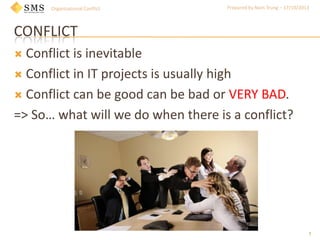
Conflict is inevitable
 Conflict in IT projects is usually high
 Conflict can be good can be bad or VERY BAD.
=> So… what will we do when there is a conflict?


1
Organizational Conflict

Prepared by Nam Trung – 17/10/2013

AGENDA
Organizational conflicts
 Team conflicts
 Types of power
 Conflict Resolutions


2
Organizational Conflict

Prepared by Nam Trung – 17/10/2013

ORGANIZATIONAL CONFLICTS
Definition of Responsibility Unclear
 Conflict of Interest
 Not Enough Resources
 Interpersonal Relationships


3
Organizational Conflict

Prepared by Nam Trung – 17/10/2013

DEFINITION OF RESPONSIBILITY UNCLEAR
Unclear who is responsible for what area work
 Decisions are made that appear to cross
boundaries of responsibility


4
Organizational Conflict

Prepared by Nam Trung – 17/10/2013

CONFLICT OF INTEREST
Personal interests and goals fit within the
structure of the organization?
 Personal goals >< Organizational goals


5
Organizational Conflict

Prepared by Nam Trung – 17/10/2013

NOT ENOUGH RESOURCES
Resources: money, time, materials and human.
 Valuable resources need to be protected, shared,
distributed fairly among departments, teams


6
Organizational Conflict

Prepared by Nam Trung – 17/10/2013

INTERPERSONAL RELATIONSHIPS


Prejudices, attitutes, characteristics

7
Organizational Conflict

Prepared by Nam Trung – 17/10/2013

TEAM CONFLICTS


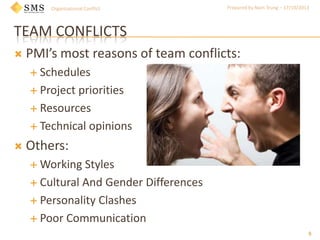
PMI’s most reasons of team conflicts:
 Schedules

 Project

priorities
 Resources
 Technical opinions


Others:
 Working

Styles
 Cultural And Gender Differences
 Personality Clashes
 Poor Communication
8
Organizational Conflict

Prepared by Nam Trung – 17/10/2013

WHO IS RESPONISBILITY TO RESOLVE CONFLICTS
In a Organization?
 In a Team?


The one who has power
9
Organizational Conflict

Prepared by Nam Trung – 17/10/2013

TYPES OF POWER
Formal
 Reward
 Penalty
 Expert
 Reference


10
Organizational Conflict

Prepared by Nam Trung – 17/10/2013

TYPES OF POWER - FORMAL


The formal authority or power derived from the
position.

11
Organizational Conflict

Prepared by Nam Trung – 17/10/2013

TYPES OF POWER - REWARD


Rewards: Salary, promotion, bonus, better
assignment

12
Organizational Conflict

Prepared by Nam Trung – 17/10/2013

TYPES OF POWER - PENALTY

13
Organizational Conflict

Prepared by Nam Trung – 17/10/2013

TYPES OF POWER - EXPERT


The power delivered from special knowledge or
expertise

14
Organizational Conflict

Prepared by Nam Trung – 17/10/2013

TYPES OF POWER - REFERENT

15
Organizational Conflict

Prepared by Nam Trung – 17/10/2013

CONFLICT RESOLUTIONS
Problem Solving
 Compromise
 Forcing
 Smoothing
 Withdrawal


16
Organizational Conflict

Prepared by Nam Trung – 17/10/2013

CONFLICT RESOLUTIONS - PROBLEM SOLVING
Find the root cause
 Discuss to find the solution
 Everyone is happy


17
Organizational Conflict

Prepared by Nam Trung – 17/10/2013

CONFLICT RESOLUTIONS - COMPROMISE
Everybody loses and gains something
 All parties get some sort of satisfaction


18
Organizational Conflict

Prepared by Nam Trung – 17/10/2013

CONFLICT RESOLUTIONS - FORCING


Can lead to low morale

19
Organizational Conflict

Prepared by Nam Trung – 17/10/2013

CONFLICT RESOLUTIONS - SMOOTHING
Avoid areas of disagreements, and focuses on
commonalities
 A way to avoid tough discussions


20
Organizational Conflict

Prepared by Nam Trung – 17/10/2013

CONFLICT RESOLUTIONS - WITHDRAWING
No action is taken, just avoid the conflict.
 Useful when conflict gets very heated


21
Organizational Conflict

Prepared by Nam Trung – 17/10/2013

CONCLUSIONS
Conflict exists for many reasons.
 Conflicts are necessary for health relationships,
for sharing of ideas and vital to the growth of a
group or organization.
 Proper management of conflict can lead to an
established trust and collaboration.


22
Organizational Conflict

Prepared by Nam Trung – 17/10/2013

23

Smsvn conflicts

  • 1.
    Organizational Conflict Prepared byNam Trung – 17/10/2013 CONFLICT Conflict is inevitable  Conflict in IT projects is usually high  Conflict can be good can be bad or VERY BAD. => So… what will we do when there is a conflict?  1
  • 2.
    Organizational Conflict Prepared byNam Trung – 17/10/2013 AGENDA Organizational conflicts  Team conflicts  Types of power  Conflict Resolutions  2
  • 3.
    Organizational Conflict Prepared byNam Trung – 17/10/2013 ORGANIZATIONAL CONFLICTS Definition of Responsibility Unclear  Conflict of Interest  Not Enough Resources  Interpersonal Relationships  3
  • 4.
    Organizational Conflict Prepared byNam Trung – 17/10/2013 DEFINITION OF RESPONSIBILITY UNCLEAR Unclear who is responsible for what area work  Decisions are made that appear to cross boundaries of responsibility  4
  • 5.
    Organizational Conflict Prepared byNam Trung – 17/10/2013 CONFLICT OF INTEREST Personal interests and goals fit within the structure of the organization?  Personal goals >< Organizational goals  5
  • 6.
    Organizational Conflict Prepared byNam Trung – 17/10/2013 NOT ENOUGH RESOURCES Resources: money, time, materials and human.  Valuable resources need to be protected, shared, distributed fairly among departments, teams  6
  • 7.
    Organizational Conflict Prepared byNam Trung – 17/10/2013 INTERPERSONAL RELATIONSHIPS  Prejudices, attitutes, characteristics 7
  • 8.
    Organizational Conflict Prepared byNam Trung – 17/10/2013 TEAM CONFLICTS  PMI’s most reasons of team conflicts:  Schedules  Project priorities  Resources  Technical opinions  Others:  Working Styles  Cultural And Gender Differences  Personality Clashes  Poor Communication 8
  • 9.
    Organizational Conflict Prepared byNam Trung – 17/10/2013 WHO IS RESPONISBILITY TO RESOLVE CONFLICTS In a Organization?  In a Team?  The one who has power 9
  • 10.
    Organizational Conflict Prepared byNam Trung – 17/10/2013 TYPES OF POWER Formal  Reward  Penalty  Expert  Reference  10
  • 11.
    Organizational Conflict Prepared byNam Trung – 17/10/2013 TYPES OF POWER - FORMAL  The formal authority or power derived from the position. 11
  • 12.
    Organizational Conflict Prepared byNam Trung – 17/10/2013 TYPES OF POWER - REWARD  Rewards: Salary, promotion, bonus, better assignment 12
  • 13.
    Organizational Conflict Prepared byNam Trung – 17/10/2013 TYPES OF POWER - PENALTY 13
  • 14.
    Organizational Conflict Prepared byNam Trung – 17/10/2013 TYPES OF POWER - EXPERT  The power delivered from special knowledge or expertise 14
  • 15.
    Organizational Conflict Prepared byNam Trung – 17/10/2013 TYPES OF POWER - REFERENT 15
  • 16.
    Organizational Conflict Prepared byNam Trung – 17/10/2013 CONFLICT RESOLUTIONS Problem Solving  Compromise  Forcing  Smoothing  Withdrawal  16
  • 17.
    Organizational Conflict Prepared byNam Trung – 17/10/2013 CONFLICT RESOLUTIONS - PROBLEM SOLVING Find the root cause  Discuss to find the solution  Everyone is happy  17
  • 18.
    Organizational Conflict Prepared byNam Trung – 17/10/2013 CONFLICT RESOLUTIONS - COMPROMISE Everybody loses and gains something  All parties get some sort of satisfaction  18
  • 19.
    Organizational Conflict Prepared byNam Trung – 17/10/2013 CONFLICT RESOLUTIONS - FORCING  Can lead to low morale 19
  • 20.
    Organizational Conflict Prepared byNam Trung – 17/10/2013 CONFLICT RESOLUTIONS - SMOOTHING Avoid areas of disagreements, and focuses on commonalities  A way to avoid tough discussions  20
  • 21.
    Organizational Conflict Prepared byNam Trung – 17/10/2013 CONFLICT RESOLUTIONS - WITHDRAWING No action is taken, just avoid the conflict.  Useful when conflict gets very heated  21
  • 22.
    Organizational Conflict Prepared byNam Trung – 17/10/2013 CONCLUSIONS Conflict exists for many reasons.  Conflicts are necessary for health relationships, for sharing of ideas and vital to the growth of a group or organization.  Proper management of conflict can lead to an established trust and collaboration.  22
  • 23.
    Organizational Conflict Prepared byNam Trung – 17/10/2013 23