They are physiological capacities
of organisms that provide inputs
for perception. SIGHT, HEARING,TOUCH,
SMELL and TASTE.
Vocabulary
• Slight (adj): Small in size, degree, or amount.
• Meissner's corpuscle (n): it is a type
  of nerve ending in the skin that is responsible
  for sensitivity.
• Fingertip (n): it is the extreme end or tip of a
  finger.
• Dot (n): it is a small round mark made with or
  as with a pen.
• Mucus (n): it is the viscous, slippery substance
  in your nose.
• Backbone (n): it is The vertebrate spine or
  spinal column.
• Sniff (vb): to breath air into your nose noisily.
• Bite (n): it is a pleasantly sharp taste.
• Taste bud (n): it is a small part in your tongue
  that contains the receptors for taste.
• Sour (adj-n): Having a taste characteristic of
  that produced by acids.
• Trickle down (vb): to move or proceed slowly
  or bit by bit
SMELL                           HEARING


        TOUCH           SIGHT


                TASTE
Touch
There are many differents kind of receptors in
the skin, which between them react to touch,
heat, cold and pain. Also, it is used to discover
what something feels like. Some receptors
react to the slightest thing: Meissner
corpuscle.
Tongue.


                     Lips.
Fingertips.


Soles of the feet.
This sense is stronger in blind people.
Smell
A smell is made up by tiny particles in the air.
When you breathe in, they reach the smell
receptors in your nose, which react to
chemicals dissolved in the mucus inside your
nose and send the messages to tell you if
something is rough, shiny, wet, cold, and many
other things.
Characteristics:
• It can detect at least 10,000 smells.
• It sends directly the messages to the brain

     SMELL


     TOUCH


      TASTE
Basic smells
 These smells give off more smell particles
 which float trough the air. Some of them are:

• Camphor

• Sour
• Mint


• Ether


• Flowers
Taste and smell go hand in hand with
    respect to the foods we eat.
Taste
The tongue rolls each bite around the mouth.
As we chew tiny particles of food dissolved in
saliva and trickle down to the taste buds.
Inside these buds are nerves that send
messages to the brain. These messages are
about how hot or cols the food is and whether
it is rough or smooth, hard or soft.
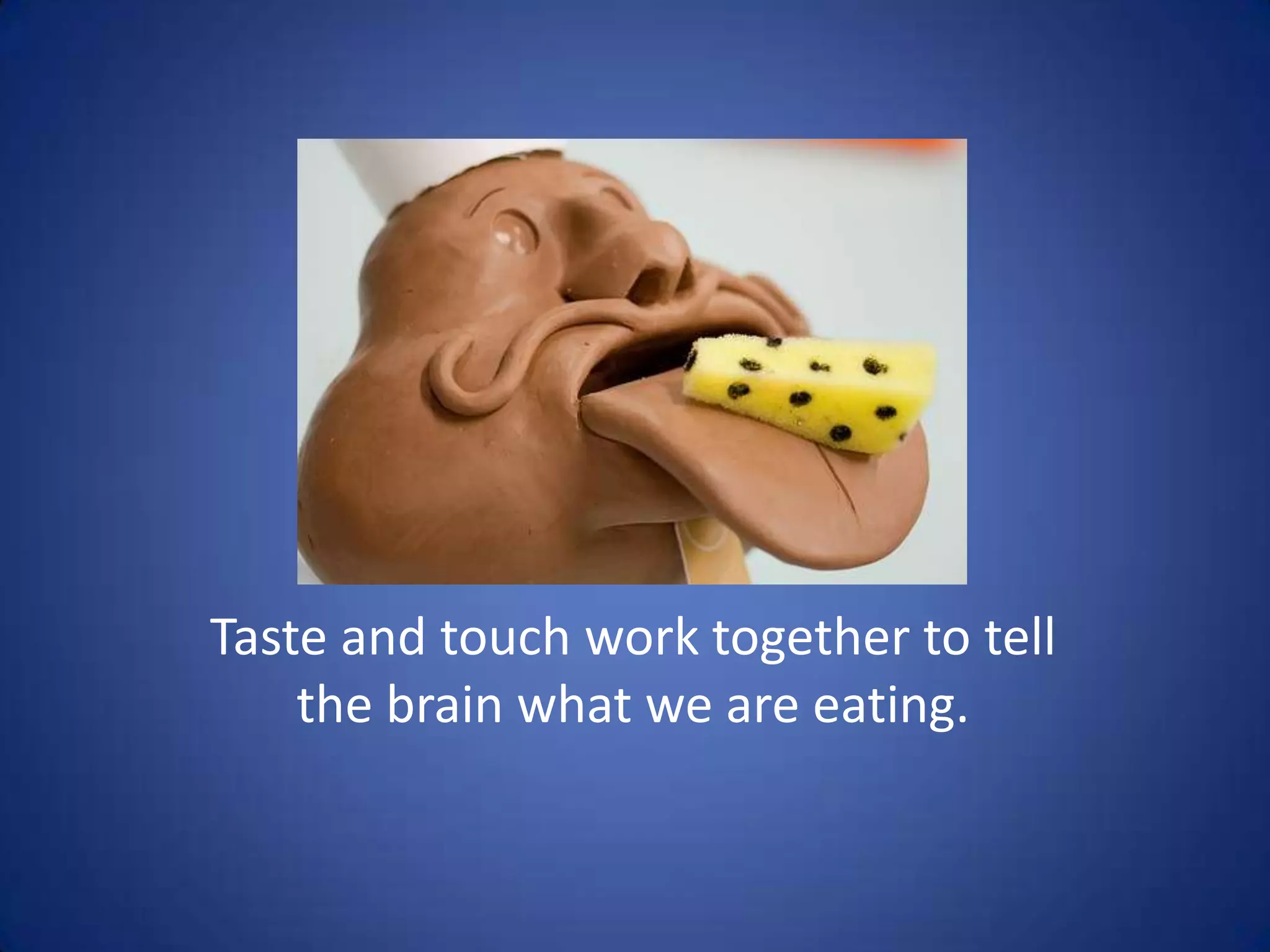
Taste and touch work together to tell
    the brain what we are eating.
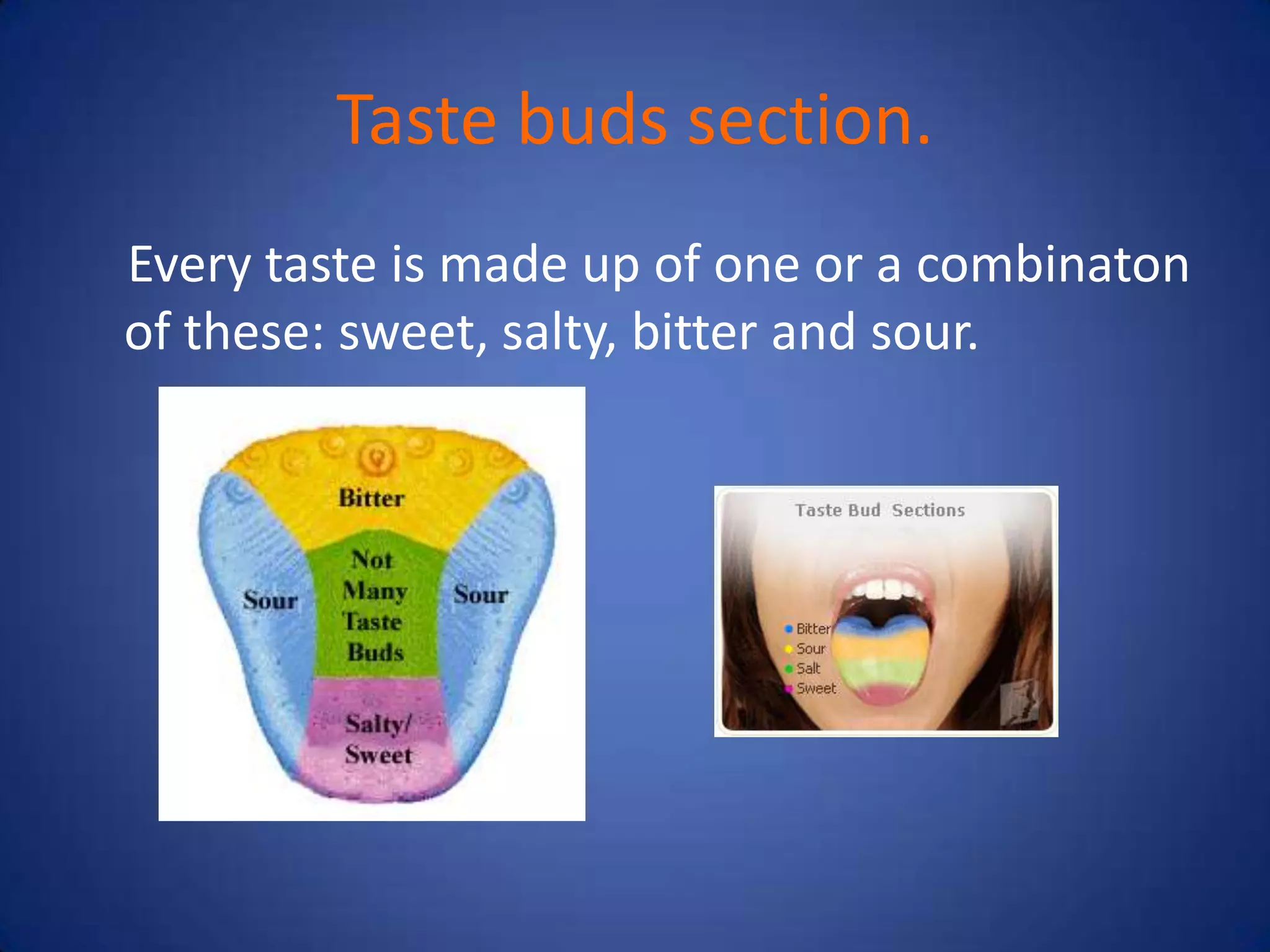
Taste buds section.
Every taste is made up of one or a combinaton
of these: sweet, salty, bitter and sour.
Our body needs healthy food.

Smell touch and taste

  • 1.
    They are physiologicalcapacities of organisms that provide inputs for perception. SIGHT, HEARING,TOUCH, SMELL and TASTE.
  • 2.
    Vocabulary • Slight (adj):Small in size, degree, or amount. • Meissner's corpuscle (n): it is a type of nerve ending in the skin that is responsible for sensitivity. • Fingertip (n): it is the extreme end or tip of a finger. • Dot (n): it is a small round mark made with or as with a pen.
  • 3.
    • Mucus (n):it is the viscous, slippery substance in your nose. • Backbone (n): it is The vertebrate spine or spinal column. • Sniff (vb): to breath air into your nose noisily. • Bite (n): it is a pleasantly sharp taste. • Taste bud (n): it is a small part in your tongue that contains the receptors for taste. • Sour (adj-n): Having a taste characteristic of that produced by acids. • Trickle down (vb): to move or proceed slowly or bit by bit
  • 4.
    SMELL HEARING TOUCH SIGHT TASTE
  • 5.
    Touch There are manydifferents kind of receptors in the skin, which between them react to touch, heat, cold and pain. Also, it is used to discover what something feels like. Some receptors react to the slightest thing: Meissner corpuscle.
  • 6.
    Tongue. Lips. Fingertips. Soles of the feet.
  • 7.
    This sense isstronger in blind people.
  • 8.
    Smell A smell ismade up by tiny particles in the air. When you breathe in, they reach the smell receptors in your nose, which react to chemicals dissolved in the mucus inside your nose and send the messages to tell you if something is rough, shiny, wet, cold, and many other things.
  • 9.
    Characteristics: • It candetect at least 10,000 smells. • It sends directly the messages to the brain SMELL TOUCH TASTE
  • 10.
    Basic smells Thesesmells give off more smell particles which float trough the air. Some of them are: • Camphor • Sour
  • 11.
  • 12.
    Taste and smellgo hand in hand with respect to the foods we eat.
  • 13.
    Taste The tongue rollseach bite around the mouth. As we chew tiny particles of food dissolved in saliva and trickle down to the taste buds. Inside these buds are nerves that send messages to the brain. These messages are about how hot or cols the food is and whether it is rough or smooth, hard or soft.
  • 14.
    Taste and touchwork together to tell the brain what we are eating.
  • 15.
    Taste buds section. Everytaste is made up of one or a combinaton of these: sweet, salty, bitter and sour.
  • 16.
    Our body needshealthy food.