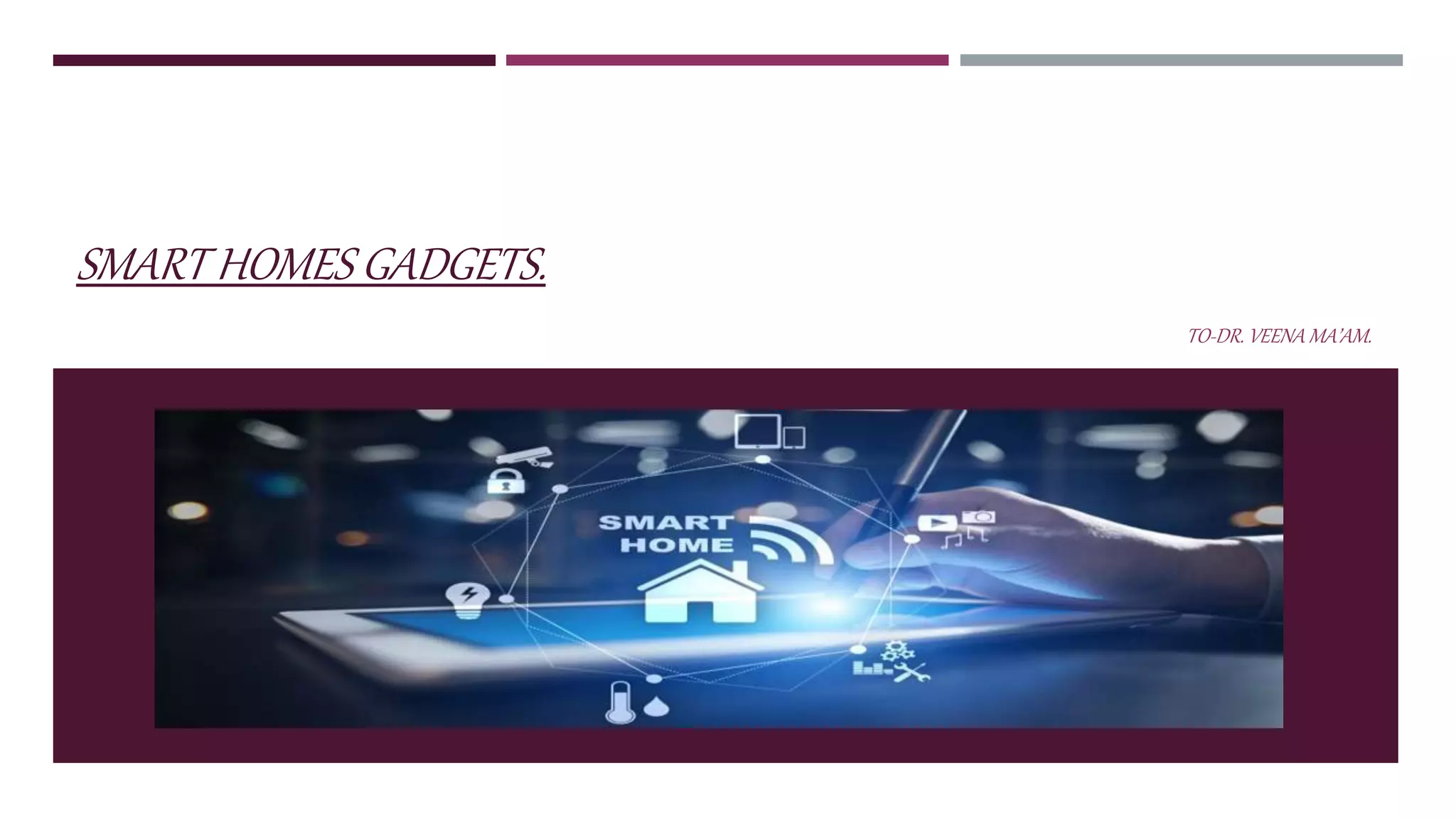
SMART HOMES GADGETS.
TO-DR. VEENA MA’AM.
INTRODUCTION;
 Smart home technology intelligently gives you unlimite control over your home
by automating the lighting system, dimming, blinds, electrical appliances,
audio and security systems.
 Smart homes connect all the devices and appliances in your home so they
can communicate with each other and with you.
HISTORY;
 Integrated smart home infrastructure was usually built by hobbyist in the
1960s, but it wasn’t until 1984 the term “smart home” was coined by the
American Association of Home builders.
 General Electric company was one of the first pioneers to develop a series of
products made for smart homes in the mid 60’s, these products included
portable automatic dish washers and microwaves.
 The smart home’s history can be easily traced back to the early turn of the
century, where electrical and telephone wiring were installed in new houses.
SMART PRODUCT;
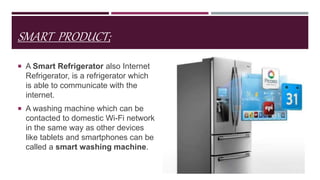
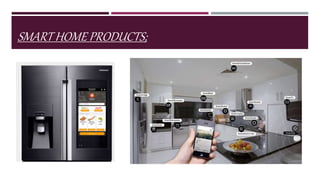
 A Smart Refrigerator also Internet
Refrigerator, is a refrigerator which
is able to communicate with the
internet.
 A washing machine which can be
contacted to domestic Wi-Fi network
in the same way as other devices
like tablets and smartphones can be
called a smart washing machine.
HOW DOES IT WORK;
 Smarthomesworkwithfairlysimplesystem:ReceiversandTransmitters.
 Receiversdetectacertainsignalfromthetransmitter,thatissuesacommand.
 Anythinginyourhomethatuseselectricitycanbeputonthehomenetworkandatyourcommand.Whetheryou
givethatcommandbyvoice,remotecontrolorcomputer,thehomereacts.
PRODUCT IN COMPITITION;
Samsung;
 Samsung’s smart fridge recently began going on
sale in certain parts of the world. Its features like
installed cameras, touch screen technology, and
Internet of Things (IoT) accessories made it a
one-of-a-kind addition for anyone looking to
jump into the smart home scene.
 Samsung’s smart fridge uses Tizen OS, which
isn’t nearly as popular or resourceful.
 You will find smart features like Wi-Fi
connectivity and flexible storage options, which
provide a state-of-the-art appliance encounter.
L.G, Whirlpool;
 LG’s instaView door-in-door refrigerator has
many similar features of its Samsung
counterpart like its 29-inch LCD touchscreen,
IoT access, and built-in cameras.
 Windows 10 apps can be downloaded and
installed on the refrigerator, which accepts voice
commands from Cortana while the webOS
version accepts voice commands from Alexa.
 Whirlpool supplies a vast selection of
refrigerators in several categories to match
every need.
SMART HOME PRODUCTS;
DEMAND FORECASTING;
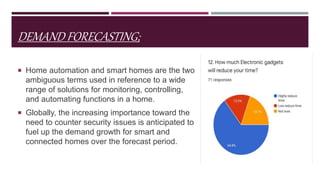
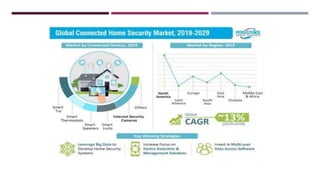
 Home automation and smart homes are the two
ambiguous terms used in reference to a wide
range of solutions for monitoring, controlling,
and automating functions in a home.
 Globally, the increasing importance toward the
need to counter security issues is anticipated to
fuel up the demand growth for smart and
connected homes over the forecast period.
FORECASTING
CONCLUSION;
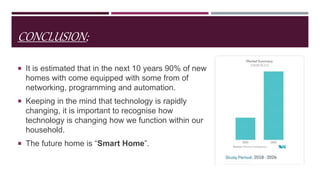
 It is estimated that in the next 10 years 90% of new
homes with come equipped with some from of
networking, programming and automation.
 Keeping in the mind that technology is rapidly
changing, it is important to recognise how
technology is changing how we function within our
household.
 The future home is “Smart Home”.
“
THANK YOU…
”
BY- ANURAG MATHUR.
MBA 1ST YEAR.

Smart homes gadgets (1)

  • 1.
  • 2.
    INTRODUCTION;  Smart hometechnology intelligently gives you unlimite control over your home by automating the lighting system, dimming, blinds, electrical appliances, audio and security systems.  Smart homes connect all the devices and appliances in your home so they can communicate with each other and with you.
  • 3.
    HISTORY;  Integrated smarthome infrastructure was usually built by hobbyist in the 1960s, but it wasn’t until 1984 the term “smart home” was coined by the American Association of Home builders.  General Electric company was one of the first pioneers to develop a series of products made for smart homes in the mid 60’s, these products included portable automatic dish washers and microwaves.  The smart home’s history can be easily traced back to the early turn of the century, where electrical and telephone wiring were installed in new houses.
  • 4.
    SMART PRODUCT;  ASmart Refrigerator also Internet Refrigerator, is a refrigerator which is able to communicate with the internet.  A washing machine which can be contacted to domestic Wi-Fi network in the same way as other devices like tablets and smartphones can be called a smart washing machine.
  • 5.
    HOW DOES ITWORK;  Smarthomesworkwithfairlysimplesystem:ReceiversandTransmitters.  Receiversdetectacertainsignalfromthetransmitter,thatissuesacommand.  Anythinginyourhomethatuseselectricitycanbeputonthehomenetworkandatyourcommand.Whetheryou givethatcommandbyvoice,remotecontrolorcomputer,thehomereacts.
  • 6.
    PRODUCT IN COMPITITION; Samsung; Samsung’s smart fridge recently began going on sale in certain parts of the world. Its features like installed cameras, touch screen technology, and Internet of Things (IoT) accessories made it a one-of-a-kind addition for anyone looking to jump into the smart home scene.  Samsung’s smart fridge uses Tizen OS, which isn’t nearly as popular or resourceful.  You will find smart features like Wi-Fi connectivity and flexible storage options, which provide a state-of-the-art appliance encounter. L.G, Whirlpool;  LG’s instaView door-in-door refrigerator has many similar features of its Samsung counterpart like its 29-inch LCD touchscreen, IoT access, and built-in cameras.  Windows 10 apps can be downloaded and installed on the refrigerator, which accepts voice commands from Cortana while the webOS version accepts voice commands from Alexa.  Whirlpool supplies a vast selection of refrigerators in several categories to match every need.
  • 7.
  • 8.
    DEMAND FORECASTING;  Homeautomation and smart homes are the two ambiguous terms used in reference to a wide range of solutions for monitoring, controlling, and automating functions in a home.  Globally, the increasing importance toward the need to counter security issues is anticipated to fuel up the demand growth for smart and connected homes over the forecast period.
  • 9.
  • 10.
    CONCLUSION;  It isestimated that in the next 10 years 90% of new homes with come equipped with some from of networking, programming and automation.  Keeping in the mind that technology is rapidly changing, it is important to recognise how technology is changing how we function within our household.  The future home is “Smart Home”.
  • 11.
    “ THANK YOU… ” BY- ANURAGMATHUR. MBA 1ST YEAR.