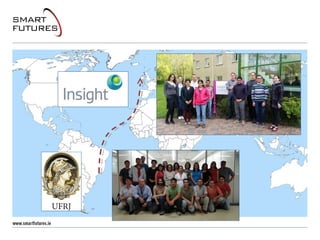
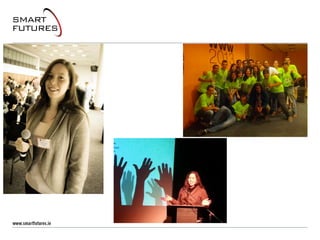
Bianca Pereira
PhD Researcher
Insight Centre for Data Analytics
National University of Ireland, Galway
What is STEM?
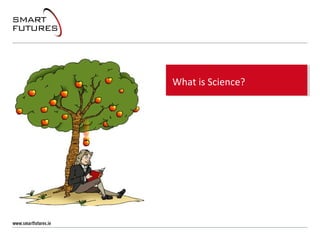
What is Science?
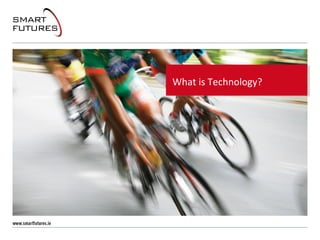
What is Technology?
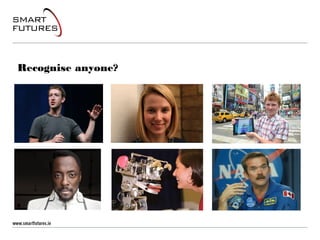
Recognise anyone? works in technology?
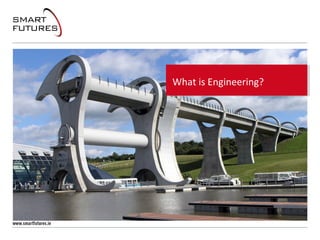
What is Engineering?
Video from https://www.kickstarter.com/projects/kazbrella/kazbrella-
revolutionary-inside-out-umbrella
What is Mathematics?
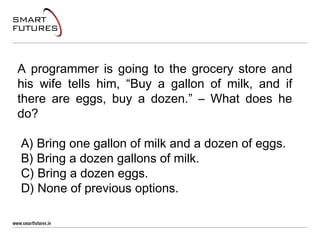
A programmer is going to the grocery store and
his wife tells him, “Buy a gallon of milk, and if
there are eggs, buy a dozen.” – What does he
do?
A) Bring one gallon of milk and a dozen of eggs.
B) Bring a dozen gallons of milk.
C) Bring a dozen eggs.
D) None of previous options.
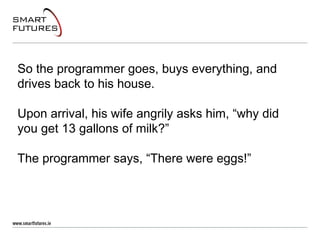
So the programmer goes, buys everything, and
drives back to his house.
Upon arrival, his wife angrily asks him, “why did
you get 13 gallons of milk?”
The programmer says, “There were eggs!”
What skills do people in
STEM need?
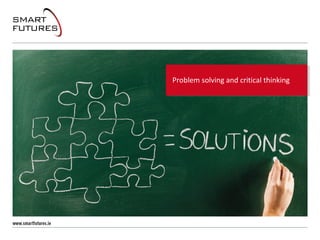
Problem solving and critical thinking
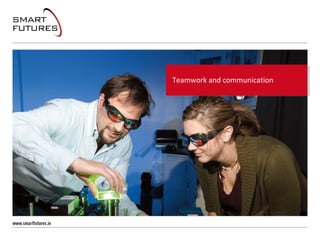
Teamwork and communication
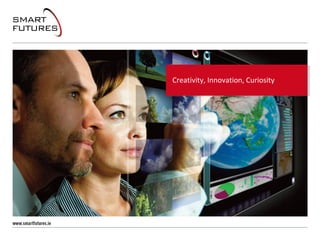
Creativity, Innovation, Curiosity
MY STORY
Researcher
Ph.D. in Engineering (ongoing)
M.Sc. in Information Systems
Why I chose to work
in STEM
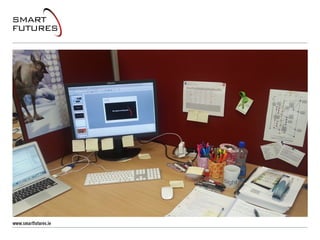
My typical working day…
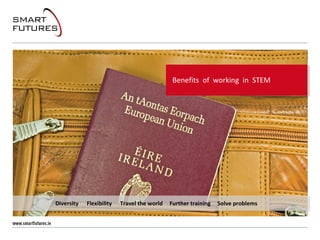
Benefits of working in STEM
Diversity Flexibility Travel the world Further training Solve problems
• Coder Dojo (children, teenagers)
• https://coderdojo.com/
• Rails Girls (women 16+)
• http://railsgirls.com/galway
• Dbpedia as Gaeilge
• http://ga.dbpedia.org
• Raspberry Pi/ Arduino
• https://www.raspberrypi.org/
• http://www.arduino.cc/
STEM
Changing Our World
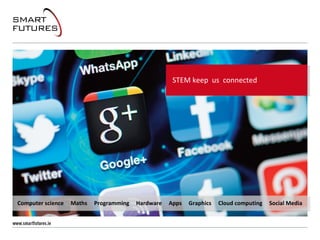
STEM keep us connected
Computer science Maths Programming Hardware Apps Graphics Cloud computing Social Media
STEM help us look good
Health Nutrition Cosmetics Sensors Manufacturing Medical Devices
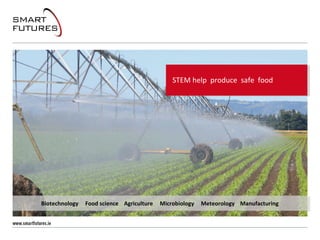
STEM help produce safe food
Biotechnology Food science Agriculture Microbiology Meteorology Manufacturing
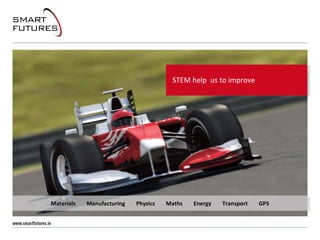
STEM help us to improve
Materials Manufacturing Physics Maths Energy Transport GPS
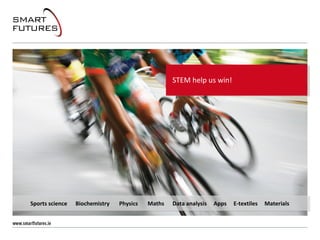
STEM help us win!
Sports science Biochemistry Physics Maths Data analysis Apps E-textiles Materials
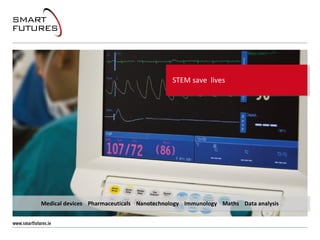
STEM save lives
Medical devices Pharmaceuticals Nanotechnology Immunology Maths Data analysis
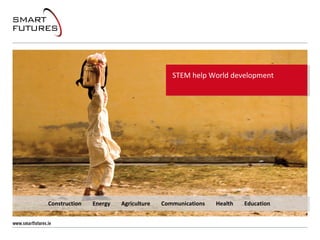
STEM help World development
Construction Energy Agriculture Communications Health Education
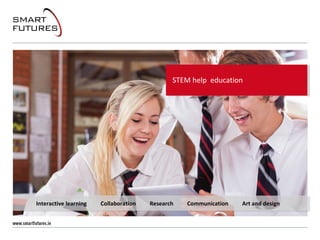
STEM help education
Interactive learning Collaboration Research Communication Art and design
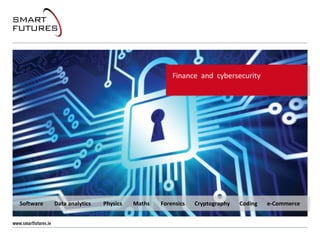
Finance and cybersecurity
Software Data analytics Physics Maths Forensics Cryptography Coding e-Commerce
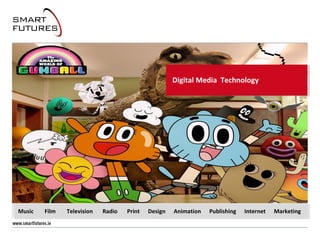
Digital Media Technology
Music Film Television Radio Print Design Animation Publishing Internet Marketing
QUESTIONS?
Bianca Pereira
bianca.pereira@insight-centre.org

Smart Futures presentation at St. Raphael's College

Editor's Notes

  • #2 Smart Futures is programme promoting science, technology, engineering and maths (STEM) careers to secondary students in Ireland. It is a government programme working with partners such as Engineers Ireland, ICT Ireland, PharmaChem Ireland, the Royal Society of Chemistry and the Institute of Physics. It is coordinated by SFI Discover, the education and outreach programme of Science Foundation Ireland (SFI). 1 minute
  • #3 Introduce yourself here. What is STEM? How I ended up in a STEM career. What are the skills we use and how. The workplace.
  • #4 What is STEM?
  • #5 I love this guy because he revolutionized the physics with a very simple question. Who knows which question is that? “Why things fall down?” Observe a phenomena, formulate hypothesis and perform experiments to confirm the hypothesis is correct or not. And mainly, don’t be afraid of ask what seems “obvious”!
  • #6 What is Technology? That is a hard question! Does anybody know? Technology (from Greek, techne) is the making, modifying, usage and knowledge of tools, machines, techniques, systems and methods of organization, in order to solve a problem, improve a pre-existing solution to a problem, achieve a goal, handle an applied input/output relation or perform a specific function. Give humans superpowers! Travel fast, talk with someone in the other side of the world, see someone in the other side of the world!
  • #7 Here are some examples of people working on Technology. Clockwise: Mark Zuckerberg (Facebook founder), Marissa Mayer (Yahoo/Google), Jordan Casey (14) CEO of Casey Games from Waterford & one of Europe’s youngest app developers, with 7 games in the App Store! Commander Chris Hadfield (Astronaut), Cynthia Breazeal (Director, Personal Robots Group, MIT) & Will.i.am (coder, Director of Creative Innovation for Intel)
  • #8 Develop new/better solutions using the technology available. Uses technology to solve people’s problems.
  • #9 KAZBRELLA is a perfect example of Science (be curious and do a ‘simple’ question), Technology (develop the technology to answer the question), Engineering (use the technology to solve people’s problems), and Mathematics (critical thinking and modeling of real world)
  • #10 Math is much more than just equations. It is about logical thinking and enabling model the world in a way we can understand.
  • #11 Logically.. What is the answer?
  • #12 There are many different interpretations. It depends on the logic you are following.. In special when the instruction is ambiguous.
  • #13 Training? Qualifications? But what else? What skills does a person working in STEM need? What did we learn from our examples? What Newton, Mark Zuckerberg, KAZbrella inventor and the guy of the milk, maybe, have in common?
  • #14 Continuous Learning and Skills development A ‘can do’ attitude and determination to find solutions! Willingness to listen to others (how to have critical thinking without listen different views?)
  • #15 Listen the customer. (Is this umbrella working properly?) Communicate my work It is not possible to change the world (alone..)
  • #16 Be curious, everything can be interesting (Newton) Methodical and attention to detail Create new solutions for old problems!
  • #17 My own question: “How does a letter from my keyboard appears in the screen? There is no letter travelling around until be stick on the screen? Then, how computers work?” With IT I could work with many areas of knowledge: biology, entertainment, human resources, etc. With Science I could choose my own questions.
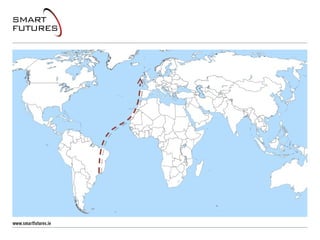
  • #18 I was born in the “country of the football” (Where is it?) More specifically in Rio de Janeiro And in 2011 I came to the awesome Galway for an internship and I decided to come back to work with research.
  • #19 I started my journey into STEM with a course on Windows, Excel and HTML. With HTML I discovered I could do “everything” that could be represented in a computer. I then went for a technical school in IT, continued with my Bachelors and Masters in Computer Science. When I had the opportunity to come to one of the best Semantic Web institutes in the world to conduct my PhD.
  • #20 Virtually everything in the world can be represented in a computer. I can work with problems in any area of Knowledge
  • #21 70% of time at my desk
  • #22 30% of time communicating my findings and problems
  • #23 In-Demand People with qualifications in technology are in high-demand. Well Paid – currently there is higher demand for technologists than there is in supply thus giving technologist more negotiation power on their salary. Variety – Technology field is very broad and varied, new projects and challenges come up all of the time never be bored! Can move around the company sometimes too. Travel – Many people in technology get to travel for work, esp. in multinational companies (global teams etc) Flexibility - Office hours can be flexible and may allow working from home. Fulfilling – chance to make a difference / get involved in the community – volunteer programmes etc? Work with great people and have fun!
  • #24 There are already opportunities for those who want to give STEM a try.
  • #25 So, we’re going to take a quick look at the many ways technology is changing the world we live in, so that you can see the many ways in how working in technology can give you the opportunity to make a difference or have an impact on the world around you.