Smart EV Routing
Overview of Smart EV Routing
There are many complex factors that impact an EV’s range. Uncertainties about the real battery range, as well as when and
where to charge, can lead to low EV adoption. OEMs can facilitate the transition from internal combustion engines (ICEs)
and hybrid vehicles to EVs by addressing primary consumer concerns, such as running out of battery power and not being
able to find an available charging station. Smart EV Routing which is designed to provide OEMs with in-car navigation
tailored specifically to the EV drivers’ needs. Smart EV Routing uses the specific vehicle model’s charging curve, combined
with live data from the vehicle and environment, to provide the most optimized route for the driver. Additionally, each
individual vehicle’s consumption model is continually optimized based on driving patterns, ensuring accurate routing.
For each OEM, available solutions and capabilities of Smart EV Routing vary based on factors such as geographical region,
car models, specifications, regulations, and more.
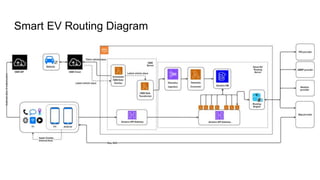
Smart EV Routing Diagram
Integration between Smart EV Routing and OEMs
The vehicle consumption model, along with a minimum set of data from connected EVs is used to create a route. This data
is continuously consumed and enhanced to provide more accurate predictions and charging. Routing advice is provided as
environmental factors and vehicle systems impact the range and charging characteristics at all time.
Since Smart EV Routing is a headless API product, an OEM looking to adopt Smart EV Routing has several options when it
comes to the user interface. They include:
● Smartphone Apps — OEMs can integrate Smart EV Routing into their existing owner apps or develop a standalone
app, and utilize each platform’s existing technologies like Apple CarPlay and Android Auto to provide a better
navigation experience on the in-vehicle infotainment.
● In-vehicle infotainment (IVI) — OEMs can integrate Smart EV Routing into the IVI of the vehicle using platforms like
Android Automotive or Linux-based OS.
Whether implemented by a third party, or the OEM, the development organization of OEMs uses to integrate with the Smart
EV Routing service. These integrations allow the OEM to deliver a seamless experience between the mobile app/In Vehicle
Infotainment (IVI) app used for setting preferences and planning.
Smart EV Routing with EV Route Planner.
An EV route planner uses a variety of parameters to plan the best possible route for an EV driver. This is particularly useful
for long-distance travel, as many drivers still express concerns about the availability of EV charging stations, range anxiety,
and the time needed for charging. Thanks to the EV route planner, drivers can enjoy their journey and the EV without
worrying about these issues. It can interact with dynamic charging infrastructure to determine whether a charging station is
available and functioning along with Point of Interest (POI).
Smart EV Routing has reference implementations for Apple CarPlay and Android Auto and can deliver tailor-made solutions
to OEMs looking for a fully integrated solution via a professional services engagement.
Benefits of ABRP and POI Integration
● Enhanced User Experience: Provides EV drivers with valuable information and services along their
journey.
● Convenience: Enables users to plan routes with optimized charging stops and access nearby
amenities.
● Safety: Helps drivers make informed decisions by providing real-time data on charging station
availability and POI information.
● Community Engagement: Fosters a sense of community among EV drivers by sharing charging and
POI recommendations.
EV Route Planner (ABRP)
A Better Route Planner (ABRP)
ABRP offers both a web-based platform and a dedicated mobile app, specifically engineered for electric vehicle owners. This service
elevates EV route planning by optimizing routes with a multifaceted approach, considering battery range, charging station locations,
real-time traffic updates, and even weather conditions. This ensures that electric vehicle users enjoy a reliable, efficient travel
experience.
Core data points and features of ABRP’s API
ABRP's API offers a range of data and functionalities to support electric vehicle route planning and navigation:
● ABRP's API provides route planning information optimized for electric vehicles. It considers factors such as battery SoC,
vehicle efficiency, charging station locations, and real-time traffic conditions to generate efficient routes.
● The API includes comprehensive data about charging station locations, types of connectors available (e.g., CHAdeMO,
CCS, Tesla Supercharger), the number of connectors, and real-time availability information.
● Users can access real-time updates on the availability and status of charging stations along their route, allowing for
adjustments as needed during the journey.
● ABRP's API provides estimates of energy consumption based on the selected route and driving conditions, helping users
understand their charging needs.
● The API may incorporate weather data into route planning to account for factors like temperature, wind speed, and
precipitation, which can affect EV efficiency.
● Some implementations of the API may offer data on the charging speed of different stations and estimated charging costs for
each stop.
● Users can customize their preferences, such as charging speed, desired SoC at each stop, and preferred charging networks, to
tailor their routes to their specific needs.
Point of interest
Point of interest is a data-set containing GPS coordinates that represents important locations in navigation application.It is quick, easy & accurate
way to populate the mapping project with important places of features, buildings and landmarks. Some examples like speed-cams, accommodation
locations, restaurants, petrol stations, parking lots, wifi hotspots, attractions, etc.
Ultimately applications may handle other data like detailed description, working hours, contacts & even photos too.POI data supports a range of
applications including digital mapping enhanced routing products and validation of databases. On the other hand, there are websites that focus
more on collection, authentication & management of POIs which users can see on their devices.
Advantage of POI Mapping in several ways:
● When you are travelling to an unfamiliar route, you can use POI as your destination.
● Your navigation system becomes easier provides
● It helps to generate statistics of data.
● It is a combination of spatial and non-spatial data that helps to capture pictures and collation of attributes of related asset like name and
address.
Provider:
Google Places provides comprehensive global POI coverage, including imagery and social sentiment

Smart EV Routing methods to understand how it works

  • 1.
  • 2.
    Overview of SmartEV Routing There are many complex factors that impact an EV’s range. Uncertainties about the real battery range, as well as when and where to charge, can lead to low EV adoption. OEMs can facilitate the transition from internal combustion engines (ICEs) and hybrid vehicles to EVs by addressing primary consumer concerns, such as running out of battery power and not being able to find an available charging station. Smart EV Routing which is designed to provide OEMs with in-car navigation tailored specifically to the EV drivers’ needs. Smart EV Routing uses the specific vehicle model’s charging curve, combined with live data from the vehicle and environment, to provide the most optimized route for the driver. Additionally, each individual vehicle’s consumption model is continually optimized based on driving patterns, ensuring accurate routing. For each OEM, available solutions and capabilities of Smart EV Routing vary based on factors such as geographical region, car models, specifications, regulations, and more.
  • 3.
  • 4.
    Integration between SmartEV Routing and OEMs The vehicle consumption model, along with a minimum set of data from connected EVs is used to create a route. This data is continuously consumed and enhanced to provide more accurate predictions and charging. Routing advice is provided as environmental factors and vehicle systems impact the range and charging characteristics at all time. Since Smart EV Routing is a headless API product, an OEM looking to adopt Smart EV Routing has several options when it comes to the user interface. They include: ● Smartphone Apps — OEMs can integrate Smart EV Routing into their existing owner apps or develop a standalone app, and utilize each platform’s existing technologies like Apple CarPlay and Android Auto to provide a better navigation experience on the in-vehicle infotainment. ● In-vehicle infotainment (IVI) — OEMs can integrate Smart EV Routing into the IVI of the vehicle using platforms like Android Automotive or Linux-based OS. Whether implemented by a third party, or the OEM, the development organization of OEMs uses to integrate with the Smart EV Routing service. These integrations allow the OEM to deliver a seamless experience between the mobile app/In Vehicle Infotainment (IVI) app used for setting preferences and planning.
  • 5.
    Smart EV Routingwith EV Route Planner. An EV route planner uses a variety of parameters to plan the best possible route for an EV driver. This is particularly useful for long-distance travel, as many drivers still express concerns about the availability of EV charging stations, range anxiety, and the time needed for charging. Thanks to the EV route planner, drivers can enjoy their journey and the EV without worrying about these issues. It can interact with dynamic charging infrastructure to determine whether a charging station is available and functioning along with Point of Interest (POI). Smart EV Routing has reference implementations for Apple CarPlay and Android Auto and can deliver tailor-made solutions to OEMs looking for a fully integrated solution via a professional services engagement.
  • 6.
    Benefits of ABRPand POI Integration ● Enhanced User Experience: Provides EV drivers with valuable information and services along their journey. ● Convenience: Enables users to plan routes with optimized charging stops and access nearby amenities. ● Safety: Helps drivers make informed decisions by providing real-time data on charging station availability and POI information. ● Community Engagement: Fosters a sense of community among EV drivers by sharing charging and POI recommendations.
  • 7.
    EV Route Planner(ABRP) A Better Route Planner (ABRP) ABRP offers both a web-based platform and a dedicated mobile app, specifically engineered for electric vehicle owners. This service elevates EV route planning by optimizing routes with a multifaceted approach, considering battery range, charging station locations, real-time traffic updates, and even weather conditions. This ensures that electric vehicle users enjoy a reliable, efficient travel experience. Core data points and features of ABRP’s API ABRP's API offers a range of data and functionalities to support electric vehicle route planning and navigation: ● ABRP's API provides route planning information optimized for electric vehicles. It considers factors such as battery SoC, vehicle efficiency, charging station locations, and real-time traffic conditions to generate efficient routes. ● The API includes comprehensive data about charging station locations, types of connectors available (e.g., CHAdeMO, CCS, Tesla Supercharger), the number of connectors, and real-time availability information. ● Users can access real-time updates on the availability and status of charging stations along their route, allowing for adjustments as needed during the journey. ● ABRP's API provides estimates of energy consumption based on the selected route and driving conditions, helping users understand their charging needs. ● The API may incorporate weather data into route planning to account for factors like temperature, wind speed, and precipitation, which can affect EV efficiency. ● Some implementations of the API may offer data on the charging speed of different stations and estimated charging costs for each stop. ● Users can customize their preferences, such as charging speed, desired SoC at each stop, and preferred charging networks, to tailor their routes to their specific needs.
  • 8.
    Point of interest Pointof interest is a data-set containing GPS coordinates that represents important locations in navigation application.It is quick, easy & accurate way to populate the mapping project with important places of features, buildings and landmarks. Some examples like speed-cams, accommodation locations, restaurants, petrol stations, parking lots, wifi hotspots, attractions, etc. Ultimately applications may handle other data like detailed description, working hours, contacts & even photos too.POI data supports a range of applications including digital mapping enhanced routing products and validation of databases. On the other hand, there are websites that focus more on collection, authentication & management of POIs which users can see on their devices. Advantage of POI Mapping in several ways: ● When you are travelling to an unfamiliar route, you can use POI as your destination. ● Your navigation system becomes easier provides ● It helps to generate statistics of data. ● It is a combination of spatial and non-spatial data that helps to capture pictures and collation of attributes of related asset like name and address. Provider: Google Places provides comprehensive global POI coverage, including imagery and social sentiment