SAFETY in the kitchen means
using precautionary methods
in the kitchen to prevent an
accident. Most accidents in
the kitchen are due to
carelessness.
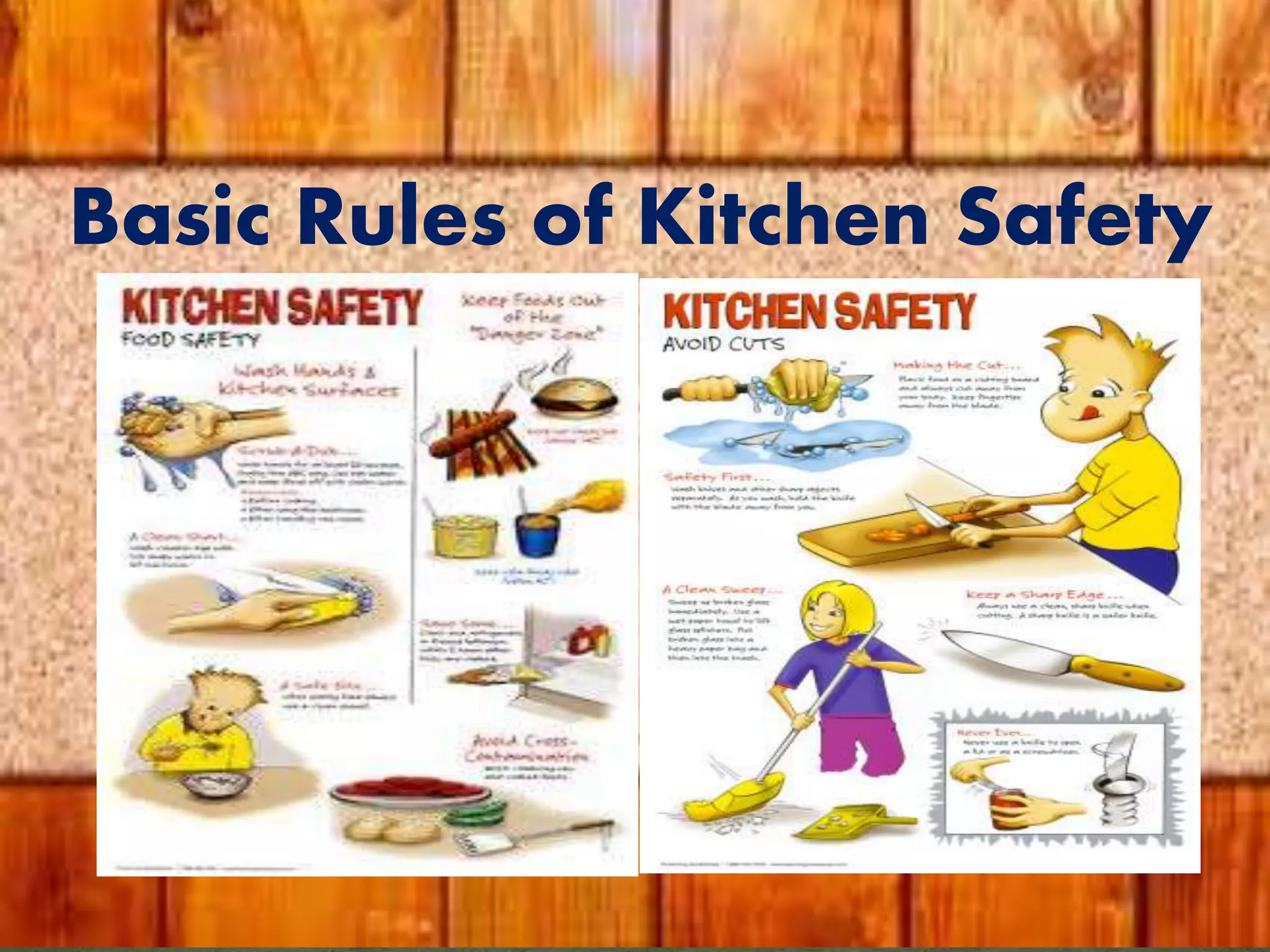
Basic Rules of Kitchen Safety
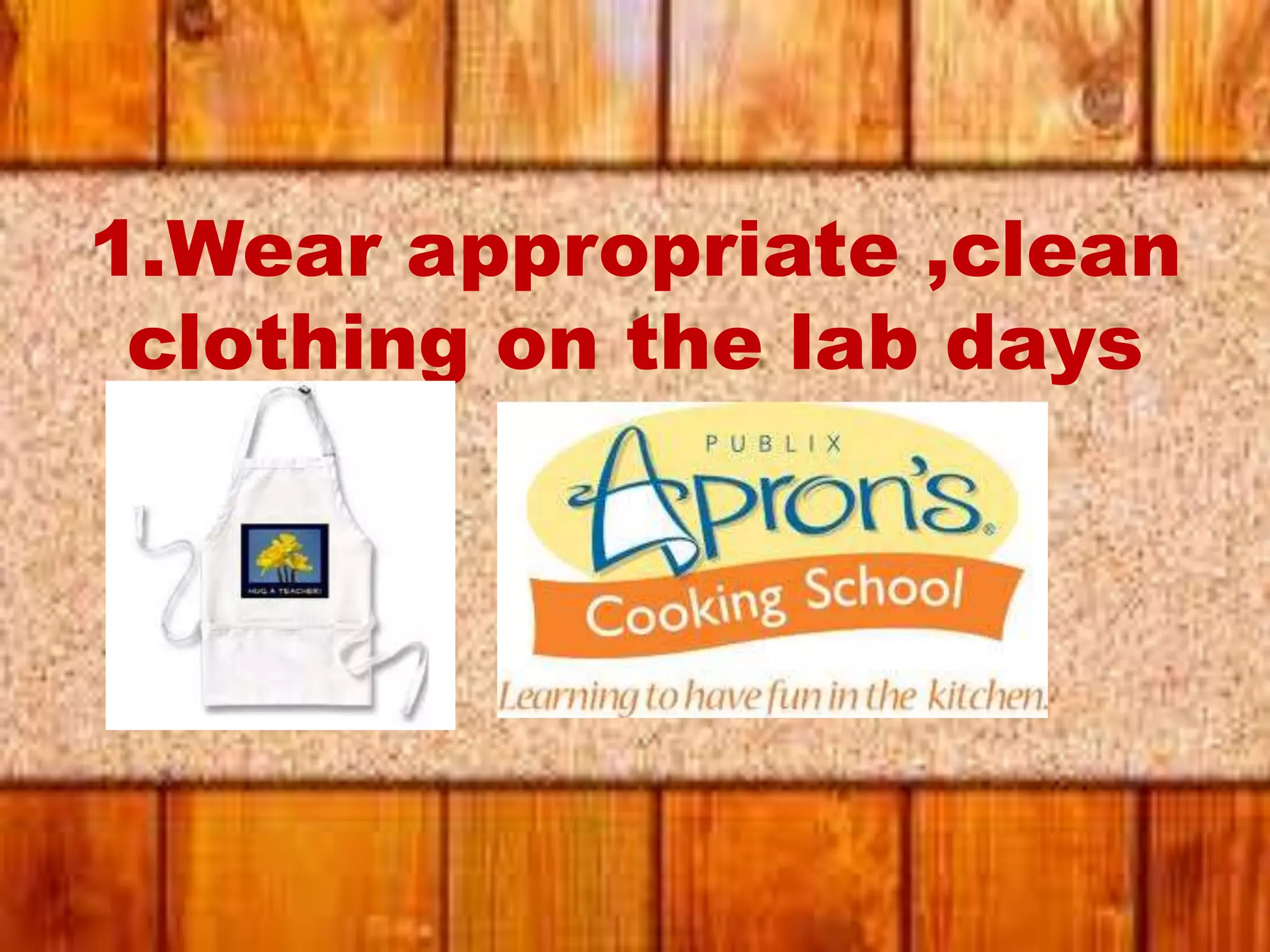
1.Wear appropriate ,clean
clothing on the lab days
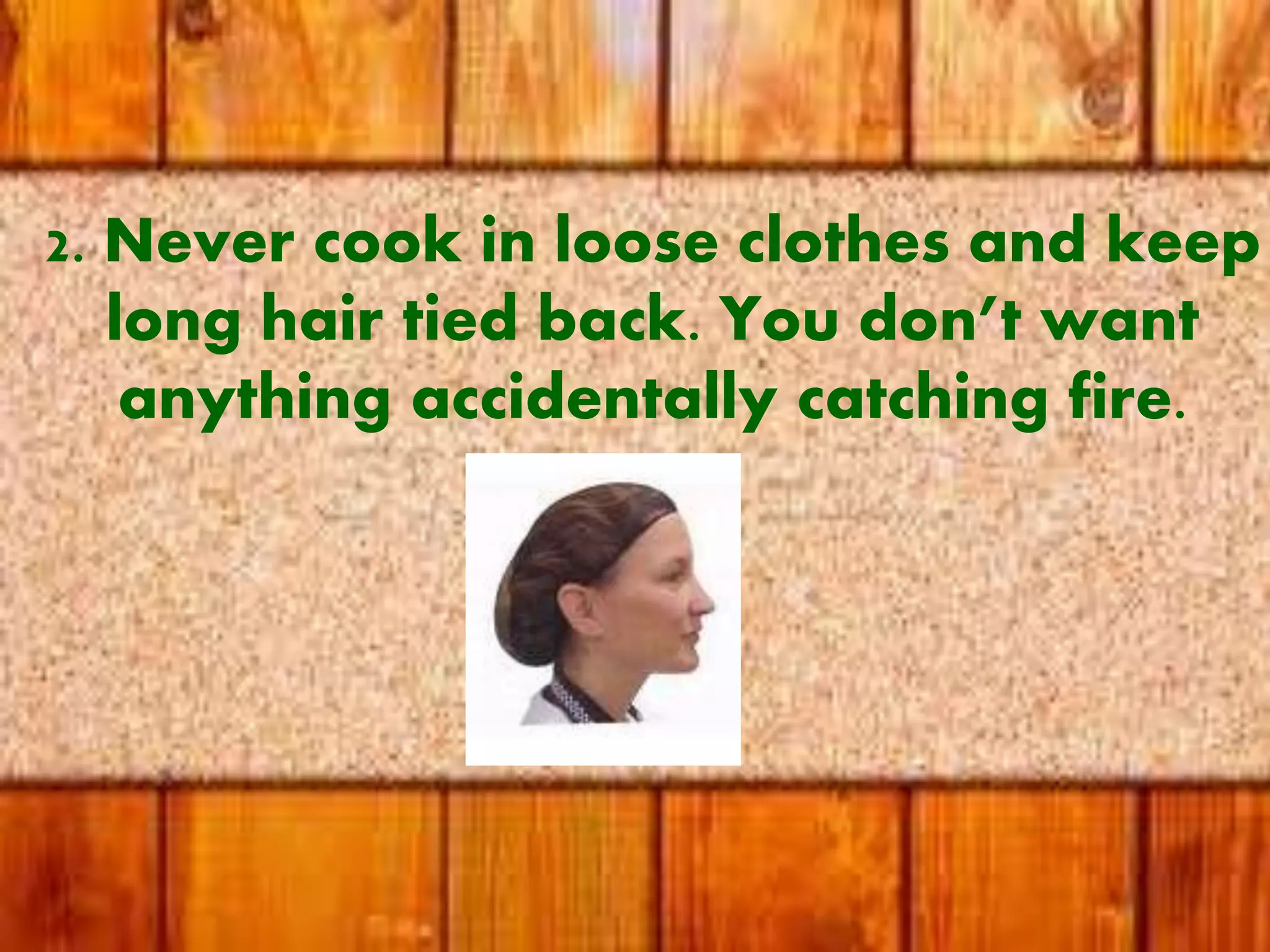
2. Never cook in loose clothes and keep

long hair tied back. You don’t want
anything accidentally catching fire.
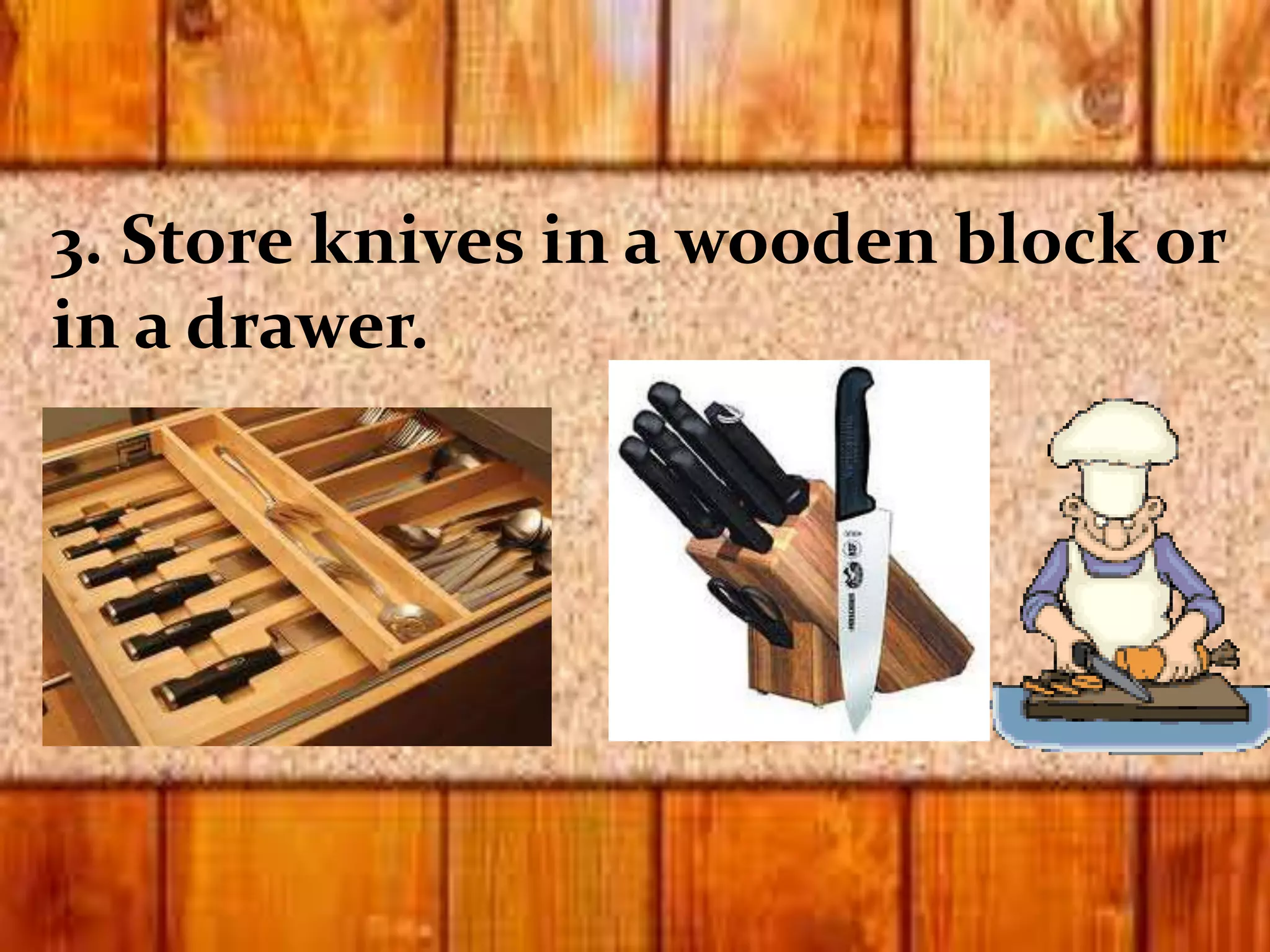
3. Store knives in a wooden block or
in a drawer.
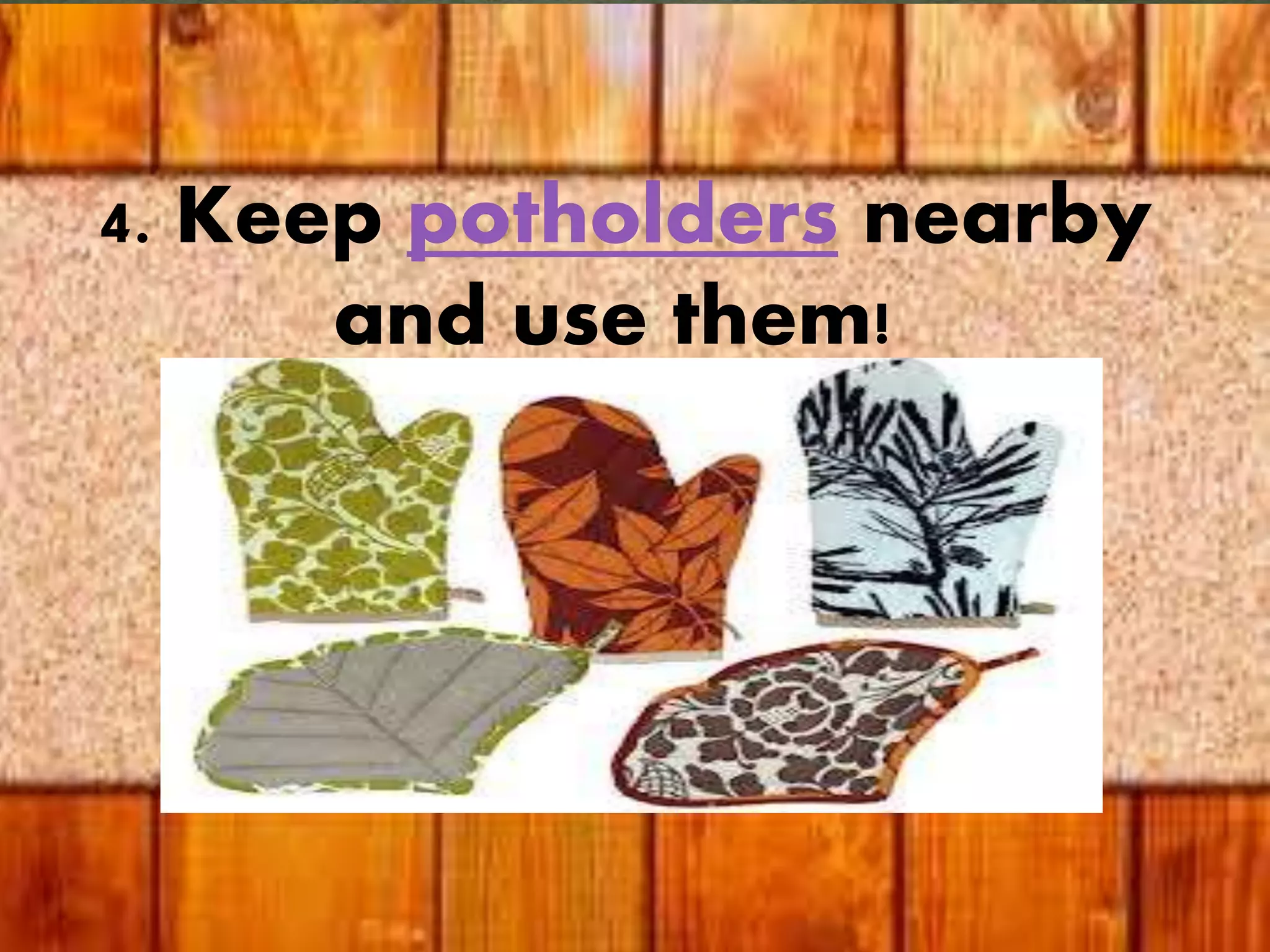
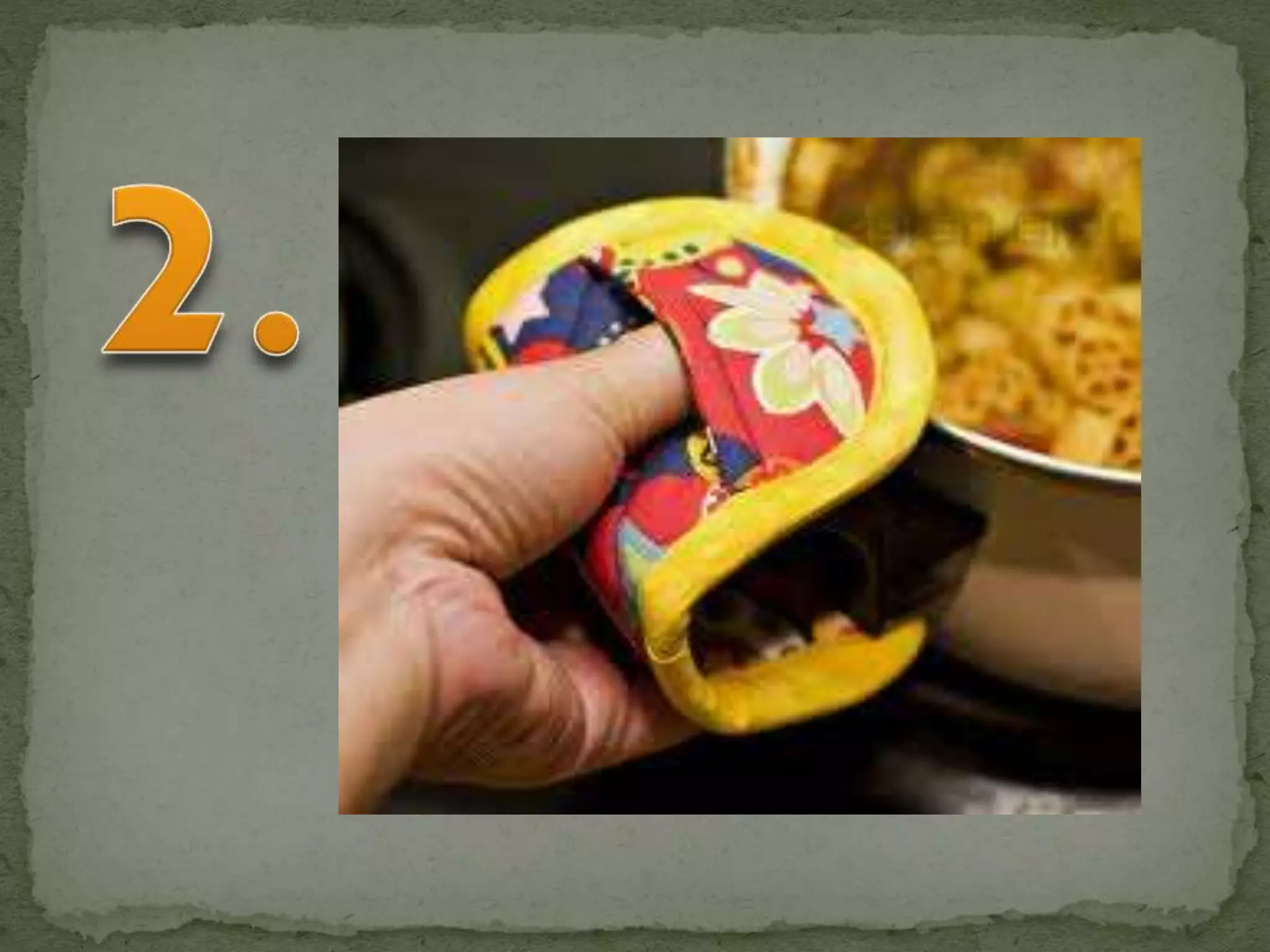
4. Keep potholders nearby
and use them!
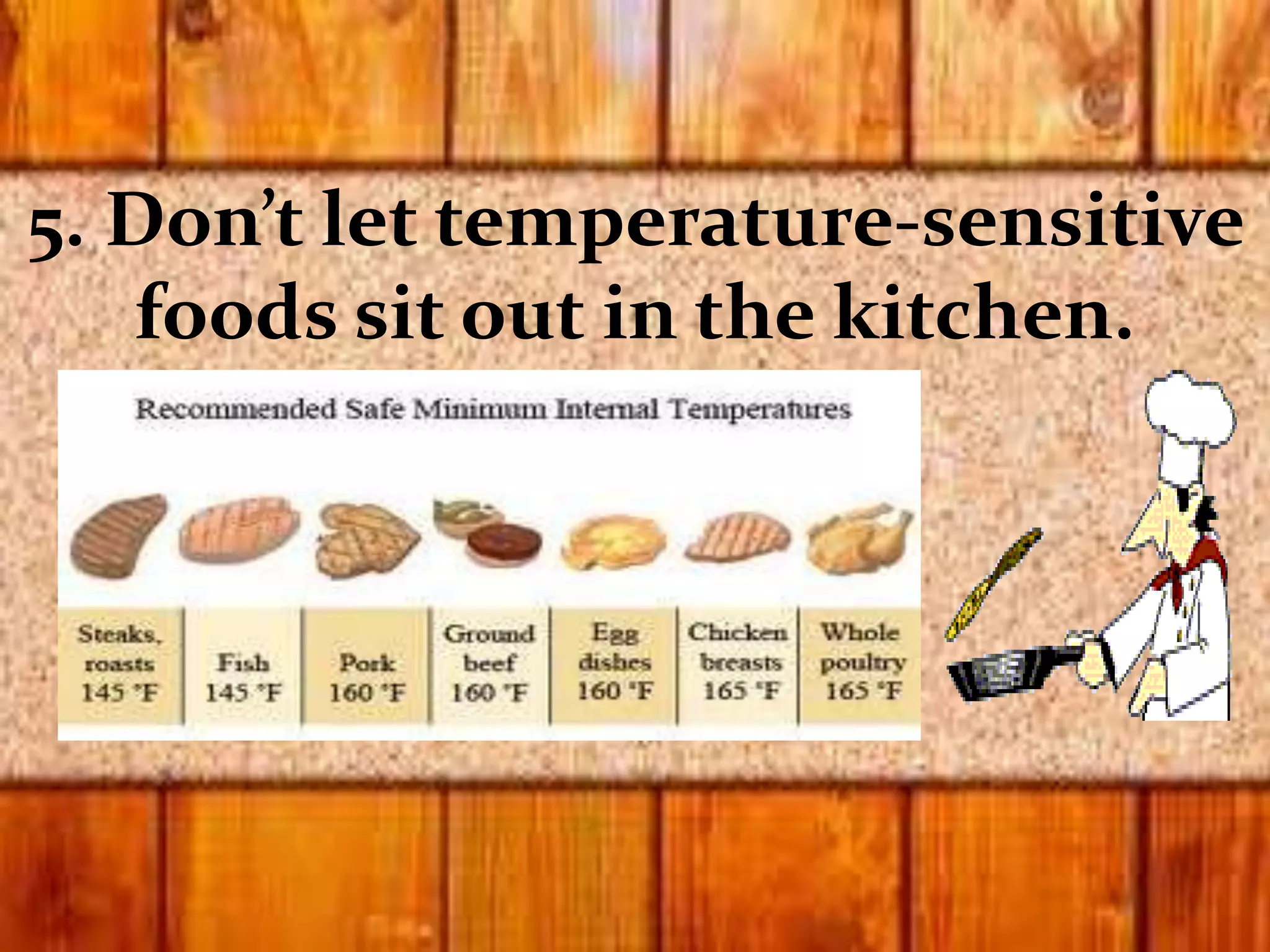
5. Don’t let temperature-sensitive
foods sit out in the kitchen.
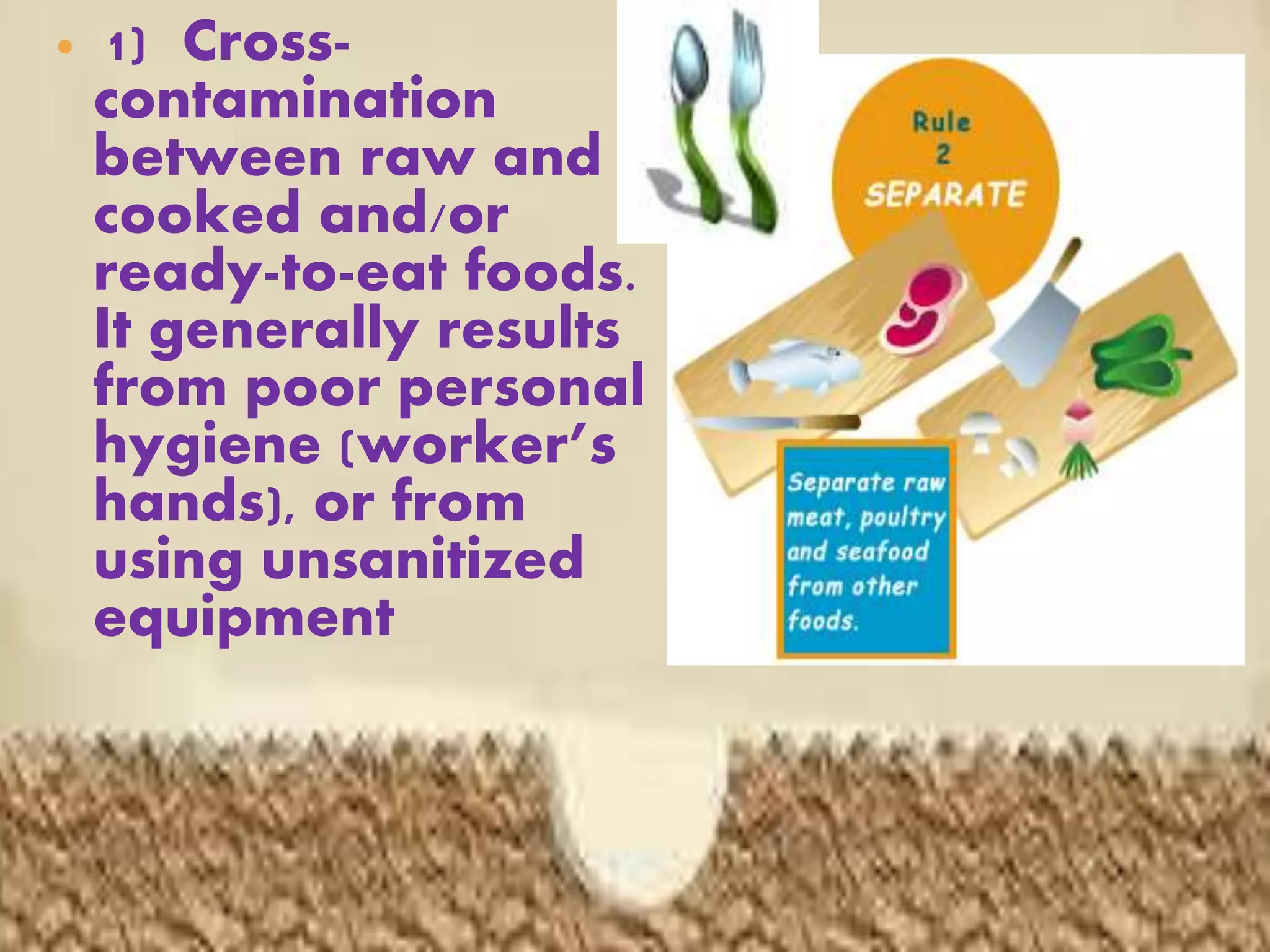
6. Separate raw meat and poultry from
other items whenever you use or store
them.
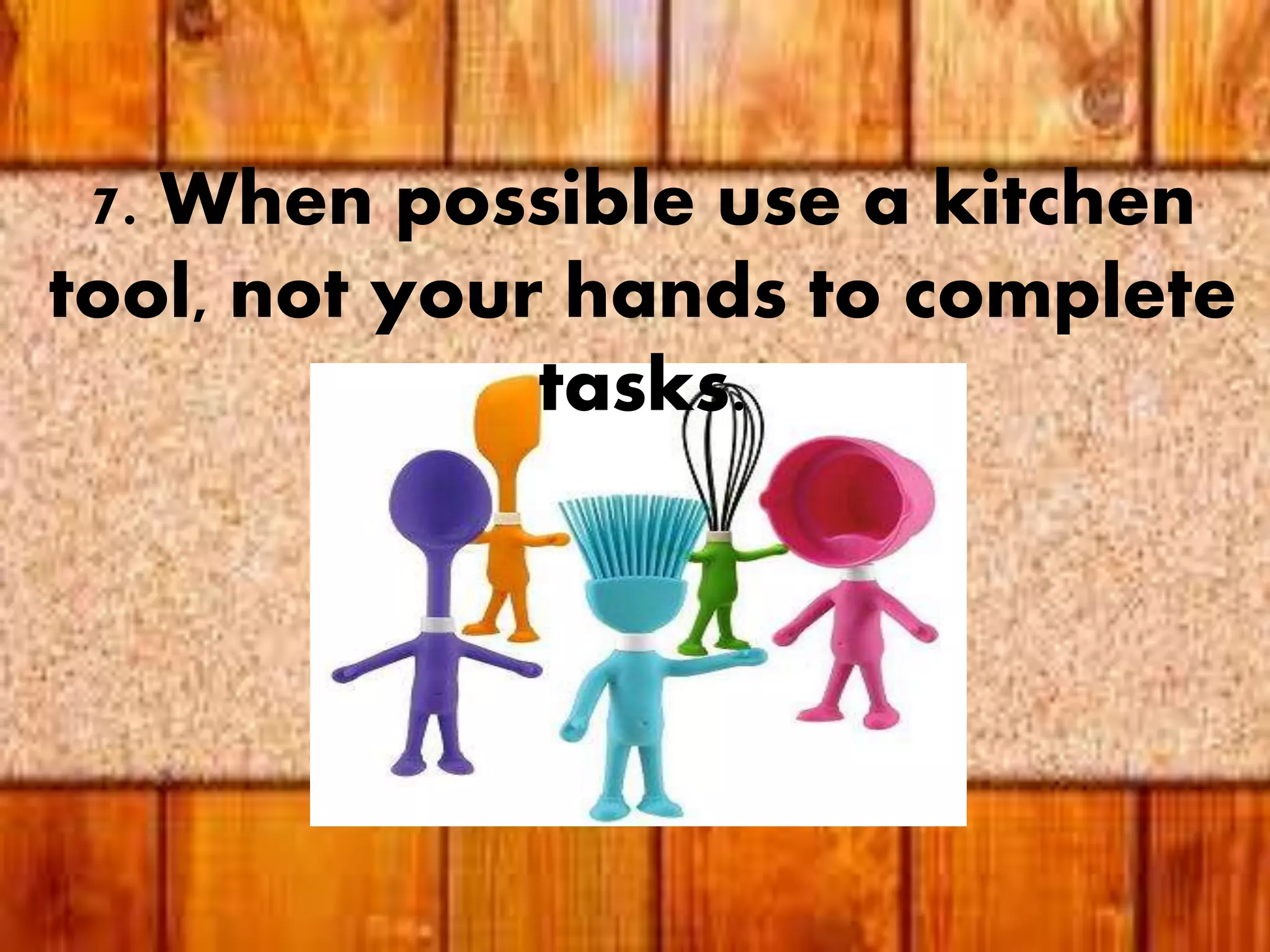
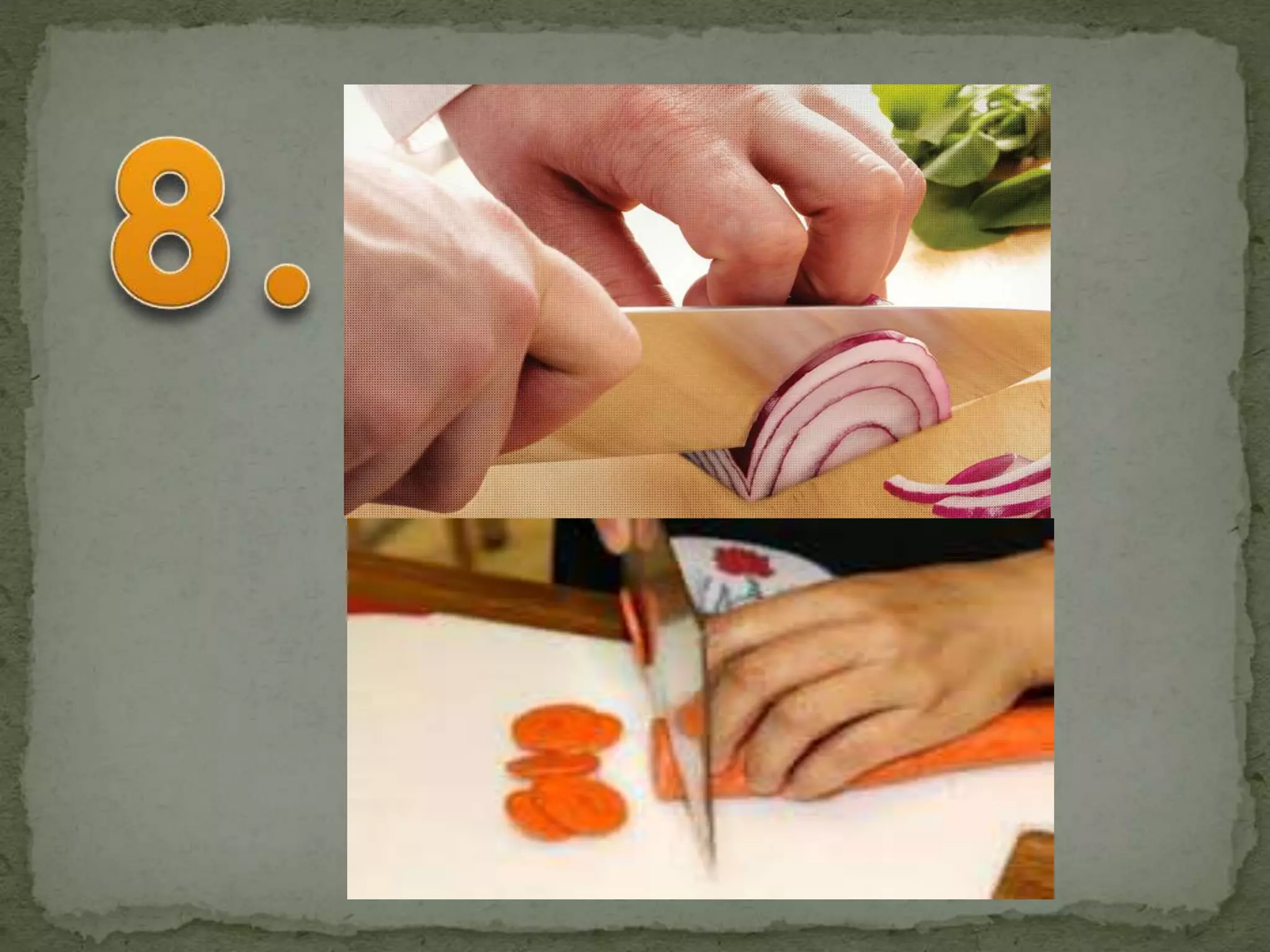
7. When possible use a kitchen
tool, not your hands to complete
tasks.
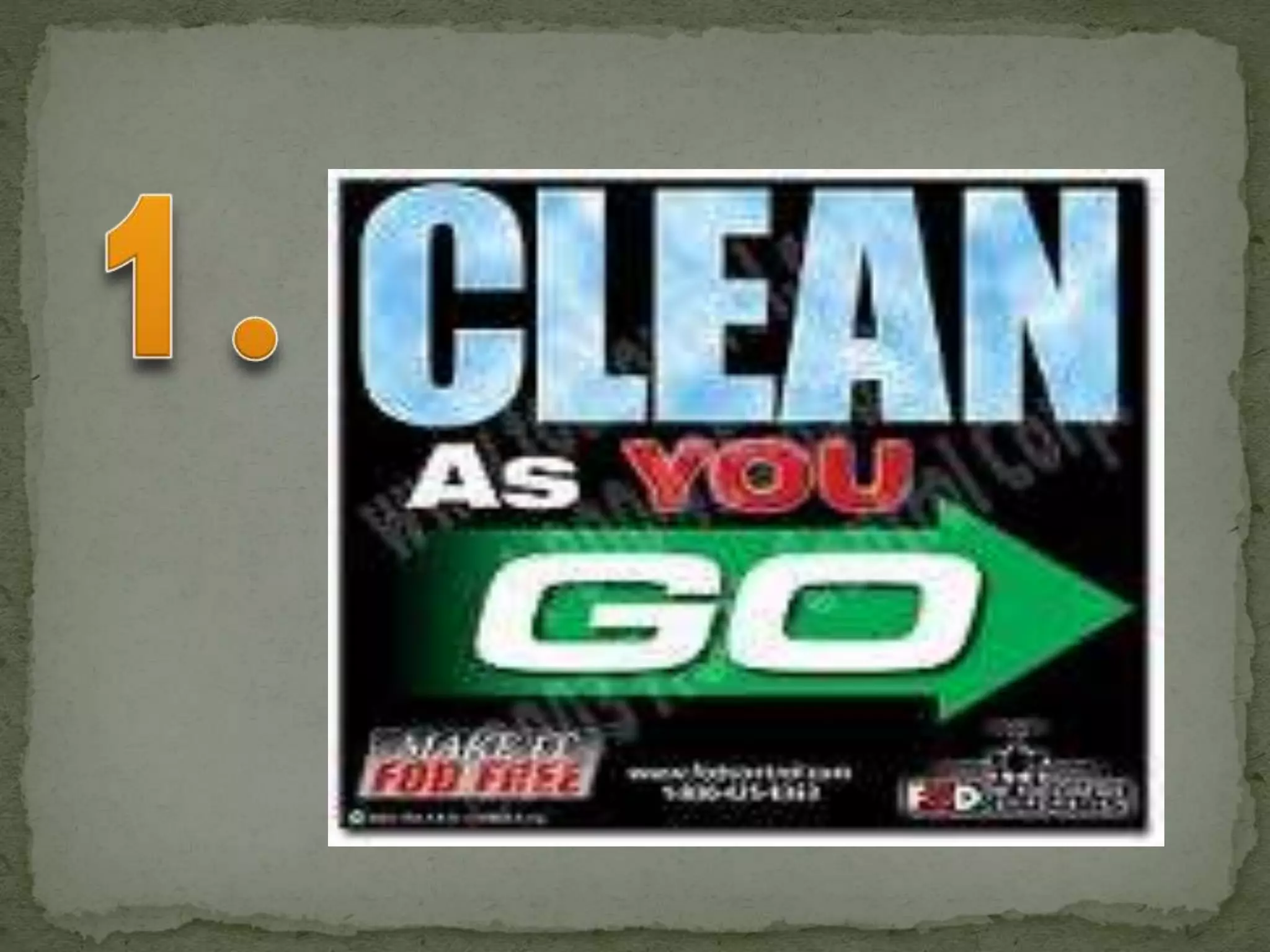
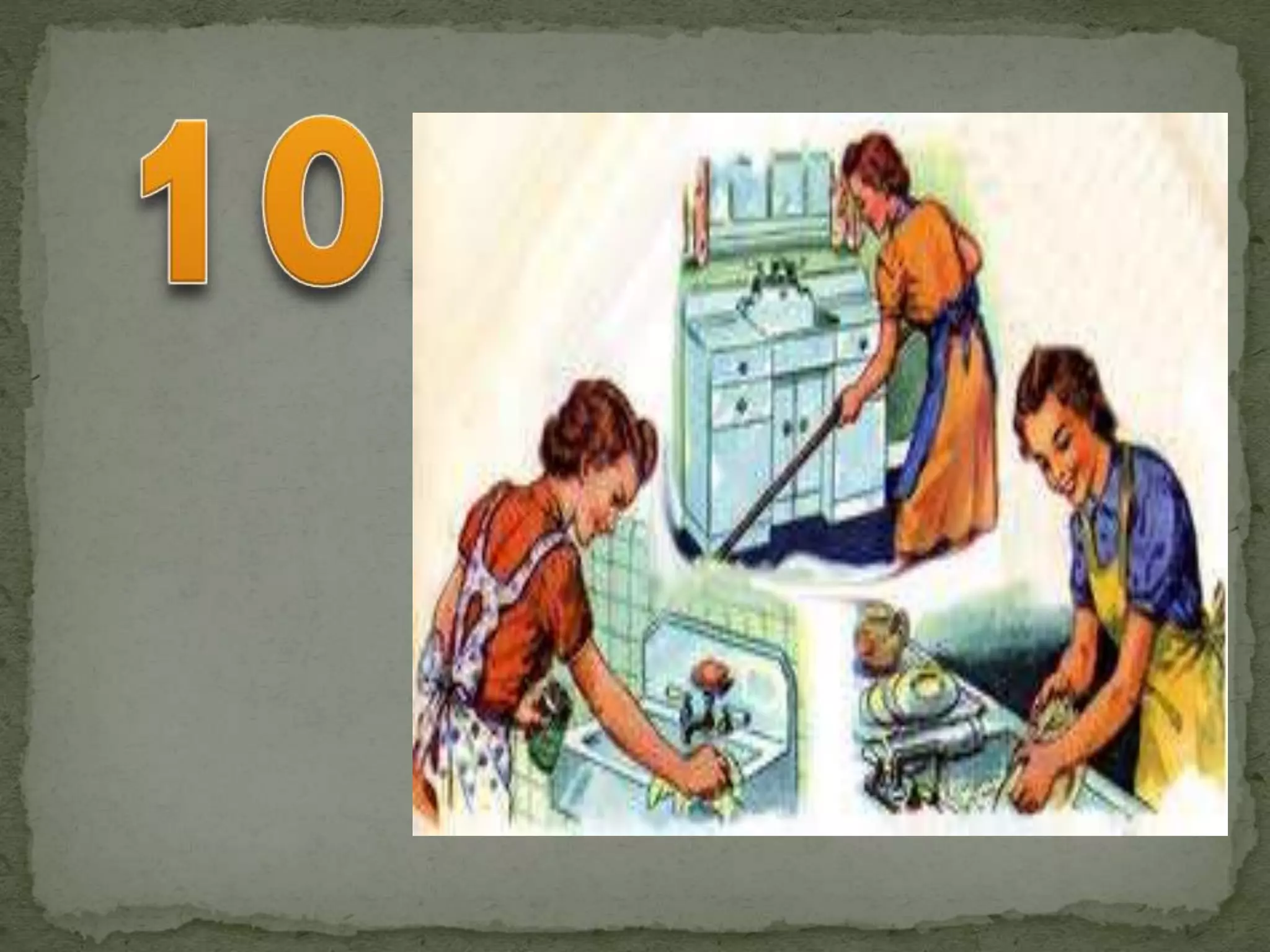
8. Wipe up spills
immediately. Keep the floor dry
so that no one slips and falls.
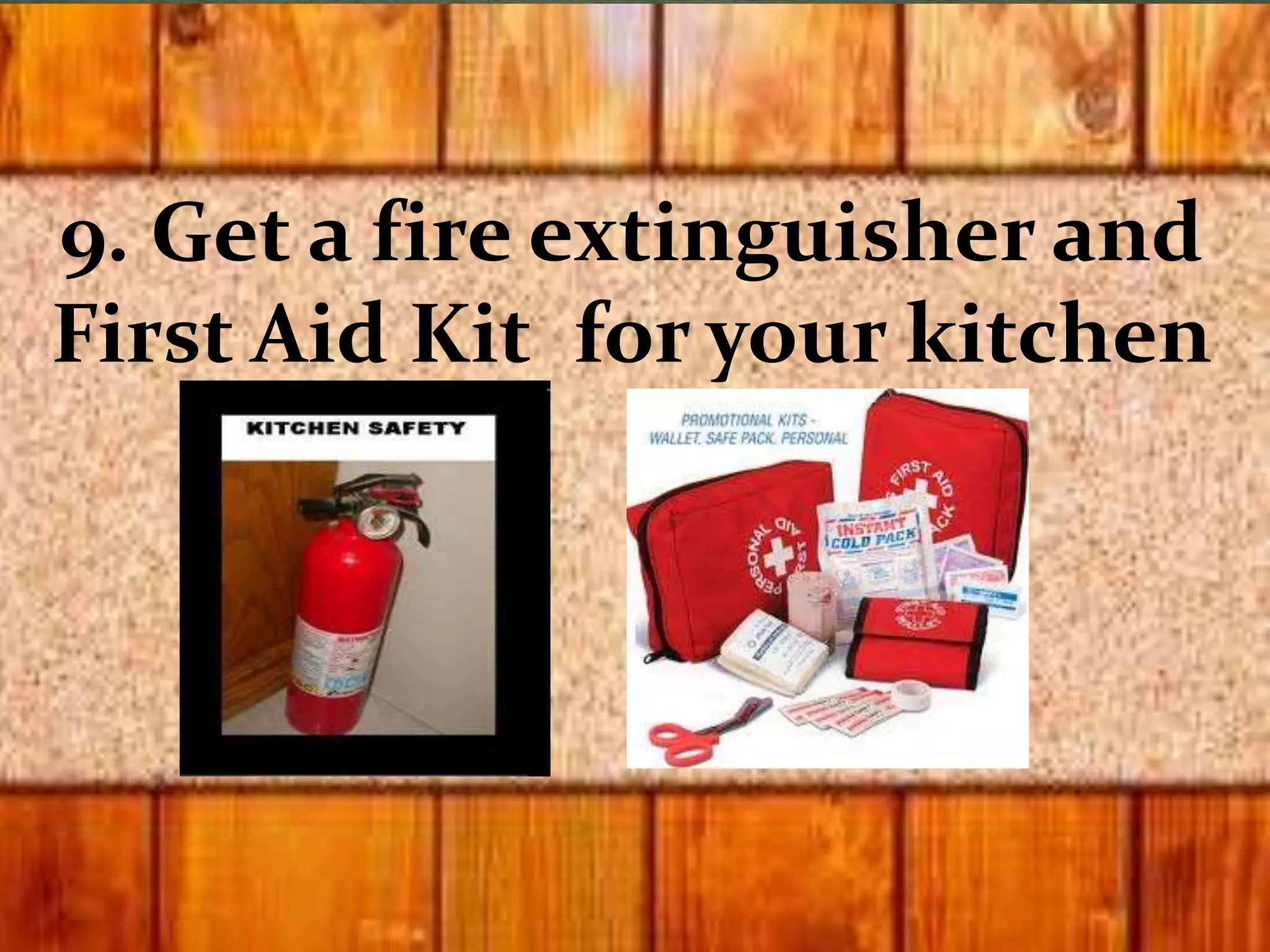
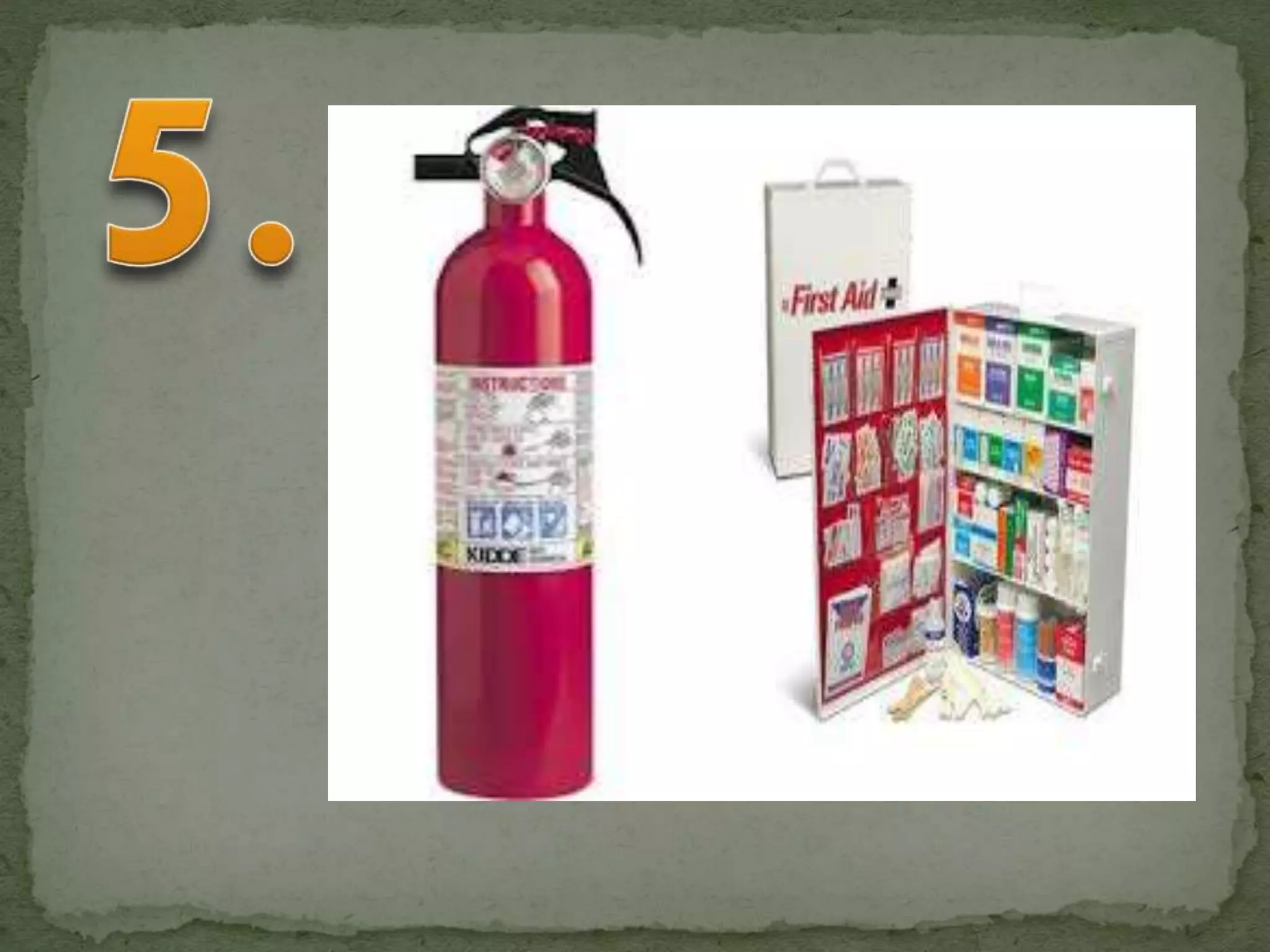
9. Get a fire extinguisher and
First Aid Kit for your kitchen
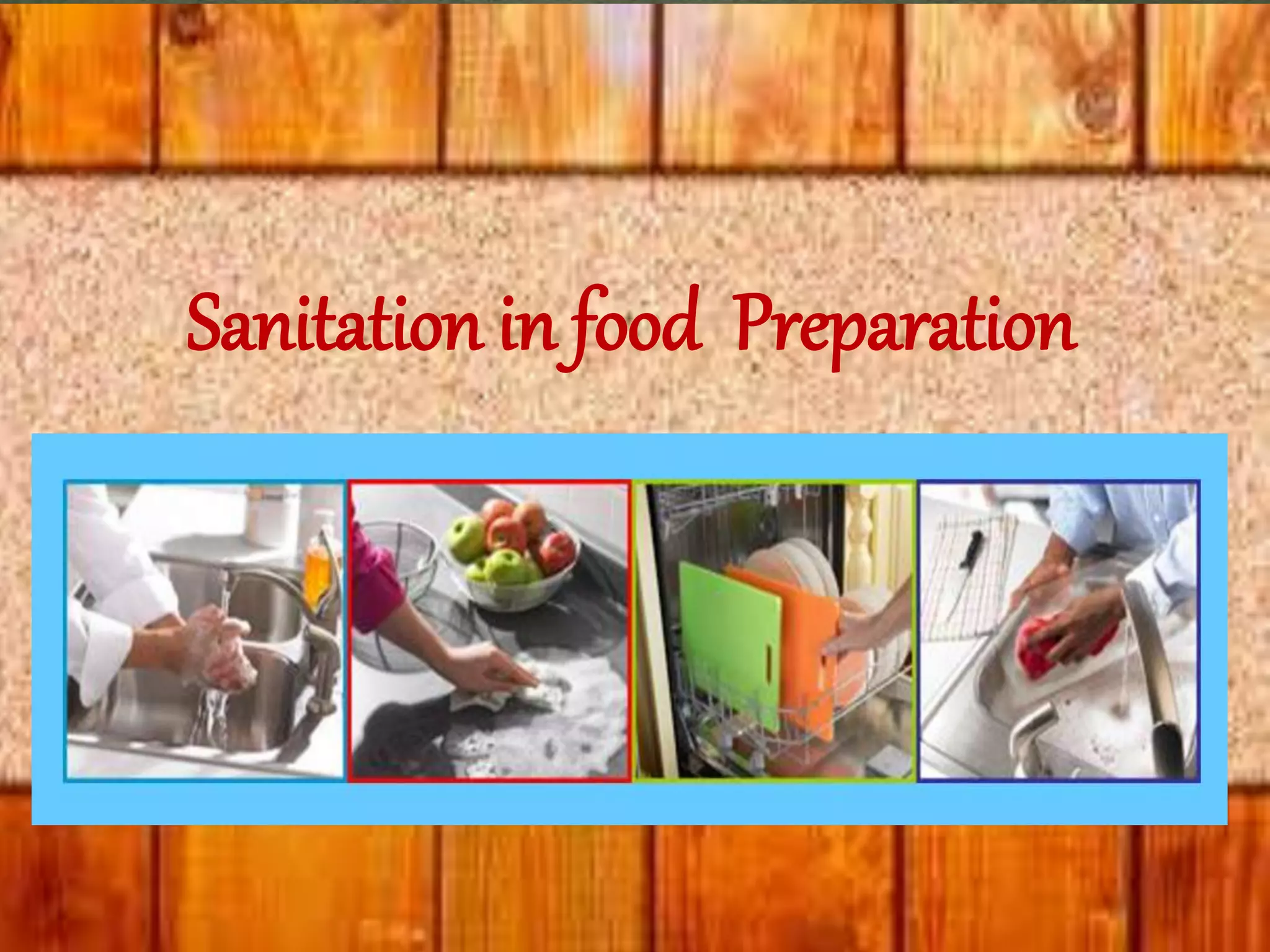
Sanitation in food Preparation
SANITATION is the
process of handling food
in ways that are clean
and healthy.
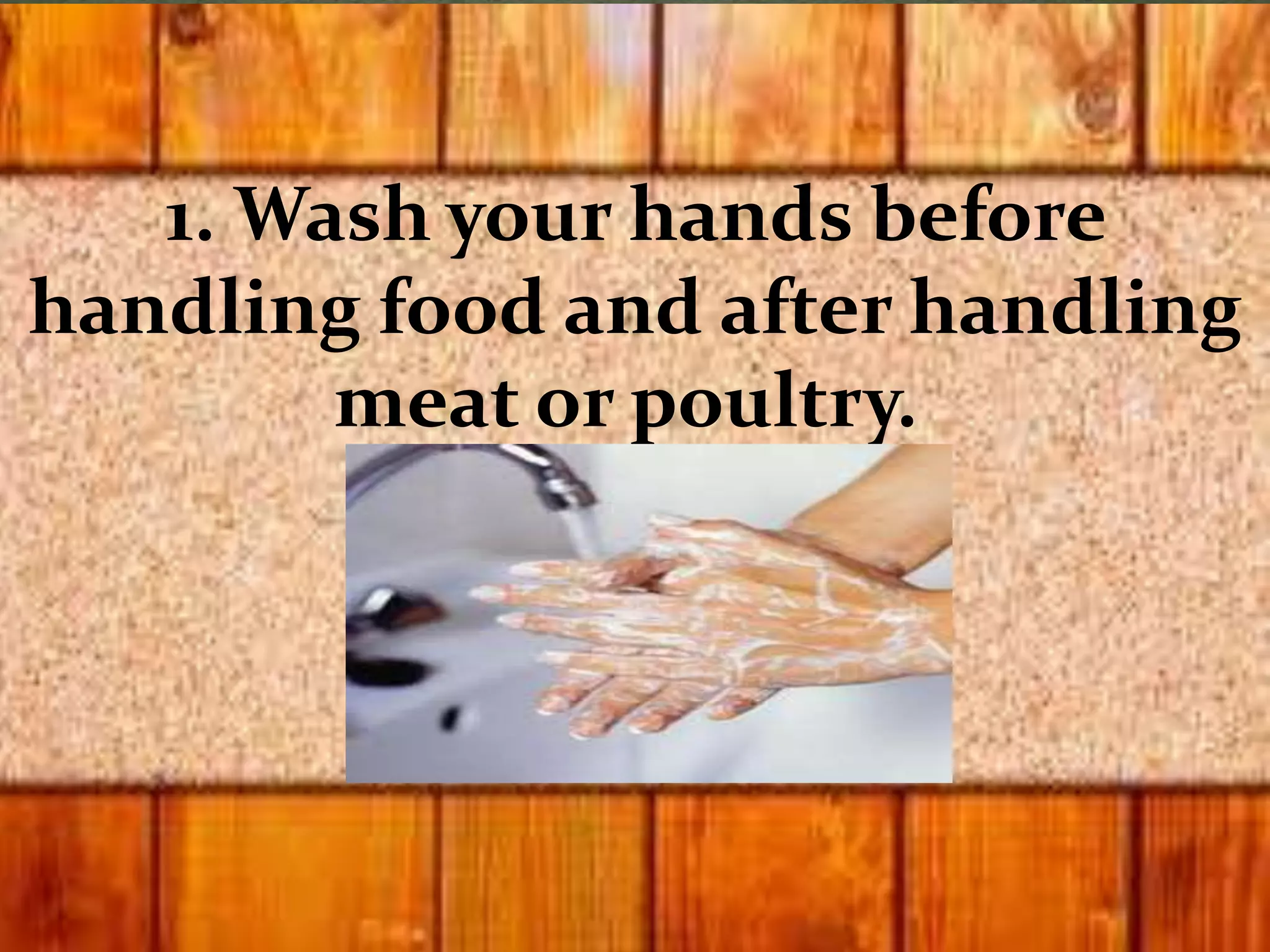
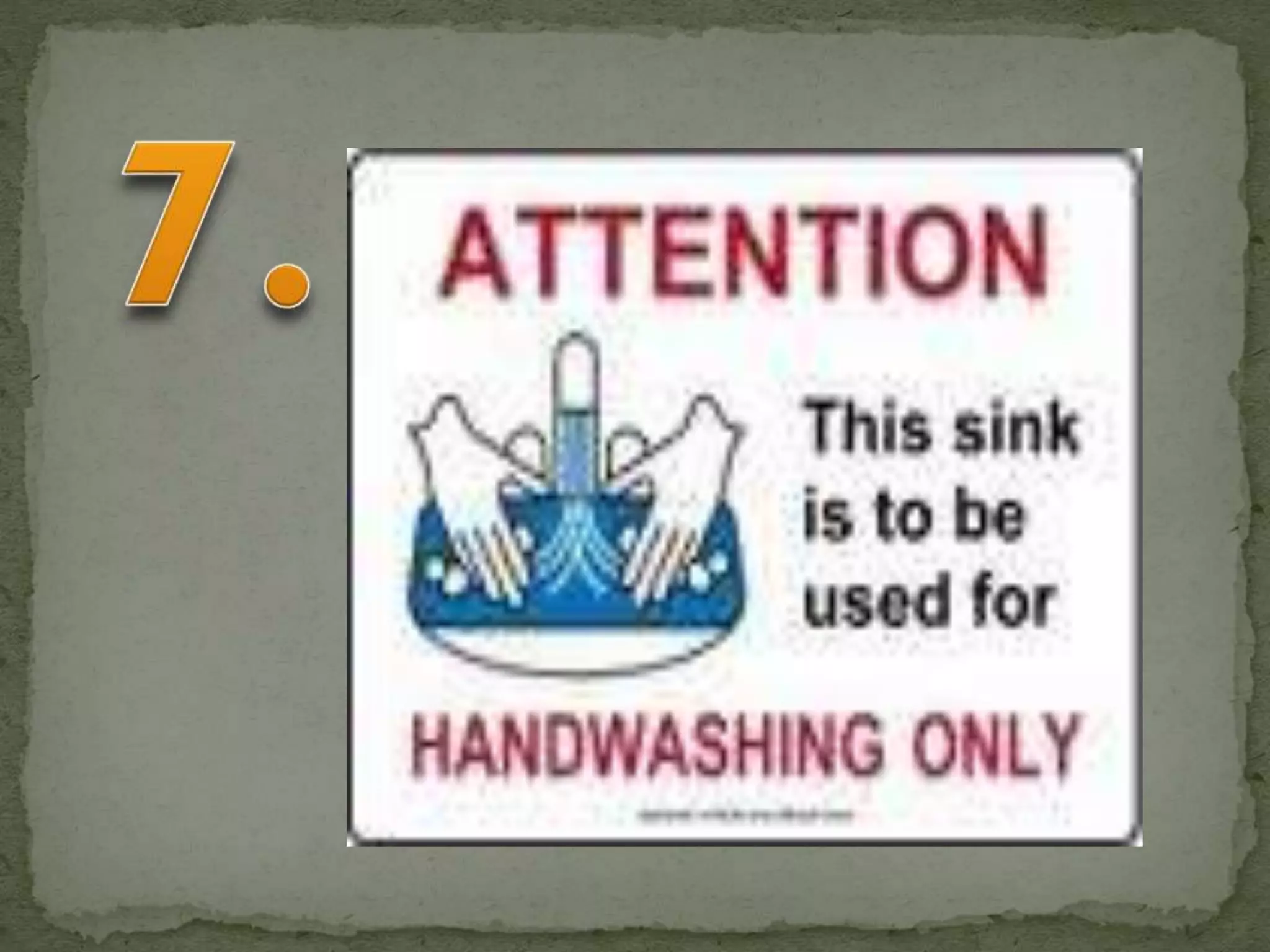
1. Wash your hands before
handling food and after handling
meat or poultry.
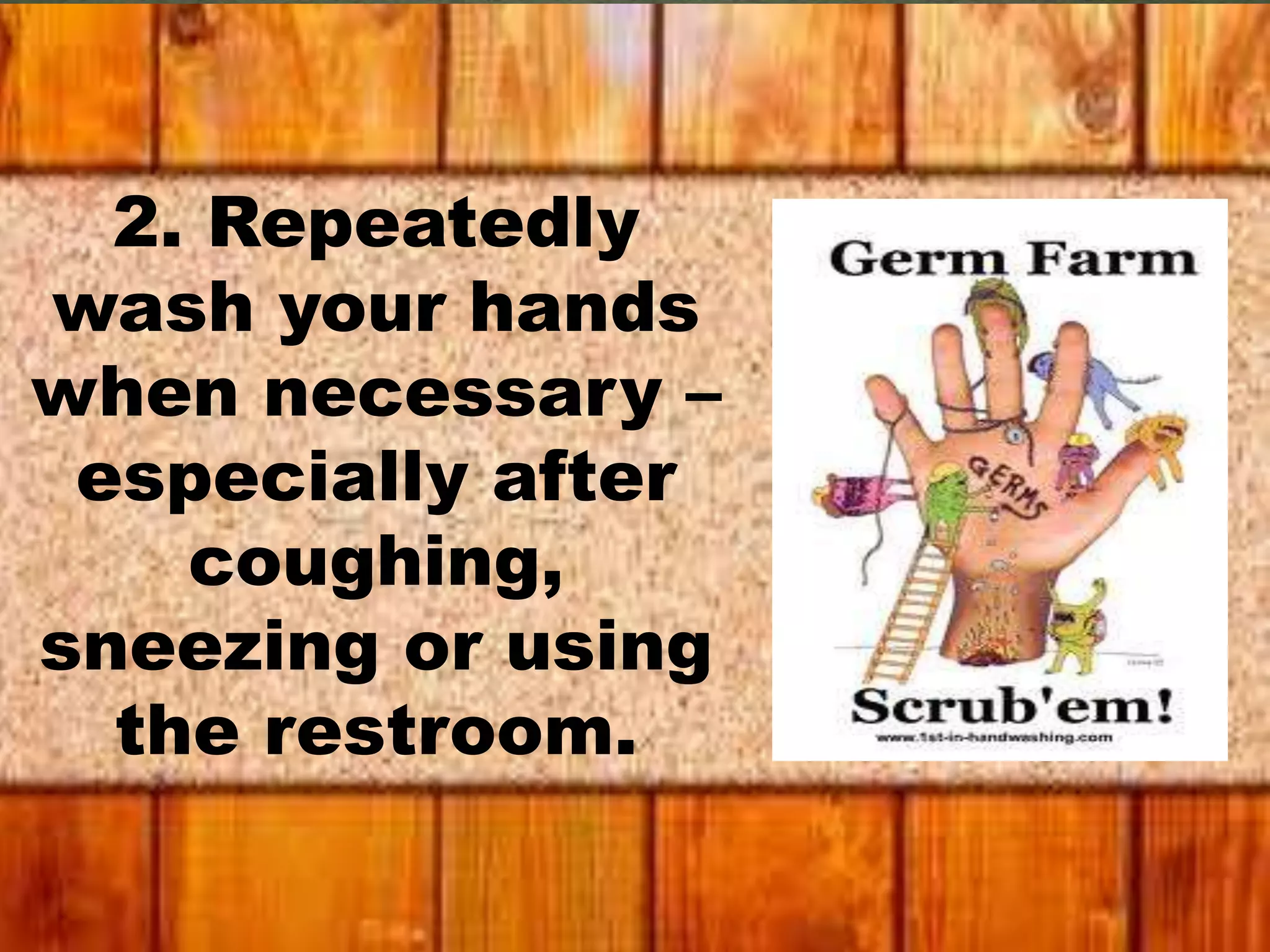
2. Repeatedly
wash your hands
when necessary –
especially after
coughing,
sneezing or using
the restroom.
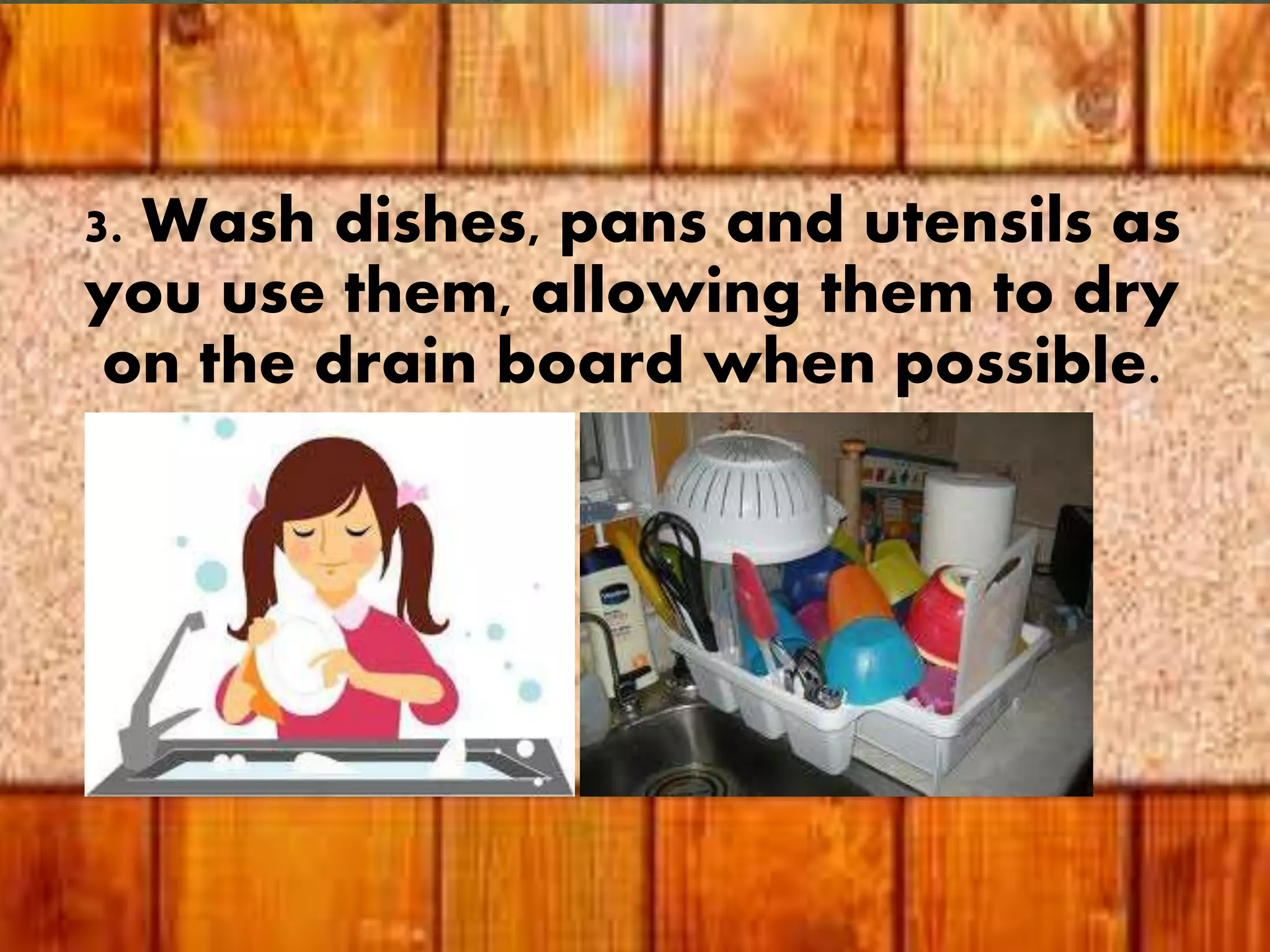
3. Wash dishes, pans and utensils as
you use them, allowing them to dry
on the drain board when possible.
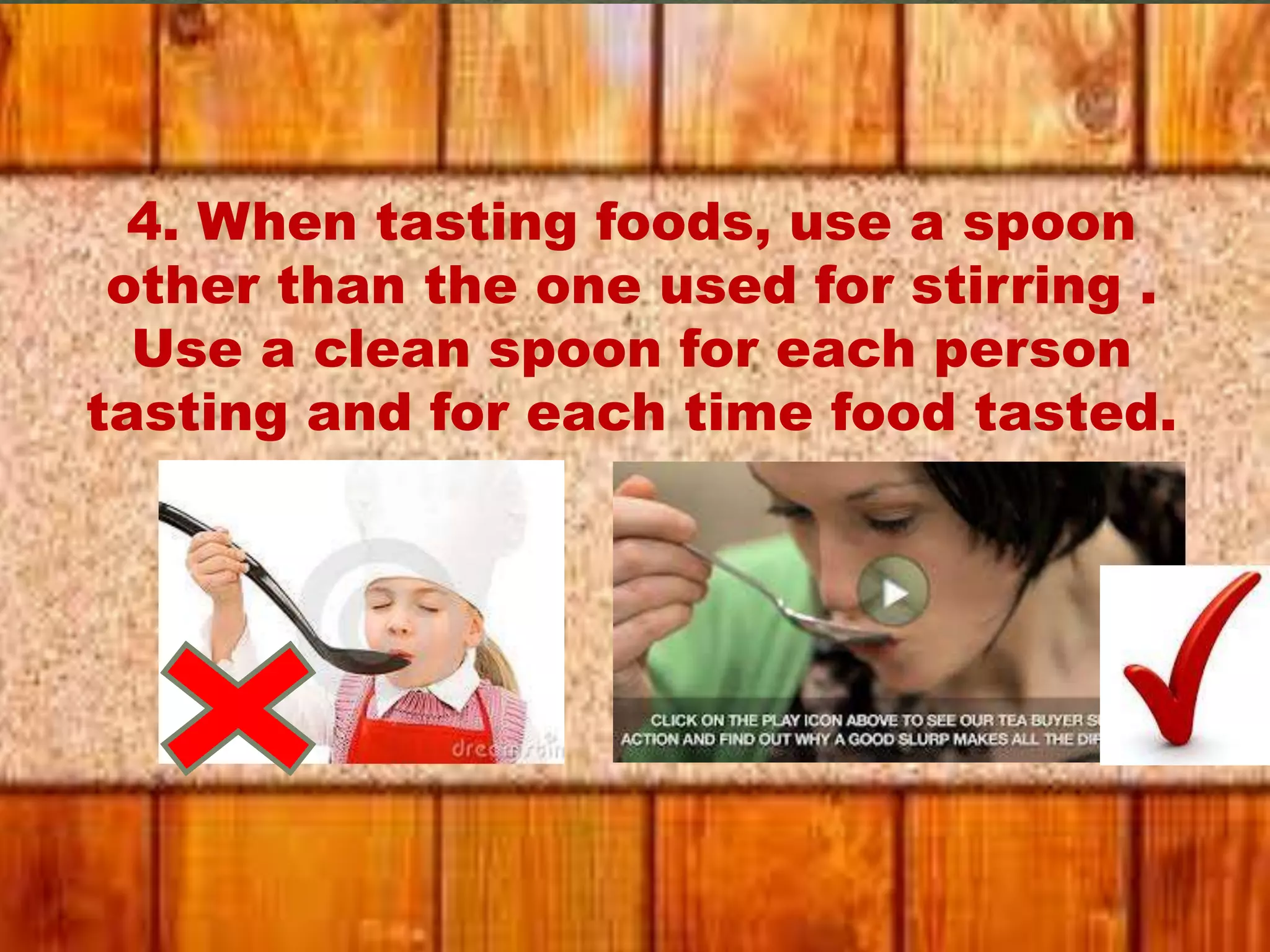
4. When tasting foods, use a spoon
other than the one used for stirring .
Use a clean spoon for each person
tasting and for each time food tasted.
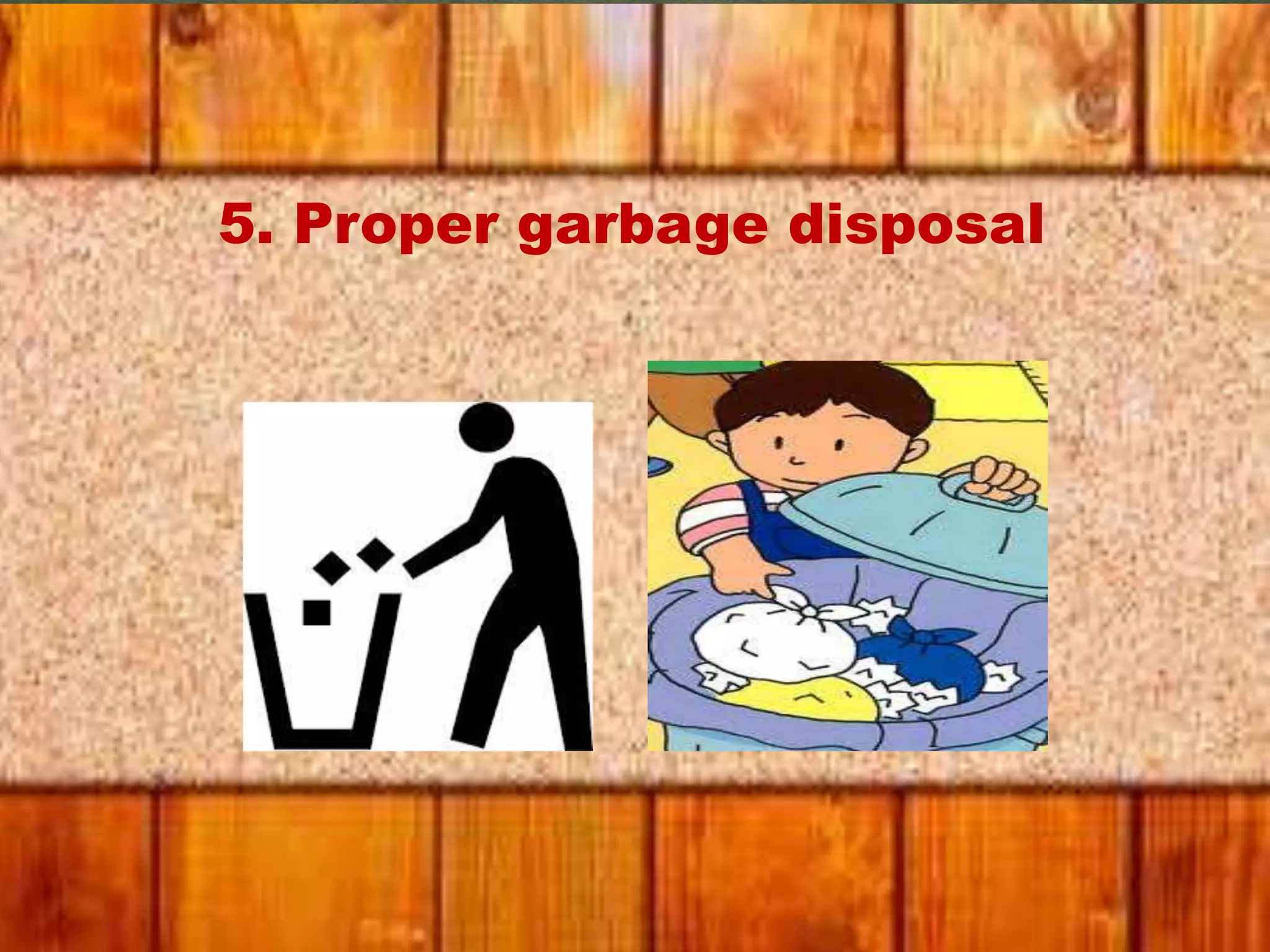
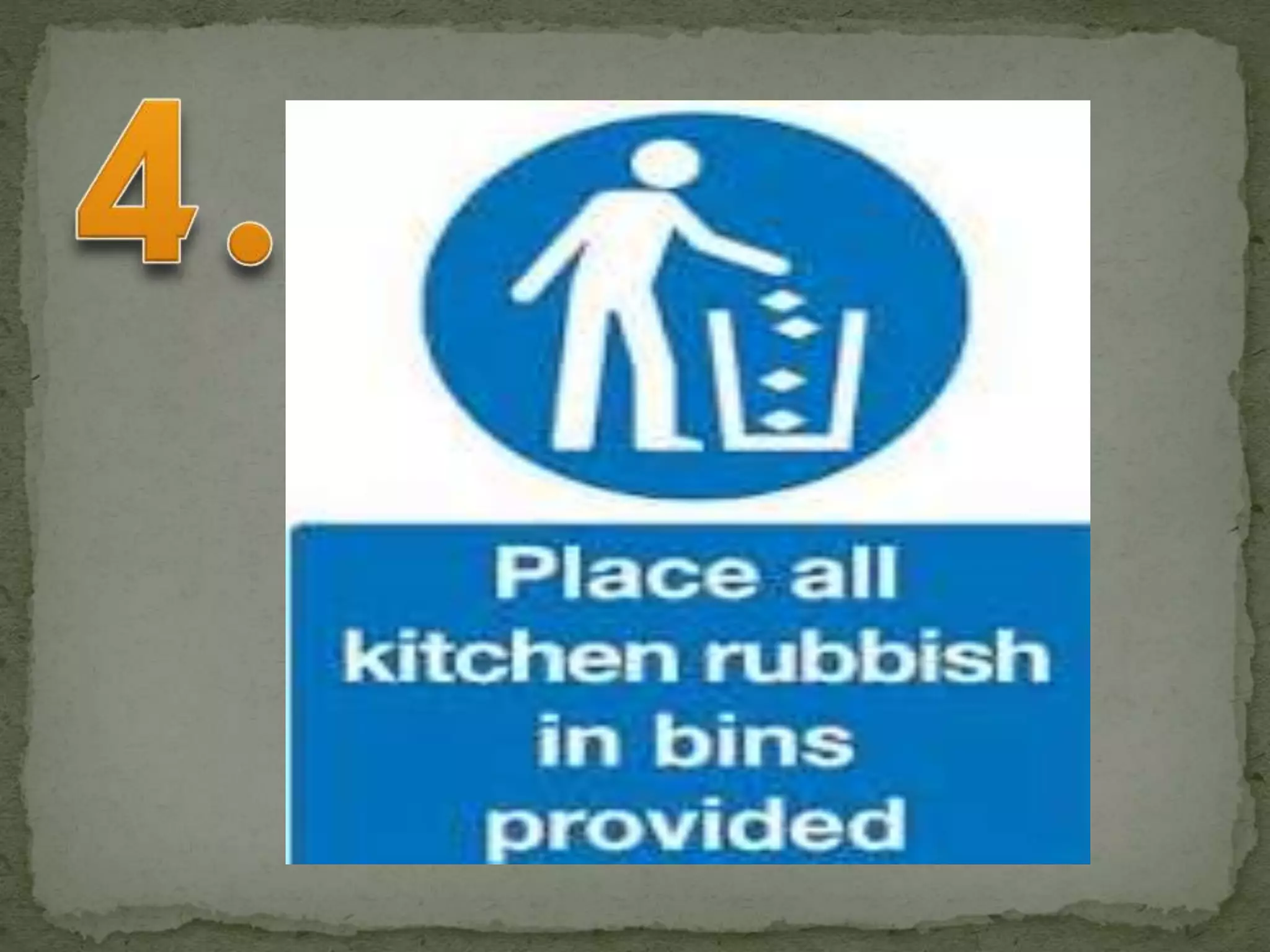
5. Proper garbage disposal
EIGHT
LEADING CAUSES OF
FOODBORNE ILLNESS.
 1) Cross-
contamination
between raw and
cooked and/or
ready-to-eat foods.
It generally results
from poor personal
hygiene (worker’s
hands), or from
using unsanitized
equipment
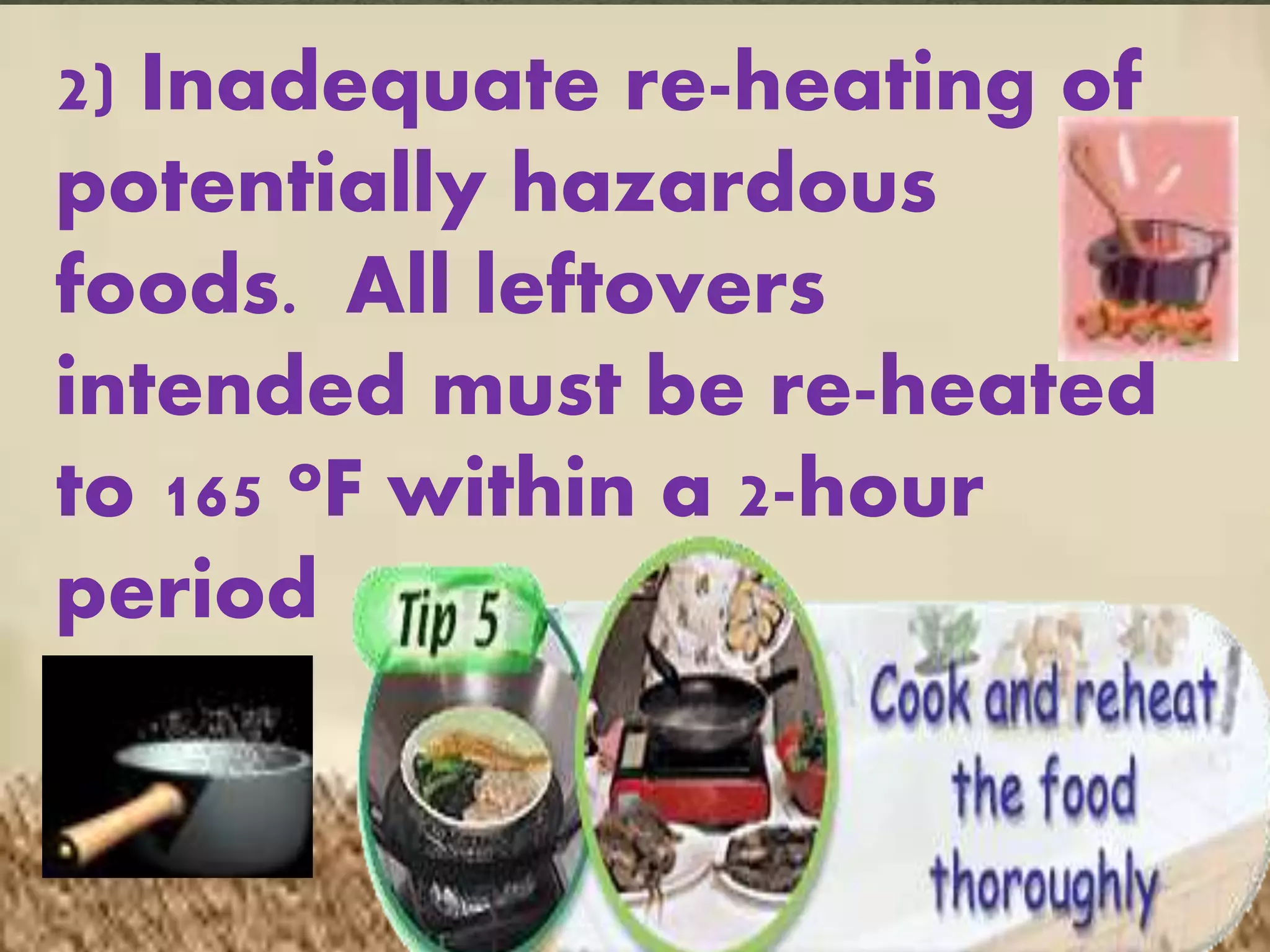
2) Inadequate re-heating of
potentially hazardous
foods. All leftovers
intended must be re-heated
to 165 oF within a 2-hour
period
 3) Foods left in the
temperature danger
zone (TDZ) too long.
Time in the TDZ is
cumulative. After 4
hours the potentially
hazardous foods
must be discarded
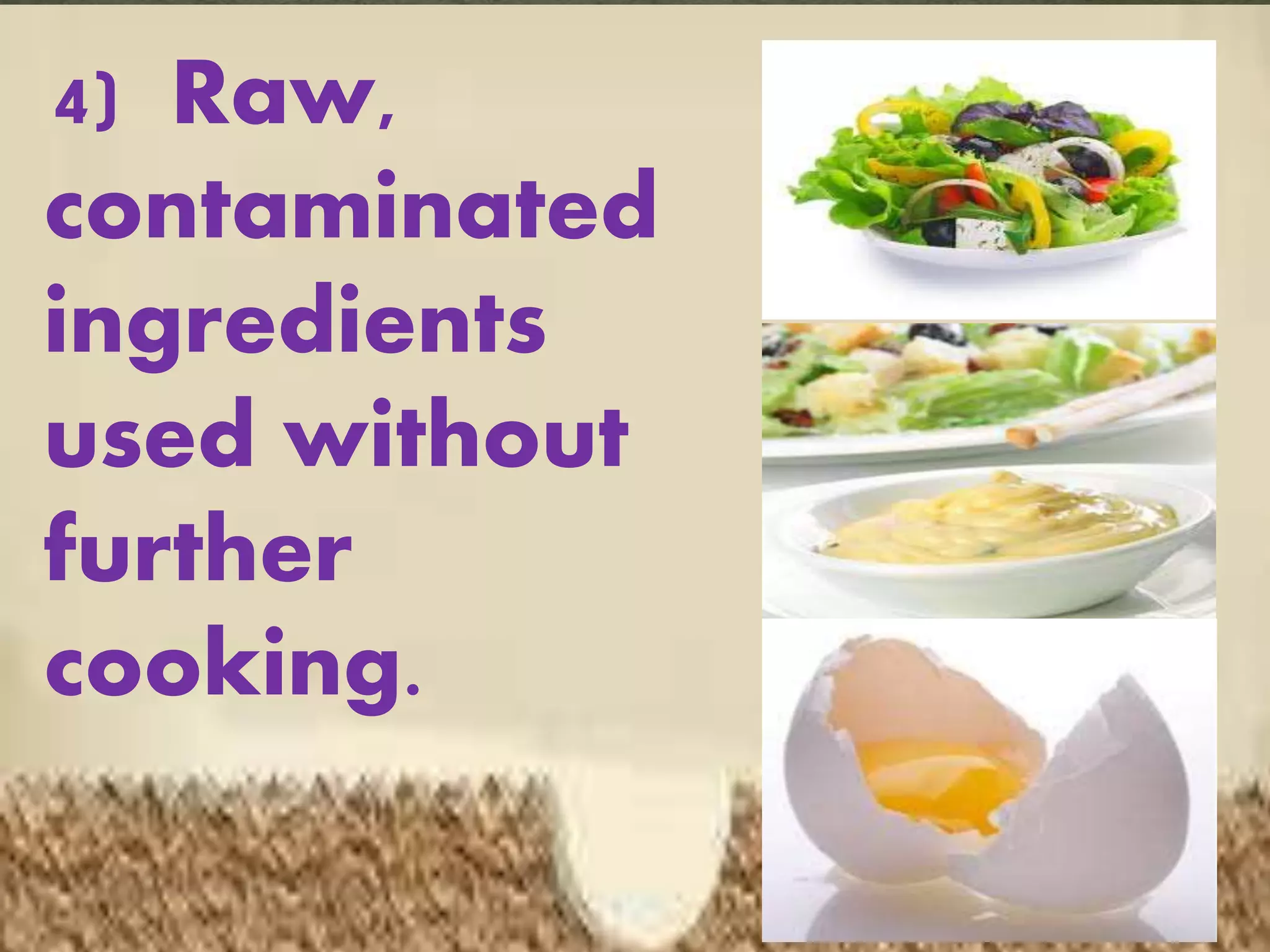
4) Raw,
contaminated
ingredients
used without
further
cooking.
5) Foods prepared
too far in advance.
This is generally
coupled with
holding food in the
TDZ too long
6)Infected food
handlers and poor
work habits.
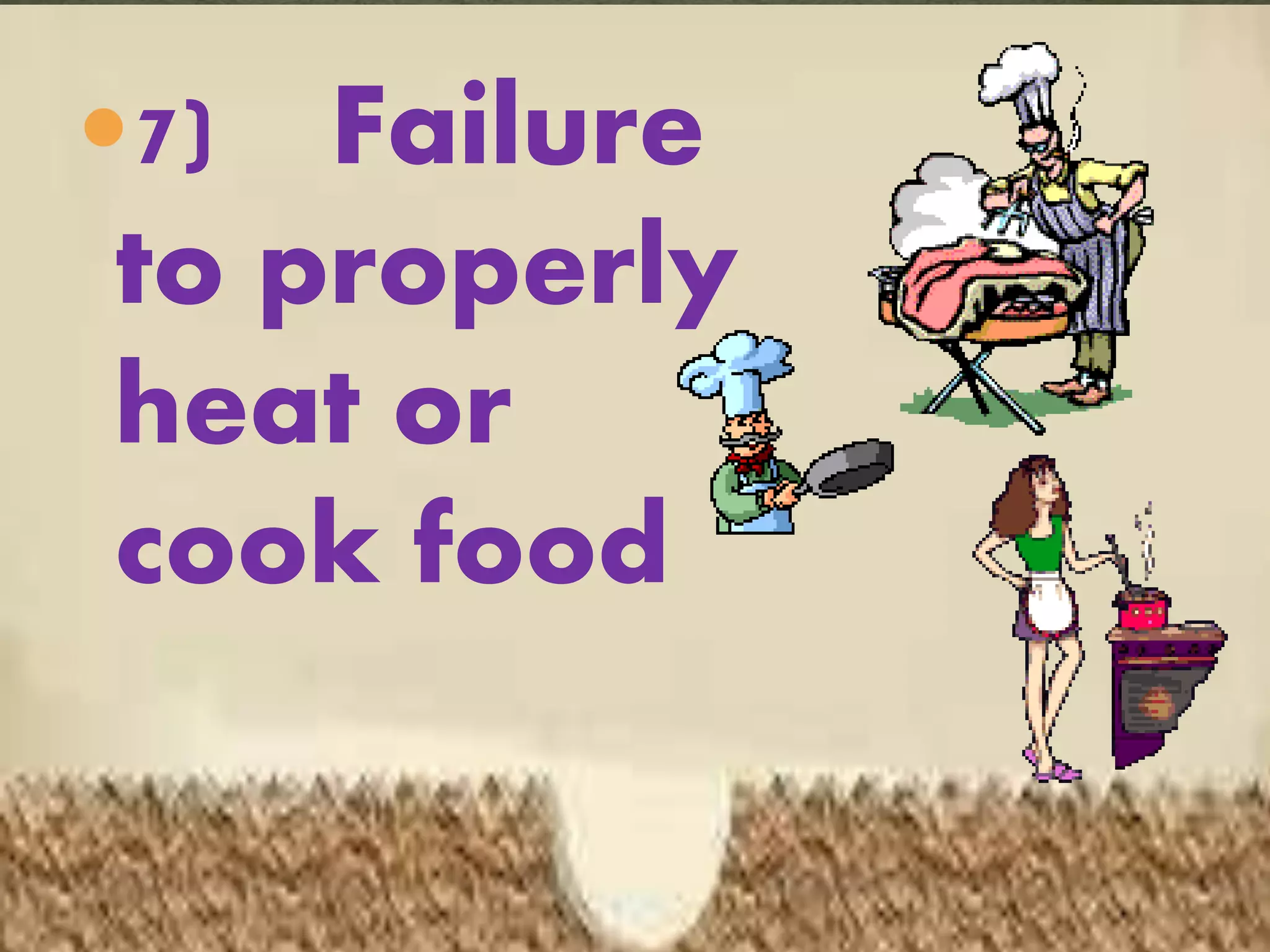
7) Failure
to properly
heat or
cook food
8) Failure to properly
cool food, poor cooling
practices result in
potentially hazardous
foods being held in the
TDZ for long periods
of time
Time to learn
how to
FIGHT BAC !
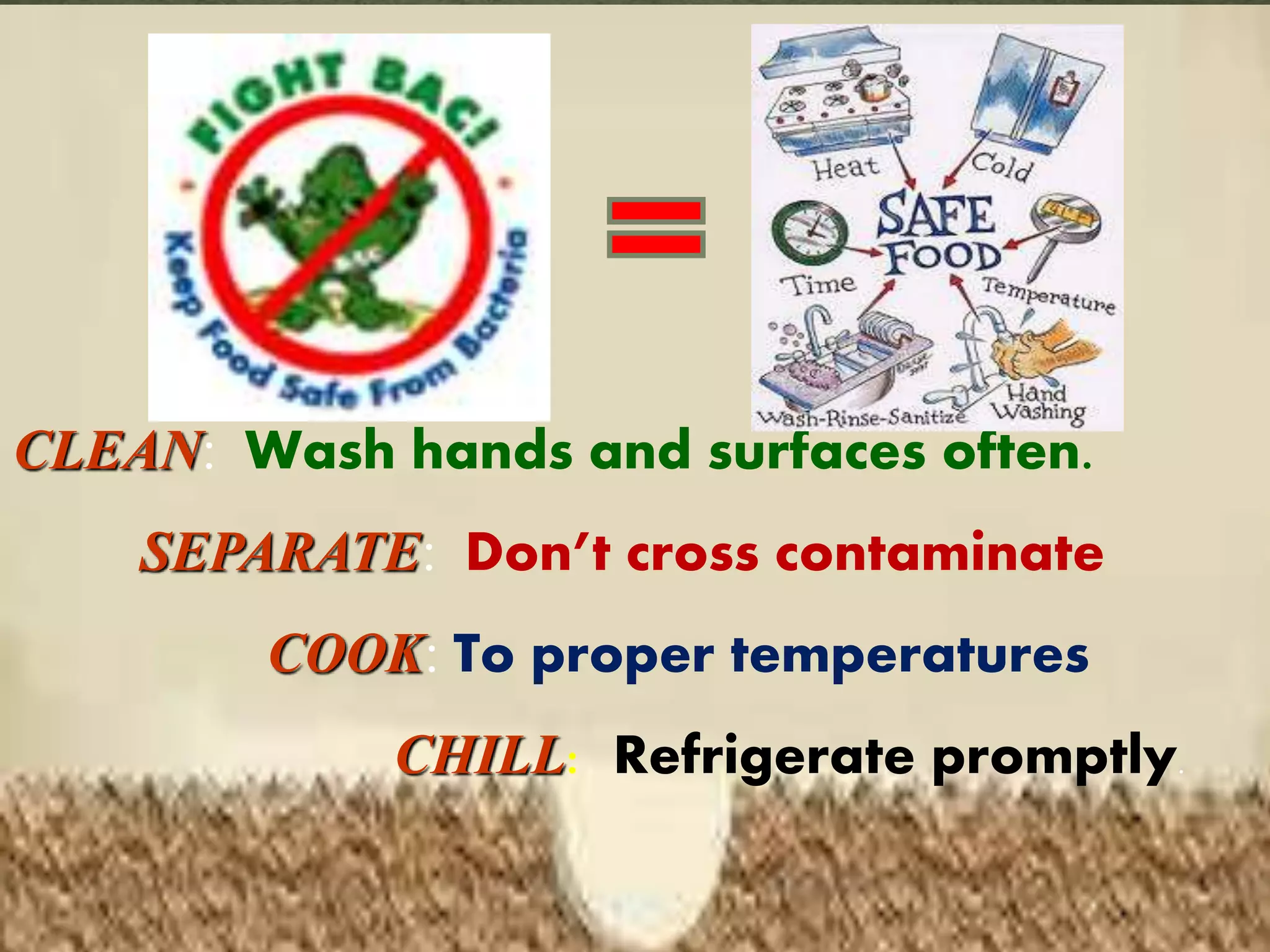
CLEAN: Wash hands and surfaces often.
SEPARATE: Don’t cross contaminate
COOK: To proper temperatures
CHILL: Refrigerate promptly.
IT IS BETTER
TO BE SAFE
THAN
SORRY!
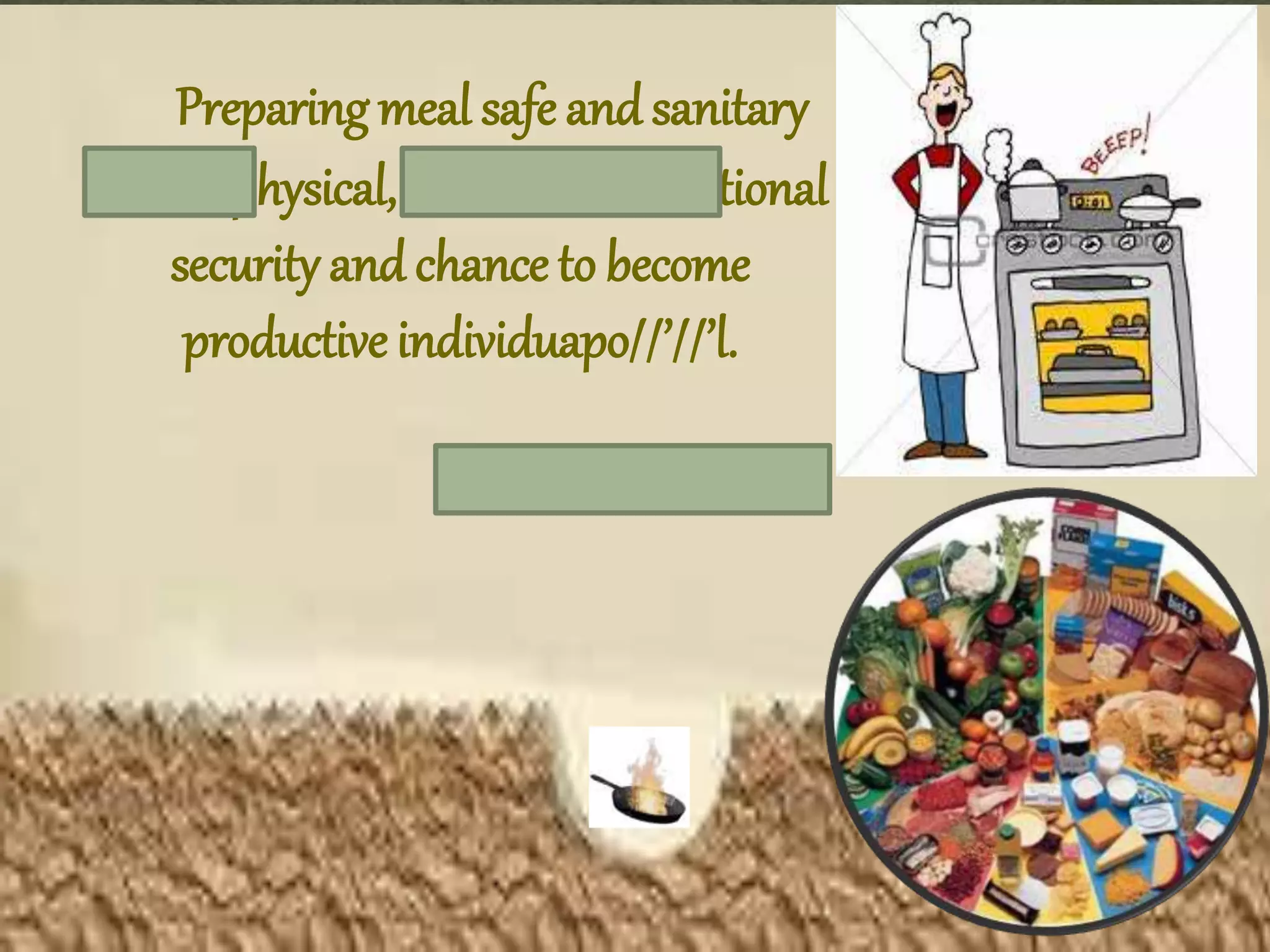
Preparing meal safe andsanitary
ensure physical, mental andemotional
security andchance to become
productive individuapo//’//’l.
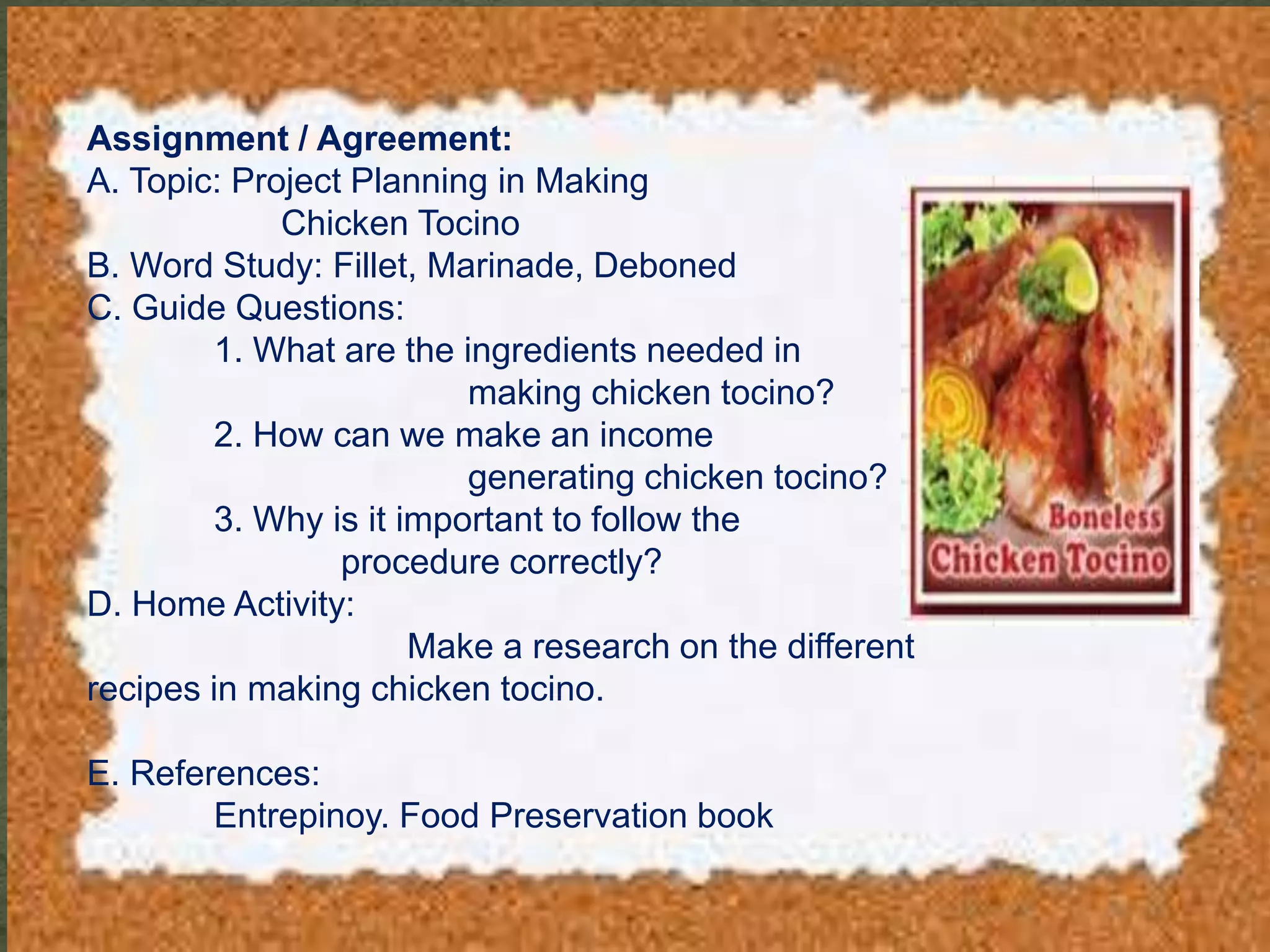
Assignment / Agreement:
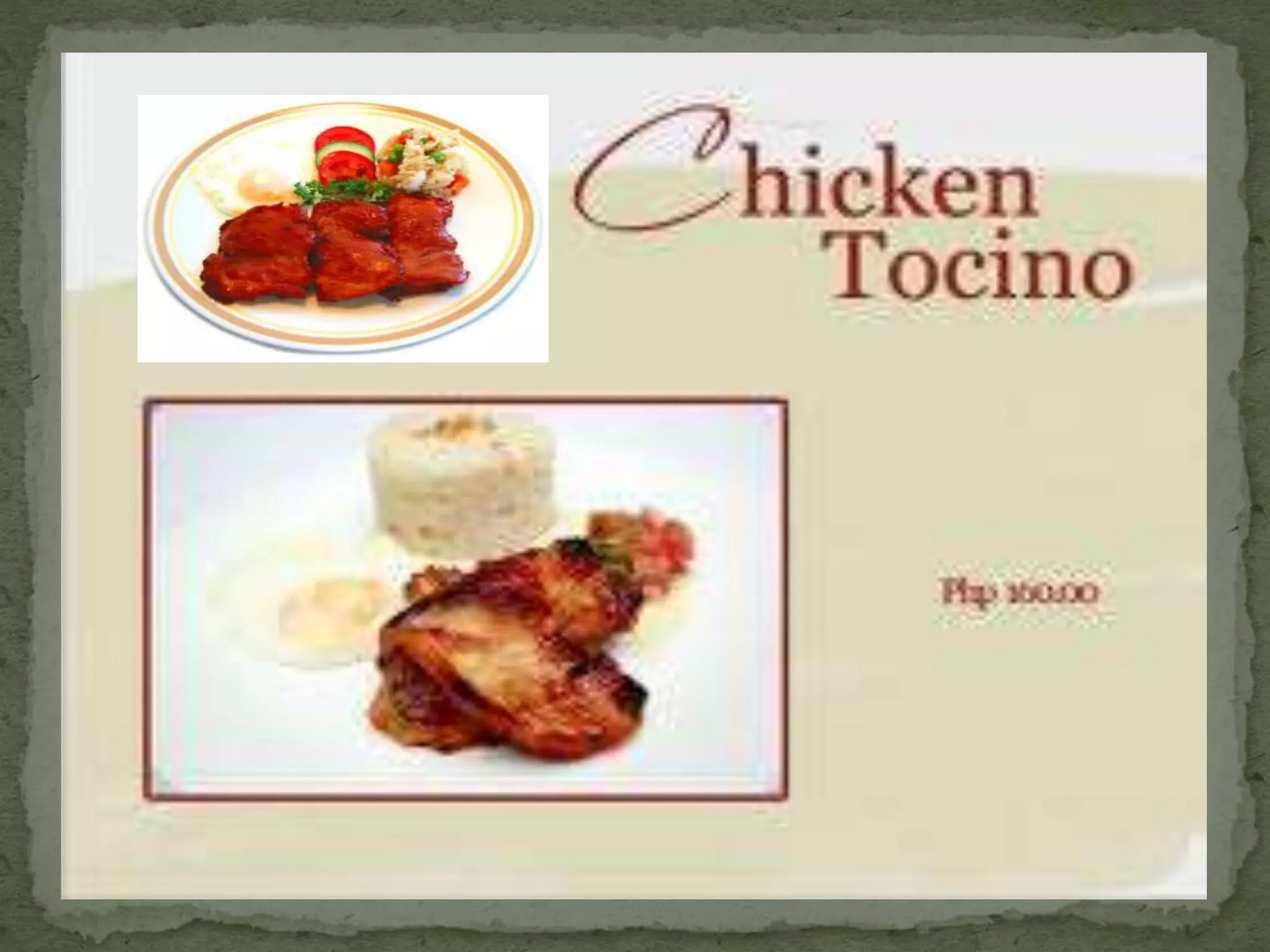
A. Topic: Project Planning in Making
Chicken Tocino
B. Word Study: Fillet, Marinade, Deboned
C. Guide Questions:
1. What are the ingredients needed in
making chicken tocino?
2. How can we make an income
generating chicken tocino?
3. Why is it important to follow the
procedure correctly?
D. Home Activity:
Make a research on the different
recipes in making chicken tocino.
E. References:
Entrepinoy. Food Preservation book
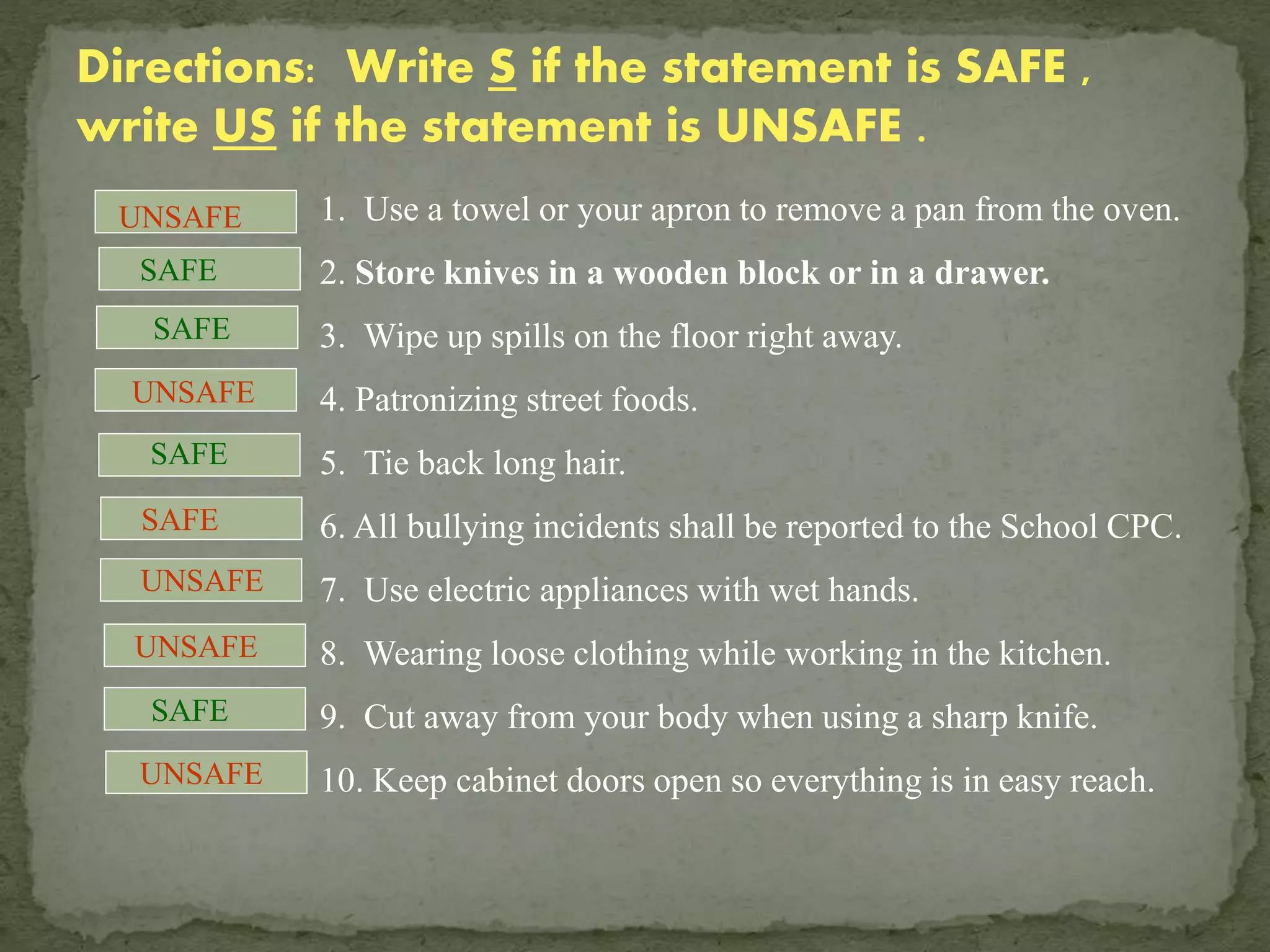
Directions: Write S if the statement is SAFE ,
write US if the statement is UNSAFE .
1. Use a towel or your apron to remove a pan from the oven.
2. Store knives in a wooden block or in a drawer.
3. Wipe up spills on the floor right away.
4. Patronizing street foods.
5. Tie back long hair.
6. All bullying incidents shall be reported to the School CPC.
7. Use electric appliances with wet hands.
8. Wearing loose clothing while working in the kitchen.
9. Cut away from your body when using a sharp knife.
10. Keep cabinet doors open so everything is in easy reach.
SAFE
SAFE
SAFE
SAFE
UNSAFE
UNSAFE
SAFE
UNSAFE
UNSAFE
UNSAFE

Slidesfinal 121123074742-phpapp02

  • 2.
    SAFETY in thekitchen means using precautionary methods in the kitchen to prevent an accident. Most accidents in the kitchen are due to carelessness.
  • 4.
    Basic Rules ofKitchen Safety
  • 5.
  • 6.
    2. Never cookin loose clothes and keep long hair tied back. You don’t want anything accidentally catching fire.
  • 7.
    3. Store knivesin a wooden block or in a drawer.
  • 8.
    4. Keep potholdersnearby and use them!
  • 9.
    5. Don’t lettemperature-sensitive foods sit out in the kitchen.
  • 10.
    6. Separate rawmeat and poultry from other items whenever you use or store them.
  • 11.
    7. When possibleuse a kitchen tool, not your hands to complete tasks.
  • 12.
    8. Wipe upspills immediately. Keep the floor dry so that no one slips and falls.
  • 13.
    9. Get afire extinguisher and First Aid Kit for your kitchen
  • 14.
    Sanitation in foodPreparation
  • 15.
    SANITATION is the processof handling food in ways that are clean and healthy.
  • 16.
    1. Wash yourhands before handling food and after handling meat or poultry.
  • 17.
    2. Repeatedly wash yourhands when necessary – especially after coughing, sneezing or using the restroom.
  • 18.
    3. Wash dishes,pans and utensils as you use them, allowing them to dry on the drain board when possible.
  • 19.
    4. When tastingfoods, use a spoon other than the one used for stirring . Use a clean spoon for each person tasting and for each time food tasted.
  • 20.
  • 22.
  • 23.
     1) Cross- contamination betweenraw and cooked and/or ready-to-eat foods. It generally results from poor personal hygiene (worker’s hands), or from using unsanitized equipment
  • 24.
    2) Inadequate re-heatingof potentially hazardous foods. All leftovers intended must be re-heated to 165 oF within a 2-hour period
  • 25.
     3) Foodsleft in the temperature danger zone (TDZ) too long. Time in the TDZ is cumulative. After 4 hours the potentially hazardous foods must be discarded
  • 26.
  • 27.
    5) Foods prepared toofar in advance. This is generally coupled with holding food in the TDZ too long
  • 28.
  • 29.
  • 30.
    8) Failure toproperly cool food, poor cooling practices result in potentially hazardous foods being held in the TDZ for long periods of time
  • 31.
    Time to learn howto FIGHT BAC !
  • 32.
    CLEAN: Wash handsand surfaces often. SEPARATE: Don’t cross contaminate COOK: To proper temperatures CHILL: Refrigerate promptly.
  • 33.
    IT IS BETTER TOBE SAFE THAN SORRY!
  • 35.
    Preparing meal safeandsanitary ensure physical, mental andemotional security andchance to become productive individuapo//’//’l.
  • 48.
    Assignment / Agreement: A.Topic: Project Planning in Making Chicken Tocino B. Word Study: Fillet, Marinade, Deboned C. Guide Questions: 1. What are the ingredients needed in making chicken tocino? 2. How can we make an income generating chicken tocino? 3. Why is it important to follow the procedure correctly? D. Home Activity: Make a research on the different recipes in making chicken tocino. E. References: Entrepinoy. Food Preservation book
  • 50.
    Directions: Write Sif the statement is SAFE , write US if the statement is UNSAFE . 1. Use a towel or your apron to remove a pan from the oven. 2. Store knives in a wooden block or in a drawer. 3. Wipe up spills on the floor right away. 4. Patronizing street foods. 5. Tie back long hair. 6. All bullying incidents shall be reported to the School CPC. 7. Use electric appliances with wet hands. 8. Wearing loose clothing while working in the kitchen. 9. Cut away from your body when using a sharp knife. 10. Keep cabinet doors open so everything is in easy reach. SAFE SAFE SAFE SAFE UNSAFE UNSAFE SAFE UNSAFE UNSAFE UNSAFE