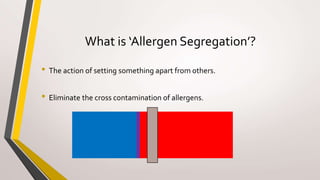
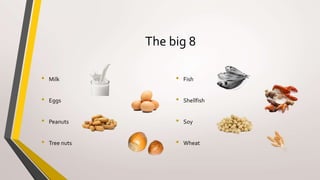
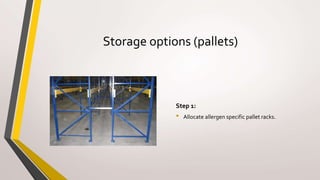
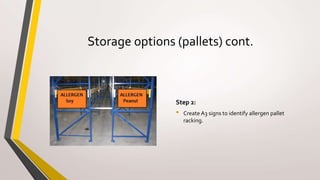
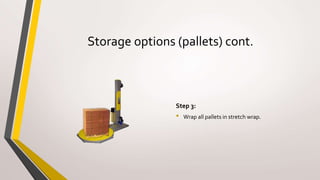
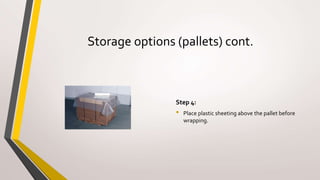
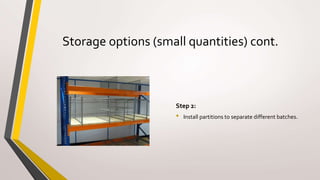
Allergen segregation is important to prevent cross-contamination of major food allergens like milk, eggs, peanuts, tree nuts, fish, shellfish, soy, and wheat. Proper storage and handling procedures must be followed, such as dedicating pallet racks and shelving, using signs and plastic sheeting, and tracking allergen movements. Staff must be trained on allergen safety through programs like HACCP and report any instances of cross-contamination to prevent severe allergic reactions from even trace amounts.