





PRINCIPLES OF MACROECONOMICS
Text: Principles of Macroeconomics, N. Gregory Mankiw, Sixth Edition.
Instructor: Sue Guzek, Kansas State University Salina
Music: We Gonna Make You… By Troy “Trombone Shorty” Andrews and Orleans
Avenue – Orleans and Claiborne
1
CONSUMERS,
PRODUCERS, AND
EFFICIENCY OF
MARKETS
CUSTOMER SURPLUS AND WILLINGNESS TO PAY
2
Willingness to pay is the maximum amount
a buyer is willing to pay for a good
HOW MUCH ARE YOU WILLING TO PAY FOR…
3
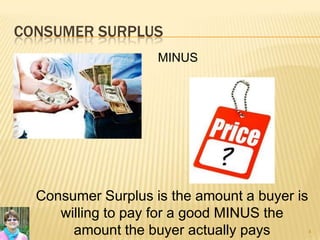
Consumer Surplus is the amount a buyer is
willing to pay for a good MINUS the
amount the buyer actually pays
CONSUMER SURPLUS
4
Consumer Surplus is the amount a buyer is
willing to pay for a good MINUS the
amount the buyer actually pays
MINUS
CONSUMER SURPLUS
5
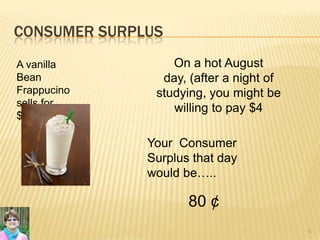
A vanilla
Bean
Frappucino
sells for
$3.20
On a hot August
day, (after a night of
studying, you might be
willing to pay $4
Your Consumer
Surplus that day
would be…..
80 ¢
CONSUMER SURPLUS AND THE DEMAND CURVE
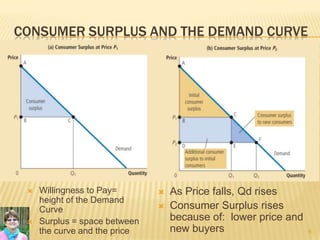
 Willingness to Pay=
height of the Demand
Curve
 Surplus = space between
the curve and the price 6
 As Price falls, Qd rises
 Consumer Surplus rises
because of: lower price and
new buyers
WHAT DOES CONSUMER SURPLUS MEASURE?
7
The benefit buyers
receive from a
good….
AS THEY
PERCEIVE IT
COST AND WILLINGNESS TO SELL
 Cost is the value of everything a seller must
give up to produce a good
8
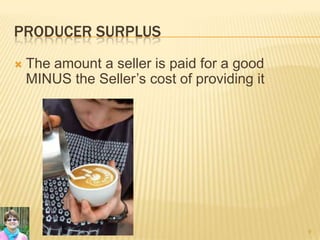
PRODUCER SURPLUS
 The amount a seller is paid for a good
MINUS the Seller’s cost of providing it
9
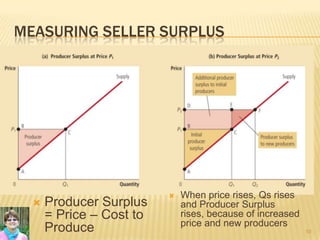
MEASURING SELLER SURPLUS
 Producer Surplus
= Price – Cost to
Produce 10
 When price rises, Qs rises
and Producer Surplus
rises, because of increased
price and new producers
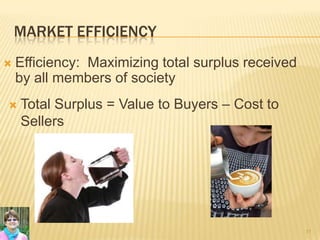
MARKET EFFICIENCY
 Efficiency: Maximizing total surplus received
by all members of society
11
 Total Surplus = Value to Buyers – Cost to
Sellers
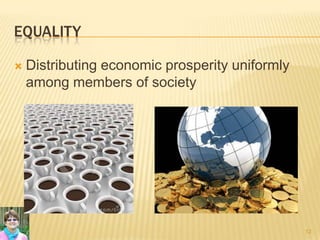
EQUALITY
 Distributing economic prosperity uniformly
among members of society
12
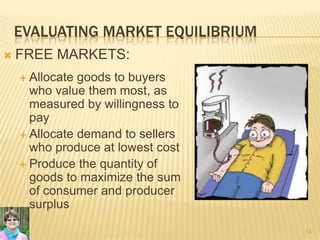
EVALUATING MARKET EQUILIBRIUM
 FREE MARKETS:
 Allocate goods to buyers
who value them most, as
measured by willingness to
pay
 Allocate demand to sellers
who produce at lowest cost
 Produce the quantity of
goods to maximize the sum
of consumer and producer
surplus
13
HOW MUCH WOULD YOU PAY???
14
See pages 148 and 149 n the text book
TERMS AND CONCEPTS
 Willingness to pay
 Consumer Surplus
 Cost
 Producer Surplus
 Efficiency
 Equality
15
SOURCES
Principles of Macroeconomics, N. Gregory
Mankiw, Sixth Edition: PowerPoint Slides
prepared by: Andreea CHIRITESCU, Eastern
Illinois University
16

Slides for video chapter 7 consumers producers and efficiency

  • 1.
    PRINCIPLES OF MACROECONOMICS Text:Principles of Macroeconomics, N. Gregory Mankiw, Sixth Edition. Instructor: Sue Guzek, Kansas State University Salina Music: We Gonna Make You… By Troy “Trombone Shorty” Andrews and Orleans Avenue – Orleans and Claiborne 1 CONSUMERS, PRODUCERS, AND EFFICIENCY OF MARKETS
  • 2.
    CUSTOMER SURPLUS ANDWILLINGNESS TO PAY 2 Willingness to pay is the maximum amount a buyer is willing to pay for a good
  • 3.
    HOW MUCH AREYOU WILLING TO PAY FOR… 3 Consumer Surplus is the amount a buyer is willing to pay for a good MINUS the amount the buyer actually pays
  • 4.
    CONSUMER SURPLUS 4 Consumer Surplusis the amount a buyer is willing to pay for a good MINUS the amount the buyer actually pays MINUS
  • 5.
    CONSUMER SURPLUS 5 A vanilla Bean Frappucino sellsfor $3.20 On a hot August day, (after a night of studying, you might be willing to pay $4 Your Consumer Surplus that day would be….. 80 ¢
  • 6.
    CONSUMER SURPLUS ANDTHE DEMAND CURVE  Willingness to Pay= height of the Demand Curve  Surplus = space between the curve and the price 6  As Price falls, Qd rises  Consumer Surplus rises because of: lower price and new buyers
  • 7.
    WHAT DOES CONSUMERSURPLUS MEASURE? 7 The benefit buyers receive from a good…. AS THEY PERCEIVE IT
  • 8.
    COST AND WILLINGNESSTO SELL  Cost is the value of everything a seller must give up to produce a good 8
  • 9.
    PRODUCER SURPLUS  Theamount a seller is paid for a good MINUS the Seller’s cost of providing it 9
  • 10.
    MEASURING SELLER SURPLUS Producer Surplus = Price – Cost to Produce 10  When price rises, Qs rises and Producer Surplus rises, because of increased price and new producers
  • 11.
    MARKET EFFICIENCY  Efficiency:Maximizing total surplus received by all members of society 11  Total Surplus = Value to Buyers – Cost to Sellers
  • 12.
    EQUALITY  Distributing economicprosperity uniformly among members of society 12
  • 13.
    EVALUATING MARKET EQUILIBRIUM FREE MARKETS:  Allocate goods to buyers who value them most, as measured by willingness to pay  Allocate demand to sellers who produce at lowest cost  Produce the quantity of goods to maximize the sum of consumer and producer surplus 13
  • 14.
    HOW MUCH WOULDYOU PAY??? 14 See pages 148 and 149 n the text book
  • 15.
    TERMS AND CONCEPTS Willingness to pay  Consumer Surplus  Cost  Producer Surplus  Efficiency  Equality 15
  • 16.
    SOURCES Principles of Macroeconomics,N. Gregory Mankiw, Sixth Edition: PowerPoint Slides prepared by: Andreea CHIRITESCU, Eastern Illinois University 16

Editor's Notes

  • #2 In this chapter, we will learn about how economists measure buyer willingness to pay and seller willingness to sell