Tempos Verbais: Simple Past – Formas
  Negativa e Interrogativa
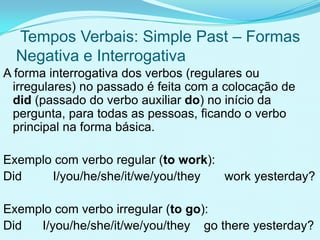
A forma interrogativa dos verbos (regulares ou
 irregulares) no passado é feita com a colocação de
 did (passado do verbo auxiliar do) no início da
 pergunta, para todas as pessoas, ficando o verbo
 principal na forma básica.

Exemplo com verbo regular (to work):
Did    I/you/he/she/it/we/you/they   work yesterday?

Exemplo com verbo irregular (to go):
Did  I/you/he/she/it/we/you/they go there yesterday?
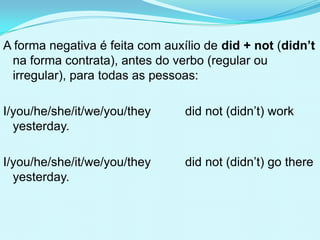
A forma negativa é feita com auxílio de did + not (didn’t
 na forma contrata), antes do verbo (regular ou
 irregular), para todas as pessoas:

I/you/he/she/it/we/you/they      did not (didn’t) work
  yesterday.

I/you/he/she/it/we/you/they      did not (didn’t) go there
  yesterday.
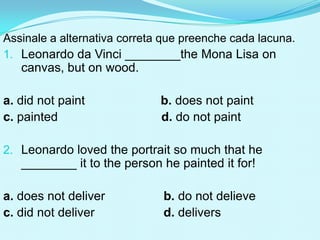
Assinale a alternativa correta que preenche cada lacuna.
1. Leonardo da Vinci ________the Mona Lisa on
   canvas, but on wood.

a. did not paint              b. does not paint
c. painted                    d. do not paint

2. Leonardo loved the portrait so much that he
   ________ it to the person he painted it for!

a. does not deliver           b. do not delieve
c. did not deliver            d. delivers
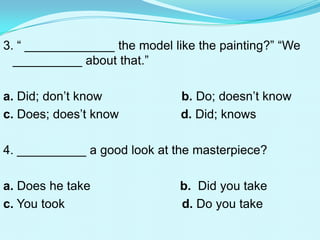
3. “ _____________ the model like the painting?” “We
  __________ about that.”

a. Did; don’t know             b. Do; doesn’t know
c. Does; does’t know           d. Did; knows

4. __________ a good look at the masterpiece?

a. Does he take               b. Did you take
c. You took                   d. Do you take
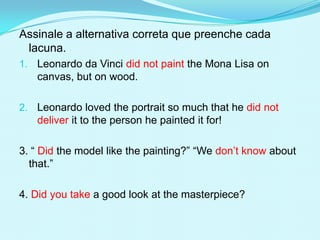
Assinale a alternativa correta que preenche cada
 lacuna.
1. Leonardo da Vinci did not paint the Mona Lisa on
   canvas, but on wood.

2. Leonardo loved the portrait so much that he did not
   deliver it to the person he painted it for!

3. “ Did the model like the painting?” “We don’t know about
  that.”

4. Did you take a good look at the masterpiece?

Simple past - formas negativa e interrogativa

  • 1.
    Tempos Verbais: SimplePast – Formas Negativa e Interrogativa A forma interrogativa dos verbos (regulares ou irregulares) no passado é feita com a colocação de did (passado do verbo auxiliar do) no início da pergunta, para todas as pessoas, ficando o verbo principal na forma básica. Exemplo com verbo regular (to work): Did I/you/he/she/it/we/you/they work yesterday? Exemplo com verbo irregular (to go): Did I/you/he/she/it/we/you/they go there yesterday?
  • 2.
    A forma negativaé feita com auxílio de did + not (didn’t na forma contrata), antes do verbo (regular ou irregular), para todas as pessoas: I/you/he/she/it/we/you/they did not (didn’t) work yesterday. I/you/he/she/it/we/you/they did not (didn’t) go there yesterday.
  • 3.
    Assinale a alternativacorreta que preenche cada lacuna. 1. Leonardo da Vinci ________the Mona Lisa on canvas, but on wood. a. did not paint b. does not paint c. painted d. do not paint 2. Leonardo loved the portrait so much that he ________ it to the person he painted it for! a. does not deliver b. do not delieve c. did not deliver d. delivers
  • 4.
    3. “ _____________the model like the painting?” “We __________ about that.” a. Did; don’t know b. Do; doesn’t know c. Does; does’t know d. Did; knows 4. __________ a good look at the masterpiece? a. Does he take b. Did you take c. You took d. Do you take
  • 5.
    Assinale a alternativacorreta que preenche cada lacuna. 1. Leonardo da Vinci did not paint the Mona Lisa on canvas, but on wood. 2. Leonardo loved the portrait so much that he did not deliver it to the person he painted it for! 3. “ Did the model like the painting?” “We don’t know about that.” 4. Did you take a good look at the masterpiece?