EXPEN
SAVIN
G, AN
TABLE OF
CONTENTS
Introduction
Money Saving
Expense Tracking
Budgeting Benefits
Conclusions
MONE
Y
Saving money is a fundamental aspect of financial health that empowers individuals to
prepare for the future, manage unexpected expenses, and achieve long-term goals. By
setting aside a portion of income regularly, you build a financial cushion that can
provide security in times of need, such as emergencies or unexpected events. Saving
also allows you to invest in opportunities that can improve your quality of life, whether
it’s purchasing a home, funding education, or planning for retirement.
Moreover, the discipline of saving helps you develop better spending habits, ensuring
that you prioritize essential needs over impulsive purchases. Ultimately, saving money
is not just about accumulating wealth, but about creating a stable and secure
foundation for your financial future.
SAVIN
G
INTRODUC
TION
In this lesson, we'll explore essential financial concepts that play a vital role in managing
your money effectively. Understanding how to save, track expenses, and create a budget
is crucial for achieving financial stability and reaching your personal goals.
Saving: We'll discuss the importance of saving and different strategies to set aside money
for future needs or emergencies.
Expense Tracking: You’ll learn how to keep track of your daily spending, helping you
identify areas where you can cut costs and save more.
Budgeting: Finally, we’ll dive into budgeting, where you’ll learn how to create a plan that
allocates your income towards savings, expenses, and other financial goals.
“A PENNY
SAVED
IS A PENNY
EARNED.”
BENJAMIN
FRANKLIN
EXPENS
E
TRACKI
NG
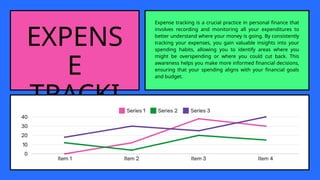
Expense tracking is a crucial practice in personal finance that
involves recording and monitoring all your expenditures to
better understand where your money is going. By consistently
tracking your expenses, you gain valuable insights into your
spending habits, allowing you to identify areas where you
might be overspending or where you could cut back. This
awareness helps you make more informed financial decisions,
ensuring that your spending aligns with your financial goals
and budget.
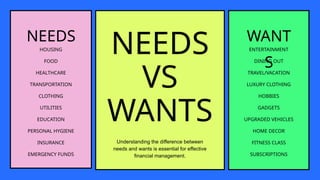
NEEDS
VS
WANTS
Understanding the difference between
needs and wants is essential for effective
financial management.
NEEDS WANT
S
HOUSING
FOOD
HEALTHCARE
TRANSPORTATION
CLOTHING
UTILITIES
EDUCATION
PERSONAL HYGIENE
INSURANCE
EMERGENCY FUNDS
ENTERTAINMENT
DINING OUT
TRAVEL/VACATION
LUXURY CLOTHING
HOBBIES
GADGETS
UPGRADED VEHICLES
HOME DECOR
FITNESS CLASS
SUBSCRIPTIONS
BUDGET
ING
BENEFIT
S
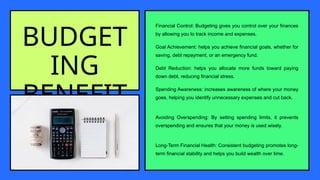
Financial Control: Budgeting gives you control over your finances
by allowing you to track income and expenses.
Goal Achievement: helps you achieve financial goals, whether for
saving, debt repayment, or an emergency fund.
Debt Reduction: helps you allocate more funds toward paying
down debt, reducing financial stress.
Spending Awareness: increases awareness of where your money
goes, helping you identify unnecessary expenses and cut back.
Avoiding Overspending: By setting spending limits, it prevents
overspending and ensures that your money is used wisely.
Long-Term Financial Health: Consistent budgeting promotes long-
term financial stability and helps you build wealth over time.
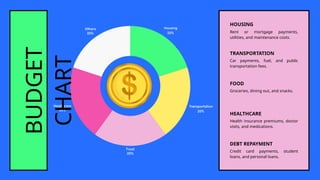
BUDGET
CHART
HOUSING
Rent or mortgage payments,
utilities, and maintenance costs.
TRANSPORTATION
Car payments, fuel, and public
transportation fees.
FOOD
Groceries, dining out, and snacks.
HEALTHCARE
Health insurance premiums, doctor
visits, and medications.
DEBT REPAYMENT
Credit card payments, student
loans, and personal loans.
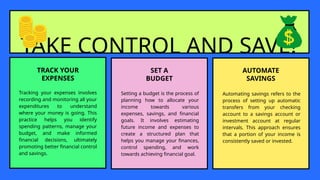
TAKE CONTROL AND SAVE!
TRACK YOUR
EXPENSES
Tracking your expenses involves
recording and monitoring all your
expenditures to understand
where your money is going. This
practice helps you identify
spending patterns, manage your
budget, and make informed
financial decisions, ultimately
promoting better financial control
and savings.
SET A
BUDGET
Setting a budget is the process of
planning how to allocate your
income towards various
expenses, savings, and financial
goals. It involves estimating
future income and expenses to
create a structured plan that
helps you manage your finances,
control spending, and work
towards achieving financial goal.
AUTOMATE
SAVINGS
Automating savings refers to the
process of setting up automatic
transfers from your checking
account to a savings account or
investment account at regular
intervals. This approach ensures
that a portion of your income is
consistently saved or invested.
CONCLUS
ION
In conclusion, mastering the principles of saving,
expense tracking, and budgeting is key to achieving
financial stability and reaching your personal financial
goals. Saving provides a safety net for emergencies and
opportunities, while expense tracking offers insight into
your spending patterns, helping you make more
informed financial decisions. Budgeting ties it all
together by setting clear financial boundaries and
ensuring that your money is allocated wisely towards
savings, debt repayment, and essential needs.
By embracing these practices, you gain control over your
finances, reduce financial stress, and pave the way for a
more secure and prosperous future. Developing a
disciplined approach to managing your money
empowers you to live within your means, achieve your
goals, and build a foundation for long-term financial
success.
SAVING, EXPENSE, AND BUDGETING
THA SAVING, EXPENSE, AND BUDGETING
This presentation template
uses the following free fonts:
You can find these fonts online too.
TITLES:
ANTON
Body Copy:
POPPINS
#256EFF
Use these design resources in your Canva Presentation.
DON'T FORGET TO DELETE THIS PAGE BEFORE PRESENTING.
RESOURCE PAGE
Fonts Design Elements
Colors
#00C461 #FF61C8 #FFEC69 #F1B5DB
This presentation template is free for everyone to use thanks to the following:
HAPPY DESIGNING!
for the presentation template
for the photos
CREDITS
Pexels, Pixabay
Saving, Expense, and Budgeting Slides.pptx

  • 1.
  • 2.
    TABLE OF CONTENTS Introduction Money Saving ExpenseTracking Budgeting Benefits Conclusions
  • 3.
    MONE Y Saving money isa fundamental aspect of financial health that empowers individuals to prepare for the future, manage unexpected expenses, and achieve long-term goals. By setting aside a portion of income regularly, you build a financial cushion that can provide security in times of need, such as emergencies or unexpected events. Saving also allows you to invest in opportunities that can improve your quality of life, whether it’s purchasing a home, funding education, or planning for retirement. Moreover, the discipline of saving helps you develop better spending habits, ensuring that you prioritize essential needs over impulsive purchases. Ultimately, saving money is not just about accumulating wealth, but about creating a stable and secure foundation for your financial future. SAVIN G
  • 4.
    INTRODUC TION In this lesson,we'll explore essential financial concepts that play a vital role in managing your money effectively. Understanding how to save, track expenses, and create a budget is crucial for achieving financial stability and reaching your personal goals. Saving: We'll discuss the importance of saving and different strategies to set aside money for future needs or emergencies. Expense Tracking: You’ll learn how to keep track of your daily spending, helping you identify areas where you can cut costs and save more. Budgeting: Finally, we’ll dive into budgeting, where you’ll learn how to create a plan that allocates your income towards savings, expenses, and other financial goals.
  • 5.
    “A PENNY SAVED IS APENNY EARNED.” BENJAMIN FRANKLIN
  • 6.
    EXPENS E TRACKI NG Expense tracking isa crucial practice in personal finance that involves recording and monitoring all your expenditures to better understand where your money is going. By consistently tracking your expenses, you gain valuable insights into your spending habits, allowing you to identify areas where you might be overspending or where you could cut back. This awareness helps you make more informed financial decisions, ensuring that your spending aligns with your financial goals and budget.
  • 7.
    NEEDS VS WANTS Understanding the differencebetween needs and wants is essential for effective financial management. NEEDS WANT S HOUSING FOOD HEALTHCARE TRANSPORTATION CLOTHING UTILITIES EDUCATION PERSONAL HYGIENE INSURANCE EMERGENCY FUNDS ENTERTAINMENT DINING OUT TRAVEL/VACATION LUXURY CLOTHING HOBBIES GADGETS UPGRADED VEHICLES HOME DECOR FITNESS CLASS SUBSCRIPTIONS
  • 8.
    BUDGET ING BENEFIT S Financial Control: Budgetinggives you control over your finances by allowing you to track income and expenses. Goal Achievement: helps you achieve financial goals, whether for saving, debt repayment, or an emergency fund. Debt Reduction: helps you allocate more funds toward paying down debt, reducing financial stress. Spending Awareness: increases awareness of where your money goes, helping you identify unnecessary expenses and cut back. Avoiding Overspending: By setting spending limits, it prevents overspending and ensures that your money is used wisely. Long-Term Financial Health: Consistent budgeting promotes long- term financial stability and helps you build wealth over time.
  • 9.
    BUDGET CHART HOUSING Rent or mortgagepayments, utilities, and maintenance costs. TRANSPORTATION Car payments, fuel, and public transportation fees. FOOD Groceries, dining out, and snacks. HEALTHCARE Health insurance premiums, doctor visits, and medications. DEBT REPAYMENT Credit card payments, student loans, and personal loans.
  • 11.
    TAKE CONTROL ANDSAVE! TRACK YOUR EXPENSES Tracking your expenses involves recording and monitoring all your expenditures to understand where your money is going. This practice helps you identify spending patterns, manage your budget, and make informed financial decisions, ultimately promoting better financial control and savings. SET A BUDGET Setting a budget is the process of planning how to allocate your income towards various expenses, savings, and financial goals. It involves estimating future income and expenses to create a structured plan that helps you manage your finances, control spending, and work towards achieving financial goal. AUTOMATE SAVINGS Automating savings refers to the process of setting up automatic transfers from your checking account to a savings account or investment account at regular intervals. This approach ensures that a portion of your income is consistently saved or invested.
  • 12.
    CONCLUS ION In conclusion, masteringthe principles of saving, expense tracking, and budgeting is key to achieving financial stability and reaching your personal financial goals. Saving provides a safety net for emergencies and opportunities, while expense tracking offers insight into your spending patterns, helping you make more informed financial decisions. Budgeting ties it all together by setting clear financial boundaries and ensuring that your money is allocated wisely towards savings, debt repayment, and essential needs. By embracing these practices, you gain control over your finances, reduce financial stress, and pave the way for a more secure and prosperous future. Developing a disciplined approach to managing your money empowers you to live within your means, achieve your goals, and build a foundation for long-term financial success. SAVING, EXPENSE, AND BUDGETING
  • 13.
    THA SAVING, EXPENSE,AND BUDGETING
  • 14.
    This presentation template usesthe following free fonts: You can find these fonts online too. TITLES: ANTON Body Copy: POPPINS #256EFF Use these design resources in your Canva Presentation. DON'T FORGET TO DELETE THIS PAGE BEFORE PRESENTING. RESOURCE PAGE Fonts Design Elements Colors #00C461 #FF61C8 #FFEC69 #F1B5DB
  • 15.
    This presentation templateis free for everyone to use thanks to the following: HAPPY DESIGNING! for the presentation template for the photos CREDITS Pexels, Pixabay